
Arkansas is seeking to reinvent itself as a knowledge-based economy. This transformation continues the state’s longstanding efforts to adapt to changing economic conditions. When the post-World War II automation of agriculture displaced much of the state’s predominantly agrarian work force, the state succeeded in attracting manufacturing industries based on Arkansas’ low wages and favorable business climate. When these industries began moving offshore in the 1970s, the state experienced a steady erosion of manufacturing jobs that continues to the present day. Arkansas began building the infrastructure for technology-based economic development in the 1980s. Recognizing the growing importance of knowledge-based industries, Arkansas’ leaders are once again taking steps to secure their future economic growth.
To review the states recent initiatives to develop a knowledge-based economy, the National Academies’ Board on Science, Technology, and Economic Policy (STEP) and University of Arkansas at Little Rock convened a conference on Building the Arkansas Innovation Economy. Held at the Clinton Presidential Library in Little Rock, the conference drew Arkansas business, political, and academic leaders along with senior U.S. government officials and national experts to highlight the accomplishments and growth of the innovation ecosystem in Arkansas, while also identifying needs, challenges, and opportunities. The participants at this conference discussed a series of proposed initiatives to strengthen Arkansas’ innovation and technology infrastructure and identified areas where federal, state, and foundation contributions could generate positive synergies.
As this report of the conference documents, Arkansas’ business, academic and government leaders recognize the economic and technological challenges confronting the state. They have studied successful economic and research programs in other states and drawn on national experts to develop strategic plans to promote economic growth and – in recent years – to enhance the state’s standing in the knowledge-based economy of the 21st century. Arkansas benefits from homegrown entrepreneurial ingenuity and pluck, its reputation as a highly pro-business state, strong transportation links, and a geographic location in the center of the North American market.
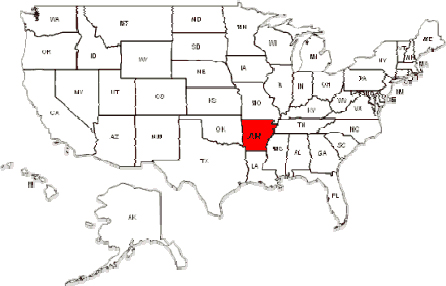
FIGURE 1 Location of Arkansas in the United States
At the same time, the state’s development continues to be hampered by weaknesses in its knowledge and skills base, the out-migration of college graduates, a dearth of venture capital, and a relatively low level of federal research funding (See Table 1). Many of the Arkansas’ economic and technology development initiatives were designed to address these areas of vulnerability.
Table 1 Innovation Indicators for Arkansas
| Category | Arkansas | U.S. Average |
| State funding for major public universities per enrolled student (2010) | $10, 825 | $9,082 |
| Engineers in the workforce (2010) | 0.53 | 1.12 |
| Life and physical scientists in the workforce (2010) | 0.3 | 0.45 |
| Federal R&D obligation per employed worker (2008) | $112 | $862 |
| Federal R&D obligations per S&E occupation holder (2008): | $4,947 | $21,594 |
| Academic S&E articles per 1000 science doctorate holders in academia (2008) | 477 | 579 |
| Patents per 1000 S&E occupation holders (2010): | 4.9 | 19.4 |
| Venture Capital deals per high tech establishments (2008): | 0.0 | 0.59 |
| High tech to all business establishments (2008) | 7.02 | 8.52 |
| Business performed R&D to private industry output (2008) | 0.52 | 2.14 |
Source: NSB Science and Engineering Indicators 2012 State Data Tool
THE INNOVATION IMPERATIVE
The twenty-first century is witness to fundamental changes in the world’s economies. Knowledge-based economic activity is recognized worldwide as the basis for sustained growth. The prosperity of individual regions is based increasingly on their relative success in attracting and retaining knowledge-based activities and assets and utilizing them for economic development. At the same time, the globalization of trade and investment as well as advances in communications and transportation has created an increasingly integrated global market. Reflecting the growing mobility of capital and labor, states and regions are increasingly vulnerable to companies, industries and jobs moving to other parts of the U.S. or to foreign countries that offer a skilled and flexible workforce, often at lower cost, and greater incentives for investment. The nation’s states and regions therefore face an imperative to foster innovation and start, grow, and retain innovative firms if they are to
sustain and augment their standard of living and ensure their long run economic well-being.1
BOX 1:
Addressing the Innovation Imperative in Arkansas
In his conference keynote, Governor Beebe of Arkansas said that among the state’s advantages are its strong work ethic and entrepreneurial spirit. He noted Arkansas’ reputation for successful businesses, beginning with Sam Walton’s Wal-Mart, and continuing with Tyson, J. B. Hunt, Stevens, Acxiom, and Alltel, which had become part of Verizon. “Those success stories were the basis for what was yesterday,” he said, “but they provide us with a roadmap for tomorrow. We’re probably not even aware of how our children and grandchildren will live 10, 15, or 20 years from now. But those who embrace technology and innovation and entrepreneurship; make the marriage between education and economic development; and learn that science is the basis for tomorrow’s economy will reap the benefits for themselves, their employees, their loved ones, and their region.”
Acknowledging that the state lags in per capita baccalaureate degrees, where it stands 49th in the nation, Governor Beebe said that he was determined to change that ranking.2 The state has initiated policies that include higher standards, higher expectations, and more advanced placement. The state has approved a lottery, with all of its available revenues targeted for college scholarships. “There will be no excuse for Arkansas to stay 49th in per capita BA degrees,” he said.
In his conference remarks, Richard Bendis, of Innovation America, outlined the key issues for building knowledge and innovation-based economies. He defined innovation as “the creation and transformation of knowledge into new products, processes and services that meet market needs.” Knowledge economies are “based on creating, evaluating and trading knowledge.” Bendis observed that the public, academic and private sectors each have essential roles in innovation. Academia must focus on the creation, integration and transfer of
______________________
1Ross De Vol, et al., Arkansas’ Position in the Knowledge-Based Economy Santa Monica: Milken Institute, September 2004, p. 1.
2 Recognizing these realities, Governor Mike Beebe’s Strategic Plan for Economic Development points out that Arkansas is “at a critical disadvantage in competing for opportunities in the 21st century economy,” and that the state had “not kept pace” with the requirements of the global knowledge-based economy. See, the Executive Summary of Governor Mike Beebe’s Strategic Plan for Economic Development, Little Rock: Arkansas Economic Development Commission, 2009.
knowledge itself. Industry must use that knowledge to create wealth in the form of commercial products, processes and services. Governments must develop policies to encourage innovation, engage in long-term vision and planning, invest in under-supported areas, and participate in public-private partnerships with industry.3
He added that technology clusters, which facilitate innovation through physical proximity and the close interaction of many actors from different sectors, serve as catalysts for innovation and the creation of start-ups. While Silicon Valley, Route 128 in Boston and Research Triangle Park in North Carolina are widely cited as examples of successful technology clusters, growing successful clusters by stimulating the development, commercialization and financing of technology-based firms is a significant challenge.4 In this regard, Bendis stressed the role of “innovation intermediaries” to coordinate local technologies, assets and resources to advance innovation in a jurisdiction.5
Bendis further observed that successful development of economic activity within a region requires a “three-legged stool.” First, the region must attract companies from other regions; second, it must retain companies that are already present; and third, it must create new companies. Creating new companies is both the most important element and the one that is most difficult to achieve. It is important because small and medium enterprises (SMEs) are a major source of innovation and new jobs.6 However, as Jeff Johnson, CEO and President of ClearPointe Technology, a managed service provider based in Little Rock, noted at the conference, “very few new firms have adequate cash to get a new business through the first year, and we were no exception."7 The result, according to Bendis, is that most start-ups with new ideas do not move to the commercialization stage – at present of 150-200 small firms that develop business plans, only about 10 draw the interest of venture capitalists, and only one is actually funded. Most small firms that need financial backing are in the proof-of-concept, start-up or seed capital phases, and typically need $500,000 to $2 million for the development of prototypes.8 This need is not being met; seed
______________________
3 See the summary of the presentation by Richard Bendis in the Proceedings chapter in this volume.
4For a review of the nature of innovation clusters and state policies to grow innovation clusters, see National Research Council, Growing Innovation Clusters for American Prosperity, Charles W. Wessner, rapporteur, Washington, D.C.: The National Academies Press, 2011.
5 See the summary of the presentation by Richard Bendis in the Proceedings chapter in this volume.
6 Small and medium enterprises generate 13 times as many patented technologies as large firms, and are an important source of innovation for large firms that often partner with SMEs. In the three years after the recession of 2001, companies of less than 20 employees created 107 percent of net new jobs while companies over 500 employees eliminated a net of -24 percent. See the summary of the presentation by Richard Bendis in the Proceedings chapter in this volume, where he cites data from the Small Business Administration.
7 See the summary of the presentation by Jeff Johnson in the Proceedings chapter in this volume.
8 See the summary of the presentation by Richard Bendis in the Proceedings chapter in this volume.
stage investments by the U.S. venture capital industry declined by 48 percent in 2011 to $919 million, or 3 percent of all venture capital investment.9 In effect, venture investment is moving downstream, away from risk, a phenomenon that is acting as a drag on start-ups in Arkansas and elsewhere.
Responding to this innovation imperative, governments around the world have implemented a variety of policies and programs designed to promote innovation-based economic growth.10 Many of these efforts emulate U.S. public-private initiatives that are widely seen as successful. Indeed, the United States has a long tradition in public-private partnerships, beginning with a 1798 government grant to Eli Whitney to produce muskets with interchangeable parts, and continuing through government support for development of the telegraph, the airplane, jet aircraft, semiconductors, computers, nuclear energy and satellites.11
As we see next, Arkansas’ recent economic and technological development efforts are a part of this long national tradition in cooperation and pragmatism in fostering economic growth and addressing common missions.
BACKGROUND: ECONOMIC DEVELOPMENT EFFORTS IN ARKANSAS, 1955-2012
For most of its history, farming and forestry dominated Arkansas’ economy. During the mid-20th century, sharecroppers and poor migrant laborers were displaced by agricultural automation. While many migrated, others stayed, making up the state’s pool of low cost surplus labor. In 1950, Arkansas’ per capita income was 56 percent of the national average, and its population was declining. In 1955, the state legislature established the Arkansas Industrial Development Commission (AIDC) with a mandate to promote industrial development. Under the leadership of its first chairman, Winthrop Rockefeller, the AIDC began to court out-of-state businesses aggressively.12 The result was
______________________
9 PWC MoneyTree Venture Capital Report, 2010.
10 For a review of innovation polices of leading nations and regions in Asia, Europe, and North America and the challenges facing the United States, see National Research Council, Rising to the Challenge, U.S. Innovation Policy for the Global Economy, C. Wessner and A., Wm., Wolff, eds., Washington, DC: National Academies Press, 2012.
11 For an abridged history of US public private partnerships and an analysis of factors characterizing successful partnerships, see National Research Council, Government Industry Partnerships for the Development of New Technologies, C. Wessner, ed., Washington, DC: National Academies Press, 2003.
12 The AIDC was formed pursuant to Act 404 of 1955, which also authorized incorporation of local industrial development corporations and issuance of local industrial development bonds. Today the AIDC operates as the Arkansas Economic Development Commission (AEDC), with a current mandate to promote economic development and develop strategies that produce better-paying jobs, support communities and support workforce training. See the summary of the presentation by Watt
an influx of manufacturers seeking low wage labor and cheap land. Between 1955 and 1960 Arkansas added over 51,000 jobs.13 In 1997, AIDC was renamed the Arkansas Economic Development Commission (AEDC) to reflect a broader emphasis on developing service and high technology industries in the state.
By the 1970s the “smokestack” industries that had located in Arkansas during the preceding decades came under international competitive pressure and began to move offshore. The percentage of manufacturing employment in the state began a long decline, from 32 percent in 1975 to 17 percent by 2005. Per capita income rose through the 1960s and 1970s, but leveled off in 1978 at about 77 percent of the national average where it has “refused to budge despite the best efforts of economic developers in the state."14 Arkansas’ unemployment rate, which stood at 5.0 percent in 1970, nearly doubled to 9.5 percent in 1975. Unemployment peaked at 9.7 percent in 1983 and remained above seven percent through the entire decade of the 1980s.15 In 1979, the AEDC released a report that warned that the state’s future economic growth was limited by a strategy that sought to recruit firms that provided labor-intensive, low skill, minimum wage jobs to Arkansans.16
During the 1980s the state took a number of steps to counteract the loss of businesses and jobs. Two new development agencies were established: The Arkansas Science & Technology Authority (ASTA) was tasked with promoting innovation, scientific research, and science, technology, engineering and mathematics (STEM) education.17 The Arkansas Development Finance Authority (ADFA) was established to provide tax-exempt bonds to finance businesses and education.18
______________________
Gregory in the Proceedings chapter in this; See also Governor Mike Beebe’s Strategic Plan for Economic Development, 2009, op. cit., p. 2.
13 Governor Mike Beebe’s Strategic Plan (2009), op. cit., p. 3.
14 Report of the Accelerate Arkansas Strategic Planning Committee, Building a Knowledge-Based Economy in Arkansas: Strategic Recommendations by Accelerate Arkansas (September 2007), pp. 16-17.
15 Governor Mike Beebe’s Strategic Plan, (2009), op. cit., p. 5.
16 AEDC, Arkansas Climbs the Ladder: A View of Economic Factors Relating to Growth of Jobs and Purchasing Power (1979).
17 Galley Support Innovations (GSI) is a California-based manufacturer of galley locks and latches for OEMs in the aerospace business that relocated to Arkansas in 2005. Hit hard by the economic downturn that began in 2008, it sought assistance from the Arkansas Science and Technology Authority’s Arkansas Manufacturing Solutions program. GSI was awarded to ASTA Technology Transfer Assistance Grants (TTAG), which enabled GSI to secure a large multi-year contract with an estimated positive financial impact of $5 million over six years. “AMS Grant Helps Local Aerospace Manufacturer Turn Business Around,” Arkansas Business (January 5, 2012).
18 (2009) op. cit., p. 6. The Arkansas Science and Technology Authority was created by statute in 1983 to “support scientific and business innovation as an economic development tool.” In 2009, it completed 31 projects involving about $8 million in grants and tax credits. It has provided grants to support the Arkansas High-Performance Computing Center at the University of Arkansas and to the
Despite difficult economic circumstances, Arkansas has spawned a significant number of world-class companies.19 Wal-Mart, which began with one retail outlet in Rogers, Arkansas, in 1962, became the nation’s largest retailer in 1991.20 J.B. Hunt, founded in 1961 in Lowell, Arkansas with five trucks and seven refrigerated trailers, became the largest US trucking company by the early 1990s. Tyson Foods, based in Springdale, Arkansas, and which originally consisted of a farmer driving a single truck to deliver chickens to Chicago, became the largest U.S. processor of poultry and the world’s second largest processor of chicken, beef and pork. Murphy Oil Corporation, based in El Dorado, Arkansas, operates onshore and offshore oil and natural gas drilling operations globally, and in 2008 ranked 134th on the Fortune 500 list.21 Other major companies with origins in the state include Riceland, Stephens Inc., Dillard’s, Alltel and Acxiom. While most of these companies are not regarded as technology-intensive firms, many of them have applied technology in their business processes with dramatic and in some cases revolutionary impact.22
______________________
Arkansas Research and Education Optical Network (ARE-ON), a communications network linking Arkansas’ four-year public universities. The authority provides financial support for technology transfer to local businesses, provides working capital for small start-up businesses (usually pursuant to royalty-based agreements), and sponsors professional development workshops for teachers and grants to individual STEM teachers for equipment and supplies. See the presentation by Watt Gregory, “Evolution of Innovation in Arkansas,” in the Proceedings chapter of this volume. See also the Arkansas Science and Technology Authority website, http://www.asta.arkansas.gov accessed January 11, 2012.
19 Giang Ho and Anthong Pennington-Cross, “Fayetteville and Hot Springs Lead the Recovery in Employment,” The Regional Economist (October 2005).
20 Wal-Mart, with one of the most sophisticated and innovative supply chains in the world, has attracted distribution centers from its major vendors to Arkansas, including Heinz, Clorox, Pfizer, General Mills, Mattel, PepsiCo, Procter & Gamble, Coca-Cola, Johnson & Johnson and Hershey’s. “Arkansas: A Natural Wonder,” Inbound Logistics (May 2009).
21 The company offers to pay college tuition and fees for all El Dorado high school students. “Murphy Oil Company,” Arkansas Business http://www.arkansasbusiness.com/company_info.asp?sym=MUR
22 Wal-Mart’s emergence as the world’s largest retailer and the world leader in supply chain logistics is attributed largely to its pioneering practice of tracking inventory by high performance computers.
22 See the summary of the presentation by Watt Gregory in the Proceedings chapter in this volume.
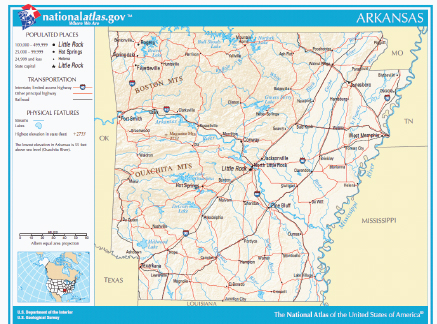
FIGURE 2 Map of the State of Arkansas
Source: U.S. Department of Interior, U.S. Geological Survey
Arkansas’ location in the center of the North American market, reinforced by a strong rail, highway and river-based transportation network, (see Figure 2) has proven a major advantage with respect to attracting and holding some traditional industries.23 Some local manufacturers have found that Arkansas’ location lowers transportation costs and thus makes them cost-competitive with products made in China.24 It is becoming evident that Arkansas enjoys geographic
______________________
23 Arkansas has over 1,000 miles of navigable waterways and port facilities on the Mississippi and Arkansas Rivers. Three carriers provide rail service including intermodal freight service. Eight interstate highways cross various parts of the state. Nucor Steel located a mini-mill in Hickman, Arkansas, which makes thin-slab steel coils for use in pipes, tubes, processors and automotive applications, citing location and transportation infrastructure as key decisional factors. Mike Parrish, a Nucor Vice President who managed the Hickman plant, said in 1996 that “What’s great about this area is it’s centrally located in the country. It’s great to advertise in this area. You’re on the [Mississippi] River. You can not only ship anywhere in the country, you can ship anywhere in the world,” “Nucor Makes Blytheville Steel Capital of the South,” Arkansas Business (December 16, 1996).
24 In 2011, the designers of five-gallon Kosmo coolers, a proprietary product, abandoned plans to have them manufactured in China, a decision based on “prohibitive” shipping costs. Instead most of the parts for the coolers will be manufactured by custom injection and blow molder River Bend Industries LLC at its factory in Fort Smith, Arkansas. River Bend worked with the designers, Arkansas entrepreneurs Tim Mika and Steve Bowman, developed a mostly US-made product (only the metal legs will be sourced from China) containing blow-molded and injection molded parts and
advantages with respect to some technology-intensive activities. Companies such as Nordex USA, LM Glasfiber and Mitsubishi Power System Americas, makers of sophisticated wind power equipment, have all cited the state’s location as a key factor in their decision to locate major manufacturing facilities there.25 These traditional advantages, however, may not prove sufficient to address the competitive challenges of the 21st century.
Competing for Industry with Incentives
For decades, state, county and municipal governments across the United States have offered various incentives to attract companies to their jurisdictions. While frequently criticized by economists as inefficient and a misallocation of public resources, jurisdictions that refrain from incentives competition risked the loss of companies, industries and jobs to other areas.26 Arkansas state, county and municipal governments have repeatedly sought to be competitive with other states and regions by using incentives to attract and retain companies. The state was one of the first in the U.S. to enact tax incentives to attract out-of-state companies.27 The Arkansas General Assembly enacted special incentives legislation tailored to the needs of Nucor Corp., a highly competitive steelmaker, for a new mill in Blytheville in the 1980s, and the company continued to receive incentives for many years thereafter as it expanded its presence in the state.28 Arkansas county and municipal
______________________
urethane from insulation. The Fort Smith location made River Bend’s coolers cost-competitive with China. To build the coolers River Bend is expanding its manufacturing capacity in Fort Smith. “River Bend Gets Kosmo Work,” Plastics News (November 7, 2011).
25 “LM Glasifiber Dedicates Little Rock Factory,” ArkansasOnline (October 28, 2008). Senior Vice President Ichiro Fukue commented that “transportation is very important for this industry. Fort Smith is the center of our market." “Arkansas Wins $100 Million Wind Turbine Nacelle Plant,” Energy Overviews (May 11, 2011). In 2010, Mitsubishi Power System Americas broke ground on a $100 million wind turbine nacelle plant in Fort Smith, Arkansas, citing the location’s transportation advantages as a key factor in the site selection. A Nordex executive commented “here in Jonesboro, we’re very near the Mississippi River for barging, there are two railways crossing Arkansas, and the highway system provides a major transportation network, so we can ship the 2.5 MW “Gamma Generation” turbines we’re building here anywhere in the country and make delivery in a matter of days.” Interview with Joe Brenner, Vice President for Production, in Wind Systems (January 2011).
26 Testimony of Arthur J. Rolnick Director of Research, Federal Reserve Bank of Minnesota, before the House Domestic Policy Subcommittee, “Congress Should End the Economic War Among the States,” October 10, 2007; Kenneth P. Thomas, Investment Incentives and the Global Competition for Capital (London and Basingstoke: Palgrave MacMillan, 2011).
27 The Enterprise Zone Act of 1983 established tax credits for creation of new jobs and sales and use tax exemptions for building materials used to construct factories. The Manufacturers’ Investment Tax Credit (later renamed InvestArk) extends manufacturers sales and use tax credits equal to seven percent of the cost of modernizing and expanding facilities. Governor Mike Beebe’s Strategic Plan (2009) p. 6.
28 See Thomas Howell, “Incentives Competition for Businesses,” In the Appendix to this report. Between 1996 and 1998, Nucor’s Blytheville project reportedly received $48.6 million in tax credits
governments have also achieved significant successes in competing for investment through use of incentive packages.29 In 2007, the General Assembly approved the creation of the $50 million Quick Action Closing Fund, designed to enable the Governor to “act quickly and decisively in highly competitive situations to finalize an agreement with a company to locate in Arkansas,” and the fund has been deployed effectively on a number of occasions.30 Arkansas continues to make extensive use of incentives – frequently combined packages of state, county and municipal benefits – to compete for investments in emerging sectors, such as wind turbines.31 Incentives have also played a role in the retention of established knowledge-based companies and jobs.32 An
______________________
and cash. “Results from Subsidies Unknown – State Has Little Idea Whether $633 Million in Breaks to Firms Spurred Investment,” Arkansas Democrat-Gazette December 12, 1999); “Choosing a Greenfield Site: Steelmakers Are Attracted Rural Areas,” Iron Age (March 1992); “Arkansas Legislators Present Their Proposal for Tax Breaks for Proposed Steel Mill,” Arkansas Democrat-Gazette (December 7, 1987).
29 Osceola, Arkansas, was shaken in 2000-01 by the loss of manufacturing plants shut down by Fruit of the Loom (textiles), Eck Adams (furniture), Siegel-Robert (auto parts) and Southwire (wire). The city began using cash generated by the municipally owned electricity distribution system to fund industrial development. In 2003, Osceola secured a new factory opened by DENSO Mfg., a Japanese maker of automotive ventilation systems, defeating other localities with a $3 million combination of incentives, which included land, site improvements, and subsidized electricity rates. Shortly thereafter, Osceola won a $1.2 billion coal fired power plant, the Plum Point Energy Station, offering a 1,000-acre site with infrastructure improvements and a 20-year estate tax abatement. Susan C. Thompson, “Factory Closing Shock Community into Opening Wallets for Economic Development,” The Regional Economist (October 2010).
30 Letter from AEDC Executive Director Maria Haley to Senator Mary Anne Salmon and Representative Tommy Lee Baker, Arkansas Legislative Council, August 22, 2011. In 2010, Caterpillar Inc. opened a $140 million, 600-job road grader factory in North Little Rock. Governor Beebe, who used $3 million from the fund to close the deal, said that “They (Caterpillar) wouldn’t be here without the Quick Action Closing Fund.” "Caterpillar Opens New Arkansas Factory, Hiring 600,” Cleveland.com (September 1, 2010).
31 In 2010, Arkansas secured an agreement with Japan’s Mitsubishi Power Systems America, Inc. for establishment of a $100 million plant to manufacture wind turbine nacelles at Fort Smith, Arkansas. The city of Fort Smith agreed to issue up to $75 million in revenue bonds for plant construction, to give Mitsubishi a free 90-acre site, to extend streets, water mains and sewers to the plant, and to give Mitsubishi a 50 percent reduction on property taxes. Sebastian County agreed to designate its entire $3.7 million allocation for federal recover zone bank to Mitsubishi. Governor Beebe contributed $3.75 million from the Quick Action Closing Fund to close the deal. “Mitsubishi Incentives Hit $83M,” Fort Smith Times Record (December 25, 2010).
32 Windstream, a rapidly-growing telecommunications network created in 2006 in Little Rock, with $5 billion in annual revenues, investigated alternative sites outside the state for its permanent headquarters, but decided in 2010 to stay in Little Rock, with CEO Jeff Gardner acknowledging that “financial incentives provided by the state and the regional placement relative to the company’s placement relative to the company’s customers in the southeast played into the decision. The incentives included a $1 million in Quick Action Closing Funds for building and training and additional benefits tied to performance. “Windstream Picks Little Rock, AR for HQ,” Business Facilities (July 13, 2010).
example is the attraction of a Hewlett-Packard Technology Center to Central Arkansas in 2009.
The Growing Importance of Knowledge-based Industries
In 1998, with the state’s manufacturing jobs eroding and college graduates out-migrating, then Governor Mike Huckabee convened the Governor’s Summit on Economic Development to consider state policies to promote economic growth, development and job creation. The Summit developed several recommendations that were implemented by the state’s General Assembly in the form of new legislation. Existing incentive programs were extended to include knowledge-based industries, capital gains tax rates were cut by 30 percent, an Arkansas Research Matching Fund was created, and a small business loan pilot program was established. The Tuition Reimbursement Tax Credit Program was established, authorizing a 30 percent tax credit for targeted companies for costs paid to employees to improve their post-secondary school education.33
In 2001, the Director of the Arkansas Department of Economic Development formed the Task Force for the Creation of Knowledge-Based Jobs, comprised of business, academic and government leaders, to develop strategies for expanding the number of knowledge-based jobs and companies in Arkansas. The task force’s report, released in September 2002, recommended that math and science be elevated to the number one educational issue in the state; that up to six research centers of excellence be established; that a variety of measures be taken to provide financial support for Arkansas-based technology start-up companies and that the state constitution be amended to permit equity investments by qualified state agencies.34
The Milken Study of Arkansas’ Competitiveness
Accelerate Arkansas, a statewide group of business leaders working on a volunteer basis to promote knowledge-based institutions, industries, workers, and partnerships, emerged from the Task Force and other state economic development initiatives. Speaking at the conference, Watt Gregory, the chair of Accelerate Arkansas, said that his organization commissioned studies about the Arkansas economy, most importantly a landmark report by the Milken Institute that represented the most comprehensive study ever undertaken of the Arkansas economy.35 The Milken study observed that a fundamental transformational
______________________
33 Governor Mike Beebe’s Strategic Plan (2009), op. cit., p. 8.
34Report of the Task Force for the Creation of Knowledge-Based Jobs (September 2002), pp. 2-3.
35 See the summary of the presentation by Watt Gregory in the Proceedings chapter in this volume.
shift was occurring in the world toward knowledge-based economic activity, reducing the relative importance of traditional assets of regional economic development—proximity to railroads, waterways and raw materials—and factors such as low labor and business costs. Regional economic prosperity, the study concluded, was increasingly based on the relative success of a location in attracting knowledge-based investments and leveraging them for economic development. The study observed that Arkansas had been “operating at the periphery of the knowledge-based economy,”—and while the state had been making progress, it was “starting far behind other states in the knowledge-based economy race."36
Using the Milken Institute’s State Technology and Science Index, the Milken study benchmarked Arkansas against other states in S&T, and ranked the state 49th, ahead of only Mississippi. Arkansas ranked 50th in categories such as competitive National Science Foundation funding and federal R&D. It was 49th in human capital and S&T workforce subsidies, and 49th for percent of the adult population with college degrees. Arkansas ranked 42nd in indices for risk capital and entrepreneurial infrastructure (leading other states in its region), and 12th in the nation for high tech industries’ annual growth rate. Arkansas also ranked 25th in the Small Business Survival Index. The study observed that “Arkansas’ strong performance in the area of net formation of high-tech establishments is very good news for the state’s economy” but warned that if factors such as the quality of primary education did not improve, “Arkansas’ competitiveness in the attraction and retention of high-tech firms will quickly erode."37
On the basis of the Milken study, members of Accelerate Arkansas concluded that the state needed to take a new approach to economic growth that was not dominated by efforts to recruit traditional manufacturing companies. In addition to the Milken study, Accelerate Arkansas studied the development plans of other states and deliberated extensively, both internally and with stakeholders throughout the state.38 Based on this analysis, they identified five “core strategies for acceleration:”
______________________
36De Vol, et al., Arkansas’ Position in the Knowledge-Based Economy: Prospects and Policy Options (2004) p. 1.
37 De Vol et al., (2004) op. cit. pp. 3-4.
38 The study of other states’ programs was based on an examination of “best in class states,” asking the question what makes some states “best” and how did they get that way? Between October 2005 and June 2006, Accelerate Arkansas’ Strategic Planning Committee consulted 95 stakeholder groups in discussions over objectives for a strategic plan and held public strategic planning fora in various parts of the state. A series of 65 strategic objectives was winnowed down to 30. Through this process, five “core strategies” were identified. Teresa McLendon (ed.) Building a Knowledge-Based Economy in Arkansas: Strategic Recommendations by Accelerate Arkansas (September 2007) pp. 33-35.
- support for job-creating research;
- development of risk capital that is available for all stages of the business cycle, particularly the funding gap;
- encouragement of entrepreneurship and new enterprise development;
- increasing Arkansas’ education level in science, technology, engineering and math;
- and support for existing industry through improved technology and competitiveness.39
Arkansas Strategic Plan
In the wake of the Milken study, Governor Mike Beebe authorized the AEDC to develop a long range statewide economic development plan. In June 2007, AEDC Executive Director Maria Haley established a five person committee to create the plan. Input was solicited in the form of interviews and surveys from economic development stakeholders, all state agencies and commissions involved in economic development, the entire federal delegation, the governor’s staff, and private businesses and foundations. The Committee drew upon the various studies and recommendations produced by Accelerate Arkansas, the Task Force for the 21st Century Economy, and the Governor’s Workforce Cabinet. The Committee identified three basic challenges facing the state:
- The state needed a transitional, systematic approach to an economy based on knowledge-based jobs.
- Economic development efforts in Arkansas were diffuse and inefficient.
- Arkansas lacked a recurring and predictable funding formula for economic development.40
Governor Beebe’s Strategic Plan concluded that the state’s economic development efforts should be concentrated under the leadership of the AEDC, a decision based on overwhelming feedback from the interviews conducted by the AEDC committee. The plan tasked AEDC with developing a “recurring and predictable funding source." The Plan set forth five objectives:
- Increase the income of Arkansans at a rate faster than the national average,
- Expand entrepreneurship that focuses on knowledge-based enterprise,
- Prepare Arkansas businesses to compete more effectively in the global
- marketplace, Develop economic development policies that meet special
______________________
39 McLendon (2007) op. cit. pp. 26-28.
40 Governor Mike Beebe’s Strategic Plan (2009).
-
needs and take advantage of existing assets in various areas of the state, and
- Increase the number of workers with post-secondary training.
Watt Gregory of Accelerate Arkansas pointed out at the conference that Governor Beebe’s Strategic Plan is closely aligned with recommendations originally developed by the Task Force for the 21st Century Economy. These were to:
- Emphasize human resource development, particularly STEM education at all levels and workforce education
- Develop mechanisms to carry innovation into the marketplace, including:
- Support for entrepreneurship
- Additional risk capital
- Increased global competitiveness in recruiting businesses and industries
- Develop cyberinfrastructure
- Support innovation by existing businesses.41
Continuing Erosion of Jobs
Arkansas has continued to experience a net loss of manufacturing jobs. The manufacturing workforce declined from 269,815 in 2001 to 199,015 in September 2011, a drop of 25.9 percent for the decade.42 In his conference keynote, Governor Beebe acknowledged that during the economic downturn that began in 2008 the state “lost jobs, more than we’ve gained—about 24,000 created, 27,000 lost,” but pointed out that of the 27,000 job losses, many required less education and resulted from movement offshore or consolidation, whereas the new jobs were better-paying and required higher levels of education and skill. He emphasized that education and economic development must be linked or neither can succeed. "[Y]ou can’t have economic development today without education, because you have to have the high-quality workforce. But
______________________
41 See the summary of the presentation by Watt Gregory in the Proceedings chapter in this volume.
42 The net decline has continued despite strong job growth in the oil and gas industry as a result of the development of major hydrocarbon deposits into the state. In 2004, Southwestern Energy successfully drilled test wells for natural gas in the Fayetteville Shale Play, a 20 by 100 mile deposit in north central Arkansas. A rush of development followed by Southwestern and other companies. A 2007 study by the University of Arkansas’ College of Business calculated that in that year, exploitation of the Play would add $1.6 billion to the state’s economy and employ 6, 000 people. Glen R. Sparks, “Community Profile: Conway, Ark. Makes Play for Economic Boom,” The Regional Economist (July 2007).
without economic development, educated people may leave for other states or countries, in some instances for work.”43
The Battelle Study
In 2007, the Arkansas General Assembly, implementing Accelerating Arkansas’ core strategy of “support jobs-creating research, approved funding to support the establishment of the Arkansas Research Alliance (ARA),44 a public-private partnership which seeks to foster university-based job-creating research. ARA sponsored a study by the Battelle Technology Partnership.45 The study identified 18 “core competencies” in the state as well as 12 “niche competencies,” winnowing those down to nine “strategic focus areas" – multidisciplinary fields of research likely to enable Arkansas to engage multiple institutions and leapfrog traditional universities with strengths in narrow academic fields.46Table 2 details the focus areas.
______________________
43 See the summary of the keynote speech by Governor Mike Beebe in the Proceedings chapter in this volume.
44 ARA funding was provided through the Arkansas Science and Technology Authority.
45 Battelle Technology Partnership Practice, “Opportunities for Advancing Job-Creating Research in Arkansas, A Strategic Assessment of Arkansas University and Government Lab Research Base,” 2009. Access the report at http://www.aralliance.org/__data/assets/pdf_file/0017/1682/JobCreating-Research-in-Arkansas.pdf The 2009 Battelle study was based on interview with 85 of the top researchers in the state and quantitative revision based journal publications and research grants of faculty members during the preceding five years.
46 See the summary of the presentation by Jerry Adams in the Proceedings chapter in this volume.
TABLE 2 Arkansas’ Nine Strategic Focus Areas
| Strategic Focus Area | Breadth of Competencies and Institutions | Opportunity for External Research Funding | Market Potential | Existing or Emerging Industry Connections |
| Enterprise Systems Computing | Emerging | Moderate | Extensive (immediate) | Extensive |
| Distributed Energy Network Systems | Emerging | Limited | Extensive (near term) | Extensive |
| Optics and Photonics | Emerging | Limited | Moderate (immediate) | Limited |
| Nano-Related Materials and Applications | Established | Significant | Extensive (long term) | Moderate |
| Sustainable Agriculture and Bioenergy Management | Established | Limited | Moderate (near term) | Moderate |
| Food Processing and Safety | Established | Moderate | Moderate (immediate) | Extensive |
| Personalized Health Research Sciences | Emerging | Moderate | Extensive (longer term) | Limited—addresses major public health issues |
| Behavioral Research for Chronic Disease | Emerging | Significant | Limited (immediate) | Limited – Addresses major public health issues |
| Management Obesity and Nutrition | Emerging | Significant | Extensive | Limited – addresses major public health issues |
SOURCE: Battelle 2007.
The Battelle study offered the ARA a “crucial roadmap” to use in recruiting talent into the state and into the core focus areas, and that the ARA would use it as its “investment roadmap going forward.”47
INITIATIVES TO PROMOTE INNOVATION IN ARKANSAS
The Arkansas Strategic Plan summarized the work of the various task forces and consulting firms that have analyzed and made recommendations on the state’s economic growth. It noted that “unfortunately, many of the recommendations contained with these early reports were never fully implemented. As a result, numerous problems identified as early as 1964 still remain today.”48 Currently, however, there are a number of state, local and federal initiatives under way to address issues of concern raised by the Milken study and other reports released over the past decade.
Innovation Clusters
The 2004 Milken study of the Arkansas economy observed that “where clusters of existing technologies expand and emerging science-based technologies form is a critical factor in determining economic winners and losers in the first half of the 21st century.” It observed that knowledge is generated, transmitted and shared more efficiently in close proximity, and economic activity based on new knowledge has a high propensity to cluster within a geographic area. The study pointed out that regional and state economic viability depends upon the ability to establish local technology clusters networked into the global business community. It concluded that clusters represent a state or region’s best defense against “being arbitraged in the global cost-minimization game” and can “mitigate input-cost disadvantages through global sourcing.”49
The Milken study analyzed various parameters supporting the formation of technology clusters and ranked Arkansas 44th among the states for technology concentration and dynamism. The study found that Arkansas lagged the national average for net annual formation of high technology establishments by 43 percent and trailed the 50-state average for proportion of the work force in high tech sectors by 64 percent. The state ranked 47th in start-ups of high tech companies. The state was strongest in high tech industries’ average yearly
______________________
47 See the summary of the presentation by Jerry Adams in the Proceedings chapter in this volume.
48 Governor Mike Beebe’s Strategic Plan for Economic Development, Little Rock: Arkansas Economic Development Commission, 2009. p. 6.
49 Clusters are increasingly acknowledged as key to growing 21st Century innovation economies. See National Research Council, Growing Innovation Clusters for American Prosperity. C. Wessner, rapporteur, Washington, DC: National Academies Press, 2011.
growth, a category in which Arkansas exceeded the national average by 25 percent.50
A number of speakers at the conference highlighted the role that a number of state and federal initiatives can play to promote technology clusters in Arkansas.
Arkansas’ Science and Technology Research Parks
In his conference presentation, Jay Chesshir of the Little Rock Chamber of Commerce noted that the state has two science parks, with a third on the way: The first is the Arkansas Research and Technology Park (ARTP), adjacent to the University of Arkansas in Fayetteville. As the state’s primary knowledge community, the Fayetteville area provides valuable fuel for the innovation and technology development activities of the ARTP. ARTP’s goal is to nurture technology-intensive companies through the formation of a community of companies, faculty and students drawing on “a set of core R&D competencies at the university.” ARTP is managed by the University of Arkansas Technology Development Foundation. It is a 501(c)(3) organization with a mandate to “validate, develop and transfer inventions made at the University to Arkansas companies and start-up ventures.”51 The ARTP features the “Enterprise Center,” a technology incubator for startups specializing in information technology and assembly manufacturing.52 He added that two affiliates had received the prestigious Frost and Sullivan Award for excellence in technology, and another affiliate won the Tibbetts Award for the most innovative small business. Recently, another affiliate won an R&D 100 award. ARTP affiliates, he said, continue to advance the frontier of product development in many specialty areas.
A second park is the Arkansas Bioscience Innovation and Commercial Center at Arkansas State University in Jonesboro, which is completing its Phase I business incubator. The development of a third S&T Park in Central Arkansas accelerated in 2010 when the Arkansas legislature authorized the establishment of research park authorities.53 A Tech Park located in Little Rock between UAMS (the University of Arkansas for Medical Sciences) and UALR (the University of Arkansas at Little Rock) is planned and part of the funding for the Technology Park will come from a voter approved increase in sales tax in Little
______________________
50 De Vol et al., (2004) op. cit., p 50.
51 ARTP, website, http://www.vark.edu/ua/artp/aboutus.html
52 Financial support for the Center is being provided through an economic infrastructure fund grant and from the Arkansas Economic Development Commission. Arkansas Small Business and Technology Development Center, “Enterprise Center to Offer Valuable Technology Incubator Resources,” press release, 2009, http://www.asbtdc.org/document/master.aspx?doc=1137
53 Arkansas Act 1045 of 2007.
Rock. The revenue is estimated at $22 million of bonding capacity, with additional private matching funds being sought. Initial engineering evaluations of possible sites are now underway.
Arkansas Biosciences Institute
In her conference remarks, Carole Cramer of the Arkansas Biosciences Institute located at Arkansas State University observed that some 200 food processing facilities are located in the state, including those of some of the world’s largest: Tyson Foods, Frito-Lay, Butterball, Wal-Mart, Riceland, Post, Nestle, and others. Wal-Mart alone, she said, “brings a cluster of people who want to sell to them.” These firms, however, while they do their manufacturing and processing in the state, do most of their R&D elsewhere. Maintaining Arkansas’ agricultural leadership, she said, will require will require building a significant in-state capacity for research and technological innovation.
To address this challenge, Arkansas State University at Jonesboro announced in 2011 the formation of a commercial innovation technology incubator at its Arkansas Biosciences Institute, to be known as the Arkansas Biosciences Institute Commercial Innovation Center (ABI-COM). ABI-COM will provide office and laboratory facilities for businesses seeking to turn innovations into products and services.54 In his conference remarks, Barry Johnson, then of the Economic Development Administration of the U.S. Department of Commerce, noted that the agency has awarded a $1.75 million public works grant to Arkansas State University at Jonesboro and helped establish the Arkansas State Biosciences institute Commercial Innovation Center.
University of Arkansas for Medical Sciences (UAMS) BioVentures
Speaking at the conference, Michael Douglas of UAMS said that the objective of his organization was “building deals for Arkansas,” and that he would offer a picture of UAMS BioVentures by touching on “the numbers, the process, best practices, state incubators, and results.” UAMS BioVentures serves a dual purpose in driving the commercialization of life sciences in Central Arkansas. First, it works within the University of Arkansas for Medical Sciences to capture the intellectual assets of the research scientists in the form of patents, them finds buyers or licensees for those patents for commercialization. This yields license agreements with industry for early stage start-up companies. Second, BioVentures operates a mixed-use wet lab life sciences incubator that provides resources to UAMS start-up companies to assist their early-stage
______________________
54 Arkansas State University, “Brian Rogers Named Director of Commercial Innovation Technology Incubator,” press release, January 5, 2011. http://asunews.astate.edu/BrianRogersNamedABICOM.htm ASU developed ABI-COM with support from a grant of $1,750,500 from the U.S. Department of Commerce Economic Development Administration. Ibid.
development into operating companies in the region. BioVentures manages the prosecution of a patent estate of about 250 patent cases, about 65 percent of which are issued or allowed. The incubator works closely with university startup companies to assist their early-stage development by providing office and laboratory space. It also provides leads to technical support and management as well as a network of seed and venture funds to bring working capital to these early companies.
Dr. Douglas said that the economic productivity of the incubators was high, with an average annual wage of $56,000. The total capital raised by the incubators in Arkansas was $247 million, and the number of jobs created was 1252. He said that a 2009 economic impact study by the Institute for Economic Advancement found that BioVentures had initiated 44 company start-up projects since its inception; generated $29.4 million in revenues (in 2008) from new products, services, and research; and created $52.4 million (in 2008) in economic output impact, with 13 percent of the total out of state. Overall, the study found that the total economic impact (1997-2008) in sales, investment, and research in the state was $184 million.
USEDA Regional Innovation Clusters (RICs)
Speaking at the conference, Barry Johnson further noted that the U.S. Economic Development Administration is planning to staff its regional offices with personnel dedicated to RICs. In 2009, USEDA made 14 investments in Arkansas to support planning and implementation efforts to encourage clusters and regionalism in the state.55 He defined RICs as “geographically bounded, active networks of similar, synergistic or complementary organizations that leverage their region’s unique competitive strengths to create jobs and broader prosperity.” Jobs within clusters pay higher average wages, and regional industries based on place-based advantages are less susceptible to off-shoring.56
In addition to the grant to Arkansas State University at Jonesboro noted above, Mr. Johnson noted that recent USEDA activities in Arkansas include over a dozen investments to support planning and implementation efforts aimed at encouraging regionalism and clusters across the state. This includes, he added, a recent USEDA Technical Assistance Grant to help establish the Center for Regional Innovation at the University of Arkansas at Little Rock.
______________________
55 An USEDA Technical Assistance Grant helped establish the Center for Regional Innovation at the University of Arkansas at Little Rock. A $1.75 million USEDA public works grant to Arkansas State University at Jonesboro helped establish the Arkansas State Bioscience Institute Commercial Innovation Center. See the summary of the presentation by Barry Johnson in the Proceedings chapter in this volume.
56 See the summary of the presentation by Barry Johnson in the Proceedings chapter in this volume.
Cyberinfrastructure
"Cyberinfrastructure” refers to the technological infrastructure that enables scientific inquiry, and includes high performance computing, data storage systems, data repositories and advanced instruments, visualization technology and people, all linked by advanced networks.57 Dr. Amy Apon, until August 2011 the Director of the Arkansas High Performance Computing Center and Professor of Computer Science at the University of Arkansas, led an effort to establish and upgrade the state’s cyberinfrastructure by securing federal and state support.58 In 2007, Dr. Apon launched an effort to bring an outside team of experts, the External Advisory Committee, to study Arkansas’ cyberinfrastructure needs, the result of which was a recommendation that the state launch the Arkansas Cyberinfrastructure Initiative.59 In May 2008, Governor Beebe funded the Initiative through the Arkansas Science and Technology Authority, and an Arkansas Cyberinfrastructure Strategic Plan was drawn up in 2008 by members of research organizations in the state.60
In her conference remarks, Dr. Apon said that underlying the cyberinfrastructure initiative is the recognition that “computing has become the most important general-purpose instrument of science.”61 Research in fields such as nanotechnology, materials science, and human biology sometimes requires millions of hours of computing time per year.62 Arkansas deployed a major new cyberinfrastructure resource in 2008, the “Star of Arkansas,” the most powerful computer in the state, capable of storing over five times the data stored
______________________
57Arkansas Cyberinfrastructure Strategic Plan (2008).p. 3.
58 In 2004, 2007 and 2010 Apon led efforts to secure Major Research Instrumentation (MRI) award from the National Science Foundation to establish a new campus research network and upgrade the power and chilling infrastructure of the university’s data center. Clemson School of Computing, “Dr. Amy Apon Joins the School of Computing as Chair of the Computer Science Division,” undated press release, http://www.clemson.edu/ces/computing/news-stories/aapon.html
59 The External Advisory Committee was partially funded by “NSF Other” funds contributed by the University of Arkansas and the Arkansas Science and Technology Authority. The Committee was chaired by Stan Anhalt, Director of the Ohio Supercomputer Center. The committee’s work was supported by an Internal Steering Committee comprised of about 30 Arkansas leaders from the education, industry and public sectors.
60 The Strategic Plan was drafted by the Arkansas Cyberinfrastructure Advisory Committee, which was similar in membership to the Internal Steering Committee.
61 Jay Buisseau, Director of the Texas Advanced Computing Center, cited by Amy Apon, in her remarks at the conference. See the summary of her remarks in the Proceedings section of this volume.
62 Dr. Amy Apon cited research underway by Professor Peter Pulay at the University of Arkansas to study the interaction of chemicals on human protein and DNA that requires four million hours of computing per year. Assistant Professor Doug Spearot is creating three-dimensional models of alloys that do not yet exist, using 20 million or more atoms, an effort which requires six million hours of computing time per year. Nanotechnology device research by Professor Laurent Ballaiche requires 70 million hours of computing time per year. See the summary of the presentation by Dr. Apon in the Proceedings chapter in this volume.
in the entire Library of Congress.63 This infrastructure now includes the research universities of Arkansas and the four-year colleges.
CHALLENGES
Despite substantial progress in the development of a knowledge-based economy, a number of speakers pointed out that Arkansas confronts key challenges in developing a cadre of educated, skilled labor, in providing adequate venture capital for start-ups, and in securing more federal research funding. Several speakers at the conference drew attention to these challenges.
Building Human Capital
Arkansas’ labor force has won frequent praise for its work ethic, and a number of major manufacturers who have chosen to locate in the state have cited the motivation of the work force as an important factor for locating there.64 However, with an increasing need for highly educated and skilled workers, Arkansas has found that it trails other states and regions in most indices for assessing skilled human capital. In 2006, the state ranked last among the 50 states in percent of adults with college degrees. A number of executives from technology-intensive companies noted at the conference that this shortage of talent in the state requires them to establish costly training programs when they
______________________
63 Purchase of the Star of Arkansas was funded in part by an $803,306 grant from NSF, with matching funds from the University of Arkansas and in partnership with Dell Corp. Stan Anhalt, Chair of the External Advisory Committee, observed that the Star of Arkansas had “the potential to improve Arkansas’ economic future through research in areas such as natural gas production, bird flu prevention, rice irrigation, nanotechnology, large-scale transportation and commerce systems, material design, sustainability, and personalized medicine. The Star of Arkansas is eight times faster than the University of Arkansas’ other supercomputer, Red Diamond, which was acquired in 2005. University of Arkansas College of Engineering. “University of Arkansas Installing Supercomputer, ’Star of Arkansas’, to be State’s Fastest,” press release, 2008, htt ://www en r en r vark edu/home/2378 h
64 Nucor Steel has located a number of facilities in Arkansas where local hires were typically “farmers or machinery workers who have been ingrained with a strong work ethic since childhood.” Dan DiMicco, President of Nucor-Yamato Steel Co., commented on his operation in the state that “We hire good people, put them in a culture that encourages them to do well, give them the tools and the opportunity to excel and then we get the heck out of their way." “Nucor Makes Blytheville Steel Capital of the South,” Arkansas Business (December 16, 1996). Mitsubishi Power Systems Americas, Inc. cited Arkansas’ “extraordinary work ethic” as a factor underlying its decision to locate a $100 million manufacturing facility for wind turbines in Fort Smith, Arkansas. The plant’s general manager said that “we looked for a part of the country where manufacturing is not some lost art." “Mitsubishi Breaks Ground on Nacelle Facility in Arkansas,” North American Windpower (October 8, 2010).
established businesses there.65 Their remarks echo a 2006-07 survey of Arkansas business leaders where 76 percent of those surveyed said that more than half of job applicants who recently graduated from high school lacked basic math and writing skills.66
The Arkansas Task Force on Higher Education Remediation, Retention and Graduation Rates was formed pursuant to legislation enacted by the General Assembly in 2007 to study the state’s education system with an eye toward increasing the percentage of citizens with bachelor’s degrees. At that time, the percent of adults in Arkansas holding bachelors’ degrees was 22.3 percent − well below the average for the 16-state Southern Regional Education Board (SREB). While Arkansas exceeded many Southern Regional Education Board (SREB) states in the number of high school graduates entering college, a greater percentage of those entering college failed to complete bachelors’ degree programs.67
Reforming of the Public Schools
Governor Beebe and other conference speakers listed the steps that the state is taking to improve PreK-12 education. Previously, only two counties in the state produced college entering populations with the percentage of students requiring remedial math lower than 25 percent. At the University of Arkansas at Pine Bluff, the percentage of entering freshmen in 2007 requiring remedial courses was 75.5 percent for English, 84.9 percent for math, and 73.6 percent for reading.68 A 2006-07 survey of Arkansas college professors on the overall
______________________
65 See, for example, the summary of the presentation by Jeff Johnson in the Proceedings chapter in this volume. Nordex USA found that when it sought to open a manufacturing plant for wind power equipment in Arkansas, it was only able to find after five months of interviews 62 of the estimated work force of 700 who possessed sufficient skills. Because of the high level of skill required, Nordex plans to build a training academy onsite. See also the summary of the presentation by Joe Brenner in the Proceedings chapter in this volume.
66 Arkansas Department of Education, Combined Research Report of Business Leaders and College Professors on Preparedness of High School Graduates (January 2007). Similarly, the human resources manager at Kagome/Creative Foods, a food processor with a facility in Mississippi County, Arkansas, said in 2010 that despite the county’s high unemployment, it was “very, very hard to find people to work,” partly a case of “too many undereducated, unemployable youth.” Susan C. Thompson, “Factory Closing Shocks Community into Opening Wallets for Economic Development,” The Regional Economist (October 2010).
67 At the time the Task Force was formed, of every 100 students then in ninth grade, 74 would graduate from high school, 64.7 would enter college, and only 16 would graduate with an associate or bachelors’ degree within 10 years. Of 37,160 students who graduated from ninth grade in 1996, only 5,817 had achieved higher degrees by 2006. The Task Force warned that “The pipeline is broken. Can a modern economy be built upon 5,817 people?” Arkansas Task Force on Higher Education Remediation, Retention and Graduation Rates, Access to Success: Increasing Arkansas’ College Graduates Promotes Economic Development (August 2008) (“Education Task Force Report.”)
68 Education Task Force Report (2008) pp. 11, 14.
academic quality of the Arkansas public high schools in preparing students for college found that over half gave the public schools grades of D (50.2 percent) or F (9.6 percent).69
A decade ago, the shortcomings in the state’s PreK-12 educational system were sufficiently severe that the Arkansas courts declared the state’s system of school funding to be “inadequate under … The Arkansas Constitution.” The Chancery Court stated that “Too many of our children are leaving school for a life of deprivation, burdening our culture with the corrosive effects of citizens who lack the education to contribute.” The court declared that under the state’s constitution, financing must be based on the amount of funding required to provide an “adequate educational system,” and ordered a cost study.70 The Arkansas Supreme Court upheld the lower court’s decision in 2002. The net result of the Lake View decision was a substantial increase in state funding for operations and facilities in elementary and secondary schools as well as overhaul of the curriculum, increased teachers’ salaries and increased requirements for accountability from school districts. By the time of the Education Task Force’s report, these reforms were beginning to have positive effects.71 As Governor Beebe noted at in his keynote speech at the conference, Arkansas is now winning accolades for levels of per-pupil funding, test scores, transparency, accountability, standards, and increase in advanced placement students.72
The Arkansas Science Technology, Engineering and Math (STEM) Coalition is a statewide partnership of leaders from the business, government, education and community sectors to develop and implement policies to improve STEM teaching and learning. In his conference presentation, Michael Gealt of the Arkansas STEM Coalition noted that his organization is concerned with all levels of education from pre-K onward, and functions both as a think tank for ideas for improving STEM education and as a lobbying organization seeking public policies to improve STEM education. Among other initiatives, the coalition has secured funding for 27 elementary school science specialists, sought state grants to STEM teachers to increase their income, established a web
______________________
69 Arkansas Department of Education, Combined Research Report of Business Leaders and College Professors on Preparedness of High School Graduates (January 2006).
70 Lake View School District No. 25 v. Huckabee No. 1992-5318 (Pulaski County Chancery Court), May 25, 2001.
71 In 2008, over half of Arkansas students scored “proficient or above” on the state’s tests for mastery of grade-level knowledge, whereas proficiency rates a decade previously were between 20 and 40 percent. In 2007, U.S. Secretary of Education Margaret Spellings cited Arkansas and Massachusetts as two states with education reform models that other states should emulate. Education Task Force Report (2008) p. 12
72 See the summary of the keynote speech by Governor Mike Beebe in the Proceedings chapter in this volume.
portal for STEM lesson plans, and advocated differential pay for STEM teachers.73
Training and Retaining University Graduates
Arkansas has 11 four-year institutions of higher learning, two of which have research as a fundamental part of their missions, the University of Arkansas, Fayetteville and the University of Arkansas for Medical Sciences.74 Major public and private commitments have been undertaken to improve the quality of these institutions, efforts that are being reflected in a succession of national research awards and individual faculty and student achievements. In addition, the University of Arkansas at Little Rock is now classified as a Research University with high research activity, and Arkansas State University at Jonesboro is classified as a Doctoral Research University. These four constitute the “Research Universities” of Arkansas.75
The fact that Arkansas currently ranks 50th in the U.S. in the percentage of adults with a college degree is not necessarily an indication of the failure of the state’s universities; the problem is one of an out-migration of graduates. The 2009 Battelle study found that Arkansas’ university system increased the number of graduates from 12,153 in 2001 to 15,262 in 2007, a growth of nearly 26 percent. Graduates in fields related to science, math and engineering grew from 3,548 in 2001 to 4,341 in 2007, an increase of 22 percent. Most significantly, the number of doctorate degrees in science, math and engineering from Arkansas doubled during the same period, from 65 doctoral degrees to 130, a growth rate nearly double the national average, suggesting that the state’s “strong growth in research funding is translating into top-level talent creation in the state.” Health and clinical sciences led the growth in doctoral degrees.76
University of Arkansas Chancellor David Gearhart recently pointed out that while the state needs to graduate college students at a higher rate, in fact between 1989 and 2006 Arkansas produced 166,000 college graduates, “nowhere near the last place nationally.” Arkansas has ended up at the bottom of the rankings because during the same period, 42 000 of those graduates left the state, with the most beneficiaries of this migration being “states with human capital economies.” As the Chancellor framed the challenge facing the state, “if
______________________
73 See the summary of the presentation by Michael A. Gealt in the Proceedings chapter in this volume.
74 More information on assets, reach, and research expertise of the University of Arkansas system can be accessed at http://www.uasys.edu/. More information on the Arkansas State University system can be accessed at http://www.asusystem.edu/.
75 For some considerations, the University of Arkansas at Pine Bluff is considered as a fifth research university because of its research on aquaculture.
76 Battelle study (2009) op. cit., p. 5
graduates are leaving to go where those businesses already are, how do you reverse the process and attract these businesses to your region?”77
Speaking at the conference Jeff Johnson, the CEO and president of ClearPointe (a managed service provider headquartered in Little Rock), described the challenges he faced in finding local IT talent to staff his Arkansas-based company. At first the company tried “growing their own” – hiring new college graduates and putting them through six months of training before placing them in company roles. This proved to work well, he said, but at a high cost for a small company, with a significant number of employees tied up in training for extended periods. Hiring talent from out of state also was difficult.
In this regard, he noted, the creation of the Engineering and Information Technology College at UALR was a “godsend.” “We started working with the college more than three years ago, serving on the advisory council.” In the past year, Mr. Johnson and others have helped the college design a curriculum that would assure companies like ClearPointe of a steady flow of qualified applicants.
Research funding in Arkansas universities has been growing rapidly, but from a comparatively weak starting point – in effect the state is still playing catch-up. The Battelle study found that in 2007 spending on university-based R&D in Arkansas totaled $240 million, an amount equal to 0.25 percent of gross state product (GSP), and that to achieve the national average of 0.36 percent of GSP, spending would have needed to be $106 million higher. The level of funding for university research in the state had grown 70 percent between 2001 and 2007, exceeding the national average growth rate of 51 percent.78 However, the rapid growth in Arkansas university research was evident across the research spectrum (see Table 3).
TABLE 3 Growth Rate in Arkansas University R&D Funding, 2001-2007
| Field | Arkansas Growth Rate (percent) | National Average | |
| Biological sciences | 133 | 55 | |
| Physics | 94 | 31 | |
| Chemistry | 205 | 44 | |
| Other engineering | 105 | 28 | |
| Other life sciences | 443 | 50.5 |
SOURCE: Battelle Study, 2009, p. 3.
______________________
77Gearhart, David. “Arkansas 180: Teaching & Research,” http://chancellor.vark.edu/13132.php.
78 Battelle Study (2009) op. cit., pp. vi-viii.
Addressing the Venture Capital Gap
A region’s ability to foster innovative start-up companies is critical to its success in the knowledge-based economy. At present Arkansas’ ability to generate start-ups is being constrained by the shortage of venture capital financing to enable new companies to reach the commercialization stage for new technologies. As Richard Bendis noted in his presentation, many small start-ups perish for lack of funding before they can commercialize their products, a primary factor underlying the so-called “Valley of Death” phenomenon. During the early stages of product development, start-ups need access to capital, such as angel or venture financing. However, most angel investments are very small and venture capital investments have moved downstream, toward established firms already generating revenues and profits. The current average venture capital investment is $8.3 million, signifying the move away from risky start-ups that typically require only a fraction of that amount.79
The Task Force for the Creation of Knowledge-Based Jobs said in its 2002 Report that “A key element that has been missing from the entrepreneurial equation in Arkansas is the lack of venture capital to keep new, knowledge-based businesses in the state.”80 Nearly a decade later, as Dr. Mary Good observed in her conference remarks, the state has two pressing needs—to improve the access to very early state capital for start-up firms, and to raise sufficient funding for innovative initiatives.81
The Milken study found that an average of about one (0.96) Arkansas firm per 10,000 businesses received venture capital from 1993 to 2002, a rate which was one-sixth the national average. Between 2002 and 2004, the number of state firms per 10,000 businesses receiving venture capital tripled, an increase that indicated that “venture capitalists were beginning to discover the state.”82 Nevertheless, Arkansas has yet to develop strong links with private equity. Venture capital investments in the state prior to 2006 usually totaled under $10 million per year, and after a spike to $40 million in that year fell off to nearly zero in 2007-2008. Even the 2006 total of $40 million, the state’s best year for venture investment represented only 0.15 percent of U.S. venture capital investments in that year.83
In his conference remarks, Jeff Johnson, said that ClearPointe’s experience as an IT start-up in Arkansas underscores the challenges confronting local high tech start-ups. The company’s only original source of capital was its receivables. Seeking financing, in 2002 the company was chosen as a presenter
______________________
79 See the summary of the presentation by Richard Bendis in the Proceedings chapter in this volume
80Report of the Task Force for the Creation of Knowledge-Based Jobs (September 2002). P. 26.
81 See the summary of remarks by Dr. Mary Good in the Proceedings chapter in this volume.
82 De Vol et al., (2004), op. cit. p. 81.
83 See the summary of the presentation by Richard Bendis in the Proceedings chapter in this volume.
at the Arkansas Venture Capital Forum, but virtually no funding was available for IT start-ups in the wake of the bursting of the dot-com bubble. The Forum gave ClearPointe access to knowledgeable people who helped it refine its business plan and monetize its needs. This attracted financing from local banks and, as Johnson recounts, “bank loans are not the best way to start a company, but we had no other options.” The company was able to operate on a “pay-as-you go” basis until it could attract some angel backing, which in turn facilitated bank loans. Jeff Johnson identified access to funding as the company’s highest hurdle to overcome.84 And, as the Arkansas Strategic Plan points out, recent structural changes in the banking industry make it more difficult to obtain the kind of debt financing that sustained ClearPointe through its early stage development.85
According to Watt Gregory, chair of the Executive Committee of Accelerate Arkansas, a number of public and private institutions in Arkansas are working to extend financial support to start-up companies in the state. The state provides funding for extremely early stage companies through AEDC’s Targeted Business Tax Incentives and the ASTA Seed Capital Fund.86 Arkansas Capital Corporation Group (ACCG) is a private, not-for profit entity comprised of several affiliated companies dedicated to financing economic development in the state. The flagship company, Arkansas Capital Corporation (ACC), provides long-term, fixed rate loans to Arkansas businesses. Diamond State Ventures, affiliated with ACCG, provides venture capital investments ranging from $250,000 to syndicated investments up to $20 million. Another ACCG member, Commerce Capital Development Company, supervises investment tax credits provided pursuant to the Arkansas Capital Development Company Act.87 Arkansas Certified Development Corporation, also an ACCG member, administers SBA 504 loans.88 A group of angel investors created an $8 million Fund for Arkansas’ Future that provides start-up funding in the $100,000 to $500,000 range.
The Arkansas Institutional Fund (AIF) is a fund-of-funds that invests in private equity and venture capital funds directing early stage capital, traditional venture capital, later stage and expansion capital and special situations capital
______________________
84 See the summary of the presentation by Jeff Johnson in the Proceedings chapter in this volume.
85 Governor Mike Beebe’s Strategic Plan (2009) op. cit., p. 45
86 The tax incentive program provides transferable tax credits to start-ups that do not have a state tax liability. The credits can be sold to individuals or institutions with tax liabilities. Governor Mike Beebe’s Strategic Plan (2009).op. cit.
87 These equity investment credits now reside with the Arkansas Economic Development Commission.
88 See the summary of the presentation by Watt Gregory in the Proceedings chapter in this volume; See also the ACCG website, http://www.arkansaedc.com/bring-your-business-toarkansas/financing/arkansas-capital-corporation.aspx accessed January 11, 2012.
investments toward Arkansas enterprises. It was established pursuant to legislation authorizing the Arkansas Development Finance Authority (ADFA) to implement a venture capital investment program.89
Synergies in Federal Innovation Funding
The 2009 Battelle study used the level of federal funding as an important metric in identifying Arkansas’ areas of strength in research. According to the Arkansas Research Alliance’s founder, Jerry Adams, federal funding is the accelerator. “State funding can help support talent, but federal funding is the key.”90 The 2004 Milken study found that “Arkansas receives approximately $44 per capita in federal money for research and development activities. For the year measured (FY 2000), Arkansas received $117.8 million in federal R&D, the least of any state and less than 1/5000th of the national total. Averaged out per person, this amount of funding ranks the state 50th in the nation.”91 The states’ underperformance in securing available federal research dollars represents a significant handicap in the competition with other states for knowledge-based companies and jobs. Addressing this challenge, several speakers at the conference highlighted important sources of federal funding for innovation and encouraged the state to take full advantage of these federal programs.
The SBIR Program
The Small Business Innovation Research (SBIR) is a competitive innovation award program that encourages small businesses to develop innovative technologies that address a variety of federal missions. It is funded through eleven participating federal agencies whose R&D budgets exceed $100 million, with each agency contributing 2.5 percent of their extramural R&D budgets to SBIR programs. SBIR frequently provides the first funding to help small innovative companies start projects, including support for academic researchers who have no company affiliation. Often, the “certification effect” of an SBIR award can help attract private investment and increase the prospects for winning a public contract.92 Charles Wessner noted in his conference
______________________
89 Governor Mike Huckabee authorized the establishment of the Arkansas Venture Capital Investment Trust to hold the equity interest in the AIF. The trustees of this trust are the President of ADFA, the President of Arkansas Science and Technology Authority, and the Director of the Arkansas Department of Finance and Administration. AIF website, http://www.arkansasinstitutionalfund.com/aif/web.nsf/pages/history.html
90 See the summary of the presentation by Jerry Adams in the Proceedings chapter in this volume.
91 De Vol et al., (2004) op. cit., p. 61.
92 Following the 2012 reauthorization of the SBIR program, Phase I SBIR awards were raised to $150,000. These are provided for feasibility and proof of concept research. Phase II awards were raised to $1 million. These are intended to develop prototypes or products that are ready for
presentation that a recent assessment by the National Academies concluded that SBIR was “sound in concept and effective in practice, and had a positive impact on small firm formation and growth.93
In her conference remarks, Carole Cramer of the Arkansas Biosciences Institute noted that Arkansas has many potential opportunities if it learns to combine its traditional strengths in agriculture and food processing with new techniques of biotechnology. She said that she had herself co-founded in 1993 a small innovative business, CropTech Corp., with SBIR funding and Advanced Technology Program (ATP) grants. The company grew to 42 employees and, in 1999, won a patent for the production of human lysosomal protein expressed in plants.94 The shock of 9/11 brought the work to a halt, but in 2003 the technology was licensed to Protalix Biotherapeutics. “The valley of death is real,” she said, “but a good idea can survive.” She added that in December 2009, Protalix completed a deal with Pfizer, demonstrating the commercial potential of using plant cells to make protein-based drugs.
In 2011, Arkansas companies won SBIR awards for research in areas including nanotechnology, pharmaceuticals, medicine and microelectronics.95 However, the total SBIR awards won by the state in 2011 (17) was lower than the total for 2004 (24). In that year the Milken study ranked Arkansas 49th among the 50 states for SBIR awards per 100,000, and 50th for Phase II SBIR awards per 10,000 businesses.96
The National Institute for Standards and Technology (NIST)
Mr. Marc Stanley, deputy director of NIST, expressed his enthusiasm for “trying to grow new companies that have difficulty in trying to find early-stage investment money.” On a policy level, he said, the most significant need was for federal agencies to move beyond their restricted silos of activity to more collaboration with other agencies with similar objectives in accelerating innovation.
The key areas for collaboration, he said, were regional policy, economic and industry policy, education policy, and science and technology policy. For example, he said that NIST, through the Manufacturing Extension
______________________
commercialization or application. A Phase III for product development and commercialization has been discussed but not funded. SBIR recipients retain the intellectual property for technology developed through the program.
93 National Research Council, An Assessment of the SBIR Program, C. Wessner, ed., Washington, DC: National Academies Press, 2008.
94 The U.S. Patent and Trademark Office in 1999 issued patent 5,929,304 for “Production of Lysosomal Enzymes in Plant-based Expression Systems” to Carole Cramer.
95 “Arkansas SBIR/STTR Grant Awards,” Arkansas Small Business and Technology Development Center website, http://asbtdc.org/DocumentMaster.aspx?doc=2416
96 De Vol et al., (2004) op. cit., p. 28.
Partnership (MEP), would have a vital but limited role in the energy regional innovation cluster. “We have to see if we can get out of our silos and help states like Arkansas keep their students here, grow companies, raise good revenue, and help our country grow.” He said he was impressed with Arkansas’ efforts to support its own innovation activities, especially in the face of a severe economic downturn.
In his conference presentation, MEP Director Roger Kilmer described his organization as a network of 440 service locations and 60 MEP centers that work with small and mid-sized manufacturers to promote technology acceleration, supplier development, workforce improvement, sustainability and continuous improvement of manufacturing process. In 1998, Arkansas Manufacturing Solutions (AMS) was established by the Arkansas Science and Technology Authority as an affiliate of NIST’s MEP to provide manufacturing extension services to local manufacturers. MEP concentrates on helping existing small firms scale up based on a national perspective.97 In Arkansas, AMS services reportedly have facilitated $592 million in new and retained sales, $25 million in capital investment, $12.7 million in cost savings, and 3,335 jobs retained and created. MEP has created an Arkansas-specific portal into the National Innovation Marketplace—“Arkansas Innovation Marketplace (AIM)"—that lists technologies, intellectual property, and the capabilities of entrepreneurs, inventors and companies in the state.98
The National Science Foundation
The National Science Foundation (NSF) accounts for about one fourth of all federal funds awarded to U.S. colleges and universities for basic R&D. The Milken study found that Arkansas tied for last place (47th) with respect to the NSF funding rate for proposals received.99 However, as NSF’s Donald Senich pointed out at in his conference remarks, NSF has established an Industry/University Cooperative Research Center (I/UCRC) for engineering and logistics in Arkansas, featuring collaboration between Sam’s Club and the University of Arkansas. NSF made 15 grants to the University of Arkansas between 2002 and 2009.100
______________________
97 MEP Center projects include business growth services, technology services to develop products and processes, “lean” manufacturing techniques to promote continuous improvement, quality systems and other standards, advice on energy and sustainability, and development of talent. See the summary of the presentation by Roger Kilmer in the Proceedings chapter in this volume.
98 As of late, 2011 AIM had posted about 50 technologies and 50 company “needs and wishes.” See the summary of the presentation by Roger Kilmer in the Proceedings chapter in this volume.
99 De Vol et al., (2004) op. cit., p. 78
100 See the summary of the presentation by Donald Senich in the Proceedings chapter in this volume.
PROMISING SECTORS
The National Academies conference highlighted the state’s economic and technological challenges as well as promising growth areas. As we see below, several speakers noted that the development of these sectors would build on the state’s current and potential competencies and leverage Arkansas’ areas of strength to grow knowledge-based industries and jobs.
Electric Power
The Battelle study identified “energy network systems” as a potential strategic focus area for Arkansas. As Paul Suskie of the Arkansas Public Service Commission pointed out at the conference, the regulation of electricity is shifting from promoting electricity consumption to incentivizing energy efficiency and renewable energy.101 Nick Brown, CEO of the Southwest Power Pool (SPP), an electric power cooperative, also noted at the conference that much of the transmission grid in the south central U.S. is nearing the end of its useful life, and will need to be replaced. These imperatives are opening up economic opportunities for Arkansas-based businesses in fields such as renewable energy and electric power transmission.102 Arkansas already supports a number of research organizations and businesses, which give it advantages in developing the electric power sector.
University of Arkansas Research Center
The Battelle study noted that a core research competency in power electronics was emerging at the University of Arkansas campuses at Fayetteville and Little Rock. In his conference presentation, Alan Mantooth of the National Center for Reliable Electric Power Transmission (NCREPT) said that his organization was founded at the University of Arkansas, Fayetteville to accelerate development of technologies for the electrical grid. NCREPT employees and graduate students conduct industrially-relevant research into future energy systems, including power electronics, with emphasis on grid reliability, power interface applications, transportation, energy exploration and geothermal applications.103 NCREPT operates as a testing, prototyping and
______________________
101 See the summary of the presentation by Paul Suskie in the Proceedings chapter in this volume.
102 See the summary of the presentation by Nick Brown in the Proceedings chapter in this volume
103 NCEPT Executive Director Alan Mantooth defines power electronics as “the interface between where we’ve generated the power and how we want to condition that power specifically for the load.” Examples include power converters that operate between an electric plug and the motor of an appliance or the hard drive of a computer, and “intelligent” lighting systems that turn themselves off when people are not present in a room. At present 30 percent of the electricity generated in the United States is processed by power electronics, a figure that is forecast to rise to 80 percent by 2030.
industrial collaboration center for global users, which include companies and universities.104 It is the only facility in the world offering programmability and reconfiguration operations at six megawatts.
Southwest Power Pool
The Battelle study also identified the Southwest Power Pool (SPP) as an important asset in developing the states’ potential in electric power transmission.105 At the conference, Nick Brown described the Southwest Power Pool as a cooperative organization that was originally formed in Arkansas during World War II to ensure sufficient electricity to support production of aluminum for the war effort.106 SPP was created because the aluminum plants’ electric power needs exceeded the entire generating capacity of the state, necessitating the formation of a pool originally comprised of 11 regional utilities. Originally comprised of 11 utilities in the region, SPP has expanded to 56 members operating in nine states.107 SPP manages the flow of power over electrical networks, operates as a wholesale sales agency for power and serves as a “one-stop shop” for the sale of transmission services.
Wind Energy
According to Joe Brenner of Nordex, a manufacturer of wind turbines, Arkansas is already “a manufacturing powerhouse for the wind industry,” and has become a manufacturing base for some of the most competitive makers of wind equipment in the world.108 Arkansas is located at the edge of the “Saudi Arabia of wind" – the U.S. great plains states – and its strategic geography has been cited by wind power equipment manufacturers as a key factor in their
______________________
See the summary of the presentation by Alan Mantooth in the Proceedings chapter in this volume.
104 NCREPT won an “R&D 100” award from R&D magazine for innovation in 2009 for the development of a 3"x5” power electronic module for hybrid electric vehicle motors. Current modules must be actively cooled by the radiator, but the NCREPT device can operate at 250 degrees C., does not require water-cooling, and is lighter and more resilient than existing models. The new module was developed with funding from Japan’s Rohm Semiconductor and Sandia National Laboratory, and was manufactured in Fayetteville by NCREPT and Arkansas Power Electronics. See the summary of the presentation by Alan Mantooth in the Proceedings chapter in this volume
105Battelle Study (2009) op. cit., p. 21.
106 At the beginning of the 1940s Arkansas had the largest commercially exploitable deposits of bauxite in the United States. Alcoa and the Reynolds Metal company established plants in the state, and a United States government entity, Defense Plant Corporation, built an aluminum factory in Jones Mill, Arkansas, which was leased to Alcoa.
107 SPP members include utilities, cooperatives, state and municipal agencies, and bulk power marketers.
108 Nordex USA, a subsidiary of Nordex SE, a German manufacturer of wind turbines and a pioneer in the development of wind-driven power generation.
decision to establish a presence in the state.109 In 2010, the wind industry supported 1-2,000 direct and indirect jobs in the state.
In his conference remarks Joe Brenner cited the strong support for his company by state and local leaders and a positive environment for innovation. In 2008, Nordex USA selected Jonesboro, Arkansas as the site for a manufacturing facility for 2.5 megawatt wind turbines. The plant, which became operational in 2010-11, is one of the most technologically sophisticated facilities in its kind in North America. Nordex chose the Arkansas site because of the commitment of state and local leaders to economic development, the availability of a trainable work force, the nearby presence of Arkansas State University as a site for training programs, and Arkansas’ central location in North America.110
U.S. Department of Energy Initiatives
The federal government is committing substantial resources to the promotion of energy efficiency and renewable energy (EERE). Dr. Gilbert Sperling of the U.S. Department of Energy (DOE) Office of Energy Efficiency and Renewable Energy noted that the American Recovery and Reinvestment Act (ARRA) had temporarily augmented his office’s budget, normally around $2 billion, to $16.8 billion. Of this amount, $11.5 billion was returned to the states to stimulate building weatherization and other efficiency-enhancing measures.111 DOE’s EERE initiatives, he said, seek to increase the market share of renewable energy power generation from the current one percent to 30, 40, or 50 percent. This effort requires convincing the American people why EERE investments
______________________
109 See the summary of the presentation by Joe Brenner in the Proceedings chapter in this volume. The sheer size and weight of large wind turbines make transportation costs a factor in locational decisions. The turbines manufactured in Jonesboro will be as tall as a football field is long, and each turbine blade will be a comparable length. See the summary of the presentation by Nick Brown in the Proceedings chapter in this volume; “Arkansas Wins $100 Million Wind Turbine Nacelle Plant,” Energy Overviews (May 11, 2011); Interview with Joe Brenner, Mitsubishi Power Systems America, in Wind Systems (January 2011).
110 The University worked with Nordex and Beckmann Volmer, a supplier to Nordex of turbine mainframes and other components, to create classes and degrees to meet the unique need of the wind power industry. The University now offers training in “mechatronics,” a combination of electrical and mechanical skills specific to the manufacture of wind turbines. “Beckmann Volmer Breaks Ground on Osceola Plant,” Paragould Daily Press (September 14, 2011); Interview with Joe Brenner, Vice President of Nordex USA, in Wind Systems (January 2011).
111 Arkansas received over $117 million in grant money for energy efficiency and renewables projects. Another $34 million went to the state in the form of tax incentives for wind power generation, electric vehicles, batteries, and other renewable and energy efficiency technologies. See the summary of the presentation by Gilbert Sperling in the Proceedings chapter in this volume. Nordex USA received $22 million from ARRA in the form of tax credits to support its manufacturing facility in Jonesboro, Arkansas. “Firm Building Jonesboro Plant to Get $22 Million Stimulus,” NWA Online (January 11, 2010).
are warranted, securing private capital investment in renewables, and the removal of incentives for utilities to make more money by selling more energy. Specific initiatives by EERE include an effort to have one million plug-in hybrid electric vehicles on the road by 2015; an improvement of the federal government’s energy efficiency; “recover through retrofit” (RTR) initiative to promote home energy efficiency; the concentration of developmental block grants for residential and commercial energy efficiency retrofits; and the development of technologies for concentrated solar power, geothermal energy wind power, biofuels, and hydropower.112
AEDC Wind Study
Arkansas’ own wind power generation capability is still underdeveloped.113 As Joe Brenner noted in his conference presentation, “There were challenges to finding the right locations in some parts of the state,” but “siting specialists are quite sure that Arkansas can provide wind energy.”114 In 2011, AEDC’s Arkansas Energy Office commissioned a “tall tower” study of wind velocity at various points in the state to generate data to afford wind power developers at better sense of the availability of wind resources in the state. The Energy Office is providing a grant to fund a wind resource monitoring network comprised of sensors on existing communications towers at the 80-foot level, the hub height of standard industry wind turbines.115
Nanotechnology
Speaking at the conference, Dr. Salamo, a Distinguished Professor of Physics at the University of Arkansas, Fayetteville, defined nanoscience as “the effort to understand and design structures at the nano scale and to seek their application.”116 The Arkansas effort in nanoscience, he said, is a collaborative undertaking among partner institutions throughout the state university system.
Materials Research Science and Engineering Center
The National Science Foundation has funded the establishment of a network of Materials Research Science and Engineering Centers (MRSEC) at academic institutions across the United States to undertake materials research, develop human resources, and collaborate with industry in materials science. A
______________________
112 See the summary of the presentation by Sperling in the Proceedings chapter in this volume.
113 At the end of 2010, the state had 10 megawatts (MW) of wind power generating capacity online with another 210 MW in planned projects. According to an estimate by the National Renewable Energy Laboratory, Arkansas has sufficient wind resources to provide 58.3 percent of the state’s current electricity needs. “Arkansas is a National Leader in Wind Energy Manufacturing,” American Wind Energy Association (August 2011).
114 See the summary of the presentation by Joe Brenner in the Proceedings chapter in this volume.
115 “A Wind Study the Size of Arkansas,” Wind Power News (April 1, 2011).
116 See the summary of Professor Salamo’s presentation in the Proceedings chapter of this volume.
MRSEC has been established jointly at the University of Arkansas and the University of Oklahoma to support an interdisciplinary research program on semiconductor nanostructure science and applications. The Arkansas/Oklahoma MRSEC is pursuing nanotechnology research with applications in energy efficiency, conversion of waste to electricity, solar power generation, semiconductor technology, medical diagnostics, and cancer treatment. The MRSEC has resulted in six spin-off companies. Dr. Salamo noted that the University of Arkansas System’s schools lead the U.S. in the supply of nanomaterials to research organizations across the United States.
National Center for Toxicological Research
Arkansas’ potential for developing nanotechnology appears to be particularly promising in the area of life sciences. As Watt Gregory noted at the conference, the U.S. Food and Drug Administration (FDA) operates the National Center for Toxicological Research (NCTR) near Pine Bluff, Arkansas. This facility employs 500 people, nearly half of whom are Ph.D. level researchers and scientists. NCTR research themes include food contaminants, detection of terrorist threats, and evaluation of drugs for medical use.
The effort to develop a regional cluster in nanoscience has advanced in recent years. In July 2011, Governor Beebe signed a memorandum of understanding with the U.S. Food and Drug Administration to establish a nanotechnology research collaboration between the National Center for Toxicological Research (NCTR) and five Arkansas universities. The MOU provides for creation of a virtual Center of Excellence in Regulatory Science that will include toxicological research associated with nanotechnology and a regulatory science curriculum at the University of Arkansas for Medical Sciences. It also establishes a working group appointed by the Governor and co-chaired by the Director of NCTR and a gubernatorial appointee to coordinate the Center’s activities and assist in commercializing its research results.117 Local business leaders believe NCTR can do for Arkansas what Oak Ridge National Laboratory has done for Tennessee – that is, generate products for commercialization that generate high-knowledge, highly paying jobs.118
______________________
117 “Beebe, FDA Sign First of its Kind Agreement at NCTR,” Arkansas Business (August 12, 2011).
118 In 2001, the Department of Defense deeded 1,500 acres of arsenal land adjacent to the NCTR facility to the Economic Development Alliance of Jefferson County. Envisioning a regional research park, local leaders created the Bioplex on the land, using $200,000 in federal grant money to clear land, and to build roads and utilities. The state has pledges to support the project with tax credits, revenue lands and other incentives. See Arkansas Business, “NCTR Has Potential to Create High-Paying Jobs,” July 4, 2011.
Arkansas Nano-medicine Center
In January 2012, the University of Arkansas for Medical Sciences opened the Arkansas Nanomedicine Center, which will coordinate statewide nanomedicine research efforts.
Food Processing
As noted earlier, Arkansas is one of the leading agricultural states in the U.S., with about 200 food processing facilities located in the state.119 Food processing is Arkansas’ largest source of manufacturing jobs, accounting for 25 percent of the state’s 199,915 total in 2011.120 The Milken study found that Arkansas enjoyed a “definite comparative advantage” in food processing that, while not in itself a high technology industry, does feature many areas for increased technology and science applications.121 As Carole Cramer noted in her remarks, Arkansas is promoting research through multi-institutional, cross-disciplinary clusters to promote in-state innovation in agriculture:
- The Arkansas Division of Agriculture supports a cluster that has developed a world class reputation in rice and poultry science, and is now focusing on bioengineering.
- The Arkansas Biosciences Institute leads a cluster of institutions with the NSF EPSCOR P3 Center (Plant-Powered Production) featuring research programs in plant biomass and yield, plant protection, medicine and feed production.
Cramer noted that biotechnology – rather than traditional approaches to crop improvement – is needed to promote innovation in agriculture within the state. She foresaw innovation in value-added and specialty crops and products, agriculture, green materials devised from crops and livestock and veterinary products. She credited Wal-Mart’s emphasis on “green” techniques with a major impact on attitudes in the state, and noted that the recent Battelle study identified market opportunities for Arkansas in new food processing and
______________________
119 Arkansas is the number one producer of rice in the US and is second in broilers, third in cotton, cottonseed and catfish, fourth in turkeys, fifth in grain sorghum, eighth in chicken eggs and ninth in soybeans. Food processors in the state include Tyson Foods, Frito-Lay, Butterball, Wal-Mart, Riceland, Post and Nestle. See the summary of the presentation by Carole Cramer in the Proceedings chapter of this volume.
120 Industrial Jobs in Arkansas Declined 1.5 percent Over Last Year,” Manufacturers’ News (October 31, 2011), citing the Arkansas Manufacturers’ Register.
121 US consumers have highly sophisticated and increasing demand for healthy and fresh foods. “Speed-to-market, logistics networks, quality control, and the accurate matching of supply and demand: represent areas for the application of science and technology, potentially giving the state “a competitive advantage in the nation.” De Vol, et al., (2004) op. cit., p. 150.
preservation technologies, advanced food packing, and food safety biosensors and rapid food-borne pathogen detection.122
Information Technology
In his conference presentation, Jeff Johnson of ClearPointe noted that the overall environment for IT companies, and especially start-ups, is changing, along with the broader IT environment. IT is no longer delivered only by internal resources and on-site staff. Instead, necessary data may as likely come from the Internet or a hosted solution from an application vendor as from internal IT.
This has caused a shift in the IT landscape, he said. The day of the traditional IT provider of software, hardware, and break-fix services is coming to an end. Today’s IT companies are more focused on services and how those services are delivered. “We will be more concerned about how data arrives at the desktop or virtual PC than we ever have in the past,” said Mr. Johnson. “This shift from on-site IT services to remote delivery has created a host of opportunities for startup companies.”
Arkansas had already begun to experience some successes from IT-based startups, he said, including Windstream and Allied Wireless. HP was also bringing a new support center to Conway, Arkansas. “All of these help to build the underlying foundation on which a knowledge-based economy is built,” he said.
The Battelle study identified “enterprise systems computing “as one of Arkansas’ nine strategic focus areas, pointing out that industries in the state related to enterprise systems employed over 35,000 people in 1,700 establishments. Job growth in this field is expected to grow by more than twice the rate as the average for all Arkansas jobs, and to grow at a faster rate than the national average for computer-related jobs. The University of Arkansas campuses at Little Rock, Fayetteville and Pine Bluff possess core competencies in informatics, sensing and senor networks, and use of information systems to manage supply chain logistics.123 The University of Arkansas at Little Rock has a unique program in Information Quality that is drawing students from around the world.
______________________
122 See the summary of the presentation by Carole Cramer in the Proceedings chapter in this volume.
123 Battelle study (2009) op. cit., pp. 18-20, ix.
Optics and Photonics
Describing the Battelle study at the conference, Jerry Adams of the Arkansas Research Alliance noted that it identified optics and photonics as one of its nine recommended strategic focus areas. At Arkansas State University, the Arkansas Center for Laser Applications and Science (ArCLAS) operates the largest collection of lasers and support equipment in the United States mid-south region. At the University of Arkansas, Fayetteville, optics research is a key aspect of its physics department and its microelectronics/photonics program. Researchers at the University of Arkansas at Little Rock are focusing on optics in the university’s applied science Ph.D. programs in physics. The principal focus of optics research at these university sites is the use of lasers for materials development, processing and manufacturing. Several Arkansas companies are engaged in optics and photonics research and at last four have received federal SBIR or STTR grants.124
LEARNING FROM OTHER STATES
Arkansas’ leaders often draw on the experience of other U.S. states and localities in developing policies to promote the growth of knowledge-intensive industries. Success of particular policies and programs in other states may not be directly replicable, but some of the principles underlying state innovation policies could be adapted to the Arkansas context. For example, the Arkansas Research Alliance Scholars program is modeled on Georgia’s highly successful Georgia Eminent Scholars program, which has been luring “top notch scientists to Georgia’s research institutions since 1990.”125 The Arkansas Economic Development Commission “carefully studied the organization and structures, service delivery methods and funding mechanisms of a dozen states to identify best profiles” in the area of workforce development and training.126 Analysis by the National Governors’ Association regarding specific state government and metropolitan development strategies has also been consulted.127 Speakers at the conference highlighted the recent experience of Arizona, California, and Oklahoma in growing knowledge-based economies.
______________________
124 Battelle Study (2009) pp. ix, 23. Invotek, based in Alma, Arkansas, is currently marketing an eye-safe laser pointer.
125 “Scholars Program Copies Georgia’s Model,” Innovate Arkansas (August 22, 2011).
126 Governor Mike Beebe’s Strategic Plan (2009) op. cit. p. 26.
127 A 2006 study prepared for Accelerate Arkansas at the University of Arkansas at Little Rock contained an extensive survey of state and metropolitan strategies for success in the new economy. Gregory L. Hamilton and Teresa A. McLendon, Closing the Gap: Ann Examination and Analysis of Per Capita Personal Income in Arkansas (August 2006) pp. 32-44.
Arizona
At the Conference Dr. William Harris, President and CEO of Science Foundation Arizona, described some of Arizona’s state-level initiatives to support research. Dr. Harris noted that he had previously served as founding director general of Science Foundation Ireland (SFI), a $1 billion program for strategic R&D investments in that country, and had served with the European Commission to develop the European Research Council. This European experience, he said, has informed his work on developing Arizona’s innovation strategy. On the basis of his European work, he identified five key best practices:
- Invest strategically at the state level in university-industry partnerships.
- Operate with speed and flexibility, and work opportunistically.
- Strive for world-class standards for STEM K-12 performance/education.
- Build partnerships with industry.
- Listen to R&D-driven business entities to support the protection of intellectual property.
California
Although California leads the world in many areas of science and technology, Susan Hackwood, Executive Director of the California Council on Science and Technology (CCST) warned that global changes threaten to erode the state’s science, technology and educational infrastructure.128 Dr. Hackwood cited in her conference remarks a number of “erosion factors” that are destabilizing the so-called “closed-business model” traditionally employed in California—in which targeted R&D leads to targeted product/process development in a discrete organization. The erosion factors are the increased mobility of trained workers, the growth in the research capacity of universities around the world, the diminished U.S. hegemony in markets, and a proliferation of venture capital globally. As a result, “your main competition could be anyone
______________________
128 Chartered by the state legislature, CCST is comprised of over 200 of the state’s leading science and technology experts. Designed to bridge the gap between “those who know science and technology and those who create and enforce the state’s laws and policy,” CCST produces reports on the state’s scientific and technological activities and supports scientific activity and education. Its sustaining institutions are six state universities, and six national laboratories are sustaining members. Recent analytic work includes studies of California’s energy future; use of information technology to integrate genetic/genomic test results to promote personalized healthcare; preparation of elementary school teachers to teach science; nanotechnology in California; and reform of California’s STEM education structure. See the summary of the presentation by Susan Hackwood in the Proceedings chapter in this volume.
on the planet and your main market is everywhere on the planet. Your inefficiencies are discreetly outsourced.” She noted several specific trends:
- Development of new pharmaceutical products has stagnated during the past decade because “corporate pharma is not conducive to innovation,” which often arises from small and more nimble companies.
- The state’s workforce retention and workforce competitiveness are being challenged by the competition by other countries and regions for skilled workers.
- State and federal policies, such as United States export controls on technology, tort and labor laws, and over-regulation of industries, can unwittingly retard innovation.
- The quality of California’s K-12 education is “very poor,” state funding of the university system is declining, and the numbers of science and engineering degrees has leveled off.129
Arizona used Ireland’s model to create Science Foundation Arizona (SFAz), a public-private partnership jointly funded on a 50-50 basis by the state and industry. SFAz had a mandate to diversify and strengthen the state’s economy to enable it to compete on a global basis. Its $100.9 million in funds were committed to support R&D in sectors deemed to be state priorities – wind and solar energy, sustainable mining, personalized medicine, new materials and software supporting the semiconductor industry, and aerospace.130 In mid-2009, after about two years of SFAz activities, the Battelle group evaluated its return on investment and concluded that it had resulted in 11 spin-off companies, 757 jobs created or retained, 50 patents filed or issued, and 292 scientific publications, and that $2.18 in value had been leveraged for each $1 awarded by SFAz in university grants.131
Oklahoma
In his conference presentation, David Thomison of Oklahoma’s Innovation to Enterprise (i2E) program said that his organization provides businesses in the state with advice, commercialization services and capital, and
______________________
129 See the summary of the presentation by Susan Hackwood in the Proceedings chapter in this volume.
130 Fifty-six percent of the funds were committed to “strategic research” and another 17 percent to graduate-level research fellowships. See the summary of the presentation by William Harris in the Proceedings chapter in this volume.
131 Examples of new R&D partnerships generated by SFAz included initiatives in concentrated solar energy and energy storage, mining, pharmaceuticals and the development of jet fuel from algae. See the summary of the presentation by William Harris in the Proceedings chapter in this volume.
serves as a portal to public and private resources.132 The goal of i2E is to create new, home-grown companies in the state of Oklahoma. “What we want to do,” said Mr. Thomison, “is to build from within.” Referring to the “three-legged stool” described by Mr. Bendis, he said that i2E focuses on just one of the legs: growing companies within the state. “We are in Oklahoma to help people there,” he said, “and we want to leverage our in-state resources to the maximum degree.”
To increase the number of successful small firms, Mr. Thomison said, his organization collaborates with universities to provide commercialization services, including assistance in marketing, finance, and competitive strategies. The goal was to teach young businesses how to gain access to capital, good management, and networking.
Mr. Thomison said that his organization also helps Oklahoma firms recruit talent needed to grow their company. In most technology-based start-up companies, he said, the leader and founder is the technician or scientist. “These leaders know the technology and the product, and that’s extremely important,” he said. “But it takes a team to pull off a commercialization.” The Oklahoma Center for the Advancement of Science and Technology (OCAST) has found that it must begin by recruiting a CEO and a vice-president of marketing. As the company approaches commercialization, it must also hire a chief financial officer to position the firm to seek venture capital. This positioning includes demonstrating credible resources and creating a capital plan.
To date, OCAST had helped create 433 client companies. Of those, 140 had raised $359 million in equity funding – 66 percent of it from outside the state – and 44 had received $38 million in grants. For 2009, the impacts on the state included $43.4 million in payroll, $115.6 million in reported revenues, and 251 new jobs. The combined companies had developed 336 new products.
IN CLOSING
As documented in the proceedings of this National Academies symposium, Arkansas’ political, academic, and business leaders are seeking to foster greater awareness of the challenges facing the state and are taking a number of steps to foster the development of a knowledge-based economy.
______________________
132 I2E website, http://www.i2E.org/about Created in 1987, OCAST is a state government agency responsible for technology-based economic development. As of late 2011 OCAST had helped create 433 client companies, 140 of which had raised $359 million in equity funding (66 percent from outside Oklahoma). The combined companies have developed 336 new products. One OCAST innovation was to hire a “CFO in residence,” in effect a CFO capable of serving a number of startups simultaneously on a part-time basis in their efforts to secure venture capital. See the summary of the presentation by David Thomison in the Proceedings chapter in this volume
Many of these efforts have been based on commissioned studies that offer frank assessments of the challenges the state faces, inter alia, in primary education, financing the formation of new businesses, and securing federal research funding.
The symposium presented a number of initiatives that are under way to address these challenges. These include initiatives in areas such as nanotechnology research and the manufacture of wind power generation equipment. Arkansas’ ability to address these challenges by improving its education, investment and research infrastructure, and by leveraging existing areas of strength to create new knowledge-based companies and jobs will determine the future standard of living and long run economic well-being of its citizens. The proceedings, found in the next chapter, provide detailed summaries of the presentations by the state’s business, political, and academic leaders, along with those of senior U.S. government officials and national experts. They highlight the challenges, accomplishments, and opportunities facing Arkansas today.


