








Below is the uncorrected machine-read text of this chapter, intended to provide our own search engines and external engines with highly rich, chapter-representative searchable text of each book. Because it is UNCORRECTED material, please consider the following text as a useful but insufficient proxy for the authoritative book pages.
33 CHAPTER 4 CLASSIFICATION AND ASSESSMENT OF TYPICAL MEDIAN OPENING DESIGNS A key objective of this research is to identify and classify those median opening designs typically used to accommo- date U-turn maneuvers at unsignalized locations. A classifi- cation system of this type is presented in this chapter. This classification system identifies how particular median open- ings function and where they are located relative to other ele- ments of the highway system. This chapter presents the fac- tors used in the classification process, provides an overview of typical median designs, identifies the factors that influence the safety and operational performance of median openings, and presents typical combinations of median opening designs used along an arterial. A further objective of the research is to estimate the safety and operational performance of particular types of median openings. This chapter of the report takes a step toward that objective by cataloging the advantages and disadvantages of particular types of median openings and establishing a frame- work within which their relative performance can be deter- mined. The relative safety of various median opening designs is assessed on the basis of potential traffic conflicts. The spe- cific safety and operational performance of median openings is presented in Chapter 6. FACTORS USED IN CLASSIFICATION OF MEDIAN OPENING DESIGNS The four key factors used to classify or describe the design of a median opening are ⢠Type of geometry, ⢠Degree of access served, ⢠Presence of left-turn lanes, and ⢠Presence of loons. The first factor, type of geometry, determines which move- ments are possible at a median opening. Conventional median openings (sometimes referred to as âfull median openingsâ) typically permit all movements, while directional median openings may restrict certain movements. Jughandles are an indirect left-turn treatment that enable drivers to make U-turn and left-turn maneuvers efficiently on divided highways with relatively narrow medians. The second factor, degree of access served, not only deter- mines what movements need to be accommodated at a median opening, but also the number of potential conflict points a median opening will have. For example, a median opening that only serves U-turn maneuvers will have considerably fewer conflicting maneuvers than a median opening at a three- or four-leg intersection, where U-turns use the same roadway as left-turn and crossing maneuvers. Median openings can be classified by whether access points are present on neither side, on one side, or on both sides of the roadway. Access points at median openings may include either intersecting public roads or driveways. Figures 14 through 18 illustrate median openings with var- ious combinations of the first two classification factors: type of geometry and degree of access served. The third factor used in the classification is whether or not a median opening has a left-turn lane. Median openings generally operate better when left-turn lanes are present to provide a deceleration and storage area for vehicles before they enter the median. In fact, the AASHTO Green Book specifically encourages the use of left-turn lanes at median openings to reduce or eliminate stopping on the through lanes (12). The final factor in classification of median openings is whether or not a median opening is accompanied by a loon. A loon is an expanded paved apron on the shoulder opposite a median crossover. The purpose of loons is to provide addi- tional space for larger vehicles (particularly trucks) to nego- tiate turns, and thus, to allow the installation of conventional or directional median openings along narrow medians. The provision of loons to serve U-turns by large vehicles is a new technique that formalizes past use of paved shoulders for the same purpose. Initial results by highway agencies that have used loons appear promising (55). Based on the four factors discussed above, median open- ings can be classified based on their design characteristics as follows: ⢠Type of geometry (traffic movements permitted) â Conventional (all movements permitted), â Directional, and â Jughandle;
⢠Degree of access served â U-turn only (midblock median opening), â Access on one side (at three-leg intersection), and â Access on two sides (at four-leg intersection); ⢠Presence of left-turn lane â No left-turn lane present and â Left-turn lane present; ⢠Presence of loon â No loon present and â Loon present. OVERVIEW OF TYPICAL MEDIAN OPENING DESIGNS Using the first two classification factors (geometry type and degree of access served), typical median openings can be classified into the following seven categories: 1. Conventional Midblock Median Opening, 2. Directional Midblock Median Opening, 3. Conventional Median Opening at Three-Leg Intersection, 4. Directional Median Opening at Three-Leg Intersection, 5. Conventional Median Opening at Four-Leg Intersection, 6. Directional Median Opening at Four-Leg Intersection, and 7. Midblock Jughandle U-Turn Maneuvers. These seven categories of median openings can be subdi- vided on the basis of the presence of left-turn lanes or loons 34 and the types of turning maneuvers permitted. With these subdivisions, there are a total of 17 typical median opening designs. The following discussion presents each of the seven categories of median openings and the specific designs used for those openings. The discussion of each median opening design includes a figure with a diagram of each median open- ing design and a list of the advantages and disadvantages associated with each design. Conventional Midblock Median Opening A conventional midblock median opening permits vehi- cles to make U-turns, but does not provide separate channel- ized roadways for vehicles making U-turns in opposing directions. Median openings at midblock locations are appro- priate on arterials where providing for U-turn maneuvers between intersections may improve operations at intersec- tions by reducing the U-turn volumes at those intersections or reducing the amount of out-of-direction travel for vehicles trying to reach a destination without direct left-turn access. Conventional median openings are appropriate where U-turn volumes are relatively low, such that U-turn vehicles in opposing directions of travel create minimal interference with one another. The conventional midblock median opening design is fur- ther classified into three subcategories based on the presence of left-turn lanes and/or loons: Figure 14. Conventional midblock median opening. Figure 15. Conventional median opening at three-leg intersection. Figure 16. Directional median opening at three-leg intersection. Figure 17. Conventional median opening at four-leg intersection.
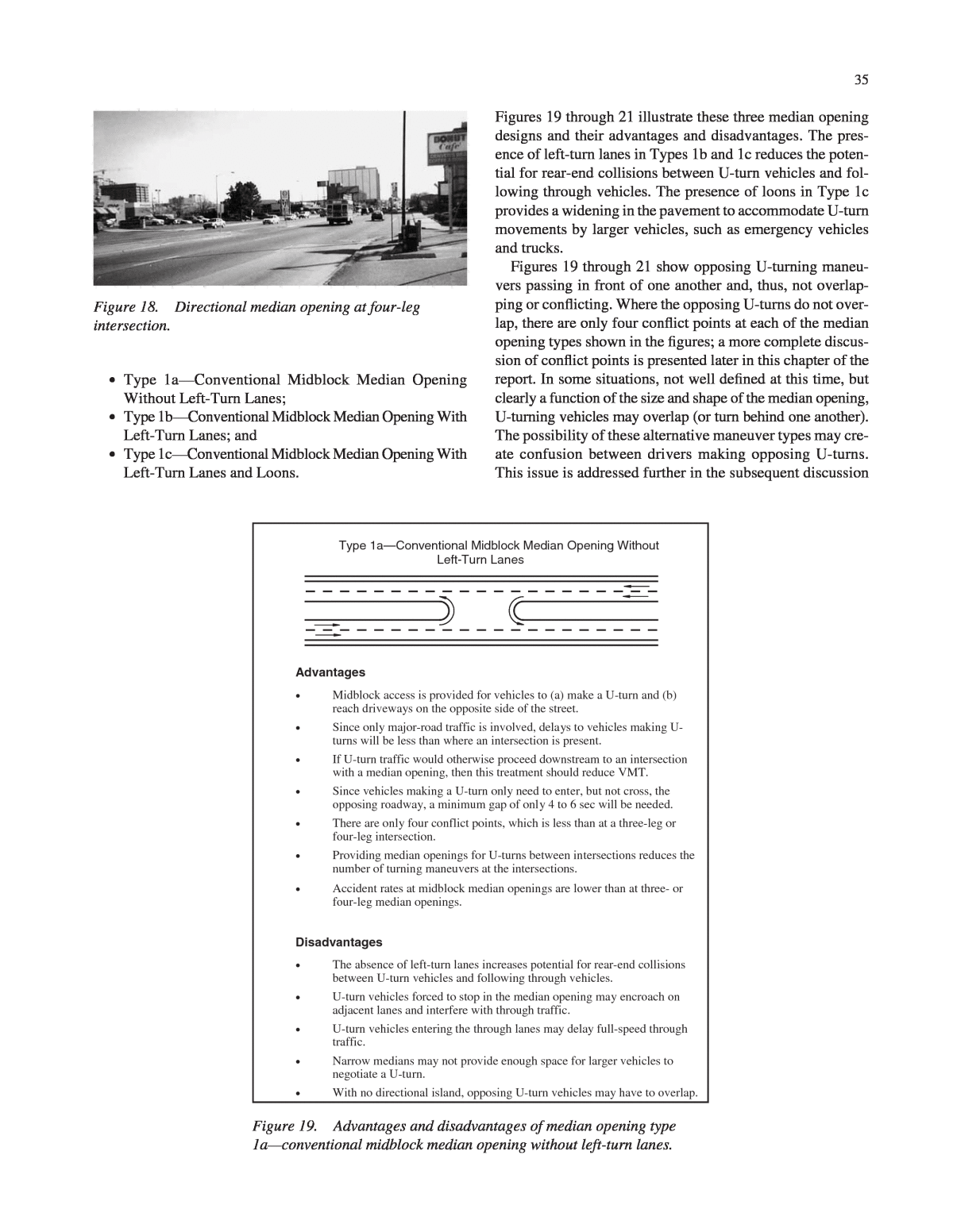
⢠Type 1aâConventional Midblock Median Opening Without Left-Turn Lanes; ⢠Type 1bâConventional Midblock Median Opening With Left-Turn Lanes; and ⢠Type 1câConventional Midblock Median Opening With Left-Turn Lanes and Loons. 35 Figures 19 through 21 illustrate these three median opening designs and their advantages and disadvantages. The pres- ence of left-turn lanes in Types 1b and 1c reduces the poten- tial for rear-end collisions between U-turn vehicles and fol- lowing through vehicles. The presence of loons in Type 1c provides a widening in the pavement to accommodate U-turn movements by larger vehicles, such as emergency vehicles and trucks. Figures 19 through 21 show opposing U-turning maneu- vers passing in front of one another and, thus, not overlap- ping or conflicting. Where the opposing U-turns do not over- lap, there are only four conflict points at each of the median opening types shown in the figures; a more complete discus- sion of conflict points is presented later in this chapter of the report. In some situations, not well defined at this time, but clearly a function of the size and shape of the median opening, U-turning vehicles may overlap (or turn behind one another). The possibility of these alternative maneuver types may cre- ate confusion between drivers making opposing U-turns. This issue is addressed further in the subsequent discussion Figure 18. Directional median opening at four-leg intersection. Type 1aâConventional Midblock Median Opening Without Left-Turn Lanes Advantages ⢠Midblock access is provided for vehicles to (a) make a U-turn and (b) reach driveways on the opposite side of the street. ⢠Since only major-road traffic is involved, delays to vehicles making U- turns will be less than where an intersection is present. ⢠If U-turn traffic would otherwise proceed downstream to an intersection with a median opening, then this treatment should reduce VMT. ⢠Since vehicles making a U-turn only need to enter, but not cross, the opposing roadway, a minimum gap of only 4 to 6 sec will be needed. ⢠There are only four conflict points, which is less than at a three-leg or four-leg intersection. ⢠Providing median openings for U-turns between intersections reduces the number of turning maneuvers at the intersections. ⢠Accident rates at midblock median openings are lower than at three- or four-leg median openings. Disadvantages ⢠The absence of left-turn lanes increases potential for rear-end collisions between U-turn vehicles and following through vehicles. ⢠U-turn vehicles forced to stop in the median opening may encroach on adjacent lanes and interfere with through traffic. ⢠U-turn vehicles entering the through lanes may delay full-speed through traffic. ⢠Narrow medians may not provide enough space for larger vehicles to negotiate a U-turn. ⢠With no directional island, opposing U-turn vehicles may have to overlap. Figure 19. Advantages and disadvantages of median opening type 1aâconventional midblock median opening without left-turn lanes.
of factors that influence the safety and operational perfor- mance of median openings. Directional Midblock Median Opening A directional midblock median opening permits vehicles to make U-turns and provides separate channelized roadways for vehicles making U-turns in opposite directions. Thus, oppos- ing U-turn vehicles will not overlap. Median openings at mid- block locations are appropriate on arterials where providing for U-turn maneuvers between intersections may improve operations at intersections by reducing the U-turn volumes at those intersections or reducing the amount of out-of-direction travel for vehicles trying to reach a destination without direct left-turn access. Directional median openings are appropriate where U-turn volumes are relatively high, such that U-turn vehicles in opposing directions of travel would otherwise interfere with one another. 36 The directional midblock median opening design is further classified into three subcategories based on the presence of left-turn lanes and/or loons: ⢠Type 2aâDirectional Midblock Median Opening With- out Left-Turn Lanes; ⢠Type 2bâDirectional Midblock Median Opening With Left-Turn Lanes; and ⢠Type 2câDirectional Midblock Median Opening With Left-Turn Lanes and Loons. Figures 22 through 24 illustrate these three median open- ing designs and their advantages and disadvantages. The presence of left-turn lanes in Types 2b and 2c reduces the potential for rear-end collisions between U-turn vehicles and following through vehicles. The presence of loons in Type 2c provides a widening in the pavement to accommodate U-turn movements by larger vehicles, such as emergency vehicles and trucks. Type 1bâConventional Midblock Median Opening With Left-Turn Lanes Advantages ⢠The presence of left-turn lanes reduces potential for rear-end collisions between U-turn vehicles and following through vehicles. ⢠The presence of left-turn lanes mitigates the problem of U-turn vehicles encroaching on adjacent lanes and interfering with through traffic while waiting for a gap in the opposing traffic. ⢠Midblock access is provided for vehicles to (a) make a U-turn and (b) reach driveways on the opposite side of the street. ⢠Since only major-road traffic is involved, delays to vehicles making U- turns will be less than where an intersection is present. ⢠If U-turn traffic would otherwise proceed downstream to an intersection with a median opening, then this treatment should reduce VMT. ⢠Since vehicles making a U-turn only need to enter, but not cross, the opposing roadway, a minimum gap of only 4 to 6 sec will be needed. ⢠There are only four conflict points, which is less than at a three-leg or four-leg intersection. ⢠Providing median openings for U-turns between intersections reduces the number of turning maneuvers at the intersections. ⢠Accident rates at midblock median openings are lower than at three- or four-leg median openings. Disadvantages ⢠U-turn vehicles entering the through lanes may delay full-speed through traffic. ⢠Narrow medians may not provide enough space for larger vehicles to negotiate a U-turn. ⢠With no directional island, opposing U-turn vehicles may have to overlap. Figure 20. Advantages and disadvantages of median opening type 1bâconventional midblock median opening with left-turn lanes.
Conventional Median Opening at Three-Leg Intersection A conventional median opening at a three-leg intersec- tion permits vehicles on the major road to make U-turn move- ments on the major road and left- or right-turning movements onto the minor road. Vehicles on the minor road may make left or right turns onto the major road. No separate chan- nelized roadways are provided for vehicles making U-turns in opposing directions. Thus, U-turn vehicles may overlap with opposing U-turn or left-turn vehicles. Median open- ings at three-leg intersections are appropriate along arterial roadways at street intersections or driveways to major devel- opments where providing access across the median will not create undesirable safety or traffic operational effects. Con- ventional median openings are appropriate where it is desir- able to allow left-turning movements from both the major 37 road and the minor road (or driveway) and where U-turn vol- umes are relatively low, such that U-turn vehicles in oppos- ing directions of travel create minimal interference with one another. The conventional median opening design at a three-leg intersection is further classified into four subcategories on the basis of the presence of a left-turn lane and/or loon: ⢠Type 3aâConventional Median Opening Without Left- Turn Lanes at Three-Leg Intersection; ⢠Type 3bâConventional Median Opening With One Left-Turn Lane at Three-Leg Intersection; ⢠Type 3câConventional Median Opening With Two Left-Turn Lanes at Three-Leg Intersection; and ⢠Type 3dâConventional Median Opening With Left- Turn Lanes and Loons at Three-Leg Intersection. Type 1câConventional Midblock Median Opening With Left-Turn Lanes and Loons Advantages ⢠Widening on the far side of the turn makes it possible to make a U-turn without stopping or backing and reduces interference between U-turn and through traffic, particularly for large vehicles. ⢠Without performing major reconstruction, additional space can be provided to facilitate the larger turning path of commercial vehicles along narrow medians. ⢠The presence of left-turn lanes reduces potential for rear-end collisions between U-turn vehicles and following through vehicles. ⢠The presence of left-turn lanes mitigates the problem of U-turn vehicles encroaching on adjacent lanes and interfering with through traffic while waiting for a gap in the opposing traffic. ⢠Midblock access is provided for vehicles to (a) make a U-turn and (b) reach driveways on the opposite side of the street. ⢠Since only major-road traffic is involved, delays to vehicles making U- turns will be less than where an intersection is present. ⢠If U-turn traffic would otherwise proceed downstream to an intersection with a median opening, then this treatment should reduce VMT. ⢠Providing median openings for U-turns between intersections reduces the number of turning maneuvers at the intersections. ⢠Accident rates at midblock median openings are lower than at three- or four-leg median openings. Disadvantages ⢠U-turn vehicles entering the through lanes may delay full-speed through traffic. ⢠With no directional island, opposing U-turn vehicles may have to overlap. ⢠The presence of loons may make snow removal and other maintenance work more difficult. Figure 21. Advantages and disadvantages of median opening type 1câconventional midblock median opening with left-turn lanes and loons.
Figures 25 through 28 illustrate these four median opening designs and their advantages and disadvantages. The presence of left-turn lanes in Types 3b, 3c, and 3d reduces the poten- tial for rear-end collisions between U-turn vehicles and fol- lowing through vehicles. The presence of loons in Type 3d provides a widening in the pavement to accommodate U-turn movements by larger vehicles, such as emergency vehicles and trucks. Directional Median Opening at Three-Leg Intersection There are two types of directional median openings at three- leg intersections: ⢠Type 4aâDirectional Median Opening for Left Turns from Major Road at Three-Leg Intersection; and ⢠Type 4bâDirectional Median Opening for Left Turns onto Major Road at Three-Leg Intersection. 38 The first type, designated as Type 4a, permits vehicles to turn left off the major road onto the minor road and to make U-turn maneuvers on the major road, but does not permit vehicles to turn left from the minor road onto the major road. The second type, designated as Type 4b, permits vehicles to turn left or right from the minor road onto the major road and vehicles on the major road to make U-turn maneuvers, but does not permit vehicles to turn left off the major road onto the minor road. Median openings at three-leg intersections are appropriate along arterial roadways at street intersections or driveways to major developments where providing access across the median will not create undesirable safety or traf- fic operational effects. Directional median openings are appropriate where U-turn or left-turn volumes are relatively high, such that a conven- tional median opening would experience considerable inter- ference between vehicles entering the median opening. Direc- tional median openings are also appropriate where there is a disproportionately high left-turn demand from either the major Type 2aâDirectional Midblock Median Opening Without Left-Turn Lanes Advantages ⢠This design prevents overlapping U-turns. ⢠Midblock access is provided for vehicles to (a) make a U-turn and (b) reach driveways on the opposite side of the street. ⢠Since only major-road traffic is involved, delays to vehicles making U- turns will be less than where an intersection is present. ⢠If U-turn traffic would otherwise proceed downstream to an intersection with a median opening, then this treatment should reduce VMT. ⢠Since vehicles making a U-turn only need to enter, but not cross, the opposing roadway, a minimum gap of only 4 to 6 sec will be needed. ⢠There are only four conflict points, which is less than at a three-leg or four-leg intersection. ⢠Providing median openings for U-turns between intersections reduces the number of turning maneuvers at the intersections. ⢠Accident rates at midblock median openings are lower than at three- or four-leg median openings. Disadvantages ⢠The absence of left-turn lanes increases potential for rear-end collisions between U-turn vehicles and following through vehicles. ⢠U-turn vehicles forced to stop in the median opening may encroach on adjacent lanes and interfere with through traffic. ⢠U-turn vehicles entering the through lanes may delay full-speed through traffic. ⢠Narrow medians may not provide enough space for larger vehicles to negotiate a U-turn. Figure 22. Advantages and disadvantages of median opening type 2aâdirectional midblock median opening without left-turn lanes.
road or the minor road and, therefore, either Type 4a or Type 4b would accommodate the needs of the intersection. Direc- tional median openings are desirable where an intersection is going to be signalized, given that these openings only affect major-road traffic in one direction and that effective two- direction signal coordination can be maintained (5). Figures 29 and 30 illustrate these two median opening designs and their advantages and disadvantages. Conventional Median Opening at Four-Leg Intersection A conventional median opening at a four-leg intersection permits vehicles on the major road to make U-turn move- ments on the major road and left- or right-turning movements onto the minor road. Vehicles on the minor road may make left or right turns onto the major road. No separate channel- ized roadways are provided for vehicles making U-turns in 39 opposing directions. Thus, U-turn vehicles may overlap with opposing U-turn or left-turn vehicles. Median openings at four-leg intersections are appropriate along arterial roadways at street intersections or driveways to major developments where providing access across the median will not create undesirable safety or traffic operational effects. Conventional median openings are appropriate where it is desirable to allow left-turning movements from both the major road and the minor road (or driveway) and where U-turn volumes are relatively low, such that U-turn vehicles in opposing direc- tions of travel create minimal interference with one another. The conventional median opening design at a four-leg intersection is further classified into two subcategories based on the presence of left-turn lanes: ⢠Type 5aâConventional Median Opening Without Left- Turn Lanes at Four-Leg Intersection; and ⢠Type 5bâConventional Median Opening With Left- Turn Lanes at Four-Leg Intersection. Type 2bâDirectional Midblock Median Opening With Left-Turn Lanes Advantages ⢠The presence of left-turn lanes reduces potential for rear-end collisions between U-turn vehicles and following through vehicles. ⢠The presence of left-turn lanes mitigates the problem of U-turn vehicles encroaching on adjacent lanes and interfering with through traffic while waiting for a gap in the opposing traffic. ⢠This design prevents overlapping U-turns. ⢠Midblock access is provided for vehicles to (a) make a U-turn and (b) reach driveways on the opposite side of the street. ⢠Since only major-road traffic is involved, delays to vehicles making U- turns will be less than where an intersection is present. ⢠If U-turn traffic would otherwise proceed downstream to an intersection with a median opening, then this treatment should reduce VMT. ⢠Since vehicles making a U-turn only need to enter, but not cross, the opposing roadway, a minimum gap of only 4 to 6 sec will be needed. ⢠There are only four conflict points, which is less than at a three-leg or four-leg intersection. ⢠Providing median openings for U-turns between intersections reduces the number of turning maneuvers at the intersections. ⢠Accident rates at midblock median openings are lower than at three- or four-leg median openings. Disadvantages ⢠U-turn vehicles entering the through lanes may delay full-speed through traffic. ⢠Narrow medians may not provide enough space for larger vehicles to negotiate a U-turn. Figure 23. Advantages and disadvantages of median opening type 2bâdirectional midblock median opening with left-turn lanes.
Figures 31 and 32 illustrate these two median opening designs and their advantages and disadvantages. The pres- ence of left-turn lanes in Type 5b reduces the potential for rear-end collisions between U-turn vehicles and following through vehicles. Directional Median Opening for Left Turns from Major Road at Four-Leg Intersection A directional median opening at a four-leg intersection per- mits vehicles to turn left off the major road onto the minor road and to make U-turn maneuvers on the major road, but does not permit vehicles to turn left from the minor road onto the major road. Median openings at four-leg intersections are appropriate along arterial roadways at street intersections or driveways to major developments where providing access across the median will not create undesirable safety or traffic operational effects. Directional median openings are appro- priate where U-turn or left-turn volumes are relatively high, such that a conventional median opening would experience 40 considerable interference between vehicles entering the median opening. This particular directional median opening design is also appropriate where there is a disproportionately high left-turn demand from the major road. Directional median openings are desirable where an intersection is going to be signalized, given that these openings only affect major-road traffic in one direction and that effective two-direction signal coordination can be maintained (NCHRP Report 348). This median opening design is represented in the classification as ⢠Type 6aâDirectional Median Opening for Left Turns from Major Road at Four-Leg Intersection. Figure 33 illustrates this median opening design and its advan- tages and disadvantages. Midblock Jughandles for U-Turn Maneuvers A midblock jughandle is an indirect left-turn treatment that provides midblock access for vehicles to make a U-turn and Type 2câDirectional Midblock Median Opening With Left-Turn Lanes and Loons Advantages ⢠Widening on the far side of the turn makes it possible to make a U-turn without stopping or backing and reduces interference between U-turn and through traffic, particularly for large vehicles. ⢠Without performing major reconstruction, additional space can be provided to facilitate the larger turning path of commercial vehicles along narrow medians. ⢠The presence of left-turn lanes reduces potential for rear-end collisions between U-turn vehicles and following through vehicles. ⢠The presence of left-turn lanes mitigates the problem of U-turn vehicles encroaching on adjacent lanes and interfering with through traffic while waiting for a gap in the opposing traffic. ⢠This design prevents overlapping U-turns. ⢠Midblock access is provided for vehicles to (a) make a U-turn and (b) reach driveways on the opposite side of the street. ⢠Since only major-road traffic is involved, delays to vehicles making U-turns will be less than where an intersection is present. ⢠If U-turn traffic would otherwise proceed downstream to an intersection with a median opening, then this treatment should reduce VMT. ⢠Providing median openings for U-turns between intersections reduces the number of turning maneuvers at the intersections. ⢠Accident rates at midblock median openings are lower than at three- or four- leg median openings. Disadvantages ⢠The presence of loons may make snow removal and other maintenance work more difficult. Figure 24. Advantages and disadvantages of median opening Type 2câ directional midblock median opening with left-turn lanes and loons.
reach driveways on the opposite side of the street. Median openings at midblock locations are appropriate on arterials where providing for U-turn maneuvers between intersections may improve operations at intersections by reducing the U-turn volumes at those intersections or reducing the amount of out-of-direction travel for vehicles trying to reach a desti- nation without direct left-turn access. Jughandles are appro- priate with narrow medians, where the provision of a U-turn maneuver within the roadway cross section is not possible. Two types of midblock jughandles have been included in the classification: ⢠Type 7aâMidblock Jughandle to the Left for U-turn Maneuvers; and 41 ⢠Type 7bâMidblock Jughandle to the Right for U-turn Maneuvers. In Type 7a, the U-turning vehicle begins on the inner lane of the divided highway, crosses the through-traffic lanes, loops around to the left, and then merges with the traffic. To deter vehicles from stopping on through lanes, a left-turn lane with proper storage capacity should be provided to accom- modate turning vehicles. In Type 7b, the U-turning vehicle exits the major road from the outer lane, loops around to the left, stops clear of the divided highway until a suitable gap in the traffic stream develops, and then makes a normal left turn onto the divided highway. Type 3aâConventional Median Opening Without Left-Turn Lanes at Three-Leg Intersection Advantages ⢠Vehicles on the minor road can make both left and right turns onto the major road. ⢠Vehicles on the major road can make left and right turns onto the minor road and make U-turns on the major road. ⢠Delays will be less than at a four-leg intersection. ⢠No additional VMT is incurred by vehicles making left-, right-, or U-turning maneuvers. ⢠Since vehicles making a U-turn only need to enter, but not cross, the opposing roadway, a minimum gap of only 4 to 6 sec will be needed. ⢠There are only 11 conflict points, which is less than at a four-leg intersection. ⢠Accident rates at three-leg intersections are lower than at four-leg intersections. Disadvantages ⢠The absence of left-turn lanes increases potential for rear-end collisions between left-turn or U-turn vehicles and following through vehicles. ⢠U-turn vehicles forced to stop in the median opening may encroach on adjacent lanes and interfere with through traffic. ⢠U-turn vehicles entering the through lanes may delay full-speed through traffic. ⢠Narrow medians may not provide enough space for larger vehicles to negotiate a U-turn. ⢠With no directional island, opposing U-turn vehicles may have to overlap. ⢠Minimum 6- to 8-sec gaps are needed to cross traffic, possibly even 10 sec where six-lane or eight-lane arterials must be crossed. These gaps will be limited during busy travel period on heavily used arterials. ⢠Where peak-hour traffic exceeds critical volumes, vehicles entering the major road from the minor road may experience long delays. Figure 25. Advantages and disadvantages of median opening type 3aâconventional median opening without left-turn lanes at three-leg intersection.
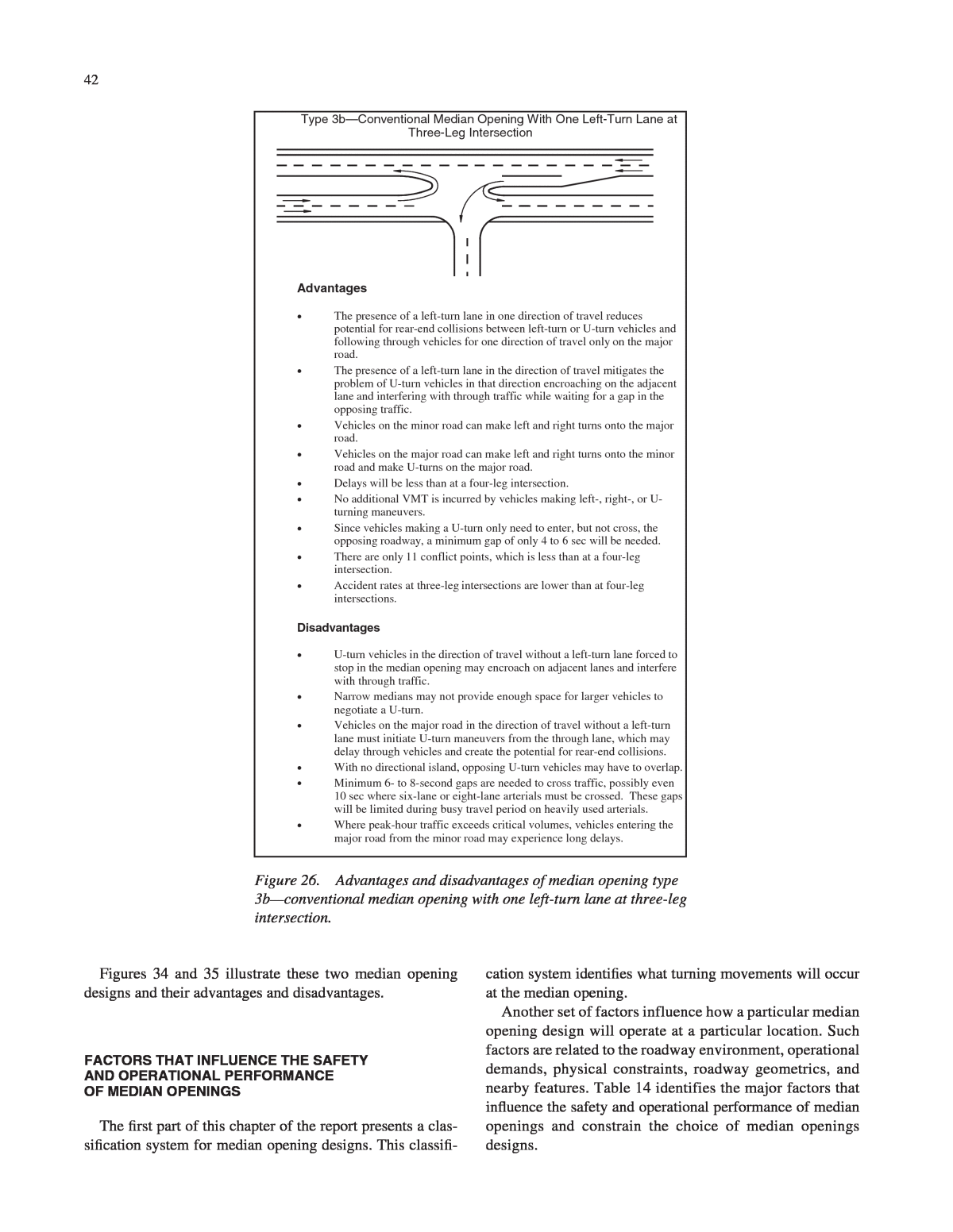
Figures 34 and 35 illustrate these two median opening designs and their advantages and disadvantages. FACTORS THAT INFLUENCE THE SAFETY AND OPERATIONAL PERFORMANCE OF MEDIAN OPENINGS The first part of this chapter of the report presents a clas- sification system for median opening designs. This classifi- 42 cation system identifies what turning movements will occur at the median opening. Another set of factors influence how a particular median opening design will operate at a particular location. Such factors are related to the roadway environment, operational demands, physical constraints, roadway geometrics, and nearby features. Table 14 identifies the major factors that influence the safety and operational performance of median openings and constrain the choice of median openings designs. Figure 26. Advantages and disadvantages of median opening type 3bâconventional median opening with one left-turn lane at three-leg intersection. Type 3bâConventional Median Opening With One Left-Turn Lane at Three-Leg Intersection Advantages ⢠The presence of a left-turn lane in one direction of travel reduces potential for rear-end collisions between left-turn or U-turn vehicles and following through vehicles for one direction of travel only on the major road. ⢠The presence of a left-turn lane in the direction of travel mitigates the problem of U-turn vehicles in that direction encroaching on the adjacent lane and interfering with through traffic while waiting for a gap in the opposing traffic. ⢠Vehicles on the minor road can make left and right turns onto the major road. ⢠Vehicles on the major road can make left and right turns onto the minor road and make U-turns on the major road. ⢠Delays will be less than at a four-leg intersection. ⢠No additional VMT is incurred by vehicles making left-, right-, or U- turning maneuvers. ⢠Since vehicles making a U-turn only need to enter, but not cross, the opposing roadway, a minimum gap of only 4 to 6 sec will be needed. ⢠There are only 11 conflict points, which is less than at a four-leg intersection. ⢠Accident rates at three-leg intersections are lower than at four-leg intersections. Disadvantages ⢠U-turn vehicles in the direction of travel without a left-turn lane forced to stop in the median opening may encroach on adjacent lanes and interfere with through traffic. ⢠⢠⢠⢠⢠Narrow medians may not provide enough space for larger vehicles to negotiate a U-turn. Vehicles on the major road in the direction of travel without a left-turn lane must initiate U-turn maneuvers from the through lane, which may delay through vehicles and create the potential for rear-end collisions. With no directional island, opposing U-turn vehicles may have to overlap. Minimum 6- to 8-second gaps are needed to cross traffic, possibly even 10 sec where six-lane or eight-lane arterials must be crossed. These gaps will be limited during busy travel period on heavily used arterials. Where peak-hour traffic exceeds critical volumes, vehicles entering the major road from the minor road may experience long delays.
Roadway Environment Environmental factors that influence the operational and safety performance of a median opening include degree of urbanization, speed, and access density. These three factors are interrelated to a great extent. For example, urban areas are typically characterized by lower speeds and greater access density, whereas rural areas are typically characterized by higher speeds and greater control of access. Degree of Urbanization The type of area in which a median opening is designed (i.e., urban, suburban, or rural) also determines the traffic vol- 43 umes it will experience and the turning volumes that will need to be accommodated. A median opening in an urban area probably will be surrounded by businesses that serve as traf- fic generators, creating a greater need for U-turns and left turns through the median opening. Median openings in rural areas, however, may only have to accommodate an occasional U-turn or left-turn vehicle because of the greater through- traffic demand of the roadway. Operating Speed Operating speed is another environmental factor that influ- ences the safety and operational performance of a median Figure 27. Advantages and disadvantages of median opening type 3câconventional median opening with two left-turn lanes at three-leg intersection. Type 3câConventional Median Opening With Two Left-Turn Lanes at Three-Leg Intersection Advantages ⢠The presence of left-turn lanes reduces potential for rear-end collisions between left-turn or U-turn vehicles and following through vehicles for both directions of travel on the major road. ⢠The presence of left-turn lanes mitigates the problem of U-turn vehicles encroaching on adjacent lanes and interfering with through traffic while waiting for a gap in the opposing traffic. ⢠Vehicles on the minor road can make both left and right turns onto the major road. ⢠Vehicles on the major road can make left and right turns onto the minor road and make U-turns on the major road. ⢠Delays will be less than at a four-leg intersection. ⢠No additional VMT is incurred by vehicles making left-, right-, or U- turning maneuvers. ⢠Since vehicles making a U-turn only need to enter, but not cross, the opposing roadway, a minimum gap of only 4 to 6 sec will be needed. ⢠There are only 11 conflict points, which is less than at a four-leg intersection. ⢠Accident rates at three-leg intersections are lower than at four-leg intersections. Disadvantages ⢠U-turn vehicles entering the through lanes may delay full-speed through traffic. ⢠Narrow medians may not provide enough space for larger vehicles to negotiate a U-turn. ⢠With no directional island, opposing U-turn vehicles may have to overlap. ⢠Minimum 6- to 8-sec gaps are needed to cross traffic, possibly even 10 sec where 6-lane or 8-lane arterials must be crossed. These gaps will be limited during busy travel period on heavily used arterials. ⢠Where peak-hour traffic exceeds critical volumes, vehicles entering the major road from the minor road may experience long delays.
opening. For example, the speed of through vehicles on the major road influences left-turn lane requirements, gap avail- ability, and weaving maneuvers. The safety and operational performance of a median open- ing without a left-turn lane is largely dependent on the oper- ating speeds of the vehicles on the roadway. Median open- ings, and other intersections, can experience large speed 44 differentials between turning vehicles and following through traffic. Research has shown that accident potential increases as the difference in speeds between vehicles in a traffic stream increases. Furthermore, drivers begin to slow down a con- siderable distance upstream of a median opening. Thus, large speed differentials are created a considerable distance in advance of the location at which the turn is made. Left-turn Figure 28. Advantages and disadvantages of median opening type 3dâconventional median opening with left-turn lanes and loons at three-leg intersection. Type 3dâConventional Median Opening With Left-Turn Lanes and Loons at Three-Leg Intersection Advantages ⢠Widening Disadvantages on the far side of the turn makes it possible to make a U-turn without stopping or backing and reduces interference between U-turn and through traffic, particularly for large vehicles. ⢠Without performing major reconstruction, additional space can be provided to facilitate the larger turning path of commercial vehicles along narrow medians. ⢠The presence of left-turn lanes reduces potential for rear-end collisions between left-turn or U-turn vehicles and following through vehicles for both directions of travel on the major road. ⢠The presence of left-turn lanes mitigates the problem of U-turn vehicles encroaching on adjacent lanes and interfering with through traffic while waiting for a gap in the opposing traffic. ⢠Vehicles on the minor road can make left and right turns onto the major road. ⢠Vehicles on the major road can make left and right turns onto the cross street and make U-turns on the major road. ⢠Delays will be less than at a four-leg intersection. ⢠No additional VMT is incurred by vehicles making left-, right-, or U- turning maneuvers. ⢠Since vehicles making a U-turn only need to enter, but not cross, the opposing roadway, a minimum gap of only 4 to 6 sec will be needed. ⢠Accident rates at three-leg intersections are lower than at four-leg intersections. ⢠U-turn vehicles entering the through lanes may delay full-speed through traffic. ⢠⢠⢠⢠⢠Narrow medians may not provide enough space for larger vehicles to negotiate a U-turn. With no directional island, opposing U-turn vehicles may have to overlap. Minimum 6- to 8-sec gaps are needed to cross traffic, possibly even 10 sec where 6-lane or 8-lane arterials must be crossed. These gaps will be limited during busy travel period on heavily used arterials. Where peak-hour traffic exceeds critical volumes, vehicles entering the major road from the minor road may experience long delays. The presence of a loon may make snow removal and other maintenance work more difficult.
lanes are the only means of effectively controlling the speed differential between turning vehicles and other traffic on major roadways. Because gaps are time based, rather than distance based, the availability of gaps for crossing and turning vehicles on a high- speed roadway is less than on a lower speed roadway with comparable traffic volumes. The reduced gap availability may cause drivers to accept smaller gaps, thus taking greater risks to perform a crossing or turning maneuver. The presence of shorter gaps can also influence the storage length require- ments of any turn lanes that are present at a median opening. That is, the difficulty turning vehicles experience in com- pleting a U-turn or left turn probably will create longer queues in a left-turn lane. Finally, speed influences the ease with which a vehicle can perform a weaving maneuver from an upstream intersection to the median opening. Desirable conditions would permit a driver to merge into the outside lane, select an acceptable gap 45 in order to merge into the inside lane, move laterally into the left-turn lane, and then come to a stop. The operating speeds of through vehicles on the major roadway not only affect the available gaps for merging from the outside lane to the inside lane, but determine the speed at which the weaving vehicle will enter the left-turn lane. Thus, a lower speed environment is more desirable for weaving maneuvers. Access Density Access density is another environmental factor that influ- ences the safety and operational performance of a median opening. Access points introduce conflicts and friction into the traffic stream. Vehicles entering and leaving the main roadway often slow the through traffic. The differences in speeds between through and turning vehicles increase acci- dent potential. Type 4aâDirectional Median Opening for Left Turns From Major Road at Three-Leg Intersection Advantages ⢠The presence of a left-turn lane reduces potential for rear-end collisions between left-turn or U-turn vehicles and following through vehicles on the major road. ⢠The presence of a left-turn lane mitigates the problem of U-turn vehicles encroaching on adjacent lanes and interfering with through traffic while waiting for a gap in the opposing traffic. ⢠Vehicles on the major road have direct left-turn access to the minor road. ⢠Vehicles on the major road can make left turns onto the minor road without having to accommodate minor-road vehicles making left-turn maneuvers through the median opening. ⢠Vehicles on the major road can make U-turn maneuvers in one direction of travel. ⢠Vehicles making right-turn maneuvers from the minor road do not experience delay associated with waiting behind a left-turning vehicle. ⢠For those maneuvers permitted, delays will be less than at a conventional median opening at a three-leg intersection. ⢠Since vehicles making a U-turn only need to enter, but not cross, the opposing roadway, a minimum gap of only 4 to 6 sec will be needed. ⢠There are only six conflict points, which is less than at a conventional median opening at a three-leg intersection. ⢠Accident rates at three-leg intersections are lower than at four-leg intersections. Disadvantages ⢠Minor road vehicles do not have direct left-turn access to the major road. ⢠U-turn vehicles entering the through lanes may delay full-speed through traffic. ⢠Additional VMT will be incurred by vehicles whose drivers desire to turn left from the minor road onto the major road. Figure 29. Advantages and disadvantages of median opening type 4aâdirectional median opening for left turns from major road at three- leg intersection.
Operational Demands The number of vehicles seeking to perform each traffic movement accommodated by a median opening influences such operational and safety factors as gap availability, number of conflicts, and left-turn storage. Specifically, major-road vol- ume, minor-road volume, left-turn volume, and U-turn volume represent operational demands that are placed on a median opening and influence its operational and safety performance. All of the volume types combined determine the number of conflicts at a median opening. That is, a median opening on a low-volume road with minimal turning volumes has fewer potential conflicts than a median opening on a high-volume roadway with large turning volumes. Major-Road Volume Major-road volume plays a large role in the gap availabil- ity on the major road for vehicles performing turning and 46 crossing maneuvers from the median opening. Large major- road volumes limit the number of gaps available for turning and crossing maneuvers and, thus, create a greater potential for angle collisions. Major-road volume also influences weav- ing maneuvers in advance of the median opening. In this case, large major-road volumes limit the number of gaps available for vehicles on an upstream minor-road or driveway to merge with the major-road traffic, change lanes from the outside lane to the inside lane, and safely perform a turning maneuver at the median opening. This can lead to increased potential for sideswipe collisions between weaving vehicles and through traffic. Minor-Road Volume Minor-road volume plays a key role in the number of crossing conflicts at a median opening. To reduce the poten- tial for angle collisions, some median opening designs pro- Type 4bâDirectional Median Opening for Left Turns Onto Major Road at Three-Leg Intersection Advantages ⢠Vehicles on the minor road have direct left-turn access to the major road. ⢠Vehicles on the major road in one direction of travel can make U-turn maneuvers. ⢠Right-turn maneuvers are unaffected by this treatment. ⢠Delays will be less than at a conventional median opening at a three-leg intersection. ⢠Since vehicles making a U-turn only need to enter, but not cross, the opposing roadway, a minimum gap of only 4 to 6 sec will be needed. ⢠There are only six conflict points, which is less than at a conventional median opening at a three-leg intersection. ⢠Accident rates at three-leg intersections are lower than at four-leg intersections. Disadvantages ⢠Vehicles on the major road do not have direct left-turn access to the cross street. ⢠The absence of a left-turn lane on the major road increases potential for rear- end collisions between U-turn vehicles and following through vehicles. ⢠U-turn vehicles forced to stop in the median opening may encroach on adjacent lanes and interfere with through traffic. ⢠U-turn vehicles entering the through lanes may delay full-speed through traffic. ⢠Additional VMT will be incurred by vehicles whose drivers desire to turn left from the major road onto the minor road. Figure 30. Advantages and disadvantages of median opening type 4bâ directional median opening for left turns onto major road at three-leg intersection.
hibit crossing maneuvers by providing directional channel- ization in the median opening and restricting the minor road to right turns only. Left-Turn and U-Turn Volumes Left-turn volume and U-turn volume influence the safety and operational performance of a median opening. The extent of this influence is based on the presence of a median left- turn lane and its storage capacity. The absence of a left-turn lane increases the potential for rear-end collisions between U-turn or left-turn vehicles and following through vehicles. At a median opening with a left-turn lane, left-turn and U-turn volumes influence the length of the turning lane necessary to accommodate the storage requirements. A queue of vehicles extending beyond the left-turn lane interferes with through traffic and increases the potential for rear-end collisions. At 47 any median opening, with or without a left-turn lane, left- turn volume affects the number of potential crossing conflicts between left-turn vehicles and opposing through vehicles, and U-turn volume affects the number of potential merging con- flicts between U-turn vehicles and opposing through vehicles. Physical Constraints Three constraints that influence the operational and safety performance of a median opening are sight distance, right-of- way width, and building setback. Sight Distance Intersection sight distance (ISD) is an important safety and operational consideration in the design of a median opening. Type 5aâConventional Median Opening Without Left-Turn Lanes at Four-Leg Intersection Advantages ⢠Vehicles on the minor road can either cross the major road or make left and right turns onto the major road. ⢠Vehicles on the major road in both directions of travel can make left and right turns onto the minor road and make U-turns on the major road. ⢠No additional VMT is incurred by vehicles making left-, right-, or U- turning maneuvers. ⢠Since vehicles making a U-turn only need to enter, but not cross, the opposing roadway, a minimum gap of only 4 to 6 sec will be needed. Disadvantages ⢠The absence of left-turn lanes increases potential for rear-end collisions between U-turn vehicles and following through vehicles. ⢠U-turn vehicles forced to stop in the median opening may encroach on adjacent lanes and interfere with through traffic. ⢠U-turn vehicles entering the through lanes may delay full-speed through traffic. ⢠With no directional island, opposing U-turn vehicles may have to overlap. ⢠Minimum 6- to 8-sec gaps are needed to cross traffic, possibly even 10 sec where 6-lane or 8-lane arterials must be crossed. These gaps will be limited during busy travel period on heavily used arterials. ⢠Where peak-hour traffic exceeds critical volumes, vehicles entering the major road from the cross street may experience long delays. ⢠There are 32 potential conflict points with both minor-road and major- road vehicles entering the median opening. ⢠Accident rates at four-leg intersections are higher than at three-leg intersections. Figure 31. Advantages and disadvantages of median opening Type 5aâconventional median opening without left-turn lanes at four-leg intersection.
NCHRP Report 375 states that ISD at median openings is complicated by the presence of the median itself, which may increase the ISD requirements at some locations or may con- tain sight obstructions that reduce the ISD. If a median is wide enough to store a vehicle, the sight distance require- ments of the intersection can be determined separately for each directional roadway. Insufficient ISD has both safety and operational problems. From a safety standpoint, drivers with insufficient ISD may be unable to anticipate and avoid potential collisions. From an operational standpoint, drivers with insufficient ISD may either extend their vehicle into the traffic stream in an attempt to improve their view of the road- way or accept less than desirable gaps in the traffic stream. 48 Either behavior may cause other vehicles to perform evasive or braking maneuvers. Right-of-Way Width and Building Setback Right-of-way width and building setback can limit the design options of a median opening. Local and highways agencies frequently are unable to acquire additional right-of- way because of financial or political limitations. Further- more, the acquisition of buildings is usually avoided unless absolutely necessary. These constraints often result in a nar- row median, limiting the design options to indirect left-turn designs, jughandles, or medians without a left-turn lane. Figure 32. Advantages and disadvantages of median opening type 5bâconventional median opening with left-turn lanes at four-leg intersection. Type 5bâConventional Median Opening With Left-Turn Lanes at Four-Leg Intersection Advantages ⢠The presence of left-turn lanes reduces potential for rear-end collisions between left-turn or U-turn vehicles and following through vehicles for both directions of travel on the major road. ⢠The presence of left-turn lanes mitigates the problem of U-turn vehicles encroaching on adjacent lanes and interfering with through traffic while waiting for a gap in the opposing traffic. ⢠Vehicles on the minor road can either cross the major road or make left and right turns onto the major road. ⢠Vehicles on the major road can make left and right turns onto the minor road and make U-turns on the major road. ⢠No additional VMT is incurred by vehicles making left-, right-, or U- turning maneuvers. ⢠Since vehicles making a U-turn only need to enter, but not cross, the opposing roadway, a minimum gap of only 4 to 6 sec will be needed. Disadvantages ⢠U-turn vehicles entering the through lanes may delay full-speed through traffic. ⢠With no directional island, opposing U-turn vehicles may have to overlap. ⢠Minimum 6- to 8-sec gaps are needed to cross traffic, possibly even 10 sec where 6-lane or 8-lane arterials must be crossed. These gaps will be limited during busy travel period on heavily used arterials. ⢠Where peak-hour traffic exceeds critical volumes, vehicles entering the major road from the cross street may experience long delays. ⢠There are 32 potential conflict points with both cross-street and major-road vehicles entering the median opening. ⢠intersections. Accident rates at four-leg intersections are higher than at three-leg
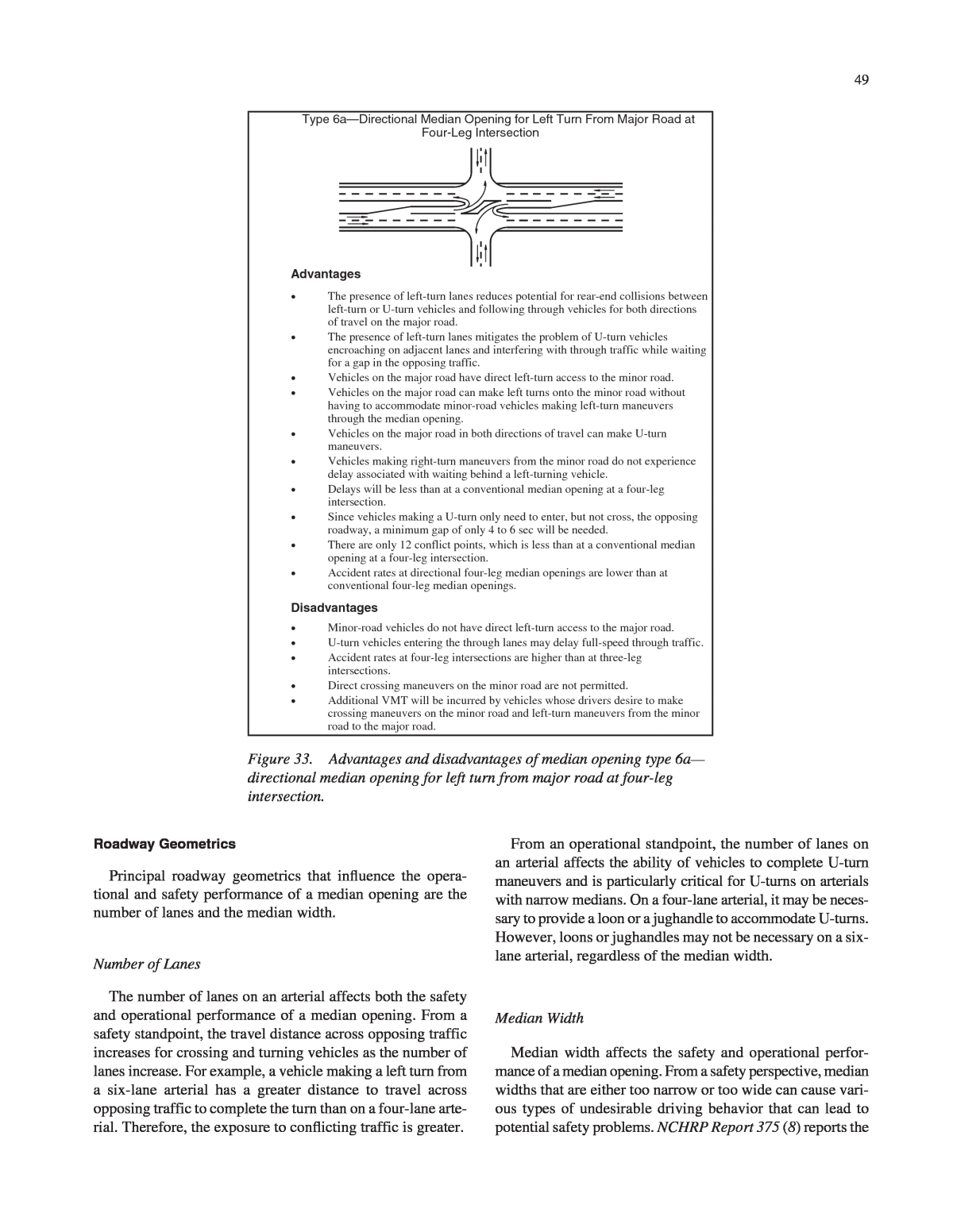
Roadway Geometrics Principal roadway geometrics that influence the opera- tional and safety performance of a median opening are the number of lanes and the median width. Number of Lanes The number of lanes on an arterial affects both the safety and operational performance of a median opening. From a safety standpoint, the travel distance across opposing traffic increases for crossing and turning vehicles as the number of lanes increase. For example, a vehicle making a left turn from a six-lane arterial has a greater distance to travel across opposing traffic to complete the turn than on a four-lane arte- rial. Therefore, the exposure to conflicting traffic is greater. 49 From an operational standpoint, the number of lanes on an arterial affects the ability of vehicles to complete U-turn maneuvers and is particularly critical for U-turns on arterials with narrow medians. On a four-lane arterial, it may be neces- sary to provide a loon or a jughandle to accommodate U-turns. However, loons or jughandles may not be necessary on a six- lane arterial, regardless of the median width. Median Width Median width affects the safety and operational perfor- mance of a median opening. From a safety perspective, median widths that are either too narrow or too wide can cause vari- ous types of undesirable driving behavior that can lead to potential safety problems. NCHRP Report 375 (8) reports the Type 6aâDirectional Median Opening for Left Turn From Major Road at Four-Leg Intersection Advantages ⢠The presence of left-turn lanes reduces potential for rear-end collisions between left-turn or U-turn vehicles and following through vehicles for both directions of travel on the major road. ⢠The presence of left-turn lanes mitigates the problem of U-turn vehicles encroaching on adjacent lanes and interfering with through traffic while waiting for a gap in the opposing traffic. ⢠Vehicles on the major road have direct left-turn access to the minor road. ⢠Vehicles on the major road can make left turns onto the minor road without having to accommodate minor-road vehicles making left-turn maneuvers through the median opening. ⢠Vehicles on the major road in both directions of travel can make U-turn maneuvers. ⢠Vehicles making right-turn maneuvers from the minor road do not experience delay associated with waiting behind a left-turning vehicle. ⢠Delays will be less than at a conventional median opening at a four-leg intersection. ⢠Since vehicles making a U-turn only need to enter, but not cross, the opposing roadway, a minimum gap of only 4 to 6 sec will be needed. ⢠There are only 12 conflict points, which is less than at a conventional median opening at a four-leg intersection. ⢠Accident rates at directional four-leg median openings are lower than at conventional four-leg median openings. Disadvantages ⢠Minor-road vehicles do not have direct left-turn access to the major road. ⢠U-turn vehicles entering the through lanes may delay full-speed through traffic. ⢠Accident rates at four-leg intersections are higher than at three-leg intersections. ⢠Direct crossing maneuvers on the minor road are not permitted. ⢠Additional VMT will be incurred by vehicles whose drivers desire to make crossing maneuvers on the minor road and left-turn maneuvers from the minor road to the major road. Figure 33. Advantages and disadvantages of median opening type 6aâ directional median opening for left turn from major road at four-leg intersection.
following observed types of undesirable driving behavior related to median width: ⢠Side-by-side queuingâWhen one vehicle is waiting in the median opening for an opportunity to cross or enter the far roadway and a second vehicle arrives in the same travel direction, the second driver may stop his or her vehicle beside rather than behind the first vehicle. Side- by-side queuing is a concern because it can lead to driver confusion about which of the two vehicles is to proceed first and, thus, can lead to conflicts. This poten- tial safety problem tends to occur where the median width is less than the length of two vehicles. Side-by-side queuing can also become a problem where a median opening is wide enough to store two or more vehicles one behind another. In this situation, the driver of a sec- ond vehicle may be tempted to pull beside the first vehi- cle to avoid delay. Again, this maneuver has the poten- tial for the drivers to become confused about which vehicle is going to proceed first. 50 ⢠Angle stoppingâAnother undesirable driving situation occurs when a vehicle stops on the median roadway at some angle other than perpendicular to the through lanes of the divided highway. In some cases, where the median is very narrow or a driver decides to cut a corner, the driver of a single vehicle may stop at an angle to the major road. Alternatively, when the median roadway is already occupied by one or more vehicles in the same direction of travel, a driver of another vehicle entering the median opening may find it necessary to stop at an angle to avoid encroaching on the through lanes of the major road. In either case, stopping at an unusual angle is undesirable because the vehicle may be hit by another vehicle from any of several directions and because other drivers may be confused about the intended path of that vehicle. ⢠Encroachment on through lanesâEncroachment on a through lane by either the front or rear of a vehicle may occur if the median width is less than the length of a vehicle and the driver enters the median when there is no available gap to cross or enter the far lanes of the divided highway. Type 7aâMidblock Jughandle to the Left for U-Turn Maneuvers Advantages ⢠Midblock access is provided for vehicles to (a) make a U-turn and (b) reach driveways on the opposite side of the street. ⢠Since only major-road traffic is involved, delays to vehicles making U-turns will be less than where an intersection is present. ⢠If U-turn traffic would otherwise proceed downstream to an intersection with a median opening, then this treatment should reduce VMT. ⢠There are only three conflict points, which is considerably lower than at an intersection. ⢠This design places vehicles in a better position for merging with major-road traffic than a conventional median opening design. ⢠The removal of left turns from a downstream intersection will increase the capacity of that downstream intersection. ⢠The presence of a left-turn lane reduces potential for rear-end collisions between left-turn or U-turn vehicles and following through vehicles for both directions of travel on the major road. ⢠The presence of a left-turn lane mitigates the problem of U-turn vehicles encroaching on adjacent lanes and interfering with through traffic while waiting for a gap in the opposing traffic. Disadvantages ⢠A minimum 4.6-m (15-ft) median is required for this design. ⢠U-turn vehicles must make a crossing maneuver, which is not required at conventional or directional midblock median openings. Figure 34. Advantages and disadvantages of median opening type 7aâmidblock jughandle to the left for U-turn maneuvers.
51 Type 7bâMidblock Jughandle to the Right for U-Turn Maneuvers Advantages ⢠Midblock access is provided for vehicles to (a) make a U-turn and (b) reach driveways on the opposite side of the street. ⢠If U-turn traffic would otherwise proceed downstream to an intersection with a median opening, then this treatment should reduce VMT. ⢠The removal of left turns from a downstream intersection will increase the capacity of that downstream intersection. ⢠There are only three conflict points, which is considerably lower than at an intersection. Disadvantages ⢠Turning traffic must cross one direction of travel and enter the roadway in the other direction of travel. Suitable gaps could be limited during periods of heavy traffic. ⢠During periods of heavy traffic, there could be major delays. ⢠The need to make a right-hand exit in order to make a U-turn may be confusing to drivers. ⢠The introduction of a bi-directional (although segregated) opening may increase accidents; however, this may be offset by a reduction in accidents at downstream intersections. ⢠U-turn vehicles entering the through lanes may delay full-speed through traffic. Figure 35. Advantages and disadvantages of median opening type 7bâmidblock jughandle to the right for U-turn maneuvers. Category Factor Roadway environment degree of urbanization (urban/suburban/rural) operating speed access density Operational demands major-road volume minor-road volume left-turn volume U-turn volume Physical constraints sight distance right-of-way width building setback Roadway geometrics number of lanes median width Nearby features proximity to driveways proximity to traffic signal proximity to adjacent median openings proximity to unsignalized intersections TABLE 14 Factors that influence the operational and safety performance of median openings
Nearby Features The proximity of a median opening to the following nearby features influences the operational and safety performance of the median opening: ⢠Driveways, ⢠Adjacent median openings, ⢠Signalized intersections, and ⢠Unsignalized intersections. NCHRP Report 420 (7) suggests that access points intro- duce conflicts and friction into the traffic stream. Vehicles entering and leaving the major road often slow the through traffic, and the difference in speeds between through and turning traffic increases accident potential. A discussion in the Green Book (3) about driveway spacing could also be applied to median openings and unsignalized intersections. The Green Book (3) recommends that, ideally, driveways should not be located within the functional area of an inter- section or in the influence area of an adjacent driveway. The functional area extends both upstream and downstream from the physical intersection area and includes the longitudinal limits of auxiliary lanes. The influence area associated with a driveway includes (1) the impact length (the distance from a driveway at which vehicle operations begin to be affected), (2) the driver perception-reaction distance, and (3) the vehi- cle length. A median opening placed too close to one or more drive- ways, intersections, or other median openings creates unde- sirably short weaving areas. For example, minor-road drivers seeking to negotiate their way to a nearby median opening on the major road should be able to enter the major-road traf- fic stream safely, select an acceptable gap in order to merge into the inside lane, and then move laterally into a median left-turn lane. The following are safety and operational problems that may occur when a median opening is located too close to a sig- nalized intersection: ⢠A median opening within the physical length of a left- turn bay should be avoided. It violates driver expectancy and restricts the sight distance of vehicles in the median opening. ⢠A median opening within the boundaries of regularly forming queues from neighboring intersections should be avoided. The problem with this situation is that when these queues build, âgood Samaritansâ may allow the left-turning vehicle through the queue, and the left- turning vehicle then crashes with a vehicle moving freely in an adjacent lane. ⢠When the queue in the through traffic lane extends past the median left-turn lane, vehicles seeking access to the median opening are trapped in the queue of the signal- ized intersection and cannot move into the left-turn lane until the queue advances. 52 RELATIVE SAFETY OF MEDIAN OPENING DESIGNS BASED ON TRAFFIC CONFLICT POINTS The classification of median opening designs provides a framework for comparing the relative safety of each design. The results of the accident data analysis, presented in Chap- ter 6 of this report, provide information on the relative safety performance of those median opening designs for which suf- ficient data existed. However, data for several median open- ing designs were not sufficient to quantify the relative safety with certainty. In these cases, the relative safety of each median opening design must be estimated or hypothesized. The relative safety of median opening designs can be repre- sented by the number of conflict points for each design. This approach is useful in the absence of actual data, but is ulti- mately limited because it does not consider the volumes of vehicles that conflict at each point. The use of conflict points to assess safety is described below. Intersection conflict analysis is a well-understood means of addressing the complexity and relative safety of alternative intersection designs. For example, it has long been known that three-leg intersections operate more safely than four-leg inter- sections because three-leg intersections have fewer conflict points at which conflicting traffic streams cross, merge, or diverge. Figure 36 illustrates the four basic types of vehicular conflicts: diverging, merging, weaving, and crossing. Intersection conflicts reflect the crossing or conflicting paths of vehicles moving from one leg to another. Depending on the type of movement (i.e., U-turn, right or left turn, or cross- ing), any given vehicle movement can conflict with one or more other vehicle movements. Figure 37 illustrates the vehicular conflicts at a conven- tional median opening at a four-leg intersection. The figure includes left-turn, right-turn, and through movements, but does not explicitly consider U-turn movements. However, any given U-turn movement includes the same diverge maneuver as one left-turn movement and the same merge maneuver as another left-turn movement. Table 15 summarizes the total number of conflict points for each of the typical median opening designs discussed ear- lier in Chapter 4 of the report. Table 15 suggests that median Figure 36. Types of vehicular conflicts (33).
opening designs should rank in the following order of rela- tive safety: Midblock Median Openings ⢠7âMidblock Jughandle ⢠1âConventional Midblock Median Opening ⢠2âDirectional Midblock Median Opening Median Openings at Three-Leg Intersections ⢠4âDirectional Median Opening at Three-Leg Intersec- tion ⢠3âConventional Median Opening at Three-Leg Inter- section Median Openings at Four-Leg Intersections ⢠6âDirectional Median Opening at Four-Leg Intersection ⢠5âConventional Median Opening at Four-Leg Intersec- tion 53 COMBINATIONS OF MEDIAN OPENINGS ALONG ARTERIAL STREETS Earlier in this chapter, seven categories of typical median openings were presented, along with subcategories based on the presence of left-turn lanes or loons or type of turning maneuvers permitted. Each type of typical median opening design represents one individual median opening. Often, high- way agencies use combinations of median opening designs to accomplish a particular goal along an arterial. This section presents several typical combinations of median opening designs that can be used along an arterial. Each combination is presented as a sum of the individual typical median opening designs that make up the combi- nation. For example, the first combination (Combination C1) is a directional midblock median opening with left-turn lanes (Type 2b) between two four-leg intersections with directional median openings that accommodate left turns from the major road (Type 6a). Thus, this combination is represented as: Combination C1 = Type 6a + Type 2b + Type 6a Eight typical combinations of median opening designs are presented below; many other combinations are possible. Chap- ter 6 of this report presents two examples of a safety com- parison between an individual median opening and a combi- nation of median openings accommodating the same turning movements. Combination C1âDirectional Midblock Median Opening Between Four-Leg Intersections With Directional Median Openings Combination C1 consists of a directional midblock median opening with left-turn lanes located between two four-leg inter- sections with left-turn lanes and directional median openings Figure 37. Vehicular conflicts at a conventional median opening at a four-leg intersection (27, 33). Typical median opening design Number of conflict points 1. Conventional Midblock Median Opening 4 2. Directional Midblock Median Opening 4 3. Conventional Median Opening at Three-Leg Intersection 11 4. Directional Median Opening at Three-Leg Intersection 6 5. Conventional Median Opening at Four-Leg Intersection 32 6. Directional Median Opening at Four-Leg Intersection 12 7. Midblock Jughandle 3 TABLE 15 Total number of conflict points for each typical median opening design
that accommodate U-turns and left turns from the major road, but not left turns from the minor road. This combination is illustrated in Figure 38 and is represented as Combination C1 = Type 6a + Type 2b + Type 6a Combination C1 can be used as an alternative to direct left turns in order to reduce conflicts and to improve safety along an arterial. Midblock U-turns make it possible to prohibit left turns from the minor road at each four-leg intersection and from driveways along the arterial. Vehicles must make left- turn movements by turning right onto the arterial and then making U-turns downstream. This combination is appropri- ate where left-turn demand on the minor road is relatively low or where it is desirable to reduce U-turn demand at the downstream intersection. Combination C2âConventional Midblock Median Opening Between Four-Leg Intersections With Conventional Median Openings Combination C2 is a conventional midblock median open- ing with left-turn lanes located between two four-leg inter- sections with left-turn lanes and conventional median open- ings. This combination is illustrated in Figure 39 and is represented as: Combination C2 = Type 5b + Type 1b + Type 5b Combination C2 provides access to through vehicles on the major road to development on the opposite side of the median. This combination is appropriate where left-turn demand on the minor road is relatively high or where it is desirable to reduce U-turn demand at the downstream intersection. 54 Combination C3âDirectional Midblock Median Opening Between Four-Leg Intersections With Conventional Median Openings Combination C3 includes a directional midblock median opening with left-turn lanes located between two four-leg intersections with left-turn lanes and conventional median openings. This combination is illustrated in Figure 40 and is represented as Combination C3 = Type 5b + Type 2b + Type 5b Combination C3 provides access to through vehicles on the major road to development on the opposite side of the median. The directional midblock median opening can accommodate heavy U-turn volumes. This combination is appropriate where left-turn demand on the minor road is relatively light or where it is desirable to reduce U-turn demand at the down- stream intersection. Combination C4âDirectional Midblock Median Opening Between Four-Leg Intersections Without Median Openings Combination C4 is a directional midblock median opening with left-turn lanes located between two four-leg intersec- tions without median openings. This combination is illus- trated in Figure 41 and is represented as Combination C4 = Closed Type 5a + Type 2b + Closed Type 5a Combination C4 can be used as an alternative to direct left turns in order to reduce conflicts and to improve safety along an arterial. Midblock U-turns make it possible to close the median opening at each four-leg intersection and prohibit Combination C1 = Type 6a + Type 2b + Type 6a Figure 38. Combination C1âdirectional midblock median opening between four-leg intersections with directional median openings.
55 Combination C3 = Type 5b + Type 2b + Type 5b Combination C4 = Closed Type 5a + Type 2b + Closed Type 5a Combination C2 = Type 5b + Type 1b + Type 5b Figure 39. Combination C2âConventional midblock median opening between four-leg intersections with conventional median openings. Figure 40. Combination C3âDirectional midblock median opening between four-leg intersections with conventional median openings. Figure 41. Combination C4âdirectional midblock median opening between four-leg intersections without median openings.
left-turn movements from driveways along the arterial. Vehi- cles must make left-turn or crossing movements by turning right onto the arterial and then making U-turns downstream. The directional midblock median opening can accommodate heavy U-turn volumes. This combination is appropriate where conventional median openings at four-leg intersections are experiencing safety problems such that the most effective treatment is to close the median openings. Combination C5âDirectional Midblock Median Opening Between Three-Leg Intersections Without Median Openings Combination C5 includes a directional midblock median opening with left-turn lanes located between two three-leg intersections without median openings. This combination is illustrated in Figure 42 and is represented as Combination C5 = Closed Type 3a + Type 2b + Closed Type 3a Combination C5 can be used as an alternative to direct left turns in order to reduce conflicts and to improve safety along an arterial. Midblock U-turns make it possible to close the median opening at each three-leg intersection and prohibit left-turn movements from driveways along the arterial. Vehi- cles must make left-turn movements by turning right onto the arterial and then making U-turns downstream. The directional midblock median opening can accommodate heavy U-turn volumes. This combination is appropriate where conven- tional median openings at three-leg intersections are experi- encing safety problems such that the most effective treatment is to close the median openings. Combination C6âConventional Midblock Median Opening Between Four-Leg Intersections Without Median Openings Combination C6 includes a conventional midblock median opening with left-turn lanes between two four-leg intersec- 56 tions without median openings. This combination is illustrated in Figure 43 and is represented as Combination C6 = Closed Type 5a + Type 1b + Closed Type 5a Combination C6 is similar to Combination C4, except that Combination C6 has a conventional rather than a directional midblock median opening. Combination C6 serves the same purposes as Combination C4, but is more appropriate where U-turn volumes are relatively light. Combination C7âConventional Midblock Median Opening Between Three-Leg Intersections Without Median Openings Combination C7 consists of a conventional midblock median opening with left-turn lanes between two three-leg intersections without median openings. This combination is illustrated in Figure 44 and is represented as Combination C7 = Closed Type 3a + Type 1b + Closed Type 3a Combination C7 is similar to Combination C5, except that Combination C7 has a conventional rather than a directional midblock median opening. Combination C7 serves the same purposes as Combination C5, but is more appropriate where U-turn volumes are relatively light. Combination C8âDirectional Midblock Median Opening Between Four-Leg Signalized Intersections With Conventional Median Openings But All Left-Turning Movements Prohibited Combination C8 includes a directional midblock median opening with left-turn lanes between two signalized four-leg intersections with conventional median openings, no left-turn Combination C5 = Closed Type 3a + Type 2b + Closed Type 3a Figure 42. Combination C5âdirectional midblock median opening between three-leg intersections without median openings.
57 Combination C6 = Closed Type 5a + Type 1b + Closed Type 5a Figure 43. Combination C6âconventional midblock median opening between four-leg intersections without median openings. Combination C7 = Closed Type 3a + Type 1b + Closed Type 3a Figure 44. Combination C7âconventional midblock median opening between three-leg intersections without median openings. Combination C8 = Signalized Type 5a + Type 2b + Signalized Type 5a Traffic Signal Traffic Signal Figure 45. Combination C8âdirectional midblock median opening between four-leg signalized intersections with conventional median openings but all left-turning movements prohibited.
58 lanes, and all left-turning movements prohibited. This com- bination is illustrated in Figure 45 and is represented as Combination C8 = Signalized Type 5a + Type 2b + Signalized Type 5a Combination C8 can be used as an alternative to direct left turns in order to reduce conflicts and improve safety along an arterial and to simplify signal phasing at signalized inter- sections. Midblock U-turns make it possible to prohibit all left turns at the signalized intersections as well as prohibit left turns from driveways along the arterial. Minor-road vehicles must make left-turn movements by turning right onto the arterial and then making U-turns downstream. Major-road vehicles must make left-turn or U-turn move- ments by proceeding through the intersection, making U- turns at the midblock median opening, and turning right onto the minor road. This combination is appropriate where con- ventional median openings at signalized four-leg intersec- tions are experiencing safety problems such that the most effective treatment is to reduce the number of conflicts by prohibiting turning movements at the intersections. It is gen- erally considered good practice to provide right-turn lanes on all approaches to the signalized intersection to accom- modate the heavy right-turn volumes that are inherent to indirect left-turn intersections.
