



Below is the uncorrected machine-read text of this chapter, intended to provide our own search engines and external engines with highly rich, chapter-representative searchable text of each book. Because it is UNCORRECTED material, please consider the following text as a useful but insufficient proxy for the authoritative book pages.
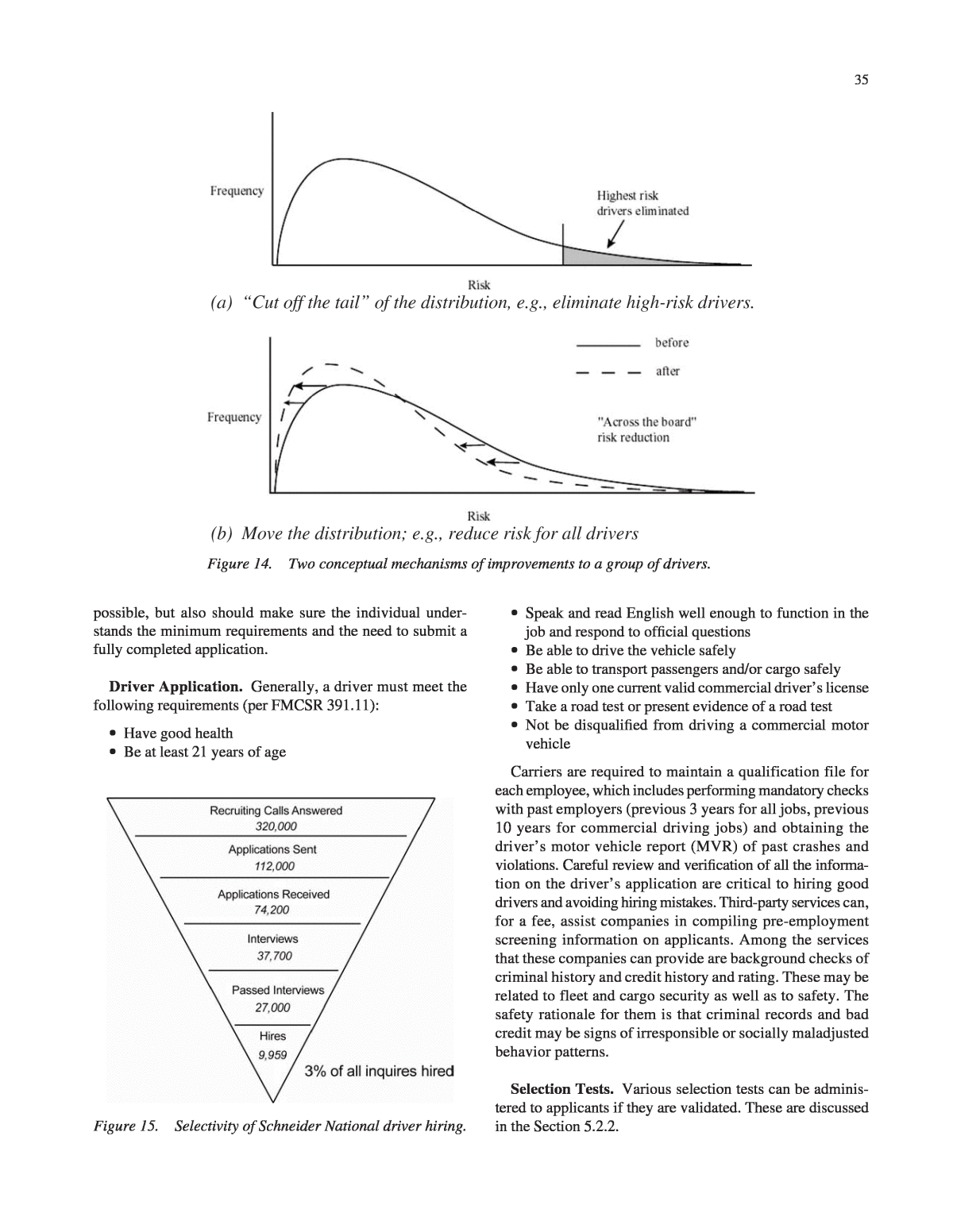
CHAPTER 5 OPERATIONAL SAFETY MANAGEMENT METHODS This chapter presents management techniques and prac- tices to improve CMV driver safety performance and, in par- ticular, reduce the problem of high-risk drivers. 5.1 CONCEPTUAL MODELS OF DRIVER IMPROVEMENT Conceptually, there are at least two distinct ways that the overall safety performance of a group of drivers may improve. Figure 14 illustrates these. In Figure 14a, the highest-risk drivers are eliminated from the distribution (e.g., they are never hired), thus âcutting off the tailâ of the driver risk distri- bution. Even if other drivers are not affected, this intervention would have the effect of improving the performance of the average driver of the group by eliminating the greatest source of risk. In Figure 14b, the safety performance levels of all, or most, drivers in a group are improved through some interven- tion. The entire curve shifts toward lower risk. Here again the overall average safety level of the fleet improves, but it is through âacross the boardâ improvement. Any safety manage- ment practice directed at all the drivers in a fleet would have this effect if it is effective. Of course, the ideal would be to employ both kinds of interventions and get both kinds of benefit. 5.2 RECRUITING/SELECTION/HIRING As one safety manager respondent put it, âDonât hire your- self a problem . . . Driver selection is critical.â The central premise of this research project is that there are very significant individual differences among commercial drivers in driving safety and that much of the variation in risk is related to consti- tutional or other long-term driver traits. A major implication is that the best way to reduce the impact of high-risk drivers is to improve driver selection and hiring so that these individuals can be eliminated before they become a liability or management problem for the fleet. Another safety manager respondent com- mented, âWe try to recognize the risk-taking drivers AHEAD of time through background checks, MVRs, DAC [data arc consulting], past employersâand then NOT HIRE them.â 5.2.1 Systematic Hiring There are many potential benefits of a systematic driver recruiting, selection, and hiring process, including the following: 34 ⢠Reduced crashes and incidents ⢠Reduced driver turnover ⢠Increased driver satisfaction ⢠Increased customer satisfaction ⢠Ensuring proper process for all applicants ⢠Increased quality of the drivers hired ⢠Increased company profitability Elite motor carriers are able to establish rigorous selection processes resulting in a small selection ratio; that is, a small percentage of applicants are selected and hired. A fundamen- tal principle of personnel selection is that low selection ratios (the ratio of hires to applicants) result in higher quality employ- ees. One goal of the staffing function in organizations is to attract enough potential employees (e.g., applicants) so that those selected represent a small percentage. Schneider National (Osterberg 2004) is one large carrier that has been able to attract a large number of driver applicants and be highly selec- tive in its hiring. Figure 15 below demonstrates its highly selec- tive process. Achieving this degree of selectivity is difficult or impossi- ble for most motor carriers because of the nationwide shortage of commercial drivers and the fact that most fleets cannot offer sufficiently attractive salaries, benefits, and job conditions to attract a surplus of applicants. Nevertheless, companies can institute systematic processes, such as those described in the following subsections. Appendix F provides additional infor- mation, job aids, and sample forms relating to driver selection and hiring. Advertising Open Positions. Advertising can be in both local newspapers and national trade publications. Include infor- mation on positive aspects of the job (to attract applicants) but also on minimum qualifications (to accomplish initial screen- ing). Minimum requirements might include the following: ⢠Be at least 21 years old ⢠Have at least 2 years commercial driving experience ⢠Pass DOT physical ⢠Have a clean driving record ⢠Pass a substance abuse test ⢠Have a commercial driverâs license (CDL) Telephone/Walk-in Interview. Interested persons will typically telephone or visit the company. Whoever takes the call or handles the visit should be as friendly and cordial as
35 ⢠Speak and read English well enough to function in the job and respond to official questions ⢠Be able to drive the vehicle safely ⢠Be able to transport passengers and/or cargo safely ⢠Have only one current valid commercial driverâs license ⢠Take a road test or present evidence of a road test ⢠Not be disqualified from driving a commercial motor vehicle Carriers are required to maintain a qualification file for each employee, which includes performing mandatory checks with past employers (previous 3 years for all jobs, previous 10 years for commercial driving jobs) and obtaining the driverâs motor vehicle report (MVR) of past crashes and violations. Careful review and verification of all the informa- tion on the driverâs application are critical to hiring good drivers and avoiding hiring mistakes. Third-party services can, for a fee, assist companies in compiling pre-employment screening information on applicants. Among the services that these companies can provide are background checks of criminal history and credit history and rating. These may be related to fleet and cargo security as well as to safety. The safety rationale for them is that criminal records and bad credit may be signs of irresponsible or socially maladjusted behavior patterns. Selection Tests. Various selection tests can be adminis- tered to applicants if they are validated. These are discussed in the Section 5.2.2. (b) Move the distribution; e.g., reduce risk for all drivers (a) âCut off the tailâ of the distribution, e.g., eliminate high-risk drivers. Figure 14. Two conceptual mechanisms of improvements to a group of drivers. Figure 15. Selectivity of Schneider National driver hiring. possible, but also should make sure the individual under- stands the minimum requirements and the need to submit a fully completed application. Driver Application. Generally, a driver must meet the following requirements (per FMCSR 391.11): ⢠Have good health ⢠Be at least 21 years of age
Structured Personal Interviews. Loose, unstructured interviews are no longer acceptable as selection procedures; courts have held that interviews are subject to the same validity standards as tests. Instead, a structured interview following a prescribed set of questions should be employed. Appendix F-3 is a sample of a structured personal interview. In-person inter- views are preferred to phone interviews because they convey more information and lead to more accurate decisions. They also provide a better opportunity to establish rapport with the applicant. DOT Physical Examination. This exam is required of every commercial driver every 2 years. If possible, establish a working relation with a trusted local physician to ensure that federal standards, as well as any additional company stan- dards, are met. Road Test. The road test is also required by federal reg- ulations, but it should be conducted near the end of the hiring process. The well-administered road test should assess driver skills and attitudes. It should include the pre-trip vehicle inspection. Maneuvering skills to be tested include steering, stopping, shifting, and backing exercises. The company road test is ordinarily similar to the state CDL road test, but should include assessment of courteous and sound defensive driving as well as minimum required maneuvers. A written certificate of the road test is required; one copy is provided to the driver and one is kept in the driverâs company file. Because of the driver shortage and the many other tasks and responsibilities that carrier safety managers have, it may be tempting to cut corners to expedite the hiring process. Safety experts believe, however, that systematic processes and rigor- ous standards pay off by reducing risk, driver turnover, and the lost time and money associated with driver turnover. Checking the MVR, contacting past employers, testing for alcohol and drugs, and on-road driving tests are federally required protocols that were rated high in effectiveness by the survey respondents. Less frequent practices included check- ing criminal record, checking credit history and rating, and using selection tests. 5.2.2 Selection Tests Chapter 4 described various individual traits associated with or thought to be associated with crash risk. These included personality factors such as impulsivity, aggressive/angry personalities, introversion-extroversion, and sensory-motor performance factors such as visual acuity, field independence/ dependence, selective attention, and tracking. As described in Sections 4.7 and 4.8, measures of these and other personal factors can potentially be employed as selection tests for commercial drivers. The research project survey results support the idea that cer- tain personality and performance factors are strongly related to risk. In the survey, the factors âaggressive/angry,â âimpatient/ 36 impulsive,â and âinattentiveâ were the three factors of the 16 rated that had the strongest associations with risk by both carrier safety managers and other experts. Further evidence of an industry consensus on the importance of driver personality and character was provided by Corsi and Barnard (2003), who found that all surveyed segments of the CMV industry highly valued such driver personal traits as patience, reliability, self- discipline, and self-motivation. Selection tests are intended to provide objective and pre- dictive measures of personality traits and performance capa- bilities. To be employed legally by organizations, selection tests must meet certain criteria established by federal regula- tions to prevent discrimination against ethnic or other groups. Since 1964, pre-employment screening has been subject to restrictions imposed under Title VII of the Civil Right Act. As such, employers are prohibited from using measures that have an adverse exclusionary impact on minority groups based on sex, race, or a particular ethnic group. A pre-employment selection measure will be labeled as âadverseâ if the selec- tion rate for any race, color, or ethnic group is less than 4/5 (i.e., 80%) of the rate for the group with the highest rate (Equal Employment Opportunity Commission [EEOC] 2003). If a pre-employment measure is found to violate Title VII, affir- mative action steps must be implemented to remedy the situ- ation with the underrepresented minority. These steps may include (a) a recruitment program designed to attract the underrepresented minority, (b) revamping selection instru- ments to eliminate exclusionary effects, (c) initiation of mea- sures designed to ensure members of the affected group (who are qualified) are included within the group of potential can- didates, and (d) systematic efforts to redesign or revamp jobs in a way that provides opportunities for the underrepresented group (Department of Labor [DOL] 2003). The DOL (2003) indicates that pre-employment measures must conform to the American Psychological Associationâs (APA) Standards for Educational and Psychological Testing (APA 1985). The APA recognizes three basic methods for test validation: content-, construct-, and criterion-based validation. Content validation involves analyzing the content of tests and demonstrating that it corresponds to the job tasks as set out in a complete job analysis. For example, any simulated driving task would likely qualify as having content validity in relation to commercial driving. Construct validation involves showing that the test measures specific personnel characteris- tics that are shown to be necessary for performance of the job. For example, performance tests of sustained vigilance would likely be considered valid for hiring commercial drivers because driving is a sustained vigilance task. Criterion vali- dation involves showing a statistical correlation between per- formance on the test and actual performance measures by specific criteria (APA 1985, DOL 2003). Ideally, this would be demonstrated by research studies showing a strong cor- relation between performance on the test and performance on the job.
The first step in designing a pre-employment screening mea- sure is to perform a job analysis, that is, delineation of specific work behavior or performance that is relevant to the job in question (EEOC 2003). The results may include the following: job function or duties, work tasks, skills or competencies, work-related knowledge, work environment factors, decision- making authority, educational requirements, communication, training, and physical abilities. However, skills or knowledge that can be learned through regular training or on-the-job experience may not be used to exclude potential applicants. Although physical abilities may be assessed, the ADA requires that qualified individuals with a disability be provided with rea- sonable accommodations. The job analysis should be helpful in determining what âreasonable accommodationsâ could be made for an individual to perform the job (DOL 2003). Ideally, the potential measure is then given to a representa- tive sample of participants. The sample should be representa- tive of the candidates for the job in question and should include the races, ethnic groups, and sexes normally available in the relevant job market. The relationship between the selection procedure and the criterion measure (e.g., crash or violation rate) should be shown to be statistically significant (DOL 2003). The EEOC requires full documentation of the validity of any pre-employment screening measure. In the research project surveys, a small percentage of carriersâ26%âindicated that they use selection tests in hir- ing. Moreover, their effectiveness rating was near the bottom (7th) of the eight methods presented. Respondents answering yes on this question were also asked to name the tests they used. Most respondents answering this question gave a general answer rather than naming a specific test. Moreover, many of the tests mentioned were not personality or perfor- mance tests but were tests of specific job-related knowledge or skill. The various responses included the following: ⢠Entrance test ⢠Screening process ⢠Performance test ⢠Predictive index ⢠Random evaluations ⢠Talent and behavioral interviews ⢠Math aptitude ⢠In-house developed ⢠Personality ⢠Smith System ⢠Hours-of-service ⢠Load securement Various selection tests are marketed for use by motor carri- ers. Additionally, several of the personality and performance measures described in Chapter 4 have potential use as selection tests. The following are selection tests known to the authors: ⢠The Daecher Driver Profile is a questionnaire that mea- sures the beliefs, attitudes, personality, opinions and other 37 personal characteristics of the driver to determine how he/she approaches the world and deals with different sit- uations. According to company materials, it was vali- dated in accordance with APA Division 14 principles for validation of personnel selection procedures as a way to differentiate good drivers from bad ones. ⢠The Dula Dangerous Driving Index (Dula and Ballard 2003) was created to measure driversâ self-reported tendencies to driver dangerously. Subscales include aggressive driving, negative emotional driving, and risky driving. Validation studies have shown positive correlations between these scale scores and traffic citations and at-fault crashes. ⢠The Scheig Hiring and Performance System (www. scheig.com) is a selection instrument that includes scales on driver interest and willingness to perform tasks related to commercial driving, responses to situations truck drivers face, and a self-rating checklist of personal char- acteristics. The candidateâs answers are benchmarked against those of experienced, safe commercial drivers. ⢠The All Scan Driver Battery, developed by TestMaster, Inc. (http://testmaster.rio.com), is a questionnaire consist- ing of approximately 300 true-false and multiple-choice questions. It measures three broad factors related to the psychological profile of a truck driver: intelligence, factual knowledge, and âtruckerâ personality. ⢠The Hogan Personality Inventory (HPI, www. hoganassessments.com) is a questionnaire designed to predict job performance on a variety of jobs, including commercial driving. It includes scales on driver attitudes and personality traits, including service orientation, stress tolerance, reliability, social adjustment, ambition, sociability, likeability, prudence, intellect, and school success. ⢠ProScan and JobScan, by PDP Management Systems, are multi-scale questionnaires that can be benchmarked to a variety of professions. PhD, Inc. (phdassessments.com), reports development of truck driver selection profiles using ProScan and a computer program called SURE. The developed model enabled greater than 90% identifi- cation of both high-risk and low-risk commercial drivers where risk was measured based on 5-year crash and violation records. ⢠The MindData Attitude Index by Minddata (www. minddata.com) uses questionnaires that are validated against a companyâs successful employees, based on the view that a companyâs successful employees are the best benchmark to judge prospective employees. Scale scores are generated for work-relevant personal traits such as adaptability, aggressiveness, compliance, concentration, drive, organization, stamina, and trust. ⢠The RoadRISK Assessment (www.vfrm.net) is an on- line assessment of driver attitude, hazard perception, safety-relevant knowledge, behavior, personality, and other risk measures such as driving mileage and times
(e.g., late night driving). Its website claims that drivers with the worst scores are 3 to 16 times more at risk for crashes than those with the best scores. ⢠Waypoint is a short sensory-motor test that requires sub- jects to connect numbered and alphabetized boxes pre- sented in random spatial patterns of increasing complexity. The Waypoint website (waypointresearch.com) cites stud- ies of five over-the-road trucking fleets involving more than 200 drivers. Claimed âhit ratesâ ranged from 43% to 75%, false alarm rates ranged from 6% to 12%, and projected crash reductions ranged from 23% to 54%. (Note: The above list represents those commercial driver selection tests known to the authors at the time of synthesis publication. The tests were not evaluated and no endorsement of any test is implied by this presentation.) 5.3 DRIVER PERFORMANCE EVALUATION Of course, once drivers are hired, their in-service safety performance must be continuously monitored and evaluated. Continuous tracking of driver crashes, incidents, and viola- tions was practiced by virtually all (99%) the survey safety manager respondents, and they rated this as the most effec- tive of the four evaluation practices presented. Other experts also rated this as the most effective evaluation practice. Car- riers are required by the FMCSRs to annually check the MVRs of their drivers, but many companies check them more frequently. Moreover, many managers feel that incidents (e.g., damage to cargo or loading areas) are important events to track along with crashes, traffic violations, and inspection violations. One safety manager respondent stated, âA num- ber of small incidents will eventually result in a major inci- dent.â Appendix F-5 and F-6 provide a sample driver safety record and performance coaching job aid, respectively, for employee evaluation and feedback. The Truck Driver Risk Assessment Guide (American Truck- ing Associations Foundation [ATAF] 1999a) recommends systematic monitoring of numerous indicators of driver activ- ity and performance, including (a) driving skills, (b) driving habits (including health and wellness-related), (c) hours-on- duty, (d) miles driven, (e) MVR reviews, (f ) traffic violations, (g) crashes, (h) cargo loss, (i) vehicle inspection and mainte- nance, and ( j) non-driving activities such as loading/unloading practices and connecting/disconnecting. A number of perfor- mance evaluation-related job aids are provided in appendices to the guide. A survey conducted as part of the I-95 Corridor Coalition Coordinated Safety Management study (Stock 2001) found that âdriver monitoringâ was considered important by more than 90% of their carrier respondents. Knipling, Hickman, and Bergoffen (2003) also found that tracking both individual driverâs crashes/incidents/violations and overall fleet safety statistics were practiced by about 90% of safety manager respondents. Continuous tracking of driversâ crashes, 38 incidents, and violations was rated as one of the most effective safety management practices. âPeriodic observation of drivingâ was the second most practiced driver evaluation method at 82%. Its effectiveness was rated about average compared with the other evaluation methods presented. Such observations can be in the truck (âride alongsâ), or can be from outside the truck (from a âshadow vehicleâ). Both manager and senior driver ride-alongs were included as items in Part 5 of the present survey. Less than 50% of respondents employ these methods, and they were rated near the bottom of the 12 safety management methods presented. Nevertheless, ride-along observations can be a way of providing one-on-one instruction and behavioral counsel- ing to drivers. They should include explicit feedback on driving behaviors. FMCSA participants in the project focus group noted the importance of feedback and the fact that immediate feedback directly to the driver is generally more effective than delayed feedback. Limitations of ride-alongs and other driving observations include the fact that they are time- consuming for managers and that they may not provide accu- rate appraisals of driversâ actual on-road behavior. Two other driver evaluation practices addressed in this research project survey were less frequently employed. These were âHowâs My Driving?â placards and on-board safety monitoring (OBSM). The use of âHowâs my Driving?â safety placards was the lowest rated of the four evaluation methods presented in the current survey and was also relatively infre- quently practiced and poorly rated by Knipling, Hickman, and Bergoffen (2003). The use of safety placards has some advan- tages and several disadvantages. It is a method for identify- ing risky driving behavior by drivers before these behaviors result in a crash. Corrective management actions (e.g., repri- mands, counseling, retraining) can follow a report from the public about a driverâs unsafe driving. Third-party companies providing placards and receiving 800-number calls from the public claim that their use results in fleet crash rate reduc- tions. Disadvantages include the fact that itâs a âhit or missâ technique; that is, there is no guarantee that risky driving will be reported. Callers may or may not describe the incident accurately, leading to possible disputes with drivers. Most of the phone calls from the public, and therefore the feedback received by drivers, will be negative, perhaps leading drivers to resent the method and believe that they have been unlucky rather than that they have misbehaved. OBSM would seem to be a technique with tremendous potential to assess commercial driver safety performance and identify unsafe drivers. Many safety-critical driving behaviors (e.g., speed, acceleration, brake use, driving times associated with hours-of-service compliance) can be continuously mon- itored electronically. Emerging technologies can measure for- ward headway (to detect tailgating), rollover risk on curves, lane tracking, lateral encroachments toward adjacent vehicles (e.g., during lane changes), and even driver alertness and attention (Knipling, Hickman, and Bergoffen 2003). Such technologies may provide safety performance feedback,
both to drivers and their managers, in addition to providing collision warnings (Knipling and Olsgard 2000). OBSM data can serve as the basis for short- and long-term safety performance feedback and counseling to drivers and can be employed in support of fleet behavior-based safety (BBS) and safety incentive programs. In spite of this safety potential, commercial drivers and fleet safety managers have not widely embraced the use of OBSM. A major issue is driver acceptance. A 1995 study sponsored by the Office of Motor Carriers (OMC; the prede- cessor agency to FMCSA) and conducted by Penn + Schoen Associates found that OBSM was not well accepted by commercial drivers because they perceived it as an invasion of privacy and/or as a sign of disrespect for their professional- ism as drivers. Ironically, drivers in this study generally acknowledged the potential safety benefits of its use. A recent commercial driver focus group study conducted by the Lib- erty Mutual Research Institute (Roetting et al. 2003) found that drivers were willing to be monitored and to receive feed- back from on-board technologies, but only if the feedback were specific, constructive, individualized, and implemented within a positive and supportive management environment. Knipling, Hickman, and Bergoffen (2003) found that OBSM was one of the least used of the 28 fleet safety management practices reviewed. Among those managers who actually used it, however, OBSM was often ranked as one of the more effec- tive safety management methods. These survey results were similarâonly 31% of the safety manager respondents used the method, but its effectiveness ratings from those who used it were second only to continuous tracking of crashes, viola- tions, and incidents. As discussed by Knipling, Hickman, and Bergoffen (2003), it is ironic that carrier safety managers almost universally mon- itor driver crashes, incidents, and violations, but do not typi- cally monitor the source safety behaviors that create these outcomes. Involvement in safety outcomes such as crashes, incidents, and violations is obviously affected by chance, and reports of these events may be misleading or inaccurate. Poten- tial advantages of continuous OBSM include the following: ⢠It provides objective, naturalistic data on driving behaviors that are the âsourceâ of crash risk. ⢠It is continuous, and thus potentially can provide real- time, daily, weekly, or long-term evaluations of drivers. ⢠If multiple measures are employed, the data can selec- tively address specific safety behaviors (e.g., tailgating, hard braking). ⢠Feedback to drivers can be provided in a timely manner. ⢠It can be the basis of reward programs as well as disci- plinary action. ⢠It can be used to address safety behavior and performance issues before a crash, incident, or violation occurs. In short, OBSM is a technology and management approach with tremendous potential, but this potential is not being real- 39 ized in the commercial motor transport industry. Behavioral, analytic, and technological advancements could make this tech- nique more acceptable to drivers and easily used by managers. Also, OBSM needs to be seen as data support for management actions rather than as an end in itself; as one respondent noted, âUse of on-board monitoring needs to occur with one-on-one feedback to drivers.â It also needs to be integrated with enlight- ened behavioral safety management methods. 5.4 DRIVER EMPLOYEE MANAGEMENT 5.4.1 Training and Counseling Training for new hires on driving skills, company rules for driving (e.g., speed policy), other company procedures and policies, loading and unloading, and customer relations is an important part of the hiring process for most safety-conscious fleets (ATAF 1999b; Knipling, Hickman, and Bergoffen 2003). Most fleets hire new drivers in a probationary status and then have them train with a driver trainer or senior driver. Some companies conduct apprenticeship and âfinishingâ pro- grams for new drivers, and many conduct regular refresher training for their experienced drivers. Most carrier safety man- agers rate their in-house training programs as being important to carrier safety (Stock 2001). According to one safety man- ager, âTraining/retraining of all drivers is a must. Consistent driver quarterly safety meetings are also a must. Keep safety a constant.â Of greatest interest here are remedial training programs for problem drivers. The research project survey and a similar pre- vious survey (Knipling, Hickman, and Bergoffen 2003) yielded almost identical results. In both surveys, 69% of carrier safety manager respondents employed remedial training for problem drivers, and its effectiveness was rated about average of the methods presented. The term âremedial trainingâ may cause resentment among some drivers; an option is give it a more benign name such as ârefresher training.â Like most industrial training, remedial training for commercial drivers should focus on specific safety-related knowledge, skills, and attitudes. If conducted by a manager or senior driver, it affords an opportu- nity for one-on-one counseling and building a rapport that can lead to better compliance with fleet safety rules. One large mid-western fleet employs a high-fidelity truck driving simulator to provide remedial/refresher training to its problem drivers. The simulator enables realistic training on special roadway conditions (e.g., upgrades, downgrades, and slippery roads) and emergency maneuvers (e.g., responding to a jackknife or tire blowout). Unfortunately, few studies have documented the effec- tiveness of remedial driver training. Unless evaluation stud- ies are carefully controlled, it can be difficult to separate genuine improvement from random improvement that would have occurred without training. A recent review of 24 stud- ies of post-license non-commercial driver education found
âno evidence that post-license driver education is effectiveâ (Ker et al. 2004). In motor carrier fleets, its effectiveness depends on how systematically it is conducted and on follow- up monitoring of a driverâs safety performance. One respon- dent noted that, âProactive programs and one-on-one dialog have the best chance of improving poor performance.â 5.4.2 Rewards and Punishment Several survey questions addressed management practices relating to behavioral consequencesâpositive or negative. Several questions asked respondents to rate reward-based prac- tices and punishment-based practices. Other questions asked respondents to weigh the effects of rewards and âdiscipline.â Both groups of respondents rated monetary rewards as among the most effective of management techniques, and non-mone- tary rewards were also rated relatively high by other experts. More than 90% of safety managers employ reprimandsâboth verbal and writtenâas a form of punishment, but their effec- tiveness was rated by both groups as relatively low. Eighty- four percent of safety managers employ suspension from service as a punishment and, not surprisingly, they rate it as one of the most effective interventions. One respondent expressed frustration with any efforts to discipline problem drivers, com- menting that, âMost high-risk drivers have little sense of responsibility and respond little to disciplinary action.â The results of questions on the relative merits of rewards and discipline (presented in Table 7) are reproduced in Table 11. For drivers in general, both respondent groups rated rewards as more effective than discipline, although many respondents in each group rated the two approaches as having equal impact. For problem drivers, responses shifted toward discipline as the more effective intervention, although here again a number of respondents rated the two approaches as having equal impact. Financial rewards as incentives for safety are widely em- ployed in North American CMV fleets. Barton and Tardif (1998) reported that 70% of trucking firms surveyed had an incentive/reward program. Their pilot evaluation of incentive programs found that they resulted in significant crash and incident reductions and, in particular, substantial reduc- tions in driver turnover rates. In one example (reported in Barton and Tardif 2002), a less-than-truckload (LTL) fleet with 80 power units was experiencing a nearly 100% driver 40 turnover rate annually. The implementation of a driver incen- tive program reduced the turnover rate to about 20% annu- ally, at an average cost of about $2,000 in incentive rewards per driver. For each retained driver, the company saved about $8,000 in recruiting, training, and management costs. Another company gave bonuses to drivers for improvements in fuel economy (which is also associated with improved safety). Over an entire year, the program resulted in fuel savings of approxi- mately $15,000 per vehicle, while fuel efficiency bonuses aver- aged about $6,000 per driver. Thus, the fleet saved $2.50 for every dollar spent on the program. In the I-95 Corridor Coalition âBest Practicesâ study (Stock 2001), 25% of small fleets (1 to 9 vehicles) had financial reward programs for safe driver performance, but more than 80% for larger fleets (51+ vehicles) had them. Most safety managers surveyed rated such programs as effective. In SafeReturns (ATAF 1999b), 41% of all fleets surveyed, and 66% of âaward winningâ fleets, provided cash bonuses to drivers for safe driving. Of the carrier safety managers sur- veyed by Knipling, Hickman, and Bergoffen (2003), 73% used incentive programs for driver safety outcome measures (e.g., crash-free miles), but these programs were rated as only mod- erately effective compared with other fleet safety management practices. In the current survey, only 38% of safety managers used âmonetary rewards,â but it was rated third-highest in effec- tiveness of the 12 methods presented. Other experts rated these programs as the most effective method of the 12. As noted, the use of disciplinary actions in response to commercial driver crashes, violations, and incidents is wide- spread. Many behavioral scientists discourage the use of neg- ative consequences as a principal method to reduce at-risk safety-related work behaviors (Daniels and Rosen 1988, Geller 2001, Krause 1997, McSween 1995). Punishment can significantly reduce unwanted behaviors if the punish- ment is severe, certain, and immediate. However, there are several undesirable side effects and limitations associa- ted with its use, such as escape, aggression, apathy, and âcounter-controlâ (Daniels and Rosen 1988, Geller 2001, McSween 1995). Escape. People tend to avoid situations and people asso- ciated with negative consequences. Reliance on punishment may lead people to avoid reporting injuries or near-misses. Further, those that do have an injury, near-miss, or crash are SAFETY MANAGERS OTHER EXPERTS RESPONSE CHOICE Drivers in General Problem Drivers Drivers in General Problem Drivers Rewards 28% 15% 52% 12% Discipline 12% 45% 9% 46% Equal Impact 60% 40% 39% 42% TABLE 11 Which has stronger influence: rewards or discipline?
likely to report they were behaving safely to avoid being pun- ished. This may make it difficult to identify at-risk behaviors associated with the violation or crash. Also, negative conse- quences produce unpleasant emotions and attitudes. When people feel controlled they are only motivated to do what is expected, and not to go beyond the call of duty for safety (Geller 2001, McSween 1995). Aggression. Rather than escaping from negative conse- quences, people may choose to attack those associated with them. During the last decade, violence in the workplace has become more commonplace. Physical aggression toward man- agement or coworkers associated with negative consequences is only one example of aggression. Disgruntled workers may also slow down production, sabotage safety or production pro- grams, steal supplies, or vandalize company property. Worse, employees may take out their feelings of frustration on family members (Geller 2001). Apathy. Punishment may suppress other, non-targeted behaviors. It may stifle communication and foster a failure- oriented approach. People feel better about achieving success rather than avoiding failure (Geller 2001). âCounter-control.â People do not like being controlled. They may not comply with discipline if they believe they will not be caught performing the punished behavior. An excellent example is provided by general driver behavior on U.S. high- ways. Fines and other punishments for speeding do not effec- tively deter speeding. Drivers may slow down when they see a patrol car, but they resume speeding as soon as the police car is out of sight. Some motorists go to great lengths to avoid being caught speeding by investing in radar detectors and radar jammers. When people feel controlled, they look for ways to beat the system. A non-transportation study by Zohar, Cohen and Azar (1980) provides some support for the use of positive conse- quences over negative consequences. Zohar, Cohen, and Azar (1980) used a positive feedback intervention to significantly increase ear plug use at a metal fabrication plant. During the intervention, management decided to also punish workers who were observed not wearing their earplugs. Workers caught not wearing ear plugs were required to leave their work stations for several hours with a resultant loss of pay. The enforcement pro- gram was in effect for three months but failed to produce any changes in ear plug use. In fact, workers actually wore their ear plugs less while the enforcement program was imposed (less than 10%) compared with ear plug use during the baseline phase (20%). During the same time, workers receiving positive feedback for ear plug use continued to wear their ear plugs nearly 90% of the time compared with a 35% baseline. This is not to say that punishment should never be used. Peo- ple who routinely violate safety rules and endanger themselves and others should understand that they are required to comply with safety regulations. However, negative consequences may 41 inhibit learning and constructive interaction. Geller (2002) rec- ommends trying âpositive disciplineâ rather than punishment. For example, workers observed violating an organizationâs safety regulations may be sent home with pay to evaluate the infraction and decide what can be done to reduce the reoccur- rence. The employee has two options: (1) not returning to work if the employee and his/her supervisor believe the work culture is not consistent with the employeeâs personal priorities or (2) return to work and develop an action plan for avoiding the at-risk behavior in question. Continued violations may warrant a shift toward more negative consequences such as fines, sus- pension, or termination. 5.4.3 Behavior-Based Safety Over the last 20 years, BBS has become increasingly pop- ular in many organizations to combat employee injures and their associated costs. The BBS approach is to intervene sys- tematically and directly on safety-related target behaviors. Target behaviors are defined in an observable and measurable way and then observed and recorded in the work setting. When a relatively stable baseline measure of the frequency, rate, or duration of behavior is obtained, an intervention is implemented to change the behavior in beneficial directions. Interventions typically involve modifying target behavior antecedents (situations prior to behavior that set the stage for the behavior) and/or consequences (events after behavior that motivate behavior). Consequences may include tangi- ble (e.g., monetary) rewards, but often the emphasis is on non-monetary rewards such as recognition and praise for improvement and safety goal attainment. In group settings, the development of a safety esprit de corps among workers is an important motivational method. To determine intervention effectiveness, the incidence of target behaviors is recorded during and/or after the intervention and compared with base- line measures of behavior (e.g., Daniels and Rosen 1988, Geller 2001, Geller and Williams 2001). One of the primary tools used to influence behavior in BBS is peer observation and feedback (Geller 2001, Geller and Williams 2001). Coworkers systematically observe fel- low workers and record the occurrence of safe and at-risk work behaviors on a checklist. The results can be based on individual or group performance. The feedback can be given publicly or privately, and it is often combined with education or training (Zohar, Cohen, and Azar 1980). BBS approaches have a number of advantages, including (a) they can be administered by individuals with minimal pro- fessional training, (b) they can reach people in the setting where the problem occurs (i.e., the work site), and (c) worker- leaders can be taught the behavior-change techniques most likely to work under specific circumstances (Baer, Wolf, and Risley 1987; Daniels and Rosen 1988; Geller 2001). BBS programs have been used successfully to increase safety-related work behaviors in a variety of organizational settings, including pizza delivery (Ludwig and Geller 1991,
1997), paper mills (Fellner and Sulzer-Azaroff 1984), mines (Fox 1987), pipeline operations (McSween 1995), and manu- facturing (Reber and Wallin 1984). Guastelloâs (1993) review of occupational safety and health studies found that BBS had the highest average reduction of injury rate (59.6%) compared with other safety approaches, including personnel selection, technological interventions, group problem solving, govern- ment action, stress reductions, near-miss reporting, poster cam- paigns, and quality circles. Sulzer-Azaroff and Austin (2000) reported that 32 of the 33 published articles they reviewed on BBS studies showed reductions in work-related injuries. Beyond the traumatic personal consequences of occupa- tional injuries and fatalities, there are also critical social and economic consequences to consider. Behavioral Science Tech- nology, Inc. (BST), studied workersâ compensation rates at 11 sites following the introduction of a BBS intervention and reported a 39% reduction (compared with a 4-year baseline) in compensation claims in year 1, 46% reduction in year 2, and a 70% reduction in year 3 (BST 1998). Similarly, Hantula et al. (2001) showed reductions in workersâ compensation claims at two manufacturing organizations after the introduction of a BBS intervention and substantial cost reductions (one organi- zation had a 10.53:1 return on its investment). BBS views individual employee differences in safety in terms of the interventions required to change that behavior. 42 Some people are likely to benefit from the most simple and least expensive interventions, while others (such as high-risk drivers) may require more intrusive interventions to influence behavior change. Geller (1998, 2001) developed the multiple intervention level (MIL) hierarchy to summarize the impact, intrusiveness, and cost of various interventions. Figure 16 dis- plays the MIL hierarchy. Interventions at Level 1, such as posters, signs, and other safety messages or slogans, are the least expensive and intrusive. People not influenced by Level 1 interventions âfall through the cracks.â These people require more intrusive and expensive interventions, such as peer-to- peer coaching or an incentive/reward program. The height of each intervention box indicates the financial cost to implement the intervention. The length of each box represents the prob- ability that a person will be affected by the intervention (i.e., result in behavior change). The width of each intervention level (marked A, B, C) indicates repeated applications of the same intervention. In this model, high-risk drivers will âfall through the cracksâ until a more aggressive and comprehen- sive intervention influences their behavior. In spite of its obvious emphasis on behavior, BBS does not necessarily assume a one-dimensional view towards safety. Interventions aimed solely at reducing at-risk safety-related work behaviors without acknowledging the system in which they occur may have limited long-term success (Geller 2001, Figure 16. Multiple intervention level (MIL) hierarchy (Geller 1998).
Geller and Williams 2001, Krause 1997). Geller (2001) sug- gests there are three dynamic and interactive factors in a safety culture (i.e., system), called the âSafety Triad.â Changes in one factor usually impact the other two. As depicted in Figure 17, a successful BBS approach requires continual attention to all three factors in the Safety Triad. Unfortunately, because of its emphasis on direct behavioral observation and feedback, BBS is most applicable to settings where employees work in groups (e.g., manufacturing, mainte- nance) rather than alone. In the trucking industry, BBS is likely to be more effective when applied to loading and unloading safety than when applied to solitary driving. Driver self- management, described in Section 5.4.4, is an attempt to trans- fer the principles and benefits of BBS to solitary work settings. 5.4.4 Driver Self-Management The effectiveness of behavioral self-management has been documented in numerous clinical settings. Self-management techniques documented include the reduction of alcohol con- sumption (Garvin, Alcorn, and Faulkner 1990; Sitharthan, Kavanagh, and Sayer 1996), the control of personal weight (Baker and Kirschenbaum 1993), exercise (Konradi and Lyon 2000), and the cessation of smoking (Curry 1993). Unfortu- nately, the potential benefits of using self-management tech- niques to improve safety-related driving behaviors have received little attention and have only recently been evaluated systematically. Self-management is an improvement process whereby indi- viduals change their own behavior in a goal-directed fashion (Mahoney 1972) by (a) manipulating behavioral antecedents, (b) observing and recording specific target behaviors, and (c) self-administering rewards for personal achievements (Geller and Clarke 1999, Kazdin 1993). Research indicates that five self-management procedures can facilitate behavioral improvement, including (a) activator management (Heins, Lloyd, and Hallahan 1986), (b) social support (Stuart 1967), (c) goal setting (Locke and Latham 1990), (d) self-monitoring and self-recording (Lan, Bradley, and Parr 1993), and (e) self- rewards (Sohn and Lanal 1982). 43 Several studies have successfully used self-management techniques to increase the safety-related driving behaviors of bus divers (Olson and Austin 2001), short-haul truck drivers (Hickman and Geller 2004), and CMV drivers (Krause 1997). Olson and Austin (2001) used a combination of self- monitoring and feedback with commercial bus drivers to influence a 12.3% increase in safe driving performance, with individual increases in performance ranging from 2% to 41%. Hickman and Geller (2004) used an intervention package com- posed of training, self-monitoring, feedback, and goal setting with short-haul truck drivers and reported reductions in two tar- geted at-risk driving behaviorsâoverspeeding and extreme braking. Krause (1997) used a combination of self-monitoring and feedback with CMV drivers and reported a 66% reduction in injuries and crashes. Since most commercial drivers operate their vehicles alone, there may be substantial benefits from the development and widespread application of practical self-management tech- niques for them. If driver self-management practices could be integrated with other fleet safety-promoting activities, it may become an effective CMV safety management tool. For example, as discussed earlier in this chapter, the use of self- management relating to driving safety parameters recorded on OBSMs could be a particularly powerful intervention because of the many safety-critical behaviors (e.g., speed, acceleration, headway maintenance) that can be captured by OBSMs. Unfor- tunately, a minority of carriers encourage driver safety self- management (36% in the survey), and it was not rated as highly effective by either carrier safety managers or other experts. Safety self-management, like BBS in general, appears to be a technique with great but unrealized potential in the CMV industry. Moreover, since the whole concept of safety self- management presupposes some level of worker self-motivation and conscientiousness, it may be a technique that is more effective in making good drivers better than in correcting the unsafe behaviors of the worst drivers. 5.4.5 Termination The fleet management methods described above are various ways to improve the performance of problem drivers within a fleet. The widespread success of behavioral approaches demonstrate that undesirable behavior can be changed. Never- theless, termination is always an option and may be the prudent decision for many problem drivers. No survey questions asked directly about termination, but âsuspension from ser- viceâ as a driver disciplinary method was practiced by 84% of respondents and rated by them as one of the most effective management practices. In their comments, survey respondents minced no words in their comments on necessary management actions when dealing with their worst drivers: ⢠âProblem drivers are generally unresponsive to efforts to make them safer. The only option that will enhance safety is removal.â Behavior Person Environment Knowledge, Skills, Abilities, Intelligence, Motives, Personality Equipment, Tools, Machines, Housekeeping, Heat/Cold, Engineering Complying, Coaching, Recognizing, Communicating, Demonstrating âActively Caringâ Safety Culture Figure 17. The Safety Triad (Geller 2001).
⢠âBad drivers are bad drivers. You canât change them. Just get rid of them.â ⢠âWorst 10% tend to stay that way, whatever you doâ unless caused by inexperience, youth, or medical/sleep condition.â ⢠âThe ultimate goal of the safety manager is to eliminate the bottom 10% of drivers.â ⢠âOnce identified, high-risk drivers must totally convince me they are capable of change, or you must get rid of them.â ⢠âA poor employee has little or no regard for policies and laws no matter what the task. These employees need to be removed from service.â The U.S. EEOC, which enforces laws and provides over- sight of federal employment regulations, does not prescribe any standard procedures for termination or layoff of employ- ees. Yet, the federal government has established laws and regulations prohibiting job discrimination based on ethnic group, race, color, sex, religion, or national origin. 44 The Age Discrimination in Employment Act of 1973 pro- hibits discrimination against qualified individuals 40 years old or older. In addition, many states and local jurisdictions have enacted protections against discrimination based on sex- ual orientation, status as a parent, marital status, and political affiliation. The Americans with Disabilities Act of 1990 prohibits dis- crimination against qualified individuals with disabilities. A disability is defined as a physical or mental impairment that substantially limits major life activities. Employers are required to provide reasonable accommodations (e.g., making work facilities more accessible) to disabled persons to facili- tate their performance of essential job tasks. Yet, an employer is not required to make special accommodations if so doing requires significant expense or hardship to the company. To avoid becoming embroiled in civil or criminal cases involving charges of discrimination, employers should (a) not engage in such discrimination and (b) keep extensive and precise records documenting job-related reasons for hiring and firing actions.
