


Below is the uncorrected machine-read text of this chapter, intended to provide our own search engines and external engines with highly rich, chapter-representative searchable text of each book. Because it is UNCORRECTED material, please consider the following text as a useful but insufficient proxy for the authoritative book pages.
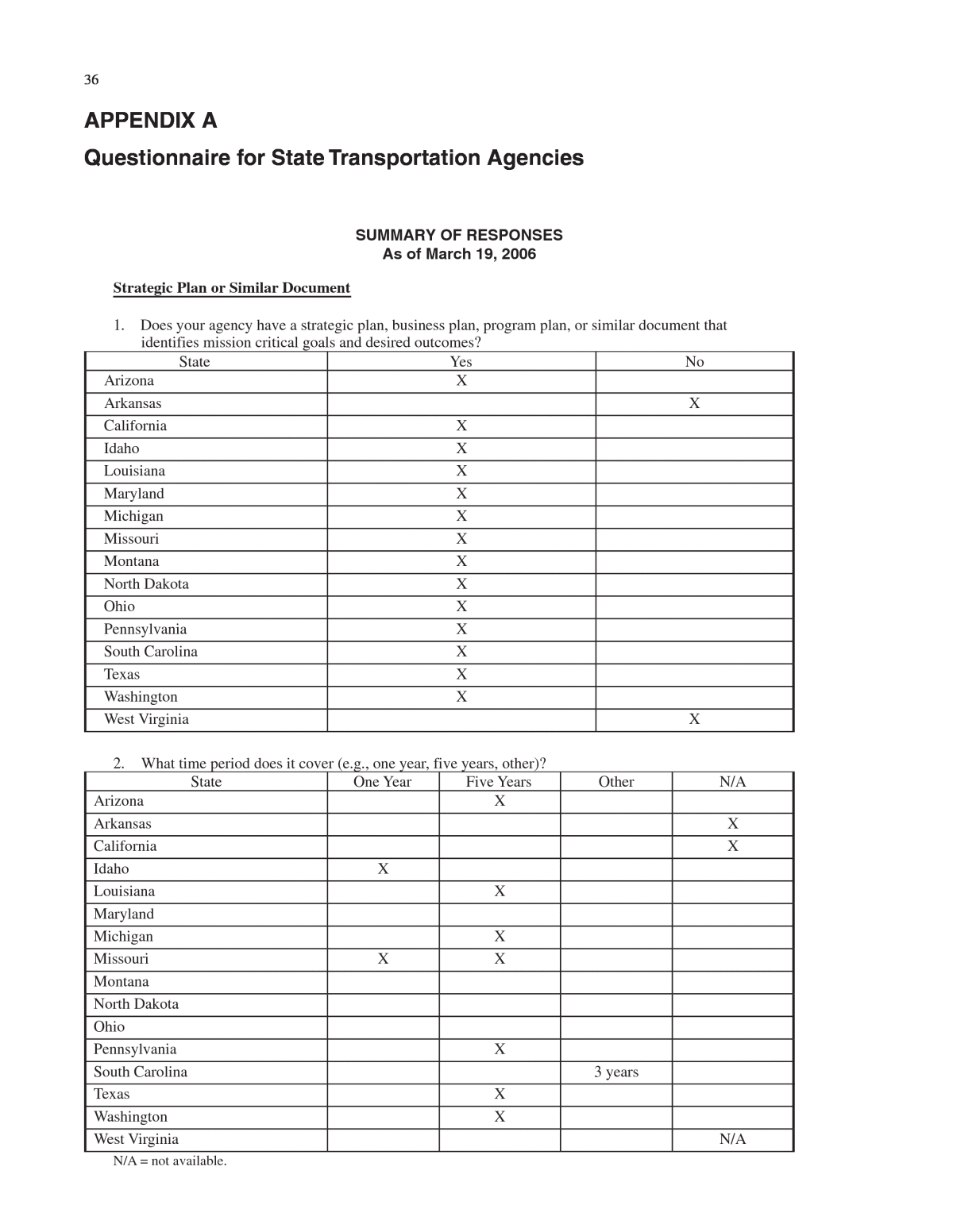
36 APPENDIX A Questionnaire for State Transportation Agencies SUMMARY OF RESPONSES As of March 19, 2006 Strategic Plan or Similar Document 1. Does your agency have a strategic plan, business plan, program plan, or similar document that identifies mission critical goals and desired outcomes? State Yes No Arizona X Arkansas X California X Idaho X Louisiana X Maryland X Michigan X Missouri X Montana X North Dakota X Ohio X Pennsylvania X South Carolina X Texas X Washington X West Virginia X 2. What time period does it cover (e.g., one year, five years, other)? State One Year Five Years Other N/A Arizona X Arkansas X California X Idaho X Louisiana X Maryland Michigan X Missouri X X Montana North Dakota Ohio Pennsylvania X South Carolina 3 years Texas X Washington X West Virginia N/A N/A = not available.
37 3. How frequently is it updatedâAnnually? Every two years? Every five years? It is not updated? Other? State Annually Every Two Years Every Five Years Other/Not Updated Arizona X Arkansas N/A California X Idaho X Louisiana X Maryland X Michigan Other Missouri X Montana Other North Dakota X Ohio X Pennsylvania X South Carolina X Texas X Washington Other West Virginia N/A N/A = not available. 4. How many years has this document been in place? State No. of Years in Place? Comments Arizona 15 Arkansas N/A California The department has been doing some form of strategic planning since the late 1990s, when we came up with the mission statement (âCaltrans Improves Mobility Across Californiaâ). Our goals have been tweaked periodically during the last few years and in particular last year. The use of a simplified mission statement exemplifies the multi-modality of the mission, and is easier for staff to internalize, remember, and apply to day-to-day operations and tasks. Idaho 10 plus Louisiana 6 Maryland 8 Michigan 5 Missouri 3 Montana 5 North Dakota 4 Ohio 6 Pennsylvania 2.5 South Carolina Not sure Texas 20 plus With periodic updates Washington N/A West Virginia N/A N/A = not available.
5. Does that document include a component specific to workforce development and training or other reference to employees as valued resources? If yes, would you please provide a copy attached to the questionnaire response. State Yes No Arizona X Arkansas N/A California X Idaho X Louisiana X Maryland XâSHA Business Plan 2004â2007 in Values and in Efficiency of Government goal Michigan X Missouri X Montana X North Dakota X Ohio Xâ http://www.dot.state.oh.us/BusinessPlan0607/BusinessPlan 06-07Final.pdf Pennsylvania X South Carolina X Texas http://www.dot.state.tx.us/insdtdot/geninfo.htm? pg=stratplan X Washington X West Virginia N/A N/A = not available; SHA = State Highway Administration. 6. Who is involved in the preparation and update of the document? State Who Involved? Arizona Top management Arkansas N/A California Typically, the document is prepared annually, and updated quarterly by a journey- to senior-level transportation planner under the direction of senior management. The preparer acts as liaison to guide and coordinate the preparation of the Strategic Plan by delegated preparers in each of the 10 offices within the Division of Transportation Planning. The preparer collects these reports on a quarterly basis; compiles them into one unified and cohesive report; ensures consistency of format, language, and content; obtains Division Chief approval; and forwards a single Strategic Plan for the division to the Planning Deputyâs office, where it is recorded and tracked quarterly. The Planning Deputy incorporates the Strategic Plan into his annual report to the Director. Idaho Executive staff Louisiana Each division Maryland All levels of management and employee teams Michigan A cross-functional team Missouri The Organizational Results Unit Montana The Director and top-level executives, and a consultant who became an employee charged with ensuring its use North Dakota The process starts with the executive levelâthe NDDOT Director and three deputy directors. The process extends down the organization through district engineers and division directors. There is also input from supervisors, who are invited to meet with the top executives and provide general input. Ohio Ohio DOT executive leadership (agency director and assistant directors) 38
39 Pennsylvania Executive staff and support team South Carolina Senior management Texas Department administration, public information office, statistics are provided by the appropriate business unit. Washington Lead is Strategic Planning Division with input from major organizations within the agency. West Virginia N/A N/A = not available. 7. Do you have a succession planning process? If yes, does it include the identification of training needs related to succession planning? State Yes No Arizona X/NA Arkansas X California X/X Idaho X Louisiana X Maryland X/X Michigan X Missouri X/X Montana X North Dakota X/X Ohio XâSuccession planning is formally reviewed with Executive Leadership as a critical part of the ODOT Human Resources Plan (HR Plan). Each District and Division Deputy Director annually submits a formal plan, reviewed by the assistant directors and Director for approval. This HR Plan consists of the following: (1) a detailed staffing level analysis, (2) temporary employee usage analysis, (3) retirement composite summary, (4) major projects and work plan projections, (5) summary planning sheet, and (6) tables of organization for each district and division. Overall, ODOT uses current trends to project future staffing level need. Although our succession planning methodology does not identify training needs related to succession planning, it is highly systematic and deliberate. It ensures continuity in critical positions, encourages growth and development of our existing workforce, and provides strategies for acquiring new talent to meet both current and future business needs. Pennsylvania X South Carolina X Texas X Washington X West Virginia X N/A = not available. 8. How do you link the results of your strategic planning or similar process to funding requests, funding allocations, and organization and individual performance assessment? State Process for Linking Arizona N/A Arkansas N/A California Strategic planning is linked to the departmentâs fiscal operations through the annual budget and legislative approval processes. The fiscal year is from July 1 to June 30. Agencies typically forward their budget requests to the legislature in March, the legislature sends it to the Governor's office in April, and the Governorâs office review
and recommendations are completed and sent to the legislature in May. By law, the legislature is required to finalize the budget by June 15. The final budget is effective July 1, and the agencies obtain their approved and final budgets within the first few weeks of the new fiscal year. Professional Development for Transportation Planning is funded from federal state planning and research (SPR) funds. While the budget process is going on, the Office of Professional Development is identifying training needs (see Questions 9â13 below), compiling training statistics for the current fiscal year, and planning its budget for the upcoming fiscal year. Ultimately, dollars approved through the budget approval process become matching state funds for SPR funded projects. In addition, and concurrent with the budget process, transportation planning managers in the districts and headquarters each meet with the Planning Deputy individually to discuss performance in the context of their respective strategic plans, to compare the yearâs accomplishments with goals established at the beginning of the fiscal year. Idaho No formal process Louisiana Agency goals are being developed for the July 2005âJune 2006 fiscal year. Individual performance assessments are being directly tied to agency/section goals. Maryland No response Michigan N/A Missouri Tracker Measurement Program Montana The plan used the balance scorecard methods and the goals in the plan were the basis for employeesâ performance appraisals at all levels of the department. There is no connection with the allocation of funds. North Dakota The strategic plan is a living document used by all levels of the NDDOT for planning and implementation of projects and activities. Ohio All division, office, and individual employee annual work plans are derived from the goals of the agency business plan. All budget requests must be justified and all justifications are based on business plan and work plan goals. Likewise, all performance evaluations rate employees on completion of work plan items. The agency also continuously monitors and rates itself according to Organizational Performance Indices (OPI). OPIs are a quantitative measure of agency performance and are tied directly to the agency business plan. Pennsylvania Through the strategic and business planning process South Carolina Not sure Texas N/A Washington Plan will include an implementation component that links funding and allocation. West Virginia N/A N/A = not available; SPR = state planning and research. Training Needs Assessment 9. Do you conduct a training needs assessment? State Yes No Arizona X Arkansas X California X Idaho X Louisiana X Maryland X Michigan X Missouri X Montana X 40
41 North Dakota X Ohio X Pennsylvania X South Carolina X Texas X Washington X West Virginia X 10. If yes, please describe your methodology. State Methodology Arizona One-on-one interviews, focus groups, written instrument Arkansas A team is used to develop the training needs assessment. California The Office of Professional Development (OPD) distributes a survey around the middle of May of each year to the transportation planning functions within each of the 12 district offices and the âmodalâ planning divisions located in headquarters; e.g., Rail, Mass Transit, Aeronautics, Local Assistance, and Transportation Planning. The survey captures the training needs perceived by the districts; i.e., dictated by transportation system requirements or mandated by federal or state law. The results of the Needs Assessment Surveyâcourses, seminars, and forumsâare incorporated into OPDâs annual Strategic Plan. Idaho Questionnaire, focus groups Louisiana The construction and maintenance training units, responsible for course development, meet in the 1st quarter of each year with their respective Work Plan Committee members to discuss current course development status and prioritize the list of remaining training needs as well as new requests that have been received. The committee consists of the appropriate division director, district administrative personnel, district trainers, and other selected field personnel. Maryland Training coordinator, manager, and employee meet to conduct a Personnel Development Plan. Michigan Not done Missouri Focus groups statewide Montana We do not have a statewide survey, but rather identify gaps in knowledge, required training, and acquisition of new technology or procedures. We offer management development training to prepare employees to be supervisors. This is a prerequisite to becoming a supervisor unless the employee has one year of supervisory experience. North Dakota This year we used a survey provided by Upper Great Plains Transportation Institute for the Transportation Learning Network (TLN). The survey was distributed department wide to all divisions and districts. The results were used to provide feedback for TLN programming. Survey results are also being used to provide training through other avenues. We also collect individual professional development needs and career development needs annually through our Employee Professional Development Plan and Performance Appraisal process. Also, we are notified by divisions and districts of specific training needs for their employees. Ohio The Office of Training develops an annual work plan that includes ongoing analysis of the training needs of the existing workforce to meet the goals of the agency business plan. Pennsylvania In the past, functional area training needs assessments were conducted by each of eight colleges within the Transportation University corporate university structure. Additional organizational training needs assessments were conducted by training coordinators in the 11 engineering districts around the state.
South Carolina Each employee completes a document that includes a minimum of three topics or areas that they believe they need training in to maintain or improve in their jobâthis is completed annually. Texas Two assessment are conducted annuallyâone a formal process and the second a mid-year assessment to identify and schedule for immediate critical needs. Formal process: A cover memo with supporting files is sent to each major business unit in the department (14,000+ employees); 25 districts, 21 divisions, and 8 offices plus administration. An Access database with active hyperlinks to the course descriptions along with how to build the response survey is included. Business units are allotted 60 days to gather, combine, and submit to the Training, Quality, and Development (TQD) Division. More than 250 courses (instructor-led) are listed in the training catalog. TQD takes responses andcombines data into one useable report to identify what training needs are to be scheduled in what locations statewide in preferred dates. The survey tool was recently shared with about 10 other state DOTs that were looking for a model. Informal survey: A simple e-mail to each business unitâs training coordinator asking for a response by a certain date (usually within 14 days) for what criticalpolicy needs courses are required for the remainder of the fiscal year. This allowsfor shorter-term scheduling as needed. Washington WSDOT has a mainframe training management system that functions on a series of curriculum matrices that contain the recommended training determined by a panel of experts in each of our 13 curriculum areas. The system keeps track of how many employees have completed training, according to priority. The training staff reviews reports of the number of employees who have completed training. In general, our needs assessment procedures are automated. Training staff coordinates with the principal discipline leaders throughout the department to anticipate and document new and continuing needs. West Virginia N/A N/A = not available. 11. How frequently do you update the assessment? State Update Frequency Arizona When work changes, or there is low performance, or a new process is implemented Arkansas We are just starting to develop our plan and have not yet set a timeframe for updating the document. California Annually Idaho Every 2 to 3 years Louisiana Annually Maryland Annually Michigan N/A Missouri Every 5 years Montana On an as-needed basis North Dakota Annually Ohio Annually Pennsylvania Annually South Carolina Annually Texas Annually Washington Monthly via the automated system described in Question 10 West Virginia N/A N/A = not available. 42
43 12. Which internal (e.g., executive, managers, or employees) and external (e.g., customers or universities) are consulted when assessing or updating the organizationâs training needs? State Internal External Arizona Executives, managers, employees Consultants Arkansas Upper and mid-level managers and employees California Typically, the transportation planning functions within each of the 12 district offices, and the âmodalâ planning divisions located in headquarters; e.g., Rail, Mass Transit, Aeronautics, Local Assistance, and Transportation Planning. Idaho Internal: all levels of department. This year, focus groups with executive staff, section managers, mid-level supervisors, and employees owing to increasing workforce challenges and an ambitious DOT vision. Do not conduct external needs assessments. We are not yet functioning at this strategic level. Louisiana Division and section heads, managers, district administrators, district training coordinators, and specialists To be developed by February 2006 Maryland All customers are considered. Michigan N/A Missouri District and division directors None identified Montana Managers, supervisors. and employees This is done on an individual basis, not department wide. External: If our public involvement staff were to get less than stellar reviews from the public owing to poor skills, that would be identified as a training need. Once needs are identified if an external source can satisfy the need, we use their services. North Dakota Employees at all levels Upper Great Plains Transportation Institute, Bismarck State College Ohio Internal customers at all levelsâexecutive, managers, and employeesâare consulted when assessing and updating the agencyâs training needs. External customers with which we consult include the Ohio Department of Administrative Services and municipalities and counties (âlocalsâ). Pennsylvania In the past, training needs assessments were developed in consultation with both internal and external customers. At present, assessments are more the result of internal evaluations and consultations with management and training professionals. South Carolina Some portion of executives, managers, and employees are consulted. Texas Internal: All District Engineers, Division Directors, and Office Directors with oversight and input from the departmentâs Administration. Training coordinators from all business units are asked to compile and Partnerships in research projects through the Texas Transportation Institute and the Center for Transportation Research often yield deliverables in the form
submit information on the annual needs assessment for new training needs. TQD uses an on-going process on all courses delivered to conduct approximately 50 Subject Matter Expert (SME) course evaluations and reviews during any given fiscal yea r. This feedback from the SMEs is condensed into one comprehensive report and is distributed to the Standing Committee on Training for review and actions. of training. Washington Executives, discipline leaders, curriculum committees, employees Providers of training West Virginia N/A N/A = not available. 13. Are these needs directly related to the mission critical competencies identified in the organizationâs strategic plan or similar document? State Yes No Arizona X Arkansas N/A California X Idaho X Louisiana X Maryland X Michigan N/A Missouri No response Montana Sometimes North Dakota X Ohio X Pennsylvania XâThe agencyâs strategic plan does not address mission critical competencies. South Carolina No response Texas X Washington Yes and no West Virginia N/A N/A = not available. 14. How do you link the results of your training needs assessment to funding requests, funding allocations, and organization and individual performance assessment? State Linkage Arizona Pay raises are determined from assessments. Arkansas Training is being funded through our HR Division. Certain monies are allocated for certain internal training. California Office of Professional Development (OPD) funds the operational costs of training courses; e.g., instructor, consultant, and facility costs. Planning districts and headquarters units are usually responsible for travel costs; i.e., the cost of transporting an employee/participant to the course. In an effort to minimize the impact of travel expenses on the districts/headquarter units, OPD attempts to schedule sessions throughout the three or four major regions of the state: northâ Redding, centralâFresno, and southernâLos Angeles; for example, in a manner that accommodates the greatest number of attendees reflected on the Needs Assessment Survey. 44
45 Idaho At this time there is no formal linkage. This will be the first time our unit will try to link the training needs assessment to the strategic plan goals. We are attempting to operate at a strategic level to better support the DOTâs identified vision. Louisiana Continuing and new needs are cited in the budget request document and work program documentation. Maryland Funding requests/allocations are based on previous budget vs. actual spent by division. Michigan No response Missouri No response Montana We use the current one-half of 1% of the SPR funds for training. Each area of the department identifies its needs and to the extent possible the funds pay for the training identified. The funds support training identified both for individuals on individual appraisals and other means and groups of employees needing to learn new technologies or procedures. North Dakota We program professional development based on identified needs based as determined in Question 10. Ohio The results of the assessment are reviewed by management. If it is determined that there is a link between newly identified training needs and the agencyâs business plan, the new courses are built into the Office of Training annual work plan and necessary funding is requested to support the development and deployment of the training. Pennsylvania Organization leaders and managers are responsible for employee training and professional development within their organizations. Training needs assessments are provided to these leaders by training coordinators. Ultimately, it is a management decision how much of the operational budget will be allocated to address training needs. South Carolina Not sure Texas Links are made by means of the most critical areas: safety related, operational skills, management skills, other mandatory training requirements, etc. An attempt is made to address needs in all program areas to provide at least a minimal coverage. Washington All of these factors are considered when allocating funds to programs within training. West Virginia N/A N/A = not available; HR = Human Resources; SPR = state planning and research. Critical Skills Identification 15. What are your most important occupations? State Most Important Arizona Construction engineers and techs., motor vehicle customer service reps., maintenance workers Arkansas No response California We presume the entry, journey, and senior levels of the Transportation Planner series. However, under a recently signed contract with California Community Colleges/ATTi (Advanced Transportation Technology initiative), we will soon identify and examine the full spectrum of occupations that could be considered critical or important. Idaho At this point, our anecdotal observation is that the most important occupations would be all positions that are responsible for providing leadership to DOT employees, especially executive staff, district engineers, and section managers. Louisiana Engineers, engineering technicians, maintenance field personnel, and other professionals. Maryland Transportation engineer and facility maintenance technician Michigan No response
Missouri Field operations Montana Not yet identified North Dakota All employee positions contribute to our vision and missions. Our executive managers support this statement. Ohio All classifications within the Highway Technician series; all classifications within the Engineering series. Pennsylvania Engineers and equipment operators South Carolina Trades specialists and engineers Texas Engineering disciplines (structures, design, environmental, planning, and programming, etc.) and maintenance forces Washington Planning, engineering, and maintenance are the primary mission occupations. HR, Finance, Information Technology, Administration, and other support skills are also required to perform all department functions. West Virginia Civil engineers and engineering technicians HR = Human Resources. 16. Please describe the methodology you used to identify these occupations. State How Identified Arizona Largest population in classification Arkansas No response California A contract with the California Community Colleges Advanced Transportation Initiative has only recently been finalized to identify most important occupations, and has been only recently implemented. No data are yet available. Idaho Currently, our conclusions are anecdotal rather than based on scientific analysis. Louisiana Structured Training Program and Leadership Development Program Maryland Based on the number of personnel identification numbers (PINS) granted to the administration. Michigan No response Missouri Focus groups and the strategic plan Montana N/A North Dakota Our executive management routinely reviews workforce positions. Ohio These occupations perform ODOTâs core business functions. Highway construction and maintenance duties are performed by highway technicians (HT). Approximately 2,500 employees (42% of the agency workforce) are classified within the HT series. Engineers perform duties ranging from the preliminary development of projects through the design, construction, and maintenance of Ohioâs roadways and bridges. Approximately 600 employees are classified in the engineering series. The remainder of ODOTâs workforce executes and supports the core business functions while maintaining the highest possible levels of quality and productivity. Pennsylvania High density and core business South Carolina No response Texas Maintenance due to the large number of employees (6,500 out of 14,000+ or 46% of workforce) engineering disciplines, because that work sets the stage for all projectsâactual construction, contract administration, project administration, inspection services, staff services support, etc. Washington Derived from the agency mission. West Virginia We canât get our mission done without them. N/A = not available. 17. Have you identified the competencies needed for these occupations? State Yes No Arizona X Arkansas No response 46
47 California X Idaho X Louisiana Some Maryland X Michigan X Missouri X Montana X North Dakota X Ohio X Pennsylvania XâWe have developed a detailed analysis of competencies for equipment operators through our Position Analysis Workshops and articulated in writing the results of this analysis in Position Analysis Workbooks (see attached). South Carolina X Texas X Washington X West Virginia X 18. Have you identified the competency levels of those currently fillings these positions? If yes, please describe your methodology for making these judgments. State Yes No Arizona XâEach position analyzed and competencies complied; some positions used Work Style Patterns method. Arkansas X California X Idaho X Louisiana SomeâRequired competency levels are reflected in the performance evaluations conducted to obtain construction technician certification and in the Safe Operating Checklists for heavy equipment operation required of heavy equipment operators. We use focus groups of Subject Matter Experts to identify knowledge, skills, and abilities needed. NHI Core Curriculum Matrix Development, December 2004. Maryland XâCompetency levels are measured by certification level testing. Michigan X Missouri X Montana X North Dakota X Ohio Advancement in the HT series is contingent on successfully completing 44 courses and certifications and passing the related tests. The courses, course content, and tests are determined by subject matter experts and a joint laborâmanagement team. In the engineering series, employees must pass the Fundamentals of Engineering exam administered by the Ohio State Board of Professional Engineers and Surveyors. Progression in the engineering series relies on passing the Professional Engineering exam administered by the same state board. Additionally, all 6,031 employees in the agency receive annual performance evaluations that measure performance and competency of goals that are based on the agency business plan.
Pennsylvania Competency levels of employees are reviewed with supervisors annually through the Employee Performance Review process. New employees can review appropriate Position Analysis Workbooks for their position to develop an individual training plan based on competency needs. South Carolina X Texas Yes. Competencies are identified through a process involving the State Auditors Office for business titles and then through the departmentâs Business Title Classification Committee (BTCC). The BTCC takes information compiled and processed through the Compensation section of the HR Division. Progressively more demanding and skill challenging competencies are identified for each business title in a progressive career ladder. Washington Yes and no West Virginia No HR = Human Resources; NHI = National Highway Institute. 19. Have you identified training and development strategies and programs for closing the gaps identified? State Yes No Arizona X Arkansas X California X Idaho X Louisiana SomeâDeveloping skills to job-specific skills Maryland X Michigan X Missouri X Montana X North Dakota N/A Ohio X Pennsylvania XâSupervisors and managers work with training coordinators to ensure that employees are provided with appropriate training opportunities to close gaps. South Carolina X Texas X Washington Yes and no West Virginia X N/A = not available. 20. What are your process and timeframe for periodically reassessing what are the gaps and for adjusting training and development strategies and tactics to close the gaps? State Process Time Frame Arizona Yearly review Arkansas No response California Annual training assessment Idaho We are attempting to forge a role that will allow us to conduct competency analyses and to assess the competency level of employees. Louisiana Feedback from district training specialists, quarterly meetings, and as contacted. Maryland Annually all classifications are reviewed and training strategies individually identified. 48
49 Michigan No response Missouri No response Montana There is no organized department-wide process at this point. We are developing a succession plan and once that is underway, a process should be in place. We are evaluating and assigning competencies to all our positions, and to the training we offer now as a first step to getting an organized gap analysis. We have Human Resources Information System that we can assign competencies to positions, people, and training to get reports of gaps and lists of training that may fill gaps in competencies. North Dakota N/A Ohio Each employeeâs Employment Development Plan is reviewed and updated as part of the annual performance evaluation. Pennsylvania Central office training staff and district training coordinators conduct periodic visits with county maintenance managers and assistant district engineers to discuss training needs and gaps. South Carolina No response Texas Use Kirkpatrick Level 3 assessments. A random sampling of 25% of all course participants is sent to the supervisor of the course participant to measure the level of skill/knowledge application in the workplace. Level I assessments are used to change objectives as needed in the course curriculum to close skill gaps. Washington The department, along with other state agencies, is currently compiling, validating, and prioritizing competencies for all job classes as part of a conversion to a competency-based personnel management system. Competencies will be used in identifying gaps in training. West Virginia No response N/A = not available. 21. Are these also your occupations with the largest number of employees? If no, please identify those occupations which are your largest. Have you identified the competencies needed for these? Have you identified the competency level of those currently filling these positions? State Largest Number Comments Arizona Yes Arkansas Yes, engineers, maintenance, administrators, and planning We have identified the competencies for these occupations, and we have identified the competencies of employees holding these positions. California Idaho No, technical occupations are the largest. We have not yet identified the competencies for technical occupations or assessed the degree to which those in technical occupations have these competencies, except those that require certifications. Louisiana Yes/yes Have not yet identified the level of competency by employee. Maryland Yes Michigan Yes Competencies not identified Missouri Field maintenance is the largest. Competencies identified Montana Yes Have not yet identified level of competency by employee. North Dakota N/A Ohio Yes
Pennsylvania Yes Engineers and equipment operators are high-density positions within the agency. South Carolina Yes Texas Yes/yes/yes Washington Yes See response to Question 20. When conversion of entire state workforce to new competency-based HR system is completed, then competencies will be available and used. West Virginia Maintenance workers are our largest category of employees. N/A = not available; HR = Human Resources. 22. How do you link the results of your critical skills identification to the development and implementation of training plans and programs, funding requests, funding allocations, and organization and individual performance assessment? State Yes No Arizona No response Arkansas No response California Annual training assessment process Idaho I wish that we did. Louisiana Training courses are developed for the education level necessary for the job classification as identified by the core skill level for technicians with input from the district training coordinator. Maryland This effort has not been fully adapted across the MD SHA. However, there are several successful programs across the administration. Michigan N/A Missouri No response Montana See response to Question 20. North Dakota No response Ohio All division, office, and individual employee annual work plans are derived from the goals of the agency business plan. All budget requests must be justified and all justifications are based on business plan and work plan goals. Likewise, all performance evaluations rate employees on completion of work plan items. The agency also continuously monitors and rates itself according to Organizational Performance Indices (OPI). OPIs are quantitative. Pennsylvania This is accomplished during the annual business plan development process by organizational leadership and management. South Carolina No response Texas No response Washington Curriculum committees identify and prioritize training. Training curriculum matrices are used as the basis for resource allocation. West Virginia No response N/A = not available; SHA = State Highway Administration. Structure for Accomplishing Employee Training and Development 23. Is training and development a component of your organizationâs human capital management program? If no, where is it located organizationally? State Yes No Arizona X Arkansas Usually in training and safety 50
51 California The Training and Development program is located with the Division of Transportation Planning (DOTP). DOTP is responsible for career development of all classifications that support transportation planning in the department (Caltrans). Idaho No, it is located within HR, which is embedded within the Administrative Services Division, reporting to an administrator rather than the director or board of directors. Louisiana No, it is located at the Louisiana Transportation Research Center (Division under Office of Engineering reporting to LADOTD Chief Engineer). Maryland X Michigan X Missouri XâHR Division Montana X North Dakota X Ohio X Pennsylvania XâThe Transportation University is presently located in the Center for Performance Excellence. It will shortly be reconverted into a training division and relocated into the Bureau of Human Resources. South Carolina X Texas X Washington X West Virginia X HR = Human Resources. 24. To whom does the training and development program report? State Reporting Comments Arizona Chief of Staff, ADOT Directorâs Office Arkansas Usually the HR Division California PD reports to an office chief (senior level transportation planner), one of 10 office chiefs who report to the Division Chief of Transportation Planning, and the Deputy for Planning and Modal Programs. Idaho HR Director The HR Director is very supportive of the need to operate strategically, but that position does not operate at the strategic level either. Louisiana LTRC Associate Director of Technology Transfer Maryland Deputy administrator Michigan Bureau director
Missouri HR Director Montana This is not a centralized function. HR is responsible for safety, soft skills, management topics, and training needs in areas that do not have their own training coordinator. Engineering, motor carrier services, and maintenance and equipment have their own training coordinators that take care of the technical training needs of those areas and rely on the HR training to offer the soft skills to their employees. North Dakota HR Director Ohio The Training Administrator reports to the Deputy Director of Quality and Human Resources. The Deputy Director of Quality and Human Resources reports to one of three agency assistant directors, who report to the agency director. See http://www.dot.state.oh.us/Info/orgtable.asp for the agency organizational chart. Pennsylvania Present: Director, Center for Performance Excellence (as of May 27, 2005) Future: (after July 1, 2005): Director, Bureau of Human Resources. South Carolina HR Director Texas Director, Human Resources Division and also to a higher level committeeâthe Standing Committee on Training composed of the Director of Training; the Directors of HR, Construction, and Design; three district engineers; and the Assistant Executive Director for Operations (no. 3 person in department organization). Washington Director of HR West Virginia Director of HR HR = Human Resources; LTRC = Louisiana Transportation Research Center. 25. Please attach a copy of your training and development philosophy and mission statement and a copy of your current organization chart for training and development. State Yes No Arizona No response Arkansas No response California No response Idaho No response Louisiana Mission: To identify, develop, and deliver job-related training and educational programs and materials to LADOTD personnel and the transportation industry. To identify, enhance, transmit, and implement transportation-related technology, and to support LTRC and the LADOTD through the provision of a broad range of publishing and electronic media. Philosophy: In support of the sectionâs mission, the Troops to Teachers staff is committed to professionalism, excellence, cooperation with its customers, and continuous quality improvement in every aspect of our responsibilities. Maryland See MD SHA Business Plan Values, etc. Michigan No response Missouri No response Montana There is no organization chart that covers all training functions in the agency. Training policy currently under revision. 52
53 North Dakota The closest wording to a training mission statement would be Objective 4.4 in the NDDOT Strategic Plan. As Training Director, I report directly to the HR Division Director. My assistant is the only other regular employee in the training office. Ohio Mission statementââThe Office of Training, in accordance with ODOTâs Mission, Values, Goals, and Objectives, provides services to ensure that ODOT has a well-trained, flexible workforce that can adapt to ever-changing needs.â Pennsylvania The philosophy and mission statements are currently undergoing revision. South Carolina No response Texas No response Washington No response West Virginia No response SHA = State Highway Administration; HR = Human Resources; LTRC = Louisiana Transportation Research Center. Training, Education, and Development Delivery Mechanisms 26. What types or categories of training and development are provided internally, and by whom? State Internal Arizona CorporateâManagement, Supervisory, Professional Development, Computer, Process Improvement, Facilitation. TechnicalâConstruction, Maintenance, Customer Service, Enforce, Computer, Project Management, etc. Arkansas Supervisory training, HR issues (sexual harassment, workplace diversity, etc.) and some training provided for engineers needing professional development hours. California Professional development seminars and forums. For example, the annual Professional Development Liaison (PDL) seminar is designed to apprise Professional Development Liaisons [to Office of Professional Development (OPD)] of policies, programs, and procedures of OPD, and of courses and seminars scheduled or planned. The Senior Forum is another example, wherein OPD brings senior transportation planners together annually to share information and glean ideas for improving Caltrans planning. A Transportation Planning (TP) Rotation Program allows personnel who support Caltrans to rotate through assignments within and outside of Caltrans as a means to enhance their own career development and promote a well-rounded employee able to handle a diverse and broader range of job challenges. Idaho We provide management, leadership, communications, conflict resolution, interviewing, hiring, performance, and meeting management. The Division of Highways provides technical training, including Western Alliance for Quality Transportation Construction certification training, supplemented by NHI training on an on-going basis. Louisiana LTRC training staff developed training courses, materials, job aid, and exams administered by district training specialists in LADOTD specific operations; performance evaluations, technical workshops, specialty seminars and as-needed instruction for new technologies. Maryland Interpersonal, Equipment Certification; other engineering/technical courses are provided by in-house trainers. Michigan A full range of courses including Managing Change, Project Management, Performance, Communications, Effective Decision Making, Diversity, Writing, and similar offers. These courses are for managers and supervisors, as well as employees. The Learning Opportunities Grid links competencies to classes. The Supervisor and Manager Training Grid provides a listing of class offerings, target audience, competency link, whether internal or external vendor, etc.
Missouri Information systems, computer-assisted design and development, technical (work zone, equipment, etc.) Montana Management, soft skills, equipment and maintenance, engineering, civil rights. North Dakota Other than Employee Orientation, which is specifically for NDDOT employees, and facilitation of a select number of specialty courses (i.e., âThe 21 Irrefutable Laws of Leadership,â developed by John Maxwell), all courses are provided by external sources. Ohio A variety of equipment, computer, soft skills, management, and technical training courses are provided internally by Office of Training staff and internal subject matter experts. Pennsylvania The following graphic illustrates fairly well delivery means for various kinds of training, although we are moving away from outsourcing training and moving towards training in-house as much as possible. TYPE OF TRAINING: Provided In-House Contractor Outsourced Performance management X X Computer training X X Management training X X Supervisory training X X Diversity/EEO training X X Sexual harassment X X Communication X X Conflict resolution X X Teamwork X X Total Quality Management X X Leadership X X New employee orientation X Technical equipment operator X Technical (engineer) X X Customer service X Basic skills (language, math, literacy, etc.) X X First aid and CPR X X Recruiting process X Testing process X Compensation administration X Performance appraisals process X Discipline process X Grievance process X Termination process X Reward policies and procedures X General personnel policies X Labor relations X Employee benefits X Other: customer service/process mgmt. X X 54
55 South Carolina Supervisory Training, Time Management, Sexual Harrassment, MyersâBriggs Type Indicator, â7 Habits of Highly Effective People,â safety courses by our Safety Office (CPR, Driver Improvement, etc.) Texas The following are provided internally to all department personnel with supervisor approval through TQD: a. Management, Leadership, Soft SkillsâSupervising DOT, Leadership Skills for Success, Leadership at Work, Area Engineer Course, etc. b. Mandatory/Policy OrientedâInterviewing and Hiring, Performance Management, Progressive Discipline, New Employee Orientation, Hazardous Communications, etc. c. Engineeringâtechnical relatedâHydraulics, Structures, Materials and Test, Design, Environmental, Construction, Planning and Programming, Traffic Operations, etc. d. Contract/Project Management e. Heavy Equipment and Maintenance Operations relatedâdozer, maintainer, loader, dump truck, load and tie down, etc. f. Maintenance ManagementâMaintenance Section Supervisors Course, Crew Leaders Course, Maintenance Contract Inspectors Course, Maintenance Office Managers Course. g. Technical skillsâalternative fuels, heavy equipment hydraulics, welding (six different courses), engine performance diagnostics, preventive maintenance for heavy equipment, etc. h. MiscellaneousâRight-of-way acquisitions, GEOPAK, Global Positioning System, Information Technology System, International Municipal Signal Association certification, etc. For a comprehensive list/menu of all training offered internally go to the following link: http://www.dot.state.tx.us/hrd/tdp/catalog/courseindex.htm?orderby=code Washington Technical and professional, leadership, employee development, Information Technology, Maintenance, and Safety. West Virginia Technician, supervisory, and equipment operators LTRC = Louisiana Transportation Research Center; NHI = National Highway Institute. 27. What types, or categories, of training and development are provided externally, and by whom? State Categories By Whom Arizona Corporate and technical Consultants, universities, colleges Arkansas In the engineering and technical fields courses. Other employee training. Usually these courses are some type of computer training. A variety of other training. Provided by FHWA, NHI, University of Arkansas, AASHTO, and various contractors. Local community colleges State government Inter-Agency Training Program California Office of Professional Developmentâs Transportation Planning Rotation Program encompasses both internal and external rotations Idaho Enterprise architecture, project management Occasionally training is brought in. Louisiana NHI training courses for engineers and senior technicians. Consultants/Subject Matter Experts develop and deliver courses and workshops for continuing education and technical skills. Contracted instructors for personnel, CAD, and geo-information. LA CPTP (Division of Administration) and LSU management instructors for the Employee and Management Development Program Maryland Same as above, also includes universities, consultants, FHWA, NHI, LTAP, etc.
Michigan Technical Writing, Negotiation Skills, Project Management External vendors Missouri Managerial is provided by a local university. Montana Some technical training, particularly engineering, accounting, and audit training From earlier response, vendors selected as neededâconsultants, universities, etc. North Dakota All types Providers would include the NHI, FHWA, Bismarck State College, special contractors, etc. Ohio A variety of sources offer a variety of training courses. The number is too large to include. Pennsylvania See response to Question 26 South Carolina Examples include: Customer service Various courses Crane operator training Engineering skills enhancement classes Midlands Technical College NHI York Technical College Clemson University Texas Specialized areas such as certification training for purchasers, certification for right-of-way agents, certification and continuing education for surveyors. PC-based skills training often used out of training programs from a number of training vendors located across the state. Washington The department provides a limited amount of technical (mainly engineering) training to local jurisdictions. West Virginia Technician, supervisory, equipment operators, and maintenance workers NHI = National Highway Institute; LTAP = Local Technical Assistance Program. 28. Does your organization use formal classes, job assignments, coaching, mentoring, or other techniques as components of your training, education, and development delivery mechanisms? State Yes No Arizona X Arkansas Formal classes California X Idaho X Louisiana X Maryland X Michigan Xâbased on grid Missouri Formal classes Montana X North Dakota X Ohio ODOT delivers education and training in a variety of ways, including classroom instruction, field instruction, videoconferencing, computer training, hands-on training, on-the-job mentoring, and seminars delivered by in-house and outside sources. 56
57 Pennsylvania X South Carolina X Texas X Washington X West Virginia Xâformal classes, job assignments Xâmentoring 29. Does your organization provide web-based training? On demand? State Web Based On Demand Arizona X X Arkansas X X California X X Idaho X X Louisiana X Maryland X Michigan X Missouri X Montana X X North Dakota X X Ohio Web-based is currently being explored as a delivery option. Pennsylvania X X South Carolina X Texas X X Washington X X West Virginia X 30. Does your organization use videoconferencing as a training delivery mechanism? State Yes No Arizona X Arkansas X California X Idaho X Louisiana XâTo be developed in 2006 Maryland X Michigan X Missouri X Montana X North Dakota X Ohio X Pennsylvania Xâoccasionally South Carolina X Texas XâWe have been using video teleconferencing (VTC) as an interactive mode instead of one-way information distribution training for the past 21/2 years. All department New Employee Orientation (2 days), Maintenance Section Supervisors Course (32 h), and Maintenance Contract Inspectors Course (24 h) are performed via VTC. SMEs are also conferenced in for sections (approximately 1 h each in four areas) for the Area Engineer Course (32 h). VTC courses in Workplace Violence Prevention for
Washington X West Virginia X 31. Do you blend a variety of delivery mechanisms? If yes, which ones and for what types of training and development? State Yes No Arizona XâWeb/classroom; video conference/classroom Arkansas X California X Idaho XâWe mostly use stand-up training. Louisiana X Programmed instruction texts, quality assurance manuals, certification materials, instructor-led training, seminars, workshops for construction personnel, AV courses, and instructor-led courses for maintenance personnel Maryland Yes, we blend all types of training whenever possible. Michigan X Missouri X Montana XâWe use video conferencing with the web- based for the PE preparation course. We combine classroom with hands on in the maintenance academy. Our courses are designed to include lectures, media, and interaction to reinforce learning. North Dakota XâWe have used the Training Learning Network (previously called Tel8) for a number of years. Earlier this year, we completed installation of a video conferencing network with all eight district offices. Ohio Yes. One example is C.O.R.E. (Courses ODOT Requires of Employees) training, which all new employees receive on their first day of employment. This includes mandatory training in workplace violence prevention, diversity, and sexual harassment. It is delivered by a trainer who is in the room with Central Office employees and video conferenced via interactive equipment to all 12 districts throughout Ohio. Heavy equipment training is also added, which includes classroom instruction in operation, safety, etc., of our construction and maintenance equipment Supervisors (4 h) and Substance Abuse for Supervisors (4 h) is also conducted via VTC. Outside training originating from Texas A&M UniversityâGalveston has been brought in via VTC for environmental specialists to obtain specific Environmental Affairs Division training. Numerous divisions conduct monthly or bi-monthly training seminars in various technical areas (bridge structures, construction inspection, environmental issues, public transportation, planning, and programming processes, etc.). Our VTC systems are administered and scheduled in the Training section for the department. Systems are averaging 2,500â3,000 h of use monthly. 58
59 followed by hands-on operation of the equipment in an equipment training field. Pennsylvania XâWe have typically created blended training delivery taking training originally developed as computer-based training or web-based training and conducted that training in a computer classroom with instructor. The training proceeds on an individual level with occasional breaks for the instructor to conduct group clarification of difficult or challenging portions of the training. South Carolina X Texas The following methods are used: a. On-line and Instructors Led Training (ILT). Several courses require accessing policy or other material contained on-line and then completing a preassessment course as a prerequisite to attendance. Other ILT courses require a post-test assessment that is completed on-line. b. Some ILT courses involve on-line access for class exercises or reference (such as plans on-line, manuals, etc.) as part of the course. c. Some ILT courses are majority ILT taught, but incorporate VTC for SMEs to provide lectures or Q&A sessions as part of the course (e.g., departmentâs 32-h Area Engineers course is instructed by adjunct instructors who are actual area engineers. TQD handles all enrollment, administration support, and course coordination. There are four 1-h sessions at different times during the course when an SME joins the class via VTC (class may be in Houston and the SME in Austin). Four VTC sessions are done by the Office of Civil Rights on Sexual Harassment and Grievances, Environmental Division, Occupational Safety Divisionâ safety, and HR Divisionâdrug abuse, disciplinary actions, etc. Washington XâMainly technical West Virginia X PE = Professional Engineers; SME = Subject Matter Experts; HR = Human Resources. Funding Sources and Methods 32. How are training, education, and development courses and activities funded in your organization? State How Funded Arizona Through the DOT divisions Arkansas It depends on the training needed. If it is engineering-type training it involves a certain percentage if training is through NHI or FHWA. If it is training involving the non- engineering employees, it may involve the district or division that the employee works for to pay from their budget. Development depends on what is needed for the training. It may be developed in-house, through grant money it may be outsourced.
California Professional Development for Planning is funded from federal SPR funds. While the budget process is going on, the Office of Professional Development is identifying training needs (see Questions 9â13), compiling training statistics for the current fiscal year, and planning its budget for the upcoming fiscal year. Ultimately, dollars approved through the budget approval process become matching state funds for SPR-funded projects. Idaho Technical training has its own budget. All other training comes directly from the traineeâs cost center. Louisiana Surface Transportation Program federalâreimbursement Maryland General fund Michigan Classes are funded by each operational area. Missouri Course funding is a portion of the HR budget. Montana Some are reimbursed with federal aid and are managed by the HR training program. Other funds come from the operating budgets of different areas in the department. Engineering and maintenance and equipment have dedicated training funds. North Dakota The majority of funding is state. We receive $80,000 in SPR federal funds through our Planning and Program Division. Ohio Within the budget of the Office of Training Pennsylvania There is no separate funding line for training. South Carolina Not sure Texas Texas has a dedicated budget related to training activities based on demand and delivery. Washington Primarily through a centralized budget managed by the Training Branch of the HR office. West Virginia 100% state funds until SAFTEA-LU (Safe, Accountable, Flexible, Efficient Transportation Equity Act: A Legacy for Users now 100% federal funds) NHI = National Highway Institute; SPR = state planning and research; HR = Human Resources. 33. What percent of your compensation budget is allocated for training, education, and development activities? State Percent Allocated Arizona 4.3% Arkansas Not sure California 1% Idaho 1.0â1.5% Louisiana 100% of the Technology Transfer Sectionâs budget Maryland Approximately 2% Michigan 0.0043% Missouri No response Montana Approximately 1% North Dakota Approximately 0.47%. This figure is arrived at by dividing the HRD training budget of $470,000 by $100 million, which is for salary and benefits. There are other training dollars spent in NDDOT; for example, the Information Technology Division provides all IT-related training. Ohio Not certain of percentage; Office of Training for FY2006 has $2,020,783 Pennsylvania Unknown South Carolina 1.5% Texas Approximately 3.5% Washington Approximately 1% West Virginia 3% 34. Are training, education, and development funds considered essential human resource investments or are they among the first budget items to be cut or eliminated when funding must be reduced? State Yes No Arizona XâTraining has never been cut. Arkansas No response 60
61 California No response Idaho From my perspective, learning is not yet valued this way at the department level. There are times, and this is one of them, when options such as outsourcing of training are explored for budgetary reasons. Louisiana Budget cuts are normally distributed evenly. Maryland It is considered essential. Michigan We have experienced staff cuts, but not cuts in courses. Missouri No response Montana Essential investments North Dakota Our funds are considered an investment; we have not had major cuts in funding. When priority training has been identified, funds have been added to accommodate that need. Top management was not willing to lower the reimbursement percentages for tuition reimbursement and pledged additional funds, if needed, to maintain the current level. Ohio They are considered essential human investments. Training has been one of the programs receiving the greatest percentage of funding increase in the last 2 years. Pennsylvania Training, education, and professional development are considered important, but they do not have separate funding lines that could be cut. Organizational managers must make the tough business decisions about how to balance training needs against tight budgetary conditions. Generally, training has fared well. South Carolina No response Texas They are considered essential HR investments. TxDOTâs administration over the years (and presently) has been very supportive and pro-active in the training functions of the department. Washington Training is considered an important priority in WSDOT. However, funding is allocated through legislative action. West Virginia Considered essential HR = Human Resources. 35. Who are the decision makers for either increasing or decreasing training, education, and development funding levels? State Decision Makers Arizona Top management and Office of Economic Development administrator Arkansas HR and upper management California The primary decision maker is the Transportation Planning Division Chief. Idaho Executive staff Louisiana Undersecretary, Office of Management and Finance Maryland Administrator/Deputy Administrator Michigan Departmental Manager and Legislature
Missouri Department director Montana Executive management with support and encouragement from the training staff where identified needs exist North Dakota Business Support Management and top executives Ohio ODOTâs executive leadership; state and federal funding sources Pennsylvania Organization leaders and managers South Carolina No response Texas Standing Committee on Training, with direction from the departmentâs upper level management (administration) based on recommendations from TQD. Washington Training Manager, HR Director, department executives, legislative action West Virginia Commissioner and Business Manager HR = Human Resources. 36. What is the time limit for spending your training, education, and development fundsâAnnually? Multi-year? No year? State Annual Multi-Year No Year Arizona X Arkansas No response California X Idaho X Louisiana X Maryland X Michigan X Missouri No response Montana X North Dakota X Ohio XâODOTâs fiscal year is July 1âJune 30 Pennsylvania XâTraining is subsumed by operational budget planning. South Carolina No response Texas X X Washington X West Virginia X 37. What are your most difficult funding issues for training, education, and development? State Most Difficult Arizona New technology Arkansas No response California Retirement and politics. See responses to Question 54 âConstraints.â Idaho Attempting to take a seat at the strategic table, to dialogue with leaders/decision makers about the need for succession planning and workforce plans tied directly to the strategic goals. . . We completely subscribe to TRBâs Workforce Challenge findings and recommendations. . . . Louisiana Not enough funding and staff downsizing Maryland Dispensing a flat budget fairly Michigan Educating decision makers Missouri Unfunded mandates Montana Convincing some managers to allow people who have to travel long distances or who have tough scheduling issues to attend or to allow, for example, limited numbers of construction personnel to attend training during the construction season when necessary. North Dakota Employees having time away from busy work schedules to attend professional development seminars. 62
63 Ohio We have not experienced funding issues. We have experienced issues with ceilings on staffing levels. The Ohio Office of Budget Management and the state legislature have capped our agency staffing level and, as a result, we have to maximize use of our current subject matter experts and trainers rather than hiring additional employees to accommodate the increased training demands. Pennsylvania Training funding does not have a separate budget line. It comes out of the organizationâs (Bureaus and Engineering Districts) operating budget. This is a two-edged sword. It tends to protect training dollars during tight fiscal years; however, it precludes centralized strategic allocation of training budget dollars. South Carolina No response Texas Maintaining a contingency funding reserve for identified critical training needs during a fiscal year. For example, if all funding allocation is identified for specific programs and delivery, and a critical need arises that requires development and/or training dollars, then cutting a scheduled delivery often is the result to meet the critical need. This goes back to the âold wayâ of doing businessâspend it or loose it, or you will not get as much the next year. If you earmark dollars for contingency needs, and then do not spend those funds by the end of the fiscal year, you must return the money to the general fund. Washington Providing adequate support for priority needs while meeting a broad range of training needs. West Virginia Trying to get the funding to meet the training needs of our employees. 38. What are your most successful funding strategies for training, education, and development? State Successful Strategies Arizona Arizona always gets money needed Arkansas No response California We exercise a statewide focus, with headquarters being the primary steward of funds. Idaho Idaho Transportation Department is fragmented in this regard; there is no systematic strategy. Louisiana The LTRC Technology Transfer and Training Advisory Committee chaired by the Associate Director, Technology Transfer Maryland Disperse funds to most effective areas Michigan Decentralized training budget. Each area pays for its own employees to attend classes. Missouri Outsourced multi-year contracts Montana The federal-aid reimbursement program. It has funded training that was needed, but unanticipated, by an area or training that is more than one area can fund. The program is very popular with management because it is reimbursed by federal aid that goes into the departmentâs cash reserve thatâs then reappropriated in subsequent legislative sessions. North Dakota We have pooled funding with other states in Region VIII to provide training events over Training Learning Network. We have also pooled funds with local public entities through the Bismarck State College Partnership to provide quality training for public employees in the BismarckâMandan area. Ohio In addition to being able to secure a generous budget for the Office of Training owing to executive managementâs commitment to training initiatives, we encourage and support employees to utilize a variety of generous tuition reimbursement/professional development programs that are available to all employees. Pennsylvania (1) Charge backs for nonattendance, (2) making out service training in service through contracting, and (3) customizing NHI courses to focus on public administrator training needs and requirements. South Carolina No response Texas Traffic safety, personal safety, and maintenance field related Washington Delivering quality training that is responsive to mission-related priorities West Virginia No response LTRC = Louisiana Transportation Research Center; NHI = National Highway Institute.
Training Evaluation Methods 39. Please describe your approach to evaluating training, education, and development activities. State Evaluation Approach Arizona Kirkpatrick four levels for training effectiveness; training administration uses other methods. Arkansas We compare our results with those in neighboring states California No response Idaho Idaho Transportation Department has instituted Return on Investment questionnaires at 30-, 60-, and 90-day intervals. We also do evaluations (±) at the end of each training event. Louisiana Conducting pilot courses, participant feedback, district training specialist feedback, and monitoring Maryland Kirkpatrick four levels of evaluation Michigan We use Kirkpatrickâs Level 1 evaluations and best practices. Missouri Kirkpatrickâs Levels 1 and 2 Montana All classes are evaluated at Kirkpatrick Level 1. We use a combined form for some classes that encourage implementation of skills on the job. Instructional design of many classes includes assessments of participant learning and some incorporate pre- and post-test assessments, in some cases; e.g., equipment operators and performance tests. At this point, we donât do formal Level III or IV assessments. North Dakota Post-course evaluations Ohio ODOT evaluates the effectiveness of education and training through a post-course evaluation that is completed by employees immediately upon completion of a course; a 30-day post-course Likert 1-5 Customer Satisfaction survey, which is sent to the employee to evaluate whether the knowledge gained in the training has been applied on the job and increased efficiency and productivity; and a 90-day post-course Likert 1-5 Customer Satisfaction survey that is sent to the employeesâ supervisor to evaluate whether the knowledge gained in the training has been applied on the job and increased efficiency and productivity. The results are compiled electronically and reported on monthly and quarterly Statewide Focus Reports as a Customer Service measure. Changes to class offerings, data, and support materials are evaluated and changed according to the evaluations and surveys. Pennsylvania We perfunctorily evaluated all training at Kirkpatrickâs Level 1. We perform Level 2 evaluation on most of the training conducted in the department as well. We have occasionally conducted Level 3 evaluations but these have been episodic and for specific purposes. We experimented with Level 4 evaluations and found them to be difficult and generally not worth the cost/benefit. South Carolina Class evaluations by participants, observation of classes Texas Our approach is always to keep an open mind and that what we instruct today is subject to change tomorrow as a result of technology changes, process changes, research-based changes, funding changes, etc. The training program is only as good as the end resultsâ that is, did our audience come away with a new skill or knowledge that can be applied on the job to make their job performance more efficient and cost-effective. Washington WSDOT uses the Kirkpatrickâs model of training evaluation. Course evaluations (Level 1) are used for all training. Exams (Level 2) are used for technical training. West Virginia Kirkpatrick Level 1 40. How effective have these evaluation efforts been in securing management support for your agencyâs training, education, and development programs? State How Effective Arizona Very Arkansas It is sometimes effective. California No response 64
65 Idaho Not effective Louisiana Excellent management support for training Maryland Somewhat effective Michigan Not a factor in current decision making Missouri These are effective. Montana Our management has been very supportive of training over the years. The training assessments have not been required as a prerequisite for funding training, but have been used more to determine whether the training needs to be tweaked to be more effective. Training is supported if we can show a need to train for new technology or if there is an area in which employees need training to prepare for management positions or to improve their work skills. North Dakota We have strong support for our training, education, and development programs. Ohio Management is highly supportive and is committed to making decisions based on collected data. Pennsylvania Generally good South Carolina No response Texas Very successful. See response to Question 44 for details. Washington Satisfactory West Virginia 41. How effective have these evaluation efforts been in securing funding support for your agencyâs training, education, and development programs? State How Effective Comment Arizona Very Arkansas N/A California No response Idaho Not effective Louisiana Funding maintained at $2 million+ each year Maryland Somewhat effective Michigan Minimal Missouri No response Montana See answer to Question 40 North Dakota We have strong support for our training, education, and development programs. Ohio Management is highly supportive and is committed to making decisions based on collected data. As a result, funding requests for training, education, and development are typically granted. The agency has allocated a substantial amount of funding for training its workforce. Pennsylvania Again, generally good, particularly because it is the managers themselves who make the training budget allocation decisions. South Carolina No response Texas Not as effective. The training budget has only experienced modest increases in dollar allocations over the past several years, despite information provided showing the return on investment in the training program. Washington Satisfactory West Virginia Yes, they are effective. N/A = not available.
42. Do you have both qualitative and quantitative metrics for training and development programs? If yes, do these measures provide insight into which courses, activities, and events provide the best value for the time and money invested? oNseYetatS X/XanozirA A/NsasnakrA A/NainrofilaC Idaho X Louisiana X Maryland X Michigan X esnopser oNiruossiM Montana With the exception of evaluation of individual courses, most of our measures are qualitative, and we have not conducted return on investment studies. North Dakota X Ohio XâThe agency is committed to data-based decision making. We constantly perform cost analyses of all of our training programs and have a variety of systems and tools in place by which we measure the value of our programs. yllareneg/XainavlysnneP esnopser oNaniloraC htuoS Texas Yes, return on investment is a part of our information gathering to determine if a program should be continued. yltcerid toNnotgnihsaW esnopser oNainigriV tseW 43. Are you willing to share your qualitative and quantitative measures and results with others? If yes, please provide a contactâname, title, telephone and e-mail. oNseYetatS Arizona X A/NsasnakrA A/NainrofilaC Idaho N/A Louisiana N/A Maryland N/A A/NA/NnagihciM A/NiruossiM Montana N/A A/NatokaD htroN Ohio X tnemeganam gniniart eht ;emit siht ta toNainavlysnneP program is undergoing significant revision. South Carolina No response Texas Xâ Ray L. Belk, SPHR Director, Training, Quality and Development 512-486-5448 Rbelk@dot.state.tx.us 66
67 Washington XâContact David Acree West Virginia No response N/A = not available. 44. How do you use evaluation results to revise training and development offerings? State How Use Arizona Yearly, training is revised using the feedback from Level 2, and two evaluations and a summative evaluation from the instructor. Arkansas N/A California N/A Idaho All trainings are revised given direct trainee input regarding design effectiveness. This year will be the first that we actually have quantitative data regarding return on investment resulting from questionnaires to supervisors and employees at time intervals. . . . Louisiana By revising as necessary Maryland All evaluations are used to determine whether to keep, revise, or terminate courses and/or vendors. Michigan It is informal and based on our ability to respond; e.g., changing instructors, lengthening or shortening sessions. Missouri No response Montana The trainers consider participant reactions in class and adjust within a class. We also look at the post-training evaluation and adjust accordingly. If the trainer is in doubt, he/she talks to the people who attended to get more specific feedback. North Dakota We consider comments from participants when revising courses. Ohio See answer to Question 39. Pennsylvania Information is passed to decision makers and training developers/managers for tweaking or making major revisions. South Carolina No response Texas All training data results are collected into Scantron forms, which are then processed to consolidate data on each course for general training information and then by each specific objective of the course. An administrative assistant in the section is responsible for the input of all data collected by course (for both student and supervisor evaluations). That data are available to each program administrator (PA) on a common shared drive, who may view the results of evaluations on a continually updated basis. The PA is charged to identify problems that occur in the scoring ratios of any objective to determine if the objective is unclear, the material is unclear, or other instructional problem. Corrective action is then taken by the PA in either the objective, the content, or with the instructors of the course. We also use a formal SME evaluation that is detailed to the objectives of the course. Each course is evaluated by an SME every 2 years. Those SME evaluations are reported to the Standing Committee on Training for action and/or guidance. Washington Course evaluations are recorded on an optically scanned form and results entered into an Access database. Instructor ratings are distributed to internal and external instructors. West Virginia No response N/A = not available; SME = Subject Matter Expert. 45. How do you link the results of your training, education, and development program evaluation process to funding requests, funding allocations, and organization performance assessment? State How Results Are Linked Arizona No response Arkansas N/A California N/A Idaho To date we have not been able to do this. Louisiana N/A Maryland Evaluations are tracked and measured by both the participant and the instructor.
Michigan N/A Missouri No response Montana This is not done at a department-wide level. North Dakota N/A Ohio ODOT utilizes a 2-year Employee Development Plan (EDP). The EDP has temporarily been suspended while an agency process-improvement team, utilizing Baldridge-based criteria for performance excellence, works on updating it. As a result, the EDP will be better aligned with ODOTâs current course offerings, including the 35 new courses and 8 certifications created as a result of the new HT Academy. It will be a more efficient paperless process and will tie into our statewide Training Record System. All employees, in consultation with their supervisors, are required to complete an EDP. The following criteria are used when completing the plan: (1) the employee will use the training in their current position, (2) the training will help to increase the employeeâs productivity, (3) the training is linked to the organizationâs and the employeeâs work goals, (4) training is mandatory for the employee in their current position, (5) the training will increase employee well-being and safety awareness on the job, and (6) the training will help the employee to build confidence in overall work performance. ODOTâs current Business Plan includes Organizational Performance Expectations for a number of areas. The expectation for Central Office and district quality and HR operations is to achieve the Organizational Performance Indices goals and to sustain them through the biennium. These measures ensure ODOT meets it goals of having a well- trained, safe, and productive workforce. Included in the OPI goal is a measure for completion of training programs. ODOTâs current goal in this area is 90%, a five point increase over the previous yearâs goal of 85%. Pennsylvania Linkages are weak at this time. South Carolina No response Texas Results are reported. However, the funding level has not experienced a proportionate increase to success and demand. Washington Mainly anecdotally West Virginia No response N/A = not available; HR = Human Resources. Professional Certification, Registration, Continuing Education and Certification Programs 46. Do you require professional certification, registration, continuing education, and certification for occupations? Please show what is required by occupation. State Yes Occupations Arizona X Engineers, auditors, accounting, construction engineers, and techs Arkansas X California X We require professional certification for a number of classifications; for example, engineers and surveyors. Professional Certification for Planners is of prime concern, and we have been looking at a number of alternatives, including American Institute of Certified Planners. Idaho X Only for Western Alliance for Quality Transportation Construction technical occupations. Louisiana X Maryland X Facilities Maintenance Technicians require equipment certification. Michigan X Missouri X Montana X Engineers, engineering technicialsâprofessional licenses or certification through the in-house career ladder, first aid/CPR for positions in remote areasâmostly engineering and maintenance positions; defensive driving for all employees who drive department vehicles; civil rights training, new employee orientation, safety orientation at time of hire or when a person 68
69 takes a new job with new hazards; current Commercial Drivers License (CDL) for employees who drive commercial motor vehicles. For positions in which employees are required to be registered or licensed (e.g., engineers and CDLs), the employees are required to meet the requirements, but may or may not get department support. State policy prohibits paying for testing. North Dakota X A PE certification is required for these engineering positions: District Engineers, Engineering Division Directors, Office Directors, Deputy Director for Engineering. A Senior Professional in Human Resources certification is required for the HR Director position. The director of Financial Management must be a CPA. The director of legal must be a licensed attorney. Our driversâ license examiners must become certified license examiners. Some supervisory equipment operator positions require Automotive Service Excellence certification. Ohio X ODOT has many job classifications for its 6,031 employees. One would have to see the State of Ohio Classification Specifications provided by the Ohio Department of Administrative Services to answer this question. Link provided: http://das.ohio.gov/hrd//classindex.html Pennsylvania X Currently this information is not readily available. South Carolina X Texas X Professional Engineers: PE Certification by Texas Board Of Engineering Licensing Right-of-Way Acquisition Agents: Bi-annual certification Certified Purchasers: Annual continuing education requirements Surveyors: Annual CEU requirements Human Resource ProfessionalsâSociety for Human Resource Management certification as Professional in Human Resources or Senior Professional in Human Resources, annual Professional Development Hour requirements Lab Techniciansâannual certification Hot Mix InspectorsâLevel 1A, 1B, and Level II bi-annual certification Washington X Primarily engineers West Virginia X Department of Health pays for training and work release time for class time only. PE = Professional Engineer. 47. How are these requirements met? State How Requirements Are Met Arizona They are tracked on Arizonaâs Learning Management System California No response Arkansas N/A Idaho Through testing Louisiana Training provided and scheduled by the training section. Employee completes on department time; structured training programs and policy. Maryland Training and testing Michigan N/A Missouri No response Montana We offer training materials and programs for engineers to pass the FE and the PE exams. North Dakota Individuals are responsible for their own certification. However, the NDDOT does provide study materials and up to 3 days of professional time off to prepare for and take the exams. Ohio The agency supports these requirements in a variety of waysâfunding, work release, internal certification training, external certification training, etc. This is dependent on the specific certification or continuing education requirement. Pennsylvania This information is not readily available. South Carolina No response
Texas Through a combination of internal and external training programs Washington By completing Engineers in Training and PE exams West Virginia No response PE = Professional Engineers; FE = Fundamentals of Engineering; N/A = not available. 48. Where you require certifications, continuing education, or other professional credentials, do you provide full funding, partial funding, work release time to study, prepare for or take exams, or use other means of supporting these efforts? State Support Provided Arizona Tuition reimbursement; pay for exam preparation California No response Arkansas Not sure Idaho Yes, we provide funding for technical training certifications. Louisiana Full funding with work release time as approved by the supervisor Maryland Full funding Michigan N/A Missouri Partial funding for PEs Montana Yes. If the department or a supervisor requires an employee to attend training, all expenses are paid by the department and the employee is allowed to participate during work hours in compliance with the FLSA (Fair Labor Standards Act). We do not pay for employees to take professional tests (e.g., P.E. or CPA) nor pay for renewal fees, but we do make training available for them to keep up their licenses. North Dakota We provide study materials and up to 3 days of professional time off to prepare for and take the exams. Exam costs are paid by the individual. However, employees are eligible for a one-time 1% monthly salary adjustment upon achieving certification. In addition, for positions that require a certification, NDDOT pays the recertification costs. Ohio We provide full funding and agency time to take the course and the exam. Pennsylvania Yes South Carolina It depends on the certificationâwe provide full funding for some. Texas Partial funding is provided as allowed by department policy and/or state statute. Work release time or study time on the job is also allowed as approved by the immediate supervisor. Washington Tuition reimbursement is available for exam preparation. West Virginia No response N/A = not available; PE = Professional Engineer. Partnerships with Other Agencies, Private Sector Organizations, Non-Profit Entities, Public Sector Agencies, and Universities 49. With whom do you partner for training, education, and development activities? State Partners Arizona Other agencies, community colleges, universities, private-sector vendors, and providers Arkansas Other agencies within state government California We include local, regional, and other state agency staff in training classes and academies at no cost to participants. Idaho Colleges, universities, private-sector vendors Louisiana LA Division of Administration/Comprehensive Employee Training Program for management, leadership, supervisory training, parish adult education centers Maryland Maryland colleges, universities; LTAP center, intra/inter-agency contracts, contractors, consultants Michigan Training vendors, FHWA, AASHTO, Michigan Department of Civil Service Missouri We do not partner. Montana Technical colleges, universities, consultants (we invite and sometimes require consultants to attend training when they want to do specialized work for us), LTAP. We also invite cities, counties, and FHWA to participate in our training. 70
71 North Dakota Upper Great Plains Transportation Institute for the Transportation Learning Network, BSC Partnership for training of public employees in the Bismarck/Mandan area. Ohio The Ohio Department of Administrative Services, NHI, FHWA, Ohio Ready Mixed Concrete Association, Ohio Aggregates and Industrial Minerals Association, and Flexible Pavements, Inc., are a few examples of our training partners. Pennsylvania We partner with local universities, county technical trade/vocational schools, and local governments (counties and municipalities). South Carolina No response Texas TxDOT partners with the following agencies and vendors for training, education, and development activities: (a) University of TexasâArlington, (b) University of TexasâAustin through the Center for Lifelong Engineering Education, (c) Center for Transportation Researchâa part of the Texas A&M University system, (d) Texas Engineering Extension Serviceâa part of the Texas A&M University system, (e) Texas Tech University, (f) Texas Transportation Instituteâa part of the Texas A&M University system, (g) University of Houston, (h) University of Central Texas, (i) Amarillo College, (j) The Professional Development Center at University of TexasâAustin, (k) NHI, (l) National Transit Instituteâ Rutgers, (m) Richards & Associates (nuclear gauge), (n) SOS Technologiesâfirst aid, (o) SpeedShore (heavy equipment, safety, confined space), (p) International Municipal Signal Association, (q) David Ford AssociatesâCaliforniaâHEC-HMS training, (r) Tarrant County Collegeâalternative fuels, (s) Texas Asphalt Pavement AssociationâHMAC and course delivery, (t) Texas Concrete Pavement Association, (u) McTransâFlorida (Highway Capacity Software training). All of these partners are coordinated through TQD for department-wide training delivery. Numerous (200+) other training vendor suppliers are used on an as-needed basis such as soft skills development, specialized software training, etc. Washington Unions and universities West Virginia We use Fairmont State University for technician training. They have developed an on-line degree program. NHI = National Highway Institute; LTAP = Local Technical Assistance Program. 50. Are these partnerships the result of a formal agreement; e.g., contract, memorandum of understanding, other written agreement, or are they informal in nature? State Partnership Arrangements Arizona Arizona has written interagency agreements with government agencies; contracts with private sector Arkansas Informal California Formal and informal Idaho No, Idaho Transportation Department has formal agreements. Maryland Informal Michigan Informal Missouri No response Montana Informal North Dakota Informal Ohio Formal agreements Pennsylvania These partnerships can be both informal and formal. Partnerships with local universities and technical trade/vocational schools are generally contractual in nature. Partnerships with county and municipality government are also generally contractual in nature using formal Agility agreements. South Carolina No response Texas No. Items aâu in Question 49 all have formal written contracts in place. All contracts are approved through the departmentâs Contract Services Officer or General Services Division. Washington Informal West Virginia Fairmont State is a formal partnership.
51. If you have identified successful practices for partnering, please share both the practice and the organization. State Successful Practices Arizona Arizona has an entire office devoted to partnering. Arkansas N/A California N/A Idaho No response to this item. Louisiana PPM 47âTraining Advisory Committee Maryland No responseâHowever, under others to consult: we are current in the process. Michigan As a result of feedback from employees regarding economic concessions, we partnered with the State Employeesâ Credit Union to provide financial planning and counseling webinars (Internet seminars) to employees. Missouri No response Montana We had an informal relationship with the Montana Contractors Association to create a cooperative training program in which Montana Department of Transportation and contractorsâ personnel could attend courses and make it more cost-effective and do it as a tax-exempt activity. Unfortunately, it didn't work outâthe time just was not right. North Dakota Upper Great Plains Transportation Institute and BSCâidentified earlier in responses. Ohio We believe that all of our partnerships are successful and perform continuous assessments of their programs to ensure quality. Pennsylvania Our Agility program has been a highly successful partnering arrangement across the state with numerous organizations. For further information on PennDOTâs Agility program, please contact Sherry Zimmerman at 717-705-1331. South Carolina No response Texas See responses to Questions 49 and 50. Washington Informal agreements whereby Northwest LaborsâEmployers Training Trust Fund conducts Workzone Safety Supervisors training for vendors and contractors. Training is needed to meet WSDOT contract requirements. West Virginia No response N/A = not available. Opportunities, Challenges, and Constraints 52. What are the two greatest opportunities for training, education, and development in your organization in the next five years? State Two Greatest Opportunities Arizona E-learning, mentoring Arkansas Greatest opportunitiesâ(1) The Maintenance Training Program (if approved) will help narrow the gap between the senior employees leaving via attrition and the new employees starting with less knowledge and experience in these types of jobs. (2) There is also an opportunity to train the next generation of supervisors to where they really understand the proper means and methods of leadership. California First, we must and are taking advantage of a new generation of planners through high school and college outreach, to encourage students to follow a curriculum necessary to become planners. The department's Adopt-A-School program, housed in the Office of Professional Development, targets high schools, and the Office of Professional Developmentâs recruitment program targets colleges and universities within and outside of California. Idaho Working with strategic leaders to truly embed a system-wide learning philosophy and methodology into the Idaho Transportation Department. Louisiana The 14,000 square foot LTRC Transportation Training and Education Center is scheduled to open in Fall 2005. The Center will be used to partner with universities and private sources to deliver transportation training to LADOTD, local governments, contractors, consultants, and suppliers. Develop technical training for engineers with SMEâs found within LADOTD, including succession planning and knowledge/experience transfer. 72
73 Maryland Succession planning and web-based training Michigan Missouri On-line learning and video conferencing Montana (1) Training to bolster skills after the competencies for the positions have been identified. Many of the duties have changed. For example, our maintenance employees are expected to inspect contractorsâ work. As we contract out more, contract and project administration will be more important. (2) Determining what skills are required and preparing employees to take positions that require those skills. North Dakota Support from the executive level of NDDOT, progressive programs like Mentoring Opportunites (our formal mentoring program) and our Succession Planning program. Ohio No response Pennsylvania Expanding E-learning opportunities and expanding structured on-the-job training and knowledge management. South Carolina On-line learning and distance learning opportunities Texas With the new advent of public/private ventures in the state with the $128 billion Trans Texas Corridor project contractors in the private workforce are going to be looking at the department to set the guidelines or provide the actual training for their employees in numerous areas such as materials test and acceptance, inspection, DBE/HUB Title 6 reporting, environmental issues, etc. TQD has already been requested to prepare a preliminary impact to the training operations and how we can accommodate increased training needs to the private sector. Washington Developing blended learning that takes advantage of live training and e-learning. Converting statutorily required training to e-learning where appropriate. West Virginia Technician series for development and succession planning LTRC = Louisiana Transportation Research Center; SME = Subject Matter Expert. 53. What are the two greatest challenges for training, education, and development in your organization in the next five years? State Two Greatest Challenges Arizona Keeping up with technology; generational differences Arkansas Having sufficient time and money California Answer subsumed in response to Question 54 âConstraints.â Idaho Overcoming executive resistance to perceive human capital investment as equal in importance to other fiscal investments. Louisiana As more experienced personnel retire, we are faced with cutting the organization by that number. Maryland Strategic succession planning without PINS Michigan Economic climate. Making time for staff to attend the training offered. Missouri No response Montana (1) Determining whatâs relevant and passing on institutional knowledge when the experienced employees retire. (2) Working effectively with intergenerational barriers and expectations. North Dakota Our very small staff of regular employees, which is only two individuals. Time constraints on employeesâ time, which is a limiting factor for attendance at training events. Ohio No response Pennsylvania Tying training to the departmentâs strategic direction and transferring agency training management to a commonwealth enterprise-wide learning management system. South Carolina No response Texas Meeting expectations of the quantity of training delivery that is being demanded with existing staff resources. Washington Implementing training for the new state government competency-based personnel management system. Implementing training for the new automated personnel management system. West Virginia No response PINS = personal identification numbers.
54. What are the two greatest constraints for training, education, and development in your organization in the next five years? State Two Greatest Constraints Arizona Staffing and time Arkansas N/A California Retirements and politics are the two greatest constraints we have. Critical skills change with the experience level of the workforce, itself a function of the many retirements that are beginning to occur and that will come in the next few years. During the first few years of Office of Professional Developmentâs existence, 1999â2004, the Transportation Planning Academy was geared toward bringing up to speed a significant number of new hires that resulted from cutbacks in the mid-1990s. Now those new hires are approaching journey level, just as retirements are beginning to increase. The result is professional development in constant flux, leaving largely unknown the critical skills and needs of the workforce. Couple this with the political forcesâCaliforniaâs historical delay in having a budget on time, for exampleâand the challenge of planning and scheduling key courses, seminars, and forums becomes more pronounced. Office of Professional Development has been fortunate in having the strong support of the Transportation Planning Division Chief and the Planning Deputy, even in times of budgetary constraints. They have made a concerted effort to âkeep the doors openâ in anticipation of an economic turnaround. Idaho Lack of understanding at the executive level Louisiana Downsizing Maryland Lack of additional funding and PINS Michigan Lack of funding. Lack of flexibility to respond quickly to needsâespecially in the area of procurement. Missouri Having the time to train and the staff to do the training Montana (1) Getting management to recognize that not all performance problems can be fixed with training. (2) Reinforcing the importance of managementâs role in recognizing training as work, sending employees to training that can be applied to their work, and ensuring they apply what they learn on the job. North Dakota Our very small staff of regular employees, which is only two individuals. Time constraints on employeesâ time, which is a limiting factor for attendance at training events. Ohio No response Pennsylvania Funding South Carolina Funding and manpower to deliver the training statewide for 5,000 employees Texas Limited staff resources. We have a legislatively mandated HR staff ratio of 1:85 for the entire department. Training personnel are included in that HR ratio. With a staff of 21 to deliver more than 200 different courses, more than 1,500 course sessions per year is at times a real stretch. We have reached capacity for delivery. Without additional personnel new programs will be introduced at the expense of other programs that will have to be scaled back. Washington Funds and staff West Virginia Funding and workload N/A = not available; HR = Human Resources; PINS = personal identification numbers. 55. How do you link the results of your strategic planning or similar process to funding requests, funding allocations, and organization performance assessment? State How Results Are Linked Arizona No response Arkansas N/A California No response Idaho Idaho Transportation Department does not Louisiana Beginning in 2006, Planning Performance and Review forms will be linked to the LADOTDâs strategic plan and agency goals. 74
75 Maryland No response Michigan N/A Missouri No response Montana This has not been done. North Dakota The link is made through the budgeting process at the executive level with recommendations by the HR Director. Ohio No response Pennsylvania Through the strategic planning and business planning process South Carolina No response Texas No response Washington See response to Question 22 West Virginia No response N/A = not available; HR = Human Resources. Means to Share and Integrate Information 56. What automated tools do you use to support training, education, and development activities in your organization? State Automated Tools to Support Training Arizona Pathlore Enterprise Learning Management System Arkansas N/A California A new system for tracking employee training was implemented in May 2005, called Learning Management System (LMS). LMS will greatly enhance the management and study of employee skills and to what extent training meets those needs. Idaho Idaho Transportation Department has just purchased Meridian software and, hence, the capacity to develop web-based training. This is a future goal. Louisiana ETRNâinternal mainframe tracking system to track training completion and requirements accessible to managers, supervisors, and employees. Maryland Pathloreâs Learning Management System tracks all administrative training activities. Michigan On-Track (Training Management System), e-learning, Intranet Missouri Powerpoint, Learning Management System, laptops Montana HRIS system for tracking attendance and hours of training, web-based training that includes assessment of performance in course, on-line enrollment for larger training conferences. North Dakota We have a training lab with 10 desktop PCs. Ohio ODOTâs Training Records System is the propriety training database/learning management system. Pennsylvania We use a Learning Management System called Training Partner 2003. South Carolina Internal website for registering for some classes, mainframe training system to keep up with the training an employee has taken. Texas Utilization of PeopleSoft 8.3 for training processes, course sessions, enrollments, course completion data, individual transcripts, etc. Automation links between the departmentâs Learning Content Management System (LCMS) for on-line courses and updates to PS 8.3 on Training Transcripts. Washington Mainframe Automated Training Management Training System West Virginia On-line college courses N/A = not available. 57. What other means do you use to share and integrate information? State Other Means of Program Support Arizona State of Arizona STARS Learning Management System Arkansas N/A California Senior Forum, PDL Seminar Idaho Idaho Transportation Department has integrated formal coaching/mentoring from an
organizational development intervention perspective into our post-training activities. We bring together trainees to âde-constructâ experiences, reintroduce and practice skills application exercises, and discussion to allow for better internalization of training concepts and skill sets. We also provide one-on-one coaching and mentoring. Louisiana E-mail, newsletters, publications, website Maryland No response Michigan Internet team rooms, webinars, streaming video web casts Missouri Video conferencing Montana Meetings and coordination with other trainers in the department, use of subject matter experts in training, and provides train the trainer courses for technical trainers. North Dakota We communicate training opportunities via e-mail and maintain an electronic training calendar. Ohio No response Pennsylvania MS Outlook e-mail and Electronic Construction Management System. We are currently exploring options for a knowledge management system. South Carolina E-mail Texas Group releases of e-mails to attendees of recent courses when policies or operational procedures change related to an area that course covered. Memorandums for circulation to all business units. Use of team rooms and bulletin boards on the Learning Content Management System. Quarterly meetings via VTC with all department training coordinators, HR officers, and directors of administration. Presentations on training courses/events at various department-sponsored conferences such as Construction, Design, Bridge, Traffic and Maintenance, and HR Conferences, etc. Attendance at national level conferences such as AASHTO HR Conference, National Transportation Training Directors annual conference. Washington Web, Internet, intranet West Virginia No response N/A = not available; HR = Human Resources. Others With Whom We Should Consult If there are others, either within state DOTs, in other public-sector organizations, the private sector, nonprofit sector, or academia, with whom we should consult, please provide their name, institution, and contact information. State Other With Whom to Consult Arizona No response Arkansas No response California Chris Hatfield, Chief, Office of Professional Development (916-653-1277) or Mike Gordon, Administrator (916-653-3529). Idaho No response Louisiana No response Maryland We are currently in the process of forming the MD SHA University. When this project is complete, we will have identified core, recommended, and elective training for each classification within the administration. I am happy to provide this information as it becomes available. Michigan No response Missouri No response Montana No response North Dakota Executive Director, Transportation Learning Network (TLN)âTLN is an Internet-based, two-way interactive telecommunications network in U.S. DOT Region 8. The network links the transportation departments in Wyoming, Utah, South Dakota, North Dakota, and Montana with the MountainâPlains 76
77 Consortium universities; North Dakota State University, Colorado State University, University of Wyoming, and Utah State University. TLN is headquartered at The Upper Great Plains Transportation Institute at North Dakota State University. A schedule of events is listed on the TLN website.The main purpose of TLN is to increase communication among the network participants. Ohio Pennsylvania Our Agility Program has been a highly successful partnering arrangement across the state with numerous organizations. For further information on PennDOTâs Agility Program, please contact Sherry Zimmerman at 717-705- 1331. Michelle Mont, Pennsylvania Turnpike Authority, 717-939-9551 South Carolina No response Texas No response Washington No response West Virginia No response SHA = State Highway Administration;
