




Below is the uncorrected machine-read text of this chapter, intended to provide our own search engines and external engines with highly rich, chapter-representative searchable text of each book. Because it is UNCORRECTED material, please consider the following text as a useful but insufficient proxy for the authoritative book pages.
15 2.1 Literature Search and Database The research team searched the literature and spoke with knowledgeable professionals in an effort to gather into a data- base all publications related to the ecological effects of roads, wildlife mitigation measures, and AVCs in North America that were published after 1999. Select older as well as international papers were included in the database. All papers were linked with key words. The majority of entries have been read by team members; most have annotated descriptions of the research. These entries have been linked to the search engine of the com- panion website, www.wildlifeandroads.org. The more than 370 entries are accessible through keyword searches and if the full paper is available on another website, a hyperlink will connect the user to that paper. 2.2 The State of the Practice and Science of Wildlife Crossings in North America Introduction How well are the effects of roads being mitigated for wildlife? Improvements in the science and practice of trans- portation (road) ecology have increased dramatically over the past decade, yet overall only a small amount is known of what has been accomplished or how these efforts are helping to make the roaded landscape more permeable for wildlife. In this chapter, the concept of permeability, the overall efforts and trends in North America to mitigate roads for wildlife with wildlife passages, and trends and future needs in the prac- tice and science of mitigating roads for wildlife are explained. Wildlife need to move to meet their basic requirements, and there is an imperative to evaluate current mitigation efforts along transportation corridors to facilitate species in meeting these needs. Whether looking at phenomena such as long- distance caribou migrations, butterfly movements, fish re- turning to inland waters to spawn, or frogs trying to reach the nearest pond to lay eggs, there is a continuous theme of daily and seasonal movement throughout the entire life cycle of all faunal species. With the increased placement of road through the natural landscape, obstacles are created to both short- and long-distance movements in both aquatic and terrestrial species. To better accommodate speciesâ needs to move freely, mitigation measures need to be brought into transportation programs and project plans at the inception of long-range plans, and considered in the daily maintenance of roads and railways. In North America, mitigation measures have been installed for wildlife along roads since approximately 1970. In the interim, crossings have been designed, built, monitored, and studied. While much has been learned, there is a need to collect, organize, and better communicate current knowledge in order to learn from failures and build on successes. One major theme in effective mitigation measures and in current scientific thinking of transportation corridors and wildlife is the need for restoring permeability. As more is learned about movement needs of different species in differ- ent ecosystems, it is becoming evident that efforts that help one or two focal species move under and over roads may not adequately compensate for the lack of permeability that roads and railways cause for the larger suite of species in an ecosys- tem. Permeability is a guiding principle to consider in efforts to accommodate wildlife in transportation corridors. Achiev- ing permeability begins when several different types of miti- gation measures, e.g., different types and sizes of crossings, are placed throughout the course of the transportation corri- dor so that most species and many individuals of nearby populations are able to use these crossings. These crossings would be placed in sufficient quantity so that most species, in both day-to-day and specific seasonal movements, would be able to find and use crossings within a single home range. The intent of this research is to document North American efforts to mitigate the roaded landscape for wildlife movement; this report highlight projects where multiple passages appear successful in achieving permeability for wildlife. C H A P T E R 2 Phase 1 Summary
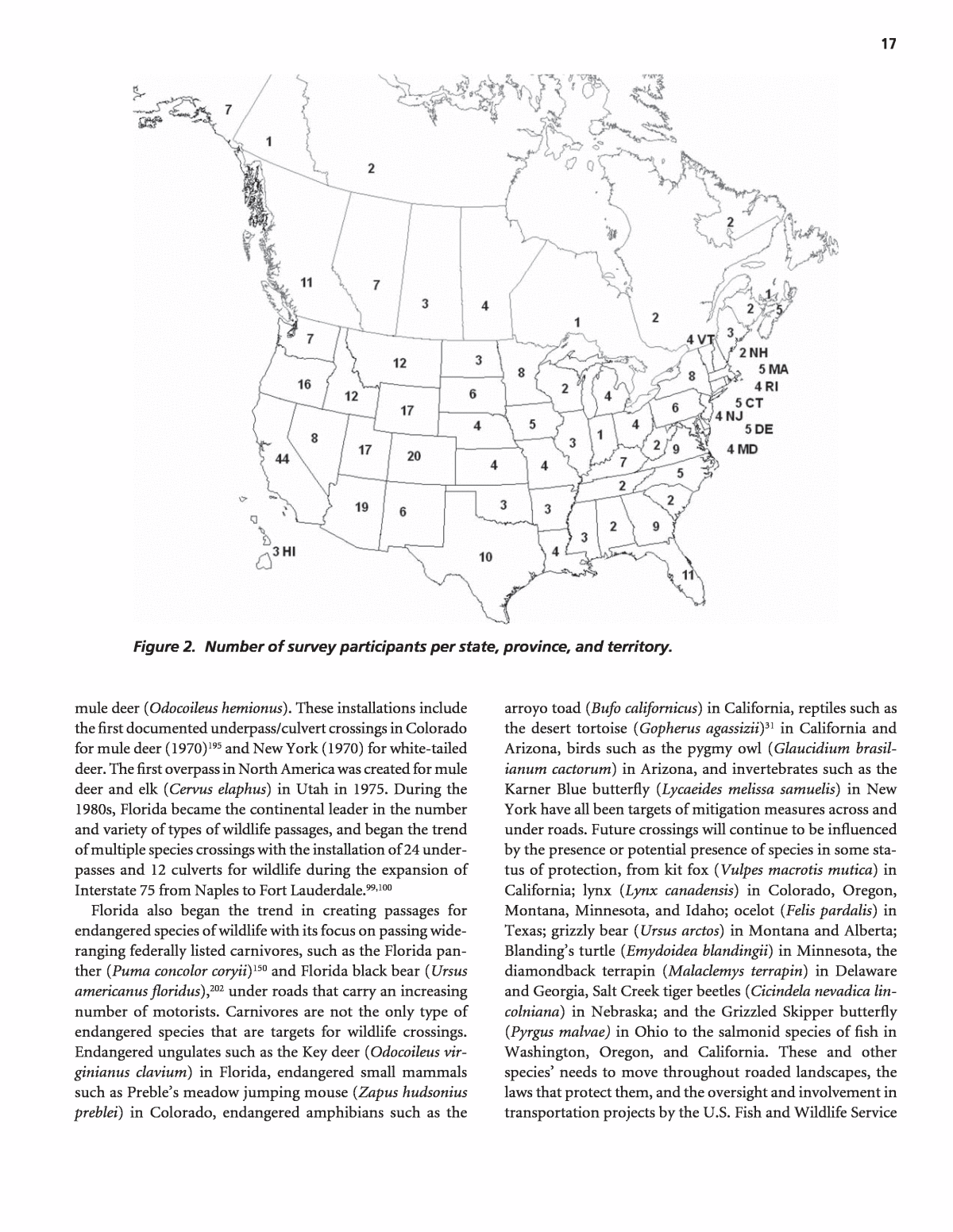
16 Research Approach: Methods and Data The Telephone Survey The research team administered a telephone survey to pro- fessionals in transportation and ecology in all 50 United States and all Canadian provinces and territories. The survey consisted of 25 questions centered on three areas of interest: wildlifeâroad mitigation measures, WVC data, and transportation planning. Candidates for interviews were selected from contact informa- tion on individual state project entries on the U.S. Federal High- way Administration (FHWA) âKeeping It Simpleâ website, through consultation with FHWA representatives, from lists of attendees of the Transportation Association of Canada (TAC) meetings, and from personal contacts of team members. These individuals were given approximately five opportunities to re- spond to requests for interviews through emails and phone calls before a new contact was pursued. Once the contact person was introduced to the survey, she or he was given the opportunity to refer the survey or specific questions to someone more knowledgeable. A goal was to interview a minimum of two in- dividuals within every state and province in an effort to best rep- resent state Departments of Transportation (DOTs), provincial Ministries of Transportation (MoTs), and the state or federal wildlife agency. Interviewees were encouraged to provide answers to the survey questions, but many also provided re- ports, articles, and photos of mitigation measures and DOT- sponsored research projects that focused on how wildlife move with respect to roads. The survey was conducted from July 2004 through March 2006. Crossing Structure Definition An important component of this research was in defining a crossing structure. For this survey, a crossing structure was de- fined as a new or retrofit passage over or below a roadway or railroad that was designed specifically or in part, to assist in wildlife movement. Culverts and bridges already in place when fencing was installed to lead animals to these pre-existing struc- tures were not considered crossings. These structures were only defined as crossings if they were altered by adding weirs for fish passage, adding shelves for terrestrial wildlife, removing riprap to allow wildlife movement, or other such actions. Findings and Results Survey Participants Four hundred and ten individuals participated in this survey. The number of participants per state/province varied from 1 to 44 (Figure 2). States or provinces with small repre- sentation (less than five interviewees) were usually able to pro- vide data from central resource personnel, while in states where several individuals were interviewed, often information was not available within central headquarters of the state DOT; hence biologists-planners within each district or region were contacted for their knowledge of crossings. The profes- sional titles of respondents included engineers, planners, biologists/ecologists, geographic information systems (GIS) analysts, and research personnel. Respondents included rep- resentatives from every state DOT, most Canadian MoTs, most state wildlife agencies, the FHWA, the U.S. Fish and Wildlife Service, the U.S. Forest Service, the National Park Ser- vice, Parks Canada, Native American tribes, several non-profit natural resource organizations, and consulting companies and research personnel from universities. Total Crossings The total number of wildlife crossings in North America is difficult to assess accurately. The number depends on who is asked, when the question is asked, how crossings are defined, and whether both aquatic and terrestrial crossings are consid- ered. There are a minimum of 559 terrestrial underpasses and four overpasses in the United States. In Canada there are a minimum of 118 terrestrial underpasses and three overpasses. Aquatic passages are less likely to be recorded than terrestrial passages and hence are more difficult to record accurately. There are a minimum of 692 aquatic passages (installed solely or in part for aquatic fauna) in the United States and roughly 10,000 aquatic passages placed throughout Canada. When combined, there are a minimum of 684 terrestrial passages and 10,692 aquatic passages in North America (Figure 3). Interpretation, Appraisal, and Applications Trends in Practice A number of trends in the development and practice of wildlife passages over the past 4 decades became apparent in the analyses of the data: Over time, the trends in the practice have been: ⢠An increased number of target species considered in mitigation projects, ⢠Increasing numbers of endangered species as target species for mitigation, ⢠A continued increase of involvement of many agencies and organizations in the planning and placement of crossings, ⢠An increase in the placement of multiple structures, and ⢠A continent-wide neglect of maintenance of these structures. The earliest wildlife crossings, which were installed in the 1970s, were for white-tailed deer (Odocoileus virginianus) and
17 Figure 2. Number of survey participants per state, province, and territory. mule deer (Odocoileus hemionus). These installations include the first documented underpass/culvert crossings in Colorado for mule deer (1970)195 and New York (1970) for white-tailed deer. The first overpass in North America was created for mule deer and elk (Cervus elaphus) in Utah in 1975. During the 1980s, Florida became the continental leader in the number and variety of types of wildlife passages, and began the trend of multiple species crossings with the installation of 24 under- passes and 12 culverts for wildlife during the expansion of Interstate 75 from Naples to Fort Lauderdale.99,100 Florida also began the trend in creating passages for endangered species of wildlife with its focus on passing wide- ranging federally listed carnivores, such as the Florida pan- ther (Puma concolor coryii)150 and Florida black bear (Ursus americanus floridus),202 under roads that carry an increasing number of motorists. Carnivores are not the only type of endangered species that are targets for wildlife crossings. Endangered ungulates such as the Key deer (Odocoileus vir- ginianus clavium) in Florida, endangered small mammals such as Prebleâs meadow jumping mouse (Zapus hudsonius preblei) in Colorado, endangered amphibians such as the arroyo toad (Bufo californicus) in California, reptiles such as the desert tortoise (Gopherus agassizii)31 in California and Arizona, birds such as the pygmy owl (Glaucidium brasil- ianum cactorum) in Arizona, and invertebrates such as the Karner Blue butterfly (Lycaeides melissa samuelis) in New York have all been targets of mitigation measures across and under roads. Future crossings will continue to be influenced by the presence or potential presence of species in some sta- tus of protection, from kit fox (Vulpes macrotis mutica) in California; lynx (Lynx canadensis) in Colorado, Oregon, Montana, Minnesota, and Idaho; ocelot (Felis pardalis) in Texas; grizzly bear (Ursus arctos) in Montana and Alberta; Blandingâs turtle (Emydoidea blandingii) in Minnesota, the diamondback terrapin (Malaclemys terrapin) in Delaware and Georgia, Salt Creek tiger beetles (Cicindela nevadica lin- colniana) in Nebraska; and the Grizzled Skipper butterfly (Pyrgus malvae) in Ohio to the salmonid species of fish in Washington, Oregon, and California. These and other speciesâ needs to move throughout roaded landscapes, the laws that protect them, and the oversight and involvement in transportation projects by the U.S. Fish and Wildlife Service
18 Figure 3. Number of terrestrial and aquatic wildlife crossings in North America. contribute greatly to increase the number of crossings exist- ing and planned for North America. There is also an increase in the number of agencies involved in the planning and placement of wildlife crossings. The more traditional model was for a state or provincial DOT/MoT to work with the state/provincial wildlife agency in determining the species present and the necessary mitigation measures. In- creasingly, the U.S. Fish and Wildlife Service in the United States is involved in planning and placing wildlife crossings as the awareness of the needs of federally listed endangered and sensitive species of wildlife and plants grows. The FHWA has also become more involved in the creation of mitigation meas- ures and urges their design early in the planning process. As roads were widened and otherwise upgraded in rural land- scapes, federal natural resource agencies, e.g., the U.S. Forest Service, became involved in determining the need for and placement of wildlife crossings. This increased federal involve- ment has happened in Canada as well, with Parks Canada largely responsible for the installation of 24 wildlife crossings under and over the Trans-Canada Highway. As cities grow into areas that were until recently largely rural and wild, the plan- ning and placement of wildlife passage begins to be done in concert with city and county entities. The Pima County (Arizona) experience with wildlife crossings is an example of how a county entity has helped in researching, designing, and placing wildlife crossings for suites of species near Saguaro National Park; they have also placed what may be the first bird crossing in North America for the pygmy owl. Members of First Nations and Native American tribes across the continent are involved in mitigating roads for wildlife. Examples of how Native peoples have insisted on protecting and helping wildlife pass under and over roads in- clude the grassroots efforts of the Tohono OâOdham tribe in Arizona to bring the community together to install fencing to help desert tortoises pass through existing culverts. The Salish- Kootenai tribe has worked with the U.S. government and Montana DOT to help design more than 50 passages on U.S. Highway 93 that passes through the Flathead Reservation in Montana. If this trend continues, an increase will occur in grassroots efforts to tackle the problems of roads and wildlife. The research team also found a trend of increasing efforts to include multiple associated structures along with under- passes to help guide wildlife. Fences still are used to encour- age wildlife to use structures. Innovative measures today also include placing large boulders near the approach to passages to help guide larger wildlife to the crossing. The problem of animals entering the roadway at the end of the fence, or find- ing or creating holes in the fence to enter the roadway quickly became apparent and created a need for mitigation that allowed wildlife to escape the road right-of-way (ROW). In the 1970s, escape gates were designed, probably originating in Colorado,194 where deer or elk could escape the fenced road- way by pushing their weight against tines in a specific gap in the fence. In the 1980s and 1990s, escape, or jump-out, ramps began being built in several western states to help deer and elk escape the road.28 These ramps are continually being refined
19 and tested across western North America and are used by deer, elk, and bighorn sheep (Ovis canadensis). Efforts are also underway to âcoaxâ animals to passages; for example, water guzzlers, which collect water in dry climates, have been used to encourage wildlife to passages in California and Arizona.74 Passages are also baited during the first post-construction years. Wildlife shelves are placed in existing culverts and pas- sages to encourage small and medium animal use when the passages are wet.93,94 Shrubs, logs, woody debris, and tubes have been placed for small animal passage. Shrubs and trees have been planted to lead black bears to the entrances of pas- sages in Florida.202 Wildlife walls less than 2 m high have been placed to funnel smaller species such as reptiles and amphib- ians to crossings, e.g., at Paynes Prairie in Florida.71 Turtle, tortoise, and amphibian fences have been designed to direct these smaller species to crossings.31,131 The future of wildlife crossings will no doubt include continued innovative meth- ods, such as vegetation and median berms to direct airflow up over the road and traffic, helping insects and birds fly over the roadway dangers. Although there are many positive examples of mitigation efforts, there are also efforts that have not proven successful. The two most often cited reasons for passage failures are incorrect location and lack of maintenance for passages and accompanying fences. The latter reason is preventable as a simple planning and staffing effort. Wildlife crossings are placed in dynamic landscapes; rivers and ephemeral water sources bring debris into structures, snow pulls down fences, and wildlife and human activity create holes in fences or de- grade crossings. Additionally, human activities make passage by wildlife difficult or impossible because of vehicle use and parking in passages, camping in passages, domestic dog usage and marking of passages, or shelter for homeless people. Although passages require maintenance, a common theme across the continent is that passages, fences, and accompany- ing structures are inadequately maintained. Examples of Multiple Crossings that Promote Permeability The overall trend of increasing numbers of target species for wildlife crossings is illustrated by several projects that con- tain or will contain series of crossings for suites of species. These projects include the Trans-Canada Highway in Banff National Park, Alberta, which has 24 crossings in place and 8 more planned over 45 kilometers. These crossings include overpasses, underpasses, and culverts for species ranging from small mammals to grizzly bear and elk.52,57 In Montana, U.S. Highway 93 has 20 current crossings of various size south of Missoula, and over 60 more crossings planned from Sula north to Polson. These crossings are intended for suites of species and several have already been studied to find that they are working for the intended species.93,94 In Arizona, the same U.S. Highway 93 has dozens of crossings for species ranging from desert tortoise to bighorn sheep, with dozens more planned. In Florida, the first series of crossings were built in 1982 along Floridaâs Alligator Alley for the Florida panther and the accompanying suite of wildlife from the ecosystem such as Florida black bear, bobcat (Lynx rufus), deer, alligators (Alligator mississippiensis), wading birds, fox (Vulpes vulpes, Urocyon cinereoargenteus), raccoon (Procyon lotor), opossum (Didelphis virginiana), fish, and other species. Thirty-eight crossings, from large underpasses to culverts, were established over 64 kilometers,100 allowing for a greater degree of permeability than most established crossings. Vermont is an example of how several simultaneous projects have helped to create a permeable landscape in several dif- ferent regions. Road projects currently underway include Route 78 along the viaduct over Missisquoi National Wildlife Refuge, and the Bennington Bypass on US Highway 7 and State Route 9. Trends in Science The research team assessed the state of the science of wildlife passages from reports submitted by telephone survey participants and a concurrent review of the literature, which amassed over 370 reports and papers. Trends in the science of roads and wildlife indicate: ⢠A tendency for a greater percentage of new passages to be monitored for efficacy, ⢠A broadening of the number of species monitored for use of passages, ⢠Increases in the length of time for monitoring, ⢠Increased numbers of participants in research projects, and ⢠Increasingly sophisticated research technology. Monitoring of wildlife passages began in 1970 with one of the first underpasses for wildlife in North America. This un- derpass was placed near Vail Pass along Interstate 70 in Colorado and was monitored for mule deer use.195 This level of monitoring was rare for passages placed during the fol- lowing 2 decades. Since 2000, there has been an increase in the pre-construction monitoring of new passages. During the past 15 years, an increasing number of studies have consid- ered multiple species near roads, thus broadening the knowl- edge base and mitigation efforts. Research projects today tend to monitor species use of passages for greater lengths of time than in 1980s and 1990s studies, with monitoring efforts ex- tending to several years post-construction. Finally, the study of wildlife crossings has included more scientific partners than in past decades, including state wildlife agencies, federal natural resource agencies such as the U.S. Forest Service, the
20 U.S. Department of the Interior National Park Service, Parks Canada, university researchers, consulting companies, mu- nicipal biologists, and the indirect input of many more scien- tists who help to develop state-wide connectivity analyses. These analyses are becoming increasingly important in the placement of crossings. The advancing sophistication of tech- nologies such as GIS, infra-red video cameras, and global positioning system (GPS) collars have greatly facilitated as- pects of scientific research of wildlife in relation to roads and have helped to make mitigation structures more accurate in placement, dimensions, and overall design. As an extension of an evaluation of wildlife crossing science, a review has begun of studies evaluating the use of wildlife passages. Approximately 25 scientific studies assess- ing the efficacy of 70 terrestrial wildlife passages across North America found that all passages passed wildlife, and 68 of the passages passed the target wildlife species Conclusions and Suggested Research Ongoing Projects While every state and province in North America is working to create more permeable roads for wildlife, there are several notable efforts under way. Currently (2007), the most exten- sive mitigation efforts in the United States occur on U.S. High- way 93, which runs from just northwest of Phoenix, Arizona, through Nevada, Idaho, and Montana and into British Columbia and Alberta. Dozens of crossings are already placed on this roadway to facilitate movement by desert tortoises and ungulates in Arizona, and for fish, and small and large mam- mals in Montana. In Montana alone, 40 crossings specifically for large mammals are in place. This highway will have an estimated 50 more crossings in Montana, including one over- pass, and dozens of crossings in Arizona, for a total of over 125 crossings along its length. Perhaps the most frequently written about mitigation measures in the media and the most published in the scien- tific literature are those measures employed in Banff National Park on the Trans-Canada Highway: two overpasses and 22 underpasses along 45 kilometers of road, with 8 more planned along the next stage of construction.163 Another care- fully designed project is that of State Road 260 in Payson, Arizona, on the Tonto National Forest. This mitigation proj- ect was designed, constructed, and monitored in joint collab- oration with the Arizona DOT, Arizona Game and Fish Department, and the U.S. Forest Service, among others. Seventeen bridges have been or will be placed along the high- way so that elk, mule deer, and other wildlife can cross safely underneath. The biologists working on this project have done an exemplary job of monitoring wildlife use of these passages through utilization of GPS collars, video surveillance systems, and road-associated mortality data.72,74,102 Coloradoâs Moun- tain Corridor project for I-70 through the Rocky Moun- tains140 with a possible overpass, and Washingtonâs I-90 Sno- qualmie Pass project,238 will involve as many as a dozen new crossings per project. In the east, Vermont has at least nine existing crossings, and at least a half dozen more scheduled for the next 5 years. Many of these new crossings will be for multiple species. Finally, Florida is continuing to construct crossings, with 30 more planned for the next 10 years, in- cluding an overpass near Orlando. General Recommendations for Crossings As part of research for this project, the research team has examined the general recommendations for installing wildlife crossings. The following list reviews the consistent trends that appear in the literature, in scientific presentations, and in the telephone interviews, with reference to what the state of the science reveals about wildlife crossings: ⢠Bigger is (usually) better, especially for large animals. ⢠Cover is important at the ends of passages for some species, while others need cover inside the passage. ⢠Elk appear to require a larger openness ratio than most other mammals. ⢠Some deer in urbanâsuburban situations use pre-existing structures that are far smaller than those used by their counterparts in more natural landscapes. ⢠Ungulates and carnivores may prefer different types of passages; for example, ungulates may prefer overpasses while certain carnivores prefer underpasses.57 ⢠Light in the middle of the tunnel/passage is helpful for passage of many species from salamanders to deer, but may not be welcome by certain carnivores. ⢠Noise reduction is generally beneficial. ⢠In general, reduced human use in the vicinity of crossings is important, especially at night. ⢠Pathways or shelves for wildlife to pass through riparian underpasses are working for large (deer and elk) and small animals (mice and voles) alike. ⢠Special considerations concerning conditions for target species or suites of species are often necessary, for example: â Amphibians need tunnels that are wet and cool; â Small mammals may need cover in the form of logs, rocks, and bushes; â Pronghorn need open, natural conditions to the extent possible; and â Fish, especially juveniles, need culverts that do not rise more than two body lengths above natural water levels. They need low natural volume in culverts, with culvert bottoms approximating natural riverine conditions. Weirs may need to be provided temporarily.
21 ⢠Accompanying mitigation such as fencing and escape ramps are needed if exclusion fences are installed. ⢠Protecting both sides of the passages for long-term conser- vation is cost effective. ⢠Passages need to be seen by wildlife as they approach. Passage placement in a straight line of sight works better than those placements below or above the approach levels. ⢠Local biologists need to be involved in all phases of the project. ⢠Adaptive management works: monitor and improve future designs based on monitoring results. ⢠Providing several different types of crossings or adapting crossing for suites of species by providing cover, shelves, small tubes, or a culvert within a culvert improves perme- ability. ⢠Maintenance of passages and accompanying mitigation, especially the bottom of passages in riparian areas and holes in fencing, improve effectiveness of crossings. ⢠Monitoring of passage use for at least 3 years after con- struction will be beneficial because wildlife often take at least 2 years to adapt, especially if they use the area only for seasonal migration. Wildlife crossings and road ecology have evolved dramati- cally in the 37 years since the first crossings were installed in Colorado and New York. Consideration of wildlife and roads will continue to require the attention of road engineers, trans- portation planners, and the public. In fact, a recent survey of over 1,000 registered voters in the United States found that 89% of those surveyed felt that roads and highways were a threat to wildlife.242 It is in the resourceâs and the publicâs best interest that road ecologists and engineers work to maintain high professional standards that promote functioning and effective wildlife passages across North America. This work includes developing the knowledge necessary for installing mitigation measures that create a more permeable landscape where many different species of a range of mobility and sizes can cross over and beneath transportation corridors in their daily and seasonal movements. The goal of greater permeabil- ity will take dedicated work on the part of engineers and ecologists to include consideration of wildlife passages in the earliest of stages of long-range transportation programs. Con- sideration at the project level, and post-project for passage maintenance during routine maintenance operations will con- tinue to be important, as will sound ecological research to document if passages meet stated goals and objectives. Com- munication among those interested in passages, as well as those not typically involved in ecosystem concerns, such as planners, engineers, and administrators, will be effective if it is proactive and collaborative. It takes the efforts of a community to open lines of communication. Citizens can be proud of the approx- imately 677 terrestrial and more than 10,000 aquatic passages that have been placed in North America. As engineers and ecol- ogists plan for the future, they can learn from both the successes and failures and can build on the current level of awareness among the professions and the public to create a continent-wide system of passages. It is a vision that will take time and requires the collective efforts of all stakeholders. 2.3 Priorities in Research and Practice Introduction The field of transportation (road) ecology is developing swiftly and is practiced throughout North America and inter- nationally without a parent organization or society to help guide research and practice. As a result, attempts to mitigate transportation effects on wildlife can appear to be scattered and duplicative. National and continental efforts are under way to document existing knowledge, accomplishments, and future actions, and in particular how to mitigate the negative effects of transportation corridors for wildlife.80,210,62,181 To determine future activities, a North American consensus regarding top priorities for research and practice would prove most helpful. The research reported in this section is an effort to create a pri- oritized list of actions in safety and ecological research and practices to help mitigate the negative impact of roads on wildlife in the United States and Canada. The objective was to determine where additional research, field evaluations, and policy actions were needed in order to help maintain and re- store landscape connectivity and permeability for wildlife across transportation corridors, while also minimizing WVCs. Research Approach: Methods and Data Setting Priorities The creation of the list of gaps and priorities in trans- portation research and practice with respect to wildlife began with a review of the pertinent literature. Approximately 120 priorities were generated by the research team and then ini- tially ranked and combined to create 25 priorities. The initial priorities were sent to 31 professionals in federal and state agencies and academic institutions across North America for review and editing. Thirteen reviews of the document were received and information and edits from these reviews were incorporated into the priorities, along with comments from the NCHRP Project 25-27 panel. Creating the Survey Instrument During the development of an effective questionnaire, the priorities were ranked and annotated by 27 attendees of the
22 Wildlife Crossings Workshop in Payson, Arizona, that was sponsored by the Southern Rockies Ecosystem Project, the Arizona DOT, and the Arizona Game and Fish Department. These suggestions were incorporated into the survey instru- ment, and the survey was re-organized into a more concise and easily understood document. For a second iteration, the updated survey was presented to the attendees of the Deer- Vehicle Crash Workshop in Madison, Wisconsin. Eighteen participants submitted surveys with further suggestions for priorities and improving the survey instrument. Their com- ments were incorporated into a final version that was pre- sented as an Internet survey. The survey instrument was based on Dillmanâs70 methods for email surveys, and advice from R. Krannick (personal communication, Sociology De- partment, Utah State University, 2005). Participants were asked to rank the priorities (with an option for âNot Enough Informationâ) on a scale of 0 (no priority) to 10 (top prior- ity) based on three criteria: ⢠Cost-effectiveness: Are the returns on the investment of money for research and development worth the cost? ⢠Urgency: Does this priority need the most immediate ac- tion based on development pressures, safety issues, speciesâ survival, transportation projects, and political climate? ⢠Overall effects: If this priority were accomplished, would it have far-reaching results across geographic, political, dis- ciplinary, and ecological boundaries? Although priorities were presented in two categoriesâ practice (11 priorities listed) and science (14 priorities listed), participants were instructed to consider all priorities together when ranking. The priorities were placed into two categories to help direct management actions separately from research actions. Each priority was ranked from 0 to 10, allowing for multiple identical values among a participantâs priorities. Five optional questions at the end of the survey pertained to the participantâs job title, area of expertise related to trans- portation ecology, the state or province of employment, type of employer, and email address. Participants submitted the survey by clicking on a âSubmit Surveyâ button at the bottom of the page. They were given the option to print the survey and to send it to others by e-mail. Selection of Participants The participants for the survey were selected using a non- random decision rule intended to select people with knowl- edge about transportation and wildlife issues in North America. The largest set of potential survey respondents was taken from the pool of participants in the telephone survey (Section 2.2) conducted as part of this NCHRP research project. Participants were targeted for their knowledge of mitigation measures for wildlife and fish pop- ulations near roads, WVC data management and research, natural resource agency coordination, and transportation ecology planning. Participants were research scientists, en- gineers, environmental and transportation planners, natu- ral resource managers, data managers, and administrators working for DOTs and MoTs, the FHWA, state wildlife agencies, the U.S. Fish and Wildlife Service, the U.S. De- partment of the Interior Bureau of Land Management and National Park Service, U.S. Forest Service, Parks Canada, and consulting companies. The pool also included aca- demic and federal research personnel involved in road ecol- ogy and road safety analyses. The pool of telephone survey participants came from an original list of names taken from projects listed on the FHWAâs website âKeeping It Sim- ple,â85 the list of participants in the proceedings of the In- ternational Conference on Ecology and Transportation in 2001 and 2003,127,128 and recommendations from key FHWA personnel involved in wildlife mitigation across the country. Canadian contacts were compiled by research team members and from lists of attendees of the TAC meet- ings. The goal of drawing from those resources was to make contact with practitioners and researchers involved in road ecology as well as individuals from state DOTs and provin- cial MoTs who work with transportation and wildlife proj- ects. Those initial contacts led to many other contacts across North America who potentially could contribute to the telephone survey on wildlife and roads.66 The members and friends of the Transportation Research Boardâs Task Force on Ecology and Transportation were also invited to participate in the survey. The initial 497 invited participants were encouraged to pass the survey on to peers in their agencies and professions who had knowledge that would as- sist them in ranking these priorities. This encouragement led to a snowball sample of a much larger population of un- known size. Delivering the Survey The potential survey participants were notified of the forth- coming survey during the last 3 days in March 2006. A second email was sent a week later with a request to take the survey online or to print the survey and send a hard copy to the re- search team. Potential participants were given 17 days to take the survey before it was closed. Four days prior to the closing of the survey, all participants who had not taken the survey, or who had taken the survey but did not give their email ad- dresses, were sent a final reminder. During the last 2 days of the survey, an additional 17 potential Canadian participants were included in the survey mailings, and survey availability was extended for 1 week. The survey was officially closed 28 days after it was opened.
23 Statistical Analysis Survey results were analyzed using the SPSS software pro- gram.221 Analyses of variance (ANOVA) were conducted for comparing mean values of each priority as rated by different classes of survey participants. The Levine statistic was first run to test for homogeneity of variance. When variances among the different mean values of a priority among the different participants were not equal (as shown by a significant Levine statistic), ANOVA was not used, and the Welch test, which accounts for unequal variances, was used to test for signifi- cant differences in priority means. F-tests were used in cases where means met the equal variances assumption of ANOVA. The GamesâHowell post hoc test was used to determine the locational significant differences between means as shown by the ANOVAs and Welch tests. This particular post hoc test is designed to account for both unequal variances as well as un- equal sample sizes. Findings and Results Survey Participants The original pool of 497 individuals was initially invited via email to participate in the survey. A total of 444 individuals participated. Of those 444, 388 participants (87.3%) chose to identify themselves by submitting their email address. Of those 388 email addresses, 254 (65.5%) were identified as members of the original pool of invitees. Response rate of the original invitees who gave their email addresses was 51.5%. The actual response rate is unknown because 56 participants did not submit their email addresses. One hundred and thirty-four (30.2%) of the email addresses given did not match the original pool of invited participantsâ email ad- dresses. These participants were invited by others to take the survey and thus their participation created what is known as a snowball sample. Participants represented all of the United States with the exception of Oklahoma, and the Canadian provinces and ter- ritories with the exceptions of New Brunswick, Northwest Territories, and Prince Edward Island. Of the 444 par- ticipants, 403 (90.8%) were from the United States and 36 (8.1%) were from Canada (Table 1). Five participants did not indicate their state/province of employment. Participants were asked to generalize the type of employer they worked for. Table 2 lists the number of survey participants employed by each type of employer. The majority of respondents (n = 183, 41.2%) were employed by a state/provincial transporta- tion agency. The second largest group of respondents were those that worked for a federal natural resource agency (n = 70, 15.8%). The remaining respondents worked for state/provincial natural resource agencies (n = 55, 12.4%), universities (n = 45, 10.1%), consulting firms (n = 37, 8.3%), federal transportation agencies (n = 25, 5.6%), non-profit groups (n = 23, 5.8%), or other/unknown (n = 6, 1.3%). Each person was asked to list his/her job title and area of specialty related to roads and wildlife. From these data, each partici- pant was classified into one of seven different profession types (Table 3): engineers/analysts/GIS specialists (n = 61, 13.7%), planners (n = 13, 2.9%), natural resources-manager (n = 38, 8.6%), natural resources-non-profit (n = 23, 5.2%), natural resources-planner (n = 187, 42.1%), natural resources- researcher (n = 109, 24.6%), unknown (n = 11, 2.5%) or other (n = 2, 0.5%). Natural resource professionals repre- sented 80.4% (357) of participants. Ranking of Priorities Priorities were ranked for overall value, and then within the practice or research categories by classification (nation of origin, profession, and employer) of the participants. The rank of a priority was determined by adding all the scores submitted for that priority and calculating the mean value. For example, the top priority to incorporate wildlife mitiga- tion needs early in the planning processes received a total of 441 rankings, ranging from 1 to 10. Those 441 values were summed, and then the mean was calculated as 8.96, making it the highest ranked priority. Tables 4 and 5 summarize the results. The top five priorities are: 1. Incorporate wildlife mitigation needs early in the DOT/MoT programming, planning, and design process; 2. Better understand the dynamics of animal use of mitiga- tion structures (such as what works and what does not) and disseminate this information; 3. Combine several animal-friendly mitigation methods such as wildlife crossings, fences, escape ramps, and gates, rather than relying on just one method; 4. Use conservation plans and connectivity analyses to in- form the transportation programming/planning/design process on where mitigation is needed and how it may be carried out; and 5. Develop alternative cost-effective wildlife crossing designs and the principles upon which they are based. Priorities by Nation Practice priorities. The United States and Canadian partic- ipants ranked the first three priorities for practice identically: 1) Incorporate wildlife mitigation needs early in the DOT/MoT programming, planning, and design process; 2) Combine animal-friendly mitigation methods such as wildlife crossings, fences, escape ramps, and gates, rather than relying on using a single method; and
24 Employer Number of Participants Consulting 37 Federal Natural Resources 70 Federal Transportation 25 Non-profit 23 State/Provincial Natural Resources 55 State/Provincial Transportation 183 University 45 Unknown 5 Other 1 Total 444 Table 2. Number of survey participants employed by each type of employer. State # Participants State # Participants United States Alabama 3 Montana 24 Alaska 7 Nebraska 1 Arizona 33 Nevada 2 Arkansas 2 New Hampshire 5 California 73 New Jersey 2 Colorado 22 New Mexico 6 Connecticut 4 New York 9 Delaware 1 North Carolina 10 District of Columbia 8 North Dakota 2 Florida 7 Ohio 4 Georgia 10 Oklahoma 0 Hawaii 2 Oregon 15 Idaho 4 Pennsylvania 6 Illinois 2 Rhode Island 1 Indiana 1 South Carolina 8 Iowa 6 South Dakota 7 Kansas 5 Tennessee 3 Kentucky 4 Texas 14 Louisiana 2 Utah 16 Maine 3 Vermont 2 Maryland 3 Virginia 13 Massachusetts 4 Washington 3 Michigan 3 West Virginia 1 Minnesota 10 Wisconsin 2 Mississippi 1 Wyoming 22 Missouri 5 Unknown 5 Total # U.S. Participants = 408 Province # Participants Province # Participants Canada Alberta 7 Ontario 7 British Columbia 10 Quebec 3 Manitoba 3 Saskatchewan 1 Yukon 3 Newfoundland and Labrador 1 Nova Scotia 1 Total # Canadian Participants = 36 Table 1. Number of survey respondents within each U.S. state and Canadian province. Effective communication and collaboration among stake- holders was ranked fourth in the United States and fifth in Canada. The use of standard protocols for roadkill and animalâvehicle collision data was ranked fourth in Canada. The incorporation of plans and schedules that can be accom- plished by maintenance crews was ranked fifth in the United States (See Appendix A, Table 37). Research priorities. In ranking the research priorities, the two nations diverged to a greater degree than on ranking practice priorities. Participants from both countries ranked the need to better understand animal use of mitigation struc- tures as the top research priority. The development of cost- effective crossing designs was ranked second in the United States and third in Canada. Canadians ranked the need for standardized data collection of roadkill carcasses and WVCs as their second research priority. In the United States, the third 3) Use conservation plans and connectivity analyses to in- form the transportation programming/planning/design process on where mitigation is needed and how it is to be carried out.
25 Profession # Participants Engineers: engineers/analysts/GIS specialists-WVCs 61 Planners 13 Natural ResourcesâManagers: Managers of resources, esp. wildlife managers 38 Natural ResourcesâNon-profits: Non-profit personnel & consulting groups 23 Natural ResourcesâPlanners: Planners, program managers, supervisors, coordinators, reviewers of environmental documents, providers of expertise for mitigation, agency personnel with ecological background 187 Natural ResourcesâResearchers: Conducters of on-the-ground research, usually wildlife related, agency and university personnel 109 Unknown 11 Other 2 Total 444 Table 3. Professions of survey participants and the number of participants classed by profession category. Rank within Practice Priorities for Practice Rank Overall 1 Incorporate wildlife mitigation needs early in the DOT/MoT programming, planning, and design process 1 2 Combine animal-friendly mitigation methods such as wildlife crossings, fences, escape ramps and gates, rather than using one method 3 3 Use conservation plans and connectivity analyses to inform the transportation programming/planning/design process on where mitigation is needed and how it may be carried out 4 4 Establish effective communication and collaboration among stakeholders 6 5 Incorporate into plans and schedules wildlife crossing options that can be accomplished by maintenance crews simply by retrofitting existing facilities 8 6 Continued public and agency education on wildlife and roads issues 10 7 Use standardized and vetted protocols for collecting and recording roadkill carcass and wildlife-vehicle colllision data 18 8 Incorporate standardized guidelines when conducting mitigation activities 19 9 Use standardized documentation schedules to record maintenance activities in order to maintain crossings and fencing effectiveness over time 21 10 Develop and enhance agency websites to include standardized guidelines 24 11 Explicit mitigation legislation to help determine where and when mitigation is necessary, and how it is to be carried out 25 Table 4. Ranking of practice priorities for transportation and wildlife for North America.
26 Rank within Research Priorities for Research Rank Overall 1 Understand better the dynamics of animal use of mitigation structures (such as what works and what does not) and disseminate this information 2 2 Develop and summarize alternative, cost-effective wildlife crossings designs and the principles they are based on 5 3 Develop wildlife crossing structure designs and guidelines for the full suite of animals in an area to help facilitate permeability for many species 7 4 Develop state-based habitat connectivity analyses for every state 9 5 Develop a standardized monitoring protocol to assess crossing effectiveness 11 6 Develop guidelines to decide when wildlife mitigation is necessary (both mandated and voluntary) 12 7 Develop standardized inventories of wildlife crossings by state for better management and maintenance of these crossings, and to better assess the need for future crossing 13 8 Increase our understanding of the effects of road density on wildlife populations 14 9 Develop prototype animal/vehicle collision safety models to predict where wildlife-vehicle colllision âhotspotâ areas are and may be on future roads 15 10 Improve ecosystem valuation for use in mitigation measures, to help establish mitigation cost-effectiveness (such as monetary value of the reduction of wildlifeâvehicle collisions, or increased landscape permeability) 16 11 Standardize spatially accurate roadkill carcass and wildlife-vehicle colllision data collection 17 12 Create a comprehensive synthesis document that establishes the indirect effects of roads and road density on ecosystems, and how these cumulative effects may in turn influence landscape permeability for wildlife 20 13 Develop reliable methods to estimate how often wildlife are in or near the road to help assess their potential in becoming involved in wildlifeâvehicle collisions 22 14 Understand better the genetic consequences of the roaded landscape on animal populations 23 Table 5. Ranking of research priorities for transportation and wildlife in North America. ranked research priority was the need to develop structure de- signs and guidelines to provide landscape permeability for the full suite of animals in an area, and the fourth ranked priority was the need to develop state-based connectivity analyses. In Canada, the fourth ranked priority was the need to develop guidelines for when wildlife mitigation was necessary. For the fifth research priority, U.S. citizens ranked the need to develop protocols for judging the effectiveness of wildlife crossing, while Canadians ranked the need for the development of pro- totype WVC models to predict priority hotspots (See Appen- dix A, Table 38). Priorities by Profession Practice priorities. Priorities were ranked among the three major classes of participants: engineers/analysts/GIS Specialists, natural resource professionals (all types combined), and plan- ners. Engineers, planners, and natural resource professionals all had the same top five practice priorities, but ranked differently by profession. Different median values among the professions are noted, with engineers generally rating each of the top five priorities a lower median value, and planners rating all five top priorities relatively high median values. Incorporating wildlife
27 mitigation needs early in planning was ranked as the top prior- ity by all professions except by planners. The median ranked value for this priority among planners was 9.0, similar to the 9.1 value for natural resource professionals. However, planners rated the need to combine animal-friendly mitigation methods priority as number one (9.2 median value), and early planning as their second highest priority. Engineers ranked the need for effective communication second, while natural resource professionals ranked the need to combine animal-friendly mit- igation methods second. Using conservation plans and connec- tivity analyses ranked alternatively third and fourth among all three professions. Further ranking of the top five practice pri- orities for the three professions can be seen in Appendix A: Tables 39, 40, and 41. Research priorities. All professions ranked the following top two priorities identically: to better understand the dy- namics of animal use of mitigation structures, and to develop alternative, cost-effective crossing designs. Planners and nat- ural resource professionals ranked the need to develop wildlife crossing structure designs and guidelines for the full suite of animals in an area third, while engineers/analysts ranked it fifth, and the need to develop guidelines to decide when wildlife mitigation is necessary as third. The fourth and fifth ranked research priorities among the different profes- sions were not as closely ranked as the top five practice prior- ities (Appendix A: Tables 39, 40, and 41), and select priorities were ranked significantly different. Priorities by Employer Practice priorities. The top five practice priorities for all employer classes were identical but ordered differently. The top priority of the survey, early planning for wildlife, was rated number one by all except federal transportation professionals (ranked third) and consulting company personnel (ranked second). The second ranked practice priority, to combine animal-friendly mitigation methods, was ranked differently among the different types of employees. The third practice pri- ority, to use conservation plans and connectivity analyses, was rated as the top priority by federal transportation agency em- ployees, second by federal and state natural resource agency personnel, and those working for non-profit groups, and third or fourth for the remaining types of employees. The fourth practice priority, to establish effective communication, was ranked as the second highest priority by those working for fed- eral and state transportation agencies, and fourth or fifth for all other types of employees. The fifth overall practice priority, to incorporate wildlife crossing options that can be accomplished by maintenance crews through retrofits, was ranked either fourth or fifth among all types of employees. Further detail is provided in Appendix A (Tables 39, 40, and 41). Research priorities. The top five research priorities were not as tightly ranked as the practice priorities among em- ployer classes. The top four research priorities were each within the top six rankings of every employee class; however, each class ranked them differently. For example, the overall number one priority to better understand the dynamics of animal use of mitigation structures was ranked by every class of employee as number one, except for consulting company personnel who ranked this priority second and the need for cost-effective crossing designs as their number one priority. Several priorities were ranked within the top five of specific employee groups but did not make the top five overall research priorities. University professionals (typically re- searchers) ranked fourth the need to develop guidelines to decide when wildlife mitigation is necessary, as did those em- ployed by state/provincial transportation agencies and those working for consulting companies. This priority was rated sixth for research in the overall survey. University profes- sionals and natural resource agency professionals rated the need to increase our understanding of the effects of road den- sity on wildlife populations fifth and fourth, respectively, while it rated eighth overall. The priority to improve ecosystem valuation for use in mitigation measures and to help establish cost-effectiveness was rated overall as the tenth research priority, but was highly rated by two types of employees, those working for non-profit organizations (rated second), and federal transportation agency professionals (rated fifth). Interpretation, Appraisal, and Applications There was a consistent trend in the results for participants, regardless of geography, profession, or employer type, to rank the same five practice priorities in their top five. The one exception was the fourth rank that 36 Canadians gave to the need for the use of standardized and vetted protocols for col- lecting and recording roadkill carcass and WVC data. Other Canadian differences may be in part because the majority of Canada still has its full suite of large animals. With such a diversity of wildlife, the risks to drivers from collisions with both ungulates and predators are much greater than typical animal collisions in the United States. However, because of the low number of Canadian participants, the research team can- not extrapolate the importance of this priority to Canada, but it represents a trend worth mentioning. These results provide clear guidance to help governments, agencies, organizations, universities, companies, and indi- viduals focus their efforts in developing the future state of practice. Fundamental parameters will include early incor- poration of wildlife needs into the planning processes, a com- bination of animal-friendly mitigation methods rather than just fences, conservation plans and connectivity analyses to
28 inform transportation planning and design processes, effec- tive communication among stakeholders, and incorporation of plans and schedules for wildlife crossing options that can be accomplished by maintenance crews by simple retrofit of existing facilities. In ranking the research priorities, the different classes of participants exhibited more widely varied values than in their ranking of practice priorities. The top ranked research prior- ity, to better understand the dynamics of animal use of mitiga- tion structures, was the top research priority for all categories of nation of origin, profession, and employers except for those working for consulting firms who ranked it second. The second overall research priority, to develop cost effective wildlife crossing designs, ranked first among those working for consulting companies, and third among Canadians, state and federal natural resource agency personnel, and university personnel. Those working for non-profit organizations gave it a lower value of sixth. The third research priority, to develop wildlife crossing structure designs and guidelines for the full suite of animals, received a variety of rankings from the different categories of participants, but was consistently in the top five priorities for all categories of participants. The fourth overall research priority, to develop state-based habitat connectivity analyses, was ranked within the top six priorities by all classi- fications of participants, except by those from Canada (eleventh), engineers (tenth), and planners (eighth). The fifth research priority, to develop a standardized monitoring proto- col to assess crossing effectiveness, was ranked within the top six priorities by residents of both the United States and Canada, all professions, and all employees of state and federal agen- cies. Every one of the top five research priorities was a top-five research priority for all the professions with the exception of the need to develop state-based habitat connectivity analyses, which planners and engineers did not value as highly as nat- ural resource professionals. The results of the ranking of research priorities show the overall high support for the top three: to better understand the dynamics of animal use of mitigation structures, to de- velop cost-effective wildlife crossings designs, and to develop wildlife crossing structure designs and guidelines for the full suite of animals. These and other research priorities can help form a clearer picture of the areas in need of highest research attention. They also demonstrate a need to better communi- cate the results of these research efforts. Statistical differences among professionsâ median ranking of priorities were significant for select priorities, but may be due in part to the tendency of engineers to systematically use lower values for overall ranking while other professions systematically use higher numbers to rank priorities. Priority rankings were also heavily influenced by the dis- crepancy in number of participants from certain classes. Although efforts were made to include as many engineers and Canadians as possible, their numbers remained lower than natural resource professionals and Americans, respec- tively. The rankings were also influenced heavily by the high numbers of transportation professionals working for state DOTs and provincial MoTs. This is in direct accordance with the job responsibilities of this class, and they are the most appropriate employees for this continental survey. This class had the most representation in the survey (n = 181), and as such, this employee class was the most influen- tial in ranking priorities. For example in the research prior- ities, the need for alternative cost-effective designs was ranked as first or second by only three employee classes, yet it was rated overall as the second research priority, in part because of the large number of participants in the state/provincial and federal employee categories who over- all rated it as the second highest research priority. The dif- ferences among different classes of respondents were in part accounted for when priority rankings were separated by na- tion, profession, and employer, so readers could view the priorities from these different perspectives. Conclusions and Suggested Research The research team identified the top 25 priorities for research and practice in the field of transportation and wildlife for North America. The results show a clear consensus among all participants on the top five practice priorities: 1. Incorporate wildlife mitigation needs early in the DOT/ MoT programming, planning, and design process; 2. Combine several animal-friendly mitigation methods such as wildlife crossings, fences, escape ramps, and gates, rather than relying on just one method; 3. Use conservation plans and connectivity analyses to inform the transportation programming/planning/design process on where mitigation is needed and how it may be carried out; 4. Establish effective communication and collaboration among stakeholders; and 5. Incorporate wildlife crossing options into plans and schedules that can be accomplished by maintenance crews by simple retrofit of existing facilities. These statements call for a plan of action. In Appendix A, the background and the next steps for these and all priorities are described. Priorities for research presented a greater challenge for con- sensus of opinion and were not as consistently rated by survey participants. In general, the top three research priorities were among the top five research priorities by all categories of par- ticipants. The top three most consistently highly rated research priorities for North America are:
29 1. To better understand the dynamics of animal use of miti- gation structures (such as what works and what does not) and disseminate this information; 2. To develop and summarize cost-effective wildlife crossing designs and the principles they are based on; and 3. To develop wildlife crossing structure designs and guide- lines for the full suite of animals in an area to help facilitate permeability for many species. These priority statements lead to the next step, which is to describe what is known, and how that knowledge can be built upon. The intent of this research is to help inform mitigative ac- tions across North America that create a roaded landscape that is more permeable for wildlife and safer for motorists. For example, the top five priorities can lead agency personnel in directing early planning for wildlife in transportation planning, help encourage the installation of suites of mitigation measures for wildlife, promote the use of connectivity analyses in trans- portation planning, and the development and use of alternative cost-effective crossing designs. Researchers can see the need to design studies that address our need to better understand the dy- namics of animal use of mitigation structures, and disseminate this information. Additional priorities can help raise awareness for the need for better communication among agency person- nel and the public, and help states to initiate standardized guide- lines and methodologies involved in wildlife crossings and WVCs. Organizations working at the national level may use these guidelines to help direct policy initiatives as well.
