



Below is the uncorrected machine-read text of this chapter, intended to provide our own search engines and external engines with highly rich, chapter-representative searchable text of each book. Because it is UNCORRECTED material, please consider the following text as a useful but insufficient proxy for the authoritative book pages.
B-1 A T T A C H M E N T B Recommended Guidelines for Use of Self-Consolidating Concrete in Precast, Prestressed Concrete Bridge Elements These proposed guidelines are the recommendations of the NCHRP Project 18-12 staff at the University of Sherbrooke. These guidelines have not been approved by NCHRP or any AASHTO committee nor formally accepted for adoption by AASHTO.
B-5 Introduction B-6 Glossary B-9 B.1 Guidelines for Selection of Constituent Materials B-9 B.1.1 General B-9 B.1.2 Cement and Cementitious Materials B-9 B.1.2.1 Cement and Blended Cement B-10 B.1.2.2 Fly Ash B-10 B.1.2.3 Silica Fume B-10 B.1.2.4 Ground Granulated Blast-Furnace Slag B-11 B.1.2.5 Fillers B-11 B.1.2.6 Other Supplementary Cementitious Additions B-11 B.1.3 Aggregate Characteristics B-11 B.1.3.1 Coarse Aggregate B-12 B.1.3.2 Fine Aggregate B-12 B.1.4 Chemical Admixtures B-12 B.1.4.1 High-Range Water-Reducing Admixtures B-13 B.1.4.2 Viscosity-Modifying Admixtures B-13 B.1.4.3 Air-Entraining Admixtures B-13 B.1.4.4 Set-Retarding and Set-Accelerating Admixtures B-13 B.1.4.5 Shrinkage-Reducing Admixtures B-14 B.1.4.6 Other Admixtures B-14 B.1.5 Fibers B-14 B.2 Guidelines for Selection of Workability Test Methods B-14 B.2.1 General B-14 B.2.2 Filling Ability B-14 B.2.2.1 Significance B-15 B.2.2.2 Test Methods to Assess Filling Ability B-15 B.2.2.3 Special Issues B-16 B.2.3 Passing Ability B-16 B.2.3.1 Significance B-16 B.2.3.2 Test Methods to Assess Passing Ability B-16 B.2.3.3 Special Issues B-16 B.2.4 Filling Capacity B-16 B.2.4.1 Significance B-17 B.2.4.2 Test Method to Assess Filling Capacity B-17 B.2.4.3 Special Issues B-18 B.2.5 Static Stability B-18 B.2.5.1 Significance B-18 B.2.5.2 Test Methods to Assess Static Stability B-18 B.2.5.3 Special Issues C O N T E N T S B-3
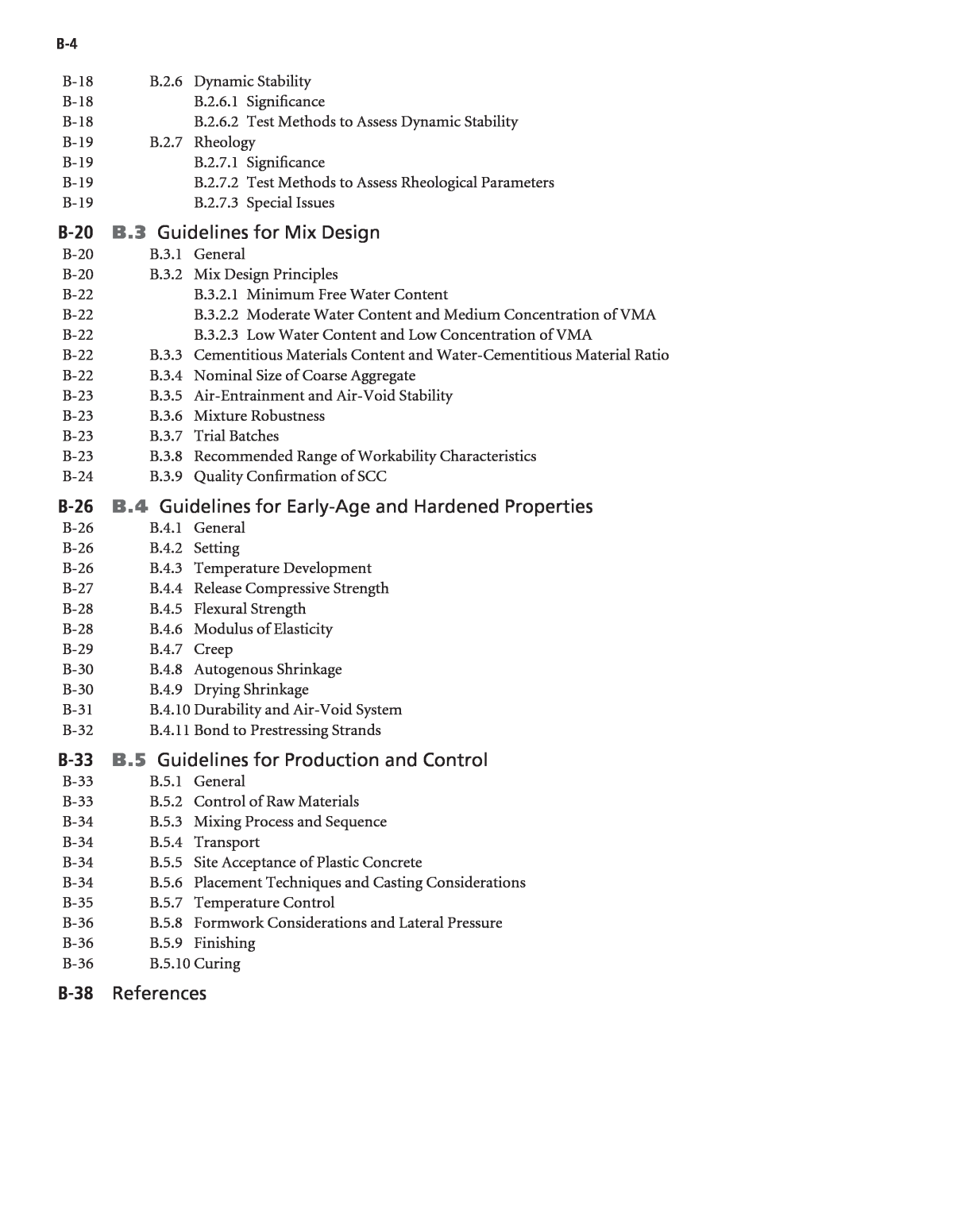
B-18 B.2.6 Dynamic Stability B-18 B.2.6.1 Significance B-18 B.2.6.2 Test Methods to Assess Dynamic Stability B-19 B.2.7 Rheology B-19 B.2.7.1 Significance B-19 B.2.7.2 Test Methods to Assess Rheological Parameters B-19 B.2.7.3 Special Issues B-20 B.3 Guidelines for Mix Design B-20 B.3.1 General B-20 B.3.2 Mix Design Principles B-22 B.3.2.1 Minimum Free Water Content B-22 B.3.2.2 Moderate Water Content and Medium Concentration of VMA B-22 B.3.2.3 Low Water Content and Low Concentration of VMA B-22 B.3.3 Cementitious Materials Content and Water-Cementitious Material Ratio B-22 B.3.4 Nominal Size of Coarse Aggregate B-23 B.3.5 Air-Entrainment and Air-Void Stability B-23 B.3.6 Mixture Robustness B-23 B.3.7 Trial Batches B-23 B.3.8 Recommended Range of Workability Characteristics B-24 B.3.9 Quality Confirmation of SCC B-26 B.4 Guidelines for Early-Age and Hardened Properties B-26 B.4.1 General B-26 B.4.2 Setting B-26 B.4.3 Temperature Development B-27 B.4.4 Release Compressive Strength B-28 B.4.5 Flexural Strength B-28 B.4.6 Modulus of Elasticity B-29 B.4.7 Creep B-30 B.4.8 Autogenous Shrinkage B-30 B.4.9 Drying Shrinkage B-31 B.4.10 Durability and Air-Void System B-32 B.4.11 Bond to Prestressing Strands B-33 B.5 Guidelines for Production and Control B-33 B.5.1 General B-33 B.5.2 Control of Raw Materials B-34 B.5.3 Mixing Process and Sequence B-34 B.5.4 Transport B-34 B.5.5 Site Acceptance of Plastic Concrete B-34 B.5.6 Placement Techniques and Casting Considerations B-35 B.5.7 Temperature Control B-36 B.5.8 Formwork Considerations and Lateral Pressure B-36 B.5.9 Finishing B-36 B.5.10 Curing B-38 References B-4
Introduction The competitive situation in the precast concrete construc- tion market is significantly affected by price and cost factors as well as by productivity and quality. This environment is char- acterized by ever-shorter construction times, rising labor costs, as well as greater demand for high workability, strength, and durability. Technological developments and methods of production that can lead to improved concrete quality and savings are therefore becoming increasingly important. Self- consolidating concrete (SCC) represents a significant advance- ment in concrete technology that provides great potential for efficiency and economy in concrete construction. SCC is a highly workable concrete that can flow through densely reinforced or geometrically complex structural ele- ments under its own weight without mechanical consolidation and adequately fill the formwork with minimum risk of segre- gation. The flowability of SCC is higher than that of normal high-performance concrete typically used in precast, pre- stressed concrete plants. This characteristic of SCC, coupled with the absence of the noise associated with vibration, make SCC a desirable material for fabricating prestressed bridge ele- ments. More specifically, SCC offers the following advantages: ⢠Simplification of the concreting procedure and ability to produce heavily reinforced precast elements with virtually any cross-sectional shape ⢠Greater flexibility to produce a wide variety of architectural finishes ⢠Increased assembly rates and reduced labor for placement, vibration and finishing ⢠Improved working environment and safety ⢠Lower capital investment costs and higher service life of the formwork elements ⢠Improved surface quality with greater uniformity and fewer surface imperfections Use of SCC in the precast, prestressed applications can result in specific advantages. Complex precast concrete mem- bers can be prefabricated with greater ease, speed, economy, and higher surface quality. This can be achieved even in tightly spaced areas or congested reinforcementâsuch as columns, cap beams, and superstructure elementsâand lead to provid- ing uniform and aesthetically pleasing surfaces. The quality control and quality assurance measures used for producing SCC will help achieve structures with the desired durability and service life. These guidelines provide the information necessary for considering use of SCC in precast, prestressed bridge girders. The guidelines include information on the selection of con- crete constituents and proportioning of concrete mixtures, workability characteristics, testing methods, mechanical prop- erties, visco-elastic properties, production and control issues, and durability of SCC. B-5
B-6 Glossary The following definitions may be referred to in these guidelines. Some of them are general and apply to conven- tional concrete while others are specific to SCC. Some of these definitions are based on definitions given in ACI and PCI technical documents. AdmixtureâA material, other than water, aggregates, hy- draulic cement, and fiber reinforcement, used as an ingredi- ent of a cementitious mixture to modify its freshly mixed, set- ting, or hardened properties and that is added to the batch before or during its mixing (ACI 116). Autogenous shrinkageâThe shrinkage occurring in the absence of moisture exchange due to the hydration reactions taking place inside the cement matrix (ACI 209). BinderâA cementing material, either a hydrated cement or reaction products of cement or lime and reactive siliceous ma- terial; also materials such asphalt, resins, and other materials forming the matrix of concretes, mortars, and sanded grouts. Bingham fluidâA fluid characterized by a yield stress and a constant plastic viscosity, regardless of flow rate (PCI 2003). Bleed waterâThe water that rises to the surface subse- quent to the placing of the concrete. The rise of mixing water within, or its emergence from, newly placed concrete, caused by settlement and consolidation of the plastic concrete (PCI 2003). Bleeding testâThe standard test for determining the rel- ative quantity of mixing water that will bleed from a sample of freshly mixed concrete (ASTM C 232). BlockingâThe condition in which coarse aggregate parti- cles combine to form elements large enough to obstruct the flow of the fresh concrete between the reinforcing steel or other obstructions in the concrete formwork (PCI 2003). CohesivenessâThe tendency of the SCC constituent ma- terials to stick together, resulting in resistance to segregation, settlement, and bleeding (PCI 2003). ConsistencyâThe relative mobility or ability of freshly mixed concrete or mortar to flow (ACI 116). ConsolidationâThe process of inducing a closer arrange- ment of the solid particles in freshly mixed concrete or mortar during placement by the reduction of entrapped voids (ACI 116). In SCC, consolidation is achieved by gravity flow of the material without the need of vibration, rodding, or tamping. CreepâTime-dependent deformation due to sustained load (ACI 209). DeformabilityâThe ability of SCC to flow under its own mass and fill completely the formwork. Drying shrinkageâShrinkage occurring in a specimen that is exposed to the environment and allowed to dry (ACI 209). FillersâFinely divided inert material, such as pulverized limestone, silica, or colloidal substances, sometimes added to portland cement paint or other materials to reduce shrinkage, improve workability, or act as an extender or material used to fill an opening in a form (ACI 116). Filling abilityâThe ability of SCC to flow into and fill completely all spaces within the formwork, under its own weight, also referred to as deformability or non-restricted de- formability (ACI 237). Filling capacityâThe ability of SCC to flow into and fill completely all spaces within the formwork. FlowabilityâThe ability of fresh concrete to flow in con- fined or unconfined form of any shape, reinforced or not, under gravity and/or external forces, assuming the shape of its container (PCI 2003). FluidityâThe ease by which fresh concrete flows under gravity (PCI 2003). Fluidity is the reciprocal of dynamic viscosity. Fly ashâThe finely divided residue that results from the combustion of ground or powdered coal and that is trans- ported by flue gasses from the combustion zone to the parti- cle removal system (ACI 116). Because of its spherical shape and fineness, fly ash can improve the rheology of SCC. Formwork pressureâLateral pressure acting on vertical or inclined formed surfaces, resulting from the fluid-like be- havior of the unhardened concrete confined by the forms (ACI 116). Ground granulated blast-furnace slag (GGBFS)âA fine granular, mostly latent hydraulic binding material that can be added to SCC to improve workability of the material (PCI 2003). GGBFS is also referred to in some cases as slag cement (a waste product in the manufacture of pig iron and chemi- cally a mixture of lime, silica, and alumina). High-range water-reducing admixture (HRWRA)â A water-reducing admixture capable of producing large water reduction or greater flowability without causing undue set retardation or entrainment of air in mortar or concrete (ACI 116). J-Ring testâTest used to determine the passing ability of SCC, or the degree to which the passage of concrete through the bars of the J-Ring apparatus is restricted (ASTM C 1621). J-Ring flowâThe distance of lateral flow of concrete using the J-Ring in combination with a slump cone (ASTM C 1621). L-box testâTest used to assess the confined flow of SCC and the extent to which it is subject to blocking by reinforce- ment (ACI 237). MetakaolinâMineral admixture used as binding material (supplementary cementitious material) in concrete (PCI 2003). Mixture robustnessâThe characteristic of a mixture that encompasses its tolerance to variations in constituent char- acteristics and quantities, as well as its tolerance to the effects of transportation and placement activities (PCI 2003). Passing abilityâThe ability of SCC to flow under its own weight (without vibration) and completely fill all spaces
within intricate formwork, containing obstacles, such as re- inforcement (ASTM C 1621). Paste volumeâProportional volume of cement paste in concrete, mortar, or the like, expressed as volume percent of the entire mixture (ACI 116). Plastic viscosityâThe resistance of the plastic material to undergo a given flow. It is computed as the slope of the shear stress versus shear rate curve measurements. Mixtures with high plastic viscosity are often described as âstickyâ or âcohe- sive.â Concrete with higher plastic viscosity takes longer to flow. It is closely related to T-50 and V-funnel time (higher plastic viscosity: higher T-50 and V-funnel time). Powder (also referred to as graded powder)âIncludes ce- ment, fly ash, GGBFS, limestone fines, material crushed to less than 0.125 mm (No. 100 sieve), or other non-cementi- tious filler (ACI 237). Powder-type SCCâSCC mixtures that rely extensively on the amount and character of the fines and powder included in the mixture for meeting workability performance require- ments (stability) (PCI 2003). PumpabilityâThe ability of an SCC mixture to be pumped without significant degradation of workability (PCI 2003). Rheological propertiesâProperties dealing with the de- formation and flow of matter (PCI 2003). RheologyâThe science of dealing with flow of materials, including studies of deformation of hardened concrete, the handling and placing of freshly mixed concrete, and the be- havior of slurries, pastes, and the like (ACI 116). In the con- text of SCC, rheology refers to the evaluation of yield stress, plastic viscosity, and thixotropy to achieve desired levels of filling ability, passing ability, and segregation resistance. SegregationâThe differential concentration of the com- ponents of mixed concrete, aggregate, or the like, resulting in non-uniform proportions in the mass (ACI 116). In the case of SCC, segregation may occur during transport, during flow into the forms, or after placement when the concrete is in a plastic state. This results in non-uniform distribution of in-situ properties of the concrete. Segregation resistanceâThe ability of concrete to remain uniform in terms of composition during placement and until setting (PCI 2003). Segregation resistance encompasses both dynamic and static stability. Self-consolidating concrete (SCC) (also self-compacting concrete)âA highly flowable, non-segregating concrete that can spread into place, fill the formwork, and encapsulate the re- inforcement without any mechanical consolidation (ACI 237). Service lifeâThe time during which the structure performs its design functions without unforeseen maintenance or repair. SettlementâThe condition in which the aggregates in SCC tend to sink to the bottom of the form resulting in non- homogeneous concrete (PCI 2003). Surface settlement can also be caused by bleeding of free water and loss of air as well as movement of aggregate particles within fresh concrete (consolidation). Shear stressâThe stress component acting tangentially to a plane (ACI 116). Silica fumeâVery fine non-crystalline silica produced in electric arc furnaces as a byproduct of the production of ele- mental silicon or alloys containing silicon (ACI 116). Silica fume can be added to SCC to improve the rheological properties. Slump flowâTest method used (upright or inverted) to measure mixture filling ability (ASTM C 1611). Slump flow retentionâThe ability of concrete to main- tain its slump flow over a given period of time. Slump flow spreadâThe distance of lateral flow of con- crete during the slump-flow test (ASTM C 1611). Slump flow spread is the numerical value in inches (mm) of flow deter- mined as the average diameter of the circular deposit of SCC at the conclusion of the slump flow test. StabilityâThe ability of a concrete mixture to resist seg- regation of the paste from the aggregates (ASTM C 1611). Stability, DynamicâThe resistance to segregation when ex- ternal energy is applied to concrete, namely during placement. Stability, StaticâThe resistance to segregation when no external energy is applied to concrete, namely from immedi- ately after placement and until setting. T-50 measurement (also referred to as the T-20 in. time in North America)âThe time for the concrete to reach the 500 mm (20 in.) diameter circle drawn on the slump plate, after starting to raise the slump cone (ASTM C 1611). TextureâThe pattern or configuration apparent in an ex- posed surface, as in concrete and mortar, including roughness, streaking, striation, or departure from flatness (ACI 116). ThixotropyâThe property of a material that enables it to stiffen in a short period while at rest, but to acquire a lower viscosity when mechanically agitated, the process being re- versible, a material having this property is termed thixotropic or shear thinning (ACI 116). Thixotropy indicates formwork pressure and segregation resistance of SCC. TransportabilityâThe ability of concrete to be trans- ported from the mixer to the placement site while remaining in a homogeneous condition (PCI 2003). V-funnelâDevice used to determine the time for a given volume of concrete to flow out through a funnel opening (PCI 2003). ViscosityâThe resistance of a material to flow under an applied shearing stress (ASTM 1611). Viscosity-modifying admixture (VMA)âAn admixture used for enhancing the rheological properties of cement- based materials in the plastic state to reduce the risk of segre- gation and washout (ACI 237). Visual Stability Index (VSI)âA test that involves the vi- sual examination of the SCC slump flow spread resulting from performing the slump flow test (ACI 237). B-7
Water-cementitious material ratio (w/cm)âThe ratio of the mass of water, exclusive only of that absorbed by the ag- gregate, to the mass of cementitious material (hydraulic) in concrete, mortar, or grout, stated as a decimal (ACI 116). WorkabilityâThat property of freshly mixed concrete or mortar that determines the ease with which it can be mixed, placed, consolidated, and finished to a homogenous condi- tion (ACI 116). For SCC, workability encompasses filling B-8 ability, passing ability, and segregation resistance, and it is af- fected by rheology. Yield stressâThe minimum shear stress required to initi- ate (static yield stress) or maintain (dynamic yield stress) flow (ACI 237). The yield stress is closely related to slump flow (lower yield stress results in higher slump flow); it is calcu- lated as the intercept of the shear stress versus shear rate plot from rheometer flow curve measurements.
The production of SCC requires uniform quality of all con- stituent materials, and it is therefore necessary that these ma- terials meet standard specifications. A choice of suitable con- stituent materials is vital to the optimization of SCC mix design for different applications. Constituent material qualification for SCC designated for precast, prestressed concrete bridge elements generally follows the requirements of AASHTO LRFD Bridge Design [2007] and Construction [1998] Specifications. Except mixing water and materials mentioned in the following Sections B.2.2 to B.2.4, no materials may be incorporated into the concrete without the authorization of the Engineer. It is important to continually check for any change in materials or proportions that will affect surface appearance, strength, or other charac- teristics of SCC that may affect its overall performance. B.1.2 Cement and Cementitious Materials One must ensure that material additions do not adversely affect the desired architectural appearance, where appearance is a design requirement. B.1.2.1 Cement and Blended Cement All cements that conform to the AASHTO M 85 or ASTM C 150 standard specifications can be used for the production of SCC. The correct choice of cement type is normally dic- tated by the specific requirements of each application or by the availability. For SCC applications where visual appearance is impor- tant, adequate cement content and uniform w/cm should be adopted to minimize the color variation. Therefore, the ce- ment should be from the same mill and of the same type, brand, and color. The total content of cementitious materials used in pre- stressed concrete for a 28-day design compressive strength of 4,000 to 8,000 psi (28 to 55 MPa) can vary from 600 to 1,000 lb/yd3 (356 to 593 kg/m3) [PCI, 1997]. The AASHTO LRFD Bridge Design Specifications [2007] suggest that the sum of portland cement and other cementitious materials should Selection of the type of cement will depend on the overall requirements for the concrete, such as compressive strength at early and ultimate ages, mechanical properties, durability, and color considerations in architectural applications where color and color uniformity are important. Blended hydraulic cements that conform to the AASHTO M 240 or ASTM C 595M can also be used. Unless otherwise specified, Types I, II, or III cement; Types IA, IIA, or IIIA air- entrained cement; or Types IP (portland-pozzolan cement) or IS (portland blast-furnace slag cement) blended hydraulic ce- ments can be used for the construction of precast, prestressed concrete elements. Types I, II or III cements can be used with some replacements by supplementary cementitious materials and other hydraulic binders. In general, fly ash and slag re- placement values shall not exceed 20% and 40%, respectively, to ensure high-early strength for satisfactory release of strands. B-9 Guidelines Commentary B.1 Guidelines for Selection of Constituent Materials B.1.1 General
not exceed 800 lb/yd3 (475 kg/m3), except for Class P concrete where the total cementitious materials should not exceed 1,000 lb/yd3 (593 kg/m3). These values for SCC designated for precast, prestressed applications shall range between 650 and 800 lb/yd3 (386 and 475 kg/m3) [ACI Committee 237, 2007 (237R-07)]. B.1.2.2 Fly Ash Pozzolans and slag meeting ASTM C 618, C 989, or C 1240 are supplementary cementitious material and may be added to portland cements during mixing to produce SCC with im- proved workability, increased strength, reduced permeability and efflorescence, and improved durability. In general, Class F fly ash has been shown to be effective in SCC providing in- creased cohesion and robustness to changes in water content [European Guidelines, 2005]. Fly ash should conform to the AASHTO M 295 or ASTM C 618 [AASHTO, 1998, 2007]. In general, the content of ce- ment replaced with fly ash is 18% to 22% by mass [Florida DOT, 2004]. B.1.2.3 Silica Fume Silica fume conforming to AASHTO M 307 or ASTM C 1240 can be used as supplementary cementitious material in the proportioning of SCC for improved strength and dura- bility. Silica fume also improves resistance to segregation and bleeding. Special care should be taken to select the proper sil- ica fume content. B.1.2.4 Ground Granulated Blast-Furnace Slag Ground granulated blast-furnace slag (GGFBS) meeting AASHTO M 302 or ASTM C 989 may be used as supplemen- tary cementitious materials. GGBFS provides reactive fines and due to large replacement rate usually about 40% enables a low heat of hydration. Cement replacement by GGBFS is based on the severity of the environment to which the concrete is exposed. The level of GGBFS addition is 25% to 70% for slightly and moderately aggressive environments, and 50% to 70% by mass when used in extremely aggressive environments. When used in combination with silica fume and/or metakaolin, GGBFS content should be limited to 50% to 55% of the total cementitious content, by mass of binder [Florida DOT, 2004]. However, in precast, prestressed members, the amount of slag is usually 40%. GGBFS shall not be used with Type IP or Type IS cements. In some cases, higher level of fly ash replacement may re- duce the ability of SCC to flow. The replacement rate of fly ash also affects strength and durability. Contribution of fly ash delays the hydration process and strength development. Fly ash can also affect air entrainment since the carbon pres- ent in fly ash can absorb air-entraining admixture and ad- versely affect the ability to entrain air. Therefore, specific lim- its on LOI which is indicative of the carbon content need to be stated. Fly ash shall not be used with Type IP or IS cements. In some cases, a high level of silica fume addition can cause rapid surface crusting that leads to cold joints or surface de- fects if delays occur in concrete delivery or surface finish (and also increases cost). According to Florida DOT [2004], the quantity of cement replacement with silica fume should be 7% to 9% by mass of cementitious materials. A high proportion of GGBFS (e.g., exceeding 40%) may however affect stability of SCC resulting in reduced robust- ness with problems of consistency control while delayed set- ting can increase the risk of static segregation. B-10 Guidelines Commentary
B.1.2.5 Fillers The particle-size distribution, shape, and water absorption of fillers may affect the water demand/sensitivity and suit- ability for use in the production of SCC. Calcium carbonate- based mineral fillers can enhance workability and surface fin- ish. The fraction below 0.005 in. (0.125 mm) shall be of most benefit to SCC flow properties. Contents of fillers should be evaluated to ensure adequate performance of concrete, in- cluding strength development and durability. B.1.2.6 Other Supplementary Cementitious Additions Metakaolin, natural pozzolan, ground glass, air-cooled slag and other fine fillers have also been used or considered as ad- ditions for SCC, but their effects need to be carefully evalu- ated for both short- and long-term effects on the fresh and hardened concrete. B.1.3 Aggregate Characteristics A well-graded combined aggregate with sufficient inter- mediate sizes is highly desirable for improved stability. Also, if the proper particle shape and texture are selected, com- bined aggregate grading can lead to large reductions in water, paste, and cement contents leading to improved hardened concrete properties. The moisture content, water absorption, grading and variations in fines content of all aggregates should be closely and continuously monitored and must be taken into account in order to produce SCC of constant quality. Changing the source of supply for aggregates is likely to make a significant change to the concrete properties and should be carefully and fully evaluated [European Guide- lines, 2005]. B.1.3.1 Coarse Aggregate Unless otherwise specified in the contract documents, the recommendation is to use normal-density coarse aggregate meeting the requirements of AASHTO M 80 or ASTM C 33. The use of continuously graded aggregates is recommended. The nominal maximum-size of coarse aggregate (MSA) should be selected based on mix requirements and minimum clear spacing between the reinforcing steel and prestressing strands, cover of the reinforcement steel, and thickness of the member. The recommendations given in the PCI Bridge De- sign Manual [1997] apply. Gravel, crushed stone, or combinations can be used as coarse aggregate. In the case of fine aggregate, natural sand or manufactured sand can be used. Coarse and fine aggregates should conform to the grain-size distribution recommenda- tions of the project specifications. Slightly gap-graded aggregates may lead to greater flow- ability than continuously graded aggregate. Gap-graded ag- gregate can, however, increase the risk of bleeding and segre- gation, and proper measures are needed to ensure adequate static stability of the concrete. In the design of SCC, typically the MSA values are smaller than those of conventional vibrated concrete. The MSA is generally limited to 1/2 to 3/4 in. (12.5 to 19 mm). In the placement of SCC in highly congested and restricted section, MSA value of 3/8 in. (9.5 mm) can be used. B-11 Guidelines Commentary
B.1.3.2 Fine Aggregate For normal weight concrete, fine aggregates conforming to AASHTO M 6 are appropriate for the production of SCC. The fine aggregate component should be well-graded con- crete sand. Fine aggregates for SCC should conform to the gradation requirements of AASHTO M 6 or ASTM C 33, as presented in Table B.1. If aggregates susceptible to alkali-aggregate reactivity are used, special precautions must be observed. These include the use of low-alkali cement, blended cements, or pozzolans and GGBFS. It may be beneficial to blend natural and manufactured sand to improve plastic properties of SCC. Common concrete sand, including crushed or rounded sand and siliceous or cal- careous sand, can be used in SCC. B-12 Guidelines Commentary Table B.1. Grading requirements for fine aggregates. B.1.4 Chemical Admixtures Chemical admixtures are used in precast, prestressed con- crete to reduce water content, improve filling ability and sta- bility, provide air entrainment, accelerate strength develop- ment, enhance workability retention, and retard setting time. Because chemical admixtures can produce different results with different binders, and at different temperatures, the se- lection of the admixtures should be based on the plant mate- rials and conditions that will be utilized in production. For prestressed concrete, chloride-ion content in chemical admixtures should be limited to 0.1%, by mass of the admix- ture [AASHTO, 2004]. B.1.4.1 High-Range Water-Reducing Admixtures High-range water-reducing admixtures (HRWRA) shall conform to the requirements of ASTM C 494 Type F (water- reducing, high range) or G (water-reducing, high range, and retarding) or ASTM C 1017. The admixture should enable the required water reduction and fluidity during transport and placement. The use of Type F or G HRWRA is essential to achieve SCC fluidity. Such HRWRA can be used in combination with reg- Incompatibility of admixtures with binders can lead to im- proper air void system and delayed or accelerated setting time. Therefore, before the start of the project, concrete with the job materials, including the admixtures, should be tested to ensure compatibility. Such testing should be repeated whenever there is a change in the binder and admixtures. The required consistency retention will depend on the ap- plication. Precast concrete is likely to require a shorter reten- tion time than cast-in-place concrete. Sieve Percent passing(AASHTO M 6) Percent passing (ASTM C 33) in. (9.5 mm) 100 100 No. 4 (4.75 mm) 95 to 100 95 to 100 No. 8 (2.36 mm) 80 to 100 80 to 100 No. 16 (1.18 mm) 50 to 85 50 to 85 No. 30 (600 μm) 25 to 60 25 to 60 No. 50 (300 μm) 10 to 30 5 to 30 No. 100 (150 μm) 2 to 10 0 to 10 3 8 Particle size fractions of less than 0.005 in. (0.125 mm) should be considered as powder material in proportioning SCC. Such fine content can have marked effect on rheology.
ular water-reducing admixtures or mid-range water-reducing admixtures. There are mid-range water-reducing admixtures that may be classified under ASTM C 494 as Type A or F de- pending on dosage rate. B.1.4.2 Viscosity-Modifying Admixtures Use of a viscosity-modifying admixture (VMA) for SCC proportioned with w/cm higher than 0.40 is recommended to ensure stability of the fresh concrete. Starting with a low dosage rate of VMA, the rate should be gradually increased to establish the dosage rate that provides the desired level of stability. VMA should not be added to SCC as a means for improv- ing a poor mix design or poor selection of materials. High dosage of VMA may lead to increased HRWRA demand and in some cases, some delay in setting, and development of early-age mechanical properties. B.1.4.3 Air-Entraining Admixtures Air-entraining admixtures shall conform to the require- ments of AASHTO M 154 or ASTM C 260. Air-entraining ad- mixtures are used in concrete primarily to increase the resist- ance of the concrete to freeze-thaw damage. Proper selection of air-entraining admixture that can stabilize small bubbles and properly formulated HRWRA that does not cause a large number of coarse air bubbles are needed to design the SCC with an adequate air-void system. B.1.4.4 Set-Retarding and Set-Accelerating Admixtures An ASTM C 494 Type D set-retarding admixture may be used during hot weather concreting or when a delay in setting is required, subject to acceptance by the Engineer. Some water-reducing admixtures at high dosage rates can act as retarding admixtures. They should be used with caution. Set-accelerating admixture (Type C) shall be used to decrease setting time and increase the development of early-age me- chanical properties. The admixture is particularly beneficial in precast concrete construction to facilitate early form removal and release of prestressing [PCI, 1997]. B.1.4.5 Shrinkage-Reducing Admixtures If a shrinkage-reducing admixture is specified in the con- tract documents, verification of the air-void system, includ- ing air content in hardened concrete, spacing factor, and spe- cific surface, is recommended. It could be difficult to entrain VMAs are used in SCC to enhance segregation resistance and to enhance robustness by minimizing the effect of varia- tions in aggregate moisture content, temperature, etc. This can make the SCC less sensitive to small variations in the pro- portioning and characteristics of material constituents. There are currently no ASTM specifications for VMA. Pro- ducers should confirm by trial mixtures that VMA does not adversely affect the hardened concrete properties. In some cases, high dosage of HRWRA coupled with the high fluidity of the mixture can make it difficult to ensure the entrainment of a fine, stable air-void system in the con- crete. HRWRA can also entrain coarse air bubbles. Com- patibility evaluation between the air-entraining admixture and HRWRA is therefore needed to achieve the targeted air- void characteristics. In the absence of accelerated radiant heat or steam curing, the use of set-accelerating admixture in SCC may be benefi- cial in precast applications when using HRWRA, especially the polynaphthalene- or melamine-based products. B-13 Guidelines Commentary
air and large dosages of air-entraining admixture are needed when a shrinkage-reducing admixture is used. B.1.4.6 Other Admixtures Corrosion-inhibiting admixtures can be incorporated to protect the reinforcement from corrosion. Producers should confirm by trial mixtures that the addition of any admixture does not adversely affect the hardened concrete properties. Coloring pigments used in SCC shall conform to the re- quirements of ASTM C 979. All coloring admixtures required for a project shall be ordered in one lot and shall be finely ground natural or synthetic mineral oxide or an organic phthalocyanine dye with a history of satisfactory color stabil- ity in concrete [European Guidelines, 2005]. B.1.5 Fibers Synthetic and steel fibers (hybrid fiber) can be used. The dosage rates of the fiber in SCC ranges between 0.25% and 0.50%, by volume, depending on the type of applications. The dosage of fibers should be determined given the workability re- quirements of the mixtures, which should take into considera- tion element characteristics and placement conditions. Changes in mixture proportioning may be needed to secure good pass- ing ability and filling capacity of the fiber-reinforced SCC. The use of corrosion-inhibiting admixtures may hinder the efficiency of other admixtures and cause non-uniformity in color of the concrete surface (darkening and mottling). There are currently no AASHTO or ASTM specifications for corrosion-inhibiting admixtures. The incorporation of synthetic fiber is recommended to re- duce the risk of cracking due to restrained or plastic shrink- age. The dosage of synthetic fiber should not exceed the 0.50%, by volume, when casting complex and narrow sec- tions or densely reinforced structures. B-14 Guidelines Commentary B.2 Guidelines for Selection of Workability Test Methods B.2.1 General Workability describes the ease with which concrete can be mixed, placed, consolidated, and finished. It describes the fill- ing properties of fresh concrete in relation to the behavior of concrete in the production process. Workability of SCC is de- scribed in terms of filling ability, passing ability, and stability (resistance to segregation) and is characterized by data that relates to specific testing methods [ACI Committee 237, 2007]. Various test methods have been used to assess the workability characteristics of SCC. In general, test methods include the components required for evaluating simultane- ously the filling ability, passing ability, and static stability. Table B.2 summarizes some of the main test methods pro- posed for the evaluation of workability of SCC. B.2.2 Filling Ability B.2.2.1 Significance The ability of SCC to flow into and fill completely all spaces within the formwork, under its own weight, is of great
importance to SCC casting, distance between filling points, etc. [ACI Committee 237, 2007]. B.2.2.2 Test Methods to Assess Filling Ability Slump flow test [ASTM C 1611] is used to assess the hori- zontal free flow of SCC in the absence of obstruction. The test method is based on the test method for determining the slump of a normal concrete. The diameter of the concrete cir- cle is a measure of the flowability of the SCC. B.2.2.3 Special Issues Advantages and precautions of slump flow and T-50 flow test methods are presented in Table B.3. The filling capacity combines the filling and passing abili- ties of SCC and can be tested using the caisson filling capac- ity [Yurugi et al., 1993]. B-15 Guidelines Commentary Table B.2. Key workability characteristics of SCC. Table B.3. Advantages and precautions of slump flow test and T-50. In general, slump flow varies from 23.5 to 29 in. (600 to 735 mm) for SCC used in precast, prestressed applications [Khayat et al., 2007]. When slump flow test is performed, the time needed for the concrete to spread 20 in. (500 mm) is also noted. This test is called T-50 flow time. Test methods Applicable standard Filling ability Slump flow and T-50 ASTM C 1611 L-box J-Ring ASTM C 1621 Passing ability V-funnel Filling capacity Combining filling and passing abilities Surface settlement Column segregation ASTM C 1610 Static stability Visual stability index ASTM C 1611 Slump flow Advantages Precautions o Simple o Reproducible o Results correlate to yield stress o Low sensitivity to water content o Can be performed by a single operator o Roughness and moisture of base plate affect results o Large base plate is required to perform test o Must be performed on level surfaces T-50 o Results correlate to plastic viscosity o Can be performed simultaneously with slump flow using a second operator o Sensitive to roughness and moisture of base plate o Poor single- and multi-operator repeatability o High error for low-viscosity mixtures
B.2.3 Passing Ability B.2.3.1 Significance The passing ability tests evaluate the ability of concrete to pass among various obstacles and narrow spacing in the formwork without local aggregate segregation in the vicinity of the obstacles that give rise to interlocking and blockage of the flow in the absence of any mechanical vibration [ACI Committee 237, 2007]. B.2.3.2 Test Methods to Assess Passing Ability The J-Ring test [ASTM C 1621] can be used to assess the restricted deformability of SCC through closely spaced ob- stacles [Bartos, 1998]. In the L-box test, the vertical part of the box is filled with concrete and left at rest for 1 minute. The gate separating the vertical and horizontal compartments is then lifted, and the concrete flows out through closely spaced reinforcing bars at the bottom. The time for the leading edge of the concrete to reach the end of the long horizontal section is noted. The heights of concrete remaining in the vertical section and at the leading edge are determined. The blocking ratio (h2/h1) is calculated to evaluate the self-leveling characteristic of the concrete. The V-funnel apparatus consists of a V-shaped funnel with an opening of 2.55 Ã 3.0 in. (65 Ã 75 mm) at its bottom. The funnel is filled with concrete, then after 1 minute, the gate is opened and the time taken for concrete to flow through the apparatus is measured. In the case of structural applications, the V-funnel flow time lower than 8 seconds indicates good passing ability [Hwang et al., 2006]. B.2.3.3 Special Issues Advantages and precautions of the slump flow and J-Ring flow test, L-box, and V-funnel methods are presented in Table B.4. B.2.4 Filling Capacity B.2.4.1 Significance The property to completely fill intricate formwork or formwork containing closely spaced obstacles is critical for SCC to achieve adequate in-situ performance. SCC with high In general, the maximum difference between slump flow and J-Ring flow varies from 2 to 3 in. (50 to 75 mm) depend- ing on the filling ability (slump flow) of the mixture. A dif- ference between slump flow and J-Ring flow less than 1 in. (25 mm) indicates good passing ability and no visible block- ing of the concrete. A difference greater than 2 or 3 in. (50 or 75 mm), depending on the slump flow value, reflects block- ing of the concrete. A blocking ratio of 0.5 and higher is indicative of adequate passing ability. Higher values are necessary in densely rein- forced and thin sections. B-16 Guidelines Commentary
filling and passing abilities can achieve good filling capacity and spread into a predetermined section to fill the formwork under the sole action of gravity without segregation and blockage [ACI Committee 237, 2007]. B.2.4.2 Test Method to Assess Filling Capacity The filling capacity test provides a small-scale model of a highly congested section and is suitable to evaluate the filling capacity and its self-consolidating characteristics [Ozawa et al., 1992; Yurugi et al., 1993]. B.2.4.3 Special Issues Advantages and precautions of the caisson filling capacity test are presented in Table B.5. For the caisson test, the maximum size aggregate (MSA) is limited to 3/4 in. (19 mm). In general, a filling capacity higher than 70% is recommended for SCC used in precast, pre- stressed applications. B-17 Guidelines Commentary Table B.4. Advantages and precautions of J-Ring, L-box, and V-funnel flow test. Table B.5. Advantages and precautions of filling capacity test. J-Ring Advantages Precautions o Simple o Good repeatability o Can be performed by a single operator o Material segregation can be visually detected o Roughness and moisture of base plate affect results o Large base plate is required to perform the test o Must be performed on level surfaces L-box o Good repeatability o Can be performed by a single operator o Flow time correlates to plastic viscosity o Must be performed on level surfaces V-funnel o Can be performed by a single operator o Flow time correlates to plastic viscosity o Poor repeatability o Risk of flow interruption in high-viscosity mixtures Filling capacity Advantages Precautions o Good repeatability o Good indicator of filling capacity, which combines filling ability and passing ability of SCC o Visual appreciation of filling capacity through congested sections o Difficult to perform by single operator o Requires some calculation to evaluate filling capacity
B.2.5 Static Stability B.2.5.1 Significance Static stability refers to the resistance of concrete to bleed- ing, segregation, and surface settlement after casting while the concrete is still in a plastic state [ACI Committee 237, 2007]. B.2.5.2 Test Methods to Assess Static Stability The surface settlement test method can be used to evaluate the surface settlement of SCC from a plastic state until the time of hardening [Manai, 1995]. In general, a maximum surface settlement lower than 0.5% or a rate of settlement after 30 minutes lower than 0.27% per hour is recommended for SCC used in precast, prestressed bridge elements. The static stability of SCC can also be determined using the column segregation test [ASTM C 1610]. The coefficient of variation of the aggregate among the column sections can be taken as a segregation index (Iseg) [Assaad et al., 2004]. An- other index consisting of the percent static segregation (S) can be obtained by measuring the difference between aggre- gate mass at the top and bottom sections of the column. The visual stability index (VSI) involves visual examina- tion of SCC prior to placement and after performance of the slump flow test. It is used to evaluate the relative stability of batches of the same or similar SCC mixtures. The VSI proce- dure assigns a numerical rating of 0 to 3, in 0.5 increments. The VSI test is most applicable to SCC mixtures that tend to bleed [Daczko and Kurtz, 2001]. B.2.5.3 Special Issues Advantages and precautions of surface settlement and col- umn segregation tests are presented in Table B.6. B.2.6 Dynamic Stability B.2.6.1 Significance Adequate resistance of concrete to separation of constituents upon placement and spread into the formwork is required for SCC when flowing through closely spaced obstacles and narrow spaces to avoid segregation, aggregate interlock, and blockage [ACI Committee 237, 2007]. B.2.6.2 Test Methods to Assess Dynamic Stability The caisson test measures the filling capacity indicative of the filling and passing abilities; therefore, it is a good indica- tor of the dynamic stability. The surface settlement test enables the quantification of the effect of mixture proportioning on static stability. The settle- ment is monitored until a constant value is achieved. The column segregation test consists of casting concrete in a column divided into four sections along the concrete sam- ple. From each section, the concrete is weighed and washed out. Then, the coarse aggregate content is determined for each section. In general, a segregation index (Iseg) lower than 5% or a percent of static segregation (S) lower than 15% is recom- mended for SCC used in precast, prestressed bridge elements. The test can be considered as a static stability index when it is observed in a wheelbarrow or mixer following some pe- riod of rest time (static condition). VSI value of 0 to 1 is rec- ommended for SCC for precast, prestressed concrete bridge elements. Concrete with high filling ability (deformability) and good passing ability can achieve adequate filling capacity in restricted and congested sections that are typical precast, prestressed B-18 Guidelines Commentary
B.2.7 Rheology B.2.7.1 Significance Generally, two key parameters are determined when a rhe- ology measurement test is performed: the yield stress, Ï0, and plastic viscosity, µp. Below the yield stress value, the mixture does not undergo any deformation and behaves as an elastic material. In SCC, the yield stress should be maintained low enough to ensure good deformability. The plastic viscosity of concrete affects its ease of placement and speed of flow. In practice, good balance between yield stress and plastic viscosity should be achieved to ensure both good deformability, ease of placement, and flow rate of SCC. B.2.7.2 Test Methods to Assess Rheological Parameters Rheological parameters of concrete can be determined using a concrete rheometer. In general, the test involves recording the shear stress response to maintain a given rate of shear at different shear rate values. B.2.7.3 Special Issues Advantages and limitations of rheometer testing are pre- sented in Table B.7. applications. An adequate combination of filling and passing ability tests can be used to evaluate the filling capacity of the concrete, which is indicative of the dynamic stability. B-19 Guidelines Commentary Table B.6. Advantages and precautions of surface settlement and column segregation tests. A linear regression of the data is usually used to deter- mine the rheological parameters (Ï0 and µp) according to the Bingham model. Surface settlement test Advantages Precautions o Easy to perform in laboratory o Good repeatability o Maximum settlement can be estimated from rate of settlement between 25 and 30 min o Requires a dial gage o Difficult to perform by a single operator o Requires large amount of concrete Column segregation test o Good correlations between column Iseg and S o Requires electronic balance o Requires large amount of concrete o Difficult to perform by a single operator o Repeatability lower than surface settlement Visual stability index o Simple o Can be performed by a single operator o Depends on operator experience o SCC with low VSI may exhibit some lack of stability
B.3 Guidelines for Mix Design B.3.1 General Any mix design approach should consider both the fresh and hardened properties of the SCC, and include the charac- teristics of cementitious materials and fillers, the water con- tent or w/cm, the volume of coarse aggregate, the sand-to- aggregate ratio (S/A), as well as the air content. The selection of the type and combinations of chemical admixtures is part of the mix design process and depends closely on the flow characteristics that are required. B-20 Guidelines Commentary Table B.7. Advantages and limitations of rheometer testing. The mix design is chosen to satisfy all performance criteria for the concrete in both the fresh and hardened states. As in the case of conventional vibrated concrete, the w/cm is one of the fundamental keys governing strength and durability of SCC. The w/cm of the concrete shall not exceed 0.45 by weight [AASHTO, 2004]. Satisfactory performance of the proposed mix design shall be verified by laboratory tests on trial batches. For mix design approval, a minimum of three test cylinders are taken from a trial batch. The average com- pressive strength shall be at least 1,200 psi (8.3 MPa) greater than the specified compressive strength when the specified strength is equal to or less than 5,000 psi (34.5 MPa). The av- erage strength shall be at least 700 psi (4.8 MPa) greater than 110% of the specified strengths over 5,000 psi (34.5 MPa) [ACI Committee 318, 2005 (318R-05)]. B.3.2 Mix Design Principles Mix design of SCC is vital for the performance of the ma- terial, both in the plastic and hardened states. In designing SCC, a number of factors should be taken into consideration to a greater degree than when designing conventional vi- brated concrete: ⢠Properties of raw materials, including mineral, geometric, and physical properties of aggregates and cementitious materials ⢠Need for a higher level of quality control, greater awareness of aggregate gradation, and better control of mix water and aggregate moisture ⢠Choice of chemical admixtures and their compatibilities with the selected binder ⢠Placement technique, configuration of cast element, and environmental conditions Rheometer Advantages Limitations o Easy to perform in laboratory o Good repeatability, especially for plastic viscosity o Provides fundamental flow properties of SCC o Enables evaluation of structural build-up of SCC at rest o Expensive apparatus, though portable and more affordable models are available o Requires qualified personnel to operate and interpret data
As illustrated in Figure B.1, the fresh properties of SCC are dictated by the required flow characteristics of the fresh concrete in addition to engineering properties and durability requirements. For the production of SCC for precast, prestressed con- crete bridge elements, the most relevant hardened properties that affect material selection and mix design include early and ultimate compressive strengths, flexural strength, elastic modulus, bond-to-reinforcement, creep, shrinkage, frost dura- bility, impermeability, and resistance to corrosion. B-21 Guidelines Commentary Figure B.1. Principles of SCC mix design [Khayat, 1999]. SCC used for structural precast, prestressed applications is typically characterized by relatively low water content, high concentration of ultra-fine particles (i.e. ⤠80 µm), and use of an efficient HRWRA (typically polycarboxylate based, although other types are also used). SCC made with poly- carboxylate-based HRWRA can usually exhibit short setting time, high early-strength development, and reduced tendency to segregation. In principle, three approaches can be used for the production of SCC: ⢠Increase of the ultra-fines content by using fly ash, blast- furnace slag, limestone filler (powder type), and in some cases low content of silica fume ⢠Use of suitable viscosity-modifying admixture (VMA) (viscosity agent type) ⢠A combination of the above approaches (combination type) where low concentration of VMA is used in SCC of high fines/powder content These approaches are highlighted below. Trade-off Excellent deformability 1. Increase deformability ofpaste -use of HRWRA -balanced water/powder 2. Reduce inter-particle friction -low coarse aggregate volume (high paste volume) -use continuously graded powder low yield value moderate viscosity Good stability Low risk of blockage 1. Reduce separation of solids -limit aggregate content -reduce MSA -increase cohesion and viscosity -low water/powder -use of VMA 2. Minimize bleeding (free water) -low water content -low water/powder -use of powder of high surface area -increase of VMA content 1. Enhance cohesiveness to reduce agg. segregation during flow -low water/powder -use of VMA 2. Compatible clear spacing between reinforcement and coarse aggregate volume and MSA -low coarse aggregate volume -low MSA
B.3.2.1 Minimum Free Water Content This approach entails the use of high content of ultra-fine materials and low water content to enhance the filling ability, passing ability, and stability of the SCC. Such concrete typi- cally has a w/cm of 0.30 to 0.35 with a content of ultra-fines ⤠80 µm (approximately No. 200 sieve) of 845 to 1,110 lb/yd3 (500 to 600 kg/m3) [Okamura, 1997; Ozawa et al., 1992]. B.3.2.2 Moderate Water Content and Medium Concentration of VMA In this approach, the w/cm can be maintained at the level necessary to satisfy strength and durability requirements (for example w/cm of 0.40). A moderate dosage of VMA is then incorporated to secure the required stability. When incorporated in mixtures with relatively high paste content (exceeding 35% and sand-to-cement ratio of 0.60 to 0.66, by volume), the use of suitable VMA-HRWRA combi- nation can ensure high deformability and adequate stability also leading to greater filling capacity and better in-situ ho- mogeneity than mixtures made with low w/cm and no VMA [Khayat, 1998]. B.3.2.3 Low Water Content and Low Concentration of VMA This approach involves the combination of a high content of powder materials and low dosage of VMA. Such mixtures are typically more robust than those proportioned with high powder content and low w/cm. B.3.3 Cementitious Materials Content and Water-Cementitious Material Ratio The concrete supplier shall determine the cementitious materials content and w/cm required to satisfy the specified concrete category. In general, the cementitious materials content recommended for SCC ranges between 650 and 800 lb/yd3 (386 and 475 kg/m3) [ACI Committee 237, 2007 (237R-07)]. The w/cm ranges from 0.32 to 0.45. B.3.4 Nominal Size of Coarse Aggregate Select MSA based on mix requirements and minimum clear spacing between the reinforcing steel, cover to re- inforcement, and thickness of the member. Use coarse aggre- gate with MSA of 1â2 to 3â4 in. (12.5 to 19 mm), unless otherwise specified in the contract documents. Coarse aggregate of 3â8 in. (9.5 mm) MSA shall be used for casting highly reinforced and restricted sections. The replacement of part of the cement with a less reactive powder is necessary to limit the heat of hydration, and mini- mize volumetric changes. In general, this approach can result in SCC mixtures with low yield value and moderate-to-high viscosity. The concrete requires a relatively high dosage of HRWRA. The incorporation of VMA becomes imperative when the powder content is reduced to levels comparable with those of conventional concrete or high-performance concrete. A robust mixture can react less sensitively to fluctuations in the mixture composition, characteristics of the raw materials, water content, and concrete temperature. Special care should be taken to select the binder composi- tion of the SCC made with low w/cm to limit the compressive strength to the target value. Otherwise, high strength and stiffness could lead to cracking given the high degree of re- strained shrinkage that can take place. B-22 Guidelines Commentary
B.3.5 Air-Entrainment and Air-Void Stability Generally, SCC made with polynaphthalene sulfonate (PNS)-based HRWRA can exhibit a relatively stable air-void system. The use of polycarboxylate ether (PCE)-based HRWRA can lead in some cases to entrapment of large air bubbles, especially if the SCC is subjected to prolonged mixing or agitation after the introduction of such HRWRA. The intro- duction of shrinkage-reducing admixture (SRA) may also have significant effect on the air-void system since it makes proper air-entrainment of the concrete more difficult. B.3.6 Mixture Robustness During the mixture qualification process, an investigation is recommended into the robustness of the particular design of SCC to fluctuations in the characteristics of concrete con- stituents. In addition, it is desirable to investigate the effect of slump flow variation on stability for a particular mix design and set of materials. A well-designed and robust SCC can typically accept a change of 8.5 to 17 lb/yd3 (5 to 10 L/m3) in water content without falling outside the specified classes of performance [European Guidelines, 2005]. B.3.7 Trial Batches SCC mix design shall require a minimum of four trial batches for varying cementitious materials or w/cm to establish the pro- portions that can achieve workability ranges and robustness: two water contents above and two below the target value. The following information shall be included in the trial batch data: ⢠Source of all materials ⢠Specific gravity and gradation results for sand and coarse aggregate ⢠Design slump flow range ⢠Target air content and design strength ⢠Details of mixture proportioning, including admixture dosage rates for design slump flow range ⢠SCC trial mixture test results for QC testing ⢠Mixer used for the mix design, mixing sequence, charging sequence, and mixing time B.3.8 Recommended Range of Workability Characteristics The use of proven combinations of test methods and performance-based specifications is necessary to reduce time SCC mixtures are more sensitive to the variations in the properties and conditions of constituent materials and quan- tity fluctuations during production. Fluctuations in raw ma- terials, such as gradations and moisture contents of aggre- gates, and batching fluctuation can have dramatic influence on the flowability and the stability of the concrete. Well-designed SCC can give acceptable tolerance to daily fluctuations in ingredients characteristics and environmental changes, such as temperature. This tolerance is usually termed ârobustnessâ and is controlled by good practice in the selection and proportioning of ingredients and the storage and handling of basic constituents, by appropriate content of the fine pow- ders, and/or by use of VMA [European Guidelines, 2005]. B-23 Guidelines Commentary
and effort required for the development and quality control of high-performance SCC. A set of performance-based speci- fications of SCC is summarized in Table B.8. Such specifica- tions also include test methods recommended for material selection and mix design that can be performed when de- veloping the concrete mixture as well as quality control (QC) test methods that can be performed for concrete ac- ceptance at the precasting plant. B-24 Guidelines Commentary Table B.8. Recommended workability characteristics for mix design and QC testing at precasting plant. Property Test method Target values D es ig n QC Filling ability Slump flow T-50 (ASTM C 1611) 23.5â29 in. (600â735 mm) 1.5â6 s J-Ring flow (ASTM C 1621) 21.5â26 in. (545â660 mm) Passing ability L-Box blocking ratio (h2/h1) 0.5â1.0 Filling capacity 70%â100% Slump flow and J-Ring flow tests Filling capacity Slump flow and L-Box tests Surface settlement Rate of settlement, 25â30 min (value can decrease to 10â15 min) - MSA of and ½ in. (9.5 and 12.5 mm) ⤠0.27%/h (Max. settlement ⤠0.5%) - MSA of ¾ in. (19 mm) ⤠0.12%/h (Max. settlement of 0.3%) Static stability Column segregation (ASTM C 1610) Column segregation index (C.O.V.) ⤠5% Percent static segregation (S) ⤠15% VSI (ASTM C 1611) 0â1 (0 for deep elements) Air volume AASHTO T 152 4%â7% depending on exposure conditions, MSA, and type of HRWRA. Ensure stable and uniform distribution of small air voids. 3 8 Specific requirements for SCC in the fresh state may change depending on the type of application and especially on: ⢠Confinement conditions related to the element geometry, congestion level of reinforcement, inserts, cover, etc. ⢠Placing equipment (e.g., bucket, pump, direct from truck- mixer, skip, tremie) ⢠Placing method (e.g., number and position of delivery points) ⢠Finishing method As indicated in Table B.9, the performance-based specifica- tions for the workability of SCC should take into consideration the cast element characteristics and coarse aggregate content. B.3.9 Quality Confirmation of SCC Regardless of the mix design approach, laboratory trials should be used to verify properties of the initial mixture
composition with respect to the specified characteristics and classes. If necessary, adjustments to the mixture composition should be made. Once all requirements are fulfilled, the mix- ture should be tested at full scale in the concrete plant to ver- ify fresh and hardened concrete properties. In case that satisfactory performance is not obtained, con- sideration should be given to a fundamental redesign of the mixture. Depending on the apparent problem, the following courses of action might be appropriate [European Guide- lines, 2005]: ⢠Adjust the cement to powder ratio and the water to pow- der ratio and test the flow and other properties of the mixture. ⢠Try different types of cementitious materials (if available). Given the same raw material sources and the same 28-day compressive design strength, the engineering properties of SCC should be similar to those of conventional high-performance concrete. For mix design qualification of hardened properties, B-25 Guidelines Commentary Table B.9. Workability values of SCC used in precast/prestressed applications. Slump flow (ASTM C1611/C1611 M-05) J-Ring (Slump flowâ J-Ring flow) (ASTM C1621) L-box blocking ratio (h2/h1) Caisson filling capacity Relative values 23 .5 -2 5 in . 25 -2 7. 5 in . 27 .5 -2 9 in . 3- 4 in . 2- 3 in . 2 in . 0. 5- 0. 6 0. 6- 0. 7 0. 7 70 % -7 5% 75 % -9 0% 90 % Low Medium High Rein- forcement density Small Moderate Congested Shape intricacy Shallow Moderate Deep Depth Short Moderate Long Length Thin Moderate El em en t c ha ra ct er ist ic s Thick Thickness Low Medium High Coarse aggregate content 1 in. = 25.4 mm Shaded zones indicate suggested workability characteristics. All SCC mixtures must meet requirements for static stability.
⢠Adjust the proportions of the fine aggregate and the dosage of HRWRA. ⢠Adjust the proportion or grading of the coarse aggregate. ⢠Consider using a VMA to enhance the robustness of the mixture. Mock-ups are recommended to confirm the production methods and to test the resulting mixture characteristics. If there is any sign of deficiency that impairs the concrete per- formance, such as segregation, sedimentation, cold joints, or any other visual defects, perform the saw-cut of the mock up products to verify the aggregate distribution along the saw- cut area. modulus of elasticity, shrinkage, and creep testing should be performed. The lower w/cm of SCC will normally provide a higher 28-day compressive strength than conventional concrete with normal consistency used in similar applications. The ac- tual strength attained should be used as the basis for the en- gineering properties. B-26 Guidelines Commentary B.4 Guidelines for Early-Age and Hardened Properties B.4.1 General The quality of SCC in terms of strength and durability is expected to be equal to or better than that of a similar speci- fied conventional concrete mixture. B.4.2 Setting Typically, SCC used in precast, prestressed applications proportioned with low w/cm requires a high dosage of HRWRA. The setting time increases with the increase in HRWRA dosage. Set-accelerating admixtures or heat (steam or radiant) curing may be needed to decrease the setting time and increase the early strength development. SCC made with Type I/II cement is shown to have lower HRWRA demand than that with Type III cement with 20% Class F fly ash. The latter concrete can then exhibit longer set- ting time. The use of VMA increases the HRWRA demand and may lead to some set retardation. B.4.3 Temperature Development In general, SCC proportioned with high cement content or with Type III cement can lead to considerable temperature rise. The initial and final setting times can be as low as 4 to 6 hours and 5 to 7 hours, respectively. These values depend on the materials in use, including HRWRA type and dosage, binder composition, as well as temperature. Greater setting times can be obtained when using naphthalene- or melamine- based HRWRA. The difference between initial and final setting time (ASTM 403â05) can range between 1 and 3 hours for SCC used in precast, prestressed applications proportioned with w/cm of 0.34 and 0.40, and Type I/II cement or Type III cement with 20% of fly ash replacement [Khayat et al., 2007]. Setting time of SCC can be determined by using AASHTO T 197. SCC made with Type III cement with 20% Class F fly ash can develop comparable heat rise as that of SCC made with Type I/II cement. SCC proportioned with 0.34 w/cm has longer time to attain maximum temperature than SCC made with 0.40 w/cm. This is mainly due to higher HRWRA con- centration of the former concretes. For a given w/cm, the use of VMA delays cement hydration, thus extending time to attain peak temperature. Typical temperature development of SCC proportioned with w/cm of 0.34 and 0.40, cement content of 742 and 843 lb/yd3 (440 to 500 kg/m3), and Type I/II and Type III cement with 20% of fly ash lie in the range of 115 to 125°F (46 to 52°C)
B.4.4 Release Compressive Strength For precast applications, SCC mixtures are typically pro- portioned with 0.32 to 0.36 w/cm [ACI Committee 237, 2007]. The upper range may be increased to 0.40 depending on the concrete temperature and mixture compositions. Rel- atively low w/cm can lead to higher compressive strength compared with conventional slump concrete. The minimum specified compressive strength for pre- stressed concrete bridge elements and decks is 4,000 psi (27.6 MPa) [AASHTO, 1998]. Typically, compressive strength at release of the prestressing strands of structural AASHTO type girders is on the order of 5,000 psi (34.5 MPa) after 18 hours of casting. The typical 56-day compressive strength is set at 8,000 to 10,000 psi (55 to 69 MPa). Release strength should be achieved within 18 hours after the concrete is cast into place. The targeted release strength is selected so that the strength of the concrete in the prestressed beam does not exceed 60% of the design concrete compressive strength at the time of release (before any losses due to creep and shrinkage) [PCI, 1997]. This value is limited to 55% in the case of post-tensioned members. Maturity testing can be con- sidered as an effective way to monitor strength development at early age whether accelerated heating is used or not. ACI 209 and CEB-FIP MC90 models can be used to esti- mate f â²c: ACI 209 ( f â²c)t = compressive strength of concrete at a given time t (in psi); ( f â²c)28d = 28-day compressive strength of concrete; t = age of concrete (in days); 16 non-AEA SCC + 4 AEA SCC + 2 HPC: Type I/II cement (moist-cured): A = 1.52; B = 0.92; R2 = 0.95 Type III + 20% FA (moist-cured): A = 1.64; B = 0.91; R2 = 0.90 16 nonâair-entrained SCC: Type I/II cement (moist-cured): A = 1.70; B = 0.90; R2 = 0.97 â²( ) = + â²( )f t A Bt fc t c d28 after 48 hours under semi-adiabatic condition. The maximum temperature can range from 126 to 145°F (52.2 to 62.8°C). The time to reach maximum temperature is in the range of 17 to 28 hours [Khayat et al., 2007]. SCC made with polycarboxylate-based HRWRA can develop higher early compressive strength and ultimate strength than similar SCC made with naphthalene- or melamine-based HRWRA. The use of VMA can increase the HRWRA demand and could lead to reduction in early strength development. Type III cement with supplementary cementitious materi- als (for example 20% of fly ash or 30% slag) is shown to attain greater release strength than SCC made with Type I/II cement. Initial curing with heat (steam or radiant) may then be neces- sary, especially for SCC proportioned with relatively low w/cm by reason of high dosage of HRWRA demand causing retar- dation. The use of finely ground limestone filler can also en- hance compressive strength development at early age. Finely ground fillers and supplementary cementitious materials can lead to a denser hardened cement matrix and a denser inter- facial transition zone with aggregate and embedded rein- forcement. This can lead to greater strength and durability. B-27 Guidelines Commentary
Type III + 20% FA (moist-cured): A = 2.15; B = 0.89; R2 = 0.95 CEB-FIP MC90 fcm(t) = mean compressive strength at t days (in psi); fcm = mean 28-day compressive strength; s = coefficient depending on cement type (0.20 for high early-strength cement, 0.25 for normal-hardening cement, and 0.38 for slow-hardening cement); t1 = 1 day. 16 non-AEA SCC + 4 AEA SCC + 2 HPC: s = 0.19 Type I/II cement; R2 = 0.95 s = 0.20 Type III + 20% FA; R2 = 0.92 16 nonâair-entrained SCC: s = 0.20 Type I/II cement; R2 = 0.95 s = 0.23 Type III + 20% FA; R2 = 0.93 B.4.5 Flexural Strength For precast and structural civil engineering applications, SCC mixtures are typically proportioned with relatively low w/cm of 0.32 to 0.36 and with supplementary cementitious materials and fillers and are expected to achieve higher flex- ural strength and flexural-to-compressive ratio than conven- tional slump concrete [ACI Committee 237, 2007]. The flexural strength can be determined by testing in ac- cordance with ASTM C 293 and C 78-02 or can be estimated from the compressive strength. For SCC used for precast, pre- stressed applications, the flexural strength can be estimated with the AASHTO 2007 model, given by: f â²c = specified compressive strength of concrete (MPa) B.4.6 Modulus of Elasticity In applications where the modulus of elasticity (MOE) is an important design parameter, the MOE should be deter- mined and considered in the design of the prestressed con- crete member. In the absence of measured data, the equation proposed by the AASHTO LRFD Bridge Design Specifica- tions [2007] is recommended to estimate the elastic modulus f fr c= â²0 97. f t s t t fcm cm( ) = â âââ â â â â ââ â â â â¡ â£â¢ ⤠â¦â¥ exp 1 28 1 1 2 The flexural strength of SCC depends on the w/cm, coarse aggregate volume, and quality of the interface between the ag- gregate and cement paste. The curing method of SCC can sig- nificantly influence the flexural strength. Moist-cured speci- mens can exhibit higher flexural strength because the samples do not develop surface drying that could lead to premature microcracking development. B-28 Guidelines Commentary The MOE is used to calculate camber of prestressed mem- bers at the release of the prestressing load, elastic deflections, axial shortening and elongation, and prestress losses. The MOE is related to the compressive strength of the con- crete, type and content of aggregate, as well as unit weight of the concrete. The modulus of elasticity is related to compressive
of concrete having a unit weight of 2,427 to 4,214 lb/yd3 (1,440 and 2,500 kg/m3) and specified compressive strength of up to 15,230 psi (105 MPa). For an accurate prediction, de- termine the MOE in conformance with ASTM C 469 using the job-specific materials. The modulus of elasticity for SCC used for precast, pre- stressed applications can be estimated using the AASHTO 2007 equation: γc = unit weight of concrete (kg/m3); f â²c = specified compressive strength of concrete (MPa) B.4.7 Creep Incorrect or inaccurate design for creep and shrinkage may have important undesirable consequence on stability and performance of the structure. In applications where creep characteristics are important design parameters, this aspect should be considered in the de- sign and confirmed for the mixture used in the production of precast members. Perform creep testing in accordance with ASTM C 512 using the job-specific materials. The age when the load is ap- plied affects creep values. For SCC used in precast, pre- stressed elements load should be applied at an early age cor- responding to prestress release time. In the absence of measured data, the modified AASHTO 2007 prediction model can be used to predict the creep of SCC. AASHTO 2007 in which: kvs = 1.45 â 0.0051(V / S) ⥠0.0 khc = 1.56 â 0.008H where: H = relative humidity (%). In the absence of better in- formation, H may be taken from Figure 5.4.2.3.3-1 of AASHTO Bridge Design Specifications [2007]. kvs = factor for the effect of the volume-to-surface ratio of the component kf = factor for the effect of concrete strength k f k t f t f ci td ci = + â² = â â² + â ââ â â â 35 7 61 0 58 , . Ï t t k k k k t Ai vs hc f td i, . .( ) = Ãâ1 9 0 118 E fc c c= â²0 043 1 5. .γ strength and unit weight of the concrete, aggregate type and content, and testing parameter, including loading rate, mois- ture and temperature conditions of the test specimen, as well as specimen size and shape. The content and MOE of the aggre- gate have the largest influence on the MOE of the concrete. Selecting an aggregate with high modulus of elasticity will increase the modulus of elasticity of the concrete. Increase in sand-to-coarse aggregate ratio can decrease the modulus of elasticity of the concrete. In some cases, SCC mixtures can develop modulus of elas- ticity that can be up to 20% lower than typical values found in high-performance concrete of normal consistency, which is mainly due to the lower coarse aggregate volume, increase in paste content, and higher content of ultra-fine materials. At equivalent strength, SCC made with different cement types should develop similar modulus of elasticity when cured and tested under identical conditions. Length changes of prestressed members due to time- dependent deformation, creep, and shrinkage play a crucial role in the design of concrete structures and on structural be- havior, especially at long term. Creep behavior is related to the compressive strength of the matrix, coarse aggregate type, relative content of aggregate, as well as magnitude of applied load and age of loading. Creep takes place in the cement paste and is influenced by the cap- illary porosity of the paste. Cement type and w/cm can affect creep. High early-strength cement can lead to lower creep. The presence of aggregate restrains creep deformation in the paste. Therefore, an increase in the volume and elastic mod- ulus of the aggregate can lower creep. Due to the higher volume of cement paste and fines and smaller MSA of SCC, creep potential of SCC can be higher than conventional concrete made with the same raw materi- als and having the same 28-day design compression strength. B-29 Guidelines Commentary
khc = humidity factor for creep ktd = time development factor t = maturity of concrete (day). Defined as age of concrete between time of loading for creep calculations, or end of curing for shrinkage calculations, and time being considered for analysis of creep or shrinkage effects ti = age of concrete when load is initially applied (day) V / S = volume-to-surface ratio (mm) f â²ci = specified compressive strength of concrete at time of prestressing for pretensioned members and at time of initial loading for non-prestressed members. If concrete age at time of initial loading is unknown at design time, f â²ci may be taken as 0.80 f â²ci (MPa) A = factor for the effect of cement type: 1.19 for Type I/II cement and 1.35 for Type III + 20% FA binder which may be used for P(SCC) B.4.8 Autogenous Shrinkage SCC and conventional concrete used in precast applica- tions proportioned with relatively low w/cm (0.32 to 0.36) and high content of cement and supplementary cementitious materials could exhibit high autogenous shrinkage. This is es- pecially the case when capillary porosity is refined when using silica fume. Cement type has a considerable effect in the de- velopment of autogenous shrinkage. Higher surface area of the cement can activate the reactivity of the binder, hence in- creasing the degree of autogenous shrinkage. B.4.9 Drying Shrinkage In prestressed applications, shrinkage should be considered in the mix design and taken into consideration in the struc- tural design of the member. Proportion SCC with relatively low binder content and w/cm to reduce drying shrinkage. Drying shrinkage can be evaluated in accordance with ASTM C 157 (AASHTO T 160). In the absence of measured data, the modified AASHTO 2004 or CEB-FIP MC90 shrink- age models can be used to estimate drying shrinkage of SCC, as indicated below. For steam cured concretes devoid of shrinkage-prone aggregates, the strain due to shrinkage, εsh, at time, t, may be taken as: Autogenous shrinkage corresponds to the macroscopic vol- ume reduction due to cement hydration (chemical shrinkage) as well as self-desiccation of the cement paste. The volume of the hydration products is less than the original volume of un- hydrated cement and water. Such reduction in volume can lead to tensile stresses in the cement paste and microcracking. The reduction of relative humidity in capillary pores due to ce- ment hydration can also result in negative pressure in the cap- illary pores, leading to the formation of meniscus and the de- velopment of tensile stresses in the cement paste. In the case of concrete proportioned with high w/cm (higher than 0.40), autogenous shrinkage is low given the ample presence of water in capillary pores. Drying shrinkage must be taken into consideration to avoid cracking and excessive deflection resulting from time- dependent concrete deformation and loss of prestress. Drying shrinkage is caused by the loss of water from the concrete to the atmosphere. The increased volume of paste in SCC and re- duction in aggregate content and size can increase the poten- tial for drying shrinkage. The presence of aggregate restrains shrinkage of the cement paste; therefore, the increase in ag- gregate volume reduces drying shrinkage. A decrease in the MSA can necessitate higher paste volume, thus leading to higher shrinkage. Drying shrinkage increases with the increase in powder material content, which is particularly high in SCB. The use of fly ash in normal proportions does not signifi- cantly influence drying shrinkage of concrete. The use of limestone powder with Blaine fineness greater than that of B-30 Guidelines Commentary
AASHTO 2004 t = drying time (day) ks = size factor kh = humidity factor V / S = volume-to-surface ratio A = cement factor: 0.918 for Type I/II cement and 1.065 for Type III + 20% FA binder which may be used for P(SCC) CEB-FIP MC90 εs(fcm) = [160 + 10βsc(9 â 0.1 fcm)] à 10â6 βRH = â1.55βARH; βARH = 1 â (RH/100)3 εcso = drying shrinkage (mm/mm) εs = drying shrinkage obtained from RH-shrinkage chart βsc = cement type factor βRH = relative humidity factor fcm = mean 28-day compressive strength (MPa) Ac = cross-sectional area (mm2) µ = perimeter (mm) tc = age at which drying commenced (day) t = age of concrete (day). B.4.10 Durability and Air-Void System It is essential to proportion SCC with adequate stability to ensure high performance, including durability, of the hard- ened concrete. The durability of a concrete structure is closely associated to the permeability of the surface layer and curing. The most significant durability characteristics affecting the durability of SCC used in precast, prestressed elements pro- duction include: w/cm, cement content, degree of consolida- tion, curing, cover over the reinforcement, and reactivity of aggregate-cement combinations. Bridge structures constructed in environments prone to freezing and thawing may become critically saturated, thus necessitating air entrainment when exposed to cycles of freez- ing and thawing. In some cases, the bridge deck can shelter ε ε β μ cso s cm RH c c f t t A t = ( )( ) â( )â ââ ââ â + â350 2 100 2 tc( )âââ â â â ε sh s hk k t t A= â + âââ ââ â à à Ãâ55 0 56 10 3. steam-cured( ) = + + ⡠⣠â¢â¢â¢ ⤠⦠â¥â¥â¥ â( ) k t e t t t s V S26 45 1064 30 0142. .70 923 V S( )â¡ â£â¢ ⤠â¦â¥ portland cement can reduce drying shrinkage of SCC. This can be explained by the denser matrix obtained when fine limestone powder is used [Holschemacher and Klug, 2002]. The effect of HRWRA and VMA on shrinkage of SCC is re- ported to be beneficial. Indeed, the use of HRWRA reduces the surface tension of the water, thus decreasing the capillary tension of pore water [Ulm et al., 1999; Acker, 1988; Acker and Bazant, 1998; Neville, 1981; Wittman, 1976; Neville and Meyers, 1964]. However, the air content may increase when using polycarboxylate-based HRWRA, which could lead to greater shrinkage. B-31 Guidelines Commentary Segregation and bleeding have significant negative effect on permeability and quality of the interfacial zone between cement paste and aggregate, embedded reinforcement, and existing surface, and hence on durability of the concrete. Higher air content (6% to 9%) may be necessary in most severe frost environments, especially when using polycarboxylate-based HRWRA, which could result in some entrapment of relatively large air voids. Coalescence of small air bubbles during agitation can occur when high air contents are obtained and when concrete is retempered with water. The dosage of AEA in SCC prepared with polycarboxylate- based HRWRA can be quite low compared with values used for conventional concrete of normal consistency. Still, it is
some of the precast beam elements, thus reducing the rate of saturation and exposure to any deicing salt applied on the bridge deck. In most cases, bridge girders can be considered to be subjected to moderate exposure conditions that correspond to situations where deicing salts are not used or where the con- crete is only occasionally exposed to moisture prior to freezing and do not get critically saturated. Therefore, under these con- ditions, prestressed bridge girders require sufficient air content for moderate exposure conditions. For example, under these conditions, SCC proportioned with 1/2 in. (12.5 mm) nomi- nal MSA would then require 4% to 7% air volume in the fresh concrete to provide adequate frost resistance. ASTM C 457 can be used to test the air-void parameters of the concrete, and ASTM C 666, Procedure A (AASHTO T 161, Method A), is used to test resistance to freezing and thawing. B.4.11 Bond to Prestressing Strands Ensuring proper stability of SCC is essential to ensure ho- mogenous in-situ properties, including bond to embedded re- inforcement, which is critical for structural performance of pre- cast, prestressed applications [Moustafa, 1974; Logan, 1997]. In general, adequate concrete cover is necessary to prop- erly transfer bond between prestressed tendons and concrete. Despite the high fluidity of SCC, high static stability of the SCC after placement can lead to more homogenous in-situ properties and denser matrix at the interface between the ce- ment paste and reinforcement, thus enhancing bond strength compared with normal conventional concrete subjected to mechanical vibration. On the other hand, bond can be sig- nificantly affected by excessive segregation found in poorly designed SCC. As indicated in Table B.10, in order to secure adequate static stability, the SCC should have maximum sur- face settlement of 0.5%, column segregation index of 5%, or percent static segregation of 15%. critical to incorporate an AEA in concrete subjected to mod- erate frost exposure conditions to secure stable and closely spaced air bubbles (adequate spacing factor). In general, for mixtures made with a relatively low content of cementitious materials and a high w/cm, the air-void stability increases when a VMA is incorporated [Khayat, 1995]. Air entrainment is necessary to stabilize small, closely spaced, and well-distributed voids in concrete. Such voids can be obtained when the SCC is proportioned with an effective AEA that is compatible with the HRWRA and other chemical admixtures in use. Bond between the strand and concrete is affected by the position of the embedded reinforcements and quality of the cast concrete. Bond to prestressed tendons can be influenced by the flow properties of the SCC, grading of the aggregate and content of fines in the matrix [Holschemacher and Klug, 2002]. A surface settlement of 0.5% corresponds to 1.4 modifica- tion factor of prestressing strands [Khayat et al., 1997; Petrov et al., 2001]. It is important to note that selection of highly viscous SCC can result in some lack of consolidation of the concrete, which can in turn affect bond stresses between the concrete and prestressing strand. B-32 Guidelines Commentary Table B.10. Recommendations to secure homogenous in-situ properties of SCC. Material properties Recommended values Static stability Maximum surface settlement ⤠0.5% Column segregation index (Iseg) ⤠5% Percent static segregation (S) ⤠15% Viscosity Plastic viscosity ⤠0.0725 psi·s (500 Pa·s)(Modified Tattersall two-point rheometer with vane device) Mechanical properties Core-to-cylinder compressive strength ⥠90% (similar curing conditions) Bond strength modification factor ⤠1.4
B.5 Guidelines for Production and Control B.5.1 General The moisture content, water absorption, aggregate grada- tion, and variations in fines content of the aggregate should be continuously monitored and must be taken into account to produce SCC with constant characteristics. Changing the source of supply for aggregate is likely to significant change the concrete properties and should be carefully and fully eval- uated [European Guidelines, 2005]. It is preferable to control the moisture of sand before every batch of SCB. The moisture content in coarse aggregate must be also taken into account and should be determined at least twice a day, at the beginning of the first and second production shifts. When designing SCC, some factors should be taken into consideration to a greater degree than when designing con- ventional concrete to ensure good filling capacity, such as the geometry configuration of cast elements and placement con- ditions. Indeed, the nominal maximum size of coarse aggre- gate should be selected based on mix requirements and the minimum clear spacing between the reinforcing steel, cover to reinforcing steel, and thickness of the member. The thick- ness of the cast element and the congestion level of the rein- forcement are key factors affecting workability of SCC. B-33 Guidelines Commentary The need for adequate quality control is much more criti- cal with SCC than in the case of conventional concrete. In order to maintain a given workability, it is essential to main- tain constant quality of all concrete constituent during SCC production. Successful production of SCC requires greater competence and proper control of materials and equipments used for production. SCC intended for use in precast plants should meet the tech- nical requirements of the fresh concrete. The mixture needs to be tested to ensure that required properties are achieved given the performance specifications, casting conditions, and geom- etry of the cast element. Before selecting the raw material and finalizing the mix design, several factors should be known, including the size and shape of elements to be cast. Laboratory trials should be used to validate the material se- lection and verify the properties of the mix design to achieve the targeted properties. Once the optimum properties are achieved, proper quality control for material properties should be observed to eliminate fluctuations in fresh and hardened properties of the concrete. Any changes in raw materials properties should be immediately identified to allow necessary adjustments of the mix to meet the specified properties. B.5.2 Control of Raw Materials Depending on the mix design, SCC may be less robust than conventional concrete. SCC may therefore undergo greater changes in workability given small variations in the physical properties of its constituents, especially in the moisture con- tent of the sand, fine particle content in sand, as well as grad- ing and shape of the sand and coarse aggregate. This would necessitate frequent controls to check for any changes in ma- terial properties that could affect the performance of SCC. The maximum deviation of the sand moisture should not exceed ± 0.2% in order to minimize the variations in fresh properties of SCC. The water content of sand should be de- termined just before production of SCC. Changes in coarse aggregate physical characteristics (shape, texture, gradation) can affect workability. Inspection at the storage location should be conducted on coarse aggregate to characterize their physical characteristics for every aggregate delivery.
B.5.3 Mixing Process and Sequence The mixing process should be properly determined given the conditions at hand. For example, the batch volume should be determined in consideration of the type of SCC (consistency level), efficiency of the mixer to produce a well- dispersed and homogeneous mix, and transportation rate from the plant to the casting site. Just prior to mixing of the first batch, the mixer should be pre-wetted or âbutteredâ with SCC of approximately similar consistency. Suitable mixing sequence should be determined given the mixing and storage equipments available at the plant. Cement particles should be wetted before contact with HRWRA. Dry mixing before water introduction is not recommended, be- cause it may lead to build-up of fine materials in the mixer. All batching water should be added at the same time. For example, it has been shown that the introduction of VMA at the end of the mixing sequence and of air-entraining admixture at the be- ginning can provide good performance [Khayat 1995; Khayat and Assaad, 2002]. The addition sequence of VMA should be evaluated given the mix design and admixture in use. B.5.4 Transport SCC should be delivered in a continuous and timely man- ner to ensure continuous placement of precast members with the workability-retention period of the mixture. This is nec- essary to avoid lift lines and other surface defects. Transport method shall be confirmed in order to provide SCC at the casting location that is sufficiently homogeneous to allow successful placement in the precast element and to achieve the targeted properties. Mixer trucks have proven to be the best method of delivery of SCC when transporting over rough terrain or long transport distance [PCI, 2003]. B.5.5 Site Acceptance of Plastic Concrete The producer should determine the frequency of perform- ing quality control testing based on available experience mix- tures [PCI, 2003]. The quality control tests should include visual inspection of every batch of the concrete and any specific tests and com- pliance parameters. For example, the slump flow and VSI tests can be adopted. The T-50 can also be run at least once on new mixtures and used to check the performance in the event of mix performance problems. B.5.6 Placement Techniques and Casting Considerations Prior to the production process, full-size mock-ups should be cast for final approval. Placement method should be selected The batch volume is typically limited to 80% to 90% of the maximum capacity of the mixer to allow efficient mixing en- ergy [JSCE, 1999]. When the mixer is alternatively used for mixing normal concrete and SCC, testing should be per- formed to verify that this does not result in any adverse effect on SCC properties. Mixing equipment and mixing sequence should be vali- dated by testing consistency and self-consolidation properties for a given mix design. Necessary adjustments to time and speed of mixing should be carried out until consistent and compliant results are obtained. B-34 Quality control for frequently used SCC is less critical than in the case of SCC that is occasionally produced. In a placement case that will require multiple batches, mixing facilities are required to ensure that concrete will be Guidelines Commentary
given the production capacity and transport rate to the cast- ing point. Placement techniques should be selected based on the total volume of the concrete to be discharged, the transporta- tion rate, and whether the placement process is continuous or discontinuous. In the case of placement technique involving higher en- ergy, extra care should be taken with regard to stability char- acteristics. Relative energy involved during each placement technique is summarized in Table B.11 [PCI, 2003]. available within a short time frame with proper workability characteristics as specified in performance specifications. Placement techniques of SCC can have a significant impact on the required fluidity level and flowing performance of the concrete. For example, in the case of higher energy involved during placement, lower fluidity level for the SCC will be required to achieve a given flow and filling performances. B-35 Table B.11. Summary of different placement techniques for SCC [Bury and Bühler, 2002]. Placement technique Discharge rate Discharge type Single discharge volume Relative energy delivered Truck discharge High Continuous High High Pumping Medium/High Continuous Medium High/Medium Crane and bucket High Discontinuous Low Medium Auger (Tuckerbuilt) discharge Low/Medium Continuous Medium Low/Medium Placement of SCC in horizontal elements can be done by starting at one end of the mold, with the discharge as close to the form surfaces as possible. It is recommended to discharge the SCC in the direction of desired flow to maximize the travel distance. The recommended maximum flowing distance should be between 10 and 33 ft (3 and 10 m), depending on the geometry of the element [RILEM, 2000]. As in the case of conventional concrete, the free-fall dis- tance should be controlled to avoid concrete segregation. For example, based on the Norwegian experience, the free-fall distance should be limited to 6.5 ft (2 m) when casting wall and beam elements. B.5.7 Temperature Control The mix design should be tailored to achieve the targeted properties specified in the performance specifications. When the use of steam curing is required to achieve the targeted early-age strength, the temperature of the concrete should not exceed 160°F (71°C) [AASHTO, 1998]. Furthermore, according to the AASHTO LRFD Bridge Construction Spec- ifications [1998], the temperature within the curing cham- ber shall increase at a rate not exceeding 72°F (22°C) per hour. Free-fall distance should be fixed given the element depth to be cast and static and dynamic stability of the concrete. Guidelines Commentary
B.5.8 Formwork Considerations and Lateral Pressure Formwork for SCC can be constructed of different materi- als, including wood, steel, plastic, fiberglass, or combination of these materials. Formwork made with wood often leads to less pores and bubble formation than smooth formwork. Be- cause of the high fluidity of SCC compared with conventional concrete, formwork should be rigid enough with accommo- date variations in product dimensions and form, and to with- stand lateral form pressure exerted by the plastic concrete. Given the high fluidity of SCC compared with conventional concrete, extra care should be taken to avoid any leakage. Formwork joints should be adequately sealed. Vegetable oil has been shown to be a good release agent as it reduces the amount of pores on the concrete surface [Brite-EuRam, 1998]. Depending on the casting rate and thixotropy of SCC, lat- eral pressure can be lower than the theoretical hydrostatic pressure. This is especially the case when the casting rate ex- ceeds 10 ft/h (3 m/h). Lateral pressure can be 50% to 80% of the calculated pres- sure for conventional vibrated bridge concrete with a slump consistency of 4 in. (100 mm) [RILEM, 2000]. B.5.9 Finishing Finishing of SCC is easier and faster than for conventional concrete. Finishing practices employed with conventional concrete can be employed with SCC. However, finishing op- erations should be delayed slightly more than for conven- tional superplasticized concrete [PCI, 2003]. Surface drying during finishing should be prevented. Fog misting to increase the relative humidity would minimize rate of evaporation and reduce the risk of plastic shrinkage. SCC exposed surfaces may dry faster than those of normal superplasticized concrete. This can happen when casting at hot temperature or windy conditions. Also, depending on the SCC mixture proportioning, stiffening can increase rapidly in the period 10 to 40 minutes after casting. Setting time of the SCC mixture should be adjusted to allow necessary time to carry out the placement process. B.5.10 Curing Membrane curing, matting, foils, or appropriate materials should be left in place for at least 4 days for cast-in-place Before applying the release agent, the wood of the form- work should be dry to ensure good release performance and avoid appearance of air-bubbles at the formed surface of the cast element. Experience has shown that for a given casting rate, concrete with a higher level of thixotropy can develop lower lateral pressure, faster decay in lateral pressure, and shorter time to pressure cancellation [Assaad et al., 2004]. SCC cast at 16 ft/h (5m/h) is shown to develop maximum initial lateral pressure of 90% of hydrostatic pressure. In general, sections measur- ing up to 10 ft (3 m) in height should be designed for full hydrostatic pressure. Lateral pressure developed by SCC cast from the top of the formwork is lower than in the case when the concrete is pumped from the bottom. SCC pumped from the bottom should be designed for full hydrostatic pressure. Given the concrete properties and ambient conditions, some surfaces may require only nominal screeding and float- ing, while other surfaces may require mild vibratory screed- ing [ACI Committee 237, 2007; PCI, 2003]. Because of the relatively higher content of fines and even- tual presence of VMA, SCC mixtures develop little or no bleed water compared with conventional concrete. It is important to begin the finishing of the surface with light vibrating screeds, or other manual equipment, as soon as the correct level of the concrete in the formwork has been reached. B-36 Guidelines Commentary
concrete elements [Swedish Concrete Association, 2002]. This measure should be applied to SCC with low w/cm and SCC made with high fines content or VMA. During hot or windy weather conditions, moisture should be added by wa- tering or by protecting the surface with wetted membranes for proper curing. AASHTO LRFD Bridge Construction Specifications [1998] recommend that for concrete cured by other than steam or ra- diant heat methods, whenever there is a probability of air tem- perature below 36°F (2°C) during the curing period, the con- crete shall be maintained at a temperature of not less than 45°F (7°C) for the first 6 days after placement. This period must be extended if pozzolans are used as partial replacement of ce- ment. If the compressive strength of 65% of the specified 28-day design strength is achieved in 6 days, an extended period of controlled temperature may be waived [AASHTO, 1998]. Due to the specification in terms of early-age compressive strength, steam curing or radiant heat curing can be used for precast concrete members. The initial application of steam or heat shall be from 2 to 4 hours after the initial placement of concrete to allow the initial set of the concrete to take place [AASHTO, 1998]. In the case of concrete incorporating a set retarder, the waiting period shall be increased to between 4 and 6 hours after casting. During the waiting period, the temperature within the cur- ing chamber shall not be less than 10°C. During the applica- tion of steam, the ambient temperature within the curing chamber shall not increase at an average rate greater than 22°C/h until the targeted temperature value is reached. B-37 Guidelines Commentary
References Acker, P. (1988), Mechanical Behavior of Concrete: Physico-Chemical Approach, Etudes et Recherches des LPC, 152, Laboratoire Central des Ponts et Chaussées, 121 p. (In French) Acker, P., and Bazant, Z. P. (1998), âMeasurement of Time-Dependent Strains of Concrete, RILEM Draft Recommendations.â Material and Structures, RILEM, Vol. 31, No. 8 pp. 507â512. American Association of State Highway Transportation Officials (AASHTO) (1998), AASHTO LRFD Bridge Construction Specifica- tions, 1st edition. American Association of State Highway Transportation Officials (AASHTO) (2004), AASHTO LRFD Bridge Design Specifications, 3rd edition. American Association of State Highway Transportation Officials (AASHTO) (2007), AASHTO LRFD Bridge Design Specifications, 4th edition. American Concrete Institute (ACI) Committee 116 (2000), Cement and Concrete Terminology. American Concrete Institute (ACI) Committee 237 (2007), Provisional Guidelines on Self-Consolidating Concrete. American Concrete Institute (ACI) Committee 318 (2005), Building Code Requirements for Structural Concrete (ACI 318-05) and Com- mentary (ACI 318R-05). Assaad, J., Khayat, K. H., and Daczko, J. (2004), âEvaluation of Static Stability of Self-Consolidating Concrete.â ACI Materials Journal, Vol. 101, No. 3, pp. 207â215. Bartos, P. J. M. (1998), âAn Appraisal of the Orimet Test as a Method for On-Site Assessment of Fresh SCC Concrete.â Proceedings, Interna- tional Workshop on Self-Compacting Concrete, Japan, pp. 121â135. Brite-EuRam (1998), Report on Project SCC-BRPR-CT96-0366, Ratio- nal Production and Improved Working Environmental Through Using Self-Compacting Concrete. Bury, M. A., and Bühler, E. (2002), âMethods and Techniques for Plac- ing Self-Consolidating ConcreteâAn Overview of Field Experi- ences in North American Applications.â Proceedings, 1st North American Conference on the Design and Use of Self-Consolidating Concrete, ACBM, Chicago, USA, pp. 281â286. Daczko, J., and Kurtz, M. (2001), âDevelopment of High Volume Coarse Aggregate Self-Compacting Concrete.â Proceedings, 2nd In- ternational Symposium on Self-Compacting Concrete, Tokyo, Japan, pp. 403â412. European Guidelines for Self-Compacting Concrete (2005), Specifica- tion, Production and Use, 63 p. Florida DOT (2004), Standard Specifications for Road and Bridge Con- struction, Florida State. Holschemacher, K., and Klug, Y. (2002), A Database for the Evaluation of Hardened Properties of SCC, Leipzig Annual Civil Engineering Report No. 7, Universität Leipzig, pp. 123â134. Hwang, S. D., Khayat, H. K., and Bonneau, O. (2006), âPerformance- Based Specifications of Self-Consolidating Concrete Used in Structural Applications.â ACI Materials Journal, Vol. 103, No. 2 pp. 121â129. Japan Society of Civil Engineers (JSCE) (1999), Recommendations for Self-Compacting Concrete, Tokyo, 77 p. Khayat, K. H. (1995), âFrost Durability of Concrete Containing Viscosity- Modifying Admixtures.â ACI Materials Journal, Vol. 92, No. 6, pp. 625â633. Khayat, K. H. (1998), âUse of Viscosity-Modifying Admixture to Re- duce Top-Bar Effect of Anchored Bars Cast with Fluid Concrete.â ACI Materials Journal, Vol. 95, No. 2, pp. 158â167. Khayat, K. H. (1999), âWorkability, Testing, and Performance of Self- Consolidating Concrete.â ACI Materials Journal, Vol. 96, No. 3, pp. 346â353. Khayat, K. H., and Assaad, J. (2002), âAir-Void Stability of Self- Consolidating Concrete.â ACI Materials Journal, Vol. 99, No. 4, pp. 408â416. Khayat, K. H., Manai, K., and Trudel, A. (1997), âIn-Situ Mechanical Properties of Wall Elements Cast Using Self-Consolidating Con- crete.â ACI Materials Journal, Vol. 94, No. 6, pp. 491â500. Khayat, K. H., Mitchell, D. Long, W. J., Lemieux, G., Hwang, S.-D., Yahia, A., Cook, W. D., Baali, L. (2007), Self-Consolidating Con- crete for Precast, Prestressed Concrete Bridge Elements. Draft final report, NCHRP Project 18-12. University of Sherbrooke, Quebec, Canada. Logan, D. (1997), âAcceptance Criteria for Bond Quality of Strand for Pre- tensioned Prestressed Concrete Applications.â PCI Journal, Vol. 42, No. 2, pp. 52â90. Neville, A. M. (1981), Properties of Concrete, 3rd Edition, Pittman, Lon- don, 779 p. Neville, A. M., and Meyers, B. L. (1964), âCreep of Concrete: Influencing Factors and Prediction, Symposium on Creep of Concrete.â SP-9, ACI, Detroit, pp. 1â33. Manai, K. (1995), Evaluation of the Effect of Chemical and Mineral Ad- mixtures on the Workability, Stability, and Performance of Self- Compacting Concrete, Masterâs Thesis, University of Sherbrooke, Quebec, Canada, 182 p. (In French) Moustafa, S. (1974), Pull-out Strength of Strand and Lifting Loops, Con- crete Technology Associates Technical Bulletin, 74-B5. Okamura, H. (1997), âSelf-Compacting High-Performance Concrete.â Concrete International, Vol. 19, No. 7, pp. 50â54. Ozawa, K., Tangtermsirikul, S., and Maekawa, K. (1992), âRole of Pow- der Materials on the Filling Capacity of Fresh Concrete,â Supple- mentary Papers, 4th CANMET/ACI International Symposium on Fly Ash, Silica Fume, Slag, and Natural Pozzolans in Concrete, Istanbul, pp. 121â137. Petrov, N., Khayat, K. H., and Tagnit-Hamou, A. (2001), âEffect of Sta- bility of Self-Consolidating Concrete on the Distribution of Steel Corrosion Characteristics Along Experimental Wall Elements,â Proceedings, 2nd International Symposium on Self-Consolidating Concrete, Tokyo, Japan, pp. 441â450. Precast/Prestressed Concrete Institute (1997), Precast Prestressed Con- crete Bridge Design Manual, 1st edition. Precast/Prestressed Concrete Institute (PCI) (2003), Interim Guidelines for the Use of Self-Consolidating Concrete in Precast/Prestressed In- stitute Member Plants, 148 p. RILEM Technical Committee 174-SCC (2000), Self-Compacting Con- crete, Report 23, Edited by A. Skarendahl, O. Petersson, 154 p. Swedish Concrete Association (2002), Self-Compacting Concrete, Rec- ommendations for Use, Concrete Report No. 10(E), 84 p. Ulm, F.-J., Le Maou, F., and Boulay, C. (1999), âCreep and Shrinkage Coupling: New Review of Some Evidence,â Creep and Shrinkage of Concrete, Edited by Ulm, F.-J., Prat, M., Calgaro, J.-A., Carol, I., Special issue of Revue Française de Génie Civil, HERMES Science Publications, pp. 21â37. Wittman, F. H. (1976), âOn the Action of Capillary Pressure in Fresh Concrete.â Cement and Concrete Research, Vol. 6, No. 11, pp. 49â56. Yurugi, M., Sakata, N., Iwai, M., and Sakai, G. (1993), âMix Propor- tion of Highly Workable Concrete.â Concrete 2000, Dundee, pp. 579â589. B-38
