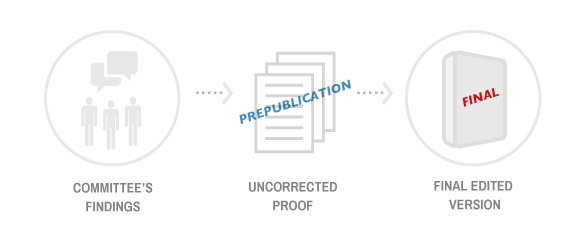
Below are the first 10 and last 10 pages of uncorrected machine-read text (when available) of this chapter, followed by the top 30 algorithmically extracted key phrases from the chapter as a whole.
Intended to provide our own search engines and external engines with highly rich, chapter-representative searchable text on the opening pages of each chapter.
Because it is UNCORRECTED material, please consider the following text as a useful but insufficient proxy for the authoritative book pages.
Do not use for reproduction, copying, pasting, or reading; exclusively for search engines.
OCR for page 55
Home and Community
Care of the Elderly: System
Resources en c] Constraints
Susan L. Hughes
Today, I win address five issues concerning the constraints and re-
sources that influence Me provision of community care services:
availability of financing, availability of services, reimbursement for com-
munity care, availability of low-tech community services, and availability
of manpower for community care. I win also include a few words about
informal careg~vers and conclude with a brief comment on the importance
of coordinating available services in ways that optimize their impact and
improve quality of care.
AVAILABILITY OF FINANCING
Financing is absolutely pivotal in shaping the provision of services
for me elderly. Our current way of financing community-based care
presents a mixed picture win both good and bad news. But if you take the
long view, it is mainly good. We have begun a very significant turn-
around In long-term care financing policy in the United States. In 1977,
public expenditures for institutional care outweighed community care
expenditures by a ratio of 5 to I. By 1980, the ratio was reduced to 3 to ~
and was furler reduced by 1986 to 2 to ~ all. ~ do not want to imply by
any means Hat current community-care doBars are adequate, but impor-
tant strides have been made in redressing the balance of doDars during a
relatively short period.
This progress in closing me gap is important to keep in perspec-
tive. This change in financing patterns also raises the question: Where are
the new community-care dollars coming from? Given prospective pay-
ment for hospital care and Be shift to ambulatory care Tat has taken place
55
OCR for page 56
56
SUSAN L. HUGHES
over Me past 5 years, it is no surprise Mat the bulk of Me increased
expenditures for commun~ty-based care has come from heady, rawer Man
social services, funding streams. Funding for Medicare home health care
increased by 251 percent between 1980 and 1986. In 1980, Medicare
home care accounted for 18 percent of aU community care expenditures of
any type. Medicaid contributed an additional 9 percent. By 1986,
Medicare paid 38 percent of aB community care expenditures, with Medi-
caid accounting for another 19 percent; together hey provided 57 percent
of the total amount of public funds spent for community care including
Medicare parts A and B. Medicare hospice, Medicaid, Title XX, and the
two titles of Me Older Americans Act (OAA) that finance home-based
services. The bad news, however, is reflected in the zero growth in social
services funding over the same period.
Why do we care where Me doBars come from? We care because
services follow doDars. The growth of Medicare skilled home care
predated Me 1980s. Grown has been greatest in reimbursements, proba-
bly reflecting increases in the number of beneficiaries (i.e., Me greater
number of elderly) and increases in visits. It is worm noting that me
increase in average charge per visit, during Me same period, is less than
growth in the over two factors.
AVAILABILITY OF SERVICES
What are the implications of the increased availability of Medicare
home care doBars? As a result of the influx of new doBars, Me number of
Medicare home care providers has increased substantially. As other
speakers have previously noted, Medicare home health care is a highly
regulated industry mat has become much more competitive in recent
years. The net result is Mat Me composition of providers by type has
changed considerably since Me original passage of Medicare in 1966. In
1966, the Visiting Nurse Associations (VNAs) and the public heath
nursing agencies dominated the Medicare home health care industry,
accounting for 91 percent of aU providers. By 19X3, Weir share had
declined to 44 percent, with hospital-based, proprietary, voluntary, and
not-for-profits taking the lead, accounting for 57 percent of aU home
health care providers.
These figures do not imply that VNAs are going out of business.
Rather, Me figures imply that new entrants to Me field of home health care
are different and Mat they are probably using more sophisticated manage-
OCR for page 57
HOME AND COMMUNITY CARE: SYSTEM RESOURCES AlID CONSIRAl~TS
57
ment and marketing techniques. We do not know, however, what these
changes in provider type imply for access to and quality of care over time.
We can conclude from these data that great progress has been
made in increasing the supply of a very particular type of community
care Medicare home health care. Medicare home care is, however, a
skiBed health care service that terminates when the fiscal intermediary
decides that patients no longer need sterile dressing changes or whatever
other skilled care might be required.
REIMBURSEMENT FOR COMMUNITY CARE
Given the combined effects of diagnostic-related groups for hospi-
tal reimbursement and prospective case-mix-based reimbursement for
institutional care, I think that an important problem in the future may be
the growing number of elderly in the community who do not need skilled
nursing care but need low-tech, long-term supportive services. The
likelihood of encountering this problem win be heightened if two things
happen. First, the trend toward prospective, case-mix-based reimburse-
ment for institutional care may cause nursing homes to preferentially
admit more patients needing highly skiDed care versus those needing
lighter, intermediate care. Second, if this happens, and if the nursing
home bed supply remains relatively constant, we may end up with a
situation where patients who need lighter care have nowhere to go. This
scenario implies that there may be considerably greater need for low-tech
home care in the future. Thus, our ability to understand and document
differences in home care models and in their supply and staffing win
become increasingly more important.
AVAILABILITY OF LOW-TECH COMMUNITY CARE
SERVICES
At Northwestem University School of Medicine, we have been
conducting research for the past 6 years with He Five Hospital Program in
Chicago. The Five Hospital Program provides low-tech home care to
chron~caDy impairs elderly who need it for a considerable period of
time. We recently D~ru shed a 4-year longitudinal evaluation of that pro-
gram.
Our comparison of He low-tech services provided by the Five
Hospital Program and national data on Medicare visits by staff shows that
OCR for page 58
58
SUSAN L. HUGHES
the Medicare home care model is very nurse intensive Alp. In contrast, the
long-term home care model is much more interdisciplinary, with a greater
proportion of visits made by home health aides and by social workers.
In our longitudinal evaluation of We Five Hospital Program, we
found that this comprehensive and continuous long-tenn home care mode}
significantly reduced lifetime risk of permanent admission to intermedi-
ate nursing home care by 32 percent compared with controls (2~. This
finding was accompanied by a 25 percent increase in overall cost, which
is considerably less than cost increases that have been reported in earlier
studies. For example, the Section 222 day-care homemaker evaluation
conducted by Weissert et al. reported a 65 percent increase in cost (3~.
The SkeHie et al. evaluation of the Georgia Alternatives Health Services
Program came in at 35 percent (4~. When costs nm over by 20 to 25
percent, we as a society may be able to institute different management
techniques to reduce them, such as deploying workers in more efficient
ways, reducing the length of a visit, or trimming high volume users.
It is important to note that clients in the Five Hospital Program also
expenenced quality-of-life benefits that accompanied the 25 percent in-
crease in costs. Those benefits included better cognitive functioning at 9
months, that was sustained at 48 monks, and fewer unmet needs for care
in the treatment group (5~.
We see increasing evidence that more humble, low-tech services
are needed in addition to the growing need for skilled home care. Low-
tech services may not, however, be increasing at as fast a rate as He need.
It is important to note that no good information is available on the supply
of low-tech home care providers in the United States. The Office of the
Assistant Secretary for Planning and Evaluation (ASPE) of the Depart-
ment of Health and Human Services was planning to conduct a survey on
this, but I understand that it was discontinued. We definitely need more
information about He availability, staffing, and cost of these services if
we are to adequately care for the growing numbers of frail elderly in He
future.
AVAILABILITY OF MANPOWER FOR COMMUNITY CARE
What about manpower for community care? Due to time con-
straints, I win address only nursing manpower. A recent article by Aiken
and Mullinex(6) in the New England Journal discusses the overall nurs-
ing shortage in the United States. I am not aware of any statistics about
OCR for page 59
HOME AND COMMUNITY CARE: SYSTEM RESOURCES AND CONSTRAINTS
59
manpower shortages in commuruty-based care, but this is an area that
definitely needs more study. Prior to this meeting, ~ asked the director of
the Five Hospital Program, who is also the current president of He Renoir
Council of Home Health Services, if nursing manpower is a problem for
home care agencies In Illinois. She informed me that, yes, recruiting
trained and adequate personnel for home care is a problem in the state.
There are two sides to the problem. The good news is that
community care is inherently attractive to nurses. Nurses have more
autonomy when practicing in a community care sewing, and the hours are
more regular. The bad news is that more nurses win a Bachelor of
Science in Nursing (B.S.N.) degree may be needed to provide community
care. Since nurses are increasingly being asked to function as case
managers, more not less—professional judgment is being required of
them. As a result of the increased complexity of the nurse's role, most
nurses feel that a B.S.N. nurse is the appropriate person to provide them.
In fact, most directors of nursing in home health care agencies not only
prefer to hire B.S.N. nurses but also prefer those win a year of exper~-
ence.
At present, as we an know, not enough B.S.N. graduates are being
produced by the schools. Aiken and MuBinex have documented a 20
percent decline in nursing school enrollment since 1983. They also report
lower Scholastic Aptitude Test (SAT) scores among those interested in
pursuing a nursing career. The authors suggest that a more differentiated
wage structure and more opportunity for career advancement are neces-
sary to reverse this serious manpower constraint for community-based
care in the future (6~.
INFORMAL CARE PROVIDERS
In community care, formal care providers play a backseat role to
the informal caregiver. ~ support what other speakers at this conference
have already noted: we have to recognize what the national long-term
care survey documented that 70 percent of care provided to the sick
elderly in the community is provided by informal caregivers.
On our recent randomized study of hospital-based home care in the
Veterans Administration (VA), we found that informal careg~vers of what
we can the "severely disabled" group—veterans who have at least two
acEvities-of-daily-living (ADL~) impairments are providing X hours of
care a day, 7 days a week (5~. That is, obviously, He equivalent of a full-
time job.
OCR for page 60
60
SUSAN L. HUGHES
Our 4-year longitudinal evaluation of the Five Hospital Program
has shown that caregivers continue to provide service over time even after
formal services have been introduced; there is not as much of a substitu-
tion effect as some people have feared (5~. A major question that remains
is whether these careg~vers win continue to be available in Me future. It is
projected that by 1990, 70 percent of women ages 35 to 44 and 61 percent
of Rose ages 45 to 54 win be in He labor force. These women win be
dealing with the competing demands of children, parents, and jobs. In
view of this trend, an appropriate policy response would be to provide
long-tenn home care, respite, and adult day care services Hat buttress
infonnal caregivers instead of having the family co-pay for institutional
care.
COORDINATING AVAILABLE SERVICES
Finally, how can we coordinate existing services to reduce frag-
mentation and assist people in their search for appropriate care? Some
states have attempted to resolve this issue by pooling existing funds. This
solution presents many problems. Who controls the pot? Even if all
public funding were pooled, is there enough money in He pot to start
wig? Most analysts seem to agree that the total amount of funding must
increase, probably through a mixture of public and private funding mecha-
nisms.
More and more has been written recently about the need for case
management. ~ have a number of questions about case management, not
the least of which is, Do older people want it? ~ think that He enrollment
and reenroll~nent experience of the elderly In Medicare health mainte-
nance organizations (HMOs) and the experience of the social HMOs will
be very instructive to watch.
Dr. Robert Binstock recently proposed that limited Title Ill OAA
community care funds be used to create a voluntary network of Area
Agencies on Aging (AAAs) that would stop providing direct service in
areas where Hey now compete with other private providers. Instead, they
would become a un~fo~y visible, easily assessable network of aging
resource centers for help (ARCHs). This proposal is intriguing.
Finally, we are currently conducting the national evaluation of the
Living-At-Home Program (LAMP) demonstration Hat is being conducted
with funding from a consortium of 35 private foundations across the
country, headed by The Commonwealth Fund and The PEW Charitable
Trusts. The L`AHP Program office is directed by Morton Bogdonoff,
OCR for page 61
HOME AND COMMUNITY CARE: SYSTEM RESOURCES AND CONSTRAINTS
61
M.D., of New York. The Program National Advisory Committee is
headed by Robert Butler, M.D., of Mount Sinai School of Medicine, New
York.
LAHP is testing whether voluntary consortia of heady and social
service agencies in 20 communities across the United States can stream-
I~ne access to community-based care and identify and hE service gaps
without the infusion of new service dollars (7~. A research team headed
by WiBiam Weissert, Ph.D., University of Norm Carolina, Chapel Hid, is
providing technical assistance to He sites in the form of computer soft-
ware to estimate demand for care and prospectively budget services.
The LAHP demonstration win be completed and results from the
evaluation win be available by He spring of 1990. As part of the
evaluation design we are obtaining data on He characteristics of 1,500
elderly clients across He sites, their patterns of service use, and unmet
service needs by site and organizational strategies that produce viable,
coordinated systems of care. These data should help to answer some of
these important questions about how to better promote access to needed
services in the future.
REFERENCES
1. Hughes, S.L. Long-Tenn Care: Options in an Expanding Market.
Rockville, Md.: Aspen Publications (formerly Dow Jones/lrwin),
1986.
Hughes, S.L., Manheim, L.M., Edelman, P., and Conrad, K. Impact
of long-term care on hospital and nursing home use and cost. Health
Services Research 22~11:19-47, 1987.
3. Weissert, W.G., Wan, T.H., and Livieratos, B. Effects and costs of
day care and homemaker services for He chronically ill: A random-
ized experiment. Hyattsville, Md.: Department of Health, Education,
and Welfare/National Center for Health Services Research, 1979.
4. Skellie, F.A., Mobley, G.M., and Co an, R.E. Cost-effectiveness of
community-based long term care. American Joumal of Public Health
72(4):35~358, 1982.
Hughes, S.L., Conrad, K.J., Manhenn, L., and EdeLnan, P. Impact of
long term home care on mortality, functional status and unmet needs.
Heals Services Research 23~2~:269-294, 1988.
6. Aiken, L.H., and MuDinex, C.F. The nurse shortage: Myth or
reality? New England Joumal of Medicine 317~101:641 645, 1987.
7. Hughes, S.L., and Weissert, W. Living at home variations on a case
management theme. Generations: Joumal ofthe American Society
on Aging (Fall):66-67, 1988.
Representative terms from entire chapter:
community care