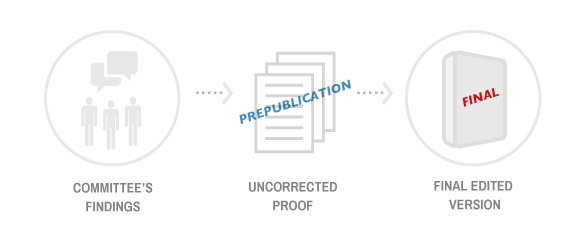
Below are the first 10 and last 10 pages of uncorrected machine-read text (when available) of this chapter, followed by the top 30 algorithmically extracted key phrases from the chapter as a whole.
Intended to provide our own search engines and external engines with highly rich, chapter-representative searchable text on the opening pages of each chapter.
Because it is UNCORRECTED material, please consider the following text as a useful but insufficient proxy for the authoritative book pages.
Do not use for reproduction, copying, pasting, or reading; exclusively for search engines.
OCR for page 80
The Acute Care
Hospital and late El(lerly:
Framing the Issues
Mitchell T. Rabin
At least Me recent achievements have brought us to He state of
penury now claimed by payers for health care. One is the advancing
life expectancy, which has created a relative increase in the number of
elderly. Another is advances in medical technology, which have led to
increased applications of diagnostic and therapeutic modalities to dis-
eases in the elderly and increased enthusiasm for hospitalizing the elderly
in the face of acute disease or exacerbations of chronic illness. The third
achievement, particularly during the decades from 1965 to 198S, has been
the significant increase in funding for the care of the elderly Medicare
and Medicaid.
Only one of these Me advances—life expectancy, medical tech-
nology, and increased funding is technological; the others are clearly
societal. Nevertheless, we are now confronted, as medical care expendi-
tures are being trimmed, with He need to reconsider the venous compo-
nents of that societal burden of rising heals care costs. The pressure is on
the medical care establishment.
ACUTE HOSPITAL CARE OF THE ELDERLY
Probably no single component of health care costs is as large as
that for the acute hospital care of the elderly. It represents about 40
percent of the inpatient revenue at Boston's Beth Israel Hospital and at
many other major teaching hospitals and community hospitals; in some
hospitals the figure may be even higher. Yet, we must not forget a
fundamental fact: the vast bulk of these dollars is spent on a relative
minority of the elderly. Most old people, during most of their advanced
80
OCR for page 81
ACUTE CARE AND THE Fi~ERLY: ISSUES
81
years, fall within the category of "successful aging," as our former geron-
tology chief, Dr. John W. Rowe, has written. Thus, we should begin with
a caution. If prevention is the most effective medicine, then we had better
pay attention to maintaining and extending successful aging among the
population whose numbers, life span, and average age are increasing, lest
the economic pressures we now feel grow to a size that strains not only
our material resources but also our ethical reserves.
The pressures recently applied by Medicare and other payers have
had a major impact on the nature of hospitalization, particularly for me
elderly. The extent of this pressure varies state by state, perhaps hospital
by hospital. It vanes over time, too, as we move, for example, from
regional to national rates of payment for Medicare. These pressures win
probably escalate furler. The result win be a real change in who gets
admitted and for how long. For many hospices, the result has already
been a sharp increase in Me pace of inpatient turnover, especially if the
hospital remains fun by a~nithng more and more patients, as ours does.
The turnover pace seems much faster both to the caregiver and Me
patient with, for example, the loss of the preoperative day; with discharge
often occurring before He patient or family can grasp what has been going
on; and with postdischarge arrangements made in a manner that often
seems to the patient and family as last minute or, if it starts at the time of
admission, inconsiderate. The patient has less time to get to know the
inpatient unit, its physical geography, and its staff. The patient has less
lime to form reassuring relationships and to be reassured. The anxiety
spins over, not only to the patient's family, but to Me caregivers as weU.
It is less satisfying to be a patient. It is also less satisfying to be a provider
of care.
~ wrote several years ago about what I labeled the SAG index, an
acronym for Sense of Anxiety versus Gratification all. The days when we
no longer hospitalize patients are clearly the days of relative gratifica-
tion—the patients feel, finally, that they are being cured; the doctors fee!
that they have been able to accomplish something. The days that remain
are Me days of anxiety. "Do ~ know what is going on?" asks the doctor.
'twin I live or win I die?" asks Be patient. Nowadays, the SAG index has
moved up markedly.
Therapeutic goals have become subverted by the utilization review
process. Regardless of the vision properly held by the doctor or nurse of a
reasonable therapeutic goal for the patient, the fact is that when the
patient's condition is deemed no longer needing the capabilities of the
OCR for page 82
82
MITCH T. RABKIN
acute care institution, the patient is pressured to leave. The hospital,
aware of the economic consequences of therapeutic chantableness, ap-
plies pressure, although not always directly. When the acute illness
subsides to a level which could be handed elsewhere, this approach
destroys what should be the the focus in therapy in many patients.
Coming to the hospital with a background of relatively stable chronic
illness and level of functioning, the patient often regresses as a result of
the acute illness. The acute care focus tends to deny that proper goal, the
restoration of the patient's status quo after the acute illness has been
handed. Given He vagaries of subsequent attention in the padent's home
or the nursing home, which may be good but too often is not, the patient
might or might not ever return to a functional status that might have been
achieved under more favorable hospital circumstances.
The relinquishing of responsibility once the acute episode has
tempered also assaults the longitudinal continuity so important in care,
particularly in the elderly, for whom new scenes and new relationships are
often difficult to manage. Even He efficient transfer of information to the
skilled nursing facility does little to maintain a flue sense of continuity.
PROBLEMS OF THE ELDERLY IN THE HOSPITAL
Let us look at the elderly who populate the hospital. What specific
problems do most of them present as a result of age and of less, rather than
more, successful aging? Aging assails many physiological protective
mechanisms, such as clearing of the tracheobronchial tree; He skin is
more fragile and breaks down more easily; aspiration of fluid into He
lungs occurs more readily. Injury, especially falls, are more common
because of decreased peripheral vision, because the elderly cannot find
their glasses, because the hospital bed is a different height than their own,
or because a bit of incontinence has made the floor slippery.
The new and unfamiliar hospital environment creates confusion
made worse by new medications or by Snag toxicity, hypotensive agents,
or salt restriction. Unfamiliar foods or dishes can lead to bums. Hot
packs can burn before the patient is aware. Meal schedule disruptions or
He strange tastes of salt restriction may lead to anorexia. Depression is
common, even for the patient who did not enter depressed. Sensory
depnvation or overstimulation in a new environment and the loss of
diurnal clues in the passage of days and nights, particularly in the ever-
lighted intensive care unit (ICU) commonly occurs. Ordinary inconti-
nence may be viewed as normal for age even though often it can be
OCR for page 83
ACUTE CARE AND THE ELDERLY: ISSUES
83
improved. Bowel pattems, often perverted though needless laxative use
at home, may create major problems. The sleep and rest cycle is disturbed.
The roommate or the roommate's family may be problematic. Immobility
in bed may create more Man bedsores and pulmonary problems. A
marked decrease in mental functioning can result.
Often the elderly bring to the hospital a damaged sense of their
own identity, ability, and self-esteem. The vicissitudes of Weir life, their
retirement, the loss of spouse, the restrictions of age or illness, the youth
orientation of the world around them, me lack of respect for the experi-
ence and insights their years have brought- these can be sources of self-
consciousness, a sense of deficiency, humiliation, and depression. Acute
hospitalization itself is no help, for it assaults the strongest of us as we are
Trust into a more passive, regressed role. Hospitalization can be made
even worse by the expectation of the health care team that the patient win
comply with He speed set by these younger, acclimatized, and in-charge
people. And to wrap it up, we take away their name and give them a
number, we take away their clothes and give them a Johnny, and then we
lose their dentures!
Too often, the clinical team does not even begin to touch on issues
of major concern to the patient. In part, it is the pace of life in a hospital,
but sometimes the elderly patient's concems, for example, concerns about
sexuality, are not even considered as being reasonable. Nor is He pa-
tient's anticipation of his or her own death considered to be a reasonable
concern. We would certainly want to participate in the decision for
ourselves if orders are written not to resuscitate. Does age mean that the
elderly do not want to? Interestingly, a Beth Israel nurse made a comment
to me Hat sums up some of this. She said, `'You know, competency is
never an issue when He patient says, 'Yes,' only when the patient says,
~No,.,'
This litany describes He situation of patients everywhere, and ~
believe, in practical fact, that we do better at Beth Israel than at many
hospitals; but the problem is universal. We must address these questions:
How can we change our policies? How can we use technology to improve
the care of He aged?
Hospital Policy
Some of the agony of the elderly that ~ have just described surely
must be exacerbated by the anomie of some of our hospitals. No new
policies need be formulated, but the successful implementation of exist-
OCR for page 84
84
MITCH T. RABKIN
ing policies relating to effective management of Me hospital is important.
For example, hospital workers, from physicians and nurses to transporters
and dietary aides, must understand the issues of the elderly and use that
understanding to make Weir systems work to soften the harshness of
hospitalization.
It is imperative that hospital management rationalize its operations
as effectively as possible. Payers' policies could be changed in relation to
length of stay and the resulting pressures for discharge. ~ suspect, how-
ever, Hat major relief win not be forthcoming until Be heady care
proportion of the gross national product (GNP) decreases significantly,
which, ~ believe, will happen only if Be denominator (GNP) grows faster
than the numerator Beach care costs).
Technology in the Acute Care Setting
In medical care, we find that most technology does not eliminate
jobs or save money. Furthermore, many tasks Squire the exercise of
judgment that has not yet been synthesized into machines; the basis of
professional expertise is still judgment, which is based on cI~n~cal expen-
ence.
~ liked the idea Rat was previously mentioned of using bar codes.
I would like to see bar codes on wristbands and on unit-dose medication
packets, tied in with computer ordering, used for documentation and
billing, coupled with purchasing and receiving in Be pharmacy, used with
a drug incompatibility system and a least-cost drug program, and many
other applications.
This is no longer high technology. It is middle-level technology,
but the same considerations apply to bar codes as they do win PET
scanning or magnetic resonance imagery. Indeed, mistakes occur both in
today's systems of administration of medication and in the absence of
PET scanning; in bow instances suboptimal care and even deadly mis-
takes can occur because the conect technology is not in place. Will it be
worth the vast dollar cost to salvage those few lives? The question is Be
same, regardless of high tech, middle tech, or low tech ~ hope that Be
answer is "yes," but Be reality will always be that the size of Be purse
powers the purchase.
' See Robert L Kane, "Home and Community Care of the Elderly: Framing the Issues," in
this volume.
OCR for page 85
ACU~17i CARE AND THE F~)ERLY: ISSUES
85
PRIMARY NURSING
In service industries and hospital care is a service industry, me
best approach to problems is not invariably technology. So, without
retreating from me many ways to think about these issues, I want to
propose greater adoption of a "no-technology technology"; one that has
great potendal- Me way in which we use nurses in the hospital.
~ call it a technology because it is a way of empowering nurses to
improve He therapeutic process. Our previous comments on me risks of
hospitalization and problems, often cited in nursing literature, such as He
effects of immobility, orientation, lighting and quiet, ambience, and over
aspects of the hospital environment, emphasize He importance of nursing.
Hospitals are nursing institutions, not doctoring ~nshtutions. Twenty-
four hours a day, seven days a week, He professional nurse provides
professional nurturing that sustains the patient and allows the physician to
touch base periodically to create various perturbations, some for good and
some perhaps not.
Much of the difficulties of the elderly hospital patient can be
helped markedly by better use of nurses on the inpatient unit. In most
hospitals today, nursing is organized under a concept called team nursing,
which organizes nursing personnel at venous skis levels, with He profes-
sional nurse typically directing and supervising the work of others. This
has two problems. First, nurses do specific tasks for many patients—the
beds, baths, temperatures, and so on—but no one really knows any spe-
cific patient. The second problem, worse in times of a nursing shortage, is
that the few professional nurses are so involved in supervising that they
do not get to know the patients, even though they are the ones who give
the medications and treatments that aides are not qualified to give.
The idea of primary nursing arose out of dissatisfaction with this
arrangement and was based on the notion that patients, rather man tasks,
should be He focus of the professional nurse. The concept is that a
professional nurse would be accountable for the care of relatively few
patients over the entire 24-hour day—developing their nursing care plans;
delivering He total care while on shift, with assistance from others as
needed; and then delegating to associate nurses on other shifts the respon-
sibilities for carrying out the plan and reporting what happened.
The continuity in reporting is maintained shift by shift, and as a
result He primary nurse becomes able to maintain an awareness 24 hours
a day of the patient's physiology changes and psychology; an understand-
OCR for page 86
86
MITCH T. KIN
ing of how the disease is progressing; an understanding of how much the
patient understands and what preparations the patient has made for con-
troBing and dealing with the illness after discharge; the role of the pa-
tient's family; and so on. The primary nurse's role becomes an ~m-
mensely important complement to the physician's activities and aware-
ness. Furthermore, it is gratifying for both nurse and patient.
Beth Israel Hospital's vice president for Nursing, Joyce C. Oif-
ford, instituted primary nursing a dozen years ago ~ughout the entire
hospital. The impact on patient care and patient satisfaction has been
tremendous. The impact on nurse satisfaction is such that, over the years,
when other major Boston teaching hospices have had to close beds
because of nurse vacancies, we have not needed even to float nurses from
one unit to another. And our costs, whether expressed in terms of nursing
hours per patient day or nursing salaries, have remained in line with those
of the other major Boston teaching hospitals.
If you understand primary nursing, then you can understand why
having continuity of care with one responsible individual enables the
primary nurse to become a knowledgeable and effective advocate for the
elderly patient who, as we have seen, can be severely disadvantaged. The
primary nurse acts as support for the older patient faced with difficult
decisions in hospital or with discharge planning issues. Because primary
nurses gives the daily care, they are able to assess the skins, the strengths,
and Me deficits of each patient. While they give this care, some of which
others may label as grunt work, Hey are able to taDc with the patients and
learn more about Heir hopes, needs, and fears. It is an intimate relation-
ship with He patient, one which is professionally fulfilling. The primary
nurse decreases the patient's sense of isolation and becomes a familiar,
sometimes dear, friend and the nurse's 24-hour accountability leads to a
far more individualized and tailored program and, often, a greater likeli-
hood of compliance.
A leader in American nursing wrote, "Professional services are
meanings only if they meet society's needs. Patient care in hospitals has
not done this for a long time, if ever." Primary nursing offers the vehicle
to accomplish this service to society. Let us hope that its promise will be
realized.
REFERENCE
I. Rabkin, M.T. The SAG index. New England Joumal of Medicine
307:135(}1351, 1982.
Representative terms from entire chapter:
primary nursing