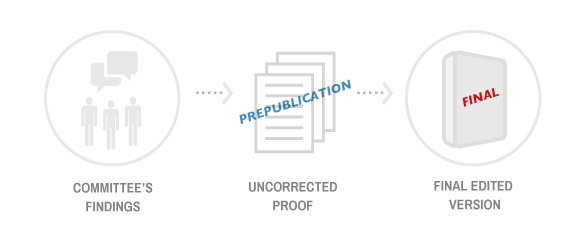
Below are the first 10 and last 10 pages of uncorrected machine-read text (when available) of this chapter, followed by the top 30 algorithmically extracted key phrases from the chapter as a whole.
Intended to provide our own search engines and external engines with highly rich, chapter-representative searchable text on the opening pages of each chapter.
Because it is UNCORRECTED material, please consider the following text as a useful but insufficient proxy for the authoritative book pages.
Do not use for reproduction, copying, pasting, or reading; exclusively for search engines.
OCR for page 94
Special Perspectives on
Acute Hospital Care
Carol I. Gray
Of critical consequence in quality of care are the attitudes, perceptions,
knowledge, and skill of practitioners. For purposes of this paper, I
sought the opinion of individuals in clinical practice though the means of
an interview guide~he format of which included questions about def~ru-
tions: health care, elderly, the proportion of individuals "in-house" who
were elderly, and questions regarding philosophy of care and age-related
alterations of that philosophy in tens of (a) access to technology, (b)
aggressiveness of diagnostic and therapeutic uses of technology, and (c)
termination of technology, such as life support systems. ~ also included
questions regarding the vulnerability of sick elderly to underuse, misuse,
or overuse of technology. Finally, ~ asked questions about need for
availability of support services and identification of policy issues and
research needs all.
Discussion that follows is an amalgamation of observations and
perceptions carrying no pretense of a research effort. Clearly, the limited
data base from which ~ speak can serve only to generate questions rather
than define solutions.
THE INTERVIEW SAMPLE AND PROCESS
The participants in the interview sample represented Tree institu-
tions: a large I,200-bed teaching hospital, a 500-bed intermediate hospi-
tal, and a 250-bed community hospital. The interviewees included clini-
cians and administrators in general medical-surgical department, inten-
sive care units, coronary care units, and "step~own" units.
94
OCR for page 94
SPECIAL PERSPECTIVES ON ACUTE HOSPITAL CARE
95
DEFINITION OF TERMS
To establish a common frame of reference for the interviewees, I
defined health technology as the fun range of technolog~es~iagnostic
and therapeutic—including but not limited to (a) a set of techniques,
thugs, equipment, and procedures used by health care providers in deliv-
ering care to individuals; and (by "mini" technology, which includes
standard hospital routines, repeated blood tests, diagnostic tests requiring
fluid restriction, extensive bedrest, extensive therapeutic regimes, issues
of technological restraint, and biotechnology for use in diagnostic probes
(2,3~.
Rather than establish a common frame of reference for We term
elderly, ~ was curious to know how that population was characterized by
the nurse clinicians. Several respondents said that they thought being
elderly starts at about age 70. Another, more specific in her definition,
identified "young" elderly to be 55 to 60 years, and "old" elderly to be
over 60. Yet another respondent took a broader viewpoint by defining
elderly as starting at about age 80, but at the same time, some persons are
clinically and physiologically very old at 60. Another said that to be
elderly is not, in and of itself, a state of being inept, sick, or pathological
as some might characterize it; rather, it is a phase of life that carnes
certain attributes.
THE DISTRIBUTION OF ELDERLY IN ACUTE CARE
HOSPITALS
According to the respondents in a large hospital, the general medi-
cal and surgical units as well as intensive care units average an increased
proportion of elderly. In the smaller community hospital, the proportion
of elderly is even greater, attributed in large part to the highly ethnic mix
of the population served in the inner city. These perceptions expressed by
clinicians paralBe] the observation of the American Hospital Association
past-president, Carol McCarthy. The types of patients being treated in an
acute inpatient care setting tend to be older. Admissions for people under
65 are the lowest in over 14 years and the length of stay is shorter than it
has been for AX years (4~.
OCR for page 94
96
CAROL J. GRAY
THE ELDERLY'S ACCESS TO TECHNOLOGY
Asked if age influenced the elderly's access to advanced technol-
ogy, respondents expressed a common philosophy which was to provide
He best possible care for aU patients without age distinction. The respon-
dents9 without exception, had the impression that technology was applied
equally to all and that age-related discrimination was not apparent. One
respondent made the point that multiple systems failure occurs at all ages
and requires timely evaluation and monitoring.
Professional judgment about a patient's potential for recovery
tempered most decisions about the use of advanced technology. One
respondent noted that today's approach differs from that 15 years ago
when age did play a greater role. Ultimately, the patients themselves or
their families often determine the use of technology.
The Aggressive Use of Diagnostic and Therapeutic Technology
Among the Elderly
Respondents identified a tendency for caution win the elderly, for
example, in the use of chemotherapy. At one time protocols prohibited
intense chemotherapy for individuals over 56. Today, quite aggressive
therapy is administered to the elderly. By way of another example, heart
transplants were Medicare driven in the past, with a cap at age 55. That
restriction has recently been lifted. Cardiopulmonary patients now go to
surgery in their seventies. The decision to use aggressive diagnostic and
therapeutic techniques is often a function of social variables, individual
choice, and the availability of support networks and their ability to sup-
port and sustain. Other vanables, such as He will to live, enter into the
choice of therapy. Bypass surgery is performed on elderly who are not
good candidates for other procedures, such as angioplasty, or as a last
resort to relieve symptoms.
The impressions of the respondents regarding aggressive use of
technology were validated, in my opinion, when I made an on-site visit to
some clinical units. Two situations caught my attention. First, in one
surgical intensive care unit, a patient was surrounded by four intravenous
pumps, one chest tube, one respirator, one EKG monitor, venous pressure
equipment, arterial pressure, and a cut-down procedure to infuse hyperal-
imentation fluids for maintaining nutrition, including lipid replacement
fluids and electrolytes. This patient had been admitted for bowel surgery
at age 73.
OCR for page 94
SPECIE PERSPIRES ON ACRE HOSPICE CAPE
97
The second example occurred in an intensive care unit. The pa-
tient's diagnosis was extensive right occipital hemorrhage, In other words,
a cerebral-vascular accident. He was supported by a respirator, heart
monitor, central venous lines, arsenal line, heparin flush, nasogastr~c tube,
and intravenous tube for peripheral medications. A Foley catheter, hyper-
alimentation setup, and infection protocols were also in place. His age
was 74. Only one of these cases was in the larger research hospital, the
over was in a small community hospital.
Termination of Life Support Technology in the Elderly
Several respondents spoke to He ethical and philosophical dilem-
mas associated with termination of life support '`Technology keeps
people alive longer, but their quality of life and He family's resources are
at risk." Family wishes are generally honored, and age is a major consid-
oration, but decisions are not age-l~mited. Legislation and living wins
have probably assisted in making decisions for terminating the life sup-
port systems.
Vulnerability of the Sick Elderly to Underuse, Misuse, or Overuse of
Modern Technology
This question caused a mixed reaction. One respondent compared
the aggressiveness of diagnostic and therapeutic approaches in an aca-
demic health center with that in a community hospital in which family
practice prevails. She responded "yes" on aB Wee coun~nderuse,
misuse, overuse. Especially vulnerable are biologically older individuals
affected in mind, body, and spirit who need help and who acquiesce to
anything. Older persons not able to articulate subtle changes that occur
and who have no family to advocate or interpret for them might be the
most vulnerable.
The difficulty in predicting the value of technology was expressed
by several respondents. "It is situationally dependent"; said one respon-
dent, ". . . elderly are especially vulnerable." What is known after the fact
cannot be predicted with degrees of assurance. The outcome is most often
unknown until it is tried.
The frail elderly are more prone to discomfort, but He question of
their vulnerability to misuse of technology was unclear in the respon-
dents' minds. Time constraints driven by prospective payment and diag-
nosis-related group (DRG) insurance put the elderly at higher risk than
OCR for page 94
98
CAROL J. GRAY
inappropriate use of technology (5). Same~ay surgery on an outpatient
basis and procedures for diagnosis and therapy often devastate both the
family and the individual elderly patient.
IMPROVING SUPPORT SERVICES FOR THE ELDERLY
How might we make better use of support services, and what
additional services are needed? While respondents acknowledged the
availability of a gamut of services, they also expressed the need for
improvement of services, especially for the elderly. The need for a
communication system is great. For example, when an elderly person is
scheduled for surgery, the records include a written communication be-
tween the admixing and attending physician or surgeon, and perhaps one
preoperative visit with He surgeon; a surgical checkup might occur weeks
after discharge. Communication in the interim consists of a letter be-
tween the physicians. Little is noted about rehabilitation and future care.
Informed admissions and discharges could be improved Rough,
for example, a primary nurse serving as a liaison before, during, and af er
hospitalization. Telephone calls or visits to the patient are helpful when
careful explanations are given about the hospital environment, expecta-
tions of care, self-help versus help by others, and so form.
Better information systems are needed Hat contain more Han
computerized laboratory reports (61. Frequendy, He pre-admission inter-
view is extremely stressful, pressing patients or family for a detailed
medical history when they have been taxed significantly just making Heir
way through the maze of long comdors, multiple signs, and queries with
strangers.
Another unmet service need is financial counseling. Social work-
ers have provided extraordinary support, but there seems to be an urgent
need for earlier, more timely advisement. For example, He postsurgical
patient who has had an organ transplant and is placed on daily cy-
closponne can expect the bill for drugs alone to be $50,000 per year.
Finally, same-day surgery and diagnostic procedures place signifi-
cant physical and emotional stress on He elderly. More choices for
services, such as one-day diagnostic procedures and those driven by He
DRG system, are needed for patients and their spouses. Older people
have great difficulty win an operative schedule in which the patient
comes in the morning and goes home that day—for example, cataract
surgery on an 82-year-old; right inguinal hem~orrhaphy, 70-year-old;
OCR for page 94
SPECIAL PERSPECTIVES ON ACUTE HOSPITAL CARE
99
hemor~hoidectomy, 76-year-old . . . each admitted and discharged the
same day.
Examples of same-day diagnostic procedures included cystoscopy
on persons age 60 and older, endoscopy for 67- and 70-year-olds; and in
one situation, colonoscopy, esophagoscopy, gastroscopy, and duo-
denoscopy, all for a patient of 81 years. Might it be possible to restrain
diagnostic and therapeutic technology routines in the acute care hospital
to account more humanely for me physiological resources and limitations
of the elderly? Responses varied widely: aff~rmadve, neutral, and nega-
tive views were expressed, one expressing an emphatic "yes, we are
pushing me limits of technology and need universal standards of care for
the elderly."
Examples of procedures for which we need restraint include (~)
rigid protocols for bloodletting; (2) routinely waking patient to take vital
signs through the night this results in fatigue and confusion the next
day; and (3) iatrogenically induced starvation for 3 days from a 3-day
diagnostic workup that required nothing by mouth for 3 days followed by
discharge to home on the fourth day. The patient was very much weak-
ened and more debilitated than when he entered Me hospital.
Other respondents would like to see diagnostic and therapeutic
aggressiveness modified especially for life-threaten~ng procedures in which
Me infonnation is not vital to know. For reasons real or imagined, the
respondent in the research institution and academic health center ex-
pressed greater concern for diagnostic, rather than therapeutic, restraint.
Respondents suggested that better mowtoring was needed for elderly
patients on medical teals, hypertensive drugs, and so form. Shorter stays
reduce effective assessment in the hospital, while effects on general
systems often occur after hospital discharge. The frail elderly, who
sometimes have no spouse or other support at home, might have to deal
with untoward and unexpected reactions following discharge and become
quite frightened. For example, in the elderly, blood pressure can be very
labile and subject to or~ostatic changes, especially in response to drug
therapy days after return to home.
POLICY ISSUES
The policy issues rest in the area of reimbursement- funding or
lack of it for prevention and the cost benefits of health over illness.
Quality of life and family and societal resources must receive greater
OCR for page 94
100
CAROL ]. GRAY
priority. Sophisticated high technology raises inordinate expectations of
cure and recovery, but its use cannot ensure good outcomes. Patients and
families need a fun accounting of possibilities and expectations, if at aD
possible, before hospitalization. The fear of acquired immune deficiency
syndrome (AIDS) is of growing concern with technology, and many
patients Worry about contracting the disease while in He hospital. Addi-
tionaBy, legislative issues, resource avocations, and information systems
Al loomed high in the respondents' identification of policy issues. There
is concern for the nontherapeutic effect on frail elderly placed in ex-
tremely stressed situations for purposes of both diagnosis and treatment
because of compliance win Medicare. DRG directives are also having an
impact on the elderly's access to care in He hospital or forcing an early
discharge often times in marginal states of recovery from illness and
without reasonable support systems (spouse, friends, family) capable of
caring for them at home.
RESEARCH NEEDS AND OPPORTUNITIES
There is a need for research into the process of socialization and
acculturalization of elderly in the hospital setting. That would include
expectations and accommodation of their role~y the padents, their
families, and health care providers. Research is needed to evaluate pre-
hospital education, its effect on compliance, role congruency, and so on.
By way of example offered by one respondent, the generation of elderly
now in acute care have expectations for care unlike those of the care
providers who recognize the therapeutic effect of self-help.
Most urgent is the need for collaborative research among profes-
sional care providers to capitalize on experiences of physicians and nurses,
clinicians and researchers; to analyze the whole gamut of biotechnology,
its systems and design, its application, its effectiveness, and its costs. Is it
available both for diagnostic and therapeutic purposes for He population
of frail elderly who have the misfortune of ill-treat? Is it used judi-
ciously to the best advantage of the population served- Hat is, are He
potential benefits balanced against the potential for hann?
SUMMARY
Through means of an interview guide, an attempt was made to
sample perceptions held by nurse clinicians about diagnostic and thera-
OCR for page 94
SPECIAL PERSPECTIVES ON ACUTE HOSPrTAL CARE
101
peutic use of technology in tertiary care hospices where care was pro-
vided to Me populations of frail elderly.
While respondents unanimously agreed that access to technology
was not age-dependent, there was among me respondent group a shared
concern and some misgiving about me overuse =4 misuse of diagnostic
and therapeutic technologies applied to We frail elderly. The costs borne
by those individual~physically, emotionally, and financially—seemed
to some respondents disproportionate to the benefits accrued. Specifi-
cally, in the realm of diagnostic technology, it is believed that greater
consideration might be given to the often-compromised state of the foil
elderly. However, of greater concern than the occasionally questionable
use of technology, is the compression of time allowed for hospitalization
of the elderly under the hospital policies driven by the DRG legislation
REFERENCES
I. Interview Guide. See appendix to this paper.
2. Feeny, D. Neglected issues in me diffusion of heals care technolo-
gies. Intemational Joumal of Technology Assessment in Health Care
1(3):681, 1985.
3. Intensive care for the elderly. Intemadonal Joumal of Technology
Assessment in Health Care 1~11:2, 1986.
4. McCarthy, Carol. Insider review. Heals Week 7:3~31, 1987.
5. Smith, C.T. Commentary: High expectations versus limited re-
sources. Health Affairs 86(FaB), 1986.
6. Lenhard, R. Personal interview. The Johns Hopkins Hospital. Balti-
more, Maryland, September 1987.
OCR for page 94
102
CAROL J. GRA]
APPENDIX
Interview Guide
A. OVERVIEW OF TOM FORUM: purpose, audience, participants
B. Request to identify individuals as interviewee
C. CHARGE: to speak to the issues related to providing appropn ate
inpatient care for the sick elderly
D. QUESTIONS:
I. Definition of "elderly" (e.g., age versus physiological, psycho-
log~cal classifications
2. - Proportion (%) of patients, on average, who are "elderly"
3. Philosophy of care: any differential because of age re:
A. Access to technology
B. Aggressiveness of diagnostic therapeutic uses of technology
C. Termination of technology Gife support systems, etc.)
4. Do you perceive the sick elderly patient to be "especially vuiner-
able to underuse, misuse, or overuse of modern technologies?
5. How might we make better use of support services for He eld-
erly home, community, and hospital?
6. What support and services are needed in acute care hospitals that
do not exist now?
Might it be possible to adapt or restrain diagnostic and therapeutic
technology or "routines" in He acute hospital to better account for
physiologicaVpsychological resources* and limitations of the eld-
erly?
8. Policy issues
9. Research needs
7.
*Cardiac output, tissue perfusion, absorption—alterations in urinary elimination, in perceptions,
physical mobility, cognition, vision, support systems, self-conceptual alterations through nonnative
development that impact on structure and fimction to the human being's physiological processes.