



Below is the uncorrected machine-read text of this chapter, intended to provide our own search engines and external engines with highly rich, chapter-representative searchable text of each book. Because it is UNCORRECTED material, please consider the following text as a useful but insufficient proxy for the authoritative book pages.
31.1 Objective The objective of this report is to review and evaluate current methods used to estimate air emissions from freight trans- portation activities and determine their suitability for decision making and public education. All freight modes are repre- sented, including heavy-duty trucks, rail, ocean-going vessels, harbor craft, cargo handling equipment, and air freight. To the extent possible, three geographic scales are analyzed for each mode, namely at the national, regional, and local/project levels. The regional scale can apply to areas within one state or areas comprising multiple states. 1.2 Report Organization This report is organized as follows: ⢠Chapter 1: report summary including objectives, report organization, study framework, and a summary of each subsequent chapter; ⢠Chapter 2: detailed discussion of how freight emissions estimates are used and applied by public- and private-sector stakeholders; ⢠Chapter 3: detailed review of the current state of the prac- tice for estimating freight emissions across all modes and geographic scales, and evaluation of current methods and models used to estimate emissions from freight transporta- tion, including an analysis of strengths and weaknesses of the main methods and models, an assessment of process uncertainty of these methods and models, and an assess- ment of parameter uncertainty related to the inputs required by these methods and models; ⢠Chapter 4: development of a Conceptual Model for freight transportation activity as it relates to emissions calculations. The Conceptual Model offers a comprehensive represen- tation of freight activity in the United States, covering all modes and relationships between modes; and ⢠Chapter 5: provision of five research statements to im- prove the estimation of freight transportation emissions. 1.3 Study Framework This report is organized by transportation mode, since many emission models and methods to estimate freight emissions are specific to each mode. Three elements are discussed for each mode: ⢠Methods: the most currently applicable and widespread methods to estimate and forecast freight emissions in the public domain are discussed and evaluated. A method is de- fined as a step-by-step approach on how to estimate vehicle and freight activity, how to develop emission factors, and how to calculate freight emissions. A method generally in- cludes the use of several input parameters, as well as one or more models; ⢠Models: current models used to estimate freight activity, emission factors, and total emissions; and ⢠Parameters: input parameters are used in both methods and models to define fuel and vehicle/vessel characteristics, estimate emission factors, and calculate emissions. The complexity, accuracy, and precision of methods, mod- els, and input parameters depend on the following three factors: ⢠Magnitude of mode emissions: all else being equal, it is ex- pected that modes with the greatest emissions will have more data available, better documented methods, and more established models. As a result, methods, models, and input parameters to estimate trucking emissions tend to be more detailed than for other modes; ⢠Data collection process: the data collection process has an effect on the level of detail, complexity, and accuracy of data. The data collection process is influenced by (1) the number of freight activity generators, (2) the regulatory C H A P T E R 1 Introduction and Research Summary
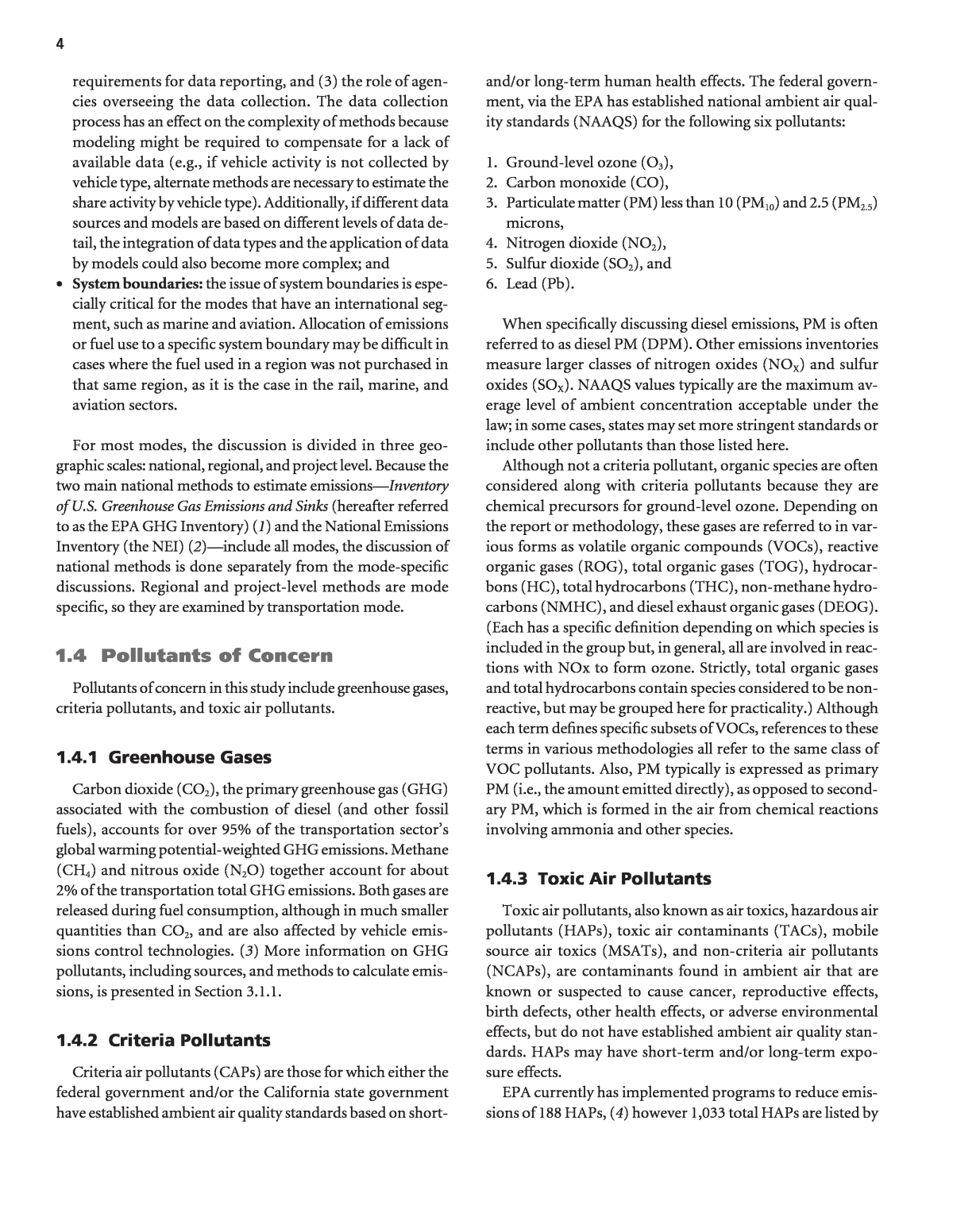
requirements for data reporting, and (3) the role of agen- cies overseeing the data collection. The data collection process has an effect on the complexity of methods because modeling might be required to compensate for a lack of available data (e.g., if vehicle activity is not collected by vehicle type, alternate methods are necessary to estimate the share activity by vehicle type). Additionally, if different data sources and models are based on different levels of data de- tail, the integration of data types and the application of data by models could also become more complex; and ⢠System boundaries: the issue of system boundaries is espe- cially critical for the modes that have an international seg- ment, such as marine and aviation. Allocation of emissions or fuel use to a specific system boundary may be difficult in cases where the fuel used in a region was not purchased in that same region, as it is the case in the rail, marine, and aviation sectors. For most modes, the discussion is divided in three geo- graphic scales: national, regional, and project level. Because the two main national methods to estimate emissionsâInventory of U.S. Greenhouse Gas Emissions and Sinks (hereafter referred to as the EPA GHG Inventory) (1) and the National Emissions Inventory (the NEI) (2)âinclude all modes, the discussion of national methods is done separately from the mode-specific discussions. Regional and project-level methods are mode specific, so they are examined by transportation mode. 1.4 Pollutants of Concern Pollutants of concern in this study include greenhouse gases, criteria pollutants, and toxic air pollutants. 1.4.1 Greenhouse Gases Carbon dioxide (CO2), the primary greenhouse gas (GHG) associated with the combustion of diesel (and other fossil fuels), accounts for over 95% of the transportation sectorâs global warming potential-weighted GHG emissions. Methane (CH4) and nitrous oxide (N2O) together account for about 2% of the transportation total GHG emissions. Both gases are released during fuel consumption, although in much smaller quantities than CO2, and are also affected by vehicle emis- sions control technologies. (3) More information on GHG pollutants, including sources, and methods to calculate emis- sions, is presented in Section 3.1.1. 1.4.2 Criteria Pollutants Criteria air pollutants (CAPs) are those for which either the federal government and/or the California state government have established ambient air quality standards based on short- and/or long-term human health effects. The federal govern- ment, via the EPA has established national ambient air qual- ity standards (NAAQS) for the following six pollutants: 1. Ground-level ozone (O3), 2. Carbon monoxide (CO), 3. Particulate matter (PM) less than 10 (PM10) and 2.5 (PM2.5) microns, 4. Nitrogen dioxide (NO2), 5. Sulfur dioxide (SO2), and 6. Lead (Pb). When specifically discussing diesel emissions, PM is often referred to as diesel PM (DPM). Other emissions inventories measure larger classes of nitrogen oxides (NOX) and sulfur oxides (SOX). NAAQS values typically are the maximum av- erage level of ambient concentration acceptable under the law; in some cases, states may set more stringent standards or include other pollutants than those listed here. Although not a criteria pollutant, organic species are often considered along with criteria pollutants because they are chemical precursors for ground-level ozone. Depending on the report or methodology, these gases are referred to in var- ious forms as volatile organic compounds (VOCs), reactive organic gases (ROG), total organic gases (TOG), hydrocar- bons (HC), total hydrocarbons (THC), non-methane hydro- carbons (NMHC), and diesel exhaust organic gases (DEOG). (Each has a specific definition depending on which species is included in the group but, in general, all are involved in reac- tions with NOx to form ozone. Strictly, total organic gases and total hydrocarbons contain species considered to be non- reactive, but may be grouped here for practicality.) Although each term defines specific subsets of VOCs, references to these terms in various methodologies all refer to the same class of VOC pollutants. Also, PM typically is expressed as primary PM (i.e., the amount emitted directly), as opposed to second- ary PM, which is formed in the air from chemical reactions involving ammonia and other species. 1.4.3 Toxic Air Pollutants Toxic air pollutants, also known as air toxics, hazardous air pollutants (HAPs), toxic air contaminants (TACs), mobile source air toxics (MSATs), and non-criteria air pollutants (NCAPs), are contaminants found in ambient air that are known or suspected to cause cancer, reproductive effects, birth defects, other health effects, or adverse environmental effects, but do not have established ambient air quality stan- dards. HAPs may have short-term and/or long-term expo- sure effects. EPA currently has implemented programs to reduce emis- sions of 188 HAPs, (4) however 1,033 total HAPs are listed by 4
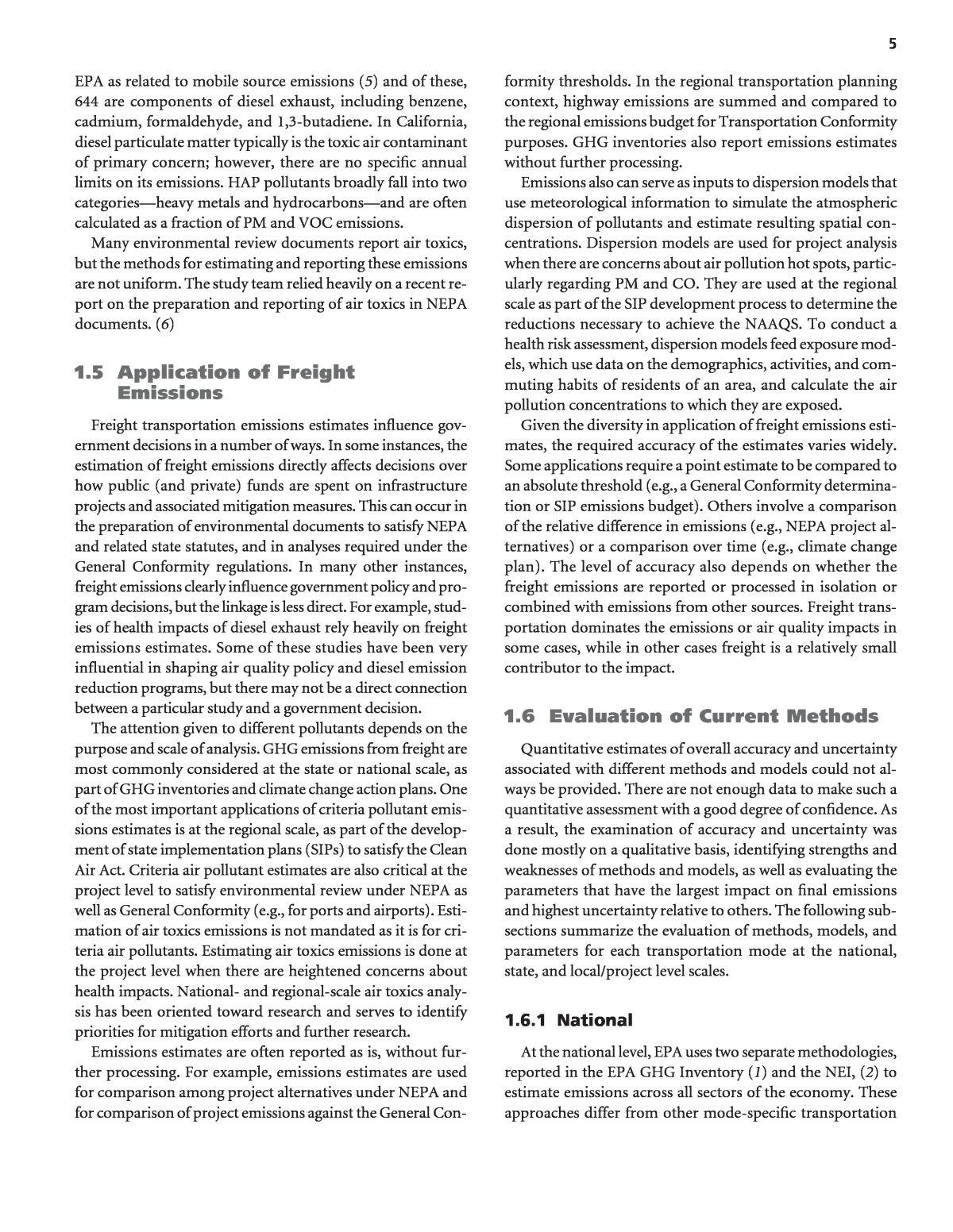
EPA as related to mobile source emissions (5) and of these, 644 are components of diesel exhaust, including benzene, cadmium, formaldehyde, and 1,3-butadiene. In California, diesel particulate matter typically is the toxic air contaminant of primary concern; however, there are no specific annual limits on its emissions. HAP pollutants broadly fall into two categoriesâheavy metals and hydrocarbonsâand are often calculated as a fraction of PM and VOC emissions. Many environmental review documents report air toxics, but the methods for estimating and reporting these emissions are not uniform. The study team relied heavily on a recent re- port on the preparation and reporting of air toxics in NEPA documents. (6) 1.5 Application of Freight Emissions Freight transportation emissions estimates influence gov- ernment decisions in a number of ways. In some instances, the estimation of freight emissions directly affects decisions over how public (and private) funds are spent on infrastructure projects and associated mitigation measures. This can occur in the preparation of environmental documents to satisfy NEPA and related state statutes, and in analyses required under the General Conformity regulations. In many other instances, freight emissions clearly influence government policy and pro- gram decisions, but the linkage is less direct. For example, stud- ies of health impacts of diesel exhaust rely heavily on freight emissions estimates. Some of these studies have been very influential in shaping air quality policy and diesel emission reduction programs, but there may not be a direct connection between a particular study and a government decision. The attention given to different pollutants depends on the purpose and scale of analysis. GHG emissions from freight are most commonly considered at the state or national scale, as part of GHG inventories and climate change action plans. One of the most important applications of criteria pollutant emis- sions estimates is at the regional scale, as part of the develop- ment of state implementation plans (SIPs) to satisfy the Clean Air Act. Criteria air pollutant estimates are also critical at the project level to satisfy environmental review under NEPA as well as General Conformity (e.g., for ports and airports). Esti- mation of air toxics emissions is not mandated as it is for cri- teria air pollutants. Estimating air toxics emissions is done at the project level when there are heightened concerns about health impacts. National- and regional-scale air toxics analy- sis has been oriented toward research and serves to identify priorities for mitigation efforts and further research. Emissions estimates are often reported as is, without fur- ther processing. For example, emissions estimates are used for comparison among project alternatives under NEPA and for comparison of project emissions against the General Con- formity thresholds. In the regional transportation planning context, highway emissions are summed and compared to the regional emissions budget for Transportation Conformity purposes. GHG inventories also report emissions estimates without further processing. Emissions also can serve as inputs to dispersion models that use meteorological information to simulate the atmospheric dispersion of pollutants and estimate resulting spatial con- centrations. Dispersion models are used for project analysis when there are concerns about air pollution hot spots, partic- ularly regarding PM and CO. They are used at the regional scale as part of the SIP development process to determine the reductions necessary to achieve the NAAQS. To conduct a health risk assessment, dispersion models feed exposure mod- els, which use data on the demographics, activities, and com- muting habits of residents of an area, and calculate the air pollution concentrations to which they are exposed. Given the diversity in application of freight emissions esti- mates, the required accuracy of the estimates varies widely. Some applications require a point estimate to be compared to an absolute threshold (e.g., a General Conformity determina- tion or SIP emissions budget). Others involve a comparison of the relative difference in emissions (e.g., NEPA project al- ternatives) or a comparison over time (e.g., climate change plan). The level of accuracy also depends on whether the freight emissions are reported or processed in isolation or combined with emissions from other sources. Freight trans- portation dominates the emissions or air quality impacts in some cases, while in other cases freight is a relatively small contributor to the impact. 1.6 Evaluation of Current Methods Quantitative estimates of overall accuracy and uncertainty associated with different methods and models could not al- ways be provided. There are not enough data to make such a quantitative assessment with a good degree of confidence. As a result, the examination of accuracy and uncertainty was done mostly on a qualitative basis, identifying strengths and weaknesses of methods and models, as well as evaluating the parameters that have the largest impact on final emissions and highest uncertainty relative to others. The following sub- sections summarize the evaluation of methods, models, and parameters for each transportation mode at the national, state, and local/project level scales. 1.6.1 National At the national level, EPA uses two separate methodologies, reported in the EPA GHG Inventory (1) and the NEI, (2) to estimate emissions across all sectors of the economy. These approaches differ from other mode-specific transportation 5
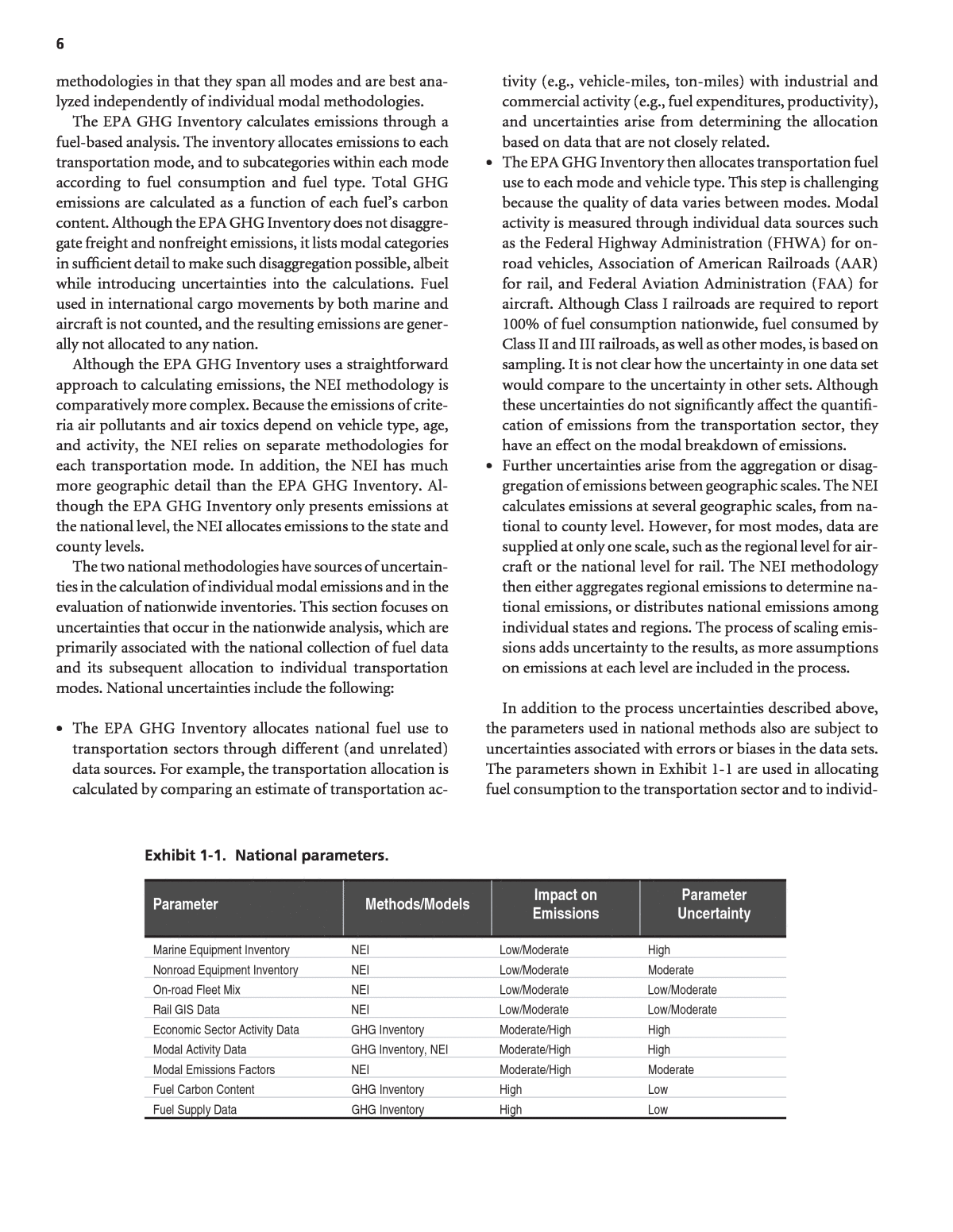
methodologies in that they span all modes and are best ana- lyzed independently of individual modal methodologies. The EPA GHG Inventory calculates emissions through a fuel-based analysis. The inventory allocates emissions to each transportation mode, and to subcategories within each mode according to fuel consumption and fuel type. Total GHG emissions are calculated as a function of each fuelâs carbon content. Although the EPA GHG Inventory does not disaggre- gate freight and nonfreight emissions, it lists modal categories in sufficient detail to make such disaggregation possible, albeit while introducing uncertainties into the calculations. Fuel used in international cargo movements by both marine and aircraft is not counted, and the resulting emissions are gener- ally not allocated to any nation. Although the EPA GHG Inventory uses a straightforward approach to calculating emissions, the NEI methodology is comparatively more complex. Because the emissions of crite- ria air pollutants and air toxics depend on vehicle type, age, and activity, the NEI relies on separate methodologies for each transportation mode. In addition, the NEI has much more geographic detail than the EPA GHG Inventory. Al- though the EPA GHG Inventory only presents emissions at the national level, the NEI allocates emissions to the state and county levels. The two national methodologies have sources of uncertain- ties in the calculation of individual modal emissions and in the evaluation of nationwide inventories. This section focuses on uncertainties that occur in the nationwide analysis, which are primarily associated with the national collection of fuel data and its subsequent allocation to individual transportation modes. National uncertainties include the following: ⢠The EPA GHG Inventory allocates national fuel use to transportation sectors through different (and unrelated) data sources. For example, the transportation allocation is calculated by comparing an estimate of transportation ac- tivity (e.g., vehicle-miles, ton-miles) with industrial and commercial activity (e.g., fuel expenditures, productivity), and uncertainties arise from determining the allocation based on data that are not closely related. ⢠The EPA GHG Inventory then allocates transportation fuel use to each mode and vehicle type. This step is challenging because the quality of data varies between modes. Modal activity is measured through individual data sources such as the Federal Highway Administration (FHWA) for on- road vehicles, Association of American Railroads (AAR) for rail, and Federal Aviation Administration (FAA) for aircraft. Although Class I railroads are required to report 100% of fuel consumption nationwide, fuel consumed by Class II and III railroads, as well as other modes, is based on sampling. It is not clear how the uncertainty in one data set would compare to the uncertainty in other sets. Although these uncertainties do not significantly affect the quantifi- cation of emissions from the transportation sector, they have an effect on the modal breakdown of emissions. ⢠Further uncertainties arise from the aggregation or disag- gregation of emissions between geographic scales. The NEI calculates emissions at several geographic scales, from na- tional to county level. However, for most modes, data are supplied at only one scale, such as the regional level for air- craft or the national level for rail. The NEI methodology then either aggregates regional emissions to determine na- tional emissions, or distributes national emissions among individual states and regions. The process of scaling emis- sions adds uncertainty to the results, as more assumptions on emissions at each level are included in the process. In addition to the process uncertainties described above, the parameters used in national methods also are subject to uncertainties associated with errors or biases in the data sets. The parameters shown in Exhibit 1-1 are used in allocating fuel consumption to the transportation sector and to individ- 6 Parameter Methods/Models Impact on Emissions Parameter Uncertainty Marine Equipment Inventory NEI Low/Moderate High Nonroad Equipment Inventory NEI Low/Moderate Moderate On-road Fleet Mix NEI Low/Moderate Low/Moderate Rail GIS Data NEI Low/Moderate Low/Moderate Economic Sector Activity Data GHG Inventory Moderate/High High Modal Activity Data GHG Inventory, NEI Moderate/High High Modal Emissions Factors NEI Moderate/High Moderate Fuel Carbon Content GHG Inventory High Low Fuel Supply Data GHG Inventory High Low Exhibit 1-1. National parameters.
ual modes, and are used in one or both of the EPA national methods. The effect of fuel parameters varies depending on their impact on emissions and uncertainty in their measurement. Parameters such as âfuel supply dataâ have a high impact but low uncertainty, while parameters such as âmarine equipment inventoryâ have low impact but high uncertainty. These rela- tionships are shown qualitatively in Exhibit 1-1. The deriva- tion of these individual values is presented in the pedigree matrix shown in Section 3.2.4. Criteria to assign scores in the pedigree matrix are included in Appendix A. 1.6.2 Heavy-Duty Trucks The distinction between on-road passenger and freight vehicles is usually clear, with passenger vehicles assumed to be automobiles, light-duty trucks with a gross vehicle weight rating (GVWR) of less than 8,500 lbs, and buses, while heavy- duty trucks are those with GVWR of more than 8,500 lbs. However, there are trucks with a GVWR of more than 8,500 lbs that do not move freight. Some examples are utility trucks used for service and repair of utility infrastructure, tow trucks, and daily rental trucks. Because it is virtually impossible to separate the activity and emissions of nonfreight heavy-duty trucks from freight trucks, and because nonfreight heavy- duty trucks are relatively insignificant compared to freight trucks, generally no attempt is made to distinguish between the two. MOBILE6 and EMFAC2007 are the approved models for SIPs, conformity analyses, and project-level analysis to fulfill NEPA/CEQA requirements. MOVES2009 is the new EPA model that will eventually replace MOBILE6 when fully im- plemented, and CMEM is the most established microsimula- tion emission model. The evaluation also includes a regional and local method, both of which rely on either MOBILE6 or EMFAC2007. The main drivers of uncertainty associated with these methods and models are as follow: ⢠Emission models like MOBILE6 and EMFAC are ill-suited for project-level analyses if key local factors that have a sig- nificant impact on emissions (e.g., average speed, truck age distribution, vehicle-miles traveled [VMT] share by truck type) are not available. Additionally, these models do not consider road grade, actual vehicle weight, or aerodynamic characteristics of vehicles, all of which have a strong effect on engine power requirements and, consequently, on emissions. ⢠The representation of local and regional factors (e.g., truck age distribution, mileage accumulation, VMT share by truck type) by national defaults is a source of substantial uncer- tainty. This issue is important because many agencies do not have access or resources to collect local data, and rely on national defaults to represent project-level and regional emissions. This is more of a problem with MOBILE6 than EMFAC2007, given that the latter includes data at the county level. ⢠The incorporation of congestion effects on emissions is a complex issue and topic of much recent debate. MOBILE6 and EMFAC2007 are not well suited to accurately incorpo- rate such effects since they rely on speed correction curves to differentiate emissions by average speed. Previous re- search has indicated that the use of average speed is not a good proxy for congestion levels. To accurately capture the congestion effects on emissions, a modal emission model (e.g., CMEM) should be used; MOVES2009 also will pro- vide a platform to enable analyses that incorporate the effects of congestion on emissions through a binning ap- proach. A similar discussion applies to truck operations at intermodal yards or distribution facilities, since their operational profiles are very different from long-distance over-the-road trucks. ⢠There are several concerns about estimating truck VMT from travel demand models or truck counts. First, the es- timation of truck VMT generally does not consider enough truck categories to match the number of truck categories in emission models. Second, when used for forecasting truck VMT, travel demand models often do a poor job of representing the complex trip generation and trip distribu- tion patterns of commercial vehicles. Third, the accuracy of average speed at the link level is questioned given that it is not measured directly but is instead estimated from ve- hicle volume and road capacity. (Link-level speed data may become more precise in coming years with widespread rollout of intelligent transportation systems [ITS] to mon- itor traffic performance along road segments.) Finally, a high number of time periods is necessary to properly cap- ture the speed variations throughout the day, which in- creases the computation requirements substantially. ⢠Many key parameters for emission analyses are based on the Vehicle Inventory and Use Survey (VIUS), which char- acterizes the truck population in the United States. (7) Ex- amples include truck age distribution and mileage accu- mulation. Because the last version of VIUS was published in 2002 and the 2007 version was canceled, there are con- cerns about how outdated such parameters are (e.g., intro- duction of new diesel emission standards). ⢠In most emission analyses, the distribution of emissions throughout a day, week, month, or year typically is not avail- able. The temporal distribution of emissions is an important input to air quality analyses because ambient temperature and humidity are key factors in air dispersion and in the for- mation of secondary pollutants. ⢠The ability of emission models to incorporate the effects of emission reduction strategies depends on the nature of the strategy. For those that affect VMT, such impacts can be 7
clearly defined. The effects of strategies that affect truck fuel efficiency (e.g., aerodynamic devices) and emission factors (e.g., diesel particulate filters) need to be post-processed after the model runs. For those strategies that have an effect on congestion levels (e.g., incident management, conges- tion pricing), only modal emission models are able to capture such effects. The uncertainty analysis of heavy-duty trucks also included an evaluation of the most important input parameters to emis- sion calculations. The two most important factors to charac- terize the relevance of a parameter in the context of this study are the impact on final emissions and the level of uncertainty in the parameter estimates. Exhibit 1-2 provides a qualitative representation of the relative importance of different para- meters for truck emission calculations. The most important considerations regarding the param- eters in Exhibit 1-2 are as follow: ⢠Truck VMT and emission factors are certainly the most im- portant parameters in this study, given their high impact on final emissions. As previously indicated, there are concerns about estimating total truck VMT with travel demand models, but the level of uncertainty associated with emis- sion factors is higher because of the amount of test data, the fact that most emission factors rely on a limited number of driving cycles, the fact that some models still rely on engine certification data (rather than chassis dynamometer data), and a lack of test data for all truck categories. ⢠The share of VMT by truck type is also a key factor since emission rates depend substantially on vehicle weight, which is directly correlated with truck class. The main source of uncertainty is that rarely is truck activity data provided with enough level of detail to accurately disaggregate it into enough truck categories. ⢠In the case of modal emission models, driving cycles are a direct input to emission calculations and have a high im- pact on final emissions. For those models that do not rely on driving cycles directly for emission calculations (e.g., MOBILE6, EMFAC2007), driving cycles are important in the calculation of emissions to the extent that a good mix of driving cycles is used to provide a good representation of emission factors. The uncertainty associated with driv- ing cycles can be quite high due to the wide variations in vehicle behavior in real-world traffic conditions. ⢠For those projects that rely on project-derived truck VMT data, or those that estimate truck VMT data from com- modity flows, it is necessary to have a good estimate of empty miles since they have a direct influence on VMT. Be- cause of a lack of data sources on empty miles, information generally is obtained from very aggregated data and, there- fore, uncertainty can be quite high. 1.6.3 Rail Because the vast majority of rail activity in the United States is handled by freight railroads, most methods to cal- culate rail emissions are specifically tailored to freight. Ad- ditionally, identifying freight and passenger traffic is rela- tively straightforward because freight rail activity is reported separately from passenger rail activity. The only exception is the EPA GHG Inventory, where diesel fuel consumption needs to be disaggregated between freight and passenger railroads. In addition to methods that calculate rail emissions at the national level (EPA GHG Inventory and the NEI), there are other methods at the regional and local/project level scales that estimate fuel consumption by different rail parameters. The only model that calculates rail fuel consumption is the Train Energy Model, which is not analyzed because it is used 8 Parameter Methods/Models Geographi c Scale Impact on Emissions Parameter Uncertainty VMT Share by Time of Day All Regional/Local Low/Moderate Moderate/High Fuel Type Distribution All All Moderate Low/Moderate Average Speed MOBILE6, EMFAC2007 Regional/Local Moderate Moderate Classification of Truck Types All All Moderate Moderate Mileage Accumulation All All Moderate Moderate Empty Miles All All Moderate High Truck Age Distribution All All Moderate/High Moderate VMT Share by Truck Type All All Moderate/High Moderate/High Driving Cycle CMEM Local Moderate/High High Truck VMT All All High Moderate/High Emission Factors All All High High Exhibit 1-2. Truck parameters.
in very isolated cases. The main sources of uncertainty asso- ciated with these methods are as follow: ⢠Although Class I railroads are required by the Surface Transportation Board (STB) to report 100% of fuel con- sumption nationwide, there are concerns about published rail activity. First, there is a lack of published rail activity for a specific region, so local/project level and regional analyses need to either collect data from local railroads (which is generally challenging) or apportion nationwide or statewide data to regions, which brings many method- ological issues described later in Section 3.4 of this report. Second, the accuracy of county-level gross ton-mile (GTM) data reported by railroads is largely questioned. ⢠Many local/project level and regional emission analyses rely on a single measure of fuel consumption index (GTM per gallon) to convert traffic density to fuel consumed. How- ever, correction factors for grade and commodity group can be used to minimize the uncertainty associated with the use of a single measure of fuel efficiency. (8) ⢠For those analyses that cannot rely on traffic density (because it is not reported by railroads), the use of active track or num- ber of employees to apportion nationwide or statewide fuel consumption can result in emission estimates that are highly uncertain. ⢠The accurate calculation of switch emissions in railyards re- quires high levels of data because the variation in activity levels per switcher and duty cycles can be substantial. As a result, analyses that rely on default parameters (e.g., aver- age number of hours per switcher) can be highly uncertain. The uncertainty analysis of rail also included an evaluation of the most important input parameters to emission calcula- tions. The two most important factors to characterize the rel- evance of a parameter in the context of this study are the im- pact on final emissions and the level of uncertainty in the parameter estimates. Exhibit 1-3 provides a qualitative repre- sentation of the relative importance of different parameters for rail emission calculations. The most important considerations regarding the param- eter uncertainty are as follow: ⢠In addition to emission factors, fuel consumption is the most relevant parameter due to its direct impact on emis- sions. The uncertainty associated with fuel consumption estimates can vary dramatically. For example, if fuel con- sumption is measured directly, either at the national scale or by a participating railroad at a local project, estimates can be quite accurate. However, if fuel consumption is es- timated by means of active mileage, then errors associated with this method will propagate to the estimates of fuel consumption. ⢠Emission factors also have a direct impact on emissions, and the associated uncertainty can be quite high due to a lack of testing data and the wide variation present in the current testing data. Such variation is partly derived from the use of different locomotive types for the development of testing data. ⢠The share of time in idle mode has a strong effect on emis- sion factors, but there is rarely enough information about locomotive duty cycles at the project level, or there is a measure of uncertainty associated with a âtypicalâ duty cycle. This will likely become less of an issue as railroads im- plement idle control systems on their fleet (e.g., BNSF has idle control systems in approximately 70% of their fleet). ⢠EPA emission standards for locomotives are defined as âtiers.â The distribution of locomotives across these tiers is an important factor when deriving a composite emission 9 Parameter Methods/Models Geographi c Scale Impact on Emissions Parameter Uncertainty Locomotive Type All (Explicit in Local) All Moderate Moderate/High Empty Miles All Local Moderate Moderate Locomotive Tier Distribution All All Moderate/High Moderate Equipment Type All (Explicit in Loc al) All Moderate/High Moderate/High Duty Cycles All (Explicit in Regional/Local) Regional/Local Moderate/High High Employees Emissions by Employees Regional/Local High Low Miles of Active Track Emissions by Active Track Regional/Local High Low Number of Switch Locomotives Emissions by Switchers Regional/Local High Low Hours by Switch Locomotive Emissions by Hours Regional/Local High Moderate Traffic Density Emissions by Traffic Density Regional/Local High Moderate/High Emission Factors All All High High Fuel Consumption National National High High Exhibit 1-3. Rail parameters.
factor, since emission rates vary widely under different standards. Emission results can be very uncertain if the locomotive tier distribution is not available from the participating railroads. ⢠Information to describe rail activity data (e.g., traffic den- sity, number of switch locomotives, hours by switch loco- motive, miles of active track, number of employees) have a direct impact on emissions, but the level of uncertainty with those estimates varies depending on the parameters. For example, miles of active track, number of employees, and number of switch locomotives are virtually determin- istic estimates, and thus have no uncertainty. However, the issue of whether they provide a good proxy for fuel con- sumption is still a source of uncertainty for fuel consump- tion estimates. Other estimates such as number of hours per switch locomotive or traffic density are subject to higher uncertainties since they need to be estimated based on limited information from railroads. ⢠For those projects that rely on project-derived rail activity, or those that estimate rail activity from commodity flows, it is necessary to have a good estimate of empty miles, since they have a direct influence on rail activity. Because of a lack of data sources on empty miles, information is gener- ally obtained from very aggregated data (i.e., railroads re- port both loaded and empty car-miles by car type nation- wide), and thus uncertainty can be quite high. 1.6.4 Waterborne: Ocean-Going Vessels Emissions from ocean-going vessels (OGVs) are usually de- termined at and around ports because these are the entrances and clearances of cargo into the regions of modeling interest. They are estimated using information on number of calls at a particular port, engine power, load factors, emission factors, and time in like modes. There are three basic methods for calculating emissions from OGVs at ports, namely (1) a detailed methodology where considerable information is gathered regarding ships entering and leaving a given port, (2) a mid-tier method that uses some detailed information and some information from surrogate ports, and (3) a more streamlined method in which detailed in- formation from a surrogate port is used to estimate emissions at a âlikeâ port. The detailed methodology requires significant amounts of data and resources and produces the most accurate results. The mid-tier and streamlined methods require less data and resources but produce less accurate results. Since all current methods and models estimate emissions at ports, the geographic distinctions (i.e., national, regional, and local/project scale analyses) are less meaningful than in other sectors. Generally, to estimate national OGV emissions, all major ports are modeled and emissions are added together. For a regional approach, such as that done by the California 10 Air Resources Board (CARB) to estimate California marine vessel emissions, a similar approach is taken where emissions at the major California ports are estimated and then added together. The difference really relies upon whether a detailed, mid-tier, or streamlined method is used for the individual ports and the data collected. The main sources of uncertainty associated with these methods are as follow: ⢠Emissions are linearly related to the number of calls. Accu- rate assessment of the number of ship calls is critical be- cause there can be errors depending upon the source of the data and the geographic boundaries of the analysis. ⢠In the detailed and mid-tier approaches, propulsion power is determined directly from Lloydâs Register of Ships data. On the other hand, auxiliary power is estimated from sur- veys that produce ratios of auxiliary power to propulsion power by ship type. More accurate determination of aux- iliary power would improve emission calculations. ⢠In the detailed approach, propulsion load factors are cal- culated using the Propeller Law as defined in Section 3.5.2. There are inherent errors in applying that law to all ships and speed ranges. Currently the Propeller Law is univer- sally accepted as the method to use to determine propul- sion load factors and it is doubtful that significant errors would result from these calculations. In addition, knowl- edge of vessel speed approaching ports may be limited. ⢠Auxiliary load factors have been determined from limited surveys. More precise determination of auxiliary engine load factors, particularly during hotelling, would provide more accurate results. ⢠Emission factors for ships were determined for a small sub- set of engines. Although most ships use similar engines, this set does not represent a large enough sample to be ac- curate. This is particularly true of PM emissions. Measure- ment techniques of PM emissions vary and there is sensi- tivity to sampling methodology (e.g., tunnel length). PM emission factors need a more robust data set to determine them accurately. In addition, current thinking is to esti- mate PM2.5 emission factors as 92% of PM10 emission fac- tors. Various studies have estimated PM2.5 emissions from 80% to 100% of PM10 emissions. Therefore a more accu- rate determination of PM2.5 emission factors is needed. ⢠Low load adjustment factors to emission factors when the propulsion engine load factor is below 20% also need review- ing. The current methodology as discussed in Section 3.5.2 is based upon limited data and rough curve fits. Improve- ment of the low load adjustment factors can result in more accurate emission calculations when ships are near ports. ⢠Current emission factors were determined for engines built before year 2000 when the International Maritime Organi- zation (IMO) set NOx emission standards on OGV engines.
More testing is needed to determine the emission factors for engines built after 2000 as well as for future IMO Tier II and Tier III NOx emission standards. ⢠In the mid-tier and streamlined methodologies, selecting a typical port that is like the port to be modeled is of utmost importance. EPA has provided some guidance on how to se- lect the typical port, and a list has been provided based upon detailed inventories prepared at the time. As more ports pre- pare detailed inventories, this list should be expanded. The uncertainty analysis of OGVs also included an evalu- ation of the most important input parameters to emission calculations. Exhibit 1-4 is based on the relative rankings of variability in the input parameters and relative impact on total emission estimates for each parameter. 1.6.5 Waterborne: Harbor Craft A wide range of commercial harbor craft (H/C) operate in the vicinity of ports, including assist tugboats, towboats, and pushboats, ferries and excursion vessels, crew boats, work boats, government vessels, dredges and dredging support ves- sels, commercial fishing vessels, and recreational vessels. Many of these vessels serve purposes other than just direct goods movement. To focus the present discussion on freight move- ments only, only those commercial H/C directly involved in goods movementâtug and towboat operations responsible for moving bargesâare considered in this analysis. Section 3.6 provides a detailed discussion of H/C emissions calculations and uncertainties. There are no common models with the capability to esti- mate emissions from these vessels; neither CARBâs OFFROAD nor EPAâs NONROAD model consider commercial H/C. 11 Instead, estimates of emissions from tug and towboats and other commercial H/C may be made through other method- ologies. The differentiation of these methods is due to geo- graphic scale. The best practice or streamlined approaches discussed in EPAâs Current Methodologies (9) comprise the local H/C method, and are treated here as the same methodology. They rely on various sources for the necessary parameters and generally draw on the methodologies of the NONROAD or OFFROAD models. Differences in these methodologies are chiefly dependent on the amount of data directly collected rather than derived through surrogates. Two additional, spe- cific H/C methodologies are EPAâs national-scale Regulatory Impact Analysis (RIA), and CARBâs analysis of statewide H/C emissions. Total uncertainty in freight-related H/C emissions from these methodologies can be attributed to process uncertainty (i.e., degree to which the methods accurately represent actual emissions) and parameter uncertainty (i.e., uncertainty in the individual elements used for calculations). Three potentially significant sources of process uncertainty for H/C are as follow: ⢠The appropriateness and representativeness of the charac- terizations, ⢠The groupings used to categorize H/C, and ⢠The potential for bias in inputs. There are a variety of primary and secondary parameters that feed into the overall uncertainty and include effects of characterization of engine deterioration and engine age distri- bution, both of which are noted to influence total uncertainty of estimated emissions. The six principal input parameters used to determine H/C emissionsâand therefore the main Parameter Methods/Models Geographi c Scale Impact on Emissions Parameter Uncertainty Boiler Emission Factors Detailed All Low/Moderate Moderate/High Boiler Loads Detailed and Mid-Tier All Low/Moderate High Fuel Type Detailed All Moderate Moderate Port Selection Mid-Tier and Streamlined All Moderate Moderate Auxiliary Emission Factors Detailed All Moderate Moderate/High Auxiliary Load Fac tors Detailed and Mid-Tier All Moderate High Auxiliary Power Detailed and Mid-Tier All Moderate High Propulsion Power Detailed and Mid-Tier All Moderate/High Low/Moderate Calls All All Moderate/High Moderate Time in Modes Detailed All Moderate/High Moderate Propulsion Emission Factors Detailed All Moderate/High Moderate/High Propulsion Load Factors Detailed and Mid-Tier All Moderate/High Moderate/High Exhibit 1-4. OGV parameters.
drivers of uncertaintyâare listed in Exhibit 1-5. These six primary parameters have their relative contribution to over- all uncertainty, which is based on the relative rankings of vari- ability in the input parameters and relative impact on total emission estimates for each parameter. 1.6.6 Cargo Handling Equipment Cargo handling equipment (CHE) is used to move freight at ports and other intermodal facilities that transfer goods between modes. The diversity of CHE types in use is related to the diversity of freight handled. Similarly, the amount of CHE and its activity are related to the overall amount of freight throughput for a given facility. Depending on the type, use, and number of CHE, their emissions can be significant contributors to overall goods movement emission invento- ries. Thus, determining emissions from container terminal CHE is important in any land-side emission inventory. Due to their use solely to move goods, all CHE emissions are re- lated to freight. Section 3.7 discusses CHE emissions calcula- tions and uncertainties in detail. Generally, CHE emissions from freight activities at ports are estimated using either the NONROAD or OFFROAD emission modelsâor methods similar to those in the models. Two general categories of methods are used to estimate CHE emissions. These are referred to as the best practice and streamlined methodologies. (10) Generally, these two differ only in the level of direct information collected and employed in the calculations, as follows: ⢠The best practice methodology dictates surveys of all equip- ment to establish correct parameters and then employs the NONROAD or OFFROAD models. ⢠The streamlined methodology allows for a greater degree of freedom in collecting direct information by substituting surrogate, or otherwise derived, information. It may then either use the models or adjust the methodologies of the models themselves for the available information. ⢠A special case, third methodology is used in CARBâs CHE inventory, which essentially employs the best-practice methodology without directly using the OFFROAD model. Total uncertainty in the methods used to calculate CHE emissions is due to both process and parameter uncertainty. Three potentially significant sources of process uncertainty are as follow: ⢠The appropriateness and representativeness of the model characterizations of CHE, ⢠The groupings used to categorize CHE, and ⢠The potential for bias in survey results, inventory counts, or inventory scaling methods. Uncertainty in input parameters is another driver of un- certainty in total calculated emissions. There are a variety of primary and secondary parameters that feed into overall un- certainty, but the five principal input parameters used to de- termine CHE emissionsâand therefore the main drivers of uncertaintyâare listed in Exhibit 1-6. 1.6.7 Air Transportation The representation of freight activity in air transportation is perhaps the most challenging among all modes because un- like other modes, goods are transported both in freight and passenger aircraft. Emissions associated with the transport of freight by aircraft were analyzed using the following two modeling approaches: ⢠The primary method for national and regional emission analysis in the United States is FAAâs System for Assessing Aviationâs Global Emissions (SAGE). This model may also be extended to global-scale emission inventories. ⢠The Emissions and Dispersion Modeling System (EDMS) was developed by FAA to specifically address the impacts of airport emission sources, including ground-level sources 12 Parameter Methods/Models Geographi c Scale Impact on Emissions Parameter Uncertainty Auxiliary Engine Population EPA RIA Method, CARB H/C Method National, Regional Moderate High Engine Power All All Moderate/High Low/Moderate Activity All All Moderate/High Moderate/High Emission Factors All All Moderate/High Moderate/High Load Factors All All Moderate/High Moderate/High Main Engine Population EPA RIA Method, CARB H/C Method National, Regional Moderate/High High Exhibit 1-5. Harbor craft parameters.
and associated support activity. FAA requires the use of the model in performing air quality analyses for aviation sources. The model can separate aircraft by mode (cargo) but does not distinguish aircraft that carry both cargo and freight. The main drivers of the uncertainty associated with aircraft emissions below 3,000 ft follow in order of importance: ⢠Landing and takeoff procedures mainly consist of engine throttle setting, rate of climb/descent, and flight speed. These parameters have been found to be the most impor- tant, accounting for 30% to as much as 70% of the total variance of the emissions. ⢠Idle emission rates are uncertain, particularly below the 7% power setting, and these errors may be large and tend to be an under prediction. ⢠Other important sources of uncertainty in most emissions data include certification data, the variability of emissions inherent among engines in the fleet, and the change in emissions with the age of the engine. Aircraft emission models operate at the individual flight level. They use information on model aircraft performance, fuel consumption, trip origination, trip length, type of aircraft, destination, flight position, and flight plan, as well as additional factors such as capacity and delay to estimate emission strength. The models do not have the current capability to sep- arate freight-only travel from freight and passenger operations. Exhibit 1-7 qualitatively shows how the various input param- eters impact emissions and their relative uncertainty to other model input parameters. The largest uncertainties and greatest impacts on emissions are associated with aircraft emission cer- tification because the actual emissions vary widely between air- craft engines and are optimized for the four certification points. Other important parameters affecting emissions deal with the operational characteristics or performance dataâparticularly the throttle setting used during take-off and landing. In project- ing future emissions, moderate uncertainty exists in activity be- cause air cargo is sensitive to economic uncertainties. How emissions change with engine age has not been well studied, but with the very high maintenance standards, these deterioration changes are anticipated to be minimal. Testing the effects of en- gine age on NOx emissions at certification points has shown a 4% bias in engine emissions with age. (11) The best-understood data parameters are the flight position information because most flight location information is captured with FAA radars. 13 Parameter Methods/Models Geographi c Scale Impact on Emissions Parameter Uncertainty Engine Power All All Moderate/High Low/Moderate Activity All All Moderate/High Moderate/High Emission Factors All All Moderate/High Moderate/High Load Factors All All Moderate/High Moderate/High Equipment Population All All Moderate/High High Exhibit 1-6. CHE parameters. Parameter Impact on Emissions Parameter Uncertainty Emission Certification Low Moderate/High Aircraft Weight Low/Moderate Low/Moderate Engine Age Low/Moderate Moderate/High Flight Position Moderate Low/Moderate Retirement Parameters Moderate Moderate/High On-Time Performance (Capacity and Delay) Moderate/High Low Future Activity Projections Moderate/High Moderate Fuel Flow Rate Moderate/High Moderate/High Aircraft Operations Moderate/High Moderate/High Aircraft Performance (Throttle Setting) Moderate/High High Emission Certification High Moderate/High Exhibit 1-7. Aircraft parameters.
1.6.8 Air Quality Air quality refers to the level of contaminants in ambient air. It is assessed through measurements and/or numerical model applications. Many freight-related air quality impacts are assessed by modeling studies that couple freight emis- sions inventoriesâas discussed throughout this reportâ with meteorological and other data to estimate concentrations of pollutants resulting from atmospheric releases from goods movement activities. This discussion focuses on how these concentrations are assessed from the emission estimates discussed in this chap- ter, and the associated uncertainties. As such, this section does not review the uncertainties in any given model or the uncertainties in any other parameter input to these models, but rather on the emissions-relevant model parameters and processes. Most commonly, one of the two following general meth- ods will be employed in air quality modeling: ⢠Grid Modeling for national and regional scales (typically for citywide and larger analyses) and ⢠Dispersion Modeling for local/project scales (facility to citywide analyses). Total uncertainty in predicted concentrations in either method is due to uncertainty in the emission inputs as well as the uncertainties in all other inputs (e.g., meteorology, chem- istry) and model formulations. Total uncertainty is generally unquantifiable for Photochemical Grid Models (PGMs), but sensitivity to individual inputs for specific scenarios may be characterized. For dispersion modeling methods, too, this value is generally unquantifiable. However, the uncertainty due to calculated emission rate may be characterized directly from the input uncertainty given its linear nature and lack of other complicating factors. Sensitivity to other emission pa- rameters may be assessed for any particular scenario. Goods movement emissions are commonly represented as mobile/line (e.g., trucking) or area/volume (e.g., cargo han- dling equipment) sources. Some sources may be represented as point sources (e.g., hotelling OGVs). In air quality model- ing, the representation of emissions strength, location, size, shape, and temporal profile all influence concentration. Other exhaust parameters that may be considered include emission release height, exit temperature, exit velocity, stack diameter, and initial plume size. Other indirect parameters (e.g., shape of buildings, terrain in the region) will also influence concen- tration. Most of these parameters are not included in a typi- cal emission inventory. Total uncertainty in predicted concentrations from freight movement represented using a dispersion methodology is due to uncertainty in the following: ⢠Emission input parameters; ⢠All other input parameters (e.g., meteorology); and ⢠Methodology (e.g., model formulation and choice). Total uncertainty is generally unquantifiable. However, principal emission-related drivers of uncertainty include those shown in Exhibit 1-8. Unlike Sections 3.2 through 3.8, which are directly related to emissions, the âuncertaintyâ for all air quality parameters is shown here as âhigh,â due to char- acterization of the variation in values. This is because this variance itself varies greatly between methods, models, and applications. 1.7 Conceptual Model The Conceptual Model described in Section 4 offers a com- prehensive representation of freight activity in the United States, covering all modes and relationships between modes. In order for this model to be effective in improving emissions estimates, it captures the factors in freight movements and freight equipment that most influence emissions. 14 Parameter Methods/Models Geographi c Scale Impact on Emissions Parameter Uncertainty Source Orientation, Size, and Shape All All Low/Moderate High Emission Temporal Profile All All Moderate High Exhaust Temperature/Buoyancy Parameters All (If Plume Rise Is Considered) All Moderate High Initial Plume Size and Shape All All Moderate High Release Height All All Moderate High Source Location All All Moderate High Emission Rate All All Moderate/High High Exhibit 1-8. Emission-related air quality parameters.
The Conceptual Model serves several purposes as follow: ⢠It estimates multimodal emissions associated with specific supply chains, transportation corridors, and geographic regions. ⢠It assists shippers, carriers, and logistics providers in incor- porating emissions in the planning and operations of their logistics activities. ⢠It assists public agencies in incorporating emissions in the planning of transportation infrastructure, transportation investment decisions, and development of transportation regulations and/or voluntary programs. ⢠It identifies elements of freight activity that are not well represented by available data and methods. ⢠It identifies how new and emerging freight data and meth- ods relate to existing data and methods, and how they can present a more comprehensive picture of freight movement. ⢠It identifies opportunities to link mode-specific freight activ- ity data and tools in a unified framework that spans multiple modes and possibly geographic and temporal dimensions. ⢠It identifies the major sources of potential error propaga- tion and identifies the steps in emissions calculations that warrant improvement. The Conceptual Model provides the link between eco- nomic activity, freight transportation activity, freight-related emissions and associated health effects. The Conceptual Model does not address economic activity directly, but rather uses economic activity to forecast freight activity. At the other end of the spectrum, the Conceptual Model does not model dis- persion of emissions or health effects. Instead, it plans for the spatial and temporal allocation of emissions, which will pro- vide the necessary inputs for dispersion models and health risk assessments. The Conceptual Model includes the definition of all processes necessary for the calculation, allocation, and eval- uation of freight-related emissions. Based on a set of input parameters, the Conceptual Model will include a set of equa- tions to calculate emissions. The emission outputs will be as- sociated with either a product (or quantity of a given com- modity), freight activity (e.g., measured in ton-miles), link, node, or a geographic area. Lastly, the Conceptual Model includes the spatial and temporal allocation of emissions. 1.8 Recommended Research Areas Five recommended areas for research that offer great prom- ise for improving freight emissions estimates were developed by the study team. Although these five research statements are mode-specific, the link between modes can be addressed with the implementation of the Conceptual Model. Each of these areas will improve both the Conceptual Model and modeling of these modes in general. These recommended research areas have been written as research statements with background, objectives, description of tasks and funding re- quirements described in each research area. This will provide the beginnings for NCFRP to develop statements of work and requests for proposals for future work. The five research areas recommended in Chapter 5 are as follows: ⢠Improving the allocation of national transportation emissions, ⢠Refining road project-level emission estimates method- ologies, ⢠Improving rail activity data for emission calculations, ⢠Improving parameters and methodologies for estimating marine goods movement emissions, and ⢠Improving air freight emission calculations. 15
