



Below is the uncorrected machine-read text of this chapter, intended to provide our own search engines and external engines with highly rich, chapter-representative searchable text of each book. Because it is UNCORRECTED material, please consider the following text as a useful but insufficient proxy for the authoritative book pages.
28 Chapter 4: Increasing the Number of Applicants Research has shown that the transportation industry has difficulty recruiting new talent into some of their jobs, especially talent from two important demographic groups: youth and non-traditional labor pools (e.g., women and minorities). This is primarily because of a lack of awareness of job opportunities in the industry (U.S. Department of Labor, 2004). To address this issue, forward thinking transportation agencies are casting a wider net for job applicants. In this chapter, we present challenges, strategies and workforce practices related to âIncreasing the Number of Applicants.â Exhibit 4-1 provides a snapshot of the chapter. Exhibit 4-1 Snapshot of Chapter 4 Chapter Road Map Concept and Definition Agencies have started partnering with undergraduate institutions and minority organizations in order to better increase the number of applicants, specifically those applicants who are young and from non- traditional labor pools. Workforce Challengesâ¦..â¦â¦....â¦..29 Geographic Challenges National Disasters Creating Competitive Labor Market Lack of Diversity Aggressive Recruiting Difficulty Finding Applicants with In- Demand Skills Transportation Issues Industry Strategiesâ¦.â¦â¦â¦â¦â¦â¦30 Expand the Recruiting Horizon Host Career Days Implement Employee Referral Programs Tailor Advertising Efforts Consider Non-Traditional Hires Advertise in Foreign Languages Partner with Source Organizations to Increase Numbers Integrate with Source Organizations Harness Technology Utilize Social Networking Workforce Practicesâ¦..â¦â¦â¦â¦â¦.35 Kentucky Transportation Cabinet Civil Engineering Scholarship Program Minnesota DOT Community Advisors on Recruitment and Retention Solutions (CARRS) Definition of Increasing the Number of Applicants: Involves identifying avenues for increasing the number of applicants from the community college through senior-leader populations. The goal of these efforts is to increase awareness of and attract more job-seekers to the transportation industry. As a result, these practices help to establish a solid applicant pool of potential employees for available transportation jobs.
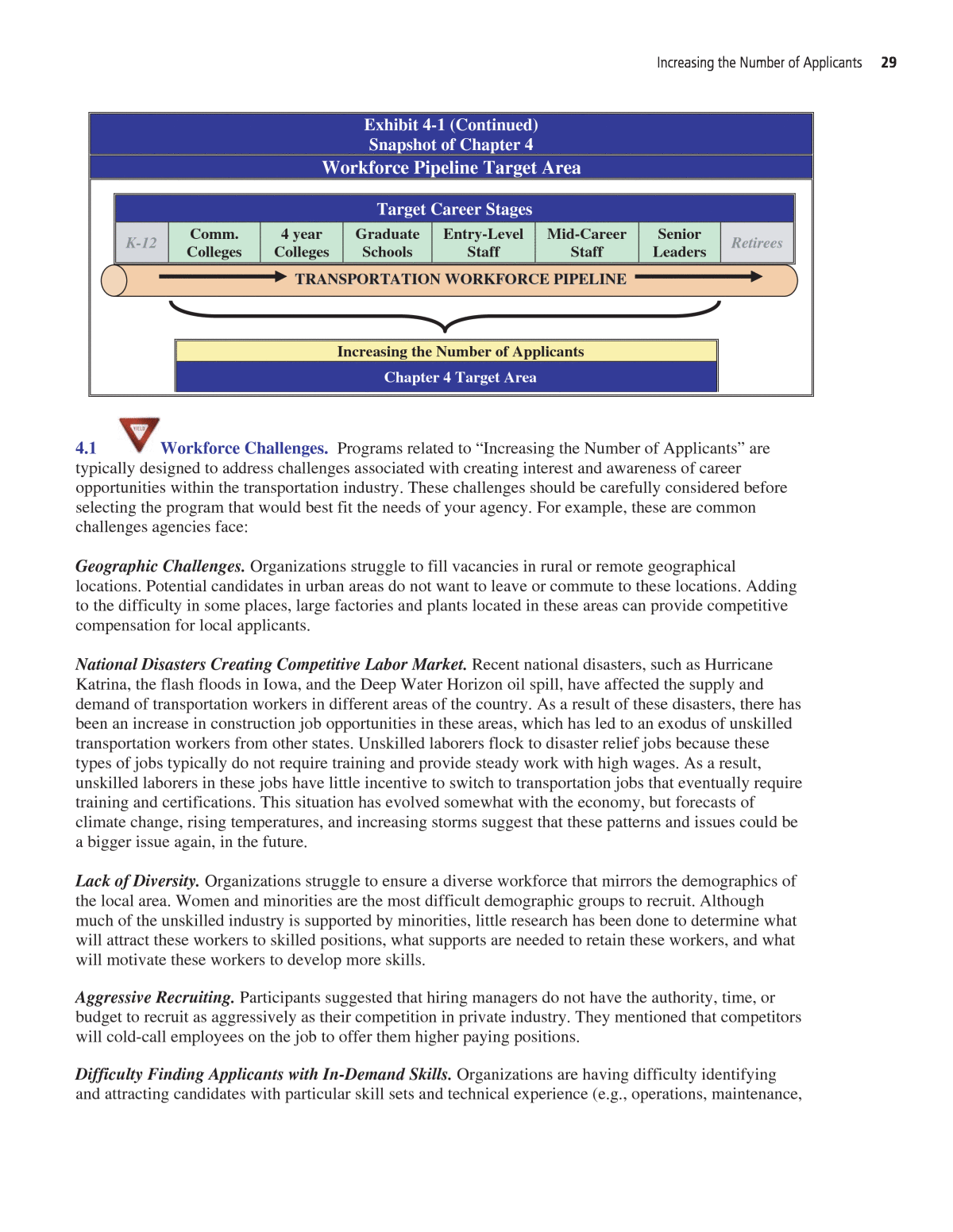
Exhibit 4-1 (Continued) Snapshot of Chapter 4 Workforce Pipeline Target Area 4.1 Workforce Challenges. Programs related to âIncreasing the Number of Applicantsâ are typically designed to address challenges associated with creating interest and awareness of career opportunities within the transportation industry. These challenges should be carefully considered before selecting the program that would best fit the needs of your agency. For example, these are common challenges agencies face: Geographic Challenges. Organizations struggle to fill vacancies in rural or remote geographical locations. Potential candidates in urban areas do not want to leave or commute to these locations. Adding to the difficulty in some places, large factories and plants located in these areas can provide competitive compensation for local applicants. National Disasters Creating Competitive Labor Market. Recent national disasters, such as Hurricane Katrina, the flash floods in Iowa, and the Deep Water Horizon oil spill, have affected the supply and demand of transportation workers in different areas of the country. As a result of these disasters, there has been an increase in construction job opportunities in these areas, which has led to an exodus of unskilled transportation workers from other states. Unskilled laborers flock to disaster relief jobs because these types of jobs typically do not require training and provide steady work with high wages. As a result, unskilled laborers in these jobs have little incentive to switch to transportation jobs that eventually require training and certifications. This situation has evolved somewhat with the economy, but forecasts of climate change, rising temperatures, and increasing storms suggest that these patterns and issues could be a bigger issue again, in the future. Lack of Diversity. Organizations struggle to ensure a diverse workforce that mirrors the demographics of the local area. Women and minorities are the most difficult demographic groups to recruit. Although mu ch of the unskilled industry is supported by minorities, little research has been done to determine what will attract these workers to skilled positions, what supports are needed to retain these workers, and what will motivate these workers to develop more skills. Aggressive Recruiting. Participants suggested that hiring managers do not have the authority, time, or budget to recruit as aggressively as their competition in private industry. They mentioned that competitors will cold-call employees on the job to offer them higher paying positions. Difficulty Finding Applicants with In-Demand Skills. Organizations are having difficulty identifying and attracting candidates with particular skill sets and technical experience (e.g., operations, maintenance, Target Career Stages K-12 Comm. Colleges 4 year Colleges Graduate School s Entry-Level Staff Mid-Career Staff Senior Leaders Retirees T R A N S P O R ATT ION WORKFORCE PIPELINE Increasing the Number of Applicants Chapter 4 Target Area Increasing the Number of Applicants 29
or management jobs). These individuals are in demand among several industries, most of which can offer higher wages than the transportation industry. In addition to skilled workers, organizations are struggling to find individuals who are in the middle of their careers (i.e., 5-15 years) because they tend to refrain from moving positions. These middle-career individuals are in demand because they are a low risk for initial turnover unlike younger workers who choose a position and then may quickly decide they do not like it. Individuals in the middle of their careers are also a low risk for retirement unlike older workers. Typically, these workers have families and obligations that force them to maintain steady employment. Another challenge that often occurs, when hiring managers for transportation jobs, is balancing the need for technical knowledge of the organization with the need for leadership and managerial skills. Participants noted that there is often a gap between the technical abilities and the âpeopleâ skills that applicants possess when applying for managerial positions. For instance, one participant said, âThe challenge is finding cross-functionally trained leaders with an understanding of how to manage different functions. Managers are, at times, put in place because of their technical skills, not managerial people skills.â Transportation Issues. The geographic location of the work poses a recruitment challenge for some of our participants. Requiring employees to use personal transportation or make a significant commute deters many applicants from accepting a job offer. This might occur because some applicants, especially in urban areas, do not have personal transportation. 4.2 Industry Strategies. Researchers and program managers identify the following programmatic strategies when describing industry efforts to âIncrease the Number of Applicantsâ (see Exhibit 4-2). While these strategies represent the general direction of human resource (HR) departments across the nation, it is important that the specific needs of your agency are used to guide the development and implementation of a program in your agency. Exhibit 4-2 Industry Strategies: Increasing the Number of Applicants Strategy Strategy Description Expand the Recruiting Horizon Organizations are posting job opportunities in trade magazines such as Construction and Better Roads magazines, on outdoor billboard advertisements, in flyers at unemployment offices, and on posters placed in convenience stores. The idea is to target an audience, determine where that audience can typically be found, and advertise job opportunities at these locations. If an organization is looking for an unemployed road construction worker who likes being outdoors and does not expect above-average compensation, the recommendations mentioned above are applicable. Advertising on the radio has also been found to be effective. Another place where active and passive job seekers can be found is on the Internet. To attract active job seekers, some organizations have replaced basic job search websites with more advanced job aggregator websites to upload their job postings. Job aggregator websites collect job postings from other websites and aggregate them into one database. Job aggregators often include jobs from big-name job search websites (e.g., Monster.com, CareerBuilder.com) as well as jobs from employer websites. Examples of job aggregators include: Indeed.com, SimplyHired.com, and TheLadders.com which are specifically geared toward upper-level managers and executives. For 30 Strategies to Attract and Retain a Capable Transportation Workforce
Exhibit 4-2 (Continued) Industry Strategies: Increasing the Number of Applicants Strategy Strategy Description passive job seekers, organizations develop advertisements to be placed on websites, such as Google, Facebook.com, and ESPN.com. Host Career Days The construction industry has begun hosting Construction Career Days across the country. These career days give students the opportunity to learn about construction jobs, become inspired to use as well as learn how to operate specific construction equipment (e.g., backhoes, excavators, jackhammers, pavers), learn about challenges of the job, and receive information on colleges, trade schools, and certification programs that serve the construction industry. Implement Employee Referral Programs Organizations feel that some of their best performers come from employee referrals. These organizations have instituted pay bonuses for the referring employee whose referral was hired and stayed employed longer than 6 months. Current employees will be more likely to refer people to jobs if they have a financial incentive. The 6 month cut-off is set because this is generally where organizations see turnover percentages decrease so at this point there is a higher chance that the organization will see a return-on-investment from the hire. Employee referrals are also beneficial because they reduce some costs for recruiters who are often seeking new employees from cold calling or large expensive events. Furthermore, incumbents can identify effective matches for jobs because they typically have more direct knowledge of the job requirements than external recruiters who do not perform the job on a daily basis. Tailor Advertising Efforts Our findings suggested that organizations have begun to tailor their job advertisements to fit the fast-paced, short attention span of the typical job seeker. They are now using brief descriptions or âsnap-shotsâ to quickly highlight the industry, major tasks, and positive aspects of the job. This has proven to be an effective tactic as organizations have found that potential job seekers, typically looking at hundreds of job advertisements at a time, are more likely to read shorter advertisements than longer ones. When developing these snapshots for hard-to-fill positions (e.g., maintenance, engineers), organizations have conducted research on factors that attract and retain individuals who typically fill those positions. Universities and private consultants are sometimes brought in to conduct this research. Some organizations are even obtaining lists from the state of individuals who have recently received a license that is required for a hard-to-fill position and sending those individuals information about job opportunities. Consider Non- Traditional Hires A number of DOTs have begun to explicitly target non-traditional hires to expand the thinking of current agency staff and better prepare the agency for the challenges of the 21st century. Minorities, lower-income people, and people with disabilities are recruitment targets in Minnesota and elsewhere. Retirees, re-hires, ex-offenders, and even candidates from other industries can also be effective sources for recruitment. In addition, employees from other industries may have the basic skills sets to quickly learn the requirements of the job; the latter are a particularly practical source in finance and other fields in the DOT with a smaller âbench.â Thus, agencies have begun to recognize the value of hiring individuals previously unconsidered. Increasing the Number of Applicants 31
Exhibit 4-2 (Continued) Industry Strategies: Increasing the Number of Applicants Strategy Strategy Description Advertise in Foreign Languages Organizations are creating advertisements in non-English languages, foreign languages commonly used in their communities, in an attempt to attract alternate populations. They have had success placing these advertisements in post offices, banks, and other community locations where non-English speakers may often visit. One association mentioned that contractors send bilingual recruiters door-to-door in historically minority-populated neighborhoods to talk to families about the benefits of starting a career in transportation. When organizations interview these applicants, the organizations advertise the fact that they use bilingual manuals, instructions, and safety signs. Organizations that provide multi-language resources are better able to convey a culturally diverse work environment. Some contractors reported establishing demographic recruiting goals that exceed those mandated by the government. Partner with Source Organizations to Increase Numbers A source organization is an entity with which potential applicants are heavily involved whether it is through education, enlistment, membership, or incarceration. Organizations have found partnerships with elementary and middle schools to also be advantageous for their efforts at increasing industry interest among youth. Research shows that image formation, career exploration, and job interests start at a very early age, and exposure to careers in childhood inculcates interest to pursue that field later in life. Engineering is Elementary offers resources for introducing engineering early. In addition to schools, organizations work with foster care programs to provide careers for youth in foster care settings. Organizations also partner with local youth development and agricultural groups like 4-H. The type of work conducted in transportation jobs may appeal more to youth already involved with hands-on tasks via club activities. Government organizations may provide recognition and incentives to companies for training and employing these youth. Another place to target young people who enjoy working outdoors and with their hands is at technical schools. Many organizations are setting up reoccurring meetings with technical schools to exchange information about the skills the schools are teaching relative to the skills that are needed by the organization. Establishing these partnerships allows organizations to identify and recruit the top talent. Mechanics, welders, and technical operators have been successfully hired based on partnerships with trade and technical schools. Organizations have had success partnering with local universities to determine how many students, typically in engineering fields, will be graduating and the type of opportunities and work environments these students are seeking. The advantage of working with professors from universities is that they are typically better in tune with their studentsâ expectations in terms of compensation, work schedule, and work environment. Organizations also participate in on-campus recruitment and career fairs for high school and college students. While colleges are heavily represented in high school career fairs, transportation organizations tend to only attend specialized trade fairs or college career fairs. Increasing representation in high school career fairs has 32 Strategies to Attract and Retain a Capable Transportation Workforce
Exhibit 4-2 (Continued) Industry Strategies: Increasing the Number of Applicants Strategy Strategy Description the potential to greatly assist recruitment efforts. To attract middle-career applicants, some organizations partner with Transition Assistance Programs (TAP) that help honorably discharged military personnel join the workforce. Organizations are invited to provide instruction to soldiers in how to develop a resume, fill out applications, and respond to interview questions. In addition to providing instruction, organizations work with TAP to interview and recruit these individuals. One organization in our study partnered with a selection firm to select high-potential candidates coming out of the military. In addition, this organization works with West Point to attract its graduates. In addition to transition assistance, organizations also partner with agencies providing job re-entry programs for former offenders in order to find workers with significant job experience. Potential recruits may be experienced in physical and outdoor labor, and by forming partnerships with Job Re-Entry agencies, the industry can better recruit disadvantaged, unskilled workers and also help support the community. In some states, the organizations may receive financial incentives from the government for using these programs. These financial incentives typically come from state workforce committees, which can be used to introduce organizations to source organizations (e.g., universities), as well as help them remove regulatory roadblocks in the hiring process. Integrate with Source Organizations In terms of short turn-around recruiting efforts, participating organizations have begun to use career fairs more strategically. For example, organizations have benefited from attending career fairs even when they do not have open positions, by forming long-standing relationships with quality talent. The organizations can provide information on how to keep in contact so that when job opportunities become available, career fair attendees can apply. Organizations have also started traveling to states or cities that are having economic or employment issues and offering applicants jobs if they are willing to relocate. Organizations are also looking for ways to offer telecommuting jobs to individuals who might be unwilling to move. Lastly, organizations are giving their hiring managers permission to make job offers during the actual career fair. Organizations have found that high-potential applicants are quickly recruited by competitors even if they were originally interested in the organization at the career fair. The ability to check resumes, interview, confer with colleagues, and make an offer allows the hiring manager to secure top talent early. One-stop career centers have also been effective. A one-stop career center is when several organizations in an industry, usually through an association, coordinate to co-fund a center where applicants apply, are trained, and then placed in a position at one of the organizations. Associations can set up offices around metropolitan areas that seek to streamline the process of getting a candidate from the application stage to the hiring decision stage. Applicants Increasing the Number of Applicants 33
Exhibit 4-2 (Continued) Industry Strategies: Increasing the Number of Applicants Strategy Strategy Description typically sit at a computer kiosk and fill out electronic applications with help from an attendant. The ease of the application process makes it attractive to a wider population of job seekers. For long-term recruiting efforts, organizations allow schools to bring children and parents to work sites for field trips, give guest lectures at schools and write articles for the school newspaper. These initiatives are meant to educate students regarding the diversity of jobs within transportation. Students are engaged with activities that show them how their skill sets, in math for example, are integral to transportation jobs. The oil industry, which was experiencing similar workforce challenges, pulled together volunteers from many different oil-related career fields to create a traveling information task force to conduct all the initiatives previously mentioned. In addition to educating students, these initiatives provide a venue where organizations can encourage teachers, career counselors, and parents to champion transportation as a viable career for the students. They have discussions, provide pamphlets, and direct interested persons to organization websites. Some companies offer breakfast and lunch presentations during the summer where teachers are invited to come eat and learn about the benefits of transportation. Advertisements need to focus on convincing parents of the benefit of transportation jobs. For example, the U.S. Army has had a number of successful TV commercials that target parents and attempt to shape their opinion about their childâs enlistment. Harness Technology To prepare managers for recruiting, organizations have developed pages on the organizationâs intranet to serve as a central repository for recruitment tips and tools. In addition, these pages allow for the sharing of lessons learned on how to effectively recruit new workers. To help recruiters and managers who are actively recruiting, organizations are purchasing software that allows for resume searches by skill. These software packages can also organize the resumes that come in from multiple job websites like Monster and JobFox. For job seekers, organizations have developed recruiting web pages on the organizationâs website. Applicants can learn more about the opportunities and benefits of a career in transportation as well as apply and submit their resume to all open transportation job opportunities. One feature of the website is that it allows candidates to apply at one time for all the positions for which they qualify by using the shopping cart application. Organizations have found that this technique creates a larger pool of qualified candidates for contractors to review than separate applications systems which may deter candidates from applying to multiple jobs. For job seekers without personal computers, organizations utilize phone recruiting services that allow candidates to dial a number and describe their resume profile in their native language. Candidate profiles are recorded in a computer database that can be accessed by employers online. Additionally, employers can search an organized list of candidate profiles and contact the most qualified candidate directly. Organizations also provide geographic 34 Strategies to Attract and Retain a Capable Transportation Workforce
Exhibit 4-2 (Continued) Industry Strategies: Increasing the Number of Applicants Strategy Strategy Description directions which list locations where candidates can use computers and apply for jobs online. Locations such as libraries and cafes provide the general public with the necessary hardware and software to access the internet. Utilize Social Networking Social networking is another effective way to reach passive candidates. By creating accounts or starting groups on social networking websites, organizations can post job offerings, video, audio, and news, as well as answer questions and request resumes from potential applicants. Using a popular medium to present visual content about the positive aspects of an open position may provide an applicant with the information he/she needs to make an informed decision about applying. Visual content and employee testimonials may also combat any misperceptions potential applicants may have about the work in which they would be involved or the sort of people they would be working with. MySpace, Facebook, and Twitter are social networking sites that have been found to be effective by organizations. The advertisements on these sites can be directly linked to a recruiting campaign website. 4.3 Workforce Practices. Thirty-five workforce practices that were designed to âIncrease the Number of Applicantsâ within transportation agencies were reviewed, and we identified two workforce practices that were the most notable within this context: The Kentucky Transportation Cabinet Civil Engineering Scholarship Program Minnesota DOT Community Advisors on Recruitment and Retention Solutions (CARRS). For these two practices, we conducted a case study. Summaries of the two case studies are presented below. The full case studies can be found on the TRB website at http://trb.org/Main/Blurbs/164747.aspx as part of Volume II: Supplemental Materials. The full case study descriptions detail each practiceâs background, implementation, maintenance, evaluation, and transferability. Increasing the Number of Applicants 35
The Kentucky Transportation Cabinet Civil Engineering Scholarship Program. The Kentucky Transportation Cabinet (KYTC) has a workforce of approximately 4,370 employees. KYTCâs Civil Engineering Scholarship Program was established in 1948 to address the growing need for quality civil engineers and the difficulty KYTC was having in recruiting sufficient numbers of civil engineers. Prior to the foundation of the Civil Engineering Scholarship Program, KYTC officials visited the College of Engineering at the University of Kentucky to recruit civil engineers, but had limited success. KYTC provides scholarship money and summer employment to undergraduate college students in exchange for full-time employment with KYTC after college graduation. High school graduates who have been awarded the scholarship are provided scholarship money each semester of college that covers tuition, and scholarship recipients may work for KYTC as conditional employees with compensation, minus benefits, during summers. After college graduation, scholarship recipients get priority over job applicants for job placement in order to fulfill KYTCâs commitment. The commitment required is 1 year of full-time employment for every 1 year of scholarship money received. Scholarship recipients who do not complete the program or commitment (e.g., drop out of classes or take another job post graduation) must immediately pay back 100% of the money they have received or a large interest-rate penalty is charged. KYTC, on average, funds 15 new college freshmen each year and a few additional students in other stages of their college careers. On average, there are about 80 students total receiving scholarship money from KYTC at a given time. The scholarship program currently costs KYTC about $40,400 to fund each student through their undergraduate education and requires 2 full-time employees to run the program. Approximately 67% of all scholarship recipients stay in the program for the full length of college and commitment to the agency. The program has significantly helped KYTC to staff quality civil engineers across the state. In fact, the majority of management and engineering employees currently at KTYC have been scholarship recipients themselves. The Kentucky Transportation Cabinet Civil Engineering Scholarship Program Job Type: Engineers ROI: Short- to mid-term Generation: Younger Key Program Highlights: o Scholarships are given to undergraduate college students o Scholarship recipients receive money for college tuition in exchange for a full year of employment for each year of scholarship money received o 80 students receive scholarship money each year 36 Strategies to Attract and Retain a Capable Transportation Workforce
Minnesota DOT Community Advisors on Recruitment and Retention Solutions (CARRS). The Minnesota Department of Transportation (Mn/DOT) employs 5,033 people in a variety of employment conditions (i.e., temporary, unlimited, full-time, part-time). Mn/DOT developed Minnesota Community Advisors on Recruitment and Retention Solutions (MnCARRS) to build lasting relationships within the various underrepresented communities that Mn/DOT serves. With only 20% female and barely 7% minority employees, Mn/DOT was facing challenges in recruiting and retaining a qualified and diverse workforce. Mn/DOT was not accomplishing its goals through solely attending job fairs and realized it needed to get more involved in the minority communities and engage more community members in their recruitment processes. Thus, the desire to establish a community partnership through the implementation of MnCARRS stemmed from Mn/DOTâs goal to intensify its diversity- focused recruiting efforts. MnCARRS represents all minority communities, including women, veterans, and people with disabilities. The partnership includes approximately 18 local, predominantly minority or women-managed organizations. Mn/DOT made an intentional effort to work with organizations and employees who had leverage and credibility in those minority communities. Members of MnCARRS from these organizations sponsor community information meetings to discuss various job openings. Job postings sent to the MnCARRS members are in turn disseminated to their individual networks of minority individuals in the community. Mn/DOT launched the MnCARRS program with a short-term, one-year objective to recruit and hire a qualified diverse group of candidates for 50â60 open technician positions tasked with winter snow plowing. Currently, MnCARRS has resulted in a total of 30 minority hires in the past year. Mn/DOT conducted information sessions in the community to educate their partners about the agency and its needs and requirements. The agency also put together a PowerPoint presentation that covered state jobs and methods of interviewing and applying for state jobs. The presentation offered tutoring in math for prospective applicants. MnCARRS members have provided Mn/DOT with greater visibility in minority communities, as well as an opportunity for these populations to learn more about the agency. Several MnCARRS members are serving as community mentors for the temporary Transportation Associate (TA) candidates hired at Mn/DOT. Another MnCARRS team member is now formally assisting Mn/DOT Human Resources (HR) with integrating diversity into the competency-based interview training for Mn/DOT supervisors. Finally, MnCARRS serves as a positive voice within a larger diverse community about Mn/DOT and its efforts to diversify its workforce and partner with their communities. MnCARRS has helped alleviate several workforce issues, specifically recruiting and maintaining a diverse employee base by broadening Mn/DOTâs recruiting opportunities and avenues for reaching a larger and more diverse audience. MnCARRS has helped Mn/DOT get the news out that the agency is interested in hiring minorities for jobs with current vacancies. MnCARRS also prompted Mn/DOT to review the agencyâs hiring process and utilize trial programs to supplement the normal qualification and interview process. Implementing MnCARRS in the agency was accomplished with minimal costs, primarily time and resources. Mn/DOTâs HR staff did all the work and the partners that MnCARRS uses are volunteers. Minnesota DOT Community Advisors on Recruitment and Retention Solutions (CARRS) Job Type: All ROI: Short-term Generation: All Key Program Highlights: o Includes partnering with 18 local, predominantly minority organizations o Provides greater visibility of the agency in minority communities o Helps the agency recruit and maintain a diverse employee base Increasing the Number of Applicants 37
Mn/DOT maintains specific reports related to the implementation, maintenance, and success of its MnCARRS group. The agency also developed a best practices document that is being shared with Minnesotaâs State HR and Finance Office. This document highlights âDoâsâ and âDonâtsâ learned from the MnCARRS community group about recruiting and retaining a diverse workforce. Other Example Practices To serve as an additional resource for agencies interested in âIncreasing the Number of Applicants,â we have included a list of other practices that transportation agencies have implemented for this purpose. Additional information on each of the following practices can be found in one- to two-page summaries within the supplemental materials. Arkansas EAST Initiative Adopting Flexible and Appealing Hiring Procedures Aggressive Outreach Efforts Bonuses for Recruitment and Retention Caltrans Out-of-State Recruitment Teams Program Comprehensive Recruitment Plans Construction Career Days Creating More Flexible Job Descriptions Educate Minority Communities via Community Associations Employee Referral Program Exit Interviews and Rebound Hiring Job Advertisements Job Hotline and Email Address Job Search through Social Networking Sites MentorNet Missouri Information Technology Services Department Norman Y. Mineta International Institute for Surface Transportation Policy Studies Operation Second Chance Partnering with Technical Schools Presidential Management Fellows Project Reentry Recruitment from Community Colleges for Transportation and Transit Agency Personnel Recruiting Former Military Recruitment of Older Workers Regional Transportation District Bus Driver Shortage Program State of California Boomerang Program Summer Transportation Internship Program for Diverse Groups Summer Transportation Institute Summer Transportation Institute for High School Freshmen and Sophomores Targeted Recruitment Temporary Hiring Centers The Welfare to Work Partnership Army Recruiting Portals, "GoArmy.com, iRecruiter" The practice summaries include information, such as the lead organization, practice description, practice purpose, targeted participants, return on investment (ROI) timeline, influence of the economy, innovativeness, and resources to find out more information on the individual practices. 38 Strategies to Attract and Retain a Capable Transportation Workforce
