




Below is the uncorrected machine-read text of this chapter, intended to provide our own search engines and external engines with highly rich, chapter-representative searchable text of each book. Because it is UNCORRECTED material, please consider the following text as a useful but insufficient proxy for the authoritative book pages.
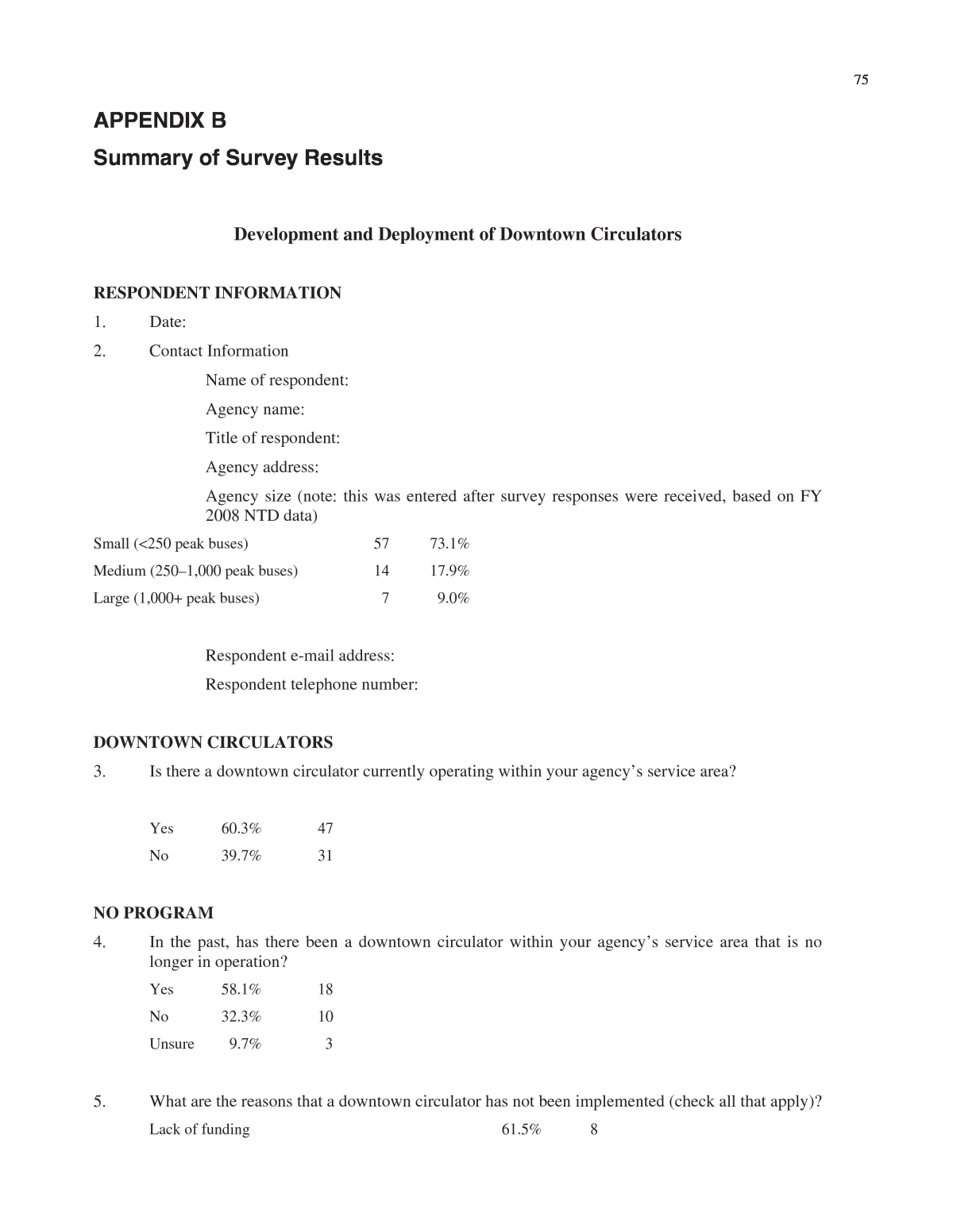
75 Development and Deployment of Downtown Circulators RESPONDENT INFORMATION 1. Date: 2. Contact Information Name of respondent: Agency name: Title of respondent: Agency address: Agency size (note: this was entered after survey responses were received, based on FY 2008 NTD data) Small (<250 peak buses) 57 73.1% Medium (250â1,000 peak buses) 14 17.9% Large (1,000+ peak buses) 7 9.0% Respondent e-mail address: Respondent telephone number: DOWNTOWN CIRCULATORS 3. Is there a downtown circulator currently operating within your agencyâs service area? Yes 60.3% 47 No 39.7% 31 NO PROGRAM 4. In the past, has there been a downtown circulator within your agencyâs service area that is no longer in operation? Yes 58.1% 18 No 32.3% 10 Unsure 9.7% 3 5. What are the reasons that a downtown circulator has not been implemented (check all that apply)? Lack of funding 61.5% 8 APPENDIX B Summary of Survey Results
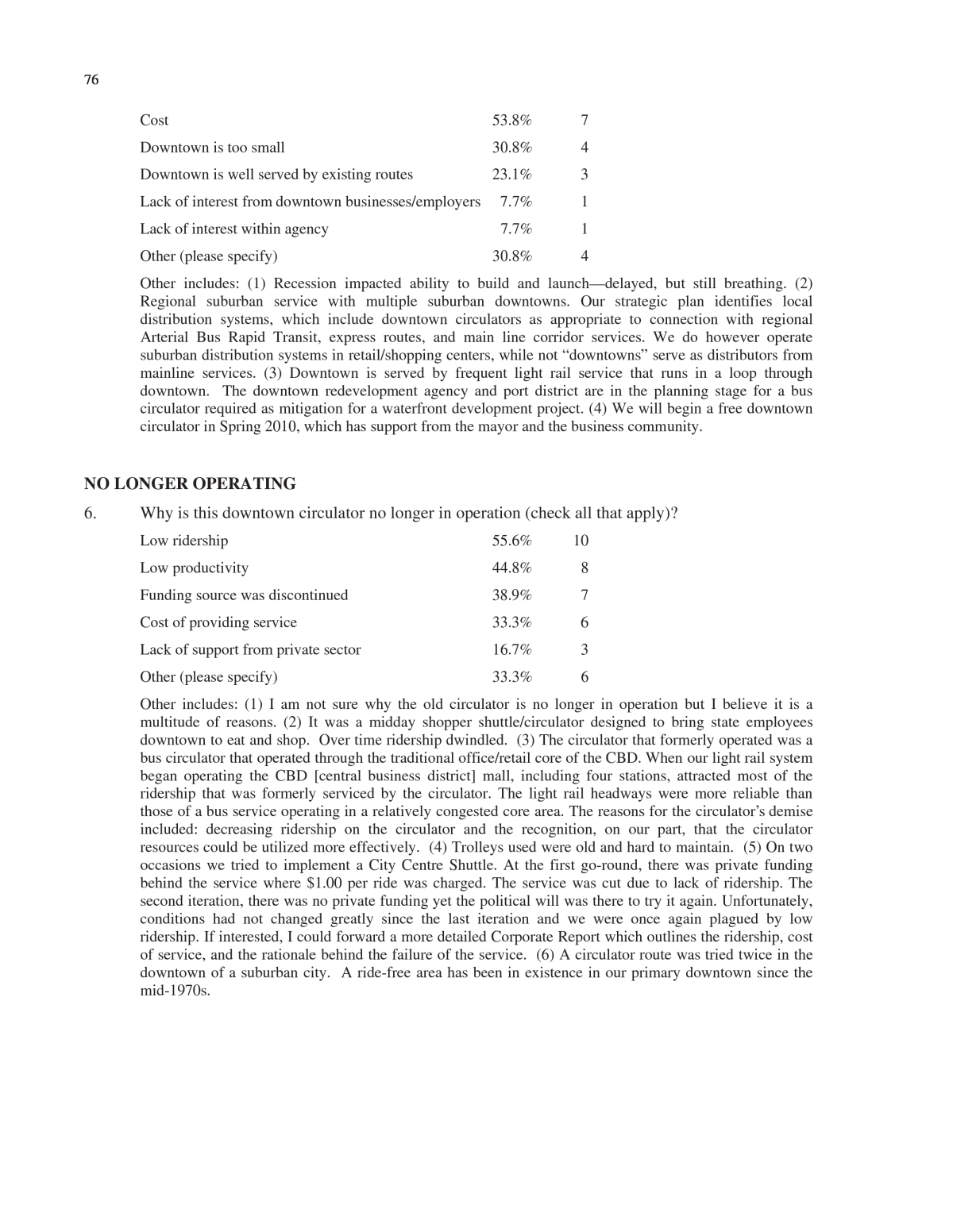
76 Cost 53.8% 7 Downtown is too small 30.8% 4 Downtown is well served by existing routes 23.1% 3 Lack of interest from downtown businesses/employers 7.7% 1 Lack of interest within agency 7.7% 1 Other (please specify) 30.8% 4 Other includes: (1) Recession impacted ability to build and launchâdelayed, but still breathing. (2) Regional suburban service with multiple suburban downtowns. Our strategic plan identifies local distribution systems, which include downtown circulators as appropriate to connection with regional Arterial Bus Rapid Transit, express routes, and main line corridor services. We do however operate suburban distribution systems in retail/shopping centers, while not âdowntownsâ serve as distributors from mainline services. (3) Downtown is served by frequent light rail service that runs in a loop through downtown. The downtown redevelopment agency and port district are in the planning stage for a bus circulator required as mitigation for a waterfront development project. (4) We will begin a free downtown circulator in Spring 2010, which has support from the mayor and the business community. NO LONGER OPERATING 6. Why is this downtown circulator no longer in operation (check all that apply)? Low ridership 55.6% 10 Low productivity 44.8% 8 Funding source was discontinued 38.9% 7 Cost of providing service 33.3% 6 Lack of support from private sector 16.7% 3 Other (please specify) 33.3% 6 Other includes: (1) I am not sure why the old circulator is no longer in operation but I believe it is a multitude of reasons. (2) It was a midday shopper shuttle/circulator designed to bring state employees downtown to eat and shop. Over time ridership dwindled. (3) The circulator that formerly operated was a bus circulator that operated through the traditional office/retail core of the CBD. When our light rail system began operating the CBD [central business district] mall, including four stations, attracted most of the ridership that was formerly serviced by the circulator. The light rail headways were more reliable than those of a bus service operating in a relatively congested core area. The reasons for the circulatorâs demise included: decreasing ridership on the circulator and the recognition, on our part, that the circulator resources could be utilized more effectively. (4) Trolleys used were old and hard to maintain. (5) On two occasions we tried to implement a City Centre Shuttle. At the first go-round, there was private funding behind the service where $1.00 per ride was charged. The service was cut due to lack of ridership. The second iteration, there was no private funding yet the political will was there to try it again. Unfortunately, conditions had not changed greatly since the last iteration and we were once again plagued by low ridership. If interested, I could forward a more detailed Corporate Report which outlines the ridership, cost of service, and the rationale behind the failure of the service. (6) A circulator route was tried twice in the downtown of a suburban city. A ride-free area has been in existence in our primary downtown since the mid-1970s.
77 DOWNTOWN FARE FREE ZONE 7. Does your transit agency offer a fare-free zone in downtown? Yes 12.9% 4 No 87.1% 27 If Yes, please continue with the survey changing references to âdowntown circulatorâ to âfare-free zone.â Such an arrangement is a functional equivalent to a circulator. WHO OPERATES 8. Is the transit agency or its contractor the operator of the downtown circulator? Yes 94.0% 47 No 6.0% 3 If no, please provide the name and email address of the most appropriate person to fill out this survey at the agency that operates the downtown circulator. ASSESSMENT 9. How would your agency rate the downtown circulator? Very successful 36.2% 17 Somewhat successful 36.2% 17 Neutral 17.0% 8 Somewhat unsuccessful 8.5% 4 Very unsuccessful 2.1% 1 10. What have been the primary benefits of the downtown circulator? Responses summarized in Table 38 of report. Verbatim responses are provided here. Many seniors live in the downtown and this service helps them to get around, especially during the winter months. It provides a low cost, easy link, aimed primarily at visitors, between downtownâs historic destinations and our cultural attractions, a distance of about 2 miles. Just last year we added a âlegâ from the cultural attractions to our Zoo and childrenâs museum west of the downtown area. Getting people to jobs, promoting economic vitality, fun to ride The downtown rail circulator system has been a catalyst for downtown redevelopment. Ridership continues to grow and the system provides additional transportation capacity during peak periods and special events. It was implemented when the Authority moved their downtown location. Making downtown trips reduced the public outcry against âchange.â Enormous change in public perception toward bus because of frequent service, strong branding, great customer service, and easy to understand routes. Linkages to downtown destinations were vastly improved. Circulator does cross-promotion with business improvement districts so there is an increased positive linkage between local businesses and transit serving those businesses. Previously there were no single routes connecting some of our most important activity centers without having to transfer on multiple buses or from bus to railâpeople able to traverse the city more easily with a one-seat ride. Provides high frequent transportation during the winter season for free
78 Downtown distribution from rail and other bus services Free connections to ride short distances within downtown area We have been able to provide very frequent service to our downtown riders by providing this added service. We can tell customers that they can board a train as frequently as every 5 minutes. Useful link for tourists and convention goers. Econo mi c developm ent tool The service has been able to link three business districts, three Gold Line light rail stations, and two higher educational institutions. Inexpensive fares (subsidized by the city) for passengers Shuttle for tourists during peak tourism months. Geographic cover ag e in the CBD. C onnects ma ny points of interest w ith short one-seat one-ride trips; connects regional transit center with downtown. It has effectively replaced mo re costly dial-a-ride servi ce for r out in e trips both in downtown and the rest of this city. Increased ridership. Providing a link from a park-n-ride location on th e fringe of downtown for workers a nd access to the train station; pl us th e local unemployment and training office and new convention center in the downtown. Good connector to outlying routes 30-minute frequency (convenience) No fare to ride Relatively small area of north/south downtown It is a hi ghly vi sible service that has great downtown and political support. It allowed part nerships to be formed between Intercity Transit, c ity and state government, other agencies, downtown organizations, businesses, and ne igh borhood groups. It has been a great âintroductionâ to public tran sportation for many me mb ers of our community. Built connections to business community and route; is one of the highest productivity lines. Provides added mobility options for travel in downtown area during hours of operation. Lessening of congestion, access to service, and consolidation of parking The circulator transports downtown workers and people called for jury duty to and from downtown parking lots. We operate two circulators in the downtown area: (1) c onnecting dense employment area with th e Metrorail Station, which is reasonably successful; (2) Seaport connection with Metr orail Station which is essentially unsuccessful but there is no alternative transit service. It is a benefit to downtown workers and to t ourists who can ride to th e various venues in do wntown. It helps m ove people, especially during lunch h ours, and t hus benefits the restaurant business in downtown. It also a dds to the am biance of downtown with the use of the tro lley replica buses that are used on the service. It reduces th e need to drive for the business class who go to meetings in buildings other than their own. A new circulator was started on August 31, 2009, to connect the train station with downtown. The service operates Monday through Friday from 6 a.m. to 10 p. m. The service is free and it provides a connection for visitors and com mu t ers to easily travel between the center of downtown and the train station. The downtown stop is at the pulse point for all regional bus routes. Better access for residents to th e downtown area, jobs an d recreational activities, and connectivity to the entire transit system at the downtown hub.
79 The downtown circulator is a vital mobility component for the area. The downtown circulators connect many waterfront points of interest, such as the Aquarium, museums, the Convention Center, Shoreline Village, the Sports Arena, and surrounding hotels and business/government hubs. It is well received by the community and provides an efficient transportation option for visitors and workers in the downtown area. The primary benefits are that it is operated by electric vehicles, which has given the transit agency worldwide positive exposure; that it provides economic benefits to businesses on the circulator route due in part to its frequency (6 minutes) and the fact that no fare is charged to ride. It has provided additional revenue to the transit agency in that it has become a popular mode of advertising. Nine of our electric buses have been wrapped at $20,000.00 per bus annually. Revenue collected from the two parking garages that anchor our DTS as well as parking revenue collected from meters (the transit agency as an authority maintains parking meters and gets the revenue from the meters) fund about 75% of the cost of operating the shuttle. Provides connection for commuters between the downtown transportation center (commuter rail and buses) and the main employment sites in downtown. Provides some internal circulation for the downtown area. Replaced time-consuming downtown loop on all bus routes as they entered and left the downtownâsaved bus time on those routes and reduced travel time for passengers who come to downtown only to transfer. Brings people from downtown fringe area parking into the CBD for employment. Connects people in the CBD to our downtown transit center and to routes that do not circulate through the downtown. Better mobility within the central business district. Reduced traffic congestion and improved air quality. Since its introduction in 2003, ridership on the downtown circulator increased monthly at a pace faster than any other route operated by the transit agency. This trend continued until March 2009 when revenue shortfalls required the transit agency to reduce the span and frequency of service. Prior to service reductions, the popularity of the service was recognized by downtown visitors and merchants alike. Many of our passengers were first-time transit users and included people who would not or do not ride the other routes in the system. Provides a premium, easily recognizable service in an area where there is a lot of transit service that is not well- received by âchoiceâ transit riders. Provides a âone-parkâ solution, so that tourists donât have to drive to multiple destinations in the downtown area. Circulation. Seriously. Two of the three do a very good job of connecting distant parts of CBD that is otherwise quite congested with traffic. Provides circulation around downtown area. Provides distribution from light rail transit to various portions of the downtown area. The downtown Ride-Free Area (RFA) is seen as a convenience and inducement for people to use transit for travel within the downtown free zone between the hours of 5:00 a.m. and 7:00 p.m. (fares are charged between 7:00 p.m. and 5:00 a.m.). Shorter dwell times for buses has also been a benefit of the RFA, although for outbound buses delays have been transferred to bus stops outside the downtown area on heavily used routes due to time consumed by alighting passengers queuing or showing passes before leaving the bus by the front door. A 2008 assessment found that 3.4 million annual trips were made within the RFA that did not involve a transfer to/from revenue service. Connects activity centers in and around downtown and is free for passengers. Makes connections that the local fixed route bus system does not. Circulator was conceived as a free connection between a new state-owned convention center, hotels, restaurants, and the arts and entertainment districts. Ridership is very strong when there is a convention at the center that uses many downtown hotels for attendees. The existence of the shuttle is a major sales tool for the Convention and Visitorâs Bureau to help pitch the city as a site for conventions. It alleviates congestion and parking problems in downtown. It provides a benefit to downtown merchants by bringing potential customers from the beach area hotels.
80 Relocation of suburban highway coaches and other buses to peripheral stations. Full access to CBD for Local and Limited routes that cross downtown at right angles to the main streets. Revival of Lower Downtown restaurant district, by making it easy to reach beyond normal walking distance from high-rise offices and major hotels. Service utilized by broad cross section of population, including affluent who otherwise would feel that they gain nothing from transit system. Allowing more people to use the regional rail and bus system and then connect to the downtown circulator (DASH) to get to their places of employment. Allowing those that use the regional public system to get around downtown for meetings, lunch, shopping, etc. Provide those that live in the downtown area with an alternative to driving their personal cars for trips within downtown. It has provided more exposure to transit services to community members who may not ride the bus. Provides alternative transportation options for tourists and downtown workers/residents to move around downtown, work to restaurants, tourist spot to tourist spot, residential to work/eat, etc. 11. What have been the primary drawbacks of the downtown circulator? Responses summarized in Table 39 of report. Verbatim responses are provided here. None Free rides prevent establishment of a true circulator Slow travel speeds on the Main Street portion of the system due to closely spaced mid-block stop locations and traffic signals, despite exclusive right-of-way Perception that entire system operates slowly Victim of its own successânow politicians in every part of the city are clamoring for the same level of service, whether or not the ridership demand may justify it. Decreased ridership on other routes that charge a fare None Very limited stops within downtown area. Still evaluating Low ridership due to a small downtown Insufficient capacity: when we have cruise ships dock with thousands of passenger we couldnât possibly handle the loads. Irregular demand Funding: A small proportion of funding comes from local business, but the majority of the cost is absorbed by the transit agency (service is provided free of charge). Convoluted routing: whenever a new sponsor comes on board, there is a request to change the routing so the new sponsor has direct service. We use a Chance Trolley and the step is high for seniors. Getting others to ride Passenger confusionâcirculator routing vs. other downtown routes Equity issue: Same fare as rest of the system but generally shorter trips, arguments for inequity. Circulators beg the question of paying additional fare when we reach the end of the line (terminal) and want to continue trip in the same direction.
81 Transfer issue: Circulators beg the question of payi ng additional fare when we reach the end of th e line (ter mi na l) and want to continue trip in the same direction. Limited evening service No weekend service None Not enough ridership and revenues Low utilization Frequent utilization without transfer Costly De ma nd is hi ghly variable, depending on the season Lack of dedicated parking for the circulator High floor, with lifts instead of ramps Trolley-style buses expensive to maintain (wood) Low ridership does not justify cost of operation. None Infrequent service Unimpressive ridership Very costly to operate (over $1 million annually) Start-up costs high (vehicle purchase) High main tenance costs due to frequent stops Higher spare ratio to maintain reliability Not as direct Fast implementation meant no brandingânow being resolved Li mi ted capacity due to the smaller vehicle size (30') of downtown circulator. Insufficient funding Infrequent service Private trolley company operates and serves areas other than those we would like to serve Fundingâit operates with a hefty subsidy from the state Downtown congestion makes it difficult to maintain headways Only a seasonal service Due to budget constraints and downtown street pattern, circulator is a one-way loopâa major drawback. A dditi onal transfer for many passengers to reach downtown destinations Difficult to schedule (m aintain spacing, provide driver breaks, meet trains within customer expectations) Staging can be a problem w hen buses âbunch upâ due to the short di stance (3 miles round trip) and th e num ber of vehicles in service. Victim of its own successâother parts of downtown want a âfree shuttleâ but are unwilling to pay for it. Low ridership and productivity in terms of passengers per revenue hour High cost of the type of frequency needed to operate a successful circulator (10 minutes)
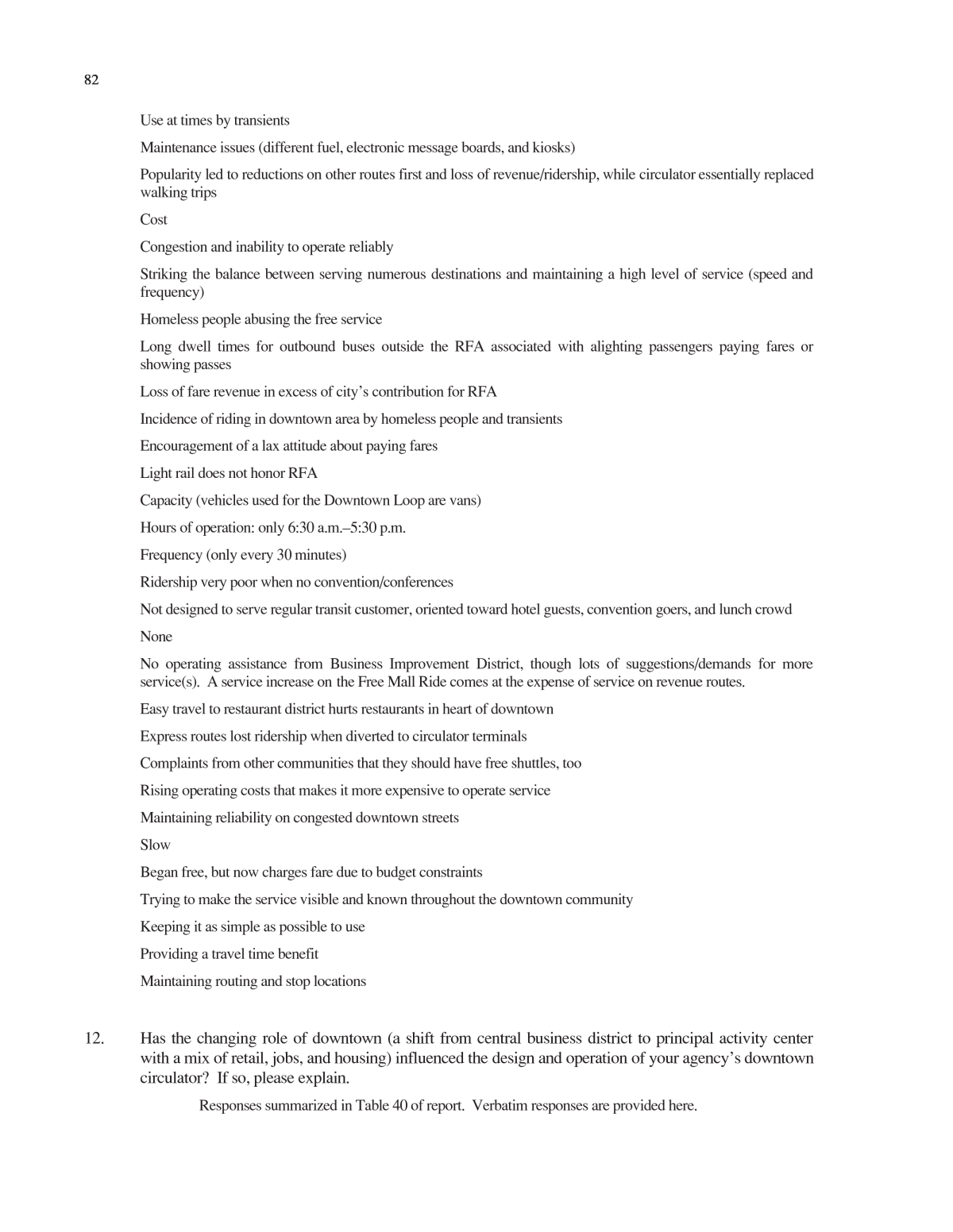
82 Use at times by transients Maintenance issues (different fuel, electronic message boards, and kiosks) Popularity led to reductions on other routes first and loss of revenue/ridership, while circulator essentially replaced walking trips Cost Congestion and inability to operate reliably Striking the balance between serving numerous destinations and maintaining a high level of service (speed and frequency) Homeless people abusing the free service Long dwell times for outbound buses outside the RFA associated with alighting passengers paying fares or showing passes Loss of fare revenue in excess of cityâs contribution for RFA Incidence of riding in downtown area by homeless people and transients Encouragement of a lax attitude about paying fares Light rail does not honor RFA Capacity (vehicles used for the Downtown Loop are vans) Hours of operation: only 6:30 a.m.â5:30 p.m. Frequency (only every 30 minutes) Ridership very poor when no convention/conferences Not designed to serve regular transit customer, oriented toward hotel guests, convention goers, and lunch crowd None No operating assistance from Business Improvement District, though lots of suggestions/demands for more service(s). A service increase on the Free Mall Ride comes at the expense of service on revenue routes. Easy travel to restaurant district hurts restaurants in heart of downtown Express routes lost ridership when diverted to circulator terminals Complaints from other communities that they should have free shuttles, too Rising operating costs that makes it more expensive to operate service Maintaining reliability on congested downtown streets Slow Began free, but now charges fare due to budget constraints Trying to make the service visible and known throughout the downtown community Keeping it as simple as possible to use Providing a travel time benefit Maintaining routing and stop locations 12. Has the changing role of downtown (a shift from central business district to principal activity center with a mix of retail, jobs, and housing) influenced the design and operation of your agencyâs downtown circulator? If so, please explain. Responses summarized in Table 40 of report. Verbatim responses are provided here.
83 Housing in the downtown increases utilization of the downtown circulator. No. Weâve always had an active downtown. Not significantly. Downtown has expe rienced a growt h in residential p opulation and mi x of retail activities th at have contributed positively to ridership growth. Definitelyâthis is not a weekday l unch shuttle onl yâit is marketed toward and serves a wide range of travel mark ets. We operate a lot of late night service (until mi dnight during th e week and until 2 a.m. or 3: 30 a.m. on Friday and Saturday nights) at the sa me 10-m inute headway to ma ke th e service a ttractive to residents, visitors, tourists, and workers, not just commuters or a lunch crowd. No No effect Our circulator began service with th e opening of our new transit mall. The plan was heavily influenced by the business community as we structured the design and service on the transit mall. Downtown circulator is a streetcar system . Track layout limits operational changes. Have shifted route on ma ny occasions to increase ridership No, our downtown hasnât shifted significantly since the implementation of the service. Yes, we have stops at the main senior living complexes and historic sites. Yes. In th e 1980s/early 1990s, a CBD business association sponsored (i.e., pa id for) a true downtown circulator w ith dedicated vehicles (faux trolleys) and a discreet schedule. As retail disappeared from downtown, so did time the tran sit agency implemented a timed tran sfer, pulse system for all routes and th e circulator was created with regular transit coaches. Yes. The creation of a regional transit center just outside of the downtown core required us to create at least one r oute th at would c ontinually c onnect downtown to th e center. Three hospitals w ithin th e range of th e circulator needed to be included as well as a couple of low income hous in g facilities needi ng access to the transit center and the downtown core. Yes, we actually now operate a west and east route that serve not only the downtown, but also newer desti n ations scattered throughout the city (e.g., hospital, school, newer shopping areas, and industrial park). No No Design was solely influenced by destinations of interest ( both business and comm ercial) in downtown area a nd c onnectivity to other fixed routes. Not really. The service is in its 4th year and was designed to connect the State Capitol Campus, downtown, and the Farm ersâ Market area (includes restaurants, offices, and retail as well as Farm ersâ Market). Not really. Our circulator connects the historic downtown to th e two close-in regional ma lls and th e ma jor employers and medical facilities. Use has grown as vibrancy of city has increased. No Yes. Environment is dy nam i câroutes need to be continually evaluated and adjusted as needed. No No. However, the c ity plans on a downtown bus circulator using ARRA [A me rican Recovery and Reinvestment Act] and 1/2 penny surtax funds. No. We find th at the business class is the prim ary user of the system , and the tourist sector is the next primary user. Housing has not resulted in significant ridership since th e downtown residents work during th e day. The service is not practical on gam e nights because of gridlocked traffic; it is often faster to walk to the venue than ride. Also, you canât teach the infrequent visitor to downtown how to use the system. sponsors and funding for the service gradually diminish until the service was discontinued ~1995. About that
84 Yes, it has been important to try and link all the major trip generators. No The routings have been extended to connect with other major destinations such as a major university outside of the downtown area. To date, the city is undertaking a study to determine an optimal location for a downtown multimodal center. It is the intent to combine this facility with some retail etc.; so, depending on the type of development and the location, the downtown trolley route would need to be revisited. Not really, but over the years we have adjusted stops to incorporate additional destinations; e.g., a park that was recently renovated as an active childrenâs attraction, opening of a new wing of our art museum, etc. No. We have received some requests from an older neighborhood bordering downtown to add circulator service on weekends to replace the loop removed from the other bus routes. Budget constraints and low evening weekday ridership are the main reasons for not adding that service to date. The route has remained the same since its inception in 1992 serving what was once the CBD but has also become a principal activity center and, as such, the hours of the circulator were extended until 11:15 p.m. Yes, we have redesigned the route to accommodate new downtown condos. As more residents have moved into the downtown core, our agency is looking at expanding the system to connect more nearby residential neighborhoods reducing the need for additional parking. No Absolutely. While the traditional CBD continues to thrive, new major activity centers less than a mile from downtown have emerged. The downtown circulator is designed to connect these areas. No No. The downtown circulator was designed to strengthen the downtown area by providing free and easy circulation. There have been minor adjustments to the Ride Free Area over the years, mainly due to the opening of the downtown Transit Tunnel in 1990. Not yet, but it will when the future modern streetcar line opens. The modern streetcar will serve as a downtown circulator with extended hours of operation and improved frequency. No The basic design and operation has not significantly changed since approximately 1991. Yes. Introduction of peak headways during noon hour (same level as classic a.m. and p.m. peaks) was needed to handle loads. This does not fit with earlier statements that the downtown circulator would save operating costs by diverting suburban buses into the peripheral stations. Similarly, night and weekend service had to be expanded for loads. Yes, it has to a certain extent, but a shrinking budget did not always allow us to respond to the changing nature of downtown as quickly as we would like. However, in the past few years, we have added resources to service entertainment venues and employment centers. We have also extended the hours of operation on selected routes. No Yes, the transit agency made an effort to include emerging residential areas in recent route changes. The transit agency is nearing the completion of a streetcar study that would provide additional downtown circulation and improve economic development to connect live, work, retail in the area. 13. If you could change one aspect in the process of designing and implementing this program, what would you change? Responses summarized in Table 41 of report. Verbatim responses are provided here.
85 None Require dedicated right-of-way wherever possible Seek political support to insure that city engineers do not hamper the systemsâ operational effectiveness. More specific criteria on perfor ma nce levels from the very beginningâour sometimes ad-hoc d ecision ma king has led to difficulty as the system has matu red. More specific criteria on governance from the very begi nningâour lack of governance structure and sometimes ad-hoc decision making has led to difficulty as the system has matured. Develop a fare free zone in th e area of th e downtown circulator so th at there is no competition be tween regular r outes and wi nt er shuttle routes. Expanded coverage area Agree on clear performance targets for the circulator with stakeholders Get agreement that modifications might be needed based on ridership, budget, and traffic conditions. Greater emphasis on an operating plan that would allow an easier transition to extend travel markets beyond the central business districts. Change to political process I would remove it a ltogether. Most of th e links provided by the service are duplications of other regular services. The one segment that is not covered by a conventional route soon will be, pending budget approval. We have just (January 2010) reduced th e fare from $1.50 to 25 cents. Seniors 65 and ol der ride for free and the ma jority using this service is seniors. However, we want to try and get business workers to use it to get to a restaurant or to get to the ot her end of town qui ckly. We believe just havi ng to put a quarter in th e fare box will help. We saw a slight increase in passengers in January. Stay tuned! The transit agency is about to start construction on an off-street transit center in th e CBD. When finished, bus r outes will be assigned to dedicated plat forms. Iâm hopi ng that all buses l ooping thro ugh downtown will be able to make a stop at a common platform in the center before proceeding on. This will reduce customer confusion. Give the circulator stops in downtown a unique spaceâsim ilar to streetcar stationsâto set th em apart from other r outes th at pass through downtown. Type and number of vehicles and drivers available for th e service, which w ould in tu rn a llow for expanded evening and weekend service. Eliminate one-way streets Should be supported by businesses and employment centers to make the service free of charge Not sure I th i nk we did th is right given th e limitations of th e service area. The service began with a dedicated parking area but the s ite has now been developed in to state o ffices. The service is free, r uns frequently, has si mp le routes, and uses a co mf ortable and reliable vehicle. Im prove vehicles; quieter, mo re comfortable. To improve ability to forecast use of th e circulator. Our survey i ndicated h igh interest and likelihood of use, but this was not what happened. Level of priority given to transit from a funding and parking pricing standpoint. Iâd get an iron-clad agreem ent for long-term operating support from the business community. It mi ght be to split the service; however, while some of th e stakeholders w oul d like mo re d irect service from one point to the other, other stakeholders would then lose their connections. A little more time to develop the branding so that everything was in place at the beginning of the service.
86 Stronger in tegration a nd linkage between parking ma nagem ent plan and the circulator operation plan from all aspects including conceptual design, ma rketing, service planning, and im plem entation. The best implementation of service would be based on a fully funded public transit m odel which intends to serve the mo st number of people and services; however, when f unding some contractual services, different f unding problems can occur due to Charter Regulations and the competing need to fund p ublic service versus private service interests. I donât think weâd change anything about the design or implementation of it. The challenge is in funding it. Getting more public input on the route and schedule before committing to and implementing the service. The way it is funded, we would ma ke sure there was buy-in as well as a financial report from down town me rchants. Donât overdo the community outreach. Moderate it a bit. We did too much and got to âparalysis by analysis.â As I was not i nvolved in th e original planning or design of the facility, I canât really answer that question. My understanding is that th e city initially started a free circulator in shared traffic as a de mo ns tration project. Then th e agency developed and designed a fixed guideway route with one segm ent a contra-flow lane. Some of our other fixed routes also use a small segment of the guideway to connect to our central station, pulling additional buses out of the general use lanes in the CBD. Perhaps using a r ubber-tired âvintageâ-style-them ed trolley instead of the 29-foot Optima buses we used. Although our buses were branded in a whimsical, fun, eye-catching way, ma ny critics felt the service would be even more popular with the tourists if we used trolley themed vehicles. Make the routings a little leaner. They are too indirect, attempting to serve multiple constituencies within the CBD. better service. Eliminate th e Ride Free Area. It is in creasingly viewed by planni ng staffs as an anachronism, b ecause it does not ma ke a ma jor contribution to th e efficient m ovem ent of tran s it through th e downtown area, nor is it clear th at it encourages transit ridership in downtown over what otherwise w ould occur since over half of the transit agencyâs riders use various pre-paid passes. Other m easures such as deployment of low-floor buses, streamlining routings of groups of r out es to provide more straightforward circulation pa th s, and prom o ting these pa th s through better ma rketing mate rials, continued ma rketing of pre-paid passes, and transit-priority m easures such as restricting automobile traffic on major transit arterials such as Third Avenue in com b ination are mo re effective at achieving the goals of efficient transit operation and increased market share in downtown. Im prove frequency to 15 mi nut es (however, this is not possible given existing funding sources). Probably no changes to th e routing, but may operate fewer hours. Service currently operates from 7 a.m . to 11 p. m. MondayâFriday and 3 p. m. to 11 p.m. on Saturdays. I th in k we mi ght roll back th e standard operating hours to something like 7 a.m . to 6 p.m ., Mo ndayâFriday, and th en operate evening or weekend hours as necessary to serve major conventions. I am not aware of any aspect that I would change. I wasnât here when it was done, but have talked w ith those who were a nd have read th e studies. Operating and Maintenance costs were not well forecasted. These expenses cut into service for the rest of the system . The downtown consists of 6 weekday and 3 weekend r outes and generates approximately 7.5 m illion trips per year. The system has evolved over the years from its inception in 1985 and had one ma jor restructuring of its service routes in th e late 1990s that reva mp ed th e entire system, introduced new routes and m odi fied ot hers to target the greatest num b er of riders. One aspect I w oul d change in the early process of desi gning and im plem enting th e downtown circulator would be to work in closer collaboration w ith our regional partner to ensure that th e city DOTâs role a nd responsibility as the prim ary provider of downtown m obility dovetailed into the larger regional picture. If the service could operate on a dedicated lane or so meth ing to make it faster and more convenient If the service could have signal priority/or so meth ing to make it faster and more convenient. As always, budget was a limiting factor in level of service that is provided. More funding could have provided
87 Improve the communication of the benefits with all downtown stakeholders If the industry could provide dollar values for the service in comparison with various downtowns, the increase in circulator service provides âxâ economic benefit, âxâ value for increased connectivity and productivity, or a value to support increased density by bringing more residents, work, and fun to downtown. 14. Please describe any âlessons learnedâ that would benefit other transit agencies that are considering implementation of a downtown circulator. Responses summarized in Table 42 of report. Verbatim responses are provided here. The downtown circulator is the face of your transit system to citizens and visitors. Friendly drivers, attractive vehicles (such as trolleys), open air sides (weather permitting), and frequent headways are all important for a successful circulator. Pay close attention to station spacing and traffic signal coordination issues. Consider the use of girder rail and concrete only in all in-street rail, where travel lanes are shared with other travel modes. In some areas a top coat of asphalt was laid over the concrete track bed that has resulted in safety- and maintenance-related issues. We would recommend the use of ADA accessible ramps instead of mechanical lifts at station platforms if low- floor vehicles are not an option. Maintenance of mechanical lifts is expensive and disruptive to patrons with disabilities when failures occur. way may be available. Set performance criteria and governance structures up front. Do not compromise on your headway performance and offer it for the entire spanâit only confuses people and loses choice riders for them to know to expect longer waits at different points in the span. Protect this at all costs and cut your span or route length before considering any lengthening of headway. The 10-minute headway is a sweet spot and draws in choice riders who would otherwise not choose transit; try to meet these criteria even though it is expensive. Build a strong brand with support from the business community We actually set up a separate nonprofit corporation with the BIDs [Business Improvement Districts] and convention/tourism bureau on the board to brand the service and use the marketing expertise of these established groups. Buy unique, distinctive, high-quality buses and paint them to stand out visuallyâwe bought Van Hools, which are a rarity in the U.S. and people love them. Implement circulators as part of an overall downtown development, parking and circulation plan. Work closely with downtown business associations and stakeholders to make sure that the service is designed to meet their needs. Work closely with downtown business associations and stakeholders to make sure that there are clear performance targets. Work closely with downtown business associations and stakeholders to make sure that adjustments could be made in the future depending on performance levels and budget availability. In our case, downtown interests have strong ownership in our circulator service and fare zone, so changes have been carefully and fully discussed before implementation. Work closely with downtown business associations and stakeholders to make sure that downtown interests have strong ownership in our circulator service and fare zone, so changes have been carefully and fully discussed before implementation. If planners say it will not work or ridership will be low listen.... Try to use passing tracks as an inexpensive alternative to double track or in areas where only single track right-of-
88 Make sure that the dem a nd for the service is real and not just a public relations exercise for the businesses involved. If the service will be âfree,â get the full cost of the service paid upfront from sponsors. Linking to historic sites Having frequent service during lunch hours to appeal to workers going to lunch. It needs to have frequent service. 1. The faux trolley buses operated on th e downtown ci rculator became prohibitively expensive to ma intain in latter years. This isnât New Orleans. We canât ma ke our own parts. Every part was a special order and only specific maintenance personnel had the knowledge base to work on them. 2. Bu siness associations have high expectations, low budgets, and short attention spans. 3. Co mp etition with ot her mo des can limit ridership. Our city is a 20 mi nute town ; i.e., mo st of the suburbs are w ithin a 20 mi nute ride and, once in it , mo st of the downtown CBD is within a 20 mi nute wa lk. If th e bus route is too circuitous and th e headway lengthy (say >15 mi nut es) as a result, peop le will walk, and ridership wonât deve lo p, no mat ter what the fare is. The fare was $0.10 and ridership was still dismal. The loops shouldnât be too bigâno mo re than 20 to 25 mi nutes. Keep it as si mp le as possibleâavoid a lot of side street deviations Trips should operate frequently enough and consistently so customers do not have to refer to schedule. Try to intersect with other through routes and easy to transfer locations. Think a lot a bout the numbering or naming. If it is bi-directional, consider a nother num ber or nam e for the opposite direction. Try to identify key destinations in the route description. Anticipate what a new customer to the service needs to know before they risk boarding your bus. Get local support from businesses and attractions to help fund service. A few years ago, the agency offered a âcorrespondingâ Lunch Trolley along an abbreviated route in th e same downtown area. This was scrapped on account of a lack of uti lization, and likely b ecause of tigh t proximity fr om point A to point B. Using a âreal,â heav y- duty bus with a unique and in teresting paint and graphics scheme is a much better direct ion than usi ng âtrolley-replicaâ vehicles. This was a very good decision th at our customers appreciate. The vehicles are reliable, low-m aintenance, accessible (low-floor), and comfortable. They can also be used elsewhere in the system if necessary. Free fare was also a good choice. High ridership is the success measure for a downtown circulator. Dedicated parking certainly helps Partnerships are both easy and essential to success. Make it simple. Good route descriptions, route maps, and simple fare info. We started with a very small scale in the area and times that were thought to be mo st useful for success. As noted, the ridership did not mater ialize, so although th e service was not a success, th e cost exposure was relatively small. On th e other hand, th is leaves som e room for debate a bout whether a mo re expensive a pproach (unique vehicle and marketing blitz) may have led to a better outcome. You must be reactive to your environment in order to maximize the efficiency of your service. The circulator will not be used unless the service is frequent and convenient. Make it free. Your ridership will be greater and the little re venue associated wit h a m odest fare isnât worth the cost to manage the fare boxes. Also, m eet w ith your business community supporters quarterly to discuss the operations and changes to the r outing, but ma intain your role as the expert in the design of efficient transit service.
89 Bring th e various stakeholders together when service changes are ma de to review th e reasons behind th em and build consensus. Service needs to definitely be branded to stand out from the rest of th e transit service. This is extrem ely im portant if the potential users are tourists or visitors to a city who would not be familiar with transit. Also, it is extremely im portant to have special training for the drivers of the service to be extra helpful to the customers as they are probably not familiar with the local community or bus system. Strong commu n ity support. This type of implementation should be jointly deve lo ped a nd supported by the city Planning Staff, resident comm unity, and business stakeholders, in addition to a transit agency. The downtown circulator shall be a vital m obility/land us e interface element in the overall downtown development plan. In order to ma xim i ze service area and delivery, c oordinate with all downtown em ployers, business associations, cham bers, downtown residents, and so on to ensure the circulator service is all enco mp assing. Connectivity to the entire public transit system A subsid y is required to operate; circulators donât make money. We made the shuttle free, and would not change the ro ute, resi sting outside pressure to charge a fare. We resisted outside pressure to change the route in ways that fro m a planning perspective did not ma ke sense. Do not try to be all things to all people. This tend s to spread th e service to o th in ly and ma ke it lose focus on any particul ar mission (i.e., is it supposed to be primarily for employment circulation, housing, noon time lunc h shuttle, etc.). Involving th e local govern me nt in th e planning process has been inval uable. The cityâs land devel opment code and land use regulations are supportive of transit and m obility, which has allowed the Central Business District to grow and thrive along with the success of our circulator. Using some portions of the fixed guideway for regular fixed route service has in creased our revenue m iles on the fixed guideway segm ent, as well as rem oved bus traffic from the general use lanes within some parts of the CBD. This was not something originally thought of when first developing th e downtown circulator route a nd w ould be som ething to consider in planning new routes. Because the circulator is free the service is very popular within the CBD. Funding for th e operati ons is provided by the city a nd pa id for through parking revenues and tax increment funds from the downtown comm unity redevelopm ent agency. New transit users Appeals to downtown visitors and merchants P opularity led to reductions on other routes first and loss of revenue/ridership, while circulator essentially replaced walking trips. Perhaps using a r ubber-tired âvintageâ-style-them ed trolley instead of the 29-foot Optima buses we used. Although our buses were branded in a whimsical, fun, eye-catching way, ma ny critics felt the service would be even more popular with the tourists if we used trolley themed vehicles. 1) You canât please everyone all of the time. 2) Must have a stable, reliable funding source (in our case, th e parking tax provides 75% of the operating cost). You canât make this work based on voluntary contributions. 3) Set aside a good amount for marketing. Service needs to be highly differentiated from other transit Double the recovery/layover time you think you need. Most important lesson learned was to enlist a di verse group of âstakeholdersâ in th e design of the service. Government, business, retail, students, etc., were involved which resulted in better routing and produced a sense of ownership or âbuy-inâ of the circulator.
90 The existence of a Ride Free Area in downtown has encouraged other local cities to ask the transit agency to and the amount of fare revenue lost. At a time when multiple urban centers have developed outside downtown, the existence of a RFA in downtown seems very downtown-centric. However, the RFA remains politically popular in some quarters as it has been part of the local transit landscape for such a long time, and it remains to be seen whether concerns about increasing system revenues to close the transit budget deficit will result in reconsideration of the RFA. Do not duplicate existing fixed route bus service. Circulators should only be implemented to fill in âgapsâ in the transit system. What is the purpose or target market for the service? In our case, it was to serve the convention and visitors market. Try to connect as many âdotsâ as possible that would serve as destinations for the customers, but in a short route that would allow for good frequency. Design a short route that would allow for good frequency. Service frequency should be somewhere between every 10 and 15 minutes, 20 minutes at the most. Branding of the service and the buses to stand out from the regular transit fleet is a must, especially if the target market is non-transit users. A buy-in from the Union to allow for a special selection of drivers that are trained as Community Ambassadors/ Visitor guides. Again, this is important if going for the convention/tourist market rather than normal transit users. Free fare is nice, or some small amount such as 25 or 50 cents per ride. Of course, this requires some dedicated funding to support the service. It also helps to have supportive partners that are willing to lobby for the service; possibly a downtown business association, convention bureau, or some level of government. Much of the success of our Downtown Waterfront Shuttle is because there was already a large potential customer base in place. It is probably not realistic to expect that âif you build it they will comeâ; i.e., that a new circulator will bring customers to a struggling downtown. One factor that has made our shuttle very popular and well-known is the use of clean and quiet battery-electric shuttles. However, an agency considering a similar technology should understand the special maintenance needs to keep a specialized fleet such as this in operation. Carefully define infrastructure responsibilities and require that some percentage of the operating costs and/or infrastructure costs be reimbursed from either the municipality or a business improvement district. Not all of the issues were anticipated in Denver. A positive lesson learned in our case is that having the sidewalks cleaned and maintained by the business improvement district, along with a special police patrol provided by the BID, has contributed to the success of the downtown circulator. Take sufficient time to coordinate with other agencies/municipalities to be clear on the role of the circulator system. Get feedback from large employers, visitors bureau, convention centers, hotels, etc., to see what their needs are (to avoid duplication if possible with other shuttle operators) to allow you to plan effectively for span of service, route alignment, connections to regional service, etc. Also, build in a regular cycle of reviewing your downtown circulator service to ensure that you are capturing changes to the downtown landscape. Exposure to transit for non-riders Explore strategies to make circulator faster and thus more convenient Take time to think about fare establish RFAs in their downtown areas, and several studies have been done to look at setting up one or more additional RFAs. However, the advent of a fiscal crisis has led to new questions about the effectiveness of a RFA
91 Public participation, public participation, public participation; the city, downtown stakeholders, and general public need to own a stake in the downtown circulator. Communication of the public process to all, cannot please all, but provide the information to clarify how the decisions were made. BEGINNINGS 15. What was the PRIMARY reason for implementing a downtown circulator? Transit agency desire to provide better connections within downtown 32.6% 14 Request from downtown businesses/employers or TMA 20.9% 9 Elected officials encouraged or dictated implementation 14.0% 6 Downtown transit center moved to new location; need to continue to serve heart of downtown 7.0% 3 Request from downtown convention center or hotels 2.3% 1 Opportunity for public-private partnership with private-sector financing 2.3% 1 New rail service required connection to downtown 2.3% 1 Other 18.6% 8 Other includes: (1) our circulator was first instituted by our then mayor, who saw something similar in Phoenix, at a time when our new convention center and several new hotels were opening. (2) To increase the transit options and augment the services provided by the regional transit providers. (3) The primary reason, as far as I know, was to provide a method of transportation in the downtown area, and to utilize a trolley to give a nostalgic feel. It was a number of years that it was revised to strengthen connections within downtown. (4) The county wanted a service to transport its employees from remote parking facilities. The county pays for the service under a contract with the city. (5) A desire of the state department of transportation to improve the connection between the train station, downtown business center, and parking. Parking is limited at the rail station with much parking overflowing to lots several blocks from the station. The circulator connects these lots to the station but also connects to the heart of downtown. (6) Two were requests by employers/businesses/TMAs [transportation management association]. The third was from the city. (7) Our primary reason was actually a combination of the convention center/hotel request and the elected officialsâ dictation. (8) Opportunity to assume a single route from the regional provider. 16. Who are the stakeholders in the downtown circulator? In other words, who has played an active role in bringing this concept to implementation and in continuing to support it (check all that apply)? Transit agency 90.7% 39 City elected officials 72.1% 31 Downtown businesses/employers 65.1% 28 Downtown hotels 32.6% 14 Downtown convention center 27.9% 12 Transportation Management Association 14.0% 6 Other 30.2% 13 Other includes: (1) citizens; (2) resorts and the Regional Planning Agency; (3) regional hospitals; (4) Convention and Visitors Bureau contributed funding toward the purchase of the trolley utilized on the route; however, they are not active stakeholders; (5) state government and state agencies have been strong partners. The Farmersâ Market, Chamber of Commerce, Childrenâs Museum, and Port are other partners. (6) MPO, state DOT, Economic Development Agencies, Convention and Visitors Bureau; (7) air quality district, major employer (university); (8) county; (9) educational institutions; (10) university; (11) city and also county; (12) involvement of this diverse mix
92 of stakeholders is what makes the circulator successful; (13) commuters whose routes do not traverse the length of downtown. 17. What are the main purposes or goals of the downtown circulator (check all that apply)? Improve general mobility throughout the downtown area 88.4% 38 Encourage public transit use by employees 62.8% 27 Provide a way to get around for convention goers 58.1% 25 Encourage public transit use by shoppers 55.8% 24 Provide a way to get around for visitors in downtown hotels 55.8% 24 Support a âpark onceâ concept, where the circulator connects parking and downtown connections 55.8% 24 Encourage downtown revitalization 48.8% 21 Serve residential areas in or near downtown 46.5% 20 Connect a rail station to the heart of downtown 32.6% 14 Connect a new transit center to the heart of downtown 18.6% 8 Other 11.6% 5 Other includes: (1) we also connect to several historic sites in the downtown area and plan to add one new historic attraction stop in the summer. (2) Low fares (fare subsidized by the city). (3) Shuttle cruise ship passengers to shopping districts and other attractions in downtown. (4) Connect university with downtown businesses and resort/casinos. (5) Rail station in one cityâs case. 18. Who has been the circulatorâs primary âchampion?â Agency general manager 34.9% 15 Downtown interests (employers, convention center, hotels, partnership) 20.5% 8 City elected officials 16.3% 7 Others in transit agency 9.3% 5 Multiple champions 7.0% 3 TMA 4.7% 2 Other 4.7% 2 Other includes: bus operators, county officials. MARKETS 19. What is the primary market for the downtown circulator? Employees 34.9% 15 Tourists/visitors 25.6% 11 Multiple markets 16.3% 7 Downtown residents 7.0% 3 Shoppers 4.7% 2
93 Other 9.3% 5 Other includes: (1) school children, (2) residents throughout this community of about 35,000, (3) passengers transferring at the transit center, (4) primary utilization is for individuals running errands, and (5) day laborers. 20. Does the downtown circulator also serve other markets (check all that apply)? Downtown residents 68.3% 28 Tourists 48.8% 20 Shoppers 41.5% 17 Employees 34.1% 14 Noâsole focus is on the primary market 4.9% 2 Other 24.4% 10 Other includes: (1) Serves all markets; (2) serves not only employees but shoppers, residents, and tourists. People just need to realize it exists; (3) school children; (4) downtown is the county seat as well as heart of city government, the primary employers. Downtown is currently completing five new housing starts so this is a potential new market; (5) other community residents; (6) people serving jury duty; (7) not a great number of downtown resident users, but they do use the system; (8) people with business (attorneys and clients) at one of the three courthouses clustered at the north end of downtown; (9) students and faculty at the local university; and (10) varies by city. 21. Has the market for the downtown circulator changed over the years? Yes 46.5% 20 No 53.5% 23 22. Has the route of the circulator been changed to include locations that are important to new markets (check all that apply)? Yes, for downtown residential areas 31.8% 7 Yes, for employment sites 31.8% 7 Yes, for hotels/convention centers 31.8% 7 Yes, for retail sites 27.3% 6 Noânew markets are incidental to the primary market 27.3% 6 Yes, changed to serve rail station 18.2% 4 Yes, changed to serve new transit center 4.5% 1 Other 18.2% 4 Other includes: (1) will be changed to include new historic attraction about 5 minutes outside the downtown. (2) The original route was very circuitous and confusing and took in residential, retail, employment, and tourist spots. As a result, it was excessively long. When the TMA/BID assumed operation, we focused on the tourist/visitor market and designed a simple, shorter loop, from our waterfront to our art museum, passing our convention center and several hotels. Aside from minor tweaks, that route continues today. In 2009, our zoo and childrenâs museum, located west of the art museum, asked to participate and they were added, resulting in increased ridership. (3) Educational institutions. (4) Minor changes have been made to the Ride Free Area boundaries in downtown to include the Downtown Transit Tunnel. However, in 2009 a regional transit agency decided that fares would be
94 charged on its new light rail line in the tunnel. The light rail line began revenue operation in July 2009, and shares the tunnel with one Regional Express route as well as transit agency bus routes. 23. Describe the design of the downtown circulator. A single loop route 31.0% 13 Combination of different types of routes 23.8% 10 Multiple loop routes 16.7% 7 A single linear route 11.9% 5 Multiple linear routes 11.9% 5 A single flexible route 0.0% 0 Multiple flexible routes 0.0% 0 Other 4.8% 2 Other includes: (1) two cities are 1-way loops (of sorts). The third city is a bi-directional detour/re-route of a single linear route through the center of the CBD (on what had been a routing that skirted the CBD). Two are free; one is regular full/reduced fare. (2) It is a downtown ride-free zone covering the downtown core area as well as the Downtown Transit Tunnel. 24. Who designed the routing of the downtown circulator? Transit agency 81.0% 34 City 31.0% 13 Private sector entity 16.7% 7 TMA 9.5% 4 Other 16.7% 7 Other includes: (1) County. (2) Designed by default of existing services; added to over time. (3) The single linear route is patterned after a proposed streetcar alignment designed by a consultant. It seeks to replicate the best parts of the plan such as unique vehicles, frequent service, and direct routing. (4) Significant input from Rail Runner Express (commuter rail) staff and Downtown Action Team (business coalition). (5) University. (6) The boundaries were negotiated with the city. Except for inclusion of the Downtown Transit Tunnel in 1990, the transit agency has been resistant to expanding the Ride Free Area due to concerns over fare revenue loss in lieu of an increased financial contribution from the city. (7) Not sure. It was a collaborative process involving all of the above. 25. Who decides on any proposed changes to the routing of the downtown circulator? Transit agency 76.2% 32 City 33.3% 14 Private sector entity 4.8% 2 TMA 4.8% 2 Other 7.1% 3 Other includes: (1) County; (2) initiated by transit agency through a community review/input process; (3) city or county, depending on jurisdiction
95 ADMINISTRATION 26. Who is responsible for day-to-day operation of the downtown circulator? If operation is contracted, consider the entity that oversees the contract as the responsible entity. Transit agency 76.2% 32 City 9.5% 4 Private sector entity 4.8% 2 TMA 2.4% 1 Other 7.1% 3 Other includes: (1) County; (2) contract with county transit entity; (3) transit agency or TMA, depending on the city. 27. Describe the nature of the interaction with the transit agency regarding the downtown circulator. Cooperationâcontact as needed 50.0% 4 Close cooperationâfrequent contact (at least weekly) 37.5% 3 Neutralâthe circulator is viewed as a separate entity 12.5% 1 Hostility 0.0% 0 28. How is the operation of the downtown circulator funded? Transit agency pays all costs 40.5% 17 Transit agency splits costs with private sector 16.7% 7 Transit agency splits costs with city/other public entity 14.3% 6 City pays all costs 11.9% 5 Grant to city specifically for the circulator 4.8% 2 Grant to transit agency specifically for the circulator 2.4% 1 City splits costs with private sector 2.4% 1 Other 23.8% 10 Other includes: (1) County funds and grants; (2) city subsidizes the fares; (3) federal and state operating grants help pay for all our transit services. Local share is contributed by our county and by all our municipalities. The city is one of the municipalities that pays local share for all our service that includes the downtown route; (4) private sector subsidizes fares; (5) county pays all; (6) state grant to TMA; transit agency contributed to the recent expansion of the route; (7) initially funded with CMAQ, with the intention of a public-private partnership when CMAQ ended. University, city, and county contributed and one casino, but combined subsidy from other sources never exceeded 30% and completely ended in 2009; (8) two are paid for with parking lot district funding (they are also fare free). For the other, a capital grant was diverted from the city to the county to buy âspecialâ buses. After that, the transit agency pays all costs; (9) state DOT covers the cost as part of the area transit service. There is not a specific grant or line item in the budget that funds our circulator service; (10) service is operated by private contractor under contract to the city. The city receives partial funding from the MPO.
96 29. Which private sector entity contributes to the cost of the downtown circulator (check all that apply)? Downtown businesses or business improvement districts 50.0% 5 TMA 10.0% 1 Tourism organization 10.0% 1 Convention center 0.0% 0 Hotels 0.0% 0 Other 30.0% 3 Other includes: (1) Ski resort. (2) The city utilizes a variety of funding sources for the transit system, and the circulator is one route of the six operated. Funds include local share of the county-wide sales tax for transit, bus shelter revenue, private development revenue, fares, and City General Fund support. (3) Transit advertising. 30. Does the transit agency use federal funds for the cost of the downtown circulator? Yes 44.4% 16 No 50.0% 18 Not sure 5.6% 2 OPERATION 31. What type of vehicle is used to provide downtown circulator service? Rubber-tired trolley 29.3% 12 Transit bus 30 feet or larger 17.1% 7 Transit bus under 30 feet 17.1% 7 Mix of vehicles 17.1% 7 Electric or electric-hybrid vehicle 7.3% 3 Cutaway 2.4% 1 Steel-wheel trolley 2.4% 1 Van 2.4% 1 Other 4.9% 2 Other includes: (1) Historic streetcar, (2) single-car light rail vehicle. 32. Are the downtown circulator vehicles specially branded? Yes 63.4% 26 Noâsame as all transit vehicles 36.6% 15 33. Who purchases the vehicles? Transit agency 78.0% 32 City 9.8% 4
97 Other 12.2% 5 Other includes: (1) our contractor, (2) county, (3) metropolitan planning organization, (4) vehicles purchased by student government for weekend safe ride shuttle, and (5) transit agency or TMA. 34. Who maintains the vehicles? Transit agency 65.9% 27 Contractor 24.4% 10 City 4.9% 2 Other 4.9% 2 Other includes: (1) county, (2) county or contractor. 35. Please enter the start and end times and headway (how often buses run) for service on the downtown circulator for weekday service. Responses summarized in Table 25 of report. Verbatim responses are provided here. 5:48 a.m. to 7:08 p.m. 20 6:00 a.m. to 3:00 a.m. 30 6:00 a.m. to 11:00 p.m. 10 7:00 a.m. to 12:00 a.m. 10 8:00 a.m. to 5:50 p.m. 20 to 30 4:45 a.m. to 1:20 a.m. 10 12:06 p.m. to 5:30 p.m. 30 8:00 a.m. to 3:00 p.m. 60 10:30 a.m. to 5:03 p.m. 40 9:05 a.m. to 2:45 a.m. 25 8:30 a.m. to 11:30 p.m. 35 5:38 a.m. to 10:27 p.m. 30 5:00 a.m. to 9:00 p.m. 30 5:30 a.m. to 6:30 p.m. 6:50 a.m. to 5:40 p.m. 15 7:00 a.m. to 6:00 p.m. 6:42 a.m. to 7:09 p.m. 12 9:20 a.m. to 6:30 p.m. 15 11:00 a.m. to 2:00 p.m. 12 8:00 a.m. to 9:00 p.m. 20 6:30 a.m. to 6:20 p.m. 10 6:30 a.m. to 6:30 p.m. 8 5:54 a.m. to 7:45 p.m. 15 6:10 a.m. to 9:50 p.m. 20 5:30 a.m. to 12:41 a.m. 10 to 15
98 10:00 a.m. to 6:00 p.m. 12 6:30 a.m. to 11:00 p.m. 6 6:00 a.m. to 6:00 p.m. 10 6:00 a.m. to 9:50 p.m. 7 to 10 7:00 a.m. to 7:00 p.m. 15 to 20 6:00 a.m. to 11:00 p.m. 10 7:00 a.m. to 7:00 p.m. 10 7:00 a.m. to 7:00 p.m. 10 5:30 a.m. to 8:00 p.m. 30 6:27 a.m. to 6:14 p.m. 12 5:00 a.m. to 7:00 p.m. 12 6:30 a.m. to 5:30 p.m. 30 7:00 a.m. to 10:40 p.m. 12 to 15 9:00 a.m. to 6:00 p.m. 15 to 30 9:00 a.m. to 6:00 p.m. 10 to 15 5:01 a.m. to 1:35 a.m. 1.25 to 3.75 6:00 a.m. to 7:00 p.m. 5 to 8 6:00 a.m. to 8:00 p.m. 15 7:00 a.m. to 12:15 a.m. 7 to 10 36. Please enter the start and end times and headway (how often buses run) for service on the downtown circulator for Saturday service. Responses summarized in Table 25 of report. Verbatim responses are provided here 8:00 a.m. to 3:00 a.m. 45 9:30 a.m. to 1:00 a.m. 10 7:00 a.m. to 3:30 a.m. 10 8:00 a.m. to 5:50 p.m. 20 to 30 5:00 a.m. to 1:15 a.m. 12 10:30 a.m. to 5:03 p.m. 40 9:05 a.m. to 3:05 a.m. 60 6:30 a.m. to 11:30 p.m. 9:45 a.m. to 6:07 p.m. 60 8:45 a.m. to 6:10 p.m. 60 6:50 a.m. to 5:40 p.m. 15 9:00 a.m. to 5:00 p.m. 10 9:20 a.m. to 6:30 p.m. 15 8:00 a.m. to 9:00 p.m. 20 10:54 a.m. to 7:45 p.m. 15 5:30 a.m. to 12:41 a.m. 10 to 15 10:00 a.m. to 5:00 p.m. 15
99 10:00 a.m. to 6:00 p.m. 12 9:30 a.m. to 11:00 p.m. 7 10:00 a.m. to 11:50 p.m. 10 7:00 a.m. to 7:00 p.m. 15 to 20 8:00 a.m. to 12:00 a.m. 10 5:30 p.m. to 11:59 p.m. 10 7:00 a.m. to 7:00 p.m. 30 5:00 a.m. to 7:00 p.m. 12 3:00 p.m. to 10:40 p.m. 12 to 15 9:00 a.m. to 6:00 p.m. 15 to 30 9:00 a.m. to 6:00 p.m. 10 to 15 5:25 a.m. to 1:35 a.m. 3.75 6:30 a.m. to 5:00 p.m. 20 10:00 a.m. to 6:00 p.m. 20 9:00 a.m. to 12:15 a.m. 7 to 10 37. Please enter the start and end times and headway ( how often buses run) for service on the downtown circulator for Sunday service. Responses summarized in Table 25 of report. Verbatim responses are provided here 2:30 p.m. to 11:30 p.m. 60 10:00 a.m. to 6:00 p.m. 10 7:00 a.m. to 12:00 a.m. 10 8:00 a.m. to 5:50 p.m. 20 to 30 5:30 a.m. to 1:00 a.m. 15 10:30 a.m. to 5:03 p.m. 40 11:50 a.m. to 6:00 p.m. 9:45 a.m. to 6:07 p.m. 60 8:45 a.m. to 6:10 p.m. 8:00 a.m. to 7:00 p.m. 20 10:54 a.m. to 4:45 p.m. 15 5:30 a.m. to 12:41 a.m. 10 to 15 10:00 a.m. to 5:00 p.m. 15 10:00 a.m. to 6:00 p.m. 12 9:30 a.m. to 8:15 p.m. 7 10:00 a.m. to 9:50 p.m. 10 7:00 a.m. to 7:00 p.m. 15 to 20 10:00 a.m. to 10:00 p.m. 10 5:00 a.m. to 7:00 p.m. 12 10:00 a.m. to 5:00 p.m. 15 9:00 a.m. to 6:00 p.m. 15 to 30
100 6:26 a.m. to 1:35 a.m. 3.75 10:00 a.m. to 5:00 p.m. 20 9:00 a.m. to 12:15 a.m. 7 to 10 38. Do you charge a fare for the downtown circulator? Yes 42.5% 17 No 57.5% 23 39. What is the cash fare for the downtown circulator? Responses summarized in Table 27 of report. Verbatim responses are provided here Free Free $1.00 $1.00 Free Free Free $0.20 Free $0.25 Free $0.75 $0.75 NA Free $1.50 Free NA Free $2.00 Free Free $0.75 Free Free Free $0.25 $2.00 9:00 a.m. to 6:00 p.m. 10 to 15
101 Free Free Free $1.25 Free Free Free Free $0.25 Free $0.25 $0.50 $1.10 40. What fare media are accepted on the downtown circulator (check all that apply)? Cash 94.4% 17 Transit agency monthly passes 77.8% 14 Transit agency day passes 66.7% 12 Transit agency other passes 66.7% 12 Transit agency transfers 44.4% 8 Transfers within the circulator system 33.3% 6 Downtown circulator passes 22.2% 4 Tokens 22.2% 4 Other 27.8% 5 Other includes: (1) we also offer an all-day circulator pass and an all-day family circulator pass. (2) Smart cardâ electronic fare media/debit. (3) Local transit tickets and the county-wide transit pass. (4) Regional fare card with built-in electronic transfer or electronic monthly pass. (5) Sometimes a pre-paid fare agreement will be worked out for a particular convention and their convention ID will serve as a transit pass. 41. Has introduction or revision of the downtown circulator allowed the transit agency to make changes to other routes? Yes 32.5% 13 No 67.5% 27 42. Please describe the changes to other routes. Other routes are timed to tie into the downtown circulator. The transit agency opened two bus transfer facilities on either end of the initial main street line in 1993. This resulted in the re-routing of a majority of bus routes to each center away from the heart of the CBD. Other minor route modifications have been made over the years as two additional lines were added. $0.25
102 Restructured duplicated routes to encourage passengers to use these shuttles. We have a radial transit system so every route comes in and out of our downtown transit system. If we change the downtown service, then that impacts the other routes due to transfer issues. Circulator has streamlined other through routes by providing access to the âoff route deviationâ destination of the now streamlined route(s). Shortened two routes and facilitated transfers to trolleys All of the other routes, except two, intersect the downtown circulator. The impacted fixed route now ends in the Downtown Transit Mall. The remaining service routing is picked up by connecting with the downtown circulator alignment as an extension. Other fixed routes are able to use a portion of the fixed guideway to enter and exit our downtown station. Upon opening of the Mall Shuttle in 1982â83, suburban Express and Regional routes were cut back to feed into stations at each end of the Mall. Subsequently, Local and Limited urban routes have been modified in some cases to cross the Mall, rather than running the length of downtown. This provides better access for an adjacent urban college campus that is not served by the Mall Shuttle. Routes were modified, new routes were introduced, and weekend service was introduced on two new routes. 43. How has the downtown circulator been integrated with the transit system route pattern (check all that apply)? Connections at major transfer points 80.5% 33 Added stops 26.8% 11 No integrationâthe circulator is separate from the existing system 19.5% 8 No duplication of existing route segments 17.1% 7 Fewer stops 2.4% 1 Other 7.3% 3 Other includes: (1) there are several stops where one can transfer to a bus in the transit system. Also, the downtown circulator makes stops at downtownâs two multi-modal transit stations with access to regional rail, subway, and trolley lines. (2) The circulator runs on the same tracks as our light rail lines in downtown, serving all stops along the line in downtown. (3) There is one stop on the circulator that connects with the rest of the system. 44. Have there been issues regarding complementary ADA service associated with the downtown circulator? Yes 12.2% 5 Noâno change to service area/hours of operation 67.5% 27 Unsure 4.9% 2 45. Please describe the issues related to complementary ADA service associated with the downtown circulator. Most issues have been maintenance-related due to mechanical failures. It has been problematic to incorporate ADA requirements with the mixed fleet of vintage rail trolleys and keep the various style mechanical lifts operating as expected. We took over one transit authority route completely and eliminated one shorter, low-performing authority route and replaced it with a circulator.
103 We have to provide fare free complementary ADA service for trips during the circulator operating hours where both the origin and destination of the ADA trip falls within 3/4 mile of the circulator alignment. Itâs not a big deal, however, because I donât think we have actually received any requests. FTA Triennial mandated free complementary ADA paratransit service. It is unclear legally whether a fare-free circulator service is required to provide complementary ADA service. A lower fare for ADA service is charged in the 3/4 mile zone around the trolley 46. Please characterize the following elements as major constraints, minor constraints, or not a constraint in the start-up and ongoing operation of the downtown circulator. Major constraint Minor constraint Not a constraint Funding in general 56% 18% 26% Cooperation with new partners 8% 41% 51% Use of federal funds 11% 32% 58% Downtownâneighborhood tension 0% 18% 82% Difficulty in defining the target market 8% 35% 58% Inability to identify a long-range funding source 40% 25% 35% Maintaining interest among stakeholders 10% 38% 53% Parking policies in downtown 15% 35% 50% Difficulty in defining the route 18% 30% 53% Disagreements on fares/fare instruments 5% 23% 73% Other 33% 0% 67% Other includes: (1) the city has declined to increase its contribution to offset estimated fare revenue loss to the transit agency, but would like the Ride Free Area in downtown to continue. (2) Demand for specially designed buses at considerable cost and added maintenance expense. 47. Please describe the nature of the major constraint affecting the downtown circulator below. Responses summarized in Table 33 of report. Verbatim responses are provided here This service was set up initially as a circulator paid for by downtown businesses. However, they did not want the circulator to run outside downtown so they took away half of the route. You need both a point of origin and a destination. With the vehicle running only in downtown, there was only a destination and most people continued to drive and park, then walk. Operating funding is an ongoing major constraint. The city is the primary funding source for all operating funds. Although costs continue to increase, the funding level from the city has remained constant, but may be reduced in the future resulting in service cuts and less ridership. Ongoing funding and desire for more routes. Lack of capital funds for expansion. Covering the operating cost of the free fare zone. Potential loss in revenue if free fare zone is expanded. Who is the target market? Why are we using this route for this low ridership route? Very expensive. Even with the funding we receive from local businesses through the Downtown Business Commission, the service does not meet cost recovery standards.
104 Like ot her properties, our operating funding has declined in th e past several years due to limits on state funding. The agency raised fares and reduced service in 2009 for th e first time in 14 years and will reduce service further in 2010. The primary culprits have been a reduction is state operating aid and a simultaneous reduction in Mo rtgage Recordings Tax receipts; our only source of dedicated funding. To be successful th e routes need to operate mu ch mo re frequently. Our system is at capacity. We need mo re buses a nd funds to operate to expand this service or we take it away from other areas. Currently these routes are not particularly high producers, so there is no logic in taking from others to increase these. Transit funding in general is constrained, and since the city also operate s an express comm uter service that is more costly, available funds long term are constrained. Used CMAQ funds to start the service and then in corporated into regular budget. Federal operating dollars are limited. If funding is tight and reductions are needed, th is is likely th e first reduction. The entire route is served by ot her r outesânot as conveniently, bu t no one co mp letely loses service if this route is eliminated. Free and available parking limits ma rket for trolley. Two hour limit for street park in g encourages employees to drive for lunch and errand trips. Identifying th e ma rket was difficult because there were elements that could be useful for all shoppers, lu nchti me , evening events, or commuters. However, there was lim ited funding, so it was impossible to serve all th ose mark ets effectively; settled on lunchtime trips as primary market. The city does not receive any regional m oney from the regional transit agency and mu st use local funds for the services. There are high expectations from our stakehold er s for services, and these cannot be met with our current funding levels. It is difficult to get all the stakeholders to agree on the purpose of the service. Conflict of interest on valet parking for restaurants vs. bus stop parking zone. Given the lo ss of property values over the last few years, the transit agency has lo st a significant amount of ad va lo rem funding, which m eans that any subsidies for contractual services beco me mo re costly when in this case the service provided by the contractor only cost 25 cents per trip. The transit agency is working on a lo ng-term sustainable funding s ource such as a Measure, but we are several years away and this can always im pact our ability to provide downtown circulator service. How to sustain funding, especially when our major champion will be leaving office at the end of this year. Zero local (i.e., c ity and county) funding available. Trolley f unding mu st be from agency general f und and is at the expense of other, mo re productive services. Routin g tends to stretch in order to cover mo re destinations. Stretching th e route creates a l onger ride, which discoura ges ridership and also creates the need for additional vehicles in order to main tain frequency. More vehicles = more cost. F unding for such projects is always a ma jor constraint or factor. Also, taking right-of-way from general use lanes can be a di fficult sell. Use of a contra-flow lane requir ed additional treatment and protection. Keeping general use vehicles out of the fixed guideway route can be proble matic for people unfamiliar with downtown roadways. On-going funding for a free fare service The ma jor constraint was id entifying a vehicle sufficiently unique a nd appealing (not a trolley) to c hoice riders. Once we id entified th e desired vehicle, taking delivery from the vendor was a huge ordeal. As a sm a ll agency, we donât have much leverage/buying power in this regard. Too many conflicting interests within the TMAs The e stim ated annual fare revenue net loss within the Ride Free Area exceeds the annual city financial contribution by a range of $0.6 million to $1.0 million. The tran sit agency currently is facing a mu ltiple-year fiscal crisis due to a decline in transit sales tax revenues. Funding Transit agency would need further assistance from the city to expand circulator service. Increasing operational cost. Not all of the routes are covered equally by outside funding source.
105 The trolley routes are a ânice to have.â The resources devoted to the trolley routes may be more effectively spent on other routes. I identified downtown parking policy because it is very low and encourages more auto travel. The city owns approximately 60% of the downtown structured, surface, and on-street parking and charges below-market rates. This promotes more auto travel within downtown. 48. Who markets the downtown circulator service, and who has overall responsibility for marketing? Overall Responsibility Participates in Marketing Transit agency 73% 18% City 19% 33% TMA 3% 18% Downtown businesses 3% 44% Downtown employers 0% 26% Agencies promoting tourism 3% 62% Convention center 0% 41% Hotels 0% 51% Other 0% 10% Other includes: (1) Many of the destinations along the route promote it in their own marketing materials. Also, the contractor promotes the service. (2) County. (3) Ski resort. (4) Navy base and city parks department. 49. What type of marketing activities are undertaken for the downtown circulator? Responses summarized in Table 35 of report. Verbatim responses are provided here. Newspaper ads, Internet, and presentations Nothing active at this point. The circulator was a failure. Overall marketing is very limited; however, there are various special event promotions, system anniversaries, etc. Website, cross-promotion with area BIDs/business improvement districts where the buses have ads featuring local businesses, brochures, partnerships with hotels, and conventions Brochure, posters, meeting with hotel lobby desk attendants, website We have been subtle in our marketing strategy with the circulator. We have characterized it as a part of our rail service, branding it in the same family. Flyers, free ride promotion. No marketing in the last three years. Flyers, print media advertising, on-board advertising, bus branding, and bus stops are separately branded. We include it in our overall marketing approach. However, with the new 25 cent fare we are planning additional marketing promotions this Spring. We will be adding large decals on the bus that say 25 cent fare...hop on. Plus, getting the local historic attractions more involved in the promotion of it. None beyond our normal marketing efforts; i.e., web page, pocket schedules, etc. Our marketing budget is fluctuating too. Season promotions, unique flyers for businesses and employers, ads on buses, consumer timetables, transit fares for CTR employers None specific to fare-free zone
106 Wide-range including state agency websites, signage, advertisements, and direct mail. Free fare promotions, schedule distribution, flyers, in clusion in out of area mark eting, free ride coupons to to urists, business sponsorships Webpage, signage at stops, giveaway pro mo tion Special stop flag treatments, wayfinding maps, and service flyers The buses th emselves are the best mark eting. Other than th at it is typical signage, timetables, information to downtown entities. The cityâs DOT staff works w ith th e TMA to promote services through a special outreach effort that rotated between memb ers, whereby one memb er c ould have em ploy ees ride for free for a one-month period. We also participate in rideshare fares. We have partici p ated in a mu lti-district Art ni ghts where attendees visiting various mu seum s can ride for free. Similar with a âColorado Street Bridgeâ party, where attendees can ride the buses free from various parking lots along the route or other transit. Distribution of schedules/brochures to downtown hotels and businesses. Inform ation on th e city website and local tourism sites. Information at the train station. Very low budget promotion to date. Transit guide book, downtown shuttle service guide, website, special event promotion package. Ongoing mark eting of the dail y service is undertaken by th e contractor in cluding the ma rketing of downtown special events and promotions of the service. Widely dist ributed printed brochure ads in WHER E ma gazine; video in hotel room s; video on the circulator showcasing th e destinations; website promotion; special events th roughout the season; issuance of occasional press releases; Park ân Ride discount at various parking facilities TMA flyers Advertising on buses, special events celebrating m ilestones of th e circulator, Downtown Developm ent Board ma ps and prom o tional materials. Conventions, university sporting events, local media We set aside 5% of operating budget for mark eting and do everything from events and promotions (coupons, admission discounts, etc.) to guerilla marketing (flashmobs, etc.) to web/e-mail ads to radio. Special timetables handed out at multiple/extra locations. Special vehicle branding. Maps and schedules in cluded in the regional âTransit Book.â Br ochures d istributed by ma jor employers, convention center, hotels, retailers, restaurants. The Ride Free Area (RFA) in downtown is identified in transit route timetables and ot her in formation materials produced by the transit agency. Also, the RFA is identified in private materials produced for tourists. Website, brochures Circulator brochures are provided to th e hotels, convention center, C onvention and Visitors Bureau, and to c onvention planners for distribution to th eir custom ers/clients. The transit agency places ads in downtown- oriented publications that are geared to visitors and convention attendees. Passenger information cards with detachable, perforated pocket-sized schedules are di stributed at 36 locations along the route, including lodging establishm ents and th e Vi sitorsâ Center. Transit agency staff attends hotel staff m eetings to conduct in divi dualized mark eting regarding the DowntownâWaterfront Shuttle. The shuttle route is featured in all âCar Freeâ collateral. Flyers are available on a ll Amtrak trains. The âCar Freeâ brochure for th e transit agencyâs Line 22 service to âCity Highlightsâ features the DowntownâWaterfront Shuttle as a connection from the b each to Line 22. The DowntownâWaterfront Shuttle route is featured on th e ma p in the explore section of Season s mag azine. Partnership website links are provided by âCar Free,â Amtrak, th e Confere nce and Visitors Bureau and Film Co mmission, and the Downtown Organization. The DowntownâWaterfront Shuttle route is featured in the âCultural Artsâ brochure produced by th e Downtown Organization. The transit agency is an active me mber of the Conference and Visitors Bureau and Film Comm ission, the Downtown Organization, and the Chamber of Commerce, and works with these organizations to publicize the shuttle.
107 Transit website and TMA website; brochures produced by both. Downtown directory signage produced by TMA. Transit system includes Mall Shuttle in trip planning software on line and through Telephone Information Center. Special events produced by TMA, which is the downtown business promotion agency, and also some special events for anniversaries, new vehicles, etc., by transit system. Brochures, rider alerts, promotional materials, website, etc. Schedules, maps, on-street displays, unique shelters Very little; the transit agency distributes downtown circulator brochures to the hotels and some businesses downtown. The Downtown Alliance employs workers (Amigos) in the PID area that provide information on the circulator to visitors that ask. The vehicles and stops (with downtown maps) provide the most visibility. RIDERSHIP AND PRODUCTIVITY 50. What is the average daily ridership on the downtown circulator (including all routes, if more than one route is operated)? Responses summarized in Table 36 of report. Verbatim responses are provided here. Weekday Saturday Sunday 442 3,112 4,447 1,460 13,541 8,966 6,463 900 1,900 1,600 7,140 881 384 550 62 61 37 9 524 225 151 200 450 250 575 600 35 500 500 300 350 6,000 5,000 7,500 7,500 203 434 231 1,381 1,921 1,656 190 4,376 1,357 1,115 800 600 600 1,200 500
108 Weekday Saturday Sunday 2,250 150 100 1,300 2,000 1,900 47,519 25,492 17,345 24,800 8,100 2,700 1,000 4,000 5,200 3,250 Weekday Saturday Sunday 4,287 3,551 2,917 Average all 850 1,119 1,530 Median all 35 37 9 Minimum all 47,519 25,492 17,345 Maximum all But See Next PageâLarger Circulators Are More Likely to Operate on Weekends! 4,680 3,147 1,839 Average employee-focused 688 1,119 1,115 Median employee-focused 190 225 151 Minimum employee-focused 24,800 8,966 6,463 Maximum employee-focused 2,033 1,937 1,741 Average tourist/visitor-focused 1,300 1,911 1,656 Median tourist/visitor-focused 150 100 300 Minimum tourist/visitor-focused 6,000 5,200 3,250 Maximum tourist/visitor-focused 5,322 5,343 5,862 Average multiple/other-focused 446 434 231 Median multiple/other-focused 35 37 9 Minimum multiple/other-focused 47,519 25,492 17,345 Maximum multiple/other-focused Weekday Saturday Sunday 1,108 â â Average weekday only 396 â â Median weekday only 35 â â Minimum weekday only 6,000 â â Maximum weekday only 594 363 â Average weekday and Saturday only 513 375 â Median weekday and Saturday only all 150 100 â Minimum weekday and Saturday only
109 2,247 1,911 1,530 Median seven days a week 61 37 9 Minimum seven days a week 47,519 25,492 17,345 Maximum seven days a week 51. What is the average number of riders per revenue hour on the downtown circulator (including all routes, if more than one route is operated)? Responses summarized in Table 36 of report. Verbatim responses are provided here. Weekday Saturday Sunday 18 26 23 35 20 15 14 19.2 16.1 118 9.8 10 18 8 8.9 8.4 5.4 Weekday Saturday Sunday 10 15 15 19 19 6 45 45 37 30 65 36 42 42 17 17 19 25 39 29 10 50 33 35 35 30 30 25 185 9.4 12.5 34.2 38.5 38.3 261 1,200 600 â Maximum weekday and Saturday only 7,197 4,348 2,917 Average seven days a week
110 Weekday Saturday Sunday 41 Average all 23 Median all 3 Minimum all 261 28 26 8 58 26 26 5 45 Maximum all But See BelowâLarger Circulators Are More Likely to Operate on Weekends! Weekday Saturday Sunday 34 28 26 Average employee-focused 30 26 27 Median employee-focused 9 8 5 Minimum employee-focused 118 58 45 Maximum employee-focused 31 30 29 Average tourist/visitor-focused 25 33 29 Median tourist/visitor-focused 9 13 16 Minimum tourist/visitor-focused 65 45 38 Maximum tourist/visitor-focused 59 17 15 Average multiple/other-focused 15 17 14 Median multiple/other-focused 3 15 8 Minimum multiple/other-focused 261 18 19 Maximum multiple/other-focused Weekday Saturday Sunday 48 â â Average weekday only 10 â â Median weekday only 3 â â Minimum weekday only 185 â â Maximum weekday only 17 16 â Average weekday and Saturday only 17 15 â Median weekday and Saturday only all 9 13 â Minimum weekday and Saturday only 25 19 â Maximum weekday and Saturday only 40 58 45 2.5 21 28 23
111 52. Would you be willing to participate further as a case study, involving a telephone interview going into further detail on your agencyâs e xperience with downtown circulators, if selected by the TCRP panel for this project? Yes 78.9% 30 No 21.1% 7 53. Is there another transit sy stem that yo u suggest we contact for this s ynthesis project? If you know of a contact at that system, please list the name also. Various responses. Weekday Saturday Sunday 43 30 26 Average seven days a week 34 29 26 Median seven days a week 9 8 5 Minim um seven days a week 261 58 45 Maximum seven days a week
