




Below is the uncorrected machine-read text of this chapter, intended to provide our own search engines and external engines with highly rich, chapter-representative searchable text of each book. Because it is UNCORRECTED material, please consider the following text as a useful but insufficient proxy for the authoritative book pages.
88 One of the key objectives of this research was to compare and examine costs of revenue-generating systems. The results of this cost comparison analysis will help researchers and pol- icy makers understand the magnitudes of costs incurred for each of the revenue systems and provide a methodology for analyzing alternative revenue systems within transportation. The comparison analysis depends on the costs and other related data collected and described in Chapters 2 and 4. This chapter begins by defining unit measurements for the purpose of comparison within and between the three revenue systems (motor fuel taxes, tolling, and VMT fees) for which data were available. This chapter also compares the operating costs of cordon pricing and parking pricing systems. The chapter is organized as follows: ⢠Section 5.1 introduces the unit measurements used in the cost comparison analysis, ⢠Section 5.2 compares the costs within each of three revenue systems, ⢠Section 5.3 compares costs between the revenue systems, and ⢠Section 5.4 presents the results of a sensitivity analysis. 5.1 Unit Measurements for the Cost Comparison Analysis To carry out a quantitative comparison for revenue sys- tems, it is necessary to normalize the collected cost data. Unit measurement or cost per unit of measurement is an ideal eval- uator for normalization and cost comparison. The unit mea- surements used in this report for the three systems (motor fuel taxes, tolling, and VMT fees) for which data would support such an analysis are ⢠Average cost per lane mile, ⢠Average cost per centerline mile, ⢠Average cost per 1,000 VMT, ⢠Average cost per vehicle, ⢠Average cost per transaction, and ⢠Share of cost to total revenue. Each unit of measurement has its own special characteristics. It is expected that lane miles and centerline miles would have minor changes over time. From 1984 to 2005, VMT tended to increase steadily. In periods in which there is volatility in gas prices and/or weak macroeconomic conditions, VMT has tended to decrease slightly. This has been the case in recent years. For example, the VMT for the tolling facility on NYSTA increased 2.6% from 2003 to 2004, but declined 3.4% between 2004 and 2005. Average costs expressed in the six unit measurements cover average total operating cost, average administrative cost, aver- age collection cost, average enforcement cost, and average cap- ital cost (or average initial setting-up cost for VMT). For VMT fees, average OBU cost and average miscellaneous cost are also considered. As observed from the cost data presented in Chapters 2 and 4, the costs vary by year from 2003 to 2007, except for the VMT fee systems that have only 1 year of reported data. In addition, the costs differ from one state to another for motor fuel taxes, from one facility to another for tolling and cordon pricing, or from one provider to another for the VMT fee systems. Parking pricing administrative costs are presented for only one system. 5.2 Comparison Within Revenue Systems As the first step for the cost comparison analysis, the cost data within each of the three revenue systems are compared and analyzed. Per-unit measurements defined in Section 5.1 are implemented in the comparison analysis. The cost data collected from states for fuel taxes are examined first, and then the cost data for tolling and VMT fee systems are analyzed. C H A P T E R 5 Cost Comparison Analysis
5.2.1 Motor Fuel Taxes Relative to the alternative revenue-generation systems, fuel taxes represent an efficient revenue stream from an oper- ating cost perspective. Annual motor fuel tax collection per 1,000 miles of travel averaged approximately $11 among the eight examined states, with tax rates ranging from a low of $8 per 1,000 miles in New Jersey to a high of $15 per 1,000 miles in Idaho. Note that in all cases, motor fuel tax collection costs included those associated with both gasoline and special fuels. Annual operating costs averaged 0.9% of total motor fuel tax collections (see Table 32). Thus, annual operating costs per 1,000 miles traveled averaged $0.10, ranging from $0.04 in Iowa to $0.19 in Idaho. Table 32 also presents the average motor fuel tax operating cost per lane mile, centerline mile, and vehicle over the period of 2003 to 2007. The average total operating cost to manage the motor fuel tax per lane mile was $49, while the average cost per centerline mile was estimated at $105. Annual operating costs per lane mile ranged from a low of $5 in Iowa to a high of $90 in Florida. The total operating costs per centerline mile ranged from $10 in Iowa to $196 in Florida. Annual motor fuel tax operating costs per vehicle were also estimated at low levels, ranging from a low of $0.35 in Iowa to a high of $2.38 in Tennessee. The average annual operating cost per vehicle across the eight states selected for more detailed analysis was estimated at $1.24. In summary, the observations from the operating cost for the fuel taxes can be made as follows ⢠On average, only 1% of revenue, $49 per lane mile, $105 per centerline mile, $0.10 per 1,000 VMT, or $1.24 per vehicle was needed to operate the fuel tax collection system. ⢠The variation of the operating costs among the sample states is relatively small. The difference between the highest and lowest percentage of operating cost relative to revenue among the eight states is only 1.15%. ⢠Iowa has the lowest operating cost, which is consistent across all unit measurements among the eight sample states. The state spent only $5 per lane mile, or 0.28% of revenue, to operate fuel tax collection. ⢠Florida has the highest operating cost per lane mile or per centerline mile, reaching $90 per lane mile and $196 per centerline mile. 5.2.2 Tolling The discussion and charts presented in Section 4.3 have demonstrated the difference in operating and capital costs among selected tolling agencies. To highlight the cost com- parison, the following observations are made for tolling agen- cies selected for the analysis: ⢠In general, it took approximately 34% of revenues, $759,741 to $829,991 per centerline mile, or $0.54 per transaction to operate a tolling system. These values reflect averages over 3 to 5 years (Table 33). ⢠The variation of operating costs between tolling systems can be significant, ranging from 16.5% (Toronto 407) to 96.2% (San Diego I-15) in 2007. For the activities analyzed, toll operating activities typically account for approximately 30% of revenues. Without these outliers, toll operation costs averaged approximately 34% of revenues. ⢠Excluding the tolling agencies that primarily operate bridge facilities (DRJTBC and DRPA), the DTR had the highest operating cost per centerline mile ($2.8 million per center- line mile in 2007). In contrast, spending for E-470 was only $118,000 per centerline mile in 2007, which is the lowest for toll operations. In 2008, DTR operations were trans- ferred from VDOT to the Metropolitan Washington Air- ports Authority. ⢠Among the detailed cost components, tolling agencies spent more on the collection cost than other components. This involved the implementation of toll gantries, ITS, a customer service center, hardware and software, customer account management, and other expenditures. On average, nearly 26% of revenues were needed just for collecting tolls in 2007. 89 Cost Item Average over states CA CO FL ID IA NJ TN TX $ per lane mile $49 $63 $15 $90 $30 $5 $69 $63 $47 $ per centerline mile 105 141 32 196 61 10 151 133 99 $ per 1,000 VMT 0.10 0.07 0.06 0.12 0.19 0.04 0.08 0.17 0.13 $ per vehicle 1.24 0.74 1.49 1.52 2.18 0.35 0.93 2.38 1.78 % of total revenue 0.94% 0.72% 0.50% 1.16% 1.32% 0.28% 1.00% 1.43% 1.03% Table 32. Comparison of total operating costs between state fuel tax systems â average cost over 2003â2007.
5.2.3 VMT Fees In this section, operating costs for VMT fee systems are com- pared with operating costs for the other systems. However, it should be noted that this is not a full cost comparison since the fixed cost of the OBU is not included. Different assumptions about the fixed cost and how it should be annualized would have substantial impacts on the comparison. In particular, if the OBU has other uses, the allocation of the cost between the VMT system and other uses would affect the comparison. It should also be emphasized that these are cost estimates and that actual costs may be different. Finally, the comparison to revenue is based on the estimated Dutch revenue, which is considerably higher than the revenue per vehicle currently collected in the United States. For the VMT fee systems proposed in the Netherlands, the total operating cost is lowest for the Siemens system, while T-Systems is highest (see Table 34). The average over the three providers for comparative measurement is $4,042 per lane mile or $8,245 per centerline mile. In terms of VMT generated annually, the total operating cost per 1,000 VMT of the three systems varies from $4.72 to $11, with an average across the three systems of $6.26. The annual operating cost estimates are all over $50 per vehicle, and some are over $100 per vehicle. This is a higher cost than the revenue currently collected per vehicle in the United States. Also, VMT fee systems generate some concern relative to the revenue generated. The Dutch goal is to have operating costs no higher than 5% of the revenue collected. Siemensâ system is a little above 4%, but the other two systems are all above the goal. Also, the revenue collected in the Netherlands is on the order of four or five times the amount of fuel tax per vehicle that is collected in the United States. As discussed in Chapter 4, the total initial setup costs across the three systems are similar in magnitude. On the average over the three providers, the initial setup cost per vehicle is $254 and is more than 22% of total annual revenue that may be generated. In summary, the observations from the operating cost for the Dutch VMT fee systems are that: ⢠Overall, it may take 7% of revenue, $4,000 per lane mile, $8,000 per centerline mile, $6 per 1,000 VMT, or $7 per transaction to operate a VMT fee system. ⢠Although different technologies have been proposed for administrating the VMT fee systems, the variation of oper- ating costs between the VMT fee systems is reasonably small. The difference between the highest and lowest percentage of operating cost relative to revenue among the three systems is only 5.5%. ⢠The system proposed by T-Systems has the highest operating cost, while Siemensâ system has the lowest operating cost. ⢠Among the detailed cost components, the average admin- istrative cost is estimated at 3.4% of revenue. However, the average collection, enforcement, OBU, and miscellaneous costs are estimated at only 1.3%, 0.5%, 1.1%, and 0.3%, respectively, of revenue. ⢠It may require 22% of annual revenue to set up a VMT fee system. 5.2.4 Cordon and Parking Pricing Table 35 summarizes the financial performance of a sample of cordon and parking pricing systems around the world. This sample includes the multi-year financial performance of the cordon systems in London and Oslo as well as the parking 90 Cost Item DRPA(*) DRJTBC(*) DTR Dulles Greenway E-470 FTE ISTHA NJTA $ per centerline mile N/A 14,602,509 2,739,654 826,126 95,780 539,310 525,526 1,090,284 $ per 1,000 VMT N/A N/A N/A N/A N/A 30.77 N/A 25.11 $ per transaction 0.59 0.20 0.33 0.54 0.51 0.38 0.18 0.44 % of total revenue 22.9% 34.7% 63.2% 23.4% 35.1% 38.4% 27.3% 42.9% Cost Item NTTA NYSTA OOCEA OTC I-15 HOT Lanes SR 91 Toronto 407 Agency Average(**) $ per centerline mile 1,003,933 288,236 484,767 290,427 221,826 720,475 1,051,284 $759,741 $ per 1,000 VMT N/A 17.28 N/A 23.72 N/A 69.08 52.79 $36.46 $ per transaction 0.15 0.68 0.17 1.38 0.67 1.38 0.57 $0.54 % of total revenue 28.5% 37.4% 26.0% 37.0% 96.7% 34.7% 18.9% 33.5% (*) Because DRJTBC and DRPA primarily operate short-distance bridge facilities, these agencies have not been included in the average cost over agencies for centerline miles. (**) The average numbers calculated across agencies are based on the data in this table only. Table 33. Total operating cost comparison between tolling systems â average cost over 2003â2007.
91 Cost Item Average overProviders Siemens T-Systems Vodafone Per Unit of Total Operating Cost $ per lane mile $4,042 $2,533 $5,894 $ 3,699 $ per centerline mile 8,245 5,167 12,023 7,546 $ per 1,000 VMT 6.26 4.72 10.99 6.90 $ per vehicle 75.16 51.33 114.66 61.05 $ per transaction 6.95 4.36 10.14 6.36 % of total revenue 6.6% 4.1% 9.6% 6.0% Per Unit of Administrative Cost $ per lane mile 2,075 673 3,090 2,463 $ per centerline mile 4,234 1,373 6,304 5,025 $ per 1,000 VMT 3.22 1.25 5.76 2.85 $ per vehicle 38.59 13.64 60.12 40.65 $ per transaction 3.57 1.16 5.32 4.24 % of total revenue 3.4% 1.1% 5.0% 4.0% Per Unit of Collection Cos t $ per lane mile 810 672 1,400 357 $ per centerline mile 1,652 1,371 2,857 728 $ per 1,000 VMT 1.25 1.25 2.61 0.41 $ per vehicle 15.06 13.62 27.24 5.89 $ per transaction 1.39 1.16 2.41 0.61 % of total revenue 1.3% 1.1% 2.3% 0.6% Per Unit of Enforcement Cost $ per lane mile 297 72 489 331 $ per centerline mile 606 147 997 675 $ per 1,000 VMT 0.46 0.13 0.91 0.38 $ per vehicle 5.53 1.46 9.51 5.46 $ per transaction 0.51 0.12 0.84 0.57 % of total revenue 0.5% 0.1% 0.8% 0.5% Per Unit of OBU Cost $ per lane mile 666 1,005 768 226 $ per centerline mile 1,360 2,050 1,567 462 $ per 1,000 VMT 1.03 1.87 1.43 0.42 $ per vehicle 12.39 20.36 14.95 3.73 $ per transaction 1.15 1.73 1.32 0.39 % of total revenue 1.1% 1.6% 1.3% 0.4% Per Unit of Miscellaneous Cost $ per lane mile 193 112 146 322 $ per centerline mile 394 228 297 657 $ per 1,000 VMT 0.30 0.21 0.27 0.60 $ per vehicle 3.59 2.26 2.84 5.31 $ per transaction 0.33 0.19 0.25 0.55 % of total revenue 0.3% 0.2% 0.2% 0.5% Per Unit of Initial Setup Cost $ per lane mile 13,653 13,944 13,561 13,456 $ per centerline mile 27,852 28,443 27,663 27,449 $ per 1,000 VMT 21.15 25.99 25.28 25.08 $ per vehicle 253.87 282.57 263.81 222.08 $ per transaction 23.49 23.99 23.33 23.15 % of total revenue 22.2% 22.7% 22.1% 21.9% Table 34. Cost comparison between VMT fee systems.
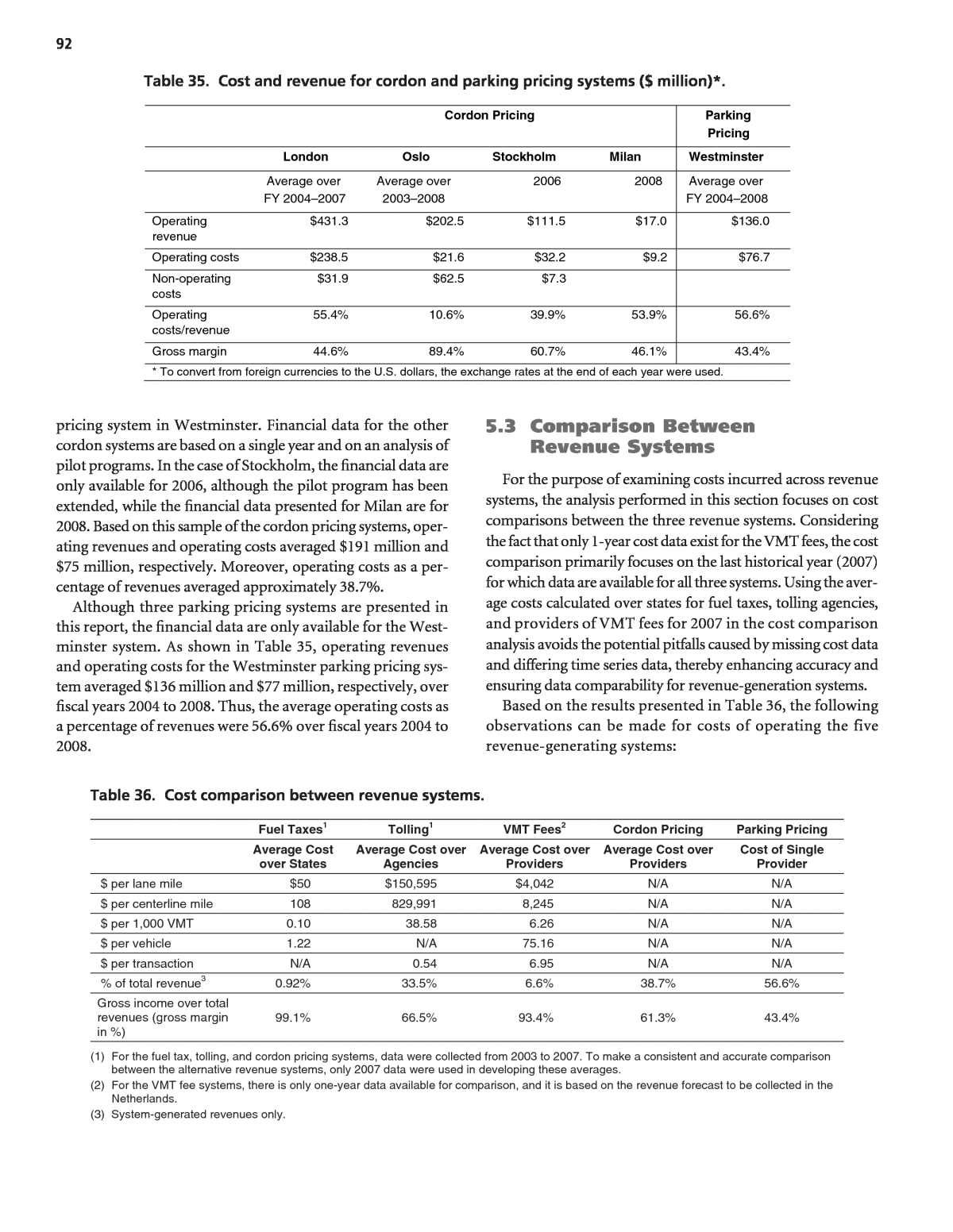
pricing system in Westminster. Financial data for the other cordon systems are based on a single year and on an analysis of pilot programs. In the case of Stockholm, the financial data are only available for 2006, although the pilot program has been extended, while the financial data presented for Milan are for 2008. Based on this sample of the cordon pricing systems, oper- ating revenues and operating costs averaged $191 million and $75 million, respectively. Moreover, operating costs as a per- centage of revenues averaged approximately 38.7%. Although three parking pricing systems are presented in this report, the financial data are only available for the West- minster system. As shown in Table 35, operating revenues and operating costs for the Westminster parking pricing sys- tem averaged $136 million and $77 million, respectively, over fiscal years 2004 to 2008. Thus, the average operating costs as a percentage of revenues were 56.6% over fiscal years 2004 to 2008. 5.3 Comparison Between Revenue Systems For the purpose of examining costs incurred across revenue systems, the analysis performed in this section focuses on cost comparisons between the three revenue systems. Considering the fact that only 1-year cost data exist for the VMT fees, the cost comparison primarily focuses on the last historical year (2007) for which data are available for all three systems. Using the aver- age costs calculated over states for fuel taxes, tolling agencies, and providers of VMT fees for 2007 in the cost comparison analysis avoids the potential pitfalls caused by missing cost data and differing time series data, thereby enhancing accuracy and ensuring data comparability for revenue-generation systems. Based on the results presented in Table 36, the following observations can be made for costs of operating the five revenue-generating systems: 92 Cordon Pricing Parking Pricing London Oslo Stockholm Milan Westminster Average over FY 2004â2007 Average over 2003â2008 2006 2008 Average over FY 2004â2008 Operating revenue $431.3 $202.5 $111.5 $17.0 $136.0 Operating costs $238.5 $21.6 $32.2 $9.2 $76.7 Non-operating costs $31.9 $62.5 $7.3 Operating costs/revenue 55.4% 10.6% 39.9% 53.9% 56.6% Gross margin 44.6% 89.4% 60.7% 46.1% 43.4% * To convert from foreign currencies to the U.S. dollars, the exchange rates at the end of each year were used. Table 35. Cost and revenue for cordon and parking pricing systems ($ million)*. Fuel Taxe s 1 Tolling 1 VMT Fees 2 Cordon Pricing Parking Pricing Average Cost over States Average Cost over Agencies Average Cost over Providers Av erage Cost ov er Prov iders Cost of Single Provider $ per lane mile N/A N/A $ per centerline mile N/A N/A $ per 1,000 VMT N/A N/A $ per vehicle N/A N/A $ per transaction N/A N/A % of total revenue 3 38.7% 56.6% Gross income over total revenues (gross margin in %) $50 108 0.10 1.22 N/A 0.92% 99.1% $150,595 829,991 38.58 N/A 0.54 33.5% 66.5% $4,042 8,245 6.26 75.16 6.95 6.6% 93.4% 61.3% 43.4% (1) For the fuel tax, tolling, and cordon pricing systems, data were collected from 2003 to 2007. To make a consistent and accurate comparison between the alternative revenue systems, only 2007 data were used in developing these averages. (2) For the VMT fee systems, there is only one-year data available for comparison, and it is based on the revenue forecast to be collected in the Netherlands. (3) System-generated revenues only. Table 36. Cost comparison between revenue systems.
⢠The fuel tax system is the most cost-effective revenue sys- tem among the first three and has the lowest operating cost for all unit measurements. The operating cost for fuel taxes is only approximately 1% of tax revenue, and the system averages approximately $1.20 per vehicle to operate and manage. ⢠Though the operating cost may reach $75 per vehicle, the cost for the proposed VMT system is still reasonable when measured by the share of cost to revenue collected in the Netherlands, which is approximately 7%. It would be a larger share of typical revenues in the United States. ⢠Although it may cost $0.54 per transaction to operate and maintain the tolling systems, tolling agencies spent roughly 33.5% of revenues for toll collection, administration, and enforcement activities in 2007. Among the five revenue systems, operating costs for tolling and cordon pricing are roughly comparable, at 33.5% and 38.7%, respectively. ⢠The costs to operate the Westminster parking pricing sys- tem are 56.6% of total revenue. Thus, of the five alternative revenue-generation systems, parking pricing was the most expensive to operate based on the very limited data col- lected for this study. ⢠For VMT fee systems, the biggest spending item is adminis- tration costs, which may reach 3.4% of revenue. Compara- tively, collection and enforcement costs for maintaining a VMT fee system are relatively small. Note that operat- ing costs are composed of administrative, collection, and enforcement cost elements. See Section 4.1 for a definition of each cost element. They may be less than or about 1% of revenue. As will be discussed in Section 6.2, collection costs for tolling systems are much larger than administration and enforcement costs. The evidence from the tolling agencies indicates that around or above 20% of revenue may be spent on collecting tolls. 5.4 Sensitivity Analysis Motor fuel taxes and the alternative revenue-generation sys- tems considered in this study face both internal and external uncertainties. The internal uncertainties faced by fuel tax sys- tems, for example, involve improvements in fuel efficiencies that threaten the revenue generated from the fuel tax. External uncertainties may come from other systems if alternative rev- enue systems are implemented to supplement or replace the fuel tax system. This section presents the results of a sensitivity analysis that was designed to examine the impacts on operating costs caused by changing certain parameters. It also assesses uncertainties and business risks involved in alternative revenue-generation systems and discusses issues related to evasion and implemen- tation. For some systems, only qualitative analysis could be performed for certain parts of this assessment due to limited data availability. Further, some of the components of the sen- sitivity analysis outlined in this section were not applicable to specific systems or were replaced with other, more relevant elements. With that noted, the sensitivity analysis primarily focuses on the following elements: ⢠Economies or diseconomies of scale and scope: These can be considered and depend on the number of vehicles, geographic coverage, and range of uses for the system. For some systems, such as cordon pricing, the effectiveness may also vary with geographic coverage. ⢠Technology: The cost of each system discussed depends to some extent on the cost of the technology to implement it. Known costs should be carefully separated from estimated costs. Potential changes in cost due to technological progress or use of the technology for other purposes should be con- sidered. This also relates to the possibility of sharing costs for a system that is interoperable over various toll systems. In addition, the cost estimates should be analyzed for the impact of large-scale deployment. For example, costs that are now low due to excess system capacity may be much higher if more capacity is needed. ⢠Revenue: All revenue systems are subject to potential variation due to various forecast errors such as elasticity of demand, recession, or alternatives available. ⢠Evasion and enforcement: Evasion estimates for existing systems are subject to great uncertainty, so the estimates for proposed systems will be even more open to debate. There will also be trade-offs between enforcement costs and levels of evasion that could be discussed. ⢠Implementation: There are a variety of risks associated with implementation. First, there is always the possibility of unex- pected problems and delays, which raise costs and reduce revenue. There is also the possibility of changes in political support for a new system as it is being phased in, which can lead to termination of the project or other costly changes. ⢠Privacy and security: Any system will have to have provi- sions to maintain privacy and security. Failure of such sys- tems will result in additional costs and other consequences. 5.4.1 Motor Fuel Taxes Scale As reported in Section 4.2.8, the size of the motor fuel tax collection program appears to have a negligible impact on operating cost levels. Collection data for the 50 states were used to rank the states and classify them into high-, mid-, and low- level collection states. The states that make up the top third in terms of total motor fuel tax collection incurred operating costs equal to 1.1% of total tax collections. Mid-level states incurred costs equal to 0.9% of total tax collections. States making up 93
the bottom third of tax collectors incurred operating costs equal to 1.0% of total tax collections. Technology A number of technologies are used in motor fuel tax collec- tions and enforcement, including diesel fuel dyeing equip- ment, CVISN systems tied to IFTA credentialing, and electronic reporting and payment systems. Electronic reporting and payment has been advanced in many states as a means to reduce omissions and errors on motor fuel tax returns, enhance access to information for auditing and enforcement purposes, reduce labor costs, and eliminate the space requirements associated with maintaining paper files of tax records for a period of up to 5 years (Weimar et al., 2008). In point six of its 11-point plan, the FTA Unifor- mity Committee recommended that states adopt electronic systems with ANSI and ASC X12 standards for all electronic data interchange (EDI) applications (FTA, 2003). In recent years, both the federal government and a number of states have invested in motor-fuel tracking systems. Motor- fuel tracking systems promote total fuel accountability by ana- lyzing motor fuel industry records to identify discrepancies between the movement of fuel shipments and tax records. Under the Transportation Equity Act for the 21st Century (TEA-21), Congress authorized funds to establish the Excise Files Information Retrieval System (ExFIRS), which is com- posed of 10 subsystems designed to collect and analyze data regarding motor fuel industry operations. These 10 subsys- tems include ⢠Excise Summary Terminal Activity Reporting System (ExSTARS): Collects and analyzes motor fuel distribu- tion data, ⢠Excise Classification Information System (ExCIS): Gathers information on tax returns, ⢠Excise Automated Claims Tracking System (ExACT): Ana- lyzes claims, ⢠Excise Customs Activity Tracking (ExCAT): Gathers infor- mation on imports and exports, ⢠Excise Fuel Online Network (ExFON): Integrates fuel track- ing with case processing, ⢠Excise Tax Registration Authorization System (ExTRAS): Manages IRS Form 637 registration data (Application for Registration for Certain Excise Tax Activities), ⢠Below the Rack Information System (BTRIS): Holds below- the-rack motor fuel activity information such as fingerprint- ing, and ⢠Excise Tax On-Line Exchange (ExTOLE): Allows states to exchange information. In addition to the federal systems, a number of states have adopted their own automated electronic tracking systems. While some states have developed their systems in-house (e.g., California, Illinois, Montana), more have chosen to use third-party systems offered by ACS, Explorer, Synergy, or ZyTax (see Table 37). The costs of these systems vary by state. The costs associated with these technologies are small when compared with those for the alternative revenue-generation systems examined in this chapter. Furthermore, the data presented in Section 4.2.8 demonstrate that operating costs for states with motor-fuel tracking systems were nearly identical to those without such systems (1.0% of total tax collections). Revenue A number of factors could have an impact on the demand for transportation, mode split, and, ultimately, motor fuel tax col- lections. Changes in the relative price by mode will affect the decisions made both by shippers and passengers. When consid- ering price sensitivity, a product is considered relatively price sensitive (elastic) if the change in price generates a proportion- ally greater percentage change in quantity demanded. A prod- uct is relatively insensitive (inelastic) to prices if a change in price yields a less than proportionate change in quantity demanded. A survey of studies estimating price sensitivity for transport found ⢠Overall, transportation demand is relatively price- insensitive. ⢠Automobile and transit passenger transportation are rel- atively insensitive to price, with a 1% increase resulting in 94 State Tracking System Virginia ACS Nevada ACS Mississippi ACS Arkansas ACS Michigan ACS Colorado Explorer Wisconsin Synergy South Carolina ZyTax Tennessee ZyTax North Dakota ZyTax California In-house Illinois In-house Missouri In-house Nebraska In-house Montana In-house Source: Weimar et al., 2008 Table 37. State tracking systems.
a 0.1% to 1.1% and 0.1% to 1.3% reduction in demand, respectively. The demand for peak-period travel is even less sensitive to price, with a 1% increase in price gener- ating a 0.1% to 0.7% reduction in demand for both modes. However, one study found that price sensitivity with respect to mode choice was higher for automobiles, indicating that some motorists forgo highway travel in favor of public transport when user costs are exceedingly high. ⢠Freight transport is not very sensitive to price, with the excep- tion of markets that are subject to intermodal competition (e.g., assembled automobiles, corn, wheat, primary metals, paper products) (Oum, Waters, and Yong, 1990). Evidence suggests that in recent years, the sharp increases in motor fuel prices caused a slight reduction in passenger demand and a minor shift toward public transit. For the first time since 1980, the average number of miles traveled by motorists declined in 2005 (FHWA, 2006). In 2008, total VMT in the United States fell by 1.9% (FHWA, 2009b). Further, fol- lowing a 2-year decline in ridership, the number of passengers reported by the nationâs transit agencies in 2004 through 2006 grew by 7.1%. Between 1995 and 2008, public transit ridership grew by 36% (American Public Transportation Association, 2008). Evidence also suggests that higher fuel prices may pro- vide more incentive to buy fuel-efficient cars without reducing VMT. In 2005 and 2006, the new purchase of light trucks declined for the first time since the 1980s. In addition to price sensitivity, other factors such as infla- tion, market penetration of alternative fuels, and increased motor fuel efficiency hold the potential to significantly erode the motor fuel tax. In recent years, inflation has had a signifi- cant impact on motor fuel tax receipts. From 1993 to 2008, the purchasing power of the federal gasoline tax, which has remained at the fixed rate of 18.4 cents per gallon, has declined by 33% (National Surface Transportation Infrastructure Financing Commission, 2009). While declines in revenues tied to enhanced motor fuel economies in the light-duty vehicle fleet have not yet materi- alized, several market penetration forecasts of hybrid and elec- tric vehicles suggest that erosion of the motor fuel tax base is inevitable. While some forecasts estimate ultimate hybrid electric and EV penetration of the light-duty vehicle market in the 8% to 16% range (Greene, Duleep, and McManus, 2004), the Electric Power Research Institute (EPRI) and Nat- ural Resources Defense Council (NRDC) were more aggres- sive, estimating PHEV market penetration rates under three scenarios, ranging from 20% to 80% (medium PHEV sce- nario estimate of 62%) in 2050 (EPRI and NRDC, 2007). In another study prepared for the University of California, Berkeleyâs Center for Entrepreneurship and Technology, Becker and Sidhu (2009) estimated market penetration rates for electric vehicles with switchable batteries of 64% to 85% by 2030. Evasion and Enforcement Evidence suggests that motor fuel taxes suffer from a per- sistent problem with evasion. Historic changes in administra- tive and enforcement practices designed to address the evasion issue (e.g., fuel dyeing, taxation of kerosene and other alterna- tive fuels, enhanced auditing practices, moving the point of taxation up the distribution chain) have increased revenues deposited in highway funds across the nation. However, the results of joint audits performed under the FHWAâs Joint Federal/State Motor Fuel Tax Compliance Project suggest that while evasion levels have been reduced through enhanced compliance and enforcement practices, evasion continues to persist (Balducci et al., 2006). In 1992, FHWA estimated motor fuel tax evasion at $1.0 bil- lion annually, which translates into evasion rates of 3% to 7% for gasoline taxes and 15% to 25% for diesel taxes (FHWA, 1992). In the past 15 years, numerous states have studied motor fuel tax evasion (e.g., Montana, New York, Oregon, Washing- ton) with estimates ranging from $600 million to $2 billion for all states. The findings of several motor fuel tax evasion studies are summarized in Table 38. The costs associated with enhanced motor fuel tax auditing and enforcement operations can serve to discourage evasion in states addressing budget shortfalls and uncertain financial outlooks. The literature suggests that while it is expensive to effectively audit and enforce motor fuel tax codes, enhanced compliance activities yield positive returns on investment. From October 1992 through 1993, gasoline tax revenues reported in 38 states averaged $443 per auditor staff hour. Over the same time period, diesel tax revenues were enhanced at the rate of $321 per auditing hour (CSG & CGPA, 1996). Finally, FHWA reports that it receives $10 to $20 for each dollar spent on audits and criminal prosecutions (FHWA, 1999). Implementation, Privacy, and Security Oregon implemented the first state motor fuel tax in 1919. The federal government implemented a motor fuel tax in 1932. The motor fuel tax system is, therefore, mature. Pay- ments are collected from businesses engaged in the distri- bution and selling of motor fuels. Thus, there are limited implementation or privacy and security issues with this tested tax mechanism. 5.4.2 Tolling This section examines the relative sensitivity of the factors that can have an impact on revenue and operating costs 95
for tolling systems. The revenue portion of the sensitivity analysis examines, in general terms, the effects of price, scale, economic conditions, and competing facilities. Additionally, the sensitivity analysis also examines the impact on costs related to broad changes in scale, implementation, technol- ogy, enforcement strategies, and security that can be imple- mented for tolling and related systems. Scale affects both revenue-generation and cost structures. Table 39 lists the main categories and the specific factors within each category in the sensitivity analysis for tolling systems. Tolling Revenues and Rates Revenues and operating costs of tolling systems are subject to both internal and external factors. Internal factors, which are defined as controllable by the operating entity through 96 Author(s) Date Tax Evasion Estimate Method Balducci et al. 2006 Gasoline and diesel taxes in Montana $2.8 million (gasoline) and $12.0 million (diesel) annually Econometric method, audit review method, inspections data analysis Eger 2001 Wisconsin gasoline taxes due to falsified agricultural refund requests Upwards of $4 million annually Econometric method, comparison of predicted and actual agricultural refund requests KPMG 2001 Federal diesel taxed due to jet fuel diversion $1.7â$9.2 billion over 10 years Comparison of fuel supplied to taxed gallons Denison and Hackbart 1996 Kentucky fuel taxes $26â$34 million Survey of tax administrators, econometric analysis Council of State Governments, Council of Governorsâ Policy Advisors 1996 All state fuel taxes $952 millionâ$1.5 billion Literature review, survey of state tax administrators, econometric analysis WSLTC 1996 Washington fuel taxes $15â$30 million Literature review, border interdiction, random audits Revenue Canada 1996 Canadian fuel taxes $55â$110 million Comparison of monthly motor fuel sales volumes with gallons taxed Mingo et al. 1996 All state diesel taxes 21% Comparison of fuel consumption to taxed gallons Federal Highway Administration 1994a Federal and state fuel taxes $1 billion (fed. fuel taxes), $3 billion (fed./state fuel taxes) Literature review, analysis of auditing data Federal Highway Administration 1992 Federal gasoline and diesel tax $466.1 million (gasoline tax), $1,087.5 million (diesel tax) Literature/testimony review, analysis of auditing data Mitstifer, National Association of Truck Stop Operators 1992 Federal diesel tax $3 billion Comparison of diesel fuel consumed (based on reports from truck stops) to taxed gallons Addanki et al. 1987 Federal gasoline taxes More than $500 million Econometric analysis, comparison of fuel consumption with taxed gallons Addanki et al. 1987 NY gasoline taxes $168.4â$254.5 million Econometric analysis Source: Modified from Weimar et al., 2008 Table 38. Summary of fuel tax evasion studies. Category Factor Revenue Rates, charges, and fees Economic conditions Facility length and system capacity Geographic area Alternate routes Implementation Collection costs Market size Technology Equipment purchases and upgrades Evasion and enforcement Increased enforcement Privacy and security Confidentiality of customer accounts and transponder data Table 39. Factors analyzed for tolling systems.
policy, include enforcement, tolling, facility infrastructure, and technology. External factors are defined as being outside the control of the operating entity and include economic con- ditions, alternative routes, and motorist preferences. This section will discuss these factors in greater detail. Toll revenues are a function of toll rates, economic condi- tions, facility length, and the roadway network. In this sec- tion, some of these factors will be analyzed qualitatively as to their respective impact on toll revenues. Toll Rates. A key factor in revenue generation is toll rates (price), which includes the initial toll rate, toll escala- tion, and the implementation of variable pricing schedules. Typical toll rates range from a few cents per mile on older regional turnpikes to over $1 per mile for managed lanes in highly congested urban corridors. While toll agencies can typically obtain higher revenues through an increase in toll rates, there is a point where increases in tolls can no longer provide additional revenues. In this manner, toll roads are similar to other commoditiesâwhen tolls (prices) increase, demand (traffic) decreases. The quantification of this rela- tionship is called the price elasticity of demand. When faced with a price increase, motorists have the following poten- tial options: ⢠Continue using the toll facility at normal usage levels; ⢠Use the toll facility at a suppressed rate by consolidating trips; ⢠Divert to a less expensive, alternate route; ⢠Use another transportation mode (e.g., transit, bicycle, or walking, if available); or ⢠Avoid taking the trip altogether. The severity of the decrease in traffic is a function of how much motorists value their trip, the travel time, and the relative attractiveness of the alternate routes or modes. Figure 44 illus- trates two levels of demand elasticity for a generic toll facility. The dashed lines represent traffic levels, and the solid lines represent toll revenues. The blue lines (solid and dashed) represent motorists with higher elasticity, and the green lines represent motorists with lower elasticity. As the cost of travel increases, motorists with a high elasticity of demand decrease their road usage more precipitously than motorists with low elasticity. While the total number of motorists in both groups decreases as the toll is increased (as a percentage across the x-axis), toll revenues increase for both motorist groups when modest increases in price are introduced. This is because the increase in tolls is greater than the decrease in traffic. At some point, toll rates eventually reach a maximization point at which toll revenues begin to decrease. This is because the increase in toll rates cannot keep pace with the negative impact on traffic. The optimum point will differ for different facilities and different price (toll) levels. Once the optimum point has been reached, toll agencies are unable to generate more revenues through increases in toll rates. Furthermore, this optimum point is a function of a myriad of variables, such as how much a toll facility is permit- ted to increase tolls or the setting of the initial toll rate for a new facility. The magnitude and timing of the toll increase that optimizes revenues is also unique to each toll facility. Variable pricing schedules may cause motorists to travel before or after peak periods to avoid the temporarily higher toll rates charged during peak periods. This change in driver behavior has an impact on total revenue collected. Table 40 summarizes estimates of demand elasticity for selected toll 97 Source: Jacobs Engineering (2010) Note: E = elasticity. Figure 44. Low and high elasticity impacts on traffic and toll revenue.
roads and lists the study and publication dates for these esti- mates. As shown in the table, demand elasticity estimates are unique for each facility. For instance, the demand elasticity of SR-91 is estimated to be â0.9 to â1.0. This estimate is based on the ability of drivers to use the non-toll, general-purposes lanes or travel during off-peak periods to avoid paying the higher toll charges. In contrast, the 407 ETR around Toronto is estimated to have a demand elasticity of â0.30. This estimate may be based on the perceived lack of free, alternative routes to the 407 ETR. Notwithstanding, the methodology for calculating demand elasticity can differ depending on the analytical approach employed and the relative weights of the key parameters. In addition to changes in price, traffic and revenue fore- casts also take into account a number of factors that can have an impact on traffic and revenue levels. These parameters can include the length, condition, and capacity of the facility and parallel alternative routes; connections to and from feeder roads; travel times; economic conditions; income levels; gaso- line price trends; vehicle operating costs; origin and destina- tion points; payment options; and demographic trends. Economic Conditions. Because of the impact on employ- ment and income, economic conditions have a direct impact on the ability of toll facilities to generate revenues. During the most recent recession, employment levels decreased, as did VMT and toll revenues. Since a significant number of trips on toll roads are work related, decreased employment levels will generally depress traffic and revenue on tolled facilities. Other trips, such as shopping and recreational trips, are often curtailed during a recession due to a general decrease in the disposable incomes of motorists. During periods of economic prosperity, increased employment, residential development, commercial develop- ment, and entertainment facilities are trip attractors and gener- ators for the roadway network. Increased levels of disposable income may result in additional trips to shopping areas, resorts, or amusement parks. Additionally, motorists value their time slightly more during periods of economic growth, which can make toll roads more attractive in relation to congested, non- tolled alternatives. Facility Length. For tolling systems, a change in scale can lead to an increase in revenue generation since a longer road can attract greater traffic volumes, especially if the extended facility improves access to/from underserved origin and des- tination points. Moreover, additional capacity provided from a road widening project can potentially result in higher traf- fic volumes and increased revenue generation along the same number of centerline miles. Feeder and Competing Routes. Changes to a roadway network that feeds or competes with the tolled facility can help or hinder toll revenue performance, respectively. Improve- ments to feeder roads can make the toll facility a more attrac- tive route for motorists, whereas improvements to competing facilities will likely have the opposite effect. While long-range transportation plans that estimate future transportation infrastructure for a 30-year period are available in most areas, there is always a possibility of future widening, expansions, and the development of competing roadways that can affect toll revenue. Revenue per Transaction Impact. An additional approach that can be used to assess and compare the sensitivity of toll revenues across facilities is to normalize toll revenues using a per-transaction or a per-centerline-mile metric for existing toll systems. For the toll systems included in this study, the aver- age revenue generated per transaction was $1.81. The lowest amount of revenue generated per transaction was $0.53 (San Diego I-15), and the maximum was $4.32 (SR-91). Figure 45 summarizes revenue per transaction for 15 toll-road agen- cies in 2007. These benchmarks are a function of facility type, toll-collection scheme, pricing schedule, and location, but have been normalized to allow for comparisons among facilities. Toll Systems Costs The factors that affect revenue generation work in concert with the cost structures of toll systems. As noted previously, toll system costs are directly related to the potential system or facility improvements that a toll agency can elect to undertake with respect to collection and enforcement activ- ities. Potential improvements or modifications can include the following: 98 Toll Facility Estimated Elasticity Sources California SR 91 -0.90 to -1.00 Sullivan (2000) California I-15 -0.02 to -0.42 SANDAG (1999) New Jersey Turnpike -0.06 to -0.18 Ozbay et al. (2005) OOCEA -0.45 Tollroadsnews (2003) 407 ETR -0.30 Mekky (1999) Metropolitan Transportation Authority (MTA) -0.06 to -0.22 URS (2010) Table 40. Demand elasticities for selected toll roads.
⢠Implementation (administrative costs) â Changes in marketing costs â Changes in the number of supervisory and administra- tive staff â Changes in wage and benefit policies ⢠Implementation (collection costs) â Changes in the barrier system in place (open, closed, or hybrid) â Updated approaches for storing, maintaining, and secur- ing customer account information â Installation of and improvements to an electronic tolling system â Changes in technology â Changes in the payment methods offered â Changes in customer billing systems and the mainte- nance of customer accounts â Changes in account reconciliation practices, cash trans- portation services, or lockbox service providers ⢠Political, legal, and regulatory (administrative and collection costs) â Changes in accounting standards â Changes in toll rates and/or the introduction of vari- able tolling schedules resulting in additional marketing, billing, and signage costs â Changes in customer privacy standards and reporting requirements â Changes in governance structure ⢠Evasion and enforcement (enforcement costs) â Installation and maintenance of additional barriers â Additional signage â Increased police enforcement â Increased prosecutions â Change from civil to criminal enforcement ⢠Scale (administrative, collection, and enforcement costs) â Extension of an existing facility necessitating the construc- tion of additional toll gantries, the purchase and installa- tion of toll equipment, and additional signage â Expansion of customer base â Additional information storage hardware and software to manage customer accounts â Additional customer service center staff â Additional rent and utilities related to a new or expanded customer service center â Purchase of additional transponders The intent of this sensitivity analysis is to measure the potential cost impact of these proposed changes in general terms. The sensitivity analysis is not intended to evaluate the potential impact of each of these improvements in isolation. Scale A change in scale can involve expanding the core market, which could increase or decrease costs. For most toll systems, 99 Source: Jacobs Engineering Group, 2010 $2.63 $0.61 $0.58 $1.74 $0.99 $2.77 $0.77 $1.19 $0.53 $2.11 $0.66 $3.89 $0.53 $4.32 $3.86 $1.81 $0.00 $1.00 $2.00 $3.00 $4.00 $5.00 D R PA D R JT BC DT R E- 47 0 FT E G re en wa y IS TH A N JT A N TT A N YS TA O O CE A O TC SD I- 15 SR 9 1 40 7 ET R Av er ag e Figure 45. Average revenue per transaction (2007).
frequent users (defined as making at least one trip per week) account for the majority of trips but make up a small percent- age of total users. This leads to a situation in which frequent users account for the bulk of the revenues generated. Con- versely, occasional users (defined as less than one trip per week) account for a lesser number of trips but make up the majority of roadway users. This can result in additional costs related to the establishment and ongoing maintenance of mostly dormant customer accounts. Table 41 is a composite of several surveys of 1,500 toll-road users conducted by Jacobs Engineering Group. While it does not represent a particular facility, it illustrates the relationships between the total number of users, trip frequency, and the potential impact on costs. Frequent customers account for 11% of all customers but make 60% of total trips. At the same time, the toll agency absorbs the operational costs related to the 57% of customers who make 7% of total trips. For each toll facility, the per-transaction costs can vary depending on this frequency relationship. Technology As noted in Chapter 2, toll agencies are moving toward the implementation of electronic tolling systems, with some toll agencies further along the conversion process. At present, there are a number of facilities that have implemented AETC systems, including the 183A (Austin, Texas), the 407 ETR, and the recently converted E-470 (Denver) and President George Bush Turnpike (Dallas). Having recently incurred the costs of these systems, it is unlikely that these agencies will opt to invest in a new system in the near term. In contrast, other toll agencies are still transitioning from cash collection to electronic tolling. For these agencies, technology costs are a function of the implemen- tation rate, the use of off-the-shelf technologies versus cus- tomized products, and the amount of time the technology being implemented has been on the market. Increased customization or newer technologies will likely result in increased costs. Addi- tionally, toll agencies will have to replace some or all of their toll equipment over time depending on functionality, obsolescence rates, and the emergence of newer, more efficient technologies. Evasion and Enforcement An area where technology can have an impact on toll system costs is evasion and enforcement. As noted previously, toll-road agencies are increasing the use of video tolling and OCR sys- tems, which capture license plate images of vehicles as they pass through toll gantries. Transponder holders are then charged against their respective account balances, while non- transponder holders receive a bill by mail for toll charges incurred. Enforcement strategies relating to the placement and coverage area of this equipment as well as the ability and eager- ness to prosecute identified violations will affect enforcement costs. Enforcement costs are listed as a rangeâfrom $0.04 to $0.09 per transactionâdepending on whether a small number of outliers are included or excluded in the analysis. The esti- mated standard deviation that was generated from the risk analysis was $0.06 per transaction, which was relatively high in relation to the mean value. Notwithstanding, this value is consistent with the practical experience of toll agencies with respect to enforcement activities. In addition to improving technology, toll agencies have also attempted to decrease eva- sion by expanding police enforcement, increasing the number of court cases, and/or implementing more severe penalties for frequent violators. This strategy may have a short-term demonstration effect in which potential violators are dissuaded from nonpayment and some outstanding tolls and fees are paid off in a timely manner. However, the additional costs related to more vigilant police enforcement and additional court pros- ecution may exceed the amount of revenues generated from stepped up enforcement, especially over time. Privacy and Security Toll agencies may be required to increase expenditures to meet payment card industry (PCI) standards related to data 100 Frequency of Use Trips on an Average Day Percent of Trips Customers per Trip in 1 Year Number of Customers in 1 Year Percent of Customers Daily 1/week 2/month 1/month 2/year Total 500 400 300 200 100 1,500 33% 27% 20% 13% 7% 100% 1 7 15 30 182 N/A 500 2,800 4,500 6,000 18,200 32,000 2% 9% 14% 19% 57% 100% Source: Jacobs Engineering Group, 2010 Note: Because of rounding, percentages may not add up to 100%. Table 41. Example of the user/trip relationship for a toll facility.
encryption. This may require the purchase of new or upgraded hardware and software to ensure that customersâ sensitive financial data are not hacked, stolen, traded, and/or used for illegal purposes. Along these lines, it is also necessary for toll agencies to monitor their customer accounts to ensure that there have not been any security breaches. There are also addi- tional costs related to the maintenance and storage of cus- tomer account records. While these costs may end up being significant in some cases, they may pale in relation to the risks involved. A widespread breach in security and the attendant negative publicity may create distrust and lead to a reduction in traffic and revenues. Implementation and Enforcement Costs per Transaction To obtain a rough estimate of the impact to costs with respect to a change in implementation and enforcement costs, a risk analysis was conducted for each general category using the per-transaction estimates for administrative, collec- tion, and enforcement costs that were calculated for each agency in Chapter 4. The risk analysis entailed running 5,000 sepa- rate iterations to provide updated mean and standard deviation values for each major cost category. Table 42 summarizes the results of these risk analyses, including the pre- and post-risk analysis mean values, standard deviations, and the low- and high-cost cases. Overall, the mean values for administrative, operations, and enforcement costs were higher after the risk analysis. A possible interpretation is that the actual mean value of per-transaction cost to administer, collect, and enforce toll systems may trend toward the higher risk-adjusted mean as toll agencies imple- ment and modify their respective collection and enforcement strategies. These improvements will also have an impact on administrative costs. Profitability The main finding from these analyses is that the various strategies available for toll agencies with respect to the set- ting and increasing of toll rates, the implementation of toll- collection systems, the administration of customer accounts, and the introduction of measures for reducing evasion can result in higher revenues as well as higher costs. The magnitude of the potential increase in revenues and costs will differ for each toll agency. In some cases, increased revenue generation may be less than the overall increase in costs. Toll agencies that have struggled to meet traffic forecasts, have relatively low rev- enue generation, and/or have high cost structures could see profitability impacted negatively. However, other toll agencies may find that the potential increase in revenues is greater than the increase in costs, further improving financial performance. These general conclusions require the caveat that this will affect toll agencies in different ways. Toll systems have differ- ing governance structures, with some agencies having greater incentives and pressures to maximize profits. Toll agencies also have different cost structures for the operations and mainte- nance of physical infrastructure, which has not been factored into this analysis. Finally, toll agencies also have differing debt levels since some systems are highly leveraged while others have few or no debt obligations. The impact of debt tax rates and depreciation schedules of the physical infrastructure have not been factored into this analysis. 5.4.3 VMT Fees Scale Economies or diseconomies of scale and scope (e.g., the number of vehicles, geographic coverage, and range of uses for the system) may affect both cost and revenue in a VMT charg- ing system. The VMT systems considered all have a large cost associated with the OBU needed to determine the location of the vehicle and the distance traveled. There are conflicting issues with respect to economies of scale related to such units. Large- scale implementation is generally expected to reduce the cost per unit to some extent. However, there is also substantial con- cern that implementation would have to occur over a period of time. Large-scale, short-term production would likely cause very high cost. This would also interact with implementation considerations, discussed later in this section. Scale may also affect the cost of the system by affecting the number of visitors or non-registered vehicles. Various jurisdic- tions at different levels of government have considered using mileage-based systems. For practical purposes, it is unlikely 101 General Cost Category Mean (Pre- Risk Analysis) Mean (Post- Risk Analysis) Standard Deviation Low Case High Case Administrative $0.14 $0.16 $0.07 $0.09 $0.23 Operations $0.36 $0.46 $0.19 $0.26 $0.65 Enforcement $0.04 to $0.09 $0.12 $0.06 $0.06 $0.18 Total $0.54 to $0.59 $0.74 $0.32 $0.41 $1.06 Source: Jacobs Engineering Group, 2010 Table 42. Per-transaction cost impact by general cost category.
that a GPS-based VMT system would be adopted at less than the state level. However, states vary in terms of the number of resident versus nonresident vehicles on their highways as well as total size. Users from another state would have to be able to obtain a temporary unit, or participation would have to be voluntary. Participation by in-state users may also be voluntary for some period. Existing VMT charging systems and the stud- ies of proposed ones all find that the cost of serving occa- sional users is much higher than the cost of serving regular users, especially relative to the revenue generated. For example, one estimate of the cost of the German truck system finds that the 10% of miles charged by methods other than the GPS unit constitute more than 30% of the total administrative cost (AASHTO, 2010). The size of the area that is subject to the charges also deter- mines the likelihood that a driver will want to register the vehicle. An occasional user would be much less likely to install the collection equipment than a regular user, and the wider the area covered, the more likely each user is to be a regular user. Hence, multiple state systems are more likely to have smaller percentages of occasional users than a set of state systems. Even if the states have different systems, some agreement on inter- operability may make the use of an OBU feasible when outside of the home state. The benefit of having outside units capable of using the system may be somewhat offset by the requirement for the system to have interoperability, increasing the cost. The Dutch studies noted that the cost of dealing with outside users and incorporating European interoperability requirements was relatively high. Technology The cost of each system discussed depends to some extent on the cost of the technology to implement it. Known costs should be carefully separated from estimated costs. Potential changes in cost due to technological progress or to the use of the technology for other purposes should be considered. This also relates to the possibility of sharing costs for a system that is interoperable over various revenue systems. In particular, GPS is being used in a variety of devices, including cell phones, and it is anticipated that a system used for other purposes could have revenue functions added at a much lower cost than that of a standalone system. Further, if the system could be used to collect a variety of charges, the cost of the basic unit could be spread over the different functions. The OBU will be a major cost of a VMT system, but there is widespread expectation that this cost will continue to decline. For example, the cost estimate for the proposed Dutch system declined from t180 per unit to a range of t85 to t140 in about 1 year (Ministry of Transport, 2009). In addition, most of the companies responding with cost estimates projected lower cost per unit in the future due to technological advances. Sensitivity analysis would have to account for both the possi- bility that technological progress would be slower than antici- pated as well as the possibility of it being considerably faster. Another concern with the technology is the ability for the sys- tem to adapt to technological advances in the future. One argu- ment for the thin system OBU is that it would be easier for the central office to coordinate updates than for them to be distrib- uted over many units. In addition, if there are multiple jurisdic- tions levying charges, the thin unitâs simple functionality allows for adaptation to new or changing mechanisms in the back office. If charges are generated within the OBU, the addition of new charging jurisdictions may create large costs for adapting older units. There are some considerations related to the accuracy of the OBU. Actual systems used for revenue generation typically have minimum accuracy requirements, which affect the cost of the system. There are issues with the GPS due to blocked or reflected signals, start-up signal acquisition, and battery issues if the unit uses power when the vehicle is off to maintain a rapid start of the GPS. In addition, the cost estimates should be analyzed for the impact of large-scale deployment. For example, costs that are now low due to excess system capacity may be much higher if more capacity is needed. This is a concern for adding large numbers of new users to the cellular system. There may also be some considerations related to collecting revenue from vehicles that are operated in areas with limited cellular reception. Revenue All revenue systems are subject to potential variation due to various factors that can lead to forecast errors, such as elasticity of demand, a recession, or alternatives available. This will be particularly important for the start up of a new revenue system. The adoption of the new system may be either faster or slower than anticipated. For example, if the system relies on equipment in new vehicles, then a significant recession may delay revenue generation. This would be less of a problem with a system that replaces fuel taxes than for a new system that is intended to generate additional revenue. The London system generated far less revenue than forecast, with net revenue about half the amount originally predicted (Leape, 2006). There have been problems with revenue fore- casts for some toll roads. If price is varied by road classification, time, or geography, the revenue forecasting process is made more difficult. Such uncertainty would also affect the potential to borrow against the expected future revenue. Some consideration also has to be given to the mechanism by which rates will be set and the incentives that a rate maker may have. One concern is that the rates that would optimally manage traffic may be quite different from the rates that would maximize revenue; rate makers may opt for the latter 102
even if the intent was rates that optimize use. Political consid- erations related to acceptability may also influence the rate structure and affect both revenue and cost of operation. For example, the London system has a variety of charge rates for different vehicles, and proposals for VMT systems often differ- entiate based on environmental characteristics of the vehicle or other features. More complex rate structures may also affect enforcement reliability and cost. Collection will also have some risk. Depending on the method of payment, the amount actually collected may vary relative to the amount owed. There may also be disputes related to the responsible party when a vehicle is sold or when rental vehicles change users. Evasion and Enforcement Evasion estimates for existing systems are subject to great uncertainty, so the estimates for proposed systems will be even more open to debate. There will also be trade-offs between enforcement costs and levels of evasion, but they must be care- fully evaluated. In the initial proposals for the Dutch system, much higher levels of enforcement where expected than were planned in the later estimates. This reflects consideration that the initial requirements were excessive, but there was little dis- cussion of the likely rate of evasion or of the trade-offs associ- ated with different levels of enforcement. London had much higher rates of non-compliance than anticipated when first implemented (Leape, 2006). Another issue is the difference between actual evasion and accidental misuse of the system. For example, outsiders enter- ing a state at a remote location may have little knowledge of the system or how it works. Alternatively, a complicated pricing system may create a backlash among users due to difficulty in understanding the pricing structure or in changing behavior in response to price signals. Most analysts suggest keeping the sys- tem simple to start, but a simple system will not achieve some of the road management functions. More complex systems may also require more costly enforcement mechanisms. Implementation There are a variety of risks associated with implementa- tion. First, there is always the possibility of unexpected prob- lems and delays, which raise cost and reduce revenue. There is also the possibility of changes in political support for a new system as it is being phased in, which could lead to termina- tion of the project or other costly changes. The timing of implementation offers a number of trade- offs as well as risk factors. For example, several of the compa- nies providing estimates for the Dutch system warned that an all-at-once start-up would be extremely difficult and would likely raise the cost per unit because of the need to produce a very large number of units in a short period of time. Hence, one area of risk is the time frame for adoption of the system. On the other hand, partial adoption limits the functionality of the sys- tem. For example, congestion pricing to manage roads would not be effective with partial implementation. In addition, vol- untary implementation creates risks associated with the rev- enue function. Drivers would have an incentive to choose the system that minimizes their total cost, so if there are simulta- neous systems in place there will be greater revenue risk. The German experience with the actual implementation of untested technology was that the cost was higher than ini- tially estimated. In addition, delay in implementing the sys- tem resulted in lower revenue than forecast. The Oregon experiment also resulted in higher cost per unit and delays in creating the units relative to initial estimates. Privacy and Security Any system will have to have provisions to maintain privacy and security. Failure of such systems would result in additional costs and other consequences. The proposed Dutch system had a high level of both privacy and security. Security issues arise around the collection and storage of data, communication of information, and calculation of amounts owed. Different sys- tems address security in different ways, but each has cost impli- cations, and breach of security must be considered a risk factor. The proposed Dutch systems deal with privacy in two pos- sible ways. The first is the use of the thick OBU, which calcu- lates all charges in the vehicle and only sends information on the amount owed to the central office. In this case the secu- rity of the data on board is necessary to preserve privacy, but in general, there should also be some method to verify the data to allow for audit and enforcement. The second method used is for a thin OBU to transmit all location data to a back office where the charges are calculated. As noted previously, privacy is maintained by only sending an OBU number with the location data. The charge along with the OBU number is then sent to another office where the number is matched to an account for billing purposes. In this way, the location data is not directly matched with an account. Any system of privacy has the potential to be breached, and the consequences of such breaches are another risk factor. The major concern expressed by the public over the possibility of having âbig brotherâ mon- itor movement indicates that there could be a substantial cost associated with any such breach even if no particular damage was done. This relates to the cost of getting and maintaining public support for the VMT system. General Uncertainty The Dutch government insisted that cost estimates include a 15% contingency for all capital and operating expenses. 103
Studies of other cost and benefit estimates find a consistent pat- tern of underestimation of cost and overestimation of benefits in public projects (Flyvberg et al., 2002). Hence it would gen- erally be prudent to acknowledge the risk and tendency to err on the side of favorable estimates by producing a range of cost and revenue estimates. 5.4.4 Cordon Pricing The general principles for undertaking a sensitivity analysis for tolling can also be applied to cordon pricing systems, espe- cially since these systems use similar methods for collecting tolls, accepting payments, administering customer accounts, and reducing evasion. This section will examine the sensitivity of cordon pricing schemes with respect to demand elasticity, scale, implementation costs, and enforcement costs to the extent that these factors differ markedly from tolling systems. Demand Elasticity While the studies are not as extensive as for tolling, a num- ber of historical analyses have estimated the demand elasticity for cordon pricing systems. Analyses that were conducted in the early to mid-1990s estimated that the demand sensitivity for the Singapore and Oslo cordon pricing systems (see references in Table 43) was â0.25 and â0.22, respectively. In a more recent analysis, TfL found that the demand elasticity for chargeable car trips was between â0.54 and â0.31 for all car trips within the London central charging zone (CCZ). These results refer to an increase in the congestion charge of from £5 to £8 rather than the introduction of new congestion charges. [With respect to the introduction of congestion charge rates (£0 to £8), TfL esti- mated that the demand elasticity ranged from â1.34 to â2.12 for the CCZ and from â0.93 to â1.92 for the western extension zone (WEZ).] The lower demand elasticity estimate for all car trips reflects the exemption of local residents from paying the full congestion charge. Scale Larger coverage areas can result in greater revenue gener- ation, albeit with potentially higher implementation and enforcement costs. The expansion of the London congestion charge system to include the WEZ provides a practical example as to the effects of changes in scale. With the inclusion of the WEZ, the congestion charge area nearly doubled in size, and the total number of vehicles increased by nearly 25%. The year after the expansion, TfLâs revenues increased by 30%, while its total costs (operating and non-operating costs) increased by 17%. Operating income increased by an estimated 53%, from £89.1 million in FY 2006/07 to £137 million in FY 2007/08. These results are for a single agency. For other agencies, increased costs may be associated with the collection of cus- tomer payments and enforcement activities, which may exceed the additional revenues generated from an increase in scale. Cost Impact With the exception of Singapore and Bergen, all of the cor- don pricing systems have been established within the last two decades. Due to their relatively recent establishment, the newer congestion pricing systems primarily use electronic col- lection systems and video enforcement technologies. Notably, Singapore also electronically collects cordon charges. This reduces the potential range of implementation options, which should provide a narrower range in collection costs. However, the following should be noted: ⢠The sample size for cordon systems is smaller than that for toll systems; ⢠The cordon pricing systems in place have differing objec- tives (revenue generation, congestion relief, and reduced air emissions); ⢠The cities with cordon pricing systems provide differing levels of transit service, which serve as alternatives to auto- mobile usage; and ⢠The cities with cordon pricing systems have different his- torical and future growth patterns, geographic constraints, and availability of alternative road routes. Finally, differences in the legal and regulatory framework in each country can also affect congestion charge levels, customer payment options, privacy levels, information security, enforce- ment strategies, and violation penalties. An analysis of the impact of the legal and regulatory framework across countries on revenues and costs was outside the scope and intent of this study. 104 Facility Estimated Elasticity Sources Singapore -0.25 Menon, Lam, and Fan (1993) Gomez-Ibanez and Small (1994) Oslo -0.22 Jones and Hervik (1992) London (CCZ) -0.54 (chargeable car trips) -0.31 (all car trips) TfL, Policy Analysis Division (2008) Table 43. Demand elasticities for selected cordon pricing systems.
105 Zone 6 5 4 3 2 1 Elasticity 0.7 0.9 0.95 0.9 0.95 0.98 Source: Chicago Metered Parking System Concession Agreement: An Analysis of the Long-Term Leasing of the Chicago Parking Meter System, City of Chicago, 2008 Table 44. Comparison of demand elasticity by zone in Chicago, 2008â2009. 5.4.5 Parking Fees Parking Rates Since the 1970s, there has been a great deal of analysis regarding the demand elasticities of parking rates. A study completed in the mid-1970s estimated a demand elasticity of â0.3 for parking garages in the San Francisco area (Kulash, 1974). More recently, a 1998 study conducted in the Portland area estimated that the demand elasticity for parking in urban Portland was â0.58 for SOVs and â0.43 for carpools. Corre- sponding values in suburban Portland were estimated at â0.46 for SOVs and â0.44 for carpools (Dueker, Strathman, and Bianco, 1998). Furthermore, demand elasticity for parking facilities in Chicago was estimated to be â1.2 (Feeney, 1989). This broad range of demand elasticity values reflects the rela- tive availability of lower-priced or free alternatives, the ability to shift parking duration, the ability to shift transportation mode, income, and other factors. A more recent study was undertaken by the City of Chicago that analyzed the demand elasticity of the privatized Chicago system. These results, which are summarized in Table 44, indi- cated that demand was relatively elastic, with values ranging from 0.7 to 0.98 depending on the parking zone. Scale The concepts underlying scale for parking systems are similar to those for cordon systems, with a larger coverage area potentially resulting in increased revenue generation. However, this would need to be counterbalanced with the higher capital costs associated with the purchase of addi- tional parking equipment as well as the incremental costs for administering customer accounts, payment processing, and enforcement. Cost Impact In Chapter 2, three parking systems were studied with only one of these systemsâWestminsterâoffering sufficient finan- cial data to allow further analysis. In Chapter 4, the financial performance of the Westminster parking system resulted in enforcement costs of approximately 74% of total costs. In com- parison, administrative and collection costs constituted 11% and 15% of total costs, respectively. Based on the review of this data, there are some indications that an increase in enforcement activities can potentially lead to an increase in revenues, up to a certain point. This is evidenced in the analysis of enforcement costs and revenues for the West- minster parking system from FY 2005/06 to FY 2008/09, which are summarized in Table 45. During FY 2005/06, enforcement costs increased by approximately 1%, while revenues increased by nearly 14% for the following year. This analysis assumes a lag of up to a year with respect to revenue generation as a result of strengthened enforcement activities and a potential change in motorist behavior. Enforcement costs also increased by 3% in FY 2006/07, while revenues increased by 14% during FY 2007/08. However, a different effect was evidenced in FY 2007/08, when enforcement costs increased by 13%, followed by a 6% decrease during FY 2008/09. These results indicate that other factors might affect revenue generation. In particular, the onset of the most recent economic downturn may have been a stronger factor on revenue generation in FY 2008/09 than increased enforcement. Specifically, decreased economic activity results in fewer work and recreational trips. Again, this analysis was conducted for a single agency over a relatively short period of time. Additional data and research would be neces- sary to draw a more precise conclusion between enforcement costs and the revenue impact on parking systems. Year 2005/06 2006/07 2007/08 2008/09 Enforcement Costs Revenues 0.9% -9.4% 2.8% 13.5% 13.0% 14.1% -5.8% -3.5% Source: Annual Parking Report 2009, Westminster City Council Table 45. Enforcement costs and revenues for the Westminster parking system.
