




Below is the uncorrected machine-read text of this chapter, intended to provide our own search engines and external engines with highly rich, chapter-representative searchable text of each book. Because it is UNCORRECTED material, please consider the following text as a useful but insufficient proxy for the authoritative book pages.
6 A Quality Assurance Sampler: Methods, Data, and Resources MolIa S. Donaldson and Kathleen N. Lohr INTRODUCTION Purpose of Chapter Two of the charges to the Institute of Medicine (IO M) study committee in the Omnibus Budget Reconciliation Act of 1986 were to `'evaluate the adequacy and focus of the current methods for measuring, reviewing, and assuring quality of care" (Sec. 9313 [Gl) and to "evaluate the adequacy and range of methods available to correct or prevent identified problems with quality of care (Sec. 9313 EF]~. Because no comprehensive evaluations of quality assurance have been published, responding literally to these charges would have required a series of new empirical investigations that were well beyond the scope of the study. The committee concluded that it could best address its charges by an overview of strengths and limitations of methods of quality assessment and assurance, as provided in Volume I, Chapter 9 of this report, and by a description of the rich mix of methods in use in hospitals, ambulatory care groups, and home health care, as given here. This chapter describes a wide variety of techniques of quality assess- ment, drawing on information from several different study sources. It docu- ments the many approaches to quality measurement (and sometimes quality assurance) being pursued by practitioners, facilities, government and pri- vate sector agencies, and other interested parties. It provides a large num- ber of exhibits and citations to the pertinent literature. 140
A QU~ASSU~CE S~PLER Site Visits 141 Sources of Information We conducted nine major site visits to all regions of the country from September 1988 to April 1989. During them, we visited a range of institu- tions: public, teaching, community, and rural hospitals; staff and group model health maintenance organizations (HMOs); large multi-specialty clin- ics; free-standing and hospital-based home health agencies; small group practices; Medicare Peer Review Organizations (PROs); state boards of medical examiners; hospital associations; and accrediting groups. We did not limit our inquiry to methods of quality review used by the Medicare program or by regulatory or external bodies. Rather, the site visits were an attempt to learn about the range of activities in use inside and outside institutions. It was evident from these site visits that organizations try, modify, and combine numerous approaches to quality assessment and assurance. This apparently happens because no single, dominant theory of quality assess- ment techniques exists and because information about the relative effective- ness of various techniques to identify serious quality problems is scarce or nonexistent. Some organizations we visited were struggling to implement recent changes imposed by external groups; some had put in place innova- tive programs that went beyond minimal external requirements. All were very generous with their time and experience. At most health care facilities we were given materials describing plans for and the current approaches used in quality review. Some facilities provided examples of their criteria and data collection forms. A few described examples of the types of prob- lems they found and the corrective actions they had taken. In planning the site visits the IOM staff made a special attempt to identify facilities that would include a range of efforts and levels of commitment. Other Sources The "sampler" derived from the site visits is supplemented by examples of methods described in research studies; of reports of model programs in journals such as Quality Review Bulletin; and of approaches described in legislation, manuals of accreditation, and guidebooks published by health care associations. Some techniques of quality assessment and assurance, such as credentials review, have become time-honored; some approaches, such as the use of tracer conditions, have been more theoretical than widely implemented; and some, such as generic outcome screening, have been developed so recently that the technology is still rapidly changing and diffi- cult to assess.
142 MortA S. DONALDSON AND KATHLEEN N. LOHR We know very little about the frequency with which various methods are used. Data provided to this study from a survey by 13 multi-hospital sys- tems provide an estimate of the allocation of quality review resources in 58 hospitals located in 21 states. Our site visits indicated that resources de- voted to quality assessment vary greatly from a small hospital with one staff member responsible for coordination of quality assurance, utilization review, risk management, discharge planning, and infection control to ma- jor urban hospitals with numerous staff and considerable computer support devoted to these functions. We also relied on several papers commissioned for this study, which include the following: Hawes and Kane (1989), for issues in quality assur- ance in home health care; Reerink (1989), for international experience in quality assurance; Roos et al. (1990), for an examination of the use of administrative databases to detect quality problems; and Smith and Mehlman (1989), for a review of legal issues and regulatory mechanisms related to quality assurance. Published reports of research studies that validate methods of assessment do not encompass the range of programs and approaches that are under way in organizations such as hospitals, HMOs, and home health agencies. Occa- sional reports of model programs by institutions only rarely include data on the frequency or type of problems found, the sensitivity and specificity of the methods of assessment, or most importantly, their effect on quality. The more usual publication describes how quality assessment should be conducted, but not necessarily how it is conducted. We know even less about the value of various methods of correcting problems. Organization of Chapter Quality assessment and assurance activities are not guided by any cur- rently recognized topology (Donabedian, 1988~. To provide some structure to this very complex topic, therefore, we have organized the sampler ac- cording to three levels: setting of care, purpose of the activity, and focus of the activity. The outline and order that this chapter will follow is shown in Table 6.1. Setting of Care First, the setting of care acute hospital, office-based ambulatory, and home health reflects the three settings of care that the committee empha- sized during this study. Some methods apply to more than one setting; for instance, accreditation applies to hospitals, ambulatory care facilities, and home health care agencies. Similarly, physician licensure and board certifi- cation apply to physicians as hospital attending staff and as office-based practitioners. Some methods could be applied in several settings but are
A QUALITY ASSURANCE SAMPLER 143 TABLE 6.1 Organization of Volume II, Chapter 6 Hospital Setting · Preventing Problems External Methods Internal Methods · Detecting Problems External Methods - Internal Methods · Correcting Problems -External Methods Internal Methods Ambulatory Office-Based Setting · Preventing Problems External Methodsa Internal Methods · Detecting Problems -External Methods Internal Methods · Correcting Problems -External Methods Internal Methods Home Health Care Setting · Preventing Problems - External Methods Internal Methods · Detecting Problems External Methods Internal Methods · Correcting Problems -External Methods Internal Methods aIndividuals (physicians), institu- tions, and prepaid or managed health care plans. more commonly used in one setting; for example, patient care algorithms are most developed in ambulatory care settings. For brevity we discuss these methods in detail only once. Purpose of Quality Activity Second, we categorize quality assurance activities according to their pur- pose namely, to prevent, detect, or correct problems in quality. "Prevent
144 MOL1JA S. DONAlDSON AND KATHLEEN N. LOHR ing" problems corresponds to those structures that are intended to ensure that care is provided as intended. Methods may be directed at individuals, subsystems within the health care organizations, or the entire organization. For external bodies these approaches consist primarily of licensure of both practitioners and organizations, physician specialty certification, and organ- izational accreditation by private accrediting groups. For health care or- ganizations, methods include credentialing systems, policies, and patient care systems to structure or guide patient management at both administra- tive and clinical levels. "Detecting" problems is the quality assessment or monitoring function. This includes systematic attempts to monitor the process of care and mecha- nisms to capture adverse events such as complications. There are three broad categories of assessment methods: case finding, provider profiling that identifies "outlier" patterns of practice, and population-based methods that compare information on preventive care, health status, and outcomes of care for those who use services and those who do not (Steinwachs et al., 1989~. Of the three methods, case finding is, by far, the most commonly reported. Case-finding methods use criteria to identify patients who may have received inadequate care. Examples include generic screening, clini- cal indicators, and surgical and mortality review. "Correcting" problems refers to the assurance function targeted and specific action taken in response to a recognized problem. Correcting prob- lems that have been identified through quality review implies that the prob- lem is of a known magnitude and that identification was based on measure- ment using explicit standards, professional judgment, or a verified patient complaint. Correcting problems is also that portion of the quality assurance cycle most often left dangling left to intuitive approaches or common wisdom after careful and extensive efforts of problem detection have been made. Two classes of corrective action can be distinguished: corrective action addressed to an individual, based on an individual event or pattern of events. and corrective action addressed to a group or system within an institution. Both may be externally or internally imposed. Corrective actions include feedback of information to the practitioner, educational efforts, incentives, and penalties. Distinctions among the activities (i.e., preventing, detecting, and correct- ing) are, in practice, not always clear because activities may have joint purposes and effects. "Correcting" a problem is related to "preventing" further problems (in the sense of secondary prevention), but it is differenti- ated in practice because it has a specific focus a setting, a clinical behav- ior, and sometimes specific individuals as targets. Similarly, malpractice action might have the effect of preventing problems (e.g., practitioners tak- ing extra care to document their actions or to inform patients), detecting
A QuALrryAssuRANcE SAMPLER 145 problems (when a claim is filed), or correcting problems (e.g., resulting in withdrawal of hospital privileges). Locus of Activity Third, we emphasized in Chapter 2 of Volume I that our overall quality assurance model should distinguish external and internal programs, even though these distinctions are not always clear cut. Many internal activities occur in response to external pressures. For example, the requirements of the Joint Commission on Accreditation of Healthcare Organizations (Joint Commission) and some external activities may depend on activities that are internal, such as reporting incidents to a state department of heals. Comment We emphasize that the examples in this chapter are illustrative only; we do not intend to imply that they are exemplary or that, in practice, they perform as described. The reader is referred to Volume I, Chapter 9, for a discussion of the apparent strengths and limitations of many of the ap- proaches enumerated in this chapter. Formal evaluations of the effective- ness of various methods are almost nonexistent; this fact must temper any conclusions and recommendations about specific approaches. HOSPITAL External Methods of Preventing Problems in Hospitals Medicare Conditions of Participation Hospitals are eligible to receive reimbursement from Medicare by meet- ing a set of Conditions of Participation. Under Section 1865 of the Social Security Act, hospitals that are accredited by the Joint Commission or the American Osteopathic Association are "deemed" to have met all the regula- tory requirements specified in the Act, except for a rule concerning utiliza- tion, the psychiatric hospital special conditions, and the special require- ments for hospital providers of long term care. Hospitals that are not so accredited for whatever reason can seek to meet the conditions by electing to undergo a state certification process. Most hospitals that participate in Medicare do so by meeting the require- ments of the Joint Commission. Approximately 77 percent of the 7,000 participating hospitals have received such accreditation; of this accredited group, only 13 percent have 50 or fewer beds. The remaining 1,600 unac- credited (but certified) hospitals are, for the most part, small rural institu
146 MOLLA S. DONALDSON AND KATHLEEN N. LOHR lions; about 70 percent of the unaccredited hospitals have 50 or fewer beds. Conditions of Participation and the certification process for hospitals are addressed in greater detail in Volume I, Chapter 5, and Volume II, Chap- ter 7. The Joint Commission The Joint Commission is undoubtedly the most important external influ- ence on hospitals that seek its accreditation. Briefly, the Joint Commission's Accreditation Manual (Joint Commission, 1989b) is designed for use in hospital self-assessment and is the basis for the hospital survey, which for hospitals in "substantial compliance" occurs every 3 years. The surveys are scheduled at least 4 weeks in advance and are conducted by a physician, a nurse, and an administrative surveyor over a 3-day period using explicit scoring guidelines. After a concluding educational exit interview, hospitals may receive full accreditation or may be notified that accreditation is con- tingent on its carrying out a plan of correction. A hospital with contingen- cies may submit written evidence or may undergo a return site visit. It may then be fully accredited or, in due course, nonaccredited. In 1978 the loins Commission's Board of Commissioners decided to replace their prescriptive, structure-oriented standards with a standard re- quiring ongoing, hospital-wide monitoring of care. Nevertheless, structural standards designed to prevent problems and to ensure the capacity of the hospital to operate safely are still in effect. The Accreditation Manual (Joint Commission, l989b) is organized around sets of`'standards" defining requirements related to 24 hospital service areas, including the governing board, medical staff and nursing services, quality assurance, hospital de- partments, special care units (e.g., intensive care unit, burn unit), and hospi- tal-sponsored ambulatory care services. Medical Staff Standards, for in- stance, emphasize clear definition and assumption of responsibility by the medical staff and review of physician credentials. Governing Board Stan- dards specify the responsibilities of the governing board and the required content of hospital bylaws (two examples are shown in Exhibit 6.H1~. Other Accreditation Programs Hospitals may also participate in other voluntary accreditation and certi- ficaiion programs. Among these are the College of American Pathologists certification of hospital laboratories. According to information provided during site visits, military hospitals are surveyed by two external groups. In addition to a Joint Commission survey, for instance, Air Force hospitals have a 2-week survey process involving some 50 surveyors from the Office of the Air Force Inspector
A QUALITY ASSURANCE SAMPLER EXHIBIT 6.H1 Example of Two Governing Board Standards 147 GB.1.14. The governing body requires that only a member of the medical staff with admitting pnvileges may admit a patient to Me hospital and that such individu- als may practice only within the scope of the privileges granted by the governing body, and that each patient's general medical condition is the responsibility of a qualified physician member of We medical staff. GB.1.15. The governing body requires a process or processes designed to assure that all individuals who provide patient care services, but who are not subject to the medical staff privilege delineation process, are competent to provide such services. SOURCE: Joint Commission, 1989b. General. Regional military hospitals review smaller local hospitals of 25 beds or less. Care in military hospitals is also reviewed by an external civilian peer review group (Meyer et al., 1988~. State Licensing and Safety Requirements Hospitals must comply with often extensive state legislation that regu- lates their structure and operations. These regulations pertain, for instance, to compliance with Life Safety Codes, explicit medical staff standards (Couch, 1989), and, more recently, risk management programs. For example, 10 states have enacted legislation or promulgated regulations requiring hospi- tals to implement risk management programs (GAO, 1989~. In some states, a state survey of hospitals is conducted along with the Joint Commission. In other states the survey occurs on a separate cycle. Other Hospital-Related Requirements Various other external efforts have been legislated to protect the rights of hospitalized patients. First, hospitals are required to provide Medicare bene- ficiaries, at the time of their admission, with a notice regarding their right to appeal a discharge decision, presumably in an effort to forestall prema- ture discharges. (See Volume I, Chapter 6, and Volume II, Chapter 8, on the Medicare PROs for more detail, as the PROs are required to monitor hospital performance in this regarde) Admitting physicians on the site visits repeatedly told us that their patients are unable to understand the notice. Second, Congress enacted what is commonly called`'anti-dumping" leg- islation by amending the Medicare statute in the Consolidated Omnibus Budget Reconciliation Act of 1985 (amending Social Security Act Section 1867, 42 U.S.~. Section 1395dd).: Under this legislation, hospitals with
148 MOllA S. DONAl~SON AND KATHl~E;NN. LOHR emergency departments are required to conduct a medical screening for any individual who comes to the hospital emergency room and requests exami- nation or treatment for a medical condition (or has had such requested on his or her behalf). The hospital must provide for an appropriate medical screening examination to determine whether an emergency medical condi- tion exists or to determine if a woman is in active labor. The hospital must provide for whatever further examination and treatment by the staff and other facilities of the hospital may be required to stabilize the medical condition or to treat the active labor, or it must provide for transfer of the individual to another medical facility in accordance with restrictions on transfer until the patient is stabilized. As a third example, the Board of Registration in Massachusetts has been designated by the state as a centralized repository of quality-of-care infor- mation. Included in its functions (Code of Massachusetts Regulations, 243 CMR 3.01 to 3.16) is patient care assessment (PC A). A PCA unit requires each hospital semiannually to submit acceptable plans for patient care as- sessment; this requirement is in addition to hospital licensure, which is handled by a different agency. The PCA unit requires, for instance, that there be a PCA committee and coordinator, that an internal incident report- ing system include procedures for "focused occurrence reporting," that major incidents be reported to the Board of Registration, and that policies and practices concerning patient complaints, informed consent, and patients rights be established. Malpractice Insurance Underwriters Hospitals insured by some insurance underwriters receive discounts for compliance with risk management standards established by the company. For instance, Virginia hospitals may receive a"basic risk management dis- count" on their premium from the The Virginia Insurance Reciprocal. This requires compliance with quality assurance and risk management functions, biomedical equipment, emergency power, medical and allied staff insur- ance, and competence-based appointment and privilege procedures. The hospitals are also eligible for three special discounts concerning anesthesia and surgical services, emergency services (relating to physician staffing and nursing policies and procedures), and obstetrical services (again relating to physician staffing and credentials, nursing staffing and credentials, facili- ties and equipment, and written policies about certain procedures). · · . International Efforts Reerink (1989) compared quality assurance systems, in particular exter- nal efforts such as those implemented for the Medicare program in the
A QU4~ASSU~CES~PLER 149 United States, with similar activities in other countries on the basis of materials provided by expert contacts in 20 countries in Europe, the Middle East, the Far East, Scandinavia, and North America. He found that descrip- tions of national quality assurance systems were generally meager and re- flective of a near absence of well-developed national systems of assessment and assurance. Publications describe individual efforts by private institu- tions or practitioners. Some countries have implemented versions of hospi- tal accreditation adapted from the Joint Commission approach (e.g., Ku- wait, Saudi Arabia). The Netherlands has embarked on a systematic exami- nation of the quality of health care through resource centers such as CBO (The National Organization for Quality Assurance in Hospitals), SDH (The Foundation for Skills Improvement in General Practice), and NZI (The Na- tional Hospital Institute) for nursing homes and mental health institutions. These are supported financially by providers and insurance companies and are encouraged, but not mandated, by the Dutch government (which is tradi- tionally an outsider in health care matters). Internal Methods of Preventing Problems in Hospitals Medical Staff Standards The Joint Commission's Medical Staff Standards (Joint Commission, 1989b) include bylaw requirements designed to prevent or minimize un- wanted events. They also call for departmental evaluation of the clinical performance of each individual holding clinical privileges. Relevant find- ings from quality assurance activities are to be considered when the hospital reappoints medical staff or renews and delineates clinical privileges and may be used for feedback to the physicians. Typically conducted or coordi- nated by the medical staff office, activities in this area can involve tracking credentials, including licensure, training, and experience; tracking compe- tence, including malpractice claim history, challenges to or relinquishment of licensure or registration; and monitoring physician performance, includ- ing such measures as numbers of procedures performed, average patient length of stay, complication rates, and findings of quality assessment com- mittees concerned with blood and drug usage. The director of one clinic believed that the departmental evaluation of clinical performance is an es- pecially fertile area for quality improvement. In addition to specifying credentialing and reappointment requirements, some sections of the Accreditation Manual state that certain policies and procedures are required (e.g., policies for decontamination of personnel, equipment, and instruments). Other parts of the manual specify the requi- site structural characteristics themselves. For instance, in the cardiac inten
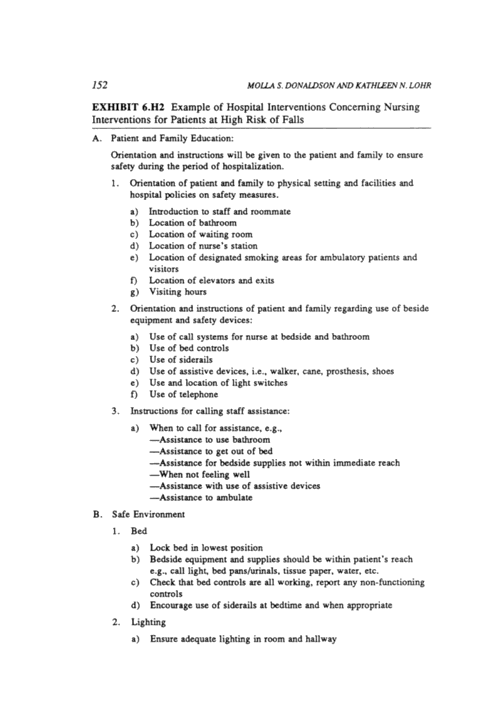
150 MOLLA S. DONALDSON AND KATHLEEN N. LOHR sive care unit each bed must be equipped with monitoring equipment. In another standard, a defibrillator and resuscitative equipment must be avail- able at the bedside when certain procedures are conducted. Common Internal Organization Actions Hospitals have incorporated numerous administrative and clinical sys- tems to prevent problems. Examples of these include the following: staffing ratios, such as numbers of nurses per staffed beds; opportunities for continuing medical education and "inservice" educa- tional programs for staff; . limiting services offered to patients to those services for which staff- ing and volume are adequate (such as closing a wing or a special care unit, or not performing some procedures); . safety precautions for patients at risk for medical complications such as falls or aspiration pneumonia (Exhibit 6.H2~; · safety precautions for the maintenance and operation of equipment and backup systems in case of equipment failure; and design of backup systems such as patient identification wrist bands, medication allergy flags on medical records, unit doses of medication, and policies requiring written (not oral) drug orders. Risk Management Risk management is more than controlling financial losses from a mal- practice claim.2 Risk management techniques are designed to prevent unde- sirable occurrences, where possible, and reduce the severity of those that occur. They are prospective interventions and thus should be seen as a system to prevent problems as well as interventions employed once an ad- verse event has occurred. From this point of view, risk management en- compasses the activities of a broad range of personnel throughout the hospi- tal. These may include the finance officer, security officer, legal counsel, personnel officer, biomechanical engineer, nursing director, chiefs of de- partments, medical director, quality assurance director, and' of course, the risk manager, whose responsibilities have usually been cast as pertaining principally to malpractice loss control. In recognition of the mutual goals of quality assurance and the patient care component of risk management, a new Joint Commission standard requires an operational link between quality assurance functions and those risk management functions related to patient care safety and quality assur- ance. Although the goals of risk management and quality assurance are not entirely coincident, their integration is intended to maximize the use of
A QUALITY ASSURANCE SAMPLER 151 limited resources, eliminate duplicative data collection, and help in devis- ing solutions to problems. Complete integration of the two departments has been of concern to institutions because of the need to provide attorney- client protection for legal materials gathered for case investigation. The intent of the evolving integration of quality assurance and risk man- agement functions is to reorient risk management from a loss control func- tion that takes place after the fact and is directed toward an individual case to one that might be considered "primary" risk management. That is, it helps to prevent adverse events from occurring and, by analyzing patterns, provides feedback to the organization about areas of weakness. In this sense, it is analogous to infection control. External Methods of Detecting Problems in Hospitals Medicare PROs The efforts of Medicare PROs to detect quality problems by the use of a set of "generic screens" are possibly the broadest systematic approach to "external" problem finding (see Volume I' Chapter 6, and Chapter 8 in this volume for more details). Briefly, a nurse reviewer either on-site (at the hospital) or off-site (at the PRO offices) reviews medical records against a set of generic (non-diagnosis-specific) screens. Most records failing a screen- ing criterion are then reviewed by a physician advisor. If the physician advisor believes that a quality problem likely exists, the attending physician or hospital may be asked for further information, depending on the content of that information. The provider may then be "put on intensified review," meaning that more cases from that hospital will be reviewed, or other cor- rective interventions may be invoked. Generic screening as practiced by hospitals is described more thoroughly in the section "Internal Methods of Detecting Problems in Hospitals." Federal, State, Community, and State Hospital Association Data Bases Types of data sets.3 Large data sets include claims-based administrative data bases such as those for Medicare Part A and Part B claims. Roos et al. (1990) distinguish three types of data sets and the kinds of studies that are feasible with each. A Level 1 data base contains only hospital discharge abstracts and will permit aggregate studies of, for instance, in-hospital mor- tality rates and lengths of stay, either by geographic region or over time. A Level 2 data base contains, in addition, unique patient identifying numbers. It can be used to study, for instance, short-term readmissions and volume and outcome relationships at a hospital-specific level. A Level 3 data base (the most comprehensive) also has information from
152 MOLLA S. DONAI~SON AND KATHLEEN N. LOHR EXHIBIT 6.H2 Example of Hospital Interventions Concerning Nursing Interventions for Patients at High Risk of Falls A. Patient and Family Education: Orientation and instructions will be given to the patient and family to ensure safety during the period of hospitalization. 1. Orientation of patient and family to physical setting and facilities and hospital policies on safety measures. a) Introduction to staff and roommate b) Location of bathroom c) Location of waiting room Location of nurse's station d) e) Location of designated smoking areas for ambulatory patients and . . visitors f) Location of elevators and exits g) Visiting hours 2. Orientation and instructions of patient and family regarding use of beside equipment and safety devices: a) Use of call systems for nurse at bedside and bathroom b) Use of bed controls c) Use of siderails d) Use of assistive devices, i.e., walker, cane, prosthesis, shoes e) Use and location of light switches Use of telephone Instructions for calling staff assistance: a) When to call for assistance, e.g., Assistance to use bathroom Assistance to get out of bed Assistance for bedside supplies not within immediate reach -When not feeling well - Assistance with use of assistive devices Assistance to ambulate B. Safe Environment 1. Bed a) Lock bed in lowest position b) Bedside equipment and supplies should be within patient's reach e.g., call light, bed pans/urinals, tissue paper, water, etc. c) Check that bed controls are all working, report any non-functioning controls d) Encourage use of siderails at bedtime and when appropriate Lighting a) Ensure adequate lighting in room and hallway
A QUALITY ASSURANCE SAMPLER 153 b) Have overbed light within patient's reach c) Provide appropriate lighting at night Furniture (mobile and fixed) a) Place furniture for clear walkway b) Check that bedside commode is in a locked position c) Keep furniture in same arrangements if possible during hospitaliza- tion 4. Floors a) Keep walkway clear, i.e., cords, tubings, equipment, etc. b) Keep floor dry c) Wipe spillage immediately d) Make sign "Wet Floor" visible e) Avoid glossy floors f) Use luminous signs to direct patient and visitors to physical facili- ties, i.e., barroom and nurses' stations High Risk Patient Identification a) Use luminous dot on Kardex and patient's bed and door b) Verbal communication among staff of high risk patients to fall Bathroom Keep bathroom light on b) Have hand bar and assistive devices for use in the bathroom, i.e., raise toilet seat, grab bars, tub stool or seat c) Keep bathroom floors dry at all time d) Instructions on how to use bathroom call light e) Have non-skid strips on tub and shower floors C. Pharmacologic Effects 1. Follow pre-op procedures regarding use of siderails after administering pre-anesthetic meds. 2. Inform patient and family of effects of medications. 3. Inform patient and family of potential temporary post-operative psychol- ogic changes. 4. Schedule use of diuretics, cathartics, and cardiotonics for early in the day. 5. Closely observe patients who are on the following medications: narcotics, sedatives, anti-histamines, psychotropics, hypnotics, tranquilizers, anti- depressants, hypoglycemic agents, anti-hypertensive, eye medication, and those that increase GI mobility, laxatives, and enema. SOURCE: Columbia Presbyterian Medical Center, N.Y., used with permission.
154 MOI [A S. DONAIDSON AND KATHLEEN N. LOHR health program enrollment files, including when individual eligibility be- gins and ends. This data base permits the highest-quality longitudinal studies, short- and long-term outcomes studies. and population-based (system-wide coverage) studies. Studies can include outcomes for "intervention-free" individuals and poor outcomes or other complications that are not recorded as part of the hospital stay. An example of such a study would be repeat surgeries performed at a hospital and by a physician different from those in- volved in the first procedure. The Health Care Financing Administration (HCFA) Medicare Automated Data Retrieval System (MADRS) files can now be used to examine linked Medicare Part A (hospital) and Part B (out- patient) utilization data at the person level (DHHS, 1989b). Data sets can also be used to screen the processes and outcomes of ambulatory and inpatient care. Increasingly, they show promise for measur- ing continuity and for evaluating episodes of care that include several set- tings of care. A case in point is determining the percentage of patients who are identified as requiring further care but do not return or the percentage of all visits within an episode of illness made to the same provider (Weiner et al., 1989a). Another example is the proportion of diabetics receiving at least one blood glucose test each year by their regular physicians (Weiner et al., 1 989b). An important strength of Level 3 data bases is that they permit some assessment of population access to care and outcomes. Comparative studies should be able to identify possible areas of underuse. However, administra- tive data bases contain only contacts with the health care system, and, of these, only contacts that generate a claim. A person who is ill but has no encounter with the health care system produces no record. Copayments and other barriers to access may accentuate this bias and underestimate poor outcomes. Thus, such data bases can never be the sole source of quality information in either individuals or populations. HCFA mortality rates. An example of the use of the Medicare Part A data base is the HCFA analysis of hospital-specific mortality data. The first public release by HCFA of data on hospital-specific mortality elicited bitter accusations of inaccuracy and highlighted the potential for misunderstand- ing of data that were not adjusted for severity. Since then considerable work has gone into the development of methods of adjustment; the model now includes such variables as hospital admission during the previous year and comorbid conditions. The data release scheduled for December 1989 will compare data from calendar years 1986, 1987, and 1988. These data highlight institutions that have significantly fewer or more deaths than ex- pected in specific surgical or diagnostic categories. Multi-year data will provide comparisons over time to minimize the effect of chance variation. PROs have also been asked to review cases in these "outlier" hospitals.
A QUALITY ASSURANCE SAMPLER 155 Health service researchers have extensively analyzed the uses of mortality data as a quality indicator (Dubois et al., 1987a, 1987b; Daley et al., 1988a, 1988b; Greenfield, 1988; Jencks et al., 1988; Kahn et al., 1988; Chassin et al., 1989b; Dubois, 1989; Ente and Lloyd, 1989~. Small area variations analysis (SAVA). Both SAVA and studies of vol- umes of services are special aspects of the use of administrative data bases, and both have become major areas of research in their own right. SAVA can identify areas of high, average, and low rates of use of hospital ser- vices, but it cannot discriminate appropriate from inappropriate care. As a problem-detection method, SAVA should be regarded as a screening meth- odology for alerting analysts to areas where quality problems may be occur- ring, including areas of underuse, and for which more focused review should follow. Volume of services (individual or organization). After reviewing the literature on the possible relation between volume of procedures done by institutions and the outcomes of those procedures, OTA (1988) concluded that good evidence exists that higher volume is associated with higher rates of good outcomes for a number of diagnoses and procedures. They cau- tioned, however, that the causal relation is by no means clear, with contro- versy remaining about whether higher volume permits the development of proficiency (e.g., in the surgeon or surgical team) or whether better practi- tioners attract a higher volume of patients. It is also not yet clear over what range of volume and under what circumstances the volume-outcome rela- tion holds. Recent research has revealed that 24 percent of surgeons per- forming carotid endarterectomies did only one such operation in a year in the studied areas, and the authors note that few would regard that volume as sufficient to maintain skills (Leape et al., l989~. Accordingly, we were told of PRO pre-procedure review in one state that includes an inquiry about the requesting surgeon's complication rate and recommends that approval be conditional on his or her having amassed enough cases to provide morbidity rates. Research on aggregate data has demonstrated their value for studying small area variations, length of stay, and variations in practice patterns and complications over time. Although work is under way to develop methods of risk adjustment, to improve linkages among data bases, and to validate and improve the accuracy of diagnosis and procedure codes, administrative data bases lack specificity in identifying quality problems for a given pa- tient or for a particular episode of care. As a near-term strategy, they are best suited to directing quality assessment efforts toward topics, popula- tions, or providers requiring further study. Currently, Medicare data bases do not include clinical data, measures of
156 MONA S. DONAIDSON AND KATHLEEN N. LOHR patient need, or outcome assessments. Efforts to devise a uniform needs assessment instrument, to develop a uniform clinical data set (UCDS), and to include patient functional status could greatly augment the value of ad- ministrative data bases for internal and external quality assurance programs. State and local hospital discharge data. Problems in care may also be detected by analyzing state and local hospital discharge data. Numerous state-level and purchaser-provider coalition initiatives are under way. The better known include the Statewide Planning and Research Coopera- tive System (SPARCS) data base in New York, efforts by several state health-care cost-containment commissions to assemble, analyze, and dis- seminate data about health care (specifically on hospital care), and efforts by the Maryland Hospital Association to develop quality indicators to be used by hospitals to review their own performance. The SPARCS data base was developed in 1977 to support the delivery of hospital care in New York (NAHDO, 1988~. It is compiled from a Uniform Billing Code and a Discharge Data Abstract supplied for every discharge from all New York general hospitals. It can produce both standardized and customized reports on the type and severity of cases specific to a hospital or region and the charges associated with treating those conditions; it can be used by hospitals, researchers, local planning agencies, insurance compa- nies, and local, state, and federal governments. The data base has also been used in research at the Department of Health Care Standards and Surveil- lance at the New York State Department of Health (NYSDOH) to identify cases for quality review (Hannan et al., 1989a; 1989b). Twenty-eight states have enacted legislation for reporting hospital data. Pennsylvania and Colorado have spearheaded much of this work. In Pennsylvania, the Health Care Cost Containment Commission's Data Council has required all Pennsylvania hospitals to install the MedisGroups software and to provide the state with case-mix-adjusted data on costs and outcomes. In June 1989 the Data Council published the Hospital Effective- ness Report (PHCCCC, 1989), the first report comparing average charges per case and the morbidity and mortality rates of central Pennsylvania hos- pitals by individual diagnosis-related groups (DRGs). The current and forth- coming reports are intended to help business and labor purchasers as well as the general public to make cost- and quality-informed choices. The Pennsylvania Buy Right Committee is using the same data to edu- cate its employer and hospital members. One member, ALCOA, is using the data to develop a "managed care plan of excellence'" similar to a pre- ferred provider organization (PPO) (Bader et al.' 1989~. Since July 1986 the Colorado Data Commission has required hospitals with more than 50 beds to collect and report discharge data on their pa- tients. In January 1988 it began to develop an extensive uniform clinical
A QUAL17YASSURAI1CE SAMPLER 157 data set in conjunction with HCFA's UCDS project. Data reporting to the state has been delayed, however. The Maryland Hospital Association's Quality Indicator Project preceded the Joint Commission's clinical indicator initiative. Developed as a volun- tary hospital effort to provide interhospital quality-of-care data (Summer, 1987), it uses a limited number of data elements to be reported on 10 . . . indicators: 1. hospital-acquired infections 2. surgical wound infections 3. inpatient mortality 4. neonatal mortality 5. perioperative mortality 6. cesarean sections 7. unplanned readmissions 8. unplanned admissions following ambulatory surgery 9. unplanned returns to special care unit 10. unplanned returns to operating room The information from the data analyses is returned to participating hospi- tals for their "internal" use. Five national hospital systems have joined the data base, as have the Hospital Association of New York State, the Hospital Association of Rhode Island, and the New Hampshire Hospital Association (S.J. Summer, personal communication, 1989~. At a local level, the Rochester Area Hospitals Corporation (RAHC) has instituted a collaborative communitywide approach to controlling cost in- creases, the Hospital Experimental Payments Program. Recently, RAHC has focused on preventing any adverse effect on quality by distributing funds from a community risk pool. The distribution formula will be based on quality performance as adjusted for admission severity with MedisGroups software (Hartman, 1988~. Complaints Patients or their families sometimes file complaints with a local, state, or federal agency with oversight responsibility for hospitals. One participant in the beneficiary focus groups mentioned the city health commissioner as the most appropriate place to seek recourse for a problem with hospital quality. State departments of health receive complaints regularly; for in- stance' NYSDOH maintains a 24-hour staffed telephone line and may re- spond to complaints by making unannounced investigations at hospitals. During our site visits we were told that only a few complaints lead to identification of quality problems; nevertheless, an extensive amount of staff effort is directed toward following up complaints. On the other hand,
158 MOWA S. DONALDSON AND KATHLEEN N. LOHR at least one PRO visited in this study believed that patient (or other) com- plaints were a very useful problem-identification tool and that PRO review of patient complaints helped foster better relations with the patient commu- nity. State Reporting Requirements All states have reporting requirements and some states may have incident reporting requirements as well (Longo et al., 1989~. Although unusual among states in its elaborate regulatory mechanism for detecting problems, NYSDOH requires that certain incidents be reported directly to the state. Reportable incidents are defined as (Title 10 of New York Codes, Rules and Regulations Section 405.8~: 1. patients' deaths in circumstances other than those related to the natural course of illness, disease or proper treatment in accordance with generally accepted medical standards. Injuries or impairments of bodily functions, in circumstances other than those related to the natural course of illness, disease, or proper treatment in accordance with generally accepted medical standards and that necessitate additional or more complicated treatment regimens or that result in a significant change in patient status, shall also be considered report- able under this subsection; 2. fires or internal disasters in the facility which disrupt the provision of patient care services or cause hand to patients or personnel; 3. equipment malfunction or equipment user error during treatment or diag- nosis of a patient which did or could have adversely affected a patient or personnel; 4. poisoning occurring within the facility; reportable infection outbreaks (as defined in section 405.11 of the Code); patient elopements and kidnapping; 7. strikes by personnel; 8. disasters or other emergency situations external to the hospital environ- ment which affect facility operations; and 9. unscheduled termination of any services vital to the continued safe opera- tion of the facility or to the health and safety of its patients and personnel, including, but not limited to, the termination of telephone, electric, gas, fuel, water, heat, air conditioning, rodent or pest control, laundry services, food, or contract services. In 1988, hospitals reported nearly 9,000 incidents to NYSDOH. One- third were patient falls resulting in fractures. The remainder were primarily medication errors. Problems caused by laser surgery and fatal errors in
A BUMS ASSUME S~PL~ 159 administration of potassium were also identified. NYSDOH reviews about 15 percent of incidents onsite, typically where significant patient harm or unexpected deaths have occurred. Each year NYSDOH makes about 3,000 visits to its 272 hospitals, identifies about 2,000 quality problems, and is- sues about 40 enforcement actions. Malpractice Claims When malpractice claims are filed, hospitals may be named as the pri- mary defendant or may be included in a list of defendants. A review by GAO (1987) of a sample of closed malpractice claims showed that 71 per- cent of the health care providers involved were physicians and about 21 percent were hospitals. In principle, court awards could be considered one way to detect problems in quality, and data on court decisions might be available through a state's Freedom of Information Act (OTA, 1988~. The validity of such data for this purpose is very much in doubt, however. Internal Methods of Detecting Problems in Hospitals This sampler divides activities according to whether they are intended to prevent, detect, or correct problems, because the focus for each is distinct. In practice, these activities may be combined by hospitals as "integrated" programs of administrative organization, personnel, and data collection. A representative organizational chart shows the quality assurance function as a responsibility of the governing board and coordinated by a quality assur- ance department. This quality assurance function may be integrated in various combinations with utilization management, risk management, and infection control. The medical staff office typically handles credential and privilege requests and reappointment recommendations from individual departments. It receives, in addition, data provided to it by quality review committees. These committees may be departmental (e.g., surgery or nurs- ing) or hospitalwide (e.g., blood usage or infection control). The organiza- tional details, methods of data collection, and reporting systems are unique to each hospital. Some hospitals implement proprietary programs designed to integrate these functions. Other hospitals purchase software to help with individual tasks such as severity measurement, credentialing, or incident tracking. Numerous vendors sell quality tracking software; although the use of such computerized aids is not vet widespread, it is increasing. Possibly the best-known integrated system is the Medical Management Analysis system developed by Craddick (Craddick and Bader, 1983~. It combines specialty-specific criteria, generic screens, and 100-percent con- current review of medical records with utilization review and discharge
160 MOI1A S. DONAI~SON AND KATHLEEN. LOHR planning. The program permits the hospital to track the findings of generic screening and monitoring activities, to follow corrective actions, and to develop profiles of practitioners. A few hospitals have begun to implement a model of quality assurance based on the continuous improvement (CI) model (see Volume I, Chapter 2~. Responsibility is to a greater degree dispersed, being vested in those who are closest to where care is performed. Although the CI model strongly emphasizes that final accountability for quality rests with the top leadership of the organization, each group is taught how to identify deficiencies in quality, how to analyze the details of the process, and how to redesign the process to reduce or eliminate errors (in CI terminology, "variations"~. The activities included in the CI model must be coordinated so that self-evalu- ation and records of improvement also follow reporting and accountability requirements for accreditation. Two hospitals visited by the study commit- tee, the Rush Presbyterian-St. Luke's Hospital in Chicago and the Hospital Corporation of America (HCA) West Paces Ferry Hospital in Atlanta, were implementing the CI model. The listing that follows describes the component parts of quality assur- ance systems in hospitals and the Joint Commission requirements related to them. In the 1990 Accreditation Manual for Hospitals (Joint Commission, l989b), the "Quality Assurance" standard states that for each facility, there is an ongoing quality assurance program designed to objectively and systematically monitor and evaluate the quality and appropriateness of patient care, pursue opportunities to improve patient care, and resolve identified prob lems. (p. 211) Required medical staff functions include ongoing monitoring and evalu- ation of clinical departments or major clinical services (all medical staff, if i] nondepartmentalized), surgical case review, blood usage review, drug usage evaluation, pharmacy and therapeutics review, and medical record review. Required hospitalwide functions include infection control, utilization re- view, and review of accidents, injuries, patient safety, and safety hazards. These methods can be described as case-finding methods to identify indi- vidual patients who, on retrospective review, may have received suboptimal care. Case-finding as a screening method may be followed by focused re- view or further review by peers (or both) as described in more detail in the remainder of this section. States may also enact statutory requirements. In New York State, for nstance, hospital trustees, medical staffs, and administrators are held ac- countable for the quality of care rendered in an institution. The governing board must approve an integrated, hospitalwide quality assurance program and assign at least one member of the governing board to the quality assur- ance committee (Fisher, 1986~.
A CU~ASSU~CE SAMPLER 161 Quality Assurance Committee The quality assurance committee in some hospitals is a board-level com- mittee. Minimally, its membership typically includes the following: the chief executive officer; the medical director; chairpersons of nursing, risk management, and quality assurance; and chiefs of the major clinical depart- ments. Members of the governing board may also be members of the committee. The quality assurance committee receives summary reports from the various committees throughout the hospital, considers their findings, and recommends actions to correct problems not managed at committee or department level. Quality Assurance Department The quality assurance department provides direction and guidance to all departments and staff and coordinates the collection and monitoring of data and corrective actions. It also serves as an institutional resource for meth- ods and information and as the locus for data analysis and reporting. Ge- neric screening is conducted by nurse reviewers in the quality assurance department. This function may be coordinated with that of utilization re- view, discharge planning, and infection control. We obtained data from an outside survey to learn more about resources and the organization of quality assurance activities in hospitals. Data were received from corporate offices of 13 multi-hospital systems and 58 indi- vidual member hospitals in 21 states describing the departmental structure, staffing, reporting arrangements, and time devoted to various quality assur- ance activities. The Appendix describes the survey methods and results in greater detail. A striking finding was the very wide range of organizational arrange- ments and extraordinarily wide range of resources reported by hospitals. In hospitals with fewer than 100 beds, combined quality assurance, utilization review, and risk management functions were most frequently reported. In hospitals with 100 to 250 beds, quality assurance with utilization review was reported almost as frequently as the three-function combination, and in hospitals with more than 250 beds, the dual combination (quality assurance and utilization review) was most frequently reported (10 of 24 responding hospitals) (Appendix, Table 6A.6~. As might be expected, with increasing size of hospital (as determined by number of beds designated for medical and surgical services), the numbers of committees, charts reviewed, meetings, and personnel generally increase, but large ranges were reported. For instance, numbers of records reviewed concurrently averaged 587 per month in 3 small hospitals (range, 1 to 1,094 per month), 800 per month in 10 moderate-sized hospitals (range, 12 to
162 AlOLLA S. DONALDSON AND KATHLEEN N. LOHR 2,820), and 2,330 per month in 11 larger hospitals (range, 245 to 5,670) (Table 6.2). Monitoring The Joint Commission is moving toward substantial revision of the Ac- creditation Manual, developing its Agenda for Change using outcome moni- toring and modifying its survey and accreditation methods (Joint Commis- sion, 1987, 1989a). However, the standards described above are still in effect, and their influence on hospital activities is pervasive. "Monitoring and evaluation" is a 10-step review process (Exhibit 6.H3) to be applied to all medical staff quality assurance functions, hospitalwide quality assurance functions, and clinical and support service quality assurance activities. Monitoring is expected to be done by all clinical departments (such as nursing, nutrition, and social work) and by support service departments (such as the clinical laboratory, pathology, radiology, pharmacy, and central supply). Exhibit 6.H4 is an example of the results of such monitoring in several departments of one medical center. Indicators for monitoring are written screens of acceptable practice, in- struments that measure a quantifiable aspect of patient care (Lehmann, 1989~. They are intended to be objective, measurable, and applied consistently to the review of care by nonphysician reviewers (O'Leary, 1988; Lehmann, 1989~. The clinical indicators may be appropriateness protocols (based on adherence to condition- or procedure-specific standards), or they might be positive or negative health status outcomes. Monitoring is intended to signal the need for a more focused review, not to replace case review. For monitoring, the Joint Commission distinguishes "sentinel events" and "comparative rate indicators." Sentinel events are serious complica- tions or outcomes that should always trigger a more intensified review, such as a maternal death or the occurrence of a craniotomy more than 24 hours after emergency room admission. Comparative rate indicators, such as the death rate after coronary artery bypass graft or the rate of vaginal births after cesarean delivery, are rates over time or rates in comparison to other institutions that may trigger further review (Joint Commission, l989d). Exhibit 6.H5 gives several illustrations. Concurrent Review Concurrent monitoring refers to the review of the process and outcome of care during the course of the hospital stay in order to identify potential and actual problems and reportable incidents. Data for assessment of sever- ity of illness and suitability for discharge may also be monitored. Such concurrent screening may occur at admission and at periodic intervals during
163 ._ Ct - ._ o ED Cal ·_4 Cq ._ - C~ Ct Ct a: o Pa - Ct 4 - ' Ct To Ed o GO C) 3 ._ At: Cal o C) o U) Cal i_ ._ o r° or ;~ - o 4- C} C) to C) C) of Ad ~ 04 'U. ~ V, o ~ O .= 'v, ~ ~ Z ._ V' ~ m - .~ O o o ~ _ to t ~ o ~ to Cal ~ o ~ 0 0 ~_ o 0 ~ ~ C~ ~o O oo Ir, C~ 1 1 1 ~ ~ C~ 0 oo 0 00 C~ 0 _. ~n oO ~ 0 1 0 1 1 0 C~ 00 ~ 0 ~o 0 ~ C~ 00 ~4 0 C%] 0 oo '_ ~4 1 1 1 0 C~ 0 o~ o 0 ~ 0 o 1 ', ~ 8 ~ V '_ A U. ._ U. q) c) C) D C) o ;^ :, U. o ._ ~q C~ ._ o ;~` V, .. V O cn
164 MOllA 5. DONALDSON AND KATXLEENN. LOHR EXHIBIT 6.H3 Ten Step Monitoring and Evaluation Model of the Joint Commission 1. Assign responsibility for monitoring and evaluation activities; 2. Delineate scope of care provided by the organization; 3. Identify important aspects of care provided by the organization; 4. Identify indicators (and appropriate clinical criteria) for monitoring the important aspects of care; 5. Establish thresholds (levels, patterns, trends) for the indicators Mat Bigger evaluation of Me care; 6. Monitor the important aspects of care by collecting and organizing the data for each indicator; 7. Evaluate care when thresholds are reached in order to identify either opportu- nities to improve care or problems; 8. Take actions to improve care or to correct identified problems; 9. Assess the effectiveness of the actions and document the improvement in care; and 10. Communicate the results of the monitoring and evaluation process to relevant individuals, departments, or services and to the organizationwide quality assurance program. SOURCE: Joint Commission, 1989b. the hospital stay. One hospital visited reported 100 percent daily review of their hospital patients. Generic Screening Rutstein et al. (1976) first used the term "sentinel event" to describe adverse outcomes that can be especially closely linked with poor process of care. Each adverse event is chosen because it is thought to have a high probability of indicating poor quality and therefore warrants further review and possible intervention. Generic screening is a method of identifying adverse, or sentinel, events by medical record review. Screens are "generic" in the sense that they apply broadly to the institution rather than to specific departments or diag- noses. Examples of generic screens are `'unplanned repair or removal of organ," "severe adverse drug reaction," and "inpatient admission after out- patient surgery." Events subject to screening include those in which patient harm occurs (such as ocular injury during anesthesia care) and those with the potential for harm (such as equipment malfunctions or patient falls). Generic screening, now widespread in hospitals, is a two-stage system of medical chart screening by nurse reviewers followed by implicit physician review. Data may be recorded on worksheets that are also used for admis
A QU~ASSUR^CES~PLER 165 sign, continued stay, and discharge review. Data may be collected within a designated period after admission (e.g., 48 hours), at periodic intervals (e.g., every 3 days), and after discharge, when all services provided have become part of the medical record (for an example see Exhibit 6.H6~. Individual events that meet certain explicit criteria (sometimes called screen failures or variations) are further reviewed by a physician advisor. Direct action is taken if a quality problem is confirmed and individual action is appropriate (sometimes called adverse patient occurrences). Data are later aggregated (e.g., by time, service, shift) to determine trends. If it is done at frequent intervals and if data are reviewed and collated promptly, screening for adverse events can result in immediate action. When potentially dangerous conditions exist, response can be timely enough to prevent further harm to an individual patient and to other patients exposed to similar risks. If data are retrieved by well-trained reviewers and com- bined with other tasks such as utilization review and discharge planning, screening supports coordination of care and efficient use of resources. Well- developed screening criteria sets could be generalizable to many sites and could provide benchmark data for comparison across sites and over time. Generic screen data applied by internal quality assurance programs are most frequently reviewed long after the patient has been discharged. As most commonly used, then, they are not helpful for concurrent interven- tions. Their value for patient care thus depends on dissemination of data on patterns of problems, but the study committee was unable to assemble evi- dence that this occurs in hospitals. Screening for adverse occurrences may also be department-specific rather than facilitywide. Exhibits 6.H7 and 6.H8 show some department-specific screens provided during site visits. Surgical Case Review Surgical case review addresses the indications or justification for all invasive surgical and diagnostic procedures performed in inpatient and ambulatory care settings (Longo et al., 1989~. For cases in which tissue is removed, surgical review includes a comparison of the surgeon's pre-opera- tive diagnostic findings and the post-operative pathology findings. A dis- crepancy requires further case review to determine whether the sur~erv was justified. O , Some surgical procedures (e.g., cardiac catheterization, angioplasty, angi- ography, and pacemaker insertion) do not result in removal of tissue, and other surgical procedures (e.g., endoscopy, bronchoscopy, and fine-needle biopsy) may not result in removal of tissue. Surgical review for these cases in one model (Longo et al., 1989) includes (1) criteria development, (2) retrospective case screening by nonphysician reviewers, (3) review by surgical
166 o - Ct Cal ._ ._ ._ Cal Cal lo: Ct U. CQ ._ - A: V _4 Ct C) ._ 5 o - X C) of ad oo \0 C) em O 1 V, i_ ~ ~3 ~ Cal o ._ C} o ·_. o U) V o lo: V, _ o 'v' V, V, ~ V) o V o ~Cal ._ ._ .> ._ .~ o o ~ ~o ~3 c' {I: ~ so 3 ~o o U: 'to - · ~:, o _ o Z ~ 0 ~ 0 C~ < _ ~ . ~ ~ ~ ~, ~ s E~ _ _ E~ U. ~ ~ P. 3 o crx v ~ ~ o cd O - ~ ~ C ~ ~ ~ CO° Oo ·3v~'t o ·_ C~ O ~ ~ ~ ~"D o - ^.O o ~ ° ° o ~ 3 ~o ~
167 Z A C: 9 A,, . 5, ~ ~_ =- ~ ~ ~ ~ ~ ~ B ~o ~ > , _ ~' ~ ~ ~ ~ Ad. ~ o ~ ~j C) C) = ~C) ~=.^ ~ ~=> D m ~ 5 ~ ~ ~ lo, ~ ~ O or ~ E ~ E, ~ b ~ ~ ;^ o 0 ~ Bo ~ ._ - , ~ ._._ ~A, ~ ~ ~ ~ ~ ICE~ ~
168 · - I: o - . No - :t o .~ - 4 - o ~ - - o In Ed - ~ o ~ so ~. v) ~ u) o v m o ._ ._ 00 ._ -0 .~ O . ~ C) 3 5 ~ 3 .S s, ~ ~ 3 °° ° S .= ~.5 3 ~ ~o ~ 3 ~3 o == ^~ ~ ~ a 5 ~ . a ~ ~ 8 ~ (V ~ ~ ~ _ , ~t ; ~ o , - ~ - ' - ~ ~ - ' , ~ pit ~ ~ u, =4 D ~ ~ ~ ~ ~ ~ ~ 0 3 ~ ~
169 ~ 3 ~= -it ° ' ~ ' ~ ~ ~ 3 ~ ~ ~ a, 3 ~ ~ ~ ~ ,, ~_ ~ ~ ~ ~ | ~ ~ ~ E ' ~ ~ ~ ~ e E 2 -0 _ E E ~: ~ ~ ~ == E l; ° ~ ° ~' 5 E it ~ ~ ° a A E . ~ ~ ~ ~ E ~E §3 ~ ~ c ° ° a ~ O r ° 2 t; ~ ° ~; j ;^ on ~ E _ ~ a °0 ~' E cat - ._ c' o 5 cat cat o ._ - ct ._ ID - o ._ cat us ._ ._ c, 4_ ._ 3 - ._ ._ c~ ._ c, 4 - ._ u, ~D .~ o . . - ~ ct O ~ v: . ~ ._ o
170 MOLLA S. DONALDSON AND KATHLEIENN. LOHR EXHIBIT 6.HS Examples of Clinical Indicators Clinical Outcome Indicators (Comparativeja The rate of development of wound infections after clean or clean-contaminated surgical procedures. Possible threshold for review: 2.5 percent. Each patient with a systolic blood pressure on admission greater than 150 mm Hg or diastolic pressure greater than 95 mm Hg has his or her blood pressure measured and recorded in the medical record at least twice during the 24 hours following admission to the inpatient unit. Possible compliance threshold: 98 percent. Clinical Outcome Indicators (Sentinel) Unplanned readmissions to a hospital shortly after inpatient surgery. Mortality among patients treated in the hospital for injuries sustained immedi- ately prior to treatment when death occurs within thirty days of injury or during a hospitalization that was precipitated by the occurrence of the injury. Failed intubation during anesthesia. Severe adverse Rug reactions. Ocular injury during anesthesia care. Patient aarlsfer from post-surgical unit to operating rooms. Nursing QA Monitors (Sentinel) Joint in central venous line not taped to prevent separation. aSOURCE: Joint Commission, 1 989e review committee of those cases failing to meet criteria for justification, and (4) documentation in minutes of findings, conclusions, recommenda- tions, actions, and follow-up. Blood Usage Review Review of blood usage includes assessment of justification for transfu- sions, review of transfusion reactions, approval of policies on transfusion, monitoring transfusion services, and blood product ordering (Longo et al., 1989~. As in surgical review, screens are developed based on criteria for justified transfusion episodes (Exhibit 6.H9~. The clinical review nurse may screen for blood usage while doing utilization review. Cases failing screens are forwarded for review by the blood usage review committee. Drug Usage Evaluation Drug usage review has been broadened from what was once the review of antibiotic use only. It includes review of the indications and justifications for drug use, appropriate monitoring of drug levels, and correct dosage and
A QUALI7YASSURANCE SAMPLER 171 route (e.g., oral or intravenous). Drugs for review might be high-volume or high-risk drugs or those considered important by the medical staff for other reasons such as unusual toxicity or potential for interaction with other drugs (see Exhibit 6.H10 for an example of cardiology drug review). Pharmacy and Therapeutics Review In addition to medical staff, pharmacy personnel, nursing personnel, and hospital administrators are likely to be involved in pharmacy and therapeu- tics review. Along with approving pharmacy policies and procedures and maintaining the hospital formulary, the pharmacy and therapeutics review committee also reviews serious untoward drug reactions. Medical Record Review Medical record review is conducted by a medical record review commit- tee. It consists primarily of the review of records-such as admission history, operative notes, and discharge diagnosis for DRG assignment discharged patients to determine the timeliness of completion of various elements of care. Focused Review Focused review of care may take place when occurrence screening or clinical indicators warrant further evaluation. Unlike the retrospective au- dits of traditional quality assurance' approaches, focused review is usually intended to be a prospective review, aimed at a particular topic or practitio- ner, and it remains in place until actual performance reaches a level of ex- pected performance (Longo et al., 1989~. Examples of topics for focused review might include infertility workup or hysterectomy in the obstetrics- gynecology (OB-GYN) department, workup of newly diagnosed diabetics in an internal medicine department, cholecystectomy in a department of general surgery, and streptococcal endocardiiis in a department of infec- tious disease. Focused review utilizes principles of criteria development, data collection, analysis, and dissemination to the relevant clinical depart- ments or staff committees (Longo et al., l989~. One hospital in New York City, for instance, conducts a chart review of all patient deaths within 24 hours of death, or within 72 hours when an autopsy is performed. Peer Review Peer review as a formal process is part of the functions listed previously. Once screens or monitors indicate further review is necessary, medical rec- ords are reviewed by a physician advisor in the clinical department or in the
172 MOLLA S. DONALDSON AND KATHLEEN N. LOHR EXHIBIT 6.H6 Example of Integrated Patient Care Monitoring - Data Source Document for Quality Assurance, Risk Management and Utilization Review Ado. Date Age Sex Physician Code Ins. Patient Code Service Code Adm. Unit D/C Unit D/C Date Final Diagnosis Appropriate Admission Yes No Comments Appropriate Cont. Stay Yes No Comments_ Appropriate D/C Yes No Comments Appropriate D/C Planning Yes No Comments_ Mo. tality Yes No Anticipated Not Anticipated Possible Cause Autopsy Ordered Yes 'go Generic Screens None Type __ Complications None Type Surgery: None Date Surg. Surgeon Consent Nope Rept Meets Criteria No MA Procedures: None Re~.~1~: Meets Criteria Date Progedure Phvsician Consent l~'L ABE Yes .~'o N/A Medical Record Review: Meets Criteria Admit H&P Prog. Notes Blood Utilization: Consent Yes _ None _ Total Units Criteria # PRSC's Whole Blood Platelets Plasma Date Time Date Yes _ No Phys. 1/Var. Consults Phys. 2/Var. No Phys. 2/~7ar. Variations Time Date Time Medical Staff Appropriateness Monitoring Dept. Meets Criteria: Yes _ No _ N/A _ Com~nents: Moni tor Variation # EXHIBIT 6.H6 continues quality assurance department. The physician advisor reviews the record and may ask the responsible physician to discuss the case or to provide further information. Sometimes immediate intervention is warranted to ensure that the patient is given appropriate care. In contrast to the earlier methods described (which might be seen by practitioners as fairly mechanistic), peer review is generally reserved for
A QUALITY ASSURANCE SAMPLER EXHIBIT 6.H6 Continued 173 ~0~2 ~teems Criteria Test'P'ocedures Yes NO N/A Variation ~Co-.~er.t~. PHYSICAL THERAPY Meets :,<~.teria Lest /Procedures .5Q tI/A ireri~tion ~_~.n~en.s PHARMACY Meets Criteria Test/Procedures Yes No N/A Variation # ~r.,omments ,~=3~3 QA Coord, ~,.~ag.nosi.S Descriction QA Coord. Date PhYs. Called Purcose Outcome Ac tual L. O . S . < or > DRG Days Comments if > Transfer Yes No To Transfer. Form Complete Yes No Reas on SOURCE: Pasadena Bayshore Medical Center, Pasadena, Texas, used with per- mission (abbreviations arid other details as in original). the last stage, in which a "comparable" physician passes judgment using his or her sense of the entirety of the medical care. This approach offers an opportunity for more evidence to be brought forward and thus a chance to recognize not unreasonable decisions; peer review generally reinforces a strong collegial sense of the complexity and uncertainties in the case. After reviewing the record, the physician advisor may decide that the quality problem was not practitioner-related. The problem could have re- sulted from an unforeseeable patient complication, such as an allergic reac
174 MOLLA S. DONALDSON AND KATHI~EEN N. LOHR EXHIBIT 6.H7 Examples of Department-Specific Indicators INTERNAL MEDICINE SCREENS Review of medication errors or major adverse drug reactions with serious potential for harm or resulting in special measures to correct (intubation, cardiopulmonary resuscitation, gastric ravage) Management of patients with primary diagnosis of hypertension: Blood pressure recorded daily, and once on both arms Blood urea nitrogen or creatinine, done once Electrocardiogram, done once Fundoscopy, done once Radiologic exam of chest, done once IVP or other renal/endocrine screening measures, if appropriate Electrolyte profile Management of acute renal failure: Monitoring of blood urea nitrogen, creatinine clearance Serial quantification of urine output Provide dialysis or refer patient for dialysis when creatinine clearance is less than 10 ccImin, serum creatinine is greater than 7 ma. % Document patency of urinary tract Document presence of adequate blood supply to kidneys (i.e. renal isotope study, etc.) when clinical situations dictate Review cases with cardiac catheterization complications: Contrast media reaction Evidence of arteriothrombosis following procedure Hematoma or excessive bleeding at injection site Circulatory impairment of the extremity Cerebrovascular accident during or within 24 hours of the procedure Medication error, requiring intervention Dissection of artery during acute PTCA requiring intervention Equipment malfunction/failure/disconnection that results in or has the potential to result in patient injury CRITICAL CARE UNIT SCREENS Review of readmissions to the unit within 48 hours after transfer Complications occurring after central line insertion Review of reintubations within 24 hours of extubation Equipment failure Ventilator malfunction Defibrillator malfunction Intravenous (IV) pump failure Pacemaker battery pack [allure Compliance with protocols for use of wrist restraints Compliance with protocol for Swan Ganz Compliance with NRM policy Review of incident reports Review of all deaths in critical care units FAMILY PRACTICE INDICATORS Physical exams are done on chemical dependency patients Appropriate treatment recommendation are made for chemical dependency pa- tients Failure to obtain consultation when indicated:
A QUALITY ASSURANCE SAMPLER 175 Patient has shown no progress Patient's condition has deteriorated (exclude if terminal on admission) Dismissal of primary physician by patient or family Unsubstantiated diagnosis ea. no appropriate x-rays, lab, other test to confirm . . c Diagnosis IFMC [PRO] quality of care issues Unnecessary admission to the hospital Inappropriate admission to unit Quality of care monitors for patients with acute stroke (including embolus, transient ischemic attack, occlusion of pre-cerebral artery): Presence of radiologic exam of central nervous system Quality of care monitors for adult patients with pneumonia: Chest x-ray is present Smear and culture of sputum and/or bronchial secretions Culture and sensitivity studies with antibiotic therapy Appropriate bacterial investigation prior to starting antibiotic therapy Quality of care monitors for patients with abdominal pain, etiology unknown: Documented plan of action for diagnostic investigation (e.g., complete blood count, urinalysis, serum amylase, rectal and pelvic exam, barium contrast studies, intravenous pyelogram, KUB, chest x-ray, surgical proce- dures) PSYCHIATRY SCREENS If the patient is admitted to the psych unit by a physician who is not a psychia- trist, a psychiatric consultation must be obtained within 24 hours A comprehensive treatment plan by staffing must be done with the physician in attendance on each patient, describing problems, goals, arid estimated dates of achievement Initial staffing within 60 hours and weekly staffing review thereafter Progress notes must be completed at least every 48 hours Renewal of seclusion and restraint orders every 48 hours Social history will be on the chart within 48 hours after admission to the unit Review of all suicides or attempted suicides Transfer from a psychiatric unit to a medical, surgical, or intensive care unit when primary care becomes medical (oxygen, IVs, fever more than 48 hours, draining infections, cardiac monitoring) Patient on suicide precautions within 2 days of discharge will be reviewed by Psychiatry Section Patients discharged against medical advice will be reviewed Patients with assaultive behavior or assaulted patients will be reviewed EMERGENCY MEDICINE SCREENS Correlation of clinical and radiology results Compliance with chest pain protocol Review of patients whose emergency room stay is longer than 4 hours Review of all deaths in emergency room and deaths within 48 hours after . . at mission Review of patients who leave against medical advice Review of patient who leave before being seen Management of patients with renal colic/ureteral stone SOURCE: Iowa Methodist Medical Center, used with permission (abbrevia- tions and other details as in original).
176 MOLLA S. DONAIDSON AND KATHLEEN N. LOHR EXHIBIT 6.lI8 Example of Surgical Review Screens ~ ~ Outpatient ~ 3 Inpatient ACCOUNT #- DATE Improper or no informed consent for procedure performed 2. Preexisting acute condition (e.g. respiratory infection, conjuncti- vitis, etc.) 3. Patient classified by anesthesia Class III or above 4. History and physical not on chart 5. Lab repeated morning of surgery 6. Presurgical testing incomplete or not ordered 7. Wrong patient operated on* 8. Wrong procedure performed* 9. Unplanned removal or repair of an organ or body part not cov ered in consent form* (Exception: incidental appendectomy, biopsy of an organ) 10. Foreign object or material found in or left in wound* 11. Incorrect needle, sponge, or instrument count or omission of a 12. 13. 14. 15. 16. 17. 18. 19. 20. 21. 22. 23. 24. 25. 26. 27. 28. 29. 30. 31. 32. 33. 34. *Requires Incident Report Comments: count required by hospital policy Patient operated on for repa* of a laceration, perforation, tear or puncture of an organ subsequent to performance of an inva sive procedure* Adverse results of anesthesia Intubation resulting in injury* Nerve damage noted postoperatively Cardiac/respiratory arrest Acute myocardial infarction during surgery or in PAR Patient injured during transfer to or from the OR* Any unusual or untoward incident (s) Surgery more extensive than anticipated Complication (s) of treatment or care Patient/family complaints Medication error Break in sterile technique Instrument/Equipment breakage or malfunction Cancellation of surgery after patient's arrival or OR suite Antibiotics given parenterally Surgery started after 1300 (Same-Day), 1600 (OR) Late discharge Left Same-Day Surgery Unit against medical advice Unplanned admission to hospital/SICU Oxygen therapy ~ ~ Routine ~ ~ Special Order This is an unplanned return to surgery Death SOURCE: Iowa Methodist Medical Center, used with permission (abbreviations and other details as in original).
A QUALITY ASSURANCE SAMPLER 177 EXHIBIT 6.H9 Example of Indications for Transfusion of Whole Blood in Adults 1. Hypovolemia due to surgery, trauma, gastrointestinal or other blood loss docu- mented by one of the following: a. Fall in blood pressure >20% or fall in systolic blood pressure to <100 mm Hg. b. Pulse > 100 per minute. c. 750 ml or greater estimated blood loss. d. Orthostatic change in blood pressure or pulse. 2. Continuous blood loss (or anticipated blood loss) at a rate greater chart 100 ml/ 15 min. 3. Already received 10 units RBC's. 4. Massive transfusion ~ >10 units in 24 hours). - SOURCE: St. Luke's Episcopal Hospital, used with permission (abbreviations and other details as in original). lion to diagnostic contrast media, or it might represent a "systems" prob- lem, such as a failure to receive a~laboratory report in timely fashion or unavailability of equipment. This information is useful for tracking prob- lems in a department or on a hospitalwide basis; problems of this nature may be more appropriately linked to administrative and policymaking groups than to individual practitioners. If the case is practitioner-related, the physician advisor may seek addi- tional review from others in the same or a related specialty, the appropriate departmental or other committee, the department chair, or the medical di- rector.4 One hospital described the tasks of peer review as the following: First, a physician advisor decides whether an adverse patient occurrence has taken placed If the physician reviewer determines that the standard of care was met, the case is dropped. Second, if questions persist, a medical care evalu- ation committee can determine that the standard of care was or was not met (most prudent physicians given the same set of circumstances, would or would not have managed the situation in a similar fashion), or that it is questionable (other practitioners might have managed the case differently with presumably a better outcome, but there was no clear breach of the standard of care). The attending physician may attend the meeting, but not- during voting. The department chairman attends as a nonvoting member. Third, the committee decides which persons, departments, or systems were most closely associated with the event. Fourth, the committee designates a severity score. Fifth, incidental findings that have a direct bearing on the patient's care are recorded. Various systems for assigning levels of severity were described by hospi- tals. One guide proposes four severity categories (Longo et al., 1989~:
178 MOLLA S. DONALDSON AND KATHLEEN N. LOHR EXHIBIT 6.H10 Example of Cardiology Drug Review ~ Ward | Privileged staff _ _ Resident_ 1 YES NO COMMENTS/NA 1. Treatment Criteria (Any NO=Depa~n~ental Review) a. Presentation consistent with acute Ml and l . EKG evidence of acute Ml and c. Recent onset of symptoms (less than 6 hours) . . . ~2. Contraindications (Any YES=Depar~menrai Review) ~ . . , a. Active internal bleeding b. History of cereUrovascular accident , c. Receiving other thrombolytic therapy d. Recent intracranial or intraspinal trauma or surgery e. Intracranial neoplasm. ARM. or aneurysm . Known bleeding diathesis 9 Severe uncontrolled hypertension at the time of therapy Systolic greater than 200 Diastolic greater than 110 h. Recent (less than 10 days) traumatic CPR :. Recent (less than 10 Cays) severe trauma l - ! ~I ; predictable events within standards of care, unpredictable events within standards of care, marginal deviation from standards of care, and significant deviation from standards of care. The severity scores may be used in profiling practitioner performance for reappointment and for documentation toward any further action to be taken. Results of review may be presented or distributed in summary form at departmental medical staff meetings. In the mid-l98Os, Congress recognized that one of the more important ways that the quality of health care could be assured was through vigorous peer review activity; it also acknowledged that peer review, as conducted by hospitals and medical societies, was encumbered by the perceived threat that antitrust and defamation actions could be brought against the organiza- tions and their individual members. In response to this serious drawback to peer review, Congress enacted the Health Care Quality Improvement Act.6 This act provides for the immunity of professional review bodies, their members and staff, persons under contract to such bodies, and persons par
A QUAL17Y ASSURANCE SAMPLER EXHIBIT 6.H10 Continued 179 . Section 1. Occurrence Description (To be completed by person reporting occurrence) Include reviewer intals Section 2. initial Rev ew by QM Department l l l Not provider related To department for review Copy to Section 3. Departmental Review (Include results of professional review) A. Findings. B. Conclusions: D. Actions: C. Recommendations: / Provider related / / Not provider related Predictable occurrence within standard of care Unpredictable occurrence within stancarO of care Occurrence related to marginal cev~at~on from standard _ Occurrence related to significant deviation from standard ; Name/titles of providers responsible for occurrence Section 4. QM Disposition. Recommendation Actions. and Follow up: _ Name and signature of reviewer 1 ~ Oeparment head signature Date To credentials file To be trended Copy to_ QM Coordinator OM Physician Advisor SOURCE: Longo et al., 1989, used with permission. l i ticipating or assisting in professional peer review from liability under the laws of the United States and of any state, so long as specified standards are met. The [Iealth Care Quality Improvement Act of 1986. The Health Care Quality Improvement Act (HCQIA), Title IV of P.L. 99-660, was enacted in November 1986 to "encourage professional peer review in order to restrict the ability of physicians and dentists to move Heir practices from one state to another without disclosure or discovery of previous substandard perform
180 Af OLGA S. DONALDSON AND KATHLEEN N. LOHR ance or unprofessional conduct." It is scheduled to be implemented in April, 1990. Part A is mainly concerned with peer review; Parts B and C, which relate to reporting of disciplinary actions, are discussed in the section on ambulatory care, later in this chapter. Part A of the HCQIA provides professional review entities and physi- cians participating in the peer review process immunity from private civil antitrust suits (with a few exceptions) arising from review actions that have been "undertaken in good faith by health care entities and professional societies." This protection is believed to be critical to successful quality assurance, the basis of which lies in peer review and review of credentials. The peer review specifications for protection under this act are very ex- plicit; action must be taken in the furtherance of quality health care, after a reasonable effort has been made to obtain the facts, following adequate notice of action and hearing procedures, and with the belief that the disci- plinary actions are warranted by the facts. Several individuals and groups are covered under the antitrust immunity provisions of this Act. They include professional review bodies (i.e., a health care entity, the governing body or committee of a health care entity, and any committee of the medi- cal staff when assisting the governing body), individuals, and those persons providing information to professional review bodies. Patrick v. Burget appeared to many members of the medical profession, including the American Medical Association (AMA), to pose serious limits to the degree of protection from antitrust liability (and its treble damages awards) provided by the HCQIA (Holthaus, 1988~.7 The plaintiff, Dr. Pat- rick, claimed that doctors on a hospital peer review committee criticized the care he provided his patients, sought to terminate his hospital privileges at the only hospital in the community, and acted against him because he was in competition with them. An initial judgment went in Dr. Patrick's favor. The appellate court, however, then found the defendants not liable on anti- trust grounds, although it noted that they had engaged in "shabby, unprin- cipled and unprofessional activities" against Dr. Patrick. The court grounded its decision on the exemption from antitrust laws of state regulatory authori- ties and of private parties enforcing state policies through activities "closely supervised" by state officials. In an 8-0 ruling, the U.S. Supreme Court reinstated a $2.2-million award initially won by Dr. Patrick. The Supreme Court ruled that despite the fact that Oregon law requires reviews for medi- cal competence, the process is not so closely supervised by state authorities to qualify for the "state action" exemption. The court further noted that the defendants were not protected by the HCQIA because that act insulates only those peer review activities conducted in the reasonable belief that they are in furtherance of quality health care. In the wake of Patrick v. Burget, there was a question of just how vigor- ous non-Medicare peer review should be. Since the ruling, it has become
A QUAL17Y ASSURANCE SAMPLER 181 clear that its impact was not as devastating as first feared (Cross and Ber- man, 1988; Holthaus, 1988~. In Bolt v. Halifax Hospital Center et al. the U.S. Circuit Court of Appeals answered a question left open by Patrick: if the state courts retain the power to overturn a peer review decision, are peer review bodies and their members shielded from federal antitrust scrutiny under the state action doctrine? The court ruled that: judicial review cannot constitute active state supervision [required for appli- cation of the state action doctrine] unless it is available on an established basis and is of a sufficiently probing nature. To be sufficiently probing, the scope of judicial review must first of all encompass the fairness of the proce- dures used in reaching the decision. Furthermore, it must involve considera- tion of whether criteria used by decision makers were consistent with state policy and whether the decision had sufficient basis in fact. Our review of Florida case law convinces us that such review is available in Florida courts. This decision, which technically applies only to the 11th district federal courts, appears to protect peer review under the state action doctrine if it is subject to judicial review to determine whether it incorporates due process and is performed in accordance with the state's law. The Bolt ruling also provides, according to one authority, that state judicial review of peer re- view will meet state action doctrine requirements "even under circumstances where judicial review is not required in every case" (Holthaus, 1988, p. 341. Another case that may prove of some importance in protecting non- Medicare peer review from antitrust liability is Mitchell v. Howard Memo- rial Hospital. In Mitchell, the 9th Circuit Court of Appeals ruled that peer review actions by the 38-bed Howard Memorial Hospital did not signifi- cantly affect interstate commerce and thus found the hospital exempt from liability under those statutes. Antitrust laws apply only where interstate commerce is affected. Although the hospital did carry on interstate com- merce, the court said the volume of such commerce was not substantial. The effect may be that peer review bodies at small hospitals or at hospitals in isolated, rural areas may be protected under the Commerce Clause. These cases make it clear that non-Medicare peer review has not been severely impaired by the Patrick decision. In general, peer review can be carried out in most cases without fear by members of the risk of liability. Case Conferences Case conferences are primarily educational meetings in which physicians review the care of difficult cases. The case may be presented because it was unusual or complex, forced difficult management choices, or had an adverse outcome. The discussion may cover a great many topics such as the value of new technologies, approaches to care that might have been
182 MONA S. DONALDSON AND KATHLEEN N. LOHR more conservative, clinical findings that were overlooked, or an ethical dilemma presented by the case. The Morbidity and Mortality (M&M) conference is a department-based conference that occurs after autopsy, typically after a surgical procedure. The course of illness and diagnostic, autopsy, and pathology findings are presented and discussed by the attending physician and pathologist. Case conferences are highly valued by clinicians as an effective method of learning. They are conducted in a nonjudgmental atmosphere and are considered clinically pertinent. They accord with medical Raining in that they focus on individual cases. Autopsy Findings Although the proportion of hospital deaths that are accompanied by au- topsy has declined greatly in recent years (from 50 percent in the 1940s to 14 percent in 1985) (Geller, 1983; MMWR, 1988), unexpected findings at autopsy are still considered to be an excellent way to refine clinical judg- ment and identify possible misdiagnosis. Landefeld and Goldman (1989, p. 42) summarized numerous studies that show that in 5 to 10 percent of cases, "treatable, major unexpected findings have been discovered that, if known premortem, would probably have improved the patient's chance of survival. Other major unexpected findings were revealed in another 10 percent of cases." Autopsies can provide information on the rates of and reasons for discrepancies between clinical diagnoses and postmortem findings. Utilization Review Quality and utilization review functions are sometimes linked to mini- mize duplicative review of the medical record (as noted earlier with respect to activities of a quality assurance department). Patients with extended lengths of stay in comparison to norms are likely to have experienced some adverse occurrence (PRO, personal communication, 1989~. Similarly, pa- tients who remain in the hospital longer than medically necessary because of placement problems are at risk of adverse events in a hospital environ- ment that is geared to acute, sl~ort-term care. Software designed for utilization review such as the ISD-A Review Sys- tem~ (InterQual, 1987) is widely used to assess intensity of services, sever- ity of illness, and appropriateness of discharge. Each instrument consists of a series of criteria that are applied, regardless of the patients' diagnosis, to determine whether inpatient care is justified. The relevant information comes from the medical record, and the instrument is used by nonphysician re- v~ewers. The Appropriateness Evaluation Protocol (AEP) was developed in Bos
A QUALITY ASSURANCE AMPLER 183 ton in the late 1970s and early 1980s and has been revised by Gertman and his colleagues (Gertman and Restuccia, 1981~. The AEP assesses the ap- propriateness of timing and level of care for adult and noninfant pediatric patients. If any of 16 admission criteria are met, the admission is deemed appropriate. If any of 20 day-of-care criteria are met, that day is deemed appropriate (Payne, 1987~. Both internal and external groups have developed increasing interest in severity-of-illness software that is used to predict resource use and to assess the case-mix of the hospital. These software products include the Compu- terized Severity Index (CSI), Disease Staging, MedisGroups, and Patient Management Categories. The APACHE II system focuses on physiologic measures of patients treated in critical care units. Such software is some- times claimed to provide quality-related information (Aronow, 1988~. For instance, MedisGroups (MediQual, 1986) suggests that an increase in pa- tient severity level between the time of admission and a later time (say the 6th or 10th day after admission) may indicate a problem in quality that would merit further review. It does not, however, claim to measure quality per se. Discharge Planning Quality assurance and discharge planning are sometimes integrated as well. Review forms for concurrent screening may include discharge screens to indicate when patients are ready (or not ready) for discharge. When discharge screens are not met the case is referred to the attending physician. Infection Control The Centers for Disease Control have estimated that 5 percent of all patients admitted to a general hospital in the United States will develop a nosocomial infection (Haley et al., 1987~. These rates are even higher for patients who are very ill, have had invasive procedures, or who are immu- nologically compromised. Hospital infection control programs have been established to prevent and to promote early identification and control of infections, and they are required by the Joint Commission as a hospitalwide function. Infection control is the earliest and most well developed program of epidemiological surveillance in hospitals. Historically, the goals of in- fection control have included "public health" programs and policies de- signed to prevent the spread of infection, including isolation and waste disposal policies. The programs recognize discrete patient infections when they occur and are designed to identify wider infectious outbreaks and to trace their causes. This may require investigation and alterations in traffic patterns, storage policies, ventilation patterns and air exchange rates, and
184 MOILA S. DONAIDSON AND KATHLEEN N. LOHR laboratory practices. For example, staff at one site visit hospital related the experience of tracing a series of infections to an ice bucket used during surgery. In addition, infection control programs, under the direction of an infec- tion control officer, are responsible for employee health programs and staff education (for further information see the Accreditation Manual Infection Control Standard Joint Commission, 1989b]~. Some states, such as New York, require that infection control activities be integrated with the hospital quality assurance program. Many quality assurance programs have done so because they consider it good practice; moreover, in many small hospitals the coordinator of quality assurance has many responsibilities including that of infection control specialist (Longo et al., 1989~. With the adoption of the outcome screening approach to other areas in the hospital, some hospitals have moved from "whole house surveillance" (tracking the occurrences of all infections) to more targeted review. Noso- comial infections are detected by a trained reviewer during concurrent and retrospective generic screening of the medical record by diagnoses listed, symptoms recorded in progress notes, or positive laboratory slips. Another way to detect an infectious outbreak is to review antibiotic use. Reports to He infection control committee include rates of infection by site (e.g., urinary ~act, respiratory, skin) and by service so that significant trends and patterns can be identified. Other hospitalwide data that may be summarized include rates of communicable and other reportable diseases and measures of employee exposure such as needle stick injuries and Hepa- titis B vaccines given. Risk Management Asserted claims may be seen as an end point in a continuum of a griev- ance process. Intermediate (or alternative) steps taken by the patient may be filing a complaint, switching physicians, or refusing therapy. The aim of hospital risk management is to reduce financial losses and adverse publicity and to prevent reoccurrence of a similar event. The first step is often the implementation of an early warning system, the most traditional being the incident reporting system.9 Health professionals are expected to report cer- tain kinds of events to the risk management office. Although this reporting system is intended to include major events, such as surgical mishaps, inci- dents have traditionally been underreported and have involved largely "slips and falls" and "medication errors" that may have little clinical consequence. The American College of Surgeons estimated in 1985 that only 5 to 30 percent of major mishaps are reported on traditional incident forms (cited in GAO, 1989, p. 15~. In fact, the development of occurrence screening was originally a research tool to move beyond incident reporting to determine
A QUALITY ASSURANCE SAMPLER 185 how frequently adverse events with potential legal liability were occurring. Now occurrence reporting and generic screening are seen to serve the pur- poses of both quality assessment and risk management; however, more work is needed to determine their reliability, validity, and cost-effectiveness for both applications (Morlock et al., 1989; OTA, 1988;~. Patient and Family Grievance Systems Some hospitals have patient representative or ombudsman programs as a response to patient or family grievances. The role of the patient care repre- sentative is frequently that of loss control on behalf of the hospital. During site visits, hospitals did not stress this activity as serving a quality assur- ance function. Patient and Employee Satisfaction Surveys Most hospitals use some form of patient assessment survey. Because questionnaires are frequently distributed to patients at the time of discharge, however, response rates are typically very low. The Hospital Corporation of America has made surveys a central part of its effort to implement the continuous improvement model; their patient satisfaction questionnaire con- tains 11 patient judgment scales (Exhibit 6.H11~. Employees and attending staff are also the subject of surveys about pa- tient care issues. At the time of our site visit, for example, the Cleveland Clinics were conducting a staff survey. Patient Complaints Reviewing complaints can be a method of detecting as well as correcting problems in care. Responding to complaints can have two valuable effects. It indicates to patients that the organization takes problems seriously, and it may prompt intraorganizational reforms that would not have been suggested by formal quality assurance mechanisms. Observation Observation is an unusual activity of formal quality assurance programs. The former medical director of an Air Force hospital described one innova- tive approach. He routinely assigned new staff to keep diaries of problems in patient care during their first month, and he required other staff to spend some of their first month observing the delivery of care and interpersonal process in patient care areas throughout the hospital. Proposals for resolv- ing observed problems were presented to a staff meeting.
186 MOLLA S. DONALDSON AND KATHLEEN N. LOHR EXHIBIT 6.Hll Example of Elements in a Patient Satisfaction Survey Instrument for Hospitals 1. Admissions (i.e., efficiency of the admitting procedure, preparation for admission, attention of admitting staff to patient's individual needs). 2. Daily care (i.e., consideration of parent's needs, coordination of care, helpfulness and cheerfulness, sensitivity to problems). 3. Information (i.e., ease of getting information, instructions, informing family or friends). 4. Nursing care (i.e., skill of nurses, nurses' attention to patient's condition, nursing staff response to patient's call, concern and caring by nurses, information given by nurses). Physician care (i.e., physician's attention to patient's condition, coordination of care, availability, concern and caring, skill, and information given by physicians). Auxiliary staff (i.e., quality of laboratory staff, x-ray staff, physical therapy staff, intravenous therapy staff, transportation staff). Living arrangements (i.e., privacy, restfulness, condition of room and hospital building, availability of parking, visitor arrangements). 8. Discharge (i.e., discharge procedures and instructions, coordination of postdischarge care). 9. Billing (i.e., explanations to patients about costs alla handling of hospital bills, efficiency of billing process). 10. Total process (i.e., composite measure based on the scores of the nine previously listed process quality scales). 11. Allegiance (i.e., intention to use hospital again, likelihood of recommending hospital, whether patient has bragged about hospital to others). 5. 6. 7. SOURCE: Nelson et al., 1989, used with permission. Note on Individual-Case Methods Several methods of case-by-case problem detection have been developed and implemented in health care settings, such as autopsy and case confer- ences as previously described. Other approaches have administrative or even legal purposes, such as patient complaint and incident reporting sys- tems. Still others might be considered monitoring devices to identify poor practitioners with the use of lengthy external processes. These include PRO sanctions, disciplinary actions by state medical boards, and malpractice set- tlements. Two associated problems limit the value of case-by-case systems as prob- lem detection methods. First, they have not in the past been aggregated and classified consistently so that patterns of quality-related problems can be found. Second, they are usually not linked to quality assurance efforts or
A BUMS ASSUME S~PL~ 187 even to a common reporting pathway (e.g., to the governing board), so they do not support analysis of patient problems, play a role in an integrated system of educational feedback, or otherwise help in "closing the loop" (Nelson, 19761. External Methods of Correcting Problems in Hospitals PRO Actions Regarding Physicians and Hospitals The formal PRO sanction process is discussed in detail in Volume I, Chapter 6, and in Chapter ~ of this volume. Before a sanction recommenda- tion is forwarded to the Office of Inspector General (GIG), PROs have a number of steps available to them involving interaction with the physician and the development of remedial actions. The process is begun when the PRO identifies and confirms a relatively isolated but serious case of medical mismanagement or a pattern of prob- lems and after a panel of peer physicians has evaluated the care by review- ing inpatient and outpatient records and has asked the attending physician by means of a Letter of Inquiry to respond to the allegations. If the re- sponse is unsatisfactory, the peer group develops specific charges and lists identified deficiencies in care that are the subject of sanction activity; that activity might include corrective action only or might eventually result in forwarding a sanction recommendation to the GIG. Dettmann and Simmons (1989, p. 3) describe the "prototype physician most likely to be susceptible to the sanction process" as, . . an overworked generalist working in isolation who does not have time to keep up by reading journals or who attends meetings in a perfunctory or disinterested manner. On the other hand, the prototype physician who is least likely to be subject to the sanction process would be a specialist with frequent contact with and oversight by professional colleagues including, perhaps, a residency program, taking time to read and write articles, presenting papers at local and regional meetings, participating in didactic educational programs, and maintaining a practice that allows adequate time to thoroughly study alla digest the clinical aspects of his patients' situations. It has also been pointed out that isolation may be a result not only of geography but also language, culture, or substance abuse. If the practice issue is considered to be amenable to education and if the physician is receptive to this approach, a corrective action plan is devel- oped, approved, implemented, reported to HCFA, and tracked for later evalu- ation. Corrective actions were stressed by PROs we visited as providing a much needed alternative to expulsion from the Medicare program or exon- eration.
188 MOLES S. DONAI~SON AND KATHLEEN N. LOHR Corrective action may take various forms such as mandatory consultation for certain kinds of cases (often by telephone) or other corrective approaches that have been called focused continuing medical eduction (CME). The Texas Medical Foundation has been attempting to match the intensity of efforts to the level of risk to patients. A "low-risk case" is one involving a pattern of oversight, inattention to detail, but little risk. A moderate-risk situation is one where errors in judgment have been identified in two or more cases. A high level of risk is one where there is an apparent error in judgment and a lack of knowledge posing a significant risk to the patient. (An example was a physician who 2 days in a row gave insulin to an 83- year-old patient to stimulate her appetite.) One PRO described a problem involving moderate patient risk and the related intervention; in this case, a physician who repeatedly misused antibiotics but for whom a CME course had not been effective. The PRO required that he consult a handbook on antimicrobial therapy before prescribing any antibiotic and document in each case the most likely infective organism, the handbook's recommended drug of choice, and if not used, why this drug was not being prescribed. Other focused CME approaches include self-education or self-assessment assignments. These might include Advanced Cardiac Life Support, the Surgical Education Self-Assessment Program of the American College of Surgeons, the Medical Knowledge Self-Assessment Program of the Ameri- can College of Physicians, the Georgia Academy of Family Physicians Education Foundation (a self-assessment and continuing education course for family physicians), the Peer Assistance Recovery Program sponsored by the American Academy of Family Physicians, and other programs spon- sored by specialty societies. Sometimes physicians are referred to their hospital quality assurance committee for corrective action plans. One physician who discharged a patient prematurely was given pertinent journal articles. In addition, be- cause of the potential patient risk he was the subject of focused review by his hospital for 90 days and was required to review 100 records of patients who had failed PRO generic screens. Enrollment in local miniresidency programs, in continuing education courses, or in courses in a local medical school are another approach. In describing a newly developed six-stage remedial CME program in the Wis- consin PRO, Dettmann and Simmons (1989) identify the most likely depart- ments for CME as those of family practice, medicine, surgery, OB-GYN, and pediatrics. For clinical continuing education (a miniresidency), the chief residents in these departments would be responsible for the one-on- one teaching. The PRO may help to locate a physician to take over the enrollee's practice temporarily during the miniresidency. Still other fo- cused CME approaches are suggested literature reading, such as chapters in Scientific American Medicine. Subject areas for educational interventions
A QUALm ASSURANCE SAMPLER 189 most often include electrolyte management, choice of antibiotics, general cardiology, use of pacemakers, pre-operative preparation, surgery on an unstable patient or with unrecognized complications, and other areas of diagnosis and management (Dettman and Simmons, 1989~. The number of hours, type of CME, and amount of time permitted for completion depend on the level of severity and risk the PRO considers likely. For instance, for patterns of low-risk problems, 10 hours of specified CME in 6 months and 40 hours of general CME in 1 year would have to be completed. In contrast, for a pattern of high-risk deficiencies, 50 hours of PRO-specified CME would have to be completed in 6 months. The PRO must monitor performance on an intensified basis during and after comple- tion of the corrective action plan by, for example, pre-admission and pre- procedure, concurrent, and pre-discharge screening. The PRO may also notify the state medical board and appropriate hospital committees. Some PROs prefer to develop and monitor corrective actions themselves. Other PROs see themselves as catalysts and stress the considerable advan- tage in involving the physician's hospital as a way of reinforcing internal quality assurance activities and CME coordinators. They also point out that some problems go well beyond the single physician identified and may involve protocols and changes in rules. The issue of whether the PRO must notify the hospital, may notify the hospital, or is prohibited from notifying the hospital at stages before sanction recommendations are forwarded, how- ever, has been an ambiguous one, with PROs differing substantially in their interpretation of HCFA rules. Actions by State Entities The Massachusetts Board of Registration has developed prescription prac- tice guidelines for practitioners. It has also encouraged speciality societies to develop practice guidelines for use in hospitals. Two examples are in anesthesiology and neonatal monitoring. The board monitors corrective disciplinary actions undertaken by hospitals, such as monitoring or proctor- ing of a surgeon or limiting privileges, through periodic reports to the board. If the board believes that the hospital is not acting in good faith, it can fine the hospital. The board retains the prerogative to restrict, suspend, or re- voke licensure. Internal Methods of Correcting Problems in Hospitals Event-Based Actions Problems in care are corrected in a myriad of ways throughout hospitals. Most of these are case-oriented, informal, and involve some form of col
190 MOllA S. DONALDSON ANID KATHLEEN N. LOHR league notification. For example, a nurse, fellow clinician, the chief of a clinical department, a residency director, a laboratory technician, or phar- macist might become aware of a specific problem in the care of a patient and intervene by a telephone call, note, or in person. Hospitals also have patient representatives (also called ombudsmen) who may be contacted by a patient or the patient's family. Such problem detection and resolution is case-based, however, and is not generally considered to be part of a quality assurance program because of its "invisibility" internally and externally, and such an activity is typically not recorded, aggregated, or analyzed for possible further action. Practice Pattern-Based Actions Corrective action directed at individual practitioners based on a pattern of poor process or outcomes varies in intensity. The quality assurance committee may review an enlarged sample of a given physician's records to validate a pattern of poor care, or an individual instance may result in some corrective action. At its most informal and noncoercive, it may take the form of reminders and exhortation by the medical director, chief of a de- partment, or chairman of a quality assurance committee. These individuals, acting on behalf of the medical staff and in response to identified patterns of poor outcomes, may also invoke a variety of more serious actions. These can include requiring entrance in a residential impaired-physician program, remedial education in the form of courses or conferences, restriction of privileges, proctoring when certain procedures are performed, or mandatory consultation for specific kinds of cases such as admission to the intensive care or cardiac care unit (ICU or CCU) for certain diagnoses. In more extreme cases, admitting privileges may be withdrawn from the individual. Such an action, of course, entails very careful procedures to ensure fairness and avoid adverse legal action (Meyer, 1989~. Continued monitoring of actions is necessary following any of these actions (except withdrawal of admitting privileges). One hospital staff member described interventions as involving only the department chairman if the problem was minor. This might then result in sending a letter to or further monitoring of the physician involved. In the case of a "major" problem, the medical director would be alerted and cor- rective actions might include education and required consultation. The study committee heard a great deal during site visits about gathering data on adverse events and clinical performance for the purpose of review and reporting. However, few examples were provided about how that infor- mation is given back to the providers on an ongoing basis. Indeed, it seems
A QU~ ASSURANCE SAMPLER 191 that attending or staff physicians typically hear very little about quality assurance activities unless there is a problem in the care they provide, nor are they typically involved in, or particularly interested in, the work of the quality assurance program. One hospital reported that it had involved phy- sicians by providing salary and status to physicians who were involved in quality review, and they tried to make peer review part of the academic process in the clinical department meetings in their teaching hospital. Organization-Based Actions Some problems identified in the hospital are of a more general nature and reflect a breakdown in the systematic approach to patient care. Prob- lems of this kind that were identified for us during site visits include: routine delays of several weeks in receiving autopsy results; a perception that surgical specialists did not call in medical specialists soon enough; a dispute between the departments of medicine and surgery on appropriate- ness standards for endoscopy; inordinate delays in initiating drug therapy due to pharmacy problems; delayed admission to the ICU, and an increasing patient/nurse ratio in the ICU resulting in demonstrably increased morbid- ity; long trips for patients with head injury for magnetic resonance imaging tests; and delayed patient discharges because plans for prostheses were not made early on and because the forms were difficult to complete. These problems may be caused by diffusion of or improperly delegated responsi- bility, inappropriate allocation of resources (e.g., equipment, personnel), or lack of timely data for patient care. Other problems in clinical care reflect a lack of updated knowledge or insufficient attention to the use of drugs or other technologies; for instance, inappropriate antibiotic prescribing or safety procedures in caring for patients with infectious disease. All these topics may be addressed at departmental meetings or hospital conferences. Poli- cies may be changed, formalized, or restated in newsletters or other circu- lars. Information comparing their own performance to others in the depart- ment may also be distributed to physicians. Staffing responsibilities, work patterns' and communication avenues may be changed. Many organizational factors may influence the effectiveness of quality assurance efforts. Particularly important may be the collaborative nature of medical practice. Knaus et al. (1986) studied treatment and out- comes of care in ICUs and hypothesized that differences in outcomes could be attributed to differences in clinician interaction and coordination, espe- cially among doctors and nurses in such areas as continuity through primary care nursing, routine discussions of patient treatment, and staffing capacity. Findings from quality review may also be used for facility planning by
192 MONA S. DONALDSON AlID KATHLEEN N. LOHR identifying the need for space, equipment, or staffing or the need to change current procedures or priorities. For recommendations to be carried out and result in improvement there must be a thorough understanding of the causes of the problem, appropriate interventions, and potential barriers to change, and there must be sufficient authority to bring about change at the appropri- ate level in the organization. That is, a departmental problem may be corrected within the department, but a cross-disciplinary problem may re- quire action at the level of top management, the medical director, or the board of directors or trustees. Further, the level of detail or aggregation of data needed for appropriate interventions will differ depending on whether the actions are directed at individuals, groups of practitioners, or across an entire facility. Identification of problems and implementation of these changes entail reevaluation as part of the overall quality assurance process. Although many hospitals still track progress on identified problems with manual systems, some have developed or purchased software to track prog- ress on quality indicators from identification through assessment of con- tributing factors, corrective actions, and monitoring. In some cases these indicator tracking data bases are integrated with other quality assurance subsystems such as credentialing, risk management, incident reporting, and generic screens. Continuous Improvement Approaches Another approach to organizational change is embodied in the "continu- ous improvement" model as described in Volume I, Chapter 2. Organiza- tions that have implemented this model may convene a task force or team to examine review findings, the expectations of customers, and needs of sup- pliers, and to delineate all the steps in a process to understand the most promising places for improvement. For example, West Paces Ferry Hospital, an HCA hospital in Atlanta, Georgia, is studying more efficient use of its operating rooms by decreasing delays between scheduled operations. An eight-page flow diagram identi- fied all the steps taken by patients and hospital personnel to ready the patient and operating room for surgery. An observational study of 100 cases demonstrated the proportion of delays and average time contributed by delays related to the surgeon, patient, equipment, or staff. Although 45 percent of the delays in the operating room were a result of surgeon un- availability, the team determined that patient availability (29 percent of all delays) presented the greatest potential for successful improvement. This led to an examination and redesign of the pre-admission process and to a physician and patient education program to increase the percentage of pa- tients who are pre-admitted. The hospital found that from the start of the
A QUALITY ASSURANCE SAMPLER 193 study in October 1988 to July 1989 (after the intervention period) the per- centage of patients pre-admitted rose from 14 percent to over 75 percent (information provided at site visit and cited with permission). AMBULATORY CARE Preventing Problems in Ambulatory Care Methods of preventing quality problems in ambulatory care focus on both individuals and organizations. Efforts aimed at the former include licensure and certification for physicians in solo and office-based group practice as well as credentialing and privileging activities (similar to those in hospitals) in ambulatory care facilities such as clinics, independent prac- tice association (IPA) HMOs, and staff-model HMOs. Efforts aimed at facilities themselves include accreditation and licensure, state department standards, and Conditions of Participation for Medicare risk-contract HMOs and competitive medical plans (CMPs). External Methods of Preventing Problems Directed at Individuals (Physicians) Credentials, Licensure, and Speciality Certification Credentials are given considerable weight as methods of assuring high quality. The process is used (1) by state boards in granting licenses to practice, (2) by specialty and subspecialty boards in granting certification, (3) by hospital committees in reviewing applications to the medical staff, and (4) by payers in deterrr.ining eligibility to be paid for services (Chassin et al., 1989a). Two areas of credentials, licensure and board certification, are emphasized by these groups. Physician Licensure~° Each state has statutes regulating the practice of medicine through physi- cian licensure. Most of these laws define the practice of medicine and prohibit those who are unlicensed from engaging in it. State medical prac- tice acts are administered by state boards of medical examiners. Those who apply for licensure are judged on the basis of their education, postgraduate training and experience, results on licensing examinations, and moral char- acter. Applicants for licensure must be graduates of schools of medicine or osteopathy accredited by the Liaison Committee on Medical Education, with special provisions being made for graduates of foreign medical schools. A
194 MOLLA S. DONALDSON ARID KATHLEEN N. LOHR postgraduate internship of 1 year is required by approximately three-quar- ters of the states, and applicants must successfully pass a licensing exami- nation. All states currently use the Federation Licensing Examination, pre- pared by the National Board of Medical Examiners (NBME) for the Federa- tion of State Medical Boards. Most states will also accept the so-called National Boards, also prepared by NBME or by the National Board of Examiners for Osteopathic Physicians and Surgeons. These examinations are administered in three stages as students progress through their education (Havighurst, 1988~. Some states have reciprocity agreements, whereby licenses granted by them are recognized in other states. Other states require that an applicant go through the procedures specified in their medical practice acts regardless of being licensed in another state (Havighurst, 1988~. The Health Care Quality Improvement Act of 1986 Part B of the HCQIA establishes a National Practitioner Data Bank (NPDB) for collection of several types of information. First, information concerning disciplinary action by state medical and dental boards regarding the license of a physician or dentist must be reported to the data bank. Second, all malpractice payments made by any entity on behalf of licensed health care practitioners as a result of a court judgment or an out-of-court settlement must be reported to the data bank. Third, reporting is required for all adverse actions taken against a physician's or dentist's clinical privileges that lasts more than 30 days and for the surrender of privileges as an agree- ment not to investigate further. Finally, professional societies must report "their adverse actions taken against the membership of a physician or den- tist when they have reached that action through peer review (due process) and when they assess practitioner competency and/or professional conduct." A 5-year $15.9-million contract has been awarded through a competitive bidding process to UNISYS to establish and operate the NPDB. The data bank, expected to be operational in 1990, will be overseen by the Division of Quality Assurance and Liability Management, Bureau of Health Profes- sions, in the Health Resources and Service Administration, Public Health Service. No retroactive information will be entered into the data bank. After the NPDB becomes operational, all hospitals must consult it when a physician, dentist, or other licensed health care practitioner seeks to join the staff or receive clinical privileges. Other health care entities and state licensing boards may query the data bank when they need information "to achieve their mission.,' Hospitals are also required to consult the data bank every 2 years regarding all physicians and health care professionals on staff. Individuals have access to their own records in the NPDB. UNISYS
A QUALITY ASSURANCE SAMPLER 195 is also required, as part of its contract, to provide a research service pro- gram "through which aggregate data stripped of identifiers will be available to interested parties." Part C of the HCQIA contains detailed definitions pertinent to Parts A and B. (Part A pertains mainly to peer review and was discussed earlier in the section on "Internal Methods of Detecting Problems in Hospitals.") It also requires various reports to the Congress (e.g., a review of small mal- practice awards), and it encourages participation by other federal agencies in the data bank. Specialty Certification and Recertification The American Board of Medical Specialties (ABMS) recognizes 23 spe- cialty boards that certify physicians as medical specialists in carefully de- lineated areas of practice. Several other entities also certify physicians, but because the ABMS system is so dominant, '`board certifications' is generally taken to mean certification in a medical specialty by a board recognized by ABMS (Havighurst and King, 1983~. For a specialty board to achieve "accreditation" status, it must be spon- sored by a professional group, such as a specialty society, and by the appro- priate scientific section of the AMA. All the boards are evaluated for recognition according to the ABMS `'Essentials for Approval of Examining Boards in Medical Specialties." Each board thus requires similar levels of training and experience. The residency program must be approved by the Accreditation Council for Graduate Medical Education (ACGME), an organization composed of members of ABMS, the AMA, and other concerned organizations. To- gether with appropriate specialty boards, ACGME develops accreditation standards for each specialty residency program. These are regularly modi- fied in conjunction with changing specialty board requirements and must be approved by the AMA's Council on Medical Education (Havighurst and King, 1983~. Ultimately, candidates must also pass comprehensive exami- nations administered by the specialty board. Candidates for board certification must receive and complete specialty training in an approved graduate medical program, the length and extent of which varies somewhat among the specialties. A majority of physicians in the United States identify themselves as specialists, but only about one-half are certified by an ABMS board. The number seeking certification has grown and continues to grow rapidly. Almost all physicians newly entering practice now seek some sort of certification. Of those who designate them- selves as specialists, an increasing number are actually board certified.
196 MOLLA S. DONALDSON AND KATHLEEN N. LOHR External Methods of Preventing Problems Directed at Institutions Accreditation Ambulatory facilities can seek accreditation on a voluntary basis from the Accreditation Association for Ambulatory Health Care and from the Joint Commission's Accreditation Program for Ambulatory Health Care. The National Committee on Quality Assurance (NCQA) offers accreditation to HMOs. The Joint Commission has also just begun to offer accreditation for managed care organizations. To date, these forms of voluntary accredi- tation have been used only infrequently. The Joint Commission currently accredits over 300 ambulatory programs, chiefly hospital-sponsored pro- grams, government-sponsored programs, and ambulatory surgery centers (Couch, 1989~. In 1989 the Joint Commission released an updated manual Ambulatory Health Care Standards Manual. The voluntary accreditation program is not available to solo practitioners; its primary application is for the ambulatory care clinics, ambulatory surgery centers, college or university health pro- grams, community health centers, emergency care centers, group practices, HMOs, primary care centers, and urgent care centers. Hospital-sponsored fee-for-service and managed care outpatient facilities that are operated un- der the same governing board must be accredited at the time of the hospital accreditation process during their next scheduled accreditation visit. The Quality Assurance Standard for ambulatory care requires that "an ongoing quality assurance program [exists that is] designed to objectively and systematically monitor and evaluate the quality and appropriateness of patient care, pursue opportunities to improve patient care, and resolve iden- tified problems (Joint Commission, l989c, p. 3~." The program must be focused on several issues that is, prevent, detect, and correct problems. The Joint Commission encourages each provider to develop its own indica- tors of quality for the respective clinical care area. Examples of some possible indicators in the ambulatory care setting were suggested by Flanagan (1985~. These include allergic reactions to immunization or allergy injec- tions, miscarriage, high cholesterol levels, patients receiving more than two antibiotics, overlooked pregnancy in radiology, patients unable to leave an ambulatory surgery facility 2 to 4 hours postoperatively, or patients seen twice within 72 hours and subsequently admitted. NCQA was formed in 1979 to perform quality-of-care reviews for the Office of Health Maintenance Organizations (OHMO) in the Department of Health and Human Services (DHHS). More recently it was restructured to assure independence of the HMO industry. The survey process includes an assessment of the organization's quality assurance program, interviews with key staff, review of appropriate records, and review of a sample of medical
A QUALITY ASSURANCE SAMPLER 197 records. Surveyors include physicians who themselves are from the HMO community. The survey process results in a decision for full approval, provisional approval (subject to modifications), or denial. External Methods of Preventing Problems Directed at Prepaid or Managed Health Care Plans Federal HMO Act The HMO Act of 1973 required that HMOs seeking federally qualified status meet certain standards of organizational structure, benefit levels, and financial stability, and that they have an organized medical structure ca- pable of providing clinical services that, in turn, are subjected to quality review. They must have an ongoing quality assurance program with an emphasis on health outcomes. During the 1980s, however, federal budget reductions precluded OHMO from continuing to contract for quality re- views. State HMO Regulations State regulations cover many aspects of HMO services, financial arrange- ments, grievance procedures, and quality assurance programs. In Kansas, for instance, a new law requires independent, on-site quality-of-care inspec- tions at least once every 3 years. In California, the Knox-Keene Health Care Service Plan Act of 1975 (Section 1370, Title 10, California Admin- istrative Code) stipulates licensure requirements for some 60 health care service plans serving 8 million Californians. Included in that act is a re- quirement for internal quality-of-care review systems: "Every plan shall establish procedures in accordance with department regulations for continu- ously reviewing the quality of care, performance of medical personnel, utili- zation of services and facilities, and costs." A recently proposed revision of Section 1300.70 specifies that the act is intended to apply to all plans (group, staff, or IPA models or combinations) to ensure the provision of a minimally acceptable level of health care. It emphasizes flexibility in meeting act requirements, but it also indicates that service components such as accessibility, availability, and continuity must be addressed as well as the appropriate provision and utilization of services (including speciality care and preventive health care). It specifies assur- ance that a minimum acceptable level of care is being delivered to all enrollees, that quality-of-care problems are identified and corrected, that physicians are an integral part of the quality assurance program, that appro- priate care is not withheld or delayed, and that the plan does not"exert
198 MOLLA S. DONALDSON AND KATHLEEN N. LOHR economic pressure to cause . . . health care providers or institutions to render care beyond the scope of their training or experience." Accreditation for PPOs Accreditation is available for preferred provider organizations (PPOs) through the American Association of Preferred Provider Organizations. Cri- teria in eight areas have been proposed: the breadth of the PPO's managed care network; provider selection criteria; payment levels and incentives; utilization management program; quality assurance program; capability of the PPO's management and administrative staffs; legal structure; and finan- cial solvency (DiBlase, 1988~. Legislation Related to Negative Financial Incentives Some states have shown increasing concern with Be potentially negative effects on quality secondary to financial incentives to overuse of services. Particular attention is directed at referrals to physician-owned facilities such as home health agencies, diagnostic imaging centers, or "emergicenters." They are also concerned with the incentives to underuse, particularly in risk-sharing arrangements in managed care. Massachusetts, for instance, has legislation pending to require "disclosure of any [financial] incentives under which doctors operate." Prompted by a case of alleged underpro- vision of care, during its 1989 session the Delaware legislature introduced a bill banning all financial incentives in IIMOs that have the potential of creating conflicts between the doctor's financial interests and the healt interest of patients (lIallowell, 1989~. Internal Methods of Preventing Problems in Ambulatory Care Efforts to prevent quality problems in ambulatory care lie almost exclu- sively in the province of organized group practices, especially prepaid sys- tems. Organizations providing ambulatory care have many ways to struc- ture the delivery of care so that it is provided safely and effectively. These include credentialing systems and probationary periods for new practitio- ners, policies and procedures, patient risk assessment and education pro- grams, preventive care guidelines, clinical reminder and follow-up systems, and continuing education for health care practitioners. Credentialing HMOs and clinics may have extensive credentialing systems for practi- tioners. In addition to the minimal proof of licensure, Drug Enforcement
A QUALITY ASSURANCE SAMPLER 199 Administration number for prescribing controlled substances, board status, and malpractice insurance coverage, some also employ a probationary pe- riod for new physicians during which they engage in increased evaluation. For instance, the Cleveland Clinics view their probationary period as a major feature assuring quality. After the successful completion of the pro- bationary period, the physician is offered full (voting) partnership. An HMO in Spokane uses senior physicians to monitor and assess the quality of care provided by newly hired physicians after 6 months. The plan moni- tors hospitalizations (e.g., admission justified by diagnosis, length of stay, timeliness of admission), consultations and referrals, record documentation (e.g., clarity, conciseness), and overall strengths and weaknesses of the physician (Berman, 1988~. Group Health Cooperative of Puget Sound includes in-depth reference searches both by telephone and in writing, review of risk management in- formation, practice audits, and answers to key questions about style of prac- tice and customer service. Interviews include examination of the applicant's personal and professional background and his or her ability to perform key procedures. Applicants are reviewed by multispecialty regional medical staff executive committees and by a regional review committee that in- cludes medical and administrative staff and consumer members. After an initial appointment, a 2-year probationary period ensues during which phy- sicians are reviewed quarterly by department chiefs and at 6-month inter- vals by regional medical staff executive committees. Health Insurance Plan (HIP) of New York requires that physicians who are not board certified when they join the group become so within 5 years. Performance review of probationary and regular medical staff includes at least annual, and in some topics monthly, review of six areas of perform- ance; these include (1) professional competence, (2) quality of service/pa- tient relationships, (3) personal productivity/practice management, (4) re- source use/economic efficiency, (5) peer and coworker relationships, and (6) contributions to the organization/community (Perry and Kirz, 1989~. PPOs may also use a screening process to determine which practitioners to designate as "preferred providers." For example, CIGNA emphasizes appropriate provider selection and credentialing and has proposed minimal criteria for credentialing and selection as follows (Goodspeed and Gold- field, 1987~: a minimal length of postgraduate training valid license to practice board certification hospital privileges satisfactory malpractice history absence of disciplinary action by state medical board.
200 MONA 5. DONAIDSOlI AND KATHLEEN N. LOHR One group-model HMO visited described a selective contracting process used to select specialty care, in this case an ophthalmology group. Included among a number of other factors used for selection was information on aggregate outcomes of cataract surgery 2 months after surgery compared with patients' baseline conditions. For other groups, so-called selective contracting was based on geographic coverage rather than any measures of quality. Continuing Education Many practices include provisions for continuing education in their con- tracts or partnership agreements. One small internal medicine group prac- tice emphasized the value of regularly taking the American College of Physicians Medical Knowledge Self-Assessment Program. It is published every few years and is currently in its eighth edition. Other Structural Requirements of Practices In addition to setting criteria for training and competence for practitio- ners, an IPA-model HMO may designate required structural features of the office environment and conduct site visits. For example, U.S. Healthcare requires that offices be open at least 20 hours and 4 days per week, keep appointment books that demonstrate reasonable access times for urgent and routine appointments, have acceptable after-hours coverage, and maintain private examination rooms with specified minimal equipment (Exhibit 6.A1) (Stocker, 1989~. Practice Guidelines and Algorithms In medicine, and particularly in organized ambulatory care practices, guidelines and algorithms serve many uses, but primarily they are intended to be educational. They may specify appropriate and inappropriate uses of medical interventions, act as reminders for relatively simple tasks (e.g., a vaccination timetable), or serve as shorthand adjuncts for complex clinical decision making. For this last use they are sometimes called patient care algorithms. In all these applications, practice guidelines can help to fore- stall the occurrence of problems in patient care. In modified formats, they can also be used for retrospective quality review. Patient management guidelines can be viewed as translating a medical text into a visual (or computerized) format. The use of branching reasoning and flow diagrams allows for great complexity and logically complete pre- sentations. Well-constructed guidelines can allow for patient preferences to be elicited or taken into account.
A QUALl7YASSURANCE SAMPLER EXHIBIT 6.A1 Example of Office Standards for IPA-Model HMO 201 Each primary medical office must: A. Be clean, presentable, and have a professional appearance. B. Have a waiting room with at least five chairs. C. Have a sign containing the names of all physicians practicing at the office or a sign identifying it as a medical office. The office and the sign must be visible and identifiable when open. D. Be adequately staffed for patient load as determined by the Executive Com- mittee. There must be an assistant available for specialized examina- tions. E. Have at least two examining rooms which are clean, properly equipped and provide privacy for the patient. The office must provide an examining table with stirrups, an otoscope and an ophthalmoscope. The equipment must include a blood pressure cuff. F. Have an EKG machine (except pediatric offices). G. Have a clean, properly equipped bathroom easily accessible to He patient. H. Have adequate plans for managing growth of patient load. I. Be approved by a U.S. Healthcare site visit. SOURCE: U.S. Healthcare, used with permission. Numerous groups, including medical specialty groups, have formulated such guidelines. They are also frequently developed by interested clini- cians within health care facilities and by health services researchers. In these cases they take on a variety of formats, depending on their highly individualized use. Exhibit 6.A2 is a flow diagram developed at Harvard Community Health Plan for care of women with dysuria; Exhibit 6.A3 is an example of health care screening guidelines used at the Ochsner Clinic; and Exhibit 6.A4 is a data base form devised to help HMO practitioners track age-specific preventive care and counseling needs. Clinical Reminder Systems Clinical reminder systems are computerized methods used in some man- aged care plans, clinics, and office practices to remind clinicians of preven- tive tests that should be performed, of laboratory monitoring that is due for patients with chronic disease, and of potential drug interactions (McDonald, 1976; Barnett, 1977; Barnett et al., 1978, 1983; McDonald et al., 1984; Tierney et al., 1986, 1988~. For example, one practice visited during the site visits- the Woodburn Internal Medicine Associates of northern Vir- ginia has demonstrated consistently improved compliance with their own cancer screening guidelines with the use of a computerized data base and
~e. 202 MOLLA S. DONALDSON AND KATHLEElVN. LOHR EXHIBIT 6.A2 Example of Practice Management Algorithm ACUTE DYSURIA IN THE ADULT FEMALE (A) L Obtain UA (Dysuna frequency) ~ urgency UTI J . Pa - ~ 3 Fever or flank pain r >~ No 5 ~' --in < Pregnant ~8 No /Doclmcuted [m\ Yes \ past 3 months No 0 r -~ / 3 Ibis\ 3 - -` past year/ ~ No 12 , ~ / Hx urinary tract \ / structural \ ( abnormality or \ other medical \~illness ~ ~ No 1. Single dose Rx (D) 2. Instruct patient to call if not improved p 2 days (E) 1. Obtain UC 2. Multiple dose Rx 3. F/uUCpRx HC~ clinical guidelines ate designed to assist clinicians by providing an analytical framework for the evaluation and treatment of Tic more common problems of HCHP patients. They are not intended either to Face a clinician's clinical judgemcnt or to establish a protocol for all patients win a particular condition. It is understood that some patients will not fit the clinical conditions contemplated by a guideline and that a guideline will rarely establish the only appropriate approach to a problem. 2 Elaborate H'c Neg _ Yes _ Pydo protocol _ . 6 1. Obtain UC 2. Multiple dose Rx (B) 3. Fh UC p R'c 9 1. Obtain UC 2. If BCM implicated consider change 3. Multiple dose Rx (B) 1. Obtain UC 2. Multiple dose Rx (B) 3. Consider prophylaxis 13 Evaluate for vag (inc atrophic), cervicitis, . . .. salpmgltls as indicated 4 I If recurs I Initiate prophylaxis (C) 7 11 Edith Braun, MD Carole Black, MD Barbara Covey, MD Joe Dorsey, MD Larry Gattlieb, MD Talia Herman, Beth Ingram, PA Carl Isihara, MD Man Kiln, MD Tom Lawrence, MD Carmi Margolis, An) Marvin Packer, MD Barbara Stewart,
A QUALITY ASSURANCE SAMPLER EXHIBIT 6.A2 Continued 203 ACUTE DYSURIA IN THE ADULT FEMALE A. A primary goal of this algorithm is to separate women with acute uncompli- cated UTI that can be treated with single dose antibiotic therapy from women with complicated UTI that will require further evaluation or longer duration of therapy. Therefore, women who have symptoms longer than 2 or 3 days, women who have fever or flank pain, pregnant women and women with fre- quent recurrences or other underlying medical problems need to be eliminated from this algorithm. Initial steps in their management are suggested at branch points of this algorithm, but other algorithms will be necessary to more fully address the management of these groups of patients. Stamm, W., Causes of the Acute Urethral Syndrome in Women, NEJM 1980; 303; 409-415. B. Choices for multiple dose Rx include 7-10 day course of: 1. Trimethoprim sulfa DS BID (contraindicated in pregnancy, known G6PD deficiency or allergic Hx). 2. Amoxicillin 250 mg po lid (1st choice in pregnancy). 3. Nitrofurantoin 50 mg QID (alternative for patient with multiple allergies or pregnant patient with Hx Pen allergy). C. Prophylaxis is usually continued for 6 months. Options for prophylaxis include: 1. Trimethoprim sulfa 1/2 regular strength tab, QHS. 2. Nitrofurantoin 50 mg QHS (in pregnant patient or patient with Hx T/X allergy or Mown G6PD deficiency). Ronald, A. and Harding, G., Urinary Infection Prophylaxis in Women, Annals Int. Med. 1981; 94(2) 268-269. D. Options for single dose Rx include: 1. Trimethoprim sulfa DS 2 tabs x 1. 2. Amoxicillin 3 gm po x 1. Kamaroff, A., Acute Dysuria in Women, NEJM 1984; 310; 368-375. Patients who have failed single dose Rx should be considered to have upper Fact infection and treated per pyelo protocol. SOURCE: Harvard Community Health Plan, used with permission (abbrevia- tions and other details as in original).
204 MOLLA S. DONAI~SON AND KATHLEEN N. LOHR EXHIBIT 6.A3 Example of Health Care Screening Standards Complete Physical Exam (to include rectal exam) Blood Pressure Complete Blood Count (Courter) Urinalysis Fasting Blood Sugar Electrocardiogram Chest X-ray Cholesterol, Triglycerides Breast Exam Hemoccult Flexible Sigmoidoscopy Testicular Self Exam Instruction Eye Examination I. . mmumzatlon Mammograms Pediatric IM Schedule Pap/Pelvic Initial visit; yearly after age 50 Every 3 years after age 18 Every 1 year with family history of hypertension Initial age 18 or greater every 1-3 years in menstruating females and after age 50 Initial visit Initial visit Baseline; female age 50, male age 40 Determined by attending Initial age 18, repeat: every 1 year, 20~240 mg/ml with unfavorable dis . . poprote~n en e. .ysls; every 2 years 20~240 mg/ml with favorable dispo . . . protem analysis; every 5 years less than 200 mg/ml Physician-every 1 year after age 35 Self-every one month after age 20 Every 1 year after age 40; 35 if a family history of colon cancer Beginning at age 50 every year x 2, then every three years Initial screening at age 4* then every 10 years 40; every 2-3 years age 40-50; every 1-2 years age 50 or greater Tetanus and diphtheria every 10 years Baseline age 40 and every other year 40 to 50 and every year after 50 - See attached [all (assuming the cervix is present) Initial at 18 or onset of sexual activity -Every 1 year if < 35 years Every 1-3 years if > 35 years Every 1 year if > 40 years and uterus has been removed Vaginal/Vulvar Exam Every 3-5 years after total abdominal hysterectomy with bilateral salpingo-oophrectomy *Eye examination at age 4 is defined as a screening examination SOURCE: Ochsner Medical Institutions, used with permission (some abbrevia- tions and other details modified from original).
A QUAL17Y ASSURANCE SAMPLER 205 EXHIBIT 6.A4 Example of Age-Specific Data Base Check-Off Form for Use During Periodic Exams, Intercurrent Acute, and Follow-up Visits ADULT HEALTH SCREENING AND HEALTH MAINTENANCE FLOW SHEET Recommen- dations of the Quality Assurance Program of the GWUHP as adapted from recommendations of the American Cancer society. Canadian Task Force and the review by Frame and Carlsen. AGE 60 YEARS AND ABOVE DATE OF EXAMINATION AND CORRESPOhlDING AGE hlISTORY AND PHYSICAL f XAMlNATlON: Blood Pressure q visit Height once /MMUN/ZA T/ONS: dT q 10 years = = = = = = = _ = = = = = = = = = = _ _ Pneumo~ax once only all ~ 65 yrs _ _ _ _ _ _ _ _ _ _ _ _ _ ~ _ __ _ l I I_ _ _ _ _ _ Influenza q year all > 65 years _ _ _ _ _ _ _ _ _ _ _ _ _ _ = _ = = _ _ __ _ · Hep titis B one series only = = = = = = = = _ = = _ = = = = == _ l l l _ _ _-_ _ SOURCE: The George Washington University Health Plan, used with permis- sion.
206 MONA S. DONALDSON AND KATIll£EN N. LOHR reminders (Hattwick et al., 1981~. Clinical reminder software called PROMPT (Physician Reminder of Medical Protocol Tasks), which is in the public domain, is newly available for use in practices where COSTAR (Computer- Stored Ambulatory Record) is used (NCHSR, 1989~. Member Education and Outreach Some HMO s consider their most valuable and effective method of pre- venting quality problems to be appropriate, thorough, and timely orientation of new enrollees. During our site visits to HMO s with Medicare risk con- tracts, several HMOs emphasized the importance of such orientation pro- grams, in particular for the elderly. These HMOs felt that "access" prob- lems were best prevented by educating enrollees about "how to use the system"-what to do during emergencies, what to do if dissatisfied with the primary care physician, and what to do to see a specialist. HMOs may also contact new enrollees (before they seek care) and offer preventive care to asymptomatic enrollees with underlying health problems, behavioral risk factors, or incomplete immunization status (Berman, 1988; Luft, 19883. One HMO reported that they have frequent "open houses" for new Medi- care patients and that they call new Medicare enrollees to get a medical history before their first appointment and to make sure they have sufficient supplies of their prescriptions. Patient Education Staff-model HMOs have developed extensive patient education programs for members who are at high risk for problems, complications, or poor outcomes. These may include patients with newly diagnosed diabetes, members with hypercholesterolemia, those with obesity, enrollees identified as under stress, or members seeking to stop smoking. For example, the Kaiser Foundation Health Plan of Mid-Atlantic States has implemented an education program for asthmatic patients and their families. Geriatric Programs Some HMOs, such as the Kaiser Foundation Health Plan of the Southern California Region, have formed multidisciplinary task forces to review and develop policies specifically for care of their elderly members. A geriatric nurse practitioner evaluates the home environment when needed and over- sees long term care for its enrollees. Group Health Cooperative of Puget Sound similarly puts a considerable emphasis on specialized programs for its elderly members.
A QUALlTYASSURANCE SAMPLER Case Management 207 HIP emphasizes its case management program to help ensure the most appropriate handling of complex problems, scheduling of referrals, follow- up of abnormal tests, and general monitoring of care by one person. For the elderly, several HMOs noted the difficulty of having to negotiate the LIMO system and the value of case management in this regard. Mission Statement Some ambulatory practices have developed mission statements that de- scribe their priorities and commitment to providing quality care. These are used chiefly to introduce and remind practice partners and employees of the concepts of high-quality care, especially the interpersonal aspects (Exhibit 6.AS). External Methods of Detecting Problems in Ambulatory Care PRO Review of HMOs and CMPs Before HCFA awards a Medicare risk contract, it requires an HMO or a CMP to have an internal quality assurance plan. In addition, PROs (or entities known as Quality Review Organizations EQROs]) have been re- quired, effective January 1987, to review the quality of care rendered in HMOs and CMPs and to place emphasis on appropriate treatment and set- ting, access and timeliness of services? and the potential for underutilization of services based on three levels of review. (See Volume I, Chapter 6, and Chapter ~ of this volume for a more complete description.) PRO medical record review is required for five main areas of care. First are hospital admissions for 13 sentinel conditions, such as serious compli- cations of diabetes, certain malignancies, and adverse drug reactions. For these, both Rehospitalization and posthospitalization ambulatory care is reviewed against criteria developed by the PRO. Second is a random sample of inpatient admissions. Third are samples of readmissions within specified time periods. Fourth are nontraumatic deaths in all health care settings. A fifth area is focused review of ambulatory care, for which PROs were given 6 months to develop a methodology. Finally, beneficiary complaints are also monitored, and PROs must perform community outreach activities for risk-contract enrollees similar to those for fee-for-service beneficiaries. Each PRO is responsible for developing a focused review methodology and clini- cal screening criteria for reviewing sentinel conditions; as of mid-1989, several PROs were in the process of implementing review instruments de- veloped by an industry-PRO task force.
208 MOLLA S. DONALDSON AND KATHLEEN [J. LOHR EXHIBIT 6.AS Example of Office Group Practice Mission Statement Our goals are, in order of priority: I. To provide the best possible medical care. 1. We will know what optimal care is. A. Through in house review, CME, and goal setting. B. Through periodic special courses and training. 2. We will care for the entire patient: body, feelings, mind, and spirit. A. Body The sine qua non of our life and practice, we place first priority on healing and caring for physical problems. B. Emotions and feelings We know disease means dis-ease, feeling bad, and we recognize and treat the discomfort that each patient feels, whether or not we find also a physical disease. C. Mind We care that the patient understands what he or she must know and do in order to become or stay healthy, and we try to understand what the patients' problems mean to them. D. Spirit We know that each of our patients will die one day, as will we. We respect the mystery of their, and our life and death, and know we have responsibility as their physicians to help them cope with profound, and at times ultimate problems. Where we can appropriately help patients deal with ethical or spiritual issues we will try to do so. 3. We will stress preventing problems whenever possible. 4. We will monitor our patients and ourselves to maintain optimal care. A. By systematic supervision and evaluation of our care. B. By targeted individual follow-up. II. To make sure our patients are happy with our care 1. We will provide a patient centered, unified practice style which always stresses reassurance, respect for persons, and privacy. A. Reassurance. Whatever the problem, we will try to reassure the patient: 1. That we are in control, and there is no emergency. 2. That whatever happens we will do all we can to help them cope. B. Respect for persons 1. We believe our patients are partners in their care, and that they have much to teach us. We will always listen carefully to them and try to learn from them and understand what they think and feel about their problems. 2. We care for our patients, and therefore their convenience is important to us. We will try not to waste their time by poor scheduling or keeping them waiting unnecessarily.
A QUALITY ASSURANCE SAMPLER 209 C. Privacy 1. We will respect their privacy and avoid activities, discussions or com- mun~catior~s which might compromise their privacy. 2. We will try to provide an atmosphere of peacefulness and quiet when- ever patients are in the office. 2. We will try to provide what the patient wants In addition to what we think the patient needs. To the extent that this is compatible with providing optimal medical cane, we will try to satisfy both needs and warts. B. When there is a conflict between what the patient wants and what we think they need, we will respect the patients right to differ with us. We will discuss these differences with the patient, and if necessary with each other to cry to resolve the conflict. III. To make sure the Corporation is healthy and happy 1. We will strive to be optionally managed. A. We will always be plan based: we will know what we want to do, and measure how well we do it. B. We will make a priority of efficiency, striving to minimize waste, or duplication. C. We will manage the corporation to malce it profitable. 2. We will work as a team. A. We will respect each others talents and differences and work to comple- ment and help each other so the overall practice goals are met. B. We will recognize that teamwork is essential, and that each member of the team is important. So far as is practical we will strive to have a non-hierarchial management style. C. We will try to provide responsibilities, working conditions, and salaries for each employee which will help them best perform alla enjoy their work. SOURCE: Woodburn Internal Medicine Associates, Ltd. Used with permission. State HMO Review State requirements for HMO inspection vary widely. Typically, states conduct annual or other periodic on-site inspections. For instance, Kansas law requires independent, on-site quality assessment at least once every 3 years. New York law requires all HMOs to have internal quality assurance programs, and state on-site inspections occur every 6 months. In Florida, monitoring responsibility is shared between two state departments; the In- surance Department oversees financial and operational matters and the Department of Health and Rehabilitative Services reviews and monitors quality of care. The state requires ongoing internal quality assurance, speci
210 Of OIlA S. DONALDSON AND KATHLEEN N. LOHR fies minimum quality standards, and conducts quality reviews every 3 years. California inspects HMO s every 1 to 2.5 years. Several states, including Pennsylvania and Kansas, have enacted legislation to allow HMOs in their states to select one of several accrediting groups, such as NCQA, to conduct the survey for the state. The NCQA survey includes a review of several hundred medical records; in the case of IPAs, this activity specifies at least 10 records from each primary care practitioner to be forwarded to a central location. Under the"squeal law" in Massachusetts, hospitals, clinics, HMOs, and nursing homes are required by statute (Massachusetts General Laws c.l11, Sec. 53B) to report all disciplinary actions against physicians. In addition, health care providers including physicians, dentists, registered nurses, as well as hospitals, clinics, HMOs, and nursing homes, and any of their em- ployees-must report to the Board of Registration "any physician who has acted in such a way that there is reasonable basis to conclude that the physician would be subject to disciplinary action by the board" (PCA To- day, 1987, p. 4~. The board has been designated the central information center in Massachusetts, to which insurance agencies, courts, and the PRO are to report problem physicians. Other External Review At least four groups have conducted research projects to review care provided by Medicaid-certified HMOs. These are reviewed below in the section "Historical Efforts and Research Projects Applicable to Internal Quality Assessment Efforts." The Michigan Project is one example of a collaborative effort to review care. This study involves the United Automobile Workers, the major auto- mobile manufacturers, and the HMOs they offer as health benefits. The project plans to monitor four components of care: satisfaction with care, process of care using explicit criteria, provision of services in mental health and for substance abuse, and accessibility. The project intends to use these data to assess performance of the HMOs and to provide each HMO with comparative data to judge its own performance. Medical Malpractice and the HCQIA When patients believe they have suffered a medical injury, they or their representatives may file a claim against a practitioner or provider. This claim may accompany or be followed by a lawsuit. For medical malprac- tice claims to be established in court, the patient must prove that: (1) the practitioner owed him or her a duty of care; (2) a particular standard of care
A QUAL17Y ASSURANCE SAMPLER 211 was due; (3) the practitioner failed to meet that standard of care; and (4) as a result, the patient sustained an injury. It is widely believed that a practitioner who has been found liable for malpractice in a court action, particularly where he or she has repeatedly been found so liable, is a provider of inadequate quality care (OTA, 1988~. Against this background, Congress passed the Health Care Quality Improve- ment Act of 1986 and established the National Practitioner Data Bank Esee description under "External Methods of Preventing Problems Directed at Individuals (Physicians)"~. The intent of Congress was to "restrict the ability of incompetent physicians to move from state to state without disclo- sure or discovery of the physician's previous damaging or incompetent per- formance" (Sec. 402~. Both hospitals and HMO s will be required to consult the data hank when making decisions on extending privileges to physicians. Recent work by Schwartz and Mendelson (1989) indicates that physi- cian-owned insurance companies may play a role in detecting and deterring negligent behavior that may relate to malpractice. Physicians in these com- panies often review care provided by members and advise the underwriter on decisions about insurability and conditions of coverage. These condi- tions are comparable to sanctions that might be applied by hospitals, such as restrictions on practice and requirements for supervision. Internal Methods of Detecting Problems in Ambulatory Care Methods to identify quality problems that can be used by prepaid, man- aged, or fee-for-service organizations, clinics, and practices fall into several categories. Some are off-the-shelf, proprietary "quality assurance" pro- grams. Others are organization-specific, internally developed systems, which in principle could be adopted by (or generalized to) other practices and or- ganizations. Still other methods have been developed through research efforts; in some cases these have been incorporated into existing quality assurance efforts and in other cases they simply have the potential for fur- ther application. As with hospitals, ambulatory health care' organizations try to integrate Heir quality assurance activities, although, given both the diversity and the relative immaturity of approaches in this field, rneasllre- men~ is for the most part an "eclectic enterprise" (D. Berwick, quoted in Fintor, 1988, p. 216~. Selected examples of these types of efforts are de- scribed in the remainder of this section. Historical Efforts and Research Projects Applicable to Internal Quality Assessment Efforts With the growth of managed care, recent efforts to enroll Medicare patients in HMOs, and rapidly increasing numbers of procedures being performed
212 MOILA S. DONALDSON AND KATHLEEN N. LOHR on an ambulatory basis have come increasing concerns about ambulatory care quality assurance. Interest in the field is not, however, de nova. A sizable literature since the 1960s and particularly the early 1970s records efforts to develop and validate methods of timely, effective internal review (Williamson, 1977; Williams and Brook, 1978; Logsdon, 1979~. Despite many years of research and operational effort, however, progress has lagged behind that in the hospital environment because of several very difficult features of ambulatory care (see Volume I, Chapter 8~. Assessment methods developed through research or demonstration pro- jects could be (and in some cases have been) adapted for use by internal programs. This is especially the case when and if they do not require large, externally derived data bases. Some of the leading research efforts of the past decade are briefly described here. Health accounting. In the early 1970s, Williamson (1971, 1978; Wil- liamson et al., 1975) advanced a program called "Health Accounting," which has many similarities with current trends in continuous improvement meth- ods. In measuring "achievable benefit not being achieved," Williamson was the first to use patient reports, to compare intended results with results obtained, and to look systematically for underuse by sampling an enrolled population for missed and misdiagnosis such as recognition and follow-up of hypercholesterolemia and hypertension. In one instance of the applica- tion of this method, adult members of an HMO were tested for undiagnosed depression; those who had already been diagnosed and had received treat- ment were contacted for a follow-up self-assessment of their progress, and corrective action was implemented for both groups as appropriate (Schroe- der and Donaldson, 1976~. Ambulatory Care Medical Audit Demonstration Project (ACMAD j. Palmer et al. (1984, 1985) conducted a randomized controlled trial of eight pedia- tric and eight medical practices in Boston to investigate if physician in- volvement in quality assurance and technical assistance improved patient care. Physician-led task forces selected tasks for improvement and helped to design and review criteria. Tasks for the medical practices included follow-up of low hematocrit, annual Pap smear and breast examination, follow-up and control of high serum glucose, and monitoring of digoxin levels. Control groups received no interventions, whereas experimental groups were told of improvement efforts, offered journal articles and criteria for compliance with the task chosen, and given feedback of performance. Sig- nificant improvement occurred in two of eight tasks and marginal improve- ment in one task. Improvement did not correspond to those tasks believed by physicians to have the greatest health consequences if not met. Lack of
A QUAL17Y ASSURANCE SAMPLER 213 improvement, however, was correlated with the need for delivery system changes beyond the immediate control of the individual practitioner. College of Family Physicians of Canada. The Committee on Practice Assessment of the Ontario Chapter, College of Family Physicians of Can- ada (CFPC) (Borgiel, 1988; Borgiel et al., 1985) conducted a pilot research effort during 1987 to develop a practical, economical, and acceptable method of practice assessment appropriate for use in office practice of family physi- cians. Its conceptual base was the notion of "tracers" (Kessner et al., 1973), in which general conclusions about care provided by the practitioner or facility are drawn on the basis of tracer, indicator, or representative conditions and problems that are intensively studied. The CFPC computer- ized process evaluation focused on chart review for a set of tracer condi- tions to evaluate routine care for common ailments. The CFPC process included self-administered questionnaires completed by physicians, on-site computer algorithm evaluations by nurse reviewers, and patient satisfaction questionnaires. The physician questionnaire sought information in the following categories: (1) structural characteristics relat- ing to the doctor's training, work schedules, and practice features, as well as level of satisfaction with his or her present practice; (2) office facilities, including accessibility (availability of local transportation, technologies such as X-ray and laboratory); (3) after-hours coverage; (4) community services available and use of them by the practice; (5) referral and consultation patterns; (6) hospital practice; (7) medical records; and (8) education and research activities. The computerized process evaluation focused on chart review for a set of tracer conditions to evaluate routine care for common ailments. Conditions were selected to meet certain requirements: (1) general agreement on the presence of a minimal standard for diagnosis; (2) diagnosis did not require use of sophisticated equipment, and the tracer condition could be diagnosed easily and objectively by the average family physician; and (3) an under- standing of the effects of nonmedical factors on the tracers. The chart review assessed chart format, prevention, use of drugs, resource utilization, and compliance with clinical criteria. Finally, the patient questionnaire measured satisfaction with the doctor-patient relationship, access to care, unmet health needs, after-hours coverage, preventive medicine counseling, and satisfaction with the facility. Although the study is still in a pilot phase, it provides a promising method of ambulatory office-based assessment. It also has potential for selecting doctors for participation in managed care organizations and for physician recertification (Chassin et al., 1989a). Moreover, the computerized algo- rithms developed for this study have continued to be adapted and extended.
214 MOI LA S. DONALDSON AND KATHLEEN N. LOHR Some 280 screens cover about 85 percent of all primary care diagnoses, including condition-specific history and physical examinations, laboratory tests, therapies, and patient education (M. McCoy, personal communication, 1989). Studies involving Medicaid enrollees. Four research studies have devel- oped and applied methods of quality assessment for Medicaid eligibles. In California, the Prepaid Health Research, Evaluation and Demonstration Project (PHRED) (Leighton, 1981) took place in the late 1970s. It included an extensive effort to clarify the methods that could be used to monitor the quality of care in HMOs contracting to provide care to Medicaid eligibles. The demonstration used a set of criteriai2 thought to be necessary to evalu- ate the care and compared the validity, completeness, and cost of two ways to gather quality-of-care data. One approach used condition-based samples of medical records ("Selective methods; the other used administrative datai3 ("Monitoring method". The selective method used a portable microcom- puter to guide the abstracting of only relevant data items from a sample of medical records by trained abstracters. Results indicated that the system was relatively inexpensive, feasible, and flexible for detecting likely prob- lems in quality of care. The monitoring method sought to determine if routinely gathered admin- istrative encounter data from three participating HMOs could be analyzed using computer logic to recognize unusual instances or patterns (which then might be followed by medical record review). The encounter form included diagnostic, procedure, and drug information as well as provider and enrol- lee identification. Results indicated that great care needed to be taken in validating the criteria set and interpreting apparent "exceptions', that might be due to data problems, misunderstanding of the protocol, or conflict with the sites' internal medical protocols. The study design provided little op- portunity for follow-up review of exceptions or opportunity to evaluate any changes in medical practice. The California Department of Health Service judged the monitor approach both feasible and desirable and moved to make it available for voluntary use by prepaid contractors. The project evaluators could not make an overall determination that either method was superior. They recommended consideration of the appropriate uses of both for inter- nal and external quality assurance efforts, with the choice depending on, for instance, the regulatory style of the external body, the previous history of the HMO, and the HMO's internal quality assurance program. The PEIRED project also applied the staging approach (Gonnella et al., 1976) to quality assessment in ambulatory care settings; ambulatory staging definitions were developed for 22 conditions including alcoholism, otitis media, pharyngitis, sinusitis, urinary tract infection, and viral pneumonia.
A QUALITY ASSURANCE SAMPLER 215 This was an attempt to go beyond its previous uses for hospital review to examination of stages of ambulatory conditions that might focus evaluation of quality. Application to the demonstration sites was unsuccessful because of incompleteness in recording hospital and other information and limita- tions in the medical record clinical content. However, the investigators concluded that the concept was valid and would have utility if applied to better medical records. The Joint Commission, in collaboration with the Ohio Department of Heals Services (Card and Lehmann, 1987; P.D. Phillips et al., 1989), used medical record audits of outcomes, preventive and diagnostic services, thera- peutic procedures, and follow-up to assess the effectiveness of the Ohio EIMOs' quality assurance process. Investigators audited a sample of medi- cal records of both Medicaid and non-Medicaid patients focusing on 13 clinical conditions, classified as either high-volume, high-risk, or problem- prone. Staff conducted quarterly site visits and reviewed reports of correc- tive actions based on findings of audits. The Nationwide Evaluation of Medicaid Competition Demonstrations (RTI, 1988) was a major HCFA-funded demonstration project involving Medicaid LIMO enrollees. One aspect of the study involved quality of care. The investigators used Free methods to evaluate quality of care: (1) chart re- view of the process and outcomes of health care in ambulatory and hospital inpatient settings; (2) analysis of the structure of the HMO quality assur- ance program; and (3) self-assessed health status, health behavior, care- seeking activities, and patient satisfaction among elderly enrollees. A final project measured quality of care rendered through the Arizona Health Care Cost Containment System (AHCCCS), a capita/ion-based alter- native to traditional Medicaid coverage (SRI, 1989~. The study included four conditions: well-child care, otitis media, prenatal care, and pregnancy. Audits of outpatient medical records in physicians' offices and inpatient hospital records of AHCCCS beneficiaries were compared with those of a control group of traditional Medicaid beneficiaries. The tracer methodol- ogy employed demonstrated significant differences in care between the two groups. For instance, completeness of well-child examinations was consis- tently better in AHCCCS. Compliance with immunization standards in both groups was well below standards set by the American Academy of Pedia- trics at 19 months of age (20 percent and 16 percent of children, respec- tively, had up-to-date immunization records), but compliance rates tripled by 37 months of age. Use of the Pacer conditions necessarily limited the evaluation to enrollees in urban counties who had received care and to children with long periods of continuous enrollment. The investigators in both the RTI and AHCCCS studies noted the limita- tions in validity, reliability, and completeness of claims data. They further
216 MOlLA S. DONALDSON AND KATHLEEN N. LOHR noted that fragmented care and the rates of conformity with standards under both experimental and control systems fall far short of standards and indi- cated serious problems in utilization, especially in immunization status. National Medicare Competition Demonstrations. The National Medicare Competition Demonstrations evaluated the quality of care received by Medi- care beneficiaries who enrolled in HMOs compared to fee-for-service groups. Panels of expert physicians developed record review criteria for routine ele- ments of care such as medical history taking, screening and follow-up of abnormal tests, and management of two chronic conditions-diastolic hyper- tension and diabetes mellitus. Exhibit 6.A6 shows the criteria set used for review of follow-up visits for a patient with hypertension. Administrative data base studies. Several groups have used Medicaid or similar data bases to review patterns of care and to identify inappropriate practices (Avorn and Soumerai, 1983; Ray et al., 1985; Roos et al., 1989~. For instance, Lohr (1980a, 1980b) studied the misuse of injectable antibiot- ics among New Mexico Medicaid recipients and documented how a combi- nation of education interventions and sanctions targeted at a small number of outlier practitioners by the New Mexico Experimental Medical Care Review Organization (a peer review organization that antedated Medicare PROs) reduced the inappropriate use of these therapies. RAND HMO study. The RAND Corporation is conducting a major study of HMO quality indicators. It is an effort to develop quality-of-care as well as premium and benefits information that can be used by consumers (pre- sumably corporate purchasers) to make purchasing decisions. With the guidance of a consortium of HMOs, the researchers have identified tracers covering preventive, acute, and chronic care for HMO members of various ages. Measures have been sought that (1) would not penalize nonhospital care, (2) would provide information about overuse and underuse, (3) are appropriate for conditions for which morbidity or mortality are preventable, and (4) are appropriate for conditions whose health effects can be mitigated by care. Three such measures are lowering serum cholesterol by 27 percent (for patients in the top quintile), decreasing the number of smokers by 10 percent, and increasing thrombolysis therapy for 20 percent of eligible pa- tients. Although the study group does not envision these measures being "mandated" by regulators, it does see them as a model of external evalu- ation that uses positive performance measures rather than adverse outcomes. Components of Ambulatory Care Quality Assessment Programs Process measures for detecting problems in ambulatory care. Problems in ambulatory care can be identified by examining processes of care or by
A QUALITY ASSURANCE SAMPLER EXHIBIT 6.A6 Example of Criteria Set for Retrospective Ambulatory Record Review for Patients with Diagnosis of Hypertension HYPERTENSION - FOLLOW UP I. Definition of Control 217 la. Systolic blood pressure ~ 90mm Hg + age + 5, and/or lb. Diastolic blood pressure < 90mm Hg unless notation of why not (e.g., nota- tion that patient not tolerating more aggressive therapy). II. History 1. Change in mental status (new depression, confusion, weakness, fatigue): all drugs except calcium channel blockers should be discontinued or dosages decreased. 2. Acute gouty attack discontinue thiazide 3. Any acute arrythmia discontinue thiazide. III. Physical Examination Blood pressure (in two postural positions on at least one half of total visits) Laboratory 1. If on thiazide with weakness or confusion, obtain serum sodium and potas- s~um 2. 3. 4. 5. If on thiazide and arrythmia, obtain serum potassium If bradycardia (45 beatslminute or below) do electrocardiogram or decrease Inderal and recheck pulse within 24 hours After initiating therapy with a thiazide diuretic, serum sodium and potas- sium should be obtained within 30 days and at least every six months Patients receiving methyldopa (Aldomet) should have a liver function (se- rum enzyme) test: lactic dehydrogenase (LDH), aspartate amino tran- saminase (SCOT), alanine amino transaminase (SGPI) and Hot or Hgb at least once a year. Other 1. Electrocardiogram for any new anginal pain (defined as radiating to left arm and/or new chest pain on exertion or "pain typical of angina". IV. Treatment 1. If the blood pressure is not under control a. There is evidence of a change in drug regimen in an effort to achieve control b. Next visit within three months. V. Obtain Consult from Board Eligible Internist (unless present provider is an internist) if: 1. Abnormal renal echogram/renal scan suggest obstruction 2. Extended lack of control (diastolic blood pressure > 110 mmHg after three months while under therapy). VI. Indications for Immediate Hospitalization (Same as Hypertension - Initial Diagnosis and Work-up) SOURCE: Retchin et al., 1988.
218 MONA 5. DONALDSON AND KATHLEEN N. LOHR following outcomes of care. Approaches more oriented to the process of care are noted here; those relating to outcomes follow. Process studies review the provision of care according to many catego- ries. Among them are diagnosis, patient symptom or complaint, abnormal test result, type of therapy, and need for preventive care. Sources of infor- mation vary widely. They include the insurance billing form, visit logs or appointment books, laboratory or pharmacy data, records of emergency room visits, outpatient encounter forms, standard medical charts, and computer- ized patient management data bases. HMOs also monitor appointment availa- bility, telephone access, and waiting time in the reception areas compared to internal standards. Profiling. The process (or outcomes) of care can be analyzed in aggre- gate to identify patterns of practice and outlier practitioners or sites of care; typically, claims data are used for such profiling of utilization patterns (generally high-use patterns, although low-use patterns are possible areas of concern as well). The use of claims data, or encounter and utilization data in HMOs that do not generate claims, has been reviewed by Steinwachs et al. (1989) and Weiner et al. (1989a). Profiles can array access (visit rates), preventive care, diagnosis and treatment, continuity of care, and adverse outcomes such as complications. Monitoring and clinical quality indicators. Just as hospitals are in the process of developing and refining quality-of-care indicators, the search for efficient ambulatory indicators has been launched. Group Health Coopera- tive of Puget Sound uses a framework recommended by the Joint Commis- sion in looking at systemwide and departmental indicators. These include complications of outpatient colonoscopy and endoscopy and gastrointestinal bleeding that requires more than 2 units of blood. Primary care physicians may monitor some areas of care on an ongoing basis; among the topics are frequency of consumer complaints, immunization status of enrollees, and availability of master problem lists (Perry and Kirz, 1989~. Retrospective evaluation of process of care. Process studies review the provision of preventive, acute, and chronic care. Retrospective review of records using explicit criteria is the classic approach to assessing quality. Criteria and standards may be developed by a consensus of experts using their knowledge of literature and their clinical experience as auidance. Volume I, Chapter lO discusses issues in the development, validation, and evaluation of criteria for evaluating patient care. Both Palmer et al. (1984) and Greenfield (1989) have described the de- velopment of what are generally considered to be well-constructed algo- rithms for ambulatory patient care evaluation. These have been used to
A QUALITY ASSURANCE SAMPLER 219 evaluate a range of medical situations: compliance with preventive and well-child care; relatively simple interventions such as management follow- ing an abnormal Pap smear and treatment of streptococcal sore throat or middle ear infection; and more complex care of patients presenting to the emergency room with chest pain (Greenfield et al., 1981~. Other topics include evaluation of child abuse, follow-up evaluation of positive tests of blood in the stool, and adequacy of evaluation of microhematuria (small amounts of blood in the urine). Using an abstracting form developed for review, quality assessors cull information from the medical record and judge the quality of that care, usually against explicit process-of-care criteria. Sometimes the level of compliance with criteria is given a score; in other formats care is simply rated as acceptable or unacceptable. Although some criteria sets are poorly constructed, others, such as patient management guidelines, may use branch- ing criteria and an inclusive range of options in an attempt to approximate closely the clinical decision-making process. Peer review. The evaluation of medical care by peers generally occurs in one of two situations. It can follow the identification of worrisome patterns of practice during claims review or other profiling, or it can follow the identification of some adverse outcome of care. Traditional peer review has also been used to review charts chosen according to some sampling process, such as by diagnosis, type of visit or hospitalization, or random sampling (Rubin, 1975~. During the peer review process, attention is paid to the adequacy of the master problem list, the patient history, diagnostic and therapeutic process, counseling, follow-up plans, continuity, and documentation. Various tech- niques can be used to make the quality assessment process more rigorous than unguided implicit review. For instance, the quality program might use two reviewers (and even a third in the case of discrepancies) and a guided or explicit format for review. Findings of these reviews can be presented in a formal report or given in a more informal discussion approach (Warner, 1989~. Outcome measures for detecting problems in ambulatory care. Outcome data are attractive for quality assessment because they address the primary goals of health care. These include cure, repair of injured or dysfunctional organs, relief of pain or anxiety, rehabilitation of function, and prevention or delay of the progression of chronic disease. They are ultimate criteria of judging the quality of care; as such they have great face validity for both patients and caregivers. Sources of outcome data include administrative data bases (e.g., deaths; complications of treatment, such as wound infec- tion or postoperative pulmonary emboli; readmissions), medical records (e.g.,
220 MOLLA S. DONALDSON AND KATHLEEN N. LOHR infections, return to the operating room), questionnaires and interviews about health status, and surveys of patient satisfaction. Sentinel events. Rutstein et al. (1976) first advanced the idea of using sentinel occurrences to target ambulatory review; this approach has been incorporated directly into the use of sentinel hospital admissions to target ambulatory HMO review by PROs (see Chapter 8 in this volume). The Minnesota Project, a joint study of three HMOs and the Minnesota Depart- ment of Health, modified the PRO list of 13 sentinel hospital admissions to review preceding ambulatory care (Solberg et al., 1987~. Exhibit 6.A7 shows the screen developed for ambulatory review of patients admitted in diabetic acidosis. The Ochsner Medical Institutions also have a list of 17 sentinel events to trigger review of ambulatory care (Exhibit 6.A8~. Mortality and morbidity review. Unexpected deaths and complications of treatment are a variant of sentinel events that can be applied to ambula- tory care. Some HMOs conduct reviews of these problems; for example, Health Care Plan in Buffalo, New York, has a standing morbidity and mor- tality review committee. Health status. Health status measures related to patient outcomes in- clude disease-specific clinical endpoints of care (e.g., physiological or ana- tomical health outcomes), a broad set of generic measures of functional and emotional status, and well-being (see Volume I, Chapter 2~. The RAND Health Insurance Experiment developed a large series of health status measures (physical, social, mental) (Brook et al., 1984~; some were used to review ambulatory care for experimental enrollees in both HMO and fee-for-service settings. Since then, increasingly refined health status measures have emerged that apply to both chronic and acute illness (Lohr, 1988~. Health status measures that might be appropriate for office practice include patient functioning (physical, role, and social functioning), emotional health, and various other quality-of-life variables. These types of measures are not in wide supply, although they are avail- able (Nelson and Berwick, 1989~. One set was developed to use in the Medical Outcomes Study (MOS), which is investigating outcomes of care in different types of outpatient practice settings (Stewart et al., 1989; Tar- lov et al., 1989~. This study has shown promising interim results using one version of the MOS "Short Form" instrument (Stewart et al., 1988), a ge- neric measure of functional status, to demonstrate different functional "pro- files" for patients with chronic disease (e.g., hypertension, coronary heart disease, diabetes, and depression) that might be useful as benchmarks for evaluating care. One innovative set of visual charts to measure dimensions of health
A QUAL17Y ASSURANCE SAMPLER 221 status is called COOP charts. Selected items in these charts tap areas of physical, mental, role, and social functioning (Exhibit 6.A9~. The COOP charts are being tested for use in ambulatory practice (Nelson et al., 1987; Nelson and Berwick, 1989) . Outcomes such as patient health status measured at some transitional point in care can help to evaluate preceding care in another setting; that is, health status at the time of admission to the hospital or admission to home health care tells something about the previous steps of patient management. Similarly, periodic health status measurement can provide information about differences in observed health status compared with expected status. Patient reports. Patient reports refer broadly to interviews and surveys of patients conducted either at the time care is provided or later, by tele- phone or by mail. Surveys can include potential patients, such as HMO members who have not used care. Interview and survey content can include patient reports about the process of care (both technical and interpersonal) and outcomes of care, as well as ratings about the quality of those aspects of care and about the patient's satisfaction with the encounter. Surveys can address such aspects of patient experience as access to care, amenities of care, interpersonal and technical aspects of care, health status, understanding of instructions, experience in comparison to expectations (including a judgment of outstanding as well as poor care), and unmet needs. Detailed satisfaction surveys are fielded by many HMOs and, in- creasingly, by hospitals. In addition to compiling assessments of care re- ceived in primary care facilities, some surveys also include questions about specialists' offices, affiliated hospitals, and patient education programs. Patient reports can provide information about (1) underuse (such as per- ceived lack of access, underdiagnosis, or undertreatment), (2) interpersonal aspects of the care received, and (3) values and preferences in relation to decisions about care. All three aspects of quality measurement are lacking in most problem-detection methods. Including a request for open-ended response in patient surveys can be an important way to identify unexpected problems and useful suggestions. Satisfaction questionnaires that are suffi- ciently sensitive to specific elements of care and to change over time can be a valuable way of documenting improvement and excellence. Assessments can be used to compare sites if data are properly adjusted for differences in populations and expectations. Assessments are commonly used internally by organizations (although they are not necessarily fielded by or used by the quality assurance program), and only rarely by external groups. Recently a great deal of work has gone into the development of valid and reliable patient assessment instruments (Davies and Ware, 1988~. The Group Health Association of America, the HMO industry's trade asso- ciation, has made available to its members a well-designed satisfaction
222 MOLLA S. DONALDSON AND KATHLEEN N. LOHR EXHIBIT 6.A7 Example of Ambulatory Record Review for Patient with "Sentinel" Hospital Admission for Diabetic Acidosis SCREENING QUESTIONS D'^ - Et'3C A=' - OS'% PT NAME CLINIC PT ID NC1 BIRTHDATE SEX AGE EFF DATE OF HMO ENROLLMENT HOSP CONSULTAN T PRIM. OX. SEC OX PRIM. M D _ADM. DATE DISCH DATE SURG PROCEDURES CODES 250 1 250 2 250 3 251 DEFINITION: All hosc~tal~z~t~or~s for diabetic acidosis with lab reports irld~cat~rly blood sugar .~250 nag dl ar erial phi 7 30 or venous CO.\12 and ketone or hetor~en~'a DATA TO BE COLLECTED REGARDING OUTPATIENT CARE: 1 Was there a phys~c,a,~ Visit related to this d~ay~los~s outside the hospital within 10 days prior to Odr~liSS'Orl ? (S sardine day ) Date 2. Wets Patient seen cry OR we 10 days prior to adnl~ssion7 (s same day) Date 3 Was there teler florae cor~tact related to this dross withers 10 days prior to admission? (s starve day) 4 Was d~ac~nos~s of keto~tc~dos~s remade more thorn 24 hours prior to adr,~ss~on ? 5 Was pa t Be r~ t ~ k flow r~ d A bet ~ c 7 6 Was there a history of stray of the follows wit 10 days prior to ad~l~'ss~on? If yes circle a) infectors; b) <.Ll~tr~ge ~ diet; c) trauma Was there a Glory of arty of tire following we tine 10 days prior tO adn~'ss~on? If yes circle hi) weight loss; In) ~tUdor~al panel; c) r701yc~r~u d) dehydrators Wets r~.tt~er~t ore Sell ;7rr0r to ados? Was r~c~t'u`~t seers ~ o:'tp~t~e~t settling for c1r Deletes 1st 6 Sorts Date last seer1 Wt rig t''o`~d sirs Proctored by p Ott fir cl'~'c w~tt~'r~ 30 dove prior to adr~rss~or~? (s salute (] Ll v ) 1 1 W is r' taunt ore t~'rl~` c31~'cose rn~o~tor~r~g or i1.td they beers ',lstr~cted ~1 glucose r,~on~tor~'lg ? 1 ;) W is tin rr t`'ll`'w ~1~ carry Witllit) 10 drips if ter d~sctiarge ? If yes circle where it occurred a) 1,':,( In) r~rS~' <3 A; ;3)1~ro<> t~e.~lth caret d) Oliver W is tart rat ~ v,<~r ,,( ~ fit r, It, lit r'`~( `~I' ,~-' with tre ~tr~'erit Platte (e.~1 AIRS, diet follow as VISItS) It St,. ~ t)~t tl1 1 4 W.]S tilt [t ~ rig ,cir,~,ss,`,,~ c~r burr pity we :30 cl Says Titer .tdr,~'ss~o'~ Date L)~`l',`'s~s W' [t tall [t ()tilt ~ Itil~llSSIt)~1S r<`l its <1 t`, tt)lS (~t t<lll()SIS Witlll~l ~ t1lOF1tilS lot Aim fir utter tilIS ad [~.~l t] itt (S) Doss 1 .3 Check if coril~l)ents or) teach ('~Ijl~lItlllt I'I';/ (;1~ Stir .l111~t'1,,1~ 1,, ~riN1~1 ~l.] -~\,l1t'litW1~,111 \~1~t'.~1~it ~St il,lLll 1 1 YES NO
A QUALITY ASSURANCE SAMPLER EXHIBIT 6.A7 Continued INSTRUCTIONS ''Prirr~ary M.D.'' is the physicians who had seen the patient roost frequently during the preceding year. ''Consultants) are the one or more physicians, other than the primary care physician, seen either before hospitalization or during preceding year. Record ''yes'' or''no'' answers from information in either inpatient or outpatient record. When Emergency Room (ER) is used, the term includes both hospital ER and urgent care clinics out- side of hospitals. 223 When a question asks Tether there was a documented history or symptom, record ''yes'' if there is documentation in chart to answer question in the affirmative; or ''no'' if there is documentation in chart to answer question in the negative or absence of data requested by the question. Comments: Cor~yriqht 198 ~ (I F1' It Pl~lr1 lie< HMO Mlrlrlr~s~il<, Stuart' Health Plain Mlr~r~eapolis St Pall 1 2
224 MOllA S. DONAI~SON AND KATHl~ENN. LOHR EXHIBIT 6.A8 Example of Outpatient Clinic Sentinel Events OCHSNER MEDICAL INSTITUTIONS QUALITY ASSESSMENT DEPARTMENT 17 SENTINEL EVENTS Principal Diagnosis Qualifiers Denominator on Trending Report Prematurity Pulmonary embolism/infarct Cellulitis Hypokalemia Ruptured appendix GI catastrophies GI hemorrhage Chronic stomach ulcer with hemorrhage Chronic stomach ulcer with hemorrhage and perforation Endometrial cancer Bom in house Before 37 weeks Exclude intentionally induced within 30 days of Clinic visit Must have been seen in the Clinic within 30 days Lower extremities No operative procedures Serum level <3 mEq/1 Diuretic therapy prior to hospitalization Supported by Pathology report Seen in the Clinic/ Emergency Department within 10 days of ~ . . aarn~ss~on With transfusion none History of uninterrupted estrogen therapy for one year Total abdominal hysterectomy as principal or OR procedure # of OB deliveries none none none # of appendicitis cases, to include non-ruptured none
A QUALl7Y ASSURANCE SAMPLER 225 Denominator on Principal Diagnosis Qualifiers Trending Report Breast cancer Stage II, III/IV none Breast surgery Cervical cancer Abnormal Pap smear none III, IV, V Pap smear within a year Asthma Clinic visit within # of clinic one month patients seen for Dx asthma during the review period Diabetic acidosis Severe preclampsia and eclampsia Gangrene Ruptured ectopic pregnancies Drug toxicity and/or reaction Cancellation/delay in surgery Other: Review that indicates none admission to the hospital resulted from ambulatory care management none none Only extremity Comorbidity diagnosis of peripheral vascular disease none none All patients with insulin-dependent diabetes seen in the hospital during the review period # of OB Clinic patients seen in the clinic during the review period of clinic patients seen during period with a peripheral disease # of new OB clinic patients seen in the clinic during the review period none Ambulatory care concern none none SOURCE: Ochsner Medical Institutions, used with permission.
226 AlOLLA S. DONALDSON AID KATHLEEN N. LOHR EXHIBIT 6.A9 Example of Health Status Measure PHYSICAL CONDITION During the past 4 weeks . What was the most strenuous ~eve! of physical activity you could do for at least 2 minutes? . Very heavy, e g. Run, fast pace Carry heavy bag of groceries upstairs ~ = _ J Heavy, e.g. Jog, slow pace Climb stairs at moderate pace Moderate, e.g. Walk, fast pace Garden, easy digging Carry heavy bag of groceries j~ Light. e.g. Walk, regular pace Golf or vacuum Carry light bag of 9 racers es ,~ 11~ Very light, e.g. Walk, slow pace Drive car Wash dishes SOURCE: Trustees of Dartmouth College/COOP Project, 1986, used with per . . mission.
A QUALITY ASSURAbICESAI~PLER 227 instrument that can be used for enrollee and patient satisfaction surveys (Exhibit 6.A10~. The increasing availability of such instruments may bring a degree of standardization of methods and instruments to the health care field for use by the Medicare program as well as by internal quality assurance programs. Complaints and incidents. Although only rarely described in our site visits, some HMOs have developed complaint coding systems and incident reporting systems to monitor problems in delivery of care and to track their resolution. Examples of ambulatory incidents include: abusive or bizarre behavior, cardiac arrest, drug reaction, bruises and burns, and equipment malfunctions. Continuous improvement. The availability of medical records and labo- ratory results, timely access to patient services such as specialty care or routine appointments, and tracking and follow-up evaluation of special cases are ubiquitous concerns in ambulatory facilities. Increasingly, such facili- ties are attending to the continuous improvement model, which emphasizes participation of locally involved practitioners in the examination and rede- sign of the many complex steps required in health care. Exhibit 6.A11 uses one of the analytic tools, a "fish bone diagram," to display the possible reasons for failure to institute urgent antibiotic therapy. Organization-Specific Programs General approaches in prepaid or managed care settings. Quality assur- ance program activities in HMOs include guideline development, criteria- based record review, generic screening, patient surveys, and complaint re- view. They also involve analysis of access and system problems, such as waiting time in the reception areas, dropped phone calls, and rate of repeat X-rays because of poor film quality. Methods chosen depend on the re- sources and the sophistication of the data system of the HMO. HMOs with computerized medical record systems or clinical information in their man- agement information systems can undertake more extensive review, but most HMOs depend on manual data collection. General approaches in staff- and group-model HMOs. The Harvard Community Health Plan has a computerized clinical information system (COSTAR) and one of the more extensive programs of quality measurement we encountered. Its program focuses on eight areas: 1. outcomes, in particular health status outcomes 2. technical processes including scheduled preventive and screening processes
228 M0114 S. DONALDSON AND KATHLEEN N. LOHR EXHIBIT 6.A10 Selected Items from an HMO Satisfaction Survey THINKING ABOUT YOUR OWN MEDICAL CARE, HOW WOULD YOU RATE THE FOLLOWING? . . . Very Poor Fair Good Good Excellent Access to Care Access to speciality care if you need it 1 2 3 4 5 Access to medical care in an emergency 1 2 3 4 5 Length of time spent waiting at the office to see the doctor 1 2 3 4 5 Availability of medical information or advice by phone 1 2 3 4 5 . "mances Protection you have against hardship due to medical expenses 1 2 3 4 5 Technical Quality Thoroughness of examinations and accuracy of diagnosis 1 2 3 4 5 Skill, experience, and training of doctors 1 2 3 4 5 Communication Explanations of medical procedures and tests 1 2 3 4 5 Attention given to what you have to say 1 2 3 4 5 Advice you get about ways to avoid illness and stay healthy 1 2 3 4 5 Interpersonal Care Personal interest in you and your medical problems 1 2 3 4 5 Respect shown to you, attention to your privacy 1 2 3 4 5 Amount of time you have with doctors and staff during a visit 1 2 3 4 5 Outcomes The outcomes of your medical care, how much you are helped Overall quality of care and services 1 1 2 2 3 4 5 3 4 5 SOURCE: Adapted with permission from Group Health Association of America, Inc. ~ 1988 by GHAA/D&W. Potential users are encouraged to write GHAA, 1129 Twentieth St., N.W., Suite 600, Washington, D.C. 20036 for the complete instru- ment and users manual.
A QUALITY ASSURANCE SAMPLER 229 Exhibit 6.All Example of Quality Control Methods Used to Analyze Ambulatory Care Process in Industrial Control Model (Fish Bone Diagram) NURSING Training IV Teem Available Stat Order No, Recognized \ PHARMACY ADMITTING OFFICE Busy \ Pndurr~tic Tube Disebl¢C \ Adequate stSatting \~0, ~Drugs Not in Stock\ No Name stomp on Order \ Hard to Find \ ~\ \ \Tr¢3in~n<; \ Rx Not Char ~- \ ._ ~\ .' \ Adeq~.as. Scarfing \ Urgency Not Communicated \ '' 'A ~ \ \ / Distance / Phrson-~nl Cur Rx Order Not Cte<>r Bus Schedule / \>f~ / Texi's Busy \ / Trait tic C ong e at ion it_ Waiting For Relative ~ . , TRANSPORTATION Delay In antibiotic therapy j /Commun~c.,t~ Urgency ~ ~ . ~ .. / ~` PHYSICIAN OFFICE SYSTEMS SOURCE: Batalden and Buchanan, 1989, used with permission. Delay in Ini tinting Therapy in Septic Patients 3. access, such as emergency care and telephone access, 4. interpersonal care, 5. integration of care among multiple care providers, 6. physical facilities (e.g., cleanliness and privacy), 7. staff morale, and 8. variation that allows for flexibility to meet needs of individual pa- tients. Computerized record reviews use over 60 variables to conduct retrospec- tive and prospective reviews of process, outcome, and patient satisfaction (e.g., well-baby, hospital, and telephone encounters; access to appointments; rate of colon cancer screening; pharmacy waiting time). Four central areas are given priority because of their high potential as problem areas: poor access, failure to communicate, unclear areas of responsibility, and failure of proper supervision (Fintor, 1988~. The quality management program of Group Health Cooperative of Puget Sound (GHC) includes the rigorous credentialing and performance assess- ment efforts described earlier, departmental case reviews, departmental and systemwide clinical indicators, and multidisciplinary and regional review committees. GHC also emphasizes consumer criteria for care; these outline 52 expectations for service-related aspects of care such as access to emer
230 MONA S. DONALDSON AND KATHLEEN N. LOHR gency services, waiting times for routine appointments and specialty refer- rals, and courtesy and behavior of professional staff. The office of quality- of-care assessment provides technical support at the regional and depart- mental level, staffs committees, maintains and provides cross-site statistics, manages the flow of information to councils and the governing board of GHC, and responds to external reviewers (Perry and Kirz, 19891. General approaches in IPA or PPO settings. "Quality assurance" in IPAs is complicated by several factors: dispersed delivery sites; sites that may participate in many HMOs; variation in medical record format between sites; and lack of a history of quality review. Quality review in IPAs has generally consisted of claims review of utilization patterns (e.g., rate of specialty referrals, hospital admissions, length of stay, pharmacy), pre-pro- cedure review, and second opinion programs; all are methods to identify overuse (Koizumi and Sorian, 19889. One IPA reported to us that it now expects medical directors to have direct interaction with its physicians con- cerning quality-of-care issues (presumably rather than writing a letter). Because IPAs (like staff- and group-model HMOs) have an enrolled population, they have access to registration and claims data for developing profiles of practitioners and reviewing patient care across many sites of care. For instance, computerized pharmacy reports can be used to monitor drug prescribing patterns and drug incompatibilities. The potential exists to assess health needs and accessibility for nonuser enrollees. As a case in point, U.S. Healthcare, an IPA-model HMO with approximately 1 million members in six states, assesses and provides its physicians with aggregate information about their own practices. It conducts member surveys and reviews 20 office records per year in each office looking at two standards of practice. Standards are chosen to meet five criteria; they must be noncon- troversial, measurable against an expected compliance level, auditable by a trained college graduate with a high level of accuracy and reproducibility, important enough to make a difference in the delivery of medical care, and have the potential for improvement based on current levels of performance (Stocker, 1989~. The "quality assurance rating" provided to practitioners, which is included as part of a financial incentive formula, includes member satisfaction measures from surveys, rates of patient transfers, results of medical record audits, and managed care philosophy (Schlackman, 1989~. Likewise, PPOs are administrative entities of great variety with geo- graphically dispersed providers and little institutional or group loyalty. Recently, some PPOs report that they require member physicians to provide access to medical records for quality of care and utilization review and to agree to possible disciplinary measures in their contracts (Goodspeed and Goldfield, 1987~. Some PPOs have begun to emphasize quality and cost- effectiveness, to use systematic peer review, and to develop risk-adjusted
A QUALITY ASSURANCE SAMPLER 231 outcome indices, ambulatory care treatment standards, and clinically based measures of appropriate care (Boland, 1987~. Other performance measures, such as postoperative complications and patient satisfaction, are expected to be increasingly available (Goodspeed and Goldfield, 1987~. For practitio- ners with unusual utilization data or unusual numbers of specific diagnoses, retrospective review of office records can be conducted. Selected indica- tors derived from claims data analysis can be used to develop aggregate quality indicators for screening for early detection of disease (e.g., mam- mography, stool occult blood screening, or Pap smears). General approaches in fee-for-service settings. Some quality assessment methods are applicable to large group practices. The collection of indicator data (including access indicators), patient surveys, and review of complaints are applicable to all types of office practice in both the prepaid and fee-for- service sectors. Outpatient clinics also use combinations of methods such as access, clinical indicators, and generic screening. For instance, the 60 outpatient clinics of the University of Chicago Hos- pitals group use a single data collection tool to acquire information on indicators that address both servicewide and clinic-specific concerns. The indicators include seven volume indicators, screens for complications possi- bly caused by misdiagnosis or mismanagement (Exhibit 6.A12a), and clinic- specific indicators (Exhibit 6.A12b) (Oswald and Winer, 1987~. Adminis- trative responsibility for managing the system is delegated in part to each of the medical center's quality assurance coordinators and physician directors. Each clinic is responsible for conducting a quality review annually on all patients seen during two 1-week periods. Although quality assurance programs tend to be the most well developed in large clinic settings, even very small practices sometimes develop pro- grams. For instance, the Pike Street Clinic in Seattle, which serves mainly low-income elderly in the immediate area, has voluntarily developed a Medical Practices Committee. It draws on outside medical expertise (for instance, colleagues from a nearby hospital) for help in developing criteria and conducting chart review. Among the issues addressed are compliance with screening guidelines and review of ambulatory records of hospitalized patients to determine whether the admission might have been avoided. In another example, a four-person practice in Fairfax, Virginia, has de- vised a multifaceted approach to quality assurance. A computerized data base flags preventive care needs based on patient age and sex. The four physicians meet every day, review each other's charts, and cross-read X rays. Once a month they have "doctors rounds" that function as a journal club. Nurses alert the doctors when patients call in for prescription renew- als, and they review the records of patients who fail to keep appointments. They emphasize continuing medical education; the corporation pays for 2
232 M011~4 S. DONALDSON AND KATHLEEN N. LOHR EXHIBIT 6.A12a Example of Procedures and Complications for Monitoring PRC)CEDURES AND COMPLICATIONS FOR MONITORING CLINIC PROCEDURES COMPLICATIONS Gynecology Obstetrics Orthopedics Cardiology Gastroenterology Pulmonary Medicine Hematology/ Oncology Surgery Cervical biopsy Endometrial biopsy Amniocentesis Joint injections Casts Anticoagulation therapy Endoscopic procedures Management of acute asthma attack in outpatient department Bone marrow aspiration Lumbar puncture Breast biopsy Incision and draining Kidney biopsy (post transplant patients) Ophthalmology Applanations Fluorescein angiograms General Medicine Phlebotomy Rheumatology Ear, Nose, and Throat Excessive bleeding Perforation and/or excessive bleeding Premature rupture of membranes and/or premature labor Allergic reaction Swelling, pain, or coldness of extremity Bleeding episodes Perforation and/or bleeding Need for inpatient admission outpatient department management Excessive bleeding/lidocaine reaction Lidocaine reaction Excessive bleeding at site Recurrence of abscess post incision and drainage Excessive bleeding Gold injections Fiberoptic nasopharyngoscopy Myringotomy Corneal abrasion Reaction to dye Prolonged bleeding at site, inability to draw, syncope Nitroid reactions Airway obstruction, infection Infection, impaired hearing SOURCE: Oswald and Winer, 1987, used with permission. weeks of professional meetings each year. Finally, as recommended by the American Society of Internal Medicine, they routinely send laboratory samples to the College of American Pathologists to check their laboratory test re- sults. Commercial Systems Medical Management Analysis. Craddick's Medical Management Analy- sis (MMA) system, originally designed for use in hospitals, has been adapted for ambulatory use. It is being tested by Kaiser Foundation Health Plans, Oakland, California, in two sites Hawaii and North Carolina (Johnsson, 1988~. The outpatient design focuses on certain "high-risk" ambulatory
A QUAL17Y ASSURANCE SAMPLER EXHIBIT 6.A12b Example of Clinic-Specific Screening Criteria 233 CLINIC-SPECIFIC CRITERIA CLINIC CRITERIA STANDARD Cardiology Percent of patients receiving antihypertensives0% whose potassium levels are below normal. Gastroenterology Percent of patients over age 50 without hemoccults0% for past year. Percent of patients over age 50 without20% proctoscopy or flexible sigmoidoscopy during past five years. Obstetrics and Performance of Pap smear not documented 0% Gynecology (exception: hysterectomy). Performance of breast exam not documented. 0% (Population includes all gynecology patients who are new or returning for an annual visit, and all pregnant patients.) Pulmonary Tuberculin testing performed on all new patients 100% (exception: where physician notes contraindication). Hematology/ Temperature and weight taken on all patients at every 100% Oncology visit. Nephrology Weight and blood pressure taken on all patients at 100% every visit. All patients on neuroleptics screened for tardive dyskinesia at least monthly. All patients and/or family members educated regarding symptoms of tardive dyskinesia and need to report same. All patients on lithium have lithium blood levels drawn at least every three months. General Percent of patients (15-24 months of age) who have 100% Pediatrics been screened for anemia. Percent of patients (15-24 months of age) who have 100% had a tine test. 100% Percent of patients (24 months of age) who have had 100% 4 diphtheria-pertussis-tetanus vaccines, 4 oral polio vaccine, 1 measles-mumps-rubella vaccine. Percent of patients (24 months of age) with height and 100% weight recorded in the chart. Pediatric Percent of seizure patients receiving Tegretol and/or 100% Neurology Depakene (anticonvulsants) for whom complete blood count with differential and liver function tests have been documented within the last 6 months. Ophthalmology Percent of patients who were refracted out of all 100% patients where this examination was indicated. Adult Percent of all patients having positive syphilis 100% Neurology serology test results who received appropriate follow-up and antibiotic therapy. General Percent of patients with verified hypertension, 100% (i.e., blood pressure >140/90 taken on three occasions during a two month period) who received physician assessment and follow-up. _ SOURCE: Oswald and Winer, 1987, used with permission.
234 MOllA S. DONAI~SON AND KATHLEEN N. LOHR visits, particularly unplanned revisits that might represent complications or incorrect management of problems. Examples would be an unplanned visit to the clinic or to the emergency room after a previous emergency room visit or hospitalization. AmbuQual. The AmbuQual system, a proprietary system for ambulatory care review in clinics and HMOs, was developed at Methodist Hospital of Indiana (Benson et al., 1987~. AmbuQual bases its review of care in the ambulatory setting on 10 "care parameters," although it has now developed some 150 indicators to measure 40 aspects of care. Weightings of the relative importance of each of the 10 care parameters were assigned by 48 Joint Commission ambulatory facility surveyors as follows: practitioner performance appropriateness of services patient compliance support staff performance accessibility continuity of care patient risk minimization medical record system patient satisfaction cost of services 1.92 1.39 1.25 1.11 0.91 0.90 0.70 0.68 0.59 0.54 These weights imply, for instance, that the impact on patients' health of "appropriateness of services', is twice that of "risk minimization" activities, and that "practitioner performance" has approximately 3.5 times the impor- tance of "cost of services." Patterns of Treatment. Software marketed by Current Review Technol- ogy (CRT) uses ambulatory claims data to review the amount and type of physician services compared to diagnosis-specific norms. Thus, this ap- proach requires accurate and complete diagnostic and procedural coding on insurance claims. Although marketed as a utilization review tool, it can be used for quality assessment by identifying inappropriate care, primarily overuse of services by a small percentage of aberrant practitioners (Chassin et al. 1989a). External Methods of Correcting Problems in Ambulatory Care Clearly, activities related to changing behaviors of physicians and other practitioners in the hospital setting axe available for correcting problems of clinicians in their ambulatory care roles. Options not described in earlier sections of this chapter are briefly noted here.
A QUALITY ASSURANCE SAMPLER State Disciplinary Action (Licensing Board) 235 In most states, the same board that grants licenses to applicants is also invested with the authority to discipline physicians deemed to be unfit to practice. Possible disciplinary actions include probation, limitations on practice, fines, reprimands, letters of censure, letters of concern, collection of the costs of proceedings, and revocation of license. Usual grounds for disciplinary actions are professional incompetence or misconduct. Violation of state-specific medical practice acts provide specific grounds as well, including drug abuse and the incorrect prescribing of medication (AMA, 1986; Grad and Marti, 1979~.~4 State medical boards may require physicians to enter an impaired clini- cian program, or they may require continuing education in areas of defi- ciency. In some states the publishing of the disciplined physician's name in the newspaper is a powerful option. PROIHCFA Actions Related to HMOs and CMPs Medicare risk contracts require HMOs to have procedures for addressing and resolving enrollee complaints such as problems in service delay. Enrol- lees may also appeal to the Secretary of DHHS if they believe services have been denied improperly or that charges were excessive for services received (if the amount involved exceeds $100) (Merlis, 1988~. PRO interventions in response to quality problems discovered on PRO review include moving the HMO to intensified review status and removal from the program (see Volume I, Chapter 6, and Chapter 8 in this volume). Other Indirect Interventions In addition to state sanctions and penalties directed toward individual practitioners, indirect interventions include those based on assumptions about competition and market forces, such as information release and public dis- closure. Publication (or fear of publication) of malpractice data or publica- tion, such as in California and Pennsylvania, of the names of disciplined physicians might lead some patients to change providers. Data collection and dissemination efforts by state data commissions or business coalitions might lead to nonrenewal of contracts or to selective contracting by state Medicaid or private third-party payers. Any number of other methods to change physician practice have been developed or recommended over the years. These include voluntary physi- cian self-audit systems for CME (Sanazaro, 1983; Sanazaro and Worth, 1985) and restructuring the reimbursement system in order to change finan- cial incentives to overuse or underuse, and so neutralize incentives. The Maine Medical Assessment Program relies on specialty-based study
236 MOLLA S. DONALDSON AND KATHLEEN N. LOHR groups to analyze practice variations in nine specialty areas: orthopedics, OB/GYN, urology, internal medicine, pediatrics, ophthalmology, family practice, general surgery, and substance abuse. Statewide and regional meetings provide practitioners with feedback on practice patterns. For in- stance, observed hysterectomy rates dropped to "expected" levels in both urban and other areas following the feedback process. The orthopedics- neurosurgery group found a very high rate of laminectomies (a surgical procedure to correct damaged spinal discs) in four geographic areas. After feedback and discussion regarding the appropriateness of surgical interven- tion, surgical rates dropped to the state average the following year (MMAF, 1989~. Many health analysts believe this approach has great promise as a physician practice "change agent." Internal Methods of Correcting Problems in Ambulatory Care As with external methods, intraorganizational approaches to corrective action mimic those of hospitals, and they are not discussed in detail here. The chief difference is that the average hospital has a considerably stronger hand in requiring formal action than does the average office-based practice. In small practices, problem correction lies solely with the members of the practice; to the extent that habits die hard, that a significant hierarchy of professional reputation exists in the practice, or that financial constraints are important, internal efforts at change may be difficult to implement. Only in the larger prepaid or multispecialty clinics is the range of options and organizational leadership likely to be similar to that of hospitals and thus easier to put into place. Corrective actions in HMOs are probably most comparable to those in hospitals. Wilner et al. (1978) have described several kinds of problems and possible intervention strategies developed for an HMO (Exhibit 6.A13~. HMOs may, for instance, provide their physicians with information about their practice patterns (with much the same philosophy that guides the Maine project). They may also develop problem tracking reports with corrective actions indicated. To respond to patient complaints, HMO s often define grievance procedures that include several levels of appeal and that may culminate in a formal grievance hearing; this in turn may prompt a change in practitioners' performance (Exhibit 6.A14~. At a more serious level, HMOs frequently include in their contracts with physicians a "terminate without cause" clause, which allows them to terminate or not renew con- tracts without having to have any elaborate process to justify it. HOME HEALTH CARETS A variety of factors have made the topic of quality measurement and assurance for home health care an especially relevant topic. Perhaps the
A QU~ASSU~CE SAMPLER EXHIBIT 6.A13 Example of Possible HMO Intervention Strategies in Ambulatory Care 237 Problem Type Possible Intervention Strategies No problem No active intervention indicated, but repeat retrospective audit or pilot study periodically Provider lmowledge Retrospective feedback on group and individual or skill performance, followed by educational or training session; peer group pressure System design Modification of impacting systems in terms of: policy, procedures, staffing, delineation of responsibility, anal or output Provider oversight Computer-generated flags or concurrent reminders geared to individual patient care situations; peer group pressure Patient noncompliance Patient education; outreach; system modification Provider commitment Peer group pressure; reassessment of standards; to standards conference with department chief or medical director SOURCE: Wilner et al., 1978. most central concerns are that the elderly needing and receiving in-home care are particularly vulnerable to inadequate care and that current public regulation is poorly equipped to assure the quality of in-home services. As the American Bar Association (ABA) notes in its "Black Box" report (ABA, 1986, p. 1): Consumers and their families face an utterly confusing array of changing services, a dearth of information on which to base expectations, and little control over what happens. Even more significant is the in-home location of services that makes their actual delivery essentially invisible and, therefore, largely beyond the easy reach of public or professional scrutiny. Concerns flow from five related factors. First, although home health care generally enjoys a good reputation, serious questions have arisen about the quality of home health care. Second, state and federal quality assurance systems, where they exist, have at best worked imperfectly, while peer and professional reviews have also been inadequate. Third, the drive to contain program costs may have an adverse impact on quality of care. Fourth, the growth of the proprietary home health sector and of unlicensed agencies may negatively affect quality of care. Finally, the nature of home care means that minimal professional supervision of direct care will occur at the same time that there is heavy reliance on nonprofessional caregivers who work with vulnerable clients.
Ago ~ S. ~s~ ~ at ~- [~ EX "1BIT 6.~14 Example of Grievance Plan for Group Model Hh40 at A^ ~ h~1~ talcs Sugar Comical or ~O~-Id=~ ~ C~c~ * ~ fig ~ ~ [~iddQA~kd~u ~ [ ~M ~ OIL ~c~c~ Consld=: Adage Sag ~ [^ic] anger Obey ad Brig (s) 1 r Asp ~ Cal ~ ~ [a Ha] ad * ~ cobalt Chit ~w * mod 1 ~ - - - ---- . ~L Ha_ I L=s~- I * ~ Vandal Cay or R=~cO ~e =d cage ~ ~^ ~ -~_ Suspend or coca carat Is ~ common ~ __ by He sin_ (am HMO~ ~ Echoic])? or gum sync change R~1~w case (and -~ nag ~I act) - 1 ~ 3 ~ 6 maw 3~6~ + I ^p-1 by ~ ~ [divided ] _ . ~a~ ~ ~ ~ gay =~a~ ^ce ~e ~ of aver palm ~ He am. _ ~ raw Brag by Caddy Lag BOBS Ex^= cab ~ change ~ ram ~0 Minnesota SOURCE: Blue Plus (Blue Cross Id Blue Shield of H-esotaX used wig . . p~mlsslon.
A QUALITY ASSURANCE SAMPLER 239 The provision of such critical services to frail consumers warrants moni- toring in any setting. The issue is especially sensitive when the services are provided at some distance from the clinical backup provided in a clinic or hospital, when supervision and quality review are distant, and when care providers may not be sufficiently or appropriately trained to provide such care (McAllister et al., 1986~. Moreover, although aides do not typically provide the same proportion of care in the home as in nursing homes, they still provide a significant portion of care, even in Medicare-certified agen- cies. Indeed, the ABA (1986) study found an increasing trend to use aides for tasks formerly handled by nurses. Publicly funded home care for the elderly involves federal, state, and local responsibilities. The federal government partially funds home care services through Medicare, Medicaid, the Older Americans Act (Title III), and the Social Services Block Grant (Title XX of the Social Security Act). The primary responsibility for service delivery and quality assessment, however, lies with the state (Macro Systems, 1988~. External Methods of Preventing Problems in Home Health Care Medicare and Medicaid Conditions of Participation As with other areas in which it is a major payer, the federal government has established standards for the type and quality of home health services provided to Medicare beneficiaries (Hawes and Powers, 1987~. A provider who wishes to be reimbursed by either Medicare or Medicaid must be certi- fied as being in substantial compliance with federal standards before being authorized to receive such payments. With Medicare, agencies must actu- ally be certified. For Medicaid, agencies must merely meet the require- ments for certification, but need not actually be certified. As with nursing homes, the responsibility for regulating agencies is shared. The federal government sets the standards (and pays for the survey); the states are responsible for monitoring and surveying the agencies and determining whether they are in compliance with the standards. When surveying home health agencies for certification, state health de- partment staff use a survey instrument developed by HCFA that measures basic compliance with the federal Conditions of Participation. These condi- tions address the following: compliance with state and local laws organization of services and administration requirements for professional staff acceptance of patients, plan of treatment, and medical supervision provision of skilled nursing services provision of therapy services
240 requirements for medical social services availability of home health aide services maintenance of clinical records . . MOWA S. DONAI~SON AND KATHLEE7\I N. LOHR . . ongoing eve nation. The standards are largely structural, with some process requirements, and they do not address patient outcomes. They also do not contain basic requirements for the training and competency of aides. The survey consists of a checklist of procedural and structural requirements that a surveyor can complete from agency records. The survey process for visits to home health clients has been criticized for being announced in advance to providers or timed so predictably as to be easily anticipated. Critics argue that such a process allows poor provid- ers to change their performance dramatically for the brief period around the date of the survey, and, therefore, that it does not yield an accurate picture of the care provided. When conducted as part of the survey and certifica- tion activities, home visits are scheduled in conjunction with the home health agency visit to a client. Although this may facilitate observation of care, there is some legitimate question as to whether the care provided under observation will accurately replicate routine care. Further, few ob- servers believe such a process facilitates an open exchange with the client or a family caregiver about any problems with the agency (Harrington, 1988~. Although federal survey procedures require the surveyor to conduct a minimum of three home health care visits to clients as part of the survey process, results of a study of home health regulations in California and Missouri reveal that home visits are frequently not conducted (Harrington, 1988~. Thus, in practice, interviews with patients and their families and observation of care have not been part of the survey. In addition, there is no independent assessment of the accuracy and completeness of the agency's initial patient assessment and care plan, nor, as noted, is there regulatory attention to patient outcomes. More recently, home health agency surveys have become even more circumscribed. As a result of several factors, including federal budget re- dllctions, state licensing and certification agencies appear to be limiting surveys primarily to those agencies about which they receive complaints. Reports from California indicate that in 1987-1988, only about 10 percent of the Medicare-certified home health agencies actually faced yearly sur- veys (Harrington, 19881. However, a survey conducted by the National Association for Home Care (NAHC) reported that 82 percent of respondents (typically Medicare-certified, nonprofit, free-standing agencies) reported annual on-site surveys (NAHC, 1986~. Practitioners employed by home health agencies must be certified in order to be reimbursed by Medicare. Conditions of Participation require
A QUAL17~Y ASSURANCE SAMPLER 241 licenses of health professionals. Effective January 1, 1990, unlicensed indi- viduals such as home health aides must complete a training and competency . evaluation program. OBRA 1987 Mandates on Home Health Quality and Regulation The Omnibus Budget Reconciliation Act (OBRA) of 1987 (P.L. 100- 203) made sweeping revisions of both nursing home and home health Con- ditions of Participation (now called requirements), the survey process, and enforcement mechanisms for Medicare and Medicaid. New home health requirements were published in August 1989. Much of the new home health survey process and enforcement remedies are similar to the changes in nursing home regulation, which in turn derive from the recommendations of the IOM Committee on Nursing Home Regulation (IOM, 1986~. The new home health requirements create a patients' bill of rights, spec- ify notification and disclosure of agency ownership, require that home health agency personnel be either licensed or trained in a program that meets standards specified by the Secretary of DHHS, include some requirements for the content of the training, and require that the agency include each patient's plan of care in the clinical record. The new law also sets up a process of "standard" and "extended" surveys for home health agencies; it requires annual surveys to be conducted with- out prior notice and scheduled in such a way as to minimize the ability of the provider to predict the timing of the survey. The standard survey, to which each agency is to be subject, calls for visits to the homes of clients, selected on the basis of a "case-mix stratified" sample of the agency's clients, to evaluate the quality of care provided by the agency. The home visits appear to be directed at gathering outcome-based measures of quality, particularly in the areas of physical functioning. In addition, the plan of care and clinical record must be in accord with a "standardized assessment instrument." Finally, the standard survey must be based on a protocol that was to be developed, tested, and validated by the Secretary of DHHS no later than October 1, 1989. Extended surveys would be triggered by negative findings on the stan- dard survey, but they can also occur for other reasons. They will include a more extensive review of policies and procedures. New standards require state surveyors to make in-home visits and inter- view patients. Abt Associates (with support from HCFA) is developing a patient-oriented approach to surveying home health agencies for the home visit portion of the revised Conditions of Participation. Their proposed instrument will query patients about their understanding of their medical condition and plan of care, elicit patient and family expectations for out
242 MOLLA S. DONAI~SON AND KATHLEEN N. LOIN comes, and ascertain whether self-care techniques have been taught. An- other section deals with the perceptions of patients and their families about the dependability and continuity of care and caregiver sensitivity. OBRA 1986: Uniform Needs Assessment Section 9305(h) of OBRA 1986 (P.L. 99-509) mandated the development (but not the implementation) of a uniform needs assessment instrument by the Secretary of DHHS. The instrument is intended to be used to evaluate the needs of patients for post-hospital extended care services, home health services, and long-term-care services of a health-related or supportive na- ture. It is to be used by hospital discharge planners, home health agencies, other health care providers, and fiscal intermediaries to evaluate post-dis- charge needs for continuing care. Content will include measures of func- tional capacities, nursing care requirements, and social and family supports available (DHHS, 1989c) (see also Chapter 8 in this volume). It may also be used to determine whether payment for long term care should be ap- proved. An advisory panel appointed by the Secretary developed a draft instru- ment that was reviewed by interested organizations, associations, and pro- viders. As of November 1989, a final instrument had been prepared but not yet transmitted to Congress by the Secretary of DHHS. Licensure Licensure generally gives authority to organize and operate. According to a recent survey by the Intergovernmental Health Policy Project (IHPP, 1989), 36 states currently have home health agency licensure requirements in place, and 2 others (Washington and Minnesota) were to have joined them by July 1989. Three other states have licensure laws but face delays In implementing them. Some states license only proprietary agencies (ABA, 1986; Leader, 1986~. In states that do license agencies, a large number of entities providing home care escape licensure altogether. Many agencies- esiimates range from 15 percent of the total to a number equal to the num- ber of licensed agencies operate as nurse `'pools,' or employment agencies and thus are not required to be licensed (Harrington, 1988~. The licensure laws vary widely but generally mirror Medicare Condi- tions of Participation (Riley, 1988~. In a survey conducted by the American Association of Retired Persons, only 9 of 25 responding states reported having licensure laws more stringent than Medicare. Twelve states man- date specific consumer rights, and 13 require specific training of personnel; a large number of states in the survey indicate a standard requiring care plans (Riley, 1988~. A care plan is a written plan included in the medical
A QUALITY ASSURANCE SAMPLER 243 record of a home health client. It includes: a listing of the patient-client problems and needs, goals that are measurable, objective outcomes, and specific activities or interventions that are planned to achieve the goals (adapted from Joint Commission, 19881. According to the National Association for Home Care, such standards fail to ensure financial stability in agencies; adequate staffing, training, and supervision; and adequate internal quality assurance (Hawes and Powers, 1987~. State efforts at quality assurance are similarly inadequate in terms of assuring home health quality. A review of state quality assurance programs for home care conducted by Macro Systems (1988) illustrates the underdeveloped nature of stan- dards, inspections, and enforcement mechanisms. For instance: · Of the 19 states studied, only 3 had objective outcome criteria (Min- nesota and South Carolina for Title XX and Wyoming for Title III case management programs). · State efforts were mainly structural: worker training, training require- ments for aides, licensure of home health agencies based on Medicare Con- ditions of Participation. Some states had additional standards involving bills of client rights and codes of ethics. . Agency monitoring of home care was usually required, but require ments for supervision varied widely. . Supervisory home visits were required for home health care, but the nature and frequency varied. Client assessment and evaluation and case management varied in model and frequency. . Provider surveys were primarily tied to Medicare certification, state licensure, and accreditation review activities. A few states mandate criminal record checks of job applicants, but such reviews are required more frequently for independent providers than for agency providers (Hawes and Kane, 1989~. Voluntary Accreditation (NLN, NHCC, Joint Commission j Three voluntary accreditation programs are now in place for home health agencies. Since 1961, the National League for Nursing (NLN) in conjunc- tion with the American Public Health Association has offered accreditation to home health care providers under a program called CHAP (Community Health Accreditation Program). The NLN has been working recently to develop improved structural and process quality standards for home health; these structural standards cover staffing, strategic planning, marketing, or- ganization and management, and internal evaluation. The process standards include more extensive process quality measures (e.g., evaluations and dis
244 MOWA S. DONALDSON AND KATHLEEN N. LOHR cussions of patient assessment and the adequacy of the individual care plan). Other new features include adding client home visits to the accreditation surveys and shortening the period of accreditation (from 5 to 3 years). The National HomeCaring Council (NHCC), which is now part of the Foundation for Hospice and Home Care, has accredited both home health aide and homemaker services since 1972. NHCC's standards address train- ing, qualifications, and supervision of aide and homemaker services. The agencies accredited by NHCC are surveyed every 5 years. In addition, both the foundation and the NAHC, a trade association representing most of the Medicare-certified agencies, are working on the development of voluntary quality-of-care standards for home health agencies. The Joint Commission now accredits community-based home health agen- cies in addition to existing accreditation for hospital-based agencies (Joint Commission, 1988~. Standards require staff who provide home health or support services to participate in orientation, in-service training, and con- tinuing education programs. Standards have been expanded to include qual- ity-of-care activities for both health and support services. The Joint Com- mission standards address process of care (such as patients' receiving care in a timely manner), the adequacy of instruction and supervision of staff on equipment use, patients' rights, care planning and provision, and internal quality assurance. By June 1989, the Joint Commission had completed 350 surveys and had scheduled over 700 surveys for completion in 1990 and 1991, or about 8 percent of some 13,000 home health organizations by 1991 (O'Leary, 1989~. HCFA has proposed that deemed status be accorded to agencies accred- ited by the NLN or the Joint Commission (Federal Register, December 31, 1987~. Such a move awaits a decision by the HCFA Administrator and implementation of the new home health care Conditions of Participation. A Final Interim Rule on the Conditions was published in the Federal Register on August 14, 1989. Unless deemed status is granted, agencies have little reason to seek and now rarely do what is considered an expensive and added administrative burden. From the perspective of consumers, accreditation is of limited utility because records regarding the agency's performance are not public. The Joint Commission has no mechanisms for receiving or responding to con- sumer complaints, and it does not have the power to sanction agencies that fail to meet accreditation standards or that, although in minimal compli- ance, nevertheless provide deficient care in some areas. Case Management Several states (e.g., Oregon, Washington, Wisconsin, and Maine) have implemented "case management" models in which professionals work with
A QUaLITYASSURAlICE SAMPLER 245 consumers to assess their needs, develop comprehensive plans of care, ar- range for services, monitor service delivery, and reassess needs and revise plans regularly (Riley, 1988~. States view case management (often admin- istered through area agencies on aging) as an important quality assurance tool, for developing client advocacy and providing services based on the needs of the client (Riley, 1988~. The success of these techniques for quality assurance remains unproven. Internal Methods of Preventing Problems in Home Health Care Methods used frequently by home health care agencies for ensuring the capacity of the organization to provide high quality in-home care include staff selection, continuing training requirements, and standards of work performance. Staff Selection, Supervision, and Continuing Education Staff selection begins by ensuring that those health professionals who must be licensed are, in fact, so licensed and by ensuring that those who are not required to be licensed (such as home health aides) have at least mini- mal training (Riley, 1988~. Home health agencies may also require continu- ing training and allow time off from work for continuing education, provide additional in-service training as necessary for unfamiliar procedures, and make consultation arrangements for difficult cases. During IOM site visits, staff at one visiting nurse service described their staff selection and training process as follows. Most nurses have baccalau- reate degrees. Applicants must be interviewed by two different staff mem- bers and provide two references. The agency provides an extensive orienta- tion program lasting 2 months, and evaluations occur at 2 and 6 months. Orientation includes review of necessary skills such as ostomy care, aseptic dressing, changing a tracheal tube, ventilator management, and teaching skills such as wound care and diabetic self-care to patients and caretakers. All professional staff are required to attend 10 educational programs each year. Team meetings and conferences are held on roughly a biweekly basis to address NLN standards as well as interdisciplinary topics such as rehabilitation. A nurse accompanies the home health aide on the first visit to the home and every 2 weeks thereafter. Backup Systems Home health agencies have developed backup systems to assure patient safety. These may include keeping copies of patient prescriptions in the home office, requiring countersignatures of all care plans by a physician,
246 MOLLA S. DONALDSON AND KATlIl~EN If. LOHR maintaining a 24-hour hotline for emergencies, and having a tie-in to equip- ment recall notification (AMA, 1987~. Other home health agencies require that the aide call in from the patient's home on arrival. Patient Bill of Rights Patients may be provided with a list of their rights: to be given informa- tion about their treatment, to refuse treatment, to be assured that caregivers are qualified, and to know that treatment is thorough. They may also be given instructions in case of emergency (such as power or equipment fail- ure) and a pamphlet describing the duties of the health care worker (Daniels' 1986~. External Methods of Detecting Problems in Home Health Care Assessing Care Provided in the Home Quality assessment has typically been built on the techniques or ap- proaches developed in the acute care sector, including admission and con- tinuing stay reviews and medical care evaluations (Kane et al., 1979; Kane, 1981~. However, these approaches must be adapted and supplemented for post-acute care because of the different goals and situations involved. Home health care often shares the objectives of acute care in terms of patient recovery and rehabilitation but it can be more complicated. In home health care, the determinants of need for service include not only the patient's medical condition but also cognitive and functional status. In addition, home health service episodes are typically longer and more difficult to define, and the location of service is the patient's home where many needs must be met by a combination of formal and informal care providers. The use of personnel is quite different from the acute care sector: physician participation is limited, and the number of unlicensed personnel who de- liver home care services is large (Bauman et al., 1988~. Thus, quality in home health care must be defined in multidimensional terms covering health, functional, and social needs of patients. These fun- damental differences have implications for how to define and measure home health quality as well as how to assure it. Issues in measuring quality in the home care setting are more fully discussed in Chapter 8 of Volume I. Historical Efforts and Research Applicable to Internal Programs An evaluation of the process of care looks at, first, whether care meets commonly accepted professional norms regarding the types of procedures a patient requires and, second, whether the manner in which care is provided
A QUAL11Y ASSURANCE SAMPLER 247 meets professional standards. Both NLN and the Joint Commission have developed detailed process criteria for home health care (McCann and Hill, 1986; NLN, 1986~. In addition, substantial work in the field of community health nursing has been done to develop process-of-care criteria in home health care (e.g., Januska et al., 1976; Daubert, 1977; Sorgen, 1986; Rinke and Wilson, 1987a, 1987b; Hawes and Kane, 1989~. Further, several of the federal certification standards, such as "conformance with physician's or- ders," represent process criteria. Abt Associates has developed a survey form (HomePACs) and protocol designed to measure some process aspects of home health care. The form focuses on the completeness of the initial patient assessment, content of the plan of care, evidence in the clinical record that the patient's needs have been reevaluated, and indications in the record that prescribed or ordered services have been provided. The Abt form also involves surveyor observation of the home health caregiver. For example, it asks the surveyor to determine whether care is appropriate relative to the patient's condition, to say whether care delivered corresponds to the plan of treatment, and to assess the caregiver's capabili- ties based on these observations. The 1987 draft of the instrument does not distinguish between "undelivered" services and "unrecorded but delivered" services (Hawes and Kane, 1989~. Woodson et al. (1981) developed a detailed manual on quality assess- ment using process measures for nursing home patients. It specifies the care required for a variety of patient conditions, with appropriate excep- tions for particular medical complications. Research in outcomes measurement. Recently, outcome-based measures of patient status have commanded great attention. Whether using outcomes is desirable, much less feasible, has not been adequately addressed in home health. The strictest definition of outcomes refers to changes in patient status over time that are directly attributable to the care received, but some "intermediate', outcomes are also considered useful in evaluating acute and long term care (Kane et al., 1982; Hawes, 1983~. For example, positive outcomes include improved function and discharge from care, participation in enjoyable activities, and patient satisfaction. Negative outcomes might be bedsores, urinary tract infections, and death. As in other health care settings, selecting appropriate indicators of out- come is a challenging task. Classic measures are "the five Ds": death, disease, disability, discomfort, and dissatisfaction (Lohr, 1988~. Although it is possible to conceive of indicators in more positive aspects such as survival, states of physiologic, physical, and emotional health, and satisfac- tion, at some level it is easier to define what is clearly a "bad" outcome than to presume that some alternative set constitutes or is a proxy for the
248 MOLLA S. DONAIIDSON AND KATHLEEN N. LOHR whole of good quality. This is the rationale in nursing home regulation in New York, for example, in which "sentinel health events" represent nega- tive outcomes (decubitus ulcers, urinary tract infections) that should have been avoided if appropriate care had been provided (Schneider et al., 1980; 1983~. Outcome measures traditionally used to investigate quality in long term care are discussed below. Strengths and limitations of the use of mortality rates as quality screens were discussed in Chapter 9 of Volume I and in the "Hospital" section of this chapter. To use mortality statistics as a quality measure for home health care would necessitate a sufficiently long time period as well as information about preceding and subsequent hospital care to identify any home health component that might have contributed to a patient death. Discharge from home health care (e.g., differences in the timing of, location of, or status at discharge) is a potential indicator of quality that has been used in a number of studies (Linn et al., 1977; Lewis et al., 1985~. Like mortality rates, however, this measure is heavily compromised by fac- tors other than the quality of home health services. According to LaLonde (1988), home health agency discharge records are notably inaccurate, with "discharge to patient's home" connoting everything from full recovery to imminent death. Moreover, variations in eligibility and coverage decisions among patients may affect observed discharge and use rates more than differences in an agency's performance (Benjamin, 1986~. Discharge data may also be difficult to interpret. For example, in an era of "sicker and quicker" hospital discharges to the community, the movement of an individ- ual with part-time or intermittent home health care from the community to a nursing home may signify an accurate assessment and referral on the part of the agency rather than poor quality of care. LaLonde (1988) argues, there- fore, that the type of discharge might be a trigger to generate further review if an agency's pattern makes it an "outlier." She suggests that four types of discharge are potentially troublesome; these are discharge to a hospital, discharge to a nursing home; discharge home with no referral; and death at home. Many Medicare home health patients can be expected to improve and regain lost functioning. Both general measures of rehabilitation, such as functioning in Activities of Daily Living (ADLs) and Instrumental Activi- ties of Daily Living (IADLs) (Rowland et al., 1988), and problem-specific measures, such as recovery from aphasia for stroke patients, have been widely used in health services research. They are also features of current home health studies and post-acute care studies, including, for instance, well-developed measures used in the University of Minnesota Study of Post Acute Care (Kane, 1987~. In another HCFA-funded study, Spector et al. (1988) have developed statistical norms for expected rates of decline or improvement in areas such as physical functioning.
A QUAL17Y ASSURANCE SAMPLER 249 Discomfort, particularly in terms of alleviation of pain, is often recom- mended as a measure of home health quality. LaLonde (1988) developed a "general symptom distress" scale that includes the following: pain, bowel problems, nausea/vomiting, urinaryAbladder problems, cough, respiratory difficulties, skin problems, swelling/fluid retention, speech problems, mood, and activity level. The Aftercare study conducted by Mathematica Policy Research (B.R. Phillips et al., 1989) was a pilot study of almost 300 elderly patients. The study was designed to look at the adequacy of home health care under Medicare in the 2 weeks immediately after hospital discharge. It made extensive use of specific (process) guidelines designed to link services to client problems or conditions. This same condition-specific approach was then used to develop outcomes (generally adverse) for these conditions. These were complemented by more general outcomes such as functioning, rehospitalization, and death. The data were collected primarily by telephone interviews with clients or their proxies. The method used computer-assisted interviewing techniques and a sophisticated branching approach to identify candidate conditions for the appropriate guidelines. Data from the interviews were supplemented by abstracts of the patients' hospital charts to ascertain their condition on dis- charge. Dissatisfaction or satisfaction with home health services is a somewhat controversial indicator of quality, as no consensus exists about the role that satisfaction should play in the assessment of quality (Cleary and McNeil, 1988~. Practitioners fear that patients who are ill will be unfairly negative in their assessments, influenced not so much by the actual quality of ser- vices as by their pre-existing health status or other sociodemographic char- acteristics (Lebow, 1974; Cleary and McNeil, 1988~. Further, researchers recognize that satisfaction may not be an adequate indicator of quality if patients lack the knowledge to evaluate the technical aspects of care, if they feel intimidated in expressing their opinion, or if they have become habitu- ated to lowered expectations (Kane and Kane, 1988~. Some research sug- gests that satisfaction can be a valid indicator of the characteristics and performance of providers and their services (Lebow, 1974; Ware et al., 1978; Pascoe, 1983~. Measures of patient and family or caregiver satisfac- tion have been developed by a variety of providers and researchers (Mumma, 1987; Reif, 1987; Hawes and Kane, 1989~. After reviewing the literature and conducting her own research, Levit (1988, p. 28) strongly endorsed the structured interview that "incorporates the values upheld for the delivery service itself the enhancement of autonomy, respect for individual differ- ences, concern for quality of life and opportunity for remediation." These she contrasts with the more typical yes/no checklist that defines and con- strains clients' responses and consequently the value of the exercise.
250 MONA S. DONAIIDSON AND KATHLEEN N. LOHR Client knowledge and self-care ability. As aspects of patient education, client knowledge and self-care ability are a critical dimension of home health care (Rinke and Wilson, 1987a, 1987b). Considerable work has been done on developing measures of client knowledge about warning signs and symptoms, monitoring their status, taking prescribed medications, and fol- lowing prescribed care processes (Kane, 1987, Reif, 1987; Hawes and Kane, 1989; B.R. Phillips et al., 1989~. Caregiver burden. Home care is not delivered solely, or even primarily, by paid workers. Part of its goal is to relieve at least some of the burden borne by family and others who form the bulwark of the client-support system. Measures of caregiver burden are important aspects of the assess- ment of the overall quality of home care services. Many of these measures have been developed in the area of dementia (Gilhooly et al., 1986; Zarit et al., 1986~. Others are more generic and can be applied to a range of health conditions. Research in Case-M~c Measures In the late 1970s state Medicaid agencies in Illinois, West Virginia, and Ohio began basing payment for certain costs on patient characteristics, but these early "case-mix" systems evolved clinically without the methodologi- cal rigor that arose with the development of classifications of patients into resource utilization groups (RUGs) (Schneider et al., 1983~. The RUGs system, developed for the New York Medicaid program, sorts nursing home residents into 1 of 16 categories based on dependencies in ADLs; on the need for skilled, clinically complex, or rehabilitative care; and on the pres- ence of severe behavior problems. These groupings, and others developed for other states (e.g., Texas and Minnesota), are associated with different levels of resource use. Case-mix measures can predict between 45 and 58 percent of the variance in use of nursing resources (Schlenker, 1984; Fries and Cooney, 1985; Hawes and Kane, 1989~. Research on patient case-mix, that is, the characteristics of home health patients associated with variations in resource use (e.g., duration and intensity of services), is also under way. This work stems from the growing interest in prospective payment systems for home health and in capitated payment systems (Foley, 1987; Manto and Hausner, 1987~. Understanding patient case-mix is critical to evaluation of quality in long term care. The inherent challenge in approaching quality of home care has been to abstract the problem sufficiently to make it manageable without distorting it altogether. The challenge is to capture the dynamic character of care (both the process of care and changes in patient status) in what can only be a series of snapshots.
A QUALITY ASSURANCE SAMPLER PRO Review 251 Under the Third Scope of Work, Medicare PROs must review the care of a sample of patients who receive home health care between discharge and readmission to a hospital within 31 days of discharge (so called "interven- ing care"~. In addition, PROs are required to investigate any complaints they receive about quality of care in skilled nursing facilities, home health agencies, and hospital outpatient departments. Complaints Complaints about home health care may be filed with the state depart- ment of heals in which the client lives. Medicare Conditions of Parucipa- tion require a state or local public agency to maintain a toll-free hotline and an investigative unit to "collect, maintain, and continually update" informa- tion on agencies that are certified, as well as to receive complaints and answer questions; the unit must be empowered to investigate complaints received in this way. Information maintained must include any significant deficiencies identified through the most recent certification survey, whether corrective actions have been taken or are planned, and any sanctions im- posed. State departments of health may have their own complaint mechanisms. For example, complaints lodged with an area office of the New York State Department of Health (NYSDOH) are divided for investigation into two categories: (1) "patient care" complaints, such as patient abuse or neglect, failure to deliver services, and negligent patient care; (2) "administrative" complaints, such as billing discrepancies and personnel issues. The investi- gation of pahent care complaints is initiated within 24 hours. In investigat- ing complaints, NYSDOH staff may interview complainants, patients, and agency staff and may make unannounced visits to the home care agency. A letter summarizing the results of the investigation is sent to the agency administrator, the complainant, and the patient. Long-Term-Care Ombudsman The Older Americans Act requires state-based nursing home ombuds- men, and a few states have also developed home health care ombudsman programs. This requirement has now been consolidated in some states with current requirements for home health care hotlines. For example, the Vir- ginia Department of Aging, through the Office of the State Long-Term Care Ombudsman, is developing a model consumer protection program for home care users that will focus on trained volunteer mediators and self-advocacy training for consumers and their families. It will train five regional om
252 MOLLA S. DONALDSON AND KATHLEEN N. LOHR budsmen as well as develop brochures, consumer guides, and a complaint procedure package. Internal Methods of Detecting Problems in Home Health Care The National Long Term Care Channeling Demonstration provided de- scriptive information about quality-of-care issues in the home care industry. These include caregivers' absenteeism and lateness, their failure to com- plete assigned tasks, their failure to follow medical instructions, rough care, theft, and inappropriate matching of home care personnel to clients' needs (ABA, 1986; DHHS, 1989a; P.D. Phillips et al., 1989~. These issues re- main problems that quality assurance programs must be able to detect. Patient and Physician Assessment Home health agencies may conduct patient satisfaction or other outcome assessments at periodic intervals or after discharge. For example, the West Georgia Medical Center uses the satisfaction survey shown in Exhibit 6.HH1. The questionnaires must be specific enough to provide information that can be used by the home health agency for appropriate action. However, home health agencies have not typically had the skills or resources to field or analyze extensive satisfaction questionnaires. Complaints Home care agencies that receive complaints from clients, family, or (less likely) referring providers tend to deal with them on a case-by-case basis. Some home health agencies, however, have developed systems to summa- rize these data to look for patterns of problems. For example, the collabora- tive Ohio Quality Assurance Project developed innovative quality assurance strategies that are still in use (P.D. Phillips et al., 1989~. These include a problem-recording form for feedback from clients and supervisors. Logs are aggregated weekly to identify patterns of problems or excellence. Retrospective Record Review The Ohio Project home health agencies use their complaint recording form in conjunction with a Client Service Report, which (1) documents the client's condition, (2) assesses adherence to the care plan, and (3) evaluates the delivered service by observing and talking with the client and the client's informal caregiver and service worker. Supervisors complete a report on each client every 30 days. Homemaker supervisors must complete the re- ports every 90 days, and reports are then reviewed by the case manager and quality assurance coordinator.
A QUALITY ASSURANCE SAMPLER EXHIBIT 6.HH1 Example of Home Health Care Agency Satisfaction Survey 253 Dear Home Health Patient: Our Home Health Department would like to Blow how you feel about the care you are receiving from our staff. Please take a moment and complete the follow- ing questions by checking the appropriate box. HOME HEALTH EVALUATION 1. Does the nurse/aide usually come on the day you expect her to come? Does the nurse/aide usually notify you of changes in her schedule? 3. Is your nurse/aide dependable? 4. Does the nurse/aide act as if she wants to help you? Does the nurse/aide help you feel good about yourself? 6. Does the nurse/aide treat you in a caring way? 7. Does the nurselaide give you good care? 8. Does the nurse/aide teach you things you did not know about caring for yourself? 9. Is your nurse/aide kind to you? 10. Does the nurse/aide make you feel safe? 11. Do you feel you can trust your nurse/ aide. Comments: Yes No Undecided SOURCE: West Georgia Medical Center, used with permission.
254 MOILA S. DONAIDSON AND KATHLEEN N. LOHR In-home audits are also described in the Ohio Project for a sample of about 10 cases per month (about 2 to 4 percent of the agency's caseload). Agencies are not aware of the schedule or the cases selected for review. Home health agencies may hold case conferences and conduct concurrent and retrospective record review for appropriateness of care from the view- point of overuse as well as unmet needs. For example, the Visiting Nurse Service in Rochester, New York, includes in "utilization review" the appro- priateness and effectiveness of care, and the West Georgia Medical Center considers the possible need for additional services (Exhibits 6.HH2 and 6.HH3~. Another home health agency described biweekly interdisciplinary conferences with the visiting nurse and occupational, physical, and speech therapists. Retrospective chart review may be conducted on each case after dis- charge or by sampling according to service (e.g., transfusion therapy), and it may be coordinated with a request for the patient to evaluate services received. The reviewer seeks evidence that the appropriate services were provided and documented. For instance, a professional services committee in the Instructional Visiting Nurse Association in Richmond, Virginia, re- views 20 percent of their charts quarterly. Every staff member rotates through this committee. In another example, the Hospital Home Health Care Agency of California reviews 10 percent of patient records at dis- charge for compliance with the plan of care. EXHIBIT 6.HH2 Example of Guide for Retrospective Record Review of Home Care Patients 1. Evaluation of appropriateness includes: (a) establishment of appropriate therapeutic goals and care plans (b) effective execution of care plans (c) use of appropriate levels of personnel (d) effective use of other community resources (e) timely admission and discharge 2. Assessing utilization and coordination includes: (a) appropriate and economical use of therapeutic services (b) effectiveness of communication among the disciplines (c) coordination of services, including MDs and other agencies (d) continuity from one facility to another 3. Identifying gaps in service need to expand or better utilize the agency services, other community serv- ices, or need for consultation services 4. Providing information necessary for program evaluation, planning, and staff development SOURCE: Adapted from Rochester Visiting Nurses Service, used with permis- s~on.
A QUALrlY ASSURANCE S~P~ 255 These audits generally do not include health status measures. However, LaLonde (1988), in conjunction with the Home Care Association of Wash- ington, has developed and validated seven outcome-based quality measures for use in home health settings. These include taking prescribed medica- tions as prescribed, general symptom distress, discharge status, caregiver strain, functional status, physiological indicators, and knowledge of diagno- sis and prognosis. One of these scales, The General Symptom Distress Scale, is shown in Exhibit 6.HH4. Performance evaluation. The Visiting Nurse Service of Seattle described a performance evaluation, skills assessment, and monitoring program in which bow managerial and clinical team members provide in-service train- ing by circulating with field staff and participating in patient visits. Incident Reporting Systems An incident report is a mitten report of an actual or potential patient . . nJury, at verse outcome, or event, or a perception of the patient or family that an injury has occurred (AMA, 1987~. Incident reports are intended to provide early notification of compensable events and establish the basis for early investigation. From a quality assurance as well as risk management viewpoint they could provide a data base for problem detection, analysis, and correction. For these purposes a coding and reporting system would have to be developed so that patterns of problems can be identified. Exhibit 6.HH5 lists incidents that the American Hospital Association recommends be reported by clients, family, or caregivers. External Methods of Correcting Problems in Home Health Care HCFA (Medicare- and Medicaid-Certified Home Health Agencies) For 20 years the predominant method of improving quality in long term care has been persuasion through feedback (Hawes and Kane, 1989~. Home health certification surveyors make periodic visits to evaluate the agency for compliance and report back to the agency about its performance relative to these standards. The Joint Commission and NLN surveys are much the same. Although state and federal agencies can use the threat of license revocation or termination of the provider agreement ("deceriification"), and agencies accredited by the Joint Commission and the NLN can lose their accreditation, these remedies have been so seldom used that even providers acknowledge that such a threat is viewed as largely symbolic (IOM, 1986~. Decertification and loss of accreditation are so severe that they are not used for minor problems and, in fact, are seldom used even for major problems or deficiencies. This failure of the enforcement remedies, documented most
256 MOLLA S. DONALDSON AND KATHLEEN N. LOHR EXHIBIT 6.HH3 Example of Audits Using Record Review. PART II. . NURSING AUDI) CHART REVIEW SCHEDULE All Entries To Be Cc~pleted By A Member Of the Nursing Audit Comnittee (please check in box on choice; DO NOT obscure number in box.) Name of patient: (LAST) (FIRST) APPLICATION AND E=:CI~ION OF PHYSICIAN'S LEGAL ORDERS 1. Medical diagnosis complete 2. Orders co:~.plete 3. Orders current 4 . Orde rs pro:npt ly e xec ute d 5. Evidence that nurse understood cause and e Elect 6. Ev, dence float nurse took health history into account (42) TOTALS II. OSSERVATIO1q OF SY`'~PTOY5 AND REACTIONS 7. Related to course of above disease (s) in general 8. Related to course of above disease (s) in patient 9. Related to co-.o'ications due to therapy (each medications a.. each procedure) 10. Vital signs 11. Patient to his condition 12. Patient to his course of disease (s) (40) TOTALS IIl. SU~ER'v7SION OF 'R.E PATIENT 13. Evidence Mat initial nursing diagnosis was made 14. Safety Of patient 15. Secur, ty of patient 16. Adaptation (support of patient in reaction, to condition and care) 17. Continuing assess::`ent of patient's co: ~ ion and ca cac i ty 18. ~:rs'ng plans changed in accordance wit assessment 19. Interaction wit ~ family and with others considered (28) TOTALS IV. SUPERVISION OF -:wOSE PARTIC:~;G TN CART (EXCEPT TE;r P~:YSIC-AN) 20. Care taught to patient, family, or others, nursing personae 1 21. Physical, emo_ior:al, mental capac'ty to learn cons id e r ed 22. Ccn~inuity o' supervision to those taught 23. Support of those giving care ( 2 0 ) TOTA LS V. RI:PORTIN'0 AT ORDING 24 . - . . 25. 26. 27. Facts on which f~:~ther care depended were recorded Essential facts reported to physician Reporting o' facts included evaluation thereof Patient or family alerted as deco what to report to ?~.x s ic fan 28. Record pert. ~ tted continuity of ~ ntramural and ex mammal care ( 2 0 ) TOTALS ^^ . . . . YES NO ULCER - AIM TO - ALE 3 3 2 CD effectively in the nursing home sector (IOM, 1986), has meant that regula tory personnel have had to rely on various forms of persuasion in attempt ing to ensure compliance with standards. In effect, then, feedback and, to some degree, consultation have been the major methods used by survey agencies to assure quality in nursing homes and Medicare-certified home health agencies in this country for some time. Surveyors report problems to the providers (retrospective feedback) and
A QU4~ASSUR^CES~PLER EXHIBIT 6.HH3 Continued VI ;~PPL:~-IO>; A:;3 EXECU?:-tON OF N~JRSI!~G PRX-:)URI:S At;D TO ~I<N'IQUES ~0 2g. Administration and/or supervision of medica ~ ions 30. Personal care (battling, oral hygiene, skin, nail care, shampoo) 31. Nutrition (including special diets) 32. Fluid balance plus electrolytes 33. Elimination 34. Rest and sleep 35. Physical activity 36. Ir-igatio.ns (including enemas) 37. Dressings and bandages 38. Formal exercise program 39. Rehabilitation (other than formal exercise) Prevention of complications and infections 41. Recreation., diversion 42. Clinical procedures - urinalysis, B/P 43. Special treatments (e.g., care of tracheotomy, use of oxygen, colostom' or catheter care, etc.) 44. Procedures and techniques taught to patient ( 32 ) TOTALS VI I . P ROv.OT: 0~; OF PH Y. S I CAL AND E,~.OT I ONAL Mar BY DI=CT;02v AND .E^C!iING 45. Plans for medical emergency evident 46. Emotional support to patient ~. ? 7 ~ ~ ~- - ~ ¢ - = i l v 48. Teaching. promotion and .naintenance of health 49. Evaluation of need for additional resources (e.g., spiritual, social service, homemaker service, physical or occupational therapy) 50. Action taken in regard to needs i dent i f i ed ( 18 ) TOTALS YES NO UNCERTAIN TOTALS = 2 =F~ = _ _ 2 = _ 0.5 _ 2 10 10.5 2 10 10.s 2 i0 tO.5 _ 2 = _ 10.5 ~ 2 -0 =1°.5 = ~ = _ 10.s _ 2 _ _ 10~5 2 _ 0- ~ 10~5 = 2 = _ 10.5 _ 2 _ _ 0.5 31 __ =3 1 1 1°1 1 1 _ O =- Cat TOTAL SCORE ~ FINAL SCORE SOURCE: West Georgia Medical Center, used with permission. 257 DOES NYr APPLY hope for improvement. As might be expected, this approach has had only limited success. Hawes and Kane (1989) advocate three ways in which survey findings could be better used by agencies. First, the agency's per- formance should be compared to that of its peers and, as appropriate, the measures adjusted to account for differences in patient case-mix and vari- ables other than the quality of care the agency provides. Second, the feed- back should include information on how the agency can improve its self- monitoring capacity. This is in line with substantial work in the health care field that argues for a regulatory process that intervenes by creating expec- tations for the process of internal quality assurance (Vladeck, 1988~. Third, the feedback should be precise. Long-term-care providers frequently com- plain that the survey and certification standards and criteria are unclear and
258 MONA S. DONALDSON AND KATHLEEN N. LOHR EXHIBIT 6.HH4 Example of Outcome-Based Quality Measures for Home Health Settings Client's Name or Number P,imary Diagnos~s GENERAL SYMPTOM DISTRESS (Suggested introduction To Client: May Be Paraphrased) "BEFORE WE GO ANY FURTHER WITH TODAY'S VISIT, I WOULD LIKE TO ASK YOU ABOUT SOME SYMPTOMS YOU MAY BE EXPERIENCING. (Client's Name), I AM GOING TO READ YOU A LIST OF SYMPTOMS. PLEASE STOP ME WHEN I READ A SYMPTOM YOU HAVE HAD A PROBLEM WITH IN THE LAST MONTH. DO YOU UNDERSTAND?" (Allow Client to respond,) "IN THE PAST MONTH HAVE YOU HAD A PROBLEM WITH . . " (Read symptoms below verbatim including the examples. Circle each symptom identified by the client as being a problem in the last month. Underline the particular subsymptom identified by the client from the examples given. if more than one subsymptom under a particular symptom is identified. ask the client which one is most distressing Underline and inter- view for that particular subsymptom). Pain Nausea/Vomiting Bowel Problems Urinary/Bladder Cough Respiratory eg diarrhea. Problems Difficulties constipation (eg retention, (ea. shortness of Incontinence) incontinence! breath, congestion) SwellinglFluid Skin Problems Speech Problems Mood Activity Level Retention ;~5 raw areas. (e.s. difficulty speaking. (es. anxiety (e.g. weakness, rashes sores. open swallowing. makes dec essays) coordination, wounds itches) yourself understood) endurance) (Enter each circ!ecl symptom in the columns headings below: one symptom per coturnn If more than eight symptoms are circled. use a second form. Ask the client verbatim the questions on the left of the scale. Ask all applicable questions for the symptom in column ~ before going to column 2. In the appropriate boxes. enter Yes or No to each applicable question. Enter the client's f!nai score for each symptom at the bottom of each column.) (WRITE IN CIRCLED SYMPTOMS) - . ~ cc ! 1 ! 1 i 1 I lI ~ I I 1 ~ l l l 1 ! : I ~I 1 i ~ O~ ~ COL 5 COL 6 COL 7 COL 8 '.Are you currently taking a medication for your (name of symptom) or taking any actions for it?'' ..ln the past 3 days. has your (name of symptom) been a problem for you?'' (IF YES) (IF NO - - STOP FINAL SCORE=1 GO TO NEXT SYMPTOM) ''Can your (name of symptom) be easily ignored9'' (IF NO) (iF YES - - STOP FINAL SCORE=2. ~ GO TO NEXT SYMPTOM) .tIn a 24 hour period' does your (name of symptom) bother you less I id than ''/2 the time or more '~ than ,/2 the time?'' (If exactly ,z'2 the time. consider as more than ,/2 the time.) (IF LESS THAN 1/2 THE TIME, FINAL SCORE=3. ~ IF 1/2 THE TIME OR MORE THAN 1/2 THE TIME, FINAL SCORE=4 ! j GO TO NEXT SYMPTOM.) I l . , = i I l ! FINAL SCORE EACH COLUMN _ Signature SOURCE: LaLonde, 1988, used with permission. I ~1 1 Date tM/D~Y,
A QUALITY ASSURANCE SAAlPLER EXHIBIT 6.HHS Medically Related Incidents Relevant to Quality Assurance Activities Falls Burns Medication status needing review Medication errors Patient refusing treatment Failure of family member to perform procedure as taught Mishaps due to faulty equipment Mishaps due to misuse of equipment Unplanned return to an inpatient setting Adverse or allergic drug reactions Failure to respond to patient or family request for assistance, information or ~eatInent 259 Other reportable events listed include: Home care staff/patient disagreements Caregiver barred from home Unplanned absence of caregiver Abuse of patients Child abuse Failure of home care staff to report accident-causing hazard in home Patient complaints of alleged theft Breakage or damage to personal property of patient or family SOURCE: Adapted from AHA, 1987. that the survey report does not convey sufficient information to explain the deficiency or to suggest how performance might be improved (IOM, 1986; Hawes and Kane, 1989~. OBRA 1987 In OBRA 1987 enforcement remedies were expanded to include interme- diate sanctions, such as civil fines and suspension of payments. The en- forcement steps can also require what is, in effect, temporary "health care receivership" for agencies with serious violations. State Departments of Health Complaints made to a state department of health or hotline about home health services are investigated by the department as described above. The department may then take various actions, such as freezing new cases or prohibiting the home health agency from taking new cases until the problem
260 MOllA S. DONALDSON ARID KATHLEEN N. LOHR has been corrected. Cases may also be reassigned to another agency. Loss of Medicare certification and monetary penalties as well as loss of state licensure are possible disciplinary actions. NYSDOH, for instance, conducts an investigation of all complaints it receives. After the department determines whether the complaint is sub- stantiated, it may conduct a full review of the home health agency. Penal- ties may include a fine, or a limitation or revocation of the certificate of approval or license. When the department receives an inquiry from the news media that involves information pertaining to a specific agency or group of agencies, it is obligated to provide information under the Public Freedom of Information Law. Home health agencies found to provide substandard care are subject to termination of certification or intermediate sanctions, such as civil money penalties, suspension of payment, or appointment of temporary manage ment. Internal Methods of Correcting Problems in Home Health Care Home health agencies use a variety of methods to correct identified prob- lems, which can be thought of as generally similar to those available for office-based physician care. For example, the Visiting Nurse Service in Seattle uses both counseling and education, which may include a written plan of correction and supervisor-accompanied home visits. CONCLUDING REMARKS This chapter has described the range of methods available to prevent, detect, and correct quality problems in the three sites of care emphasized in this study-the hospital, ambulatory settings, and the home. Although this sampler includes external quality review, such as that conducted by the Medicare PROs as well as by state departments of health, data commis- sions, and hospital associations, it has also delineated the great variety of internal, organization-based efforts at quality assessment and assurance. It reviews some of the considerable research experience that has accumulated for developing instruments for quality review as well as numerous examples of methods shared with the committee during its site visits. Quality assurance may legitimately be seen as spanning a very broad range of activity from seeking to prevent unwanted events that may harm a patient to the development of major data bases or controlled trials to inves- tigate the effectiveness of medical interventions. In all such activities, the participation of professional organizations, practitioners, health care man- agers, and patients may vary from none to initiating and playing a central role. How such groups and their differing perspectives and approaches can
A QUALITY ASSURANCE SAMPLER 261 be incorporated into a strategy for Medicare quality assurance merits con- tinued attention as that strategy evolves. NOTES 1. Much of the discussion of anti-dumping legislation is based on a paper, "Medicare Quality Assurance Mechanisms and the Law," prepared for the study by A.H. Smith and M.J. Mehlman at Case Western Reserve University School of Law, hereafter referred to as Smith and Mehlman (1989~. 2. Risk management also includes legal losses arising from institutional negli- gence, product liability, environmental damage, breach of contract, battery, and breach of confidentiality. Nonlegal losses that can be minimized by comprehensive risk management include: machine or plant failures; interruption of sole supplier; explosion, water, and fire damage; data or record tampering; theft; embezzlement; loss of key personnel; vehicular accidents; work actions; employee benefit and work- ers' compensation costs; absenteeism; and injury to patients, visitors, or employees. 3. Much of this discussion is based on a paper by L.L. Roos, N.P. Roos, E.S. Fisher, and T.A. Bubolz commissioned for this study. Some of the material appears in Roos (1989) and Roos et al. (1989~. The commissioned paper will hereafter be referred to as Roos et al. (1990~. 4. Medical directors may be salaried or not and may be full-time or not, depend- ing on the organization. The terms medical director, chief of staff, physician in chief, director of medical affairs, and vice president for medical affairs are all used to describe the individual responsible for managing the hospital's medical staff and the quality of care provided by the medical staff (Fisher, 1986~. 5. An adverse patient occurrence was defined as any "untoward patient event which, under optimal conditions, is not the natural consequence of the patient's illness or management." 6. Much of the discussion of the rationale for the Health Care Quality Improve- ment Act and of the Patrick case is based on Smith and Mehlman, 1989. 7. In the Patrick case, the AMA and others supporting the defendants had argued that physicians seeking to discipline other physicians should not be liable for such large damage awards, for which insurance is unavailable, when a jury can be per- suaded that the review committee members' motives are less than pure (Holthaus, 1988). 8. The IS D-A review system includes intensity of service, severity of illness, discharge screens, and ancillary service appropriateness screening criteria. 9. The hospitals of the County of Los Angeles, Department of Health Services, which is self-insured, have taken traditional risk management a step further to place a "perinatal analyst" on site in the obstetrics, delivery, and intensive care nursery to reviews records and consult with staff. 10. Much of the discussion of licensure and of specialty board certification is based on Smith and Mehlman, 1989. 11. Volume I, Chapter 10 provides a more extended discussion of appropriate- ness (practice) guidelines, patient management criteria sets, and algorithms. 12. An example of a statement in the PHRED criteria set is "A CBC [complete blood count] should be performed within 30 days of a diagnosis of infectious mono
262 MOlLA S. DONAIDSON AND KATHLEEN N. LOlIR nucleosis" (Leighton, 1981, p. 92~. Ibis statement requires information about a laboratory procedure, a diagnosis, a date, and patient-specific identifier. If an addi- t~onal statement is used, such as `'Ampicillin should not be prescribed to patients with a diagnosis of infectious mononucleosis," then information about pharmaceuti- cals must also be collected. 13. Because Medicaid contracting HMOs are not paid on a fee-for-service basis and thus do not submit claims, encounter data completed at each patient visit and used internally serve as a comparable data source. 14. State legislation concerning fraud and abuse, although related to quality of care, is beyond the scope of this chapter. 15. Sabatino (19B9) has summarized a remarkable list of provider, service, and funding mechanism descriptors for home care. They include the following provid- ers: nonprofit, proprietary, free-standing, hospital-based, health department, Veter- ans Administration, HMO, subsidiary, independent contractor, individual, and refer- ral agency. He listed services as "low-tech" (e.g., homemaker, personal care, sup- portive services, companion, chore service), skilled nursing, physical therapy, speech therapy, occupational therapy, medical social services, home health aides, and `'high- tech" (e.g., infusion therapies, respiratory therapy, dialysis, enteral and parenteral nutrition, interactive monitoring systems). Funding sources include Medicare, Medi- care HMOs, Medicaid, Medicaid waiver, social services, Older Americans Act, Vet- erans Administration benefits, state and local appropriation, private insurance, chari- table giving, and out-of-pocket. He further notes all the possible hybrid combina- tions available and the complexity of regulating such a myriad of service arrange ments. Study site visits occurred almost exclusively at Medicare-certified home health care agencies. Thus, the quality assurance mechanisms discussed in this section are related primarily to home health services (skilled nursing and home health aide c~e) provided by home health agencies. 16. Much of this section is based on a paper, "Issues Related to Quality Review and Assurance in Home Care," prepared for the study by C. Hawes of Research Triangle Institute, N.C., and R.L. Kane at the University of Minnesota School of Public Health, hereafter referred to as Hawes and Kane (1989~. REFERENCES ABA (American Bar Association). The Black Box of Home Care Quality. A Report Presented by the Chairman of the Select Committee on Aging: House of Repre- sentatives. Ninety-Ninth Congress. Second Session. Com. Publ. No. 99-573. Washington, D.C.: U.S. Government Printing Office, August 1986. AHA (American Hospital Association. The Hospital Research and Educational Trust). Managing Risk and Quality in Hospital-Sponsored Home Care. Chicago, Ill.: HRET, 1987. AMA (American Medical Association>. Status on Medical Disciplinary Boards. State Health Legislation Report 14:1~25, 1986. Aronow, D.B. Severity-of-Illness Measurement: Applications in Quality Assurance and Utilization Review. Medical Care Review 45:339-366, 1988.
A QUALl7Y ASSURANCE SAMPLER 263 Avorn, J. and Soumerai, S.B. Improving Drug-therapy Decisions Through Educa- tional Outreach: A Randomized Controlled Trial of Academically B. ased "Detailing." New England Journal of Medicine 308:1457-1463, 1983. Bader, B.S., Veatch, R., and Childress, A. Hospital Quality Data Enter the Public Domain. The Quality Letter 1:2-8, 1989. Barnett, G.O. Quality Assurance Through Computer Surveillance and Feedback. American Journal of Public Health 67:230-231, 1977. Barnett, G.O., Winickoff, R.N., Dorsey, J.L., et al. Quality Assurance Through Automated Monitoring and Concurrent Feedback Using a Computer-Based Medical Information System. Medical Care 16:962-970, 1978. Barnett, G.O., Winickoff, R.~., Morgan, M.M., et al. A Computer-Based Monitor- ing System for Follow-up of Elevated Blood Pressure. Medical Care 21:400~09, 1983. Batalden, P.B. and Buchanan, E.D. Industrial Models of Quality Improvement. Pp. 133-159 in Providing Quality Care: The Challenge to Clinicians. Goldfield, N. and Nash, D.B., eds. Philadelphia, Pa.: American College of Physicians, 1989. Bauman. M.K., Kramer, A.M., Shaughnessy, P.W., et al. Development of Outcome- Based Quality Measures in Home Health Services, Study Paper l: Literature and Program Review of Quality Assurance Systems Related to [tome Health Care. HCFA Contract No. 500-88-0054. Denver, Colo.: Center for Health Policy Research, 1988. Benjamin, T. State Variations in Home Health Expenditures and Utilization Under Medicare and Medicaid. Home Health Care Services Quarterly 7:5-28, 1986. Benson, D.S., Gartner, C., Anderson, J., et al. The Ambulatory Care Parameter: A Structured Approach to Quality Assurance in the Ambulatory Care Setting. Quality Review Bulletin 13:51-55, 1987. Berman, S. Quality Assurance in Ambulatory Health Care. Quality Review Bulletin 14:18-21, 1988. Boland, P. Trends In Second-Generation PPOs. Health Affairs 6:75-81, 1987. Bolt v. Halifax Hospital Medical Center, 851 F2d 1273 filth Cir. 19881. Borgiel, A.E. Assessing the Quality of Care in Family Physicians' Practices by the College of Family Physicians of Canada. Pp. 63-72 in Quality of Care and Technology Assessment. Lohr, K.N. and Rettig, R.A., eds. Washington, D.C.: National Academy Press, 1988. Borgiel, A.E., Williams, J.I., Anderson, G.M., et al. Assessing the Quality of Care in Family Physicians' Practices. Canadian Family Physician 31:853-862, 1985. Brook, R.H., Ware, J.E., Jr., Rogers, W.H., et al. The Effect of Coinsurance on the Health of Adults. Results from the RAND Health Insurance Experiment. R- 3055-HHS. Santa Monica, Calif.: The RAND Corporation, 1984. Card, W.F. and Lehmann, R. An Overview of the Methodology Used by The Joint Commission to Evaluate Medicare-Certified HMOs. Quality Review Bulletin 13:415~17, 1987. Chassin, M.R., Kosecoff, J., and Dubois, R. Value-Managed Health Care Purchas- ing: An Employers' Guidebook Series. Volume II: Health Quality Assessment. Chicago, Ill.: Midwest Business Group on Health, 1989a. Chassin, M.R., Park, R.W., Lohr, K.N., et al. Differences Among Hospitals in Medicare Patient Mortality. Health Services Research 24:1-31, 1989b.
264 MOI1 A S. DONALDSON AND KATHlEEN N. LOHR Cleary, P.D. and McNeil, B.J. Patient Satisfaction as an Indicator of Quality Care. Inquiry 25:25-36, 1988. Couch, J.B. lye Joint Commission on Accreditation of Healthcare Organizations. Pp. 201-224 in Providing Quality Care: The Challenge to Clinicians. Gold- field, N. and Nash, D.B., eds. Philadelphia, Pa.: American College of Physi- cians, 1989. Craddick, J.W. and Bader, B.S. Medical Management Analysis: A Systematic Ap- proach to Quality Assurance and Risk Management. Vol. I. Auburn, Calif.: J.W. Craddick, 1983. Cross, J.M. and Berman, J.A. In Search of Immunity: Hospital Peer Review and the State Action Doctrine after Patrick. Antitrust 3:14-18, 1988. Daley, J.M., Gertman, P.M., and Delbanco, T.L. Looking for Quality in Primary Care Physicians. Health Affairs 107-1 13, 1988a. Daley, J., Jencks, S., Draper, D., et al. Predicting Hospital-Associated Mortality for Medicare Patients. Journal of the American Medical Association 260:3617-3624, 1988b. Daniels, K. Planning for Quality in the Home Care Systems. Quality Review Bulletin 12:247-251, 1986. Daubert, E.A. A System to Evaluate Home Health Care Services. Nursing Outlook 25:261-268, 1977. Davies, A.R. and Ware, J.E. Involving Consumers in Quality of Care Assessment. Health Affairs 7:33-48, 1988. Dettmann, F.G. and Simmons, G.E. Remedial CME: One Physician Group's Posi- tive Alternative to Medicare Sanctions. Presented at die Medical Directors' Section Meeting of the American Medical Peer Review Association, July 1989. DHHS (Department of Health and Human Services). Report of the National Confer- ence on Home Care Quality: Issue and Accountability. Washington, D.C. June 1-2, 1988. Volume I: Proceedings. Washington, D.C.: U.S. Government Print- ing Office, 1989a. DHHS (Bureau of Data Management and Strategy). 1989 Data Users Conference. Proceedings. June 13-15, 1989. Baltimore, Md. Baltimore, Md.: DHHSIHCFA/ BDMS Publication No. 03293, 1989b. DHHS. Background Regarding the Uniform Needs Assessment Initiative. Enclosed with a letter to Andrew Webber from Wayne Smith (Office of Survey and Certification, Health Standards and Quality Bureau), April 13, 1989c. DiBlase, D. Business Insurance, October 17, 1988. Donabedian, A. Quality and Cost: Choices and Responsibilities. Inquiry 25:90-99, 1988. Dubois, R.W. Hospital Mortality as an Indicator of Quality. Pp. 107-132 in Pro- viding Quality Care: The Challenge to Clinicians. Goldfield, N. and Nash, D.B., eds. Philadelphia, Pa.: American College of Physicians, 1989. Dubois, R.W., Brook, R.H., and Rogers, W.H. Adjusted Hospital Death Rates: A Potential Screen for Quality of Medical Care. American Journal of Public Health 77:1162-1166, 1987a. Dubois, R.W., Moxley, J.H., Draper D., et al. Interpreting Hospital Mortality: Is it a Predictor of Quality? New England Journal of Medicine 317:1674-1680, 1987b. Ente, B.H. and Lloyd, J.S. Taking Stock of Mortality Data: A Joint Commission Conference. Quality Review Bulletin 15:54-57, 1989.
A QUAL17Y ASSURANCE SAMPLER 265 Federal Register, Vol. 52, pp. 49510-49517, December 31, 1987. Federal Register, Vol. 54, pp. 3335~33373, August 14, 1989. Fintor, L. Cost and Quality in HMOs, Conflict of Interest? HMO Practice 2:215-219, 1988. Fisher, H.M. QA Basics. Quality Assurance Issues for Hospital Trustees, Physi- cians and Administrators. New York, N.Y.: Greater New York Hospital Asso- ciation, 1986. Flanagan, E. Indicators of Quality in Ambulatory Care. Quality Review Bulletin 11:136-137, 1985. Foley, W. Developing a Patient Classification System for Home Health Care. Pride Institute Journal 6:22-24, 1987. Fries, B.E. and Cooney, L.M., Jr. Resource Utilization Groups: A Patient Classifi- cation System for Long-Term Care. Medical Care 23:110-112, 1985. GAO (General Accounting Office). Medical Malpractice: Characteristics of Claims Closed in 1984. HRD-87-55. Washington, D.C.: General Accounting Office, April 1987. GAO. Initiatives in Hospital Risk Management. GAO/HRD-89-79. Washington, D.C.: General Accounting Office, 1989. Geller, S. Autopsy. Scientific American 248: 12~135, 1983. Gertman, P.M. and Restuccia, J. The Appropriateness Evaluation Protocol: A Tech- nique for Assessing Unnecessary Days of Hospital Care. Medical Care 19:855-871, 1981. Gilhooly, M.L., Zarit, S.H., and Birren, J.E., eds. The Dementias: Policy and Man- agement. Englewood Cliffs, N.J.: Prentice Hall, 1986. Gonnella, J.S., Louis, D.Z., and McCord, J.J. The Staging Concept An Approach to the Assessment of Outcome of Ambulatory Care. Medical Care 14:13-21, 1976. Goodspeed, R.B. and Goldfield, N. Quality Assurance in a Preferred Provider Orgaruzation. Journal of Ambulatory Care Management 10:8-16, 1987. Grad, F.P. and Marti, N. Physician Licensure and Discipline: the Legal and Profes- sional Regulation of Medical Practice. Dobbs Ferry, N.Y.: Oceana, 1979. GreenD~eld, S.F. Flaws in Mortality Data: The Hazards of Ignoring Comorbid Disease. Journal of the American Medical Association 260:2253-2255, 1988. Greenfield, S.F. Measuring the Quality of Office Practice. Pp. 183-198 ~n Provid- ing Quality Care: The Challenge to Clinicians. Goldfield, N. and Nash, D., eds. Philadelphia, Pa.: American College of Physicians, 1989. Greenfield, S.P., Cretin, S., Wort}unan, L.G., et al. Comparison of a Criteria Map to a Criteria List in Quality-of-Care Assessment for Patients with Chest Pain: The Relation of Each to Outcome. Medical Care 19:255-272, 1981. Haley, R.W., Whilete, J.W., Culver, D.H., et al. The Financial Incentives for Hospi- tals to Prevent Nosocomial Infections under the Prospective Payment System. Journal of the American Medical Association 257:1611-1614, 1987. Hallowell, E. Challenging the HMO System of Incentives. Philadelphia Inquirer, March 28, 1989. Hannan, E.L., Bernard, H.R., O'Donnell, J.F., et al. A Methodology for Targeting Hospital Cases for Quality of Care Record Reviews. American Journal of Public Health 79:43~436, 1989a.
266 MOlLA S. DONALDSON AND KATHLEEN N. LOHR Hannan, E.L., O'Donnell, J.F., Kilburn, H., et al. Investigation of the Relationship Between Volume and Mortality for Surgical Procedures Performed in New York State Hospitals. Journal of the American Medical Association 262:503-510, 1989b. Harrington, C. Quality, Access, and Costs: Public Policy Issues of Home Health Care Services. San Francisco, Calif.: Institute for Health and Aging, Univer- sity of California, 1988. Hartman, S.E. Voluntary Reimbursement Successfully Controls Cost Increases. Michigan Hospitals (no vol.~:40~4, 1988. Hattwick, M.A., Hart, R.J., and Weiss, S. Using the Information Tool To Improve Preventive Medical Care. Pp. 182-186 in Proceedings of the Fifth Annual Symposium on Computer Applications in Medical Care. New York: Institute of Electrical and Electronic Engineers. November 1981. Havighurst, C.C. Public Law and Policy: Readings, Notes, and Questions. West- bury, N.Y.: Foundation Press, 1988. Havighurst, C.C. and King, N.M Private Crerlenti~lina in tints Health fears F;~1A American Journal of Law L Medicine 9:131-201, 1983. Inch A ~A L 1- _ n _ ~ _ _ ~ ~ a. I, ^ Hi_ i._,. ~ Ant. nawes, A. rustic ro``cy and tong-l erm C' are: Defining, Measuring and Assuring Quality. Final report for the Robert Wood Johnson Foundation, Princeton, New Jersey, 1983. Hawes, C. and Kane, R.L. Issues Related to Quality Review and Assurance in Home Care. Paper prepared for the Institute of Medicine Study to Design a Strategy for Quality Review and Assurance in Medicare, 1989. Flawes, C. and Powers, L. Quality Assurance in Long-Term Care: Special Issues for Patients with Dementia. Pp. 369~12 in Losing a Million Minds. Cook-Deegan, R., ed. Washington, D.C.: Office of Technology Assessment, 1987. Holthaus, D. Peer Review After Patrick Case is Alive and Well. Hospitals 62:34, 1988. IHPP (Intergovernmental Health Policy Project). Regulation of In-Home Care: An Overview of State Activity. State Health Notes 92:1 - , 1989. InterQual. The ISD-A Review System with adult Criteria. Chicago, Ill.: InterQual, 1987. IOM (Institute of Medicine, Committee on Nursing Home Regulation). Improving Quality of Care in Nursing Homes. Washington, D.C.: National Academy Press, 1986. Januska, C., Engle, J., and Wood, J. Status of Quality Assurance in Public Health Nursing. Presented at the Annual Meeting of the American Public Health Association, Public Health Section, Miami Beach, Fla., October 1976. Jencks, S.F., Daley, J., and Draper, D. Interpreting Hospital Mortality Data: The Role of Clinical Risk Adjustment. Journal of the American Medical Associa- tion 260:3611-3616, 1988. Johnsson, J. Kaiser Plans' HMOs Test Quality Management System. Contract Healthcare (no vol.~:3~31, 1988. Joint Commission (Joint Commission on Accreditation of Healthcare Organizations). Agenda for Change Update 1:1, September, 1987. Joint Commission. 1988 Home Care Standards for Accreditation. Chicago, Ill: Joint Commission, 1988. Joint Commission. Agenda for Change Update 3:1,5, October, l9B9a.
A QUALITY ASSURANCE SAMPLER 267 loins Commission. 1990 AMH Accreditation Manual for Hospitals Chicago, Ill.: Joint Commission, 1989b. Joint Commission. 1990 AHC Ambulatory Health Care Standards Manual. Chi- cago, Ill.: Joint Commission, 1989c. Joint Commission. Characteristics of Clinical Indicators. Quality Review Bulletin 15:330-339, 1989d. Joint Commission. Monitoring and Evaluating the Quality and Appropriateness of Care. Background paper for the National Invitational Forum on Clinical ~di- cator Development, Chicago, Ill., March, 1989e. Kahn, K.L., Brook, R.H., Draper, D., et al. Interpreting Hospital Mortality Data. How Can We Proceed? Journal of the American Medical Association 260:3625-3628, 1988. Kane, R.A. and Kane, R.L. Long-Term Care: Variations on a Quality Assurance Theme. Inquiry 25 :132-146, 1988. Kane, R.L. Assuring Quality of Care and Quality of Life in Long-Term Care. Quality Review Bulletin 7:3-10, 1981. Kane, R.L. A National Study of Post Acute Care. HCFA Contract No. 17-C-98891/ 5-01. Washington, D.C.: Assistant Secretary for Planning and Evaluation, DHHS, 1987. Kane, R.L., Kane, R.A., Kleffel, D., et al. The PSRO and the Nursing Home. Volume 1, An Assessment of PSRO Long-Term Care Review. R-2459/1-HCFA. Santa Monica, Calif.: The RAND Corporation, 1979. Kane, R.L., Riegler, S., Bell, R., et al. Predicting the Course of Nursing Home Patients. A RAND Note. Santa Monica, Calif.: The RAND Corporation, 1982. Kessner, D.M., Kalk, C.E., and Singer, J. Assessing Health Quality: The Case for Tracers. New England Journal of Medicine 288:189-194, 1973. Knaus, W.A., Draper, E.A., Wagner, D.P., et al. An Evaluation of Outcome from Intensive Care in Major Medical Centers. Annals of Internal Medicine 104:410~18, 1986. Koizumi, L. and Sorian, R., eds. PPOs: Insurers, Employers Get More Evolved. Medicine and Health (PerspectivesJ, December 5, 1988. LaLonde, B. Quality Assurance Manual of the Home Care Association of Washing- ton, 2nd Edition. Edmonds, Wash.: The Home Care Association of Washing- ton, 1988. Landefeld, C.S. and Goldman, L. The Autopsy in Quality Assurance: History, Current Status, and Future Directions. Quality Review Bulletin 15:42Jr8, 1989. Leader, S. Home Health Benefits Under Medicare. Washington, D.C.: American Association of Retired Persons, September 1986. Leape, L.L., Park, R.E., Solomon, D.H., et al. Relation Between Surgeons' Practice Volume and Geographic Variation in the Rate of Carotid Endarterectomy. New England Journal of Medicine 321: 653-657,1989. Lebow, J.L. Consumer Assessments of the Quality of Medical Care. Medical Care 12:328-337,1974. Lehmann, R. Forum on Clinical Indicator Development: A Discussion of the Use and Development of Indicators. Quality Review Bulletin 15:223-227,1989. Leighton, R. Synthesis and Documentation of the PHRED Quality Assurance Dem- onstratzon. Sacramento, Calif.: Department of Health Services, Organized Health Systems Division, 1981.
268 MONA S. DONALDSON AND KATHLEEN N. LOHR Levit, G.E. Assuring the Quality of Quality Assurance. Improving Service to Homebound Elderly Through their Engagement in Evaluation. Unpublished study for the Suburban Area Agency on Aging (Illinois), October, 1988. Lewis, M.A., Kane, R.L., Cretin, S., et al. The Immediate and Subsequent Out- comes of Nursing Home Care. American Journal of Public Health 75: 758-762, 1985. Linn, M.W., Gurel, L., and Linn, B.S. Patient Outcome as a Measure of Quality of Nursing Home Care. American Journal of Public Health 67:337-344, 1977. Logsdon, D.N. A Selected Bibliography of Literature on Ambulatory Health Care. Quality Review Bulletin 5:22-27, 1979. Lohr, K.N. Quality of Care for Respiratory Illness in Disadvantaged Populations. P-6570. Santa Monica, Calif.: The RAND Corporation, 1980a. Lohr, K.N. Quality of Care in the New Mexico Medicaid Program (1971-19751. Medical Care 18:1-129 (January Supplement), 1980b. Lohr, K.N. Outcome Measurement: Concepts and Questions. Inquiry 25:37-50, 1988. Longo, D.R., Ciccone, K.R., and Lord, J.T. integrated Quality Assessment: A Model for Concurrent Review. Chicago, Ill.: American Hospital Association Publish- ing Co., 1989. Luft, H.S. HMOs and the Quality of Care. Inquiry 25:147-156, 1988. Macro Systems. Review of State Quality Assurance Programs for Home Care. Submitted to U.S. DHHS Office of the Assistant Secretary for Planning and Evaluation. Washington, D.C.: DHHS, 1988. Manton, K.G. and Hausner, T. A Multidimensional Approach to Case Mix for Home Health Services. Health Care Financing Review 8:37-54, 1987. McAllister, J.C., III, Black, B.L., Griffin, R.E., et al. Controversial Issues in Home Health Care: A Roundtable Discussion. American Journal of Hospital Phar- macy 43:933-946, 1986. McCar~n, B.A. and Hill, K.L. ~e JCAH Home Care Project. Quality Review Bulletin 12:191-193, 1986. McDonald, C.J. Protocol-Based Computer Reminders, the Quality of Care and the Non-Perfectability of Man. New England Journal of Medicine 295:1351-1355, 1976. McDonald, C.J., Hui, S.L., Smith, D.M., et al. Reminders to Physician From an Introspective Computer Medical Record: A Two-Year Randomized Trial. An- nals of Internal Medicine 100:130-138, 1984. MediQual. MedisGroups Software for Medical Care Quality Control. Westborough, Mass.: MediQual Systems, Inc., 1986. Merlis, M. Medicare: Risk Contracts With Health Maintenance Organizations and Competitive Medical Plans. Washington, D.C.: The Library of Congress, 1988. Meyer, H. Peer Review's Limits Visible Once Again. American Medical News, May 5, 1989. Meyer, W., Clinton, J.J., and Newhall, D. A First Report of the Department of Defense External Civilian Peer Review of Medical Care. Journal of the Ameri- can Medical Association 260:2690-2693, 1988. Mitchell v. Howard Memorial Hospital, 8S3 F.2d 762 (9th cir. 1988~.
A QUALllYASSURAl~CE SAMPLER 269 MMAF (Maine Medical Assessment Foundation). Confronting the Healthcare Chal- lenge. (Pamphlet.) Manchester, Maine: MMAF, 1989. MANOR. Morbidity and Mortality Weekly Report. Autopsy frequency - United States (1980-1985~. MMWR 37:191-194, 1988. Morlock, L., Lindgren, O., and Mills, D. Malpractice, Clinical Risk Assessment, and Quality Assessment. Pp. 225-259 in Providing Quality Care: The Chal- lenge to Clinicians. Goldfield, N. and Nash, D., eds. Philadelphia, Pa.: Ameri- can College of Physicians, 1989. Mumma, N. Quality and Cost of Home Care Services: Coordinated Funding. Pp. 105-112 in Quality and Home Health Care: Redefining the Tradition. Fisher, K. and Gardner, K., eds. Chicago, Ill.: Joint Commission on Accreditation of Healthcare Organizations, 1987. NAHC (National Association for Home Care). Quality Assurance Survey. Unpub- lished report from NAHC. Washington, D.C., 1986. NAHDO (National Association of Health Data Organizations). Resource Manual. Volume I & II. Washington, D.C.: NAHDO, 1988. NCHSR (National Center for Health Services Research). Research Activities. No. 124, December 1989. Nelson, A.R. Orphan Data and the Unclosed Loop: A Dilemma in PSRO and Medical Audit. New England Journal of Medicine 295:617~19, 1976. Nelson, E.C. and Berwick, D.M. The Measurement of Health Status in Clinical Practice. Medical Care 27:S77-S90, (March Supplement) 1989. Nelson, E.C., Wasson, J.H., Kirk, J.W., et al. Assessment of Function in Routine Clinical Practice: Description of the COOP Chart Method and Preliminary Findings. Journal of Clinical Diseases 40:55S-63S, (Supplement) 1987. Nelson, E.C., Hays, R.D., Larson, C., et al. The Patient Judgment System: Reliabil- ity and Validity. Quality Review Bulletin 15:185-191, 1989. NLN (National League for Nursing, Accreditation Program for Home Care and Community Health). Policies and Procedures for the NLN Accreditation Pro- gram. New York, N.Y.: NLN, 1986. O'Leary, D. Future Trends in Evaluating Quality Care. Lecture delivered at the McCormick Center Hotel, Chicago, Ill., May 13, 1988. O'Leary, D. Keeping an Eye on Health Care Quality. The Internist (no vol.) 17-20, 1989. Oswald, E.M. and Winer, I.K. A Simple Approach to Quality Assurance in a Complex Ambulatory Care Setting. Quality Review Bulletin 13:5~60, 1987. OTA (Office of Technology Assessment). The Quality of Medical Care. Informa- tion for Consumers. OTA-H-386. Washington, D.C.: U.S. Government Print- ing Office, June 1988. Palmer, R.H., Strain, R., Maurer, J.V.W., et al. Quality Assurance in Eight Adult Medicine Group Practices. MedicalCare 22:632-643,1984. Palmer, R.H., Louis, T.A., Hsu, L.N., et al. A Randomized Controlled Trial of Quality Assurance in Sixteen Ambulatory Care Practices. Medical Care 23:751-768, l9SS. Pascoe, G.C. Patient Satisfaction in Primary Health Care: A Literature Review and Analysis. Evaluation and Program Planning 6:185-210, 1983.
270 MOLLA S. DONALDSON AND KATHl~EN l1. LOHR Patrick v. Burget, 108 S. Ct. 1658 (198B), rev'" 800 F2d 1498 (9th Cir. 1986~. Payne, S.M. Identifying and Managing Inappropriate Hospital Utilization: A Policy Synthesis. Health Services Research 22:710-769, 1987. PCA Today. Reporting to the Medical Board. PCA Today. Technical Advice Bulletin of the Patient Care Assessment Unit of the Massachusetts Board of Registration in Medicine 1:4, April 1987. Perry, B.C. and Kirz, H.L. Quality Management in a Staff-Model HMO. BMO Practice 3:16~168, 1989. PHCCCC (Pennsylvania Health Care Cost Containment Council). Hospital Effec- tiven~ss Report . . . A Model Report. HE 5- Volume I. Harrisburg, Pa.: PHCCCC, 1989. Phillips, B.R., Schneider, B.W., Steele, K., et al. A Pilot Study of the Adequacy of Post-Hospital Community Care of the Elderly: Final Report. MPR No. 7886- 100. Princeton, N.J.: Mathematica Policy Research (September), 1989. Phillips, P.D., Applebaum, R.A., Atchley, S.J., et al. Quality Assurance Strategies for Home-Delivered Long-Term Care. Quality Review Bulletin 15:156-162, 1989. Ray, W.A., Fink, R., and Federspiel, W. Improving Antibiotic Prescribing in Out- patient Practice: Non-association of Outcome With Prescriber Characteristics and Measures of Receptivity. Medical Care 23:1307-1313, 1985. Reerink, E. Report on International Aspects of Quality Assurance. Paper prepared for the Institute of Medicine Study to Design a Strategy for Quality Review and Assurance in Medicare, 1989. Reif, L. Measuring the Quality of Home Care: Assessing Providers' Performance from a Consumer's Perspective. Paper presented at Nursing Leadership in Home Care Research, an invitational conference sponsored by the National League for Nursing and the National Center for Homecare Education and Re- search, Chicago, Ill., November 9-10, 1987. Retchin, S., Brown, B., Wooldridge, J., et al. National Medicare Competition Evalu- ation. An Evaluation of the Quality of the Process of Care. Final Analysis Report. REP No. HCFA-83-ORD-29/CP. Richmond, Va.: Williamson Institute for Health Studies at the Medical College of Virginia, Virginia Commonwealth University, 1988. Riley, P.A. Quality Assurance in Home Care. Report prepared for the National Academy for State Health Policy, an affiliate of the Center for Health Policy Development. Washington, D.C., December 1988. Rinke, L.T. and Wilson, A.A. Outcomes Measures in Home Care: Volume I Re- search. New York, N.Y.: National League for Nursing, 1987a. Rinke, L.T. and Wilson, A.A. Outcomes Measures in Home Care: Volume II Serv- ice. New York, N.Y.: National League for Nursing, 1987b. Roos, L.L. Nonexperimental Data Systems in Surgery. International Journal of Technology Assessment in Health Care 5:341-386, 1989. Roos, L.L., Sharp, S.M., Cohen, M.M., et al. Risk Adjustment in Claims-Based Research: The Search for Efficient Approaches. Journal of Clinical Ep~demiol- ogy 42:1193-1206, 1989. Roos, L. L., Roos, N.P., Fisher, E.S., et al. Strengths and Weaknesses of Health Insurance Data Systems for Assessing Outcomes. Paper prepared for the Insti- tute of Medicine Study to Design a Strategy for Quality Review and Assurance
A QUALITY ASSURANCE SAMPLER 271 in Medicare, 1989. Also published in Gelijns, A.C., ea., Medical Innovation at the Crossroads. Volume I. Modern Methods of Clinical Investigation. Wash- ington, D.C.: National Academy Press, (in press). Rowland, D-, Lyons, B., Neuman, P., et al. Defining the Functionally Impaired Elderly Populations. Center for Hospital Finance. Baltimore, Md.: The De- partment of Health Policy and Management, School of Hygiene and Public Health, The Johns Hopkins University. Report prepared under a grant from the American Association of Retired Persons, 1988. RTI (Research Triangle Institute). Nationwide Evaluation of Medicaid Competition Demonstrations. Final Report. NTIS # PB-89-2096881AS. Research Triangle Park, N.C.: RTI, 1988. Rubin, L. Comprehensive Quality Assurance System. The Kaiser-Permanente Ap- proach. Alexandria, Va.: American Group Practice Association, 1975. Rutstein, D.D., Berenberg, W.B., Chalmers, T.C., et al. Measuring the Quality of Medical Care (Tables Revised, 9/1/77) A Clinical Method. New England Jour- nal of Medicine 294:582-588, 1976. Sabatino, C. Putting Public Accountability to the Test. Homecare Quality. Genera- tions 13:12-16, Winter, 1989. Sanazaro, P.J. Determining Physicians' Performance: Continuing Medical Educa- tion and Other Interacting Variables. Evaluation and the Health Professions 6:197-210, 1983. Sanazaro, P.J. and Worth, R.M. Measuring Clinical Performance of Individual Internists in Office and Hospital Practice. Medical Care 23:1097-1114, 1985. Schlackman, N. Integrating Quality Assessment and Physician Incentive Payment. Quality Review Bulletin 15:23~237, 1989. Schlenker, R.E. Nursing Home Reimbursement, Quality, and Access A Synthesis of Research. Paper prepared for the Institute of Medicine Conference on Reim- bursement, Anaheim, Calif., 1984. Schneider, D., Hatcher, G., and O'Sullivan, A. Quality Assurance for Long Term Care: The Sentinel Health Event System. Final Report to New York State Health Planning Commission, Albany, New York. Troy, N.Y.: Rensselaer Poly- technic lbstitute, 1980. Schneider, D., Fries, B. and Desmond, M. Incentives and Basic Principles for Long-Term Care Patient Classification Development. Report 1. New York State Case Mix Prospective Reimbursement System for Long-Term Care. Troy, N.Y.: Rensselaer Polytechnic Institute, 1983. Schroeder, S.A. and Donaldson, M.S. The Feasibility of an Outcome Approach to Quality Assurance: A Report from One HMO. Medical Care 14:49-55, 1976. Schwartz, W.B. and Mendelson, D.N. The Role of Physician-Owned Insurance Companies in the Detection and Deterrence of Neelizence. Journal of the American Medical Association 262: 1342-1346, 1989. ,= ~ Smith, A.H. and Mehlmar~, M.J. Medicare Quality Assurance Mechanisms and the Law. Paper prepared for the Institute of Medicine Study to Design a Strategy for Quality Review and Assurance in Medicare, 1989. Solberg, L.I., Peterson, K.E., Ellis, R.W., et al. The Minnesota Project: A Focused Approach to Ambulatory Quality Assurance. St. Paul, Minn.: Group Health, Inc., 1987.
272 MOllA S. DONALDSON AND KATHLEEN N. LOHR Sorgen, L.M. The Development of a Home Care Quality Assurance Program in Alberta. Home Health Care Services Quarterly 7:13-28, 1986. Spector, W., Kapp, M., Eichorn, A., et al. Longitudinal Study of Case Mix, Out- comes, and Resource Use in Nursing Homes. Providence, R.I.: Center for Gerontology and Health Care Research, Brown University, 1988. SRI (SRI International). Evaluation of the Arizona Health Care Cost Containment System. Quality of Care Report. Washington, D.C.: NTIS No. PB-89-156210/ AS, January 1989. Steinwachs, D.M., Weiner, J.P., and Shapiro, S. Management Information Systems and Quality. Pp. 16~182 in Providing Quality Care: The Challenge to Clini- cians. Goldfield, N. and Nash, D.B., eds. Philadelphia, Pa.: American College of Physicians, 1989. Stewart, A.L., Hays, R.D., and Ware, J.E. The MOS Short-Form General Health Survey: Reliability and Validity in a Patient Population. 26:724-732, 1988. Med. Cal Care Stewart, A.L., Greenfield, S., Hays, R.D., et al. Functional Status and Well-Being of Patients with Chronic Conditions: Results from the Medical Outcomes Study. Journal of the American Medical Association 262:907-943, 1989. Stocker, M.A. Quality Assurance in an IPA. HMO Practice 3:183-187, 1989. Summer, S.J. Maryland's Experiment with Quality Measures. Business and Health (no vol.~:l~16, November 1987. Tarlov, A.R., Ware, J.E., Greenfield, S., et al. The Medical Outcomes Study: An Application of Methods for Monitoring the Results of Medical Care. Journal of the American Medical Association 262:925-930, 1989. Tierney, W.M., Hui, S.L., and McDonald, C.J. Delayed Feedback of Physician Performance Versus Immediate Reminders to Perform Preventive Care: Effects on Physician Compliance. Medical Care 24:659-666, 1986. Tierney, W.M., McDonald, C.J., Hut, S.L., et al. Computer Predictions of Abnor- mal Test Results: Effects On Outpatient Testing. Journal of the American Medical Association 259:1194-1198, 1988. Vladeck, B.C. Quality Assurance Through External Controls. Inquiry 25:100-107, 1988. Ware, J.E., Davies-Avery, A., and Stewart, A.L. The Measurement and Meaning of Patient Satisfaction. A Review of the Recent Literature. Health and Medical Care Services Review, 1:1-15, January/February 1978. Warner, C.K. Peer Review in Quality Assurance. HMO Practice 3:178-182, 1989. Weiner, J., Powe, N., Steinwachs, D., et al. Quality of Care Indicators for Potential Application to Insurance Claims/Encounter Data. Report to the CIGNA Foun- dation. Baltimore, Md.: Johns Hopkins University Research and Development Center, 1989a. Weiner, J., Steinwachs, D., and Powe, N. Applying Insurance Claims to Quality Measurement: Perspectives and Challenges. Paper presented at a special ses- sion of the Committee of Health Services Research of the Medical Care Sec- tion, Annual Meeting of the American Public Health Association, Chicago, Ill., 19895. Williams, K.N. and Brook, R.H. A Review of the Recent Literature. Quality Measurement and Assurance. Health and Medical Care Services Review 1:1-15, May/June 1978.
A QUALITY ASSURANCE SAMPLER 273 Williamson, J.W. Evaluating Quality of Patient Care: A Strategy Relating Outcome and Process Assessment. Journal of the American Medical Association 218:56~568, 1971. Williamson, J.W. Improving Medical Practice and Health Care: A Bibliographic Guide to Information Management In Quality Assurance and Continuing Edu- cation. Cambridge, Mass.: Ballinger Publishing Co., 1977. Williamson, J.W. Formulating Priorities For Quality Assurance Activity: Descrip- tion of a Method and its Application. Journal of the American Medical Asso- ciation 239:631-637, 1978. Williamson, J.W., Aronovitch, S., Kelly, D., et al. Health Accounting: An Out- come-B ased System of Quality Assurance: Illustrative Application to Hypertension. Bulletin of the New York Academy of Medicine 51:727-738, 1975. Wilner, S., Coltin, K., arid Winickoff, R. Classifying Problems and Selecting Inter- vention Strategies. Medical Care Roundtable Session, Annual Meeting of the American Public Health Association, Los Angeles, Calif., October 1978. Woodson, A.S., Foley, S.M., Daniels, P.J., et al. Long-Term Care Guidelines for Quality. Denver, Colo.: Center for Health Services Research, University of Colorado Health Sciences Center, 1981. Zarit, S.H., Todd, P., and Zarit, J. Subjective Burden of Husbands and Wives as Caregivers: A Longitudinal Study. The Gerontologist 26:260-266, 1986. APPENDIX MERCY HEALTH SERVICES SURVEY OF QUALITY MANAGEMENT PROGRAMS, STAFF, AND RESOURCES During the spring of 1989, Mercy Health Services in Farmington, Michi- gan, conducted a survey of hospital systems and their member hospitals.) The purpose of the survey was to gather information on the resources allo- cated to quality managements at both the corporate level and by individual member hospitals. The Institute of Medicine (IOM) study commissioned an analysis of some of the data collected for the survey. The purpose was to obtain empirical information on the resources devoted to quality measure- ment and assurance, because such data are very difficult to amass on a systematic basis. Methods Survey Methodology The investigators at Mercy Health Services (MHS) identified hospital systems willing to participate. The various corporate offices distributed surveys to individuals in their hospital who had appropriate responsibility and knowledge. For instance, information on quality management in a
274 MOlLA S. DONAI~SON ANI) KATHLEEN N. LOHR given hospital was provided by the director of the department with respon- sibility for the quality assurance program. Participation in this project by individual hospitals belonging to various systems was voluntary, and it depended to some extent on encouragement and facilitation by the corporate office. Methods of distribution of the surveys by corporate offices varied considerably. In one system the chief executive officer had the survey mailed to all the hospitals without further endorsement. At another it was distributed at the end of a meeting of hospital representatives. In other systems, interested corporate staff wrote personal dis~buiion letters and held meetings with quality managers to explain the survey and urge participation. Because methods of distribution varied, neither an exact count nor a response rate can be calculated. Five systems with three or four member hospitals had 100 percent return rates. In contrast, only 4 of a possible 10 surveys were received from one system. Survey Responses The survey analysis is based on responses from 11 corporate offices and 58 hospitals. The hospital responses represent 13 multihospital systems and 2 unaffiliated hospitals in 21 states. Eleven of the 13 systems are sponsored by the Catholic Church; all of the hospitals are nonprofit. The hospitals range from sole community rural providers to major urban medical centers, but it is not known how many of the hospitals have major teaching respon- sibilities. The number of beds for medical-surgical services in responding hospitals ranged from 19 to 747. Survey Analysis Data collection and analysis was commissioned by the IOM study on quality assurance in Medicare. Data verification, coding, and analysis were done in three phases by the MHS principal investigators with participation by the IOM study staff. This Appendix discusses only data that were desig- nated as pertinent to quality management functions conducted at corporate or individual hospitals. It does not include the considerable data also col- lected on utilization management, risk management, and other topics. Where joint activities are carried out in departments, the MHS investigators appor- tioned time and resources as described below. Content Validation and Decision Rules. One MHS investigator reviewed surveys and coding before data entry to ensure consistency in interpreta- tions. This included checks on the internal consistency of the information, such as the consistency between the time allotted to various functions and the number of full-time~quivalent staffing positions reported. Similarly,
A QUAL17Y ASSURANCE SAMPLER 275 percentages of time devoted to various functions corresponded to 100 per- cent. Many hospitals have combinations of programs (e.g., quality and risk management, quality and utilization management, risk management and medical staff office). Among the integrated programs were many instances in which budget information and staffing information were provided in only one of the seven programmatic survey sections, but the survey notes or organizational charts indicated that the information supported two or more programs. In these instances, the reported budget or staffing data were divided equally between the programs. The numbers of responses for each survey variable are shown in the tables. In some cases data were missing or the category was not applicable. For example, budget information may not have been known or the respon- dent may have preferred not to answer. In other cases a quality manage- merlt function may not be performed at the hospital. Results Corporate Resources and Assessment Table Alla shows the number of corporate offices, among the 11 re- sponding, that had formal programs at the corporate level supporting the areas of quality management, risk management, and utilization manage- ment. Only about half had programs designated, even partly, to quality management. Table A.lb shows Be functional areas supported at the cor- porate level. Six of 11 hospital systems reported that quality management is supported at the corporate level, 4 with distinct program responsibility, 1 combined with utilization management, and 1 combined with risk manage- ment. Table A.2 shows the percentage of time spent by the responsible indi- viduals at the corporate level in the three core functions and constituent TABLE Alla Number and Percentage of Respondents that Identify Program Responsibility at the Corporate Level, by Type of Core Area Core Area Number Percentage Quality management Risk management Utilization management 3 NOTE: Number of respondents was 11. 56 27
276 MOILA S. DONALDSON AND KATHLEEN N. LOHR TABLE A.lb Number and Percentage of Respondents with Formal Programs at the Corporate Level, by Type of Functional Area Functional Area Number Percentage Nursing Medical staff Quality management Risk management Quality arid risk management Quality and utilization management 1 Medical records Pharmacy Medical education Ethics 7 4 2 2 2 64 54 36 18 9 9 18 18 9 9 NOTE: Number of respondents was 11. tasks now and 3 years ago. The bunk of time is devoted to reporting to the hospitals' governing boards, preparing comparative reports, and making consultation visits to hospitals. In comparison with risk management and utilization management tasks, which have remained fairly stable, many quality-related tasks are reported to have increased during this period. In- creases evidently occurred in time spent providing comparative reports, developing clinical guidelines, and reviewing institutional quality reports. Table A.3 shows corporate responses to questions about the strengths of their program (aspects that others might emulate), needs of their program, and the challenges foreseen during the next 5 years. Five systems singled out systemwide quality indicators as sources of pride, and four systems identified their insurance and claims management systems. The greatest need identified was for better data systems. Challenges included the "com- mitment of senior leadership" and the "development of effective, integrated quality, utilization, and risk management programs." These were followed in decreasing frequency of mention by the "proliferation of external de- mands" and the need to find a way to document improvements in quality. Hospital Characteristics Location, size, type of patients served, average length of stay, and sever- ity. Fifty-eight hospitals in 21 states responded to the MHS survey, and they were located in all geographic regions of the United States. Hospitals were divided into three groups for the IOM analysis according to the num- ber of medical and surgical beds they reported staffing 11 had less than
A QUALITY ASSURANCE SAMPLER 277 100 beds (19 percent), 23 had 100 to 250 beds (40 percent), and 24 had more than 250 beds (41 percent). Further information about the hospital services is shown in Table A.4. Volume of services, as predictable, rose with increasing hospital size. In this group of hospitals, average length of stay and Medicare Case Mix Index also rose with size, but percentage of patients on Medicaid decreased. The percentage of Medicare patients among the entire patient census for these hospitals ranged from a low of 24 percent to a high of 68 percent; overall, these hospitals averaged 41 percent Medicare patients. Reported average length of stay ranged from 3.3 days to 10.6 days, with 6.6 days being the overall average. The Medicare Case Mix Index, a measure of the severity of illness of the hospital's patient population, averaged 1.28 and ranged from 0.94 to 1.67. A Case Mix Index of 1.0 is defined as the national average. Hospital committees and services. The average number of hospital staff departments and services and medical staff departments rose with the num- ber of hospital beds (Table A.5~. The number of hospital departments was markedly different between the smallest hospitals and the other two catego- ries (17 as compared with about 51~; the overall average was 45 with a range of 4 to 174. The average number of medical staff departments per hospital was just under 10, with a range of 1 to 27. The average number of medical staff committees doubled between the smallest hospital (9) and the two larger groups (about 19~. The overall average was almost 18 with a range of 3 to 46. Just over one-half of the 54 hospitals responding to these items (56 percent) reported that medical staff are paid for their participation in utiliza- tion management. By contrast, only 24 percent of medical staff are paid for quality management, and only 19 percent for participation in infection con- trol programs. Forty-nine percent of hospitals (26 of 53) have a paid medi- cal director; of those, 60 percent are part-time and 40 percent full-time. Quality Management Programs Table A.6 shows the types of quality management programs reported by each hospital. Combined programs are the most prevalent type in the small hospitals (4 of 11 hospitals); 3 hospitals reported that quality management was combined with the Medical Staff Office. The 23 medium-size hospitals (100 to 250 medical and surgical beds) also reported combined programs of quality, utilization, and risk management in 9 hospitals and quality and utilization management in 7 hospitals. The 24 larger hospitals were most likely to have combined quality and utilization management programs (10 of 24 hospitals).
278 o Cq - I: Ct 3 o CQ Cal - ~4 Ct ;^ - ,q, Cal o Ct C) o - - . - o CD o C) ·= · Cal o ;.. o U. C) fi Ed of do . _ Ha o CL . ~ %; ~ 04 ~ i_ _ U] o o =. Zen .g Ed _ a Cal Cd Ed oo o o o o ~In ~Cal ~In ~ oo o o o o o o loo to 00 0 0 ~cr ~ ~_ ~_ 0 ~0 0 0 0 0 II I I _ C ~4 00 0 0 0 0 0 0 0 ~ - oo 0 0 _ ~ ~o ~ U. C) -' ° E P ~ .= .° ~ ~ ~ j 3 ~ =, Y =-7 ° S ~: ~ 3 ~ ~ ~ ~ A ~ = 2 ' 2 o o w ° ~ ~ -s ~P ~V ~V ~
279 0 car ~on 1 1 1 0 0 0 0 0 ~ ~ 0 ~ car cap I I I 0 0 0 0 0 0 0 car cab ~ 0 ~ 0 ~0 0 ~ ~ ~ ~ ° ~ ~ ~en ~ ~ ~ ~ ~ ~ O ~ax cry 0 oc 0 0 ~ _, ~ 0 0 ~0 ~0 0 0 ~ 0 0 oo 0 ~0 0 ~ 0 0 0 0 0 ~O cry ~ O ~In ~In ~ ~ ~ ~ O car cad ~ ~ ~ ~ ~ ~ cry 0 ~ ~ 0 c ~: O ~u, c Y - _ 2 ~ E _ _a ' - - E E E ' E O E ° E ~ ~ - a '~ a c a ._ , 5 E c >' ° E E E E E E ° 0 _ ° ' O E E , °° C E ~, E ~ ~ E >- 5 E j ~ c Y ~ Y o E E E E ° m ~ E~: oo v ~ =~ _ ._ o ._ ~_ e~ ._ ~4 o c, c, C: - O cn ~D o ._ ~ O ~; ¢ =: ~: c~
280 MOll A S. DONALDSON AND KATHl~E]V N. LOHR TABLE A.3 Number and Percentage of Responses Citing Strengths, Needs, and Challenges of Respondents' Quality Management Programs Number of Response Category Responsesa Percentage Strengths Systemwide quality indicators 5 26 Insurance and claims management 4 21 Coordination with the Joint Commission 3 16 Governance focus on quality 2 11 Staff in facilities serve as systems 2 11 Same studies in hospitals 1 5 Integration of quality, utilization, and risk management Consultation Needs Data systems and capabilities 7 35 Financial impact and implications of quality 3 15 Increased integration of quality, utilization, and risk activities 3 15 Govemance-level quality reporting 2 10 Applications 1 5 Joint studies 1 5 Relationship with PROsb 1 5 Medical staff issues 1 5 Standardization among facilities 1 5 Challenges Senior leadership commitment to quality 4 19 Develop effective, integrated quality/ utilization risk processes 4 19 Proliferation of external demands 3 14 Document improvements in quality 3 14 Increase in the system's reputation for quality 2 10 Software and hardware updates 2 10 Sources and uses of valid data 1 5 Communication with organizations in the system 1 5 Fiscal issues l 5 aNumber of respondents was 11. Some respondents gave multiple answers. Number of responses for the Strengths, Needs, arid Challenges categories were 19, 20, and 21, respectively. bPRO is Utilization and Quality Control Peer Review Organization.
281 ._ V) Ct ._ V3 o - Ct ._ o ~4 a: o o I: ._ Cal v A: Cal C) Cal PI _ _` o ~ . I< o .1 ~ _ _ ~ Z EN _ V) U. m to ~ Z U. Cal m ~ l Z U. U' m to - to V C~ U' Cal _ ._ ~ (V - ca O A.. O 0 0 _ \0 _ - O ~ \0 0 00 _ Dow ~ - Cal 00 in Cal Cal ~ 0 00 ~C~ ~ 0 00` \0 . · ·· _ _ ~ ~ o ~0 _ 0 ~ ~ oo ~ ~ ~ ~c~ ~ ~- c~ ~ ~ c~ . · .. ~ o ~ ~- c~ ~ c~ ~c~ · · ··. Y ~r - ~ ~ ~c~ ~c ~ ~ ~-c~ c ~ Y ~o - - ~ r ~ - ~ ~ o~ · . ·~ - ~ u~ - ~ c~ ~ ~So- · · ··- ~ ~ c ~- ~ - ox - o ~o o .- - ~ o.O ~ ~ .m - .- co ~ so oS - - - - - ~ ~ ~ ~ ~ c ~ c ~ o4 ~ ·~ · - · - - u, pc _ ~ ~ ~ ~ _ o . · v,
282 MOll"A S. DONAIDSON AND KATHIlENN. LOHR TABLE A.5 Average Number of Hospital Departments and Services, Medical Staff Departments, and Medical Staff Committees, by Hospital Size Hospital Size (No. of Beds) Orgaruzaiional Components <100 100-250 >250 Hospital departments and services 17 49 51 Medical staff departments 5 9 12 Number of medical staff committees 9 20 18 TABLE A.6 Types of Quality Assurance Programs in Hospitals, by Hospital Size Hospital Size (No. of Beds) Type of Program <100 100-250 >250 All Hospitals QM/UMa ] 7 10 18 Combined QM/UM/RMa 4 9 4 17 Combination with medical staff office 3 3 3 9 Separate QM 1 2 4 7 Formation systems 1 2 2 5 QM/RM O O 1 1 Combination with focus on nursing Total 1 0 0 l 11 23 24 58 meet. aQM is quality management, UM is utilization management, RM is risk manage Sta~ time spent on quality management functions. Tables A.7 to A.11 show the amounts of time in hours per quarter estimated by respondents to be spent on various functions. The tables are divided by type of program and hospital size; for instance, hospitals with 100 to 250 beds and combined quality and utilization management programs. The hours, however, refer only to quality management functions. Despite this attempt at homogene- ous grouping, there are enormous ranges reported in the amount of time spent for many functions. For instance, Table A.10 shows that for com- bined quality, utilization, and risk management programs, the time spent on concurrent record review ranges from 72 to 1,040 hours per quarter in midsize hospitals.
283 Cal A: ~4 Ct Ct - Ct ._ o ._ Cal a: C:: ~4 Ct a: Ct ._ - - - _ C) ~ ~ C4- I-4 o i_ ._ ~ V' ._ Cq ~ o of Cal C) to A a C) ~ _ by U) m To 8 ~ or U) 8 i_ v ~ Or ~ _ . . C, Go o o Go I I I 1 ~ Cal ~ ~ o ~ oo ~ ~ O ~ ~D \0 c~ ~ - ~ ~ c~ ~o ~o ~o O 1 ~ ~c~ 1 1 11 - ~ ~ ~ c ~ ~ - So o o ~ oo ~c~ c~ oo ~4 ~t - ~ c ~- - ~c~ - e~ c ~c~ c~ ~o ~O ~C-1 =- O O ~1 c~ ~t- oo ~1oo 10 1 1 1 1 1 oc'1 ~1 0 C ~O ~ o ~- ~ -- ~ ~c~ ~ ~ c~ c~ ~ c~ _ ~ ~ _1 - ~ ~ - - ~ ~ oo ~r O - ~ ~o ~ oo O o~ O O ~ ~ ~ ~ - ~ ~ c - ) c~ - o o ~ o ~ ~ o ~ ~ ~ oo ~ ~ ~- ~ ~ ~ - ~ - - ~1 - ~ - _ _ _ _ _ ~ _ _ ~ ~ , ,,, ~ e ~ ~ ~ ~ ~ ~ ~ ~ ~ =! ~ =° ~ ; =: ~
284 MOllA S. DONAIDSON AlID KATHILEENN. LOHR TABLE A.8 Hours Per Quarter (Hrs/Q) for Quality Management Func- tions in Quality/Risk Management Departments, by Hospital Size (Number of Beds) <100 Bedsa >250 Beds Activity Mean Mean N (Hrs/Q) N(HrslQ) Range Hospitalwide functions Indicator development 1 lSO 15 Committee time 1 750 223 21- 25 Concurrent record review Retrospective record review 1 54 1256 Adverse patient occurrence 1 21 292 64-120 Data collection/analysis 1 90 19 Medical staff Indicator development 15 Committee time 1 420 2372 9-735 Concurrent record review Retrospective record review 11,500 Adverse patient occurrence 278 27-130 Data collection/analysis 2170 144-195 Reappointment/privileging 130 Medical staff functions Blood usage Surgical case review Medical records Pharmacy and therapeutics 1 36 1 108 Cable A.6 shows no respondent in this category. Total resources for quality management functions. Tables A.12 to A.15 show the resources total budget, personnel budget, and full-time equiva- lent staff (ladles) now and 3 years ago. Resources are also grouped by program type and hospital size. Again, reported budgets for quality man- agement in large hospitals ranged from $13,000 to $127,000. Patient surveys. Table A.16 shows the frequency of pahent surveys as reported by hospitals. Ninety-four percent of hospitals reported using inpa- tient surveys, generally at the time of discharge, but they also report con- ducting surveys monthly, quarterly, and according to special sampling frames. About half of the hospitals (52.9 percent) reported surveying outpatients. It is likely that the hospitals that survey patients 'constantly" were referring to readily available patient comment forms.
285 Al ~4 Ct I: Cal o .= - - ._ Ct ._ .° lo: ~4 Ct :^ - C-O. C-~ o a, ~ 3 _ .7 ~ .~ CY _ ~ .s 1-4 o o 0\ ~ 4_ ~ lo. U. m to cot Pt _` ~ _ u, ID ~ ~ 5: ~ _ 0~.) So cut ID To '_ m 8 I_ v ;^ . - to ~ ~o C~0 ~ 0 ~ ~ o ~oo 0 __ 0 ~ ~o _ C~ ~ ~1 I 01 ~I I I ~ I oo I 0 _ ~C~ _ ~ [_ ~ ~ ~ ~ _ _ ~ ~ ~o oo 0\ 1 ~ t- 1 ~ · ~ c~ 1 1 ~t ~ 1 ~7 ~4 ~ _ C~ ~ _ ~ C~ ~ ~ - o~ C~ ~o 0 ~ ~ ~ ~ _ ~ ~ o ~oo 0 ~o ~ ~ ~ o~ _ ~0 _ '_ ~ ~4 _ ~ '_ t- ~ d ~ ~ ~C~ C~ - - - 0 ~ oo 0 ~ _ 0 0 C~ ~ ~ ~ ~ ~ 0 1 q. 1 ~ 1 1 ~ - 0~ 1 0 1 ~1 1 1 0 ~ ~ C~ ~ ~ ~ ~ C~ 0 ~ ~ ~ ~ 0 C ~ oo C~ ~ C~ ~ ~ ~ _ 0 C ~o _ _ t_ _ ~ o ~ ~ ~ c~ ~ ~v~ ~ ~ ~ - o ~ ~ c~ ~ ~ ~ o ~ o o o, c~ ~ ~ ~ 8 ~ ~ ~ ~ ~ 8 ~ . 7 ~ I ~ ~ ~ ~
286 - ~: To Ct Cq ._ ._ Cal - .= Cal Cal o .= Cal A: be ._ r c4-o. ~ ~ O _ _ a., Z r · _ ~ ~ pal ·_ O O ~ O _ ~ ~4 A 1 An ~ ~ At ~ C4 ~ ~ ~ t ~ ~ ~ Cat At ~ ~1 C`l ~ O ~ o o o ~ on 8 ~ ~ of o Cal ~ ~ ~ ~ o ~ to ~ ~ ~ t ~ I I o I I I I o I I I lo Cal 5 - W U. ~ - m 1 W Y 0 ~ ~ ~_ 1 0 m g v ~0 w ~ _ W C~ _ C~ _ 0 ~c~ _ ~ ~ oo e~ _ ~ - 1 ~ ~ ~ oo 1 1 11 1 0- 1 1 0 ~o~O ~ c~1 ~ ~ ~1 ~1 C ~_ ~)_ ~ _ O ~ O ~ O C~ ~ C~ ~ C~ - 00 1 1 1 1 ~ ~ _ _1 C~ ~ ~ C~ ~ ~ ~ C~ 1_ ~ ~ 00 _ ~ '_ ~ ~t ~ T_ C ~ ~4 ~D _~ ~ _ - O _ 00 00 C~ - V) ~ ~ ~ ~ O ~ ~ . C ~_~ ~ . I ~II I C ~ _~ ~ \0 O ~ _ - Z; ~ ~ _ ~ U. ~ i-, ~ a ~ ~ 0 .= O - 3 w ~ ~ u, ~-O ~ ~ ~ ._ ~ O O ~ =~ V ~ ~ o O O OC e~ t_ _ In 1 1 1 \0 ~ \0 0 ~ 0\ 0 _ ~ ~ ~ X 0\ C~ C~ _ C~ ~'_ \0 ~ ~ ~ C~ ~V) \0 ~ _ ~D 1 C ~1 _ O ~ ~ C ~ C~ ~o In ~ ~ _ ~ _ ~ c~ C~ C~ C~ _ C~ C~ _ _ ~ ~ _ 4, 3 ~, ~ .ca _ .o C., ~ .ca o ~ ~ ~ ° o ~ § ~ 3 ~ <: a ~ ~ ~ ~ ~Y <: a .s 04 :> ~ pH O _ _ W r~ _ ~ .O U) ._ r ~ 3 84 ._ ~ a ~ ~ O ~ ~ _ ~ ·_ o 04 ~ ~ ~ - ~ ~ -.c ~ m ~ :S ~ ~
287 Ct P. CQ en Fiji so: o c a: .~ V, c o .= c 4_ c Ct Ct ._ Ct Gym - ~, 0 .D 0 _' _ _ . ._ ~ u, ._ v' ~ 0 u: c, m to A Ha Ad: co ca C) ~ :r ~ A_ O Cal m 8 v ~0 I q cad Z 1cad ~_ ~4 ;- . .> 4 ~ c, 0 0 cry 0 ~cad 1 1 1 1 ~1 can Go ~ O cad ~ cad ~ oo ~ 0 0 ~ ~ ~ c~ oo ~ ~ ~ oo ~ ~ a~ C~ ~ ~ ~ _ oo _. O ~ ~ C~ C~ oc _ _ _4 oo ~ o C~ 0 ~ 0 1 1 c-1 1 oo e~ ~ _ ~ C ~ ~ _4 - _ ~ l C-] O O _ ~ ~o ~ ~ C%l ~o ~ ~ ~ ~ ~ ~ 5, ~ ~ ~ ~ ~ . ~ ~ ~ ~ ~ ~ =0
288 be en Ct ._ Cal · - Em Ct o Pa . _ _ CO o CQ C) v o U. v Ct Cal GO - Cq m To Cal A Cal C) m to l 8 C) C) C) to 'lo:) 8 V ., - lo o to ~ Do Cal o + Go 1 1 0 ~, '_ - . _ '_ ~ ~ o Go o + Cal Cal ~o o o o" o o ~o 1 1 ~ d ~ _ oo ~ ~ ~ 1 ~ ~ - \`, 1 \0 OX I ~ ') c~ o ~ ~ 1 00 0 ~ ~ ~ c~i 0 0 0 ao ~4 ~o 00 o~ C~ C~ I ~Oo 1 C'1 o t- 1 0 ~ ~ ~ 0 ~ ~4 _4 w r~ ~. _` _ _ .o .= C E~ ~ V ~ E~ a~ ~4 Ct ~: U, ._ - - · - Ct o ._ V) - ._ o 1 CQ 3 o Cq ~: C~ U, CO ; - ._ - C~ C) ~4 w o o ~ ~ w u, o ~ ~w ~ ~ ·= ~ l ~ - ~ .o4 ~- ~ . - o4 ~ - - - L~ ~ oD =- =: u, 8 W V ~ - ~D w . w o - - ~_ o o o - C~ o~ V~ oo + o 1 o ._ + ~ o . . C~ ~ + ~_ ~ C~ o o oo ~ oo o ~ ~ C~ o o o o ~ oo r~ oo ~ 1 ~ C~ C~ ~1 o + °° ~ Oo ~r, I ° C~ ~ ~ '_ ~ o o o oo C~ ~ ~n o~ ~ oo C~ ~ r~ . . ~ $ ~ c~ c~ ~ ~ ~ o ~ o ~ - l + ~ ~ ~ - ~ ~ o . . ~ ~ oo ~ ~ o c~ ~ ~ ~+ oo ~ ~ ~ - - - ~ So ~ ~ - ~ - ~ ~ - c~ c~ ~ u) w > - ~- ~ - ~ ~ .d o B ~t, =,, ,,, ~ E~ ~ V E~ E~ V w - 4 - w . l - - C~ .
289 _ A: as C) ~4 Ct Ct a: o ._ Ct - ._ - · ~ ~4 o ._ o U. o at C, Ct U. Cal - Ct _. m lo Cal A =; =" Cal O ~ O 8 v - ~D . o o ~ i_ o ~o ~ ~ ~ Ha+ \0 ~ In O . ~ o o 0\ d O - rat ~cat cat + Cal . . o o ~ ~ ~ o ~+ o Cal Go + 1 o ~ _ ~ o o ~ o Cal ox · . ~ f -~ - -' - C~ C~ U) ^ ;^ ~- ~ ~o ~ ~ ~_ C~ o o o ~ ~ ~ ~: bC t: Ct ._ . .~ - - Ct · - e~ o ~D o · ~ C) ca Ct :' ._ _ 1 Ct .g a _ U] U. ~ . 00 m ~ o A Z; C~ m ~ o _ Z; 8 V ~ - D ._ g g O O o o o 1 1 o ~0 8 o~ o ~ _ o ~o go. + C~ ° _ _ C , ~ _ c~ ~ 1 ~ C~ o o o ~ ~ ~ + o ~_ oo _ _ o o g ~o _ '_ 1 1 0 _ o o _ \O O oo 1 o o o C~ ~ C~ ~ ~ ~o oo C~ _ o _ _ o ~ _ o + _I O _ _ ~ r ~ 0 1 _ ~ .. O r~ ~o ~ 0 ~0 oo ~ ~ ~ ~ 0 ~ d ~ _ _ + ~q ^ ;>. - ~ 0 ._ · ~C~ ~ ~ ~ ~ = ~ W 0 0 ~ W ca 0 ~ &.g _ ~ ~ _& ~ I _ _ o~o~ ." :' ~ ~ _ ._
290 :' ._ at ;- _' C) ~ . _. =. _ V) ~ a = . - Ct o :, Ct C`. Cal U. ~0 - ·s - - V, O O O O O ~ ~: en _: O _1 ~ ~ _ _ 0\ Cal 0\ o O ~ V)
A pU4~ASSU~CES~PL~ 291 Discussion The survey was not conducted with a random sample of hospitals, and response rate could not be determined. Nor is it possible, except very crudely, to determine the understanding of respondents, the accuracy of their responses, or any systematic bias in response. However, the survey includes a wide range of hospital sizes, geographic regions, organizational arrangements, and resources allocated to quality management. The num- bers of departments, committees, functions, staff, and approaches are proba- bly representative of many U.S. hospitals and demonstrate patterns in pro- gram organization and resources by hospital size. The smaller hospitals have simpler organizational arrangements and fewer staff and resources, and the two larger groupings are more comparable and tend to divide de- partments and personnel among their dozens of functions. Although corporate offices, by and large, do not yet have separate qual- ity management functions, it appears that they have begun to move in the last few years to greater integration of activities (e.g., systemwide quality indicators) between hospitals and to see this as a desired task. Very little specifically designed computer support, other than spreadsheet applications and word processing, was reported in the survey. The need for data system support was widely voiced. Notes 1. For follow-up, contact Joann Richards, R.N., M.S.N., Principal Investigator, whose current address is Visiting Assistant Professor, 434 O'Dowd Hall, School of Nursing, Oakland University, Rochester, Michigan 48309. Telephone: (313) 370- 4070. 2. The term quality management used in this survey instrument broadly encom- passes the monitoring and evaluation resources, management, and reporting related to quality management and assurance, utilization management, and risk management activities, regardless of the hospital department in which the function might be located.
