
5
Prevention of Injury-Related Disability
In recent years, injury has begun to receive long overdue recognition as a major public health problem. Attention has focused primarily on the toll of lives lost and on the resultant economic costs.
INJURY IN AMERICA: MAGNITUDE OF THE PROBLEM
Each year more than 142,000 people in the United States are killed by injuries, the nation's fourth leading cause of death. Injury is the number one killer among people younger than age 45, who incur four-fifths of all injuries. In 1985, indirect costs of forgone productivity due to premature deaths caused by injury were estimated to total $47.9 billion (Rice et al., 1989).
The toll of injury-caused deaths would be much higher, however, if not for advances in the medical and surgical management of trauma and the regionalization of transport and treatment systems. These and other developments have substantially reduced the injury mortality rate during the last several decades. Between 1975 and 1988, the age-adjusted death rate due to unintentional injury decreased from 45.4 to 35.8 per 100,000 people (National Safety Council, 1989).
This impressive progress in averting death among injury victims does not translate into absolute success. Large and increasing numbers of survivors of once-fatal injuries sustain lifelong impairments and functional limitations that can greatly diminish their ability to carry out the major roles in which they had previously engaged. Consequently, gains in lives saved by advances in the care of injury victims have contributed to the prevalence of disabling conditions in the United States.
Each year an estimated 2.3 million Americans are hospitalized as the
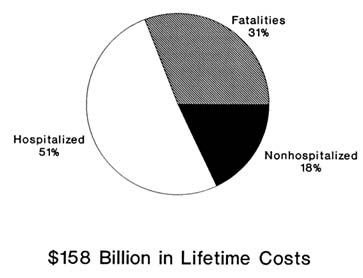
FIGURE 5-1 Cost of injury by class of injury in the United States, 1985.
Source: Rice et al., 1989.
result of injuries; an additional 54 million sustain injuries requiring outpatient medical care or resulting in one or more days of restricted activity without medical attention (Rice et al., 1989). These figures translate into 16 injury-caused hospitalizations for every death due to injury in the United States. Moreover, for every injury death an additional 381 people sustain less severe injuries that do not require hospitalization.
A one-year accounting of the economic costs associated with the estimated 57 million people who sustain nonfatal injuries in the United States provides some perspective on the enormity of the problem. Rice and colleagues (1989) estimate that about $108 million, or two-thirds of the total cost of all injuries incurred in 1985, could be attributed to nonfatal injuries (Figure 5-1). Nearly 60 percent of these costs result from reduced or forgone productivity—the market value of lost work and housekeeping days due to permanent or temporary disability. Another way to assess this cost is to tabulate lost time from work or other productive activity, a measure known as life years lost. For every 100 injuries in a given year, the contributions of 9 life years are lost in the same year. The bulk of this loss is attributable to the high incidence of injury and injury-caused disabling conditions among people between the ages of 15 and 44, which encompasses the most productive period of the human life span. Injuries sustained by people in this age group in 1985 resulted in 2.7 million life years lost, or $44 billion in lost productivity.
In addition to high morbidity costs, nonfatal injuries result in significant direct costs spent for personal health care and rehabilitation. In 1985, $43.3 billion, or $764 per injured person, was spent for hospital and nursing home care, physicians' services, inpatient and outpatient rehabilitation services, and other health care expenditures related to the injury.
Although economic costs do not reflect the pain and suffering associated with injury or the burden placed on family and friends, they do provide a quantifiable measure of the public health significance of injuries and can be useful in guiding choices among competing programs of primary, secondary, and tertiary prevention. There is little question that nonfatal injuries represent a major economic burden to society.
Ranked by cause, cumulative losses are greatest for injuries incurred in falls and motor vehicle crashes, totaling $35.6 billion and $30.2 billion, respectively (Figure 5-2). Poisonings, burns, and injuries associated with the intentional and unintentional use of firearms are also costly to society, totaling $4.1 billion, $2.4 billion, and $2.2 billion, respectively. Nevertheless, these three categories account for a small percentage of the total economic costs of nonfatal injury relative to falls and motor vehicle injuries. Other common causes of injuries include stabbings and other assaults, injuries involving machinery, and sports-related injuries.
The ranking of costs according to causes of nonfatal injuries does not mirror the ranking of mortality costs associated with specific causes of injury (Figure 5-3). The two leading contributors to mortality costs are
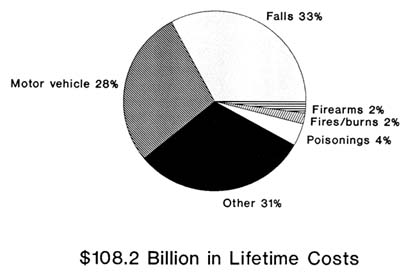
FIGURE 5-2 Lifetime costs of non-fatal injury, United States, 1985.
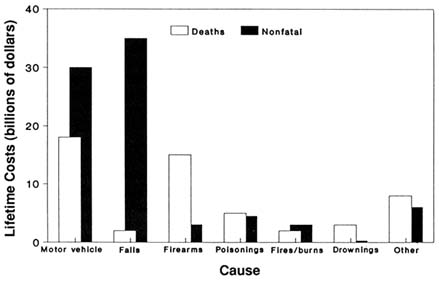
FIGURE 5-3 Lifetime costs of injury by cause— deaths vs. nonfatal injury, United States, 1985.
motor vehicle crashes ($18.4 billion) and incidents involving firearms ($12.2 billion). In contrast, falls, which rarely are fatal and account for less than 1 percent of the mortality costs of injury, are the major source of lifetime costs due to nonfatal injuries. Motor vehicle crashes are also a major source of costs due to nonfatal injuries, whereas firearm-related injuries account for about 2 percent of the total.
The role of firearms in contributing to the population of people with disabling conditions needs to be carefully evaluated. Improved data collection, discussed elsewhere in this report, is important to this evaluation and the development of effective interventions.
CENTRAL NERVOUS SYSTEM INJURIES
The remainder of this chapter concentrates on spinal cord injury (SCI) and traumatic brain injury (TBI). Per-person economic costs associated with these traumatic injuries to the central nervous system are among the highest costs for injury-caused pathologies and impairments. Both types of injury often result in significant physical, neurophysical, and psychosocial deficits that cause long-term disabling conditions, which necessitate extensive
treatment and rehabilitation of affected individuals. Although this chapter focuses on SCI and TBI, much of the discussion, such as that pertaining to the management of care, the development and evaluation of preventive interventions, the need for a stronger emphasis on behavioral and psychosocial determinants of disability, and the importance of tertiary prevention, is applicable to the broader fields of injury control and disability prevention. In addition, focusing on SCI and TBI is not meant to imply that disabling conditions resulting from injuries to other body systems merit less attention. Orthopedic injuries, for example, including serious injuries to the upper and lower extremities, result in significant impairment and disabling conditions. For many people with these injuries, recovery can be long and expensive, and even optimal treatment may not prevent permanent impairment involving chronic pain, loss of motion or contracture of joints, and deformity or loss of limb. Many of the strategies recommended in this chapter for reducing disability associated with TBI and SCI are relevant to the prevention of disability resulting from orthopedic injuries as well.
Traumatic Brain Injury: Incidence and Outcomes
Studies published within the past 15 years have reported incidence rates for traumatic brain injury in the United States ranging from a low of 180 per 100,000 people in San Diego County, California, to a high of 367 per 100,000 in the Chicago area (Annegers et al., 1980; Frankowski et al., 1985; Whitman et al., 1984). Differences in incidence are attributable to differences in case definition and case ascertainment methodologies, as well as differences in the age, sex, and, in particular, racial composition of study populations. The only national data available are from the National Head and Spinal Cord Injury Survey, which estimated a rate of 200 hospitalizations per year per 100,000 people (Kalsbeek et al., 1980). Applying this annual rate to the projected 1990 U.S. population yields an estimate of 500,000 expected new cases of TBI. Using an average of 10 percent mortality implies that each year approximately 450,000 people survive a TBI, the consequences of which range from slight to persistent vegetative state (Frankowski et al., 1985). Annual direct and indirect costs associated with traumatic head injury have been estimated at $12.5 billion (1982 dollars) (Grabow et al., 1984).
The acute severity of TBI has traditionally been measured using the Glasgow Coma Scale (GCS), a 13-point scale ranging from 3 to 15. GCS scores are based on three neurological responses: eye opening, verbal responses, and motor responses. In general, scores below 8 imply severe head injury; scores between 9 and 12 indicate moderately severe injury; and scores of 13 to 15 indicate mild or minor head injury. Although several studies have demonstrated a high correlation between GCS and
chances of survival, the ability of the GCS to predict long-term quality of life is less clear (Uzzell et al., 1987) and requires further evaluation (Eisenberg, 1985).
The majority of individuals hospitalized for TBI are diagnosed as having a mild, uncomplicated closed head injury. Very little is known about the consequences of these minor head injuries, although increasing evidence suggests that they often result in persistent headaches and other physical symptoms, as well as significant psychosocial and behavioral problems, including difficulty in performing at one's job (Casey et al., 1986; Dikmen et al., 1986; Edna and Cappelen, 1987; Rimel et al., 1981; Wrightson and Gronwall, 1984). The most comprehensive study of mild head injury published to date indicates that of 424 individuals examined 3 months after injury, 78 percent complained of persistent headaches, 50 percent had difficulties with memory, and 34 percent of those employed prior to the injury had not yet returned to work (Rimel et al., 1981). Given the high incidence of minor head injuries, their social and economic impacts are considerable.
Considerably more is known about the consequences of moderate and severe TBI. Each year approximately 70,000 to 90,000 individuals sustain moderate to severe TBIs that may result in lifelong potentially disabling conditions. The estimated 2,000 who sustain the most severe disabling conditions survive in a persistent vegetative state, a term referring to their lack of response to external stimuli (Rice et al., 1989). Several studies have documented the sequelae of severe TBI, leading to the characterization of TBI as the ''silent epidemic" because sequelae are primarily neurobehavioral. Although limitations in physical function can be significant following severe TBI, cognitive and psychosocial consequences are more common and contribute significantly to lifelong disabling conditions and poor quality of life (Bachy-Rita, 1989). Common cognitive sequelae include deficits in attention, memory, general intellectual performance, and linguistic and perceptual function. A vast array of emotional disturbances and personality changes have also been documented, ranging from depression and withdrawal to disinhibition and euphoria. Behavioral disturbances have become increasingly recognized as a major limiting factor in recovery and return to work following TBI (Levin et al., 1982).
Estimates of the proportion of people who return to work following moderate and severe closed head injury vary widely due to differences in injury definition, preinjury characteristics of the patient population, and lengths of follow-up. A recent study has shown that only 12 percent of patients with severe head injuries had returned to work within 6 months; 29 percent had returned within a year (MacKenzie et al., 1987). Other studies have demonstrated even lower rates for the most severely injured (Jacobs, 1988; Oddy et al., 1985; Weddell et al., 1980). Rates of return to work are somewhat higher for individuals sustaining moderately severe injuries, ranging from 30 percent
to 50 percent at 3 to 6 months postinjury, and 50 percent to 60 percent at one year (Oddy and Humphrey, 1980; Rimel et al., 1982).
Profiles of individuals who are at highest risk of sustaining TBI are consistent in the research literature (reviewed by Annegers et al., 1980; Frankowski et al., 1985; and Whitman et al., 1984). Adults aged 15 to 24 years are at highest risk of sustaining a traumatic brain injury, but the elderly, aged 65 and over, and very young children are also at high risk. Compared with females, males are twice as likely to sustain TBI; thus, more than 70 percent of all TBIs occur among males. Demographic studies indicate that the incidence of TBI is highest for nonwhite, urban populations (ranging from 250 to 400 per 100,000). White populations living in rural and suburban areas, on the other hand, have the lowest rates (200 per 100,000).
Motor vehicle crashes constitute the leading cause of TBI, accounting for one-third to one-half of all new cases. The second leading cause of TBI is falls, accounting for an additional 20 percent to 30 percent of total incidence. Intentional injuries also represent a major cause, although the contribution of assaults to the overall incidence of head injuries varies among populations according to socioeconomic composition. Studies of inner city Chicago and Bronx County, New York, for instance, indicate that motor vehicle crashes and violence contribute equally to the incidence of head injury (Cooper et al., 1983; Whitman et al., 1984).
Given the force involved in motor vehicle crashes, resulting TBIs generally lead to a higher percentage of diffuse brain damage. Falls and blows to the head, on the other hand, are associated with a higher frequency of hematomas and focal paralysis.
Spinal Cord Injury: Incidence and Outcomes
The incidence of SCI is considerably lower than TBI; however, SCI substantially affects both the individual and society. Each year an estimated 10,000 to 20,000 people in the United States sustain an SCI (2.8 to 5 cases per 100,000 people). These incidence figures translate into a prevalence of approximately 200,000 people in any given year (Kraus, 1985). As with TBI, however, estimates of SCI incidence and prevalence vary considerably across studies because of differences in methods of case ascertainment and in characteristics of study populations. On average, lifetime costs for medical treatment and rehabilitation range from an estimated $210,379 to $751,854 (1989 dollars) per individual, depending on the extent of the injury. The average present value of forgone earnings due to premature death and disability ranges from $151,250 to $308,000 per person. Total lifetime costs of all new cases of SCI in 1989 will amount to an estimated $6 billion (1989 dollars) (DeVivo, 1989).
In contrast to TBI, the major impairments resulting from spinal cord
injury are muscle paralysis and loss of sensation. The distinction is made between paralysis involving both the arms and the legs (quadriplegia) and that of the legs only (paraplegia). Quadriplegia results from injury to one of the eight cervical segments or neck region of the spinal cord. Paraplegia results when the injury is confined to the thoracic, lumbar, or sacral regions of the cord. In general, the higher the injury is to the cord, the more severe the impairment will be. An estimated one-half of all SCIs result in quadriplegia (Stover and Fine, 1986). More than 95 percent of paraplegic individuals achieve independence in specific self-care activities and mobility in a wheelchair (Young et al., 1982). Quadriplegic individuals often require frequent physical assistance in performing personal care tasks such as feeding, dressing, and bathing but may still be independent in the performance of communicative and cognitive activities such as operating a computer.
SCIs are also characterized according to the extent of neurologic injury. Complete injuries, or plegia, result in complete loss of sensation or motor control. In contrast, people with incomplete lesions, or paresis, may retain some sensation and motor power, with the degree of impairment depending on the extent of the lesion. Overall, approximately one-half of all SCIs are complete lesions (Stover and Fine, 1986).
Studies of patients treated at Regional SCI Centers have reported 5-year employment rates ranging from about 14 percent for quadriplegics with complete lesions to 33 percent for paraplegics with incomplete lesions (Stover and Fine, 1986). Again, estimates are influenced by the length of follow-up and the preinjury characteristics of the patient population. A recent study (Whiteneck et al., 1989) reported that 63 percent of a select group of high-level quadriplegic individuals on respirators had survived 9 years and were leading fulfilling lives.
Older adolescents and young adults are at highest risk of SCI. Compared with females, males are at three to four times the risk of sustaining SCI. Very little is known about the correlation between SCI injury and race or ethnicity. The few studies that have examined this relationship report conflicting results (Kraus, 1985).
Motor vehicle crashes of all types constitute the major cause of SCI in the United States, accounting for between 30 percent and 60 percent of all SCIs. Falls constitute the second leading cause, accounting for an additional 20 percent to 30 percent of all cases. Acts of violence (primarily involving firearms) and sports or recreational activity also contribute significantly to the incidence of SCI, each accounting for an estimated 5 percent to 20 percent of all SCIs. Diving is the major cause of sports-related SCI, being implicated in two-thirds of all sports-related SCI reported by the Model Spinal Cord Injury Systems Program. Football injuries also contribute greatly to SCI in the United States (Stover and Fine, 1986).
The extent of injury is related to cause. Nearly one-third of all falls and
motor vehicle-related spinal cord injuries result in incomplete quadriplegia; an additional 15 percent to 20 percent result in complete quadriplegia. SCIs due to acts of violence, on the other hand, more often result in neurologically complete paraplegia. Sports-related SCIs appear to be the most incapacitating; more than 90 percent result in quadriplegia, one-half of which are complete (Stover and Fine, 1986).
Temporal Changes in Patterns of Injury and Outcome
Medical and surgical advances in the acute management of trauma, combined with regionalization of transport and treatment systems, have contributed to a decrease in the injury fatality rate and accompanying changes in patterns of injury severity. For example, during the past 50 years, patterns of survival following SCI have changed dramatically. In the 1950s only those with low-level paraplegia were generally expected to survive. Today, even people who sustain high-level quadriplegia are surviving, and if properly cared for in a specialized, comprehensive program, can lead fulfilling lives (Whiteneck et al., 1989). Further, within the past 10 years, there have been discernible shifts in the proportion of patients with neurologically incomplete injuries. The National SCI Database has documented that while the proportion of all SCI patients who are quadriplegics remained fixed at about 50 percent between 1973 and 1983, the proportion with neurologically incomplete lesions increased from 38 percent to 54 percent. This increase is attributable, in large part, to improved emergency medical services, including better management of the patient at the scene of the injury and during transport to the hospital.
Only two studies have examined temporal trends in the incidence and outcome of head injury. One, an examination of the incidence of head injury in Olmsted County, Minnesota, between 1935 and 1975, found an overall increase in incidence rates but a constant mortality rate (Annegers et al., 1980). The increase was largest for less severe injuries, leading the authors to speculate that the trend resulted from an increased propensity over the years to treat or hospitalize people with minor head injuries. More recently, a study of people hospitalized for head injuries in Maryland reported an 18 percent increase in hospitalizations between 1979 and 1986. The greatest increase (nearly 200 percent), however, was among the most severely injured (MacKenzie et al., 1990). This increase was accompanied by a small decline in the hospital case fatality rate and an increase in the proportion discharged to extended care or rehabilitation facilities. Among those sustaining severe TBI, there was a decrease of 8 percentage points in the proportion discharged to home (from 31 percent to 23 percent) and a 5 percentage-point decrease in fatalities (53 percent to 48 percent). These changes were accompanied by a 15 percentage-point jump (9 percent to 24 percent), or a nearly threefold increase, in the proportion of patients discharged to extended care facilities.
Caution must be exercised in interpretation, but these trends are evidence that improvement in emergency medical services and acute management of head injuries during the past 10 years has substantially increased the proportion of individuals who survive with severe head injury, placing increased demands on families, the health care system, and society at large.
SURVEILLANCE: COUNTING THE SURVIVORS AND ASSESSING THEIR NEEDS
The preceding review points to many inadequacies in our knowledge of the incidence and outcomes of both TBI and SCI. Better data are needed to identify important shifts in trends and patterns of injury and to build a foundation for better planning and evaluation of injury control efforts. The following discussion describes ongoing efforts to address these needs and recommends areas for further research and development.
The Centers for Disease Control (CDC) has defined surveillance as the "ongoing systematic collection, analysis, and interpretation of health data needed to plan, implement, and evaluate public health programs." The timely collection and reporting of these data are important features of an effective surveillance system (Centers for Disease Control, 1988a). Although originally developed to monitor and control epidemics of infectious diseases such as smallpox and cholera, surveillance systems are now applied more broadly to study patterns of incidence and outcomes of noninfectious diseases. As for infectious diseases, these efforts are intended to aid the design of effective strategies for primary and secondary prevention of selected conditions in high-risk groups. Graitcer (1987) has outlined the specific attributes of injury surveillance systems and discusses the advantages and limitations of alternative approaches.
Population-based information on injuries and events related to injuries is available from a variety of sources. Examples of national injury data bases designed for the surveillance of injuries of specific etiologies include the National Accident Sampling System, the National Electronic Injury Surveillance Systems, the Survey of Occupational Injuries and Illnesses, and the National Crime Survey. Although criticized for incompleteness of coverage, limited content, and high cost, these surveillance systems have provided important and useful epidemiological information on TBI and SCI, including etiologies (National Research Council, 1987). Because these systems only track injuries of specific etiology, however, they do not provide complete enumeration of all head and spinal cord injuries.
Surveys by the National Center for Health Statistics are another source of data on nonfatal injuries, although they are not designed specifically for the purpose of injury surveillance. Two specifically relevant surveys are the National Health Interview Survey (NHIS) and the National Hospital
Discharge Survey (NHDS). These instruments have the potential to provide uniform data on all neurological injuries of a general severity class regardless of cause or etiology.
The NHIS is a probability sample of households in the civilian noninstitutionalized population of the United States. The core survey provides data on the incidence of injury and acute conditions, duration and types of limitation of activity, persons injured, hospitalizations, physician visits, and the prevalence of selected chronic conditions. Although the NHIS is one of the few sources of population-based data on the incidence and outcome of minor or mild head injuries that do not result in hospitalization, it contains very little data on circumstances or cause of injury.
Injuries reported in the NHIS are classified into four broad categories: (1) injuries involving moving motor vehicles, (2) injuries occurring at home, (3) injuries occurring at work, and (4) other. This classification is clearly inadequate for identifying the major external cause of disabling injuries including falls, firearms, and injuries involving machinery. Also, there is inadequate information collected for classifying injuries as to their intent. Finally no attempt is made in the interview to ascertain the circumstances of the injury, for example, involvement of alcohol, use of protective devices such as seat belts, car seats, airbags, and special clothing and eyewear. Without this important information, it is difficult to appropriately identify and target interventions for reducing the occurrence of injuries.
The NHIS is also a potentially useful source of information on the use of and unmet need for rehabilitation services. Although the current survey asks questions pertaining to the frequency of physician visits and hospitalizations, it does not collect information about the use of specific inpatient and outpatient rehabilitation services.
The core NHIS survey should be expanded to include questions pertaining to the circumstances and cause of injury to help improve our knowledge of injury etiology. In addition, a comprehensive supplement to the NHIS on incidence, medical care, rehabilitation, and disability related to injury is needed and should be considered as one of the survey's annual special topics.
The NHDS is an important source of national estimates of the incidence of neurological injuries severe enough to require hospitalization. It consists of hospital discharge abstracts uniformly collected for a probability sample of approximately 200,000 patients treated in nearly 600 short-stay, nonfederal hospitals. Data conform to the Uniform Hospital Discharge Data Set. The recent development of a computerized conversion table that maps ICD-9CM coded discharge diagnoses into widely used scores denoting the severity of injuries (i.e., the Abbreviated Injury Scale) has enhanced the usefulness of
this data base for studying patterns of injury specific to severity. A major limitation of these data, however, is the lack of uniform coding of the external cause of injury. Although a classification of external causes exists within the structure of the International Classification of Diseases (i.e., ICD E-codes), hospitals vary in their use of these codes. Underreporting of E-codes in hospital discharge abstracts has been recognized as a major obstacle in the use of this valuable source of data for monitoring the causes and trends of injuries (National Research Council, 1985; Sniezek et al., 1989; U.S. National Committee for Injury Prevention and Control, 1989; Rice et al., 1989).
Although both the NHIS and the NHDS are potentially valuable tools for monitoring the epidemiology of TBI and SCI at the national level, their utility for surveillance is limited by their mode of collection. Data are collected and tabulated on an annual basis and published as much as a year later. Such a design is inconsistent with some surveillance needs. With the increasing availability of statewide hospital discharge abstract data bases, there are new opportunities for developing timely and cost-efficient surveillance systems to monitor the incidence of TBI and SCI. Currently, 28 states maintain data bases that contain, at a minimum, the items incorporated in the Uniform Hospital Discharge Data Set. An important advantage of these statewide data basis is that they include all hospital discharges and provide data specific to the state and its communities. In addition, many states publish timely data. Similar to the NHDS, however, information on cause of the injury is not uniformly collected for all discharges. A requirement for E-code data elements in statewide data collection systems would help to solve this problem, and mandatory E-coding legislation has been introduced in several states. Implementing the use of E-codes will require the development of guidelines for E-coding and the instruction of health care providers on the importance of recording data on the cause of injury (Sniezek et al., 1989). Modifying current statewide hospital discharge abstract data to include E-codes would help provide timely information on the incidence of TBI and SCI.
Nationally collected E-code data for describing the external cause of injury are needed to enhance injury surveillance activities and improve the accuracy of data on the causes and trends of injury. This will entail the creation of a separate data field for E-codes in all hospital discharge abstract data systems. With respect to SCI and TBI, mandatory reporting is needed to improve incidence measures, to appropriately allocate resources, and to plan, implement, and evaluate the most effective interventions.
Another strategy for monitoring the incidence of TBI and SCI is to enact laws that require reporting injuries to the state health agency. Although
mandatory reporting has been used successfully for monitoring the incidence of infectious diseases, it has only recently been recognized as an effective tool for surveillance of injuries. Seventeen states, including 12 where reporting is mandated by law, now have SCI registries. In 1987 the Council of State and Territorial Epidemiologists recommended mandatory reporting of acute, traumatic SCI to state health departments and to the CDC. The CDC, together with the Council of State and Territorial Epidemiologists, the American Spinal Injury Association, and other groups, is currently working to implement this resolution.
Similar efforts to identify head injury as a reportable condition are also being pursued. At least nine states have registries of persons with head injuries. However, surveillance of TBI is more difficult than surveillance of SCI, and may not be practical. The incidence of head injury is also much greater than that of spinal cord injury, making the development and maintenance of a surveillance system more resource intensive. In addition, TBI is more difficult to define, and standard case definitions are lacking. More work is needed to assess the costs and benefits of mandatory reporting of TBI. Evaluation of existing programs would be most helpful in this regard.
Resources should be allocated to implement and evaluate mandatory reporting of SCI to state health agencies. Mandatory reporting of SCI should be designed as part of a broader national surveillance program that would facilitate the development, implementation, and evaluation of effective interventions and countermeasures. Studies should be conducted to determine the feasibility and utility of mandatory reporting of TBI. Standard case definitions of TBI are needed and should be developed to facilitate this activity.
PRIMARY PREVENTION: THE STRATEGY OF CHOICE
An agenda for the prevention of disability associated with traumatic brain and spinal cord injury must place a priority on preventing the injury from occurring in the first place. Numerous interventions have been identified in the literature and have been shown to be effective in reducing the incidence and severity of traumatic injuries. Many of these interventions have not been implemented, however, because of a variety of social, economic, and political barriers. Still other interventions are promising but require further testing for efficacy.
As discussed, the causes of TBI and SCI are similar. Motor vehicle crashes are the leading cause of all nonfatal TBI and SCI, followed by falls, assaults, and sports or recreational injuries. The abuse of alcohol and drugs plays a major role in the incidence of all traumatic injuries, and TBI and SCI are no exceptions. For example, an estimated 50 percent of all motor
vehicle deaths and homicides and one-quarter of all fatal falls have been attributed to the abuse of alcohol (U.S. National Committee for Injury Prevention and Control, 1989).
The literature is replete with examples of interventions that are known to reduce the incidence and severity of injury. The U.S. National Committee for Injury Prevention and Control (1989) recently reviewed the state of the art in injury control and concluded that, "while questions remain, we already know enough to act. Indeed, if the interventions recommended [in this report] were put in general practice, the result would be a dramatic saving in lives, health, and resources."
A recent review of the literature on the evaluation of injury prevention programs estimated that, for those interventions for which adequate data are available, the potential cost savings, after the cost of the injury control programs, is in the billions of dollars (Rice et al., 1989). For example, a promotional campaign developed in Australia to increase use of bicycle helmets has led to a documented 20 percent reduction in head injuries among bicyclists. This translates in Australia into 178 fewer TBI fatalities each year, 2,465 fewer head injuries requiring hospitalization, and 16,602 fewer nonhospitalized head injuries. The resultant cost savings is approximately $255 million (1985 U.S. dollars). In the United States, a similar 20 percent reduction in head injuries among bicyclists would result in a potential savings of $183 million. Another dramatic example is the potential cost savings from implementing motorcyclist helmet laws in states that do not now have this requirement. After deducting the cost of helmets and assuming that costs associated with law enforcement would be minimal (because compliance with helmet laws is high), the savings due to fewer head injuries resulting from motorcycle crashes are estimated at $97 million. Analyses such as these illustrate the potential cost savings of interventions and provide the basis for more rational choices among alternative programs and policies.
It is not possible in this report to evaluate the current state of knowledge regarding the effectiveness of alternative strategies for prevention. The reader is referred to the report of the U.S. National Committee for Injury Prevention and Control (1989) for a comprehensive review. To illustrate the types of strategies available, however, Table 5-1 lists several interventions to reduce the incidence and severity of motor vehicle-related injuries. Interventions are classified as (1) those of proven effectiveness, (2) those that look promising but require more testing to establish their effectiveness or to assess their feasibility or cost, and (3) those that require further research and development.
A number of clear-cut, unassailable conclusions stand out from a review of the literature. First, several studies have underscored the lack of adequate funding for injury prevention research and practice. As noted in
TABLE 5-1 Interventions That Are Proven Effective, That Are Promising, or That Require More Research in Preventing or Reducing the Severity of Motor Vehicle-related Injuries Associated with Selected Causes and Conditions
|
|
Effectiveness of Intervention |
|
|
|
Cause or Condition |
Proven Effective—Implement and Monitor |
Promising—Implement but Monitor Closely and Evaluate Outcomes |
Require Further Research |
|
Impaired driving |
Administrative license suspension |
Use of BAC of .05 g/ml or above as per se evidence of impaired driving |
Institute a lower BAC for teenage drivers |
|
|
Enforcement of minimum legal drinking age laws |
Raising state and federal alcohol excise taxes to reduce alcohol availability |
Use of sobriety checkpoints |
|
|
Dram shop laws (civil liability of servers of alcoholic beverages) |
Server training programs directed at waiters, waitresses, and bartenders |
Alcohol safety education schools for convicted drunk drivers |
|
|
Implementation of compulsory BAC tests in traffic injury cases |
Educational programs to prevent impaired driving among youths and young adults |
Designated driver |
|
|
|
Use of road edgelines and wrong-way signs |
Ignition interlock systems |
|
|
|
|
Use of certain roadway countermeasures, including raised lane delineators, rumble strips, and herringbone patterns |
|
Occupant protection |
Enactment and enforcement of safety belt use laws |
Requiring safety belt use by employees who drive in federal, state, municipal, or private fleet motor vehicles |
Improvement of safety belt systems to provide optimal protection and comfort for children under the age of 14 and the elderly |
|
|
Uniform, comprehensive laws requiring safety seat use for all children up to age 5 should be adopted in all 50 states |
Local ordinances requiring taxicabs to have accessible and usable safety belts |
Development and use of safety seats for low-birthweight infants |
|
|
Continued implementation and monitoring of child safety seat loaner programs targeted particularly at low-income parents |
Requiring rental car companies to provide loaner child safety seats |
|
|
|
|
Educational and behavioral change interventions for increasing safety belt and child safety seat use |
|
|
|
Effectiveness of Intervention |
|
|
|
Cause or Condition |
Proven Effective—Implement and Monitor |
Promising—Implement but Monitor Closely and Evaluate Outcomes |
Require further Research |
|
|
|
Integrating traffic safety information into health risk appraisals |
|
|
Vehicle design |
Installation of integral rather than adjustable headrests in all motor vehicles |
Lowering of bumper heights |
|
|
Motorcyclists and bicyclists |
Enactment of helmet laws in all states |
Use of conspicuity-enhancement measures and devices |
Bicycle safety programs |
|
|
|
Motorcycle rider education |
|
|
|
|
Moped legislation |
|
|
|
|
Construction and maintenance of bicycle paths and lanes |
|
|
Pedestrians |
One-way street networks and conversion of two-way to one-way streets |
Moving a transit bus or school bus stop location from near side to far side of an intersection |
Adverse effect of crosswalk markings |
|
|
Adequate roadway lighting |
Pedestrian safety education for children |
Curb parking regulations |
|
|
Use of roadway barriers |
|
Use of traffic signals and pedestrian indicator lights |
|
|
Use of conspicuity-enhancement devices and materials by all nighttime pedestrians and bicyclists |
|
Relative effectiveness of various types of legislation to reduce pedestrian injuries |
|
|
|
|
Interventions targeted toward the elderly pedestrian |
|
|
|
|
Adverse effects of right-on-red laws |
|
Note: BAC = blood alcohol concentration. SOURCE: U.S. National Committee for Injury Prevention and Control, 1989. |
|||
Injury in America (National Research Council, 1985) and more recently in Cost of Injury in the United States (Rice et al., 1989), total expenditures for injury research amount to only 11 percent of the National Cancer Institute's obligations and 17 percent of the National Heart, Lung, and Blood Institute's obligations. Yet productivity losses associated with injury death alone (36 life years lost per death) exceed those associated with cancer (16 years lost), stroke (11 years), or heart disease (12 years). Deaths are only a small fraction of the injury problem, however. For every death an estimated 400 individuals survive an injury. Although considerable progress has been made in identifying injury as a public health priority, adequate resources for the prevention of injuries through application of existing knowledge and the development of new strategies are still lacking.
A second clear-cut conclusion is that, although numerous interventions have been shown to effectively reduce the incidence and severity of injuries, very few strategies have been broadly implemented. One of the major barriers to implementation has been the lack of evidence demonstrating cost savings (Rice et al., 1989).
Despite some estimates of large potential costs savings, implementation of interventions perceived as restricting individual liberties often meets strong resistance. A long-standing controversy in injury control concerns the right of governments to restrict individual liberty in the name of public health. Opponents of bicycle and motorcycle helmet laws have not challenged this basic principle, but they argue that the choice not to wear a helmet endangers only the individual and does not jeopardize the public. Yet the costs accrued as a consequence of injuries to those who do not wear helmets are substantial, and a significant fraction of these costs is borne by public agencies and society at large (U.S. National Committee for Injury Prevention and Control, 1989). It has been estimated that in 1985 nearly one-third of the costs associated with direct health care expenditures and 27 percent of transfer payments due to injury were paid by public sources (Rice et al., 1989). A better understanding of the real and perceived barriers to implementation will help ensure that the public benefits from the results of research and evaluation.
Research is needed to evaluate the benefits and costs of injury prevention programs and policies. This would include an assessment of the social, economic, and political barriers to implementation of prevention strategies. Implementation of those strategies that are shown to be cost-beneficial should be given high priority.
As summarized in Injury in America (National Research Council, 1985), there are three types of strategies for preventing injuries: (1) persuading persons at risk to change their behavior, (2) requiring people to refrain from risky behaviors by law or administrative rule, and (3) providing automatic protection through product and environmental design. It is generally accepted
that countermeasures involving the third approach are the most effective because individual behavior is minimally affected. Indeed, groups at highest risk of injury are often the least likely to alter their behavior in response to education or legislative mandate.
The potential success of programs and policies aimed at changing risky behavior should not be underestimated. Research is needed on behavioral risk factors related to injury in order to develop and improve effective interventions.
Another conclusion that can be drawn from the literature is that comparatively little is known about the risk factors associated with falls; possible countermeasures are rarely researched (National Research Council, 1985). Falls rank highest among all nonfatal injuries in both incidence and cost, and constitute a leading cause of disabling conditions in the United States; nevertheless, there is limited information about the risk factors associated with falls (National Research Council, 1985).
More research is needed to identify and improve our understanding of risk factors associated with falls and to develop effective countermeasures that would reduce the number and severity of falls. Necessary elements of such an approach include research, regulatory change, and public education.
Finally, the abuse of alcohol and drugs is known to be a major contributor to injuries of all etiology. As will be discussed in later sections, alcohol and drug use can also play an important role in recovery from major trauma in the acute and rehabilitation phases.
Research is needed to develop and implement a comprehensive, coordinated approach to reducing the number of injuries resulting from alcohol and drug abuse. A coordinated approach should involve new legislation, regulatory change, and public education.
A SYSTEMS APPROACH TO ACUTE CARE AND REHABILITATION
Although primary prevention efforts should be given highest priority, there is also a need to ensure that people who survive potentially disabling injury receive adequate acute care and rehabilitation. Meeting this need is particularly important because of the growing number of survivors who sustain severe injuries that result in significant physical and cognitive impairment, and for whom the prevention of secondary conditions is important.
The Systems Approach
Universal access to coordinated systems of care that integrate treatment from the site of the injury through long-term community follow-up is recognized as essential for mitigating the short-term effects of SCI and TBI and for controlling the effects of long-term disabling conditions. The four basic elements of such a coordinated approach are summarized below:
-
Emergency Medical Services (and Acute Medical/Surgical Care): Prompt recognition and treatment of the injured person at the scene with rapid transport to a designated trauma center specifically designed to treat individuals with neurological injuries.
-
Acute (Medical) Rehabilitation: Begins in the acute phase and continues with an integrated, comprehensive inpatient rehabilitation care facility specifically designed to care for SCI and TBI survivors and their families. These services focus on physical and cognitive restoration of the individual.
-
Psychosocial and Vocational Rehabilitation Services: Services aimed at preparing the individual for independent living and community reintegration. Although initiated during the inpatient phase of acute (medical) rehabilitation, the majority of these services are delivered within the structure of a transitional living center, day program, or outpatient services.
-
Lifelong Comprehensive Follow-up: Includes medical, social, psychological, and vocational follow-up on a regularly scheduled basis.
The scope and volume of services required at each stage of the system of care will, of course, depend on the nature and severity of the injury. However, some general statements can be made. For example, emergency services and acute care for an individual with SCI should be designed to prevent a second injury to the spinal cord, necessitating appropriate stabilization of the spine before arriving at the hospital. In the hospital, definitive stabilization of the spine and measures to prevent such complications as deep vein thrombosis, pulmonary emboli, pneumonia, contractures, and decubiti must be performed by experienced personnel. Medical rehabilitation services should begin immediately in the acute phase to minimize physical deterioration and prevent further impairment and functional limitation due to loss of strength and range of motion, bladder and bowel incontinence, and inadequate or inappropriate training and provision of equipment. Accurate assessment and preparation for return to work and independent living during acute care can help alleviate some of the feelings of hopelessness and depression that an injured person often experiences. Psychosocial and vocational rehabilitation should continue the effort to prevent medical complications and increase functioning. Upon returning to the community, the individual can benefit from proactive community outreach programs in housing, transportation, recreation, employment, and other activities.
Although a coordinated approach to the treatment of TBI patients shares many of the same elements as that for SCI patients, there are differences in the type and sequence of services required. As summarized previously, residual deficits associated with TBI are mainly cognitive, behavioral, and psychological. People with TBI require a constellation of cognitive rehabilitation services not typically needed by an individual recovering from a severe SCI. Also, TBI survivors often have difficulty generalizing what they learn to new situations or problems. Therefore, skills learned in an inpatient acute care or rehabilitation facility may not be transferable to community living. Transitional living centers, day treatment programs, and outpatient services become important components of a coordinated approach to caring for TBI survivors. The complexity of the care continuum in rehabilitation following TBI is discussed by Uomoto and McLean (1989) and is summarized in Figure 5-4. It is important to note, however, that persons sustaining mild or minor head injury may require initial treatment on an outpatient basis only. Appropriate follow-up of these individuals is important for identifying and treating potential late sequelae, including recurrent headaches, memory problems, and psychosocial and behavioral problems.
Significant progress has been made in developing comprehensive systems of care for individuals with SCI. With funding from the National Institute on Disability and Rehabilitation Research, 13 model systems have been established during the past two decades. Through uniform data collection, these systems of care have documented ''(1) the system's continually increasing national capture rate; (2) reduced time between injury and admission to the system; (3) reduced length of stays; (4) cost-containment efforts; (5) reduced complication rates; (6) reduced mortality statistics; (7) changes in patterns and extensiveness of neurological involvement; and (8) change in domestic and vocational patterns following spinal cord injury" (Stover and Fine, 1986). Although these data provide evidence in support of the effectiveness of SCI systems of care, it is important that comprehensive studies be conducted in which patient outcomes are compared with the outcomes of those who do not receive care within the system. Analyses to date lack appropriate controls and are not population based, due in part to a lack of mandatory reporting of SCI and its consequences.
Whereas systems of care for SCI patients have existed for almost two decades, TBI systems are still evolving. The number of dedicated rehabilitation programs for TBI has grown from 40 in 1980 to about 700 in 1988 (Dixon, 1989), but federally funded systems of care for TBI patients have only recently been established and have yet to adopt a uniform data set (J. P. Thomas, Medical Sciences Programs, National Institute on Disability and Rehabilitation Research, personal communication, 1989).
The following sections review in more detail the four elements of coordinated systems of care for SCI and TBI that were summarized above. Attention
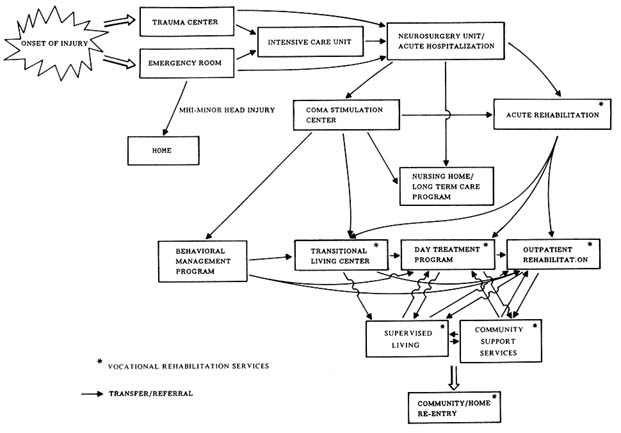
is focused on the potential for interrupting the chain of events leading from injury to impairment to functional limitation and disability. Table 5-2 summarizes what is known to be effective in minimizing impairment, maximizing functional capacity, and preventing disability, as well as what needs to be known to develop better and more efficient systems of care.
Emergency Medical Services
The nature of the trauma determines the initial severity of the injury to the central nervous system and to a substantial degree also determines the extent of the resulting impairment and functional limitation. Sufficient trauma to the brain may result in cardiopulmonary death, and direct injury to the upper cervical spinal cord may result in death due to paralysis of the muscles of respiration. Should the patient survive the primary injury, however, several other types of injury can occur and increase the extent and severity of impairment and functional limitation. These other types of injury (described below) are secondary injury to the central nervous system, additional second injury to the spinal cord, associated injury to other organs at the time of the initial event, and medical complications of other body systems. A primary role of emergency medical systems, acute care, and medical rehabilitation is to mitigate these effects and ensure maximum function. However, as the National Research Council (1985) and the U.S. Interagency Head Injury Task Force (1989) have noted, more information is needed on effective interventions.
Secondary Injury Primary injury to the brain results in focal hemorrhage or diffuse injury to axons and in hypoxia. The spinal cord, similarly, may sustain initial contusion, hemorrhage, and hypoxia associated with a disruption of the spine and surrounding structures (Becker and Povlishock, 1985). The cascade of events that follow the initial injury often results in further damage (secondary injury) to the nervous system. For example, diffuse brain swelling and space-occupying lesions resulting from TBI can contribute to increased intracranial pressure that can further contribute to ischemia and hypoxia—factors that contribute to impaired function and death. The mechanisms and pathophysiology underlying these changes remain unclear and in need of further research (National Research Council, 1985).
Second Injury The initial trauma of SCI can cause responses such as swelling, hemorrhage, and hypoxia. In TBI patients, drug treatment to remove focal hematomas and control swelling and pressure is helpful, but in SCI patients only modest improvements are achieved. Failure to adequately stabilize the spine during extrication, transport to the hospital, and in the hospital may result in a second injury to the spinal cord, converting an incomplete
TABLE 5-2 Current Knowledge and Knowledge Still Needed to Minimize Impairment, Maximize Functional Capacity, and Reduce Disability Through Improved Systems of Care for Persons with Spinal Cord Injury (SCI) and Traumatic Brain Injury (TBI)
|
Condition or System of Care |
What Is Known |
What Needs to be Known |
|
SECONDARY INJURY TO CENTRAL NERVOUS SYSTEM |
Control of intracranial pressure and early removal of blood clots is accepted treatment in TBI. International classification of severe TBI is accepted. |
Basic research is needed into swelling of the brain and spinal cord postinjury. The methods and role of nutritional and neuroendocrine factors in TBI also need study. |
|
|
Increased understanding of pathophysiology has been gained in animal studies, as well as increased understanding of the mechanisms and dynamics of spine and spinal cord injury in animal models. |
Evaluation is needed of current methods to stabilize the spine and their effects on neurological recovery in SCI. |
|
|
|
Evaluation is needed of the effectiveness of triage of patients with TBI and SCI to trauma centers in regard to reduction of secondary injury to SCI and appropriate management of associated injuries. |
|
|
Increased understanding has been gained of "post-concussion syndrome." |
Development and refinement of methods should occur to determine the effectiveness of interventions in mild head injury. |
|
COMPLICATIONS |
||
|
Neuromusculoskeletal |
Exercises are effective in maintaining strength and range of motion. Drugs, surgery, and physical measures are of some benefit in control of spasticity and pain. |
Newer methods of drug and electrical implantation devices need to be evaluated in spasticity. Electrical stimulation in prevention of atrophy and increase of strength requires further investigation. Effects of splints and phenol blocks need to be evaluated in treatment of spasticity in TBI. Clinical trials in treatment of heterotopic ossification are needed in SCI and TBI. |
|
Condition or System of Care |
What Is Known |
What Needs to be Known |
|
|
Effective methods for control of contractures, spasticity, and disuse weakness are known in the hospital phase. |
Factors that contribute to progressive spasticity, contracture, and weakness with associated impairment posthospitalization need to be studied. Increased long-term incidence of arthritis in the shoulders and progressive weakness in the older SCI patient needs study. |
|
Cardiovascular/pulmonary |
Prevention of deep vein thrombosis in SCI has recently been reported with use of electrical stimulation and heparin. Mechanisms of development of atelectasis/pneumonia are better understood in SCI. High-level quadriplegic patients can be effectively managed on portable ventilators at home. |
Larger clinical trials are needed to demonstrate the effectiveness of deep vein thrombosis and pulmonary embolus prevention. Studies on prevention of atelectasis/pneumonia and risk factors of future pulmonary complications are indicated. |
|
|
Deep vein thrombosis, pulmonary embolus, and orthostatic hypotension are seldom a problem postdischarge. |
Cardiovascular deconditioning needs to be studied in SCI and TBI individuals who are sedentary postdischarge. |
|
Gastrointestinal/genitourinary |
Bowel training is effective in producing continence. Renal management can result in significant decrease in morbidity and mortality in SCI. |
Clinical trials on the benefit of intermittent catheterization are needed. The value of drugs and electrical stimulation in the management of the neurogenic bladder should be determined. Long-term use of drugs and penile implants should be evaluated for treatment of impotence in SCI. |
|
|
Renal scans are an effective method to follow renal function and screen for complications in SCI. |
Complications of the urinary tract in SCI need to be monitored postdischarge. Studies are needed as to the best methods of urinary tract prophylaxis for infection in SCI postdischarge. |
|
Condition or System of Care |
What Is Known |
What Needs to be Known |
|
Integument (skin) |
Pressure sores are preventable with proper attention to weight relief. Effective types of cushions and beds are available for longer-term prevention. |
Education of emergency medical services and trauma personnel is needed to apply known effective measures. New devices and electrical stimulation for prevention of pressure sores need further investigation. |
|
|
Pressure sores can be effectively prevented in the hospital and postdischarge with adequate nursing care, patient education, and use of appropriate equipment. |
Factors that contribute to pressure sores postdischarge need further study to identify effective interventions. |
|
IMPAIRMENT AND FUNCTIONAL LIMITATION |
Recovery of motor power distal to the zone of injury is known in large groups, and recent information on recovery at the zone of injury is available in SCI. Recovery of motor power in TBI is not well appreciated. |
More precise information on the extent and duration of motor recovery is needed to determine effectiveness of various interventions such as surgery, functional electrical stimulation, and other interventions on recovery and function. Motor recovery in TBI should be studied. Strength and fatigue studies should be correlated with upper and lower extremity function. |
|
|
Some information exists on cognitive remediation in stroke patients but little in TBI. Clusters of cognitive disorders: attention, concept formation, executive functions, self-regulation of affect, and memory have been identified. |
Standardization of tests, categorization of patients, and potential interventions such as cognitive retraining devices need to be developed and evaluated. |
|
|
Training of patients with SCI is effective, and large studies show significant gains in function from admission to discharge. Training of patients with hemiplegia has been shown to be effective, but studies in TBI are limited. |
Various self-help devices and environmental control systems need to be evaluated. Precise relationship of strength to function in quadriplegic patients needs study. Effect of self-care retraining with various categories of cognitive deficits in TBI needs evaluation. |
|
Condition or System of Care |
What Is Known |
What Needs to be Known |
|
|
Mobility can be achieved in virtually all SCI individuals with training, orthotics, and manual or powered wheelchairs. |
New developments in orthoses and functional electrical stimulation to assist ambulation in SCI need further refinement and evaluation. Centers for the development of advanced technology need to be identified to facilitate investigative interaction between rehabilitation professionals and engineers. |
|
Neurobehavioral |
Cognitive and behavioral factors limit function in self-care and community living. |
Classification of cognitive/behavioral impairments and their natural course of recovery in TBI require study. |
|
|
Coma stimulation programs, day care, and transitional living programs have proliferated in recent years in response to the needs of a large TBI population. |
Standard setting for and evaluation of the effectiveness of these alternative placement environments on cognitive/behavioral remediation are essential. |
|
|
Recent studies identify recovery from the persistent vegetative state (PVS) based on duration. |
Costs and alternative care requirements need longitudinal assessment in PVS. |
|
DISABILITY AND QUALITY OF LIFE |
|
|
|
Vocational |
Return to work increases to 30% in paraplegic individuals 5 years postdischarge. |
The disparity in capacity and actual return to work requires measurement and factor analysis in SCI and TBI. |
|
|
Barriers to employment have been identified, such as loss of health benefits and inadequate evaluation of retraining limits. |
Effects of removal or reduced barriers to employment need evaluation. |
|
Condition or System of Care |
What Is Known |
What Needs to be Known |
|
|
Legislative authority for employment of people with disabilities was recently enacted. |
The effect of legislative action should be evaluated in return to employment by people with SCI and TBI. |
|
Psychological |
Severe depression is uncommon in SCI in the hospital and early discharge period. |
The incidence of depression, suicide, and other self-destructive behaviors over time is not known in SCI and TBI. |
|
|
Disruptive behavior that is disabling is common in TBI in the early discharge period. |
The natural course of recovery from behavioral dysfunction in TBI requires study. |
|
|
Frustration and hopelessness are felt to contribute to medical complication in SCI and disability. |
Interventions based on careful monitoring of psychological adjustment postinjury require study. |
|
|
Some behaviors that are disruptive to function are controlled with psychotropic agents. |
The effects of psychotropic agents and other interventions require evaluation in TBI. |
|
Social |
Most individuals with SCI are quite active. High quadriplegic individuals on respirators may achieve a significant quality of life. |
Normative data are needed for quality of life in SCI and TBI based on severity of impairment and disability. |
|
|
Severe SCI and TBI individuals are a significant burden of care for the family. |
The longitudinal needs of attendant care and respite care based on severity of disability require study. |
|
|
Of SCI individuals in systems of care, 94% return directly to the community from rehabilitation hospitals. A great proportion of TBI individuals require alternative placement from the rehabilitation hospital. |
Quality of life and cost differences for attentive placement in SCI need to be determined. |
|
|
Peer counseling through independent living centers has (perceived) value to individual adjustments. |
Standards development and effectiveness measurement need to be carried out in TBI alternative care settings. |
|
Condition or System of Care |
What Is Known |
What Needs to be Known |
|
|
Cost data of longitudinal care will soon be available. |
Factors such as assertiveness training, education, and advocacy which result in effective interventions should be studied. |
|
|
|
Limitation of various categories of insurance for essential services and equipment should be determined. |
lesion into a complete lesion, which not only increases impairment but also diminishes the prognosis for recovery (National Research Council, 1985).
Associated Injury Persons with central nervous system trauma often have multiple injuries to other organs, and these associated injuries can contribute to further complications and impairment. For example, recent studies indicate that as many as 82 percent of patients with TBI sustain associated injuries (Bontke, 1989). These associated injuries include fractures of long bones, skull, and spine; chest and abdominal injuries; and peripheral nerve damage (Stover and Fine, 1986). The high incidence of associated injuries is related to the major role that motor vehicle crashes play in causing central nervous system trauma.
Finally, about 10 percent of TBI patients have associated SCI, and 10 percent of SCI patients have associated severe TBI. Compared with those who damage only one organ of the central nervous system, both groups sustain greater impairment and subsequent disability. A recent report indicates that up to half of SCI patients may have a mild head injury, but the incidence of long-term impairment in these cases is not known (Davidoff et al., 1988). A reduction in overall impairment and mortality may be achievable by improving the skill with which TBI and SCI patients are managed (National Research Council, 1985).
Complications (Secondary Conditions) The effect of medical complications on individual function is significant. Patients with SCI and TBI often have similar complications that contribute to impairment and functional limitation, including complications to the cardiopulmonary-vascular, neuromusculoskeletal, and genitourinary-gastrointestinal systems; however, considerably more is known about the incidence and potential for intervention
in patients with SCI than in those with TBI (Young et al., 1982; Stover and Fine, 1986). In large part, this lack of information on TBI is attributable to a more mature system of neurological classification and data collection on SCI (Stover and Fine, 1986). For TBI, classification and data collection are relatively new and present more complicated problems (Bachy-Rita, 1989). Consequently, efforts to quantify the effectiveness of various intervention strategies in TBI lag behind similar efforts in SCI.
On closer inspection, certain types of complications that appear to be similar are substantially different in the SCI and TBI patient. For example, heterotopic ossification, a cause of contractures, occurs predominantly in the upper extremities in TBI, whereas it occurs predominantly in the lower extremities in SCI (Venier and Ditunno, 1971). Spasticity during the acute phase of TBI may frequently require casting to prevent contracture (Weintraub and Opat, 1989), but this is seldom required in SCI. Other complications are seen exclusively in TBI, such as cognitive dysfunction, linguistic and cranial nerve deficits, personality change, hydrocephalus, and seizures. Disseminated vascular clotting and neuroendocrine disorders are also prominent in TBI (Bontke, 1989; National Research Council, 1985).
Deep vein thrombosis is a very common medical complication and occurs in 80 percent to 100 percent of completely paralyzed SCI patients, leading to pulmonary embolism, one of the most frequent causes of early death. Recent studies provide evidence of effective methods of prevention, and these methods should be used more widely (Merli et al., 1988; Green et al., 1988). Occurring in 60 percent to 80 percent of high-level quadriplegic patients, pulmonary complications such as atelectasis and pneumonia are another major cause of mortality and morbidity. Improved understanding of the underlying mechanisms could point the way to more effective interventions (Fishburn et al., 1990).
Infection of the urinary tract is another common complication in SCI and TBI patients who use indwelling Foley catheters. However, advances in the use of intermittent catheterization and improved measures of follow-up in persons with SCI have been reported to reduce renal disease as a major cause of death in the long-term patient (Stover and Fine, 1986). Recurrent urinary tract infection and complications, however, continue to be a source of functional limitation and, at times, are associated with autonomic hypertension and increased spasticity. Impaired bowel function is common in both groups of patients because of immobility.
Contractures associated with muscle weakness and imbalance, spasticity, and heterotopic ossification constitute a type of medical complication that can lead to significant impairment and functional limitation. Limited shoulder motion resulting from contractures, for example, may make it impossible for an individual to put on a shirt or reach overhead; walking is severely compromised if strength recovers but the knees and hips are permanently
fused in flexion, not allowing proper standing and ambulation. A recent study (Yarkony and Sahgal, 1987) reported an 85 percent incidence of contractures in craniocerebral trauma cases transferred to a rehabilitation unit; frequency was related to duration of coma. In SCI and TBI patients, contractures are most effectively prevented when bed positioning and therapies to maintain motion are instituted early and are continued throughout all phases of recovery.
Pressure sores are perhaps the most commonly cited medical complication associated with SCI. Nutritional deficiency, which may be prevalent early in the conditions of TBI and SCI patients, contributes to tissue breakdown and has been found to correlate with outcome (Ragnarsson, in press). Recurrent pressure sores do occur in a small proportion of patients after discharge, and improved strategies for prevention during this phase are needed. However, proper education and training in combination with assistive equipment can be effective in preventing this condition. SCI patients suffer severe pressure sores almost twice as often before arriving at a model system care facility as after entry into the facility (Young et al., 1982).
Basic and clinical research is needed in conjunction with improved surveillance data to develop and improve effective interventions for the prevention, management, and reduction of injury-related damage to the central nervous system. In particular, emphasis should be given to the reduction of medical complications that contribute to short- and long-term disability in persons with SCI and TBI.
Acute (Medical) Rehabilitation
Beginning a course of rehabilitation necessitates the assessment of a person's physical and mental status. In terms of the committee's disability model, it is important to establish the stage in the progression, the risk factors, and the relevant preventive interventions. Depending on the type of impairment, for example, different interventions can be used during rehabilitation to help prevent the development of functional limitations. In persons with SCI, reduced motor power is the major cause of functional limitation. Among persons with TBI, acute weakness of one side occurs in 18 percent of cases (Eisenberg, 1985) and usually improves without contributing to significant limitation. Most functional limitations associated with severe head injury are attributable to neurobehavioral impairments (Levin, 1985; Bleiberg et al., 1989; Diller and Ben-Yishay, 1989).
Virtually all studies of rehabilitation in SCI patients are concerned with the capacity for self-care and mobility and how they relate to the severity of the neurological deficit (Ditunno et al., 1987; Welch et al., 1986; Yarkony et al., 1988). Strengthening exercises have been shown to increase motor
power in partially paralyzed muscles and are therefore important in preventing certain SCI impairments from progressing to functional limitations. In addition, recent studies (Ditunno et al., 1987, 1989a, 1989b) have shown sufficient recovery of motor power in the arms of quadriplegic patients to enable significant improvement in function during rehabilitation and at the time of one-year follow-up.
Recently reported research (Bracken et al., 1990) has demonstrated that treatment with methylprednisolone within 8 hours of spinal cord injury significantly improved the recovery of motor and sensory function. Because most people with acute SCI are admitted to a hospital within the critical 8-hour period, this intervention has great potential for reducing disabling conditions. The study, however, did not measure functional improvement.
Improved cardiovascular conditioning of paraplegic individuals is an important part of rehabilitation and can be achieved through aerobic exercises, especially in young people. Such conditioning enables many to participate in wheelchair sports and to walk in braces with crutches.
Functional electrical stimulation (FES) has been promoted as having several potential applications. These include increasing strength and endurance and preventing osteoporosis in paraplegic and quadriplegic individuals, although these claims have not been evaluated rigorously (Ragnarsson et al., 1988). Another application of FES is in implantable electrodes to enable upper extremity grasping and thus self-feeding by persons with high-level quadriplegia (Peckham et al., 1986). Applications of FES in ambulation (Marsolais and Kobetic, 1988) and prevention of pressure sores (Davidoff et al., 1988) show early promise but require further development and evaluation.
Individuals with complete paralysis of leg muscles can learn to get in and out of bed, bathe, dress, use the toilet, and dress without assistance by learning certain skillful maneuvers and using adaptive equipment. A high level of independence can be achieved with the aid of adaptive equipment and training in feeding, dressing, bathing, using a wheelchair, and driving a car. Even people with paralysis in all limbs can reduce dependency through the use of technology that permits such individuals to unlock doors, turn on lights, and operate a phone or a computer. The opportunity for enhancing functional capacity and independence in people with paralysis is great, meriting an expanded research and development effort on new assistive technologies.
Educational programs that help individuals perform self-care activities are an integral part of the rehabilitation process, which begins in the acute phase of injury and continues throughout the life course. Modification of procedures, tasks, and schedules according to the needs of the individual facilitates functioning on the job and in other social contexts. Eventually, these modifications should become the exclusive responsibility of the person with the potentially disabling condition. Another example is learning to
control bladder and bowel dysfunction, which occurs in most individuals with injury to the spinal cord. Control of these functions is an important aspect of rehabilitation. With skillful training, more than 90 percent of SCI patients are capable of bladder and bowel continence. Training also includes education on how to avoid bladder infection and prevent other potentially disabling conditions.
People with TBI often have more extensive impairment of the nervous system than do people with SCI because TBI can result in focal or diffuse lesions in any part of the brain. Paralysis, spasticity and rigidity, ataxia, and other disorders affecting coordination in the hands or legs can lead to functional limitation. Posttraumatic involvement of the sensory, labyrinth, or cerebellar-mediated systems results in ataxia in 20 percent to 30 percent of people sustaining diffuse brain injury (Weintraub and Opat, 1989). In these cases, functional limitation is common because of difficulties in hand performance of fine motor skills and in gross motor skills such as walking.
Although the true incidence of cranial nerve involvement is unknown, loss of the sense of smell occurs in 7 percent to 25 percent of all head injury patients (Berrol, 1989). Because any of the cranial nerves may be involved, impairments caused by head injury include defective smell, vision, taste, and hearing and thus often limit the amount of information available from the environment; however, the effects of these impairments on function are unclear.
As many as 40 percent of all people with TBI experience problems in communication due to partial aphasia. Other linguistic limitations such as naming, sentence repetition, and word fluency occur in an additional 30 percent or more of cases (Levin and Goldstein, 1989). Because little is known about the natural course of these limitations, interventions that might improve function are lacking.
Assessment of the neurobehavioral impairments that contribute to the greatest functional limitations in TBI is a considerable research need. Cognitive impairments, which may be grouped into problems with attention, concept formation, executive function, self-regulation of affect, and memory, have been identified and occur in the majority of patients with head injury (Diller and Ben-Yishay, 1989). However, information on how these impairments affect function, particularly self-care, is very limited.
Finally, when motor impairment occurs along with neurobehavioral dysfunction, traditional instruments for evaluating function and the results of intervention may be of limited value. For example, the reason why some individuals do not dress themselves may not be because of paralysis but because they sit on the bed without initiating any movement (Diller and Ben-Yishay, 1989).
Although training individuals with cognitive deficits to become more functional has yielded some encouraging results, better tests to measure
executive function, process function, and acceptance and awareness need to be developed (Diller and Ben-Yishay, 1989).
In summary, acute (medical) rehabilitation is an important component of the systems approach to acute care and rehabilitation. However, because impairments in strength, tone, coordination, and information transmission may be superimposed on cognitive and behavioral impairments, better indexes that integrate impairment, functional limitation, and disability need to be developed to determine the effectiveness of rehabilitation interventions. These assessments must be applied to the proliferating alternative treatment e environments in TBI care, such as day treatment and cognitive rehabilitation.
Basic and clinical rehabilitation research is needed in the prevention, management, and reduction of the motor impairment associated with SCI and the neurobehavioral impairment associated with TBI. In particular, more thorough study is needed of motor recovery in SCI patients and the effectiveness of various interventions such as surgery, drugs, and rehabilitation in reducing impairment and improving function.
Future research should focus on potential applications of functional electrical stimulation, development and testing of new assistive technologies, and the causal relationships between TBI and the senses of smell, vision, taste, and hearing, as well as the causal relationship between TBI and aphasia.
Better tests to measure higher cortical function (e.g., executive function, process function, and acceptance and awareness) are needed to facilitate evaluation of rehabilitation effectiveness. These indexes should integrate measures of impairment, functional limitation, and disability.
An obvious need is for consistent classification and categorization of TBI severity. Such classification can serve as a basis for prognosis and permit reliable assessments of the effectiveness of therapeutic interventions in reducing impairments.
Psychosocial and Vocational Rehabilitation and Lifelong Comprehensive Follow-up
Psychosocial and vocational interventions during acute and rehabilitation phases are directed at helping the individual and family members cope with the sudden and potentially devastating effects of the affected person's altered self-image and self-esteem. Prior to the patient being discharged into the community, the goal of such interventions is to offer vocational opportunities, with early assessment, and prepare the individual and family members for the adjustment to the affected person's altered but possibly independent lifestyle.
As functional recovery improves during the first year or more after the injury, the focus of rehabilitation shifts from medical intervention and physical restoration to psychosocial and vocational adaptation. The ultimate goal of psychosocial and vocational rehabilitation is community reintegration. For children and adolescents, this may mean returning to school. For adults, returning to work is an important component of reintegration. It is important to emphasize that services aimed at community reintegration must consider not only attributes and limitations of the injured individual, but also the social, educational, and vocational systems in which the individual will function.
It has long been recognized that individuals vary greatly in their ability to adapt to a functional limitation. As discussed in Chapter 3, variability in outcome depends on a host of personal and environmental factors, some of which are mutable. Although a comprehensive review of the necessary components of an integrated, coordinated approach to community reintegration is beyond the scope of this report, a brief summary of some of the more important elements follows. The reader is referred to Chapters 18-20 of Traumatic Brain Injury (Bach-y-Rita, 1989) for a more complete discussion of the issues.
Transitional living centers offer community-based residential programs that provide an opportunity for individuals to relearn and practice, in a protected but real-life environment, the skills necessary for living independently and productively. Although most individuals who sustain SCI return home following inpatient rehabilitation, the individual with severe TBI often requires the services of a transitional living center after discharge from an acute rehabilitation center.
When the structure of a residential program (e.g., a transitional living center) is no longer needed, individuals may still require additional training and support from day programs designed to prepare them further for reintegration into society. For individuals who continue to require assistance with activities of daily living, in-home services may be required.
Vocational services are crucial for ensuring that return-to-work goals are achieved. These services may include counseling and work readiness evaluations, job training, job placement, work-site modification, and postemployment services intended to ensure satisfactory adjustment to employment.
Independent living centers offer valuable resources throughout the process of recovery from TBI and SCI. These centers are primarily staffed by individuals with disabling conditions and provide a supportive network for individuals who want to achieve an independent lifestyle. The importance of independent living centers to the welfare of people with disabling conditions cannot be overemphasized. (Independent living centers are described in more detail in Chapter 7.)
Providers and consumers alike express concerns that existing psychosocial and vocational services do not adequately meet the needs of clients (National Council on the Handicapped, 1986). This is particularly true for services required by individuals with TBI. Special education, for example, often focuses on the needs of children with developmental disabilities. The child coping with the effects of a head injury is thought to have needs different from those of the child with a developmental disability. Yet school systems often do not recognize these special needs and do not have the necessary resources to address them. Similarly, vocational rehabilitation specialists often are not trained to specifically respond to the needs of the head-injured adult who may have no physical limitations but, because of inappropriate behavior or memory problems, has difficulty keeping a job.
Existing and alternative strategies for psychosocial and vocational rehabilitation of individuals with SCI and TBI need to be developed and assessed for their effectiveness. This will require longitudinal studies to measure both outcome and program costs. Research on outcomes of psychosocial and vocational rehabilitation should include measures of quality of life and not limit the definition of successful outcome solely to return to work, school, or household maintenance. Community-based programs, independent living centers, projects with industry, and alternative programs should be considered in research and evaluation projects.
Despite some questions about the efficacy of the increasing number of alternative strategies for rehabilitating people with SCI or TBI, it is clear that a wide range of community services are needed. It is also clear that many people who need these services do not receive them, and that quality psychosocial and vocational rehabilitation services aimed at reintegrating persons with disabling conditions into the community and back to work should be available to those who need them. The number of day programs is increasing but is still insufficient to meet the more rapidly increasing demand for such services (Jacobs, 1988). A major conclusion of the Los Angeles Head Injury Survey was that the rehabilitation needs of many persons with traumatic brain injury go unmet because of the geographic and financial inaccessibility of services. The shortage of services is even more acute in rural areas of the country.
Rehabilitation, especially neurobehavioral rehabilitation and psychosocial services, is rarely covered by private health insurance. The extent of coverage under Medicaid varies greatly from state to state, but, generally, Medicaid funding is restricted to inpatient medical rehabilitation and physical therapy. Financial support for transitional living centers and vocational
rehabilitation is more limited. Strict and often confusing eligibility requirements for vocational rehabilitation programs further limit accessibility to these services, especially for those with TBI.
Means for removing financial barriers that limit accessibility to rehabilitation services need to be studied. Such studies should evaluate the extent to which current public and private compensation programs create nonproductive disincentives for rehabilitation and resumption of a productive role in society. In addition, the lack of public and private insurance coverage for neurobehavioral rehabilitation and psychosocial and vocational services should be examined. Multidisciplinary research is needed to develop a better understanding of the multiple factors, both medical and nonmedical, that contribute to disability and the overall quality of life following TBI and SCI.
Given the problems associated with the availability and accessibility of services, the family often assumes the major responsibility for providing care and support to individuals with SCI or TBI (Jacobs, 1988). This responsibility, often lifelong, may have a major impact on members of the family, as well as on the family unit as a whole (Bach-y-Rita, 1989). Separation and divorce and financial difficulties are among the problems commonly reported by families of persons who have sustained major trauma. These problems are especially acute for families of persons with TBI (Brooks, 1984). Additional problems arise when the primary caregiver dies.
Society must face the challenge of providing appropriate and adequate support to individuals with major physical and neurobehavioral disabling conditions. Addressing this need will require educating employers of the rights and capabilities of people with disabling conditions associated with TBI and SCI.
Expanded education programs are needed to inform the public about the legal rights of people with disabling conditions, including their rights to work and their guarantees of full participation in society, as is consistent with provisions of the Americans with Disabilities Act. Education programs are also needed to instruct employers in the special capabilities and needs of persons with TBI and SCI.
In summary, there is a growing consensus that universal access to coordinated systems of care that integrate treatment from the site of injury through long-term community follow-up is essential for mitigating the short-term effects of SCI and TBI and for reducing long-term disability. However, the establishment of national and regional networks of SCI and TBI systems of care that link state and local systems will need to be tested. For
TBI, testing of the entire system, its components, and overall effectiveness is needed; for SCI, more rigorous control is required. Closer working relationships between industry and vocational rehabilitation programs should also be fostered.
Coordinated systems of care that integrate treatment from the site of injury through long-term community follow-up are needed for mitigating the short-term effects of SCI and TBI and for reducing long-term disability.
Several studies have underscored the lack of adequate funding for injury prevention research and practice (National Research Council, 1985; Rice et al., 1989). Although considerable progress has been made in accurately describing and establishing injury as a major public health concern, greater resources must be directed to the prevention of injuries by applying existing knowledge and by developing new intervention strategies.
Available resources for injury prevention research and practice should reflect the importance of injury as one of the leading causes of disability. Consonant with the recommendations included in Injury in America (National Research Council, 1985), Cost of Injury in the United States (Rice et al., 1989), and Injury Prevention (U.S. National Committee for Injury Prevention and Control, 1989), a Center for Injury Control is needed and should be established within the Centers for Disease Control to serve as a focal point for national injury prevention programs and activities. This would be an important component of a national disability prevention program.


