
4
Human Consequences and Responses
Since before recorded history, environmental changes have affected things people value. In consequence, people have migrated or changed their ways of living as polar ice advanced and retreated, endured crop failures or altered their crops when temperature and rainfall patterns changed, and made numerous other adjustments in individual and collective behavior. Until very recently, people have responded to global phenomena as if they were local, have not organized their responses as government policies, and have not been able to respond by deliberately altering the course of the global changes themselves. Things are different now from what they have been for millennia.
This chapter examines the range of human consequences of, and responses to, global environmental change. We begin by developing the concept of human consequences and showing why, to understand them, it is critical to understand the variety of human responses to global change. We then offer a framework for thinking about human responses and discuss the pivotal role of conflict. The next section examines three cases that illustrate many of the major factors influencing the human consequences of global change. The following sections describe the human systems that are affected by or respond to global change, and how they interrelate. We conclude by offering some general principles for research and some research implications.
UNDERSTANDING HUMAN CONSEQUENCES
Many human actions affect what people value. One way in which the actions that cause global change are different from most of these is that the effects take decades to centuries to be realized. This fact causes many concerned people to consider taking action now to protect the values of those who might be affected by global environmental change in years to come. But because of uncertainty about how global environmental systems work, and because the people affected will probably live in circumstances very much different from those of today and may have different values, it is hard to know how present-day actions will affect them. To project or forecast the human consequences of global change at some point in the relatively distant future, one would need to know at least the following:
-
the future state of the natural environment,
-
the future of social and economic organization,
-
the values held by the members of future social groups,
-
the proximate effects of global change on those values, and
-
the responses that humans will have made in anticipation of global change or in response to ongoing global change.
These elements form a dynamic, interactive system (Kates, 1971, 1985b; Riebsame et al., 1986). Over decades or centuries, human societies adapt to their environments as well as influence them; human values tend to promote behavior consistent with adaptation; and values and social organization affect the way humans respond to global change, which may be by changing social organizations, values, or the environment itself.
This complex causal structure makes projecting the human consequences of global change a trickier task than is sometimes imagined. It is misleading to picture human impacts as if global change were like a meteorite striking an inert planet, because social systems are always changing and are capable of anticipation. So, for example, an estimate of the number of homes that would be inundated by a one-meter rise in sea level and the associated loss of life and property may be useful for alerting decision makers to potentially important issues, but it should not be taken as a prediction, because humans always react. Before the sea level rises, people may migrate, build dikes, or buy insurance, and the society and economy may have changed so that people's immediate responses—and therefore the costs of
global change—may be different from what they would be in the present.
One may imagine human consequences as the output of a matrix of scenarios. Assume that four sets of scenarios are developed for the futures of the natural environment, social and economic organization, values, and policies. Joining together all combinations of one scenario from each set, and adding assumptions about people's immediate responses, would generate an extensive set of grand scenarios. The human consequences of global change could then be defined as the difference between the state of humanity at the end of one grand scenario and the state of humanity at the end of a base case or reference scenario with a different natural-environment component. By this definition, a particular change in the natural environment has different consequences depending on the scenarios assumed for society, values, and responses.
Building these scenarios, identifying the most probable ones, and assessing their outcomes would be an overwhelming analytic task. Rather than trying to set a research agenda for that task, we undertake in this chapter a less demanding but still very difficult task: to focus on human responses to global change broadly conceived. We do not discuss ways to improve forecasts of the state of the natural environment; that topic is outside the range of human dimensions. Neither do we devote much attention to improving forecasts of social and economic organization or of human values, even though these topics clearly belong to the social sciences and are critical to understanding the effects of global change. We bypass these issues because the need for improved social, economic, and political forecasting is generic in the social sciences, and addressing this broad need would take us far beyond our charge to focus on human-environment interactions. We offer only limited discussion of how future global change might proximally affect what humans value, because the variety of possible global changes and the uncertainty about the effects of each make it far too difficult to go into detail. Instead, we review basic knowledge about how human systems respond to external stresses, in the context of discussing human responses.
In our judgment, understanding human responses is key to understanding the human consequences of global change. We do not mean to downplay the importance of certain kinds of research that do not focus explicitly on responses. Two such research traditions, in particular, are highly relevant. The impact-assessment tradition involves projecting the human consequences of a
range of natural-environment scenarios under given assumptions about human response. The tradition of post hoc case analysis involves assessing the actual human outcomes after past environmental changes (and given the responses that actually occurred), in the hope of drawing more general conclusions. Research in these traditions, combined with analysis of human response, can offer valuable insights into the human consequences of global change. We discuss that research as appropriate in this chapter and in Chapter 5.
SOME DIMENSIONS OF HUMAN RESPONSE
The human responses relevant to global change differ along several dimensions. We consider the following analytic distinctions useful for thinking about the range of responses available.
Responses to Experienced Versus Anticipated Change
People and social institutions may respond to environmental change as it is experienced (post facto) or as it is anticipated.1 In the past, people responded mainly to experienced environmental change; only in very recent history, because of increasing scientific knowledge, has there been any rational basis for anticipatory responses. Policy makers and others are now faced with a variety of options, some of which involve anticipatory action and some of which depend on awaiting the experience of global change.
Deliberate Responses Versus Actions with Incidental Effects
Some human actions can be taken deliberately in response to global change. For instance, people can build dikes to keep out rising seas or reduce greenhouse gas emissions to mitigate global warming. Human actions can also affect human responses to global change incidentally to their intended purposes. For example, European settlement of the Americas gave Europeans and, later, others access to a wider variety of food crops, making human survival less dependent, at least in principle, on a small number of staples that might be vulnerable to altered growing conditions caused by environmental change. World markets have subsequently reduced the number of major staple foods so that, in practice, people may eat no larger a variety of foods than before (Plotkin, 1988). High taxes on gasoline in Europe and Japan, enacted for reasons unrelated to the global environment, encouraged
development and purchase of small, fuel-efficient automobiles that incidentally slow the pace of global warming. By bringing about technological change, these taxes also incidentally have helped make it easier for all countries—even those without high gasoline taxes or companies that produce fuel-efficient automobiles—to respond to the challenge of global warming with improved energy efficiency.
Changes in society that incidentally affect human responses to global change are important both directly and because they could become tomorrow's deliberate responses. For example, gasoline taxes, which were not initiated with the global environment as a consideration, could be increased to cut CO2 emissions. Studies of the incidental effects of such actions might inform decision makers about what could happen without deliberate intervention and about which present policies might make societies more robust in the face of global change. Both kinds of knowledge are essential for informed policy debates.
Coordinated Versus Uncoordinated Responses
Response to global change may be coordinated, as through the policies of governments or trade associations aimed at eliciting the same action from many actors, or uncoordinated, as with independent actions of households or small firms. Both types of response can be either anticipatory or post facto; both can affect global change either deliberately or incidentally. Moreover, coordinated and uncoordinated responses can be connected to each other, in that coordinated actions by governments and industries can create new options for uncoordinated actors, prohibit responses, or raise or lower their costs.
Interventions at Different Points in the Process
Figure 4-1 elaborates on Figure 2-2 to show how human action can intervene at any point in the cycle of interaction between human and environmental systems to protect against threats to what humans value. We offer the following rough distinctions among types of interventions.2
The term mitigation is generally used to describe interventions on the human causes side of the diagram. Mitigation includes all actions that prevent, limit, delay, or slow the rate of undesired impacts by acting directly or indirectly on environmental systems. Mitigation can operate at various points in the causal cycle.
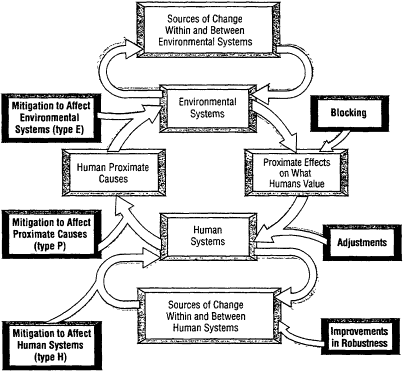
FIGURE 4-1
Interactions between human and environmental systems and the role of various types of human response. Lightly shaded boxes repeat the relationships presented in Figure 2-2.
It may involve direct interventions in the environment (type E in the figure) to counteract the effects of other human actions, direct interventions in the proximate human causes (type P), and interventions in the human systems (type H) that drive global change, intended to have an indirect or downstream effect on the proximate causes.
For example, global warming is the direct result of a change in the earth's radiative balance; humans can mitigate global warming by any actions that slow the rate of change or limit the ultimate amount of change in the radiative balance.3 They can intervene in the environment (type E), for example by directly blocking incident solar radiation with orbiting particles or enhancing the ocean sink for carbon dioxide by adding nutrients. They can intervene in the proximate causes (type P), by regulating automo
bile use or engine design to cut carbon dioxide emissions or limiting the use of certain nitrogen fertilizers to reduce nitrous oxide emissions. They can intervene in human systems (type H) and indirectly control the proximate causes, by investing in research on renewable energy technologies to replace fossil fuel or providing tax incentives for more compact settlements to lower demand for transportation.
Mitigation of ozone depletion might, in principle, involve release of substances that interact chemically with CFCs, producing compounds with benign effects on the stratospheric ozone layer (type E), limiting emissions of chlorofluorocarbons (CFCs) and other gases that deplete ozone (type P), or developing alternative methods of cooling buildings that do not rely on CFCs (type H). Mitigation of threats to biological diversity might include, at least in principle, engineering new varieties, species, or even ecosystems to save diversity, if not individuals (type E); limiting widespread destruction of tropical forests, estuaries, and other major ecosystems (type P); or promoting systems of land tenure and agricultural production that decrease the pressure for extensive development of tropical forests (type H).
Humans can intervene in several ways on the response side of the cycle. Such actions are sometimes generically called adaptation, but there are important distinctions among them. One type of response, which can be called blocking, prevents undesired proximate effects of environmental systems on what humans value. It can be described by example. If global climate change produces sufficient warming and drying (drought) on a regional scale, it may threaten the region's crops; development and adoption of drought-resistant crops or crop strains can break the connection between environmental change (drought) and famine by preventing crop failure. Similarly, loss of stratospheric ozone threatens light-skinned humans with skin cancer, through exposure to ultraviolet radiation; avoidance of extreme exposure to sun and application of sunscreens help prevent cancer, although they do not mitigate the destruction of the ozone layer. Tropical deforestation threatens species with extinction by eliminating their habitats; creation of forest preserves would provide many species sufficient habitat to survive, while doing little to slow net deforestation.
Another type of adaptive response is to prevent or compensate for losses of welfare that would otherwise result from global change. Such actions can be called adjustments.4 They neither mitigate environmental change nor keep it from affecting what people value, but rather intervene when a loss of welfare is imminent or after
it has begun to be manifest. Examples include evacuation from areas stricken with flood or drought, food shipments or financial assistance to those remaining in such areas, and development of synthetic substitutes for products previously obtained from extinct species.5
Yet another type of response, sometimes called anticipatory adaptation, aims to improve the robustness of social systems, so that an unchecked environmental change would produce less reduction of values than would otherwise be the case.6 This type of intervention does not alter the rate of environmental change, but it lowers the cost of any adjustments that might become necessary. It can be distinguished, at least in theory, from type H mitigation in that it does not necessarily alter the driving forces of global change. An example is diversification in agricultural systems. Farmers, regions, and countries that rely on a range of crops with different requirements for growth may or may not produce less greenhouse or ozone-depleting gases than monoculturists. But polycultures are more robust in the face of drought, acid deposition, and ozone depletion. There may be crop failure, but only in some crops. Similarly, families and communities that have both agricultural and nonagricultural income are harmed less by the same threats than purely agricultural groups. They have other sources of income and can purchase crops from elsewhere.7
All social systems are vulnerable to environmental change, and modern industrial societies have different vulnerabilities from earlier social forms. Modem societies have built intricate and highly integrated support systems that produce unprecedented material benefits by relying critically on highly specialized outputs of technology, such as petrochemical fertilizers and biocides; hybrid seeds; drugs and vaccines; and the transmission of electricity, oil, and natural gas from distant sources. Although these complex sociotechnical systems contain great flexibility through the operation of global markets, they may have vulnerabilities that reveal themselves in the face of the changes that these systems have helped create. For instance, modern societies have become highly dependent on fossil fuels and vulnerable to a serious disruption of supply or distribution systems. They also support much larger and denser populations than ever before; such populations may be vulnerable to ecological changes affecting the viability of their food supplies.
Evidence from studies of disasters suggests that the poor, who lack diversified sources of income, political influence, and access to centralized relief efforts, tend to be worst off (Erikson, 1978;
Kroll-Smith et al., 1991; Mileti and Nigg, 1991). However, studies to assess the vulnerabilities of larger human systems, such as national or world food or energy systems, are rarely done (e.g., Rabb, 1983). The far side of vulnerability is also little studied: When a system fails to resist environmental pressure, under what conditions does it return to its previous state? If it undergoes permanent change, what determines the nature of the new state?
THE PIVOTAL ROLE OF CONFLICT
An important consequence of global environmental change is conflict, because global change affects what humans value, and different people value different things. When U.S. energy use threatens the global climate or land clearing in Brazil threatens the extinction of large numbers of species, people around the world are understandably concerned. They may express a desire—or even claim a right—to influence the choices of people or governments continents away. And the people or countries subjected to those claims may resist, especially when they feel that changing their behavior will mean suffering. The further global change proceeds, the more likely it seems that it will be a source of conflict, including international conflict, over who has a right to influence the activities implicated as causes, who will pay the costs of responding, and how disputes will be settled.
A Current Controversy: To Mitigate or Not to Mitigate?
One of the most heated policy debates about responses to a global change is between advocates of immediate efforts to mitigate global warming and those who would postpone such action. This debate arose within the committee, even though we were not charged with recommending strategies for response to global change. We offer the following brief, sharply stated version of the debate to highlight some important characteristics of controversies about global change: that they are partly, but not entirely, fact-based; that they are likely to persist even in the face of greatly increased knowledge about the causes of global change; and that they are pervasive, even in discussions restricted to research priorities.
In one view, the wise course of action on global warming is to conduct research on the phenomenon but not to take action to slow or mitigate it until the phenomenon is better understood. Proponents of this view make the following arguments:
-
Uncertainty of global change. The nature and extent of global warming in the future is highly uncertain because of incomplete knowledge of the relevant properties of the atmosphere, oceans, biosphere, and other relevant systems. It is wasteful for society to expend resources to prevent changes that will not occur anyway. Moreover, the mitigation efforts may themselves set in motion undesired changes.
-
Adjustment will make mitigation unnecessary. Human systems can adjust to global climate changes much faster than they are likely to occur. The projected doubling of atmospheric carbon dioxide levels will take place about 80 years from now. By contrast, financial markets adjust in minutes, administered-market prices in weeks, labor markets in years, and the economic long run is usually reckoned at no more than two decades. The implication for action is that what individuals and organizations do on their own in anticipating climate change may be sufficiently successful that organized, governmental responses will be superfluous. The impact of climate change will reach people through slow price increases for the factors of production; in reasonably well-functioning markets, economic actors adapt readily to such changes. They invent industrial processes that economize on scarce inputs, find substitutes, purchase energy-efficient equipment when energy prices are rising, and so forth. In the past, such adjustments have contributed to human progress, and there is every reason to expect that pattern to continue.
-
Don't fight the wrong war. It makes no sense to act like the generals who built the Maginot Line for the wrong war or to construct dikes for cities whose populations will have moved or dams to water crops that will be grown elsewhere. Technological and social changes often eliminate problems without any specific mitigation efforts by changing the offending technology or making it obsolete. For example, boilers no longer explode on trains because they no longer use steam engines; horses are no longer the main polluters of urban streets. Concern about the greenhouse effects of fossil fuel burning will prove premature if development of fusion or solar energy technology can replace most fossil fuel use over the next 50 years.
-
Better policy options may lie on the horizon. Further research may identify more effective and less costly interventions than those now available. For example, it has recently been suggested that adding iron to the oceans to fertilize phytoplankton that would absorb carbon dioxide from the atmosphere may be a way to address the greenhouse effect (Martin et al., 1990). That
-
proposal, whatever its ultimate feasibility or desirability (Lloyd, 1991), demonstrates that improved understanding of biogeochemical systems might generate promising new proposals for mitigating global change. Improved understanding of social systems has reasonable potential to discover other classes of effective response.
-
It may be more costly to act now. Actions that can be postponed will be less burdensome because of continuing economic progress. If people living in the 1890s had invested in preventing today's environmental problems, their expense on our behalf would probably have been made on the wrong problems, and it would have been an inequitable transfer of resources from a poorer generation to a richer one. It probably makes no more sense for the current generation to sacrifice to benefit a future, even wealthier generation. This is the argument for a positive social discount rate. It assumes that expenditures made now could otherwise be invested at compound interest in improvements in human well-being. If the growth rate for such investment exceeds the average rate at which environmental problems develop, people will be better off in the future if they do not spend on mitigation now.
Proponents of immediate mitigative action make the following arguments:
-
Action now is more feasible and effective than action later. It is in the nature of exponential growth processes that the earlier the growth rate decreases, the greater the final effect. Bringing down the birth rate in India to two children per couple in 1995 rather than in 2005 can make a difference of 300 million people by the time the Indian population stabilizes (Meadows, 1985). To achieve the same effect by starting later would impose greater restrictions on the people living at that time. It is therefore easier to mitigate the effects of exponential growth the sooner the effort is made.
-
It is easier to adjust to slower change. Mitigation is prudent because of the long time lags in the global environmental system. By the time it becomes clear that a response is needed, it may be too late to prevent catastrophe if the change is proceeding rapidly. Even if catastrophe is unlikely, mitigation that slows the rate of change makes it more likely that adjustments can be made in time. This is clearly the case for nonhuman organisms, such as tree species that can adjust to climatic change by migrating, as seedlings move to more favorable locations. Such species have a
-
maximum rate of migration, so can adjust to climatic change below that rate.8 The same principle probably also applies to human adjustments to major environmental change.
-
It is wise to insure against disaster. Mitigation in the face of possibly catastrophic outcomes is like taking out insurance against flood and fire. The insurance expenses are bearable, but the expenses of catastrophe may not be.
-
Avoid irretrievable error. It is wise to mitigate against potentially irretrievable losses. The clearest example is species extinction. If species are valued for themselves, their loss is irretrievable; even if they are valued only for what benefits they may have for humanity, species loss may be irretrievable. Other environmental values, such as loss of the life-supporting capacity of wetlands or large bodies of water, may also be irretrievable; often we do not know until the values are lost.
-
Avoid high-risk environmental experiments. Humans are now conducting large-scale uncontrolled experiments on the global environment by changing the face of the earth and the flows of critical materials at unprecedented rates. It is prudent to limit the pace and extent of such experiments because of the likelihood of unanticipated consequences. Like natural mutations, most of these experiments are probably destined to fail, and there is only one global environment to experiment on. As the extent of human intervention in the global environment continues to increase, so does the strength of this argument. The argument supports mitigation efforts that slow ongoing human interventions in the environment, but generally not those that would stop greenhouse warming by new interventions in the global environment.
-
Economic arguments do not encompass some environmental goods. The discount-rate argument is specious in the general case because the costs and benefits of postponing action are not always commensurable. Some important and meaningful tradeoffs can be made on economic grounds, for instance, between investing in renewable energy development and in directly limiting the burning of fossil fuels. But sometimes the economic logic makes no sense. If current economic activity destroys die life-support systems on which human life depends, what investment at compound interest could ever recoup this cost? Economic arguments also cannot deal with some things—including the balance of nature—on which people place intrinsic or spiritual value. To the extent people want to preserve such values, mitigation is the only acceptable approach. Moreover, economic accountings systematically undervalue things—such as genetic resources—for
-
which there are few property rights or for which economic value is only potential.
-
Some mitigative action is fully justified on other grounds. A good example is investments in energy efficiency that provide an excellent return on investment even with narrow economic calculations. Such actions can achieve the benefits of mitigation at no extra cost, while providing other benefits.
Implications of Conflict About Human Response
Many controversies are beginning to develop out of concerns with global change. One pits Third World countries against the developed countries that are now becoming concerned with limiting use of fossil fuels and restricting the felling of tropical forests. The Third World position, of course, is that other countries used fossil fuels and undeveloped frontiers for their economic development, and fairness dictates that the poorer nations now have their turn. Many analysts believe that if large-scale climate change results from human activities, the poorer countries are likely to suffer most because they lack resources they could use to adapt. Such an outcome would produce yet other conflicts.
The controversies about global change are only partly fact-based. True, some of the disagreements might fade with better knowledge about the global environment and the likely effects of different feasible responses. As it became clear that expected global warming over the next 50 years could not cause the breakup of the West Antarctic icecap, the flood-prevention rationale for slowing greenhouse gas emissions became considerably weaker. A response such as dike building seems much more appropriate when the sea threatens only a few areas. And if it became clear what each policy option—at the local, national, and international levels—would accomplish if enacted, some of them could easily be rejected.
But knowledge often fails to resolve controversy. It frequently raises new disputes or calls old beliefs into question. And even when new knowledge reduces uncertainty, controversies persist because not only facts, but also important interests and values, are at stake. Informed people disagree because the remaining uncertainty leaves room for judgment, because they may assume different scenarios about the future of society, and because an outcome that harms what one person values may enhance what another values. Those impressed with the potential benefits of economic growth tend to line up against those who fear of the
potential costs; those with a strong faith in the ability of human ingenuity to solve life's problems line up against those awed by what is at stake; those who stand to benefit from an outcome line up against those who stand to lose. When faced with choices, some prefer international solutions to global problems, others see national action as more feasible; some favor market adaptations, others, community-based action outside the market and the state; some are attracted to large-scale technological solutions, others see them as cures that may be worse than the disease. In short, the debates are not only about the workings of human and environmental systems, but also about political and economic interests, conflicting values and faiths, differing assumptions about the future, and different judgments about resiliency in the face of the unexpected.
Research on Conflict Studies of environmental and technological conflict are a significant part of social research on conflict (e.g., Nelkin, 1979; Mazur, 1981; Freudenburg and Rosa, 1984; Jasper, 1988; Clarke, 1989). Issues of global environmental change have all the features characteristic of the most difficult technological controversies: awareness of human influence on the hazards, serious worst-case possibilities, the possibility of widespread and unintended side effects, delayed effects not easily attributable to specific causes, and lack of individual control over exposure (National Research Council, 1989b:57-62).
Social science can help illuminate the nature of environmental controversies and evaluate ways of managing them. Social scientists interested in environmental policy have studied the conditions shaping and favoring the resolution of environmental controversies and the role of scientific, governmental, and mass media communication in the decision process (e.g., Dietz and Rycroft, 1987; Gould et al., 1988; Jasanoff, 1990; Nelkin, 1979, 1988; National Research Council, 1989b). Some have begun to consider the various ways environmental change might lead to conflicts with the potential for violence (e.g., Homer-Dixon, 1990).
Social scientists specializing in conflict have developed generalizations that might be more thoroughly applied to environmental conflict. For example, conflicts may be based mainly on ideology, interest, or understanding (Aubert, 1963; Glenn et al., 1970; Rapoport, 1960, 1964; Hammond, 1965; von Winterfeldt and Edwards, 1984; Syme and Eaton, 1989), and different types of conflict tend to yield to different tactics of resolution (e.g., Druckman and Zechmeister, 1973; Druckman et al., 1977). Defining an environ-
mental conflict as either one of understanding or one of interests and values affects which groups and arguments are considered legitimate in policy debates (Dietz et al., 1989). The nature of the relationship between the parties to a conflict can determine whether the conflict focuses on ideological positions (e.g., Campbell, 1976; Zartman and Berman, 1982), differences in understanding (e.g., Axline, 1978), or differences in interests (e.g., Strauss, 1978). And the behavior of the parties to a conflict depends on the pattern and relative strength of incentives to compete and to cooperate (e.g., Pruitt and Kimmel, 1977), the probability of continued interaction in the future (e.g., Axelrod, 1984), and on whether two or more parties are involved (Groennings et al., 1970; Hopmann, 1978; Putnam, 1988).
More research seems warranted to use existing knowledge about conflict to illuminate the ways social conflict may result from global environmental change. This research would investigate the ways environmental changes may affect organized social groups and their resource bases and would hypothesize links between those effects and conflict. A first step is to construct an analytical framework for identifying the possible routes from particular environmental changes to particular types of conflict. The framework of Homer-Dixon (1990) provides a start, for causes of violent conflict. Case analyses of past social conflicts can be used to assess hypotheses drawn from such analytic frameworks.
Research on Conflict Resolution and Management Social scientists have also identified a number of approaches for resolving or managing policy disputes, some of which are beginning to be studied in the context of environmental conflicts. These include mediation techniques intended to address the value dimension of environmental conflict (e.g., Ozawa and Susskind, 1985); facilitation procedures that emphasize problem-solving discussions and have proved useful as a prelude to negotiation (Burton, 1986; Druckman et al., 1988); techniques of separating values from interests to makes conflicts appear smaller and easier to solve (Fisher, 1964; but see Druckman, 1990); efforts to focus on shared principles for decisions (Zartman and Berman, 1982) or to discuss values as ranked priorities rather than ideological differences (Seligman, 1989); policy exercises that emphasize creative use of scientific knowledge to solve environmental problems (Brewer, 1986; Toth, 1988a, b); and computer software for dealing with the cognitive and political aspects of both conflicts over the interpretation of data for environmental management (Hammond et al., 1975; Holling, 1978).
The nature of technological conflicts suggests, however, that over the long-term, management is a more realistic goal than stable resolution. Recent work on risk communication is potentially relevant to social responses to global change because global change problems, like those to which that literature refers, are characterized by high levels of scientific uncertainty and great potential for conflict about social choices (Covello et al., 1987; Davies et al., 1987; Fischhoff, 1989; National Research Council, 1989b; Stern, 1991). This work suggests that institutions responsible for decisions about global change will also have to manage conflict. These institutions will need to provide accurate information, but should not expect information to resolve conflict. The institutions will need to make a place for the stakeholders to be represented from the earliest stages of the decision process, ensure openness in processes of policy decision, include mechanisms for the main actors to have access to relevant information from sources they trust, and use the conflicting perspectives and interpretations of current knowledge and uncertainty to inform the ongoing debate (National Research Council, 1989b; Stern, 1991).
Research Needs Relatively little is known about the structure of particular conflicts about global change at the local, national, and international levels or about which means will be most effective in dealing with them. Therefore, we recommend increased empirical research, including both field studies and laboratory-simulation studies, to clarify the sources and structures of particular environmental conflicts and to test the efficacy of alternative techniques for their resolution and institutions for their management.
HUMAN RESPONSE: THREE CASES
In Chapter 3 we presented cases to illustrate how human actions can contribute to the causes of global change. Here we present three cases to illustrate the human consequences of, and responses to, environmental change. Taken together, they show the importance of all the major human systems involved (described later in the chapter) and the ways that conflicts are played out and choices made within these systems.
INTERNATIONAL REGULATION OF OZONE-DEPLETING GASES
As mentioned earlier, the most successful effort to date to address a global environmental problem by international agreement
is the ozone regime, articulated in the 1985 Vienna Convention for the Protection of the Ozone Layer, the 1987 Montreal Protocol on Substances That Deplete the Ozone Layer, and the 1990 London Amendments to the protocol. This regime, in its current form, commits its members to phasing out the production and consumption of CFCs and a number of related chemicals by the year 2000. The regime represents the first concerted international effort to mitigate ''a global atmosphere problem before serious environmental impacts have been conclusively detected'' (Morrisette, 1989:794).
The political history of the ozone regime begins as a national issue in the United States and a handful of other Western countries in the early 1970s, in connection with emissions from supersonic transport (SST) aircraft and then from aerosol spray cans (Downing and Kates, 1982; Morrisette, 1989). Environmental groups organized opposition to the development of the SST and to the extensive use of aerosols. Individual responses led to a sharp drop in sales of aerosol products (Morrisette et al., 1990). The U.S. Congress, prodded by government studies supporting the CFC-ozone depletion theory and its links to skin cancer, approved the Toxic Substances Control Act of 1976, which among its other provisions, gave the Environmental Protection Agency (EPA) the authority to regulate CFCs. In 1978, the United States became the first country to ban the nonessential use of CFCs in aerosols. However, the EPA ruled that other uses of CFCs, such as in refrigeration, were both essential and lacked available substitutes.
Ozone depletion emerged as a major international issue in the 1980s. This occurred primarily as a result of initiatives by the United Nations Environment Programme (Morrisette, 1989) and the actions of the international scientific community (Haas, 1989), with the support of the international environmental movement. The Vienna convention of 1985 embodied an international consensus that ozone depletion was a serious environmental problem. However, there was no consensus on the specific steps that each nation should take.
A number of events in 1986 and 1987 created a new sense of urgency about the depletion of stratospheric ozone. These included a rapid growth in demand for CFCs due to new industrial applications and the end of a global economic recession; important new studies by the World Meteorological Organization, the National Aeronautics and Space Administration, the Environmental Protection Agency (EPA), and the United Nations Environment Programme; and, most important, the widely publicized
discovery by scientists of the Antarctic ozone hole in 1985. In January 1986, EPA initiated a series of workshops designed to build an international scientific consensus supporting the need to control the use of CFCs. In the same year, DuPont announced that its scientists had determined that CFCs were the most likely cause of ozone depletion. These events persuaded American officials of the need for decisive international action. When negotiations on a protocol to the Vienna convention for controlling CFCs resumed in December 1986, the United States adopted a firm position, calling for an international treaty not only freezing production of CFCs but also reducing production and consumption.
Following extensive and complex negotiations, the Europeans, whose earlier opposition to a cutback in production had prevented agreement in Vienna, moved closer to the U.S. position. They were persuaded to do so by three factors: the weight of scientific evidence, pressures from their own domestic environmental groups, and the fear that, in the absence of a treaty, the United States might take unilateral action to impose trade sanctions. While compromises on several controversial points proved sufficient to gain Japanese and Soviet adherence, the major developing countries (e.g., China and India) did not become signatories to the Montreal Protocol.
Only after the Montreal Protocol was signed did the full extent of ozone depletion became public: ozone depletion over Antarctica reached a historic high in 1987, and the link to the release of CFCs became a matter of scientific consensus. DuPont responded by announcing that it planned to discontinue CFC production by the end of the century and, in March 1989, 123 countries called for the absolute elimination of production by the same date. A resolution agreeing to totally phase out all production and consumption of CFCs by the year 2000 was adopted by 81 countries in May 1989 at the first governmental review of the Montreal Protocol.
Taking advantage of this momentum, the parties to the Montreal Protocol, meeting at a review conference in London in June 1990, were able to negotiate a series of strong amendments. These amendments accelerate the phaseout schedule for CFCs and halons and add methyl chloroform and carbon tetrachloride to the list of chemicals to be eliminated. Equally important, the amendments establish an international fund to be used to assist developing countries in switching to substitutes for CFCs in the production of refrigerators and air conditioners. On the strength of this
development, both China and India agreed to become members of the international ozone regime.
Why was it possible to reach a broad international agreement restricting CFCs? Analysts have identified four important factors: an evolving scientific consensus; a high degree of public anxiety in developed countries about the risks associated with the continued use of CFCs, due in large measure to an association with skin cancer; the exercise of political muscle by the United States; and the availability of commercial substitutes for CFCs (Haas, 1989; Morrisette, 1989). The last served the critical role of diminishing the opposition of the chemical industry to a phased reduction. When DuPont, the producer of 25 percent of all CFCs, decided to develop substitutes, it "forced other CFC manufacturers to follow suit or risk losing market share" (Haas, 1989:11). Haas adds that, because this issue could be resolved by a technical fix, it did not involve any hard choices and therefore may be unique in the annals of global environmental change.
Another important influence in getting CFCs on political agendas may have been the efforts of the scientific community, which has been influential in drawing attention to other environmental problems (Haas, 1991). Haas (1989) notes that it was initially a group of atmospheric physicists and chemists, most of whom worked in the United States, who attempted to place the issue of ozone depletion on the national and global environmental agendas, and that this community continued to press the issue throughout the 1980s. He argues that the speed of policy response in the United States may have been due to the "highly fragmented nature of American government and society [which] facilitates access of a strongly motivated group of technical experts" (p. 8). Thus, the access of a key group to policy debates at the national level may have influenced international action on CFCs.
The history of the ozone regime illustrates a number of key variables that affect the likelihood of reaching similar agreements on other global environmental problems (Sand, 1990b; Benedick, 1991). Further studies are desirable to clarify how these variables interact:
-
the emergence of scientific consensus on the causes of global environmental change;
-
the number of actors responsible for the proximate causes of the global change;
-
the nature and global distribution of the harm that might result from inaction;
-
the distribution of the burdens of regulation on the consumers, producers, and employees whose behaviors must change;
-
the importance of national regulations as a precursor to the emergence of international ones; and
-
the need for strong leadership in international forums.
It also suggests that international agreements can be affected by the structures of national political systems, informal international communities, and markets that would be critically affected by agreement.
THE U.S. ENERGY CONSERVATION ACHIEVEMENTS OF 1973-1985
Energy efficiency is probably the most widely accepted strategy for mitigating global warming. The energy shocks of the 1970s led to significant improvements in the energy productivity of Western industrialized economies. The U.S. experience is typical and instructive.
Between 1973 and 1985, the United States reduced its energy intensity—the ratio of energy use to economic output—by 25 percent.9 Other industrialized capitalist countries made similar achievements, reducing energy intensity, usually from much lower initial levels, by an average of 21 percent during that period (International Energy Agency, 1987). The change was a sharp contrast to the record of the previous two decades and to most of the twentieth century. Between 1953 and 1973, U.S. energy intensity was almost steady, decreasing at an average of 0.1 percent per year; at only two earlier periods in the century, 1918-1926 and 1948-1953, did energy intensity decrease at a rate above 2 percent per year (Schurr, 1984). To the extent that energy intensity can continue to improve in the United States and other countries, energy efficiency can make an enormous contribution to mitigating global warming. This section takes a closer look at how and why the change occurred in the United States and the implications for other countries.
Preexisting Trends
After increasing for 40 years, U.S. energy intensity declined fairly steadily between 1920 and 1953, before stabilizing for 20 years (see Table 4-1). Although the reasons are not well understood, the secular decline in energy intensity since 1920 has been attributed to improved efficiency in energy conversion, a
TABLE 4-1 Average Annual Percentage Rates of Change in Total Output and Energy Intensity in the United States Private Domestic Business Economy, 1899-1981
shift in the economy away from heavy manufacturing, and technological improvements throughout the economy associated with a shift to more flexible energy sources: oil, gas, and electricity (Schurr, 1984). The decrease in energy intensity with the 1973 oil shock, and again with the 1979 shock, marked a sharp break from the previous 20 years; from 1973-1981, intensity decreased at a rate about 2 1/2 times the average of the previous 53 years.
Uncoordinated Responses to Recent Events
The behavioral change after 1973 was largely due to the oil shocks of 1973 and 1979, which rapidly altered energy prices, changed perceptions of the future price and availability of fossil fuels, and brought about policy changes. Energy users made three effective kinds of responses (U.S. Department of Energy, 1989; Schipper et al., 1990). First, they changed the way they operated energy-using equipment, curtailing heat and travel, and improving management, such as by tighter maintenance of furnaces. Such changes accounted for 10-20 percent of national energy savings achieved in 1986 (compared with the pre-1973 trend; estimates from U.S. Department of Energy, 1989) but are easily reversed when energy prices drop or incomes rise, as they did in the 1980s.
Second, energy users adopted more energy-efficient technology to provide the same service with less energy use, either by retrofitting existing equipment (e.g., insulating buildings, installing reflecting windows) or by replacing existing equipment with more energy-efficient models. These improvements were responsible for 50-60 percent of total energy savings by 1986.
Third, the mix of products and services in the economy changed. Demand fell sharply in energy-intensive industries, such as primary metals, relative to less energy-intensive industries; small cars got an increased share of the automobile market; and commercial airlines improved the match between aircraft size and demand on passenger routes. Together, such shifts accounted for about 20-30 percent of the energy savings achieved in 1986.
Higher real energy prices are generally considered the most important single explanation for these responses (International Energy Agency, 1987; U.S. Department of Energy, 1989). However, price is not the whole story. Although the two energy shocks of the period had very similar price trajectories, the effects on the economic productivity of energy differed markedly after the first two years (see Figure 4-2). For the first two years of each shock, real energy prices increased about 40 percent and energy productivity increased about 5 percent. But over the longer-term, the second shock had much more effect than the first. A five-year price increase of about 45 percent in 1973-1978 increased energy productivity 7 percent; a similar increase in 1978-1983 increased energy productivity 18 percent. Moreover, the trend continued through several years of falling real energy prices.
Why the different reactions to the two energy shocks? One explanation is perceptions: it took the second shock to get energy
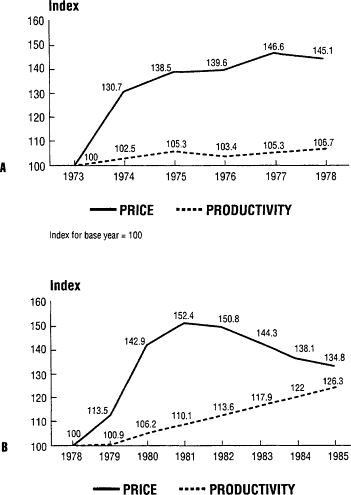
FIGURE 4-2 Changes in indexed real energy prices and energy intensity in the U.S. economy after the energy shocks of 1973 (A) and 1979 (B).
users' attention—to convince them that higher energy prices were here to stay. Another is that the decision environment had changed by 1979 in ways that made it more likely the system would respond to price signals. Government policies to promote energy-efficient technology and provide necessary information were in place by 1979, making it easier for energy users to respond effec-
tively to price; the learning curve for policy implementation had had time to progress; and entrepreneurs were ready to offer energy-efficient technologies and management programs that had not been developed in 1973. Moreover, U.S. energy inefficiency had helped open the door to foreign competition in the automobile, steel, and other industries, with the result that U.S. firms began taking efficiency of all kinds more seriously. Because these explanations reinforce each other, it is difficult to estimate their relative magnitude.
The multiple explanations suggest that the price effect depends on other factors: technological change, policy choices, change in industrial structure, and information processing by energy users. Since these factors can be changed independently of energy prices, it seems likely that with appropriate policies in place, energy intensity might have improved faster than it did, even in the apparently price-responsive 1979-1985 period.
Policy Responses and Implementation
Energy conservation policy in the United States has been predicated on the theory that government should intervene chiefly to correct so-called market imperfections such as the tendency of a supply system based on market prices to produce too little environmental quality (because individual consumers cannot be charged for it) and too little information on energy-efficient technologies and their costs. The government can also intervene to mitigate regulatory and institutional barriers to the functioning of the price system. Following this theory, many U.S. efforts to promote energy efficiency have relied on positive financial incentives (e.g., tax credits, utility rebate programs) and on information. Experience with these efforts shows that the market imperfection theory needs to be expanded to take into account deviations in energy users' behavior from conventional economic rationality.10 Often, rather than making decisions based on minimization of long-run costs, as theory postulates, energy users act on the basis of nonfinancial values (such as environmental preservation, interest in new technology, or enhancement of social status) or are influenced by information from informal social networks rather than more accurate expert information (see Stern and Aronson, 1984, for a review of evidence). Such processes within individuals and small groups have impeded the effectiveness of conservation programs in the United States, but when they are taken into account, programs became much more effective.
Evaluations of incentive and information programs show that, although they are sometimes very effective at increasing the pace of adoption of available technology, success varies greatly, even between nominally identical programs (Berry, 1990). For instance, home energy rating systems reach between 2 and 100 percent of homes, depending on the market (Vine and Harris, 1988), and utility companies offering exactly the same financial incentive program for home retrofits typically have participation rates that vary by a factor of 10 or more (Stern et al., 1986a).
Success depends on a number of features of implementation. A key is getting the attention of potential participants with appropriate marketing efforts, targeting of audiences, selection of trustworthy sources of information, and other basic principles of communication (Berry, 1990; Ester and Winett, 1982; Stern et al., 1986a; Vine and Harris, 1988; Dennis et al., 1990). Getting people's attention appears to be the main barrier to the success of financial incentive programs for home retrofits, so that, paradoxically, "the stronger the financial incentive, the more the program's success depends on nonfinancial factors" (Stern, 1986:211). Apparently, larger incentives ensure success among those who enter a program but do little to attract participants. Finding the proper intermediary, such as a builder, manufacturer, designer, or lender, can also be critical. Home energy rating systems have been introduced most effectively with the active support of the building and lending industries (Vine and Harris, 1988), and residential conservation programs, especially in low-income areas, have often depended for success on involving highly trusted local organizations, such as churches and housing groups (Stern et al., 1986a). Involving consumers in program design can help fit a program to its audience and locale (Stern and Aronson, 1984).
Thus, conservation policies and programs played a part in the U.S. response to the energy shocks of the 1970s, but they could have had a greater effect with better implementation. Improved policies and implementation, along with higher prices, are among the reasons energy productivity improved faster at the end of the 1973-1985 period than at the beginning. These three factors act in conjunction, however. If, for example, energy prices fall or remain stable, lowering energy users' motivation to change, some policy instruments will become less effective than they were in 1973-1985. The trends of the late 1980s demonstrate this effect (U.S. Department of Energy, 1989).
Implications for Future Climate Change
The technological potential for improvements in energy productivity are huge (National Academy of Sciences, 1991b; National Research Council, 1990a). However, the worldwide prospects for implementing technological changes, and therefore for mitigating the release of greenhouse gases, depends on the behavior of several human systems, including world markets for fossil fuels, national policies for economic and technological development and energy management, global social trends in government and the development of technology, and the behavior of individuals and communities.
The world energy price and supply picture will affect the spread of the Western improvements in energy productivity to other countries. Under conditions like those of the late 1980s, with relatively low energy prices and stable supplies, sharp further improvements in installed energy efficiency are unlikely, even in the Western industrialized countries, without new policy initiatives. The price motive for efficiency is weak, policies that rely on that motive are undermined, and the lowered cost of energy is a spur to economic growth, particularly in energy-intensive sectors. Given continuing population and economic growth, those conditions point to increases in energy use in the wealthy countries, although probably not at pre-1973 rates of increase. A new round of sharp price increases would cut energy use both by reducing economic activity and energy intensity, at least for a period.
The world picture also depends greatly on the development paths of growing economies. Industrialization is energy intensive, enough to have overcome the effects of the 1973-1985 oil shocks in relatively wealthy countries, such as Greece and Portugal, that were still industrializing. Consumers' choices are also important. Where increased income goes into homes and durable possessions, as in Japan, energy productivity is more likely to be higher than where it goes into personal transportation, as in the United States, or into refrigerators or other energy-using appliances, as may become the case in China.
The future of the dissolving socialist bloc countries holds many uncertainties. Many of these countries have highly energy-intense economies and therefore seem to have room for improved energy efficiency given the rise of markets and more democratic control of policy. However, they lack finances to develop technology or implement incentive or information programs and need time to design and implement effective policies for local conditions. Whether
development moves in industrial or postindustrial directions is also uncertain. Much room exists for research and for pilot experiments with policy options as ways to reduce the uncertainty.
These and other human systems will determine the extent to which the Western experience with energy efficiency will proceed further or be repeated in other countries. The future will depend on the ways these systems interact in each country and on the ways national and local policies intervene in them.
THE HUMAN CONSEQUENCES OF REGIONAL DROUGHT IN THE SAHEL
Intensification of the greenhouse effect is likely to alter rainfall patterns on a regional scale. As a rule, regions that receive increased rainfall are likely to benefit; decreased rainfall is the more serious concern. The history of the human consequences of severe drought can be instructive about the variety of human consequences of, and responses to, unmitigated climatic change.
The human role in causing drought in the Sahel region of sub-Saharan Africa is a matter of controversy. Throughout the modern history of drought-famine association in the region, there has been a tendency to interpret extreme events as indicators of trends and to attribute the presumed trends to human mismanagement of the local environment. In fact, Sahelian droughts have been recurrent events. The droughts of the 1970s and 1980s were preceded by several others in this century, one of which, in 1910-1915, resulted in intense famine with high mortality. The controversy over the human role in causing Sahelian drought revived with the drought of 1968-1974. The prevailing view was that desertification was an anthropogenic process reflecting deforestation, overgrazing, overfarming, burning, and mismanaged irrigation resulting in salinization of soil and water.
Lack of good data is a major obstacle to understanding the causes of Sahelian drought. Although some evidence supports the orthodox view, some recent research using remote sensing, field measurements, and intensive investigations of small areas has called that view into question. Observable ecological changes are less significant than had been supposed and correlate better with rainfall records than with land management (Mortimore, 1989).
Different Droughts, Different Responses
The consequences of Sahelian droughts in this century have depended on the ability of indigenous systems of livelihood to
make adaptations. During the century, these indigenous systems have undergone continual change, first as a result of policies of colonial powers, and later in response to postwar development policies promoting ''modernization'' and further integration into the global economy. There are competing views of the effects of these century-long trends in political economy on the ability of local populations to withstand drought. In one view, the main results were increased dependency and vulnerability; in the other, vulnerability decreased because of improved availability of medical care, famine relief, and a national infrastructure that allowed for easier. migration and food shipments (Kates, 1981).
The three major droughts of the century, in 1910-1915, in 1968-1974, and in the 1980s, have had different effects on the lives and livelihoods of the local populations. The 1910-1915 drought, which was of comparable severity to the drought of the 1970s, appears to have produced greater increases in mortality; its effects on malnutrition and on the social fabric are harder to determine (Kates, 1981). The knowledge base is better for comparing the droughts of the 1970s and 1980s.11 Local conditions changed between those two periods. Population continued to increase at up to 3 percent annually, forests continued to be cut for fuel and farming, and other forms of resource exploitation probably continued at about the previous rates. Grazing pressure fell, owing to animal mortality but, by the 1980s, cattle holdings had recovered to 60 percent of predrought levels in some areas, and small livestock probably recovered more. On balance, the human demands on the local environment were at least as severe as before the 1968-1974 drought.
The drought of the 1980s was as severe as the previous one. Annual rainfall in 1983-1984 was of the same order as in 1972-1973, and in some areas of the Western Sahel, less. Crop failures and pasture shortages were equally serious. Yet famine did not occur on the same scale, and animal mortality was lower. Possibly food aid was earlier and better in some countries, but in northern Nigeria, where food aid was not a major factor in either period, social distress was noticeably less marked in the 1980s, even in the worst affected areas.
What explains the relatively low human cost of the 1980s drought? It was not the response of the affected governments. Political officials were taken by surprise about equally by both droughts. The people most experienced in surviving failures of agricultural production and managing the environment were those living in the affected areas, but this group had little influence on policy. Of the several political interests concerned with the drought prob-
lems, both international and national, the least powerful seems to have been that of the people in the affected areas. Consequently, proposals for new technologies for coping with the drought failed to take indigenous technologies and management systems seriously, and measures to strengthen the poor—for instance by insurance, improved access to resources, alternative job opportunities, and price supports—were rarely considered or given high priority.
A key to drought response appears to have been the role of indigenous forms of land use and response to food shortage. It is possible to distinguish two strategies of land use for areas like the Sahel that face recurrent drought or a long-term threat of declining rainfall. One strategy—maladaptive in the long run—is characterized by deforestation and overcultivation and leads to land degradation, decreases in productivity, and, in the event of drought, short-term collapse. Another—adaptive in the long run—is based on flexible land use, economic diversification, integrated agroforestry-livestock management, and intensive use of wetlands. This pattern tends to generate sustainable, intensive systems and is resilient in the face of drought.
Indigenous strategies of response to acute food shortage apparently enabled the Sahelian populations to survive notwithstanding the tardiness, inadequate scale, and maladministration of most relief programs. These strategies, which relied on economic diversification, such as using labor in urban areas to supplement agricultural income, have evolved in an environment of climatic uncertainty and confer a degree of short-term resiliency. Their future evolution is hard to predict. Continued integration into the world economy may improve roads and other infrastructure, thus enabling diversification; it may also increase pressure for development of cash crops and thus hasten land degradation.
Relationship of Policy to Indigenous Response Systems
The ability of indigenous systems of land use and crisis management to cut the link between drought and famine depends on various factors that sustain the indigenous systems. These include diversity of economic opportunities, absence of war, and appropriate national and international policies on migration. Critical variables include the development of infrastructure and the set of national policies governing access to land, trees, and water. The social distribution of wealth, particularly secure rights of individual or community access to natural resources, determines the extent of human vulnerability to drought. Although some impor-
tant international actors are coming to perceive these relationships, the political balance is quite different at the national level, where the relevant policies are enacted and enforced. Ruling and military elites, professionals in the civil service, traders (especially in grain), capitalistic farmers, livestock owners, wood fuel exploiters, and small farmers and herders all have separate and distinct interests in the outcome, and most of these interests do not accord high priority to sustainable environmental management or drought preparedness.
Although not enough is known to forecast the consequences of future Sahelian droughts, two alternative scenarios can be imagined. In the doomsday scenario, increasing numbers of people generate cumulative environmental degradation (overcutting of woodland, overcultivation of soils, overgrazing of pastures, and overirrigating and possibly overuse of water), suffer increasing food scarcities as available grain per capita declines, and either starve in huge numbers or migrate in distress to other areas where they become permanently dependent on international relief. In the optimistic scenario, farming systems intensify using an increased labor supply, productivity of the land is raised, sustainable agroforestry-with livestock systems are extended, and household income sources are diversified and slowly shifted via the market and short-term mobility away from agriculture and toward other economic sectors.
The experience of the 1970s and 1980s suggests that the optimistic scenario is a plausible alternative, given the right policy environment. Its success depends on increased recognition of the potential of indigenous sociocultural systems of land use and household strategies of economic diversification to increase resilience, and on policies that promote resource access and support those local social systems. The consequences of future droughts may also depend on rates of urbanization, growth of the urban informal sector, and capital investment in better favored rural areas. The present policies of governments and international organizations in the Sahel can create conditions that promote or impede the ability of indigenous systems to respond and thus determine the human consequences of future drought.
SEVEN HUMAN SYSTEMS
This section distinguishes seven human systems that may be affected by, and respond to, global change: individual perception, judgment, and action; markets; sociocultural systems; organized action at the subnational level; national policy; international co-
operation; and global human systems. It briefly surveys current knowledge and ignorance about the responses of each system and the relationships between them and identifies broad areas in which additional research is needed. It also outlines particular research activities and needs within these areas.
INDIVIDUAL PERCEPTION, JUDGMENT, AND ACTION
The human consequences of global change begin with the individual. Individuals notice the effects of change and either make adjustments or not. Individual behavior is critical in three quite distinct ways: individual judgments and choices mediate responses in all human systems because decision makers begin with inputs from individuals, whether themselves or their advisers. The consequences of global change often depend on the aggregation of the uncoordinated actions of large numbers of individuals. And individual behavior can be organized to influence collective and political responses.
Individual Judgment and Choice
Responses to global changes presuppose assessments of "what is happening, what the possible effects are and how well one likes them" (Fischhoff and Furby, 1983).12 Scientists, government officials, and other citizens make such assessments when they consider the responses they may make or advocate. Knowledge about human judgment and decision is therefore relevant to understanding responses to global change.
Normative decision principles, such as those of cost-benefit analysis or mathematical decision theory, are limited in their usefulness by the fallibility of the individuals who try to implement them (Fischhoff, 1979); they are even more imperfect for estimating the behavior of people who are not trying (Fischhoff et al., 1982). Past research on human judgment and decision has clarified many differences between decision theory and actual decision making (Kahneman et al., 1982); some of these are reflected in human responses to natural hazards (Saarinen, 1982; Slovic et al., 1974).
Behavioral decision research demonstrates that most people have difficulty comprehending the very low probabilities assigned to environmental disasters (Slovic et al., 1977; Lichtenstein et al., 1978), estimating the probability of natural events that they rarely experience (Slovic et al., 1979), interpreting uncertain knowledge, and making connections between events and their actual causes.
Moreover, it is difficult or impossible to understand unprecedented events and therefore to make wise choices between mitigating them and adapting to them. One result is that lay people frequently perceive environmental hazards differently from specialists (Saarinen, 1982; Fischhoff and Furby, 1983; Gould et al., 1988; Fischhoff, 1989; Kempton, 1991). Little direct knowledge exists, however, on perceptions of climate, climate change, or other aspects of global change (Whyte, 1985; Kempton, 1991; Doble et al., 1990).
Behavioral research also raises questions about expert judgment. Expert analyses, such as represented in general circulation models of climate, inevitably rely on judgment, and judgment becomes more unreliable when the models move into a future different from any past experience. Faith in expert judgments rests on the analysts' success in identifying all the relevant variables and measuring them and their interrelations. Psychological research suggests that people, including technical experts, "have limited ability to recognize the assumptions upon which their judgments are based, appraise the completeness of their problem representations, or assess the limits of their own knowledge. Typically, their inability encourages overconfidence" (Fischhoff et al., 1977; Kahneman et al., 1982). Overconfidence is most likely to affect expert analysts when they lack experience testing their predictions against reality—an inevitable characteristic of predictions about unprecedented events (Fischhoff, 1989). Other kinds of systematic error may also affect experts. For instance, in water resource management and other fields in which average climate parameters are used as a basis for decision, experts seem to exhibit a "stability bias," a tendency to underestimate the likelihood of extreme events (Riebsame, 1987; Morrisette, 1988).
Careful analysts also sometimes overlook or underestimate the likelihood of some possible combinations of events, as they did in a famous assessment of the likelihood of nuclear power plant failure in the 1970s (Nuclear Regulatory Commission, 1978). Little is known about how individuals or groups formulate alternative action plans when faced with a problem, such as responding to a global environmental change. In particular, little is known about what facilitates or impedes creative generation of options, or how vested interest or attachment to the status quo may blind individuals or groups to available options.
Research Needs Research on what and how nonexperts think about particular global environmental problems can help estimate how individuals will respond to new information about the global
environment and identify their information needs. This research should address particular beliefs about global change as well as how people evaluate probabilistic and uncertain information and how they combine multiple bits of information from experts, mass media accounts, and personal experience (e.g., with recent weather or air pollution events) to form their judgments about the extent and seriousness of global environmental problems. Such research will require both intensive methods of interaction with informants and survey methods.
Research effort should also be devoted to studying the expert judgment of environmental analysts about global change. This research should address such questions as: Does professional training encourage or discourage particular misperceptions? Does it lead purportedly independent experts to share common preconceptions? How well do the experts understand the limits of their knowledge? Do estimates of the human effects of global change take into account feedbacks among human systems? In analyses of possible responses, what responses are likely to be omitted? To whom do experts turn for analyses of feasibility of responses? What implicit assumptions about human behavior guide the analyses? With preliminary answers to such questions, it is possible to estimate the sensitivity of analyses to variables that affect expert judgment and therefore to make better informed interpretations of these judgments.
Aggregated Individual Responses
The consequences of global environmental change often depend on the aggregated responses of very large numbers of individuals. The example of U.S. energy conservation shows the effect of millions of decisions to buy more fuel-efficient automobiles, reset thermostats, and reinsulate buildings; millions of consumers also drove down sales of aerosol cans when the news got out that they were releasing CFCs harmful to the ozone layer (Roan, 1989). Action to block UV-B radiation from the skin of a billion light-skinned people would similarly take many discrete actions by each of them.
As U.S. energy conservation efforts demonstrate, such individual actions are multiply determined. Financial considerations motivate action, but structural constraints limit action (for instance, not owning the home one would like to insulate); personal attitudes and values increase the likelihood of taking actions that fit the attitudes, subject to the other constraints; specific knowledge
about which actions would produce desired effects is helpful, but people often fail to seek it out or mistrust the information available (for reviews of relevant research, see Katzev and Johnson, 1987; Stern, 1986; Stern and Oskamp, 1987). Knowledge has been developed about the conditions under which individuals respond favorably to information (Ester and Winett, 1982; Dennis et al., 1990) and incentives (Stern et al., 1986a) in the context of residential energy conservation; more limited research has been done on other individual actions relevant to global environmental changes.
Research Needs At least three kinds of research should be pursued further to improve understanding of how individual behavior may be significant in response to global change. First is empirical research on the actual responsiveness of behavior to interventions believed to affect it. Energy conservation programs have often produced less than the predicted effects—but as already noted, the responses have been highly variable. For studying possible interventions to mitigate or adapt to global change, pilot studies and controlled evaluation research are particularly important (for a discussion of issues of method in the energy conservation context, see Stern et al., 1987).
Second, new research is warranted to determine the relative contributions and interactions of the various influences on particular individual behaviors implicated in global change (e.g., Black et al., 1985). This research should be interdisciplinary because, in most instances, behavior is jointly determined by technical, economic, psychological, and social variables in ways that are likely to differ as a function of the behavior and the societal context.
Third, research should be conducted to build an improved interface between behavioral studies of resource use and formal models, which are guided mainly by economic assumptions. Empirical analysis of the behavioral processes underlying descriptive categories such as price elasticity, implicit discount rate, and response lag is likely to add to understanding of human responses to price stimuli and government intervention, and also to encourage needed dialogue between economically and psychologically oriented analysts of consumer behavior (Stern, 1984, 1986).
Individuals as Social and Political Actors
Individuals, appropriately mobilized, can be powerful actors at the community and national levels. Individual perception and judgment determines support for social movements, such as the
environmental movement, that affect human response by linking individuals to the concerted actions of government and industry. Those actions, in turn, influence individual behavior both directly and through their effects on markets. Individual reactions, in the aggregate, determine the public acceptability of policy alternatives being considered for response. And secular changes in individual attitudes and values, such as about the importance of material goods to human well-being, may have great effects on the long-term response to global change.
Past research has investigated the correlates of environmental concern and related attitudes (e.g., Borden and Francis, 1978; Van Liere and Dunlap, 1980; Weigel, 1977) and tracked the rise of postmaterialist values in the United States and other Western democracies (Inglehart, 1990). Such attitudes have been strong and persistent in many countries since the 1970s. Other research has been devoted to the rise of the environmental movement and to its objectives and tactics (see below).
Research Needs There are important gaps in the literature. New research should carefully assess alternative hypotheses about the links between individuals' values and attitudes and their representation in the activities of environmental movement groups and other institutions involved in response to global change. For instance, the view that environmental organizations reflect widespread attitudes should be tested in the global context against other views, for instance that social movement activists act as entrepreneurs, with their own interests separate from those of the public they claim to represent (e.g., Touraine et al., 1983; Rohrschneider, 1990).
Future research should also address the bases of environmental concern. Such concern may derive from a new way of thinking about the relationships of humanity to the planet (e.g., Dunlap and Van Liere, 1978) or from concern about harm done to people, such as those indirectly affected by market transactions and those yet unborn (Dunlap and Van Liere, 1977; Heberlein, 1977; Stern et al., 1986b). Outside the U.S. context, yet other bases of concern may predominate. For instance, in several Soviet republics, the environmental movement of the late 1980s expressed demands for autonomy by smaller nationality groups against the dominant Russians. On another dimension, environmental concern may derive from personal experience or secondhand accounts in the mass media. The source of concern may determine the conditions under which people become aroused about a global change or recep-
tive to policies that take meaningful action but require additional costs. The determinants of concern are likely to vary with the environmental problem, the country, and characteristics of the individual, so the research should be comparative between countries and environmental problems of different kinds.
MARKETS
One of the most likely consequences of global change will be effects on the prices of important commodities and factors of economic production in local and world markets. As a result, uncoordinated human responses will be affected greatly by markets. According to economic theory, producers and consumers respond to changing relative incomes, prices, and external constraints, so that, if the market signals are allowed to reach individuals and market prices include all the social costs and benefits of individual actions, the responses will be relatively rapid and efficient.
Markets allow for many forms of uncoordinated adjustment, as the example of climate change illustrates. People may rapidly alter patterns of consumption (e.g., substitution of water skiing for snow skiing) and production (e.g., relying on snowmaking equipment rather than natural snowfall). Over the longer run, societies may respond, in the case of unfavorable climatic developments, with the migration of capital and labor to areas of more hospitable climates. Structures tend to retreat from the advancing sea, people tend to migrate from unpleasant climates, and agricultural, sylvan, and industrial capital tend to migrate away from lands that lose their comparative advantage. In addition, technology may change, particularly in climate-sensitive sectors such as agriculture and building.
However, the conditions that economic theory specifies for efficient adjustment are not generally met in the case of the global environment (Baumol and Oates, 1988). In three important respects, existing markets do not provide the right signals (in the form of prices and incomes) of social scarcities and values. And in addition, as already noted, the participants in markets do not always behave as strict rules of economic rationality predict.
Environmental externalities of economic activity, that is, effects experienced by those not directly involved in economic transactions, are not priced in markets today. Someone who emits a ton of carbon into the atmosphere may produce great damage to the future climate but does not pay for the damage: effects that
have no price may be treated as if they have no value. Similar problems arise with the externalities of deforestation, CFC emissions, and other environmental problems. Economic theory recognizes that when there are significant externalities, uncoordinated responses will be inappropriate because the market does not transmit the right signals. An additional problem concerns making tradeoffs when each response option produces different externalities (Fischhoff et al., 1981; Bentkover et al., 1985; Mitchell and Carson, 1988; Fischhoff, 1991).
The market mechanism is overridden at times, either by political systems (such as when countries set the prices of oil or coal well below or above world market levels); or because custom and tradition determine property rights in a way that precludes the emergence of markets, as in the case of water allocation in the western United States. In such cases, individuals are either not faced with prices at all or are faced with prices unrepresentative of true social scarcities, and their uncoordinated behavior will not achieve the rapid and efficient adjustments characteristic of free markets.
Discount rates in markets, such as interest rates, reflect a social time preference for the present over the future that does not correspond to social valuation of the distant future reflected in concern about problems of global change (Lind, 1986). For events a century in the future, a discount rate that is, say, 3 percent per annum higher than true social preference implies that the future events are valued at only one-twentieth (that is, 1.03-100) of their appropriate value. Market interest rates may be too high to reflect this generation's concerns about the future of the environment; vigorous debate exists about whether the concept of discounting is even moral when human life is at stake (MacLean, 1990). Uncoordinated decisions following such a discount rate undervalue future threats and opportunities.
Economic theory suggests prescriptions for government action when market signals do not correspond to social values. The goal usually considered most important is to get the environmental impacts reliably translated into the price and income signals that will induce private adaptation. But it is difficult to arrive at the "correct" prices because so many of the impacts of global change are unknown or uncertain and because the appropriate values of future events are unlikely to be the same from all generational vantage points and resource endowments (Lind, 1986; Pearce and Turner, 1990).
Economists have suggested some approaches to the problem of developing well-functioning markets to guide responses to global
change (for some examples, see Pearce and Turner, 1990 and Dasgupta and Heal, 1979). Theory suggests that governments intervene with policies that meet at least one of these criteria: (1) they have such long lead times that they must be undertaken now to be effective; (2) they are likely to be economical even in the absence of global change; or (3) the penalty from waiting a decade or two to undertake the policy is extremely high. These criteria suggest four kinds of intervention, which we note here.
Government may encourage quasi-market mechanisms before shortages occur. For example, to ensure that water will be efficiently allocated if climate change affects its availability, governments might introduce general allocational devices, such as auctions, to dispatch water to the highest-value uses. The same approach might be applied to allocate land use near sea coasts and in flood plains and to control pollution by auctioning pollution rights. Governments might also support systems of risk-adjusted insurance for flood plains or hurricanes or international climate insurance. These quasi-market mechanisms have both the advantages and the disadvantages of the market. They make allocations efficiently but tend to undersupply goods needed by those who do not participate effectively in the markets, such as people outside the geographical boundaries of a quasi-market, who may receive polluted air or salinated water.
Government may support research and development on inexpensive and reliable ways of slowing or adapting to global change. Research on adaptation is undersupplied by markets because inventors cannot capture the full fruits of their inventions. Research on mitigation technologies that will slow global changes are even more seriously undersupplied in markets, because not only can inventors not collect the fruits of their efforts, but also the fruits, such as preservation of climate, are unpriced or underpriced in the market.
International agreements may provide for international adaptation strategies, such as improved international markets, which allow migration of labor and capital over a greater geographical range than national markets.
Governments may promote needed knowledge and collect and distribute data about global change, to enable rational response. It is difficult for people to mitigate or adapt if they do not understand what is happening or the costs of the available responses and of inaction; costs of adaptation will be reduced to the extent that managers, diplomats, and voters are well informed about well-established scientific results.
Research Needs Although the above market-oriented response strategies are strongly supported by economic theory, knowledge is weak about how they may be effectively implemented. Three lines of research into markets can add to understanding of the available response strategies.
First, empirical studies are needed of the implementation of quasi-market mechanisms for adaptation to global change, to determine how particular mechanisms work in particular social and political systems. For instance, systems for auctioning emission rights can be made infeasible by political opposition, subverted by fraud, undermined by political decisions, or otherwise altered from their theoretically pure operation (Tietenberg, 1985, explains the principle in the case of local air pollution; application to global change would be more difficult). Retrospective and prospective studies of the operation of such mechanisms can illuminate the problems that arise in implementation and assess the actual, as opposed to theoretical, effects of such mechanisms on equity and efficiency. Such assessments should compare quasi-market mechanisms to available regulatory mechanisms, as each actually operates (see the section below on national policy).
Second, studies of the valuation of global environmental externalities are critically important to address several key questions. For instance: To what extent can knowledge or technology be substituted for the outputs of environmental systems, thus making those outputs less indispensable? Is such substitution desirable? How can the ''services'' produced by the natural environment be included in economic accounting systems, such as national income accounts? How can the producers and recipients of externalities arrive at a common valuation if one side is disadvantaged in financial resources, and therefore in the ability to participate in markets or quasi-markets? How do people value, and make tradeoffs between, different kinds of externalities? How do different actors value the effects of human interventions in the environment and make tradeoffs between effects? (Some of these questions are addressed in work by Mitchell and Carson, 1988, and Nordhaus, 1990.)
Third, studies of social discount rates are needed, especially to estimate preferences concerning the future environment so they can be included in evaluations of global environmental change (e.g., Lind et al., 1986). Many believe that market discount rates are too high to accurately represent the social value of the future environment, although this value is unknown.
SOCIOCULTURAL SYSTEMS
Between the uncoordinated activities of individuals and the formally organized activities of governments and international organizations lie the oldest forms of social organization: families, clans, tribes, and other social units held together by such bonds as solidarity, obligation, duty, and love. These sociocultural systems have undergone considerable change throughout human history, yet informal groups connected by these bonds still exist and the bonds still influence behavior independently of governments and markets. Sociocultural systems are important in terms of global change in two ways. Some long-lived social units, whose survival may be threatened by global change, have developed ways of interacting with their environments that may be adaptable by others as strategies for response. Also, informal social bonds can have important effects on individual and community responses to global change and on the implementation of organized policy responses.
Indigenous Sociocultural Systems of Adaptation to Environment
Indigenous peoples that were not tightly integrated into world markets have developed technological and social adaptations that often maintain their subsistence in reasonable balance with the local environment. The adaptations of Sahelian peoples to an environmental regime of recurrent drought is one example. A parallel example can be found in the indigenous economic systems on the Amazon, which for at least 500 years have used the ecosystem's material in ways that do not threaten its long-term productivity (Hecht and Cockburn, 1989). The Amazon's indigenous people are a major repository of practical environmental knowledge about sustainable use of resources (Moran, 1990; Posey, 1983). Slash-and-bum cultivation with adequate fallow periods allows for the recovery of vegetation in tropic moist forests (Uhl et al., 1989), attracts game animals to crops (Linares, 1976; Balée and Gély, 1989), and provides a well-balanced, varied diet (Baksh, n.d.). Local agroforestry systems, which combine "the production of crops including tree crops, forest plants and/or animals simultaneously or sequentially on the same unit of land" (King and Chandler, 1978), mimic tropical ecosystems, protecting the soil from leaching and erosion while replicating the natural succession of plant growth over a period of years, and are a model for modern systems of agroforestry. Some such systems can give per
hectare yields over five years roughly 200 percent higher than systems established by colonists and 175 times that of livestock (Hecht, 1989a:173).
Agricultural systems based on indigenous models can be profitable in a market economy. Japanese colonist smallholders in the Amazon have created complex systems that prevent soil degradation and tolerate soil acidity and aluminum toxicity better than annual crops. These systems involve polycultures of mixed perennial and annual crops that are transformed, over time, into polycultures of mixed perennials. Commercial quantities of black pepper, cacao, passion fruit, rubber, papaya, eggs, and pumpkins and other vegetables are produced (Subler and Uhl, 1990). Into this sustainable, intensive agroforestry system, the Japanese farmers often incorporate fish culture and chicken and pig production and use waste or refuse from one operation as inputs to other operations (Uhl et al., 1989).
The knowledge about environmental adaptation resident in indigenous social groups depends, of course, on the survival of these groups. Development strategies that destroy the forests can undermine the ability to mitigate or respond to global change by threatening local sociocultural systems based on sustainable, noninvasive strategies of using the land. In the Amazon, the newly expanding, extensive land uses are not compatible with indigenous Indian systems of gathering, long-fallow cultivation, fishing, and hunting and also threaten the subsistence of some 2 million small-scale extractors who collect rubber, nuts, resins, palm products, and medicines while practicing small-scale farming and foraging. Current issues in the Brazilian policy debate that will affect the viability of indigenous groups include the implementation of reserves on which these groups collectively determine resource exploitation (Hecht and Cockburn, 1989), institutions governing the enclosure of public land for unrestricted private uses, and various types of park or biosphere areas with protected wilderness and some degree of zoned multiple use (Poole, 1989:43).
Indigenous sociocultural systems that have adapted to highly variable environments may offer lessons for improving the robustness of social systems to environmental changes outside of past experience. The adaptation in the Sahel points to the importance of diversified sources of cash and subsistence in allowing local groups to adapt to environmental change with limited human cost. An instructive counterexample may be the American Great Plains, where a new generation of settlers between the 1890s and 1920s developed an agricultural system poorly adapted to the area's vari-
able rainfall patterns. The limited adaptability became obvious in the Dust Bowl period of the 1930s. The results included large-scale out-migration and the development of a national system of governmental supports for regional agriculture that encouraged the remaining farmers to further expand their use of limited water supplies. Some analysts believe these changes brought the farmers' adaptability without continued outside assistance into even more serious question (Worster, 1989). Other recent research, however, argues that the serious drought of the 1950s did not have devastating effects and suggests that a recurrence of the climate of the 1930s in the Great Plains would have little effect on the region's agriculture (Rosenberg et al., 1990).
Research Needs Research on intensive, sustainable agricultural systems can help identify and evaluate viable alternatives to development strategies that have resulted in deforestation and land degradation in the tropics. Such research can help develop strategies that may provide subsistence and cash for rural populations but that do not afford the high returns to labor and to speculative activities of unrestricted, extensive land use (Moran, 1990).
Research on systems of land use in variable environments can help identify the characteristics of some of these systems that allow them to take environmental change in stride. Such research can identify anticipatory policies that may enable local or regional social systems to withstand the local effects of global environmental changes at low cost, with limited demands on disaster response systems.
Social Bonds and Responses to Environmental Change
Individual behaviors in response to global change are also affected by informal social influences. People imitate individuals they like or respect, follow unwritten norms of interpersonal behavior, and preferentially accept information from sources they trust (Darley and Beniger, 1981; Brown, 1981; Rogers, 1983; Rogers and Kincaid, 1981).
Such influences are significant factors in social response to natural disasters, particularly those that strike quickly and with little warning, such as floods and major storms (White, 1974; White and Haas, 1975; Burton et al., 1978; Riebsame et al., 1986; Whyte, 1986). Studies of community responses to disaster show that family and acquaintance groups and community organizations are often the focus of behavior (Dynes, 1970, 1972), and that spon-
taneous improvisation at the local level—often by nongovernmental groups—has been a key to effective response (Barton, 1969; Quarantelli and Dynes, 1977). These findings are relevant to global climatic change in that the consequences of such change are likely to include a shift or increase in the incidence of just such natural disasters.
Informal social links are also significant influences on the acceptance of mitigation strategies, such as energy conservation programs aimed at individuals and households (Stern and Aronson, 1984). Adoption of new, energy-efficient technology tends to follow lines of personal acquaintance (Darley and Beniger, 1981), and participation in government energy conservation programs is higher when the program takes advantage of personal acquaintanceships and local organizations with good face-to-face relations with members of the target group (Stern et al., 1986a).
Research Needs Efforts to develop policy responses in anticipation or response to global change will benefit from knowledge of sociocultural systems of social influence. Research efforts can profitably focus on understanding the social networks, norms, and influence patterns of groups that are highly likely to suffer from anticipated environmental change, so that policies can be designed to work with rather than against these lines of influence. Policy studies should focus on ways to directly involve affected groups, and should compare implementations of the same policies with and without such efforts.
ORGANIZED RESPONSES OUTSIDE GOVERNMENT
Three kinds of social actors other than governments may make significant, organized responses to global change: communities, social movements, and corporations and trade associations. These collective actors form a vital link between behavior at the level of individuals, firms, and households and at the level of institutions and nations.
Communities
A community is more than a shared place of residence. It is also a unit in which people earn their living, engage in political activity, raise their children, and carry out most of their lives. Community responses to the stresses of environmental change occur both in the uncoordinated ways discussed in the previous
section and through organized activity. Decades of research on economic development in rural areas suggests that the full impacts of major social changes, including those that may be induced by environmental change, can be understood only by considering the effects of such changes on communities, as well as on individuals and institutions (e.g., Field and Burch, 1988; Machlis and Force, 1988; Machlis et al., 1990).
Communities are likely to respond in different ways to the local impacts of global environmental change. Some communities are sufficiently diverse to provide valuable buffers against hardship as individuals and households share resources. But if all members of the community use the same environment in similar ways, no such buffering is possible. Traditional relationships and patterns of action, tension, and rivalry within a community may help the community through crisis, or may prevent organized action that would help the community cope with or take advantage of local changes. And if local manifestations of global change disrupt traditional patterns of community life, they generate stress and conflict that can become violent.
Of course, the character of community life continues to change in much of the world. With the rapid growth of urban and suburban areas in the developed and especially the developing world, the historical links among home, polity, and economy are greatly weakened. The spheres in which individuals and households act become more disjunct and less well integrated. Global environmental change may increase the pace of this historical trend if it makes rural agricultural life more difficult and thus increases the migration to urban areas, with consequences for the ability of communities, particularly in the Third World, to withstand further environmental change.
Research Needs Research is needed on those characteristics of communities that affect their organized responses to global change. For example, in the United States, the spatial character of suburban communities is a significant barrier to increased use of public transportation. Yet some suburban communities and small towns have been vigorous in their implementation of environmental and energy and water conservation policies (Dietz and Vine, 1982; Berk et al., 1980; Vine, 1981). The response of those communities seems to be greater than would be expected from aggregated simple self-interest or the technical response to changes mandated by policy. The community amplifies individual action, perhaps by creating a sense of identity and trust that overcomes the usual
collective goods problem. Especially in the less-developed world, effective community response may depend on the community's access to a variety of resources that can be used to dampen adverse changes in any single resource. In addition, adaptation by individuals and households may be conditioned by the diversity and flexibility of the community, which are in turn affected both by the natural environment and the local political economy, history, and culture. Research is also needed on the conditions controlling the differential effectiveness of environmental and energy programs in different communities.
Social Movements
Environmental movement organizations have been major actors in debating national and even international responses to global change (also see the section below on national policy). The broad awareness that global changes are occurring is in large part due to various national environmental movements drawing attention to the growing body of scientific evidence on the subject.
Most of the national activity of environmental movement organizations is intended to change public policy. How environmental groups influence policy depends on the political context in which they operate, and in particular on the relationship between the movement and political parties. In political systems in which it is difficult to achieve participation via a small party, such as the United States, movements have only loose alliances with political parties. In systems where small parties can play a serious role in influencing policy, the movements either form tight alliances with parties or act as parties in themselves. These structural differences affect movement strategy and have produced some sharp differences in how environmental problems are conceptualized. The ways political structure affects the political impact of the environmental movement on policy have not been studied in enough detail to offer generalizations.
Whatever their relation to political parties, environmental groups usually find themselves in conflict with corporations, trade associations, and often with government officials. Each side brings a different mix of resources to the conflict. In the United States, environmental groups seem to have a high degree of public support and strong legitimacy with other actors in policy debates (Dietz and Rycroft, 1987). Corporations and their representatives have far greater financial and personnel resources, but less public support and less legitimacy within the policy system. Govern-
ment falls between the two. The difference in resources means that each group will struggle not only over the substance at issue, such as a specific policy, but also over the definition of the problem and the kinds of resources that are legitimate for resolving the problem (Dietz et al., 1989). The difference in resource distribution has typically led industry to favor heavy reliance on scientific analyses and technologically driven policies, and led environmentalists to be more skeptical of those alternatives and inclined to favor source reduction and infrastructure changes.
Modern environmental groups play an important role in shaping public values and consciousness. Indeed, some students of the movement have suggested that its primary goal is to change ways of thinking rather than specific political choices (Cohen, 1985; Eder, 1985; Habermas, 1981; Offe, 1985; Touraine, 1985; Touraine et al., 1983). The rise of "green" ideologies in the United States, Western Europe, and throughout the world seems to reflect changes in consumer preferences and lifestyles that may have important implications for individual, household, and community response to global change (Inglehart, 1990).
Research Needs A number of important questions need to be answered about the role of the environmental movement in responses to global change. How do the strategies pursued by environmental movements in both the developed and less-developed nations influence the character of national policy? What impacts do these influences have on the ability to reach international accords? How does environmentalism interact with scientific research on global change, and what could be done to produce better interactions? How much change in individual ideology is brought about by the environmental movement, and how do these changes affect the behavior of individuals, households, communities, and other actors? What is the likely character and influence of the environmental movements that are emerging in Japan, Eastern Europe, and less developed nations and what role will they have in shaping national and international response?
Corporations and Trade and Industry Associations
Corporations and trade and industry associations are major actors shaping response to global change. Just as the environmental movement translates public concern into political action and in turn shapes public perceptions and actions, corporations and trade associations translate the interests they represent into political
positions and also educate those connected to them. As already noted, these groups come to the policy arena with very different resources than environmental groups and, in general, tend to favor different methods for analyzing environmental problems and different strategies for solving them (Dietz and Rycroft, 1987; J.R. Wright, 1990).
Research Needs The relationships of corporations and trade associations to national policy systems, critical for understanding policy response, are discussed in the next section. The internal aspects of these collectivities, however, are little studied. Corporations communicate with each other, and trade associations are influential in shaping the response of corporate members, two processes that shape the policy positions of the business community. Research is badly needed on how corporations and trade associations attempt to communicate internationally about global environmental issues with other groups representing the same industries.
NATIONAL POLICY
Nation-states help determine the consequences of global change through their essential role in international agreements and by national policy decisions that affect the ability to respond at local and individual levels. This section focuses primarily on two issues: differences between nations in their environmental policies and the policy process.
National Differences in Environmental Policy
National environmental policies vary in part because of different public attitudes. People around the world have shown concern with the environment, but the intensity and focus of interest have varied from country to country. Some observers claim that during the early 1970s, environmental issues were much more politically salient in Japan and the United States than they were in Europe; during the 1980s, the reverse has been true (Vogel, 1990). Such variations may be a function of national economic performance, actual environmental quality, or national political cultures. The focus of environmental concern in Japan has been claimed to be on the protection of public health, while in Germany the protection of nature has been accorded much higher priority, with the United States and Great Britain falling some-
where in between (Vogel, 1990). These differences, which may be more or less stable over time, are likely to have important implications for different nations' responses to various kinds of global environmental issues.
Policies also vary because each nation's political system responds to public concerns in its characteristic way. Within democratic nations, many political features vary. Nongovernmental organizations concerned with environmental improvement are not equally well organized in all countries. Citizens of different nations display different propensities to join voluntary organizations concerned with environmental improvement, and these organizations do not have similar access to the policy process everywhere. The United States, with its constitutional system based on the separation of powers, provides nongovernmental organizations with substantial opportunities to shape public policy through access to the courts and the national legislature. By contrast, more centralized political systems, such as France and Japan, severely restrict participation by citizens' groups. Parliamentary systems that have proportional representation, such as in Germany, provide access to the political system by facilitating the formation and representation of political parties committed to environmental improvement (see Parkin, 1989).
Policy systems also vary in the response of major affected interests, particularly those of business. Most environmental problems, domestic as well as global, require substantial changes in what firms produce and how they produce it. To the extent that these changes increase costs, businesses are likely to oppose them and the changes are unlikely to occur. Business resistance can be reduced if new technology enables firms to behave in ways that are environmentally benign without increasing their costs, if consumers develop a "green" consciousness that opens new markets, or if government offers subsidies. As a rule, environmental policies are more likely to be effectively implemented to the extent that investors and managers in some industries and firms believe they can benefit financially.
These issues extend beyond business. Environmental regulations do not simply impose additional burdens on producers; they also affect the relative welfare of consumers, employees, and taxpayers. These burdens may be primarily nonmonetary or monetary, concentrated or dispersed, and relatively visible or invisible, but in all cases they have important political consequences. There is a relevant body of research on how interest groups respond to different kinds of expected burdens and benefits, at least
in the United States and a few other countries (Leone, 1987; Meiners and Yandle, 1989).
Environmental policy systems vary in many ways in their approaches to regulation (e.g., Tarlock and Tarak, 1983; Mangun, 1979). Regulations may control emissions at the source, by establishing environmental quality standards, or by establishing exposure standards. Each strategy has various strengths and weaknesses (see Haigh, 1989). Environmental regulation can be coordinated by a single regulatory body or dispersed among a variety of regulatory authorities; relatively centralized in the national government, as in Great Britain, Japan, and France, or administrated primarily by local governments, as in the Federal Republic of Germany. Regulation can be anticipatory, requiring firms to get permission before they can act, as with mandatory environmental impact assessments, or may take place after the fact. And there are different national styles of regulation (Vogel, 1986). The United States has developed an adversarial regulatory style, in which government establishes ambitious and highly specific standards and frequently tries to impose legal penalties for noncompliance. Great Britain, by contrast, uses an approach to regulation characterized by more flexible standards, modest goals, very infrequent use of legal penalties, and restricted participation by the public and environmental groups.
Scientists and scientific evidence play very different roles in different countries' environmental policies. The United States is unusual in providing opportunities for diverse groups of scientists to affect regulatory policies. By contrast, participation by scientists in Europe is more likely to be confined to official channels. The United States is also unusual in having regulatory decisions tied by statute to the outcomes of risk analyses. Thus, it is sometimes easier to have a product or production process banned or restricted in the United States than in most other capitalist nations (see, e.g., Brickman et al., 1985).
Research Needs Most of the sources of variation mentioned apply not only to environmental policies but also to national-level policies in many other areas that can have significant effects downstream. Research is needed to assess the effects of national macroeconomic, fiscal, agricultural, energy, economic development, and science and technology policies on global change and on the ability to respond to global change. These effects are much less well researched than the effects of environmental policy.
Cross-national research comparing the determinants of national
environmental policy, focused especially on responses to global change and on the sources of policy differences between countries, is also needed. This research should assess the effects of influences such as public opinion, environmental movement organizations, and various organized interest groups, as well as structural features such as democratic versus nondemocratic politics, market versus centrally planned economies, relative wealth, scientific and technical resource base, and position in the world political-economic system (studies of this type, not focused on responses to global change per se, include Brickman et al., 1985; Jasanoff, 1986; Vogel, 1986; and Jasper, 1990). Such research can help clarify the kinds of policy options that are viable in different countries, which is a factor in reaching and implementing international agreements. In particular, it is important to understand the conditions under which nations enact policies promoting the development of environmentally benign technologies because such development, while it could produce large benefits on a global scale, is often unlikely to come from the private sector because of the difficulty of appropriating profits.
Research should also assess the impact of environmental regulation and alternatives to regulation cross-nationally and across policy questions to clarify how, why, and under what circumstances different regulatory or other strategies work in different policy settings. Such research should proceed despite the lack of clear standards for comparing the effectiveness of the environmental policies of different governments. Every indicator has both strengths and weaknesses. For example, emissions and environmental quality are affected by many factors other than policy, including topography, the nature of industrial production, and the rate and location of economic growth. Likewise, expenditures on abatement by industry are an imperfect measure of the effectiveness of regulation because they may or may not represent a net economic burden. The useful literature on policy compliance and effectiveness is largely confined to a handful of countries and policies (e.g., Bardach and Kagan, 1982; DiMento, 1989).
Finally, research should compare the institutions used in different countries to manage conflict over environmental policy. These institutions are both formal (e.g., legislative and regulatory proceedings and court decisions) and informal (e.g., lobbying, use of publicity in the mass media), and they deal with substantive disagreements, formal procedures, and disagreements about the nature of knowledge about global change and the likely impacts of policy choices. Distinctive national systems of conflict manage-
ment can be identified and compared; each probably generates characteristic patterns of conflict and characteristic difficulties in decision making.
The Environmental Decision-Making Process
The consequences of global change depend on decisions made in government agencies and other large organizations. Knowledge about the decision process in such organizations is therefore potentially relevant to responses by both governmental and nongovernmental organizations. Specialists on decision processes, a field that makes no sharp distinction between governmental and other complex organizations, typically distinguish analytically among phases of the process, such as understanding the phenomena, identifying viable options, and selecting an alternative.
Government agencies involved in responding to global change rely on information from experts to gain understanding, but they must make it useful to their leaders, who are almost always non-experts, and must interpret the conflicts between, and uncertainty within, expert judgments. There is a general body of literature on the ways government agencies and other large organizations acquire and process expert knowledge (e.g., Lindblom and Cohen, 1979; Weiss and Bucuvalas, 1980) and on the inherent problems of informing nonexpert decision makers about uncertain and disputed scientific knowledge (National Research Council, 1989b).
Organizations can generally identify a large number of options, but they tend to funnel information to narrow the universe of issues or action alternatives presented to leaders (March and Olsen 1989). Similarly, not all options known to a society reach its legislative agendas (e.g., Kingdon, 1984). Among the factors involved in getting environmental issues on political agendas arc mass media coverage of disastrous or telegenic events and threats, of dread consequences such as cancer, danger to children and future generations, the characteristics that increase perceived seriousness of risks among most citizens (Mazur, 1981; Sandman et al., 1987; Rosenbaum, 1991). Government action on environmental hazards is typically driven by crises, with major events evoking bursts of legislation (May, 1985; National Research Council 1987). It is less clear, however, how particular response options, get on the agendas of government agencies or other organizations
Decisions within government agencies and other large organizations are affected by standard operating procedures, preassigned divisions of labor, accounting systems, organizational cultures
bureaucratic politics, organizational hierarchy, bargaining and negotiation processes, leadership practices, and the control of information by constituent individuals and subunits with goals only partly coincident with those of the organization as a whole (Seidman and Gilmour, 1986; March and Olsen, 1989). Decisions are influenced by relationships between organizations, for example, in international environmental agreements, interagency negotiations, lobbying coalitions, and even large industrial firms that must weigh the positions of their marketing, manufacturing, engineering, and legal departments in deciding whether to change to a more environmentally benign manufacturing process. Decisions are also affected by the structure of institutions—the systems of rights and rules that constrain the actions of individual parties. Examples include the effects of such institutions as markets for land and energy, land tenure systems, the law of property rights and torts, representative government, and international regimes (discussed in the next section).
Research Needs The organizational decision-making perspective points to a number of areas in which the general concepts in the field might be usefully applied to organizational actions affecting response to global change. For instance, informative studies could be done on how organizational understanding of environmental issues develops; how intraorganizational factors affect the responses of corporations, government agencies, and national political systems to global change; and how bargaining, rivalries, informal norms, and other processes of influence between organizations affect organizational responses to global change. An area of more pointed interest is the comparative study of environmental decisions in different institutional contexts. To gain understanding of the consequences of global change, it is important to understand the effects of different systems of land tenure on deforestation, of different national regulatory systems on the control of atmospheric pollutants, and of different systems of property rights in subsurface resources on policies to limit extraction of fossil fuels.
INTERNATIONAL COOPERATION
Sustained international cooperation is one essential element in the overall human response to global environmental changes. It is essential because efforts to cope with some large-scale environmental changes such as ozone depletion and global warming seem
doomed to fail if some of the major national actors do not cooperate. Recent agreements among the advanced industrial countries to phase out the use of CFCs cannot solve the problem of ozone depletion unless some way is devised to persuade China, India, and other developing countries to use substitutes for CFCs in their rapidly increasing production and consumption of refrigerants. The global warming problem is even more complex. Not only is there a need for cooperation between the advanced industrialized states and the major fossil fuel-using states of the developing world, but there is also the problem of controlling other sources of greenhouse gases. These sources are as diverse and widespread as methane-releasing agricultural activity in south Asian rice paddies and North American feedlots and carbon releases from cutting tropical forests in Zaire and Brazil.
Some environmental problems call for international action because activities in one country produce spillover effects or externalities affecting other countries. An example is the emission of airborne pollutants in the eastern United States and Eastern Europe. International cooperation is needed to articulate and apply liability rules or to allow the countries affected by spillover effects to compensate those responsible for the offensive emissions for terminating or redirecting their activities.
Today's concerns with international arrangements focus mainly on mitigating global environmental changes rather than adjusting to them. In the future, however, as global changes become realities, there will be more calls for international cooperation to adjust to the impacts, for instance, by developing buffer stocks of food crops or mechanisms to handle flows of environmental refugees.
International cooperation poses difficult problems, even when all the parties stand to gain from the right agreement. One of the most robust theoretical findings of the social sciences is that rational actors engaging in interactive decision making in the absence of effective rules or social conventions often fail to realize feasible joint gains, sometimes ending up with outcomes that are destructive for all concerned (Olson, 1965; Hardin, 1982). The conditions of international society make the problem more complicated than it is in other situations. The issues are seldom well defined at the start, so that preliminary negotiations may be needed to define them. When unanimity is required, some states can hold the agreement hostage to better terms for themselves. Each country is complex, and bargaining within countries can make international agreements especially difficult (Putnam, 1988). And
the agreement can take second place to more immediate issues in any of the countries involved.
Most observers now believe that the key to solving these collective-action problems is in the creation of international regimes, or more broadly, international institutions (Krasner, 1983; Young, 1989a). Regimes are interlocking sets of rights and rules that govern interactions among their members with regard to particular areas of action. Although most of the research on international regimes concerns economic regimes, interest is mounting rapidly in the study of environmental regimes, particularly the developing regime for the protection of the stratospheric ozone layer (Benedick, 1991), but also other, more geographically limited, international environmental regimes (e.g., Sand, 1990a; Haas, 1990).
The ozone regime exemplifies one model of regime formation, in which a framework convention is followed by a series of substantive protocols in quick succession. Another model sets out substantive provisions in more or less complete form in initial agreements. Cases in point include the 1946 International Convention for the Regulation of Whaling and the 1973 Convention on International Trade in Endangered Species of Wild Fauna and Flora (Lyster, 1985). Additional study is warranted to determine the circumstances under which one or the other of these models is more appropriate.
Most of the research on environmental regimes has so far emphasized regime formation, particularly the determinants of success or failure in forming regimes and the timing and content of successfully formed regimes. This work has highlighted five sets of explanatory variables. One stream of analysis emphasizes structural aspects of the relationships involved in regime formation, such as the number of participants, the extent to which interaction is ongoing, and the nature of the mixed incentives to cooperate and compete (Oye, 1986). Another stream focuses on the role of power relationships, such as the presence of a hegemonic power, that is, an actor possessing a preponderance of material resources (Keohane, 1984:Chap. 3). A third stream emphasizes factors likely to impede or facilitate the negotiation process, such as the extent to which negotiations lend themselves to ''integrative bargaining,'' the thickness of the "veil of uncertainty," the impact of exogenous crises, and the role of leadership (Young, 1989b). A fourth stream emphasizes cognitive variables, such as the role of widely shared ideas (Cox, 1983) or an "epistemic community," that is, an international group of officials and scientists who share
a set of causal beliefs and a set of preferences for action (Haas, 1990). A final stream of research stresses the importance of the international context in providing windows of opportunity for agreements that are blocked at other times by resistances in one country or another.
Research Needs Knowledge is limited on several aspects of international agreement that are particularly relevant to problems of response to global change. One is the effectiveness of institutional arrangements, that is, the factors determining how strongly a regime affects the behavior of those subject to its provisions. Effectiveness is partly a function of implementation which, as at the national level, often leads to outcomes quite different from what a reading of the initial agreement would lead one to expect (Pressman and Wildavsky, 1984). It also depends on the degree to which arrangements are structured so that those subject to the regime comply voluntarily and do not have to be continually monitored and coerced. Finally, it depends on the ability of a regime to persist even after the constellation of interests that gave rise to it has changed or disappeared (Krasner, 1989).
Another area for new research concerns preparatory negotiations, aimed at reaching a common conceptualization of environmental problems. Many international issues that require cooperation are not ripe for negotiation because the issues have not yet been defined in a way suitable for bargaining (e.g., Stein, 1989; Saunders, 1989). This certainly seems to be the case for complex environmental issues, such as would be raised in drafting a comprehensive law of the atmosphere on the model of the law of the sea. National representatives would need first to identify packages of policies they might use to comply and assess the costs of those packages in terms of their interests. The process would be much more complex than establishing limited regimes to deal with ozone depletion or acid rain or establishing a series of regional regimes combined with agreements between regional groups.
A third area concerns the problems of regime formation when the participants are deeply divided. Many global environmental problems involve north-south confrontations in which the wealthy, industrialized states want to limit environmental changes but developing countries see limits as threats to their development. Examples include conflict between the desire to limit carbon dioxide emissions and energy needs in China and India, and between the desire to protect global biodiversity and plans for the use of forests in Brazil and Indonesia. Much needs to be learned,
for example, about the bargaining power of apparently weak players, like China, which can issue credible threats to step up their use of coal or CFCs unless others make it worthwhile for them to desist.
More knowledge is also needed about the role of nonstate actors, such as intergovernmental organizations, environmental movement organizations, and transnational corporations, in the creation and operation of environmental regimes. The involvement of such nonstate actors heralds the emergence of a more complicated international society in which states remain important but share influence with several other types of actors. This change may require more sophisticated conceptualizations of international interactions.
Finally, there is need for better understanding of the relationships between institutions (sets of rights and rules) and organizations (material entities with offices, staffs, budgets, and legal responsibility) (Young, 1989a, b). Organizations, such as the United Nations Environment Programme, have sometimes been important players in regime formation; they are sometimes necessary to manage regimes, although implementation of key rules is sometimes delegated to the member governments. Given the costs of operating international organizations, it is important to have a better understanding of the conditions under which they are necessary, or more effective than alternatives.
The above research agenda is relevant not only to the practical problems of responding to global change, but also to some basic issues in social science. The gaps in knowledge about international environmental regimes are also gaps in the broader literatures on social institutions and collective action. This global change research agenda would therefore be a direct and timely contribution to political science.
GLOBAL SOCIAL CHANGE
As we note at the opening of this chapter, the consequences of global environmental change depend on the future shape of human society. A number of ongoing changes in human systems, operating systemically or cumulatively at the global level, are shaping the societies that will feel the effects of global environmental change. Although global social changes are numerous, to our knowledge, a thoughtful typology of them has not been developed. As an impetus to further analysis and research, we note several examples of global social changes that may affect the driv-
ing or mitigating forces of global environmental change or the ability of human systems to respond to such change.
-
Population Distribution and Size The urban population of the world continues to increase both in total and in percentage terms, in both the developed and developing countries (Berry, 1991; Smith and London, 1990). Urbanization, by increasing spatial concentration, may increase vulnerability to natural hazards, concentrated pollutant emissions, and globally systemic changes such as sea-level rise. Urban bias in developing countries may also skew national priorities away from rural resource and environmental problems (Lipton, 1977). However, urbanization may decrease vulnerability by affording economies of scale in resource use and environmental protection, allowing rural households to diversify their sources of income, decreasing population growth rates, and increasing concern with environmental amenities. Some of the key research questions concern the conditions under which urbanization affects demand for resources implicated in global change, vulnerability to environmental disasters, and the robustness of rural communities in the face of environmental change. Equally relevant are concerns of population size. Increasing human population is likely to place added pressure on political and economic systems to contain conflicts likely to arise over increasingly scarce resources (see, e.g., Homer-Dixon, 1990).
-
Market Growth and Economic Development The spatial reach and dominance of market forces have been widening as a world system of trade penetrates even into countries that have had central planning and command economies and into the remotest regions. The effects on the human driving forces of global change and on the ability to respond are not obvious. Expansion of the market replaces state-sponsored resource waste with an invisible-hand means for checking inefficient and degrading uses of the environment. However, ceding control to the market can also lessen the ability of the state or community to manage environmental problems that are driven by the search for profits. At the local level, sustainable practices associated with a subsistence or mixed economy may be abandoned for unsustainable profit-oriented ones (Bates, 1980; Jodha and Mascarenhas, 1985; Redclift, 1987). The increased wealth that is the usual (though not always realized) goal of a shift toward free-market policies generally increases the ability to respond to threatening changes;
-
it may also raise the standard of environmental quality expected by the population.
-
Socioeconomic Marginalization Some observers hypothesize that the global spread of capitalism has forced certain individuals, groups, and countries into a position of diminishing control over needed resources and reduced options for survival and for responding to global change. Indigenous sociocultural systems of social security are believed to be crumbling, with new capitalist economies doing little to replace the lost safety nets. Economically marginalized individuals and groups sometimes degrade the environment for subsistence and lack the resources to respond effectively to natural or human-induced damage. Marginalization and impoverishment of nations can have the same consequences for national policies and actions (Hewitt, 1983; Sen, 1981; Watts, 1987).
-
Geopolitical Shifts The trend in 1989-1991 of declining tensions between East and West may facilitate human response to global environmental change through reallocating funds from military uses, lowering the potential for widespread nuclear and/ or chemical warfare, redefining national security to consider environmental as well as military and ideological threats (Brown, 1982; Mathews, 1989; Bush and Gorbachev, 1990), and building trust between powerful nations that will lead to cooperation instead of conflict. At the same time, however, north-south tensions may be increasing with the disparity of wealth between the developed and developing worlds. Such increased tension will make future international cooperative action more difficult and may lead to direct conflict (Agarwal, 1990; Carroll, 1983). The net effect of such geopolitical shifts is very hard to predict.
-
International Information/Communication Networks A global explosion of information and communication technology has uncertain implications for response to global change. It may facilitate societal response by making it easier for scientists and policy makers around the world to cooperate and share information, disseminate it to the public, and marshal worldwide pressure for response (Cleveland, 1990; Miles et al., 1988; Mowlana and Wilson, 1990; K. Wright, 1990). Examples include international reaction to satellite photographs of daily burning in the Amazon forests and the response of the Soviet peoples to news of the desiccation of the Aral Sea. However, the network may also amplify misinformation or create barriers to response by spreading the word that some nations may gain from environmental change.
-
Democratization As of mid-1991, there appears to be a worldwide trend toward increasing decision-making power of the
-
citizenry in nation-states. Increasing democratization may influence human response by providing more power to people being affected by environmental change, but it may also give more access and power to those whose interests would be harmed by measures for environmental management and protection. Democratization may also slow responses, compared with what might be achieved in an authoritarian regime by simple decision by the leadership (Kaplan, 1989; Muller, 1988; Roberts, 1990; Stephens, 1989). The net effects on response to global change are likely to depend on conditions in particular countries.
-
Scientific/Technological Expansion Exponential growth in scientific and technological knowledge both drives environmental change and increases the capacity to respond to it. It increases the ability to detect and understand threatening global environmental changes (e.g., the ozone hole) and provides alternatives to destructive products and practices (e.g., substitutes for CFCs) (AMBIO, 1989; Bacard, 1989; United Nations, 1989), but it may also create new global environmental problems (Kasprzyk, 1989; Russell, 1987). And new technologies may create major changes in the structure of human society, as in the case of CFC refrigeration technology or the periodic emergence of new energy sources to replace old ones as the basis of industry (Ausubel and Sladovich, 1989). In such instances, the implications for the global environment may remain uncertain for a long period.
-
Resurgence of Cultural Identity Many analysts perceive a worldwide resurgence of cultural identity or differentiation in recent decades: a deeply held attachment to groups (e.g., ethnic, religious, tribal, states) and the associated movements by these groups for autonomy of expression and decision (see Nash, 1989). Examples include the resurgence of ethnic nationalism in the Soviet Republics and the overt hostility, especially in Islamic countries, to the cultural invasion of Western values. The impact on response to global change is most likely to be felt when global changes or possible responses to them are perceived as threats to the values or livelihood of a particular group or when response requires cooperation between groups already in conflict.
The social changes mentioned appear to be ongoing trends, yet their future direction is, of course, uncertain. Equally uncertain are the effects of any trends in global human systems on the human ability to respond to global change. Plausible arguments can usually be made on both sides: a global social change may make resource use either more or less extensive and effective
human response either easier or harder to accomplish. The open questions point to many research opportunities for social scientists who have studied changes in these human systems and who would now consider their implications for human responses to global change.
CONCLUSIONS
This chapter examines the range of human consequences of global change and identifies specific areas in which new research can make important contributions to understanding. Where we identify research needs, priorities among studies should be set according to the criteria noted in Chapter 2. We focus here on four general principles derived from this analysis that deserve special emphasis because they are fundamental, underappreciated, and point to critical directions for research.
THE KNOWLEDGE BASE FOR HUMAN RESPONSES IS INHERENTLY VALUE LADEN
We have identified the key link from environmental change to its human consequences as proximate effects on what humans value. Of course, what humans value depends on the humans. The wealthy tend to have different value priorities from the poor, national leaders from voters, business executives from laborers, miners from herders, and so forth. Yet what humans value is precisely what defines the consequences of global change and drives human responses. Different individuals and human groups will often disagree about what environmental changes are worthy of response.
Research Needs First, it is necessary to disaggregate the consequences of global change by analyzing the distribution of impacts of particular global changes on the things that different groups of people value. Such knowledge is necessary input to policy debates, even though it is not sufficient to facilitate social choices. Even with perfect knowledge of the effects of each conceivable alternative on each group affected, conflicts of value and interest will remain. Better knowledge of the impacts may even precipitate conflict by making latent conflicts more obvious.
Second, it is important to develop better ways of making the available knowledge about outcomes more accessible and understandable to nonspecialists. The body of knowledge about the de-
sign of messages about environmental risks and benefits can be brought to bear (National Research Council, 1989b; Mileti and Fitzpatrick, 1991). Better messages are also necessary but insufficient to facilitate social choices. They inform but do nothing to alter the differences in values and interests that produce conflict.
Third, it may help to understand the process of value judgment better. Several systematic methods have been used to assess the value people place on outcomes that may be affected by environmental change or responses to it, and to help individuals confront the value tradeoffs that policy choices often pose (e.g., Keeney and Raiffa, 1976; Mitchell and Carson, 1988). These methods of systematizing the valuation process can be applied to the valuation of the consequences of global change under different response regimes; such studies will advance understanding of valuation and may also help individuals and social groups choose their responses.
The most critical practical need is probably for effective means of managing the conflicts of value and interest that attend choices about global change. Human systems at every level of organization will have to develop systems of conflict management and, to the extent that different human groups (e.g., countries) need to respond in a coordinated way, their systems will also have to be compatible. These practical needs raise numerous research questions for the global change research agenda. In the discussion of conflict, we noted several bodies of relevant theory and knowledge that could be usefully applied to the study of conflict over responses to global environmental change. Methods of conflict management developed for other conflicts might be tried experimentally and monitored in efforts at global change-related conflict resolution. And experiments should be conducted with institutional means for making technological knowledge useful to nonexperts in a context of controversy—for instance, systems that enlist representatives of interested groups in the process (National Research Council, 1989b) or that harness the controversy to provide a range of perspectives as an aid to understanding (Stern, 1991).
HUMAN RESPONSES MUST BE ASSESSED AGAINST A CHANGING BASELINE
The human consequences of an environmental change depend on when it happens and on the state of the affected human groups at that time. Global changes in the future may or may not have more serious effects than if they happened now. For instance, if recent trends continue, future societies will be wealthier, more
flexible, and more able to take global changes in stride than present ones. However, the more committed human societies become to present technologies that produce global change, the harder it will be to give them up if that becomes necessary.
Research Needs First, to understand the human consequences of global change, it is important to improve the ability to project social change. Existing methods range from simple extrapolation to more complex procedures for building scenarios. But scenario building is more art than science. Therefore, as an initial approach, it is useful to test projected environmental futures against various projected human futures to see how sensitive the human consequences of global change are to variations in the social future. In the longer run, it is much preferable to improve understanding of the relationships that drive social change. This is a long-term project in social science, on which much theoretical work is needed. We return to this theme in Chapter 5. Research on the human dimensions of global change may help give impetus to that project.
Second, the extreme difficulty of predicting the long-term social future raises the importance of the study of social robustness in the face of environmental change. Increasing robustness against a range of environmental changes is a highly attractive strategy because it bypasses the difficult problems of predicting long-term environmental and social change. However, little is known about what makes social, economic, and technological systems robust, and the concept itself needs much more careful conceptualization.
The importance of the problem is suggested comparing two plausible arguments, both found in this chapter. One is that expansion of the market increases robustness by giving economic actors more flexibility in providing for their needs. This argument implies that further penetration of international markets will make it easier for humanity to withstand global changes without major suffering. The other argument is that sociocultural systems often provide a safety net for individuals, for example, through the obligations of others to provide. Sometimes, as in the responses to drought in northern Nigeria, these two arguments seem to support each other: the sociocultural systems there relied on the availability of urban wage labor as a supplement to subsistence agriculture. But sometimes, as with Amazonian deforestation, the two arguments seem to conflict: wealthy economic actors following market incentives crowd out peoples who have developed flexible sociocultural systems, leaving them neither land nor paid labor. Careful comparisons of cases such as the Sahel
and the Amazon might begin to clarify the role of markets and of various sociocultural systems in making social groups more or less robust with respect to environmental change.
HUMAN RESPONSE CAN INVOLVE INTERVENTION ANYWHERE IN THE CYCLE OF CAUSATION
Human responses to global change can involve a variety of interventions of quite different types. It is reasonable to suppose that it makes a difference where an intervention occurs, but there is no body of knowledge that clarifies what different effects are likely to arise from different kinds of interventions. Consider an example in terms of Figure 4-1. To respond to the threat of global warming, a government may regulate automobile manufacture or use (affecting a proximate cause—type P mitigation), institute a variety of fossil fuel taxes or incentives (to affect human systems that drive global change—type H mitigation), support research on solar energy (a more distantly type H mitigation), or support adjustment by investing in a fund to compensate citizens after the warming begins to affect what they value. Many arguments can be raised for each strategy. One may argue that mitigation directed at proximate causes is less likely to have disastrous side effects because it is targeted to the desired change only—or one may argue that adjustments are less likely to have disastrous side effects, for the same reason. One may argue that investing in solar energy is wiser than the other mitigation alternatives because it goes to the root of the carbon dioxide problem—or one may argue that it is less wise because too many things must go right for the investment to succeed. At present, not enough is known to shed light on such arguments in any systematic way.
We doubt that a general theory will be developed any time soon that can specify from the class of an intervention its likely effect and the types of unexpected consequences it might have. Such a theory will probably have to be inductive, and the necessary knowledge base does not exist. It is worthwhile to begin collecting the knowledge now.
Research Needs One research priority in the near-term should be to support studies that compare interventions at different points in the same causal cycle to identify their main and secondary effects. For example, the effects of regulating automobile fuel economy (a type P mitigation of global warming) can be compared with the effects of taxing gasoline (a type H mitigation); the ef-
fects of drought relief payments (an adjustment) can be compared with systems of crop insurance (an intervention to increase robustness). When the relevant interventions have been tried, the studies should be post hoc; when they have not been tried, theoretical analyses or studies based on responses to hypothetical situations will have to suffice.
Even absent a general theory of human intervention in environmental systems, the variety of opportunities to intervene implies an extensive agenda for ''normal'' social science research to assess the outcomes of interventions in response to anticipated or experienced environmental change. Research approaches developed for evaluating policy outcomes, studying the implementation process, comparing alternative approaches to regulation, and assessing the environmental and social impacts of government programs and policies can all be readily applied to the assessment of potential or actual responses to global change.
HUMAN RESPONSES AFFECT THE DRIVING FORCES OF GLOBAL CHANGE
Because the relationships of human systems and environmental systems are those of mutual causation, all human responses to global change potentially alter both systems. For many interventions, the secondary effects will be minuscule, but it is not always obvious which interventions will have the minuscule effects. Therefore, as a general rule, our conclusions about research on human causes apply equally to research on human responses. For example, policies in response to global change, which often attempt to change technology, social organization, economic structures, or even attitudes, contribute to the interactions of the human driving forces. Like the human causes, human responses can have short-term and long-term effects that may be quite different. And as with the study of the human causes, the study of human responses must be an interdisciplinary effort. Researchers will have to be attracted to the field from their home disciplines, and interdisciplinary research teams will have to be built. Human responses need to be studied separately at different levels of analysis and at different time scales; comparative studies in different social and temporal contexts are necessary; and research is needed to link responses at one level to those at other levels and short-term effects to long-term ones.


