
5
Problems of Theory and Method
Knowledge about the human causes and consequences of global change is incomplete, but not only because of gaps in research. Global change issues pose difficult problems of theory and method that have not been adequately addressed, in large part because social scientists have not been called on to work in areas that pose these problems. An effective research program must therefore address these problems from the start, to improve the foundation for future research.
The theoretical and methodological problems arise from the nature of human interactions with the global environment. These interactions, like the environment itself, exhibit interdependencies and unanticipated consequences; nonlinearities between causes and effects; irreversibility; long time lags; and nested relationships between local, regional, and global activities. In addition, the reflexivity of human activity makes knowledge itself a driving force of the system that is the object of that knowledge. Research on the human dimensions therefore must encompass processes at geographical and temporal scales beyond the range of most conventional social science; forge new links among disciplines; involve researchers who would not otherwise address their attention to problems outside their own disciplines; and manage massive data sets. Novel theoretical constructs and research methods will probably also be needed. This chapter identifies some of the major challenges in the areas of interdisciplinary collaboration, development of theory, and selection of appropriate methods.
INTERDISCIPLINARY COLLABORATION
The relationship between humanity and global environmental change is among the most interdisciplinary of intellectual topics (Chen et al., 1983; Kates et al., 1985). Because the driving forces of global change involve the interactions of various human systems with various environmental systems, and because human responses to global change often affect the driving forces, researchers investigating any one system need to treat other systems as intrinsic to their models. It is not satisfactory, for example, for economic models of agricultural production to assume the continuation of average weather conditions, as they normally do, or for models of ozone depletion to assume that international agreements on the phaseout of CFCs will achieve perfect compliance.
Understanding the human dimensions of global change requires creating bridges between disciplines—both between the social and behavioral sciences and the natural sciences and between the disciplines of social and behavioral science. Interdisciplinary work is not only essential but also potentially beneficial to the individual disciplines. It can improve the quality of the assumptions they make and allow each field to consider applying methods developed in other fields.
WHY GLOBAL CHANGE RESEARCH NEEDS SOCIAL SCIENCE
Global change studies typically make assumptions about at least three aspects of human behavior: what people are doing that might affect the environment (and how that behavior may change over time); how people are affected by changes in the environment (and how their sensitivity to such changes may vary over time); and what information people use (or might use or might desire in the future) in making choices about their relationship to the environment. These assumptions may be made explicitly or they may be embedded in models (e.g., projecting constant rates of increase of population, energy consumption, or CFC production). In either case, the quality of understanding is limited by the quality of the social science on which it is built.
If analysts make erroneous assumptions about how people affect the environment, they may err in estimating rates of environmental change and, perhaps more significantly, by underestimating the uncertainty of their analyses. If they make erroneous assumptions about how the environment affects people, they may neglect feedback processes that might be used to mitigate or adapt
to global change. If they make erroneous assumptions about how people use information or about what information they will want, they may misdirect their efforts, perhaps producing information no one needs, or producing information in a way that no one can use it (for instance, failing to provide credible estimates of uncertainty in their analyses, without which responsible action is impossible).
Analysts have often made erroneous assumptions of all three kinds. This is evident in the management of technologies with major environmental impacts, so it may also be true of the management of global change. For example, analysts and public officials have often erred in their attempts to anticipate, interpret, and manipulate lay people's responses to nuclear power stations, pesticides, and hazardous waste incinerators, acting without good information about what motivates or terrifies people about the hazards these technologies present (Fischhoff et al., 1981; Fischhoff and Furby, 1983; National Research Council, 1989b). Acting on such misconceptions can imperil major investments and social relations.
The human behaviors in question are the province of social science. Social scientists have some relevant knowledge and the best idea how predictable and malleable the behavior in question may be. Chapters 3 and 4 note many of the areas in which relevant knowledge may be found, as well as the limits of that knowledge. Social scientists can also contribute to the process of analyzing global change by advising natural scientists about the kinds of information about environmental systems that are needed for decision making. For example, the information usually generated by the soil science disciplines is not of the kind needed to analyze the economic effects of soil erosion; soil scientists could produce the information that economists and policy makers need, given input on the nature of that information.
In addition, social scientists have developed methods that may be useful for developing and validating natural science models of global change processes. For example, social scientists have developed mathematical techniques for comparing and combining imperfect indicators of the same underlying variable to produce more reliable indicators and increase understanding of the sources of disagreement (Bollen, 1980, 1989). Such methods can be employed by atmospheric scientists for estimating models built from scattered or imperfectly reliable data, such as on air pollutants or on relationships between industrial processes and emissions.
Thus, social science can help global change research by improving the inputs to models of the global environment, providing
techniques for improving scientific analysis, and soliciting appropriate outputs for decision making and policy analysis. Such benefits have remained potential rather than actual for a long time (Chen et al., 1983; Schneider, 1988). The need for better analysis of the global environment can change the situation, given the proper improvements in the institutional base (see Chapter 7). Global change research can provide the necessary conditions for cross-fertilization by bringing natural and social scientists together to work on projects that require mutual understanding of disciplinary languages and constraints, continuing working relationships, and the development of mutual trust.
WHY RESEARCH ON THE HUMAN DIMENSIONS OF GLOBAL CHANGE NEEDS NATURAL SCIENCE
Social scientists may be tempted to think that human dimensions are their province alone. But when they work on problems of global change, social scientists necessarily make assumptions about the natural world, and erroneous assumptions limit the value of their research. They can make ill-informed assumptions about the importance of particular human actions as causes of global change, about the likelihood of particular environmental changes or the likely rate of change, or about the aspects of environmental change that will matter to people.
If social scientists make erroneous assumptions about the relative importance of different human activities as causes of global change or about the likelihood of particular environmental changes, they risk misdirecting their efforts toward understanding human activities with minimal impact on the global environment or human responses to improbable events, both of which ensure that social science findings will be trivial or irrelevant to problems of global change (see Stern and Oskamp, 1987). If social scientists make erroneous assumptions about the aspects of environmental change that will affect people, they may produce misleading results. For instance, survey research may determine that most people think global warming will not affect them, because they annually experience much larger temperature variations than the 5°C average temperature increase projected (Kempton, 1991). But their reactions may be much different if asked more appropriate questions that recognize that the greenhouse effect not only produces warming, but other, more noticeable effects, such as on the frequency of deadly storms and extreme-temperature events, which secondarily affect the frequency of natural disasters and the avail-
ability or price of staple foods. Social scientists need to be careful not to credit natural science projections with greater precision than they have, however. For example, projections of rainfall from global climate models at the level of 300 km grids are highly uncertain and should not be taken uncritically in making projections of the productivity of agriculture.
Confrontation with erroneous assumptions or ignored variables offers some great opportunities for theoretical progress. That promise is most likely to be realized if there is direct and continuing interdisciplinary collaboration. Collaboration provides continuing pressure to attend to the variables favored by each relevant discipline and the opportunity to think about them in an informed way. Thus, it is one thing for an economist to be told that climate affects economic productivity. It is quite another for a climatologist to explain current knowledge and uncertainty in climate projections and for a climatologist and an economist to work together to identify particular climatological variables likely to affect the productivity of particular economic activities. Global change research provides an opportunity to foster such interactions and bring benefits to both social and natural sciences (e.g., Land and Schneider, 1987).
INTERDISCIPLINARY COMMUNICATION IN THE SOCIAL SCIENCES
The global change research agenda, more clearly than many other topics in social science, demands interdisciplinary cooperation. Chapter 3 makes clear, for instance, that the driving forces of global change involve interactions among the favored variables of all the social sciences. The potential for cooperation exists. Environmental problems have already generated important interdisciplinary contributions in small subfields, such as environmental perception, natural hazards studies, environment and behavior, human ecology, and resource management, often focused on policy questions about land management, energy conservation, and management of natural and technological hazards. Global change research may offer an occasion for the broader development of environmental social science, if special efforts are made to involve researchers from several disciplines in continuing collaboration on common projects (see Chapter 7).
Interdisciplinary collaboration on global change issues may also yield increased understanding of how the social and behavioral sciences relate to each other. For example, different social variables may have different explanatory roles with respect to global
change: some important for understanding individual and small-group behavior, some for regional or nation-state analysis, and others for understanding the global picture; some important for explaining immediate responses and others for long-term trends; some important for explaining the behavior of human groups, and others for the differences between groups; and so on.
PROBLEMS OF THEORY CONSTRUCTION
One can appreciate the theoretical challenge of the human dimensions research agenda by comparison with the issues raised in modeling the global atmosphere. There is a broad consensus that general circulation models (GCMs) and related physical and biological models are of great use for improving our understanding of global change. This is true partly because there is reasonable agreement on the general form of the models, if not on the details of what should be included in a model and how submodels should be linked. Physical and biological processes are modeled with difference, differential, and accounting balance equations representing stocks and flows of physical entities. Consider for example, the equation for the total energy content per unit mass of moist air (Q):

where V = wind velocity, g = acceleration due to gravity, z = height above sea level, c = specific heat, T = temperature, q = specific humidity, and L = latent heat of condensation. This equation is typical of the types of relations that enter GCMs. Some quantities, such as g , c, and L, are constant. They represent key parameters in physical laws and remain unchanged within a simulation and across all simulations using this equation. Other quantities are clearly variable, such as V, z, T, and q, although in some analyses, for simplification, they might be held constant within a given simulation. Generally speaking, the equations that link quantities in the model are invariant. Within a model the form of the equation does not change across space or time: no variables are added or dropped, and the functional form linking the variables remains unchanged.
These elements of model structure represent an understanding of the physical and biological world. All models are simplifications of reality, and one of the most important means of simplification is to assume some quantities constant and some or all structural relations invariant. Over the time scales of interest in
modeling global environmental change, strong assumptions of uniformity apply. While variables vary and to some degree even parameters may change, the set of relevant variables and the laws linking them do not. This is at the heart of the modeling process. Without the assumption of invariance over the scope of the model, models become too complicated to be useful.
Such invariance assumptions are very troubling when modeling the human dimensions of global change. To model phenomena at any given time scale, it is necessary to distinguish rapidly changing variables, which may be assumed to have reached equilibrium within the time scale, slowly changing variables, which may be treated as constant, and a middle range of variables whose values are among the central concerns of the analysis. The difficulty is that for human systems and decades-to-centuries time scales, there is little consensus on which variables fall in which class. Although nothing precludes the application of various social science simulation models to the 50-100 year time frames appropriate for understanding the human dimensions of global change, we are skeptical about the utility of such exercises because the structural relations assumed constant in a model may be those most changed by phenomena being studied. The models will produce results and may be able to accurately simulate systems for short time intervals, but they will not provide useful information or understanding for longer periods during which major social change may occur. The problem increases when it is likely that social change will be stimulated in order to alter processes in the environment.
This situation suggests various theoretical needs that must be met before simulation models or other formal methods are used to project the human activities that generate, or respond to, global environmental change. These theoretical needs are for concepts and analytical tools for understanding human-environment relations at particular levels of analysis and time scales, and for connecting different levels and time scales. We are not calling for grand theory in this area, such as has been attempted by some scholars in the past. If such grand theory is possible, it must be built on much more detailed analysis of particular human-environment relationships than is now available.
The main theoretical needs relate closely to distinctive characteristics shared by human and environmental systems; interdependencies and unanticipated consequences; nonlinearities between causes and effects; the potential for irreversible change; long time lags; and interactions of smaller-scale systems within
the global system. The problem of reflexivity in human activity adds a unique theoretical challenge: because people respond to their own understanding, research on global change is itself an influence on the human response.
IDENTIFYING KEY RELATIONSHIPS AND INTERDEPENDENCIES
Social and behavioral relationships relevant to global change need to be specified both at the global level and in contexts localized in space or time, so that comparative study can show the conditions under which local patterns occur and change. The relationships are largely dynamic ones. For example, changes in the demand for a good can lead to changes in its supply, leading in turn to changes in demand. Modeling such processes, even in a relatively self-contained domain, can be very complex, but it is made more difficult in the case of global change by interdependencies with phenomena from other domains. For instance, fossil energy consumption is a complex function of technology, policy, economic activity, social and political structure, and other variables, which are the provinces of a variety of scientific fields, as is evident in our case studies of energy use in China and the United States.
Research Needs
An interdisciplinary approach that seeks to identify relationships among different types of causal variables—such as prices, beliefs, political-economic systems, geographic dispersion of populations, and technological stock—has the potential to illuminate critical interdependencies and to show how changes in one aspect of technology or society may have unanticipated consequences over a period of time. As the case study of China indicates, comparative studies using data from different political systems can do much to specify the relationships governing energy demand. As the case study of the causes of CFC production shows, longitudinal studies within single countries can show how transformations in energy use patterns can follow from changes in technology and settlement patterns that appear to lie outside the energy system. Taken together, comparative and longitudinal studies can illuminate not only local interdependencies but the factors responsible for observing different patterns in different countries or at different times. Because of the interdisciplinary nature of the social phenomena that drive global change, research
on the interrelationships among these phenomena has significant potential to improve social science modeling over the long-term.
UNDERSTANDING NONLINEARITIES
On the time scale of centuries, major discontinuities in societies are the norm (e.g., North and Thomas, 1973; North, 1981). Very few nations have had the same type of government or the same national boundaries for the past 200 years. Many of these discontinuities can have implications for the global environment. Although this is obviously the case for major wars, discontinuous peaceful change can also have significant effects. Consider the recent example of political changes in Eastern Europe. Evidence presented in Chapter 3 suggests that market economies are much less energy-intensive than state-socialist ones; if this relationship is reliable, the rapid change in Eastern Europe may have significant implications for the global environment.
Research Needs
Although it is hard to imagine progress in social science sufficient to predict the timing of social revolutions, it is possible to imagine a growing ability to predict the probability of such changes. The issue of major social nonlinearities could be approached by working first to identify those major political-economic transitions that have had significant effects on the global environment and then to expand knowledge about the conditions under which such changes occur.
UNDERSTANDING SOCIAL IRREVERSIBILITY
Some changes in human systems seem to be irreversible. Societies that have developed a stable agricultural economy do not revert to a hunting-and-gathering system; industrial economies may decline but do not seem to revert to preindustrial forms; scientific discoveries rarely come undone; new crops or technologies, once proven, do not disappear from the scene. The rise of an automobilized society in the United States, with its infrastructure of roads, homes, and workplaces that depend on roads for access and powerful political interests organized to maintain and extend that infrastructure, may also be essentially irreversible. If the change is irreversible, the implications are profound for en-
ergy demand and therefore the global environment, not only in the United States, but also in other countries that aspire to an American style of economy.
Research Needs
It is important to learn about how major, long-term social transformations affect the global environment; the extent to which they can be reversed, slowed, or redirected; and the conditions under which such changes in trajectory are possible.
DEVELOPING APPROPRIATE ANALYSES FOR THE TIME SCALE OF DECADES TO CENTURIES
Analysis of the human dimensions of global change requires a theoretical structure capable of addressing varying time scales, particularly the longer ones that correspond to processes of physical and ecological change (Clark, 1987). However, as a rule, the behavioral and social sciences have focused on phenomena occurring on time scales from milliseconds (e.g., processes of human visual perception) through decades (e.g., adjustments to capital stock, changes in governmental institutions). They have devoted less systematic effort to explaining events on the time scale of decades to centuries, although there are important exceptions in anthropology (e.g., White, 1959; Steward, 1955, 1977), history (e.g., Braudel, 1983, 1984, 1985; Goldstein, 1988; Tilly, 1989, 1990), economics (e.g., Rostow, 1978; Kuznets, 1983; North and Thomas, 1973), geography (e.g., Chisholm, 1982) and political science (e.g., Modelski, 1987). The explanatory variables typically used in the social sciences are not necessarily applicable to the longer time scales. A focus on decades to centuries appears at first glance to favor some explanatory variables over others, and possibly some social science disciplines over others. Several explanatory variables in social science seem immediately applicable to the time scale of decades to centuries:
-
. Demographic shifts Fertility, mortality (before completion of childbearing), and migration have predictable effects on the sizes of populations over many decades (Lee, 1978; Lindert, 1978). Urbanization and suburbanization take decades to occur and may be stable over much longer periods if they become embodied in long-lived buildings and supporting economic and political structures.
-
. Investment Purchases of manufacturing equipment and consumer durables are ''built in'' for a decade or two; investments in buildings, roads, and water supply systems may last centuries.
-
. Socialization Intergenerational learning, by definition, takes decades to change. Environmentally relevant attitudes may be shaped mainly by personal experience or by socialization from the previous generation, with different consequences for the maximum rate of change of such attitudes in a population.
-
. Major global social transformations The rise and spread of capitalism, the industrial revolution, the decline of the European peasantry, the development and transformation of the nation-state system, the settlement and development of frontiers, and the creation of a global market all occur on the time scale of centuries (Cronon, 1983; Polanyi, 1944; Wallerstein, 1974, 1980, 1988; Wolf, 1982). Many of them are closely correlated with anthropogenic global change, and some are probably causative.
-
. International regimes Patterns of formal and informal practice among nations evolve on the time scale of decades or more, and some are relevant to environmental management (e.g., Wallerstein, 1974, 1980, 1988; Cox, 1987). Examples include the emerging international norm that makes states responsible for environmental protection; the development of international organizations, such as the International Atomic Energy Agency; and changing practice at the World Bank with respect to environment and development.
-
. Family and labor force structure Changes in household size, female labor force participation, and educational levels of adult populations occur over several decades (Ryder, 1965; Lindert, 1978). Such changes can indirectly affect the global environment through impacts on economic development, energy demand, and population growth rates.
-
. Diffusion of innovation Change in technology for manufacturing, commercial, or consumer use; practices in agriculture, commerce, or government regulation; and the design of social and political institutions normally takes a few decades or more (e.g., Sahal, 1981; Ausubel, 1989). The social time lag between the development of innovations that can affect the global environment and their implementation depends on conditions not yet well understood.
-
. National social transformations Even revolutionary changes, such as the ascendancy of market economic principles in Poland and Hungary in 1989 or the Reagan deregulation policies in the United States in 1981, often take decades for their full effects on the environment to appear because of resistance to implementa-
-
tion. Enforcement mechanisms, regulatory institutions, and bureaucratic procedures all tend to change quite slowly; indirect effects through impact on other countries are even slower.
Research Needs
Global change studies can benefit greatly from focused studies of the sources of variation in those slowly changing aspects of human systems that have major environmental impacts. Other social variables that affect the environment, but that operate on much shorter time scales, also deserve attention. These include individual judgment and choice, social influence, attitude formation and change, and noninvestment expenditures. Under many conditions, it may be reasonable for analyses using longer time scales to treat such rapidly changing variables as if they were constants, assuming that aggregating them dampens variation. However, it is important to understand the conditions under which these rapidly changing factors can vary systematically over time or space, and therefore should not be treated as constants. For instance, the proportion of consumer spending devoted to vacation travel, which intensively uses fossil fuels, can vary between countries, or over time, as a function of overall income level, the proportion of households with small children, or other factors (Schipper et al., 1989). Small changes in this aspect of time use can have a large multiplier effect on long-term projections of greenhouse gas emissions.
ANALYZING THE SPATIAL SCALES OF HUMAN ACTIVITY
To adequately address the human dimensions of global change will require analyses at the global scale and at smaller levels of aggregation. Global-level analysis searches for explanations with worldwide applicability; lower-level analysis presumes that the human causes and consequences vary significantly by region or place. The latter style of analysis is exemplified by Soviet studies of anthropogenic landscape modification, which have examined in detail the regional interactions between human activities and biogeochemical processes and underlying landscape changes (Kotlyakov et al., 1988; Mather and Sdasyuk, 1990).
Scale issues are important because the world community will demand a foundation of knowledge for tackling environmental problems at all spatial scales. Scale issues also raise two important theoretical needs: for theory about human interactions with
the environment at the global scale, and for theory to relate smaller-scale activities to the global scale.
Global and continental-scale analyses are needed because social science has done relatively little work at those scales and because so many important human-environment processes have global causes. The theoretical needs can be illustrated with the example of the causes of aggregate global deforestation. Relevant variables surely include population and technological change, levels of and inadequacies in market development, numerous aspects of socioeconomic organization, and national policies (Clark, 1988; Turner, 1989). These variables are typically measured at the national level and globally aggregated. But other variables at the truly global level of analysis may also be related to deforestation: global industrialization, market penetration, and flows of investment and information are examples.
Analysis at the global scale may be needed even for local responses to environmental problems. For example, regulation of localized industrial pollution can diminish a country's attractiveness to international investment; the depletion of resources at one locale can increase pressures on other sources of supply; local environmental disasters or degradation may prompt migration to other areas.
Events at lower levels of spatial aggregation are also significant for global change studies. Human-environment studies at the scales of regions or places, focusing on nation-states, firms, social groups, and individuals can show how specific sites and situations affect the ways in which the earth is sustained, altered, or transformed and the ways humans are affected by global change. They illustrate the unevenness of the processes and impacts of change, even systemic change.
The regional approach is important for linking analyses at lower levels to global processes. For example, population pressures and market-based demand, which vary in strength across the globe and by resource and environmental setting, can have global environmental effects. Albedo changes in the North American Great Plains are, in part, a response to agricultural land use changes that are, in turn, influenced by national and international (but not local) agricultural demands. Albedo changes in the West African Sahel, by contrast, are a response to land use changes created by the dynamics of international markets and local subsistence needs, but not national agricultural demand. The pressure of growing populations on local resources can often be traced to the diffusion of medical and public health technologies that have lowered birth
rates. Although, in some instances, local or regional relationships will parallel the global, in others, nested sets of explanations will be required that fit local conditions to the regional and the regional to the global. These types of connections must be articulated to understand the human dimensions of global change and to match on the social side the sophistication of physical science inputs to global change research.
Research Needs
Much research is needed to clarify the workings of social factors that operate at the global level and the strength, directness, and spatial scale on which they interact with environmental change. Studies focusing on global-scale variables can illuminate interdependencies and interactions that may not be evident from analyses at smaller spatial scales, even if they are aggregated globally. Also needed are regional comparative studies that identify both similarities and differences between regions in relations between human activity and environmental change, such as the role that population growth plays in deforestation under different socioeconomic, political, and technological conditions. Worldwide comparative studies of this sort have been unusual in the social sciences, and particularly in studies of human-environment relations. International comparative studies are common in environmental policy research, however (e.g., Vogel, 1986; Jasanoff, 1986; Jasper, 1990), and steps in that direction are beginning to be taken in other fields of environmental social science (e.g., Rudel, 1989; Turner and Meyer, 1991). In addition, there is need for studies below the global level designed to assess the possibility that critical human-environment relationships, and the identity of the most important variables affecting those relationships, may vary with the spatial scale of the analysis (Chisholm, 1980, 1982) and to specify the links between levels of analysis.
DEALING WITH THE PROBLEM OF REFLEXIVITY
Reflexivity is important for global change research because understanding global change can alter the global environment itself—not, of course, through any physical properties of knowledge, but indirectly through effects on human activity. The social effects of research on CFCs and the ozone layer illustrate the issue. In this instance, knowledge promoted international cooperation aimed at mitigating global change. One can also imagine knowl-
edge producing conflict, with quite different environmental consequences. If general circulation models improve in their ability to make regional projections of temperature and rainfall, some countries may conclude that continued emissions of greenhouse gases would help their agricultural economies, while other countries would see themselves as losers. This sort of knowledge might stand in the way of international cooperation to reduce greenhouse gas emissions and thus exacerbate the problem the knowledge identified.
Although reflexivity has long been of theoretical interest in social science (Mead, 1934; Merton, 1949; Haas, 1990), problems of global change give it new practical importance. Choices of research agenda, which determine what new knowledge may develop, and decisions about how to communicate that knowledge significantly affect how people respond to global change. Knowledge and experience about these processes can be found in studies of the role of scientific knowledge, expertise, and communication in technological controversies (e.g., Jasanoff, 1990; Mazur, 1981; Nelkin, 1979, 1988; National Research Council, 1989b; Mileti and Fitzpatrick, 1991) and in work on scientific and medical ethics (e.g., Dyson, 1979; Beauchamp and Childress, 1989).
Research Needs
There is much room for additional analysis of past experience with reflexivity of scientific knowledge and for discussions of ethical issues raised by the power of scientific agendas to change human-environment relations.
SELECTING APPROPRIATE METHODS
This section first addresses the issue of appropriate methods for the basic science of human interactions with the global environment—that is, for understanding the nature of the relevant human systems and their interactions with environmental systems. It then turns to the corresponding applied science—the development and proper use of this understanding for informing practical choices among ways to respond to global change.
METHODS FOR IMPROVING UNDERSTANDING
Strategic planning for global change research, both in the United States and internationally, places strong emphasis on integrative
modeling of earth systems, including both the environmental and the human (e.g., National Research Council, 1990b). This strategy has been greatly influenced by the example of general circulation models. The GCMs are particularly influential in generating public and policy concern because they can suggest what will happen and can be used to examine alternative scenarios of human action. Many scientists and policy makers hope that models with these attributes can be continuously improved through the use of new submodels, new data, and better computing hardware and software, so that increments of research effort will yield improved global projections.
Emphasis on integrative modeling is reflected in general systems diagrams such as that displayed in Figure 5-1. These diagrams have great utility in ordering the elements of global change, identifying links among processes, and suggesting critical connections among research agendas. The diagrams usually identify subsystems for human activity. For example, Figure 5-1 includes human activities as both a driving force that produces three outputs (land use, CO2, and pollutants) and a causal link between climate change and changes in the proximate causes of global change. One can construct a plausible research agenda by thinking through the knowledge that would be required to build mathematical models of each of the subsystems represented by boxes in the figure (including an expanded number of boxes to replace the single one labeled human activities) and to link the models to each other. In fact, some commentators on the research agenda for global environmental change seem to give an important place to the task of building and linking models such as those implied in the diagrams (National Research Council, 1990b).
While the systems diagrams provide useful heuristics, we wish to sound a warning against overstressing formal modeling, particularly at this stage of research on human dimensions. Understanding the dynamics of the general processes of land use and those that produce CO2 and pollutants does not translate readily into mathematical models at current levels of knowledge. Serious unsolved conceptual problems are implied in our discussions of the problems of theory construction: the shape of the relationships is subject to change; such change may even be a goal of policy; and much more needs to be known about interdependencies across domains, issues of nonlinearity, irreversibility, and reflexivity, and the relationships between events at different levels of temporal and spatial aggregation. Because work on these
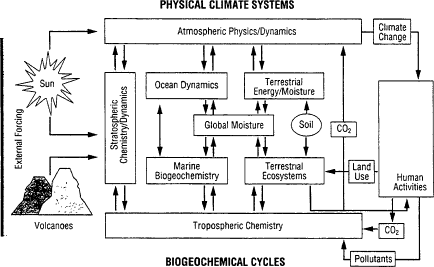
Figure 5.1
Status of earth system science in the year 2000.
Source: National Research Council, 1990b.
issues is so little developed, global models of human-environment interactions can provide only highly uncertain projections of the future.
There are, however, useful analytic alternatives to grand mathematical models. It is impossible to simultaneously maximize generality, realism, and precision in a model (Levins, 1966; Puccia and Levins, 1985). Levins suggests three options: (1) sacrifice generality to realism and precision; (2) sacrifice realism to generality and precision; or (3) sacrifice precision to realism and generality.
The first approach of sacrificing generality for realism and precision is typical of most simulation models developed for policy analysis. These models usually include dozens, hundreds, or even thousands of equations describing linkages among variables. They are realistic in the sense that they reflect the detailed structure of the social system being modeled—different equations describe each sector of the economy, each segment of the population, each region in the country or the world. Precision lies in the specification of relations among variables through the equations. But the detail that provides realism forces a loss of generality—the models must be developed for each specific application, and work with
a new region or problem may require extensive recalibration of the model. For analyses with short time horizons, such models may achieve their goals of realism and precision. For example, they might be appropriate for understanding the short-term impacts on a local or national economy of a policy to reduce CO2 emissions. But we believe they are not realistic nor likely to be precise for longer time horizons because the social, political, and economic relationships represented by the equations in such models are likely to change over the longerterm. Thus we do not see the extensive use of such models as an optimal strategy for analyzing human response. During the last decade, there has been a rapid growth in scholarship that critically assesses the technical features of such models, and this may lead to better formulations that have a more dynamic form, or at least to a wider appreciation of the limits of these models (Belsley and Kuh, 1986; Brewer, 1983; Greenberger, 1983; Greenberger et al., 1976; Kmenta and Ramsey, 1982; Meadows and Robinson, 1985; Stern, 1984, 1986).
The second approach, sacrificing realism to generality and precision, is typical of simple, heuristic, analytical models. These models usually consist of one or a few equations that are intended to capture key elements of the behavior of an admittedly very simplified system. They are analyzed using standard mathematical tools or, if intractable, are simulated. They are not realistic in that they greatly simplify the system being analyzed. Like models of the first type, their mathematical formulation gives them precision. Their relative simplicity enables them to be used in a variety of circumstances, precisely because they do not incorporate the details that typify models of the first type. Of course, these first two types of models are not distinct, as simulation models are usually built with a large number of simple analytic models linked together. Historically, the analytical models have had the disadvantage of making simplifying assumptions that presumed equilibrium or stasis, and so are not ideal for studying long-term responses. Recent work with developing nonequilibrium and evolutionary models suggests ways past these assumptions by offering model structures that are much more dynamic in character and that allow for changes in both parameters and model structure within the model (Axelrod, 1984; Boyd and Richerson, 1985; Holling, 1986; Smith and DeJong, 1981). We believe that these new methods for analytical modeling may prove very fruitful in addressing the kinds of structural transformations that are likely to accompany global change.
The third approach, which sacrifices precision for generality
and realism, is typical of a good deal of traditional social theory in which the models are informal, exploratory, and—a key feature of the type—nonmathematical. These types of models have many faults: they often do not produce clear forecasts for assessing policy options; they may be imprecisely specified; they do not readily link to other models from the social, physical, and biological sciences; and, because of their imprecision, the full implications of a specification may be unclear. Still, much social science knowledge is based on such models, and we believe they will continue to be fruitful despite their flaws. Because they are flexible and closely linked to the kinds of data available, they can help inform the other two approaches. We suggest that efforts to understand the human dimensions of global change can make fruitful use of such informal models, and that the link between analytic models and qualitative models can be strengthened with analytical techniques that more closely match the character of most qualitative models (Puccia and Levins, 1985). Qualitative modeling in turn can inform the development of newer approaches to analytic modeling. And while we are cautious about the use of simulation models, further methodological work on such models, coupled with the incorporation into them of more dynamic analytical approaches could significantly improve understanding.
Over the near-term, research on the human dimensions of global change will best proceed along several parallel tracks, using many methods. Along with quantitative modeling approaches, it will be critical to proceed with studies using other traditional social science methods and aimed at more accurate specification of the relationships that models represent quantitatively and of the conditions under which those relationships develop and change. We conclude, therefore, that at least for the near-term, the strength of emphasis on building integrative models that marks other parts of the global change research strategy is premature for studying the human dimensions. For the human interactions research agenda, much more understanding of the underlying processes needs to be developed before great strides can be made in integrative modeling.
The catalogue of methods used for learning about social processes, and the strengths and weaknesses of each, are well known to social scientists. They include randomized experimentation, which can convincingly demonstrate causal relationships, but does not deal well with complex relationships among variables not subject to manipulation; quasi-experimentation, which is useful for assessing interventions in the environment when random as-
signment to treatments cannot be accomplished; case study, which may use historical, ethnographic, or other methods and which allows consideration of complex relationships but leaves open questions about generality; directed case comparisons, which address the issue of generality by comparing carefully selected situations; multivariate analysis of existing data, which can quantify complex relationships but lacks the richness of the comparative case method; and survey research, which can collect new data on multiple variables in a standardized way and generalize by sampling.
One can make reasonable judgments about the appropriateness of each method for studying particular questions. Different methods are more or less appropriate depending on the level of spatial or temporal aggregation of the questions asked, the availability of standardized data, the number of variables of interest, and so forth. But for the broad project of global change research, we emphasize the importance of a multimethod approach. Different methods tend to illuminate different aspects of a process, and each method can be used as a check on the results obtained by other methods.
To understand interdependencies in humans and the environment, it is best to promote methodological interdependence. The point can be illustrated by the historical case study of the causes of CFC use in Chapter 3. The case study identified causal connections not often noticed between the development of CFCs and fossil energy demand, operating over half a century. These are represented schematically in Figure 5-2. These connections would have not been revealed by a more standard analysis based only on the study of data on CFC use, regardless of the method used. But once revealed, the connections raise new questions best addressed by other methods. For example, the CFC case underlines the value of more detailed quantitative analysis of relationships between the spatial dispersion of an affluent population and demand for CFCs and fossil energy. This sort of dialogue of methods is likely to lead to a more complete picture of the human causes of global change than a collection of unrelated discipline-based or method-centered studies. The most likely way to bring the results of different methods into contact is probably through research communities united by a common set of problems. Therefore, we emphasize the need to build an interdisciplinary, multimethod research community for the study of the human dimensions of global change. We discuss elements of the creation of such a community in Chapter 7.
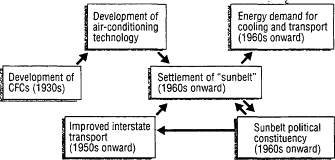
FIGURE 5.2 Social consequences of development of CFC technology for refrigeration, 1931 to present.
METHODS FOR INFORMING CHOICE
The model presented in Figure 4-1 emphasizes that human systems respond to global environmental changes as a function of the way those changes affect things people value. Accordingly, the applied social science of global change focuses on assessing those effects and evaluating each available response option in terms of their direct and indirect effects on what people value. It is obviously difficult to make the necessary assessments and evaluations. Nevertheless, social scientists have developed techniques aimed at assessing the social effects of environmental change and of policy interventions and at placing values on effects of very different kinds, which are not readily measurable on a common scale.
Social Impact Assessment Methodology
A set of methods, known collectively as social impact assessment (SIA) methodology, has been developed that could be adapted to the problem of assessing the effects of global change and the policies enacted to respond to it (Finsterbusch et al., 1983; Dietz, 1987). SIA developed out of the impact assessment provisions of the National Environmental Policy Act (NEPA); it uses some of the methods typical of technology assessment and risk assessment, but it is more focused on the effects on human systems than those activities sometimes are. The experience with SIA illuminates several important issues involved in formally assessing the consequences of global change.
The goal of SIA is to predict the social effects of policies, programs, and especially projects that cause change in the physical and biotic environment and to use these predictions as an aid to decision making and public debate. Thus, SIAs have strong parallels to the kinds of analysis necessary for assessing the proximal effects of global environmental change on things humans value.
Formal Modeling Approaches A dominant approach in the early days of SIA was to develop and apply computer simulation models for impact assessment (Dietz and Dunning, 1983; Leistritz and Murdock, 1981). The typical model began with predictions of the labor required for the construction and operation of a project such as a prison or nuclear power plant. The model then estimated the demand for secondary jobs, the extent to which the demand could be met locally, the subsequent in-migration, and finally the demand for government services and stresses on the local governmental budget.
These models have several advantages for SIAs. They are based on seemingly hard and objective numbers—such as the relationship between primary and secondary jobs—that in principle can be evaluated theoretically and can be tested with empirical evidence. They produce quantitative forecasts of the types of impacts that were expected to be of great importance. And they can be applied quickly and easily to alternative versions of the same proposed project or to other projects with the input of a modest amount of situation-specific information. Because of these characteristics, a number of these models saw widespread use, and some are still applied today.
Unfortunately, these models have several important flaws that have led to their declining importance in SIA practice. First, the ability of the models to make accurate predictions is very limited. Despite the use of such models for 20 years, there have been very few attempts at model validation by comparing projections with actual experience. The evidence suggests that key parameters that are assumed in the models to be constant over time, such as the ratio of secondary to primary jobs, are in fact highly variable over time and space and are quite likely to change drastically under the influence of large scale projects such as those simulated (Meidinger and Schnaiberg, 1980). Thus, these models often have at their core postulated relationships that do not match social reality. For the practical purposes of these models, the lack of predictive validity is a serious flaw.
A second fault of the models is what they leave out. All mod-
els simplify the world. These models handled only the impacts that could be represented with fairly simple quantification methods, such as input-output analysis or standard population projection techniques. As it turned out, among the most controversial impacts of large resource development projects was the prospect that they would disrupt community life, resulting in mental health problems, adverse effects on youth and the elderly, and so on. Although concern with such issues produced enough opposition in some cases to slow or block entirely the construction of large projects, these impacts were ignored in the simulation models. The analytical resources used for simulation had been focused on the wrong targets in terms of the political choices at hand.
Finally, the projections of such models often acquire the status of facts. Modelers are usually sensitive to the conditional character of projections and the need to use them heuristically. But in practice, a few runs of the model can become fixed in the minds of those debating a proposed project, program, or policy, with other important issues pushed aside. People who do not find the models addressing the issues of most concern to them become skeptical of the entire analytic approach, with the result that scientific analysis becomes a lightning rod for debate rather than a way to clarify the issues.
Formal models applied to the consequences of global environmental change may have analogous uses and problems. The demand for social impact assessments of the anthropogenic effects of global warming is already large and will certainly grow. In response to this demand, we expect to see many well-intentioned efforts to use simulation models. Such models usually take the output of physical and biological process models that are relatively well developed compared with social process models and use them to drive simple economic and demographic models. These simulations have great appeal because they are easy to develop from existing models of component systems and because they produce seemingly hard results. However, they have at least two serious limitations, in addition to the inherent difficulty of assessing the sorts of consequences SIAs often leave out.
One problem is that SIA methods were developed to assess local impacts of environmental changes and human interventions, but much of the need is for global assessments. SIA methods, taking into account the limitations already mentioned, are appropriate for assessing the local social consequences of, for instance, a change in rainfall or an energy conservation incentive policy. But they have not been built to assess the global impacts of the
same events, an assessment that would be necessary for evaluating policies for mitigating global climate change. To do this would require a SIA for each locality affected and a technique for aggregating the SIAs.
The other problem is that SIAs, which take considerable effort and expense, especially if used to assess global effects, are likely to distract attention from more important analytical and modeling questions, including fundamental questions about interactions between environmental systems and human responses. A lesson of the last two decades of SIA that might also become a lesson of applying SIA methods to global change is that simulation models of the sort described here have limited utility in advancing scientific knowledge or in aiding serious discourse on policy: their value may be illusory. This is not to decry all use of simulation, but to sound a warning about the potential for misuse of applied Simulations for policy purposes.
Post Hoc Evaluation Approaches The SIA literature includes empirical studies of the impacts of specific projects, programs, or policies after implementation. These studies employ conventional and well-developed social science methods and theory to determine what actually happened in response to public or private action (Finsterbusch et al., 1983). The largest body of this research addresses the effects of energy development boom towns on the community and its members (Freudenburg, 1984). Such studies are very important to SIA for several reasons. First, they pointed out the importance of context in determining impacts and provided a useful caution against overgeneralizing or assuming that a specific local or regional future could be forecast with much accuracy. Second, they encouraged the normal working of empirical science by stimulating debate about the theory, methods, and interpretation of past studies and allowed a variety of methods and theories to be applied to the same general problem. For example, the effects of boom town developments on youth have been studied using ethnographic methods, surveys, and statistical analysis of secondary data. New studies benefited from earlier studies, and theory, methods, and results improved. Finally, well-conceived post hoc studies borrowed from and contributed to theory and method both in evaluation research and in the traditional disciplines, often forcing the disciplines to consider problems they had not previously addressed. In many cases, the researchers carrying out these empirical efforts worked as part of interdisciplinary teams and learned to develop more integrated
pictures of social reality than were available in the parent disciplines.
Nevertheless, the achievements of 20 years of empirical work on social impacts have been modest. The work has often been conducted with very limited resources and tight deadlines, with resulting compromises in conceptualization and research design. Long-term, post hoc studies, which would be invaluable for improving prediction tools, are especially uncommon. Millions of dollars have been spent on predicting impacts, but comparatively little on measuring the actual impacts. The situation is rather like trying to understand population dynamics and develop sound population projection techniques in the absence of census data to modify the understanding and calibrate the techniques.
The problem of limited resources is exacerbated by the marginal linkage of impact studies to the prestigious centers of core disciplines. The main streams of most social science disciplines have ignored the effects on society of the physical and biotic environment and of technology. As a result, it has been difficult to obtain support from conventional funding agencies or publication in the most prestigious journals. Many of the post hoc SIA studies have been doctoral dissertations or relatively small efforts funded from intrauniversity sources. Publication has often been in interdisciplinary journals that lack the circulation, prestige, and visibility of the disciplinary journals. The lack of funds and of prestige, in turn makes it difficult to attract the best young talent to these studies.
Research needs: The experience with post hoc SIA studies offers several useful lessons regarding research on human dimensions of global change. Perhaps the simplest but most important is the value of ongoing studies to monitor the impacts of projects, programs, and policies. Although social program evaluation is a sophisticated and well-developed activity, the best methods of evaluation research have rarely been applied to environmental or resource policies or programs. A major exception to this rule is in the area of residential and commercial energy conservation. Post hoc evaluations should be viewed as an important part of the process of analyzing policy alternatives for response to global change, and resources should be provided for them. Even when the expected impacts are too far in the future to be studied directly, empirical methods should be applied to analogous programs or policies.
A second lesson is that, although the standard tools of disci-
plinary research are of central importance in applied research on the human dimensions of global change, the disciplines will be slow to accept the importance of that research. As a result, the growth of research capability requires lines of support—financial and intellectual—in contact with but somewhat autonomous from the disciplines. We return to this issue in Chapter 7. For the moment, we note that agencies and foundations that support basic research should play a key role in fostering rigorous, theoretically informed, and methodologically well-designed empirical studies on human consequences of and responses to global change. In addition, mission agencies that usually fund only applied social science research, but that have some basic research programs in the natural sciences, should initiate basic research in the social sciences as well.
Methods for Valuation
To have practical importance, any assessment of the human consequences of global change, or of responses to it, must be combined with some means of placing values on the consequences. Valuation is a difficult task because consequences can be of very different kinds, so that a metric for making tradeoffs is not obvious. Moreover, different people often place different values on the same consequence.
In the last 5 to 10 years, the problem of valuation, or commensuration of the various things humans value, has become an important theme in the SIA literature (Mitchell and Carson, 1988; Dietz, 1987). The typical impact assessment describes a diverse list of probable impacts, for example, increased jobs, lower energy costs, loss of wildlife habitat, increased cultural diversity in the community, and increased crime and congestion. Often, the impact assessment makes no attempt to assign relative value to these impacts, on the assumption that relative values are and should be assigned in the political process, not by the researchers. In this model of decision making, estimates of impacts are used as inputs to the political process, to better inform the inescapable debates between conflicting values and interests.
Although this approach has dominated most impact assessment, other forms of policy analysis in the social sciences have tried to systematize valuation. The premier technique is benefit-cost analysis (BCA). In BCA, impacts are assigned market values, either directly or by imputation. Future impacts are discounted. Then, having assigned a value to all costs and benefits in current dol-
lars, the ratio of benefits to costs, net present value, internal rate of return, and other measures of the efficiency of the project can be calculated. While those who produce BCAs typically caution against taking the final ratio or other measures of efficiency too seriously as decision criteria, the process does provide an explicit framework for valuing otherwise incommensurable impacts. It also suggests the appropriate action to be taken from among the options analyzed. Some versions of risk analysis, such as risk-risk and risk-benefit analysis, provide similar structures for making tradeoffs among impacts (Dietz et al., 1991).
There are many strong criticisms of BCA and risk analysis as decision-making tools for environmental policy (e.g., Dietz, 1988; Fischhoff, 1979; Mazur, 1981). These include methodological critiques and deeper political and ethical questions about whether it is appropriate for technical analysts to decide the relative values of outcomes instead of leaving such tradeoffs to the political system. But whatever the difficulties of particular methods and their implementation, they have the advantage of forcing careful and systematic thinking about the appropriate methods for assigning values to impacts and thus making tradeoffs among impacts. Recent debates in the SIA literature suggest that much more work needs to be done on the problem of valuation. Several approaches that might serve as complements to BCA, using very different theoretical underpinnings, have been offered (Dietz, 1987; Freeman and Frey, 1986). Some of the alternatives rely on assessing people's value preferences by directly eliciting them (e.g., Keeney and Raiffa, 1976). None of the proposed approaches is yet widely accepted, but a dialogue has begun on the subject. At the heart of the dialogue is a belief that, while social science methods can never replace the political process in assigning values to impacts and making decisions about the allocations of resources, it is equally naive to believe that social science research cannot inform the valuation process. We believe the history of BCA has shown the value and influence of systematic thinking on value issues. Recent work on valuation in SIA is seeking to expand the domain of that thinking.
This suggests a simple lesson for research on human dimensions of global change. Although the social sciences cannot resolve the value questions at the heart of individual and collective decision-making about global change, social scientists should offer their best systematic insights into methods for understanding values, value conflicts, and the implications of alternative approaches to individual and collective choice. Here the logical
interdisciplinary collaborations are not only with physical and biological scientists, but also with scholars in the humanities, especially philosophy and the arts.
The Appropriate Uses of Research
Because of reflexivity, research on global change has the potential to seriously affect human societies. It is therefore important for researchers to be clear about the purposes of their work and to develop a context for it that is not politically naive. The problems arise most clearly in the use of formal models in policy analysis, because the connection to social choices is quite direct, but they exist as well with other methods of policy analysis.
The last decade has seen increasing attention to the use of models in policy analysis and collective decision making. Most of that literature has been sharply critical of the effect of simulation models on the policy process (Baumgartner and Midttun, 1987; Brewer, 1983; Freedman et al., 1983; Greenberger, 1983; Greenberger et al., 1976; Habermas, 1970; Hoos, 1972; Meadows and Robinson, 1985; Robinson, 1982, 1988; Stern, 1984, 1986; Wynne, 1984). The problem can be explicated by drawing the distinction between forecasting and projecting. Most modelers would argue that models project rather than predict. If the systems of structural relations incorporated into a model are a reasonable approximation of reality at present and if those structural relations do not change, the model implies that certain events would occur. However, as noted above, the structural relations among the elements of social models are quite likely to change in the intermediate and long-terms. Indeed, the goal of policy modeling is to assess the effects of intentional changes in the social world. Since the models by necessity simplify the world and assume to be constant that which is not, their predictions can have only limited validity. The exact simplifications and assumptions made can never be fully validated by scientific knowledge, but always depend to a large degree on the judgment of the modeler, and that judgment reflects a modeler's world view as well as objective fact. While the research community understands these limits of all models, in the policy process model results often are abused. The abuse takes two related forms.
First, the results of modeling are sometimes interpreted as what will happen—a forecast or prediction rather than a simple projection of the current situation (Ascher, 1978; Brewer, 1983; Baumgartner and Midttun, 1987). Present actions are influenced by a
prediction of the future, but the assumptions that influence that prediction are hidden in the details of a model and not easily accessible to debate. This limits consideration of policy responses to those options that fit within the structure of the model and precludes easy consideration of policies that might make structural alterations (Meadows and Robinson, 1985; Robinson, 1988). In this way, the structure of a model can become a determinant of policy, rather than simply a mode of evaluating options. Technical analysis thus drives the policy process (Habermas, 1970; Dietz, 1987).
Second, the results of a modeling exercise have the aura of scientific objectivity, despite the judgments built into them. A model and its results are sometimes erroneously seen as neutral, and the selection of policy options is consequently justified as a technical activity rather than a political one. This perception makes models a powerful tool of advocacy (Majone, 1989). Decision-making institutions claim to be responding to the forecasts in the only logical way, but in fact, ''forecasts do not reveal the future but justify the subsequent creation of the future'' (Robinson, 1988:338). As noted in the discussion of social impact assessment, this way of using models can either limit creativity and debate or provoke skepticism. In the latter case, the models are ignored rather than being used in an informative role. The political process drives or ignores the technical analysis.
Recently, a number of critics have suggested alternative criteria for modeling that preserve the benefits of modeling without the political problems (Dietz, 1987; Steenbergen, 1983; Masini, 1984; Robinson, 1988). They argue that modeling should be used to increase the range of scenarios considered in the policy process, so that each scenario can be evaluated in terms of its desirability. This is essentially the approach of normative forecasting—the model is used to work backward from a desirable future into present policy options that could create that future. A key element in the approach is the recognition that all models build in assumptions and simplifications. To the greatest extent possible these assumptions and simplifications should be explicit to those using the model and those using information from the model. This approach places the modeling exercise within the policy process and explicitly allows interested parties to argue for their own assumptions about reality and for the inclusion of variables of critical concern to them.
We are not opposed to the extensive use of modeling in the study of human dimensions of global change. What is needed is
thoughtful modeling, rather than stock application of existing methods, however technically sophisticated those methods may be. Also needed is more clarity about the purpose for using particular models in particular analyses. The challenge of understanding global change provides a valuable opportunity to advance the state of the art in social science modeling. Social models will be most helpful, and best able to link to emerging models in the biological and physical sciences, if they take serious account of the dynamic core of human action and social structure and if they are sensitive to the ways in which models are used in the policy process. Thus we advocate research on the methodology and policy use of models, rather than simply the elaboration of existing models and modeling methods.
Research on global change is likely to become the object of policy discussions regardless of the method used. Formal models are particularly potent influences in some circles of the policy community, but case studies, surveys, econometric analyses, and experiments can also be oversold as revealing absolute truths. Descriptions of the results of natural science can also be politically powerful, because most decision makers get their knowledge secondhand and in predigested form, and because the digested version necessarily embodies judgments in addition to those involved in the original research that the recipient cannot recognize as such (National Research Council, 1989b; on related issues, see Fischhoff, 1989:238-257; Jasanoff, 1990). The challenge for research is to generate knowledge responsive to a range of policy concerns; the challenge for policy is to maintain institutions that bring out the range of responsible interpretations of that knowledge so that individual and collective decision makers can have an informed basis for action (National Research Council, 1989b; Stern, 1991).
CONCLUSIONS
We have noted in this chapter the significant problems involved in building theory and choosing methods that will help improve understanding of the human dimensions of global change and inform human responses. We reached four broad conclusions.
INTERDISCIPLINARY COLLABORATION IS ESSENTIAL
The nature of global environmental change is such that the variables of central concern to a variety of disciplines typically
act in conjunction. Consequently, for many important global change processes, specialists in any one discipline are likely to make erroneous analyses if they fail to draw on expertise from other relevant disciplines. In some instances, the necessary cross-fertilization can be accomplished through the usual processes of scholarly debate in academic journals and meetings, but in many instances, this is unlikely to occur because the relevant scholars do not interact. Consequently, the most promising way to get the necessary interaction is within interdisciplinary research groups and communities brought together by a problem of common interest. It should be a high priority of the human interactions research effort to support problem-centered interaction among social and natural scientists, for example, through research projects that require such contact, problem-focused scholarly meetings, and interdisciplinary research centers.
NEW THEORETICAL TOOLS ARE REQUIRED
Because global change studies are inherently interdisciplinary, and especially because the object of study requires analysis at spatial and temporal expanses much greater than most social scientific theory encompasses, these studies challenge social science to develop new theoretical tools. Among the important questions about global change for which improved social theory is required are these:
-
Under what conditions do major national and international changes in political-economic structure occur? At what speed are they propagated?
-
Which social changes maintain themselves over long periods of time, which are ephemeral, and which have a long-term increasing impact? How and under what conditions can these changes, especially the expanding ones, be reversed, slowed, or redirected?
-
What are the major sources of variation and change in the slowly changing aspects of human systems, such as fertility, socialization, building patterns, family and labor force structure, national policy systems, and international regimes?
-
Under what conditions do short-term factors in human behavior, such as individual judgment, social influence, and consumption expenditures, vary systematically over time or space?
-
How do human activities that occur on the global scale, such as scientific progress and the spread of markets, interact with the global environment?
-
What are the relationships between human activities at the global scale and human activities that occur at smaller spatial scales?
-
How are nature-society relationships occurring at one level of analysis (say, local deforestation) related to the same relationships at higher levels (e.g., the nation-state)? What determines these connections?
The global change research agenda requires answers to these questions for only a subset of human activities—those with significant implications for the global environment. But many of these questions, broadly stated, are important for basic social science. This convergence of interests between basic social science and global change research has a positive and a negative side. The negative is that theory needed to understand global change does not yet exist. The positive is that studies of the human dimension of global change have the potential to attract scholars who see opportunities to make important theoretical advances for their home disciplines.
METHODOLOGICAL PLURALISM IS THE MOST APPROPRIATE STRATEGY
At least for the near-term, a strong emphasis on building integrative models is premature for studying the human dimensions. For the human interactions research agenda, much more understanding of the underlying processes needs to be developed before great strides can be made in integrative modeling. Despite the attractions of integrative modeling, the committee has concluded that, for the present, support for human interactions research should be concentrated on process studies, with only modest levels of support for integrative model building, until improved data and process knowledge provides a better basis for constructing formal models of the human dimensions of global change. Formal modeling should be treated as one among many methods deserving attention for advancing knowledge of the human dimensions of global change. Models should be part of a dialogue of methods, with several complementary methods being used to give a more complete picture of human interactions with the global environment than any single method can produce.
POST HOC ANALYSES ARE ESSENTIAL FOR EVALUATING HUMAN RESPONSES
The public sector will often be involved in efforts to redirect the social driving forces of global environmental change or to
respond effectively to the impacts of global change as they become apparent. Many governments are already beginning to take actions to mitigate ozone depletion and other forms of global change by limiting CFC production, promoting energy conservation, and other means. As with other major public policy initiatives, it is important to evaluate both the intended and the unintended consequences of the policies. What works and what does not work in efforts to control the social driving forces underlying global environmental change? What can we learn from the experience with ozone depletion about effective responses to other types of global change? Can public policy play a major role in reducing the energy intensity of advanced, industrial economies? Are some policy instruments (for example, regulations, charges, transferable permits) more effective than others in curbing the anthropogenic sources of global change?
It has been customary in U.S. social policy to evaluate the effects of policy initiatives and to plan for the evaluation in the budgetary process. But post hoc studies of interventions in the environment have not received nearly sufficient government resources or sufficient involvement from the academic centers of social science. To plan for policy, post hoc studies of human responses to past environmental changes are also essential. Agencies and foundations that support basic research on global change should play a key role in fostering rigorous, theoretically informed, and methodologically well-designed empirical studies assessing the effects of human responses to global change. In particular, we recommend that all federal agencies that sponsor programs anticipated to affect processes of global environmental change should routinely include in their budgets funds to evaluate the effects of those programs after they have been enacted.
This recommendation is not a proposal for a new form of environmental impact statements. It is a proposal for data gathering after a policy is in place, because for adjusting policies and for long-term gains in understanding, it is critically important to assess actual impacts after the fact. Over time, post hoc studies can lead to the accumulation of a sizable body of empirically grounded propositions.


