
2
Global Change and Social Science
Concern about global environmental change is sweeping through the scientific community, both in this country and abroad. Interest was organized at the international level through the International Geosphere-Biosphere Programme (IGBP), an activity of the International Council of Scientific Unions. The program officially focuses on issues of physical and biological science, although a few of the principals have emphasized the human dimensions of global change and sought to involve the social sciences (Clark, 1988; International Federation of Institutes for Advanced Study, 1987; Jacobson and Price, 1990; Kates, 1985a, b; Kates et al., 1985; for an important analysis by Americans, see Chen et al., 1983). More recently, natural scientists in the United States and some other countries have increasingly realized that global change cannot be understood, much less dealt with sensibly, in the absence of substantial contributions from the social sciences. For one thing, human responses to global change are likely to feed back into the processes at work to amplify, dampen, or redirect the changes in question. Even more important, the global changes of greatest interest today, like ozone depletion, climate change, and the loss of biodiversity, are largely anthropogenic in origin. Recognizing such phenomena, the National Research Council's Committee on Global Change, which originally consisted entirely of natural scientists, has consistently emphasized the importance of the human dimensions and has increasingly involved social scientists in its efforts (Clark, 1988; Na-
tional Research Council, 1990b). Other interdisciplinary efforts sponsored by the International Federation of Institutes for Advanced Studies, the International Social Science Council, and other groups have also involved social scientists in the study of global change.
In this book, we use the term social science to cover a broad range of research activities usually associated with disciplines such as economics, sociology, political science, psychology, anthropology, geography, and history and interdisciplinary fields such as policy science, human ecology, and management. Social science involves the systematic study of the behavioral processes of individuals and social groups, organizations, and institutions. Our use of the term includes activities that are sometimes characterized as behavioral science.
Natural scientists interested in global change sometimes harbor false expectations about the contributions social scientists can make to understanding of global change. But the important point is that the U.S. global change community is now remarkably receptive to input from the social sciences. It is consequently time for social scientists to take seriously the challenge of mapping a strategy to add to knowledge of global environmental change.
GLOBAL CHANGE AND ENVIRONMENTAL SYSTEMS
Global environmental changes are alterations in natural (e.g., physical or biological) systems whose impacts are not and cannot be localized. Sometimes the changes in question involve small but dramatic alterations in systems that operate at the level of the whole earth, such as shifts in the mix of gases in the stratosphere or in levels of carbon dioxide and other greenhouse gases throughout the atmosphere. We speak of global change of this sort as systemic in nature because change initiated by actions anywhere on earth can directly affect events anywhere else on earth. Other times, the changes in question result from an accretion of localized changes in natural systems, such as loss of biological diversity through habitat destruction and changes in the boundaries of ecosystems resulting from deforestation, desertification or soil drying, and shifting patterns of human settlement. Global changes of this sort we describe as cumulative in nature; we consider them global because their effects are worldwide, even if the causes can be localized (for further exposition of the concepts of systemic and cumulative global change, see Turner et al., 1991b). The boundary between systemic and cumulative change
is not sharp; it depends on how rapidly an environmental change spreads in space.
The most prominent global changes, as noted in Chapter 1, are increases in atmospheric greenhouse gases, depletion of the stratospheric ozone layer, and loss of biological diversity. There are others, however, such as pollution of the oceans (a systemic change) and possibly degradation of soil quality (a cumulative change)— and yet others are probably still unknown. People also debate whether the acidification of lakes and forests caused by the long-range transport of airborne pollutants is a global or only a regional change. Nevertheless, the appropriate strategy for scientific analysis of global change seems straightforward. One may conceive of the earth as a complex system composed of a number of differentiable but interacting spheres or subsystems. Some of these, including the atmosphere, the biosphere, the geosphere, and the hydrosphere, can be thought of as environmental systems, in that from the human perspective they constitute the environment. Others, sometimes called the noosphere or the anthroposphere and further subdivided—for example, into economic, political, cultural, and sociotechnical systems—can be distinguished as human systems (the terms environmental systems and human systems are taken from Clark, 1988). Approached in this way, the study of global change centers on efforts to understand how environmental systems at the global level affect or are affected by changes in any one of these spheres or subsystems. Key to this study is understanding the feedback mechanisms between subsystems that either amplify or dampen the initial impacts.
Much public concern with global change comes from the sense that amplifying (positive) feedback mechanisms involving environmental systems may be impossible to control once they get started. Accumulation of greenhouse gases, for example, may raise temperatures sufficiently to increase rainfall in the high north latitudes, threatening the capacity of plants and animals to survive in a rapidly changing environment (ARCS Workshop Steering Committee, 1990). These changes in turn may contribute to an acceleration of climate change by lowering the earth's albedo through reduction in snow cover and sea ice. Warming will also affect the global hydrological cycle by changing precipitation and evaporation patterns, leading to shifts in vegetative cover; these changes in turn could amplify the warming in areas where desertification is taking place. Another possibility is that some global changes may trigger dampening (negative) feedbacks that offset or even dominate the forces unleashed by positive feedback processes.
Warming may increase low-level sea clouds leading to cooling due to the radiative effect of increased planetary albedo. Increases in the level of carbon dioxide in the atmosphere, for example, may stimulate the growth of plants through leaf changes that increase photosynthetic activity and CO2 uptake, thereby moving the planetary climate system back toward its initial condition.
There is nothing new about global change. The earth has always been a highly dynamic system whose atmospheric, biological, and geological properties have changed, sometimes dramatically, over the course of time. And there is nothing new about global change forcing humans to make drastic changes in their ways of life. Between about 12,000 and 25,000 years ago (and later, in Canada)—a recent time in the two-million-year existence of the human species—thick sheets of ice covered most of northern Europe and Canada. The sites of present-day New York and Paris had arctic climates, and sea levels were about 100 meters lower than they are today.
But the global environmental changes occurring now differ from those of the past in at least two ways that have profound consequences for our thinking about this subject. For one thing, the pace of global change has picked up dramatically. Methane concentration in the atmosphere has doubled in the past century; chlorofluorocarbons (CFCs), which accounted for about one-quarter of the anthropogenic contribution of greenhouse gases in the 1980s, were not present in the atmosphere before the 1930s (Houghton et al., 1990). Such changes require analysis on the time scale of centuries or even decades for understanding ozone depletion or global climate change. Equally important is the fact that the global changes we are concerned with today are largely anthropogenic in origin. Humans are no longer simply innocent victims compelled to adapt, in some cases rapidly, to large-scale changes in environmental systems resulting from forces beyond their control. Instead, it is human behavior itself that must be controlled if we are to succeed in ameliorating or redirecting global change.
TRENDS IN GLOBAL CHANGE
A remarkable feature of the current concern about global change is that it is largely anticipatory of any effect on humanity. None of the environmental changes in question has moved beyond the early stages of its projected trajectory, and several of the global changes of greatest concern have yet to manifest themselves in any unambiguous and convincing fashion. Given the short-term
nature of so much human activity, and considering the great uncertainties about the future course of global change, the level of concern about global environmental change now expressed in a variety of public forums is extraordinary. In the interest of providing a common vantage point from which to examine the human dimensions of global change, we present a brief synopsis of current expectations in the scientific community regarding trends in ozone depletion, climate change, and the extinction of species.
There is general agreement that the yearly reductions in ozone over Antarctica are a reliable pattern (seasonal depletions of up to 50 percent were measured in 1987 and again in 1989 and 1990), that emissions of CFCs into the atmosphere are a principal cause of this phenomenon, and that CFCs already in the stratosphere will constitute a growing source of ozone depletion for several decades, regardless of efforts to reduce or eliminate additional emissions. The effects of the resultant increase in ultraviolet radiation (more specifically, UV-B) reaching the earth's surface, moreover, are widely believed to include damage to human health (in such forms as skin cancers, cataracts, and suppression of the human immune response system) and to plants and aquatic organisms (including crops of considerable importance to humans). Beyond this, our knowledge of ozone depletion is less clear-cut. There is some evidence of Arctic depletions that are significant, though less severe, than those recorded in Antarctica; decreases of a few percent are observed. Predictions of future trends in ozone depletion are sensitive to changes in a number of variables, including human responses to the threat of severe ozone depletion. And much remains to be learned about the consequences of increased ultraviolet radiation (Solomon, 1990).
Global climate change is undoubtedly more complex than ozone depletion, more difficult to project, and more important in terms of its potential impacts on human welfare. Projections of temperature trends over the next century are based largely on scenarios of increasing concentrations of greenhouse gases in the earth's atmosphere (chiefly carbon dioxide, methane, CFCs, and nitrous oxides). Projections of the equilibrium temperature response, expressed as a global mean temperature, are shown in Figure 2-1 for four scenarios, one assuming current growth rates and the others assuming progressively increasing controls of greenhouse gas emissions to the atmosphere. The best available analytical tools project that, assuming current growth rates for emissions, we can expect a significant rise in worldwide equilibrium temperature (perhaps 1-5 degrees Celsius by the middle of the
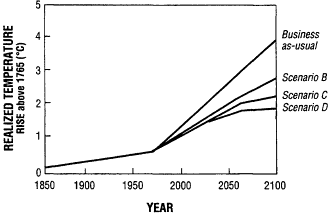
FIGURE 2-1 Best-estimate projected increases in global mean temperature due to observed (1850-1990) and projected emissions of greenhouse gases under business-as-usual assumptions and resulting from Intergovernmental Panel on Climate Change scenarios B, C, and D, which assume increasing levels of control of emissions. Uncertainty about the effect of emissions on temperature change could increase the 2100 temperature under business-as-usual assumptions by as much as an additional 2.0° C or decrease it by 1.4° C. Source: Houghton et al. (1990)
next century). However, the models are affected by several major uncertainties (for example, the role of clouds as reflectors of sunlight and of the oceans as carbon sinks), and sizable regional variations in temperature change are expected. In addition, there are sharp differences of opinion concerning the question of whether the trends predicted as a consequence of the greenhouse effect have already begun to appear in the actual data on global temperatures. While many observers interpret the increase of approximately 0.5 degree Celsius in mean global temperature recorded during the twentieth century as induced by the greenhouse effect, ''it is not yet possible to attribute a specific portion of the ... warming to an increase of greenhouse gases'' (Folland et al., 1990:199). Predictions of climatic changes other than warming, such as in precipitation and cloud patterns, are even more uncertain (Houghton et al., 1990).
Though the total number of species on earth is not known, conservative estimates suggest a number of 3 to 10 million, of which approximately 1.4 million have been formally described (Wilson, 1988); recent estimates, however, range up to 30 or even 50 million species (Erwin, 1982, 1988). The history of species
diversity on the planet appears to be one of long-term increases punctuated by episodes of mass extinction. Students of biodiversity recognize a number of mass-extinction events of varying magnitude, the one at the end of the Permian period being the most severe. The number of species appears to have increased since the mass extinction at the end of the Cretaceous period, 65 million years ago, but it has recently been declining at an unprecedented rate due to human activities. The rate of extinctions has been estimated at 1,000 or more times that before human intervention (Wilson, 1988). Destruction of land, fresh-water, and marine ecosystems is occurring worldwide; the destruction of tropical moist forests, which are thought to contain more than half of the earth's species, is the most important single cause of the acceleration in the extinction rate. The probable consequences of this trend for human welfare are not easy to foresee. The fact that humans now exploit only a tiny fraction of the earth's species may encourage a somewhat cavalier attitude toward the preservation of biological diversity. Yet there is a strong utilitarian case to be made for preserving the diversity of species on the grounds that future discoveries may demonstrate significant uses for many species and that species of no economic value may play critical roles in maintaining the stability of large ecosystems. In addition, there are powerful aesthetic and ethical arguments for maintaining biological diversity.
CHARACTERISTICS OF ENVIRONMENTAL SYSTEMS
Large physical and biological systems exhibit a number of characteristics that present challenges to those endeavoring to understand them. They require advances in scientific concepts, theories, and methods beyond those typical of existing disciplines. We briefly summarize these characteristics here. In Chapter 5, we note that human systems have analogous properties that pose very similar challenges for the social sciences.
Complex interdependencies exist both within and between environmental systems. Changes in one part of the earth's environment can have effects in surprising places. For instance, a recent proposal is that adding iron to the oceans may reduce the buildup of carbon dioxide in the atmosphere by removing the limiting factor to the growth of phytoplankton, which absorb excess carbon dioxide from the air (Martin et al., 1990). Although serious questions have been raised about the proposal (e.g., Lloyd, 1991), this sort of phenomenon makes predictions of environmental
changes difficult. Causes and effects can be widely separated in space, and the knowledge necessary for prediction often requires contributions from scientific disciplines that do not ordinarily communicate with each other. Human activities intended to affect only one aspect of the environment can have far-flung and unanticipated consequences. Because no one can foresee when and how human activities will produce undesired effects, it is not clear in advance how to control them.
Global environmental systems frequently exhibit nonlinear responses. Mathematical models of global processes demonstrate that, under certain conditions, small perturbations in environmental systems can have large effects. In principle, a minute air current, of the sort a butterfly fluttering its wings might produce, could cause a major storm halfway around the world. Similarly, some small changes in human activities can produce huge effects—yet some large changes may make no difference. The net result is great uncertainty in predicting relationships between initial changes and final outcomes. Scientific analysis cannot easily come to terms with uncertainty of this sort because so little is known about the thresholds in either natural or human systems at which incremental changes are sufficient to trigger sharp discontinuities. Still, the phenomena are important because the most serious impacts of gradual environmental changes on human welfare (for example, the buildup of carbon dioxide) may result from an increased frequency of catastrophic events, like floods and crop failures, rather than from slow changes in average temperatures.
Environmental systems can undergo irreversible changes. The clearest example is the extinction of species. Ecosystems can also go extinct as a result of pollution beyond the point of no return or the conversion of their locales to human uses. Climate changes that cause forests to "migrate" can move them to locations from which they cannot naturally return, even if the climate system reverts to its original condition. Deforestation in some tropical areas causes soils to become unfit over time for annual crops or for revegetation by preexisting species. Discontinuities of this sort cause concern not only because of the value of what is lost but also because irreversible changes can reverberate through interdependent systems to cause additional changes that may be irreversible as well. And it is difficult to predict which environmental changes will have irreversible effects.
Long lag times are common in environmental systems. CFCs released into the atmosphere migrate to the stratosphere, where
they are broken down by sunlight over a period of decades to several centuries. CFCs released in the 1990s will continue to destroy ozone in the stratosphere well into the twenty-first century and, in some instances, beyond. Because of such slow effects and the interdependencies of environmental systems, many human interventions in the global environment constitute uncontrolled experiments whose results may not be known for generations. This makes knowledge difficult to accumulate. It also increases the demand for knowledge both because these experiments may threaten the whole earth and because they have the potential to set catastrophes in motion before their effects are even noticed.
Global environmental changes can result from the interactions of local systems with each other and with larger-scale systems. For some analytic purposes, it is inadequate to treat the earth as possessing a single environment. Although the atmosphere is global, understanding of the biosphere may need to be built up from knowledge at smaller spatial scales, such as ecosystems or biomes. Thus, knowledge of global change requires ways to understand relationships across spatial scales (Clark, 1987; Rosswall et al., 1988). Human activities compound the challenge by redistributing species and transforming habitats, thus altering the ways ecosystems interact.
These characteristics of the global environment present serious challenges for scientific research and may call for new theories and methods. In addition to progress on scientific questions that fall within standard disciplinary boundaries, problems of global change require approaches that treat the earth as a single interactive system and stress the powerful interdependencies among environmental (and human) systems. Such approaches tend to be interdisciplinary rather than multidisciplinary (Schneider, 1988) and are often characterized by holistic analytic premises such as those of ecology or systems analysis.
The nature of the global environment also raises doubts about the value of the existing structure of scientific disciplines for understanding global change. To the extent that resources continue to be channeled through the familiar disciplines, the disciplines look increasingly like part of the problem. Those working on computer models of global climate change (that is, general circulation models) already find it necessary to incorporate into their algorithms variables and relationships from various disciplines of physical science; biological variables and relationships will increasingly be included as the models are refined. And pressure is growing to incorporate projections of human activities into
evolving models of the earth system (National Research Council, 1990b:111). The need to understand global change may well become a powerful force for change in the existing structure of scientific disciplines.
ENVIRONMENTAL SYSTEMS AND HUMAN SYSTEMS
Research on the human dimensions of global change strives to understand the interactions between human systems and environmental systems, particularly global environmental systems, and to understand the aspects of human systems that affect those interactions. Human systems include economies, populations, cultures, governments, organizations that make technological choices, and so forth. Many of them are associated with disciplines that specialize in their study. Environmental systems include systems of atmospheric gas exchange, biogeochemical dynamics, ocean circulation, ecological interactions of populations of organisms, and so forth. These also tend to be associated with academic specializations.
Interactions between human systems and environmental systems have two critical interfaces, as shown in Figure 2-2. One is the subset of human actions that act as proximate causes of environmental change, that is, that directly alter aspects of the environment. The other is the subset of outcomes of environmental systems that proximally affect what humans value.
The example of anthropogenic climate change can clarify the relationships involved. Each human system has its own internal dynamics, and each also interacts with other human systems and the environment. Some of the activities of human systems, such as fossil fuel burning and agricultural conversion of wetlands, are significant proximate causes of global environmental change. That is, they directly alter aspects of the environment in ways that have global effects. These particular proximal causes add carbon dioxide and methane to the atmosphere and thus contribute to the greenhouse effect. The human causes of global environmental change, which are the focus of Chapter 3, include the human activities that proximally, or directly, alter the global environment and the aspects of human systems that explain those activities and therefore affect the global environment indirectly through their effects on the proximal causes. It is important to emphasize that the human causes of global environmental change quite often depend on decisions made and actions taken without any consideration of the global environment.
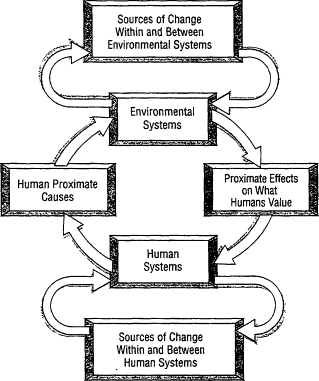
FIGURE 2-2 Interactions between human and environmental systems. Source: This figure elaborates on Clark (1988:Figure 1).
Environmental systems, like human systems, have their own internal dynamics. And like human systems, each environmental system interacts with other systems, both environmental and human. Some of the processes in environmental systems, whether or not human systems were involved in causing them, proximally affect things humans value. For example, processes that warm the atmosphere might result in rainfall patterns that inhibit or enhance the growth of crop plants or dry up sources of surface water used for human consumption. We use the phrase, "what humans value," broadly. It refers not only to outcomes that affect human health and material well-being, but also to outcomes such as extinction of species, disruption of ecosystems, and loss of natural beauty, on which humans may place aesthetic, spiritual, or intrinsic value. Chapter 4 focuses on these consequences
of global change—how global change may affect what humans value and how those effects, or the anticipation of them, may affect human behavior.
QUESTIONS FOR NATURAL SCIENCE, QUESTIONS FOR SOCIAL SCIENCE
The human causes and consequences of global change raise questions for both natural and social science. On the causes side, important human actions include releasing CFCs, burning fossil fuels, and cutting tropical moist forests. Much remains to be learned about the effects of these actions on the global environment, with many puzzles for natural scientists to solve. We do not yet understand, for example, where all the carbon dioxide emissions go, or how large an area certain ecological communities need to remain viable. The principal issues for the social sciences center on the causes of the human actions that proximally cause global change. On the consequences side, natural scientists need to address such questions as the effects of ozone depletion on the incidence of certain types of cancer and the implications of global climate change for agricultural production. The key issues for social scientists center on human responses to actual or anticipated global changes. In addition, as Figure 2-2 shows, human responses to actual or anticipated global changes frequently trigger feedback processes that affect the anthropogenic sources of global change. For example, faced with the prospect of ozone depletion or global warming, humans may act to reduce or eliminate their consumption of CFCs or their use of fossil fuels or make changes in demographic patterns or institutional arrangements. Such possibilities also fall into the domain of social science. We address them in Chapter 4.
CONTRIBUTIONS FROM SOCIAL SCIENCE
What can the social sciences contribute to understanding the human dimensions of global change during the next decade? We have approached this question in two distinct ways. One is to imagine answering queries from policy makers and natural scientists working on global change issues. The other is to identify broad conceptual and theoretical constructs from social science that could be brought to bear on the problem in an illuminating fashion.
Policy makers and natural scientists interested in global change are likely to ask: Why does the United States consume so much
more energy per unit of gross national product than most other Western industrialized countries? Why are ancient forests destroyed more rapidly in some societal settings than in others? How can we account for large discrepancies in land use practices, even among societies that resemble each other in many ways? These are complex questions that social science cannot answer now with confidence. Nonetheless, such questions can be analyzed with social science techniques, and a serious literature relating to many questions of this sort is available for study.
For example, researchers who examine the different patterns of energy consumption in the United States and Canada on the one hand and Western Europe and Japan on the other have much to say about the relative importance of geography (for example, distances between human settlements), demography (for example, the dispersal of human populations into suburbs), economics (for example, the relative costs of labor and energy as factors of production), infrastructure (for example, the prevalence of central heating in homes), and public policy (for example, taxes, subsidies, and policies governing rents from natural resources) as determinants of the propensity of North Americans to rely more heavily on energy as a factor of production than Europeans or especially the Japanese do (e.g., Schipper et al., 1985; Schipper, 1989). Similarly, researchers who examine the pace of deforestation and the spread of large-scale cattle ranching in the Amazon Basin are engaged in a lively debate about the relative importance of institutional factors (for example, systems of land tenure), technological factors (for example, the introduction of modern road building and land clearing equipment), international economic factors (for example, the growth of a world market for lean beef), political factors (for example, various forms of tax relief and public subsidies for activities involving land clearing), cultural factors (for example, the tendency to apply a frontier mentality to decisions about the Amazon), and population growth as determinants of the destruction of Amazonian moist forests (e.g., Hecht, 1985; World Resources Institute, 1985). The techniques exist to greatly improve understanding of how such factors act separately and together to influence the proximate human causes of global change.
The social sciences can also contribute by using available conceptual and theoretical constructs to illuminate problems of global change. For example, one of the most powerful and well-documented findings in social science is that apparently rational actors engaged in interactive decision making can and often do end up with outcomes that are less than optimal—and in some
cases highly destructive—for all concerned (e.g., Hardin, 1982). Such problems of collective action as they have come to be known, arise regularly in conjunction with the use and abuse of open-access resources such as the stratospheric ozone layer, the earth's climate system, and the planet's gene pool, as well as with the supply of public or collective goods, such as air and water quality. It follows that much might be learned about the human causes and consequences of global change from research on collective-action problems and on possible solutions for them, especially if the research focused on global change.
The same is true for research on "social traps," situations in which actions that are initially rewarded or reinforced lead to behavior or habits with later consequences that those involved would rather avoid (Cross and Guyer, 1980). Mundane examples of traps include smoking and drinking, habitual behaviors that addicts often find difficult or impossible to change even when the painful consequences become abundantly clear. On a much larger scale, social traps are an analogue for the problems of controlling or redirecting the anthropogenic sources of global change. For example, American society is "addicted" to the intensive use of energy in the sense that cheap energy has changed society in ways that make it increasingly difficult to return to past habits. Energy-dependent patterns of dispersed, suburbanized settlement make it difficult to adopt energy-efficient technologies such as mass transit that were appropriate in the more densely packed cities of the past.
The examples of collective-action problems and social traps suggest that the selective development of some fields of traditional social science can help illuminate processes affecting global change. If researchers in these fields are encouraged to focus on cases relevant to the global environment, they may improve fundamental understanding of global change. This theory-based research strategy has the potential, over time, to enable social science to address more confidently the pointed, policy-oriented questions that will continue to arise.
KNOWLEDGE BASE OF ENVIRONMENTAL SOCIAL SCIENCE
Most of the social science research relevant to global environmental change has been undertaken and organized not so much within the traditional disciplines as within subfields that are usually interdisciplinary or multidisciplinary in scope, such as cultural ecology, environmental history, environmental perception,
human ecology, natural hazards research, resource economics, and resource management, to name a few. These research areas taken together constitute a broader field of environmental social science, a cluster of research activities that takes human-environment relationships as its focus, including human-induced physical changes, perceptions of environmental changes from whatever cause, and responses to the environment. Most of the research has been conducted below the global scale. We briefly sketch the outlines of the domain of environmental social science, citing some sources of more detailed information on recent research activities.
Many of the subfields that constitute environmental social science tend to emphasize human reactions to the environment—perceptions and responses. For example, environmental perception studies, blending geography and psychology, have focused on the structures and processes of human learning and cognition as people interact with their surroundings, whether natural or social (Aitken et al., 1989; Fischhoff and Furby, 1983; Whyte, 1985; Golledge, 1987). Studies in environmental sociology and political science have examined, among other issues, the implications of social movements (Morrison, 1991), public opinion (Dunlap and Jones, 1991), and political economy (Schnaiberg, 1991) for human responses to environmental problems (see also Buttel, 1987; Heathcoate, 1985). Research in environmental psychology has addressed human responses to environmental stressors (Baum and Paulus, 1987; Evans and Cohen, 1987; Fischhoff et al., 1987), as well as the determinants and ways of altering individual behaviors that affect the natural environment (Stern and Oskamp, 1987). Natural hazards studies have attempted to create global and cultural typologies of perceived environmental hazards and impacts, and of human responses to them (Burton et al., 1978; Mitchell, 1989; Mileti and Nigg, 1991). Of all the environmental social sciences, this subfield has the longest tradition of research that is global in scope (e.g., Kotlyakov et al., 1988; Parry et al., 1988). The emphasis on the "built environment" in the environment and behavior literature in environmental psychology and environmental sociology makes this research tangential to some issues of global change; nevertheless, these subfields provide empirical, methodological, and theoretical insights useful to some aspects of the problem (e.g., Dunlap and Michelson, 1991; Craik and Feimer, 1987).
Another group of environmental social sciences has emphasized human activity as an influence on the physical environment, primarily through examinations of the transformation of the physical landscape and the societal forces that give rise to it. Cultural
(also political) ecology, human ecology, and environmental history have focused on the character of the human-environment relationship per se, primarily through examinations of the transformation of the physical landscape and the societal forces that give rise to it. This tradition of nature-society studies can be traced at least to the seminal work of George Perkins Marsh (1864), through the 1955 symposium on ''Man's Role in Changing the Face of the Earth'' (Thomas, 1956), and a more recent effort on "The Earth as Transformed by Human Action" (Turner et al., 1991a). Save for the last work, these and similar efforts have typically focused on regional and local relationships because of the importance of context in understanding the forces that drive changes and the human adjustments to them (Butzer, 1989; Ellen, 1982; Steward, 1955). Attention has been given both to long sweeps of prehistory and history (e.g., Butzer, 1976; Cronon, 1983; McEvoy, 1986; Merchant, 1991; Pyne, 1982; Rabb, 1983; Richards, 1986), and to contemporary change (e.g., Blaikie and Brookfield, 1987; Netting, 1968; Rappaport, 1967; Turner and Brush, 1987; Rosa et al., 1988). Human ecology incorporates these regional, local, and historical concerns but also attempts to integrate micro-social phenomena and social interactions into an understanding of human-environment relations and draws on evolutionary approaches to social and environmental change (Borden et al., 1988; Dietz and Burns, 1991; Dietz et al., 1990). Such studies have typically demonstrated the complexity of human-environment relationships and the significant degree to which presumed broader forces are mediated by local socioeconomic and environmental conditions.
Resource economics is somewhat unusual in environmental social science in representing an approach clearly identified with a single discipline, though now of much wider currency. From Malthus to the present, a central theme in resource economics has been natural resource depletion induced by growth, human population, and the economy, and the threat this poses to human welfare (Barnett and Morse, 1963; Smith, 1979). More recently, concomitant with the attempt to develop a field of ecological economics, the depletion theme has been extended to include environmental resources, including those "provided" by ecosystems and the atmosphere, and the spatial management problems these pose because of the absence or weakness of markets for exchanging them. Emphasis is on the magnitude and spatial and temporal distribution of the social costs and benefits of using these resources. Analysts propose institutional arrangements that would internalize
the costs and benefits. Some favor publicly administered regulations and penalties; others favor the use of more market-like incentives, such as taxes or subsidies, to achieve the same end (Kneese and Russell, 1987). Resource management, an interdisciplinary subfield that combines physical and social science, focuses on physical resources such as water, oil, or wildlife. The field draws on legal and social theory so that its management concepts take into account objectives other than growth or efficiency, such as social cohesion or preservation of cultural groups (Emel and Peet, 1989; Heathcoate and Mabbutt, 1988; Rees, 1985; Savory, 1988).
SETTING PRIORITIES FOR SOCIAL SCIENCE RESEARCH
Social science has potential for contributing to knowledge about global change, starting from either practical questions or relevant theory. This is good news for social scientists because it indicates that global change research can become a rich new field of study. But it also means that priorities must be set to effectively allocate the scarce resources of time and money. In later chapters, we review current knowledge and address the issue of priorities for a national research program on the human dimensions of global change. Among the research needs identified there, highest priority should be given to research activities that meet several of the following criteria.
-
Importance. The research addresses fundamental issues relating to the anthropogenic sources of global environmental change or the human consequences of or responses to global change. We favor studies that seem likely to shed light on patterns of behavior that:
-
have high impact, for example, if a proximate cause of global change, such as emissions of major greenhouse gases, is highly sensitive to the behavior or if a behavior is highly sensitive to an anticipated global change;
-
have multiple impacts, for example, increases in crop acreage have combined effects on biological diversity and releases of carbon dioxide, nitrous oxide, and methane;
-
are likely to become more important over a time scale of decades or centuries, even if they do not have high or multiple impacts now;
-
affect the robustness of societies under the impact of global environmental changes, that is, their ability to withstand such changes without major disruptions of human life;
-
affect the capacity to respond appropriately to global change,
-
for example, by promoting or impeding wise use of scientific knowledge or facilitating or inhibiting agreements on response between political units;
-
may have irreversible effects on the global environment or on people's ability to respond to environmental change.
-
Relevance for Action. The results of the research have potential value to individuals and organizations, including government agencies, that take action in response to global change. It is a mistake to take a narrow view of the criterion of relevance. Some of the most striking developments in the social sciences (for example, the theory of collective action) as well as in the natural sciences have originated in basic research whose initial links to applied concerns were anything but obvious. There is a need for research probing the roots of the anthropogenic sources of global change, and not only research that seeks answers to specific practical questions. Still, we believe it is important to give priority to studies that are relevant in the sense that they promise to shed light on decision variables that are actually or potentially subject to human control.
-
Improving Theory. The research helps develop theoretical tools that will facilitate future studies of the human dimensions of global change. Among the most general theoretical needs are improved ways to analyze social change on the time scale of decades to centuries and to make connections between different levels of analysis and of spatial and temporal aggregation. (These points are elaborated further in Chapter 5.)
-
Adding to Existing Knowledge. The research has a high probability of making a large marginal contribution to knowledge. It may deal with an issue about which relatively little is known or one about which available knowledge is highly uncertain; there should be a strong probability of a useful result. This criterion may be met in various ways: the research might address important practical questions, such as the relative effectiveness of different kinds of interventions in response to global change; timeliness is an important additional criterion for such research. It might develop knowledge on critical broad problems, such as the nature of interactions among the driving forces of global change or the functioning of decision or conflict processes in responses to global change. Or it might help develop theory. There is much to be said, for example, for supporting research in areas in which extensive data sets coexist with relatively underdeveloped conceptual and theoretical foundations. An example may be research efforts to explain trends in the consumption of fossil fuels in
-
various parts of the world. As we note in subsequent chapters, many research methods are useful, and the program of research on the human dimensions of global change should be characterized by methodological pluralism.
-
Improving Data. The research helps raise the quality of data on important variables relevant to the human dimensions of global change, improves access to such data, or provides data on important variables for which good measures do not yet exist.
-
Amenability to Research. The research uses established techniques of social science or appropriate techniques newly developed for global change research. Some questions lend themselves more easily than others to research by social scientists because of the existence of relatively large universes of comparable cases, the ease of operationalizing key variables, or the usefulness of computer simulation as a modeling technique. (We discuss these issues in greater detail in Chapter 5 .)
-
Interdisciplinary Potential. The research has strong potential to contribute to effective communication across social science disciplines, or between social scientists and natural scientists working on global environmental change, and to facilitate collaboration that bridges intellectual divisions. It seems evident that success in understanding global change will require effective alliances across disciplines, particularly between social scientists and natural scientists. Yet real successes in forging such alliances have been few and far between, despite frequent declarations concerning the importance of interdisciplinary studies. We therefore take the view that priority should be given to studies that offer imaginative ways to solve this problem.
-
Potential for International Collaboration. Research that meets the other criteria should be given higher priority if, by its organization or its likely products, it can be expected to strengthen the ability of an international community of researchers to gain understanding of the human dimensions of global change.
CONCLUSION
The global environmental changes of greatest current concern are inextricably intertwined with human behavior. They cannot be understood without understanding the human activities that cause them and the ways humans may respond to the awareness of global change. This state of affairs dictates that social scientists apply their knowledge and methods to the problem of global change and that natural and social scientists work together to
build the needed knowledge of how human and environmental systems interact. Although environmental social science can contribute by directly analyzing policy questions, in the long run it is critically important to build theory, methods, and data bases that can improve environmental social science. In that way, basic understanding of the major types of decisions and behaviors that cause or respond to global change can also grow.


