
3
Dimensions of the Problem: Exposure Assessment
EXPOSURE ASSESSMENT IS A crucial component of environmental epidemiology studies that seek to establish causal relationships between exposure to chemical and physical agents from hazardous-waste sites and adverse consequences to human health. The discipline of exposure assessment encompasses numerous techniques to measure or estimate the contaminant, its source, the environmental media of exposure, avenues of transport through each medium, chemical and physical transformations, routes of entry to the body, intensity and frequency of contact, and spatial and temporal concentration patterns. Exposure to a contaminant is defined as “an event that occurs when there is contact at a boundary between a human and the environment at a specific contaminant concentration for a specified period of time; the units to express exposure are concentration multiplied by time” (NRC, 1991, p. 3).
In environmental epidemiology, exposure assessment has proved difficult. Epidemiologic research typically involves retrospective studies. When data are gathered retrospectively, there is an enormous opportunity for exposure assessment to be influenced by apparent disease occurrence, and vice versa. Records of environmental pollution can sometimes provide a surrogate for exposure, but these surrogates are not always available, and direct measures of past exposures have not usually been recorded.
Rothman (1990) noted estimates of exposure are very often heterogenious, poorly described, and involve low concentrations of toxicants. Although essential to well-designed epidemiologic investigations, exposure assessment has been and continues to be an inadequately developed component of environmental epidemiology, because
-
the temporal characteristics of site discovery and investigation make it difficult;
-
the conceptual framework and techniques for evaluation have only recently been established;
-
epidemiologists often have not understood or given sufficient attention to exposure evaluation.
This chapter has three sections. The first describes the potential for human exposure by identifying toxic chemicals found at hazardous-waste sites. This includes direct site contamination, contamination by unidentified or uncharacterized pollutants, and groundwater contamination from other sources. The second section discusses approaches to exposure assessment and their attendant problems. The third section examines reported exposure assessments associated with hazardous-waste sites and reviews the strengths and weaknesses of the reports.
TOXIC-CHEMICAL EXPOSURE AT WASTE SITES
Although much of the waste produced annually in the U.S. is not listed as hazardous, the U.S. Environmental Protection Agency (EPA) estimated in 1988 that the amount of hazardous waste managed by approximately 3000 licensed facilities was 275 million metric tons (EPA, 1988). In addition, there are a substantial number of uncontrolled disposal sites that contain hazardous wastes and that could present serious environmental or public health problems. For example, municipal waste sludge and incinerator ash can contain toxic materials such as lead, cadmium, mercury, and other toxic materials.
In the late 1970s there was widespread publicity about the indiscriminate dumping of waste that was resulting in release of toxic agents into the environment. The national failure to address the many known and suspected hazards from uncontrolled hazardous waste sites led Congress to pass the Comprehensive Environmental Response, Compensation, and Liability Act of 1980 (CERCLA), generally known as the Superfund law. Under CERCLA's terms, more than 31,000 sites have been reported to EPA's CERCLA Information System (CERCLIS) inventory of sites that could require cleanup. EPA
has completed more than 27,000 preliminary assessments, and more than 9000 sites have been investigated in detail (EPA, 1988). As of June 1988, EPA's National Priorities List (NPL), included 1236 sites, about 30 percent of which have had initial actions to reduce immediate threats. The number of identified sites represents a small proportion of the sites that are expected to be identified in the future (OTA, 1989).
HAZARDOUS-WASTE SITES
Within the past decade, estimates of the number of potential NPL sites have shifted dramatically. The Office of Technology Assessment (OTA, 1989) concludes that there could be as many as 439,000 candidate sites. This is more than 10 times that estimated earlier by EPA. These sites include Resource Conservation and Recovery Act (RCRA) Subtitle C and D facilities, mining waste sites, underground leaking storage tanks (nonpetroleum), pesticide-contaminated sites, federal facilities, radioactive release sites, underground injection wells, municipal gas facilities, and wood-preserving plants, among others.
One recent EPA survey found that more than 40 million people live within four miles and about 4 million reside within one mile of a Superfund site. Residential proximity does not per se mean that exposures and health risks are occurring, but the potential for exposure is increased. As of December 1988, the Agency for Toxic Substances and Disease Registry (ATSDR) concluded that 109 NPL sites (11.5 percent) were associated with a risk to human health because of actual exposures (11 sites) or probable exposure (98 sites) to hazardous chemical agents that could cause harm to human health. These NPL sites were listed in the categories of “urgent public health concern” or “public health concern.”
The states with the largest number of NPL sites are New Jersey, Pennsylvania, California, Michigan, and New York. They accounted for 464 of 1236 (37.5 percent) sites as of 1991 (Figure 3-1). The activities associated with these sites are shown in Table 3-1. Figure 3-2 depicts the observed contamination of various media as a percentage of 1189 final sites on the NPL as of February 1991. Note that a site can have more than one type of contamination.
Data derived from the 951 ATSDR health assessments at hazardous-waste sites indicate the existence of more than 600 different chemical substances. Some of them are listed in Table 3-2. The documented migration of substances into water, soil, air, and food also is listed in Table 3-2. Most of the identified agents are toxic and represent potential threats to the public health, depending on the degree of expo-
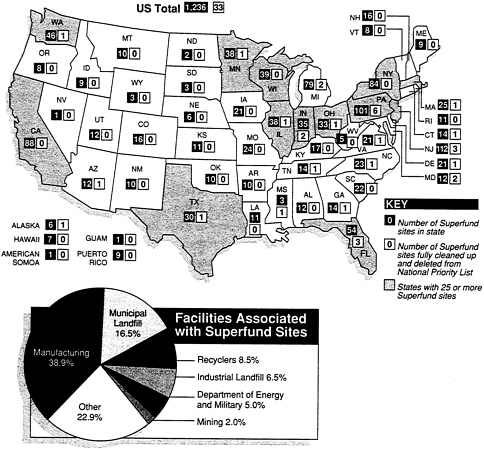
FIGURE 3-1 Few Superfund sites completely cleaned up. Source: Adapted from Viviano, 1991, with permission.
sure. Of the compounds identified at more than 100 sites, lead, chromium, arsenic, cadmium, nickel, trichloroethylene (TCE), perchloroethylene (PCE), vinyl chloride, methylene chloride, chloroform, benzene, ethylene dichloride (EDC), and polychlorinated biphenyls (PCB) have been identified as either human or animal carcinogens and are classified in group 1 of the ATSDR-EPA list of the 100 most hazardous substances. A list of agents identified at more than 10 proposed and final NPL sites is listed in Appendix 3-A to this chapter, and the original ATSDR list of priority substances can be found in Appendix 3-B.
Buffler et al. (1985) have reviewed the adverse health effects associated with specific toxicants identified at hazardous-waste sites. While discussing the types of chemicals found, the review addresses whether health effects could be detected in studies of populations exposed to these chemicals at waste-disposal sites. Skin and central nervous
TABLE 3-1 Types of Activities at Hazardous-Waste Sites in the United States (Includes 1177 Final and Proposed Sites Placed on the National Priorities List as of June 1988)
|
Activity |
Final |
Proposed |
Total |
|
Surface impoundments |
295 |
137 |
432 |
|
Landfills, commercial/industrial |
299 |
113 |
412 |
|
Containers/drums |
229 |
64 |
293 |
|
Other manufacturing/industrial |
102 |
137 |
237 |
|
Landfills, municipal |
157 |
56 |
213 |
|
Spills |
111 |
73 |
184 |
|
Chemical processing/manufacturing |
82 |
78 |
160 |
|
Waste piles |
73 |
46 |
119 |
|
Leaking containers |
80 |
36 |
116 |
|
Tanks, above-ground |
80 |
28 |
108 |
|
Tanks, below-ground |
46 |
42 |
88 |
|
Groundwater plumes |
63 |
12 |
75 |
|
Electroplating |
36 |
27 |
63 |
|
Wood preserving |
39 |
16 |
55 |
|
Waste oil processing |
34 |
16 |
50 |
|
Ore processing/refining smelting |
27 |
9 |
36 |
|
Open burning |
24 |
12 |
36 |
|
Solvent recovery |
24 |
11 |
35 |
|
Outfall, surface water |
20 |
15 |
35 |
|
Military ordnance production/storage/disposal |
19 |
14 |
33 |
|
Military testing & maintenance |
16 |
10 |
26 |
|
Landfarm, land treatment/spreading |
18 |
7 |
25 |
|
Battery recycling |
17 |
6 |
23 |
|
Incinerators |
17 |
1 |
18 |
|
Mining sites, surface |
11 |
4 |
15 |
|
Underground injection |
11 |
2 |
13 |
|
Drum recycling |
8 |
4 |
12 |
|
Sand and gravel pits |
7 |
3 |
10 |
|
Mining sites, subsurface |
6 |
3 |
9 |
|
Road oiling |
7 |
1 |
8 |
|
Laundries/dry cleaners |
2 |
5 |
7 |
|
Sinkholes |
6 |
1 |
7 |
|
Explosive disposal/detonation |
2 |
1 |
3 |
|
Tire storage/recycling |
2 |
0 |
2 |
|
Total sites a: |
799 |
378 |
1177 |
|
a Since each site may have more than one activity, the number of activities is greater than the number of sites. Source: U.S. Environmental Protection Agency, Office of Emergency Response, Washington, D.C. 20460. |
|||
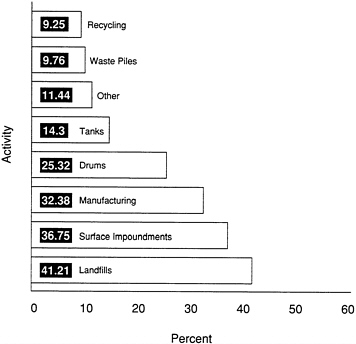
FIGURE 3-2 NPL: Types of activities at 1189 final sites. Source: Environmental Protection Agency, Office of Solid Waste and Emergency Response, 1991.
system (CNS) effects were the most likely effects to occur from direct contact with waste site chemicals. Hepatic, hematopoietic, renal, reproductive, and CNS effects were the most likely indicators of chronic, low-dose exposure through ingestion.
UNIDENTIFIED OR UNCHARACTERIZED CONTAMINANTS
To date, attention has focused on a relatively small number of chemical contaminants identified at hazardous-waste sites. Many identified or unidentified potential contaminants have received little scrutiny. These uncharacterized pollutants include substances that are not on the ATSDR-EPA list of 100 most hazardous substances, compounds that cannot be identified by standardized or accepted analytical methods, previously unidentified substances that result from in situ transformation processes, and by-products of treatment techniques. MacKay et al. (1989) suggest that large quantities of these potentially toxic compounds may be relatively mobile in the subsurface environment, and a potential exists for these compounds to contaminate groundwater.
One EPA evaluation (Bramlett et al., 1987) of the composition of leachates from hazardous-waste sites documents the potential problem. The chemical composition of leachates from 13 sites located throughout the U.S. was analyzed. Only 4 percent of the total organic carbon (TOC) in the leachate was characterized by gas chromatography/mass spectroscopy according to their chemical structure. More than 200 separate compounds were identified in the 4 percent fraction. This included 42 organic acids, 43 oxygenated and heteroaromatic hydrocarbons, 39 halogenated hydrocarbons, 26 organic bases, 32 aromatic hydrocarbons, 8 alkanes, and 13 metals. The unidentified 96 percent of organic carbon is of unknown toxicity. Overall, the number of chemical agents found in the 4 percent of the leachate studied is large, and yet this represents only a fraction of the overall organic contribution. In addition to the toxicity of these chemical agents, whether the mobile compounds promote transport of chemical toxicants is an important subject for research.
Research in California by MacKay et al. (1989) has documented the examples of uncharacterized compounds that could have important toxicologic properties or significance for transport. Chlorobenzenesulfonic acids have been identified at the Stringfellow Acid Pits in Glen Avon and at the BKK landfill in West Covina; arsenicals were found at a site in Rancho Cordova; and brominated alkanes were found at the Casmalia hazardous-waste disposal site, along with high melting explosive (HMX) (cyclotetramethylene tetramintriamine), research department explosive (RDX) (cyclonite), and mutagenic explosive by-products from the Lawrence Livermore National Laboratory, to name just a few.
NONPOINT SOURCES
As important as the NPL sites are, focusing attention solely on the chemicals identified at these sites understates the potential scope of the problem of groundwater contamination. Toxic contaminants in groundwater can be considered as “hazardous waste” in a public health or toxicologic context, in contrast to the regulatory framework for defining hazardous waste. Secondly, contaminated groundwater close to defined hazardous-waste sites may act as a confounder in environmental epidemiologic investigation. In California, for example, 70 percent of public drinking water comes from groundwater (Leeden et al., 1990). Moreover, recent surveys show that problems with ground-water are not unique to California. In 1986, EPA reported to Congress that groundwater contamination from organic chemicals had occurred or was occurring in 70 percent of the states; 65 percent and
TABLE 3-2 Selected Hazardous Substances at 951 National Priorities List Sites: Number and Percentage of Sites and Documented Migration of Substances into Specific Media
|
Substance |
ATSDR Priority Group |
No. |
% |
Sites with Migration |
Groundwater |
Surface Water |
Soil |
Air |
Food |
Sediment |
|
Metallic Elements |
564 |
59 |
327 |
234 |
138 |
122 |
37 |
50 |
114 |
|
|
Lead |
1 |
404 |
43 |
224 |
159 |
84 |
88 |
28 |
39 |
84 |
|
Chromium |
1 |
329 |
35 |
142 |
93 |
55 |
48 |
12 |
15 |
46 |
|
Arsenic |
1 |
262 |
28 |
36 |
92 |
46 |
54 |
16 |
19 |
50 |
|
Cadmium |
1 |
232 |
24 |
112 |
72 |
49 |
45 |
18 |
21 |
44 |
|
Mercury |
2 |
129 |
14 |
58 |
29 |
24 |
20 |
6 |
10 |
19 |
|
Nickel |
1 |
126 |
13 |
55 |
30 |
24 |
15 |
3 |
8 |
21 |
|
Beryllium |
1 |
21 |
2 |
9 |
2 |
3 |
1 |
0 |
0 |
3 |
|
Volatile Organic Compounds (VOCs) |
518 |
54 |
268 |
236 |
88 |
81 |
71 |
31 |
58 |
|
|
Trichloroethylene |
1 |
402 |
42 |
231 |
204 |
63 |
41 |
44 |
19 |
27 |
|
Benzene |
1 |
323 |
34 |
139 |
115 |
41 |
27 |
29 |
9 |
24 |
|
Tetrachloroethylene |
1 |
267 |
28 |
125 |
116 |
28 |
22 |
34 |
11 |
17 |
|
Toluene |
2 |
256 |
27 |
101 |
78 |
26 |
29 |
26 |
6 |
20 |
|
Vinyl Chloride |
1 |
187 |
20 |
87 |
80 |
16 |
14 |
18 |
7 |
9 |
|
Methylene Chloride |
1 |
183 |
19 |
81 |
61 |
21 |
16 |
17 |
4 |
9 |
|
Chloroform |
1 |
142 |
15 |
74 |
61 |
20 |
8 |
7 |
3 |
9 |
|
1,4-Dichlorobenzene |
1 |
31 |
3 |
7 |
6 |
0 |
1 |
1 |
0 |
1 |
|
Polychlorinated Biphenyls (PCBs) |
1 |
162 |
17 |
86 |
43 |
25 |
40 |
11 |
25 |
39 |
|
Polycyclic Aromatic Hydrocarbons (PAH) |
187 |
20 |
75 |
32 |
22 |
31 |
4 |
6 |
38 |
|
|
Benzo(a)pyrene |
1 |
56 |
6 |
18 |
6 |
6 |
9 |
0 |
2 |
8 |
|
Benzo(a)anthracene |
1 |
32 |
3 |
10 |
3 |
4 |
8 |
0 |
1 |
6 |
|
Benzo(a)fluoroanthene |
1 |
25 |
3 |
10 |
1 |
3 |
5 |
0 |
0 |
4 |
|
Chrysene |
1 |
23 |
2 |
6 |
2 |
1 |
3 |
0 |
1 |
4 |
|
Dibenzo(a,h)anthracene |
1 |
4 |
<1 |
1 |
0 |
0 |
1 |
0 |
0 |
0 |
|
Phthalates |
106 |
11 |
35 |
22 |
13 |
17 |
5 |
5 |
16 |
|
|
Bis(2-ethylhexyl)phthalate |
1 |
88 |
9 |
35 |
22 |
13 |
16 |
3 |
5 |
16 |
|
Pesticides |
82 |
9 |
25 |
13 |
8 |
17 |
6 |
7 |
12 |
|
|
Dieldrin/aldrin |
1 |
29 |
3 |
13 |
8 |
2 |
6 |
3 |
2 |
3 |
|
Heptachlor/heptachlor epoxide |
1 |
15 |
2 |
4 |
2 |
0 |
1 |
0 |
0 |
1 |
|
Dioxins |
47 |
5 |
21 |
8 |
7 |
16 |
2 |
7 |
11 |
|
|
2,3,7,8-Tetrachlorodibenzo-p-dioxin |
1 |
19 |
2 |
15 |
5 |
3 |
8 |
3 |
7 |
10 |
|
Other |
||||||||||
|
Cyanide |
1 |
74 |
8 |
23 |
13 |
9 |
7 |
3 |
2 |
8 |
|
N-Nitrosodiphenylamine |
1 |
8 |
1 |
4 |
2 |
1 |
2 |
0 |
1 |
2 |
|
Source: Adapted from ATSDR, 1989. |
||||||||||
60 percent had groundwater contamination from metals and pesticides, respectively (EPA, 1987a). Contamination from nonpoint sources, such as agricultural runoff, may not derive from a specific hazardous-waste site, but is toxic waste and could pose significant health hazards unless recognized and controlled. For example, according to EPA (Appendix 3-A), the reproductive toxicant and carcinogen dibromochloropropane (DBCP) has been identified at only one NPL site. Although DBCP use was suspended in California in 1979, it persists in the environment and has been detected in more than one-fifth of drinking water wells in California not related to NPL sites. MacKay and Smith (1990) have reviewed the status of groundwater monitoring in California for “active” ingredients from pesticides, based on samplings from 1975 to 1988 of 10,929 wells. DBCP was detected in 2353 wells; in more than 1000 wells, it exceeded the state maximum contaminant level (MCL) of 0.2 parts per billion (ppb). About 100 of the wells that exceeded the limit were in public supply systems that serve large numbers of customers. One hundred were in smaller public supply systems, and others were private supply wells. It is estimated that approximately 500,000 Californians have DBCP in their drinking water supply.
In addition to the active ingredients in pesticides, so-called “inert” ingredients also contaminate groundwater in California and elsewhere. Cohen and Bowes (1984) have estimated that 200 million pounds of inert ingredients were released to the land in pesticide use between 1971 and 1981. These are rough estimates because the composition of inert ingredients in a commercial pesticide formulation is proprietary. In some cases, materials that have been banned as active ingredients continued to be used as inert ingredients. Reports published by MacKay and co-workers (MacKay et al., 1987; Smith et al., 1990) note that inert ingredients can include TCE, PCE, formaldehyde, pentachlorophenol, ethylene dichloride, and 1,4-dichlorobenzene, all of which are known to be toxic. In 1987, EPA confirmed that these and other inert ingredients can have toxicologic significance (EPA, 1987b). Of the approximately 1200 substances used as inert ingredients in pesticide products, EPA (1987b) has determined that about 50 are of “significant toxicological concern” on the basis of their carcinogenicity, adverse reproductive effects, neurotoxicity, or other chronic effects. An additional 60 compounds were considered “potentially toxic.” These pollutants are not derived from hazardous-waste sites, but they illustrate the potential for groundwater contamination from agricultural chemical waste. They constitute a hazardous-waste hazard in themselves, whereas their impact on epidemiologic investigation of hazardous-waste sites would be that of a confounder.
Since 1984, public drinking water supplies in California have been investigated by the California Department of Health Services (DHS) to determine the extent of groundwater contamination in the state (Smith et al., 1990). During the period 1984-1988, approximately 7000 large and small supply systems were evaluated, and about 1500 wells were found to be contaminated with organic chemicals. The chemicals identified in this monitoring included pesticides and solvents such as PCE, TCE, chloroform, EDC, TCA, and carbon tetrachloride. A total of 409 (5.6 percent) wells had one or more chemicals exceeding the state's action level or the Maximum Contaminant Level (MCL), and 18.3 percent of the wells had some contamination. Since early 1986, the state has sought to identify the sources of organic chemical pollution of contaminated supply wells identified by the monitoring program, but there is no comprehensive effort to identify new sources of groundwater contamination, and the evaluation of existing sources is slow. The MacKay and Smith study (1990) also documents groundwater contamination from a variety of solvents and toxic active ingredients in pesticides. These include 1,2-dichloropropane and ethylene dibromide (EDB), atrazine, simazine, bentazon, aldicarb, diuron, prometon, and bromacil, all of which have been linked with adverse human health effects. These data indicate the need for periodic screening of groundwater supplies in areas of high chemical use.
Table 3-3 lists the major causes of groundwater contamination reported by states. NPL sites are included, but other sources of contamination are also important. The groundwater contamination from sources other than hazardous-waste sites is relevant to the conduct of exposure assessment in environmental epidemiology. For example, in the city of Santa Maria, California, which is adjacent to the operating Casmalia hazardous-waste site, numerous wells were closed because of contamination by organic solvents (Breslow et al., 1989). Possible sources of well water contamination include leaching from the Casmalia hazardous-waste disposal site (unlikely), use of such solvents as TCE and PCE to clean septic tanks (likely), and runoff of agricultural chemicals (likely). Groundwater contamination of this type from unrecognized nonpoint sources poses a twofold problem. Such contamination may provide important additional exposures that increase the overall health risk and can reduce the likelihood of finding effects in studies that fail to take these exposures into account.
ASSESSMENT OF THE NATURE AND EXTENT OF EXPOSURE
There is no question that large quantities of highly toxic chemicals are found at hazardous-waste sites. Even though it is not always
TABLE 3-3 Activities Contributing to Groundwater Contamination in the United States
|
Activity |
States Citing |
Estimated Sites |
Contaminants Frequently Citing Cited as Result of Activity |
|
Waste disposal: |
|||
|
Septic systems |
41 |
22 million |
Bacteria, viruses, nitrate, phosphate, chloride, and organic compounds such as trichloroethylene. |
|
Landfills (active) |
51 |
16,400 |
Dissolved solids, iron, manganese, trace metals, acids, organic compounds, and pesticides. |
|
Surface impoundments |
32 |
191,800 |
Brines, acidic mine wastes, feedlot wastes, trace metals, and organic compounds. |
|
Injection wells |
10 |
280,800 |
Dissolved solids, bacteria, sodium, chloride, nitrate, phosphate, organic compounds, pesticides, and acids. |
|
Land application of wastes |
12 |
19,000 land application units |
Bacteria, nitrate, phosphate, trace metals, and organic compounds. |
|
Storage and handling of materials: |
|||
|
Underground storage tanks |
39 |
2.4-4.8 million |
Benzene, toluene, xylene, and petroleum products. |
|
Above-ground storage tanks |
16 |
Unknown |
Organic compounds, acids, metals, and petroleum products. |
|
Material handling and transfers |
29 |
10,000-16,000 spills per year |
Petroleum products, aluminum, iron, sulfate, and trace metals. |
|
Mining activities: |
|||
|
Mining and spoil disposal-coal mines |
23 |
15,000 active; 67,000 inactive |
Acids, iron, manganese, sulfate, uranium, thorium, radium, molybdenum, selenium, and trace metals. |
|
Oil and gas activities: |
|||
|
Wells |
20 |
550,000 production; 1.2 million abandoned |
Brines. |
|
Agricultural activities: |
|||
|
Fertilizer and pesticide applications |
44 |
363 million acres |
Nitrate, phosphate, and pesticides. |
|
Irrigation practices |
22 |
376,000 wells; 49 million acres irrigated |
Dissolved solids, nitrate, phosphate, and pesticides |
|
Animal feedlots |
17 |
1900 |
Nitrate, phosphate, and bacteria. |
|
Urban activities: |
|||
|
Runoff |
15 |
47.3 million acres urban land |
Bacteria, hydrocarbons, dissolved solids, lead, cadmium, and trace metals. |
|
Deicing chemical storage and use |
14 |
Not reported |
Sodium chloride, ferric ferrocyanide, sodium ferrocyanide, phosphate, and chromate. |
|
Other: |
|||
|
Saline intrusion or upconing |
29 |
Not reported |
Dissolved solids and brines. |
|
Source: Adapted from U.S. Geological Survey, 1988. |
|||
feasible to identify them completely, there is little doubt that the sites are large repositories of potentially dangerous substances. That information notwithstanding, the issue in an epidemiologic and public health context is whether there are pathways from a hazardous-waste site to nearby residents that will allow exposures that can damage human health (see Figure 3-3). The issue of whether off-site migration results in public exposure is a matter of concern in exposure assessment associated with epidemiologic studies of waste-chemical facilities.
The purpose of exposure assessment in environmental epidemiology is to facilitate investigation of and to establish cause-effect relationships between environmental exposure and adverse health outcomes. Causation may be implied in descriptive studies in which no direct determination of exposure is carried out, but well-conducted studies of population exposure enhance confidence in the interpretation of a causal relationship between exposure and health outcome.
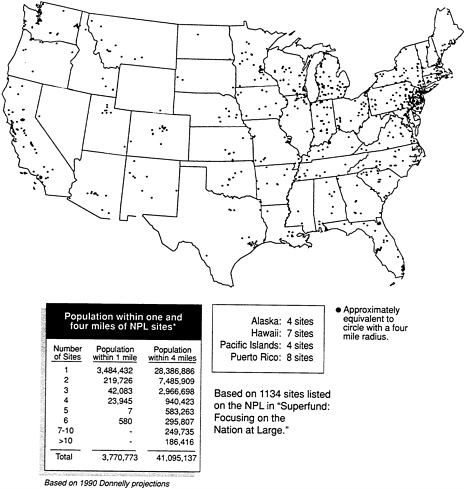
FIGURE 3-3a NPL sites and population resident within 1 and 4 miles. Source: Environmental Protection Agency, Office of Solid Waste and Emergency Response, 1991.
Within this overall context, exposure assessment strategies have several secondary objectives:
-
To facilitate identification of persons at risk for adverse health consequences from exposure to toxic chemical agents—i.e., to identify with reasonable accuracy persons who are being or have been exposed to materials considered hazardous waste.
-
To define the nature of the exposure—e.g., whether exposure is derived from a single source, such as inhalation of materials, or from multiple sources, such as air and water. This objective requires identification of specific toxic chemicals. Assessment of potential interactive effects (such as potentiation or synergy) of simultaneous chemical exposures is advantageous.
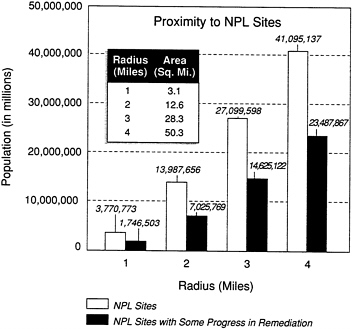
FIGURE 3-3b Proximity to NPL sites. Source: Environmental Protection Agency, Office of Solid Waste and Emergency Response, 1991.
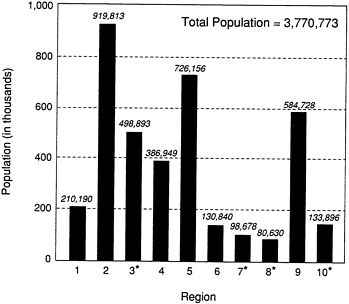
FIGURE 3-3c Population living within 1 mile of a Superfund site(s). ⋆Regions likely to be undercounted because of missing location data. Source: Environmental Protection Agency, Office of Solid Waste and Emergency Response, 1991.
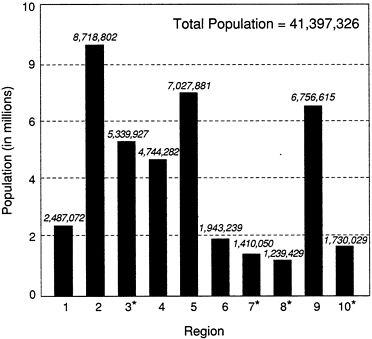
FIGURE 3-3d Population living within 4 miles of a Superfund site(s). *Regions likely to be undercounted because of missing location data. Source: Environmental Protection Agency, Office of Solid Waste and Emergency Response, 1991.
-
To assess the nature of potentially confounding exposures, including groundwater contamination that may occur from numerous sources, such as agricultural runoff, and may increase the health risk of a study population or inhibit population identification and characterization and identification of causal factors in epidemiologic investigations.
-
To determine the temporal characteristics of exposure—to identify the period over which exposure has occurred and the duration of exposure. Exposure within a given geographic area may change as a result of contamination migration, so surrogate measures of exposure based on distance from a point source (fixed site) have the disadvantage of not taking the movement of chemicals into consideration.
-
To quantify the degree of exposure of individuals or defined populations. This may be accomplished by direct measurement of exposure (including personal sampling, and use of biologic biomarkers) or indirect measurement (e.g., measurement of contaminant concentrations in water or air, that is, microenvironmental monitoring).
The NRC report (1991) on human exposure assessment for air-borne pollutants, which reviews progress in addressing total human exposure, is particularly valuable for pursuing those objectives. The report describes the framework and specific methods for exposure assessment. It recommends that scientists and regulators consistently use its definitions of exposure and exposure assessment to ensure standardization across disciplines. This approach has special significance for studies of possible adverse health outcomes associated with hazardous-waste sites because of the potential for multiple chemical exposure, the wide range of pathways for transport of contaminants, and the complex temporal characteristics of exposure.
The NRC report (1991) summarized the requisite entities to be determined in exposure assessment:
-
concentration distributions in time and space for different environmental media;
-
populations or groups at high and low risk;
-
chemical and physical contributions of various sources;
-
factors that control contaminant release into environmental media, routes of environmental transport, and routes of entry into humans.
ROUTES OF EXPOSURE
In general, all routes of exposure and all environmental media should be assessed to determine their relative contribution to the overall exposure associated with a waste site. Such work has been done, but generally not in the context of epidemiologic investigation. Likely media of exposure from hazardous-waste sites include air, water, food, and soil (Figure 3-4). Exposure to toxic chemicals would most likely occur through contaminated groundwater that has leached or run off from waste sites to enter the drinking water supply. Other sources of exposure include direct contact with contaminated sediment; accidental ingestion of contaminated soil or surface water; release of volatile agents into the air; and ingestion of contaminated vegetables, fruit, meat, poultry, or fish.
Exposure to contaminated water can derive from showering or bathing, from drinking water, and from using water in food preparation. Those routes of exposure have received considerable attention as a result of EPA's Total Exposure Assessment Methodology (TEAM) studies (Wallace et al., 1986, 1987, 1988), the work of Andelman et al. (1986, 1990), and the work of Lioy and co-workers (Jo et al., 1990a,b). The results of the investigations illustrate the importance of indoor
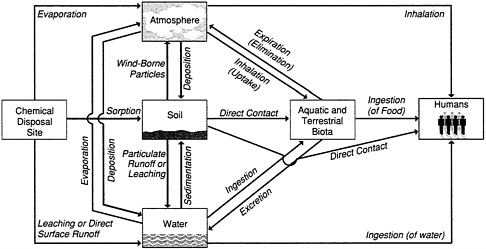
FIGURE 3-4 Physical and biological routes of transport of hazardous substances, their release from disposal sites, and potential for human exposure. Source: Adapted from Grisham, 1986, with permission.
environment exposure to volatile organic compounds (VOCs). For example, Andelman (1990) has developed an indoor air model validated by air measurements of TCE from residential bathrooms. He found that TCE inhalation exposures from a six-minute shower are comparable to ingestion of TCE in drinking water. Jo et al. (1990a,b) found that breath concentration after showering was approximately twice as high as that after inhalation-only exposure; thus dermal absorption was equivalent to inhalation absorption.
Percolation of VOCs into the home from contaminated soil under or around houses is another pathway for exposure. For example, at Love Canal, New York, migration of chemical leachates through the soil and evaporation through porous basement walls resulted in the presence of benzene, toluene, chloroform, TCE, PCE, and hexane in the air inside homes (Paigen et al., 1987).
Lioy (1990) has pointed out that contaminant exposure through ingestion of soil and inhalation of dust from soil has begun to receive attention (Pierce, 1985; Travis and Hattemer-Frey, 1987; Severn, 1987). Estimates of the quantity of soil ingested by children and adults have been made (Lioy, 1990). Daily ingestion rates range from milligrams per kilogram of body weight per day to grams per kilogram per day and are important for estimating exposure. Exposure to soil dust through inhalation has received little attention.
The relevance of the total environmental exposure model in assessing exposure to risk from hazardous-waste sites has been illus-
trated by Lioy et al. (1988) as these authors sought to define total exposure to benzopyrene (BAP). The study was carried out in Phillipsburg, New Jersey, where there is a metal pipe foundry. The foundry was the point source for BAP emissions and could represent a surrogate for a hazardous-waste site. In this study indoor and outdoor air, food, and water exposure analyses were conducted. Additional multimedia studies of this type will be useful in defining protocols for exposure assessment at hazardous-waste sites.
MEASUREMENT OF EXPOSURE
This section addresses what constitutes appropriate approaches to the measurement of exposure in order to identify and characterize an exposed population and then considers potential problems in the estimation of exposure to the public associated with hazardous-waste sites.
ATSDR health assessments could be important sources of information about the possible routes of human exposure and the types and amounts of hazardous materials present at NPL sites. The conceptual model ATSDR has adopted for conducting its health assessments seeks to emphasize early identification of potential public health problems and interventions that would ameliorate problems at a site. The health assessments have generally not been published in the peer-reviewed literature and are therefore not within the scope of this report. The committee has reviewed the abstracts for the 951 health assessments and evaluated some assessments in detail.
The assessments provide information about the specific toxic chemicals found at NPL sites, the degree of contamination, and potential routes of off-site exposure of the public. There is little information about the degree of off-site contamination. Virtually no information about actual exposure to the public is derived from personal sampling, direct measurement of exposure of individuals, or total exposure assessment modeling. The ATSDR health assessments are in reality hazard assessments with limited information about potential human health effects from off-site migration of chemical wastes. They do not constitute epidemiologic investigations nor were they intended to be used for those purposes. They provide a starting point for epidemiologic investigations, insofar as they contain information about some of the chemicals identified at hazardous-waste sites. Their lack of information on the fate and transport of contaminants and on exposures of persons near the sites makes them of limited use for identification of a potentially exposed population in environmental epidemiologic investigations.
Site-specific investigations have also not proceeded to the steps of defining the populations at risk and quantitatively evaluating exposure to toxic contaminants. The characterizations of the sites more often reflect requirements of environmental engineering and site remediation than assessment of public health considerations. Whether the toxic contaminants pose a risk to the exposed population cannot be determined in the absence of more detailed information about human exposures. Instead of focusing on the toxic chemicals that have been identified at a site itself, it is necessary to develop estimates of exposure to define and assess the population at risk, including estimation of the size and exposure-related characteristics.
In development of estimates of human exposure and estimating population exposure in connection with waste sites, a hierarchy of exposure or surrogate exposure data can be useful in establishing a sampling strategy (Table 3-4). Direct measurement of exposure assessment includes personal monitoring and use of biologic markers (see Chapter 7) (NRC, 1991). Personal monitoring is advantageous insofar as it enables direct measurement of the concentration of air contaminants in the breathing zone of a subject. Biologic markers are potentially indicative of total dose, in that they integrate the dose from multiple routes of exposure. For environmental epidemiologic investigations, these types of data provide a basis for analysis of exposure as a continuous variable and are potentially valuable for identifying the etiologic basis of an adverse outcome as a function of dose. Other types of data (categories 2-7 on Table 3-4) are generally
TABLE 3-4 Hierarchy of Exposure Data or Surrogates
|
Types of Data |
Approximation to actual exposure |
|
Best
Poorest |

considered indirect measurements of dose and can be subdivided into information derived from quantification of the concentration of toxic contaminants in a particular microenvironment and information that does not use quantitative estimates of exposure but rather surrogates of exposure, such as proximity to a site or county of residence.
Quantification of microenvironment concentrations implies monitoring of contaminant concentrations in the location where exposures occur —for example, monitoring of contaminants in drinking water, measurement of the concentration of air contaminants in the general location of the subjects in the study, and determination of the degree of contamination of food and soil. Monitoring of this nature provides a realistic basis for assessment of individual exposure. But it is often not possible to obtain either personal or microenvironmental data in a timely fashion. The studies reviewed to date make limited use of these approaches and instead use surrogates of exposure (types 4-7) including proximity to a site, duration of residence, or residence in a specific geographic region, such as a county. Data derived from studies of this type are easier to obtain and may provide useful inferences about causative factors for adverse health effects associated with hazardous-waste sites, but they are clearly limited in scope and prone to misclassification (see below).
Gann (1986) has asked what kind of exposure data epidemiologists need. The answer should depend on the research question before the investigator and will depend, in part, on the biologic model of the exposure-response relationship. Marsh and Caplan (1987) define three levels of a health effects investigation: Level I includes ecologic studies and is based on existing, routine, and easily accessible records of exposure. Exposure assessment in ecologic studies has generally made use of the type of information found in categories 4-7 (Table 3-4) of the exposure information hierarchy. Many of the studies to be reviewed here fall into this category. Level II studies as defined by Marsh and Caplan (1987) include cross-sectional, case-control, or short-term cohort studies. Level III consists of prospective studies. Quantitative assessment of personal exposure and microenvironment monitoring to determine the concentrations of chemical toxicants in a variety of media are especially appropriate for Level II and III studies. Improved quantitative exposure data could enhance study population identification and improve ecologic studies, but that information has not been pursued, because ecologic studies have relied on surrogates of exposure. Ecologic studies are often considered hypothesis-generating, and in-depth exposure evaluations would not necessarily be considered appropriate to a design of this type. However, failure to
identify the population at risk accurately may limit study findings, and more careful attention to the exposure question is probably warranted.
There are three relevant approaches to estimating personal exposure: measurement of potential dose, measurement of internal dose, and measurement of the dose at the biologic target (Figure 3-5). The dose at the target site, or the biologically effective dose, is the fraction of the contaminant or its metabolite identified at the site of action in the body from which the ensuing health effect derives. Investigators would prefer to have information on the biologically effective dose for each exposed individual over time (see Chapter 7).
Absent such information, internal dose measures the contribution of exposure to a contaminant from all media. Internal dose is generally assessed by means of biologic monitoring when biological monitoring techniques are available. But biologic monitoring is difficult if the investigator must assess exposure to multiple chemicals. The difficulty derives in part from paucity of validated biologic monitoring assays and the sparseness of development of toxicokinetic models to describe toxicant metabolism. Method development for biologic monitoring is a priority for assessment of exposure to chemical mixtures. Biologic monitoring is useful if the object of a study is to find or characterize an association between specific chemicals and various health end points, because it enables an investigator to determine dose from inhalation, ingestion, and dermal contact. Evaluation
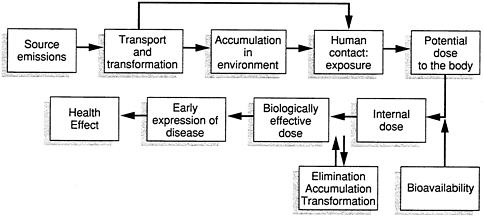
FIGURE 3-5 Continuum from emission of a contaminant to a health effect. Source: Lioy et al., 1990. Reprinted with permission from Environ. Sci. Technol. 1990, 24, 940[942]. Copyright 1990 American Chemical Society.
of exposure based on determination of concentrations of contaminants in various media requires multiple measurements, each with its own limitations, such as the accuracy of monitoring systems, whereas biologic monitoring integrates an exposure dose.
Biologic monitoring has additional limitations as a measure of internal dose in exposure assessment of hazardous waste sites. How to address complex mixtures is one issue, whereas a second concerns the question of how to address variability in biological monitoring (Droz and Wu, 1991). Third, biologic monitoring generally addresses current exposure although there are notable exceptions such as x-ray fluorescence of lead in bone, which serves as a basis to estimate long term absorption of lead (EHP, 1991).
Toxicokinetic models that quantitatively describe rates of absorption, distribution, biotransformation, and excretion of toxicants are necessary for the development and validation of biologic monitoring techniques that address assessment of both short- and long-term exposures. Toxicokinetic modeling has been particularly valuable in describing the overall dynamics of lead metabolism (Landrigan, et al., 1985), nonlinearities in the biotransformation of methylene chloride (Hattis, 1990), the relationship between sperm count and ethylene oxide exposure (Smith 1988) and the neurotoxicity of acrylamide (Hattis and Shapiro, 1990); for better estimation of target-tissue dose for purposes of risk assessment for butadiene (Hattis and Wasson, 1987) and ethylene oxide (Hattis, 1987); and for risk assessment of drinking water with particular reference to the quantitative estimation of uncertainty (NRC, 1987; Hattis and Froines, in press). Advancing the development and use of toxicokinetic modeling should have high priority.
The problem of using biologic monitoring or contaminant concentration to assess exposure where there are complex mixtures can be addressed in part by using a marker which serves as a surrogate for the complex mixture. Hammond (1991) has suggested that within a population exposed to a mixture which is qualitatively similar to a known toxicant, a marker of exposure can make possible a quantitative estimate of exposure level. This approach does assume that given a situation in which exposure to a complex mixture is related to some adverse health consequences, that there will be a relationship between the marker of exposure and the disease outcome. The use of pack years as a surrogate for exposure estimation in the investigation of health risk from smoking is a good example of the utility of estimates of exposure where the specific etiologic agents have not been identified.
Personal monitoring of exposure to airborne toxicants provides a
direct measurement of their concentrations in the breathing zone of an individual. However, exposure derived from hazardous waste sites may be derived primarily from ingestion, e.g., drinking water and food, or dermal exposure, e.g., soil contamination, and inhalation may not represent the most significant exposure route. In this context microenvironmental monitoring in the locations where exposure occurs in the particular media of concern will represent the approach of choice. Lioy (1990) and the National Research Council (NRC, 1991) have described the parameters required to calculate the potential and internal dose (Figure 3-6). These parameters derive from the need to link environmental source, transport, and receptor models to estimate exposure.
Limited attention has been given to date to the development of models to estimate exposure. A model in this context would make use of both measured and modeled microenvironmental concentrations and would address the temporal characteristics of the exposures. The NRC report on estimation of human exposure described the principal advantage of models as their ability to estimate concentrations in different microenvironments or exposures on which there is little direct information.
Where personal or biologic monitoring, microenvironment characterization, and modeling cannot be readily accomplished, surrogate measures of exposures are the last resort; they were the method of choice in the earlier ecologic investigations reviewed here. With one exception (Clark et al., 1982), virtually no studies have attempted to quantify personal exposure to contaminants that have migrated off site from waste sites. There have been no estimates of exposure from microenvironment monitoring, such as the EPA TEAM studies (Wallace et al., 1986, 1987, 1988). These are excellent examples of the type of microenvironmental monitoring that would usefully be models for assessment of exposure associated with waste sites.
Surrogates of exposure may provide evidence that adverse health outcomes are related to a hazardous-waste site exposure. They have some utility for initial screening, although a negative result could result in no follow-up studies and a false-negative finding. In this regard, Baker and colleagues (1988) have strongly warned against the presumption of no adverse effects of exposure to toxic agents from Stringfellow Acid Pits in Glen Avon, California. They caution investigators that lack of good exposure estimates may have biased their results. Use of surrogate exposures should generally be viewed in this context.
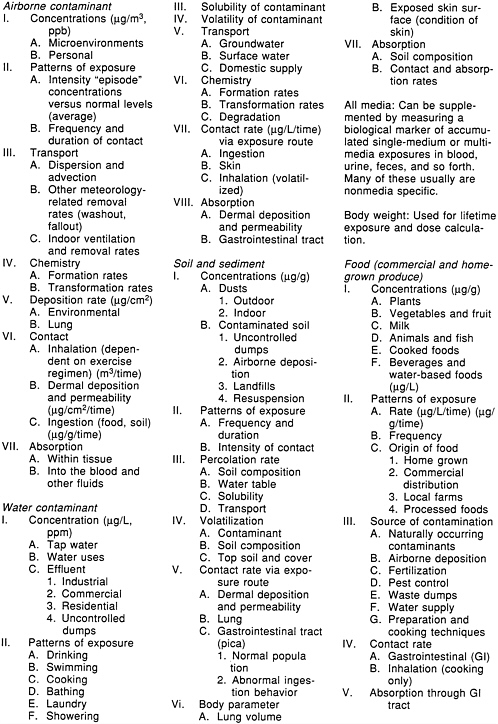
LIMITATIONS OF DATA ON EXPOSURE
All too often, the data on exposure available to the epidemiologic investigator are limited, especially if the study was triggered by public concern about a disease or illness cluster or by perceived rather than documented exposures to toxicants at a hazardous-waste site. In some cases no quantitative information on exposure is available and investigators are forced to use a dichotomous approach rather than having estimates of continuous variables. They are required to divide the study population into groups of exposed and unexposed persons (ever/never) or even into groups of those who are likely to have been exposed and those who are not likely to have been exposed. This approach may represent the only alternative where exposure occurred in the past, but in many cases some estimate of exposure could be made by monitoring the concentration of contaminants. The fact that monitoring may not have occurred may be more a matter of resources, especially where the investigations are carried out by state health departments.
Lioy (1990) has suggested that scientific techniques and tools to measure exposure have advanced more quickly than have the strategies currently used to assess exposure in environmental epidemiologic studies. As Rothman (1990) points out, exposure assessment receives a low level of attention in study after study of chronic disease clusters. Upton et al. (1989) have suggested that a major weakness of environmental epidemiologic studies is their lack of exposure assessment. They report that the vast majority of the studies use surrogate measures of exposure based on the location of the at-risk population in relation to the hazardous-waste site or source of contamination. Buffler et al. (1985) have reviewed exposure assessment associated with environmental episodes at waste sites and other point sources. Their review cites 24 investigations that used indirect exposure estimates; 4 used surrogate indicators, although 15 had used some form of biological monitoring assessment. They concluded that direct measures of exposure were rarely available.
The specific aim of an environmental epidemiologic study of hazardous waste sites is to identify and establish a relationship between exposures derived from a site and adverse health outcomes. Identification and subsequent characterization of the study population represents the challenge before the investigator. The selection of sampling site is then crucial and the sampling site chosen should be relevant to potential human exposure (NRC, 1988). Table 3-5 is a summary of designs that can be used in the choice of sampling sites (NRC, 1988 and discussions therein).
TABLE 3-5 Spatial Considerations: Summary of Sampling Designs and When They Are Most Useful
|
Sampling Design |
Condition for Most Useful Application |
|
Haphazard sampling |
Only valid when target population is homogeneous in space and time; hence, not generally recommended |
|
Purposive sampling |
Target population well defined and homogeneous, so sample-selection bias is not a problem; or specific environmental samples selected for unique value and interest, rather than for making inferences to wider population |
|
Probability sampling |
|
|
Simple random sampling |
Homogeneous population |
|
Stratified random sampling |
Homogeneous population within strata (subregions); might consider strata as domains of study |
|
Systematic sampling |
Frequently most useful; trends over time and space must be quantified |
|
Multistage sampling |
Target population large and homogeneous; simple random sampling used to select contiguous groups of population units |
|
Cluster sampling |
Economical when population units cluster (e.g., schools of fish); ideally, cluster means are similar in value, but concentrations within clusters should vary widely |
|
Double sampling |
Must be strong linear relation between variable of interest and less expensive or more easily measured variable |
|
Source: NRC, 1988, 1991. |
|
How exposures are characterized across individuals, locations, and time is a crucial issue in the design of an exposure assessment strategy. The precision of derived risk estimates is proportional to the population size under study, and validity is improved by reducing measurement error in the actual exposure data (Checkoway et al., 1989). Therefore, an exposure assessment strategy that gathers in-depth, quantitative exposure data on individuals might reduce measurement error, but it will probably do so at the expense of study size because of resource limitations. The loss in number of subjects
needs to be juxtaposed against the possible gain in quantitative information about exposure.
For purposes of epidemiologic investigation, the larger the study population, the greater the ability to detect an effect when present. However, the conduct of extensive personal and microenvironmental monitoring is both time consuming and resource intensive. For example, the TEAM study in New Jersey evaluated exposure to volatile organic compounds (VOCs) of 355 residents. This in-depth evaluation involved giving each resident a diary and a specially designed, miniaturized pump connected to a 6-inch Tenax cartridge which was carried throughout the day. The TEAM New Jersey study concluded that the levels of 11 important organic compounds were significantly higher indoors than outdoors. These data appeared to reject the hypothesis that personal exposures to VOCs were directly related to releases from point sources. The study may have had sufficient sample size and probability sampling to permit extrapolation to the general population. However, whether a study of this size would meet the requirements of an epidemiologic investigation of hazardous-waste-site consequences is questionable. Studies which focus on low prevalence diseases such as cancer are particularly difficult because of low statistical power associated with small sample sizes (Ozonoff et al., 1987). Thus, there is a potential conflict between an in-depth exposure study in a small population versus the requirements of an epidemiologic investigation which must be addressed. Case-control approaches such as the two radon exposure studies being conducted by the New Jersey Health Department and the Argonne National Laboratories are useful examples of approaches to the in-depth estimation of exposure in a defined study population (NRC, 1991).
One useful approach for resolving the apparent contradiction between the requirements for in-depth exposure assessment and study population size is through the use of nested exposure-assessment designs in which a small number of the overall study population is subject to extensive direct and indirect measurements of exposure including personal and microenvironmental monitoring, biomarkers, and modeling. This population will serve as a surrogate to the larger study population and may be linked via indirect measures such as questionnaires or by modeling (NRC, 1991).
A second approach to resolving the apparent contradiction between population size and exposure assessment involves modeling exposure in which the results of microenvironmental monitoring are combined with individual activity patterns (NRC, 1991). This indirect approach seeks to develop exposure profiles by combining activity patterns with the expected concentrations of contaminants. Math-
ematical modeling is of particular value here. (A larger discussion of these issues will be addressed in Volume II.)
Bailar (1989) lists a number of common problems with all types of human exposure data (Table 3-6). The NRC reports on Human Exposure Assessment for Airborne Pollutants (1991) and Complex Mixtures (1988) have discussed these issues in detail and they will be addressed in our second report. This section will only highlight certain issues for purposes of illustration. For example, Bailar raises the important question of what to measure: Are we interested in peak exposure or cumulative exposure? Gillette (1987) expands the question to ask whether the incidence and magnitude of the biological response are most closely related to maximum concentration, average concentration, minimum concentration, or the total dose of the biologically active form of the toxicant. Our theoretical and practical understanding of how to address dose rate, an analogue of exposure concentration that can vary over time, is a problem that has been given no attention in environmental epidemiologic studies. Effects of exposure pattern or dose rate on health or biologic end points are more readily assessed once the relationship between exposure and response has been ascertained. The exploratory nature of many environmental epidemiologic investigations precludes this level of analysis.
Buffler et al. (1985) suggest that estimating the extent of exposures
TABLE 3-6 Some Common Problems with All Types of Human Exposure Data
|
High variability of human exposure, past and present Time to time Person to person Lead times of decades Synergy Questions of what to measure: Peak exposure vs. time-weighted average (short or long) Short-term vs. lifetime High correlations Incomplete and inaccurate monitor systems Ambient vs. indoor vs. personal monitors Sample-to-sample variation High costs, and small samples |
|
Self-selection, and confounders Nonresponse, and incomplete follow-up Reporting errors Investigator or interviewer bias |
|
Source: Bailar, 1989, with permission. |
from waste sites can be extremely difficult. Where contamination results in a study population exposed to low concentrations of contaminant, the probability of detecting adverse health outcomes is also low. This problem is made more difficult when many toxic substances are found at low levels, and multiple health outcomes need to be studied. Nonspecificity of many potential health effects associated with chemical exposure, especially those with high background sites, represent important study constraints.
As discussed in the first chapter of this monograph, to determine whether a coincident finding is likely to be causal, the finding should make sense biologically, that is, the results should reflect a plausible hypothesis of the relationship between the studied exposures and diseases. In studies of groundwater and public health, associations have sometimes been proposed between chemical exposures and adverse health outcomes that are not well rooted in biology, but chiefly derive from the analytic capability to detect pollutants. Failure to conduct adequate exposure assessments can result in false-positive associations because the true causative agent has not been identified.
In evaluating biological plausibility, sometimes acute effects associated with higher occupational exposures are studied to see whether such effects may be caused by much lower concentrations from environmental exposures. Caution must be evident in associating signs and symptoms to certain chemicals known to be toxic at levels that are orders of magnitude greater than those commonly encountered by populations in proximity to waste sites.
Another problem in exposure assessment stems from the mis-classification of exposure, a failure to place subjects in correct categories according to their levels of exposure. Misclassification generally weakens the association between exposure and outcome, and thereby compromises a study's validity. Unfortunately, the availability of more accurate information on exposure solves only part of the problem of misclassification. Even where the specific exposures studied may be correctly classified, other relevant exposures are crucial, including such confounding factors as tobacco smoke, workplace exposures, or the effect of other chemicals found at a site. Accurate assessment for the important exposure covariates is important, especially where the other exposure classification includes a strong risk factor for the disease such as occurs with cigarette smoking and lung cancer. In general, low levels of risk are found in environmental epidemiology studies (Gann, 1986; NRC, 1991), making accurate exposure information even more critical.
Landrigan (1983) has illustrated the problem of grouped versus individual data in comments on a study of arsenic in drinking water
conducted by the Centers for Disease Control and the Alaska Division of Public Health. The concentration of arsenic in well water was a poor indicator of individual exposure because some of the persons studied had supplemented their consumption or switched completely to drinking bottled water. When estimates of bottled drinking water consumption were incorporated, the correlation between arsenic exposure and well water consumption strengthened the dose-response relationship.
EXPOSURE ASSESSMENT IN SPECIFIC EPIDEMIOLOGIC INVESTIGATIONS
The committee reviewed epidemiologic studies of hazardous-waste sites or water contamination to evaluate the exposure assessment in each. Landrigan (1983), Heath (1983), Anderson (1985), Marsh and Caplan (1987), and Hertzmann et al. (1987) argue that it is difficult at best to establish etiologic associations in relation to hazardous-waste sites unless some conditions are met before a study is done. These include identification of the nature and quantity of pollutant emissions from the site under study, identification of probable routes of human exposure, assessment of individual exposure in contrast to population-based data, and identification of populations that had high exposures and so are high-risk groups, such as persons who are exposed in the workplace. To meet these criteria, high-quality exposure information would have to have been collected.
The studies reviewed here all used surrogate measures to gather population-based exposure data. These studies were noteworthy for their attempts to define surrogates to characterize exposure and, in particular, to use a continuous, cumulative metric of exposure, rather than the more common dichotomous (ever-never) approach.
WOBURN, MASSACHUSETTS
A study of the association between childhood leukemia and exposure to solvent-contaminated drinking water from two wells in Woburn, Massachusetts, by Lagakos et al. (1986) used both a dichotomous and a continuous approach. In this study there was concern regarding public exposure to water from two wells (G and H) contaminated with chlorinated organic solvents that operated during the 15 years from 1964 to 1979. Residents of Woburn received a blend of water from eight wells including wells G and H, and the specific blend depended on the location of the residence and time the water was received.
In developing the exposure estimates the authors made use of a
report prepared by the state (Waldorf and Cleary, 1983), which estimated the regional and temporal distribution of water from wells G and H during the study period. The study was possible because the monthly amounts of water pumped by each of Woburn's wells was routinely recorded, and therefore, the proportion of water to each household from G and H could be identified. The state's report made possible an estimate of each household's annual water supply from wells G and H, and these data were merged with other data to determine an exposure history for each child in the study. The exposure determination also took into account changes in residence over each child's lifetime and the proportion of G and H water supplied to each child's home during each year of life.
Several problems with the exposure assessment for the Woburn study mitigate the success of the estimation of each household's exposure to the contaminated water. First, there are no qualitative or quantitative data on the nature and amount of chemicals in the wells before 1979, when the chlorinated solvents were first detected. Second, estimates of exposure could be made only on the household samples; there was no way to estimate additional exposure outside the home—for example, in schools.
The authors acknowledge that the entire leukemia excess could not be explained by exposure to water from wells G and H. MacMahon (1986) has criticized the Woburn study on a number of grounds and has suggested that the greater complexity of measurement of exposure has not been successful in illuminating the limited associations that have been identified. The levels of contaminants in G and H water are low and would not be expected to result in a doubling of leukemia risk. MacMahon (1986) argues that the data are inconsistent with an underlying linear relationship between cumulative exposure and rate of disease. These criticisms notwithstanding, the exposure assessment in this study is relevant insofar as it reaches beyond the traditional dichotomous approach to exposure and establishes limited estimates of individual dose.
FRESNO COUNTY, CALIFORNIA
Whorton and co-workers (Whorton et al., 1988; Wong et al., 1988, 1989) conducted an ecologic and case-control study of the relationship between drinking water contaminated with DBCP and birth rates, gastric cancer, and leukemia in Fresno County, California. The ecologic study required an exposure estimate for each census tract, and the case-control study required determination of the drinking water source and its quality for the residence of the individual.
First, drinking water systems and private wells were identified, mean contaminant levels of DBCP for individual wells were determined from state-derived data, and an evaluation was made of which water system supplied drinking water to each census tract. By using mapping techniques, the authors were able to estimate the geographic percentage of the census tract supplied by each water system. Based on these data, specific weighted averages of arsenic, nitrate, and DBCP by census tract were determined and used in the subsequent ecologic and case-control studies. Mean DBCP levels ranged from 0.0041 to 5.7543 ppb among census tracts. Fourteen (12.8 percent) census tracts had DBCP concentrations in excess of the state's MCL of 1.0 ppb.
There are limitations associated with the studies—for example, no estimate of individual exposure accounts for bottled-water use or other use patterns and whether there is sufficient latency, that is time from first exposure to the development of the disease. But the DBCP studies are serious attempts at defining the historical exposure in greater detail than is generally found in environmental studies, and they should serve as useful models for future investigations.
The findings of the studies are complex. No correlation was found between gastric cancer or leukemia and DBCP exposure in the ecologic analysis. The case-control study did not identify any relationship between gastric cancer and DBCP in drinking water. However, the variable “Hispanic surname” was a risk factor for gastric cancer; Hispanics had a relative risk of gastric cancer of 2.77, compared with non-Hispanics. Hispanics tended to live in areas where the drinking water was more contaminated than did other groups. In addition, farm workers seem to have an increased risk of leukemia, possibly because of occupational exposures —although this will require further study. Dietary factors have not been evaluated. Overall, the case-control study found no association between exposure to DBCP and risk of developing leukemia in persons who live in Fresno County.
SANTA CLARA COUNTY, CALIFORNIA
The California Department of Health Services (Deane et al., 1989; Swan et al., 1989; Wrensch et al., 1990a,b) has reported on a number of studies designed to assess the basis for an excess of adverse pregnancy outcomes, such as statistically significant spontaneous abortions and birth defects, in Santa Clara County. There were significant concerns in the community that adverse pregnancy outcomes might have occurred as a result of contamination of a single well with trichloroethane (TCA) that had leaked from an underground storage tank owned by a semiconductor manufacturer.
The exposure assessment was designed to investigate two census tracts, both of which were assumed to have comparable exposure to well water contaminated by the leaking tank. This assessment had two distinct components. The first component estimated the time of initiation of the leak, the rate at which the TCA plume migrated to the well in question, and the concentrations of TCA found in this and other wells. The second component estimated the water flow from the contaminated well to the two census tracts. The model developed to estimate water flow was validated through field testing. The water distribution analysis gave the probability that water from the contaminated well was delivered to each of 112 specific water pipe junctions within the water system. Quantitative modeling was restricted to 1981, but pumping logs were also reviewed for 1979 through 1980 and showed there were no major differences in water distribution to the study areas during that period as well. Both components of the exposure assessment were conducted by a consulting engineer who had no knowledge of the temporal and spatial distribution of pregnancy outcome in the study census tracts. The probabilities of exposure to contaminated water were multiplied by the estimated concentration of TCA to give an estimated exposure by month.
Estimated exposures to TCA could then be compared to the frequency of spontaneous abortions and congenital malformations. In comparing two census tracts, the tract with the highest spontaneous abortion and birth defects rates had a lower TCA exposure than a comparable tract. Women with adverse pregnancy outcomes did not appear to have been exposed to higher concentrations of TCA than women with live births (see Chapter 5 for further discussion of these investigations). Uncertainties in the modeling have resulted in criticism of the conclusions of this study although the hydrogeologic modeling was carefully constructed. The controversy surrounding this study illustrates the difficulties encountered in exposure assessment that seeks to recreate environmental exposures. Unfortunately, there is no obvious approach that would resolve these ambiguities. Toxicologic investigations that evaluate the potential of the chemicals in question to produce adverse reproductive effects might be valuable in providing indirect confirmation of the epidemiologic investigations.
MCCOLL SITE, FULLERTON, CALIFORNIA
An interesting surrogate of exposure was used by California researchers (Lipscomb et al., in press) to investigate community concerns about potential health problems from the McColl Waste Dis-
posal Site in Fullerton Hills, California. Rather than measure chemical concentrations in ambient air, the researchers investigated the relative frequency of detecting odors from the site. This 20-acre site consists of 12 waste pits that were in use from the early 1940s to 1946. In 1978, residents complained of odors in the neighborhood surrounding the site and were concerned that there might be health problems associated with chemical exposure. Results of an early survey demonstrated higher than expected rates of complaints about noxious odors and of complaints of 22 symptoms such as nausea, skin irritation, wheezing, dizziness, chest pain, loss of appetite, fatigue, and earaches (Satin et al., 1983).
A study by Duffee and Errera (1982) was based on the use of an extensive odor survey in which the McColl study area was divided into five “odor zones.” Exposure was then defined by surrogate measures, such as the relative frequency of detecting odors or the proximity to the waste site. The odor zones were used to classify exposure areas. In the most recent survey (Lipscomb et al., in press), the highest three odor zones (92 households), the lowest odor zone (217 households), and a comparison area (242 households) were selected to attempt to identify a dose-response relationship between areas. The study determined that prevalence odds ratios comparing symptom reporting between high exposed and comparison area residents were greater than they were for an earlier survey (Duffee and Errera, 1982) for 89 percent of the symptoms. The authors noted symptoms reported in excess did not represent a single organ system or suggest a mechanism of response. They suggest that living near a hazardous-waste site and being concerned about the environment can result in “recall bias” that could affect findings more than does the toxicity of the chemicals found in the site. Unfortunately, the report provides no environmental monitoring data. Although the exposures are presumably in the parts-per-billion range, considerably below the levels at which health effects have been identified, this site contains a large number of chemicals, combinations of which could be harmful. Even if the primary effects were derived from stress and concern, there might have been a contribution from chemical exposure. These issues are treated as dichotomous variables. The authors' conclusions would have been strengthened by a more detailed exposure evaluation.
STRINGFELLOW SITE, GLEN AVON, CALIFORNIA
A study by Baker et al. (1988) used surrogates of exposure to evaluate nonspecific symptoms. Baker and his co-workers investigated public
concern over potential health problems among residents living near the Stringfellow Waste Disposal Site in Glen Avon, California. This site operated from 1956 to 1976, when approximately 33 million gallons of liquid industrial waste was discharged at the site. It is approximately 4000 feet from the nearest residential property in Glen Avon and is located in Pyrite Canyon. Heavy rainfall has resulted in the waste ponds at the site overflowing their containment berms, washing waste down the channel that runs through the town of Glen Avon. Baker and co-workers conducted a health survey to assess whether there were increased rates of mortality, adverse pregnancy outcomes, disease incidence, or symptom prevalence, such as blurred vision, pain in ears, daily cough for more than a month, nausea, frequent diarrhea, unsteadiness when walking, and frequent urination among individuals living near the waste site.
The exposure surrogate they chose was based on “relative exposure likelihood of residents to toxic waste from the Stringfellow site” (Baker et al., 1988, p. 326). The investigators assumed that the most likely routes of exposure were surface water runoff and airborne contamination, and their exposure classifications were determined primarily by proximity to the site and to the Pyrite channel. Three communities were chosen: residents with the highest likelihood of exposure, those with small potential for exposure, and a reference group of unexposed persons. The study revealed that mortality, cancer incidence, and pregnancy outcomes did not differ among the three study areas; there were differences among the study areas for reported diseases (ear infections, bronchitis, asthma, angina pectoris, and skin rashes) and symptoms. The authors conclude that the apparent broad-based elevation in reported diseases and symptoms derives from increased perception or recall of conditions by subjects living near the site. This is similar to the conclusions reached by Lipscomb et al. (in press). In the Baker study (1988), the lack of exposure assessment weakens the conclusions, and exposure misclassification could be an important issue. The authors do discuss the possible “toxicological mechanisms” associated with various end points and with the uniform increase in symptom prevalence. Because no toxicants were identified or quantified as part of an exposure evaluation, the discussion of toxicologic mechanism has no objective validity. Baker et al. acknowledge these weaknesses and conclude, “Our experience indicates the fundamental need for health studies of toxic waste disposal sites to be based on environmental monitoring and modeling of past exposures sufficient to identify potential exposure to specific chemicals at an individual or household level” (Baker et al., 1988, p. 333).
LOWELL, MASSACHUSETTS
Ozonoff et al. (1987) conducted a symptom prevalence survey in a neighborhood assumed to be exposed to airborne hazardous wastes. The study population included households within 400 meters of a hazardous-waste site in Lowell, Massachusetts; the unexposed controls were those households within a radius of 800 to 1200 meters from the site. Linear distance of each residence to the center of the site was determined, thereby providing a further breakdown of potential exposure. The exposure surrogate was distance from the hazardous-waste site. In contrast to the aforementioned studies by Baker et al. (1988) and Lipscomb et al. (in press), Ozonoff et al. concluded that the study “raised the possibility that exposure to relatively low levels of airborne chemicals may have increased the prevalence of respiratory and constitutional symptoms in adults in the affected neighborhood ” (Ozonoff et al., 1987, p. 596). They noted that the most serious potential problem in the study was recall bias—special importance being given by respondents to particular symptoms. Careful evaluation of the potential for recall bias indicated that six symptoms exhibited a “biological gradient” (a dose-response relationship) and recall bias does not account for the study findings.
It is outside the scope of this chapter to review each of the last three studies described (Stringfellow, McColl, and Lowell) in more detail, but it is important to point out that their exposure assessments were very sparse. That limits the confidence in a positive association between the exposed populations and subjective health outcomes. Absence of an association is equally problematic, given the lack of individual exposure data, information derived from microenvironmental monitoring, or indirect methods based on modeling. The potential for misclassification in these studies seems to be particularly high.
The problem of chemical identification and false linkages is even more intractable when we consider findings based on subjective reporting. It will be difficult to resolve these differences entirely without an improved understanding of the nature and scope of exposure.
HAMILTON, ONTARIO
Like Ozonoff et al. (1987), who studied distance from the waste site, Hertzman et al. (1987) used distance as their surrogate for exposure in investigations of adverse health effects associated with the Upper Ottawa Street Landfill Site in Hamilton, Ontario. In addition, they carried out a prospective morbidity study of workers as a hy-
pothesis-generating study. There was no individual exposure assessment of workers, and no specific chemical agents were suggested as being causative in the employee study. The resident study identified six groups for health survey interviews, combining distance and time of residence as a basis for selection. For example, Group A consisted of those living 250-500 meters from the dumpface at the time of interview and who had been residents there for three or more years between 1976 and 1980. Group D was made up of those who lived 500-750 meters from the landfill and who had been residents for fewer than three years during the same period—the period of highest volume of disposal of industrial waste.
The authors report an association between psychological, narcotic (headaches, dizziness, lethargy, and balance problems), skin, and respiratory conditions with landfill site exposure that was confirmed by the following criteria: strength of association, consistency with a simultaneous study of workers at the landfill, risk gradient by duration of residence and proximity to the landfill, absence of evidence that less healthy people had moved to the area, specificity, and lack of recall bias. These data resulted in a conclusion that the adverse effects were more likely the result of chemical exposure than of perception of risk. Unfortunately, it was difficult to evaluate the accuracy of the conclusions of this study because there were more than 100 substances found at the landfill and the health end points in the study population were common and nonspecific. Although no environmental measurements are reported in this study, the authors assume that exposures occurred from airborne contact or from direct skin exposure during recreational activities in and around the land-fill. There was no discussion of the potential for groundwater contamination which could result in infiltration of homes from the cellar or through ingestion.
LOVE CANAL, NEW YORK
A number of studies have been published (Vianna and Polan, 1984; Goldman et al., 1985; Paigen et al., 1985, 1987) on the hazardous-waste site at Love Canal. These reports are discussed elsewhere in this monograph. The authors briefly review the potential exposures to citizens in the Love Canal area and correctly point out that exposure to residents of Love Canal is not well understood, especially given the fact that more than 200 chemicals have been found in the Love Canal dump site. Selection of the study population and the exposure surrogate were based on residence in the Love Canal neighborhoods.
COUNTY OF RESIDENCE AS SURROGATE
Studies by Day et al. (1990) and Budnick et al. (1984) used residence in a county known to have chemical contamination as the surrogate of exposure. These ecologic studies used other counties, the state in which the counties were located, and U.S. rates for comparison. Day and co-workers point out the difficulty in drawing inferences from ecologic studies where the study population could have been occupationally exposed and suggest that occupational histories will need to be taken in future studies, or surrogate indications of occupation entered into such analyses to increase their utility.
The study by Budnick et al. (1984) focuses on a particular Super-fund site in Clinton County, Pennsylvania. These authors were careful to document that the Drake Chemical Company, the American Color Chemical Corporation, and their predecessor companies used, manufactured, or stored the known human carcinogens ß-naphthylamine, benzidine, and benzene. Thus, their finding of an increased number of bladder cancer deaths among white males in the area has biologic plausibility, but the authors note that white females did not exhibit an increase in bladder cancer deaths. The excess of cancer-caused deaths in males could reflect occupational rather than environmental exposure. The authors suggest that more definitive studies will be needed to further assess health risks that could play a role in other excess cancers found. An in-depth case-control study of bladder cancers with exposure ascertainment would help address the question of the possible environmental sources of some cancer deaths. A subsequent community survey of health complaints (Logue and Fox, 1986) did not find evidence of any serious and chronic health conditions.
OTHER STUDIES OF CONTAMINATED DRINKING WATER
Drinking water contaminated by hazardous wastes has served as the basis for exposure assessment in a number of studies. The adverse health end points of concern included leukemia, liver dysfunction, congenital cardiac malformations, eye irritation, diarrhea, sleepiness, and an electrophysiologic measurement of the blink reflex.
With the exception of the leachate from a pesticide waste dump in Hardeman County, Tennessee (Clark et al., 1982), the principal toxicant identified in the other studies was trichloroethylene (TCE). Thus, one finds very low levels of TCE associated with leukemia, cardiac malformations, eye irritation, diarrhea, sleepiness, and neurologic changes. These results suggest the need to conduct more detailed studies of
the toxicology of TCE. It is hoped that the ease of identification of TCE by analytic chemical methods—that is, the ability to detect low levels of TCE—is not the basis for the association.
Dawson et al. (1990) approached the problem of associating specific health end points to chemical exposure by developing an animal model to explain the cardiac malformations associated with exposure to drinking water contamination by TCE and dichloroethylene (DCE) in Tucson, Arizona (Goldberg et al., 1990). These authors conclude that both DCE and TCE could be potent cardiac teratogens. The epidemiologic findings of cardiac malformations associated with drinking water contaminated with TCE and DCE are strengthened by the toxicologic research of Dawson et al. (1990). The value of the toxicologic confirmation of the association is relevant insofar as one of the limitations of the epidemiologic study cited by its authors was the inability to estimate individual doses because of limited sampling data, variability in exposure, lack of precise information on the geographic area of contamination, and the temporal characteristics of the contamination and exposures.
There also is ample evidence that TCE can act as a chemical neurotoxicant, as Feldman et al. (1988) have cited. However, other findings of TCE-related illnesses where the exposure levels are very low must be confirmed by additional epidemiologic findings or by toxicologic study or both.
The paper by Feldman et al. (1988) on blink reflex latency after exposure to TCE in well water from Woburn, Massachusetts, used a control group that had no stated history of occupational or environmental exposure to neurotoxicants. The authors conclude that the study subjects may have suffered subclinical cranial nerve damage as a result of their chronic ingestion of TCE contaminated water.
In studies, such as Feldman's, that rely on subjects' and controls' self-reporting of other occupational or environmental exposures, it might be useful to use hazard surveillance data on industry and occupation versus chemical exposure to ensure that neither group has an unrecognized workplace exposure that could compromise the validity of the results. The four-digit Standard Industrial Classification (SIC) code can be used to identify potential exposures that can be confirmed in interviews if necessary (Froines et al., 1986, 1989).
The ecologic study by Fagliano et al. (1990) examined the relation of the incidence of leukemia and the presence of volatile organic compounds (VOCs) in public drinking water supplies in several cities in New Jersey. The authors conclude that the results appear to suggest an association between nontrihalomethane (non-THM) VOCs and an increased incidence of leukemia among women. The incidence was el-
evated only in towns in the category ranked highest for potential exposure to VOCs based on actual water-sampling data collected by the State of New Jersey during 1984-1985. However, the authors acknowledge that misclassification of exposure may exist at both the population and individual level, in that the actual sampling data were collected after exposure was known to have occurred. Occupational exposures and local toxic air emissions were not accounted for in this study. The authors do note that ecologic studies of this type with potential biases and multicolinearity are improved by using narrow exposure strata and regression to estimate effect. The study could not verify whether subjects actually drank tap water or purchased bottled water. Similarly, occupational exposures were not studied.
The research by Clark et al. (1982), of the Hardeman County, Tennessee, dump site, was rooted in a clear understanding of the toxicology of the contaminants, namely that carbon tetrachloride is a potent hepatotoxicant (a toxicant that destroys liver cells). Carbon tetrachloride was the most abundant contaminant detected in wells serving individuals living near the 200-acre pesticide waste dump site. The dump operated between 1964 and 1972, during which time approximately 300,000 barrels of liquid and solid waste were buried in shallow trenches. In 1977 residents became alarmed by unusual odors and tastes in their well water and reported a high number of symptoms (skin and eye irritation; weakness in the upper and lower extremities; upper respiratory infection; shortness of breath; and severe gastrointestinal symptoms including nausea, diarrhea, and abdominal cramping) which they associated with contaminated drinking water. The most common contaminant detected in private wells serving the exposed study population was carbon tetrachloride, which was identified in concentrations as high as 18,700 micrograms per liter. The study found that residents who drank contaminated water had elevated concentrations of the serum enzymes alkaline phosphatase and serum glutamic oxaloacetic transaminase. The finding of a relationship between ingestion of drinking water contaminated with carbon tetrachloride and liver abnormalities is an example of a finding with significant biologic plausibility, because of the numerous toxicologic data identifying carbon tetrachloride as a potent hepatotoxin. In addition, the study's authors made a significant effort to assess actual exposures to solvents. For example, water from selected homes was analyzed, air samples were collected from bathrooms while showers were running, and urine samples were analyzed for the presence of solvents. Measurements of indoor air concentrations of selected organic compounds in houses with contaminated groundwater demonstrated detectable levels of hexachlorocyclopentadiene, carbon tetra-
chloride, and tetrachloroethylene. As other evidence of the effect of exposure to contaminated water, abnormalities in the liver tests were significantly reduced when the investigators rescreened subjects two months after all use of contaminated water had ceased. This study stands in marked contrast to other investigations that used surrogates of exposure.
Harris et al. (1984) conducted a follow-up risk assessment of the Hardeman County population based on animal toxicity data and concluded that adults and children living near the landfill were at high risk of sustaining liver damage and thereby at increased risk of contracting cancer. This research suggests that the health risk assessments should play an important role in guiding epidemiologic investigation and that risk estimates that use animal toxicity data will also be of value.
Logue and Fox (1986) investigated potential health effects associated with contaminated well water from a dump site in Pennsylvania. They found that significantly more individuals in the exposed group than in the control group experienced eye irritation, diarrhea, and sleepiness during the 12-month period before the survey. Exposure was defined as the experience of residential well-water contamination from a dump site at the former Olmsted Air Force Base. A possible linkage with TCE exposure was made, but the authors hypothesize that the finding could derive from the limitations of the exposure assessment.
CONCLUSIONS
Repositories of potentially dangerous substances can be found at a number of hazardous-waste sites and have been generated by agricultural, mining, storage, and other activities. The available characterizations of these materials generally reflect data requirements of environmental engineering and site remediation, rather than public health considerations. Accordingly, whether these materials pose a future risk to public health cannot readily be determined, in the absence of more detailed information about potential human exposures. Also, their current impact on public health, while likely to be negligible in the majority of cases, may be substantial in a smaller number of cases, and cannot readily be estimated.
This chapter has detailed major difficulties in assessing the more than 600 chemical compounds identified at hazardous-waste sites, along with the hundreds or thousands of unidentified pollutants, in the context of environmental epidemiology. The potential for exposure is of such a magnitude that researchers who develop exposure
assessment strategies will have to direct their attention to an analysis of contaminants at hazardous-waste sites, and to off-site migration and public exposure. In this context, methods for exposure assessment—including direct methods, such as personal exposure monitoring, and indirect methods, such as microenvironmental monitoring and mathematical models—although often difficult, must receive greater scientific attention, if appropriate associations are to be made between contaminants, exposures, and potential health effects. Evaluations of exposure associated with hazardous-waste sites must consider all possible media as potential sources of toxic contaminants.
Regarding the specific pollutants measured, evidence indicates that uncharacterized pollutants are a potentially important source of chemical exposures. In some cases, these compounds have recognized toxicity; in others, the toxicity is unknown. Moreover, some preliminary toxicologic studies suggest that these contaminants and so-called inert pesticide ingredients may have important biologic properties, environmental persistence, and mobility. Additional studies need to be conducted to characterize the mixture of materials deposited as hazardous wastes and to estimate better their potential transport and fate in the environment. Toxicologic evaluation of the concentration of leachate appears to represent an appropriate subject of investigation. Short-term in vitro assays and long-term animal studies to assess toxicity of the mixtures would be useful. In the broadest sense, these unidentified, unregulated substances represent a risk of unknown magnitude.
The focus of many studies has been on site-specific characterization, but pollutants do not respect such boundaries. Given the potential movement of materials in groundwater and the importance of multiple routes of exposure, efforts need to proceed to estimate plume characteristics and groundwater staging in order to improve the ability to anticipate movements of pollutants and ultimately to prevent greater exposures.
Similarly, exposure from domestic water is not limited to ingestion, but includes airborne exposures to materials that outgas during showering, bathing, cooking, or other uses. Therefore, estimates of exposure from domestic water need to be expanded to take into account the role of airborne and transdermal exposures.
Although direct ingestion of soil poses a risk chiefly to children, risks may also be incurred by adults who eat food grown in such soil or who otherwise come into regular contact through their work or personal habits. Sophisticated methods have recently been devised for improving the ability to assess soil exposures. These refined methods need to be applied in epidemiologic studies to improve the ability to estimate
exposures in connection with soil, including studies of ingested plants and fish from contaminated water, characterization of chemical transformation, and better measurements of residues.
Weaknesses in data employed on exposure are common to most studies of hazardous-waste sites that the committee has reviewed. The flaws reflect historical tendencies to collect data to conform to environmental needs, rather than to meet the needs of public health assessment. Usually, exposure estimates are made with one medium—water—although others may be critical. Site assessments should use more realistic exposure measures, including direct studies of contaminants at the tap of incoming domestic water supplies, in order to improve their utility for epidemiologic research. In addition, where concerns have been raised, efforts should be made to include relevant soil and airborne measurements, so that integrated exposure assessment can be conducted.
APPENDIX 3-A Frequency of Substances Reported at Final and Proposed NPL Sites * (3/91)
|
1,1,2-TRICHLOROETHYLENE (TCE) |
401 |
|
LEAD (PB) |
395 |
|
CHROMIUM AND COMPOUNDS, NOS (CR) |
310 |
|
TOLUENE |
281 |
|
BENZENE |
249 |
|
TETRACHLOROETHENE |
210 |
|
1,1,1-TRICHLOROETHANE |
202 |
|
CHLOROFORM |
196 |
|
ARSENIC |
187 |
|
POLYCHLORINATED BIPHENYLS, NOS |
185 |
|
CADMIUM (CD) |
179 |
|
ZINC AND COMPOUNDS, NOS (ZN) |
159 |
|
COPPER AND COMPOUNDS, NOS (CU) |
150 |
|
XYLENE |
136 |
|
1,2-TRANS-DICHLOROETHYLENE |
134 |
|
ETHYLBENZENE |
130 |
|
PHENOL |
126 |
|
1,1-DICHLOROETHANE |
124 |
|
METHYLENE CHLORIDE |
107 |
|
1,1-DICHLOROETHENE |
106 |
|
MERCURY |
97 |
|
VINYL CHLORIDE |
92 |
|
CYANIDES (SOLUBLE SALTS), NOS |
90 |
|
NICKEL AND COMPOUNDS, NOS (NI) |
83 |
|
CARBON TETRACHLORIDE |
81 |
|
1,2-DICHLOROETHANE |
77 |
|
CHLOROBENZENE |
65 |
|
PENTACHLOROPHENOL (PCP) |
62 |
|
NAPHTHALENE |
60 |
|
DDT |
50 |
|
METHYL ETHYL KETONE |
56 |
|
TRICHLOROETHANE, NOS |
49 |
|
MORE THAN 15 SUBSTANCES LISTED |
48 |
|
BARIUM |
47 |
|
MANGANESE AND COMPOUNDS, NOS (MN) |
44 |
|
PHENANTHRENE |
41 |
|
HEAVY METALS, NOS |
40 |
|
ACETONE |
40 |
|
BENZO(A)PYRENE |
37 |
|
IRON AND COMPOUNDS, NOS (FE) |
33 |
|
CHLORDANE |
33 |
|
VOLATILE ORGANICS, NOS |
33 |
|
BENZO(J,K)FLUORENE |
30 |
|
CHROMIUM, HEXAVALENT |
30 |
|
PYRENE |
29 |
|
CIS-1,2-DICHLOROETHYLENE |
29 |
|
LINDANE |
28 |
|
1,1,2-TRICHLOROETHANE |
28 |
|
ARSENIC AND COMPOUNDS, NOS (AS) |
27 |
|
BIS(2-ETHYLHEXYL)PHTHALATE |
27 |
|
DICHLOROETHYLENE, NOS |
26 |
|
ANTHRACENE |
26 |
|
1,1,2,2-TETRACHLOROETHANE |
26 |
|
STYRENE |
23 |
|
URANIUM AND COMPOUNDS, NOS (U) |
22 |
|
DDE |
22 |
|
TETRACHLOROETHANE, NOS |
21 |
|
CREOSOTE |
19 |
|
FLUORENE, NOS |
19 |
|
DIOXIN |
18 |
|
SELENIUM |
19 |
|
ETHYL CHLORIDE |
18 |
|
CHRYSENE |
18 |
|
RADON AND COMPOUNDS, NOS (RN) |
18 |
|
ASBESTOS |
17 |
|
TRINITROTOLUENE (TNT) |
17 |
|
DDD |
17 |
|
DICHLOROETHANE, NOS |
17 |
|
DIELDRIN |
17 |
|
SULFURIC ACID |
17 |
|
WASTE OILS/SLUDGES |
17 |
|
ACENAPHTHENE |
16 |
|
RADIUM AND COMPOUNDS, NOS (RA) |
16 |
|
ALDRIN |
16 |
|
AROCLOR 1260 |
16 |
|
ENDRIN |
16 |
APPENDIX 3-B ATSDR Priority List of Substances for Toxicological Profiles (Listed in Federal Register 52(74), Friday April 17, 1987, p. 12869)
|
CAS No. |
Substance Name |
|
Priority Group 1 |
|
|
50328 |
Benzo(a)pyrene |
|
53703 |
Dibenzo(a,h)anthracene |
|
56553 |
Benzo(a)anthracene |
|
57125 |
Cyanide |
|
60571 |
Dieldrin/aldrin |
|
67663 |
Chloroform |
|
71432 |
Benzene |
|
75014 |
Vinyl chloride |
|
75092 |
Methylene chloride |
|
76448 |
Heptachlor/heptachlor epoxide |
|
79016 |
Trichloroethene |
|
86306 |
N-Nitrosodiphenylamine |
|
106467 |
1,4-Dichlorobenzene |
|
117817 |
Bis(2-ethylhexyl)phthalate |
|
127184 |
Tetrachloroethene |
|
205992 |
Benzo(b)fluoranthene |
|
218019 |
Chrysene |
|
1745016 |
p-Dioxin |
|
7439921 |
Lead |
|
7440020 |
Nickel |
|
7440382 |
Arsenic |
|
7440417 |
Beryllium |
|
7440439 |
Cadmium |
|
7440473 |
Chromium |
|
11196825 |
PCB-1260,54,48,42,32,21,1016 |
|
Priority Group 2 |
|
|
56235 |
Carbon tetrachloride |
|
57749 |
Chlordane |
|
62759 |
N-Nitrosodimethylamine |
|
72559 |
4,4'DDE, DDT, DDD |
|
75003 |
Chloroethane |
|
75274 |
Bromodichloromethane |
|
75354 |
1,1-Dichloroethene |
|
78591 |
Isophorone |
|
78875 |
1,2-Dichloropropane |
|
79005 |
1,1,2,-Trichloroethane |
|
79435 |
1,1,2,2-Tetrachloroethane |
|
87865 |
Pentachlorophenol |
|
91941 |
3,3'-Dichlorobenzidine |
|
92875 |
Benzidine |
|
107062 |
1,2-Dichloroethane |
|
108883 |
Toluene |
|
108952 |
Phenol |
|
111444 |
Bis(2-chloroethyl)ether |
|
121142 |
2,4,-Dinitrotoluene |
|
319846 |
BHC-alpha, gamma, beta, delta |
|
542881 |
Bis(chloromethyl)ether |
|
621647 |
N-nitrosodi-n-propylamino |
|
7439976 |
Mercury |
|
7440666 |
Zinc |
|
7782492 |
Selenium |
|
Priority Group 3 |
|
|
71556 |
1,1,1-Trichloroethane |
|
74873 |
Chloromethane |
|
75218 |
Oxirane |
|
75252 |
Bromoform |
|
75343 |
1,1-Dichloroethane |
|
84742 |
Di-N-butyl phthalate |
|
88062 |
2,4,6-Trichlorophenol |
|
91203 |
Naphthalene |
|
98953 |
Nitrobenzene |
|
100414 |
Ethylbenzene |
|
107028 |
Acrolein |
|
107131 |
Acrylonitrile |
|
108907 |
Chlorobenzene |
|
118741 |
Hexachlorobenzene |
|
122667 |
1,2-Diphenylhydrazine |
|
124481 |
Chlorodibromomethane |
|
156606 |
1,2-Trans-dichloroethene |
|
193395 |
Indeno(1,2,3-cd)pyrene |
|
606202 |
2,6-Dinitrotoluene |
|
1330207 |
Total xylenes |
|
7221934 |
Endrin aldehyde/endrin |
|
7440224 |
Silver |
|
7440508 |
Copper |
|
7664417 |
Ammonia |
|
8001352 |
Toxaphene |
|
Priority Group 4 |
|
|
51285 |
2,4-Diitrophenol |
|
59507 |
p-Chloro-m-cresol |
|
62533 |
Aniline |
|
65850 |
Benzoic acid |
|
67721 |
Hexachloroethane |
|
74839 |
Bromomethane |
|
75150 |
Carbon disulfide |
|
75694 |
Fluorotrichloromethane |
|
75718 |
Dichlorodifluoromethane |
|
78933 |
2-Butanone |
|
84662 |
Diethyl phthalate |
|
85018 |
Phenanthrene |
|
87683 |
Hexachlorobutadiene |
|
95487 |
Phenol,2-methyl |
|
95501 |
1,2-Dichlorobenzene |
|
105679 |
2,4-Dimethylphenol |
|
108101 |
2-Pentanone,4-methyl |
|
120821 |
1,2,4-Trichlorobenzene |
|
120832 |
2,4-Dichlorophenol |
|
123911 |
1,4-Dioxane |
|
131113 |
Dimethyl phthalate |
|
206440 |
Fluoranthene |
|
534521 |
4,6-Dinitro-2-methylphenol |
|
541731 |
1,3-Dichlorobenzene |
|
7440280 |
Thallium |
REFERENCES
Andelman, J.B. 1990. Exposure to volatile chemicals from indoor uses of water. Pp. 300-311 in Proceedings of the EPA/A & WMA specialty conference, Total Exposure Assessment Methodology Pittsburgh: Air & Waste Management Association.
Andelman, J.B., A. Couch, and W.W. Thurston. 1986. Inhalation exposures in indoor air to trichlorethylene from shower water Pp. 201-211 in Environmental Epidemiology, F.C. Kopler and G.F. Craun, eds. Chelsea, Mich.: Lewis.
Anderson, H.A. 1985. Evolution of environmental epidemiologic risk assessment. Environ. Health Perpect. 62: 389-392
ATSDR (U.S. Public Health Service, Agency for Toxic Substances and Disease Registry). 1989. ATSDR Biennial Report to Congress: October 17, 1986-September 30, 1988. Atlanta: Agency for Toxic Substances and Disease Registry. 2 vols.
Bailar, J.C. 1989. Inhalation hazards: The interpretation of epidemiologic evidence. Pp. 39-48 in Assessment of Inhalation Hazards, D.V. Bates et al., eds. New York: Springer-Verlag.
Baker, D.B., S. Greenland, J. Mendlein, and P. Harmon. 1988. A health study of two communities near the Stringfellow Waste Disposal Site. Arch. Environ. Health 43: 325-334
Bramlett, J., C. Furman, A. Johnson, W.D. Ellis, and N. Nelson. 1987. Composition of Leachates from Actual Hazardous Waste Sites. Project report prepared for U.S. Environmental Protection Agency. EPA/600/2-87/043; available from NTIS as PB87198743 Springfield: U.S. Department of Commerce, National Technical Information Service
Breslow, L., Chairman of Commission on the health consequences of Casmalia resources facility operation, et al. 1989. Report of Santa Barbara Commission on Health Consequences of the Casmalia Resources Waste Disposal Facility. Report prepared for Santa Barbara Department of Health Services, California.
Budnick, L.D., D.C. Sokal, H. Falk, J.N. Logue, and J.M. Fox. 1984. Cancer and birth defects near the Drake Superfund site, Pennsylvania Arch. Environ. Health 39: 409-413
Buffler, P.A., M. Crane, and M.M. Key. 1985. Possibilities of detecting health effects by studies of populations exposed to chemicals from waste disposal sites. Environ. Health Persp. 62: 423-456
Checkoway, H., N.E. Pearce, and D.J. Crawford-Brown. 1989. Research Methods in Occupational Epidemiology. New York: Oxford University Press.
Clark, C.S., C.R. Meyer, P.S. Gartside, V.A. Majeti, B. Specker, W.F. Balistreri, and V.J. Elia. 1982. An environmental health survey of drinking water contamination by leachate from a pesticide waste dump in Hardeman County, Tennessee Arch. Environ. Health 37: 9-18
Cohen, D.B., and G.W. Bowes. 1984. Water Quality and Pesticides: A California Risk Assessment Program, Vol. 1. State Water Resources Control Board Report No. 84-6SP. Sacramento, Calif.: State Water Resources Control Board.
Dawson, B.V., P.D. Johnson, S.J. Goldberg, and J.B. Ulreich. 1990. Cardiac Teratogenesis of trichloroethylene and dichloroethylene in a mammalian model. J. Am. Coll. Cardiol. 16: 1304-1309
Day, R., E.O. Talbott, G.M. Marsh, and B.W. Case. 1990. A Comparative Ecological Study of Selected Cancers in Kanawha County, West Virginia. Paper presented at the Second Annual Meeting of the International Society for Environmental Epidemiology, August 12-15, 1990, Berkeley, California
Deane, M., S.H. Swan, J.A. Harris, D.M. Epstein, and R. Neutra. 1989. Adverse preg-
nancy outcomes in relation to water contamination, Santa Clara County, California, 1980-1981 Am. J. Epidemiol. 129: 894-904
Droz, P.O., and M.M. Wu. 1991. Biological monitoring strategies. Pp. 251-270 in Exposure Assessment for Epidemiology and Hazard Control, S.M. Rappaport and T.J. Smith, eds. Boca Raton: CRC Press.
Duffee, R.A., and L.R. Errera. 1982. Final Report on the Air Quality and Odor Portions of the Environmental Investigation Program of the McColl Site. East Hartford, Conn.: TRC Environmental Consultants.
EHP (Environmental Health Perspectives). 1991. Lead in Bone: International Workshop on Lead in Bone: Implications for Dosimetry and Toxicology. Vol. 91, entire February issue
EPA (U.S. Environmental Protection Agency). 1987a. National Water Quality Inventory: 1986 Report to Congress. EPA-440/4-87-008. Washington, D.C.: U.S. Government Printing Office.
EPA (U.S. Environmental Protection Agency). 1987b. Inert ingredients in pesticide products: Policy statement. Notices, April 22. Fed. Reg. 52(77): 13305-13309
EPA (U.S. Environmental Protection Agency, Office of Policy Planning and Evaluation) 1988. Environmental Progress and Challenges: EPA's update. EPA-230-07-88-033. Washington, D.C.: U.S. Government Printing Office.
Fagliano, J., M. Berry, F. Bove, and T. Burke. 1990. Drinking water contamination and the incidence of leukemia: An ecologic study. Am. J. Public Health 80: 1209-1212
Feldman, R.G., J. Chirico-Post, and S.P. Proctor. 1988. Blink reflex latency after exposure to trichloroethylene in well water. Arch. Environ. Health 43: 143-148
Froines, J.R. 1989. Worksite inspection and the control of occupational disease: The OSHA experience. Ann. N.Y. Acad. Sci. 572: 177-183
Froines, J.R., C.A. Dellenbaugh, and D.H. Wegman. 1986. Occupational health surveillance: A means to identify work-related risks. Am. J. Public Health 76: 1089-1096
Gann, P. 1986. Use and misuse of existing data bases in environmental epidemiology: The case of air pollution. Pp. 109-122 in Environmental Epidemiology, F. Kopfler and G.F. Craun, eds. Chelsea, Mich.: Lewis.
Gillette, J.R. 1987. Dose, species, and route extrapolation: General aspects. Pp. 96-158 in National Research Council, Pharmacokinetics in Risk Assessment, Drinking Water and Health, Vol. 8. Washington, D.C.: National Academy Press.
Goldberg, S.J., M.D. Lebowitz, E.J. Graver, and S. Hicks. 1990. An association of human congenital cardiac malformations and drinking water contaminants. J. Am. Coll. Cardiol. 16: 155-164
Goldman, L.R., B. Paigen, M.M. Magnant, and J.H. Highland. 1985. Low birth weight, prematurity and birth defects in children living near the hazardous waste site, Love Canal Haz. Waste Haz. Materials. 2: 209-223
Grisham, J.W., ed. 1986. Health Aspects of the Disposal of Waste Chemicals. New York: Pergamon Press.
Hammond, S.K. 1991. The uses of markers to measure exposure to complex mixtures. Pp. 53-66 in Exposure Assessment for Epidemiology and Hazard Control, S.M. Rappaport and T.J. Smith, eds. Boca Raton: CRC Press.
Harris, R.H., J.H. Highland, J.V. Rodricks, and S.S. Papadopulos. 1984. Adverse health effects at a Tennessee hazardous waste disposal site Hazardous Waste 1: 183-204
Hattis, D. 1987. A Pharmacokinetic/Mechanism-Based Analysis of the Carcinogenic Risk of Ethylene Oxide. CTIPD 87-1; available from NTIS as PB88-188784. Cambridge, Mass.: M.I.T. Center for Technology, Policy and Industrial Development.
Hattis, D. 1990. Pharmacokinetic principles for dose-rate extrapolation of carcinogenic risk from genetically active agents. Risk Anal. 10: 306-316
Hattis, D., and J.R. Froines. 1991. Uncertainties in Risk Assessment. Invited paper presented at the Conference on Chemical Risk Assessment in the DoD; Science, Policy and Practice. In press
Hattis, D., and K. Shapiro. 1990. Analysis of dose/time/response relationships for chronic toxic effects: The case of acrylamide. Neurotoxicology 11: 219-236
Hattis, D., and J. Wasson. 1987. A Pharmacokinetic/Mechanism-Based Analysis of the Carcinogenic Risk of Butadiene. CTPID 87-3; available from NTIS as PB88-202817. Cambridge, Mass.: M.I.T. Center for Technology, Policy and Industrial Development.
Heath, C.W., Jr. 1983. Field epidemiologic studies of populations exposed to waste dumps Environ. Health Perspect. 48: 3-7
Hertzman, C., M. Hayes, J. Singer, and J. Highland. 1987. Upper Ottawa Street Landfill Site health study. Environ. Health Perspect. 75: 173-195
Jo, W.K, C.P. Weisel, and P.J. Lioy. 1990a. Routes of chloroform exposure and body burden from showering with chlorinated tap water. Risk Anal. 10: 575-580
Jo, W.K, C.P. Weisel, and P.J. Lioy. 1990b. Chloroform exposure and the health risk associated with multiple uses of chlorinated tap water. Risk Anal. 10: 581-585
Lagakos, S.W., B.J. Wessen, and M. Zelen. 1986. An analysis of contaminated well water and health effects in Woburn, Massachusetts. J. Am. Stats. Assoc. 81: 583-596
Landrigan, P.J. 1983. Epidemiologic approaches to persons with exposures to waste chemicals Environ. Health Perspect. 48: 93-97
Landrigan, P.J., J.R. Froines, and K.R. Mahaffey. 1985. Body lead burden: Epidemiology data and its relation to environmental sources and toxic effects. In Dietary and Environmental Lead: Human Health Effects. Amsterdam: Elsevier.
Leeden, F. van der, F.L. Troise, and D.K. Todd. 1990. The Water Encyclopedia. Chelsea, Mich.: Lewis.
Lioy, P.J. 1990. Assessing total human exposure to contaminants: A multidisciplinary approach. Environ. Sci. Technol. 24: 938-945
Lioy, P.L., J.M. Waldman, A. Greenberg, R. Harkov, and C. Pietarinen. 1988. The Total Human Environmental Exposure Study (THEES) to benzo(a)pyrene: Comparison of the inhalation and food pathways Arch. Environ. Health 43: 304-312
Lipscomb, J.A., L.R. Goldman, K.P. Satin, D.F. Smith, W.A. Vance, and R.R. Neutra. In press. A follow-up study of the community near the McColl waste disposal site. Environ. Health Perspect.
Logue, J.N., and J. Fox. 1986. Residential health study of families living near the Drake Chemical Superfund Site in Lock Haven, Pennsylvania, U.S.A. Arch. Environ. Health 40: 155-160
MacKay, D.M., and L.A. Smith. 1990. Agricultural chemicals in groundwater: Monitoring and management in California. J. Soil Water Conserv. 45: 253-255
MacKay, D., M. Gold, and G. Leson. 1987. Current and prospective quality of California's groundwater. Pp. 97-110 in the Proceedings of the 16th Biennial Conference on Groundwater, J.J. Devries, ed. University of California Water Research Center Report No. 66.
MacKay, D.M., J.R. Froines, R.A. Mah, W. W.-G. Yeh, and W. Glaze. 1989. Nonconventional Pollutants in Raw and Treated Groundwater: Occurrence, Environmental Fate, Health Effects and Policy Implications Final project report to the Toxic Substances Research and Teaching Program, University of California, Davis.
MacMahon, B. 1986. Comment. J. Am. Stats. Assoc. 81: 597-599
Marsh, G.M., and R.J. Caplan. 1987. Evaluating health effects of exposure at hazardous waste sites: A review of the state-of-the-art, with recommendations for future research Pp. 1-80 in Health Effects from Hazardous Waste Sites, J.B. Andelman and D.W. Underhill, eds. Chelsea, Mich.: Lewis.
NRC (National Research Council). 1987. Pharmacokinetics in Risk Assessment. Drinking Water and Health, Vol. 8 Washington, D.C.: National Academy Press.
NRC (National Research Council). 1988. Complex Mixtures: Methods for In Vivo Toxicity Testing. Washington, D.C.: National Academy Press.
NRC (National Research Council). 1991. Human Exposure to Airborne Pollutants. Washington, D.C.: National Academy Press.
OTA (U.S. Congress, Office of Technology Assessment). 1989. Coming Clean: Superfund's Problems Can Be Solved. OTA-ITE-433. Washington, D.C.: U.S. Government Printing Office.
Ozonoff, D., M.E. Colten, A. Cupples, T. Heeren, A. Schatzkin, T. Mangione, M. Dresner, and T. Colton. 1987. Health problems reported by residents of a neighborhood contaminated by a hazardous waste facility. Am. J. Ind. Med. 11: 581-597
Paigen, B., L.R. Goldman, J.H. Highland, M.M. Magnant, and A.T. Steegman, Jr. 1985. Prevalence of health problems in children living near Love Canal. Haz. Waste Haz. Materials 2: 23-43
Paigen, B., L.R. Goldman, M.M. Magnant, J.H. Highland, and A.T. Steegman, Jr. 1987. Growth of children living near the hazardous waste site, Love Canal Hum. Biol. 59: 489-508
Pierce, T. 1985. The use of dermal absorption data in developing biological monitoring standards. Ann. Am. Conf. Gov. Ind. Hyg. 12: 331-337
Rothman, K.J. 1990. A sobering start for the Cluster Busters' Conference. Keynote Presentation. Am. J. Epidemiol. 132(Supp. 1): S6-S13
Satin, K.P., M. Deane, A. Leonard, R. Neutra, M. Harnly, and R.R. Green. 1983. The McColl Site Health Survey: An Epidemiologic and Toxicologic Assessment of the McColl Site in Fullerton, California Berkeley, Calif.: Special Epidemiological Studies Program, California Department of Health Services.
Severn, D.J. 1987. Exposure assessment. Environ. Sci. Technol. 21(12): 1159-1163
Smith, T.J. 1988. Extrapolation of laboratory findings to risks from environmental exposures: Male reproductive effects of ethylene oxide. Birth Defects 24(5): 79-100
Smith, L.A., K.P. Green, and M.M. MacKay. 1990. Quality of ground water in California: Overview and implications. Pp. 93-107 in Proc. Seventeenth Biennial Conf. on Groundwater. Rpt. no. 72. Univ. Calif. Water Resources Center, Riverside.
Swan, S.H., G. Shaw, J.A. Harris, and R.R. Neutra. 1989. Congenital cardiac anomalies in relation to water contamination, Santa Clara County, California, 1981-1983. Am. J. Epidemiol. 129: 885-893
Travis, C.C., and H.A. Hattemer-Frey. 1987. Human exposure to 2,3,7,8-TCDD. Chemosphere 16(10-12): 2331-2343
Upton, A.C., T. Kneip, and P. Toniolo. 1989. Public health aspects of toxic chemical disposal sites. Annu. Rev. Public Health 10: 1-25
U.S. Geological Survey. 1988. National Water Summary 1986: Hydrologic Events and Groundwater Quality U.S. Geological Survey Water Supply Paper 2325. Washington, D.C.: U.S. Government Printing Office
Vianna, N.J., and A.K. Polan. 1984. Incidence of low birth weight among Love Canal residents. Science 226: 1217-1219
Viviano, F. 1991. U.S. toxics cleanup mired in lawsuits. San Francisco Chronicle (June 5): A1
Waldorf, H., and R. Cleary. 1983. Water Distribution System, Woburn Massachusetts, 1964-1979. Engineering Draft Report, Massachusetts Department of Environmental Quality.
Wallace, L.A., E.D. Pellizzari, T.D. Hartwell, R. Whitmore, C. Sparacino, and H. Zelon. 1986. Total exposure assessment methodology (TEAM) study: Personal exposures,
indoor-outdoor relationships, and breath levels of volatile organic compounds in New Jersey Environ. Int. 12: 369-387
Wallace, L.A., E.D. Pellizzari, T.D. Hartwell, C. Sparacino, R. Whitmore, L. Sheldon, H. Zelon, and R. Perritt. 1987. The TEAM (Total Exposure Assessment Methodology) Study: Personal exposures to toxic substances in air, drinking water, and breath of 400 residents of New Jersey, North Carolina, and North Dakota Environ. Res. 43: 290-307
Wallace, L.A., E.D. Pellizzari, T.D. Hartwell, R. Whitmore, H. Zelon, R. Perritt, and L. Sheldon. 1988. California TEAM study: Breath concentrations and personal air exposures to 26 volatile compounds in air and drinking water of 188 residents of Los Angeles, Antioch and Pittsburgh, California Atmos. Environ. 22: 2141-2163
Whorton, M.D., R.W. Morgan, O. Wong, S. Larson, and N. Gordon. 1988. Problems associated with collecting drinking water quality data for community studies: A case example, Fresno County, California Am. J. Public Health 78: 43-46
Wong, O., M.D. Whorton, N. Gordon, and R.W. Morgan. 1988. An epidemiologic investigation of the relationship between DBCP contamination in drinking water and birth rates in Fresno County, California Am. J. Public Health 78: 43-46
Wong, O., R.W. Morgan, M.D. Whorton, N. Gordon, and L. Kheifets. 1989. Ecological analyses and case-control studies of gastric cancer and leukemia in relation to DBCP in drinking water in Fresno County, California. 1989 Br. J. Indust. Med. 46: 521-528
Wrensch, M., S. Swan, P.J. Murphy, J. Lipscomb, K. Claxton, D. Epstein, and R. Neutra. 1990a. Hydrogeologic assessment of exposure to solvent-contaminated drinking water: Pregnancy outcomes in relation to exposure. Arch. Environ. Health 45: 21-216
Wrensch, M., S. Swan, J. Lipscomb, D. Epstein, L. Fenster, K. Claxton, P.J. Murphy, D. Shusterman, and R. Neutra. 1990b. Pregnancy outcomes in women potentially exposed to solvent-contaminated drinking water in San Jose, California Am. J. Epidemiol. 131: 283-300


