
1
Introduction
WASTE HAS BEEN A PRODUCT OF human activity since the dawn of human history. In the early stages of industrial development, workplace wastes were generated on site and swept, sent, or poured “away.” Occasionally, “away” meant literally out of the door and into the street or into local stoves or community incinerators. Later, waste materials were sold as fill for uneven ground and spread over large expanses of unsettled land that was subsequently urbanized. Waste oils were used as dust suppressants; unneeded products were poured down drains, or directly or indirectly dumped into streams, rivers, lakes, and oceans. Recognition that such wastes were potentially hazardous usually came long after they had been generated and distributed.
During the nineteenth century, improvements in basic sanitation, housing, nutrition, and sewage treatment substantially improved life expectancy throughout the industrial world by reducing deaths from such infectious diseases as tuberculosis, diphtheria, and pertussis (McKeown, 1976). Attention in the twentieth century has shifted to chronic illnesses, such as some kinds of cancer (NCI, 1990) and neurologic disease (Lilienfeld et al., 1989), that have become more common in industrial societies than before. Questions have come to be raised about the possible relationship of industrial waste and other aspects of modern life to chronic diseases.
Part of our modern heritage is the increasing volume of waste created by all industrial societies. There also is an unprecedented concern over the potential consequences for public health and the environment caused by exposure to wastes that are deemed hazardous under a variety of regulatory regimes. Since the earliest days of industrialization, substantial volumes of wastes have been produced and sometimes disposed of in ways that could create problems for later generations. In the U.S. more than 6 billion tons of waste is produced annually—nearly 50,000 pounds per person (OTA, 1989). Some analyses indicate that in the U.S. racial and ethnic minorities are more likely than are non-minorities to live in areas where abandoned hazardous-waste dumps or operating waste disposal facilities are located (Bullard, 1990). One study noted that in communities with two or more commercial waste disposal facilities, the average minority percentage of the population was more than three times that of communities without such facilities (Commission for Racial Justice, 1987).
In many industrial countries, a number of highly publicized episodes of pollution have made it clear that pollutants can migrate in complex and not completely understood ways. Accordingly, a variety of laws now require that public policy should provide for better waste disposal practices. The legacy of past practices, however, provides a series of difficult challenges to policy makers and scientists regarding how to analyze the public health and environmental effects of old methods of disposal, how to set appropriate policies to reduce harm in the future, and how much resources should be devoted to these issues.
At the request of the Agency for Toxic Substances and Disease Registry (ATSDR), the National Research Council (NRC) convened the Committee on Environmental Epidemiology to review current knowledge of the human health effects caused by exposure to hazardous-waste sites and to suggest how to improve the scientific bases for evaluating the effects of environmental pollution on public health, including specifically the conduct of health assessments at Superfund sites. With additional support from the Environmental Protection Agency (EPA), the Committee also is examining the role of state health departments in generating relevant information on this topic. This first report of the committee reviews and assesses the published scientific literature on health effects that could be linked with exposure to hazardous-waste disposal sites, and makes recommendations about major data gaps that need to be filled as scientists go on to answer important questions in the field.
A second report of the committee will identify research opportuni-
ties and issues in methodology for the general field of environmental epidemiology and will evaluate selected non-peer-reviewed reports on the subject of the epidemiologic study of hazardous wastes. This literature includes such sources as state health department reports and selected technical reports from the legal literature. While not accessible in the peer-reviewed literature, such reports can also be found in recent court decisions in which evidence about hazardous-wastes sites has been extensively reviewed and is at issue. To the extent feasible, the second report also will evaluate emerging reports from a variety of newly available international sources that bear on these questions, such as those from Eastern Europe (Environment and Health in Developing Countries, 1991).
This first report, to be consistent with the sponsors' requests, focuses on an evaluation of the published literature on the health effects of exposures from hazardous-waste sites. Because of this limited scope and also because a number of other NRC committees are concerned with environmental issues, the Committee on Environmental Epidemiology is excluding from its consideration dietary factors and the effects of radiation, including the hazards of exposure to radon, low-level radioactive waste contamination, and electromagnetic fields.
The first section of this chapter defines environmental epidemiology. The second section discusses conventional views of statistical significance and principles for inferring causation based on epidemiologic evidence. After that, the principles of statistical inference are evaluated in the context of constraints associated with the litigious and controversial world of hazardous-waste sites and toxic torts. Toxic torts are among the fastest growing field of litigation involving legal claims of alleged injuries caused by exposure to toxic chemicals. The next section describes the historical context for the committee's work. The chapter concludes with an outline of the rest of this volume.
ENVIRONMENTAL EPIDEMIOLOGY
In recent years the term “environmental epidemiology” has seen extensive use, although it has not been well defined. For example, Report 27 in the Environmental Health Criteria series, published under the joint sponsorship of the United Nations Environment Program, the International Labor Organization, and the World Health Organization, was entitled Guidelines on Studies in Environmental Epidemiology (WHO, 1983). The report considered “[The use of] . epidemiological methods for assessing the effects of environmental agents on human health.” Similarly, neither a compendium published as Environmental Epidemiology in 1986 (Kopfler and Craun, 1986)
nor a didactic volume with the same title (Goldsmith, 1986) presented a definition of the field of environmental epidemiology. The recently established International Society for Environmental Epidemiology devised a definition in its charter in 1988: epidemiologic studies on the effects of environmental exposures of human populations.
The Committee on Environmental Epidemiology has adopted the following definition:
Environmental epidemiology is the study of the effect on human health of physical, biologic, and chemical factors in the external environment, broadly conceived. By examining specific populations or communities exposed to different ambient environments, it seeks to clarify the relationship between physical, biologic or chemical factors and human health.
One challenging question that confronts environmental epidemiologists is how to estimate the health effects associated with past patterns of disposal of hazardous chemicals and effects that could occur in the future as a result of continued or projected exposure from failures to clean up sites, or from proposed remediation plans. Investigating these problems is technically difficult, time consuming, and expensive (Ozonoff and Boden, 1987). As part of its project on environmental epidemiology, the committee elected to focus first on an evaluation of available scientific and technical literature that concerns the health effects of exposure to materials found in and issuing from hazardous-waste sites. In using this focal point, the committee has not restricted itself to sites officially listed under various state and federal laws, but has undertaken a broad review of available evidence on the human health effects that could be linked to exposures from materials at sites where disposal of hazardous wastes has taken place.
The committee's members acknowledge that the published literature regarding toxic chemical waste disposal sites is limited and uneven and that profound methodological and practical problems attend the field, as others have noted (Grisham, 1986). However, the committee members believe that a deliberate and systematic assessment of current knowledge will provide a useful foundation for their later work in developing and extending the intellectual framework of the larger field of environmental epidemiology.
EPIDEMIOLOGIC RESEARCH
In general, epidemiologists conduct two major types of studies to assess relationships between suspected risk factors and disease: descriptive and analytic. Descriptive studies portray disease patterns
in populations according to person, time, and place and include time-series analyses and prevalence studies that analyze large sets of data and are usually used to generate hypotheses. Analytic studies include case-control (retrospective) and cohort (prospective) studies and typically test hypotheses. In case-control studies, comparable series of cases of a disease and controls drawn from the same population are investigated to determine past exposures that could have resulted in the development of the disease. In cohort studies, comparable series of exposed and unexposed persons are followed to ascertain the incidence of disease or mortality caused by disease in association with the exposure. This traditional delineation between descriptive and analytic studies has fostered the notion that distinct research principles apply to each type of study. In fact, both descriptive and analytic studies can generate and test hypotheses.
It is readily apparent that studies of hazardous-waste sites pose some special practical and ethical challenges. Long-term cohort studies of continued exposures cannot ethically be conducted on persons who have reasons for assuming they are at risk of chronic disease as a consequence of exposure. For instance, persons living near most hazardous-waste sites have in common a measured or estimated exposure to toxic substances in the area. Researchers cannot both verify this exposure and expect people to remain near the sites and continue to be exposed. Moreover, at many sites, citizens groups and neighbors have provided the first information about the existence of a suspected health problem associated with exposure to hazardous wastes. Once suspicions are expressed publicly, residents often leave the area if they can, and the study becomes mired in public fears and expectations. Who can be expected to wait patiently for scientists to gather and analyze data when they fear for their own and their children's safety —even if these fears later prove unfounded?
Because all the major methods of epidemiology are essentially observational and nonexperimental, drawing inferences about causation is considerably more difficult than it is for those controlled experiments that use random samples and controls. People move around, eat different foods, engage in different social and recreational activities, have different genetic backgrounds, and live their lives with the full diversity of the human experience. Yet, all of these factors can directly or indirectly influence their health at any given time. To sort out the relative role of such factors, epidemiologists, like other scientists who study human events, must rely on inductive methods for drawing inferences about their data.
The committee acknowledges that experimental (e.g., toxicologic) studies and epidemiologic studies each have their strong points and
that they complement each other with respect to making causal inferences. To a large extent, all empirical scientists rely on inductive methods. Moreover, while one can frame and often answer precise questions experimentally, experimental constraints may make it very difficult to generalize from them. In this regard, continued support for epidemiologic studies constitutes a linchpin of public health research.
CAUSAL INFERENCE
As we expect to describe more fully in the second report, an optimal investigation of potential adverse health effects from hazardous-waste sites would proceed from an adequate assessment of past as well as current exposures to chemicals at a site (see Chapter 3 of this report) to the formulation of testable hypotheses of effects to be studied in a specific population. Then, an assessment would be made of adverse health effects in exposed and unexposed persons and would take account of all potential confounders. No study that fits this ideal has been published, and it seems unlikely that any such study could be conducted in the immediate future.
Accordingly, the committee must rely on a combination of evidence from different sources to reach any conclusion in accordance with its mandate to estimate health effects associated with hazardous wastes. Figure 1-1 illustrates the types of information on which the committee has relied.
-
Knowledge of potential exposures is derived from studies that characterize the substances present in or migrating from hazardous-waste sites. As discussed more fully in Chapter 3, these must be described in terms of their toxicity—including their carcinogenicity and other effects studied experimentally in animals; and where the knowledge is available, effects studied on humans. Information about the nature of toxic substances is derived from the general scientific literature.
-
Knowledge of health risks to humans from potential exposures can be obtained from other sources, including, sometimes, related epidemiologic studies involving analogous exposures. For some chemicals such sources will include published studies of occupational risks, usually involving higher exposures than those in the general environment. For others, especially for airborne exposures, it will come from studies of the general effects of specific pollutants and may be extended to circumstances where such pollutants are emitted from hazardous-waste sites.
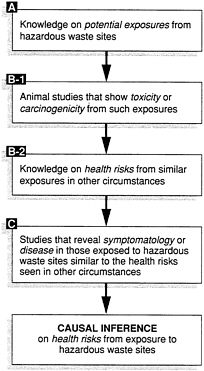
FIGURE 1-1 Sources of evidence for inferring whether exposures from hazardous-waste sites cause an impact on public health.
-
Knowledge of symptomatology or disease occurrence has in some instances been derived from studies of populations exposed to hazardous-waste sites. Often, these have not described exposures accurately, or they have failed completely to identify a specific causal factor. Nevertheless, with the knowledge that is available about exposure elsewhere, and from the knowledge that some of these exposures can result in the observed symptomatology or diseases found in excess in those exposed to hazardous-waste sites when compared to suitable controls, sufficient indirect evidence of causality might have been accumulated to justify remedial action for purposes of protecting public health.
In adopting the above framework, the committee does not follow the approach traditionally used by epidemiologists in deriving inferences of causality (Hill, 1953; USDHHS, 1976). Historically, discussions on causality have proceeded once a statistically significant relationship between a potential causal factor and a disease has been found, as is discussed below. However, what constitutes the best
means of evaluating statistical significance itself is evolving, as are the grounds for inferring causation in some circumstances. Small numbers, rare events, or small populations are often involved in hazardous-waste sites. Consequently, the committee does not adhere strictly to conventional approaches to establishing causality only after a finding of statistical significance has been made. Before detailing the committee's reasons for relying on an inferential approach in developing an understanding of causation in environmental epidemiology, it is useful to consider the function and limits of statistically significant findings in studies of the health effects of hazardous wastes.
STATISTICAL SIGNIFICANCE
The requirement that a finding be statistically significant has been a convention of epidemiologic research. If results have a likelihood of only 5 percent or less of occurring by chance, then they are usually considered statistically significant, as measured by a number of customary tests, such as p and t values. Under some circumstances, this stipulation can stifle innovations in research when studies that fail to meet the conventional criteria for a positive finding are prematurely dismissed. Thus, a study of a common disease in a small number of people might not achieve a level of statistical significance, even though a causal association could, in fact, exist.
Several analysts maintain that the indiscriminate application of tests for statistical significance to epidemiologic studies has discouraged advances in research and conferred undue importance on negative findings. Rothman (1986) argues that conventionally applied tests of statistical significance, such as p values, are inadequate and subject to extensive misinterpretation. He favors the broad application of confidence intervals, so that results are depicted as ranging over a set of possible values, viz., there is a 90 percent chance that a given finding falls between some high value and some low value. Ahlbom et al. (1990) describe two general categories of negative studies that can result from an overreliance on traditional tests of statistical significance: those that actually suggest that a given exposure lacks an effect of a detectable size on the studied disease risk, and those that might miss such an effect because of inadequate sample size, random error, or because systematic error biases the study toward finding no such effect. Random error increases the chance that inaccurate measures of the effect will imply that there is no difference between those exposed and unexposed. Discussions of negative studies must recognize the importance of the size and detectability of the effects being missed.
According to some philosophers of science, the hypothesis that a given exposure has no effect on increasing the risk of a particular disease can be rejected (Buck, 1975), but can never be proved (Bunge, 1963). Greenland (1988) has criticized this strict application of philosophy for its failure to meet the requirements of epidemiology regarding public health. Several analysts have noted that an inductive approach can be more appropriately applied to epidemiologic study, considering epidemiologic study a measurement exercise with which relevant measures of effect are estimated (Miettinen, 1985).
Even the inductive approach to causation in epidemiology is vulnerable to random or systematic error. Where the size of a study is small, random error can overwhelm a finding. Whether the level of statistical significance exceeds or fails to meet the 0.05 level does not necessarily bear on whether the effect parameter is biologically important or is equal to the null value, that is, does not differ significantly from what is expected to occur by chance. A better indication of the statistically plausible range of values can be provided by identifying the estimated confidence interval, that is, the range within which there is a 90 percent chance that the true value is contained. The confidence interval brackets the interval or range of values that may occur and provides a clearer indication of the significance of a study than does strict application of p values and other measures of statistical significance.
Systematic error in classifying disease or exposure produces invalid results. Error arising from a misclassification of exposure can occur under a number of conditions, including the following: if the exposure measurement is random or subject to error; if an invalid or systematically inaccurate proxy for exposure is used, such as distance from a hazardous-waste site independent of relevant wind patterns or sources of domestic water; if a biologically inaccurate indication of exposure is applied, such as the use of a point-in-time exposure intensity rather than a cumulative dose; or if people either do not know the amount of exposure or exaggerate it. The problem of reconstructing exposures is especially subject to recall bias. Recall bias occurs where persons who have learned that they may be at risk from an exposure associate nonspecific health problems with the exposure or develop a health problem that they seek to attribute to the exposure and then “remember ” specific symptoms better than do non-exposed persons. Error also can be introduced through misclassification of disease. For instance, including persons who do not, in fact, have a given disease along with those who do have the disease, produces low specificity in the results.
Ahlbom et al. (1990) warn that over-interpretation of epidemiologic
results can occur when results that show no effect are believed to prove no effect, even though they are actually inconclusive. Among the factors that can contribute to this over-interpretation of negative studies are failure to achieve statistical significance, too small a sample size, the poor assessment of exposure, the presence of confounding factors, and the lack of known biologic mechanisms that may account for the particular relationship between exposure and disease.
CAUSATION IN EPIDEMIOLOGY
The world of epidemiology, as that of any human science, seldom permits elegant inferences to be drawn about causation. The object domain of epidemiology consists of numerous uncontrollable aspects, with considerable variations in precedents, so that we cannot vary only one factor at a time. With human sciences, causation usually must be inferred, and is never proved absolutely.
Human minds seem to be more credulous than skeptical, and most people need protection against being gulled. Undue skepticism, however, can be as dangerous as credulity to scientific progress and the improvement of health. Only judgment can prevent the hypercritical rejection of useful results. (Susser, 1973, p. 141)
Susser's statement reminds us that the judgment of experts is a critical component for interpreting any findings in epidemiology. A fundamental dilemma for epidemiologic research on hazardous-waste sites, or any other topic involving multiple causes and results, derives from the fact that the statistical correlation of variables does not necessarily indicate any causal relationship among them, even where tests of statistical significance may be met. Mere coincident occurrence of variables says nothing about their essential connection. Moreover, partial correlations between variables that exclude other relevant variables can be misleading.
To estimate the relationship between exposure and health status it is necessary to include relevant variables or their appropriate proxies, to the extent that these can be determined. Efficient use of that information requires the choice of a functional form that is compatible with the health-related practices and decisions of the individuals who are under study. No matter how carefully such proxy variables are estimated, causal inference should not be equated with statistical inference. Nor can statistical expertise alone establish causation. In order to facilitate the inference of causation from statistical information, contemporary epidemiologists have developed guidelines based on the view that absolute truth cannot be determined scientifically
(Mill, 1865). The relative likelihood that a finding is true must be inferred from careful, systematic, and repeated observations of recurring phenomena. Thus, association can be proved beyond a reasonable doubt, but not refuted, while causation can be refuted, but cannot be proved.
To make a reasonable inference of causation in environmental epidemiology, eight basic characteristics of the findings should be considered: the strength, specificity, and consistency of the association; the period of exposure; the biologic gradient or the relationship between the dose and the response; the effects of the removal of the suggested cause; the biologic plausibility of the association (Hill, 1953; USDHHS, 1986), including how well it coheres with other findings.
Strength of the Association
How great is the risk of disease apparently induced by a given factor (exposure)? This is often expressed as relative risk (RR), standard mortality ratio (SMR), odds ratio (OR), or standard fertility ratio (SFR), each of which compares the risk of disease incurred by exposed persons with that of unexposed persons. The greater the RR, SFR, or SMR, the stronger the inferred link for exposed individuals. Of equal concern for public health, however, is the attributable risk, which might be much harder to detect, study, and estimate in environmental epidemiology, given the problems of evaluating baseline rates for a disease of interest. An RR of 3 for a lifetime that affects 1 of 100 persons in a small population produces a much smaller impact on public health than does a lifetime RR of 1.1 that affects several million persons.
Epidemiologists have long appreciated that high RRs are relatively easy to detect. Thus, evidence linking lung cancer and cigarette smoking is strong; active smokers have a tenfold or greater risk of contracting lung cancer than non-smokers do. In contrast, evidence linking lung cancer and passive smoking is less firmly established; a variety of studies (NRC, 1986a) place the RR between 1.2 and 2.0, with the 95 percent confidence interval for a summary of the case-control studies ranging from 0.9 to more than 2.
The difficulty with the use of this criterion of the strength of the association in environmental epidemiology is that misclassification of exposure can greatly attenuate the strength of a relatively weak observed association. Other sources can contribute to a specific chemical exposure, and the same health effect can be caused by different pollutants. Most of the results of concern are common, chronic diseases, for which the baselines—their normally expected rates—are not clearly
established. It is possible to validate a true elevation in a rate only if it can be demonstrated that an event is unusual (or improbable); this implies that the researcher drawing the inference has a good grasp of what is usual (Rothenberg et al., 1990). For instance, the assessment of time trends in birth defects or reproductive health must contend with the lack of well-established national and regional information about rates of major birth defects and spontaneous abortion. Moreover, the system used to code and classify minor and major birth defects can differ from one place to the next. Evaluating the occurrence of spontaneous abortions requires information about regional and cultural variations in rates and kinds of contraceptives used, rates of elective abortion, and genetic-screening tests that can provide the basis for such procedures. In areas where proportionally more pregnancies are voluntarily terminated, reported rates of spontaneous abortion might be lower.
For multiply caused diseases the strength of association measured depends on many factors, including the power of the overall study to detect an effect. Power is a statistical measure of the potential of the study to find an association. It varies with the inverse of the square root of size of the population studied and the expected relative risk of the disease. In order to detect significant patterns, rare diseases are best studied in larger populations. More common diseases can be studied in smaller populations. However, to the extent that multiple causes are involved, as they are with most chronic diseases, larger populations are generally required in order to obtain significant results in studies of more common diseases as well. Refining the measures of diseases and the assessment of exposure can improve the power of a study to detect an association. “Strong” associations are not more biologically correct then “weak” associations. They may be less readily dismissed as confounding, however, and are more readily detected.
Cancer clusters and spontaneous abortion clusters are among the most commonly reported events linked to exposure to hazardous-waste sites. These clusters also rank as among the most difficult outcome for which causation can be inferred. In part, this is because both outcomes reflect multiple causes and because it is difficult to determine the relevant regional baseline rate. Also, for cancer, the latent period (between exposure and onset of disease) is often long.
Neutra (1990) notes that because of the small populations exposed at many hazardous-waste sites, the observed rates of occurrences for diseases studied in a given cluster often must be at least 20 times greater than expected to support an inference of causation. Today,
one of three people in the U.S. will develop some form of cancer; one in four will die of it (NCI, 1990). The expected rate of spontaneous abortion is estimated to be as much as one in four of all pregnancies (NRC, 1989). Therefore, clusters of cancer, spontaneous abortion, or other common diseases can easily arise by chance. Assessing whether a given cluster of these common health problems could be linked to environmental exposure requires either the study of very large numbers of persons or the finding of extraordinarily elevated rates. Further, most hazardous-waste sites involve potential or actual exposures of only small numbers of persons. Because many of them no longer live in the area when a cluster is identified, tracking down all who potentially could have contributed to a cluster is extremely difficult.
Another problem relates to the fact that analyses of health effects possibly linked with exposures from hazardous-waste sites usually involve making implicit multiple comparisons, which results in increased rates of disease due to chance alone. “When eager environmental epidemiologists check to see if cancer registry data suggest that a particular waste site has increased the incidence of any one of the 80 types of cancer with a p value of 0.01 or less, we know that there is a 0.99 probability of escaping an increase in all of these cancers. So there is a better-than-even chance that the risk of some kind of cancer will be elevated around the site” (Neutra, 1990, p. 5). Multiple comparisons are being made in an implicit manner, in that only the single type of cancer that is elevated becomes the subject of public concern and study, rather than each type of cancer separately or all cancers combined. In the state of California 55 percent of the 5,000 census tracts will have at least one type of cancer elevated because of chance alone. Hence, there are potentially 2750 false-positive clusters to investigate each decade.
Finally, for many hazardous-waste sites, there usually are no data on relevant exposures that could have occurred several decades earlier, given the long and indefinite period for development of many forms of cancer. This and the other considerations described in this section explain why the observed strength of an association between pathology and exposure to hazardous wastes can be weak, even though the link may be causal.
Specificity of the Association
Specificity implies that a putative cause induces a specific disease. However, a one agent-one disease model has been shown not to apply for many diseases, such as lung cancer, in which multiple causes are involved. Further, many agents, such as cigarette smoke, pro-
duce different diseases, making the determination of their relative role more difficult (Lilienfeld and Lilienfeld, 1980).
Specificity also is diminished when diseases are inappropriately grouped together, or inaccurately classified, obscuring important differences. Thus, a proposed study of vinyl chloride-exposed workers in 1973 would have failed to detect the real effect of increased cancer, because it lumped the relatively rare form of cancer involved, namely angiosarcoma of the liver, into the category of all cancer. This particular study included over 10,000 workers in 37 plants, the majority of the industry at the time. In preparing the analysis of this group, the researchers calculated the SMRs in which the expected numbers of deaths from specific causes were derived from national mortality statistics for all cancers combined. This aggregation of cancer would have obscured the extraordinary finding that one fifth of all recorded incident cases of angiosarcoma for the U.S. in a single year occurred in this group of highly exposed vinyl chloride workers (Utidjian, 1988). Subsequent studies that used appropriate classifications of disease detected significant excesses of angiosarcoma and brain cancer in exposed workers (Utidjian, 1988). Excesses of angiosarcoma have also been detected in residents living near a vinyl chloride manufacturing plant in New York (Brady et al., 1977).
Where a given factor is related to many diseases, its specific causal association with a single disease can prove difficult to demonstrate. Thus, vinyl chloride emissions have also been tied to clusters of birth defects, but the study lacked sufficient power and the findings were not significant (Rosenman et al., 1989). In general, hazardous wastes have been linked in toxicological studies to a wide range of diseases, some of which have long latencies and many of which have multiple causes. Moreover, the common nature of many of the health problems suspected to be caused by exposure to hazardous-waste sites makes the identification of their specific causes problematic. Here again, the problem of multiple comparisons occurs, in that the study of a number of different diseases in different locations will randomly produce some elevations due to chance alone.
Consistency of the Association
Does the relationship between exposure and disease occur regularly in independently conducted studies? To revert to the example of passive smoking and lung cancer, although the RR might be 2.0 or less, this elevated risk was reported consistently in more than 30 different studies conducted in six countries (NRC, 1986a). Even where
statistical significance is not attained in all studies, their results may be combined, so long as they comply with sound methods. Data may be pooled to determine whether a particular effect is linked to a particular exposure. However, such pooling does not readily allow estimation of the size of that effect. To facilitate syntheses of different studies, general criteria need to be developed for evaluating their overall compliance with basic standards of good epidemiologic practice (CMA, 1991). To bolster the finding of consistency, a number of studies that meet these criteria of good epidemiologic practice can be grouped for meta-analyses. This grouping allows for statistical pooling of results in different studies (Chalmers et al., 1987). Such groupings of studies are feasible, provided that the studies are selected or excluded from the group solely on the basis of their conforming to stringent methodologic criteria for what constitutes good epidemiologic practice, independently of their results. Similarly, repeated findings of clusters in time and space of exposure and effect strengthen the plausibility of the inferred relationship.
Consistency of findings in different populations and in different countries especially strengthens a finding of causation. It is unlikely that the same relationship would occur by chance alone in different populations, unless, of course, the studies were subject to the same biases. Assessing the consistency of an association in the arena of hazardous wastes is also hampered by the diversity of exposures. In principle, studies can be conducted in several communities where there have been varying levels of exposure after those exposures are reasonably well defined. Estimates can be roughly correlated with degrees of exposure, after controlling for confounding by other variables (Neutra, 1990, citing Robbins, 1988).
Many hazardous-waste sites entail multiple exposures to a mixture of chemicals. Further, the multicommunity approach assumes that the high-exposure communities are homogeneous as to the risk they convey to the public. This assumption could be unwarranted if major differences in industrial hygiene and disposal practices are involved. Unfortunately, consistency is not easily achieved for studies of hazardous-waste sites; we do not have enough data to be able to determine for which sites similar health effects might be anticipated, as is illustrated in Chapter 3. This is because of the lack of data on potential exposures that would permit characterization of sites in similar groupings of exposures to single or multiple chemicals. In this regard, insisting upon consistency between studies could pose an unreasonable burden where other factors mitigate the actual and potential exposures incurred.
Temporality
Does exposure occur at a reasonable interval before the development of the symptoms or disease of interest? The amount of time between exposure and onset of disease should comply with the underlying biological concept of the disease at hand. For tobacco-induced lung cancer, the latency between exposure and disease often is 25 years or more, although a few cases occur within 10 years of first exposure (Doll and Peto, 1978). Theoretically, higher doses shorten latency. For diseases of shorter latency, periods of hours of acute exposure can be involved. In general, the period of observation should be consistent with the hypothesized relationship, taking into account that variable latencies may be involved. With diseases of long latency, accurate recall or reconstruction of exposures remains a serious problem.
For studies of hazardous-waste sites, the temporality requirements of inferring causation could prove difficult to pin down, given the mobility and the diversity of the study population and the lack of models of many chronic diseases in the human populations. Despite this, studies of diseases with short latencies can sometimes provide useful information. For example, Vianna and Polan (1984) reported that the peak in low birth weight in children born to women who were residents of Love Canal, New York, occurred during the time of greatest estimated exposure to contaminants at that site.
Biologic Gradient or Relationship Between Estimated Exposure and Disease
In general, the greater the exposure, the stronger the effect. The relationship between dose (either estimated or measured) and response should be logical and uniform. The risk of contracting lung cancer increases with the number of cigarettes smoked. Although dose usually equals the concentration integrated over time, there are some important exceptions in which dosing patterns can be more important than overall dose. For instance, early and high exposure to alkylating agents, such as ethylene oxide, could produce a greater response than continual low exposure to the same quantity over a long period of time (Vesselinovitch, 1969).
Also, timing of exposure and host condition can be critical. Exposures to toxic chemicals in infancy and childhood or exposures of persons who are already compromised by some pre-existing chronic disease can produce a stronger effect than that found in healthy adults. It is well known that exposures to some toxic agents during the first trimester of pregnancy are critical for many teratologic and reproductive effects. Thus, there can be long-term and permanent effects
from short-term exposure, such as that resulting from a single episode of exposure that occurs at the critical time in pregnancy, and other windows of vulnerability exist for neurodevelopmental effects (NRC, 1989). Such time- and dose-dependent exposure also could be involved in the development of other chronic diseases, such as learning and behavioral disabilities caused by exposure to lead.
For studies of hazardous-waste sites where common diseases with multiple causes are found, the finding of a dose-response relationship can be obscured by the operation of multiple causal factors and the absence of valid estimates of exposure. As Neutra (1990) notes, we can rarely reconstruct the individual exposures accurately, especially because they can stem from periods several decades past. In the absence of detailed measurements of exposure, we are forced to assume that people in a given neighborhood endured comparable and uniform exposures, even where that is not likely to have been the case.
Effects of the Removal of a Suspected Cause
Where an assumed causal relationship exists, removal of the suspected cause in individuals should reduce or eliminate the suspected effect, unless the effect is irreversible. Thus, those who stop smoking reduce their risk of contracting lung cancer. At the population level, reductions in cigarette smoking among men and women in the United Kingdom and among men in the U.S. have resulted in reduced rates of lung cancer (NCI, 1990). Where different causes contribute to a single disease, this principle will be relevant only for the specific causal factor removed.
The above considerations explain why it is not easy to evaluate the effects of removal of an exposure at many hazardous-waste sites. Despite these problems, after the fact analyses have been produced that permit some causal inferences regarding a few studies. Thus, allowing for a five-year latency, no new cases of leukemia have occurred in families in Woburn, Massachusetts, since those families stopped using contaminated wells (R. Clapp, Center for Environmental Health Studies, JSI, personal communication, 1991). Similarly, in the Lipari Landfill study by the state of New Jersey (NJDOH, 1989) and at Love Canal, after exposure from hazardous materials declined, birth weights returned to normal (Goldman et al., 1985; Vianna and Polan, 1984).
Biological Plausibility
Does the association make sense in terms of the current understanding of basic human biology? Animal studies or other experi-
mental evidence can enhance the credibility of epidemiologic findings by indicating mechanisms of disease or by corroborating the basic association between exposure and disease (Davis, 1988). However, the absence of such information does not necessarily invalidate a causal association. The underlying mechanisms for many modern diseases are not readily apparent. Thus, the precise mechanisms by which cigarette smoking induces lung cancer are unknown, although the causal relationship is clear (Doll and Peto, 1978).
CHALLENGES IN THE STUDY OF HAZARDOUS-WASTE SITES
Among the major challenges for this field are the small populations and small numbers of events usually involved in such studies and the consequent lack of significance of findings, even when the confidence interval is used. The advent of meta-analysis offers an important opportunity to strengthen the inferences that can be drawn from epidemiologic research (Chalmers et al., 1987). Potentially misleading conclusions can be extracted from single studies because of insufficient sample size, inadequacies of exposure determination, or publication and other biases. Meta-analysis can combine data from a variety of studies and reduce the danger of misinterpretation because it allows for pooling of all available information (Greenland, 1990). Meta-analyses must be carried out properly if they are to supply useful information. Retrospective combinations of research must be approached with caution. Searches for primary studies must be as exhaustive as possible. Biases must be minimized by blinding the evaluators of the methods of the studies with regard to the authors, institutional sources, and findings of the original studies. Opportunities for bias in the original research must be tabulated and used to temper conclusions. The statistical methods must be logical and reliable. The interpretation of meta-analyses must also be tempered by the awareness that reporting and publication biases can distort the sample of studies available for pooling. The future widespread application of meta-analytic techniques to studies of hazardous-waste sites will require recognition of deficiencies in primary research and consequent improvements in the gathering and reporting of data in a way that will facilitate meta-analysis later.
Another challenge to environmental epidemiology is the major effect that emerging case and tort law wield on the subject matter. In most tort cases, a plaintiff must demonstrate by a preponderance of the evidence that his or her version of the facts is correct. The number of lawsuits that request monetary payment in compensation for injury induced by exposure to toxic substances has skyrocketed in
the past two decades (Black, 1990). A substantial number of tort cases involve listed Superfund sites and other hazardous-waste disposal sites. Because courts have sealed disputes on these matters that have been resolved, some potentially relevant information is not routinely available to the scientific community regarding the health effects associated with exposures from hazardous-waste sites.
As a number of legal theorists have noted, the requirements for inferring causation in law and for inferring them in science differ in several important ways (Henderson, 1990). Chief among these is that science, by conventional practice, infers causation where a statement has a 5 in 100 chance of being false. However, in the law, a “but for ” showing can be sufficient to establish causation. That is, it is acceptable to establish that a causal agent was more probably than not a substantial factor in producing a given result. Indeed, some case law specifically denies the need to make a statistically significant showing of a relationship to imply causation, and it allows that damages can be awarded so long as an expert can testify that in his or her opinion a cause-and-effect relationship is more likely than not to exist between the substances involved and the injuries incurred (Davis, 1985). The fact that a few courts have ruled that fear of contracting a disease such as cancer is a compensable harm, per se, further complicates the arena. These legal trends will continue to have a major influence on the field of environmental epidemiology and on the public demand for studies of the health effects associated with exposures to hazardous-wastes sites.
One important difference of focus is apparent. In epidemiology we want to know whether a population of exposed persons has an increased risk, and by what proportion their mean risk is elevated. In law, what matters is whether a specific individual's disease was more probably caused than not caused by the specific exposures encountered. In fact, epidemiology cannot answer questions about the causes of illness in a specific individual. However, such evidence can indicate the likelihood that particular exposures are linked with specific diseases. A risk in a specific individual is in practice assigned from the experience of the group (NRC, 1984).
Like most environmental sciences, epidemiology derives a substantial part of its current support from renewed concern about the consequences of environmental factors for public health and the environment. Unfortunately, the intense public arena in which epidemiology operates can have a chilling effect on the ability of scientists to assess the health effects of a particular hazardous-waste site if that site is the subject of active litigation. The pressures of environmental laws, law-suits, and news media disclosures about suspected contamination or
outbreaks of disease substantially impair the ability of epidemiologists to obtain unbiased information on past exposure. Experts who are privy to the discovery process may acquire useful information, but this information may not be available in the peer-reviewed literature on which most scientists rely. In response to these pressures, the legal arena is fundamentally shifting its use of the definitions of causation applied to epidemiologic study and to environmental issues broadly conceived. The recent proliferation of mass exposure cases, such as the Agent Orange litigation, and the class action lawsuits and courtmaster reviews on asbestos, the Dalkon Shield, and DDT contamination, are forcing a fundamental reassessment not only of traditional causation standards, but of the underlying concept of causation (Schuck, 1991). Where case law previously resisted reliance on probabilistic and statistical information, such as that generated by epidemiologic studies, recent decisions have accepted this line of evidence.
The Committee on Environmental Epidemiology recognizes that, whether in law or science, the inference of causation must be understood as a process that involves judgment and interpretation. Because the basic mechanisms of most modern chronic diseases are not well understood, analysts are forced to interpret observational data to find clues about etiology. Despite the immense public interest in the effect of hazardous wastes on public health, rather few empirical data are available. Nevertheless, public health policy requires that decisions be made despite the incomplete evidence, with the aim of protecting public health in the future.
HISTORICAL CONTEXT OF THE STUDY
Lethal episodes of severe air pollution, such as those in Donora, Pennsylvania in 1948; London in 1952; and the Meuse Valley in 1930, raised public consciousness about environmental epidemiology. The London episode led directly to the British Clean Air Act in the 1950s. The environmental decade of the 1970s included the passage of a host of laws intended to address, prevent, or control such major environmental pollution problems in the United States. Subsequently, incidents at Love Canal; Michigan feed contamination with the fire retardant chemical polybrominated biphenyls (PBBs); the James River; the Hudson River pollution with the pesticide kepone; Times Beach, Missouri; Bhopal, India; and most recently burning Kuwaiti oilfields and oil spills have provided the global village with vivid images of devastating pollution.
In response to concerns spawned by several of these earlier episodes, Congress passed laws that included requirements for scientific
assessments at the very frontiers of the environmental sciences (Davis, 1985). Thus, under terms of the Toxic Substances Control Act, the EPA was charged with developing policies to control new and existing chemicals. To effect this control, EPA must incorporate evidence on whether agents pose or could pose an unreasonable risk of causing significant adverse health effects, including birth defects, neurological disease, synergistic effects, environmental effects, and other not-well-specified harms to public health and the environment. To make such assessments, EPA relies on a series of risk assessment models that use animal and other experimental data to estimate effects on humans. Unfortunately, many important synthetic and natural chemicals have not been adequately tested and most have not been tested at all. Risk assessment techniques are highly speculative, and almost all rely on multiple assumptions of fact—some of which are entirely untestable (NRC, 1983; 1986b). The anticipatory, preventive intention of these environmental laws has resulted in their heavy reliance on experimental models and theoretical inferences.
As recognition mounted that past disposal practices had contaminated neighborhoods near disposal sites, Congress promulgated the Superfund law (the Comprehensive Environmental Response, Compensation, and Liability Act, CERCLA, Public Law 96-510, 94 Statute 2767) in 1980 to provide a short-term remedy for abandoned hazardous-waste sites. The precise number of these sites is unknown, although estimates go as high as the tens of thousands—an issue discussed in more detail in Chapter 2. Reauthorizing amendments in 1986 further strengthened the provisions of the Superfund law to address the issue of assessing health effects of persons exposed to hazardous wastes.
In 1980, a Congressional Research Service report for the Senate Committee on Environment and Public Works noted that in many cases adequate data on the extent of contamination and its effects on public health and the environment could not readily be obtained (CRS, 1980). A decade later, the congressional Office of Technology Assessment reiterated that conclusion, faulting the regulatory process and the failure to seek scientific and technical studies of many key questions, including the health effects attendant to exposure to hazardous wastes (OTA, 1989).
AGENCY FOR TOXIC SUBSTANCES AND DISEASE REGISTRY
The original Superfund law, in 1980, established ATSDR as a new agency of the Public Health Service within the U.S. Department of Health and Human Services. The agency's “mission is to prevent or mitigate adverse human health effects and diminished quality of life
resulting from environmental exposure to hazardous substances” (Johnson, 1988, p. 10132).
ATSDR did not come into operating existence until 1983, after a lawsuit was filed jointly by the Environmental Defense Fund, the Chemical Manufacturers Association, and the American Petroleum Institute (Siegel, 1990). When ATSDR was still in the early stages of development, Congress expanded the agency's responsibilities with the passage of the Superfund Amendment and Reauthorization Act of 1986 (SARA, Public Law No. 99-499, 100 Statute 1613) (Johnson, 1990). ATSDR is required to conduct health assessments of every site listed on, or proposed for inclusion on, the NPL; establish a priority list of hazardous substances found at CERCLA sites; produce toxicological profiles for each substance on this list; and undertake various research and health studies related to hazardous substances.
As its charter indicates, ATSDR can rely on a broad spectrum of evidence in conducting health assessments at a hazardous-waste site. This spectrum encompasses experimental models of chemical structure and activity patterns, in vitro test systems, whole-animal long-term and short-term studies, and clinical studies and epidemiologic investigations of potentially exposed persons. The animal and experimental models on which site assessments can depend are designed to anticipate human and environmental effects. Their results affect decisions that can cost tens of millions of dollars. Validation and development of these models are the subject of intense debate, reflecting both technical problems and their substantial impact.
Animal studies and other experimental models of toxicity should remain important to the development of environmental policies, because new materials cannot be studied with the tools of epidemiology. Moreover, many recently introduced compounds of interest, such as the new generation of pesticides, are of such recent vintage that it will not be possible to obtain evidence on their chronic effects in humans for a decade or more. Further bolstering the importance of animal and other experimental studies is the fact that all of the 52 compounds known to cause cancer in humans also produce it in animals. However, evidence of the carcinogenicity of only 9 of these compounds was first demonstrated in animals, and later confirmed in humans (Rall, 1991). For the remaining 43 compounds, evidence that humans were at increased risk of contracting cancer was subsequently confirmed in animal studies. Reliance on results from improved animal and other experimental studies remains an important tool for preventing chronic disease in humans.
Efforts to validate experimental models that predict health effects on humans are always faced with a paradox. Animal models and
computer-based algorithms are generated in an effort to anticipate human health effects—ultimately, to prevent their occurrence—and to suggest appropriate remedies. Requiring epidemiologic confirmation of the validity of animal and other models is often not possible and may be questioned ethically. In addition, the exposures can be self-limiting; people often move away once they become aware or afraid that they face exposure or once they become symptomatic. Moreover, people have prior exposures to other substances that affect their uptake and response to later exposures to hazardous-waste-site contaminants.
OVERVIEW OF THIS VOLUME
Because the basic mechanisms of many modern chronic diseases are not well understood, analysts must interpret observational data to find clues about etiology and also must rely on experimental observations. Table 1-1 summarizes published studies that the Committee reviews for this report on the health effects linked with exposures from hazardous-waste disposal sites. The relatively small number of studies published to date reflects the difficulties of conducting valid studies of this complex issue, the tendency of courts to seal resolved disputes in this area, and the meager resources committed to such studies. The first section of this report presents the Committee's framework of the field of environmental epidemiology as applied to the study of exposures from hazardous-waste sites and discusses the governmental context under which most relevant data are generated. Chapter 2 discusses relevant federal and state legislation and programs for assessing and remediating hazardous-waste sites. Chapter 3 discusses available data on common materials at listed hazardous-waste sites and notes a number of secondary problems in estimating human exposures to these agents. The remainder of this report assesses problems of obtaining epidemiologic information about hazardous-waste exposures through the air, water, and other media. Chapter 4 and Chapter 5 review evidence on the health effects associated with hazardous-waste pollution of air and water. Chapter 6 assesses studies on soil and food pollution, noting those few studies on hazardous-waste sites and other relevant studies of adverse health effects of materials found at such sites. Chapter 7 describes important developments in the field of biologic markers as they relate directly to studies of the environmental epidemiology of hazardous waste. Chapter 8 identifies data gaps in the areas discussed in preceding chapters and summarizes our findings.
Our next report will complete the review of selected state health
TABLE 1-1 Summary of Studies of Residential Exposure to Hazardous-Waste Sites
|
Study Location and Year of Publication |
Study Design and Period of Observation |
Number and Type of Subjects |
Exposure Measure |
Major Health End Points |
Reported Outcome |
|
Tucson, AZ 1990 Goldberg et al. |
Case-control 1969-1987 |
Children with congenital heart disease: 246 families, contact with contaminated water area (CWA) Referent: 461 families no contact with CWA |
Child conceived and first trimester spent in Tucson Valley |
Congential cardiac lesion |
Significant association between parental exposure to CWA and increased proportion of congenital heart disease among live births |
|
Fresno County, CA 1988 Wong et al. |
Restropective follow-up 1978-1982 |
Birth ratio among 45,914 females in census tracts grouped by DBCP levels Referent: internal |
Surrogate: residence in Fresno County |
Decreased birth rate due to male infertility |
No difference |
|
Stringfellow Site Glen Avon, CA 1988 Baker et al. |
Cross-sectional 1983 |
403 households Referent: 203 households |
Proximity to site |
Self-reported health problems |
Weak to moderate positive associations: ear infection, bronchitis, asthma, angina pectoris, and skin rash |
|
Santa Clara County, CA 1985 CA Dept. of Health Services |
Retrospective follow-up 1980-1981 1981-1982 |
1980-1981: Pregnancies in one census tract served by contaminated water Referent: Pregnancies in one census tract not served by contaminated water 1981-1982: live births in a 7 census tract study area served by contaminated water Referent: live births in the rest of the county |
Surrogate: residence in households served by contaminated water at the time of chemical leak |
1980-1981: pregnancy outcomes 1981-1982: congenital cardiac defects |
1980-1981: significant excess of spontaneous abortions and congenital malformations 1981-1982: excess incidence of cardiac defects within and outside the study area. No support for an association with the chemical leak |
|
Santa Clara County, CA 1989 Swan et al. |
Retrospective follow-up 1981-1983 |
106 babies with diagnosis of cardiac anomaly, born in county during period county exposed to contaminated water Referent: babies born in unexposed area and during unexposed time |
Surrogate: residence in households served by contaminated water |
Cardiac anomalies |
Increased prevalence of cardiac anomalies but temporal distribution suggests solvent leak not responsible |
|
Galena, KS 1990 Neuberger et al. |
Retrospective follow-up 1980-1985 |
White residents of Galena exposed to heavy metal mining Superfund site Referent: Two unexposed towns |
Residence in towns for at least 5 years prior to 1980 |
Age and sex-specific illnesses |
Significant associations of stroke, anemia, hypertension, heart disease, skin cancer with exposure |
|
Lowell, MA 1987 Ozonoff et al. |
Cross-sectional 1983 |
1049 potentially exposed Referent: 948 presumably unexposed |
Surrogate: residence in households within a given distance from site |
Self-reported health problems |
Increased prevalence of minor symptoms, irregular heart beat, fatigue, bowel complaints |
|
Woburn, MA 1986 Lagakos et al. |
Case-control 1964-1983 |
20 childhood leukemia cases Referent: 164 children resident in Woburn |
Surrogate: residence in households served by contaminated wells |
Childhood leukemia |
Significant association with estimated exposure |
|
Woburn, MA 1986 Lagakos et al. |
Retrospective follow-up 1960-1982 |
4936 pregnancies among Woburn residents 5018 residents 18 or younger Referent: internal |
Surrogate: residence in households served by contaminated wells |
Adverse pregnancy outcomes; childhood disorders |
Association with perinatal deaths; eye/ear anomalies, CNS anomalies; association with kidney/urinary tract infection |
|
Woburn, MA 1988 Feldman et al. |
Clinical case-control 1987(?) |
28 members of 8 families with suspected neurotoxicity due to chronic exposure to TCE contaminated water Referent: 27 subjects evidencing no sign of neurologic disease or exposure to neurotoxins |
Surrogate: residence in households served by contaminated wells |
Blink reflex measurement as indicator of neurotoxic effects of TCE exposure |
Significant differences in blink reflex function when means were compared |
|
Rutherford, NJ 1980, Burke et al. Halperin et al. |
Case-control 1973-1978 |
13 leukemia cases, 9 Hodgkin's cases Referent: 25 sixth graders and 17 community controls (leukemia); 17 age-sex-race matched cases from random digit dialing (Hodgkin 's) |
Surrogate: residence in the area |
Possible etiologic risk factors for leukemia and Hodgkin's |
Reduced prevalence of rubella vaccination in leukemia cases. Excess of prior vaccinations and tonsillectomies in Hodgkin's cases |
|
Hyde Park, NY 1981 Rothenburg |
Cross-sectional 1979 |
246 persons working in the area Referent: 492 persons from HANES National Survey |
Surrogate: employment in plants near site |
Health problem, urine and blood tests |
Increased prevalence of hiatus hernia and other minor gastrointestinal problems |
|
Love Canal, NY 1981 Janerich et al. |
Retrospective follow-up (census tract) 1955-1977 |
700 census tract residents Referent: NY state population |
Surrogate: proximity to dump site |
Cancer:
|
Incidence: no increase |
|
Love Canal, NY 1984 Heath et al. |
Cross-sectional 1982 |
45 residents in houses potentially contaminated by organic chemicals Referent: 46 residents in adjacent census tract |
Surrogate: testing of chemicals (two years before) in the house of exposed |
Cytogenic:
|
No difference |
|
Love Canal, NY 1984 Vianna and Polan |
Retrospective follow-up 1941-1978 |
174 live births in swale areas near dump site Referent: 1. 443 live births in the rest of Canal area 2. all live births in upstate NY |
Surrogate: proximity to dumpsite and at least 5 months residence |
Low birth weight |
Elevated incidence among exposed |
|
Love Canal, NY 1985 Paigen et al. |
Cross-sectional 1980 |
523 children residents of L.C. neighborhood Referent: 440 children of adjacent census |
Surrogate: proximity to dump site |
Health problems: seizures, learning problems, hyperactivity, eye irritation, skin rash, abdominal |
Increased prevalence |
|
Love Canal, NY 1987 Paigen et al. |
Cross-sectional 1980 |
172 children born and 75% of life in Love Canal area Referent: 404 children born in adjacent census tract |
Surrogate: proximity to dump site |
Anthropometric measurements |
Increased prevalence of shorter stature |
|
Hamilton, Ontario 1987 Hertzman et al. |
Retrospective follow-up Workers: 1965-1980 Residents: 1976-80 |
Workers: 197 workers at site Referent: 235 nonlandfill outdoor workers from Hamilton Wentworth Region Residents: 614 households within 750 m of edge of dumpsite Referent: 636 households in same air pollution region as landfill site |
Workers: outdoor employment on or adjacent to site Residents: long/short-term residence in area during 1976-1980 |
Self-reported health outcomes |
Workers: clusters of respiratory, skin, narcotic, and mood disorders Residents: confirmed association between landfill site exposure and mood, narcotic, skin, and respiratory conditions |
|
Clinton County, PA 1984 Budnick et al. |
Mortality 1950-1979 |
Clinton County and three adjacent counties, PA Referent: 1. State of Pennsylvania 2. U.S.A. |
Surrogate: residence in the area |
Bladder cancer mortality |
Increased bladder cancer mortality in male resident population after 1970 |
|
Clinton County, PA 1986 Logue and Fox |
Cross-sectional 1983 |
179 long-term residents in the area near waste site Referent: 151 residents of surrounding communities |
Surrogate: residence in the area |
Self-reported health problems |
Increased prevalence of skin problems and sleepiness |
|
Dauphin County, PA 1985 Logue et al. |
Cross-sectional 1983 |
65 potentially exposed Referent: 64 presumably unexposed |
Surrogate: residence in households with past contamination of water with TCE |
Self-reported health problems |
Increased prevalence of eye irritation, diarrhea, and sleepiness |
|
Hardeman County, TN 1982 Clark et al. Meyer, 1983 Harris et al., 1984 |
Cross-sectional 1978 |
49 residents at high exposure and 33 at intermediate exposure Referent: 57 unexposed local residents |
Carbon tetrachloride in well water >150 µg/l (high exposure) <45 µg/l (intermediate exposure) |
Liver functions |
Transient abnormalities of liver functions in exposed |
|
Source: Expanded and adapted from Upton et al., 1989, with permission. |
|||||
department reports on this subject, emerging international reports, and case studies of legal decisions that have evaluated epidemiologic evidence not otherwise available in the published literature. On the basis of this review, we will recommend research opportunities and developments for the field of environmental epidemiology.
REFERENCES
Ahlbom, A., O. Axelson, E.S. Hansen, C. Hogstedt, U.J. Jensen, and J. Olsen. 1990. Interpretation of “negative” studies in occupational epidemiology. Scand. J. Work Environ. Health: 153-157
Baker, D.B., S. Greenland, J. Mendlein, and P. Harmon. 1988. A health study of two communities near the Stringfellow Waste Disposal site. Arch. Environ. Health 43: 325-334
Black, B. 1990. Matching evidence about clustered health events with tort law requirements Am. J. Epidemiol. 132: S79-S86
Brady, J., F. Liberatore, P. Harper, P. Greenwald, W. Burnett, J.N. Davies, M. Bishop, A. Polan, and N. Vianna. 1977. Angiosarcoma of the liver: An epidemiologic survey. J. Natl. Cancer Inst. 59: 1383-1385
Buck, C. 1975. Popper's philosophy for epidemiologists. Int. J. Epidemiol. 4: 159-168
Budnick, L.D., D.C. Sokal, H. Falk, J.N. Logue, and J.M. Fox. 1984. Cancer and birth defects near the Drake Superfund site, Pennsylvania Arch. Environ. Health 39: 409-413
Bullard, R.D. 1990. Dumping in Dixie: Race, Class, and Environmental Quality. Boulder, Colo.: Westview Press.
Bunge, M.A. 1963. Causality: The Place of the Causal Principle in Modern Science. Cleveland: World.
Burke, T.A., S. Gray, C.M. Krawiec, R.J. Katz, P.W. Preuss, and G. Paulson. 1980. An environmental investigation of clusters of leukemia and Hodgkin's disease in Rutherford, New Jersey. J. Med. Soc. N.J. 77: 259-264
California Department of Health Services. 1985. Pregnancy Outcomes in Santa Clara County 1980-1982: Reports of Two Epidemiological Studies. Berkeley: California Department of Health Services.
Chalmers, T.C., H. Levin, H.S. Sacks, D. Reitman, J. Berrier, and R. Nagalingam. 1987. Meta-analysis of clinical trials as a scientific discipline. I. Control of bias and comparison with large co-operative trials. Stat. Med. 6: 315-328
Clark, C.S., C.R. Meyer, P.S. Gartside, V.A. Majeti, B. Specker, W.F. Balisteri, and V.J. Elia. 1982. An environmental health survey of drinking water contamination by leachate from a pesticide waste dump in Hardeman County, Tennessee Arch. Environ. Health 37: 9-18
CMA (Chemical Manufacturers Association). 1991. Guidelines for Good Epidemiology Practices for Occupational and Environmental Epidemiology Research. Washington, D.C.: Chemical Manufacturers Association.
Commission for Racial Justice, United Church of Christ. 1987. Toxic Wastes and Race in the United States: A National Report on the Racial and Socio-Economic Characteristics of Communities with Hazardous Waste Sites. [ New York]: Public Data Access.
CRS (Congressional Research Service). 1980. Six Case Studies of Compensation for
Toxic Substances Pollution: Alabama, California, Michigan, Missouri, New Jersey, and Texas. Committee Print, 96th Congress, 2d Session, Serial No. 96-13. Washington, D.C.: U.S. Government Printing Office.
Davis, D.L. 1985. The “shotgun wedding” of science and law: Risk assessment and judicial review. Columbia J. Environ. Law 10: 67-109
Davis, D.L. 1988. Changing policy roles of environmental epidemiology. Stat. Sci. 3: 281-285
Doll, R., and R. Peto. 1978. Cigarette smoking and bronchial carcinoma: Dose and time relationships among regular smokers and lifelong non-smokers. J. Epidemiol. Community Health 32: 303-313
Environment and Health in Developing Countries. 1991. A newsletter published by Program on Environment and Health at Management Sciences for Health, Boston, Mass.
Feldman, R.G., J. Chirico-Post, and S.P. Proctor. 1988. Blink reflex latency after exposure to trichloroethylene in well water. Arch. Environ. Health 43: 143-148
Goldberg, S.J., M.D. Lebowitz, E.J. Graver, and S. Hicks. 1990. An association of human congenital cardiac malformations and drinking water contaminants. J. Am. Coll. Cardiol. 16: 155-164
Goldman, L.R., B. Paigen, M.M. Magnant, and J.H. Highland. 1985. Low birth weight, prematurity and birth defects in children living near the hazardous waste site, Love Canal. Haz. Waste Haz. Materials 2: 209-223
Goldsmith, J.R., ed. 1986. Environmental Epidemiology: Epidemiological Investigation of Community Environmental Health Problems. Boca Raton: CRC Press.
Greenland, S. 1988. Probability versus Popper: An elaboration of the insufficiency of current Popperian approaches for epidemiologic analysis. Pp. 95-104 in Causal Inference, K.J. Rothman, ed. Chestnut Hill, Mass.: Epidemiology Resources.
Greenland, S. 1990. Divergent Biases in Ecologic and Individual-Level Studies. Paper presented at the Second Annual Meeting of the International Society for Environmental Epidemiology, August 12-15, 1990, Berkeley, Calif.
Grisham, J.W., ed. 1986. Health Aspects of the Disposal of Waste Chemicals. New York: Pergamon.
Halperin, W., R. Altman, A. Stemhagen, A.W. Iaci, G. Caldwell, T. Mason, J. Bill, T. Abe, and J.F. Clark. 1980. Epidemiologic investigations of cluster of leukemia and Hodgkin's disease in Rutherford, New Jersey. J. Med. Soc. N.J. 77: 267-273
Harris, R.H., J.H. Highland, J.V. Rodricks, and S.S. Papadopulos. 1984. Adverse effects at a Tennessee hazardous waste disposal site. Hazardous Waste 1: 183-204
Heath, C.W., Jr., M.A. Nadel, M.M. Zack, Jr., A.T.L. Chen, M.A. Bender, and J. Preston. 1984. Cytogenic findings in persons living near the Love Canal. J. Am. Med. Assoc. 251: 1437-1440
Henderson, T.W. 1990. Toxic tort litigation: Medical and scientific principles in causation Am. J. Epidemiol. 132(Suppl. 1): S69-S78
Hertzman, C., M. Hayes, J. Singer, and J. Highland. 1987. Upper Ottawa Street Landfill Site health study. Environ. Health Perspect. 75: 173-195
Hill, A.B. 1953. Observation and experiment. N. Engl. J. Med. 248: 995-1001
Janerich, D.T., W.S. Burnett, G. Feck, M. Hoff, P. Nasca, A.P. Polednak, P. Greenwald, and N. Vianna. 1981. Cancer incidence in the Love Canal area. Science 212: 1404-1407
Johnson, B.L. 1988. Health effects of hazardous waste: The expanding functions of the Agency for Toxic Substances and Disease Registry. Environ. Law Reporter 18: 10132-10138
Johnson, B.L. 1990. Implementation of Superfund's health-related provisions by the
Agency for Toxic Substances and Disease Registry. Environ. Law Reporter 20: 10277-10282
Kopfler, F.C., and G.F. Craun. 1986. Environmental Epidemiology. Chelsea, Mich.: Lewis.
Lagakos, S.W., B.J. Wessen, and M. Zelen. 1986. An analysis of contaminated well water and health effects in Woburn, Massachusetts. J. Am. Statist. Assoc. 81: 583-596
Lilienfeld, A.M., and D.E. Lilienfeld. 1980. Foundations of Epidemiology, 2nd ed. New York: Oxford University Press.
Lilienfeld, D.E., E. Chan, J. Ehland, J. Godbold, P.J. Landrigan, G. Marsh, and D.P. Perl. 1989. Rising mortality from motoneuron disease in the USA, 1962-84 [see Comment in: Lancet 1989 Apr. 29; 1(8644):958]. Lancet 1(8640): 710-713
Logue, J.N., and J.M. Fox. 1986. Residential health study of families living near the Drake Chemical Superfund site in Lock Haven, Pennsylvania. Arch. Environ. Health 41: 222-228
Logue, J.N., R.M. Stroman, D. Reid, C.W. Hayes, and K. Sivarajah. 1985. Investigation of potential health effects associated with well water chemical contamination in Londonderry township, Pennsylvania. Arch. Environ. Health 40: 155-160
McKeown, T. 1976. The Modern Rise of Population. New York: Academic Press. 168 pp.
Meyer, C.R. 1983. Liver dysfunction in residents exposed to leachate from a toxic waste dump. Environ. Health Perspect. 48: 9-13
Miettinen, O.S. 1985. Theoretical Epidemiology: Principles of Occurrence Research in Medicine New York: John Wiley & Sons.
Mill, J.S. 1865. An Examination of Sir William Hamilton's Philosophy. London: Longman.
NCI (National Cancer Institute). 1990. Cancer Statistics Review, 1973-1987. NIH Publ. No. 90-2789. Bethesda, Md.: U.S. Department of Health and Human Services.
Neuberger, J.S., M. Mulhall, M.C. Pomatto, J. Sheverbush, and R.S. Hassanein. 1990. Health problems in Galena, Kansas (USA): A heavy metal mining Superfund site. Sci. Total Environ. 94: 261-272
Neutra, R.R. 1990. Counterpoint from a cluster buster. Am. J. Epidemiol. 132: 1-8
NJDOH (New Jersey Department of Health) 1989. A Report on the Health Study of Residents Living Near the Lipari Landfill. Environmental Health Service. 120 pp.
NRC (National Research Council). 1983. Risk Assessment in the Federal Government. Managing the Process. Washington, D.C.: National Academy Press.
NRC (National Research Council). 1984. Assigned Share for Radiation as a Cause of Cancer. Review of Radioepidemiologic Tables Assigning Probabilities of Causation Washington, D.C.: National Academy Press.
NRC (National Research Council). 1986a. Environmental Tobacco Smoke: Measuring Exposures and Assessing Health Effects. Washington, D.C.: National Academy Press.
NRC (National Research Council). 1986b. Drinking Water and Health, Vol. 6. Washington, D.C.: National Academy Press.
NRC (National Research Council). 1989. Biologic Markers in Reproductive Toxicology. Washington, D.C.: National Academy Press.
OTA (U.S. Congress, Office of Technology Assessment). 1989. Coming Clean: Superfund Problems Can Be Solved. OTA-ITE-433. Washington, D.C.: U.S. Government Printing Office. 223 pp.
Ozonoff, D., and L.I. Boden. 1987. Truth and consequences: Health agency responses to environmental health problems. Sci. Technol. Human Values 12: 70-77
Ozonoff, D., M.E. Colten, A. Cupples, T. Heeren, A. Schatzkin, T. Mangione, M. Dresner,
and T. Colton. 1987. Health problems reported by residents of a neighborhood contaminated by a hazardous waste facility. Am. J. Ind. Med. 11: 581-597
Paigen, B., L.R. Goldman, J.H. Highland, M.M. Magnant, and A.T. Steegman, Jr. 1985. Prevalence of health problems in children living near Love Canal. Haz. Waste Haz. Materials 2: 23-43
Paigen, B. L.R. Goldman, M.M. Magnant, J.H. Highland, and A.T. Steegman, Jr. 1987. Growth of children living near the hazardous waste site, Love Canal Hum. Biol. 59: 489-508
Rall, D.P. 1991. Carcinogens and human health: Part 2 [letter]. Science 251(4989): 10-13
Robbins, J. 1988. Alternative approaches to cluster investigations. Unabstracted presentation at the 21st Annual Meeting of the Society for Epidemiologic Research, Vancouver, British Columbia, Canada, June 1988
Rosenman, K.D., J.E. Rizzo, M.G. Conomos, and G.J. Halpin. 1989. Central nervous system malformations in relation to two polyvinyl chloride production facilities. Arch. Environ. Health 44: 279-282
Rothenberg, R. 1981. Morbidity study at a chemical dump — New York. Morbid. Mortal. Week. Rep. 30: 293-294
Rothenberg, R.B., K.K. Steinberg, and S.B. Thacker. 1990. The public health importance of clusters: A note from the Centers for Disease Control. Am. J. Epidemiol. 132: S3-S5
Rothman, K. 1986. Modern Epidemiology. Boston: Little, Brown.
Schuck, P.H. 1991. Two causation conundrums: Mass exposure and social causes. Courts Health Sci. Law 1: 305-319
Siegel, M.R. 1990. Integrating public health into Superfund: What has been the impact of the Agency for Toxic Substances and Disease Registry? Environ. Law Reporter 20: 10013-10020
Susser, M. 1973. Causal Thinking in the Health Sciences: Concepts and Strategies of Epidemiology. New York: Oxford University Press.
Swan, S.H., G. Shaw, J.A. Harris, and R.R. Neutra. 1989. Congenital cardiac anomalies in relation to water contamination, Santa Clara County, California, 1981-1983. Am. J. Epidemiol. 129: 885-893
Upton, A.C., T. Kneip, and P. Toniolo. 1989. Public health aspects of toxic chemical disposal sites. Annu. Rev. Public Health 10: 1-25
USDHHS (U.S. Department of Health and Human Services). 1976. The Health Consequences of Smoking. Report of the Surgeon General Publ. No. CDC 78-8357. Washington, D.C.: Office of Smoking and Health, U.S. Department of Health and Human Services.
USDHHS (U.S. Department of Health and Human Services). 1986. The Health Consequences of Involuntary Smoking: A Report of the Surgeon General. DHHS Publication No. (CDC) 87-8398. Washington, D.C.: U.S. Department of Health and Human Services.
Utidjian, H.M.D. 1988. The interaction between epidemiology and animal studies in industrial toxicology. Pp. 309-329 in Perspectives in Basic and Applied Toxicology, B. Ballantyne, ed. London: Wright.
Vesselinovitch, S.D. 1969. Significance of the stage of perinatal development in the induction of tumors by a radiomimetic multicarcinogen. Pp. 511-515 in Radiation Biology of the Fetal and Juvenile Mammal. Oak Ridge, Tennessee: U.S. Atomic Energy Commission.
Vianna, N.J., and A.K. Polan. 1984. Incidence of low birth weight among Love Canal residents. Science 226(4679): 1217-1219
WHO (World Health Organization). 1983. Guidelines on Studies in Environmental Epidemiology. Environmental Health Criteria 27. Geneva: World Health Organization.
Wong, O., M.D. Whorton, N. Gordon, and R.W. Morgan. 1988. An epidemiologic investigation of the relationship between DBCP contamination in drinking water and birth rates in Fresno County, California Am. J. Public Health 78: 43-46


