
2
State and Federal Context for Environmental Epidemiology of Hazardous Wastes
FEDERAL AND STATE ENVIRONMENTAL policies have largely shaped the development of environmental epidemiology as it pertains to the study of hazardous-waste sites in the U.S. First, scientists working for state and federal agencies perform most of such studies. Second, federal and state regulations determine the nature and limitations of available data on environmental contamination related to hazardous-waste sites. Third, federal and state agencies are continuously involved in the process of defining which chemicals found in the environment are of concern for human health and the levels at which action should be taken to protect human health.
The environmental legislation that produced these government programs was clearly intended to protect human health. Congress and the states enacted strengthened legislation in the early 1980s in response to public concern about the impact of hazardous-waste sites on the health of nearby communities—concerns that persisted and escalated through the decade as the dimensions of the problem continued to expand. The U.S. Environmental Protection Agency (EPA) estimated that in 1981, 264 million metric tons of hazardous waste were produced (NRC, 1985). (One million metric tons equal approximately 1.1 million English [short] tons.) By 1988 the figure had risen: 5.5 billion metric tons of hazardous waste is produced each year in the U.S. (EPA, 1989a). Public opinion polls consistently rank hazard-
ous-waste sites among the most serious environmental risks and the environment as the greatest public concern (Roberts, 1990). Hazardous-waste sites are a major public health management issue in every state. Half of the entire U.S. population and 95 percent of the rural population rely on groundwater as the main source of drinking water, and each year thousands of wells are closed because of hazardous-waste contamination (Wells, 1990). The public fears hazardous waste, wants it cleaned up, and is willing to pay the enormous sums currently spent on Superfund because of the belief that this program will protect public health.
Whether Superfund and other environmental programs are actually protecting human health is a critical question for environmental epidemiology with respect to federal and state efforts in environmental protection. To answer it would require information on the scope of potential and actual human exposures to hazardous wastes and on the health effects that could be associated with these exposures. Yet during the past 10 years, of the estimated $4.2 billion spent each year on hazardous-waste sites in the U.S. (OTA, 1989), less than 1 percent has been devoted to the evaluation of health risks at these sites. As a result, existing data on exposures and health effects are inadequate not only for decisions on the management of hazardous-waste sites, but for epidemiologic investigations of the health impact of the sites as well.
The purpose of this chapter is to describe how so much effort and money could have been spent with such a moderate yield in knowledge. This chapter will describe federal and state legislation, policies, and programs that determine how hazardous-waste sites are evaluated; what information on exposure and health effects is collected; how the data are analyzed and used in setting priorities and planning remediation programs; what proportion of hazardous-waste-control budgets is spent on assessing population exposures and risks; and what are the nature and extent of environmental epidemiology carried out by these agencies.
The intent of Congress in enacting legislation on hazardous-waste sites was clear. As set forth in the legislative history of the Comprehensive Environmental Response, Compensation, and Liability Act (CERCLA), passed in 1980 and generally known as Superfund, the goals of the bill included
an inventory of inactive hazardous-waste sites in a systematic manner, establishment of priorities among the sites based on relative danger, a response program to contain dangerous releases from inactive hazardous-waste sites, acceleration of the elimination of unsafe hazardous-waste sites, and a systematic program of funding
to identify, evaluate and take responsive actions at inactive hazardous-waste sites to assure protection of public health and the environment in a cost-effective manner. (Legislative History, P.L. 96-510, p. 25)
In essence, Congress wanted to know how widespread the problem of environmental contamination due to hazardous-waste sites is, and how serious a threat this is to human health; that the sites which present the worst problems would be dealt with first; what the actual health risks to communities living around specific hazardous-waste sites are, so that information could be used in making decisions about remediation; and that the remediation programs would do the most possible with limited resources to protect the health of the public.
These objectives are in fact the traditional elements of a public health strategy: The discovery and preliminary assessment of as many sites as possible, to describe the universe of potential exposures; the priority ranking of sites by a defined protocol, to identify and act on those most urgently requiring attention; the collection and use of data on current human exposures and health effects early in the triage and evaluation processes; and the development of remediation programs with direct and continuous attention to the public health effects of releases from the sites. As this review of the federal and state regulatory context for environmental epidemiology will reveal, however, the intent of Congress in creating Superfund has not been realized. Some 10 years after the program began, we are still unable to assess the impact of hazardous wastes on public health.
FEDERAL LEGISLATION, POLICIES, AND PROGRAMS
In 1980, CERCLA established the Superfund program as part of the Environmental Protection Agency. Under CERCLA, more than 31,000 sites have been reported to the CERCLA Information System (CERCLIS) inventory of sites that potentially require cleanup. EPA has completed more than 27,000 preliminary assessments and has conducted detailed investigations of more than 9000 sites (EPA, 1989a). As of March 1991, 1,189 sites were on EPA's final National Priorities List (NPL) (EPA, 1991). CERCLA was amended in 1986 in the Superfund Amendments and Reauthorization Act (SARA), and in 1990 it was reauthorized without amendment.
The Superfund program is responsible for the greatest part of hazardous-waste site evaluation and control at the federal level. It should be noted that CERCLA excludes the following from Superfund/EPA jurisdiction: petroleum and natural gas releases of nuclear materials or by-products; normal field application of fertilizers; engine exhausts;
certain workplace releases; and releases allowed by permits under other federal pollution control statutes (Wolf, 1988). Data on environmental releases of toxic substances, and more recently on health effects, are collected and analyzed at several stages of the evaluation and remediation processes. For readers not familiar with the organization and terminology of Superfund evaluations, the following is a brief description of activities proceeding from site identification to cleanup.
HAZARDOUS-WASTE SITE EVALUATION AND REMEDIATION
Identification: Sites are reported by states to Superfund; EPA decides whether to enter a site in the CERCLIS inventory.
Removal Action: This action starts any time after a site is identified because of emergency conditions that require fast action or to prevent deteriorating conditions that would make cleanup more difficult.
Preremedial Process
Preliminary Assessment (PA): Review of existing information on chemicals present at the site and on potential releases.
Site Inspection (SI): On-site inspection of some sites, as suggested by PA, and review of data.
Hazard Ranking System (HRS): Calculation of the HRS score: if the score is high enough, the site will be proposed for the NPL and will go on to the remedial process.
Remedial Process
Remedial Investigation/Feasibility Study (RI/FS): Evaluation of contamination, associated risks, and cleanup options.
Project Scoping: Review of SI data and sampling plans; formulation of preliminary remediation goals.
Site Characterization: Baseline risk assessment.
Remedial Action Objectives: Remedial goals refined, based on risk assessment and applicable or relevant and appropriate requirements (existing standards and guidelines).
Development and Screening of Alternatives
Detailed Analysis of Alternatives: Risk evaluation of alternative remedial strategies.
Record of Decision (ROD): Selected remedial strategies identified, federal government committed to actions that will reduce contamination to the level specified by the remedial objectives.
Remedial Design (RD): Plan for engineering and construction of the chosen remedy.
Remedial Action (RA): Implementation of remedial strategies, (based on OTA, 1989; EPA, 1989b)
The time required from the entry of a site into CERCLIS to the beginning of the remedial investigation and feasibility study (RI/FS) is usually four to five years. The entire process, through remediation, can take more than a decade under the best of circumstances. EPA Administrator Reilly has estimated that it will be 30 years before all of the sites currently on the NPL are fully remediated. Less than 10 percent of all sites in the CERCLIS inventory make it to the NPL, however; the rest are either referred to other federal or state authorities or determined not to require Superfund action (OTA, 1989). Complex sites are frequently divided into several parts for evaluation and cleanup, and the same site can have a number of distinct RI/FSs and RODs proceeding at different paces.
The preliminary assessment (PA) is usually a paper review of available information on the history and current contamination at the site. The site inspection (SI) involves at least a walk-around inspection of the site. Information gathered in the PA and SI are used to calculate a projected numerical site score using a standard formula, the hazard ranking system (HRS). This score is used to determine whether the site will merit further investigation, including placement on the NPL and progression to a full RI/FS. In general, only existing data on hazardous-waste releases, environmental contamination, and off-site migration are used in the preremedial process; extensive new sampling can be undertaken later, as part of the RI/FS.
The purpose of the remedial investigation (RI) is to develop a risk assessment for the site, representing the likely current and future risk associated with human exposures to releases from the site. The risk assessment includes hazard identification, a dose-response assessment, an exposure assessment, and risk characterization. The product of the risk assessment is “a numerical estimate of the public health consequences of exposure to an agent,” used to establish cleanup goals; to set permit levels for discharge, storage, or transport of hazardous wastes, and to determine allowable levels of contamination (ATSDR, 1990a, pp. 2-5).
The exposure assessment developed as part of the RI/FS depends heavily on modeling rather than on actual measurement of exposure
for people living near the site (EPA, 1989b). Sampling data are used to model the potential exposures of nearby residents, although the models employed in these assessments have not been adequately validated. The lack of sound exposure data for populations living near hazardous-waste sites not only undermines the capacity of federal agencies and other investigators to conduct epidemiologic studies, but it impedes the ability of Superfund managers to assess the public health impact of hazardous-waste-site exposures.
The original CERCLA legislation also created a new public health agency to deal with the human health effects of hazardous wastes: the Agency for Toxic Substances and Disease Registry (ATSDR), within the U.S. Public Health Service. Under CERCLA, EPA is the regulatory agency that administers Superfund, while ATSDR is the non-regulatory public health agency. ATSDR depends on EPA to endorse its funding requests, and EPA has initial approval over ATSDR's annual appropriation (Siegel, 1990). Although ATSDR was authorized by CERCLA in 1980, it was not until 1983 that it was formally established by the U.S. Public Health Service, following a lawsuit by the Environmental Defense Fund, the Chemical Manufacturers Association, and the American Petroleum Institute (Siegel, 1990). By the time Superfund was due for reauthorization in 1985, ATSDR—crippled by this late start, low budgets, and a lack of staff positions—still did not have a clear agenda and work plan and had not produced any significant work on the health aspects of hazardous-waste sites.
Although Congress was sharply critical of the early failure of the Superfund program to address the health effects of hazardous wastes, Congress in fact may have contributed to this problem by creating ATSDR (without authorization of staff and fiscal support adequate to influence the remediation process), thereby achieving the unintended effect of appearing to absolve EPA of the need to directly incorporate public health considerations into site assessments. Nevertheless, Congress attempted to resolve this problem with SARA. EPA was directed to revise its site evaluation process, and Congress gave new prominence and responsibility to ATSDR, which was directed to produce public health assessments of all Superfund sites proposed for the NPL, and for other sites in response to public petition. In addition, ATSDR was required to establish a priority list of hazardous substances found at CERCLA sites, to produce toxicologic profiles for each substance on this list, and to conduct research on the health effects of hazardous substances and hazardous-waste sites (P.L. 99-499).
SARA defined ATSDR's health assessments to include:
preliminary assessments of the potential risk to human health posed by individual sites and facilities, based on such factors as
the nature and extent of contamination, the existence of potential pathways of human exposure...the size and potential susceptibility of the community within the likely pathways of exposure, the comparison of expected human exposure levels to the short-term and long-term health effects associated with identified hazardous substances and any available recommended exposure or tolerance limits for such hazardous substances, and the comparison of existing morbidity and mortality data on diseases that may be associated with the observed levels of exposure. (ATSDR, 1990a, pp. 2-3, 4)
Although many aspects of EPA's risk assessment process and ATSDR's health assessment process overlap, the distinction between them is based primarily on the intended purpose of each type of assessment. The EPA risk assessment is intended to serve as the quantitative basis for the selection of remedial objectives and strategies for the site; the ATSDR health assessment is intended to provide the community with qualitative information on the public health implications of the site and to identify the need for further action to protect the health of the community or to research the health effects associated with current or past releases from the site.
In response to ATSDR's slow start-up, Congress also set deadlines for many of these mandated activities. Health assessments were to be completed by the end of 1988 for all 951 Superfund sites listed on the NPL before Oct. 17, 1986, and subsequent health assessments were due within one year of proposal for NPL status. Significantly, this meant that ATSDR 's health assessment would normally be completed well before each RI/FS began. Because the RI/FS is the stage at which the most extensive exposure and risk assessment information is produced, ATSDR has divided its health assessments into two stages: the preliminary health assessment (PHA), prepared in the first year after a site is proposed for listing, and the full health assessment, prepared when the RI/FS is complete. The full assessment is used in determining the remediation objectives and the final record of decision. As of Dec. 12, 1990, ATSDR had completed 600 preliminary assessments and 469 full assessments (J. Andrews, ATSDR, personal communication, 1991). With the backlog of unevaluated sites now essentially eliminated, ATSDR can begin to evaluate sites as soon as they are proposed for NPL listing, and it can begin to play a more active role in the development of the RI/FS work plan.
Of the 951 NPL sites evaluated in the first round, ATSDR found that 109 (11.5 percent) constituted a risk to human health because of actual exposures (11 sites) or probable exposures (98 sites) to hazardous chemical agents that could have adverse health consequences.
These sites were listed in the categories of “urgent public health concern” or “public health concern.” It is estimated that 725,000 persons live within a one-mile radius of the 109 sites (ATSDR, 1989a). In 1151 health assessments at NPL sites completed by mid-1990, ATSDR determined that 85 percent of the sites involved releases of hazardous substances and that about 15 percent of these merited further public health investigation (Johnson, 1990). More intensive analyses of 76 sites identified 32 percent (24) as needing some kind of health action (ATSDR, 1991). In characterizing the distribution of hazardous exposures at NPL sites, ATSDR reported frequent detection of a substantial number of hazardous substances, including lead at 43 percent of the sites and trichloroethylene at 42 percent of the sites (ATSDR, 1989a). These summary data indicate the breadth of the potential exposures associated with hazardous-waste sites. Figure 2-1, Figure 2-2, and Figure 2-3 indicate the types of exposure and sources of contamination at Superfund sites.
ATSDR found that the data available were adequate for evaluating environmental contamination and public health risks in only 31 percent of the 951 NPL sites assessed. Evaluation of the adequacy of
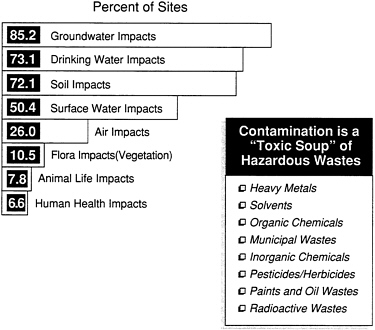
FIGURE 2-1 What were the potential threats to the environment that led to listing on the NPL? Source: Environmental Protection Agency, National Priorities List, Characterization Report, 1990.
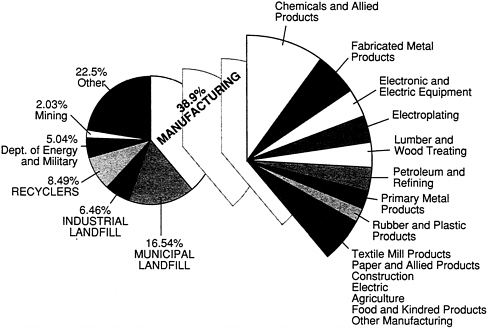
FIGURE 2-2 Wastes at NPL sites come from many sources. Source: Environmental Protection Agency, National Priorities List, Characterization Report, 1990.
data was conducted by ATSDR staff (ATSDR, 1989a). In all, there were adequate data for only 39 sites that could be eliminated as sources of public health concern either because remedial action had already mitigated earlier concerns or because there was no feasible pathway for human exposure (ATSDR, 1989a). Moreover, the population potentially exposed to these uncertain risks is quite large: ATSDR estimates that 4.1 million people live within one mile of 725 of the NPL sites for which population data exist, and 1.9 million of these persons are women of childbearing age, young children, or elderly persons— all of whom can be considered at particular risk from toxic chemical exposure.
Under CERCLA, ATSDR also was directed to issue public health advisories in cases of urgent public health concern. These notify the EPA administrator, state agencies, and the immediate community of recommendations for interim remediate actions, such as containment or the provision of alternative drinking-water supplies, required to protect the health of the public. In response to these advisories, the EPA administrator can direct an immediate removal action, place a
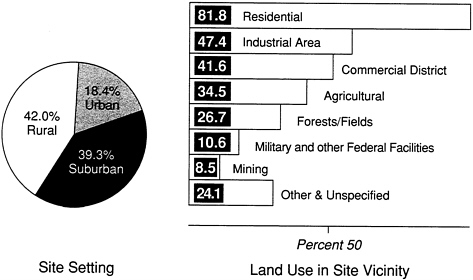
FIGURE 2-3 NPL sites are located in all settings and areas. Source: Environmental Protection Agency, National Priorities List, Characterization Report, 1990.
site on the NPL or, if it is already listed, give it a higher priority (ATSDR, 1990a).
The Forest Glen site in Niagara Falls, New York, is illustrative of many of the limitations of these processes for site discovery, assessment, and the protection of public health. Previously used as an industrial landfill, Forest Glen had been developed as a mobile home park during the late 1970s. By 1989, a total of 150 people lived in 51 mobile homes atop the site. Hazardous wastes in the surface and subsurface soils included extraordinarily high concentrations of aniline, phenothiazine, benzothiazole, 2-mercaptobenzothiazole, and polyaromatic hydrocarbons, with dermal, ingestion, and inhalation exposures that carried associated risks of dermatitis, phytotoxic skin reactions, and cancer. The corrosion of drinking-water pipes by the chemicals raised the further possibility that drinking-water supplies could be, or had been, contaminated.
Although the Niagara County Health Department reportedly excavated some soil from the area in 1980 and EPA conducted an initial site inspection in 1987, no action had been taken to further assess the site, remediate the hazards, or relocate the residents until New York State and EPA invited ATSDR to conduct a public health assessment in 1989. ATSDR's assessment noted the potentially serious exposures for the families at the site and recommended the immediate reloca-
tion of the residents. By issuing the report as a public health advisory, ATSDR enabled EPA to immediately place Forest Glen on the NPL and allowed the Federal Emergency Management Agency to provide temporary relocation assistance for the residents. Within one month of the initial ATSDR site visit, all residents were notified of the health risks and offered the opportunity to relocate (J. Melius, New York State Department of Health, personal communication, 1991; ATSDR, 1989b).
Of the dozen public health advisories released by ATSDR to date, only two have been for sites that were already listed on the NPL but that required further immediate action to protect the health of the public. The other ten also represented urgent public health concerns, but they had not been reported to the Superfund program, had been rejected by CERCLIS, or were inventoried in CERCLIS but had not been proposed for the NPL. As listed in Table 2-1, these sites included a variety of hazardous substances, contaminated media, and routes of exposure.
Congress also directed ATSDR to undertake a further set of responsibilities, beyond the assessment of NPL sites, that were intended to build a science base for the health evaluation of hazardous-waste sites and exposures. With EPA, ATSDR has developed a priority list of 225 hazardous substances found at Superfund sites (see Table 3-2, and Appendix 3-A and Appendix 3-B). These substances were chosen for their toxicity, their frequency of occurrence at NPL sites, and the potential for human contact. Toxicology profiles have been prepared for almost half of them. ATSDR has established criteria for determining the data gaps and research needs for each chemical, and is attempting to fill the gaps in collaboration with the National Institute for Environmental Health Sciences (NIEHS) and private industry. The lack of a specific congressional mandate and funding mechanism for this research has made it difficult for ATSDR to organize a logical and timely sequence of investigations in many cases.
In addition, ATSDR conducts pilot studies of human exposure to hazardous-waste-site releases, usually through biological monitoring or evaluations of symptom prevalence in surrounding populations (28 studies are in progress or complete); epidemiological studies (28 studies are in progress or complete); and a disease surveillance program, using health outcome data bases in 10 states. It also establishes registries of persons environmentally exposed to hazardous substances (trichloroethylene and dioxin, so far; a registry is proposed for benzene) and, in response to additional legislation, it prepares special reports for Congress (childhood lead poisoning, the health impact of medical waste) (Johnson, 1990).
TABLE 2-1 ATSDR Public Health Advisories
|
Site and Date |
NPL Status When Advisory Released |
Exposures of Concern |
Population Exposed |
Immediate Action Recommended |
|
Times Beach, MO 12/23/82 |
No |
dioxin (TCDD) in soil |
residential areas contaminated by industrial oil applied on roadways, spread from flooding |
|
|
Glen Ridge, NJ 12/00/83 |
No |
radium in soil, with indoor radon and gamma radiation |
residential neighborhoods contaminated by waste from processed radium ore |
|
|
Kelly-Koett Cincinnati, OH 8/13/87 |
No |
radium in floors, walls and plumbing of buildings, with indoor radon |
neighborhood access to abandoned industrial buildings contaminated by spill and cleanup, and removal of contaminated materials by intruders |
|
|
Ottowa, IL 4/04/88 |
No |
radium in soil, indoor radon and gamma radiation |
residential areas contaminated by industrial waste |
|
|
Radium Chemical Co. Queens, NY 2/10/89 |
No |
radium, indoor radon and gamma radiation |
radioactive waste stored at abandoned industrial site next to current industrial operations; neighborhood access to and removal of radioactive materials; fire/explosion risk at site |
|
|
Forest Glen Mobile Home Park Niagara Falls, NY 7/31/89 |
No |
polyaromatic hydrocoarbons, analine, phenothiazine, benzothiazole, mercaptobenzothiazole |
mobile home residents on top of hazardous waste site; possible contamination of water supplies |
|
|
Newstead Site, Erie County, NY 8/22/89 |
No |
lead and cadium in soil; methylene chloride and benzene in drinking water well; physical injury |
residents living on hazardous waste site |
|
|
Bunker Hill Kellogg, ID 10/5/89 |
No |
arsenic in copper flue dust piles; lead, cadmium, arsenic in soil and asbestos on grounds; physical injury |
active mining and ore concentrating; inactive smelter, sulfuric acid plant and phosphate/fertilizer plant; un-restricted access to and recreational use of site; soils carried by wind into nearby residential areas |
|
|
Caldwell Systems, Inc. Lenoir, NC 7/25/90 |
No (RCRA closure pending) |
incineration products of furniture manufacturing and waste torpedo fuel |
employees and family members at former incinerator and adjacent landfill and lands where waste was dumped; inhalation exposure to incinerator emissions among nearby residents; potential groundwater contamination |
|
|
Navajo-Brown Vanderver Navajo-Desiderio Uranium Mining Areas Bluewater, NM 11/21/90 |
No |
uranium in soil, radon and gamma radiation; heavy metals in soil; physical hazards |
residents living on mining areas contaminated with radioactive mine wastes; adjacent residential properties |
|
|
White Chemical Co. Newark, NJ 11/21/90 |
No |
materials and wastes from manufacture of acid chlorides and flame retardants |
ongoing release of fumes and liquids from containers on-site; threat of catastrophic release of hazardous substances in heavily populated former industrial area |
|
|
Asbestos Disposal Sites Passaic, NJ 12/20/90 |
No |
chrysotile asbestos in soil |
residents living on and nearby hazardous waste site; employees in small firms on site |
|
Finally, as its name—the Agency for Toxic Substances and Disease Registry—implies, Congress intended that the Public Health Service establish registries of populations exposed to hazardous wastes and follow these populations over time to observe associated health effects. Because of the uncertain end points and utility and great expense of starting and maintaining site-specific, open-ended registries, ATSDR has resisted congressional and community pressures to establish them. Instead, the agency has developed specialized registries to study the long-term health effects of exposure to specific chemicals at hazardous-waste sites, with the intention of combining data from several sites where similar exposures have occurred to achieve populations large enough that the associated health effects can be detected.
Other federal statutes have established programs that are much more limited in their capacity to evaluate and control exposures at active and abandoned sites. Although Resource Conservation and Recovery Act (RCRA) amendments authorized ATSDR to conduct health assessments at the request of EPA at landfills and surface impoundments, many of these sites are still held by EPA from entry into the CERCLIS system and will not reach ATSDR's attention for some time. The Safe Drinking Water Act and the Clean Air Act mandate monitoring of a limited set of priority chemicals, but they are not intended to identify or track specific sources of pollution, such as hazardous-waste sites, and are therefore of limited use in characterizing the releases from such sites. In particular, the Safe Drinking Water Act does not include domestic wells, which are frequently the pathway of exposure of greatest concern at NPL sites. Although routine monitoring of drinking water and air quality are state responsibilities, state direction of this monitoring to assess potential emissions from hazardous-waste sites is made even less likely by the fact that EPA's regional offices do not notify the relevant state agencies when off-site migration is suspected or confirmed.
DISTRIBUTION OF EXPOSURE
How well does this system characterize the distribution of human exposures to chemicals released from hazardous-waste sites? For the purposes of environmental epidemiology, this question has two parts: For each site, how well are the potential human exposures characterized in terms of the contamination of media; the identification of onsite human contact, environmental pathways, and off-site migration; of off-site human contact with contaminated media; of populations at risk; and of indicators of human exposure? For hazardous-waste
sites as a whole—including non-NPL sites—how well known is the range and distribution of human exposure to hazardous substances? The importance of the latter is often poorly understood. While epidemiology may fruitfully investigate the physiologic changes and disease end points associated with one or more exposures at a particular site, the tasks of epidemiology include the characterization of the extent and nature of such outcomes resulting from hazardous-waste sites (and other environmental sources) in the entire population.
UNIVERSE OF POTENTIAL EXPOSURES
A substantial number of hazardous-waste sites are not reported to CERCLIS. Sites also are reported to or known to the Emergency Response Notification System, the Federal Facilities Hazardous Waste Compliance Docket, RCRA, the Department of Defense, the Department of the Interior 's Abandoned Mine Lands Remediation Program, and the Leaking Underground Storage Tank (LUST) program. Not all of these agencies or programs maintain inventories or data bases of sites reported to them. The congressional Office of Technology Assessment (OTA) recently concluded that the maximum number of potential sites from which CERCLIS and NPL sites are drawn is approximately 439,000. These sites include RCRA Subtitle C and D facilities, mining waste sites, nonpetroleum leaking underground storage tanks, pesticide-contaminated sites, federal facilities, radioactive releases, underground injection wells, municipal gas facilities, and wood-preserving plants, among others, but not sites assigned to the other remediation programs listed above. If even 10 percent of the CERCLIS-eligible sites ultimately require cleanup, the result would be a total NPL of 43,900 sites (OTA, 1989).
State programs also track and record hazardous-waste sites. A 1986 survey found 32,910 sites on state lists, in comparison with 24,544 sites then in CERCLIS (OTA, 1989). No guidance exists on the criteria and processes for reporting sites to CERCLIS, and many states screen sites and report to EPA only those sites for which they regard EPA management as potentially helpful. OTA reports that EPA itself holds thousands of hazardous-waste sites outside the CERCLIS inventory, to control the resource and management problems posed by congressional deadlines for preliminary assessments on CERCLIS sites. As a result, there is no single, common inventory of hazardous-waste sites in the U.S. (OTA, 1989).
There also is no national program of hazardous-waste-site discovery. As the 1989 OTA report on Superfund states, “EPA has never requested funds from Congress for site discovery. EPA has no site
discovery program, has no budget for site discovery, and does not allow States to spend Superfund monies for site discovery” (OTA, 1989, p. 88). EPA had initiated a comprehensive site discovery program in 1980, known as the 200 Cities Hazardous-waste Site Discovery Plan, but canceled it a year later when the agency's comptroller informed the contracting laboratory that EPA already had more sites than there was money for, and did not need more (OTA, 1989). EPA's Office of Research and Development later produced guidelines for an expanded program to finish the 200-city search and to analyze 150 sites. OTA estimated the total costs through fiscal year (FY) 1986 at $6.4 million for discovery and site analysis; these funds were never requested by the agency.
In FY90, the total EPA budget request for PAs, SIs, and HRS scoring work was $47 million. This annual cost of preremedial site evaluation is comparable to the cost of cleaning up one large site, and it represents only about 3 percent of the annual Superfund budget (OTA, 1989). OTA has estimated that a revised 200 cities plan would cost about $100 million over a five-year period, including assessment of an estimated 7500 sites found as a result of the program. As OTA points out, this would be well within the current Superfund expenditures for site characterization and remediation. OTA further estimates all current expenditures on site characterization and remediation, public and private, at $242-612 million annually (OTA, 1989).
The lack of a site discovery system—and of a common site inventory—are the result of the federal policy of controlling CERCLIS to manage EPA's work load. EPA's resources are already strained by the need to meet congressional deadlines for assessing CERCLIS and NPL sites. By far the greatest share of this burden occurs in the remedial phase after a site is listed on the NPL, during the lengthy and expensive processes of the RI/FS and in the ultimate cleanup. In comparison, the preremedial evaluation of sites is relatively inexpensive. Relevant cost estimates are summarized in Table 2-2. It is important to note that only a relatively small portion of the cost estimates for EPA's PA and SI evaluations presented here are devoted to assessments of potential or actual human exposures. The bulk of the costs are incurred in engineering studies of the need for and feasibility of remediation.
The lack of a site discovery program and a comprehensive inventory presents a particular problem from a public health perspective. The range and distribution of human exposure to releases from hazardous-waste sites is both unknown and unknowable. EPA now acknowledges that undiscovered sites could well represent significant health risks (OTA, 1989). This is a reversal of previous statements
TABLE 2-2 Cost Estimates: Preremedial Assessments of Hazardous-Waste Sites
|
Agency |
Stage |
Cost ($ Million) |
|
EPA (FY91) |
Preliminary Assessment |
7 |
|
Site Inspection |
25 |
|
|
Listing Site Inspection |
75 |
|
|
NPL Listing |
88 |
|
|
Subtotal |
195 |
|
|
ATSDR (FY89) |
Preliminary Health Assessment |
25 |
that most sites with serious potential for harm had been detected (OTA, 1989). The assumption that potential health risks are missed in the current nonsystem of reporting to CERCLIS is supported by several state reviews of the subject. The California State Department of Health, in reviewing the 93 sites on the state's Superfund list in 1984, found that 19 of the sites were also on the federal NPL. Yet 46 of the sites showed evidence of waste release into groundwater, and in 34 of these cases the groundwater was known to be used for drinking. Extensive or systematic sampling existed for only 22 of the sites, despite the evidence of potential human exposure. In all 19 of the California sites with known contamination of groundwater, moreover, more than 10,000 persons were potentially exposed (Layefsky et al., 1988).
The discovery and preliminary assessment of hazardous-waste sites represent, in epidemiologic terms, case-finding: identifying potentially serious exposures that require both further assessment and intervention to protect the health of the community. For environmental epidemiology to be of help to us in understanding the overall health risks associated with hazardous-waste releases, the ability to know the universe of potential risk is critical (Marsh and Caplan, 1986). Because exposures vary so greatly from one site to the next, the incomplete descriptions of the sites and the failure to fully assess the exposures that result from releases at many identified sites put the epidemiologist at risk of missing health effects associated with high levels of exposure at undetected sites, of incorrectly estimating the frequency or amount of population exposures to specific releases, and of missing opportunities to combine data from several populations to achieve greater power in studies of specific chemicals.
CHARACTERIZATION OF EXPOSURE
PREREMEDIATION PHASE
Because less than 10 percent of CERCLIS sites are ever placed on the NPL by EPA, it is important to examine both the nature of the preremedial assessment itself and the criteria used to select sites for the NPL. For most of the sites reported to Superfund, the only environmental contamination and health assessment data available are those assembled during preremedial assessment: the preliminary assessment (PA), the site inspection (SI), and the hazard ranking system (HRS) score.
In most cases, the PA is simply a review of existing data about the site. As a part of the PA, a probable HRS score is calculated; if it is below the cut-off for proposal for the NPL, the site will be designated “no further remedial action planned” (NFRAP). NFRAP sites also include those that never received CERCLA hazardous substances, those that have no potential to release CERCLA hazardous substances into the environment, and those that do not fall under EPA jurisdiction (such as uranium mill tailings that fall under a Department of Energy program). According to OTA and EPA documents, the PA was originally applied as a screen to identify sites that required immediate removal actions (OTA, 1989). All other sites were automatically forwarded to SI unless the information was sufficient to conclude that no threat existed. Now, however, sites that could represent a threat to public health but that lie beyond Superfund jurisdiction or that do not score high enough on the projected HRS are eliminated before the SI stage. In other words, sites with clearly present or potential hazards can be rejected after a paper review and deferred to the states or simply held on CERCLIS with no further action. EPA has revised its management of the site evaluation process to limit the number of sites going through the system at each stage. Although limiting the number of sites evaluated because of resource constraints makes good sense for the purposes of program management, this approach has had an unfortunate effect as well. It has artificially constrained the number of sites recognized as needing further evaluation. Congressional deadlines for the evaluation of sites are clocked from the date of listing on CERCLIS or of proposal for the NPL and do not permit EPA to maintain lists of sites that need evaluation but cannot be processed because funds are limited.
As a result, there is a growing body of “rejects” from the preremedial Superfund process. A substantial proportion of these sites could present serious threats to the health of the public and thereby merit
both immediate public health assessment and, in some cases, environmental epidemiology investigations. EPA's Region 5 compared HRS scores projected during the preremedial process with actual HRS scores assigned after an SI, and found both false positives and false negatives: Only 30 percent of sites with high projected scores actually ended up with scores above the Superfund threshold, and 10 percent of the sites with low priority projections ultimately received HRS scores above the Superfund threshold for NPL ranking. OTA estimates that as many as 2000 of the 17,000 CERCLIS sites rejected for the NPL could be “false negatives”—sites not listed on the NPL because of incorrect decisions or errors (OTA, 1989, pp. 112-114).
EPA is now re-evaluating a subset of sites rejected for NPL listing during the preremedial process, although the criteria for review and the quality of the data available could limit the validity of this review. A 1989 EPA report on the congressionally mandated revision of the hazard ranking system stated that the legislative intent in SARA “makes clear that this mandate does not require detailed risk assessments, but directs EPA to rank sites as accurately as feasible based simply on information available from preliminary assessments and site inspections consistent with the goal of ‘expeditiously' identifying candidates for response actions” (EPA, 1990a, p. i).
This implies that the only consequence of the preremedial assessment is to prioritize sites for more detailed assessment. For most sites, in fact, no attempt is made to characterize the potential public health impact or the need for action to protect the health of the public in this preremedial phase. Because the vast majority of sites never receive more than a preremedial assessment, moreover, the implications for accurate evaluation of health hazards at these sites and for environmental epidemiology are critical. The problem is particularly serious because of the growing number of sites in the CERCLIS inventory, as seen in Figure 2-4.
REMEDIATION PHASE
As noted earlier, less than 10 percent of CERCLIS sites assessed in the preremedial phase are proposed for NPL listing. Sites listed on the NPL enter what is known as the remedial phase, and are subjected to a full remedial investigation and feasibility study (RI/FS) for the purposes of selecting and implementing a remediation strategy. It is in this stage that extensive sampling is conducted at the direction of Superfund managers and contractors.
Over the past decade, the Superfund RI/FS has relied almost exclusively on measurements of on-site releases and contamination of
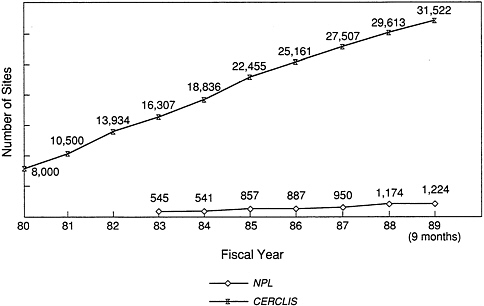
FIGURE 2-4 CERCLIS inventory and NPL sites. Source: OTA, 1989.
media. Off-site contamination and human exposure have been modeled rather than measured directly in off-site sampling of groundwater, drinking water, soil, and air. The estimates of off-site contamination of media derived from these models are then used as surrogates for actual exposure measurements in the calculation of risk assessments for each contaminant. The lack of validation studies for many of these modeling approaches may introduce errors in exposure estimates, which in turn introduce further uncertainty in the risk-assessment process. In ATSDR's review of 951 NPL sites, 75-80 percent were found to have reached the NPL without adequate off-site sampling, such as sampling of nearby homeowners' wells for drinking-water contamination suggested by migration models or sampling of soil in near off-site locations where lead contamination was likely (H. Emmett, ATSDR, personal communication, 1990). Groundwater was most likely to be monitored off-site; surface water, air, and soil releases were even more rarely sampled, although citizen reports of odors and concerns about airborne chemicals frequently are the complaints that lead to site evaluations (Layefsky et al., 1988). Recently, EPA has begun to direct more resources to off-site sampling, and the agency has incorporated more direct measures of population exposure in the revised HRS (EPA, 1990b).
Minimum data requirements for sampling pathways of exposure
and points of human contact have not been established, although extensive requirements exist for on-site exposures. The EPA manual for risk assessment prepared in 1989 gives substantial attention to on-site monitoring and to modeling of off-site migration, but it offers little guidance for off-site sampling of current human exposure points or for the use of such data in the calculation of risk (EPA, 1989b). If the earlier emphasis on environmental monitoring to evaluate the feasibility of remediation strategies is to be balanced by monitoring to address human health concerns, the development of a minimum data set and of usable, standard measurements of exposure will be increasingly important. As Buffler (Buffler et al., 1985) and others have underscored, moreover, obtaining accurate information on routes of exposure and doses received will be particularly critical to selecting appropriate target organs and health end points for epidemiologic study.
An internal review of Superfund management in 1988 discussed the need to strengthen the public health aspects of site evaluations (EPA, 1989a). Nevertheless, EPA documents and operations reflect a continuing ambivalence about the agency's capacity for, and interest in, integrating health considerations into this process, which has been driven almost exclusively by risk assessment. The EPA risk assessment manual reports that the agency's staff “considers the information in a health assessment along with the results of the baseline risk assessment to give a complete picture of health threats” (EPA, 1989b, pp. 3-2, 3-3). But EPA has no public health professionals or other staff members trained in the public health aspects of site evaluation to rely upon in this regard; it is ATSDR, in fact, that incorporates the EPA risk assessments generated in the RI/FS process into EPA's full health assessment (EPA, 1989b).
The EPA remedial project manager (RPM) is responsible for “scoping” at each site, that is, for determining the appropriate level of effort and the level of detail necessary for the RI/FS, including the evaluation of potential and actual human exposures and health effects. Without public health training or input, the RPM “must make up-front decisions about, for example, the scope of the baseline risk assessment, the appropriate level of detail and documentation, trade-offs between depth and breadth in the analysis and the staff and monetary resources to commit” (EPA, 1989b, p. 2). Detailed instructions are given in the EPA manual for planning data needs for the RI/FS, without reference either to ATSDR's preliminary health assessment or to the need for consultation with ATSDR staff (EPA, 1989b).
EPA and ATSDR are beginning to experiment with the coordination of agency efforts in the initial stages of the RI/FS. ATSDR par-
ticipation with EPA regional staff in the scoping phase of Superfund remedial investigations—during which both the sampling plans and the preliminary remedial goals are established—will be tested at six sites during FY91 (H. Emmett, ATSDR, personal communication, 1991). As ATSDR has cleared the backlog of health assessments on preexisting NPL sites, moreover, an important role has emerged for ATSDR's health assessments in the selection of remediation strategies by EPA. The preliminary health assessment is initiated by ATSDR when EPA proposes a site for NPL listing in the Federal Register, that is, after the EPA preremedial evaluation has been completed but well before the RI/FS begins (the RI/FS frequently does not begin for another four to five years). Under these conditions the health assessment becomes the main evaluation of the public health impact of a site proposed for NPL listing, and this information is directly available to the community, to policy makers, and to research scientists, including environmental epidemiologists.
Although the full ATSDR health assessment is not completed until the RI/FS has been concluded, the preliminary health assessment attempts to cover much of the same ground with the data at hand. ATSDR's deputy administrator has argued that the agency's assessments need to draw on more information about the health concerns of the community and local health care providers (Johnson, 1990). This is particularly important because ATSDR increasingly functions as a “communication ” arm of the Superfund program with concerned communities. Finally, ATSDR is now compiling the results of the more than 1000 health assessments completed to date at NPL sites to create a data base of health-related information. This data base will be used to identify patterns of hazardous-chemical releases from particular types of sites and to identify those releases most frequently found among all sites (ATSDR, 1989a).
DEFERRAL OF SITES AND NFRAP DESIGNATION
Sites submitted to the Superfund program for initial entry in the CERCLIS inventory can be rejected and deferred to the responsibility of other federal or state agencies that have jurisdiction. A site that enters the CERCLIS inventory can subsequently be designated “no further remedial action planned” (NFRAP) if it is determined to be outside Superfund jurisdiction or if its projected HRS score is too low for proposal for NPL status. Superfund responsibility for the site is then terminated. In most cases responsibility for these sites reverts to the states, although it can revert to another federal agency, such as the Department of Defense or the Department of Energy. Because
most sites designated NFRAP have at best had a preliminary assessment, the quality and quantity of information available usually is inadequate to support a clear conclusion about the potential hazard of the site. Thus, an undetermined number of sites with potentially significant public health hazards are dropped from the CERCLIS inventory each year. Because there is no federal system for tracking sites after they are deferred, no information is available about the subsequent evaluation or remediation of these sites or of changes in their use and associated human exposures.
FEDERAL POLICIES AND ENVIRONMENTAL EPIDEMIOLOGY
The result of the federal programs and policies described here has been to create multiple and overlapping, but incomplete, inventories of hazardous-waste sites. On-site sampling of environmental contamination to estimate off-site human exposure is in some cases inadequate for the assessment of potential human exposure; these cases should be identified and off-site samples obtained. There is no routine review of early site assessments to determine the need for public health interventions or epidemiologic studies. The information used in decisions about subsequent site listing and remediation is inadequate as well. The attendant cost has been a great deal of confusion about the actual risks that hazardous-waste sites pose to human health and the loss of multiple opportunities for epidemiologic research. Clues to the potential scale of human exposure to toxic chemicals released from hazardous-waste sites are emerging, however.
As one of the federal agencies with responsibility for environmental epidemiology, ATSDR has assembled a small professional staff in epidemiology and the related fields of toxicology, environmental medicine, and risk communication. Because the agency has only limited authority and a narrow mandate, and because of its equally limited budget, ATSDR's current programs can do little more than establish a framework for evaluating health effects and for developing research that will be needed to address the issue of hazardous-waste sites adequately in the future. The agency conducts or supports epidemiologic investigations in cases where human exposure to hazardous substances has occurred or is occurring, where a potentially exposed population can be identified, where the exposure can be measured, and where the possible health effects are known or biologically plausible (ATSDR, 1989a).
The broader plan for ATSDR health surveillance activities prepared for FY90 includes site-specific studies at sites that contain compounds of public health importance and for which there are significant data
gaps; studies that combine data from multiple sites; long-term surveillance of populations that have been permanently relocated because of exposure to hazardous-waste releases in their original communities; state-based surveillance, usually conducted as ecologic studies that link existing data bases such as birth weight, birth defects, and cancer incidence to geographic distributions of environmental contamination; surveillance of workers employed in the cleanup of hazardous waste; and development of a public health reporting and surveillance system for hazardous-waste material emergencies (ATSDR, 1990b).
ATSDR also is investigating the use of “sentinel health events” as additional indicators of environmental contamination. The concept was first developed for public health surveillance of morbidity and mortality that results from preventable causes, such as deaths from infectious diseases that are preventable by immunization or chronic obstructive pulmonary disease that results from cigarette smoking (Rutstein et al., 1983). Such indicators are most useful when they identify causes of morbidity and mortality that are uniquely or predominantly associated with specific and preventable exposures. For example, mesothelioma is almost exclusively associated with exposure to asbestos fibers, and hepatic angiosarcoma is predominantly associated with exposure to vinyl chloride.
Environmental sentinel health events are designed to serve as warning signals of particular environmental exposures, using existing data systems such as vital records, hospital discharge data, and tumor registries. Some illnesses, such as methemoglobinemia that results from excessive amounts of nitrate in water, indicate hazardous environmental exposure even when they occur as single cases. Other diseases indicate potential environmental exposures when they occur at elevated rates among larger populations, such as bladder cancer among nonsmokers or chronic respiratory disease among children. The further development and application of this approach to environmental surveillance holds particular promise for the epidemiologic investigation of populations exposed to hazardous wastes.
Although ATSDR is vigorously pursuing the development of an intramural research program in environmental epidemiology and has extended this to include a number of states through cooperative agreements, in FY90 ATSDR's total budget for programs that assess hazardous-waste sites was $15.8 million (J. Andrews, ATSDR, personal communication, 1990). The National Institute of Environmental Health Sciences (NIEHS), a sister agency within the U.S. Public Health Service, also receives Superfund monies to support a basic research program in ecology, engineering, and hydrogeology integrated with bio-
medical research to improve the sensitivity and specificity of techniques for detecting adverse effects in humans or in ecologic systems. In FY91, NIEHS received $21.9 million for the program, which it distributed in 11 grants to academic institutions. In addition, NIEHS sponsors research in environmental epidemiology, using $13.7 million for the support of 39 epidemiologic studies by the end of calendar year 1990, although most of these studies do not assess populations exposed to hazardous-waste sites (A.P. Sassaman, NIEHS, personal communication, 1991). Table 2-3 shows funding sources and the kinds of affiliations of the principal investigators reporting environmental epidemiologic studies in the published literature.
STATE PROGRAMS
The public concerns that led to the enactment of CERCLA also led to the development of similar laws in state legislatures. In many states, new departments for handling hazardous-waste sites were founded, or existing environmental protection agencies were expanded. The formal organization of these agencies varied greatly among the states, as did their statutory and programmatic mandates. The development of separate environmental agencies exacerbated the previous separation and lack of coordination between environmental and other public health programs (Institute of Medicine, 1988).
State hazardous-waste-site programs were largely modeled after the Superfund program. Site evaluation depended mainly on exposure modeling and risk assessment. Program staff were drawn primarily from engineering and law. With little training in risk communication and with little capacity for assessing actual health effects, state programs initially faced public concerns similar to those faced by the federal programs, but with much greater pressure from local constituents. A common result was the emergence of large departments devoted to environmental management that became entangled in the processes of risk assessment and prolonged legal battles, and remediation that, from the public point of view, seemed to do little either to reassure or to protect it.
Exceptions to this general pattern occurred, primarily when public health professionals were more involved in evaluating the sites and in working with the affected communities. For example, New York State has developed a program in which Department of Health staff work closely with Department of Environmental Conservation staff at every stage of the site assessment and remediation process. This integration helps to ensure that public health concerns (off-site exposures, drinking water) are appropriately evaluated and controlled
TABLE 2-3 Environmental Epidemiology: Investigators and Funding Sources
|
Study Location and Year of Publication |
Study Design and Period of Observation |
Exposure Measure |
Reported Outcome |
Principal Investigator Affiliation |
Funding Source |
|
Tucson, AZ 1990 Goldberg et al. |
Case-control 1969-1987 |
Child conceived and first trimester spent in Tucson Valley |
Significant association between parental exposure to CWA and increased proportion of congenital heart disease among live births |
University of Arizona |
State of Arizona |
|
Fresno County, CA 1988 Wong et al. |
Retrospective follow-up 1978-1982 |
Surrogate: residence in Fresno county |
No decrease in birth rate |
Environmental Health Associates, Inc. |
Not available |
|
Stringfellow Site Glen Avon, CA 1988 Baker et al. |
Cross-sectional 1983 |
Proximity to site |
Weak to moderate positive associations: ear infection, bronchitis, asthma, angina pectoris, and skin rash |
Mount Sinai School of Medicine |
State of California |
|
Santa Clara County, CA 1985 CA Dept. of Health Services |
Retrospective follow-up 1980-1981 1981-1982 |
Surrogate: residence in households served by contaminated water at the time of chemical leak |
1980-1982: significant excess of spontaneous abortions and congential malformations 1981-1982: excess incidence of cardiac defects within and outside the study area. No support for an association with the chemical leak |
CA Dept. of Health |
State of California |
|
Santa Clara County, CA 1989 Swan et al. |
Retrospective follow-up 1981-1983 |
Surrogate:residence in households served by contaminated water |
Increased prevalence of cardiac anomalies but temporal distribution suggests solvent leak not responsible |
CA Dept. of Health Services |
State of California |
|
Galena, KS 1990 Neuberger et al. |
Retrospective follow-up 1980-1985 |
Residence in towns for at least 5 years prior to 1980 |
Significant associations of stroke, anemia, hypertension, heart disease, skin cancer with exposure |
University of Kansas |
University |
|
Lowell, MA 1987 Ozonoff et al. |
Cross-sectional 1983 |
Surrogate: residence in households within a given distance from site |
Increased prevalence of minor symptoms, irregular heart beat, fatigue, bowel complaints |
Boston University |
Commonwealth of Massachusetts |
|
Woburn, MA 1986 Lagakos et al. |
Case-control 1964-1983 |
Surrogate: residence in households served by contaminated wells |
Significant association of childhood leukemia with estimated exposure |
Harvard School of Public Health |
Private and Federal |
|
Woburn, MA 1986 Lagakos et al. |
Retrospective follow-up 1960-1982 |
Surrogate: residence in households served by contaminated wells |
Association with perinatal deaths, eye/ear anomalies, CNS anomalies; association with kidney/urinary tract infection |
Harvard School of Public Health |
Private and Federal |
|
Woburn, MA 1988 Feldman et al. |
Clinical case-control 1987(?) |
Surrogate: residence in households served by contaminated wells |
Significant differences in blink reflex function when means were compared |
Boston University |
University |
|
Rutherford, NJ 1980 Burke et al., Halperin et al. |
Case-control 1973-1978 |
Surrogate: residence in the area |
Reduced prevalence of rubella vaccination in leukemia cases. Excess of prior vaccinations and tonsellectomies in Hodgkin's cases |
NJ Depts. Health, Environmental Protection |
State of New Jersey |
|
Hyde Park, NY 1981 Rothenberg |
Cross-sectional 1979 |
Surrogate: employment in plants near site |
Increased prevalence of hiatus hernia and other minor gastro-intestinal problems |
NY State Dept. of Health; National Institute for Occupational Safety and Health |
Federal |
|
Love Canal, NY 1981 Janerich et al. |
Retrospective follow-up (census tract) 1955-1977 |
Surrogate: proximity to dump site |
Incidence: no increase in cancer |
NY Dept. of Health |
State of New York |
|
Love Canal, NY 1984 Health et al. |
Cross-sectional 1982 |
Surrogate: testing of chemicals (two years before) in the house of exposed |
No difference in SCE or chromosal aberrations |
Centers for Disease Control |
Federal |
|
Love Canal, NY 1984 Vianna and Polan |
Retrospective follow-up 1941-1978 |
Surrogate: proximity to dump site and at least 5 months residence |
Elevated incidence of low birthweight among exposed |
NY Dept. of Health |
State of New York |
|
Love Canal, NY 1985 Paigen et al. |
Cross-sectional 1980 |
Surrogate: proximity to dump site |
Increased prevalence of health problems: seizures, learning problems, hyper-activity, eye irritation, skin rash, abdominal pain, incontinence |
Children's Hospital Medical Center |
Private foundation |
|
Love Canal, NY 1987 Paigen et al. |
Cross-sectional 1980 |
Surrogate: proximity to dump site |
Increased prevalence of shorter stature |
Children's Hospital Medical Center |
Private foundation |
|
Hamilton, Ontario 1987 Hertzman et al. |
Retrospective follow-up Workers: 1965-1980 Residents: 1976-1980 |
Workers: outdoor employment on or adjacent to site Residents: long/short-term residence in area during 1976-1980 |
Workers: clusters of respiratory, skin, narcotic, and mood disorders Residents: confirmed association between landfill site exposure and mood, narcotic, skin, and respiratory conditions |
University of British Columbia |
Province of Ontario |
|
Clinton County, PA 1984 Budnick et al. |
Mortality 1950-1979 |
Surrogate: residence in the area |
Increased bladder cancer mortality in male resident population after 1970 |
Chronic Disease Division, Center for Health Services, U.S. Dept. of Health and Human Services |
Federal |
|
Clinton County, PA 1985 Logue et al. |
Cross-sectional 1983 |
Surrogate: residence in the area |
Increased prevalence of skin problems and sleepiness |
Division of Environmental Health, PA Dept. of Health |
State of Pennsylvania |
|
Dauphin County, PA 1986 Logue and Fox |
Cross-sectional 1983 |
Surrogate: residence in households with past contamination of water with TCE |
Increased prevalence of eye irritation, diarrhea, and sleepiness |
Division of Environmental Health, PA Dept. of Health |
State of Pennsylvania |
|
Hardeman County, TN 1982 Clark et al. Meyer, 1983 Harris et al., 1984 |
Cross-sectional 1978 |
Carbon tetrachloride in well water >150 µg/l (high exposure <45 µg/l (intermediate exposure) |
Transient abnormalities of liver functions in exposed |
Dept. of Environmental Health, University of Cincinnati Medical Center |
Federal |
|
Source: Expanded and adapted from Upton et al., 1989, with permission. |
|||||
early in the assessment process. State health departments have been assisted by ATSDR funding through cooperative agreements, representing $5.2 million of the total $15.8 million ATSDR budget for health assessments in FY90 (J. Andrews, ATSDR, personal communication, 1990). ATSDR also has provided support for private sector organizations, such as the Association of State and Territorial Health Officers, the Association of State and Territorial Risk Assessors, and the National Governors' Association, to establish programs within state health departments and to provide policy leadership within professional organizations.
States have taken independent action to close or restrict access to more than 1705 sites because of contamination with toxic substances, as reported in a 1989 survey conducted by the National Governors ' Association with ATSDR support. The most common reason for site restrictions is groundwater contamination (69 percent of sites), because this affects drinking-water supplies (7479 groundwater wells were closed at these sites) (Wells, 1990). In the same survey, state environmental (and combined environmental and health) agencies reported having the most extensive authority to identify, restrict, and remediate contaminated sites. Mirroring the distinction between EPA and ATSDR, most state health agencies have primary responsibility for assessing human exposures and for epidemiologic studies of associated health effects (Wells, 1990).
The major source of funding for state programs for the evaluation and cleanup of hazardous-waste sites is that provided by the Superfund program under cooperative agreements. EPA does not allow states to use cooperative agreement funds for site discovery. Some states have invested additional funds in site discovery, in more complete initial assessments, and in outreach programs to work with groups of citizens who are concerned about waste sites in their communities. The most recent survey of state expenditures estimates that about $500 million is spent on hazardous-waste-site cleanups each year; no similar information is available for the health assessment aspect of these activities alone (OTA, 1989).
Most environmental epidemiology studies of health effects associated with hazardous wastes are conducted by state health departments, even in states that have separate departments for environmental management. State capacity in environmental epidemiology varies greatly. Some have several doctoral-level epidemiologists who conduct environmental epidemiology studies full time; in others, communicable disease or chronic disease epidemiologists also respond to environmental concerns when necessary; other states simply refer these issues to ATSDR or the Centers for Disease Control.
Although ATSDR funding for state health departments has provided impetus for studies of exposed populations, the most compelling pressure has been the continuous public demand for health studies of specific sites. Politically, such studies are an appealing way to cope with frightened and outraged communities, particularly when cleanup is far in the future. In many states, these demands for health studies are focused on reported clusters of cancer or other illnesses. The states with the largest programs, California, New York, New Jersey, and Minnesota, have developed triage systems that sort out the scientific plausibility and methodologic feasibility of responding to the increasing stream of requests (R.R. Neutra, California State Department of Health Services, personal communication, 1990). These programs also have led to extensive discussions within the field of epidemiology about the methodologic issues associated with the study of reported clusters (American Journal of Epidemiology, 1990). Relatively few of the environmental epidemiology studies conducted by the states make their way into the published literature. Directly published state reports often serve the agencies better, and many investigations are not designed or completed in a form that is appropriate for publication in the regular scientific literature.
A REVISED FORM OF INITIAL SITE ASSESSMENT
Congress has charged the federal government—EPA, along with ATSDR and NIEHS—with the job of protecting the health of the public from hazardous-waste sites. Three components of this responsibility are also among the critical tasks of environmental epidemiology: characterizing current and potential human exposures; evaluating the potential harm to human health of these exposures; and investigating the actual health effects associated with the exposures.
As our review of federal programs concludes, there is no comprehensive national inventory of hazardous-waste sites, no site discovery program, no minimum data set on potential human exposures, no adequate system for the early identification of sites for which immediate action to protect public health or continued surveillance of health effects could be necessary, and no validation or evaluation of the component parts of the site assessment process. EPA and ATSDR are instituting some improvements in each of these areas, but these improvements are largely limited to sites that are proposed for or already listed on the NPL.
During the past 10 years, of the estimated $4.2 billion spent each year on hazardous-waste sites in the U.S. (OTA, 1989), less than 1 percent has been devoted to the study of health risks at these sites.
As a result, existing data on exposures and health effects are inadequate not only for decisions on the management of hazardous-waste sites, but for epidemiologic investigations of the health impact of the sites as well.
Some states have mounted systematic discovery programs, have comprehensive inventories, and routinely undertake off-site sampling to identify potential human exposures. The California State Department of Health, in reviewing the 93 sites on the state's Superfund list in 1984, found that 19 of the sites were also on the federal NPL. Yet 46 of the sites showed evidence of waste release into groundwater, and in 34 of these cases the groundwater was known to be used for drinking. Extensive or systematic sampling existed for only 22 of the sites, despite the evidence of potential human exposure. In all 19 of the California sites with known contamination of groundwater, moreover, more than 10,000 persons were potentially exposed (Layefsky et al., 1988). Their experiences could serve as a model for the development of an effective discovery and initial assessment program. Such a program might rapidly establish public confidence that the “worst ” sites are aggressively sought and dealt with, and that Superfund resources are effectively applied to remove the most serious risks. Data collected by such a national program would also provide a comprehensive data base containing preliminary (and later, more refined) information on the substances known to be present at hazardous-waste sites, on the media contaminated, on the routes of exposure, and on the human populations potentially at risk.
Even without the establishment of a site discovery program, the development and validation of an adequate initial assessment methodology for hazardous-waste sites is an urgent recommendation of this committee. Epidemiology is not merely a passive science, cataloguing exposures and effects. It is an active tool for identifying potentially hazardous exposures and directing interventions to prevent further exposures. Because the evaluation of human exposures and health effects associated with hazardous-waste sites is not integrated into early site evaluation and interim remediation decisions, the real contributions of public health and epidemiology are lost.
This is of grave concern, because some hazardous wastes do constitute a significant public health hazard to specific populations at specific sites, as discussed in Chapter 4, Chapter 5, and Chapter 6. As ATSDR has documented, and other reports confirm, human exposure to hazardous-chemical releases are common at some of these sites. The health of the public has remained in jeopardy at many sites long after the risks could have—and should have—been identified (Hazardous Waste Treatment Council, 1990).
To explore the feasibility of a revised approach to the preliminary assessment of hazardous-waste sites, we provide an estimate (Table 2-4) of the cost of EPA's preremedial engineering and exposure assessments (the preliminary assessment and site inspection) in combination with ATSDR's preremedial health assessment (the preliminary health assessment).
This revised preliminary assessment includes both the preliminary engineering studies (physical characteristics of the site, estimates of contamination, and feasibility of remediation strategies) and the preliminary health assessment. Nevertheless, applying the full revised preliminary assessment (PA, SI + PHA) at all currently listed CERCLIS sites would cost $1.824 billion. Spread over a five-year period, this would come to approximately $365 million per year, or one-third of the total FY91 Superfund budget. Because many sites will require only the EPA PA and the ATSDR PHA, this in fact is an overestimate of the actual costs of applying such an approach. If the EPA and ATSDR functions are maintained separately, $165 million per year would be allocated to the ATSDR budget for health assessments, a substantial increase from the ATSDR FY89 budget of $15.8 million. Savings could be realized by reorganizing the assessment process to directly incorporate health assessments—and staff with health expertise—into the management and implementation of preliminary assessments.
CONCLUSION
We know enough about some exposures at some sites—chiefly from ATSDR's assessments of those sites on the NPL—to suggest the potential benefit of further epidemiologic studies at these and other sites. A site discovery program and a revised preliminary site assessment would identify sites for such studies, as well as for the purposes of public health protection, and would provide the basis for a significantly expanded national program of environmental epidemiology. Some of the necessary support and related components for an
environmental epidemiology program are now under development at ATSDR, including toxicologic profiles, screening values as benchmarks for hazardous levels of exposure to priority substances (ATSDR, 1990a), pilot studies of human exposure, standardized protocols for the collection of data, and the identification of data gaps and the development of a research agenda.
An expanded and strengthened program of environmental epidemiology must be developed as an integral part of federal environmental programs.
-
Establish an active and coordinated system of site discovery for hazardous-waste sites, based in the EPA and providing technical assistance to other federal and state programs. An aggressive site discovery program, in combination with improved assessments and triage of sites for interim and final remediation, will restore the original congressional intent to protect the health of the public from hazardous-waste-site exposures.
-
Define a revised approach to site assessments that integrates public health determinations of population exposures, health effects, and the necessity of interim and final remediation or other actions into a continuum of site evaluation. Establish protocols and criteria for the revised preliminary assessment of all sites, with triggers for interim remediation or other action, such as relocation, and require that all sites undergo a revised preliminary assessment within one year of discovery.
-
Establish a comprehensive national inventory of hazardous-waste sites that will track the status of all sites through assessment and remediation or closure. Use the inventory to ensure that sites are not deferred or placed in closure status without a revised preliminary assessment as described above.
-
Rigorously evaluate the data and methodologies used in site assessment, including the characterization of potential and actual releases to groundwater, surface water, air, and soil that result in human exposure; methodologies for the estimation of populations exposed to hazardous-waste-site emissions; the use of this information in the preliminary assessment and in determining actions to protect the public health; and compliance with public health recommendations for the protection of exposed populations and site remediation. In fact, the entire process from the preliminary assessment (PA) through the site inspection (SI) and the RI/FS is largely conducted by contractors working for EPA or by “potentially responsible parties”—those responsible for the original deposition or management of the waste. The process as a whole is directed at remediation rather than at the assessment of public health risks.
-
Improve and expand research in environmental epidemiology to illuminate the distribution and severity of exposures, risks, and health effects associated with hazardous-waste sites. Authorize ATSDR to direct responsible parties to conduct research to fill prioritized data gaps on critical substances. Expand the ATSDR mandate to establish an extensive program of applied research, including exposure registries linked to priority substances, and further the development of surveillance methods such as community health data bases, biologic monitoring, and sentinel events. Regularly monitor the literature on health effects of toxic-waste sites and publish reviews when indicated. As appropriate, meta-analyses can be conducted of these studies, provided that the studies meet the criteria required for such aggregate analysis.
-
Direct ATSDR to expand cooperative agreements with states and to develop a comprehensive program of technical assistance for state and local agencies. Provide increased funding for competitive grants in environmental epidemiology through ATSDR and NIEHS.
A decade after implementation of Superfund, and despite congressional efforts to redirect the program, substantial public health concerns remain, and critical information on the distribution of exposures and health effects associated with hazardous-waste sites is still lacking. Whether for the purposes of environmental epidemiology or for the protection of public health, the nation is failing to adequately identify, assess, or prioritize hazardous-waste-site exposures.
The legislative mandates, policies, and programs of the federal and state agencies that currently manage hazardous-waste sites are inadequate to the task of protecting the health of the public. Although extensive evidence suggests that specific populations near specific sites are exposed to substantial risks, the distribution and frequency of these exposures are impossible to ascertain. At sites where potentially critical exposures are detected, there is no regular application of an adequate system of early assessment of the health risks involved or of the need for interim action to protect the health of exposed populations. As a result of the failure to construct a system for managing hazardous-waste sites that incorporates these essential components, we find that the health of some members of the public is in danger, and that the conditions for development of environmental epidemiology are so adverse as to impede the development of useful scientific investigations of many important questions.
REFERENCES
American Journal of Epidemiology. 1990. National Conference on Clustering of Health Events (entire issue) 132(Suppl. 1).
ATSDR (U.S. Public Health Service, Agency for Toxic Substances and Disease Registry). 1989a. ATSDR Biennial Report to Congress: October 17, 1986-September 30, 1988. Atlanta: Agency for Toxic Substances and Disease Registry. 2 vols.
ATSDR (U.S. Public Health Service, Agency for Toxic Substances and Disease Registry). 1989b. Preliminary Health Assessment for Forest Glen Mobile Home Park, Niagara Falls, Niagara County, New York. July 21 Atlanta: Agency for Toxic Substances and Disease Registry.
ATSDR (U.S. Public Health Service, Agency for Toxic Substances and Disease Registry). 1990a. Health Assessment Guidance Manual (Draft). Atlanta: Agency for Toxic Substances and Disease Registry.
ATSDR (U.S. Public Health Service, Agency for Toxic Substances and Disease Registry). 1990b. Summary of the Division of Health Studies Surveillance Plan. October 5. Atlanta:.
ATSDR (U.S. Public Health Service, Agency for Toxic Substances and Disease Registry). 1991. ATSDR Biennial Report to Congress: 1989 and 1990. Atlanta:Agency for Toxic Substances and Disease Registry
Baker, D.B., S. Greenland, J. Mendlein, and P. Harmon. 1988. A health study of two communities near the Stringfellow Waste Disposal site. Arch. Environ. Health 43: 325-334
Budnick, L.D., D.C. Sokal, H. Falk, J.N. Logue, and J.M. Fox. 1984. Cancer and birth defects near the Drake Superfund site, Pennsylvania Arch. Environ. Health 39: 409-413
Buffler, P.A., M. Crane, and M.M. Key. 1985. Possibilities of detecting health effects by studies of populations exposed to chemicals from waste disposal sites. Environ. Health Perspect. 62: 423-456
Burke, T.A., S. Gray, C.M. Krawiec, R.J. Katz, P.W. Preuss, and G. Paulson. 1980. An environmental investigation of clusters of leukemia and Hodgkin's disease in Rutherford, New Jersey. J. Med. Soc. N.J. 77: 259-264
California Department of Health Services. 1985. Pregnancy Outcomes in Santa Clara County 1980-1982: Reports of Two Epidemiological Studies Berkeley: California Department of Health Services.
Clark, C.S., C.R. Meyer, P.S. Gartside, V.A. Majeti, B. Specker, W.F. Balisteri, and V.J. Elia. 1982. An environmental health survey of drinking water contamination by leachate from a pesticide waste dump in Hardeman County, Tennessee Arch. Environ. Health 37: 9-18
EPA (U.S. Environmental Protection Agency). 1989a. A Management Review of the Superfund Program. Washington, D.C.: U.S. Environmental Protection Agency.
EPA (U.S. Environmental Protection Agency). 1989b. Risk Assessment Guidance for Superfund, Volume I: Human Health Evaluation Manual. Interim Final. EPA/ 540/1-89/002. Washington, D.C.: U.S. Environmental Protection Agency.
EPA (U.S. Environmental Protection Agency). 1990a. Field Test of the Proposed Revised Hazard Ranking System (HRS). EPA/540/P-90/001. Washington, D.C.: U.S. Environmental Protection Agency.
EPA (U.S. Environmental Protection Agency). 1990b. Hazard Ranking System. Final Rule. December 14. Fed. Regis. 55 (241): 51532
EPA (U.S. Environmental Protection Agency). 1991. National Priorities List for uncontrolled hazardous waste sites. Final Rule. February 11 Fed. Regis. 56(28): 5598-5631.
Feldman, R.G., J. Chirico-Post, and S.P. Proctor. 1988. Blink reflex latency after exposure to trichloroethylene in well water. Arch. Environ. Health 43: 143-148
Goldberg, S.J., M.D. Lebowitz, E.J. Graver, and S. Hicks. 1990. An association of human congenital cardiac malformations and drinking water contaminants J. Am. Coll. Cardiol. 16: 155-164
Halperin, W., R. Altman, A. Stemhagen, A.W. Iaci, G. Caldwell, T. Mason, J. Bill, T. Abe, and J.F. Clark. 1980. Epidemiologic investigations of cluster of leukemia and Hodgkin's disease in Rutherford, New Jersey J. Med. Soc. N.J. 77: 267-273
Harris, R.H., J.H. Highland, J.V. Rodricks, and S.S. Papadopulos. 1984. Adverse effects at a Tennessee hazardous waste disposal site. Hazardous Waste 1: 183-204
Heath, C.W., Jr., M.A. Nadel, M.M. Zack Jr., A.T.L. Chen, M.A. Bender, and J. Preston. 1984. Cytogenic findings in persons living near the Love Canal. J. Am. Med. Assoc. 251: 1437-1440
Hazardous Waste Treatment Council. 1990. Tracking Superfund: Where the Program Stands: A Comprehensive Environmental-Industry Report on Recent EPA Cleanup Decisions Washington, D.C.: Hazardous Waste Treatment Council.
Hertzman, C., M. Hayes, J. Singer, and J. Highland. 1987. Upper Ottawa Street Land-fill Site health study. Environ. Health Perspect. 75: 173-195.
Institute of Medicine. 1988. The Future of Public Health. Washington, D.C.: National Academy Press.
Janerich, D.T., W.S. Burnett, G. Feck, M. Hoff, P. Nasca, A.P. Polednak, P. Greenwald, and N. Vianna. 1981. Cancer incidence in the Love Canal area. Science 212: 1404-1407
Johnson, B.L. 1990. Implementation of Superfund's health-related provisions by the Agency for Toxic Substances and Disease Registry Environ. Law Reporter 20: 10277-10282
Lagakos, S.W., B.J. Wessen, and M. Zelen. 1986. An analysis of contaminated well water and health effects in Woburn, Massachusetts J. Am. Stat. Assoc. 81: 583-596
Layefsky, M.E., D.F. Smith, M.J. Mendell, R.D. Schlag, and R.R. Neutra. 1988. California Superfund sites: Insights from a computerized database Haz. Waste Haz. Materials 5: 313-320
Logue, J.N., and J.M. Fox. 1986. Residential health study of families living near the Drake Chemical Superfund site in Lock Haven, Pennsylvania Arch. Environ. Health 41: 222-228
Logue, J.N., R.M. Stroman, D. Reid, C.W. Hayes, and K. Sivarajah. 1985. Investigation of potential health effects associated with well water chemical contamination in Londonderry township, Pennsylvania Arch. Environ. Health 40: 155-160
Marsh, G.M., and R.J. Caplan. 1986. The feasibility of conducting epidemiologic studies of populations residing near hazardous waste disposal sites Pp. 67-88 in Environmental Epidemiology, F.C. Kopfler and G.F. Craun, eds. Chelsea, Mich.: Lewis.
Meyer, C.R. 1983. Liver dysfunction in residents exposed to leachate from a toxic waste dump Environ. Health Perspect. 48: 9-13
Neuberger, J.S., M. Mulhall, M.C. Pomatto, J. Sheverbush, and R.S. Hassanein. 1990. Health problems in Galena, Kansas (USA): A heavy metal mining Superfund site. Sci. Total Environ. 94: 261-272
NRC (National Research Council). 1985. Reducing Hazardous Waste Generation: An Evaluation and a Call for Action Washington, D.C.: National Academy Press.
OTA (U.S. Congress, Office of Technology Assessment). 1989. Coming Clean: Superfund's Problems Can be Solved OTA-ITE-433. Washington, D.C.: U.S. Government Printing Office.
Ozonoff, D., M.E. Colten, A. Cupples, T. Heeren, A. Schatzkin, T. Mangione, M. Dresner, and T. Colton. 1987. Health problems reported by residents of a neighborhood contaminated by a hazardous waste facility Am. J. Ind. Med. 11: 581-597
Paigen, B., L.R. Goldman, J.H. Highland, M.M. Magnant, and A.T. Steegman, Jr. 1985. Prevalence of health problems in children living near Love Canal. Haz. Waste Haz. Materials 2: 23-43
Paigen, B. L.R. Goldman, M.M. Magnant, J.H. Highland, and A.T. Steegman, Jr. 1987. Growth of children living near the hazardous waste site, Love Canal Hum. Biol. 59: 489-508
Roberts, L. 1990. Counting on science at EPA. Science 249: 616-618
Rothenberg, R. 1981. Morbidity study at a chemical dump — New York. Morbid. Mortal. Week. Rep. 30: 293-294
Rutstein, D.D., R.J. Mullan, T.M. Frazier, W.E. Halperin, J.M. Melius, and J.P. Sestito. 1983. Sentinel Health Events (occupational): A basis for physician recognition and public health surveillance Am. J. Public Health 73: 1054-1062
Siegel, M.R. 1990. Integrating public health into Superfund: What has been the impact of the Agency for Toxic Substances and Disease Registry? Environ. Law Reporter 20: 10013-10020
Swan, S.H., G. Shaw, J.A. Harris, and R.R. Neutra. 1989. Congenital cardiac anomalies in relation to water contamination, Santa Clara County, California, 1981-1983 Am. J. Epidemiol. 129: 885-893
Upton, A.C., T. Kneip, and P. Toniolo. 1989. Public health aspects of toxic chemical disposal sites Annu. Rev. Public Health 10: 1-25
Vianna, N.J., and A.K. Polan. 1984. Incidence of low birth weight among Love Canal residents Science 226(4679): 1217-1219
Wells, B. 1990. Restrictions Imposed on Contaminated Sites: A Status of State Actions Washington, D.C.: National Governors' Association, Center for Policy Research, Natural Resources Policy Studies Unit, Environment, Health and Safety Program
Wolf, S.M. 1988. Pollution Law Handbook. Westport, Conn.: Greenwood Press.
Wong, O., M.D. Whorton, N. Gordon, and R.W. Morgan. 1988. An epidemiologic investigation of the relationship between DBCP contamination in drinking water and birth rates in Fresno County, California Am. J. Public Health 78: 43-46


