Page 293
A
Strategies For Gathering Information: Adverse Effects of Pertussis
and Rubella Vaccines
LITERATURE SEARCHES
Electronic Data Bases
Because an important aspect of this study was to examine available information about specific adverse effects of pertussis and rubella vaccines, the committee undertook an extensive search of relevant data bases. Searches were conducted in data bases available through Dialog, a data base vendor. Eighteen data bases were searched in all. Six of these were primarily biomedical: Medline, EMBase, BIOSIS, Life Sciences Collection, Clinical Abstracts, and De Haen Drug Data. Two were industry oriented: Pharmaceutical News Index and International Pharmaceutical Abstracts. Two others were primarily agricultural but included world health materials: AGRICOLA and Agris International. Six were either business or general news data bases: ABI/Inform, Trade & Industry Index, Magazine Index, Courier Plus, Newspaper Index, and Newsearch. The final two data bases covered legal and regulatory material: Diogenes and the Legal Resource Index. Each data base was searched in its entirety.
The first step was a broad, but targeted, search of the National Library of Medicine's Medline. A simple combination of the descriptors (subject headings) pertussis vaccine or rubella vaccine and the subheading adverse effects produced 589 articles on pertussis vaccine and 363 articles on rubella vaccine. Comparable searches were then done in the other 17 data bases, using
Page 294
using search strategies most appropriate for each. The exact choice of terms depended on the particular data base, but all terms related to the concepts of vaccines and adverse effects. For example, ''whooping cough" might have been used instead of (or in addition to) "pertussis," or "reactions" might have been used instead of (or in addition to) "adverse effects."
To further ensure inclusion of relevant material, the two medical files (Medline and EMBase) were searched using combinations of the vaccine terms with various specific medical terms or conditions. For pertussis vaccine, these terms were anemia, hemolytic; spasms, infantile; Reye syndrome; peripheral nerve disease; sudden infant death; meningitis, aseptic; diabetes mellitus; autism; learning disorders or dyslexia; hyperkinesis; brain; convulsions; encephalitis; and epilepsy. For rubella vaccine, the specific terms used were polyradiculoneuritis and arthritis.
Searches were later conducted for the adverse events added to the committee's charge after the project was under way. For pertussis vaccine, the added adverse events were anaphylaxis; erythema multiforme or other rash; Guillain-Barrè syndrome, including mononeuropathy and polyneuropathy; protracted inconsolable crying or screaming; thrombocytopenia; and shock or "unusual shock-like state" with hypotonicity, hyporesponsiveness, and short-lived convulsions, usually febrile. For rubella vaccine, the additional adverse event was thrombocytopenic purpura. These searches were conducted in a manner similar to those described above.1
For the searches in the two medical data bases, where the structure of the data base makes it possible, items found were sorted according to whether they dealt with human or animal subjects. Review articles were also noted.
As lists of citations were generated by computer literature searches, staff, committee members, or both examined them and ordered abstracts of any that concerned the issues or conditions being examined by the committee. Upon receiving the abstracts, a further determination was made by staff and committee as to whether a particular article might contain information pertinent to the committee's task. Articles were then obtained for each selected abstract, and copies were distributed to the appropriate committee members.
OTHER SOURCES
Other sources of information were used by the committee. These included reference lists; presentations to the committee at its public meeting,
1 A more detailed document entitled "Searches of Electronic Data Bases: Adverse Events Following Pertussis and Rubella Vacination" is available from the National Technical Information Service, 5285 Port Royal Road, Springfield, Virginia 22161 (703-487-4650). Resumès of the librarian who carried out the searches and of the manager of the National Research Council Library are included.
Page 295
workshop, and committee meetings; and individuals representing organizations with a special interest in the committee's task.
Reference Lists
Additional information sources included the reference lists of the articles obtained by the committee and staff. The procedures for obtaining abstracts and subsequent pertinent articles was the same as that described above. Particular attention was paid to citations in review articles, in books and reports with extensive reference lists (e.g., DPT: A Shot in the Dark [Coulter and Fisher, 1985, New York: Harcourt Brace Jovanovich] and Vaccine Supply and Innovation [Institute of Medicine, 1985, Washington, DC: National Academy Press]) and in papers submitted by presenters at the committee's public meeting on January 10, 1990, and its workshop on May 14, 1990 (see boxes).
Presentations
Public Meeting (January 10, 1990)
The committee held a public meeting, Adverse Consequences of Pertussis and Rubella Vaccines, on January 10, 1990, in Washington, D.C. Notices of the meeting were sent to more than 800 people. Fifteen individuals made presentations at the public meeting (see box), which was attended by approximately 150 people.
Workshop (May 14, 1990)
The committee held a workshop, Possible Adverse Consequences of Pertussis and Rubella Vaccines, on May 14, 1990, in Washington, D.C. Approximately 100 people attended. Eleven invited speakers made presentations at the workshop (see box).
Committee Meeting (May 15, 1990)
On May 15, 1990, the committee heard a presentation from Jeanette Wilkins, Professor of Pediatrics and Orthopedics, University of Southern California School of Medicine, entitled "Is Pertussis Whole-Cell Vaccine a Direct Toxin?" Dr. Wilkins followed up her presentation by sending the committee an extensive bibliography of citations on pertussis vaccine and its possible adverse effects.
Page 296
|
BOX 1 |
|
Presentations Made to the Committee, Public Meeting, January 10, 1990. |
|
Phillip S. Berry, attorney, Oakland, California. Statement of Phillip S. Berry and Ralph A. Cohen to Committee to Review the Adverse Consequences of Pertussis and Rubella Vaccines. |
|
Richard V. Colan, Wauwatosa, Wisconsin. Presentation to the National Academy of Sciences, Institute of Medicine Committee on the Nature and Rates of Adverse Reactions to Pertussis and Rubella Vaccines. |
|
Harris L. Coulter. On Ascertaining the Prevalence of Vaccine Damage (statement submitted to committee prior to public meeting but not presented in person). |
|
Charles A. Dinarello, Tufts University School of Medicine, Boston. Biological Effects of Endotoxin. |
|
Mark R. Geier, medical/legal consultant, Silver Spring, Maryland. Endotoxin in DPT Vaccines. |
|
Marjorie Grant, Determined Parents to Stop Hurting Our Tots (DPTSHOT), Beaver Dam, Wisconsin. Statement at Public Meeting for Comments on Pertussis and Rubella Vaccines. |
|
Rajesh K. Gupta, National Institute of Child Health and Human Development, Bethesda, Maryland. Adverse Reactions After Injection of Adsorbed Diphtheria-Pertussis-Tetanus (DPT) Vaccine Are Not Due Only to Pertussis Organisms or Pertussis Components in the Vaccine. |
|
Erik L. Hewlett, University of Virginia, Charlottesville. Pertussis Vaccine Encephalopathy. |
|
Michael Hugo, attorney, Boston. Statement at Institute of Medicine Public Meeting, January 10, 1990. |
|
Edward A. Mortimer, Jr., Case Western Reserve University School of Medicine, Cleveland. The Epidemiologic Evidence Relating DTP to Acute Encephalopathy, Infantile Spasms and the Sudden Infant Death Syndrome. |
|
Georges Peter, Rhode Island Hospital, Providence. Possible Adverse Consequences of Pertussis Vaccine: Seizures and Epilepsy. |
|
Stanley A. Plotkin, Children's Hospital of Philadelphia. Presentation at Institute of Medicine, January 10, 1990. |
Page 297
|
Jeffrey H. Schwartz, attorney, Washington, D.C. Testimony on Behalf of Dissatisfied Parents Together (DPT) before the Institute of Medicine Committee on Adverse Consequences of Childhood Vaccines, January 10, 1990. |
|
Mark E. Thoman, Iowa Poison Control Center, Des Moines. The Clinical Composite of Severe Pertussis Vaccine Reactions Following DPT Vaccine Inoculation(s). |
|
Arthur C. Zahalsky, Southern Illinois University, Edwardsville. Scientific Basis for Including Tests of Acute Phase Reaction Products in Clinical Protocols Designed to Investigate the Cause of Adverse Reactions Following Inoculation(s) in Infants with DTP (ads.) Vaccine. |
Page 298
|
BOX 2 |
|
Presentations Made to the Committee Workshop, May 14, 1990 |
|
Thomas P. Bleck, Rush Memorial Hospital, Chicago. Time Course of Adverse Events Following Exposure to Known Neurotoxic and Immunotoxic Agents. |
|
Marie Valdes Dapena, School of Medicine, University of Miami. Evidence Linking Pertussis Vaccines to Sudden Infant Death Syndrome (SIDS). |
|
Darryl DeVivo, Columbia Presbyterian Medical Center. Evidence Linking Pertussis Vaccines to Irreversible Encephalopathy (Permanent Brain Damage). |
|
Ronald Gabriel, University of California, Los Angeles. School of Medicine, Evidence Linking Pertussis Vaccines to Irreversible Encephalopathy (Permanent Brain Damage). |
|
Mark R. Geier, medical/legal consultant, Silver Spring, Maryland. Implications for Evaluating Possible Neurotoxic Consequences of Pertussis or Rubella Vaccination. |
|
Stanley Plotkin, Children's Hospital of Philadelphia. Evidence Linking Rubella Vaccines to Chronic Arthritis. |
|
Keith Redhead, National Institute for Biologic Standards and Control, United Kingdom. Variations in Pertussis and Rubella Vaccine Composition and Implications for Evaluating Adverse Events Following Vaccination. |
|
Noel R. Rose, Johns Hopkins School of Hygiene and Public Health. Implications for Evaluating Possible Immunotoxic Consequences of Pertussis or Rubella Vaccination. |
|
John Sladky, Children's Hospital of Philadelphia. Evidence Linking Rubella Vaccines to Radiculoneuritis/Peripheral Neuropathy. |
|
Aubrey Tingle, British Columbia Children's Hospital, Vancouver. Evidence Linking Rubella Vaccines to Chronic Arthritis. |
|
Alexander Walker, Harvard School of Public Health. Evidence Linking Pertussis Vaccines to Sudden Infant Death Syndrome (SIDS). |
Page 299
Additional Individuals and Organizations Who Provided Information
In addition to the formal literature searches and presentations, evidence on adverse events following pertussis or rubella vaccination was received from the following sources or individuals:
Bell of Atri, Inc., College Park, Maryland. Letter from J. Anthony Morris to Dean A. Blumberg, October 19, 1990; and Comments on published material.
Center for Empirical Medicine, Washington, D.C. Contribution to the discussion of a connection between childhood vaccinations and neurologic disease.
Centers for Disease Control. Selected reported adverse events following immunization, U.S., 1978-1990; and Case reports from the Monitoring System for Adverse Events Following Immunization (MSAEFI).
Chronic Rubella Viremia Support, Cataldo, Idaho. Newsletters and informational material.
Determined Parents to Stop Hurting Our Tots, Beaver Falls, Wisconsin. Case reports and published material.
Dissatisfied Parents Together, Vienna, Virginia. Comments on proposed vaccine information materials on diphtheria-tetanus-pertussis vaccine (letters and attachments to the Centers for Disease Control).
Mr. and Mrs. Donny Epps, Athens, Georgia. Case report.
Mark R. Geier, Silver Spring, Maryland. Articles and unpublished material on pertussis vaccine.
Joanne M. Hatem, York Gastroenterology, York, Pennsylvania. Review of prelicensing studies of RA 27/3 vaccine.
Institute of Medicine. Background materials and presentations for a Workshop on the National Childhood Encephalopathy Study, November 1989.
National Vaccine Information Center, Vienna, Virginia. Case reports submitted to Dissatisfied Parents Together between May 1990 and October 1990; and Newsletters dated Spring 1990, November 1990, and March 1991.
Study of Neurologic Illness in Children, Seattle, Washington. Case reports provided by James Gale.
Dirk Teuwin, SmithKline Biologicals, Rixensart, Belgium
Aubrey Tingle, University of British Columbia, Vancouver
Jeanette Wilkins, University of Southern California, Los Angeles. Bibliographic material on pertussis vaccine.
Arthur Zahalsky, Southern Illinois University, Edwardsville. Unpublished papers on pertussis toxin and pertussis vaccine.
Page 300
Review of Interim Bibliography
Midway through the project (December 1990), an interim bibliography of more than 1,000 citations bearing on the topics under examination by the committee was circulated to 17 individuals representing a range of views on the topic of adverse events following pertussis and rubella vaccination. These individuals were asked to identify the pertinent sources of information missing from the bibliography to ensure that no important information was overlooked by the committee.
ABSTRACTION OF DATA FROM CASE REPORTS, CASE SERIES, AND CONTROLLED STUDIES
Rationale
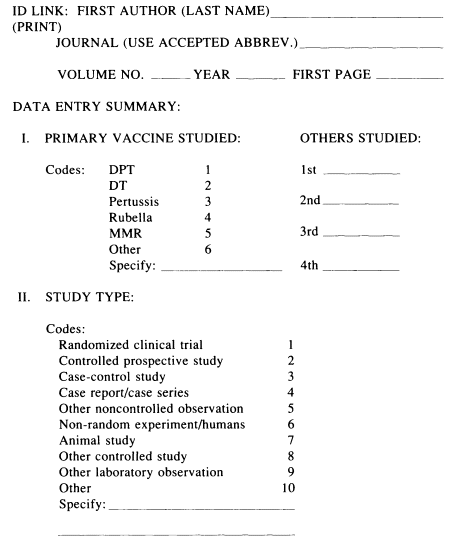
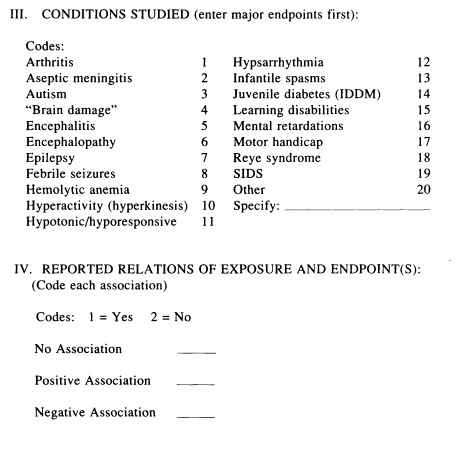
The committee decided early in the project to abstract key data from two general sources: (1) case series and case reports published in the peer-reviewed literature or obtained from parents or other sources and (2) controlled studies in humans published in the peer-reviewed literature. Abstracted data were used to evaluate both the extent and completeness of current case series, case report, and controlled study data. In addition, controlled study data were used to characterize the quality of individual controlled studies, to assess the feasibility of pooling study data for meta-analysis, and to identify gaps in knowledge.
Procedures for Abstraction and Adjudication of Study Data
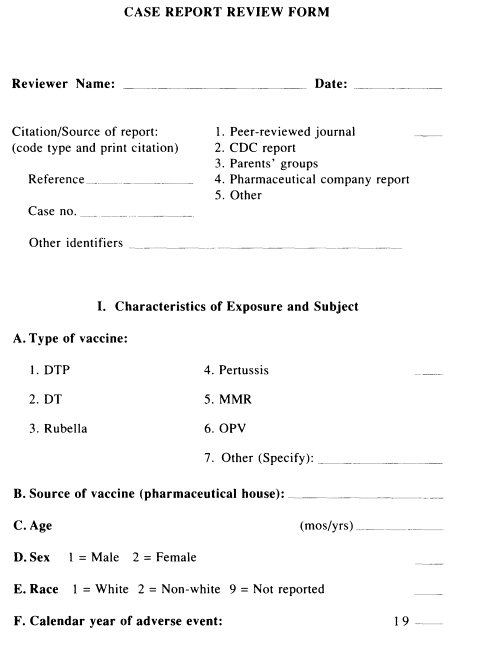
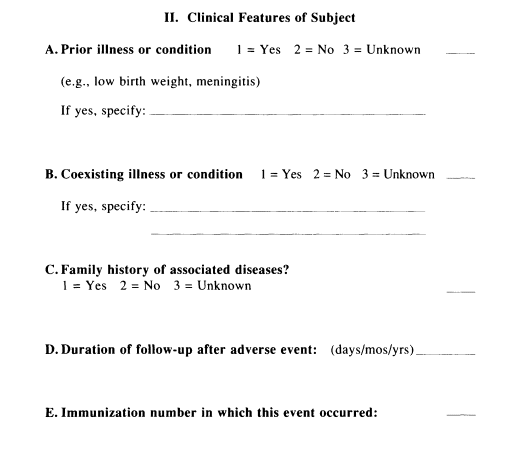
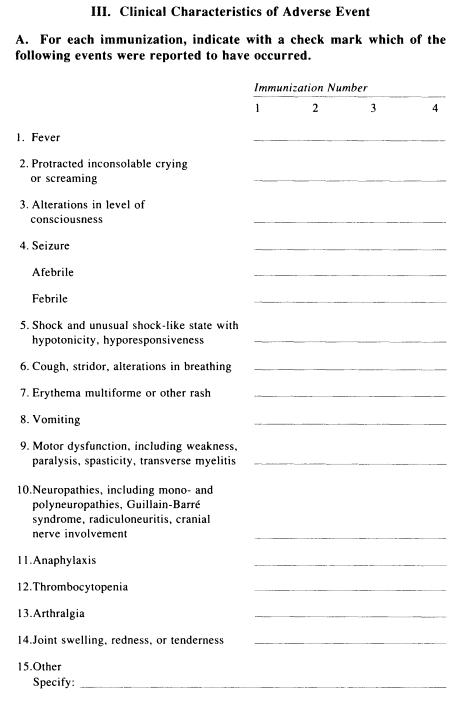
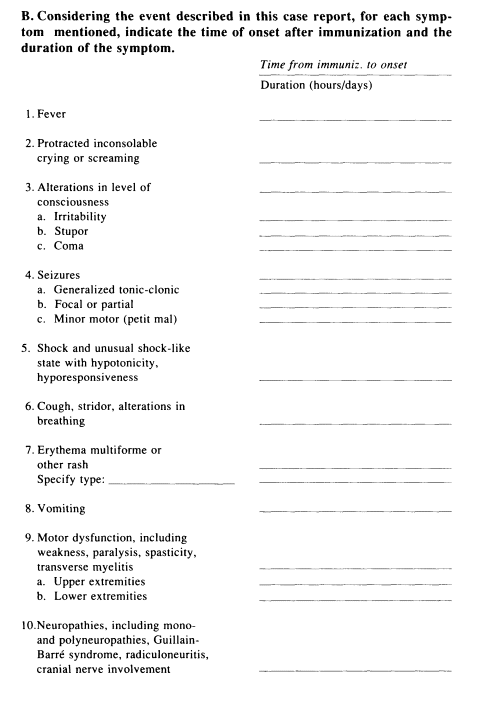
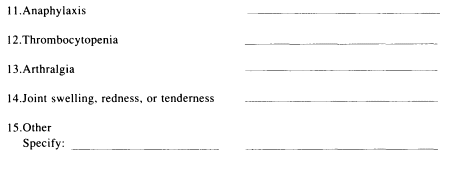
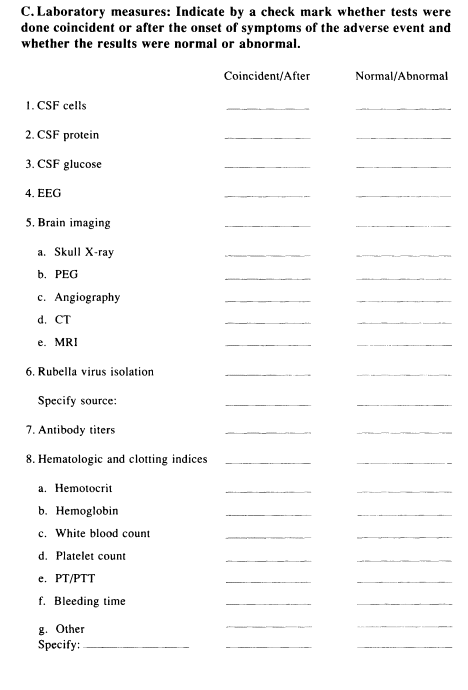
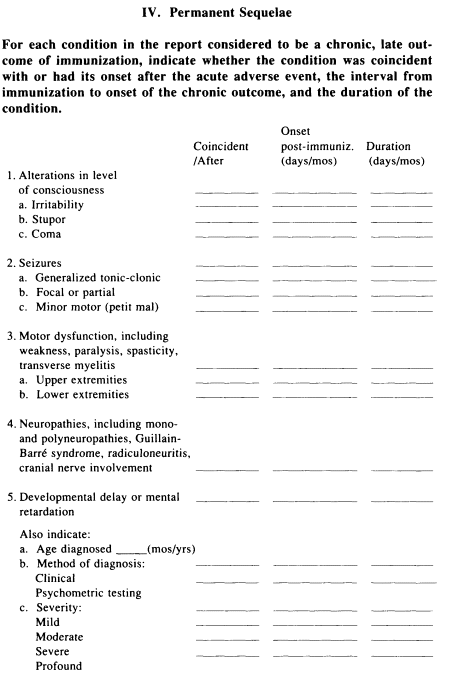
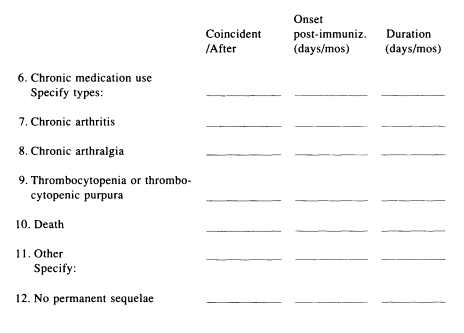
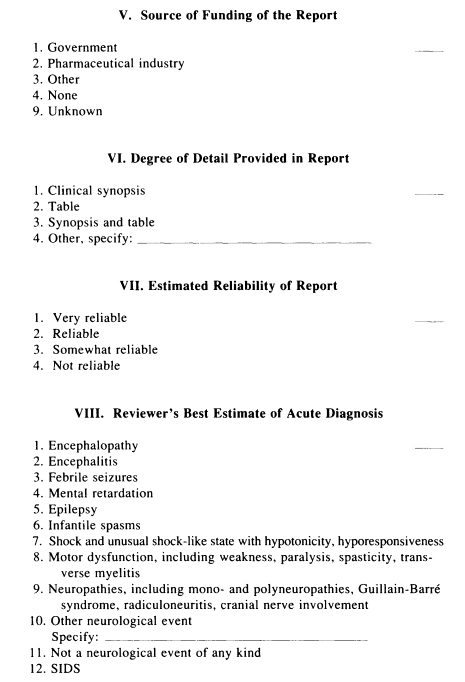
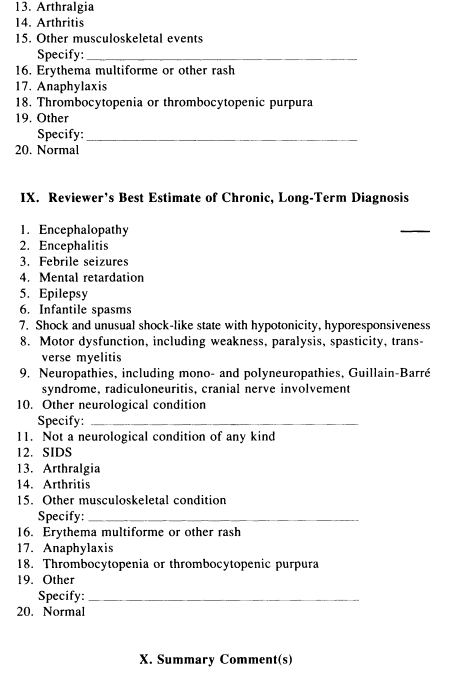
Case series and case reports were identified from a variety of sources: the published literature; parents or affected individuals; organizations such as Dissatisfied Parents Together and its National Vaccine Information Center; reports from the Centers for Disease Control's Monitoring System for Adverse Events Following Immunization (MSAEFI); and reports from the Study of Neurologic Illness in Children (SONIC), sponsored by the Centers for Disease Control at the University of Washington in Seattle. The form used for abstracting case reports and case series was developed by the committee and was pretested by Bennett Shaywitz of the committee. Case series and case reports were abstracted by John Bailey, Michael Katz, or Bennett Shaywitz of the committee. (The Case Report Review Form appears later in this appendix.)
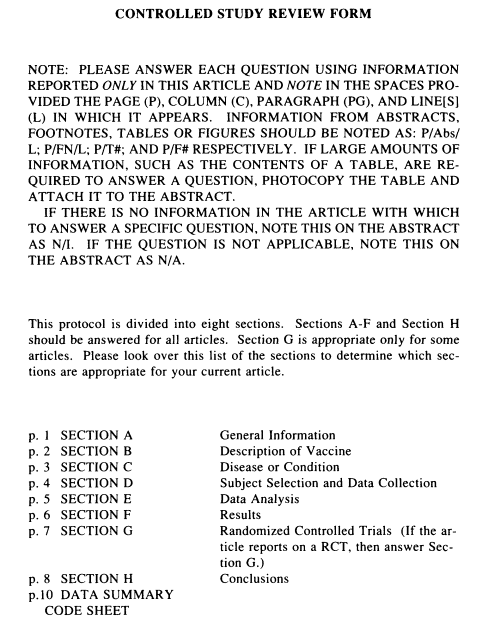
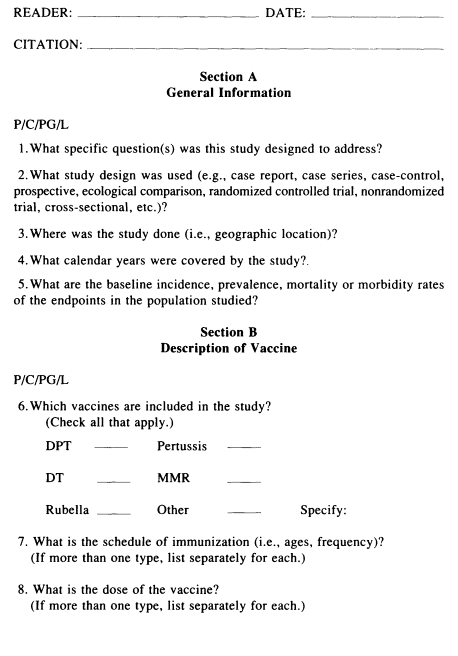
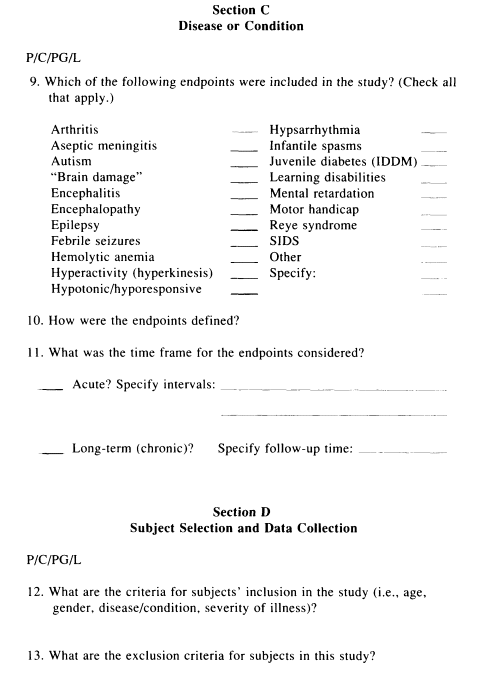
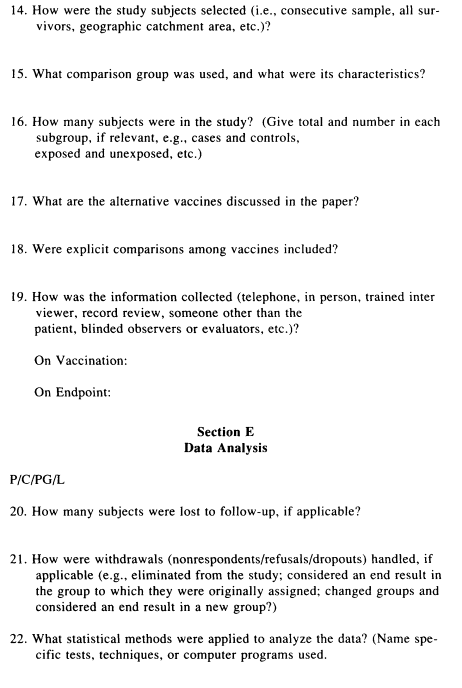
The form used for abstracting data from reports of controlled studies in humans was developed and pretested by Linda Cowan and Darwin Labarthe of the committee, who also evaluated the evidentiary base to identify appropriate studies for abstracting. Data from each controlled study were ab-
Page 301
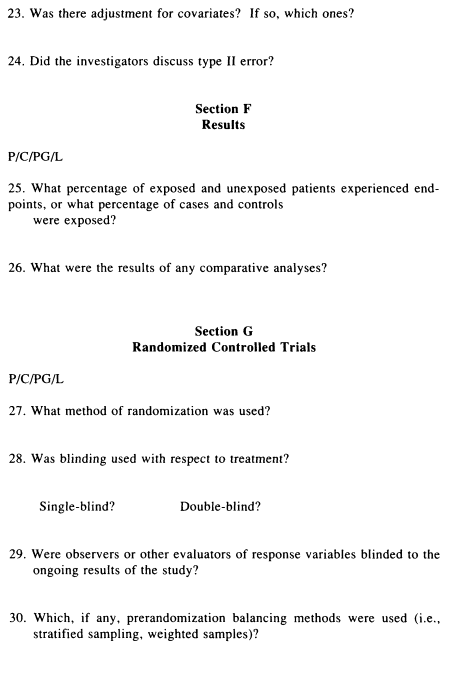
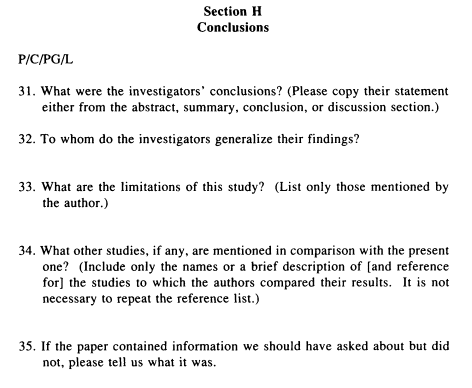
stracted independently by two upper-level doctoral students under the supervision of Linda Cowan and Darwin Labarthe. Completed pairs of questionnaires were then reviewed by Darwin Labarthe, Linda Cowan, or Christopher Howson (project director) for consistency of response. In the case of discordant responses, the original article was checked and the response was adjudicated by the reviewer. (The Controlled Study Review Form appears later in this appendix.)
Page 302
Page 303
Page 304
Page 305
Page 306
Page 307
Page 308
Page 309
Page 310
Page 311
Page 312
Page 313
Page 314
Page 315
Page 316
Page 317
Page 318