
11
Outpatient Dialysis Reimbursement Issues
This chapter deals with several of the controversial issues of outpatient dialysis facility reimbursement—the services covered in the composite rate, the rate-setting process, and payment policies. Issues of physician reimbursement for outpatient dialysis treatment are also briefly discussed.
The committee was guided in its deliberations by the criteria that ESRD payment policies and the rate-setting process should
-
promote the appropriate level of care;
-
ensure access to good quality care;
-
encourage cost-effective delivery of care;
-
recognize justifiable differences in costs among facilities, types of patients, and treatment modalities in the provision of ESRD services;
-
facilitate the adoption of cost-effective new treatment technologies and procedures; and
-
promote administrative simplicity.
COVERED SERVICES IN THE COMPOSITE RATE
The IOM committee considered two basic approaches to defining the services that should be included under the composite rate for outpatient dialysis:
-
continued reliance on the current HCFA method of definition, which is basically empirical and implicit; and
-
a more explicit, regular redefinition using a normative method and the services of a technical advisory committee.1
In general, under a prospective payment system, covered services must be defined before a rate can be established. From the outset of the ESRD program, the outpatient dialysis facility reimbursement rate has been an all-inclusive payment for a comprehensive "bundle" of institutional and home dialysis services, including nursing services, supplies, equipment, drugs, and administration associated with a dialysis treatment episode. Dialysis and kidney transplantation services covered by Medicare are currently specified in Chapter 27 of the Medicare Provider Reimbursement Manual, as "Reimbursement for ESRD and Transplant Services."2 Chapter 27 includes instructions and procedures regarding payment for home and in-center dialysis treatment; the ESRD items and services included under the composite rate; other ESRD items and services that are separately billable, such as laboratory tests, injectable drugs, and blood furnished to dialysis patients; the calculation and payment of bad debt; recordkeeping and submission of cost reports; the exceptions process; and the appeals process.
An item or service included under the composite rate is paid for through the composite rate payment to the facility, unless specifically excluded. Inclusion of an item or service under the composite rate does not depend on how frequently it is needed or the number of dialysis patients who require it. Items or services not included under the composite rate are covered only if they are not part of a routine dialysis service and have been listed as billable.
The current HCFA approach to stipulating the services to be included within the composite rate is largely empirical and involves several steps. First, the Medicare Provider Reimbursement Manual (HCFA, 1989) lists the general services that are to be included in the composite rate in terms of those historically determined by providers as necessary; HCFA modifies the list over time as clinical knowledge and practice change. This list does not specify a quality standard regarding services to be delivered, but relies on providers to set an implicit standard, with the specific mix of services to be determined by each provider. Although Medicare regulations establish some structural standards for care, and state health code requirements set additional standards (mostly structural), none of these efforts attempts to describe what an adequate set of dialysis services includes.
Second, HCFA establishes the reimbursement rate on the basis of audited facility costs and proposes revisions on the basis of subsequent cost reports. Although the processes for revising the composite rate are controversial, as discussed below, they are relatively well understood. No formal processes exist for periodically relating changes in the services included under the composite rate to the reimbursement rate itself. Under such an arrangement, providers cannot be certain that reimbursement rates will be set at a level that is sufficient to meet the costs of a continually changing high-quality "bundle of services" that they consider necessary. On the other
hand, there is currently no guarantee against some providers sacrificing the quality of services for economic reasons.
A normative approach, by contrast, would specify a detailed bundle of services to be included within the composite rate, with reference to an explicit quality standard. A payment rate would then be determined by pricing the services required for that bundle. The bundle of services would be revised periodically in response to clinical and technological changes, with the composite rate changed as appropriate. Under this approach, individual providers would have less freedom to allocate resources in accordance with their own judgments about what services were needed. The system also would be very complex, administered centrally, and would probably require a continuing expert advisory panel.
The concern of providers with how the services currently included in the composite rate are determined centers on the fact that these have changed over time as clinical practice and technology have changed. Although these changes are reflected to some extent by HCFA modifications to Chapter 27 of the Provider Reimbursement Manual, providers identify several objections with the process by which HCFA makes such changes.
First, since the introduction of the composite rate, some services previously billable by providers have been incorporated into the composite rate base. For example, intermediaries have disallowed separate reimbursement for mileage to transport blood for transfusions, drugs and blood products such as Benadryl and albumin, antibiotics for home patients, and a separate handling charge for drawing or collecting laboratory specimens at ESRD facilities.
Second, some services that have been introduced into the routine clinical treatment of dialysis patients since 1983 are not included in the composite rate. Examples are the use of urokinase to declot vascular access catheters and the administration of parenteral nutrition during dialysis. The supplies for these services are separately billable, but staff time to administer them is compensated under the composite rate. If a patient needs a subclavian catheter declotted, that service must be provided; if intradialytic parenteral nutrition is required, it must be provided. But the distribution of these demands on facilities varies as a function of patient complexity, and facilities are paid the same whether or not they are required to provide these services. In this way, necessary clinical decisions may impose an uncompensated cost on a facility. Data on the financial impact of such services on dialysis facilities, however, have not been collected.
Some providers believe that a serious problem has arisen because the type and amount of services required by dialysis patients have changed over time, but that HCFA's failure to modify the composite rate to reflect such changes constitutes an implicit rate reduction. However, other providers contend that the complaints are about items or services required by only a
few patients, and that HCFA is justified in leaving the payment rate unchanged.
The current system creates an incentive for providers to unbundle the dialysis service package to the extent possible. For example, some services previously provided by an outpatient dialysis unit, such as physical therapy or counseling, are now provided to patients via non-ESRD-related outpatient services. Therefore, they can be billed separately from the composite rate. However, this may mean that ESRD patients will find it necessary to make multiple visits to various providers in order to obtain the full range of services that they need and to which they are entitled. If so, this may not be cost-effective and may be clinically deleterious. National data on such behavior do not exist.
It is difficult to evaluate these provider concerns, since data are not readily available to substantiate their views. However, DCI-Cincinnati (DCI-C) provided data on injections of medications administered to all the hemodialysis patients treated in its freestanding and hospital facilities over four consecutive 3-year periods: 1978–80, 1981–83, 1984–86, and 1987–89 (Pollack and Pesce, 1990). From 1978 to 1989, the average number of medications administered per patient increased dramatically by nearly ninefold, excluding erythropoietin (EPO), and over 17-fold including EPO (Table 11-1). Although the committee heard testimony that supports the data presented by DCI-C, aggregate data on medications do not exist.
Such increases in the number of injections, particularly of complex medications, result in part from the availability of new drugs developed in recent years. The use of these medications also reflects the increasingly complex needs of patients, both at the time they begin treatment and as they grow older on maintenance dialysis. The increase in injections places a growing demand on the time of unit personnel that significantly affects their work load.
The total bundle of services currently provided to dialysis patients has been determined in important ways by the expectation of providers that Medicare reimbursement in real dollars will be decreased each year. Thus, to survive economically, providers must provide care within diminishing real levels of Medicare reimbursement. They have done so partly by increasing efficiency and by innovations. However, these processes may not have adequately compensated for decreasing real resources. Core medical services needed to maintain life have been provided but some important support services such as nutrition education, physical therapy, and counseling have been reduced. (See Chapter 10.)
The committee is concerned that medical services may continue to decrease if the rate remains constant over time. Efficiency gains and service reductions lead to decreased costs reported to HCFA. Lower reported costs are then used to calculate a new, reduced base composite rate without reference to any quality standard.
TABLE 11-1 Injections for Per Year Complex Medications, Hemodialysis Outpatients, University of Cincinnati Medical Center and Dialysis Clinic, Inc.-Cincinnati, 1978–1989
|
|
1978–80 |
1981–83 |
1984–86 |
1987–89 |
|
Patients treated |
213 |
232 |
258 |
299 |
|
|
|
(8.9)a |
(11.2) |
(15.9) |
|
Injections (total) |
|
|
|
|
|
Without EPOb |
155 |
342 |
1,432 |
2,038 |
|
|
|
(120.6) |
(318.7) |
(42.3) |
|
With EPO |
155 |
342 |
1,432 |
3,879 |
|
|
|
(120.6) |
(318.7) |
(170.9) |
|
Injections (average) per patient |
|
|
|
|
|
Without EPO |
0.7 |
1.5 |
5.6 |
6.8 |
|
|
|
(102.6) |
(276.5) |
(22.8) |
|
With EPO |
0.7 |
|
|
13.0 |
|
|
|
|
|
(133.7) |
|
a Figures in parentheses are percentage increase over the prior period. b EPO = erythropoietin. EPO became available in the last half of 1989. SOURCE: Pollack and Pesce, 1990. |
||||
THE RATE-SETTING PROCESS
The HCFA rate-setting process has been criticized on several grounds, including the timeliness of the cost data, the representativeness of the sample of facilities used to determine costs, the adequacy of Medicare cost accounting principles, the basis for calculating the facilities' average costs per dialysis treatment on which the rate is based, and the oversight of the process.
Timeliness of Cost Data
This issue involves technical as well as policy considerations. The lack of timely Medicare cost report data is due to the lag of 3 to 4 years between the audit year and the effective date of a new payment rate. The cost reports used to set the rate in 1983, for example, reflect resources consumed in 1977, 1978, and 1979.3
Technically, there are inherent limits on acquiring timely cost data. Cost reports are submitted by facilities to their fiscal intermediary each year within 90 days of the end of their accounting year. Facilities have accounting years, however, that do not necessarily coincide with the federal fiscal year. Even though submitted (reported) cost data can be available for audit analysis by HCFA within 6 months after the end of a facility's accounting period, assembling a representative sample of facilities will require more time.
The Prospective Payment Assessment Commission (ProPAC), dealing with a similar issue for the entire hospital sector, has suggested several ways to shorten the time required to generate Medicare audited cost report data. These methods may apply to dialysis facilities as well: shorten the 90-day intermediary processing period, reduce the time dialysis facilities are allowed for the preparation of cost reports, require facilities to submit cost reports in machine-readable form, collect cost report data from an "early returns" sample of facilities (those with accounting years closer to the federal fiscal year), or use the unaudited costs submitted by facilities.
In fact, the technical aspects are secondary. Electronic data submission, for example, does not increase the amount of data available for analysis or overcome the primary cause of delay in making data available. The basic policy problem that underlies provider criticism of HCFA is that the current rate-setting process for dialysis facilities, unlike that for the hospital sector, makes no provision for adjusting the cost data between the audit period and the date that a new payment rate is adopted. Unless this policy issue is addressed, the criticism will persist.
Sampling Versus the Universe
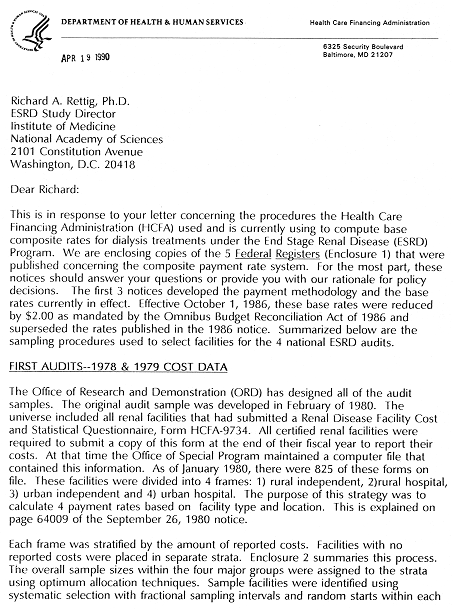
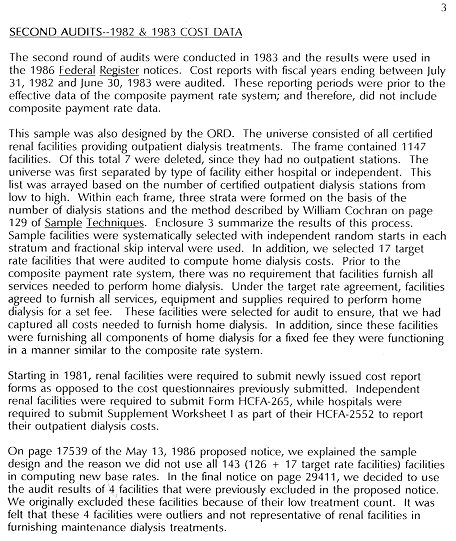
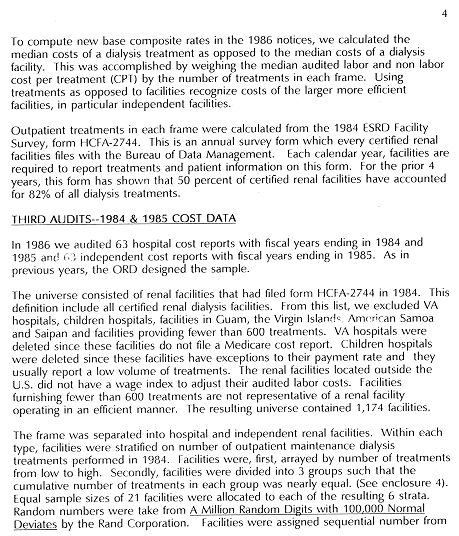
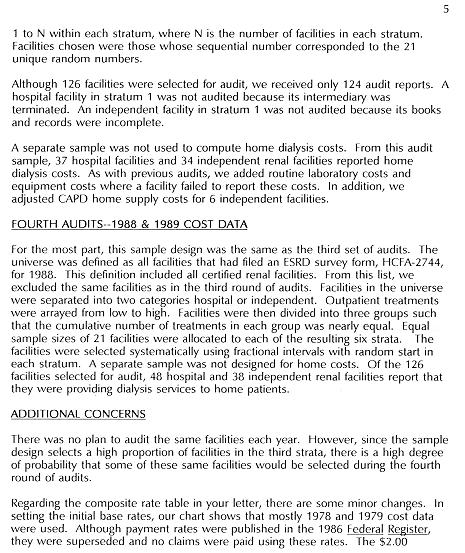
Another rate-setting issue involves sampling. HCFA audits a sample of approximately 120 dialysis outpatient units; as of April 1990, it had performed four separate national audits on these facilities. A letter from Bernadette S. Schumaker, HCFA Bureau of Policy Development, describing these four ESRD audits appears as Appendix 1 to this chapter. Technically, it is feasible to audit the cost reports of all 1,900 renal dialysis facilities. The PPS experience with the hospital sector is illustrative since the original PPS standardized amounts were computed using cost report information for all hospitals in 1981.
Using the cost reports of all dialysis facilities to determine the rate would eliminate questions about the representativeness of the sample and increase provider trust. Auditing all dialysis units would probably require facilities to submit their cost report information electronically, something that began to occur in 1987. At the very least, the sampling process should be explicitly described in proposed rules, with opportunity for providers to comment.
Medicare Part A Cost Principles
These cost principles govern the reporting of costs by facilities and the auditing of costs by fiscal intermediaries and by HCFA. Audited cost data are then used in rate setting. Controversy over the application of the Medicare Part A Cost Principles to ESRD providers focuses on which costs are allowable and which are not.
Medicare cost principles involve determination about which costs are necessary and proper and related to the care of beneficiaries. Medicare defines the allowable costs of dialysis services to include those that are directly attributable to the provision of dialysis services and the proportionate share of indirect costs, such as administration and occupancy (space, equipment, depreciation, and utilities) that are appropriately covered by its payments. These principles were developed in 1965 at the inception of Medicare to determine the reasonable costs of hospital medical services. From 1965 to 1983, when all hospitals operated under retrospective, cost-based reimbursement, it was necessary for Medicare to define carefully both what was meant by "reasonable costs" and how these were to be allocated to Medicare. With the advent of PPS in 1983, however, and reliance on DRGs as the basis for payment, these cost principles have become less important to hospitals, especially since the initial PPS cost base of 1981 has never been rebased, only updated. More frequent rebasing, of course, would increase the importance of the cost reports.
Renal providers argue that accounting rules designed for hospitals in 1965 are inappropriate for dialysis facilities in 1990. In general, dialysis providers believe that the Medicare definitions of allowable costs are too restrictive, unreasonable, or inconsistent with other federal government requirements. As indicated in Chapter 6, the dialysis provider community consists increasingly of independent rather than hospital-based units. In financial management terms, these facilities operate much like businesses.
A number of renal providers who testified at the committee's February 1990 rate-setting public hearing argued that generally accepted accounting principles (GAAP) should be used rather than Medicare Part A Cost Principles. GAAP rules and procedures are widely used by most private businesses for preparing and reporting financial information to management, owners, the Internal Revenue Service, the Securities and Exchange Commission, and other regulatory agencies. The use of GAAP, proponents argue, would result in a more comprehensive presentation of independent dialysis unit operations than does reliance on the Medicare Part A Cost Principles.4
HCFA responds that requiring all dialysis facilities to report costs according to Medicare cost principles allows it to compare costs across independent and hospital-based units in a standard way. The use of GAAP, however, would make it impossible to compare the costs of independent and hospital-based facilities, since the hospitals' statements report total operations and not individual departments.
Any accounting system, in fact, is a set of conventions for reporting financial transactions to multiple users—managers, directors, shareholders, or public officials. Such systems provide consistency on certain matters, flexibility on others; all have their arbitrary features. Some accounting practices are very technical; many involve policy considerations.5
Clearly, Medicare must apply the same accounting principles to all health care providers with which it deals—hospitals, skilled nursing facilities, and independent renal treatment units. Moreover, any accounting system requires that prior policy decisions be made about allowable and non allowable costs. Finally, conflict is inherent in the relationships of payers and claimants in any accounting system.
Notwithstanding these general comments about accounting systems, several examples of substantive conflict between HCFA and ESRD providers have been identified. These include the allocation of utility costs on the basis of the square feet occupied rather than on actual use; the depreciation of capital assets over an 8-year period, whereas the Internal Revenue Service permits varying depreciation rates depending on the nature and effective life of the asset; and the reporting of pension costs, where ERISA requires that employers escrow funds for future employee pension benefits on an accrual basis, but Medicare recognizes such costs only when they are actually spent.
Procedural issues include variation in the application of Medicare rules across fiscal intermediaries; the limited recourse that providers have to correct errors in reported costs or to challenge the results of audited costs;6 and the limited incentives of ESRD providers, save the large chains, to report costs accurately since payment is not contingent on such data and the likelihood of being included in an audit sample is low.
The Calculation of Cost per Treatment
The 1983 composite rate was based on the per-treatment cost of the median dialysis facility in the HCFA audit sample. This did not account for differences among facilities in number of patients or treatments. In 1986, therefore, HCFA proposed to calculate the rate on the basis of the median cost per treatment for all facilities, thus across the entire sampled patient population. HCFA's rationale was that costs per treatment were more accurately reflected by the median costs of all treatments rather than by those of the median facility.
This proposed change, however, became enmeshed in the controversy surrounding the 1986 proposal to reduce the base composite rate on average by $6. Providers argued that the underlying motivation for the HCFA proposal was an effort to reduce the program expenditures by $100 million in response to the Office of Management and Budget. The strong negative reaction led Congress to limit the reduction to $2 and leave unchanged the methodology of the 1983 composite rate as the basis for calculating the cost per treatment.
Regarding the proposed 1986 methodology, a composite rate calculated on the basis of the median costs of all treatments encourages facilities to
search for economies of scale. Although this would adversely affect smaller facilities, no major policy issue is raised by this proposed methodology save for rural units whose size is limited by low population density.
Oversight of the Rate-Setting Process
The committee believes that the process by which HCFA revises ESRD reimbursement rates needs to be open and reviewable. HCFA had previously taken the position that methodology changes required notice and comment, but rate changes per se required only formal notice. The law now requires HCFA to use full notice-and-comment rulemaking procedures when modifying rates, a requirement that the committee endorses.
During the course of this study, especially at the February 1990 public hearing, various proposals for oversight of the Medicare ESRD rate-setting process were suggested. Most of these recommended the involvement of an objective, competent third party, such as an independent body consisting of major accounting firms, an ''ESRD ProPAC,'' or ProPAC itself assuming periodic, but not necessarily annual, advisory responsibility for ESRD rate-setting similar to its hospital-sector responsibilities.
The committee, deliberating in 1989 and 1990, regarded the ProPAC option as the most attractive alternative, especially since its mission was being expanded to include the reimbursement of hospital ambulatory care as well as inpatient care. In fact, after the committee's final meeting in October 1990, Congress, in OBRA 1990, directed ProPAC to study the cost, services, and profit associated with dialysis treatment modalities. The statute directed ProPAC to consider the conclusions and recommendations of this study. ProPAC was also to recommend the method of payment for the facility component of outpatient dialysis services for fiscal 1993 and the methodology for updating payments in subsequent years.
FACILITY PAYMENT POLICY ISSUES
This section examines the following issues of outpatient dialysis payment policy: the level of payment, the dual rate for hospital-based and independent facilities, rebasing and updating the rate, and the labor portion of the rate.
Level of Payment
Although the outpatient dialysis reimbursement rate has fallen steadily over time (in real dollars), treatment units have remained financially solvent by obtaining lower equipment and supply costs from competition in the product market and by dialyzer reuse; achieving unit operational efficiencies including reduction in the duration of dialysis treatment; changing staff size
and mix; reducing noncritical services such as nutrition and counseling; and realizing economies of scale in treatment units, chains of units, and vertically integrated firms.
In February 1990, at the IOM public hearing on rate setting, many providers indicated that they are at the point where the quality even of core medical services is threatened because further economies and efficiencies are limited or impossible. For example, Community Dialysis Center (CDC), of Cleveland, Ohio, a not-for-profit independent facility then operating 41 stations, 4 patient shifts per day, with a census of 335 patients, testified to this effect (DeOreo, 1990):
As long as continued productivity increases are feasible, it is reasonable to have a relatively fixed rate. In recent years, however, it is clear that the potential for productivity increases has been restricted substantially by (1) our past success in obtaining efficiencies, (2) the increasingly more difficult mix of patients, (3) restrictions on primary care access outside the dialysis system, (4) the slowing of the evolution of technology, (5) limits to the physical process of dialysis. Declining payment coupled with additional cost increases from waste disposal, regulatory procedures and requirements with regard to normal activities, plus the introduction of erythropoietin, EPO, have put our future financial stability in some question.
HCFA, however, has consistently maintained that the costs of dialysis treatment units fall below their payments. HCFA provided the IOM with 1985 reported (unaudited) and audited cost data and 1987 reported cost data for the sample of treatment facilities on which the composite rate is based. An analysis of these data for 1985 goes far to explain the HCFA point of view.
The HCFA data for 1985 audited costs, reported costs, and facility-specific composite rates for the 124 treatment units in the audit sample (62 hospital-based and 62 independent facilities) show the following: dialysis facilities provided treatment at an audited cost, on average, that is lower than their facility-specific composite rate, the mean difference exceeding $8 (Table 11-2).
The differences between audited costs and facility-specific composite rates, however, vary greatly among the sampled facilities. Twenty-five percent of the facilities had rates that were $30 above their audited costs, and 10 percent had rates nearly $50 greater than costs. At the other end of the distribution, however, 10 percent had rates that were almost $30 below their costs.
Independent and hospital-based outpatient units also differ substantially. Rates exceeded audited costs for nearly all independent units, on average, by $29 per treatment (Table 11-2). For hospital-based units, however, on average, the cost per treatment was $12 greater than their Medicare rate (Table 11-2). For only about 40 percent of these units did rates exceed audited costs.
TABLE 11-2 Outpatient Dialysis Facilities, 1985: Distribution of Differences (in dollars) Between Facility-Specific Composite Rates and Audited Costs
|
Percentile |
|||||||
|
Facility Group |
Number in Sample |
Mean Difference |
10th |
25th |
50th |
75th |
90th |
|
All facilitiesa |
124 |
8.38 |
-28.97 |
-7.67 |
14.09 |
30.10 |
47.64 |
|
Hospital units |
62 |
|
|
|
|
|
|
|
Center + home |
62 |
-12.46 |
-49.11 |
-23.92 |
-5.04 |
10.76 |
21.12 |
|
Center only |
62 |
-16.83 |
-62.18 |
-28.98 |
-8.99 |
7.33 |
19.22 |
|
Home only |
37 |
5.23 |
-62.42 |
-3.10 |
18.26 |
26.98 |
38.18 |
|
Independent units |
62 |
|
|
|
|
|
|
|
Center + home |
62 |
29.21 |
6.88 |
17.32 |
28.50 |
44.66 |
53.39 |
|
Center only |
62 |
28.69 |
5.08 |
14.18 |
28.65 |
46.34 |
55.76 |
|
Home only |
35 |
25.84 |
-9.69 |
10.24 |
33.07 |
44.53 |
50.86 |
|
SOURCE: Health Care Financing Administration, Bureau of Policy Development. HCFA cost report data from 124 audit sample facilities. |
|||||||
If reported (unaudited) costs of the sampled facilities are compared to facility-specific composite rates, the 1985 data show that the average facility lost about $2 per treatment (Table 11-3). However, the distribution by independent and hospital-based units is again substantial: payments exceed reported costs in over 50 percent of independent units, but in less than 40 percent of hospital-based units.
The differences between reported and audited costs are also substantial, especially between independent and hospital-based units. On average, Medicare disallowed more than 15 percent of the reported costs of independent facilities. By contrast, on average, the reported costs of hospital-based units were adjusted upward by more than 2 percent.
On the basis that audited costs reflect true costs, HCFA claims that the majority of outpatient dialysis treatment units are doing well financially, i.e., their facility-specific composite rates exceed their audited costs. HCFA argues that independent units are doing quite well and that hospital-based units reflect inefficiencies.
Providers respond with several arguments. First, on the cost side, they contend that audited (or allowable) costs, defined by HCFA in accordance with Medicare Part A Cost Principles, significantly and deliberately understate their true costs. Second, on the revenue side, they argue that HCFA, which pays 80 percent of the composite rate, assumes that facilities receive 100 percent payment while making it very difficult to collect bad debt under the Part A Cost Principles.7
Finally, and more fundamentally, providers argue that the imperatives of economic survival as business enterprises force them to maintain costs that are equal to or lower than their revenues or face bankruptcy. To the extent that the Medicare payment rate determines their revenues,8 which it does in large measure, their reported costs will always fall below the composite rate. Many providers also contend that reimbursement rate reductions have forced compromises over time in treatment methods and staffing in order to maintain costs at or below revenues. They are victims, they argue, of a vicious cycle that cannot be interrupted: Declining real reimbursement rates force providers to reduce their expenditures (costs); these translate into lower reported and, ultimately, audited costs; lower audited costs, in turn, are used as the basis for proposed rate reductions.
The differences between HCFA and the providers cannot be resolved, then, simply by the examination of cost report data done by the committee. If audited costs do not reflect true costs, then careful attention to the accounting issues is necessary. If audited costs do reflect true costs, it is still necessary to relate payments and costs to patient outcomes. Such efforts will require adequate measures of quality, which are unavailable at present.
The limited data currently available suggest that prior reductions in reimbursement may already have affected patient outcomes adversely. (See
TABLE 11-3 Outpatient Dialysis Facilities, 1985: Distribution of Differences (in dollars) Between Facility-Specific Composite Rates and Reported (unaudited) Costs
|
Percentile |
|||||||
|
Facility Group |
Number in Sample |
Mean Difference |
10th |
25th |
50th |
75th |
90th |
|
All facilitiesa |
124 |
-1.79 |
-37.10 |
-20.11 |
5.71 |
21.04 |
35.62 |
|
Hospital units |
62 |
-14.28 |
-44.26 |
-29.72 |
-7.05 |
12.44 |
34.06 |
|
Independent units |
62 |
10.71 |
-14.43 |
-5.1 |
12.43 |
25.86 |
35.89 |
|
a Data include in-center dialysis costs only; home dialysis cost data were not available. SOURCE: Health Care Financing Administration, Bureau of Policy Development, 1985, cost report data for 124 sample facilities. |
|||||||
Chapter 10.) If data are acquired that systematically relate costs to outcomes, then two possibilities must be considered. First, if the data show that providers can deliver high-quality care at low cost, there is every reason for public policy to reflect this in lower reimbursement rates. On the other hand, if providers reporting low costs are delivering poor quality of care, there is no reason to permit that to continue. The committee (Chapter 12) recommends that HCFA examine high-and low-cost units in relation to the quality of care they are providing.
Dual Composite Rate
OBRA 1981 required that separate composite rates be established for hospital-based and independent outpatient dialysis units. Currently, the average base rates are $125 and $121, respectively. HCFA determines the rate differential for hospital-based units by adjusting the median cost per treatment for all units for two factors: an overhead cost differential of $2.10 for hospitals above that for all facilities; and a 5 percent add-on to adjust for possible deficiencies in the data and to mitigate the effects of the composite rate on hospitals. These adjustments are not based on an assessment of the cost data for each type of facility and were probably derived after the $4 differential was determined.
The HCFA 1985 data indicate that the reported (unaudited) and audited costs per treatment for hospital-based units were significantly higher than for independent facilities. Mean audited costs were $144 and $99 for hospital-based and independent units, respectively (Table 11-4). Reported costs for hospital facilities were adjusted upward 2 percent in the audit, whereas they were adjusted downward 15 percent for independent units. Audited costs were $112 at the 10th percentile and $185 at the 90th percentile for hospital-based facilities, compared to $71 and $124 for the same percentiles for independent units.
On average, hospital-based facilities provided dialysis at an audited cost $17 above the Medicare payment (composite rate) per treatment; independent units, by comparison, provided dialysis at an audited cost of $29 below the Medicare rate. Obviously, based on this audited cost information, very different rates would result if the rates for hospital-based and independent facilities were calculated separately rather than on the basis of pooled data.
The differences between the costs of outpatient dialysis treatment in independent and hospital-based units are not fully understood. However, not all hospital-based units are the same. Some provide backup services that are essential to the safe and effective performance of independent units, which are not equipped to care for very unstable or acutely ill patients. Others are simply hospital-owned outpatient facilities, often physically separate from the parent hospital, that provide the same services as independent units.
TABLE 11-4 Outpatient Dialysis Facilities, 1985: Comparison of Differences Between Reported (unaudited) and Audited Costs (in dollars)
There is no apparent basis for different payment rates for the same service, such as chronic dialysis, based on ownership of the facility. Further study is needed to justify existing payment differences.
However, it is appropriate to pay a higher rate to hospital backup units, althought this is not currently done. Hospital backup units care for inpatients as well as outpatients. Most of their patients receive routine care in another outpatient facility and receive only transient care for special problems in the hospital unit. Caring for new ESRD patients, pediatric patients, and unstable or acutely ill patients is an essential service that permits the provision of safe and efficient outpatient service in independent units. Backup facilities must maintain the capacity to deal with such problems. Thus, they cannot sustain the efficient utilization of stations, and their costs per dialysis treatment are higher. The overhead costs associated with an acute-care hospital providing a wide range of services add to an increased cost per dialysis in this setting. If expenses are incurred for the training of physicians and other clinical personnel, these must be reimbursed if the service is to continue. Some definition of backup units providing these higher levels of care is necessary to fairly reimburse them for their treatment and to support independent units.
HCFA should provide separate rates for special services, however, or for patients who require additional services. In this category, the I0M committee calls attention to the extra medical, nursing, nutrition, and counseling services required for adequate care of children and supports a rate differential for pediatric patients.
Rebasing and Updating
The implications of rebasing or updating the composite rate need to be clarified. Rebasing means revising or recalculating the existing reimbursement rate using more recent cost data. The current base composite dialysis rates, established in 1983 and later modified by OBRA 1986, OBRA 1989, and OBRA 1990, are derived from 1977, 1978, and 1979 cost data. They have never been rebased, although adoption of the 1986 HCFA proposal would have done so. Updating refers to adjusting the base rate annually by some factor to account for changes in input prices, patient complexity (case mix), or scientific and technological advances that occur in the years in which the rate is not rebased. Neither the composite rate nor its predecessor has ever been updated.
By comparison, although the Medicare prospective payment rates have also never been rebased from their original 1981 cost data, they are updated annually to adjust for inflation, patient case mix, and scientific advancement. Each of these factors is discussed below.
Inflation (or Market Basket)
Historically, HCFA has not adjusted the ESRD composite rate for inflation. The absence of such an adjustment may have had a larger economic effect over time than specific rate reductions in withdrawing real resource inputs from dialysis providers.
HCFA was criticized, for example, for failing to inflate the 1982 cost data in establishing its 1986 rate reduction proposal. It responded that no adjustment was made because no evidence existed that the overall cost of furnishing dialysis followed general price inflation. HCFA further stated that some inputs to the dialysis service appear to have increased in price (e.g., salaries), but other inputs have decreased (e.g., dialyzer prices have decreased by between 30 to 50 percent).
HCFA's response does not reflect an explicit analysis of input prices over time. The policy issue, therefore, is whether HCFA should develop a specific market-basket index for ESRD dialysis services that would take into account cost increases as well as decreases. If it chooses not to develop a dialysis index, it would seem logical to apply the same index as a basis for public policy. Absent empirical data to support the view that the cost of an adequate "bundle of dialysis services" can be expected to decrease each year enough to compensate for annual, real-dollar decreases in payment rates, failure to update can only be regarded as arbitrary.
Patient Complexity (Case Mix)
No adjustment is made in the dialysis payment rate for patient complexity. Respondents to the 1986 proposed rate reduction argued that the patient mix was then more expensive to treat than the 1982 patient population: For example, there were more aged patients, more diabetic patients, and increasing numbers with HIV infection and AIDS, requiring isolation.
Currently, there are no adequate means to adjust for patient complexity or severity. (See the discussion in Chapter 12 on a strategy to address this situation.) Although all signs point in the direction of increased patient complexity, the claims of providers to this effect cannot be strongly supported because adequate measures have not been developed, and supporting data have not been collected. HCFA, in 1986, rejected the argument of increasing severity as a consideration for rate revision.
The exceptions process, by which facilities seek adjustment to their composite rate, does acknowledge patient complexity in a minimal way. The exceptions criteria include atypical service intensity (patient mix), extraordinary circumstances, isolated essential facilities, self-dialysis training costs, frequency of dialysis, and education costs. To establish atypical service intensity,
providers must show that they provide more intense services for patients referred from another facility for stabilization, pediatric patients who require more intensive staff services, or patients with medical conditions not commonly treated by ESRD facilities and which complicate dialysis treatment (48 Fed. Reg. 21279, May 11, 1983).
The burden of proof for demonstrating an atypical patient mix falls on the provider. No formal measures of patient severity or complexity exist. However, informal, unpublished criteria screens are used to determine whether an exceptions request should be reviewed. These screens, which are quite inadequate as adjusters for severity or complexity, include comparisons of a unit's patient population to the entire patient population in terms of age, percent diabetic, days of hospitalization, and mortality.
Technological Advances and Productivity
HCFA makes no adjustment to the composite rate for scientific and technological advances. For example, high-flux dialysis and prescription dialysis may improve quality but may also increase cost. Similarly, Gotch (Levin et al., 1990) has argued that the use of kinetic modeling as the basis for prescribing dialysis has been inhibited because its cost is not compensated in the composite rate.
HCFA selectively recognized technological change in its rationale for the 1983 composite rate. This decreased rate was justified, it stated, "because increased efficiencies in the technology and delivery of services have offset the cost increases of some components of the services" (48 Fed. Reg. 21259, May 11, 1989). A more systematic acknowledgment for such change, which may increase or decrease costs, is warranted.
Methods for Rebasing and Updating
Substantial differences in the composite rate will result depending on the approach used for rebasing and updating. The rate also will depend on the base year selected. For example, the I0M project staff used the 1985 cost data to develop a base rate for 1988, with varying assumptions about bases and updating factors (Table 11-5). The hypothetical 1988 average composite rate for all dialysis facilities varied from a low of $101.19 to a high of $148.06, a spread of $47—depending on the base rate and update factor used. The analysis in Table 11-5 does not calculate separate rates on the basis of different costs of hospital-based and independent facilities. Were calculations of separate rates made on the basis of the audited costs of these two groups of facilities, they would differ dramatically from the current dual rates, which permit only a fixed $4 differential.
TABLE 11-5 Results of Alternative Scenarios for Rebasing and Updating the ESRD Composite Rate for All Dialysis Facilities
|
Scenarios |
1985 |
1986 |
1987 |
1988 |
1989 |
|
Current rate |
129.39 |
129.39 |
127.39 |
127.39 |
127.39 |
|
Base = Current rate Updated by: |
|
|
|
|
|
|
CPIUa |
129.39 |
131.85 |
136.59 |
142.20 |
149.02 |
|
Hospital MBb |
129.39 |
133.40 |
138.07 |
144.56 |
152.37 |
|
PPS update factorc |
129.39 |
130.04 |
131.53 |
133.28 |
134.45 |
|
PPS payments/cased |
129.39 |
133.79 |
139.94 |
148.06 |
NA |
|
Base = Costs Updated by: |
|
|
|
|
|
|
CPIU |
121.01 |
123.31 |
127.75 |
132.99 |
139.37 |
|
Hospital MB |
121.01 |
124.76 |
129.13 |
135.20 |
142.50 |
|
PPS update factor |
121.01 |
121.62 |
123.01 |
124.65 |
125.75 |
|
PPS payments/case |
121.01 |
125.12 |
130.88 |
138.47 |
NA |
|
Base = Independents' rate Updated by: |
|
|
|
|
|
|
CPIU |
98.24 |
100.11 |
103.71 |
107.96 |
113.14 |
|
Hospital MB |
98.24 |
101.29 |
104.83 |
109.76 |
115.68 |
|
PPS update factor |
98.24 |
98.73 |
99.87 |
101.19 |
102.09 |
|
PPS payments/case |
98.24 |
101.58 |
106.25 |
112.42 |
NA |
|
a CPIU = Consumer Price Index, Urban—all areas. b Hospital MB = hospital market basket. c PPS update factor Prospective Payment System update factor. d PPS payment/case Prospective Payment System payments/case. SOURCE: Data on current rate are from Health Care Financing Administration, Bureau of Policy Development. |
|||||
Labor Portion of the Composite Rate
The labor portion of the base composite rate has remained unchanged since the 1983 composite rate was introduced and is calculated as approximately 40 percent of the rate.9 The labor share of treatment costs, however, has been increasing relative to the costs of equipment and supplies. In a recent study, for example, Held and colleagues (1990) estimated that the labor portion of dialysis costs was 75 percent.
Providers often characterize the present situation as one in which reimbursement has not been adjusted upward to account for non-covered services. However, the underlying reality appears to be that the number of labor-intensive services has increased. The increased number of medications administered to patients (Table 11-1) reflects this intensity. Even though the wage index adjustment reflects wage increases across the various re-
gions, it does not necessarily account for changes in staff mix or increases in work intensity. In light of the growing intensity required in dialysis treatment, which in turn alters the labor and nonlabor shares of this treatment, the labor percentage of the rate to which the area wage index is applied should be reassessed.
PHYSICIAN PAYMENT POLICY ISSUES
A decade-long discussion of dialysis payment policy has defined facility reimbursement as the primary issue. Physician reimbursement policies generally have been overlooked, including the effect of such policies on the provision of treatment and the quality of care provided. Nor has this study addressed these issues at any length.
Many physician payment issues mirror those of outpatient dialysis units: the definition of the bundle of covered services included under the monthly capitation payment (MCP); the process for calculating the MCP; and the payment policies (level, differential rates). The discussion of these issues would be similar to those described above for facility providers.
Originally, the monthly capitation payment was a comprehensive fee for the primary care of patients on dialysis. Indeed, it has been suggested that the implied agreement between Medicare and the physician community was that nephrologists and dialysis units were to provide primary care to dialysis patients.
Changes in staffing patterns and the composition of the patient population have increased the range of services provided to ESRD patients by the renal community, and the primary-care role of the nephrologist has expanded over time. Ideally, nephrologists should coordinate the care of their dialysis patients, not only monitoring their outpatient care but also participating in the treatment of other serious health problems such as cardiovascular diseases, endocrine disorders, and infectious diseases.
Although dialysis patients increasingly require more primary care and additional specialized care, the MCP has not been adjusted to reflect any of these changes. It has not been changed since 1986, when it was reduced on average by nearly $12 from the 1983 payment rate. As a result, current physician reimbursement may adversely affect the actual scope and nature of physician services. Moreover, physicians may have an incentive under current payment policy to decrease contact with patients and diversify their practice away from dialysis treatment to include general nephrology, hypertension consultation, and general internal medicine.
The nephrology community anticipated some reprieve with the adoption of the Medicare Fee Schedule (MFS), scheduled to take effect on October 1, 1991. Nephrologists presumed that under MFS the MCP rate would increase, because the MFS will increase payments for cognitive services. However,
HCFA announced in 1990 that the MCP will not be included in the MFS. Consequently, it is unclear what payment policy changes, if any, can be expected to apply to the MCP for physician outpatient dialysis services.
CONCLUSIONS AND RECOMMENDATIONS
The committee discussed at length the implications for dialysis reimbursement policy of the information it had reviewed regarding (1) the effect of reimbursement on quality of dialysis care and (2) future needs for dialysis in the light of projections of growth in the size and diversity of the dialysis patient population over the next decade (Chapter 4). Two approaches to reimbursement policy emerge in the discussion. Broadly framed, these may be termed the ''implicit'' and the "explicit" approaches.
Historical and current policy has taken the implicit approach. Rates are set by determining what providers actually spend to deliver dialysis to patients. These reported costs, adjusted in accordance with Medicare Part A Cost Principles as to what costs are allowable (audited costs), are the basis for periodic proposals to review the rates. This approach has a number of virtues, most important that it minimizes governmental involvement in clinical practice. Providers are free to use their judgment in deciding how to maximize quality within the limits of their income. In theory, if a broad consensus exists among providers that expenditures must be increased to provide adequate quality, they will increase incurred costs in the expectation that these increases will lead to increased reimbursement in subsequent rate adjustment cycles. Historically, this implicit rate-setting process succeeded for many years in financing adequate care for patients. It fostered progressive reduction in costs and promoted the development and use of technical innovations. It developed an economic and administrative climate in which dialysis capacity grew appropriately to meet increasing patient need. (The arguments in favor of a continuation of this policy are presented in detail in the dissent to this chapter by C.R. Neu [see Appendix 2].)
On the other hand, the committee came to believe, based on its review of the data assembled in this report, that the current reimbursement system needs modification if it is to serve dialysis patients and society well in the future. Concern about the implicit rate-setting method arose primarily because it makes no connection between reimbursement and quality. The focus of the committee's concern is that implicit rate-setting may have generated a "vicious cycle," in which rate reductions lead to unmonitored system-wide quality reductions; the lower cost of these inferior services then constitutes the basis in the rate-setting process for a cut in reimbursement.
The evidence, reviewed in Chapter 10, that quality has already deteriorated is suggestive rather than conclusive. Given the lack of a comprehensive ESRD program for quality assessment and assurance and the difficulty
of isolating the effect of any limited change in rate from ongoing changes in patient demographics and provider clinical opinion, the absence of conclusive evidence on this key point was to be anticipated. For a life-sustaining treatment, however, the committee feels it must give weight even to suggestive evidence that quality has deteriorated. Moreover, these previous effects, arguable in themselves, may signal the potential for a "slippery slope" on which further cuts may lead to larger decreases in quality. Therefore, the committee recommends against any cuts in dialysis reimbursement at this time.
Two arguments against the thesis that rates have been reduced excessively were discussed at length. The first is that the continued growth in national dialysis capacity in proportion to need indicates that reimbursement has been adequate to attract and retain providers. In simple terms, this argument is that if providers were not making a profit (or at least breaking even), they would go out of business rather than expanding capacity. The committee concluded that at least three explanations may account for the discrepancy between provider complaints that reimbursement is inadequate and the maintenance and, indeed, the growth of dialysis capacity.
First is the vertical integration of large chains, which can operate dialysis units at break-even or even at a small loss because they can generate profits from other related activities such as manufacture of dialysis equipment or supplies or performance of laboratory tests needed for the care of dialysis patients. The committee found no evidence that quality of care in large chains is inferior to that in smaller units but has reservations about any reimbursement policy that permits only large chains ultimately to survive.
The second explanation is that physician-owned units may be able to operate at break-even or less because physicians earn offsetting income from professional fees for care of patients treated in the unit. Hospitals may operate dialysis units even at a loss because it is part of a full-service program or because they can subsidize losses from other income, including income from admissions of dialysis patients. Obviously, these mechanisms for survival despite financial loss, perhaps adequate for some units in the past, cannot be expected to suffice if real rates are reduced progressively.
Finally, the most troublesome explanation of survival and growth of dialysis units is that they have been achieved to an important degree by progressive reduction in quality. This explanation finds at least some support from the data in Chapter 10. It cannot be ruled out since quality has not been monitored systematically.
The other important argument against the thesis that rates have been reduced excessively derives from the HFCA data reviewed in this chapter (Tables 11-2 and 11-3). These data indicate that, in most independent dialysis units and many hospital units, payment rates exceed even reported (unaudited) costs. Again, the committee is concerned that, absent quality assessment, these data may indicate merely that faced with progressive de-
creases in real payment rates, units survive by reducing overall services to patients, possibly to the point of erosion of adequate standards.
The committee recommends two stages for reimbursement policy. For the immediate future, as noted earlier, rates should not be decreased. Moreover, until a quality assessment program is in place, annual rates should be adjusted for inflation by some appropriate factor. Although earlier in its evolution, dialysis treatment benefited from the cost reductions typical of new technology, this pattern cannot be expected to continue indefinitely. During nearly 20 years of increasing technical efficiency, the proportion of dialysis costs attributable to supplies and equipment has fallen drastically. There is little reason to assume that future gains in this area will offset inflationary increases in personnel and other costs, especially in view of the increasing age and comorbidity of the dialysis patient population.
During the initial phase of the proposed rate-setting policy, the committee recommends that a quality assessment and assurance program be implemented, guided by the principles and examples discussed in Chapter 12. The committee noted the research opportunity inherent in the data showing wide variations in costs among dialysis units. Analysis of the relationship between cost and quality may reveal techniques by which the least costly units have maintained quality or, on the contrary, that low costs have been achieved only at the price of unacceptable decreases in quality.
Once a quality assessment program is in place, HCFA may wish to revert to an "implicit" rate-setting process. Should that process lead to rate reductions, HCFA will be in a position to monitor its effects in patients. The committee discussed at some length the alternative of recommending an "explicit" rate-setting process. In essence, this calls for the development of a detailed "bundle of services" needed for the adequate care of dialysis patients. The sum of the prices of these individual components would constitute the basis for rate setting. However, the committee decided against this alternative because it would unduly involve government agencies in setting detailed and potentially rigid standards of clinical practice. On the other hand, the committee felt strongly that some mechanism for continuing review of rate setting was appropriate. It recommends, therefore, that ProPAC, which has been mandated to review ambulatory care, also review rate setting in the ESRD program.10 In addition, the committee recommends that HCFA establish an expert committee to advise it on potential additions to the "bundle of services" needed for dialysis patients as innovations arise and clinical practice changes.
The committee recommends that Congress and HCFA adopt the following payment policies for dialysis facilities:
Do not reduce the composite rate at this time.
Do not, at present, rebase (recalculate) the rate using recent cost report data because there is reason to believe that current costs reflect prior payment reductions rather than provider decisions about the services needed for appropriate medical care.
Follow general Medicare payment policies in setting dialysis payment policies:
-
Update the rate yearly, as is the practice for the rest of Medicare.
-
Rebase the rate only when an ESRD quality assessment program is in place and HCFA rebases the other parts of Medicare governed by the Prospective Payment System. Ultimately, predicate rebasing of outpatient dialysis reimbursement on efficacy and quality studies that determine the components needed for appropriate dialysis care. Because these components will change as clinical and technical knowledge advance, HCFA should establish an expert advisory body to review periodically the services that Medicare should reimburse.
-
The Prospective Payment Assessment Commission, consistent with its recently expanded charge to examine Medicare outpatient as well as inpatient reimbursement, should periodically review ESRD payment policy.
Adopt the following specific ESRD reimbursement policies:
-
Evaluate the justification for the rate differential between hospital-based and independent facilities, especially in terms of patient complexity (see Chapter 12), and retain or eliminate the differential on the basis of that analysis.
-
Establish a separate rate for hospital backup units that treat inpatients as well as outpatients and that provide support to independent units in the care of complex outpatient cases.
-
Establish a separate rate for ESRD pediatric patients.
-
Evaluate the need for a separate rate for rural facilities.
The committee also recommends that HCFA review the MCP physician payment policy in light of its exclusion from the Medicare Fee Schedule, regarding the effects of this policy on the quality of care provided.
NOTES
REFERENCES
DeOreo PB. 1990. Testimony before the IOM ESRD Study Committee public hearing on dialysis reimbursement rate setting. Washington, D.C. February.
FASB (Financial Accounting Standards Board). 1985. Statement of Financial Accounting Standards No. 87: Employers' Accounting for Pensions. Norwalk, Conn.
HCFA (Health Care Financing Administration). 1989. Medicare Provider Reimbursement Manual, Part 1-Chapter 27: Reimbursement for ESRD and transplant services. Baltimore, Md.
Held PJ, Dor A, Pauly MV. 1990. The Medicare cost of training for self-care dialysis: An estimation by statistical cost function. Washington, D.C.: The Urban Institute, April.
Levin N, Keshaviah P, Gotch FA. 1990. Effect of reimbursement on innovation in the ESRD program. Paper prepared for the Institute of Medicine ESRD Study Committee. New York: Beth Israel Medical Center.
Pollack VE, Pesce A. 1990. Analysis of data related to the 1976–1989 patient population: Treatment characteristics and patient outcomes. Report to the Institute of Medicine ESRD Study Committee. Cincinnati: Dialysis Clinic, Inc.-Cincinnati.
Rettig RA. 1980. The politics of health cost containment: End-stage renal disease. Bull NY Acad Med 56:115–138.


Appendix 2
Dissenting View of C.R. Neu*
I dissent from the committee's suggestions regarding how reimbursement rates for dialysis services should be set. The committee recommends the establishment of a ''technically qualified advisory panel'' to "advise the Health Care Financing Administration (HCFA) about the elements needed for appropriate [dialysis] care" and to "review periodically the 'bundle of services' that Medicare should reimburse." The majority further recommends that HCFA base its rate-setting methods "on efficacy and quality studies that determine the components needed for appropriate dialysis care." In my view, these recommendations come close to constituting a call for a detailed, official description of "appropriate" dialysis care and for setting Medicare reimbursement rates by "pricing out" this officially sanctioned "bundle of services."
I believe that this approach to dialysis rate setting would be unwise for four reasons:
First, it would be contrary to the long-estabilshed policies of the Medicare program that reject the idea that the government should tell health care providers how to provide care. I recognize that Medicare is slowly being dragged away from absolute adherence to this principle, but I do not believe that it is in the interests of patients, the provider community, or society at large to hasten this process.
Although Medicare does require that certain minimum, general standards be met by Medicare-certified providers, neither detailed standards for care nor a specifically defined "bundle of services" are found anywhere in the Medicare program. In setting rates for other Medicare-covered services, HCFA relies on an implicit definition of what constitutes adequate care. No attempt is made, for example, to develop or to enforce a definition of adequate care for coronary artery bypass patients. Instead, HCFA continually monitors the costs that hospitals incur in performing bypass operations and adjusts DRG payments accordingly. To argue that a different approach should be adopted for outpatient dialysis requires that one also argue that dialysis is fundamentally different from other clinical services. I have yet to hear a convincing argument on this point.
Second, explicit, officially promulgated standards for care are likely to stifle desirable innovation. Any definition of adequate care adopted for federal reimbursement rate-setting purposes would, I believe, become a "gold standard" from which individual dialysis providers could deviate only at great peril to themselves. In these litigious times, any adverse outcome
resulting from nonstandard patterns of care could prove financially disastrous for a provider or its insurer.
Advances in the quality of care available to dialysis patients, though, will be achieved only by changing the way that care is delivered. Similarly, any hopes of cost containment in the ESRD program must be based on finding new, less costly ways of delivering services. To further rigidify the system by introducing a new set of official standards—even standards intended only for rate-setting purposes—seems to me unwise. Those who argue that officially sanctioned standards could be made sufficiently flexible or adjusted frequently enough to allow the development of better and less costly alternatives have, I believe, misunderstood the lessons of the past 40 years of U.S. regulatory history.
My third reason for opposing the establishment of detailed standards for care is that I believe that any expert panel charged with recommending such standards will be put in an impossible position. Any proposed advisory panel will necessarily be made up of experts in renal medicine who, as competent and dedicated professionals, will and should seek to set a very high standard for care. But the Medicare program is not intended to reimburse the very highest standard of care. Rather, Medicare policy makers face the almost impossible task of ensuring that Medicare beneficiaries receive adequate care at a reasonable cost—to themselves and to the taxpayers. The desire for higher standards of care, therefore, may sometimes conflict with an obligation to control costs.
An expert advisory panel charged with defining adequate dialysis care in the Medicare context will have to confront this dilemma head on. It is essential that we have proponents of ever higher standards of care, and any advisory panel on appropriate renal care should be composed of such proponents whose primary concern is patient welfare. But is it reasonable to ask members of this panel to serve not only as scientists and advocates of better care (difficult enough tasks) but also as guardians of the public purse? The kind of experts we would want on such a panel will have no expertise in this last task. How then could such a panel balance between standards and costs?
Finally, I argue that the best mechanism for determining the costs of adequate dialysis care will be to observe the care that is actually being provided by the dialysis provider community at large and what this care is costing. These providers, by definition, deal with the full range of dialysis patients and work every day to balance the conflicting demands of quality of care and cost containment. Who better to define adequate care? What better method of defining it than by their actions? We can and should always aspire to higher standards of care, but the kind of care that is being provided in real-life situations is in fact the commonly prevailing standard of care and should constitute the basis for Medicare rate-setting. In the absence of any clear indication that a large fraction of dialysis patients are
receiving care that is in some meaningful sense worse than that being provided to other Medicare patients or that they are receiving care that produces outcomes widely viewed as unacceptable, I see no reason to adopt anything other than an implicit approach to defining the "bundle of services" to be covered by Medicare reimbursement.
This approach to defining adequate care leads to a relatively straightforward method for setting rates for prospective reimbursement of dialysis care. On a regular basis, HCFA should survey dialysis providers to determine the per-treatment cost of dialysis care as it is actually being provided. The basic national reimbursement rate would be calculated by averaging (or calculating the median of) these costs, after adjustment is made for differences in local labor costs and other factors. As patterns of care change (in ways that may either increase or decrease costs), reimbursement would be adjusted—with some delay, to reflect these changed costs. Separate calculations might be done for hospital-based and freestanding units, urban and rural units, and so on as recommended by the committee.
To minimize the delay in adjusting reimbursement rates for changes in patterns of care, I recommend that reimbursement rates be recalculated (the majority report calls this "rebasing" reimbursement rates) annually. The DRG weights for Medicare-covered hospital services are "recalibrated" every year on the basis of the most recent cost data available. Dialysis providers are already required to file annual cost reports with HCFA,1 and I see no reason that an annual recalculation of costs for a much smaller number of ESRD cases would not be feasible. When practice patterns or costs change dramatically, it would be appropriate to calculate an immediate rough adjustment to reimbursement rates. A rough adjustment is probably all that is needed. In 2 or 3 years, data will show how costs have actually changed, and any mistake in our rough calculation will be corrected.
The delay inherent in this approach to adjusting reimbursement for changing practice patterns, changing standards of care, or new technologies is not necessarily bad. Few changes in medical practice are obviously good ideas at the moment that they are introduced. Some time is typically required before the consequences of new techniques, equipment, and so on are fully understood. Immediate adjustment of dialysis rates to reflect all proposed changes in patterns of care would risk ratifying by bureaucratic means some changes that will ultimately prove undesirable. If numerous providers are willing to adopt changes in their styles or standards of care at some initial cost to themselves, then the case for adjusting payments to reflect these changes is presumably strong. Similarly, the fact that providers may make money on cost-saving innovations, at least until most other providers adopt similar practices and HCFA gets around to reducing rates accordingly, will provide a modest incentive for providers to find lower-cost ways to provide care.
Inevitably, cost data used to calculate reimbursement rates would be somewhat out of date. Next year's reimbursement rate would have to be calculated on the basis of costs incurred last year or the year before. In calculating reimbursement rates, we would recognize and attempt to correct for the fact that the general price level may have risen since the most recent cost data were gathered. This adjustment too needs to be only approximate. Any over-or underadjustments for past inflation in calculating next year's reimbursement rate will become apparent in a year or two when the actual costs are determined, and suitable corrections can be made. Errors will not be self-propagating.
I am suggesting only that inevitably out-of-date data be adjusted to account for inflation. I am distinctly not recommending an annual inflation adjustment for dialysis reimbursement rates. Dialysis costs may or may not rise at the same rate as general prices. I am also suggesting that we do the best we can on a regular basis at estimating the actual costs of dialysis care and that we set reimbursement rates to cover costs.
In the scheme that I am proposing for updating payment rates, worthwhile but cost-increasing changes in practice patterns will come about only if most dialysis providers are people of good will with the interests of their patients at heart and have the financial means to incur some extra costs for a couple of years until reimbursement rates are adjusted. Based on my discussions with other committee members and the testimony presented in public hearings, I believe that we need not worry too much about the motivations of the provider community. The same testimony also suggests to me that many (perhaps most) dialysis providers have the financial strength to absorb modest costs for improving care for short periods. If we want to make certain that this is the case, it might be wise to increase reimbursement rates by a couple of percent above the rates calculated by the method described above to allow some margin for providers to work with. I would not embrace this policy without further evidence that dialysis providers are hurting financially, but such a margin could be built into the payment scheme without changing the basic structure.
The committee argues that existing patterns of dialysis care should not form the basis for rate setting. They argue that years of declining real (or price-adjusted) reimbursement for dialysis care have forced dialysis providers to reduce the quality of care that is offered. To base rates on the costs of prevailing care patterns, they conclude, would be to lock dialysis care into patterns that some believe to be inadequate.
I find these arguments unpersuasive. The fact that reimbursement levels for dialysis care have been declining in real terms does not in itself constitute evidence that current reimbursement levels are too low to cover the costs of adequate care. The history of almost every technological process is that real costs decline over time, as experience is gained and better and
more efficient ways are found to achieve the desired end. We should expect that the real cost of dialysis care has fallen since the beginning of the Medicare ESRD program. Similarly, the fact that dialysis unit staffing levels and patterns have changed over the years is not necessarily a sign that care quality is declining. The number and skill levels of the staff required to carry out most complex processes decline over time. It would be surprising if the same were not true of dialysis.
In 2 years of diligent searching, neither the Institute of Medicine ESRD Study Committee nor its highly capable staff were able to discover any convincing evidence that the quality of care provided to Medicare ESRD patients has declined. To a large extent, this lack of evidence may be explained by the simple fact that no one has been looking. I readily admit that there may in fact have been a major deterioration in the quality of care for ESRD patients, and we simply do not know it. I agree fully with the majority view that a concerted effort to assess the quality of dialysis care is necessary. But it is equally true that the quality of care for ESRD patients may have been improving over the years, and we do not know this. Where my view seems to differ from that of the majority is about how to set reimbursement rates today, in the absence of clear measures of changes in the quality of care.
Because they fear that the quality of care may have suffered in the past or may be about to suffer, the committee recommends against a recalculation of ESRD payment rates on the basis of costs of current practice. They suggest that future recalculations should reflect the costs of some officially specified "bundle of services" that may be rather different from current care patterns. Because I see dangers in this approach and because I see no evidence that current care patterns are inadequate, I argue that the correct course is to recalculate the true costs of providing dialysis care today and to set reimbursement rates to cover these costs. Some rough estimates by committee staff suggest that such a recalculation would lead to a reimbursement rate not much different from what Medicare is currently paying.
None of my views should be interpreted as supporting a complacent view about the quality of care for ESRD patients. ESRD patients, like all patients, deserve the benefit of strenuous programs of research aimed at devising new and better methods of care and assessing the effectiveness of current treatment practice. The results of this research should be widely disseminated to the renal community, and leaders in the renal community should work aggressively to encourage their colleagues to adopt the treatment practices that are understood at any particular time to result in the best patient outcomes. When and if the dialysis community at large changes its patterns of care in response to new research findings, then Medicare reimbursement should be adjusted (up or down, as the case may be) to reflect the costs of the newly prevailing patterns of care. In my view, no useful purpose is served, and
some significant risks are assumed, by trying to short-circuit this process—by having some panel of experts define appropriate care, having some team of accountants price out the components of this care, and making that the Medicare reimbursement rate.
Finally, I recognize that some of the interest within the dialysis community for the establishment of an expert panel to play a key role in setting dialysis reimbursement rates stems from a long-standing distrust of HCFA. In my view, though, it is naive and possibly disingenuous to suggest that whatever problems currently exist within HCFA can be remedied by the creation of yet another official body, whether it is advisory or executive. Neither will problems be solved by passing responsibility to some already existing advisory body such as the Prospective Payment Assessment Commission. Some group of policy makers will always be needed to weigh the renal community's admirable desire to provide more and better care against the benefits that might result from using public funds for other purposes. These policy makers will never and should never provide the renal community with everything it wants. Today, the policy makers responsible for making these judgments are found mostly at HCFA. If there is dissatisfaction with how well they are doing their jobs, the right course would seem to be to work to make HCFA more effective, not to call for yet another group of policy makers who, facing the same agonizing choices, may perform no better.


