
Infusing Capstone Design Projects with Real-World Experiences Using Global and Cross-College Teams
Lead Institution: The Pennsylvania State University, University Park, PA
Collaborating Institutions: Industry, U.S. and international academic institutions
Category: Capstone/Curriculum
Date Implemented: 2007
Website: http://www.lf.psu.edu/

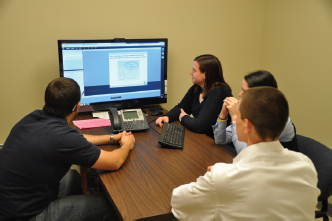
Program Description: The Penn State Learning Factory has two capstone initiatives: (1) teaming with engineers around the globe to mimic the operation of distributed multinational corporate project teams, and (2) teaming with students outside of engineering to mimic the broad, interdisciplinary teaming found in industry. The global project objectives are to: (a) understand the impact of engineering in a global, economic, environmental, and societal context; (b) understand cultural/ ethnic differences and develop the ability to work sensitively with them; (c) function effectively in multinational teams; (d) communicate with people whose first language is not English; and (e) organize and deliver communication around the globe. The cross-college project objectives are to: (a) function effectively in teams with members in multiple disciplines; (b) communicate with people who are not engineers; (c) develop innovative solutions by fusing the creativity from multiple disciplines; (d) incorporate design considerations beyond technical engineering issues; and (e) gain an appreciation for other disciplines’ perspectives on and approaches to design. The initiatives proceeded in coordinated parallel efforts by first engaging faculty partners at foreign universities and non-engineering colleges at Penn State. Course offerings and academic schedules were adjusted and the logistics for staffing, supervision, and operation of the student teams were developed. Industry partners were recruited to provide the projects as well as participate in weekly video/teleconferences, host site visits, evaluate reports and presentations, and provide team feedback. The global projects have been embraced by multinational corporations, with many closely monitoring the activities to improve their own globally distributed teams. Both initiatives leveraged internal and external research to identify best practices and ensure successful engagements.
Anticipated and Actual Outcomes: The anticipated outcomes are that students meet all technical requirements for an engineering capstone design experience, and the global and interdisciplinary teams perform on par with or better than co-located and engineering-only teams. Substantial increases in productivity have been observed from global teams that take advantage of time differences to create a 24-hour work day and from interdisciplinary teams that leverage larger team sizes. Increased awareness of cultural and disciplinary differences and improved communication skills have been observed. Students subsequently entering the workforce noted that the experience helped prepare them to work in a globally distributed, multicultural corporate environment, and many engineering students have shown an increased interest in working for entrepreneurs or local start-up companies. The cross-college partnerships have fueled a five-fold increase in entrepreneurial and start-up firm engagement as industry partners can obtain multiple outcomes from a single capstone project.
Assessment Information: An online intercultural assessment instrument assesses pre/post-program student growth. Penn State and Brigham Young University have partnered to capture, compile, and distribute the best practices for organizing and operating internationally diverse student teams. Technical project and professional outcomes are assessed by supervising faculty; industry feedback is used to assess project outcomes. Intercultural and communications aspects are assessed through team observations, interviews, and a specially prepared assessment instrument. Interdisciplinary interactions on cross-college projects are assessed through surveys and team interviews. An assessment expert in the Leonhard Center for the Enhancement of Engineering Education coordinates both evaluations. Program assessment occurs at department and college levels annually and in detail during each ABET cycle. The Learning Factory director reviews the program three times a year with its Industry Advisory Board; solicits feedback from industry sponsors twice a year; meets with capstone instructors and faculty 2-3 times a year to review the program and individual courses; meets regularly with the associate dean of academic affairs to review program outcomes, space needs, administrative support, finances; and reviews finances with department heads semi-annually.
Funding/Sustainability: For the global projects, $35,000 was used to (1) support faculty time and travel to identify, visit, and engage international university partners and industry sponsors, and (2) purchase improved video-conferencing equipment. For the interdisciplinary projects, 25% academic release time was provided for one year to help establish partnerships. After each initiative was established, faculty and staff time resumed to what was required for the existing capstone design program coordinated through the Learning Factory. The Leonhard Center and College of Engineering provided initial support and NSF supported interdisciplinary design workshops and ongoing research in global team assessment. Departments provide instructional faculty, and the College of Engineering provides two full-time staff positions and a director. Industry sponsorship covers project costs, TA support, student awards, events, maintenance agreements, and equipment upkeep. A recent $1 million endowment will foster new equipment purchases and engagements with entrepreneurs and start-ups. The initiatives have leveraged the equipment, faculty expertise, and resources of the existing capstone design program to expand, and corporate sponsorship of the program has doubled. The educational and organizational co-development between faculty, administrators, and industry partners was critical to ensure sustainability for these projects.

