
The VCU da Vinci Center for Product Innovation
Lead Institution: Virginia Commonwealth University, Richmond, VA
Category: Course/Curricular
Date Implemented: 2007
Website: www.davincicenter.vcu.edu

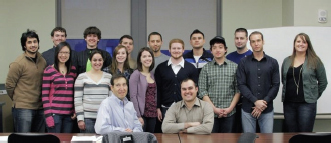
Program Description: An initial collaboration of Virginia Commonwealth University’s (VCU) Schools of the Arts, Business, and Engineering, the da Vinci Center for Innovation’s aims are to (1) prepare students to enter a product innovation career; (2) catalyze innovation through interdisciplinary collaboration among the disciplines of the Arts, Business, Engineering, Humanities, and Sciences; and (3) serve as a resource for advancing interdisciplinary innovation and entrepreneurship. Center offerings include an undergraduate Certificate in Product Innovation, continuing education programs, and a Master of Product Innovation. The primary purpose is to develop analytical, creative, and team skills in students and prepare them to achieve leadership roles in companies and agencies. These skills come from intensive engagement with real problems in real settings, working with students and faculty from complementary disciplines as well as representatives of corporate affiliates and other partners. All da Vinci Center programs embrace innovation from an interdisciplinary perspective and do so by bringing in learning from multiple disciplines. This corresponds to a focus on creating “T-shaped people,” which is advocated by Tim Brown, CEO and president of IDEO. The “T-shaped people” model portrays students as deep in one disciplinary area (e.g., arts, business, or engineering) and augmented with broad knowledge of all aspects of innovation activity. Solidifying the product innovation experience for undergraduates is a capstone project, which synthesizes learning in the program and gives students product innovation experience. Projects have been company-sponsored, although there is the possibility of student-initiated projects that reflect an entrepreneurship element by focusing on business creation upon project completion. The sponsor provides the project context and is engaged with the student team through the semester. Faculty mentors guide the students through the semester to ensure project organization, task understanding, and the meeting of project milestones. Sponsors designate a representative to serve as project liaison. Depending upon the needs and expectations of the sponsor and the team, the project liaison may attend some team meetings. On occasion the team may meet with the team liaison via video conference or travel to the sponsor’s site. Formal meetings with the sponsor occur at mid-semester and the end of the semester, honing students’ communication skills.
Anticipated and Actual Outcomes: Learning objectives for students are to (1) Gain an understanding of and appreciation for interdisciplinary innovation – students are surveyed at various points in the program with pre- and post-scores compared to assess understanding and appreciation for interdisciplinary innovation; (2) Develop product innovation skills – company sponsors evaluate student teams during the capstone course on their abilities to perform product innovation skills while engaging in the capstone project. The criteria of novelty/ aesthetics, fit/synergy, and technical capability/feasibility are employed; these criteria correspond to Arts, Business, Engineering, Humanities, and Science dimensions, respectively; and (3) Hone teamwork skills – faculty mentors evaluate students during the capstone course on their abilities to work collaboratively as team members. Students also conduct a 360 evaluation that includes themselves and their team members. Since 2009, student participation in the da Vinci Center has grown exponentially. A significant reason is the offering of a Seminar in Product Innovation, a speaker series open to all students. Student feedback consistently mentions how the capstone experience broadens their thinking about innovation and working across disciplines. Our company sponsors are satisfied with student deliverables and continue to serve as sponsors.
Assessment Information: Regular meetings with the deans from the Schools of the Arts, Business, and Engineering are held to review Center programs. An annual report is produced. Student appraisals are collected. Alumni of the program are just now beginning their careers and stay connected to the Center and with each other largely because of their positive experiences. They will be followed and asked periodically to relate their experiences in the program with the requirements of their jobs and their progress in their careers. Corporate managers who work with the Center also provide feedback on usefulness of the work product of the teams after the projects are completed.
Funding/Sustainability: Project sponsors have included a number of companies and State of Virginia departments. The Center also has worked with a local entrepreneur to prove a business/technology concept. The deans of VCU’s Schools of the Arts, Business, and Engineering formally established the Center with a $150K commitment by the three schools towards the Center’s operation. An interim Director oversaw the Center until fall 2009 when a full-time Director was hired, and a program coordinator was hired in June 2010. Current annual operational expenses are approximately $280,000, covering 75% of the Director’s salary, 100% of the program coordinator’s salary, faculty mentor stipends, project expenses, design lab equipment, and other expenses necessary to enable successful operations. Since 2007, the only sources of funding have been company sponsorships. MWV Foundation has graciously renewed their support of the Center since its inception. Assuming the Master of Product Innovation meets enrollment goals, the Center will have sufficient funds to support ongoing operations. The Office of Provost has also indicated a willingness to provide the funding to support the Undergraduate Certificate in Product Innovation. Additionally, the Center hosts an executive training program in January; all proceeds of this program go to the da Vinci Center.

