
Winnie Hamilton, director of environmental health at Baylor College of Medicine, opened the Human Capital session by talking briefly about three separate parts or “pillars” of sustainability– social, environmental, and economic. She added to this definition noting that sustainable communities are healthy communities where natural and historic resources are preserved. This “human capital” consists of jobs, homes, education, health care, and opportunities for citizens to improve their quality of life; this is a more people-oriented definition of sustainability. Human capital, along with the built and natural environment, provides the infrastructure for metropolitan regions like Houston. To have a healthy, happy, and prosperous city, stated Dr. Hamilton, this infrastructure needs to be created in a sustainable way.
Stephen Klineberg, professor and co-director of the Kinder Institute for Urban Research at Rice University, described the demographic changes that have occurred in Houston and how the region might be transformed in the future. When Dr. Klineberg first started collecting survey data in 1982, one million people had moved into Harris County during the previous decade, in large part due to the booming oil refining sector and related businesses resulting from dramatic increases in oil prices—rising from $3.20 a barrel in 1978 to $32.50 a barrel in 1982. At that time, 82 percent of Houston jobs were in that sector.
Despite the economic boom, a range of social and environmental challenges, such as traffic congestion, emerging pollution problems, and growing crime rates faced the growing city. Dr. Klineberg and his group conducted what they intended to be a one-time survey in 1982 to measure how people were dealing with the social costs of growth while at the same time reveling in the benefits of a rapidly expanding economy. Two months after the survey, oil prices dropped and continued to fall to $28 a barrel by the end of 1983, resulting in a loss of 100,000 jobs. Dr. Klineberg and his group decided to repeat the survey that year in light of
the loss in jobs and kept repeating it every year after that for the past 30 years. The survey, a representative random sample of Harris County residents who are asked identical questions, has resulted in a valuable dataset on the demographics and reflections of residents in the region.
Dr. Klineberg noted that historically, economic prosperity in the region has not been based on education or human capital, but rather from land and commodities, cotton, timber, cattle, and oil. He noted that this is likely to change in the future, when the source of wealth will have less to do with natural resources and more to do with human capital. Many of the blue collar jobs from the 1970s have left Houston, and future employment will require higher levels of education.
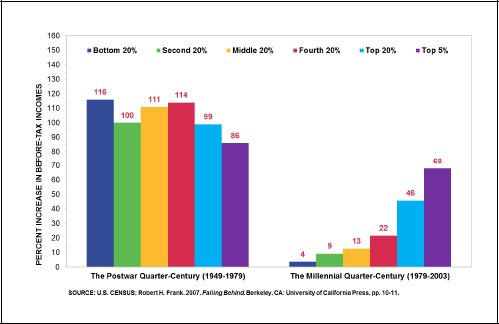
FIGURE 3-1 Increase in incomes from 1949-1979 compared to 1979-2003.
SOURCE: Stephen Klineberg presentation, January 18, 2012.
Not only has the economic structure of Houston changed, but the national economy has also changed with increasing income disparity. Dr. Klineberg presented data comparing the increase in income in the United States from 1949 to 1979 to the increase in income from 1979 to 2003 (Figure 3-1). From 1949 to 1979, the poorest 20 percent of Americans more than doubled their income. The era also saw the emergence of the baby boom generation, as the average American woman gave birth to 3.6 children. In contrast, increases in income from 1979 to 2003 were
concentrated in the top one percent, and mostly in the top one-tenth of that one percent.
Equalizing institutions, noted Dr. Klineberg, need to be established to assure that all Americans are able to share in the prosperity of the country. Accelerating economic growth without any changes is not the way forward. The only way to improve is to invest in the skills of the American worker. Education has become the critical determinant of a person’s ability to earn enough money to have a quality life and support a family. Houston is a good example of social and economic divisions inherent in much of the United States. Houston has one of the greatest medical complexes in the country—the Texas Medical Center—but it also has one of the highest percentages of children without health insurance of any major city in the United States. The gap between rich and poor has become a central political challenge, and new strategies are needed to replace older ones that worked in the past but no longer meet the needs of today’s economy.
Dr. Klineberg described some of the sectors where job growth is most likely. For example, the biotechnology and nanotechnology sectors are expanding with research being conducted at the Texas Medical Center and Rice University. Houston’s economy will move toward more of a knowledge economy, and the city will need to compete to attract the best and brightest people working at the cutting edge and put that knowledge into commercial ventures. This makes quality-of-life issues more important. A striking example is the attitude of business to air quality regulations. Through most of the 1990s, the business community in Houston pushed back against regulations EPA promulgated under the Clean Air Act, insisting that industry would not survive if it had to comply with more stringent standards. Then, in June 1999, newspaper headlines announced that Houston had surpassed Los Angeles in the number of dangerously polluted days (Institute for Health Policy, 2006). Now, Dr. Klineberg commented, the business community sees environmental regulations as far from being anti-growth or anti-business, but rather essential to Houston’s economic prosperity in the 21st century. The business community understands that the city will not continue to prosper if it is perceived as hot, flat, and dangerously polluted.
Another example of progress can be seen in the desire for the revitalization of downtown Houston. In 2010, Dr. Klineberg’s survey asked residents which type of home they would prefer to live in, and 41 percent of all adults in Harris County – one of the most automobile dependent areas in America – responded that they would prefer to live in
a more urbanized area within walking distance of shops and work places (Figure 3-2). And when the 2011 survey asked about the kind of neighborhood people would prefer to live in, 45 percent of Harris County residents expressed a preference for an area with a mix of developments including shops, restaurants, and work places.
The changing demographics of the Houston area, Dr. Klineberg, reflect the changing demographics of the nation in general. Until 1965, 82 percent of all U.S. immigrants came from Europe, another 12 percent were Africans originally brought here as slaves to serve the Europeans, and the remaining were mostly Asian farm workers and laborers. In 1924, Congress enacted the National Origins Quota Act, which limited the number of immigrants allowed into the United States using a national origins quota. The quota provided immigration visas to two percent of the total number of people of each nationality in the United States as of the 1890 national census, and excluded all immigrants from Asia (U.S. Department of State, 2012).
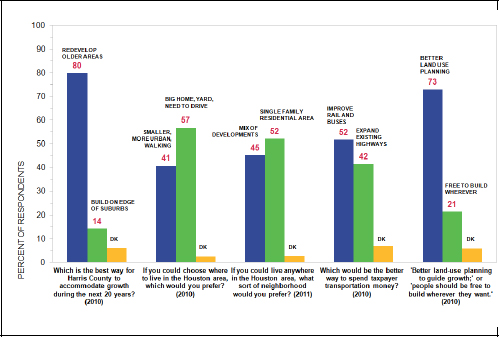
FIGURE 3-2 Select responses from survey of residents in Harris County, TX.
SOURCE: Stephen Klineberg presentation, January 18, 2012.
Following the act, 86 percent of all immigration came from Northern Europe, mostly Germany, Britain, and Ireland (Koven and Götzke, 2010). The act, however, did not survive the shift in consciousness that came with the Civil Rights Movement, and in 1965
Congress changed the law, enacting the Immigration and Nationality Act of 1965 (Hart-Cellar Act). This act abolished the national origins quota system and replaced it with a preference system focusing on immigrants' skills and family relationships with citizens or U.S. residents. Since the passage of this act, millions of people have emigrated to the United States from Asia, Latin America, Africa, and the Caribbean. The United States became a microcosm of the world as the U.S. economy became more fully integrated into a single global economic system.
Dr. Klineberg commented that no other city has been transformed as fundamentally, suddenly, and irreversibly as Houston. In the space of just 30 years, Houston has become one of the most ethnically and culturally diverse cities in the country. Whereas the city was predominately Anglos in the 1980s, by the 2000s, no ethnic group held a majority. In the 2010 survey, the population of Houston was 7.7 percent Asian, 18.4 percent African American, 33 percent Anglos, and 40.8 percent Hispanic (Figure 3-3). The changing demographics of Houston have been one of the key drivers to keeping the city a vibrant metropolitan area. Other cities in the United States have been losing population. Dr. Klineberg also discussed the changing age distribution in Houston and the rest of the country; 76 million babies were born in the United States between 1946 and 1964, and the leading edge of those baby boomers turned 65 in 2011. The number of Americans over the age of 65 will double in the next 25 years, a trend that will have major effects on Social Security and Medicare benefits. Anglos are overrepresented among the baby boomers with young people disproportionately non-Anglo. Nowhere is that more obvious than in Houston, Dr. Klineberg noted. Of all the people currently living in Harris County aged 65 and older, 69 percent are Anglo, 18 percent are African American, 11 percent are Hispanic, and 2 percent are Asian. In the age group 18 to 29, the percentage of African American, Asian, and above all Hispanic surges – 22 percent are African American, 45 percent are Hispanic, and 10 percent are Asian (Figure 3-4).
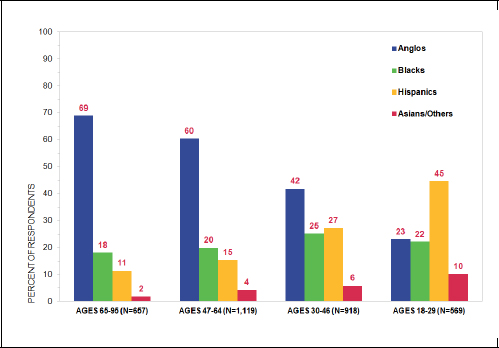
FIGURE 3-3 Change in demographics in Texas from 1960 - 2010.
SOURCE: Stephen Klineberg presentation, January 18, 2012.
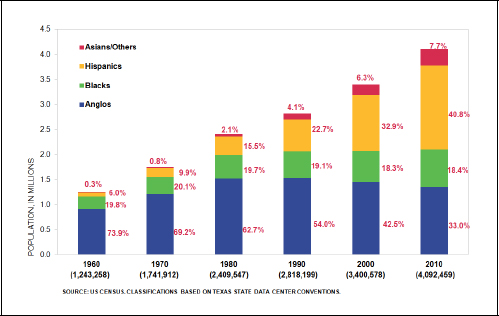
FIGURE 3-4 Change in demographics in Texas across age groups.
SOURCE: Stephen Klineberg presentation, January 18, 2012.
One of the biggest assets that Houston could have, stated Dr. Klineberg, is the ability to contribute to a multi-ethnic economy for the 21st century. To prosper in a new high-technology, knowledge-based, world-wide economy, Houston and the nation as a whole will need to nurture a far more educated workforce and fashion policies to reduce inequalities and prevent the rise of a new urban underclass. The Houston metropolitan region will need to grow into a more aesthetically and environmentally appealing destination in order to attract the most innovative companies and talented individuals. Houston will also need to develop the research centers that will fuel the growth of this new economy. And in order to have an economy that flourishes, stated Dr. Klineberg, it will need to develop into a more united and inclusive multiethnic society, where equality of opportunity is truly made available to all residents and where all communities are empowered to participate as full partners in shaping the future.
Sustainable and Healthy Communities
Winifred Hamilton said that the World Health Organization definition of environmental health encompasses “those aspects of human health including quality of life that are determined by physical, chemical, biologic, social, and psychological factors in the environment”. These factors in the environment affect the ability of people in metropolitan regions to build healthy lifestyles, develop personal and neighborhood resilience during disasters, and foster sustainable futures. Dr. Hamilton added that we need to have a resilient and healthy population capable of facing future challenges and improving the quality of life for coming generations. The role of the public health sector is to tie together these many facets of a healthy lifestyle.
Brenda Reyes, chief of the Bureau of Community and Children Environmental Health at the Houston Department of Health and Human Services, explained that sustainability and resilience start at the home with families. The lack of clean and affordable housing is a national problem that is increasing economic stress on families and communities. It is vital for Houston to build and maintain healthy, sustainable, and affordable housing for its citizens, because housing is at the heart of the community. Additionally, she noted, healthy housing and improvements in energy efficiency generate higher resale value and equity for homeowners, and the communities they form will see lower crime rates and greater neighborhood involvement. Studies show that children growing up in healthy housing are less likely to suffer from respiratory
problems, and are more likely to succeed in schools and society. Homes built prior to 1978 are most likely to be the ones that put children’s health at risk due to lead-based paint, mold, leaking water, and other environmental hazards (Figure 3-5). Dr. Reyes emphasized that sustainable housing includes both personal dwellings and office buildings. These should be located in neighborhoods that are close to jobs, walkways and bikeways, public transport, and community centers. Neighborhoods such as these promote personal health and safety, community engagement, prosperous local business, and local economies and jobs. Community engagement is key, Dr. Reyes noted. For example, property that is not maintained well becomes infested with pests, making a single property a neighborhood-scale issue and responsibility.
Seven Principles of Healthy Housing
- Dry
- Clean
- Pest-Free
- Safe
- Contaminant-Free
- Ventilated
- Maintained
Brenda Reyes, Houston Department of Health and Human
Services January 18, 2012
Healthy and sustainable housing also reduces the environmental impact of that housing. Sustainable homes have a smaller carbon footprint, conserve more resources and raw materials, and have lower utility and water bills, Dr. Reyes commented. Lower bills provide financial rewards to homeowners and help them recoup the upfront costs of renovating to install higher efficiency systems. Sustainable homes are also healthy homes with better air quality, resulting in less exposure to mold and chemical toxins, as well as greater durability and reduced maintenance. These high-performing homes require less upkeep and fewer repairs, saving money and time, which contributes to more quality family time, comfort, and increased home values. The most important factor in making communities more resilient and sustainable is the human component, Dr. Reyes said, and in order to have buy-in and make
further progress, communities need to believe that they can and should be healthy.
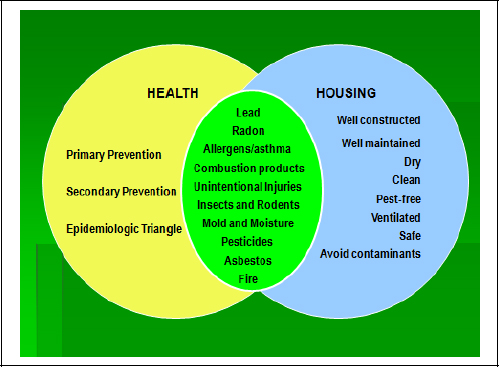
FIGURE 3-5 Eliminating or reducing environmental toxins shown in the overlapping section of the Venn diagram is key to healthy housing.
SOURCE: Brenda Reyes, presentation, January 18, 2012
Herminia Palacio, director of Harris County Public Health and Environmental Services, discussed the concept of “community capital”. Capital, from a business case perspective, can be thought of as the cash or goods to generate income either by investing in a business or in a different income-generating property; the net worth of a business – the amount by which its assets exceed its liabilities; or the money, property, and other valuables which collectively represent the wealth of an individual or business. The economist Gary Becker defined human capital as investments in education, expenditures in health care, and other activities that raise earnings, improve health, and add to a person’s assets over time. Using this definition, Palacio stated that expenditures on education, training, and medical care, for example, can be considered investments in human capital.
Dr. Palacio described community capital as using sound policy and funding strategies to generate sustainable and healthy communities by investing in quality education, sustainable environmental planning, and equitable economic development opportunities. Instead of the net worth of a business, the amount by which a community’s health assets sustainably and equitably exceed its health liabilities is equivalent to the “net health” of that community. Instead of money or property and other valuables that collectively represent the wealth of an individual or a business, the health of a community is represented by its educational and economic opportunities.
Dr. Palacio noted that from a planning and environmental health perspective, developing sustainable communities is really about protecting public health and developing healthy communities. The Obesity Prevention Collaborative, funded by the Houston Endowment, is a good example of a health policy program providing a pathway to urban sustainability. The collaborative is a two-year community planning process with the ultimate goal of developing a robust, comprehensive plan to address obesity, diseases associated with obesity, and chronic diseases more broadly in Harris County.
There are two well-established tools that make this community planning process possible, Dr. Palacio said. The first is the Mobilizing Action for Planning and Partnerships (MAPP) process, and the other is the Protocol for Assessing Community Excellence in Environmental Health (PACE EH). These tools bring together multiple sectors—business, education, development and urban planning—in government-private partnerships to examine changes that are needed in policies, systems, and the environment.
Several grants awarded to the Harris County Public Health and Environmental Services address policy systems, Dr. Palacio said. She described a grant funded by the Centers for Disease Control and Prevention (CDC), the Community Transformation Grant, which supports community-level efforts to reduce chronic diseases such as heart disease, cancer, stroke, and diabetes, in the hopes that these efforts will improve health, reduce health disparities, and control health care spending in these communities. Similarly, a Community Prevention Grant is addressing tobacco use, mental health and substance abuse, and the need for physical activity.
Dr. Palacio noted that the Sustainable Communities Regional Planning grant received by the Houston-Galveston Area Council also supports planning efforts that “integrate housing, land use, economic and
workforce development, transportation, and infrastructure investments in a manner that empowers jurisdictions to consider the interdependent challenges of: (1) economic competitiveness and revitalization; (2) social equity, inclusion, and access to opportunity; (3) energy use and climate change; and (4) public health and environmental impact”.9 These three grants were awarded nearly simultaneously, noted Dr. Palacio, and require close communication and contact among the funded organizations. The project leaders of these grants are actively identifying opportunities for synergy and ways to minimize duplication. By aligning planning processes, the organizations are working together to achieve their individual missions and to optimize benefits for the community.
Dr. Palacio concluded her talk by challenging the group to think about how to develop some clear and consistent language related to complex problems that arise in creating more sustainable communities. For example, she noted that in talking about resilience, there is often confusion about what this refers to and what mitigation strategies should be used, as well as the costs of those strategies. Similarly, when talking about adaptability, the goals and outcomes are not often clear. Dr. Palacio noted that the words we choose do matter because they help us move forward together.
Natasha Prudent, health scientist with the National Center for Environmental Health, Centers for Disease Control & Prevention (CDC), provided a brief overview of the health impacts of climate change. Health impacts associated with climate change generally fall into three broad categories: (1) weather-related impacts; (2) impacts related to environmental changes that occur in response to climate change; or (3) impacts resulting from the consequences of climate-induced economic dislocation, environmental decline, and conflict. Health effects associated with weather are somewhat more easily quantifiable, because they can be measured using indices such as deaths and injuries due to extreme weather events, including flash floods, wildfires, and extreme heat waves.
The second category of health impacts, those resulting from environmental changes that occur in response to climate change are more difficult to quantify because these changes are not limited to a specific health effect; instead, other, more-complicated factors are involved such
_______________
9 Availabile at http://portal.hud.gov/hudportal/HUD?src=/program_offices/sustainable_housing_communities/sustainable_communities_regional_planning_grants.
as the built environment or population dynamics. An example of this type of health impact would be the spread of infectious diseases due to changes in ambient temperature, Ms. Prudent said. The last category of health impact related to climate change includes climate-induced economic dislocation, environmental decline, and conflict. This category is the most difficult to quantify and is typically discussed as a qualitative measure—for example, the rise in domestic violence among hurricane evacuees who are relocated. Ms. Prudent noted that mechanisms such as climate adaptation measures could help mitigate many of these health effects.
Ms. Prudent discussed CDC’s efforts to develop vulnerability assessments or decision support tools to help states and public health entities identify communities most vulnerable to health problems resulting from climate change, as well as adaptation measures and resiliency efforts that could reduce those effects. CDC found that vulnerability can vary significantly depending on scale; for example, vulnerability is likely to be less at the state level than at the county or census block levels.
Ms. Prudent stated that the CDC developed vulnerability assessments for Travis County, Texas, which along with Austin, is participating in the Climate-Ready Cities and States Initiative. This initiative offers localities assistance in developing and using models to predict climate-related health impacts, monitor health effects, and identify those areas that are most vulnerable to these effects. So far, health impacts have not generally been a part of the climate change discussions. The CDC program focuses on climate policies that could benefit human health, and identifies communities within Travis County where policies can be developed to address the built environment and social demographics, in addition to human health.
Two natural hazards—extreme heat and flash flooding—were identified as critical priorities in Travis County as a result of this assessment, Ms. Prudent said. To conduct the vulnerability assessment, CDC evaluated various social measures in Travis County, including population density, ethnicity, age, renters’ status, low educational attainment, primary language spoken at home, prevalence of disability, and measures of low income and public assistance. For the built environment, measures of impervious surface or lack of vegetative cover, and average surface temperature were used. To assess flood vulnerability, data for 100-year floods and the density of low water crossings were used.
To evaluate health issues associated with extreme heat, CDC assessed cardiovascular and hypertension mortality and diabetes. Ms. Prudent noted that the literature supports a fairly strong relationship between heat vulnerability and cardiovascular mortality. With extreme events, pre-existing chronic conditions tend to be exacerbated—a concern given the large demographic shift from a younger population to an elderly one in the region. When heat events do occur, there tends to be a corresponding spike in cardiovascular deaths. This is somewhat due to public health departments classifying these deaths as cardiovascular in nature rather than due to hyperthermia. Flood-related health effects tend to be more difficult to understand, and there has been little research to date on this issue; however, some data are available on displacement associated with flooding.
CDC developed several vulnerability maps of the county to identify communities at risk of impacts from extreme heat and flooding, Ms. Prudent said. The purpose of the maps was to assist city planners in thinking about land use; for example, to determine where to plant trees to lessen the urban heat island effect. Two areas were identified as having high vulnerability—both socially and in terms of the built environment—due to extreme heat events and their resulting negative health outcomes. The high vulnerability was driven by population demographics. One area includes a poor, traditionally minority community. Another area highly vulnerable to extreme heat included a community with a significant elderly population. The agency also developed vulnerability maps for flooding, and found that an indicator for a highly vulnerable community was one that is traditionally minority and had experienced flooding in the past.
It is important to look at vulnerability assessments not only from the perspective of science but also from the perspective of a community’s human and cultural dynamics, said Ms. Prudent. These dynamics offer an appreciation for the community and understanding of the implications of policy decisions. Also, without understanding the community, it may not be possible to gain the buy-in needed to successfully implement policies.


