
2
Findings, Conclusions, and Recommendations
THE NASA STRATEGIC PLAN AND STRATEGIC DIRECTION
The Committee on NASA’s Strategic Direction was tasked to assess whether NASA’s strategic direction, as defined by the 2011 NASA Strategic Plan (NASA, 2011; described in Chapter 1), remains viable and whether the agency’s activities and organization efficiently and effectively support that direction in light of the potential for constrained budgets for the foreseeable future. The 2011 strategic plan is tied (as required by law) to NASA’s current budget. Whereas the Government Performance and Results Act was intended to require federal departments and agencies to state their priorities in their published strategic plans, the 2011 strategic plan is vague and avoids stating priorities. While the 2003 and 2006 NASA strategic plans were similarly lacking in prioritization, the current fiscally challenged era requires much clearer justification and prioritization for the plan to be meaningful. The 2011 strategic plan contains vision and mission statements as well as six strategic goals, as described in Chapter 1. While there are clear linkages between current NASA programs and the goals, there is no explicit prioritization among the goals in the 2011 strategic plan. For instance, there is no clear linkage between the details in the plan and the space exploration goals and priorities established by the administration in terms of sending astronauts to an asteroid as an interim destination before sending humans to orbit and eventually to land on Mars. In turn, the definition of these goals also contributes to the lack of clarity in strategic direction. For example, Strategic Goal 2 combines Earth science and space science and thus does not set a clear strategic objective for either one, nor does it establish or discuss priorities among the two areas. In addition, Strategic Goal 3 (create innovative new space technologies), Strategic Goal 5 (enable program and institutional capabilities to conduct NASA’s aeronautic and space activities), and Strategic Goal 6 (share NASA with the public, educators, and students to provide opportunities to participate in NASA’s mission, foster innovation, and contribute to a strong national economy) are not necessarily goals unto themselves, but rather are elements in an enabling strategy to accomplishing goals 1, 2, and 4.
Finding: The vision statement for NASA in the 2011 NASA Strategic Plan—to reach for new heights and reveal the unknown, so that what we do and learn will benefit all humankind—does not articulate a national vision that is unique to the nation’s space and aeronautics agency.
Finding: The mission statement for NASA in the 2011 NASA Strategic Plan—drive advances in science, technology, and exploration to enhance knowledge, education, innovation, economic vitality, and stewardship of Earth—does not articulate a mission unique to the nation’s space and aeronautics agency.
Finding: Both the NASA vision and mission statements are generic statements that could apply to almost any government research and development (R&D) agency, omitting even the words “aeronautics” or “space.” NASA’s current vision and mission statements do not explain NASA’s unique role in the government and why it is worthy of taxpayer investment. The non-specificity of the vision and mission statements is a contributing factor to the confusion about NASA’s overall strategic direction.
Conclusion: The 2011 NASA Strategic Plan (like some prior NASA strategic plans) is broad in scope and vague on details, without a clearly defined plan about how to achieve the agency’s goals and objectives. In addition, the document avoids stating any clear prioritization of the goals described therein. Consequently, the strategic plan, as formulated, does not provide sufficient strategic clarity or the guidance that NASA will require as the agency deals with the technical, programmatic, and budgetary challenges that are likely in the next 10 to 50 years.
The above troubling aspects of the 2011 NASA Strategic Plan render it of little value from the perspective of establishing clear and unifying strategic directions for NASA—the nation’s space and aeronautics agency—or establishing a sound rationale for engaging with the administration and the Office of Management and Budget about out-year funding requirements. The committee also notes that the goals and sub-goals in the strategic plan are not fully supported by NASA’s existing program.
Since the end of the Apollo program in the early 1970s, the human spaceflight program has been much more capability driven than mission driven. For example, the Space Shuttle Program was capability driven, in that it was intended to provide a new capability (low-cost transportation to low Earth orbit [LEO]) that was not tied to any particular mission (see Figure 2.1). The Department of Defense (DOD) spent considerable amounts of money to develop shuttle facilities, particularly at Vandenberg Air Force Base, and planned specific satellite deployment missions for LEO. Similarly, the International Space Station (ISS) is a capability—a laboratory in space whose utilization is beginning only now.
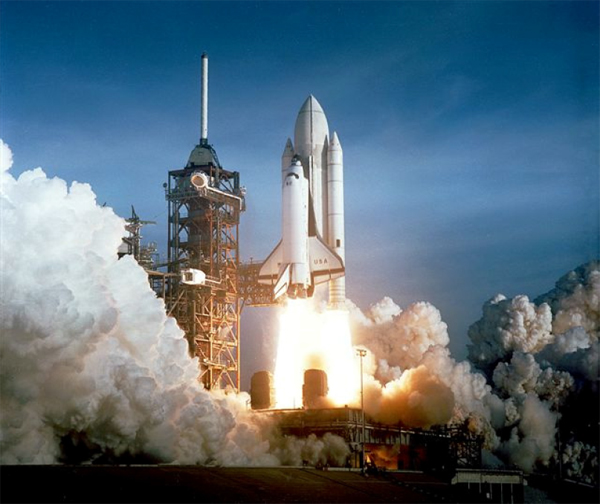
FIGURE 2.1 The April 12, 1981, launch at Pad 39A of STS-1, the first space shuttle mission. SOURCE: NASA.
During the course of the study, the committee heard that more than 2 years after the President announced the interim goal of sending humans to an asteroid by 2025 there has been little effort to initiate such a mission. There are still no good asteroid targets for such a mission, a necessary prerequisite for determining mission length and details such as the astronauts’ exposure to radiation and the consumables required. There is also no indication that NASA is undertaking the sort of comprehensive search necessary to identify asteroid targets. In addition, no hardware, such as a habitation module, is under development. The committee also heard from NASA officials that an asteroid mission is more difficult to accomplish and has less utility for developing equipment and operations for an eventual Mars landing mission than they initially believed. For example, unlike a lunar surface mission, an asteroid mission does not result in the development of equipment or operations necessary for eventual Mars missions. While the committee did not undertake a technical assessment of the feasibility of an asteroid mission, it was informed by several briefers and sources that the current planned asteroid mission has significant shortcomings. Despite isolated pockets of support for a human asteroid mission, the committee did not detect broad support for an asteroid mission inside NASA, in the nation as a whole, or from the international community. In contrast, as noted in Chapter 1 (see Box 1.1), three of the last four U.S. presidents (dating back to 1989) have endorsed a mission to Mars as a long-term goal for the human exploration of space.
Finding. Human exploration. The committee has seen little evidence that the current stated interim goal for NASA’s human spaceflight program—namely, to visit an asteroid by 2025—has been widely accepted as a compelling destination by NASA’s own workforce, by the nation as a whole, or by the international community. Although asteroids remain important subjects for both U.S. and international robotic exploration and study, on the international front there appears to be continued enthusiasm for a mission to the Moon but not for an asteroid mission. This lack of national and international consensus on the asteroid-first mission scenario undermines NASA’s ability to establish a comprehensive, consistent strategic direction that can guide program planning and budget allocation. The current program has significant shortcomings in the pursuit of the stated goal of the asteroid mission. There has been a long-standing general agreement that a human mission to Mars should be the long-term goal of the human spaceflight program, even though a near-term commitment to such a program is still pending.
In the area of Earth and space science, NASA has clearly demonstrated the success of the strategic planning process that is founded on the National Research Council’s (NRC’s) decadal surveys. The decadal survey process has matured into a robust method of developing a set of goals and objectives for the Science Mission Directorate’s various programs that are based on a scientific community consensus on an achievable suite of science programs in pursuit of high-priority, compelling science questions. However, even the best strategic plan is vulnerable to severe changes in the assumptions that underlie its development, whether those changes are applied internally or externally. As an example, the recent set of surveys on astronomy and astrophysics and on planetary science were based on budget projections provided to the relevant decadal committees, and now these projections exceed the current budget as well as current budget projections. In addition, poor cost control in major missions under development has further strained the budget, with consequences described in Chapter 1.
Finding. Earth and space science. Key decadal survey priorities in astronomy and astrophysics, planetary science, and Earth science now will not be pursued for many years, or not at all. The carefully crafted strategic planning process, with its priority setting and consensus building, that has led in the past to the United States leading the world, with science missions such as the Curiosity rover on the surface of Mars and the Hubble Space Telescope, is now in jeopardy because it no longer may lead to a tangible program outcome.
In the area of aeronautics, NASA faces a different set of issues. Although it is difficult and risky to make year-to-year budget comparisons even within agencies such as NASA, because accounting procedures change regularly and therefore budgets do not necessarily include the same assumptions and categories from year to year, it is clear that the NASA aeronautics program has significantly less money now than it did at the end of the 1990s. In 1999, for example, the NASA aeronautics budget was $768.9 million (in 1999 dollars), whereas by FY2012 the budget was $570 million (in current-year dollars). Reduced funding over the past 15 years has necessitated the technical diversification of all of the traditionally “aeronautics” NASA centers (Langley, Glenn, Ames, and Dryden), with increasing proportions of the workforce devoted to programs in human and robotic spaceflight, Earth science, and space technology. While this is not necessarily a bad thing, it seems highly inefficient to redirect scientists and engineers to work on programs for which greater expertise lies at another center, and not to have those scientists and engineers pursue R&D in areas for which they have facilities and expertise and for which there are clear national needs. The current priorities of the Aeronautics Research Mission Directorate include a number of these areas of national need, such as ambitious programs in fundamental, cutting-edge aircraft technologies; systems-level integration for Next Generation Air Transportation Systems (NextGen), including air traffic management; and green aviation/energy efficient aircraft (NASA, 2012a). Yet with a limited budget and aging infrastructure, including national assets such as wind tunnels and flight test vehicles, the maintenance of a robust aeronautics program is highly challenging.
During the course of its deliberations, the committee did not hear a clear rationale for the overall decline in NASA aeronautics spending during the past 10-12 years. In some cases, it appears as if shortfalls in other NASA budgets, such as human spaceflight, resulted in reductions in the aeronautics budget to pay for them. In other cases, such as recent proposals to essentially eliminate NASA’s hypersonics research budget, it appears as if there may have been external leadership decisions beyond NASA that led to focusing that research at DOD, without any clear explanation of rationale. Although the committee’s statement of task did not allow it to recommend budget levels, the committee did conclude that an important federal resource was being underutilized and slowly atrophying without clear recognition or explanation.
Finding. Aeronautics. The NASA aeronautics program historically has made important contributions to national priorities related to the U.S. air transportation system, national defense, fuel-efficient air vehicles, and those portions of the space program that include flight through Earth’s atmosphere. Despite continued requirements for the development of highly efficient aircraft, alternative aviation fuels, safe air traffic systems, and other high-priority areas, budget cuts have limited NASA’s role in solving these important problems. The committee therefore finds that the full potential of the aeronautics program is not being achieved.
The FY2011 budget request for NASA projected that the Space Technology Program would receive a budget of just over $1 billion annually from FY2012 through FY2016 (OMB, 2011). Congress responded by providing little more than half of the requested amount (Public Law 112-55, 2011), and the FY2013 budget request for NASA is now projecting reduced expectations of $700 million annually (OMB, 2012). Even if Congress were to provide more funding in FY2013 than it did in FY2012, it would be difficult to support substantial research across the broad scope that NASA has established for the Space Technology Program. The Office of the Chief Technologist, which manages the Space Technology Program, has drafted individual technology development roadmaps for 14 distinct technology areas that it expects the Space Technology Program to investigate. These technology areas include ground systems, launch systems, spacecraft, human health, robotics, descent and landing systems, and other related technologies (NASA, 2012b). A recent report by the NRC identifies the highest-priority technologies among the 320 technologies addressed in NASA’s 14 draft roadmaps (NRC, 2012).
Finding. Space technology. The recently established Space Technology Program has carried out a roadmapping and priority-setting strategic planning process, assisted by the NRC, but the program has yet to be funded at the levels requested by the President’s budget.
MISMATCH BETWEEN NASA’S BUDGET AND PORTFOLIO
The committee has examined the current NASA budget and found that it is mismatched to the current portfolio of missions, facilities, and staff. This mismatch reduces NASA’s ability to achieve the broad scope of activities it is directed to address. In addition, suboptimal effectiveness and efficiency is one byproduct of an amorphous mission statement. This problem is sometimes exacerbated when NASA pursues highly challenging technological programs (such as the space shuttle, the ISS, and the James Webb Space Telescope), with initial budgets that prove to be far too little to complete the missions. This situation occurs, in part, because the current approach to approving and funding projects incentivizes overly optimistic expectations regarding cost and schedule (NRC, 2010). In the end, if NASA fails to deliver, it earns a reputation for over-promising and underperforming. On the other hand, if a major mission meets or exceeds expectations, cost overruns may be forgotten.
There are likely to be opportunities for more cost-efficient management of the NASA budget— through, for instance, allowing NASA to adjust the size of its civil service workforce as needed, streamlining infrastructure, relying more on cost-shared partnerships, and directly addressing the factors that lead to cost overruns (NASA, 2010). However, there remains significant uncertainty as to whether NASA will be able to obtain budget increases to more effectively and efficiently implement its current program portfolio or whether programs need to be terminated or restructured in order to achieve a healthy program portfolio within the current budget level. Tighter budget constraints highlight fundamental choices within the program portfolio, particularly with regard to the relative emphasis and funding among the human exploration, space science, Earth science, aeronautics, and technology development programs. This points to the critical need for a strategic plan that has clear priorities and a transparent budget allocation process.
While robotic exploration is a necessary precursor to human exploration of, say, Mars or an asteroid, possibly decades of investment are required to overcome the extraordinary technological challenges in protecting humans transported to and from Mars (both from radiation and the effects of microgravity or partial gravity), potentially costing hundreds of billions of dollars, if not more (Weaver and Duke, 1993; NRC, 2011b). The design and development costs of a heavy-lift launch vehicle are particularly high, which is a primary reason why recent designs have evolved from legacy systems (as are both former Constellation and present Space Launch System [SLS] vehicles). In addition, launch vehicle programs are most successful and affordable when there are multiple launches to amortize the cost of infrastructure and the personnel required to build and operate them. That is problematic for the heavy-lift vehicle unless NASA can develop multiple users either internally (i.e., science programs) or externally, such as DOD or international customers. Doing so may be challenging for the simple reason that large payloads that could use the SLS tend to be expensive payloads, which are rare.
At the time of its review of NASA in October 2009, the Augustine committee stated that “no plan compatible with the FY 2010 budget permits human exploration to continue in any meaningful way” (Executive Office of the President, 2009, p. 16). The Augustine committee concluded that in order for NASA to pursue a mission of sending humans beyond LEO, NASA required additional funding of $3 billion more per year. For human exploration of an asteroid and then Mars, even within a few decades, it is not clear that even $3 billion per year is sufficient.
NASA is currently engaged in public-private partnerships in which it funds industry to develop new launch vehicles and transportation systems to meet NASA requirements (currently in LEO), while giving industry a broad flexibility to design a vehicle that will meet those requirements. According to
NASA, its Commercial Crew and Cargo Program aims “to stimulate efforts within the private sector to develop and demonstrate safe, reliable, and cost-effective space transportation capabilities.”1 The program manages the Commercial Orbital Transportation Services (COTS) partnership agreements with U.S. industry, initiated in 2006, totaling $800 million for cargo transportation demonstrations. When requested, NASA also contributes technical expertise assistance.2 Among recent successes, for example, under NASA’s Commercial Resupply Services program, the SpaceX Falcon 9 medium-lift launch vehicle and Dragon spacecraft demonstrated successful berthing and cargo delivery to and return from the ISS. NASA anticipates that this approach will reduce costs to the government relative to a traditional acquisition process, but the final cost results are incomplete. Encouraging the development of space transportation capabilities with reduced government involvement is valuable to the United States in its own right in building an eventual commercial space industry that can serve customers other than NASA, but it has not yet been demonstrated that it will be a reliable strategy to reduce NASA’s costs. NASA has historically developed specific rocket launch vehicles (e.g., the Saturn V, the space shuttle, and SLS under development) for its human spaceflight program. Other domestic launch vehicles such as the Pegasus, Delta II, and Atlas V have been used for NASA’s other space missions, hence NASA’s substantial historical investment in launch systems has been almost exclusively for human space exploration. DOD has not made use of NASA launch vehicles for military missions to any significant degree other than the space shuttle during a short period of time. This is in part because there have been distinct heavy-lift requirements for NASA and DOD missions, but this also arises from historically negotiated differences in emphasis between NASA and the DOD on reusable versus expendable systems.
Recent advances in new NASA-sponsored “commercial”3 launch ventures have been promising for restoring access to the ISS using domestic launchers. NASA still requires a heavy-lift launch vehicle for human exploration beyond LEO, and it is possible that at least one of these “commercial” launch vehicle systems currently focused on the ISS could evolve to having heavy-lift capability. Given the commonalities in technology and industrial base, as well as similarly high standards for mission assurance, coordinated development of new launch vehicles by NASA and DOD may be a more effective approach to advancing U.S. competence in launch vehicle technologies.
Currently, space operations and exploration programs that encompass the agency’s human spaceflight activities constitute nearly half of the NASA budget, while Earth and space science constitutes 29 percent of the budget and aeronautics constitutes just 3 percent of the budget. (See Figure 2.2.) These percentages are modified to a degree by the uneven distribution of cross-agency support among the centers.
Finding: NASA’s budget has been remarkably stable at the top level for more than a decade. However, there has been some instability at the programmatic level and the out-year projections in presidential budget requests are unreliable, which makes it difficult for program managers to plan activities that require multi-year planning.
Finding: With the current available budget-driven approach, intermediate milestones and completion dates for some programs have been delayed. This in turn results in a lack of tangible near-term performance outcomes from cost-inefficient programs that only extend the lifespan of fixed and indirect costs.
Finding: Stretching programs out limits opportunities for NASA to develop and incorporate new technology into program architectures.
1 See http://www.nasa.gov/offices/c3po/home/.
2 See http://www.nasa.gov/offices/c3po/about/c3po.html.
3 Although the term “commercial” is used here, these activities are from government contracts with the private sector.
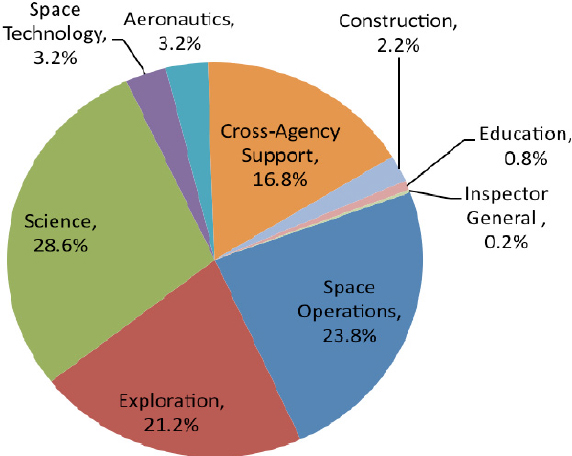
FIGURE 2.2 NASA budget allocation, FY2012. SOURCE: Consolidated and Further Continuing Appropriations Act (2012, P.L. 112-55, 2011).
Conclusion: There is a significant mismatch between the programs to which NASA is committed and the budgets that have been provided or anticipated. The approach to and pace of a number of NASA’s programs, projects, and activities will not be sustainable if the NASA budget remains flat, as currently projected.4 This mismatch needs to be addressed if NASA is to efficiently and effectively develop strategic directions of any sort.
Conclusion: To reduce the mismatch between the overall size of its budget and NASA’s current portfolio of missions, facilities, and personnel, the White House, Congress, and NASA, as appropriate, could use any or all of the following four (non-mutually exclusive) options. The committee does not recommend any one option or combination of options but presents these to illustrate the scope of decisions and tradeoffs that could be made. Regardless of the approach or approaches selected eliminating the mismatch will be difficult.
• Option 1. Institute an aggressive restructuring program to reduce infrastructure and personnel costs to improve efficiency.
• Option 2. Engage in and commit for the long term to more cost-sharing partnerships with other U.S. government agencies, private sector industries, and international partners.
• Option 3. Increase the size of the NASA budget.
• Option 4. Reduce considerably the size and scope of elements of NASA’s current program portfolio to better fit the current and anticipated budget profile. This would require reducing or eliminating one or more of NASA’s current portfolio elements (human exploration, Earth and space science, aeronautics, and space technology) in favor of the remaining elements.
4 For example, if the budget falls, in constant dollars, from $18.4 billion in FY2011 to $16.6 billion in FY2017, in FY2011 dollars.
The committee recognizes that attempting to eliminate the mismatch between the overall size of the NASA budget and its current portfolio of missions, facilities, and staff using any one of the above options, or even several options in combination, would be difficult programmatically and politically. While joint development and cost sharing have been pursued in the past, partnerships between NASA and other U.S. government agencies as well as those between NASA and international entities have not always proceeded smoothly, and in some cases have not been successful. Yet, implementing some of the options could have far-reaching consequences for NASA’s current and future ability to achieve important goals in one or more of the agency’s core mission areas. The ultimate impact of this budget-portfolio mismatch will likely be far greater unless it is addressed comprehensively and strategically rather than in an ad hoc fashion year by year.
Various organizational restructurings exist for NASA, although the committee was unaware of any detailed study of them and is not endorsing such an option, only noting that it exists. Naturally, it would require careful thought.
Cost-sharing partnerships can take many forms. For example, NASA’s Stennis Space Center currently shares facilities costs with other government tenants such as the U.S. Navy; NASA and the U.S. Air Force have jointly developed and tested research aircraft; and NASA is developing commercial cargo and commercial crew capabilities where private industry provides some of its own money for development, based on the assumption that a new market will emerge.
Each of the above options, with the possible exception of Option 2, would require legislative action. Every option except for Option 3 would require substantial changes within NASA in order to substantially address the mismatch between NASA programs and budget. Before any of those options are implemented, the advantages and disadvantages, including possible unintended consequences, deserve careful consideration. For example, if not handled carefully, Option 1 could constrain future mission options or increase future mission costs if unique facilities needed by future missions are decommissioned. Option 1 might also diminish NASA personnel capabilities if changes in policies prompted large numbers of key personnel to retire or seek other employment. To be effective, Option 2 may require congressional authorization for NASA to make long-term financial commitments to a particular program to assure prospective partners that neither NASA nor Congress will unilaterally cancel a joint program. Option 3, of course, is ideal from NASA’s perspective, but it also seems unlikely given the current outlook for the federal budget. Option 4 is perhaps the least attractive, given the value of each major element in NASA’s portfolio.
In addition, there is also the question of balance among major NASA activities. For example, should the agency spend as much money as it currently does on space and such a small percentage on aeronautics, or should they be adjusted? For every dollar that NASA spends on aeronautics, it spends $23 on space-related activities (space operations, exploration, science, and technology).
Although the committee has identified significant impacts of current budget constraints on the individual programs at NASA and has described the kinds of options that would have to be considered to address the mismatch between the scope of NASA’s programs and the budget, it has not attempted to judge the appropriateness of the distribution of resources among these programs. Moreover, it would have been difficult to do so because of the absence of stated priorities that would provide a framework for making that assessment. The committee was not tasked with making such judgments.
ESTABLISHING A STRATEGY AND STRATEGIC VISION FOR NASA
The committee’s statement of task requires the committee to recommend how NASA could establish and effectively communicate a common, unifying vision for NASA’s strategic direction that encompasses NASA’s varied missions (Appendix A). In some ways this task is based on a flawed premise, for NASA does not set its own vision. NASA is the National Aeronautics and Space Administration, and it implements the nation’s strategic direction for aeronautics and space activities under its purview. The nation’s vision for NASA is properly set by the White House and Congress on
behalf of the American people. NASA implements a strategy based on policies and laws—including budgets—set by the White House and Congress with regard to the two largest elements of NASA’s program. The decadal surveys for NASA’s science mission describe the scientific consensus for future missions in that area, but a clear consensus does not exist with regard to human exploration. Conventional wisdom is that the nation’s vision for human spaceflight is set by a President in a major speech and supported by Congress thereafter. That example has only worked once (for the Apollo program, although even during Apollo there was considerable skepticism expressed by some members of Congress and the public).
NASA and the nation would also be well-served by adopting a set of strategic goals and objectives that are clearly defined so that they effectively communicate the agency’s priorities. Currently, some of the goals and outcomes in the 2011 NASA Strategic Plan are so vague as to provide little practical information on the intended direction or priorities of NASA programs (see Box 1.2).
Conclusion: There is no national consensus on strategic goals and objectives for NASA. Absent such a consensus, NASA cannot reasonably be expected to develop enduring strategic priorities for the purpose of resource allocation and planning.
Recommendation: The administration should take the lead in forging a new consensus on NASA’s future that is stated in terms of a set of clearly defined strategic goals and objectives. This process should apply both within the administration and between the administration and Congress and should be reached only after meaningful technical consultations with potential international partners. The strategic goals and objectives should be ambitious, yet technically rational, and should focus on the long term.
Recommendation: Following the establishment of a new consensus on the agency’s future, NASA should establish a new strategic plan that provides a framework for decisions on how the agency will pursue its strategic goals and objectives, allows for flexible and realistic implementation, clearly establishes agency-wide priorities to guide the allocation of resources within the agency budget, and presents a comprehensive picture that integrates the various fields of aeronautics and space activities.
Recommendation: NASA’s new strategic plan, future budget proposals prepared by the administration, and future NASA authorization and appropriation acts passed by Congress should include actions that will eliminate the current mismatch between NASA’s budget and its portfolio of programs, facilities, and staff, while establishing and maintaining a sustainable distribution of resources among human spaceflight, Earth and space science, and aeronautics, through some combination of the kinds of options identified above by the committee. The strategic plan should also address the rationale for resource allocation among the strategic goals in the plan.
The defined goals and objectives will be most effective if they also include the logical stepping stones that reach the overall final goal. If such a direction is clearly defined, then NASA can define and implement a strategy that will clearly lay out priorities and pathways to achieving the goals and objectives on which the nation has agreed. To be of real utility to NASA and the nation, a comprehensive, long-term strategy for NASA would have to include the following considerations:
• Benefit. Define the potential technical and societal benefits for the major programs and initiatives in each mission area (human exploration, science, aeronautics, and technology development). in the near and far term. Identify how well each program and initiative lines up with NASA needs, non-NASA aerospace missions and requirements, and U.S. scientific and technological capabilities.
• Integration. Describe how the strategy for each NASA mission area fits together to support each other as well as the agency’s strategic goals and objectives.
• Scientific and engineering excellence and innovation. Describe a process for ensuring that major NASA missions have access to world-class scientific and engineering excellence, whether that excellence is located within NASA, at other domestic organizations in government, industry, and academia, or among NASA’s current or potential international partners.
• Credibility. Describe a process for ensuring that the strategy is based on realistic estimates of requirements, costs, schedules, risks, and overall level of effort.
• Global in perspective. Describe plans for including international partners in major programs whenever such partnerships would provide significant benefits in terms of key factors such as mission value, cost, schedule, or risk.
• Interagency collaboration. Describe plans for including other parts of the U.S. government.
NASA’S CONTRIBUTIONS TO NATIONAL PRIORITIES
The White House’s Office of Science and Technology Policy (OSTP) notes the national importance of investments in science and technology as “engines of discovery” that will “expand the frontiers of human knowledge, promote sustainable economic growth … and reinforce our national security” (OSTP, 2012, p. 1). OSTP identifies NASA as one of the federal government’s key research agencies, and the President’s FY2013 budget proposes a 2.2 percent increase in the budget for NASA’s research and development portfolio, to a total of $9.6 billion. This investment is well justified given the unique role that NASA plays in the nation’s science and technology program. For example, there is information which can only be obtained with space-based instruments. In addition, the human spaceflight program provides a basis for advancing science (such as life and microgravity research conducted on the International Space Station) while achieving closer international relationships with program partners and thus contributing to broader foreign policy objectives. The aeronautics program advances the state of the art in many aeronautical disciplines in a sector of great value to the national economy and national security. Earth and space science missions contribute to the stewardship of our planet and the advancement of knowledge while developing high-resolution sensing, robotic, and related technologies; an example of a National Oceanic and Atmospheric Administration (NOAA) GOES weather satellite image is shown in Figure 2.3. Furthermore, NASA programs interact with strategically important sectors of the economy due to the need for technical know-how and advanced industrial capacity to design, engineer, and build NASA systems and instruments.
NASA has numerous roles and responsibilities in many important U.S. multiagency activities such as national security (DOD—aeronautics, space sensors and coordinated development of new launch vehicles, and space weather) (NRC 2004), Earth and space science (the National Science Foundation’s [NSF’s] significant role in the Antarctic and ground-based telescopes, NOAA’s work in the oceans and the atmosphere), national airspace issues (the Federal Aviation Administration, the Department of Homeland Security, and other agencies involved in regulating and monitoring airspace), and technology development (NSF, the National Institutes of Health, and DOD).
Because the responsibilities of government agencies overlap, and there is already significant coordination and cooperation among them, the United States would be best served if the government agencies with responsibilities in aeronautics and space were to collaborate in the process of establishing strategic goals and objectives and in the planning and implementation of appropriate programs. How this can best be done, and what the coordinating authority and the organizing principles should be, is complex, unclear, and beyond the scope of this study. In the past, a National Space Council has been used for this purpose, particularly during the period 1989-1992. An effective coordinating authority will depend on the interests of a particular administration and cannot be imposed upon an administration that does not agree with its goals. Nevertheless, it seems that in an increasingly constrained budget environment the government can achieve greater efficiency by operating its agencies in a coordinated manner.
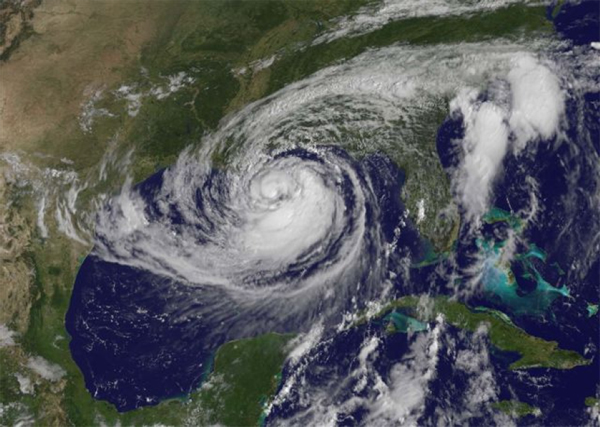
FIGURE 2.3 This visible image of Tropical Storm Isaac taken from NOAA’s GOES-13 satellite shows the huge extent of the storm, where the eastern-most clouds lie over the Carolinas and the western-most clouds are brushing east Texas. SOURCE: NASA GOES Project.
Recommendation: NASA should work with other U.S. government agencies with responsibilities in aeronautics and space to more effectively and efficiently coordinate U.S. aeronautics and space activities.
In the past half century, NASA’s achievements have contributed to economic and national security and national pride and prestige. NASA programs assert U.S. scientific and technological leadership, improve international relationships, and advance U.S. foreign policy objectives. The 2009 NRC report America’s Future in Space: Aligning the Civil Space Program with National Needs concluded that a preeminent U.S. civil space program “is a national imperative” that “should be preeminent in the sense that it can influence, by example, nations’ use of space” (NRC, 2009, p. 3).
The 2011 NASA Strategic Plan (NASA, 2011), while providing for NASA to continue its work as an “engine of discovery,” lacks a clear statement on the role of NASA with respect to the civil space programs of other nations. Maintaining U.S. leadership in space contributes to many important national priorities as noted above and relies on two major assets. Firstly, leadership depends on science and technological excellence as demonstrated by flagship missions (with budgets of many billions of dollars each) such as the Hubble Space Telescope, the James Webb Space Telescope, or the Curiosity rover, and by small Explorer, Discovery or New Frontiers style missions. (See Figure 2.4.) Secondly, leadership relies on strong ties with the international community of stakeholders.
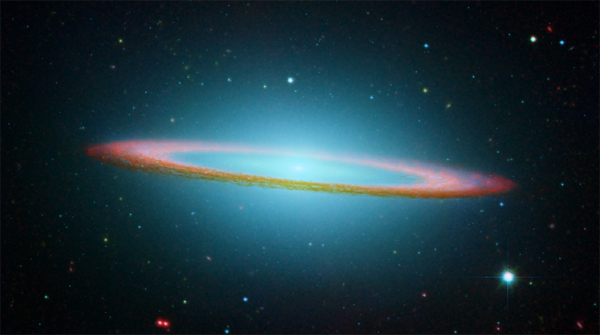
FIGURE 2.4 Edge-on image of the Sombrero spiral galaxy captured by the Spitzer Space Telescope. SOURCE: NASA.
INTERNATIONAL COOPERATION AND U.S. LEADERSHIP
An additional important aspect of NASA addressing national priorities is the agency’s role in demonstrating and maintaining U.S. global leadership, particularly in Earth and space science and human spaceflight. The United States has consolidated its leadership in space since the early days of NASA through the era of the space shuttle, the Hubble Space Telescope, and the ISS. (See Figure 2.5.) NASA has established more than 3,000 international agreements since 1958 with more than 100 nations. Today nearly 600 international agreements are in place—half of them are with France, Germany, the European Space Agency, Japan, the United Kingdom, Italy, Canada, and Russia; the other half are with countries with less advanced space programs who value the opportunity to benefit from U.S. leadership in space. Two-thirds of these agreements support science missions at NASA. At the same time, the number of space-faring nations has been increasing steadily, and the gap between their capabilities and those of the United States appears to be narrowing. All of the countries of the world, including potential strategic rivals on other fronts, are potential partners in the space arena. Cooperation and collaboration are becoming commonplace and increasingly important with international partners playing, or likely to play, roles that include those on the critical path to a mission’s success.
As stated earlier, although the United States has long led in space exploration, its position has slipped. Russia has significant capabilities in space transportation but is not substantively pursuing areas such as human transportation beyond LEO. Europe has concentrated on developing a relatively small industrial activity in space and, as a result, ranks first in commercial satellite production and launches, as well as having developed a significant program in Earth and space science. China, Japan, and India also have significant space programs focused on developing indigenous launch vehicles and conducting programs in space science and applications. China and Japan also have strong human spaceflight programs. China has developed its own capabilities, while Japan cooperates with the United States and other countries in the ISS program. All three are part of the 14-member International Space Exploration Coordination Group that meets to discuss future human spaceflight exploration plans.
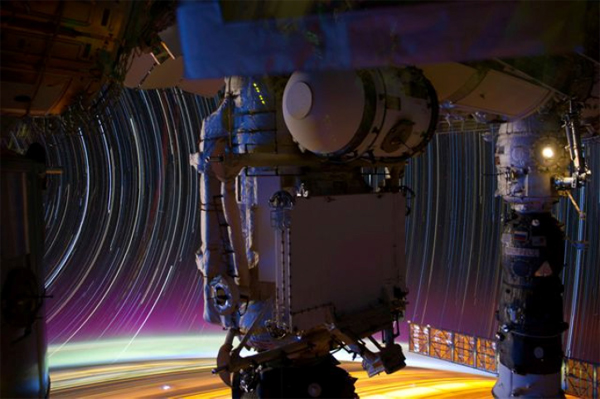
FIGURE 2.5 A composite of a series of images photographed from a mounted camera on the Earth-orbiting International Space Station from approximately 240 miles above Earth. SOURCE: NASA.
There is in fact an inherent tension between the desire of countries—including the United States—to develop and demonstrate their technological and political strength with their space programs and the desire for and opportunities provided by international cooperation. At times, developing space powers may wish to “go it alone” in order to advance and demonstrate their capabilities, but later seek to join in cooperative efforts with longstanding space powers as a means of demonstrating that they are now on a near-equal status. The opportunities for international cooperation are fluid and sometimes fleeting.
The success of NASA’s long-term strategic planning in Earth and space science based on the community-consensus-driven NRC decadal survey process has led the agency to be the leader in space science through the series of missions, many of which have been international collaborations with the United States in both leading and minority roles. Space science missions such as the Hubble Space Telescope, the Cassini-Huygens mission to Saturn and Titan, and the Mars Curiosity rover show how U.S. leadership can harness the impressive capabilities of many countries to successfully advance understanding of the solar system and the universe.
In the area of Earth and space science, the recent abandonment by NASA of well-established partnerships—for instance, with the European Space Agency—will potentially undermine the prospects for continuing the kinds of cooperation that will be required to carry out the next generation of large, complex strategic science missions that the science communities in the United States, Europe, and elsewhere agree are the next steps in unraveling the mysteries of our solar system, our galactic home, and the cosmos. Projects such as Mars sample return, future missions to the outer planets and their moons, and the next generation of space telescopes will need to be executed by international consortia. But unless NASA can address cost overruns and the United States can address budget shortfalls, which have resulted in there being little funds to pursue the next generation of ambitious international space science missions, the success of the international approach to demonstrating U.S. leadership in this field will be in jeopardy.
In human spaceflight, NASA has been at the forefront of the effort by successive administrations and Congress to advance national security and foreign policy goals by means of the projection of U.S. soft power through efforts such as the construction and operation of the ISS. The ISS experience
demonstrates how the United States assuming the role of a “managing partner” in a large, complex international endeavor that encompasses both considerable technical challenges as well as considerable cultural, legal, and political barriers can promote the United States’ overall standing in the world, while also achieving key scientific and geopolitical priorities. The ISS represents one model, and by no means the only model, for broad international cooperation. This has also come with a price, both in terms of the expense of building the ISS and the ongoing cost of operations.
One of the United States’ greatest space accomplishments was the Apollo Moon landings, which in many ways shaped, and perhaps distorted, the way we look at human spaceflight, including the role of cooperation and competition. The lunar landing goal was established in a competitive environment, with the United States seeking to beat the Soviet Union to landing a human on the lunar surface. Advocates of competition occasionally still point to Apollo as an example of what can be accomplished when external factors force the United States to strive harder. One of the rhetorical questions posed to the committee was what will be the position of the United States “when in 2025 the Chinese land on the Moon?”5 This question is occasionally raised as a justification for increasing NASA funding. At the moment, this is an entirely hypothetical scenario because China has no stated plans for sending humans to the Moon, let alone by a specific date. However, the question is also useful for focusing thinking about the larger international context for NASA’s activities. Unlike the Apollo era, today the United States could respond in various ways to such a possible challenge, including indifference (noting that the United States was already on the Moon in 1969), or alternatively engaging in a “race” with the Chinese. Further internationalization of the space program offers an alternative approach—one that could also guarantee that the United States maintains its traditional and long-established role as the global leader in space. Thus, whereas competition offers one path to demonstrating leadership, cooperation can offer another path. International cooperation would still leave room for healthy competition, particularly depending on which partners the United States chooses.
Today, as mentioned above, the international context is changing rapidly, however, in this changing world the role for the United States remains to lead. But a new paradigm for leadership is required where partners are given a more equal voice and a more substantive role in key areas critical to mission success. To lead is not necessarily to command, and it is possible to establish international partnerships where all the members take part in major decisions and their interests are clearly aired and considered. A more collaborative approach can lead to a program where each partner can mobilize various capacities for a specific purpose in line with its national interests while in pursuit of a common goal. Indeed, given the world economic situation, this may be imperative for engaging the taxpayers of our international partners. The United States can advance its national goals in space by sharing the responsibility on a global scale—making the United States a real leader among a host of nations contributing to space exploration and reaping the benefits.
Indeed such an internationalization of the pursuit of this nation’s goals in human spaceflight is likely to be a requirement for any successful pursuit of NASA-led missions to an asteroid, the Moon, and eventually Mars and its moons. This is inherently recognized through NASA’s participation in the International Space Exploration Contact Group—a non-binding process for dialog involving many of the world’s space agencies on establishing future pathways for human exploration.
However, a note of caution is still called for. International missions can cost as much or more than the equivalent mission would have cost if done by the United States alone. In addition, U.S. laws and regulations, such as the International Traffic in Arms Regulations, can greatly complicate international cooperation. For modest projects, the added complexity of a large international effort can easily make things more expensive and slower to complete. There are various models of cooperation that may be more useful in the future, but it will depend on the specific requirements at the time as well as the interests of the countries willing to engage in cooperation. A creative approach is needed for NASA to elaborate the new models adopted by the modern international situation.
5 This comment was made to the committee by former NASA Administrator Michael Griffin.
Finding: The capabilities and aspirations of other nations in space have changed dramatically since the early days of the space race between the Soviet Union and the United States.
Finding: One of the most important successes of the International Space Station was its international character and the role of the United States as the managing partner in a global enterprise.
Finding: If the United States seeks to undertake a human mission to Mars, such a mission will undoubtedly require the efforts and budgets of many nations.
Conclusion: There is an opportunity for the United States to use its well-established record of accomplishment in space, its impressive capabilities, and its role as an international managing partner to lead a more international approach to future large space efforts, both in the human space program and in the science program.
Recommendation: The United States should explore opportunities to lead a more international approach to future large space efforts both in the human space program and in the science program.
If extending human presence beyond LEO orbit remains part of NASA’s strategic goals and objectives, the United States could take the lead in establishing a global vision for the future of human exploration, which would be a long-term international venture that builds on the success of the ISS partnership and includes all willing space powers. (See Figure 2.6.)
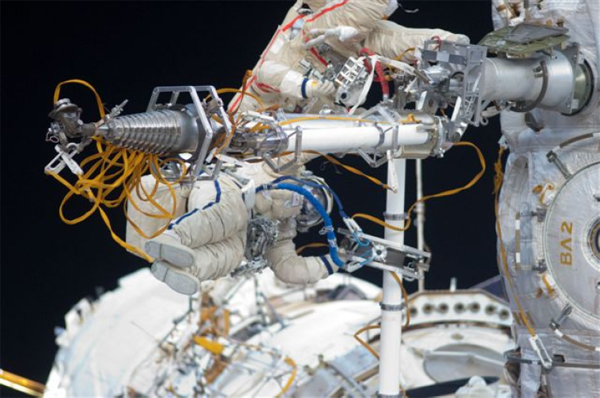
FIGURE 2.6 Russian cosmonauts Gennady Padalka, Expedition 32 commander, and Yuri Malenchenko, flight engineer, participate in a nearly 6-hour session of extravehicular activity to continue outfitting the International Space Station on August 20, 2012. SOURCE: NASA.
U.S. leadership in international space cooperation, however, requires meeting several conditions. First, the United States has to have a program that other countries want to participate in. That includes bold goals, but also goals that are consistent with those of potential partners (for example, international interest is greater in lunar exploration than in NASA’s chosen asteroid mission). Second, the United States has to be willing to give substantial responsibility to its partners. In the past, the approach of the United States to international partnership has too often been perceived as being based on a program conceived, planned, and directed by NASA. Third, other nations must be able to see something to gain, in other words, a reason to partner with the United States. Finally, the United States has to demonstrate its reliability, including budget stability over time. A perception among potential partners that NASA’s budgets for international programs fluctuate too wildly will naturally make them reluctant to cooperate. These are not the only requirements, but they are the primary ones.
EXAMINING NASA’S INSTITUTIONAL STRUCTURE
The lack of national consensus on the future for NASA human exploration and the agency as a whole, as well as the mismatch between the NASA budget and NASA’s current portfolio of missions, facilities, and staff, contribute to serious problems facing NASA, including substantial deferred maintenance on infrastructure, inability to maintain core competencies within the government for key space technologies and operations, and an approach to downsizing that attempts to spread work and projects over infrastructure and a personnel force that are larger than required. As noted below, however, NASA’s options are limited because it lacks adequate flexibility to fully address infrastructure and personnel issues because of civil service regulations, legislative mandates that impose additional limitations, and requirements on valuing unused/unneeded facilities.
During the course of this study, members of the committee visited all nine NASA field centers plus the Jet Propulsion Laboratory.6 The visits revealed that the centers share many of the same issues, such as aging facilities, program instability, and confusion about their future. But the visits also revealed that each center is unique, with its own strengths, areas of expertise, and problems. Thus, one lesson that the committee drew from its visits is that there is no one-size-fits-all policy or regulatory change that can serve all of the centers. Indeed, such an approach has the potential to do more harm than good.
Finding: Different policies and regulatory changes have to be applied to different NASA centers. There is no realistic “one-size-fits-all” approach.
One primary question that the committee asked itself was whether NASA’s overall structure of field centers was still valid. Multiple field centers were established during the early years of the space race for different reasons, including supporting regional economic development and increasing political support for NASA. However, the committee notes that although many of those initial reasons for establishing and distributing the centers are no longer valid, there remain benefits to having a dispersed field center structure as well as occasional redundancy among field centers. The United States has substantial geographical diversity in terms of its natural resources, economic development, and intellectual resources. There are benefits to having facilities spread around the country where they can tap into localized talent. However, this also makes it more difficult for NASA to manage its centers
6 Ames Research Center, Dryden Flight Research Center, Glenn Research Center, Goddard Space Flight Center, the Jet Propulsion Laboratory, Johnson Space Center, Kennedy Space Center, Langley Research Center, Marshall Space Flight Center, Stennis Space Flight Center. In addition, during the visit to Glenn Research Center, members of the committee also visited the nearby Plum Brook Station, which has recently undertaken work for the European Space Agency and may soon be providing its facilities to other international and commercial partners on a reimbursable basis.
efficiently, because agency leadership has difficulty transferring personnel and work and closing facilities due to local opposition.
NASA’s institutional infrastructure was largely defined to support legacy organizations such as the Apollo program and the National Advisory Committee for Aeronautics. NASA as a whole and many centers in particular have made a number of changes over the years in seeking to realign the agency’s institutional infrastructure to its changing mission and priorities. However, it appears that the institutional infrastructure remains too large for efficient execution of currently envisioned programs. As a result, NASA has underutilized facilities, significant deferred maintenance and modernization costs, and workforce skill maintenance issues. It is difficult to maintain skills in some areas in the absence of meaningful work, and institutional memory is lost when existing staff retire without experienced replacements available. These problems have been exacerbated by the termination and cancellation of major space exploration programs.
The distribution of work among NASA centers in recent years has favored the sustainment of all the centers (and JPL) over establishing and maintaining centers of excellence for retention of critical skills and capabilities. This has in part resulted from legislative requirements to maintain the current geographic distribution of the large civil service component of the NASA workforce and the legal prohibition on NASA from applying regular reduction-in-force (RIF) governmental policies to its civil servants. As a result, some civil service staff are retained even when they are no longer needed at their assigned center.
Civil service rules, as well as additional legislative workforce restrictions placed upon NASA, contribute to large fixed costs and hamper efficient tailoring of the workforce to meet current skill retention requirements or expansion to new technical areas. A one-size-fits-all workforce model is problematic given the wide disparity between centers that are focused on R&D, centers that are focused on operations, and centers with more of a mixed portfolio. For example, JPL is an FFRDC, and some have suggested that it would be a viable model for NASA field centers. However, JPL’s mission is narrowly focused compared to many of the field centers, and it works well as an FFRDC in part because it started as an FFRDC, so its model may not apply to centers that have had a different heritage. In some cases, it may be appropriate to downsize certain centers from multi-purpose facilities to single-purpose facilities, where unique test facilities are housed, and in other cases a single-purpose facility—like a space shuttle launch site—can evolve into a multi-user facility.
In the cases of centers that have large research (as opposed to operational) responsibilities, it may be appropriate to consider the feasibility of applying some of the authorities granted for civil servants in other parts of the U.S. government and/or converting all or part of the center to a FFRDC model. For example, a “center within a center” could be set up in some cases to provide a core operational capability staffed by civil servants with the rest of the workforce operating as an FFRDC. The committee recognizes the extraordinary challenges that such a conversion could entail and that conversions have been recommended and rejected in the past (for example the Aldridge Commission report; President’s Commission on Implementation of United States Space Exploration Policy, 2004). But the current economic challenges call for all logical management structures to be explored, and, at the very least, a transition to greater flexibility in managing its centers could have tremendous benefits for NASA. The Cross Agency Support budget funds NASA operations, including the construction of facilities and infrastructure, to provide capabilities that cannot be tied directly to the needs of a particular program. Cross Agency Support also funds environmental compliance and restoration activities. However, the essential role and value of the Cross Agency Support budget does not seem to be fully appreciated by Congress. Because of this lack of clarity and because of the size of the Cross Agency Support budget, it is an easy target when funds are needed to cover shortfalls in the mission areas.
Lessons learned from current efforts by individual centers to improve their efficiency, effectiveness, and strategic direction could be considered for broader implementation at other centers. Lessons can also be learned from other parts of the federal R&D system, such as the Department of Energy’s (DOE’s) Office of Science, which manages 10 national laboratories, each of which has a major steward or sponsor within the Office of Science. These laboratories appear to be managed as a system of
centers in pursuit of the Office of Science’s strategic goals. Some of NASA’s unique testing facilities could be designated as National User Facilities, to be available for both NASA and non-NASA testing. These facilities could have their own operating and maintenance budgets that would not be tied to the budgets of cognizant centers or individual NASA programs.
In many cases, individual NASA centers are taking action to selectively reduce their infrastructure or to find alternative ways to support it. For example, during a visit to the NASA Plum Brook facility, members of the committee heard about industrial and international use of the test facilities. During a visit to the Kennedy Space Center, members of the committee heard about efforts to attract industry to use buildings and equipment no longer required for the space shuttle program and government regulations that make it difficult for NASA to transfer excess facilities to other partners. During a visit to the Stennis Space Center, members heard about the successful “federal city” run by NASA that includes other government agencies such as the U.S. Navy and NOAA, as well as industry partners, that make use of that center’s unique characteristics.
During its visits to the NASA centers and JPL, the committee heard that NASA’s center leadership desires more flexibility in general to manage their facilities. The committee determined that two particular areas where flexibility can be improved are particularly relevant:
• Personnel flexibility. NASA is restricted by law from performing RIFs. The prohibition is currently in the 2010 NASA Authorization Act, which expires at the end of FY2013. Congress could act before then (for instance, in an appropriations act) to repeal that language—or could omit the language from new authorization and new appropriations acts. In addition, NASA could be given the ability to convert civil service positions to contractor positions in select instances.
• Infrastructure flexibility. The General Services Administration (GSA) imposes restrictions on government agencies charging less than fair market value for facilities, making it difficult for NASA to dispose of facilities it no longer needs. Easing such restrictions for NASA could save the government money by not having to maintain or demolish buildings no longer required by NASA. In addition, current regulations require that disposed property first be offered to state and local governments, a requirement that could slow down or hinder the ability to find private users. If NASA were given more authority to manage its infrastructure instead of leaving this process to GSA, the agency could take better advantage of opportunities in the private sector.
The committee recognizes that personnel and infrastructure restrictions have been imposed upon NASA, as well as the federal government in general, for many valid reasons. For example, there are restrictions on how federal facilities can be disposed of in order to prevent the government from undercutting local real estate markets. However, in these two specific areas the committee was informed that some positive changes are either underway or being evaluated and they are good examples of possible solutions to challenges that NASA faces in personnel and facility management. Naturally, any changes would require careful consideration and evaluation by the legislative and executive branches, but they demonstrate that not all solutions require additional money, and legislative and policy changes can play an important role as well.
Currently, NASA’s complex of centers operate quasi-independently rather than as an integrated capability. This has led to competition between centers, duplicative and sub-critical development efforts, and program assignments that are best described as counter-intuitive (such as experimental and development work at centers with no expertise in those areas). Managing the centers as a complex (much the way DOE’s Office of Science appears to run their 10 laboratories) would generate efficiencies and lead to more coordinated capabilities for supporting the agency’s strategic goals and objectives. The key to doing so is strong oversight, thoughtful coordination, and strategic management. Examples of things that can be done are:
• Identifying lead and supporting laboratories for key capabilities;
• Creating national user facilities where appropriate;
• Eliminating duplicative, sub-critical efforts; and
• Diminishing unproductive inter-center competition for resources.
The 2011 NASA Strategic Plan states that master planning allows NASA “to perform cross-center assessments to examine further opportunities for consolidation of capabilities” (NASA, 2011, p. 26), but the extent of NASA-wide efforts to manage its facilities remains unclear. Likewise, NASA’s various missions areas are not clearly linked across the whole agency in a way that projects a unified organization. If NASA had well-established linkages among its missions, that would help establish its strategic direction more clearly.
Finding: NASA officials lack flexibility in how to manage the agency in terms of personnel and facilities, a contributing factor to the mismatch between budget and mission.
Conclusion: The NASA field centers do not appear to be managed as an integrated resource to support the agency and its strategic goals and objectives.
Conclusion: Legislative and regulatory limitations on NASA’s freedom to manage its workforce and infrastructure constrain the flexibility that a large organization needs to grow or shrink specific scientific, engineering, and technical areas in response to evolving goals and budget realities.
The committee recognizes that it lacks the capability and time to conduct the detailed supporting analysis and make specific recommendations for changes in the current NASA infrastructure. However, the committee offers a suggested path forward for NASA to follow, in close collaboration with the White House and Congress.
Recommendation: With respect to NASA centers:
• The administration and Congress should adopt regulatory and legislative reforms that would enable NASA to improve the flexibility of the management of its centers.
• NASA should transform its network of field centers into an integrated system that supports its strategic plan and communications strategy and advances its strategic goals and objectives.
NASA may consider commissioning an independent report from an organization with expertise in how government agencies are organized, such as the National Academy of Public Administration. As already noted, managing NASA’s infrastructure is a particular challenge. Some facilities that are not needed in the near-term may be essential several years down the road. Other facilities provide unique national capabilities but are woefully underutilized by current and planned NASA programs. Declining budgets have also produced $2.55 billion in deferred maintenance (as determined in FY2010) that threatens to erode capabilities and reduce the attractiveness of some NASA facilities to third-party users who would have to pay to restore or upgrade a facility before they can use it (Whitlow, 2011). Even within NASA, it is difficult to fund infrastructure maintenance and upgrades using program funds rather than overhead accounts when programs are themselves underfunded. In addition, federal requirements regarding assessment of facility market value impede some options for transferring facilities to other organizations that may be in a better fiscal situation to maintain and use selected facilities.
As noted, making substantial changes to NASA’s organization will require support and direction from the administration and Congress.
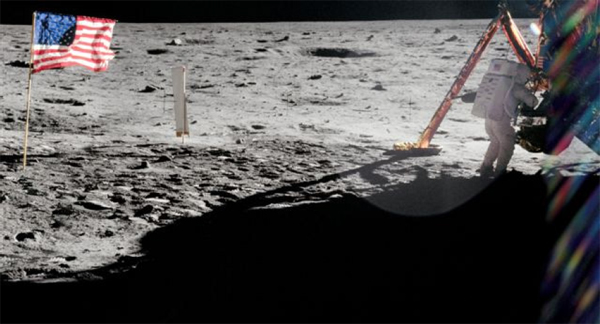
FIGURE 2.7 Neil Armstrong at work near the Lunar Module Eagle. SOURCE: NASA.
Public interest in space does not equal public support. For example, the public supports the space program in general, but that support is thin when the billion-dollar cost of major NASA programs is revealed and/or when surveys ask the public to prioritize NASA activities with other government functions such as national defense, education, public health, and so on. Even during the Apollo era (see Figure 2.7), public support for that program exceeded 50 percent only when Apollo 11 landed on the Moon. Public support may be very thin for a human mission to Mars, given that it will be very expensive.
During the course of this study, the committee heard from a strategic communications expert on NASA’s communications efforts, spoke to NASA public affairs officials at several centers, and also reviewed the report of a 2010 Space Studies Board workshop on this subject (NRC, 2011a). NASA has an exciting story to tell with interesting visuals. But like all government agencies, it is limited by statute from engaging in self-promotion in order to advance its own budgetary and policy interests.
NASA social media and outreach efforts have won awards such as the Space Foundation’s Douglas S. Morrow Public Outreach Award (2012) and two Shorty Awards for NASA’s use of Twitter (in 2009 and 2012). Also, despite these awards, much of the public remains very poorly informed about the state of NASA in the post-shuttle world, perhaps because the shutdown of the space shuttle program was such big news in the mainstream media and perhaps because NASA lacks a clear and easily articulated strategic direction. A two-way dialogue (such as public forums) would enable NASA to better understand public perceptions about NASA (so that misperceptions could be corrected) and perhaps foster greater public understanding of and support for planned future missions.
Newsworthy events are typically required for NASA (or any organization) to capture the public’s attention, and NASA has been very effective at communicating the excitement associated with specific events. The public awareness effort for the landing of the Curiosity rover on Mars is an excellent recent example of what NASA can do when it has an exciting and clearly defined mission milestone to publicize. It is much more difficult to establish and maintain a sustained level of communication for programs that span many years to decades, but it can be done. For example, NASA announced in 2004 that it would not undertake an additional servicing mission to the Hubble Space Telescope. In response,
there was a public outcry—and this outcry was a testament to the effectiveness of NASA’s long-term efforts to publicize Hubble as a scientific tool of continuing importance.
Potential elements of a communications strategy for long-term programs might include more “background” efforts that develop the NASA brand. Examples could include undergraduate and graduate fellowships, K-12 education programs, and so on, that are focused on building a workforce that is conscious of the NASA mission. Ultimately, however, the problem that NASA has in communicating its vision is less about the method of communication and more about the lack of a consistent message itself.
Throughout its storied history, NASA has often assumed—not always deliberately—a flagship role for the United States, demonstrating U.S. technological, scientific, and innovative capabilities in space and aeronautics on the world stage. As discussed throughout this report, NASA is now an agency at a transitional point. The agency faces challenges in nearly all of its primary endeavors—human spaceflight, Earth and space science, and aeronautics—and these challenges largely stem from a lack of consensus on the scope of NASA’s broad missions for the nation’s future. While human spaceflight has been the most visible of NASA’s accomplishments over many decades, there is no consensus on the next destination for humans beyond LEO, and thus on the required technological developments for launch systems, spacecraft, and related technologies. Beyond human spaceflight and operations, robotic space exploration, Earth and space science, and aeronautics all contribute in important ways to the nation’s science and technology advancement, but the available funding for support of all of these mission areas will likely be inadequate for the foreseeable future. The committee finds that a clear consensus for the agency’s broad mission and a carefully crafted, ambitious, yet technically realistic set of strategic priorities will be essential for NASA to remain the engine of discovery of which the United States will continue to be justifiably proud.
Executive Office of the President. 2009. Review of U.S. Human Spaceflight Plans Committee, Seeking a Human Space-flight Program Worthy of a Great Nation. Washington, D.C.: NASA.
NASA (National Aeronautics and Space Administration). 2011. 2011 NASA Strategic Plan. NASA Headquarters, Washington, D.C. Available at http://www.nasa.gov/pdf/516579main_NASA2011StrategicPlan.pdf.
NASA. 2012a. NASA Aeronautics: Overview for Committee on NASA’s Strategic Direction. Presentation to the National Research Council Committee on NASA’s Strategic Direction by Jaiwon Shin, NASA Associate Administrator for Aeronautics, June 27, Washington, D.C.
NASA. 2012b. Space Technology Roadmaps: The Future Brought to You by NASA. Available at http://www.nasa.gov/offices/oct/home/roadmaps/index.html.
NRC (National Research Council). 2004. The Evaluation of the National Aerospace Initiative. Washington, D.C.: The National Academies Press.
NRC. 2009. America’s Future in Space: Aligning the Civil Space Program with National Needs. Washington, D.C.: The National Academies Press.
NRC. 2010. Controlling Cost Growth of NASA Earth and Space Science Missions. Washington, D.C.: The National Academies Press.
NRC. 2011a. Sharing the Adventure with the Public: The Value and Excitement of 'Grand Questions' of Space Science and Exploration: Summary of a Workshop. Washington, D.C.: The National Academies Press.
NRC. 2011b. Vision and Voyages for Planetary Science in the Decade 2013-2022. Washington, D.C.: The National Academies Press.
NRC. 2012. NASA Space Technology Roadmaps and Priorities: Restoring NASA’s Technological Edge and Paving the Way for a New Era in Space. Washington, D.C.: The National Academies Press.
OMB (Office of Management and Budget). 2011. President’s FY 2012 Budget Request Detail: National Aeronautics and Space Administration. Available at http://www.nasa.gov/pdf/516675main_NASAFY12_Budget_Estimates-508.pdf.
OMB. 2012. FY 2013 President’s Budget Request Summary: National Aeronautics and Space Administration. Available at http://www.nasa.gov/pdf/659660main_NASA_FY13_Budget_Estimates-508-rev.pdf.
OSTP (Office of Science and Technology Policy). 2012. Innovation for America’s Economy, America’s Energy, and American Skills: Science, Technology, Innovation, and STEM Education in the 2013 Budget. February 13. Washington, D.C.: OSTP. Available at http://www.whitehouse.gov/sites/default/files/microsites/ostp/fy2013rd_summary.pdf.
President’s Commission on Implementation of United States Space Exploration Policy. 2004. A Journey to Inspire, Innovate, and Discover: Report of the President’s Commission on Implementation of United States Space Exploration Policy, Washington, D.C.: Government Printing Office.
P.L. (Public Law) 112-55. 2011. Consolidated and Further Continuing Appropriations Act, 2012. Available at http://beta.congress.gov/112/plaws/publ55/112publ55_pdf.pdf.
Weaver, D., and M.B. Duke. 1993. “Mars Exploration Strategies: A Reference Program and Comparison of Alternative Architectures,” AIAA paper AIAA 93-4212.
Whitlow, W. 2011. Personal correspondence from Jim Morrison, Assistant Inspector General for Audits, NASA Office of the Inspector General (OIG) to Woodrow Whitlow, NASA Associate Administrator for Mission Support. Audit of NASA’s Facilities Maintenance. Report No. IG-11-015, Assignment No. A-09-002-00. March 2. Available at http://oig.nasa.gov/audits/reports/FY11/IG-11-015.pdf/.


