






Below is the uncorrected machine-read text of this chapter, intended to provide our own search engines and external engines with highly rich, chapter-representative searchable text of each book. Because it is UNCORRECTED material, please consider the following text as a useful but insufficient proxy for the authoritative book pages.
s Limnology of Lake Powell and the Chemistry of the Colorado River JACK A. STANFORD, University of Montana, Poison, Montana JAMES V. WARD, Colorado State University, Fort Collins, Colorado INTRODUCTION Lake Powell is a large, dendritic reservoir that fills the Glen Canyon segment of the lower Colorado River. Operation of Lake Powell in turn controls the hydrodynamics of the Colorado River through the Grand Can- yon National Parl: to Lake Mead. The limnology of the reservoir is greatly influenced by (1) the morphometry and geology of the canyon it fills, (2) the design and operation (including the economics of hydropower produc- tion) of the dam, (3) the hydrodynamics and chemistry of the inflowing rivers, and (4) climatic variability. The limnology of the reservoir, coupled with dam operations, therefore determines the limnology of the Colorado River downstream from Lake Powell. The purpose of this paper is to re- view the limnology of Lake Powell in relation to the volume and quality of influent and effluent waters and to discuss the ramifications of reservoir operations on the biophysiology of the Colorado River. Since our review of the ecology of the Colorado River (Stanford and Ward 1986a-c; Ward et al., 1986), other detailed syntheses have been forth- coming: Graf (1985), Bureau of Reclamation (1987), NRC (1987), Carlson and Muth (1989), and Potter and Drake (1989~. Data and interpretations in these lengthy documents are pertinent to this paper. Potter and Drake (1989) is required reading for anyone interested in the developmental history and limnology of Lake Powell, as it summarizes results of a 10-year, multidisciplinary study funded by the National Science Foundation. However, Potter and 75
76 COLORADO RIVER ECOLOGY AND DAM MANAGEMENT Drake (1989) is rather popularly written, and where possible we cite herein the various technical reports and published papers that were forthcoming from the study. Few papers containing original data pertaining to the lim- nology of Lake Powell and its effects on the riverine environment down- stream have been published since the study summarized by Potter and Drake (1989) was concluded in 1980. MORPHOMETRY AND HYDRODYNAMICS OF LAKE POWELL Glen Canyon Dam Glen Canyon Dam is an arch structure with a 107-m (350-ft) base and 476-m (1,560 ft) crest and is composed of 3.6 x 10⁹ m3 of concrete. It plugs sheer walls of Navajo sandstone bedrock incised over the millennia by the Colorado River. The dam has a crest elevation at 1,132 m (3,715 It) above sea level, which is 216 m (710 ft) above bedrock and 164 m (583 ft) above the river channel. Eight penstocks discharge a maximum of 943 m3/s (33,000 ft3/s) to generators rated for 1.3 MW of hydropower production at full capacity. The penstocks draw water from an elevation of 1,058 m (3,471 It). The authorized full pool elevation is 1,127.76 m (3,700 ft) above mean sea level. Four bypass tubes and two concrete-lined spillways that release water above 1,122 m (3,680 ft) elevation can pass an additional 7,867 m3/s (278,000 ft3/s). This spill volume was needed because flood flows of >5,660 m3/s (200,000 ft3/s) have been recorded within Glen Can- yon. The dam was closed in September 1963, after a total project construc- tion expenditure of $272 million. Through 1987, gross electrical produc- tion exceeded $700 million (Potter and Drake, 1989~. Physical Features of the Reservoir Lake Powell, named in memory of Colorado River explorer and surveyor J. W. Powell, is impounded by Glen Canyon Dam. Glen Canyon was named by Powell in 1869 for the cottonwood (Populusfremontii) glens that dominated the pristine riparian forests on the terraces along the river within the steep-walled canyon. It is the second-largest reservoir in the United States, next to Lake Mead located cat 250 km downstream on the Colorado River. Full pool in Lake Powell was first reached on June 22, 1980. At full pool the reservoir yields morphometrics as listed in Table 5-1. Full pool was exceeded by 3 m on July 4, 1983 (only 2.5 m below the crest of the dam) as a result of a period of high flows in the Colorado and Green rivers. Since 1983, the reservoir has filled to capacity every year and has fluctu- ated only about 8 m annually.
LIMNOLOGY OF LAKE POWEl1... TABLE 5-1 Morphometric features of Lake Powell. Feature Value Surface area (km2) Volume (km3) Maximum depth (m) Mean depth (m) Maximum length (km) Maximum width ~m) Shoreline development Shoreline length (km) Discharge depth (m) Maximum operating pool Drainage area (km2) Approximate storage ratio (yr) 653 33.3 171 51 300 25 26 3,057 70 1,128 279,000 2 SOURCE: Modified from Potter and Drake, 1989. 77 Air temperatures range in the Lake Powell area from cat 5°C January) to 36°C (August), while the surface water temperatures vary from 6°C (Janu- ary) to 27°C (August). Average annual precipitation is 14.5 cm, occurring in about equal increments per month. These data summarize a 25-year record at Page, Arizona (Potter and Drake, 1989~. The geology of the reservoir basin is composed of a variety of Jurassic and Triassic sediments. Outcrops of Navajo and Wingate sandstones and the varied shales of the Chinle formation are more notable features of the Glen Canyon. The geology of the Colorado plateau dominates the catchment of Lake Powell and consists of uplifted Tertiary and cretaceous shale and sandstone formations with some areas of Tertiary volcanic extrusion. The Mancos shale formation outcrops over wide areas. The principal feature of the geology relative to the limnology of Lake Powell and its tributary rivers is the omnipresence of calcium, sulfate, and bicarbonate as the predominant dissolution ions within easily eroded substrata (Stanford and Ward, 1986a). Potter and Drake (1989) provide a more detailed review of area geology. River Discharge and the Water Budget of Lake Powell Ninety-six percent of the inflow to the reservoir is derived from the catchments of the Colorado and San Juan rivers (Figure 5-1), and 60% of the annual water budget is received in May-July as a result of snowmelt in the headwaters (Irons et al., 1965; Evans and Paulson, 1983~. In 1922 the Colorado River Compact apportioned water allocation based on a virgin (preregulation) flow of 22.2 km3 at Lee's Ferry. However, the virgin flow is now estimated at 20.72 for the precompact period and 17.52
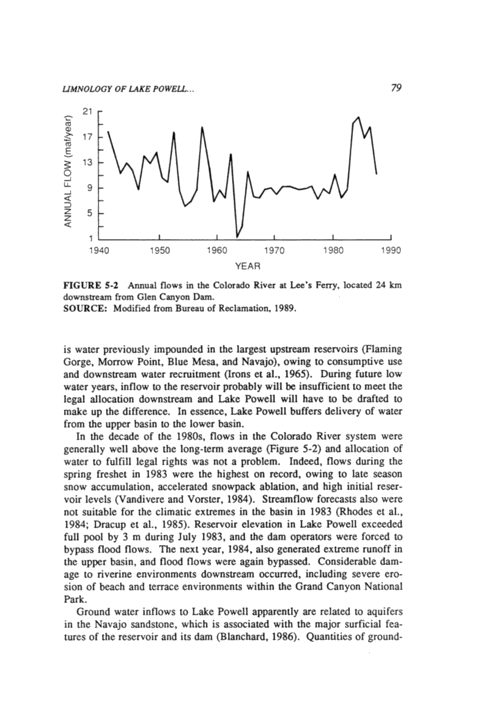
78 ._~ LEE'S FERRY COLORADO RIDER ECOLOGY AND DAM MANAGEMENT DIRTY DEVIL R. ~ t GREEN R. SAN RAFAEL R. ~ ~ ~t~ A OF PoWF ( i\ , \ L L SAN JUAN R. _ ~ ~ a' an, Utah ~ Colorado - Arizona '~° FIGURE 5-1 Lake Powell and tributaries showing sites where flows and water quality have been monitored. SOURCE: Messer et al., 1983. since 1922 (Holbert, 1982; Upper Colorado River Commission, 1984~. Long- term flows estimated from tree ring data (Stockton and Jacoby, 1976) sug- gest that the long-term yield of the basin is 16.7 km3, corroborating the lower virgin flow estimate. Moreover, the tree ring analysis strongly sug- gests that the Colorado River flows in the l900s were well above the long- term (ca. 370-year) average. This is important because the Colorado River is regulated to the extent that the legal allocation between the upper and lower basins largely determines the water budget of Lake Powell most years. The Colorado River Compact divided the Colorado River into upper and lower basins at the confluence of the Paria and Colorado rivers, which is located cat 30 km downstream from Glen Canyon Dam. Note that during the period 1967-1983 only slightly more than the legal allocation to the lower basin (8.9 km3 = 7.2 million acre-feet) was discharged from Glen Canyon Dam (Figure 5-2~. However, only 28.8% of the flow at Lee's Ferry
LIMNOLOGY OF LAKE POWELL... 21 17 Cam - o , 9 13 5 1 it, 79 940 1950 1960 1970 1 980 1990 YEAR FIGURE 5-2 Annual flows in the Colorado River at Lee's Ferry, located 24 km downstream from Glen Canyon Dam. SOURCE: Modified from Bureau of Reclamation, 1989. is water previously impounded in the largest upstream reservoirs (Flaming Gorge, Morrow Point, Blue Mesa, and Navajo), owing to consumptive use and downstream water recruitment (Irons et al., 19653. During future low water years, inflow to the reservoir probably will be insufficient to meet the legal allocation downstream and Lake Powell will have to be drafted to make up the difference. In essence, Lake Powell buffers delivery of water from the upper basin to the lower basin. In the decade of the 1980s, flows in the Colorado River system were generally well above the long-term average (Figure 5-2) and allocation of water to fulfill legal rights was not a problem. Indeed, flows during the spring freshet in 1983 were the highest on record, owing to late season snow accumulation, accelerated snowpack ablation, and high initial reser- voir levels (Vandivere and Vorster, 1984~. Streamflow forecasts also were not suitable for the climatic extremes in the basin in 1983 (Rhodes et al., 1984; Dracup et al., 1985~. Reservoir elevation in Lake Powell exceeded full pool by 3 m during July 1983, and the dam operators were forced to bypass flood flows. The next year, 1984, also generated extreme runoff in the upper basin, and flood flows were again bypassed. Considerable dam- age to riverine environments downstream occurred, including severe ero- sion of beach and terrace environments within the Grand Canyon National Park. Ground water inflows to Lake Powell apparently are related to aquifers in the Navajo sandstone, which is associated with the major surficial fea- tures of the reservoir and its dam (Blanchard, 19861. Quantities of ground-
80 COLORADO RIVER ECOLOGY AND DAM MANAGEMENT water inflow are not known but are probably insignificant in relation to fl~vial sources and bank storage. The Lake Powell water budget is dominated by inflow from the Colorado and San Juan rivers, although a major volume is included in bank storage and evaporation (Table 5-2~. Bank storage increases over the life of a reser- voir (Langbein, 1960~. From 1964 to 1976, an estimated 10.5 km3 went into bank storage at Lake Powell, for an average of 740,000 m3 yearn. These storage rates are consistent with the measured porosity of the Navajo sandstone (Potter and Drake, 1989~. Evaporation was estimated at 6.2 x 10⁸ m3 years or about 180 cm/year, based on measures in 1973-74 (Jacoby et al., 1977; but see Dawdy, this volume). The difference between riverine inflow and the losses given in Table 5-2 is the volume of water stored annually within the reservoir as it is filled and is fairly consistent with the reservoir's elevation volume trend for the period. The volume stored annually is determined from runoff delivered by the rivers to Lake Powell in excess of the release mandate of the Colorado River Compact for the lower basin. The initial filling of the reservoir was accomplished a decade sooner than predicted from average flows, as a re- sult of high flows during the 1980s. This again brings out the point that in future dry years lower basin allocation could cause Lake Powell to be drafted well below the volume that may be supplied by runoff in excess of reservoir storage from the upper basin. Hence, a major problem for the legal pundits involves determination of which reservoirs, if any, in the system have fill- ing priority over Lake Powell. For the limnologist it means that prediction of pool levels in the reservoir and flows downstream require greater model- TABLE 5-2 Water budget for Lake Powell based on average data for the period 1964-1975, the period when the reservoir was filling. Data are km3. River Inflow Colorado River San Juan River Losses Bank Storage Evaporation1 Outflow measured at Lee's Ferry Difference Reservoir storage 10.6408 1.6881 .7404 .6170 10.0818 2.247 1 corrected for precipitation and based on reservoir two-thirds full SOURCE: Modified from Jacoby et al., 1977.
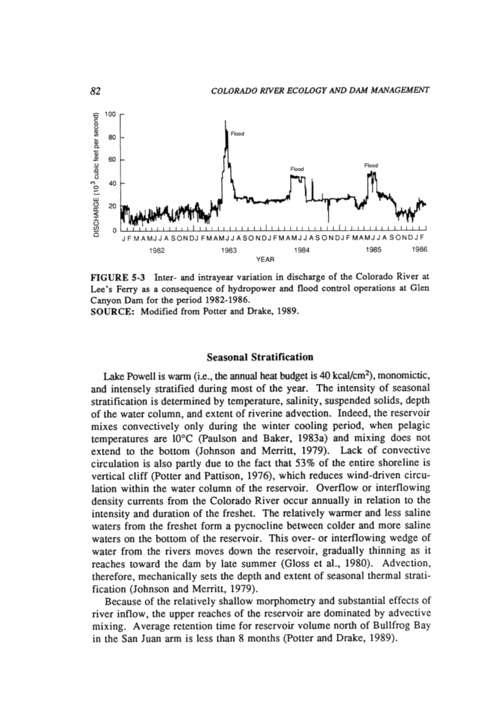
LIMNOLOGY OF LAKE POWELL... 81 ing sophistication than currently exists. Without a verified hydrological model, predicting ecological responses to regulation is problematic. The presence of Lake Powell has vastly altered the hydrograph of the river downstream of the dam. Indeed, Lake Powell hydropower operations effectively control downstream hydrodynamics (Table 5-3~. Except in years of high-volume inflow to the reservoir (e.g., 1983 and 1984; Figure 5-3), flow seasonality is absent (e.g., 1982; Figure 5-3), as a result of reservoir storage. Flows from the dam fluctuate between 85 and 570 m3 (3,000- 20,000 ft3) in a "yo-yo" fashion over short time periods (days) in response to the economics of hydropower (Figure 5-3~. TABLE 5-3 Hydrological, thermal, and sediment transport characteristics of the Colorado River below Glen Canyon Dam based on the 1941-1977 period of record. Measurement Lee's Ferrya Pre-dam Post-dam Grand Canyonb Pre-dam Post-dam Daily average flow equaled or exceeded 95% of the time (m3/s) Median discharge (m3/s) Mean annual flood (m3/s) 102 156 209 345 1 13 167 232 362 2434 764 2434 792 Annual maximum stage (m) Mean 5.04 3.56 6.89 4.79 Standard deviation 0.96 0.17 0.35 0.15 Annual minimum stage (m) Mean 1.76 1.46 0.46 0.70 Standard deviation 1.40 0.23 0.85 0.45 Annual average temperature (°C) 10 10 11 12 Range (°C) 2-26 7-10 2-28 5-15 Mean sedunent concen- 1500 7 tration (mg/liter) Sediment concentration equaled or exceeded 1% of the time (mglliter) 1250 21000 700 28000 350 15000 a24 km downstream from Glen Canyon Dam bl65 km downstream from Glen Canyon Dam SOURCE: Dolan et al., 1974; Paulson and Baker, 1981; Petts, 1984; U.S. Geological Survey, unpublished data.
82 be, 1 00 o a) - c) a, .o D on - LL C: a: I an COLORADO RIVER ECOLOGY AND DAM MANAGEMENT 80 ._ 60 _ 40 20 o Flood Flood ~ l)J~lI Flood ~~ -~' I ~ ~ 1 1 1 1 1 JFMAMJJASONDJ FMAMJJASONDJFMAMJJASONDJFMAMJJA SONDJF 1982 1983 1984 1985 1986 YEAR FIGURE 5-3 Inter- and intrayear variation in discharge of the Colorado River at Lee's Ferry as a consequence of hydropower and flood control operations at Glen Canyon Dam for the period 1982-1986. SOURCE: Modified from Potter and Drake, 1989. Seasonal Stratification Lake Powell is warm (i.e., the annual heat budget is 40 kcal/cm2), monomictic, and intensely stratified during most of the year. The intensity of seasonal stratification is determined by temperature, salinity, suspended solids, depth of the water column, and extent of riverine advection. Indeed, the reservoir mixes connectively only during the winter cooling period, when pelagic temperatures are 10°C (Paulson and Baker, 1983a) and mixing does not extend to the bottom (Johnson and Merritt, 1979~. Lack of convective circulation is also partly due to the fact that 53% of the entire shoreline is vertical cliff (Potter and Pattison, 1976), which reduces wind-driven circu- lation within the water column of the reservoir. Overflow or interflowing density currents from the Colorado River occur annually in relation to the intensity and duration of the freshet. The relatively warmer and less saline waters from the freshet form a pycnocline between colder and more saline waters on the bottom of the reservoir. This over- or interflowing wedge of water from the rivers moves down the reservoir, gradually thinning as it reaches toward the dam by late summer (Gloss et al., 1980~. Advection, therefore, mechanically sets the depth and extent of seasonal thermal strati- fication (Johnson and Merritt, 1979~. Because of the relatively shallow morphometry and substantial effects of river inflow, the upper reaches of the reservoir are dominated by advective mixing. Average retention time for reservoir volume north of Bullfrog Bay in the San Juan arm is less than 8 months (Potter and Drake, 1989~.
LIMNOLOGY OF LAKE POWELL... 83 A widespread halocline occurs in Lake Powell. Because of lack of wind circulation, there is a monimolimnion from the dam to the upper reaches of the reservoir. Convective circulation penetrates only to about 60 m (John- son and Merritt, 1979~. However, bottom water remains aerobic (i.e., >3 mg/liter dissolved oxygen), owing primarily to advective circulation gener- ated by saline underflows from the Colorado and San Juan rivers during low winter discharge (Johnson and Page, 1981~. Metalimnetic oxygen depletion (negative heterograde profile) occurs vir- tually lakewide in the late summer (Stewart and Blinn, 1976; Johnson and Page, 1981; Sollberger et al., 1989~; anoxia presumably is caused by de- composition of senescent phytoplankton that accumulates on the chemocline after settling from the mixolimnion (Hansmann et al., 1974; Johnson and Page, 1981~. Metalimnetic oxygen stagnation begins in the bay mouths and temporally develops toward the dam. Convective circulation reduces oxy- gen depletion in early winter (Johnson and Page, 1981; Sollberger et al., 1989). Because of reoxygenation by winter river underflows noted above and trapping of organic matter in the metalimnion, the monimolimnion remains aerobic. This limits nutrient mobilization from the sediments, and nutrients released by mineralization are not returned to the epilimnion due to the lack of convective circulation (Gloss et al., 1980, 1981~. Calcite precipitation also may scavenge dissolved substances, particularly phosphate, via adsorp- tion (Reynolds, 1978~. Moreover, the depth of convective circulation and halocline formation in Lake Powell is marked by a strong withdrawal cur- rent at cat 30-50 m (Johnson and Merritt, 1979) which removes epilimnetic nutrient loads (Gloss et al., 1980~. Thus, there is a persistent nutrient deficiency in the euphoric zone. Bioproduction in Lake Powell is phospho- rus limited and dependent on seasonal advective nutrient renewal via the spring overflow of the river turbidity plume (Gloss, 1977; Gloss et al., 1980). Edinger et al. (1984) describe a longitudinal and vertical hydrodynamic and transport model called LARM. This model allows study of seasonal circulation, heat, and salinity transport and predicts equilibrium relationship over an entire reservoir volume. Thus, changes in solute concentrations, due to precipitation and dissolution, may be evaluated by using LARM. PARTICULATE AND DISSOLVED SOLIDS DYNAMICS Long-term data bases that describe the temporal chemistry of the rivers above and below Lake Powell (i.e., the sites in Figure 5-1) are maintained by the U.S. Geological Survey in their WATS TORE file. Flow, total dis- solved solids (TDS) and specific conductance data are evaluated annually to document trends as related to salinity control projects within the Colorado
84 COLORADO RIVER ECOLOGY AlID DAM MANAGEMENT River basin (Bureau of Reclamation, 1989~. These long-term data bases are readily available in electronic media and have been used extensively in studies of the biogeochemistry of Lake Powell (e.g., Messer et al., 1983; and Edinger et al., 1984~. Suspended Sediment Stanford and Ward (1986a) characterized the Colorado River as one of the most erosive in the world. The virgin river was very turbid except at low flows, and sediment dynamics greatly influenced the riverine ecology, both within the river channel and in its floodplains and terraces. Most of the historical and current sediment load is derived from erosion of the soft sedimentary formations of the Colorado plateau (Irons et al., 1965~. Construction of mainstem dams has vastly altered the sediment transport processes of the river. Lake Powell receives 40-140 million tons of sus- pended sediment annually from its tributaries. Upstream dams on the Gunnison, San Juan, and Green rivers have not reduced the load (Mayer and Gloss, 1980), again substantiating the influence of the middle reaches of the Colo- rado, Green, and San Juan rivers on the water and sediment supply to Lake Powell (Irons et al., 1965~. Retention of fluvial sediments within Lake Powell reduces the suspended sediment load in the Grand Canyon segment of the Colorado River by 70-80% (Evans and Paulson, 1983; Table 5-3~. About 25% of the historic sediment load at Lee's Ferry was derived from side flows to Lake Powell such as the Dirty Devil and Escalante rivers (Potter and Drake, 1989~. The Little Colorado River, which joins the Colo- rado River within the Grand Canyon, and the Paria River can contribute heavy sediment loads to the river during short-term spates, but the sediment load of the Colorado River is now virtually controlled by retention in Lake Powell. The fluvial sediments entering Lake Powell are dominated by the montmorillinite clay lattice and have an average in situ bulk density of 1.5 with a mean grain density of 2.65 g/cm3 dry mass, based on analysis of cores (Potter and Drake, 1989; but see Kennedy [1965] and Mayer t1973] for clay mineralogy of Colorado River suspended sediments). Mass balance calculations show that 60 x 109 m3 of sediment is stored on the bottom of the reservoir annually. Most of the fluvial sediments are presently depos- ited near the mouths of the Colorado and San Juan rivers. Maximum sedi- mentation rates were better than 3 m/year through 1974 within the Colorado River arm and about 2 m/year within the San Juan arm of the reservoir. Over 50 m of sediment has accumulated near the mouth of the Colorado River and over 15 m has accumulated on the San Juan River delta as deter- mined from 1987 sonar profiles presented by Potter and Drake, (1989~. Bank slumping has contributed additional sediment at various sites on the
LIMNOLOGY OF LAKE POWELL... 85 reservoir shoreline, particularly in areas of sidehill dunes and steep gradient soils. Rockfalls from partially inundated cliff walls have also occurred. Sedimentation rates determined from echo soundings suggest that the reser- voir basin will fill completely in about 700 years (Potter and Drake, 1989~. Riverine suspended sediments in the smallest size fraction (e.g., 10-30 ,um may be transported far into the pelagic zone of the reservoir). These fine sediments are nutrient rich, relative to dissolved constituents within the water column, and fertilize the reservoir. However, the sediment-laden river waters usually interflow through the reservoir because advectively circu- lated flood waters are typically colder and more dense than the upper por- tions of the water column (Gloss et al., 1980, 1981~. Nitrogen, Phosphorus, and Silica Because of the patterns of seasonal stratification described above, nutri- ents such as nitrogen, phosphorus, and silica are most uniformly distributed within the water column of Lake Powell during the winter and early spring. Advective circulation, driven by the annual spring freshet, establishes firm stratification and loads the epilimnion with nutrients. Phytoplankton pro- duction increases, thereby depleting nitrate, silicate, and soluble reactive phosphorus within the water column during the summer growing season. Since the epilimnion is essentially isolated by thermal and haline stratifica- tion, much of the microbial biomass produced within the epilimnion sinks toward the bottom. This is corroborated by oxygen depletion in the metalimnion, where biomass deposited on the pycnocline begins to decompose, creating the oxygen demand described above. As primary production increases, calcite precipitation also may increase, which in turn may allow additional phosphorus loss as a function of adsorption to calcite particles. Moreover, soluble and particulate nutrients are lost via the withdrawal current from the dam. Nutrients entrained in the hypolimnion or bottom sediments are not regenerated within the water column, owing to the lack of convective circu- lation and an inverse redox gradient (Gloss et al., 1980~. Thus, the reservoir is a nutrient sink, especially for phosphorus. Flow- weighted mass balance calculations provide retention coefficients of .74 for dissolved phosphorus and .96 for total phosphorus (Gloss et al., 1981; Miller et al., 1983~. Total nitrogen is more conservative; Gloss et al. (1981) estimated 9% retention. The nitrogen load is cat 47% organic N and 45% nitrate, and inflow and outflow values of the various forms of nitrogen are similar. The retention coefficient for silica is estimated at .14, with losses attributed to uptake by diatoms and subsequent sedimentation (Gloss et al., 1981~. Over 95% of the fluvial phosphorus reaching Lake Powell is particulate, associated with clays in the suspended sediments (Gloss et al., 1981; Evans
86 COLORADO RIVER ECOLOGY AND DAM MANAGEMENT and Paulson, 1983~. Thus, most of the load is sedimented within the reser- voir basin. However, Mayer and Gloss (1980) estimated that about 20-30 ,ug/liter of inorganic phosphorus may be maintained within Colorado River water by progressive Resorption from the clay particles. Since microbial production within the water column appears to be phosphorus limited and inversely related to the concentration of dissolved nutrients (i.e., production increases until nutrients are depleted; Gloss, 1977), apparently bioproduction in Lake Powell is directly related to the intensity and duration (spatial and temporal) of the enriched spring freshet event. Some bays apparently are locally eutrophied, relative to the pelagic areas of the reservoir, by concentrated human activities (Hansmann et al., 1974~. Bioavailability of Particulate Phosphorus Because of the importance of the phosphorus budget to lakewide bioproduction, the question of how much of the incoming phosphorus load is actually biologically labile or bioavailable is especially relevant. As noted above, Colorado River suspended sediments may desorb 20-30 ~g/liter soluble re- active phosphorus (SRP), as determined from sequential measures of SRP after progressively placing suspended sediments in fresh aliquots of filtered lake water (Mayer and Gloss, 1980; Gloss et al., 1981~. SRP is generally thought to be 100% bioavailable (Wetzel and Likens, 1979~. Thus, sus- pended sediments are clearly an important source of bioavailable phospho- rus. Using NaOH extractions of sediments obtained from Colorado River water, Evans and Paulson (1983) determined that only 7-19% (mean, 11.2%) of the particulate phosphorus is bioavailable. However, NaOH extractions may not provide an accurate estimate of bioavailable phosphorus since re- sults are not often comparable to estimates derived from algal assays and kinetic experiments (Ellis and Stanford, 1988~. Using algal bioassays and stoichiometric analyses of whole water, Watts and Lam arra (1983) deter- mined that 21 and 49% of total phosphorus in Colorado River water at Moab Bridge in September 1978 and October 1978 was bioavailable; most of the extractable phosphorus was in the form of calcium-bound phospho- rus, involving phosphorus adsorption on a lattice of the calcite crystal or coprecipitation of phosphorus during calcite formation. Although SRP con- centrations are typically low in Colorado River water (usually <10 ~g/liter), primary productivity of the river water does not appear to be nutrient lim- ited; rather, Watts and Lam arra (1983) found an inverse relationship be- tween turbidity and primary production, suggesting that the in situ light regime and concentration of calcite-bound phosphorus may interact to con- trol algal production. Swale (1964) and Lund (1969) had similar conclu- sions for the calcareous River Wye in England. On the basis of these data and interpretations, the issue of bioavailability
LIMNOLOGY OF LAKE POWELL... 87 of particulate phosphorus derived from the spring freshet is not explicitly worked out. It is apparent Hat bioproduction is stimulated by the freshet event, but only a small percentage of the sediment-bound phosphorus is actually mobilized by the food web. It is not surprising that Lalce Powell does not fit the empirical models used to predict eutrophication from nutri- ent loading (Labough and Winter, 1981; Mueller, 1982~. Indeed, on the basis of the net flow-weighted phosphorus budgets, which apparently vary from less than 2,060 to greater than 7,295 million tons/year as a function of the freshet volume, one would expect Lake Powell to be hypereutrophic (Gloss et al., 1981~. Clearly that is not the case, because >95% of the annual phosphorus load is associated win nvenne sediments (Evans and Paulson, 1983) that settle to the bottom of the reservoir before large amounts of the particulate phosphorus are either chemically desorbed or actively mobilized by microbiota (see Ellis and Stanford, 1988~. Salinity Total dissolved solids (TDS) in Lake Powell are dominated by SO42-, HCO3-, Ca2+, and Na+ ions (Table 5-4~. Calcium and sodium sulfates domi- nate the riverine TDS load, owing to the predominance of gypsum substrata within the catchment (Stanford and Ward, 1986a). TDS concentrations are extremely dynamic over time (i.e., similar to the pre-1960s period in Figure TABLE 5-4 Composition of the major ions contributing TDS in the Colorado River at Lee's Ferry compared to Lake Powell water discharged from Glen Canyon Dam. Lee's Ferry 1948-1962 Lee's Ferry (Corrected for Glen Canyon Dam 1948-1962 Evaporation) Discharge, 1972-1975 Ion pE/liter mg/liter pEIliter mg/liter pE/liter mglliter Ca Mg Na K HCO3 SO4 C1 Total 4,012 1,990 2,975 107 3,098 4,538 1,323 81.8 24.2 68.4 4.2 189.0 218.0 46.9 633 4,249 2,107 3,151 113 3,280 4,806 1,401 86.6 25.6 72.4 4.5 200.0 231.0 49.7 670 3,607 2,051 3,293 105 2,506 5,016 1,441 73.6 24.9 75.7 4.1 159.0 241.0 51.1 629 SOURCE: Gloss et al., 1981.
88 COLORADO RIVER ECOLOGY AND DAM MANAGEMENT 5-3) in the main tributaries of Lake Powell, as a consequence of flow vari- ability. Freshet flows tend to dilute the dissolved solids concen~aiions. Average concentrations are three times higher in Me San Rafael River (Fig- ure 5-4), but average annual flow-weighted loads are highest in the Colo- rado River. Because of the stabilization of flow by the dam, the salinity of the Colorado River at Lee's Ferry has been fairly uniform; the gradual decline in the decade of the 1980s (Figure 5-5) is apparently due mainly to dilution caused by above-average flows, calcite precipitation in Lake Powell, and a decrease in gypsum dissolution from the bed of Lake Powell (Paulson and Baker, 1983b). The Lake Powell TDS budget has been a primary study topic because of the general conception that evaporation and dissolution of bed substrata in reservoirs is purported as a primary cause of increasing salinity in the Colo- rado River. (Salinity in the Colorado River at Imperial Dam increased from 380 mg/liter during pristine times to 825 mg/liter by 1975 [Gardner and Steward, 19751. Salinity trend models indicate that additional water diver- 3000 2000 - ~7 J (D 1 000 1 rat T ol 1940 1 950 ~ _ ~ _= 1970 1980 1990 YEAR FIGURE 5-4 Average annual concentrations of TDS derived from daily measure- ments at the tributary sites shown in Figure 5-1 for the period 1941-1987. SOURCE: Bureau of Reclamation, 1989.
LIMNOLOGY OF LAKE POWELL... 1 000 800 600 400 89 1400 _ 1200 e e ~ e S e - e e _e, i e ~ e em ee - cue ;~- ~, e ~ \~! \~^ ~ e e. e -e e 200 e'. e e. I e ~ e 1 940 em 1 1 1 1960 1970 1980 1990 YEAR FIGURE 5-5 Time series trend for salinity SOURCE: Bureau of Reclamation, 1989. in the Colorado River at Lee's Ferry. signs may increase salinity to >1,150 mg/liter by the end of the century [Kleinman and Brown, 1980; Law and Hornsby, 19821) Indeed, Gloss et al. (1980) noticed a slight increase in SO4 at Lee's Ferry after impoundment of Lake Powell and attributed it to gypsum dissolution that should decrease in time. On a mass balance basis and under steady-state conditions, evapora- tion and leaching of sulfate from the reservoir bed apparently could account for an annual increase in salinity of cat 40 mg/liter below the dam. How- ever, this increase is apparently offset by appreciable calcite precipitation. Thus, pre- and post-dam salinities in the Colorado River at Lee's Ferry are about the same (Table 5-4) (Reynolds and Johnson, 1974; Gloss et al., 1980~. However, Paulson and Baker (1983b) gave flow-weighted averages for common ions and TDS for the period 1970-1979; they estimate annual calcite (CaCO3), gypsum (CaSO4) and halite (NaCl) precipitation rates in Lake Powell to be 23 (9), 16 (5), and 5 mg/lieer (Ca2+ concentration in parentheses) on the basis of ion budgets. These loss rates are high enough to partially account for the decline in river salinity in recent years (Figure 5-5~. On the other hand, Messer et al. (1983) calculated a salinity mass balance based on data for the period 1941-1975 which left 8.1 x 10⁶ million tons of salt or 8% of the calculated input either in bank storage or lost to the sediments by some biogeochemical removal process (i.e., precipitation or coprecipitation with inorganic particles, such as clays), coagulation (involv- ing polysaccharide fibrils of microbes), and bioassimilation (by microbiota)~. Assuming bank storage of 11 x 109 million tons and flow-weighted TDS of 569 mg/liter, 6.2 x 10⁶ million tons of salt was bank stored, leaving only 1.9% that couldhave been removed by biogeochemical processes. Messer et al. (1983) considered their budget to be conservative, since bed dissolution
9o COLORADO RIVER ECOLOGY AND DAM MANAGEMENT processes were not included. They concluded that massive biogeochemical salt removal (i.e. calcite precipitation) could not have occurred. This con- clusion was corroborated by the LARM hydrodynamics model (Edinger et al., 1984), which showed that 1% of the salt load could precipitate in the epilimnion annually, but redox conditions in the lower water column were sufficient to resolubilize the precipitant. We note that all of the mass bal- ance calculations are based on measurements of river discharge and TDS well upstream from Lake Powell (Figure 5-1) and that many of the side flows into the reservoir are not monitored at all. Given the size of the reservoir and the inaccuracies of loading estimates, it is doubtful that the actual impact of calcite precipitation on salinity trends in the Colorado River will be verified from mass balance calculations. That the rate of calcite precipitation in Lake Powell is influenced by fluvial salt loading, bed dissolution of CaSO4, phytoplankton productivity, and polyphenol inhi- bition (Reynolds, 1978) seems conclusive. Heavy Metals and Other Pollutants Potter and Baker (1989) noted that filling of the reservoir provided a unique opportunity to examine bioamplification of heavy metals resulting from erosion of natural geologic deposits. Indeed, natural weathering of the complex geologic deposits within the Colorado plateau contributes a variety of metals to Lake Powell, mostly in association with fluvial sediments (Graf, 1985~. The mercury story is best documented. Forty-percent of the mercury load (2,200 kg/year) is derived from He Green River catchment, where the source rocks appear to be the Chinle and Morrison formations (Graf, 19851. Mercury concentrations in Lake Powell sediments average 30 parts per bil- lion (range, 5-53) (Standiford et al., 1973~; in the turbid upper reaches of the reservoir water column concentrations approach 6 parts per billion, which Blinn et al. (1977a) showed to be inhibitory to phytoplankton primary pro- ductivity. Tompkins and Blinn (1976) assayed mercury effects on growth of two of the common planktonic diatoms and found that Fragilaria crotonensis was considerably more sensitive than Asterionella formosa. Concentrations in fish tissues ranged from 5 to 700 ~g/mg dry mass, suggesting a cat 43- fold increase relative to average concentrations in the catchment substrata (Potter et al., 1975~. Relatively high selenium concentrations have been observed in Colorado River tributaries draining Mancos shale formations (Stanford and Ward, 1986a). llelatively high concentrations were observed in the larger fishes of Lake Powell (Potter and Drake, 1989) and warrant further work, as sele- nium may inhibit egg production in squawfish and other native fishes of the Colorado River.
LIMNOLOGY OF LAKE POWELL... 91 Heavy metal contamination within the headwater reaches of the Colorado River has been a concern for years because of hard rock mine effluents in many locations (e.g., Gunnison, Dolores, and San Miguel rivers). How much of this contamination reaches Lake Powell is unknown. Heavy metals associated with emissions from coal-fired generating plants in the Lake Powell area have been shown to reduce photosynthesis and respiration in microcosms containing water from Lake Powell (Medine et al., 1980; Medine and Porcella, 1980~. However, Potter and Drake (1989) concluded that mercury and selenium were the only heavy metals reaching Lake Powell in sufficient concentrations to affect the food web. Radioactive pollutants enter the reservoir from several sources: (1) natu- rally associated with basin geology; (2) from waste ponds and heaps located at various sites (e.g., San Miguel River); and (3) in association with coal- fired generating plants in the basin (Graf, 1985~. The impact within the food web is apparently unknown. LAKE POWELL FOOD WEB Phytoplankton Gloss et al. (1980) reported primary productivity in the reservoir of 2-60 mg of i4C m~3 days during the summers of 1975 and 1976. Values varied an order of magnitude spatially during a given sampling period. Maximum productivity occurred between 1 and 3m in depth. Hansmann et al. (1974) reported that in 1971 the highest productivity (1,066 mg of C m~2 days) occurred in July and the lowest (33 mg of C m~2 days) was measured in February. Yearly productivity was estimated at 184 g of C m~2. Blinn et al. (1977a) reported similar values. Because of the variable amounts of sedi- ments suspended in the water column, productivity varies greatly within the reservoir in relation to light attenuation (Blinn et al., 1977b). Chlorophyll concentrations in the water column averaged 5 ,ug/liter near the Colorado River and 1.5 ,ug/liter lakewide during 1982-1983 (Paulson and Baker, 1983a) and 1987-1988 (Sollberger et al., 1989~. Seasonal phytoplankton succession in Lake Powell involves a spring dia- tom pulse (Fragilaria crotonensis and Asterionella formosa), a diverse summer community (Dinobryon sertularia and Chloroccocales), a late autumn pulse of diatoms (Synedra delicatessima var. augustissima) and dinoflagellates, and no abundant winter forms (Stewart and Blinn, 1976; Blinn et al., 1977b). The spring pulse yielded chlorophyll values of 1.8 ~g/liter in the down- stream end of the reservoir (Sollberger et al., 1989~. This vernal diatom bloom is common in large oligotrophic lakes (e.g., Flathead Lake, Montana) and does not suggest extreme or abnormal nutrient loading. Indeed, blue- green blooms do not occur in Lake Powell as commonly occur in large
92 COLORADO RIVER ECOLOGY AND DAM MANAGEMENT upstream impoundments (e.g., Flaming Gorge Reservoir on the Green River) (Miller et al., 1983~. This is undoubtedly due to lower concentrations of bioavailable nutrients in Lake Powell and the fact that thermal and haline stratification promotes nutrient loss via withdrawal and hypolimnetic en- trainment. Relatively high salinity does not seem to play much of a role, although indigenous Lake Powell diatoms are apparently more tolerant of salinity additions than are standard bioassay test algae (Cleave et al., 1981~. On the basis of the general nutrient regime and importance of allochthonous sediments, we suspect that picoplankton (i.e., cells <10 Em in size) are probably very important in Lake Powell, but the size distribution of the plankton has apparently not been investigated. Zoop lank ton Stone and Rathbun (1969) reported that Daphnia, Cyclops, and Diaptomus were dominant zooplankters with densities that varied between 15 and 100 individuals per liter in the upper 30 m of the water column. Densities were higher in the summer and at the upper end of the reservoir. At the down- stream end, samples rarely exceeded 20 per liter and did not vary much seasonally. In a more detailed study conducted in 1987-1988, Sollberger et al. (1989) found 36 species (8 Copepoda, 13 Cladocera, and 15 Rotifera); Cyclops bic uspidatus, Mesocyc lops eden, and Diaptomus ash landi were the most common copepods, whereas Bosmina longi-rostris, Daphnia galeata and D. pulex, Collotheca sp., Polyarthra sp., and Syncheata sp. were the most common cladocerans and rotifers. Copepods were the most abundant group. Densities of total zooplankton in the water column were normally 20 per liter and never exceeded 50 per liter, with the higher concentrations occur- ring in the upper 20 m of the water column during April (average densities ranged from 3 to 26 per liter within the upper 40 m). These data are surprisingly similar to the counts made two decades earlier by Stone and Rathbun (1969), suggesting little if any decline in productivity. Density of zooplankton was inversely related to chlorophyll content. Densities de- clined through the summer, perhaps as a result of predation. No significant vertical migration was observed, and zooplankters primarily inhabited the epilimnion. The lipid-ovary index was generally <0.5 for the Daphnia, and egg ratios were <0.2, indicating that populations were food limited most of the year. Benthos Artificial substrata (plastic trees) placed in the littoral zone of Lake Powell were colonized by 69 diatom taxa, 6 of which made up 65-94% of the
LIMNOLOGY OF LAKE POWER... 93 periphyton community numerically. Maximum periphyton occurred in spring and fall. Macroinvertebrate communities colonizing the substrata were dominated by chironomids, with Physa, jellyfish (Craspedacusta sowerbyi), water mites, and damselflies occasionally present (Potter and Louderbough, 1977~. Potter and Pattison (1976) used a bilge pump and scuba equipment to collect natural benthic biofilms and found an average of 2.14 g/m2 with an average chlorophyll content of 352 mg/m2, or about ten times greater than average concentrations in the water column. In doing this work they no- ticed that wood rat (Neotoma) middens, submerged upon closure of the dam, could be identified by plumes of benthic periphyton. The benthic algae was apparently stimulated by nutrients leached from the middens. Since so much of the shoreline is near vertical cliffs (54%), the high water line is marked by epilithic biofilms. This biofilm is oxidized during the drawdown period, leaving a white bathtub ring that grades into charac- teristic black streaks on red sandstones. The latter is caused by cementing of clays with oxides and hydroxides resulting from the oxidation of miner- als and organics by mixotropic bacteria (Dorn and Oberlander, 1982~. Fishes Fisheries in Lake Powell are derived from a hodgepodge of native and introduced species. The introduced species predominate. Indeed, the status of the endemic big river fishes (e.g., squawfish, humpback chub, and razor- back sucker; Stanford and Ward, 1986c; Carlson and Muth, 1989) that in- habited Glen Canyon prior to impoundment is unknown. Persons and Bulkley (1982) reported that Dorosoma petenense (threadfin shad) were primary food items in guts of Merone saxatalis (striped bass) that spawned in the mixing zone of the Colorado River. They observed that none of these reservoir fish moved very [ar upstream, and no evidence of predation on endemic fishes was found. Dynamics of the pelagic shad and striped bass populations appear to be the most economically significant aspect of the Lake Powell fisheries. Other bass (Micropterus salmoides, M. dolomieui), channel cat (Icralurus punctatus), northern pike (Esox lucius), walleye (Stizostedion verreum), crappie (Pomoxis nigromaculatus, P. annularis), and sunfishes (Lepomis cyanellus, L. gulosus, L. macrochirus, L. microlophus) are common, especially near shore. Rainbow trout (Onocorhynchus mykiss) and brown trout (Salmo trutta) occupy cooler waters in the lower end of the reservo~r. Quantitative food web relationship for the fishes relative to reservoirwide plankton production have not been established. The trophic status of Lake Powell appears to be oligotrophic, on the basis of primary production, aver- age chlorophyll content, and the depressed nutritional status of the zoop- lankton. Thus, Lake Powell fisheries should not be expected to be very
94 COLORADO RIVER ECOLOGY AND DAM MANAGEMENT productive, and populations may fluctuate as bioproduction of the plankton waxes and wanes in response to riverine nutrient loading and drafting for hydropower and downstream water demands. Fluctuations may also mani- fest as a consequence of angler harvest, disease, poor recruitment (e.g., related to reservoir operations), and/or introduction of new species (e.g., rainbow smelt [Osmerus mordant, a pelagic planktivore, may be introduced in an attempt to supplement forage for striped bass and other piscivores; Courtenay and Robins, 1989; Gustaveson et al., 1990~. Indeed, the food web currently appears to be destabilized. Densities of threadfin shad have decreased from >600 adult fish per standardized trawl in 1977-1978 to 0 in 1989. Concomitantly, the mean size of striped bass declined from 620 mm (24 inches) to 348 (14 inches); the mass/length rates declined from 1.6 to 1.0. Formerly abundant walleye and largemouth bass populations have also declined (Gustaveson et al., 1990~. Destabilization of the food web appears to have occurred from the top down, since the fertility of the reservoir seems to have changed very little and zooplankton crops are about the same today as in 1969 (see above). The striped bass cohorts that were dominated by large-bodied individuals in the late 1970s probably were very productive, and subsequent high recruitment of juveniles may have gradually reduced the shad forage. Moreover, juvenile striped bass are able to forage in the warm upper layers of the reservoir (>10 m) where shad densities are greatest; adult bass are more stenothermic and habitually re- side in deeper waters (Larry Paulson, personal communication). Rainbow smelt prefer colder waters and could be good forage for the larger bass cohorts. However, the net growth potential of the Lake Powell food web is limited because of its oligotrophic status, and productivity can be packaged only in so many ways. The bass-shad relation could be long-term cyclic and/or strongly influenced by angler harvest. Introduction of another planktivore may only further destabilize the food web and produce unanticipated nega- tive effects (see Moyle et al., 1986~. Moreover, smelt may rapidly disperse above and below the reservoir, perhaps compromising recovery of the en- dangered native fishes and creating a plethora of other problems (Courtenay and Robins, 1989~. Riparian Systems The flora of the xeric uplands of the Lake Powell area is characterized by patches of pinonjuniper (fin us edulia-Juniperus spp.) and a wide variety of desert shrubs, such as blackbrush (Coleogyne ramosissima), Mormon tea (Ephedra spp.), sagebrush (Artimesia spp.), shrub oak (Quercus spp.), and Yucca galeata. These trees and bushes occur commonly on the rim and flanks of Glen Canyon and, prior to impoundment, graded into terrace flora that included deep-rooted shrubs (such as four-winged saltbrush [A triplex
LIMNOLOGY OF LAKE POWELL... 95 canescens], greasewood [Sarcobatus spp.], rabbitbrush [Chrysothammus spp.] and squawbush [Rhus trilolata]) which formed irregular patches. The ripar- ian flora was mainly large galleries of Fremont cottonwood (Populus fremontiO interspersed with patches of willows (Salur spp.), hackberry (Celris reticulata), gambel oak (Quercus gambeli), saltgrass (Distichilis spp.), slender dropseed (Sporobolus spp.), and clumps of tall reed (Phragmites spy.. Many species of birds and mammals seasonally inhabited these plant communities (Stanford and Ward, 1986a). Potter and Drake (1989) provided an excellent summary of the shoreline vegetation and associated changes as impoundment ensued, based on origi- nal work by Potter and Pattison (1977~. The main conclusion is that most of the preimpoundment riparian forests and other streamside plants are gone and availability of riparian habitat is limited within the reservoir landscape. Only 3% (ca. 1,000 hectares) of the shoreline is sandy and aggraded. These areas have been uniformly invaded by exotic saltcedar (Tamarisk chinens~s). The few cottonwood seedlings that managed to root in a few places were largely eliminated by dense and fast-growing saltcedar stands. Saltcedar remain very viable throughout the upper drawdown zone of the reservoir and are very tolerant of flooding. The lower drawdown zone is colonized by Russian thistle (Salsola kali). INFLUENCE OF LAKE POWELL ON ENVIRONMENTS DOWNSTREAM Lake Powell as a Heat and Materials Sink River temperatures at Lee's Ferry in summer are on the average 11°C colder than prior to regulation because the dam discharges water from the metalimnion of the reservoir. Winter temperatures in the post-dam river average 8°C warmer than pre-dam conditions (Table 5-3~. Consequently, there is little or no seasonality to the river temperatures until insolation and side flows begin to reestablish the riverine heat budget within the Grand Canyon. Materials balance calculations show that most of the sediments and most of the phosphorus and other metals entering the reservoir are retained in the basin either in the profundal waters and sediments or in bank storage. Thus, the reservoir sequesters the solids load of the Colorado River. On the other hand, soluble phosphorus, nitrate, and silicate are depleted within the epil- imnion by the withdrawal current (see above). Therefore, dam tailwaters are continually transparent and loaded with labile nutrients. These condi- tions persist downstream into the Grand Canyon and greatly promote bioproduction within the riverine food web, as evidenced by presence of dense mats of green algae (Cladophora) and large biomasses of inverte-
96 COLORADO RIVER ECOLOGY AND DAM MANAGEMENT brates (Gammarus) and fish (Stanford and Ward, 1986c; Blinn and Cole, this volume). Controversy persists concerning the effects that Lake Powell and other Colorado River storage projects have on salinity. Paulson and Baker (1983a,b) suggest that reservoir operations can control salinity; Messer et al. (1983) and Edinger et al. (1984) report that the reservoirs have little or no effect (see above). We note that the error terms on the mass balance estimates are often higher than the estimated TDS retention (in excess of bank storage). The issue may be academic except for the fact that salinity at Lee's Ferry is indeed declining (Figure 5-5~. Is the decline due to salinity control mea- sures in the headwaters, salinity losses in the reservoirs, or more mesic conditions in the last decade? The question is relevant because considerable money continues to be spent on salinity control projects in the Colorado River basin (Bureau of Reclamation, 1987) when the predominant ions con- tributing salinity are sulfate and bicarbonate salts that have little effect on agricultural or potable uses. Indeed, sulfate constitutes one-half of the TDS in the Colorado River (Paulson and Baker, 1983b). Mancos and other shale formations, which are widespread on the Colorado plateau (Schumm and Gregory, 1986), are the sources of most of the water, sediments, and salts entering Lake Powell. Harmful NaC1 is localized in the Paradox Valley and Glenwood and Dotsero springs areas in the headwater reaches (Paulson and Baker, 1983b). Resolution of the salinity question probably requires con- tinued monitoring of conditions in the rivers above and below Lake Powell. Retention of >80% of the riverine nutrient load in Lake Powell has greatly decreased the fertility and bioproduction of Lake Mead; shad-striped bass fisheries have also declined, and reduced fertility has been inferred as the cause (Paulson and Baker, 1981; Stanford and Ward, 1986c). However, we note that a similar destabilization of the food web occurred in Lake Powell with little or no change in overall trophic status. Moreover, Lake Powell is oligotrophic despite the fact that the reservoir sequesters the riverine solids load. Attempts to artificially fertilize Lake Mead to increase bioproduction and recover the fishery did not provide sustained results; rather, the artifi- cial fertility pulses quickly attenuated and also desynchronized cohorts of predator and prey species (as described above). These observations support the idea that the producer components of lacustrine food webs are not af- fected much by cyclic or transient changes in the higher consumer popula- tions (i.e., trophic status and food webs generally are controlled bottom up by nutrient supply). We suggest that greater attention be given to cohort- specific growth patterns and the effects of angler harvest in an attempt to better explain shad-bass dynamics in Lake Powell and Lake Mead. How- ever, it is clear that the presence of Lake Powell has vastly altered the chemistry and bioproduction of both the Colorado River and Lake Mead.
LIMNOLOGY OF LAKE POWELL... 97 Paulson (1983) also showed that cold water from Lake Powell has re- duced the net heat budget of Lake Mead, causing less evaporation and an average salinity decrease of at least 9 mg/liter, and suggested that salinity control would be enhanced if water were discharged from the surface rather than the hypolimnion of Lake Mead. This would also retain nutrients and perhaps stimulate productivity, in turn which would encourage calcite pre- cipitation, providing a secondary control mechanism. Clearly, management of water quality or fisheries must take into account the effects of upstream regulation and management actions in addition to reservoir-specific considerations. Stream Regulation and the Manifestation of Serial Discontinuity Production of algae, mainly Cladophora glomerata, is maintained by conditions of constancy (i.e., transparent summer-cool, winter-warm waters, stable substratum, and nutrient regime) in the tailwaters. Large populations of invertebrates, especially amphipods (Gammarus lacustris) support a very productive trout fishery. Similar biogeochemistry exists in headwater seg- ments upstream. Thus, Lake Powell resets river conditions to reflect habi- tats that exist 400+ km upstream (two to three stream orders). This discon- tinuity (sensu Ward and Stanford, 1983) is gradually ameliorated in the Grand Canyon segment and then reset again by Lake Mead (Stanford and Ward, 1986b). AN ECOSYSTEM APPROACH TO MANAGEMENT The limnology of Lake Powell is influenced by hydrodynamics of the rivers that fill the reservoir. Moreover, the hydrodynamics of the reservoir, as related to use of the dam to store flood waters and generate hydropower, control the biophysiology of the Colorado River downstream from Lake Powell through the Grand Canyon. The limnology of Lake Mead is also coupled to Lake Powell. Thus, it seems reasonable to expand the idea of the Glen Canyon area as an ecosystem (Marzolf et al., 1987) to include the tributaries of Lake Powell, the reservoir itself, the Colorado River from Glen Canyon Dam to Lake Mead, and Lake Mead. However, even bound- ing the ecosystem in this manner is probably flawed, since the limnology of the upper basin has a major influence on the quality and quantity of water reaching Lake Powell and effluents from Lake Mead clearly influence downstream environments. We conclude that (1) an ecosystem perspective is requisite because of the biophysical connectivity of the reservoir and rivers and (2) the ecosystem boundaries must be determined by the nature of the manage- ment or scientific question.
98 COLORADO RIVER ECOLOGY AND DAM MANAGEMENT REFERENCES Blanchard, P. J. 1986. Groundwater conditions in the Lake Powell area, Utah, with emphasis on the Navajo sandstone. Utah Department of Natural Resources and Energy, Salt Lake City, Technical Publication 84. 64 p. Blinn, D. W., T. Tompkins, and L. Zaleski. 1977a. Mercury inhibition on primary productiv- ity using large volume plastic chambers in situ. J. Phycol. 13(1):58-61. Blinn, D. W., T. Tompkins, and A. J. Stewart. 1977b. Seasonal light characteristics for a newly formed reservoir in southwestern USA. Hydrobiologia 51:77-84. Bureau of Reclamation. 1987. Quality of water, Colorado River Basin. Progress Report No. 13. U.S. Department of the Interior, Washington, D.C. Bureau of Reclamation. 1989. Quality of water, Colorado River Basin. Progress Repon No. 14. U.S. Department of the Interior, Washington, D.C. Carlson, C. A., and R. T. Muth. 1989. The Colorado River: Lifeline of the American Southwest, p. 220-239. In: D. P. Dodge (ed.), Proceedings of the International Large River Symposium. Can. Spec. Publ. Fish. Aquat. Sci. 106. Cleave, M. L., D. B. Porcella, and V. D. Adams. 1981. The application of batch bioassay techniques to the study of salinity toxicity to freshwater phytoplankton. Water Res. 15(5):573- 584. Courtenay, W. R., Jr., and C. R. Robins. 1989. Fish introductions; good management or no management. CRC Critical Reviews in Aquatic Sciences 1(1):159-172. Dolan, R., A. Howard, and A. Gallenson. 1974. Man's impact on the Colorado River in the Grand Canyon. Am. Sci. 62:392-401. Dorn, R. I., and T. M. Oberlander. 1982. Rock varnish. Prog. Phys. Geogr. 6(3):317-367. Dracup, J. A., S. L. Rhodes, and D. Ely. 1985. Conflict between flood and drought prepared- ness in the Colorado River Basin, p. 229-244. Strategies for River Basin Management: Environmental Integration of Land and Water in a River Basin. D. Reidel Publishing Co., Dordrecht, The Netherlands. Edinger, J. E., E. M. Buchak, and D. H. Merritt. 1984. Longitudinal-vertical hydrodynamics and transport with chemical equilibria for Lake Powell and Lake Mead, p. 213-222. In: R. H. French (ed.), Salinity in Watercourses and Reservoirs. Proceedings of the 1983 Intema- tional Symposium on State-of-the-Art Control of Salinity, July 13-15, 1983, Salt Lake City, Utah. Butterworth Publishers, Boston. Ellis, B. K., and J. A. Stanford. 1988. Phosphorus bioavailability of fluvial sediments deter- mined by algal assays. Hydrobiologia 160:9-18. Evans, T. D., and L. J. Paulson. 1983. The influence of Lake Powell on the suspended sediment-phosphorus dynamics of the Colorado River inflow to Lake Mead, p. 57-68. In: V. D. Adams and V. A. Lamarra (eds.), Aquatic Resource Management of the Colorado River Ecosystem. Ann Arbor Scientific Publishers, Ann Arbor, Mich. Gardner, B. D., and C. E. Stewart. 1975. Agriculture and salinity control in the Colorado River Basin. Nat. Resour. J. 15:63-82. Gloss, S. P. 1977. Application of the nutrient loading concept to Lake Powell, the effects of nutnent perturbations on phytoplankton productivity, and levels of nitrogen and phospho- rus in the reservoir. Ph.D. Thesis, University of New Mexico. 225 p. Gloss, S. P., L. M. Mayer, and D. E. Kidd. 1980. Advective control of nutrient dynamics in the epilimnion of a large reservoir. Limnol. Oceanogr. 25:219-228. Gloss, S. P., R. C. Reynolds Jr., L. M. Mayer, and D. E. Kidd. 1981. Reservoir influences on salinity and nutrient fluxes in the arid Colorado River Basin, p. 1618-1629. In: H. G. Stefan (ed.), Proceedings of the Symposium on Surface Water Impoundments. American Society of Civil Engineers, New York. Graf,W.L. 1985. The Colorado River: Instability and basin management. ResourcePublica- tion in Geography, American Society of Geographers, Washington, D.C.
LIMNOLOGY OF LAKE POWEI A... 99 Gustaveson, A. W., H. R. Maddu~c and B. L. Bonebrake. 1990. Assessment of a forage fish introduction into Lake Powell. Lake Powell Fisheries Project. Utah Department of Natural Resources, Division of Wildlife Resources, Salt Lake City. Hansmann, E. W., D. E. Kidd, and E. Gilbert. 1974. Man's impact on a newly formed reservoir. Hydrobiologia 45: 185- 197. Holbert, M. B. 1982. Colorado River water allocation. Water Supply Manage. 6(1):63-73. Irons, W. V., C. H. Hembree, and G. L. Oakland. 1965. Water resources of the Upper Colorado River Basin - Technical Report. U.S. Geological Survey Professional Paper 44. Jacoby, G. C., Jr., R. Nelson, S. Patch, and O. L. Anderson. 1977. Evaporation, bank storage and water budget at Lake Powell. Lake Powell Research Project Bull. 48. Institute of Geophysics and Planetary Physics, University of California, Los Angeles. Johnson, N. H., and F. W. Page. 1981. Oxygen depleted waters: Origin and distribution in Lake Powell, Utah-Arizona, p. 1630-1637. H. G. Stefan (ed.), Proceedings of the Sympo- sium on Surface Water Impoundments. American Society of Civil Engineers, New York. Johnson, N. M., and D. H. Merritt. 1979. Convective and advective circulation of Lake Powell, Utah and Arizona, during 1972-1975. Water Resour. Res. 15:873-884. Kennedy, V. C. 1965. Mineralogy and cation-exchange capacity of sediments from selected streams. U.S. Geological Survey Professional Paper 433-D. Kleinman, A. P., and F. B. Brown. 1980. Colorado River and salinity economic impacts on agricultural, municipal and industrial uses. U.S. Department of the Interior, Water and Power Resource Ser., Eng. Res. Center, Denver, Colo. Labougl:, J. W., and T. C. Winter. 1981. Preliminary total phosphorus budget of two Colo- rado River reservoirs, p. 360-370. In: H. G. Stefan (ed.), Proceedings of the Symposium on Surface Water Impoundments. American Society of Civil Engineers, New York. Langbein, W. B. 1960. Water budget, pp. 95-102. In: W. Smith, et al. (eds.), Comprehensive Survey of Sedimentation in Lake Mead, 1948-1949. U.S. Geological Survey Professional Paper 295, Washington, D.C. Law, J. P., Jr., and A. G. Hornsby. 1982. The Colorado River salinity problem. Water Supply Manage. 6(1):87-104. Lund, J. W. G. 1969. Phytoplankton, p. 306-330. In: G. A. Rolich (ed.), Eutrophication: Causes, Consequences, Correctives. National Academy of Sciences, Washington, D.C. Mayer, L. M. 1973. Aluminosilicate sedimentation in Lake Powell. M.A. Thesis. Oartmouth College, Hanover, N.H. Mayer, L. M., and S. P. Gloss. 1980. Buffering of silica and phosphate in a turbid river. Limnol. Oceanogr. 25:12-22. Medine, A. J., and D. B. Porcella. 1980. Heavy metal effects on photosynthesis/respiration of microecosystems simulating Lake Powell, Utah/Arizona, p. 355-394. In: R. A. Baker (ed.), Contaminants and Sediments Vol. 2: Analysis, Chemistry, Biology. Medine, A. J., D. B. Porcella, and V. D. Adams. 1980. Heavy metal and nutrient effects on sediment oxygen demand in three-phase aquatic microcosms, p. 279-303. In: J. P. Giesy, Jr., (ed.), Microcosms in Ecological Research, DOE Symposium Series. Messer, J. J., E. K. Israelsen, and V. D. Adams. 1983. Natural salinity removal in main stem reservoir: Mechanisms, occurrence and water resources impacts, p. 491-515. In: V. D. Adams and V. A. Lamarra (eds.), Aquatic Resource Management of the Colorado River Ecosystem. Ann Arbor Scientific Publishers, Ann Arbor, Mich. Miller, J. B., D. L. Wegner, and D. R. Bruemmer. 1983. Salinity and phosphorus routing through the Colorado River/Reservoir system, p. 19-41. In: V. D. Adams and V. A. Lamarra (eds.), Aquatic Resource Management of the Colorado River Ecosystem. Ann Arbor Scientific Publishers, Ann Arbor, Mich. Moyle, P. B., H. W. Li, and B. A. Barton. 1986. l~e Frankenstein effect: Impact of introduced fishes on native fishes in North America, p. 415-426. In: R. H. Stroud (ed.), Fish Culture in Fisheries Management. American Fisheries Society, Bethesda, Md.
100 COLORADO RIVER ECOLOGY AND DAM MANAGEMENT Mueller, D. K. 1982. Mass balance model estimation of phosphorus concentration in reser- voirs. Water Resour. Bull. 18:377-382. National Research Council. 1987. River and Dam Management: A Review of the Bureau of Reclamation's Glen Canyon Environmental Studies. National Academy Press, Washing- ton, D.C. Paulson, L. J. 1983. Use of hydroelectric dams to control evaporation and salinity in the Colorado River system, p. 439-456. In: V. D. Adams and V. A. Lamarra (eds.), Aquatic Resource Management of the Colorado River Ecosystem. Ann Arbor Scientific Publishers, Ann Arbor, Mich. Paulson, L. J., and J. R. Baker. 1981. Nutrient interactions among reservoirs on the Colorado River, p. 1647-1656. In: H. G. Stefan (ed.), Proceedings of the Symposium on Surface Water Impoundments. American Society of Civil Engineers, New York. Paulson, L. J., and J. R. Baker. 1983a. Limnology in reservoirs on the Colorado River. Tech. Compl. Rept. OWRT-B-121-NEV-1, Nevada Water Resource Research Center, Las Vegas. Paulson, L. J., and J. R. Baker. 1983b. The effects of impoundments on salinity in the Colorado River, p. 457-474. In: V. D. Adams and V. A. Lamarra (eds.), Aquatic Resource Management of the Colorado River Ecosystem. Ann Arbor Scientific Publishers, Ann Arbor, Mich. Persons, W. R., and R. V. Bulkley. 1982. Feeding activity and spawning time of striped bass in the Colorado River inlet, Lake Powell, Utah. N. Am. J. Fish. Manage. 2(4):403-408. Petts, G. E. 1984. Impounded Rivers: Perspectives for Ecological Management. John Wiley and Sons Ltd. 326 p. Potter, L. D., and C. Drake. 1989. Lake Powell: Virgin Flow to Dynamo. University of New Mexico Press. 328 p. Potter, L. D., D. E. Kidd, and D. R. Standiford. 1975. Mercury levels in Lake Powell: bioamplification of mercury in man-made desert reservoir. Environ. Sci. Technol. 9:41-46. Potter, L. D., and E. T. Louderbough. 1977. Macroinvertebrates and diatoms on submerged bottom substrates, Lake Powell. Lake Powell Research Project Bull. 37. Institute of Geophysics and Planetary Sciences, University of California, Los Angeles. Patter, L. D., arid N. B. Paterson. 1976. Sharelme ecology of Lake Powell. Lake Powell Research Project Bull. 29. Institute of Geophysics and Planetary Physics, University of California, Los Angeles. Potter, L. D., and N. B. Pattison. 1977. Shoreline surface materials and geological strata, Lake Powell. Lake Powell Research Project Bull. 44. Institute of Geophysics and Plan- etary Physics, University of California, Los Angeles. Reynolds, R. C., Jr,. 1978. Polyphenol inhibition of calcite precipitation in Lake Powell. Limnol. Oceanogr. 23:585-597. Reynolds, R. C., and N. M. Johnson. 1974. Major element geochemistry of Lake Powell. Lake Powell Research Project Bull. S. Institute of Geophysics and Planetary Physics, University of Califomia, Los Angeles. Rhodes, S. L., D. Ely, and J. A. Dracup. 1984. Climate and the Colorado River: The limits of management. Bull. Am. Meteorolog. Soc. 65(7):682-691. Schumm, S. A., and D. I. Gregory. 1986. Diffuse source salinity Mancos shale terrain. Water Engineering and Technology, Fort Collins, Colo. Sollberger, P. J., P. D. Vaux, and L. J. Paulson. 1989. Investigation of vertical and seasonal distribution, abundance and size structure of zooplankton in Lake Powell. Lake Mead Limnological Research Center, University of Nevada, Las Vegas. Standiford, D. R., L. D. Potter, and D. E. Kidd. 1973. Mercury in the Lake Powell ecosystem. National Science Foundation, Lake Powell Research Project Bull. 1. Institutes of Geophys- ics and Planetary Sciences, University of California, Los Angeles. Stanford, J. A., and J. V. Ward. 1986a. The Colorado River system, p. 353-374. In: B.
LIMNOLOGY OF LAKE POWELL... 101 Davies and K. Walker (eds.), Ecology of River Systems. Dr. W. Junk Publishers, Dordrecht, The Netherlands. Stanford, J. A., and J. V. Ward. 1986b. Reservoirs of the Colorado system, p. 375-383. In: B. Davies and K. Walker (eds.), Ecology of River Systems. Dr. W. Junk Publishers, Dordrecht, The Netherlands. Stanford, J. A., and J. V. Ward. 1986c. Fish of the Colorado system, p. 385-402. In: B. Davies and K. Walker (eds.), Ecology of River Systems. Dr. W. Junk Publishers, Dordrecht, The Netherlands. Stewart, A. J., and D. W. Blinn. 1976. Studies on Lake Powell, U.S.A.: Environmental factors influencing phytoplankton success in a high desert wann monomictic lake. Arch. Hydrobiol. 78:139-164. Stockton, C. W., and G. C. Jacoby, Jr. 1976. Long-term surface water supply. Lake Powell Research Project Bull. 18. Institute of Geophysics and Planetary Physics, University of Califomia, Los Angeles. Stone, J. L., and N. L. Rathbun. 1969. Lake Powellfisheries investigation: creel census and plankton studies. Arizona Game and Fish Dept. 61 p. Swale, E. M. F. 1964. A study of the phytoplankton of a calcareous river. J. Ecol. 52:433- 446. Tompkins, T., and D. W. Blinn. 1976. The effect of mercury on the growth rates of Fragilaria crotonensis Kitton and Asterionella formosa Hass. Hydrobiologia 49:1 1 1-1 16. Upper Colorado River Commission. 1984. Thirty-sixth Annual Report. Salt Lake City, Utah. Vandivere, W. B., and P. Vorster. 1984. Hydrology analysis of the Colorado River floods of 1983. Geojournal 9(4):343-350. Ward, J. V., and J. A. Stanford. 1983. The serial discontinuity concept of lotic ecosystems, p. 29-42. In: T. D. Fontaine and S. M. Bartell (eds.), Dynamics of Lotic Ecosystems. Ann Arbor Scientific Publishers, Ann Arbor, Mich. 494 p. Ward, J. V., H. J. Zimmermann, and L. D. Cline. 1986. Lotic zoobenthos of the Colorado system, p. 403~23. In: B. R. Davies and K. F. Walker (eds.), Ecology of River Systems. Dr. W. Junk Publishers, Dordrecht, The Netherlands. Watts, R. J., and V. A. Lamarra. 1983. The nature and availability of particulate phosphorus to algae in the Colorado River, Southeastem Utah, p. 161-180. In: V. D. Adams, and V. A. Lamarra (eds.), Aquatic Resource Management of the Colorado River Ecosystem. Ann Arbor Scientific Publishers, Ann Arbor, Mich. Wetzel, R. G., and G. E. Likens. 1979. Limnological Analysis. W. B. Saunders, Philadelphia. 357 p.
