
6
Climate Change and Climate Variability: The Paleo Record
David Meko, Malcolm Hughes, and Charles Stockton
University of Arizona, Laboratory of Tree-Ring Research
Tucson, Arizona
INTRODUCTION
The written and instrumental record is far too short to give an adequate account of the range of possible behavior of the earth's climate. Instrumental climate records in many regions extend back only a few decades, and direct observations of ecological or geomorphological processes are usually even shorter. These records are all limited to the period since atmospheric carbon dioxide started its upward climb in the early nineteenth century. A window on the preindustrial environment is needed. The techniques of paleoecology and paleoclimatology offer that window and have yielded unique insights to the behavior of the earth's systems.
The geological record reveals that the earth's climate has differed radically from today's during the earth's history. The study of these past conditions provides insights into the possible range of behavior. It has also provided important tests for our understanding of the causes of climate change. It has been possible to use models of climate, such as general circulation models (GCMs), to calculate the expected conditions on our planet at times when its geography was quite different from today's—when, for example, there was only one huge continent, or when the atmosphere had a different composition. Comparison of these expected conditions with those actually revealed by the geological record has helped advance knowledge of the mechanisms driving climate change.
Climate variations on time scales of decades to centuries are particularly important to consider for water resources management. The paleo record has contributed greatly to our understanding of long-term climate variations and enabled quantitative recon-
struction of hydrologic variables with annual resolution. In this paper, we first review highlights of climate history as gleaned from the paleo record. We then provide an example of application of tree-ring data to the study of hydrologic variability in the western United States.
WHAT HAS BEEN FOUND SO FAR FROM THE STUDY OF PAST CLIMATE?
The greatest changes have occurred over the longest time scales: millions to hundreds of millions of years. For much of its four-billion-year history, the earth has been relatively warm and free of ice sheets such as those now found in Greenland and Antarctica. Yet, there have been major changes that happened relatively rapidly. For example, there is evidence of major cooling about 37 million years ago, when a long ice-free period ended, and 2.4 million years ago. This second change marked the start of the generally cooler epoch (the Quaternary) that has continued to the present. The best documented processes leading to such major long-term shifts have to do with changes in the distribution of continents and oceans, the rise and decline of major mountain ranges, and variations in sea level. Changes in the relative fluxes between the biological and geological components of the carbon cycle have also played a part by modifying the carbon dioxide concentration of the atmosphere. Such changes in the processes regulating global climate may be thought of as changes in the boundary conditions of the climate system. Large changes in these boundary conditions have taken place on time scales of hundreds of thousands, millions, and tens of millions of years. It is possible that some have occurred more rapidly, but many of the dating techniques used do not possess the resolution necessary to reveal rapid change in the distant past.
In the relatively cool world of the most recent 2.4 million years, the distribution of continents and relief has been much as at present. Since about 875,000 years ago, the climate has undergone repeated major excursions between long ice ages (about 110,000 years each) and much shorter periods of warmer climate (5,000 to 15,000 years). Such a warmer period commenced about 15,000 years ago.
Ocean Sediments
The main evidence for these periodic climate fluctuations
comes from the floor of the deep ocean, which holds sediments made up of the remains of various microscopic animals. The shells of one group, the foraminifera, are made up of calcium carbonate containing oxygen derived from the seawater. Cores have been collected from these sediments at many locations in the oceans, the deepest sediments in each core being the oldest. Hence, we have access to oxygen that was part of the ocean's water at some known time in the distant past. The proportion of the heavy isotope of oxygen (18O) to the more common isotope (16O) in the world's oceans has a strong link to the total volume of water locked up as ice in glaciers and the polar caps. This is because the heavy oxygen is left behind disproportionately when water evaporates from the ocean surface. When this water falls onto the glacier ice as snow, it is correspondingly short of heavy oxygen. As the global volume of ice grows, so the small proportion of heavy oxygen in the ocean water increases. Hence, we can calculate global ice volume from the record of the ratio of the oxygen isotopes (18O/16O) in foraminiferan shells from dated ocean sediments.
This record of ice volume changes (Figure 6.1) has been confirmed many times (Emiliani, 1955; Imbrie et al., 1984), not only from analysis of ocean sediments but from studies of the sea level recorded by coral reefs and land-based records such as those from loess. Loess is the deposit formed by fine, wind-blown dust derived from cold desert areas such as the Gobi Desert. Such cold, dry areas are found around the major ice sheets of the ice ages, and so there are regions (e.g., part of Czechoslovakia) where loess is deposited during ice ages but not during the warmer periods between them (Kukla, 1977). The number and timing of such loess deposits was found to coincide with the periods of greatest ice volume calculated from the ocean 18O/16O record, providing powerful evidence for the validity of those calculations.
Milankovitch's Four Frequencies
Just as it is possible to separate out the contributions of notes of different pitches or frequencies to a musical sound, so it is possible to break down the global ice volume record into its frequency components (Imbrie et al., 1984). It turns out that there are four major frequencies in the record: one every 100,000 years; one every 41,000 years; one every 23,000 years; and one every 19,000 years. These are the very periodicities predicted for the earth's climate by Milankovitch (1941) as recalculated by Vernekar (1972)
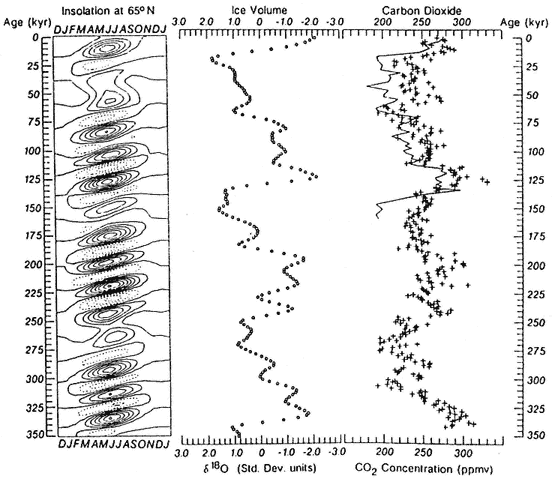
FIGURE 6.1 Central panel: Global ice volume estimated from oxygen-18 deficit in foraminiferan shells over the last 350,000 years. Left panel: Calculated insolation at 65 degrees north (contour interval 10 Wm-2, dashed lines negative). Right panel: Estimated atmospheric carbon dioxide concentration (+, from isotopic ratios in marine sediments; continuous line, as measured in Vostok ice core).
SOURCE: Reprinted, by permission, from Bartlein and Prentice (1989). Copyright © 1989 by Elsevier Science Publishers, Ltd.
and Berger (1979). Milankovitch showed that the amount of solar energy reaching the top of earth's atmosphere varied slightly on these time scales as a result of changes in the way the earth revolves around the sun. The 100,000-year periodicity in solar receipts is driven by changes in the eccentricity (''stretch'') in the earth's orbit, the 41,000-year periodicity by changes in the obliquity ("tilt") of the earth's axis, and the 19,000-and 23,000-year changes by the precession ("wobble") of the axis.
The fit between the global ice volume record and these variations in solar receipts calculated from celestial mechanics is not perfect. In particular, the earth's climate as recorded by the foraminifera shows a much stronger periodicity at 100,000 years than the astronomical calculations would predict. Further, the
actual changes in the amount of energy received from the sun are small—unlikely that these changes in the earth's orbit alone are big enough to explain the onset and end of the repeated ice ages of the Quaternary; the greater-than-expected observed variation at the 100,000-year periodicity is also a puzzle. On the other hand, the fit between the timing of the orbitally induced changes in solar receipt at high northern latitudes and the major features of the global ice volume record suggests at least a pacemaker role for the orbital variations. It is important to remember that the orbital or "Milankovitch" changes produce marked variations in the seasonal pattern of solar receipts at different latitudes. This will be referred to below in a discussion of the last 20,000 years. The recurrent glaciations of the Quaternary may well have been associated with major extensions equatorward of the mid-latitude arid regions (Dickinson and Virji, 1987; Lézine, 1989). As land surface conditions in arid regions change, so does their contribution to suspended dust in the atmosphere. An extensive effort to analyze ocean cores for dust originating on the continents now underway (Rea and Leinen, 1988) indicates major changes in the atmospheric transport of dust associated with changes between glacial and interglacial periods. Some possible explanations for the importance of the 100,000-year periodicity have to do with the growth, inertia, and effects of the major continental ice sheets associated with the ice ages.
Polar Ice
Remaining polar ice provides the most remarkable record of past climate, particularly for the last glacial cycle, which started more than 110,000 years ago. The snow falling on the central parts of the Greenland or Antarctic ice sheets is trapped for hundreds of thousands of years because the temperature at the base of the ice is too low to allow melting. Hence, by taking core samples from the top of the ice downward, it is possible to sample snow (now ice) that fell in the distant past. A number of techniques are used to calculate the age of ice at a particular depth, including mathematical models of the mechanical processes taking place within the ice. As discussed above, the ratio of the oxygen isotopes (18O/16O) in the falling snow and hence in the ice is related to general climate conditions. Both this ratio and that between heavy hydrogen, or deuterium, and ordinary hydrogen (2H/1H or D/H) correlate well with temperatures above the ice at the time the snow
fell. The D/H record has been used to construct a record of temperature at the Soviet Vostok station in Antarctica that extends back about 160,000 years, to the end of the ice age before last (Lorius et al., 1990). A range of temperatures of 5 to 6°C over Antarctica is reconstructed. This record corresponds to a remarkable degree to the record of global ice volume derived from foraminiferan 18O/16O in ocean cores (Figure 6.2). Not only does the
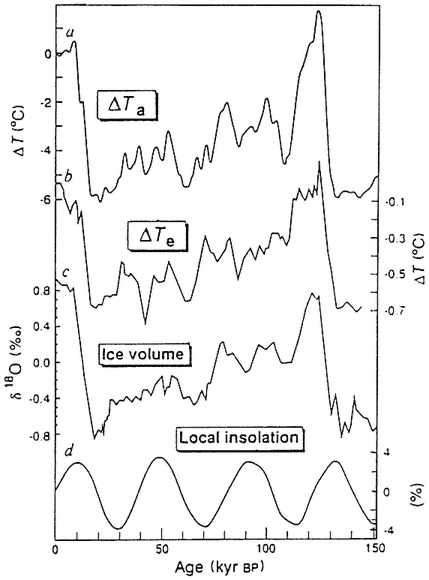
FIGURE 6.2 Temperature deviation, ice volume, and local insolation at Vostok station in Antarctica over the last 150,000 years. Top curve: Temperature (shown as the deviation from modern temperature) calculated from ice D/H ratios. Second curve: Temperature deviation calculated from the greenhouse effect of carbon dioxide and methane. Third curve: Ice volume, derived from the oxygen isotope ration in foraminiferan shells of ocean sediments. Lower line: local insolation at 78 degrees south.
SOURCE: Lorius et al. (1990). Reprinted, by permission, from NATURE Vol. 347 pp. 139-145. Copyright © 1990 Macmillan Magazines Ltd.
polar ice contain ancient water, but trapped within it is the air that was circulating over the ice sheet at the time the snow fell and became transformed to ice. This air can be extracted from the ice and analyzed for gases such as carbon dioxide and methane. Figure 6.3 indicates that the atmospheric concentrations of these
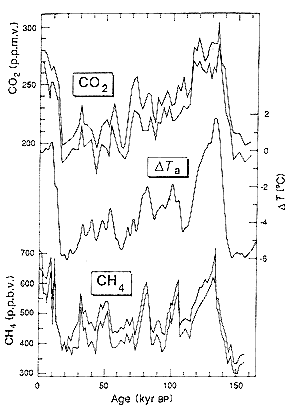
FIGURE 6.3 Temperature deviation, carbon dioxide concentration, and methane concentration at Vostok station, Antarctica, over the last 160,000 years. Middle curve: Temperature deviation from modern temperature calculated from ice D/H ratios. Top curve: Reconstructed atmospheric carbon dioxide concentration. Lower curve: Reconstructed atmospheric methane concentration.
SOURCE: Lorius et al. (1990). Reprinted, by permission, from NATURE Vol. 347 pp. 139–145. Copyright © 1990 Macmillan Magazines Ltd.
gases have shown variations remarkably similar to those of temperature over that last 160,000 years. The range of concentrations of atmospheric carbon dioxide—from close to 300 parts per million by volume (ppmv) in the warm periods between ice ages to as low as 180 pp mv in the depths of an ice age—is particularly striking. A calculation of the direct greenhouse effect (with no climate feedbacks) produced by the observed concentrations of carbon dioxide and methane shows that this can account for between 40 and 65 percent of the observed Antarctic temperature change (Lorius et al., 1990) (Figure 6.2).
The most recent ice age ended suddenly, having reached its most severe depths around 18,000 to 20,000 years ago. There were extensive continental ice sheets in both the Northern and Southern hemispheres that started to shrink approximately 14,000 years ago (Broecker and Denton, 1990). The great North American ice sheet centered on the Canadian Shield had disappeared by about 7,500 years ago. Atmospheric carbon dioxide and methane concentrations had increased more than 25 percent to preindustrial levels between 11,000 and 9,000 years ago (Lorius et al., 1990). At the same time, the orbital variations invoked by Milankovitch were producing marked changes in seasonality at high latitudes (more or less equal and opposite in the Northern and Southern hemispheres). At around the time of the glacial maximum (approximately 20,000 years ago), solar receipts at 60 degrees north in summer and winter approximated those of the present day, while around 9,000 years ago the contrast between summer and winter was markedly stronger (Figure 6.4). These and probably other factors produced major changes in regional climates, including that of western North America.
The Western Climate
The middens of pack rats provide invaluable information on past environments in arid and semi-arid regions such as most of the West. These small mammals collect plant materials from a very limited area (about 30 meters in radius). The plant fragments (e.g., twigs, leaves, needles, fruits, and seeds) are often preserved in crystallized urine called "amberat." If identifiable remains of a plant are found in a midden, they constitute firm evidence that the species was present locally. This has made it possible to reconstruct the vegetation of the West over tens of thousands of years, with the help of radiocarbon dating.
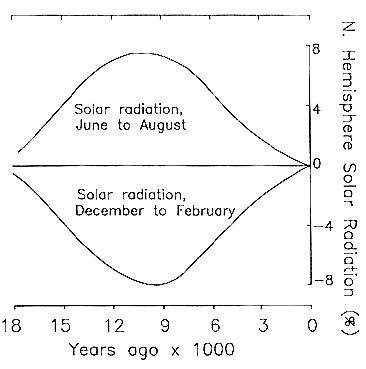
FIGURE 6.4 Insolation at 60 degrees north since the last glacial maximum (after COHMAP, 1988).
Betancourt (1990) has brought these records together in a review of the vegetation history of the Colorado Plateau (Figure 6.5). He demonstrates major changes in plant species distributions between the Late Glacial (15,000 to 11,000 years ago) and Late Holocene (4,000 to 800 years ago) periods. During the Late Glacial period, the upper tree line was several hundred meters lower than at present and boreal forest (spruce and true fir) was found some 900 meters lower. The vegetation patterns were not, however, simply shifted downhill in response to a colder climate. Ponderosa pine (Pinus ponderosa) and Colorado pinyon (Pinus edulis) are major features of the present vegetation of the Colorado Plateau, but both were absent in the Late Glacial period. Ponderosa was replaced by limber pine (Pinus flexilis ) in many cases. The absence of ponderosa pine may have been the result of cooler summers and orbitally determined lower insolation in the latter part of the growing

season. Utah juniper (Juniperus osteosperma) was present, probably because of its greater cold tolerance than Colorado pinyon. Betancourt inferred from these and other plant species distributions that the Late Glacial summers on the Colorado Plateau were more than 6°C cooler than at present (Betancourt, 1990)—about the same temperature difference as noted from ice D/H ratios at Vostok in Antarctica. He indicated that the relative proportion of annual precipitation falling in summer (less than 10 percent) was even smaller than in recent times (20 to 30 percent). Note that different climates do not simply have different means, but also different variabilities and seasonalities.
Other evidence of past climate in the West may be extracted from the chemical composition of plant remains found in dated pack rat middens. Just as the D/H ratio in polar ice reflects certain environmental temperatures, so the same ratio in plant cellulose is related to that in the plant's Source water and hence, in part, to growing-season temperatures. Long et al., (1990) measured plant cellulose D/H ratios in materials from pack rat middens in the Great Basin and on the Colorado Plateau and from them inferred July temperatures over more than 30,000 years. The general form of the record is very similar to that calculated from a GCM, although the GCM calculated that the difference between present and ice-age temperatures (about negative 2.5°C) is lower than other evidence would suggest.
It has been possible to reconstruct conditions at several times in the last 20,000 years over much of the world by combining information on the composition of marine plankton from ocean cores, pollen from lakes and bogs, plant remains from pack rat middens, and natural records of the water levels in lakes (COHMAP, 1988). Twelve thousand years ago (during the Late Glacial period), with extensive ice sheets still present, such a reconstruction shows that the whole of the American West was wetter than it is now. Between 9,000 and 6,000 years ago, the Pacific Northwest was drier than at present, whereas the Southwest was wetter. Summer temperatures were between 2 and 4°C higher in the West, and winters were probably cooler. The Arizona monsoon started to appear about 9,000 years ago. GCM results using the known boundary conditions (orbital position, carbon dioxide content of air, global ice volume, and sea surface temperatures) at these times produce similar patterns of regional climate. This gives increased confidence in the physical understanding used to build GCMs and hence in their usefulness when considering the effects of changed boundary conditions on the climate system.
Rapid Climate Shifts
Superimposed on the relatively smooth global shift into (gradually) and out of (rapidly) repeated ice ages or glaciations, there have been shorter lurches of widespread, if not global, extent. The most studied of these is an event known as "the Younger Dryas." During the rapid emergence from the last glaciation about 11,000 years ago, northern Europe and northeastern North America plunged back from interglacial conditions broadly similar to today's to the chill of an ice age (a temperature decline of about 6°C). This may have taken only 100 years or less. The period is named for Dryas octopetala, a plant of the high Arctic that appeared with other Arctic plants in parts of Europe where forest formerly stood. Perhaps no more than 1,000 years later, this massive "cold snap" ended, maybe even more rapidly than it started. There is tantalizing, but inconclusive, evidence that other major climate changes occurred at the same time elsewhere, for example on the Loess Plateau of China. Even if the Younger Dryas event was strictly a North Atlantic affair, it is of enormous significance because of its scale and speed. Our present state of knowledge would not enable us to anticipate such a change even if it were to start next year. One persuasively argued explanation links the Younger Dryas to massive changes in ocean circulation induced by a change in the point at which most of the meltwater from the retreating North American ice sheet emptied into the sea (Broecker and Denton, 1990). This explanation requires the Atlantic circulation to shift rapidly between alternate modes, resulting in sudden changes in the northward transfer of heat by the ocean that currently gives the North Atlantic periphery climates that would otherwise be found ten degrees further south. It is possible that other such sudden and drastic changes in the last 15,000 years will be found elsewhere as other regions are studied as intensively as Europe and eastern North America.
Other drastic changes, albeit more short lived (lasting 1 to 10 years) than the Younger Dryas, may be associated with very large explosive volcanic eruptions or groups of eruptions. There is very strong evidence for much larger and climatically effective eruptions at various times in the last 10,000 years than have occurred during times of historical record (Hammer et al., 1980; Baillie and Munro, 1988). Even if we understood and could predict the effects of such an eruption on climate, we are unlikely to be able to forecast the eruption itself.
Less drastic changes in climate, lasting one to a few centuries, have been discussed by many authors. The Little Ice Age, a cooler
period starting some time between A.D. 1450 and A.D. 1650 and ending perhaps as late as A.D. 1890 (Grove, 1988) has been discussed as if it were a global cooling of about 1.5°C. In fact, the quality of the evidence for this is very mixed and is much more dense in some parts of western Europe and eastern North America than elsewhere. Support comes from traces of glacier advance and retreat in some regions (Denton and Karlen, 1973), oxygen isotope records from annually layered ice caps in Peru and Tibet (Thompson and Mosley-Thompson, 1990), temperature-sensitive tree rings of high elevation trees in California (LaMarche, 1974) and Washington (Graumlich and Brubaker, 1986), and from boreal forest trees in Canada (Jacoby and d'Arrigo, 1989) and the polar Urals (Graybill and Shiyatov, 1989) but not, for example, from tree rings in northern Scandinavia (Briffa et al., 1990). Little evidence is available for lower latitudes or the oceans. Another much-discussed global change is the "Medieval Warm Epoch." There is certainly evidence for warmer conditions in the circum-North Atlantic region at times between A.D. 800 and A.D. 1350 and some indications of the same effect in polar and high-elevation ice cores elsewhere. As in the case of the Little Ice Age, the evidence is far from complete. It is not yet possible to say with confidence whether these much-discussed cold and warm periods were really global or whether the suggestion of a name and a date, usually from European experience, has attracted evidence that really records unconnected events.
In order to resolve these problems it is necessary to use records of environmental conditions that are reliably dated to the calendar year. The most extensive such natural record is provided by the annual rings of trees in the temperate and boreal forests. In dry regions, the width or thickness of the annual ring is often controlled by the availability of moisture, whereas in cool, moist regions ring width or maximum wood density records summer temperatures. An extensive literature documents the techniques used to extract climate information from tree rings (Fritts, 1976; Hughes et al., 1982; Cook and Kairiukstis, 1990). The direct application to hydrologic problems of records of tree growth derived from tree rings is of particular relevance to the topic of this meeting. An example of such a study follows.
TREE RINGS AS HYDROLOGIC INDICATORS
There are better natural records of climate of the last few hundred years in the western United States than anywhere else on
earth. These include an extraordinary wealth of climatically sensitive tree-ring records that can be used to place the instrumental period in a wider perspective.
The physical basis for using tree rings as hydrologic indicators in semiarid regions is well understood. The most frequently used tree-ring variable in drought and hydrologic studies has been the ring-width index, a measure of departures from normal of annual diameter growth of the tree. Both the growth increment of a tree and the annual or seasonal flow of a river are closely related to the water balance of the soil integrated over days, weeks, or months. Statistical studies have repeatedly shown that hydrologic variables and annual growth indices from properly selected trees are highly correlated (Schulman, 1956; Stockton, 1975; Smith and Stockton, 1981; Cleaveland and Stahle, 1989).
Spatial Patterns of Drought From Tree-Ring Networks
Where the spatial coverage is sufficiently dense and time coverage sufficiently long, networks of tree-ring data can convey important hydrologic information on the joint space-time variation of moisture anomalies. Without tying the tree-ring patterns to a specific hydrologic variable, we can infer the year-by-year development of drought patterns by mapping tree-ring indices. Spatial and temporal coverage by tree-ring data is especially favorable for such an analysis in the southwestern United States, where some 121 tree-ring sites provide continuous coverage for the years A.D. 1600 to A.D. 1962. The cut-off years for this period are dictated largely by the age distribution of suitable tree-ring sites and the history of field collections in the Southwest. Species of dubious quality for drought reconstruction (e.g., bristlecone pine from high elevations) can be excluded from the analysis.
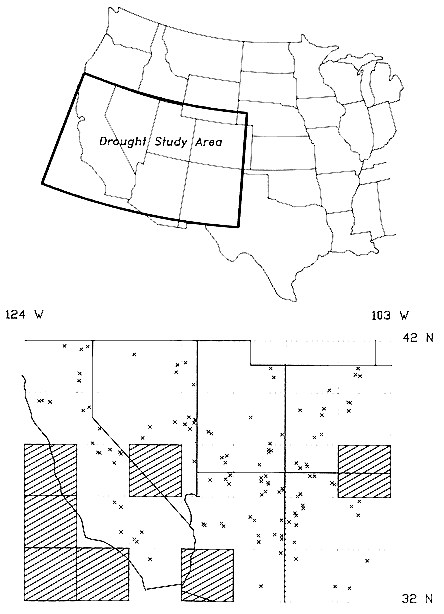
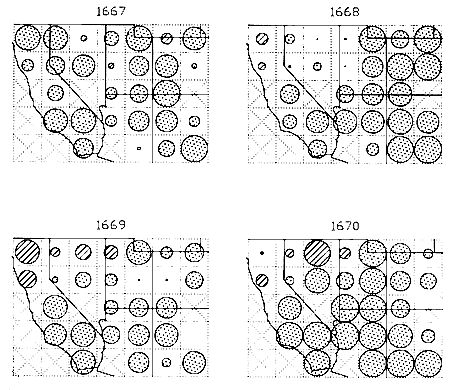
To summarize drought patterns using tree-ring data, we divided the southwestern United States into a grid of 35 cells, each with a dimension of 3 degrees latitude by 2 degrees longitude (Figure 6.6), grouped tree-ring sites by their enclosing cell, and averaged individual series in each cell together. We then analyzed the resulting 28 ''cell-average'' tree-ring series (seven cells contained no tree-ring sites) to produce annual maps of relative growth anomalies in two of the more severe multiyear droughts of the A.D. 1600 to 1962 period: A.D 1667 to 1670 and A.D. 1843 to 1848. These droughts are particularly relevant for their widespread coverage of runoff-producing regions. The first drought, A.D. 1667 to 1670, has been reported as particularly extreme in the watersheds of the upper Colorado River and
the Salt and Verde rivers, which drain the central and eastern highlands in Arizona (Stockton, 1975; Smith and Stockton, 1981). The second drought, A.D. 1843 to 1848, has been noted for its severity in reconstruction of drought and streamflow in the Four Rivers area of the Sierra Nevada of northern California (Earle and Fritts, 1986). This area is a major source of water supply to southern California.
The annual cell-average tree-ring series for the two droughts have been coded on maps by circles of varying size within each cell (Figures 6.7 and 6.8). The radius of a circle is proportional to the exceedance probability, p, of growth index for the year if the index is less than the long-term median, or to 1-p if the index is greater than the long-term median. Circles have been scaled such that the largest or smallest growth value in the 1600 to 1962 period yields a circle with a diameter equal to the width of the cell. In terms of inferred moisture conditions, therefore, a dotted circle filling the cell would indicate the driest (lowest growth) year on record, while a hatched circle would indicate the wettest year on record. No circle (zero radius) implies median moisture conditions.
A practical hydrologic consideration in attempting to quantify drought regionally is the spatial distribution of droughts relative to major runoff-producing areas. The maps in Figures 6.7 and 6.8 clearly show that the spatial scale of drought in individual years of the 1660s and 1840s droughts was generally smaller than the entire Southwest. In most years, therefore, severe deficits in runoff would not be expected over all major runoff-producing areas simultaneously. For example, the Sierra Nevada of northern California appear to have been normal or wetter than normal in 1669 and 1670, when severe drought appears to have occurred in the Colorado Rockies and the central Arizona highlands.
In the 1840s drought, however, the year 1847 stands out as an exception to this generalization and points to the possibility of synchronous severe drought over all major watersheds of the Southwest. The unusually extensive drought of 1847 appears to be imbedded in a generalized 6-year drought that would best be characterized as a "Far West" drought. A temporal pattern to the drought of the 1840s is hinted at: anchoring in the Far West in 1843 and 1844, shifting inland in 1845 so that the extreme northwestern part of the study area was out of the drought pattern, returning to the Far West mode in 1846, expanding dramatically to cover the entire Southwest in 1847, and again shifting to the Far West in 1848. A steep northwest-southeast gradient to wetter than normal conditions is inferred toward the far northern part of the West region. A persistent ridge, probably narrow in longitudinal extent, cells for
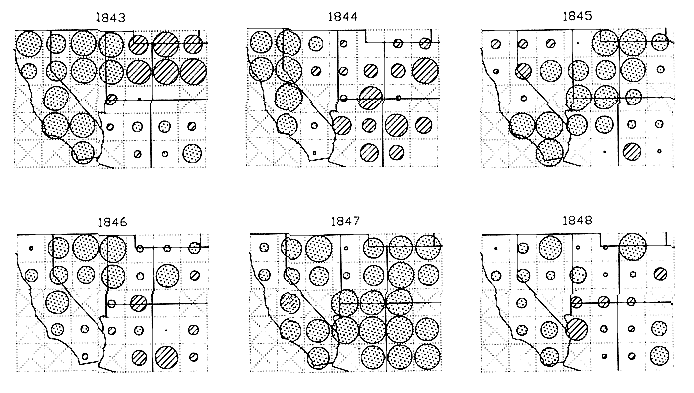
along the West Coast is a plausible meteorological scenario for most years of this drought. Another possibility is a ridge in the eastern North Pacific whose effects on suppression and diversion of storms did not extend far enough inland, except in 1847, to affect states east of Nevada and California. The very wet conditions in the Colorado Rockies during some years of the Far West drought could possibly have resulted from the movement of storms southeastward from Canada and the Pacific Northwest with intensification over the Rockies. The dry tier of cells along the southern boundary of the Southwest region suggests that movement of storms and moisture from the Southwest under the ridge was probably not the source of wetness in Colorado.
Basin-Specific Streamflow Reconstructions
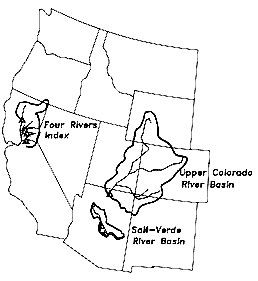
Where the water resources of a particular watershed or river system are in question, it is often useful to go beyond the mapping of tree-ring variations, as described above, to the quantitative reconstruction of specific hydrologic time series. Tree-ring reconstructions of streamflow have been conducted by the Laboratory of Tree-Ring Research at the University of Arizona for three major river-basin systems in the western United States: the upper Colorado River basin, with parts in Colorado, Wyoming, Utah, and New Mexico; the Salt and Verde rivers in central and eastern Arizona; and the Four Rivers group (Yuba, Sacramento, American, and Feather) of northern California (Figure 6.9).
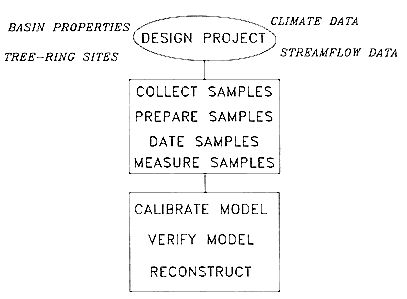
The four phases in a typical tree-ring reconstruction of streamflow include: (1) planning and collection of hydrologic and climatic data, (2) field sampling and physical preparation of tree-ring samples, (3) selection and calibration of a reconstruction model, and (4) generation of reconstructed streamflow along with cross-validation or verification of the reconstruction (Figure 6.10). Descriptions of available methodology can be found elsewhere (Stockton et al., 1985; Cook and Kairiukstis, 1990). The planning and field sampling steps are especially critical in a hydrologic reconstruction to ensure that the tree-ring data provide an optimum signal for the climatic input governing streamflow. In the West, the strategy includes concentrating sampling as much as possible in the major runoff-producing areas of the watershed.
Stockton's (1975) Colorado River reconstruction serves as a good example of a hydrologic tree-ring study whose results have important implications for water resources. The importance of the
Colorado River as a source of water for agriculture, hydroelectric power generation, and municipal and industrial uses in the southwestern United States cannot be overstated. This 1440-mile-long river flows through some of the most arid lands in the country, and its 244,000-square-mile drainage area includes parts of seven states and a small portion of Sonora and Baja California in Mexico. The Colorado has an average annual flow of just under 14 million acre-feet (maf), a small amount when compared to such rivers as the Columbia and Mississippi. In spite of this relatively low flow, more water is diverted from the basin than from any other river basin in the United States. The river is an important source of supply for southern California and, with the nearly completed Central Arizona Project, for the metropolitan areas of Phoenix and Tucson in Arizona.
Most of the flow for the Colorado originates in the river's upper basin (the area north of Lee's Ferry, Arizona), which includes some 109,300 square miles. About 85 percent comes from only 15 percent of the area—the high mountains of Colorado, Wyoming, and Utah (Stockton and Jacoby, 1976).
The tree-ring data for the study comprised 30 different sites from the major runoff-producing regions. Stockton (1975) calibrated statistical models to reconstruct annual and seasonal flow series at several gage locations in the upper basin from these tree ring data. The reconstruction for the outflow point of the upper basin—Lee's Ferry, Arizona—extends back to A.D. 1520. The period from 1906 to 1930 had the highest sustained flows in the entire reconstruction. The average annual flow, 16.2 maf, for that period was used as a basis for the Colorado River Compact. If the tree-ring reconstruction is accepted as accurate, the design period was simply not representative of the long-term flow of the river. Thus, the division of water between states of the upper and lower Colorado basins, as well as Mexico, is based on an anomalously high value and is apt to result in shortages when all of the entities involved demand their allocated share of the available water.
The terms of the Colorado River Compact specify that no less than 75 maf will be delivered at Lee's Ferry in any consecutive 10-year period (Holburt, 1982). For this reason, 10-year moving averages of the Lee's Ferry reconstruction are of particular interest. Nonoverlapping 10-year means of the reconstruction beginning in 1521, 1531, and so forth until 1951 are graphed in Figure 6.11 along with similar averages for the actual natural flow series as provided by the U.S. Bureau of Reclamation. The droughts of the 1580s through 1590s and the 1660s are again prominent—the earlier especially so for its combined intensity and duration.
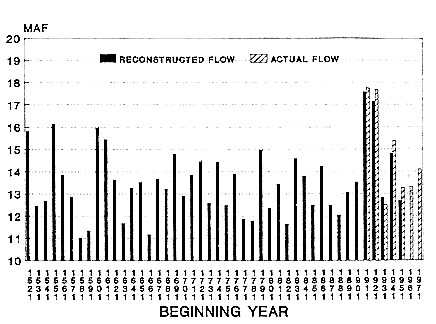
FIGURE 6.11 Bar plot of nonoverlapping 10-year means of reconstructed and actual flow at Lee's Ferry. Actual data are virgin flow obtained from the U.S. Bureau of Reclamation.
The designation of the lowest reconstructed 10-year mean depends on the yearly grouping. The second year of each decade (e.g., 1951) was used to begin each 10-year period in Figure 6.11 because the minimum flow in the actual natural-flow series happened to occur during the period 1931 to 1940. The minimum nonoverlapping 10-year-average reconstructed flow by this grouping is 11.0 maf for 1581 to 1590. In terms of running 10-year means, however, the lowest value is 9.71 maf for 1584 to 1593. Whether the implied 10-year total natural flow of 97.1 maf would lead to noncompliance with the contract terms specifying delivery of 75 maf depends, of course, on the 10-year total depletions for the period. These depletions would reduce the 97.1 maf by some unknown amount depending on water use in the upper basin.
We emphasize that data such as those plotted in Figure 6.11, while in the proper units for streamflow, are merely estimates. Such estimates represent our best possible information on what streamflow conditions may have been, but the inherent uncertainty
should always be kept in mind. The magnitude of the uncertainty for reconstructed values in individual years is appreciable: the standard error of the estimate for the Lee's Ferry reconstruction is about 2 maf. It is reasonable, however, to expect somewhat less uncertainty in values averaged over several years. For example, a simple regression of 10-year running means of observed Lee's Ferry flow against the reconstructed flow yields a standard error of 0.46 maf—only about 25 percent of the standard error of the annual reconstructed values.
Uncertainties in Regional Water Supplies
It is not unusual for metropolitan water utilities in the West to import water from regions separated by hundreds of miles. The impact of drought on water supply then depends on the synchrony of climate anomaly patterns over the various source regions. An example of an area depending on several widely separate runoff sources is metropolitan southern California.
The Los Angeles area draws much of its supply from two source regions: the upper Colorado River and northern California. We have examined jointly two hydrologic tree-ring reconstructions for information on extended low-flow periods in two source runoff areas for the Los Angeles water supply: the upper Colorado River and the Sierra Nevada of California. The corresponding tree-ring studies are by Stockton (1975), for the Colorado River at Lee's Ferry, and Earle and Fritts (1986), for the Four Rivers (Sacramento, Feather, Yuba and American) index of northern California (Figure 6.9). Both reconstructions were conducted specifically to maximize the signal for annual runoff, and both extend over several centuries: to A.D. 1520 for the Colorado River and to A.D. 1560 for the Four Rivers index.
Storage acts as a buffer against the effects of meteorological drought, and the considerable capacity of surface and underground storage in this case suggests that droughts must last several years to significantly impact water supply. We have adopted the 20-year moving average of reconstructed annual flow as the data unit to be analyzed for drought. Shorter droughts, especially those of great intensity, can, of course, cause hardship to water users not tied in to the larger storage network. A sustained deficiency of precipitation over a period of 20 years or longer, however, would likely affect even those major water utilities that have elaborate contingency plans to counter drought.
Twenty-year moving averages for both reconstructions are shown in Figure 6.12. The 1660s and 1840s droughts, referred to previously in the discussion of spatial patterns of tree-ring growth departures, are prominent in these plots. The years before A.D. 1600, however, hold by far the lowest reconstructed 20-year flows on the Colorado River. The most severe sustained droughts inferred from lowest 20-year moving average reconstructed flows were as follows for the two series:
-
For the Colorado River at Lee's Ferry, flow dropped to 10.95 maf for the years 1579 through 1598.
-
For the Four Rivers index, flow dropped to 13.55 maf for the years 1918 through 1937.
Figure 6.12 clearly shows that the 1579 to 1598 period was drier than any other on the Colorado. Considering that the long-term mean of the Lee's Ferry reconstruction is 13.5 maf, the most severe sustained drought for the Colorado River represents a cumulative deficiency of 51 maf over 20 years. The designation of most severe sustained droughts is more uncertain for the Four Rivers index. The Four Rivers area apparently experienced a drought in the 1840s only slightly less severe than that of the 1918 to 1937 period. Moreover, the standard error of the estimate for the annual values of the Four Rivers reconstruction is 5.5 maf, compared with 2.0 maf for the Colorado River reconstruction.
A comparison of the two curves in Figure 6.12 suggests a lack of consistent synchrony between 20-year average flow departures in the upper Colorado River basin and northern California. Annual (unsmoothed) flow series in the two basins are positively correlated, though the coefficients are small:
r = 0.40, actual series, 1906-1985
r = 0.23, reconstructed series, 1560-1961
r = 0.37, actual series, 1906-1961
r = 0.25, reconstructed series, 1906-1961
All except the 0.25 value are significant at the 95 percent confidence level. The last two coefficients listed suggest that the reconstruction may underestimate interbasin correlation. Although like-sign departures occur from time to time in the 20-year moving average curves of Figure 6.12, periods of contrast are frequent. For example, the 20-year period of highest average flow for the Four Rivers index, beginning in about 1800, was a time of below-
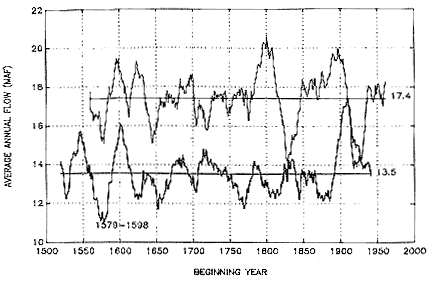
FIGURE 6.12 Time series plots of 20-year running means of reconstructed flows for the Colorado River at Lee's Ferry (lower line) and for the Four Rivers index, northern California (upper line).
average reconstructed flow for the Colorado River. On the other hand, the aforementioned 1579 to 1598 drought on the Colorado River coincided with the third lowest nonoverlapping 20-year mean flow on the Four Rivers index.
The synchrony in droughts and wet periods between the two regions can perhaps be judged more clearly from a scatter plot of the 20-year moving averages (Figure 6.13). A consistent relationship between 20-year departures in the two areas is clearly lacking. In fact, the correlation coefficient for the scatter plot is essentially zero. The lack of correlation does not mean, however, that severe droughts or wet periods have not occasionally been synchronous over the two regions. For example, the period from 1579 to 1598 was notably dry in both regions, and the period from 1904 to 1923 was notably wet in both regions. On the other hand, the years between 1918 and 1937 were a time of contrasting anomalies in terms of 20-year averages—dry in the Four Rivers index but wet in the Colorado River series. The line connecting the
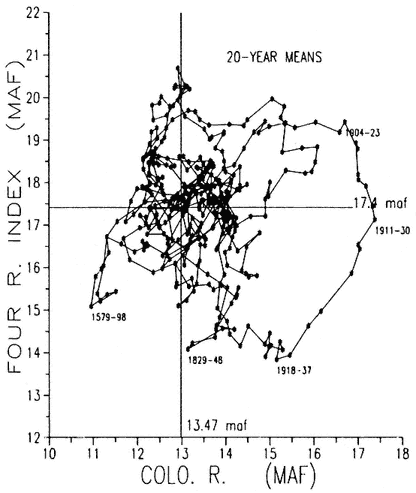
FIGURE 6.13 Scatterplot of running, 20-year means of reconstructed flow of Four Rivers against reconstructed flow of Colorado River at Lee's Ferry. Symbols are connected by lines to show development of anomalies in time. Times of selected key anomalies are annotated.
points on the scattergram indicates a transition from the 1904 to 1923 period to the 1918 to 1937 period, in which the Four Rivers index was becoming increasingly dry relative to the Colorado River series.
The tree-ring record as represented by data used in this study represents about a 450-year time window. On this time scale, moisture anomalies in the two regions are apparently neither consistently synchronous nor compensating. Climate change, whether due to increasing levels of atmospheric carbon dioxide or other influences, could conceivably produce monotonic trends in decadal rainfall totals over larger regions and on longer time scales than discernible from tree-ring data or gaged streamflow records. Indeed, the conversion of ring widths to tree-ring indices involves removal of any trend on the order of one-half the length of the tree-ring series itself, which places a practical limit on the climatic wavelengths that can be inferred. Research is currently ongoing
to make use of tree-ring specimens covering thousands of years to extend our record of climatic and hydrologic variations.
CONCLUSIONS
Major changes in global climate have occurred on geologic time scales. So far as their causes are understood, they arose from changes in external boundary conditions such as solar receipts, the gross composition of the atmosphere, and the configuration of the oceans and continents. Although these changes are usually described as occurring rather slowly—that is, over millions of years—it should be remembered that they may have occurred more rapidly in some cases but appear slow because of the coarse temporal resolution of geological records.
Within the overall cool period of the last 2.4 million years, there have been a number of short intervals (up to 15,000 years long) in which the climate has broadly resembled that of the present. The mechanisms controlling the switch between full glacial and such interglacial conditions have been subject to intense scientific interest in recent years. Although they are not fully understood, it is reasonable to state that changes in boundary conditions have played an important part in driving the recurrent pattern of glacials and interglacials. The combination of boundary conditions projected for the next few decades has not occurred before. Consequently, there is great uncertainty as to whether the climate system will continue to behave much as it has in the last 9,000 years.
The Younger Dryas episode demonstrates that major climate change (almost as big as the difference between an ice age and modern climate and covering a large region, such as the North Atlantic basin), can occur in a few decades. Very rapid but less persistent changes to conditions outside the range experienced in the last few hundred years have also taken place since the last retreat of the ice. Such changes may result entirely from the internal mechanisms of the atmosphere and oceans, or they may be caused by events such as very large explosive volcanic eruptions.
Other than the El Niño-Southern Oscillation (see Trenberth, Chapter 5), understanding of decade-to century-scale variations in climate is limited. Reconstructions of streamflow from tree-ring data indicate that such variations are of a magnitude that cannot be ignored in planning for management of water resources in the West. Reconstructions for the upper Colorado River basin and the northern Sierra Nevada of California both emphasize that hyro-
logic variations of the current century have been unusual in a 400-year context. The highest-flow period on the Colorado and the lowest-flow period in the Sierra Nevada are found in the current century. The modern gaged streamflow record may therefore be an unrepresentative sample for estimating water availability. The large range of departures of reconstructed flows averaged over 20-year periods also suggested that hydrologic models for annual flow simulation incorporate nonstationarity in the mean.
ACKNOWLEDGEMENTS
This work was supported in part by National Science Foundation Grant ATM-88-14675.
REFERENCES
Baillie, M. G. L., and M. A. R. Munro. 1988. Irish tree rings, Santorini and volcanic dust veils. Nature 332:344-346.
Bartlein, P. J., and I. C. Prentice. 1989. Orbital variations, climate and paleoecology. Trends in Ecology and Evolution 4:195-199.
Berger, A. 1979. Insolation signatures of Quaternary climatic changes. Nuovo Cim. 2(c):63-87.
Betancourt, J. L. 1990. Late Quaternary biogeography of the Colorado Plateau. Pp. 259-292 in J. L. Betancourt, T. R. van Devender, and P. S. Martin, eds., Fossil Packrat Middens: The Last 40,000 Years of Biotic Cange in the Arid West. Tucson: University of Arizona Press.
Briffa, K. R., T. S. Bartholin, D. Eckstein, P. D. Jones, W. Karlen, F. H. Schweingruber, and P. Zetterberg. 1990. A 1,400-year tree-ring record of summer temperatures in Fennoscandia. Nature 346:434-439.
Broecker, W. S., and G. H. Denton. 1990. What drives glacial cycles? Scientific American 262:49-56.
Cleaveland, M. K., and D. W. Stahle. 1989. Tree ring analysis of surplus and deficit runoff in the White River, Arkansas. Water Resources Research 25(6):1391-1401.
Cook, E. R., and L. A. Kairiukstis. 1990. Methods of Dendrochronology: Applications in the Environmental Sciences. Boston: Kluwer Academic Publishers.
Cooperative Holocene Mapping Project (COHMAP). 1988. Climatic changes of the last 18,000 years: observations and model simulations. Science 241:1043-1052.
Denton, G., and W. Karlen. 1973. Holocene climatic variations--their pattern and possible cause. Quat. Res. 3:155-205.
Dickinson, R. E., and H. Virji. 1987. Climate change in the humid tropics, especially Amazonia, over the last twenty thousand years. Pp. 91-105 in R. E. Dickinson, ed., The Geophysiology of Amazonia: Vegetation and Climate Interactions. New York: John Wiley & Sons.
Earle, C. J., and H. C. Fritts. 1986. Reconstructing Riverflow in the Sacramento Basin Since 1560. Report prepared for the California Department of Water Resources under agreement number DWR B-55395.
Emiliani, C. 1955. Pleistocene temperatures. J. Geol. 63:536-578.
Fritts, H. C. 1976. Tree Rings and Climate. London: Academic Press.
Graumlich, L. J., and L. B. Brubaker. 1986. Reconstruction of annual temperature (1590-1979) for Longmire, Washington, derived from tree rings. Quat. Res. 25:223-234.
Graybill, D. A., and S. G. Shiyatov. 1989. A 1009-year tree-ring reconstruction of mean June-July temperature deviations in the Polar Urals. Pp. 37-42 in R. D. Noble, J. L. Martin, and K. F. Jensen, eds., Symposium on Air Pollution Effects of Vegetation. Broomall, PA: U.S. Department of Agriculture, Northwestern Forest Experiment Station.
Grove, J. M. 1988. The Little Ice Age. London: Methuen.
Hammer, C. U., H. B. Clausen, and W. Dansgaard. 1980. Greenland ice sheet evidence of post-glacial volcanism and its climatic impact. Nature 288:230-235.
Holburt, M. B. 1982. Colorado River water allocation. Water Supply and Management 6(1-2):63-73.
Hughes, M. K., P. M. Kelly, J. R. Pilcher, and V. C. LaMarche, Jr., eds. 1982. Climate from Tree Rings. Cambridge: Cambridge University Press.
Imbrie, J., J. D. Hays, D. C. Martinson, A. MacIntrye, A. C. Mix, J. J. Morley, N. G. Pisias, W. L. Prell, and N. J. Shackleton. 1984. The orbital theory of Pleistocene climate: Support from a revised chronology of the marine δ18O record. Pp. 269-305 in A. Berger et al., eds., Milankovitch and Climate. Boston: D. Reidel Publishing Company.
Jacoby, G. C., and R. D'Arrigo. 1989. Reconstructed northern hemisphere annual temperature since 1671 based on highlatitude tree-ring data from North America. Climatic Change 14:39-59.
Kukla, G. J. 1977. Pleistocene land-sea correlations, Part I: Europe. Earth Sci. Rev. 13:307-374.
LaMarche, V. C., Jr. 1974. Paleoclimatic inferences from long treering records. Science 183:1043-1048.
Lézine, A. M. 1989. Late Quaternary vegetation and climate of the Sahel. Quaternary Research 32:317-334.
Long, A., L. Warnecke, J. L. Betancourt, and R. S. Thompson. 1990. Deuterium variations in plant cellulose from fossil packrat middens. Pp. 259-292 in J. L. Betancourt, T. R. van Devender, and P. S. Martin, eds., Fossil Packrat Middens: The Last 40,000 Years of Biotic Change in the Arid West. Tucson: University of Arizona Press.
Lorius, C., J. Jouzel, D. Raynaud, J. Hansen, and H. Le Treut. 1990. The ice-core record: climate sensitivity and future greenhouse warming. Nature 347:139-145.
Milankovitch, M. M. 1941. Canon of insolation and the ice-age problem. Königlich Serbische Akademie. Translated by the Israel Program for Scientific Translations, 1969 . Jerusalem, Israel: Program for Scientific Translations.
Rea, D. K., and M. Leinen. 1988. Asian aridity and the Zonal Westerlies: Late Pleistocene and Holocene record of eolian deposition in the northwest Pacific Ocean. Paleogeog., Paleoclim., Paleoecol. 66:1-8.
Schulman, E. 1956. Dendroclimatic Changes in Semi-arid America. Tucson: University of Arizona Press.
Smith, L. P., and C. W. Stockton. 1981. Reconstructed streamflow for the Salt and Verde rivers from tree-ring data. Water Resources Bull. 16(6):939-947.
Stockton, C. W. 1975. Long-term Streamflow Records Reconstructed from Tree Rings. Tucson: University of Arizona Press.
Stockton, C. W., W. R. Boggess, and D. M. Meko. 1985. Climate and tree rings. Chapter 3, A. D. Hecht, ed., in Paleoclimate Analysis and Modeling. New York: John Wiley & Sons.
Stockton, C. W., and G. C. Jacoby. 1976. Long-Term Surface-Water Supply and Streamflow Trends in the Upper Colorado River Basin. Lake Powell Research Project Bulletin No. 18. Washington, D.C.: National Science foundation.
Thompson, L. G., and E. Mosley-Thompson. 1990. One-half millennia of tropical climate variability as recorded in the stratigraphy of the Quelccaya ice cap in Peru. Pp. 15-31 in D. H. Peterson, ed., Aspects of Climate Variability in the Pacific and the Western Americas, Geophysical Monograph 55. Washington, D.C.: American Geophysical Union.
Vernekar, A. D. 1972. Long-period Global Variations of Incoming Solar Radiation. Boston: American Meteorological Society.


