Board on Science and Technology for International Development
Publications and Information Services (FO-2060Z)
Office of International Affairs
National Research Council
2101 Constitution Avenue, N.W.
Washington, D.C. 20418 USA
How to Order BOSTID Reports
BOSTID manages programs with developing countries on behalf of the U.S. National Research Council. Reports published by BOSTID are sponsored in most instances by the U.S. Agency for International Development. They are intended for distribution to readers in developing countries who are affiliated with governmental, educational, or research institutions, and who have professional interest in the subject areas treated by the reports.
BOSTID books are available from selected international distributors. For more efficient and expedient service, please place your order with your local distributor. Requestors from areas not yet represented by a distributor should send their orders directly to BOSTID at the above address.
Energy
33. Alcohol Fuels: Options for Developing Countries. 1983, 128 pp. Examines the potential for the production and utilization of alcohol fuels in developing countries. Includes information on various tropical crops and their conversion to alcohols through both traditional and novel processes. ISBN 0-309-04160-0.
36. Producer Gas: Another Fuel for Motor Transport. 1983, 112 pp. During World War II Europe and Asia used wood, charcoal, and coal to fuel over a million gasoline and diesel vehicles. However, the technology has since been virtually forgotten. This report reviews producer gas and its modern potential. ISBN 0-309-04161-9.
56. The Diffusion of Biomass Energy Technologies in Developing Countries. 1984, 120 pp. Examines economic, cultural, and political factors that affect the introduction of biomass-based energy technologies in developing countries. It includes information on the opportunities for these technologies as well as conclusions and recommendations for their application. ISBN 0-309-04253-4.
Technology Options
14. More Water for Arid Lands: Promising Technologies and Research Opportunities. 1974, 153 pp. Outlines little-known but promising technologies to supply and conserve water in and areas. ISBN 0-309-04151-1.
21. Making Aquatic Weeds Useful: Some Perspectives for Developing Countries. 1976, 175 pp. Describes ways to exploit aquatic weeds for grazing and by harvesting and processing for use as compost, animal feed, pulp, paper, and fuel. Also describes utilization for sewage and industrial wastewater. ISBN 0-309-04153-X.
34. Priorities in Biotechnology Research for International Development: Proceedings of a Workshop. 1982, 261 pp. Report of a workshop organized to examine opportunities for biotechnology research in six areas: 1) vaccines, 2) animal production, 3) monoclonal antibodies, 4) energy, 5) biological nitrogen fixation, and 6) plant cell and tissue culture. ISBN 0-309-04256-9.
61. Fisheries Technologies for Developing Countries. 1987, 167 pp. Identifies newer technologies in boat building, fishing gear and methods, coastal mariculture, artificial reefs and fish aggregating devices, and processing and preservation of the catch. The emphasis is on practices suitable for artisanal fisheries. ISBN 0-309-04260-7.
73. Applications of Biotechnology to Traditional Fermented Foods. 1992, 207 pp. Microbial fermentations have been used to produce or preserve foods and beverages for thousands of years. New techniques in biotechnology allow better understanding of these transformations so that safer, more nutritious products can be obtained. This report examines new developments in traditional fermented foods. ISBN 0-309-04685-8.
Plants
47. Amaranth: Modern Prospects for an Ancient Crop. 1983, 81 pp. Before the time of Cortez, grain amaranths were staple foods of the Aztec and Inca. Today this nutritious food has a bright future. The report discusses vegetable amaranths also. ISBN 0-309-04171-6.
53. Jojoba: New Crop for Arid Lands. 1985, 102 pp. In the last 10 years, the domestication of jojoba, a little-known North American desert shrub, has been all but completed. This report describes the plant and its promise to provide a unique vegetable oil and many likely industrial uses. ISBN 0-309-04251-8.
63. Quality-Protein Maize. 1988, 130 pp. Identifies the promise of a nutritious new form of the planet's third largest food crop. Includes chapters on the importance of maize, malnutrition and protein quality, experiences with quality-protein maize (QPM), QPM's potential uses in feed and food, nutritional qualities, genetics, research needs, and limitations. ISBN 0-309-04262-3.
64. Triticale: A Promising Addition to the World's Cereal Grains. 1988, 105 pp. Outlines the recent transformation of triticale, a hybrid between wheat and rye, into a food crop with much potential for many marginal lands. The report discusses triticale's history, nutritional quality, breeding, agronomy, food and feed uses, research needs, and limitations. ISBN 0-309-04263-1.
67. Lost Crops of the Incas. 1989, 415 pp. The Andes is one of the seven major centers of plant domestication but the world is largely unfamiliar with its native food crops. When the Conquistadores brought the potato to Europe, they ignored the other domesticated Andean crops—fruits, legumes, tubers, and grains that had been cultivated for centuries by the Incas. This book focuses on 30 of the ''forgotten'' Incan crops that show promise not only for the Andes but for warm-temperate, subtropical, and upland tropical regions in many parts of the world. ISBN 0-309-04264-X.
70. Saline Agriculture: Salt-Tolerant Plants for Developing Countries. 1989, 150 pp. The purpose of this report is to create greater awareness of salt-tolerant plants and the special needs they may fill in developing countries. Examples of the production of food, fodder, fuel, and other products are included. Salt-tolerant plants can use land and water unsuitable for conventional crops and can harness saline resources that are generally neglected or considered as impediments to, rather than opportunities for, development. ISBN 0-309-04266-6.
Innovations in Tropical Forestry
35. Sowing Forests from the Air. 1981, 64 pp. Describes experiences with establishing forests by sowing tree seed from aircraft. Suggests testing and development of the techniques for possible use where forest destruction now outpaces reforestation. ISBN 0-309-04257-7.
41. Mangium and Other Fast-Growing Acacias for the Humid Tropics. 1983, 63 pp. Highlights 10 acacia species that are native to the tropical rain forest of Australasia. That they could become valuable forestry
resources elsewhere is suggested by the exceptional performance of Acacia mangium in Malaysia. ISBN 0-309-04165-1.
42. Calliandra: A Versatile Small Tree for the Humid Tropics. 1993, 56 pp. This Latin American shrub is being widely planted by villagers and government agencies in Indonesia to provide firewood, prevent erosion, provide honey, and feed livestock. ISBN 0-309-04166-X.
43. Casuarinas: Nitrogen-Fixing Trees for Adverse Sites. 1983, 118 pp. These robust, nitrogen-fixing, Australasian trees could become valuable resources for planting on harsh eroding land to provide fuel and other products. Eighteen species for tropical lowlands and highlands, temperate zones, and semiarid regions are highlighted. ISBN 0-309-04167-8.
52. Leucaena: Promising Forage and Tree Crop for the Tropics. 1984 (2nd edition), 100 pp. Describes a multipurpose tree crop of potential value for much of the humid lowland tropics. Leucaena is one of the fastest growing and most useful trees for the tropics. ISBN 0-309-04250-X.
71. Neem: A Tree for Solving Global Problems. 1992, 149 pp. The neem tree offers great potential for agricultural, industrial, and commercial exploitation, and is potentially one of the most valuable of all arid-zone trees. It shows promise for pest control, reforestation, and improving human health. Safe and effective pesticides can be produced from seeds at the village level with simple technology. Neem can grow in arid and nutrient-deficient soils and is a fast-growing source of fuelwood. ISBN 0-309-04686-6.
Managing Tropical Animal Resources
32. The Water Buffalo: New Prospects for an Underutilized Animal. 1981, 188 pp. The water buffalo is performing notably well in recent trials in such unexpected places as the United States, Australia, and Brazil. Report discusses the animal's promise, particularly emphasizing its potential for use outside Asia. ISBN 0-309-04159-7.
44. Butterfly Farming in Papua New Guinea. 1983, 36 pp. Indigenous butterflies are being reared in Papua New Guinea villages in a formal government program that both provides a cash income in remote rural areas and contributes to the conservation of wildlife and tropical forests. ISBN 0-309-04168-6
45. Crocodiles as a Resource for the Tropics. 1983, 60 pp. In most parts of the tropics, crocodilian populations are being decimated, but programs in Papua New Guinea and a few other countries demonstrate that, with care, the animals can be raised for profit while protecting the wild populations. ISBN 0-309-04169-4.
46. Little-Known Asian Animals with a Promising Economic Future. 1983, 133 pp. Describes banteng, madura, mithan, yak, kouprey, babirusa, javan warty pig, and other obscure but possibly globally useful wild and domesticated animals that are indigenous to Asia. ISBN 0-309-04170-8.
68. Microlivestock: Little-Known Small Animals with a Promising Economic Future. 1990, 449 pp. Discusses the promise of small breeds and species of livestock for Third World villages. Identifies more than 40 species, including miniature breeds of cattle, sheep, goats, and pigs; eight types of poultry; rabbits; guinea pigs and other rodents; dwarf deer and antelope; iguanas; and bees. ISBN 0-309-04265-8.
Health
49. Opportunities for the Control of Dracunculiasis. 1983, 65pp. Dracunculiasis is a parasitic disease that temporarily disables many people in remote, rural areas in Africa, India, and the Middle East. Contains the findings and recommendations of distinguished scientists who were brought together to discuss dracunculiasis as an international health problem. ISBN 0-309-04172-4.
55. Manpower Needs and Career Opportunities in the Field Aspects of Vector Biology. 1983, 53 pp. Recommends ways to develop and train the manpower necessary to ensure that experts will be available in the future to understand the complex ecological relationships of vectors with human hosts and pathogens that cause such diseases as malaria, dengue fever, filariasis, and schistosomiasis. ISBN 0-309-04252-6.
60. U.S. Capacity to Address Tropical Infectious Diseases. 1987, 225 pp. Addresses U.S. manpower and institutional capabilities in both the public and private sectors to address tropical infectious disease problems. ISBN 0-309-04259-3.
Resource Management
50. Environmental Change in the West African Sahel. 1984, 96 pp. Identifies measures to help restore critical ecological processes and thereby increase sustainable production in dryland farming, irrigated agriculture, forestry and fuelwood, and animal husbandry. Provides baseline information for the formulation of environmentally sound projects. ISBN 0-309-04173-2.
51. Agroforestry in the West African Sahel. 1984, 86 pp. Provides development planners with information regarding traditional agroforestry systems—their relevance to the modern Sahel, their design, social and institutional considerations, problems encountered in the practice of agroforestry, and criteria for the selection of appropriate plant species to be used. ISBN 0-309-04174-0.
72. Conserving Biodiversity: A Research Agenda for Development Agencies. 1992. 127 pp. Reviews the threat of loss of biodiversity and its context within the development process and suggests an agenda for development agencies. ISBN 0-309-04683-1.
Forthcoming Books from BOSTID
Vetiver Grass: A Promising Plant for Controlling Soil Erosion. (1992) This study will evaluate the potential of vetiver, a little-known grass that seems to offer a practical solution for controlling soil loss. Hedges of this deeply rooted grass catch and hold back sediments. The stiff foliage acts as a filter that also slows runoff and keeps moisture on site, allowing crops to thrive when neighboring ones are desiccated. In numerous tropical locations, vetiver hedges have restrained erodible soils for decades and the grass—which is pantropical—has shown little evidence of weediness.
BOSTID Publication Distributors
United States:
Agribookstore
1611 N. Kent Street
Arlington, VA 22209
agAccess
PO Box 2008
Davis, CA 95617
Europe:
I.T. Publications
103-105 Southhampton Row
London WC1B 4HH
Great Britain
S. TOECHE-MITTLER
TRIOPS Department
Hindenburgstr. 33
6100 Darmstadt
Germany
T.O.O.L. Publications
Sarphatistraat 650
1018 AV Amsterdam
Netherlands
Asia:
Asian Institute of Technology
Library & Regional Documentation Center
PO Box 2754
Bangkok 10501
Thailand
National Bookstore
Sales Manager
PO Box 1934
Manila
Philippines
University of Malaya Coop. Bookshop Ltd.
University of Malaya
Main Library Building
59200 Kuala Lumpur
Malaysia
Researchco Periodicals
1865 Street No. 139
Tri Nagar
Delhi 110035
India
China Natl Publications Import & Export Corp.
PO Box 88F
Beijing
China
South America:
Enlace Ltda.
Carrera 6a. No. 51-21
Bogota, D.E.
Colombia
Africa:
TAECON
c/o Agricultural Engineering Dept
P.O. Box 170 U S T
Kumasi
Ghana
Australasia:
Tree Crops Centre
P.O. Box 27
Subiaco, WA 6008
Australia
For More Information
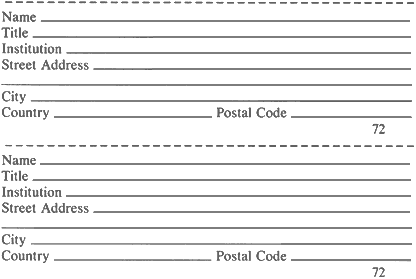
To receive more information about BOSTID reports and programs, please fill in the attached coupon and mail it to:
Board on Science and Technology for International Development
Publications and Information Services (FO-2060Z)
Office of International Affairs
National Research Council
2101 Constitution Avenue, N.W. Washington, D.C. 20418 USA
Your comments about the value of these reports are also welcome.