
1
Agriculture and the Environment in the Humid Tropics
The wide belt of land and water that lies between the tropics of Cancer and Capricorn is home to half of the world's people and some of its most diverse and productive ecosystems. Citizens and governments within and beyond the tropics are increasingly aware of this region 's unique properties, problems, and potential. As scientific understanding of tropical ecosystems has expanded, appreciation of their biological diversity and the vital role they play in the functioning of the earth's biophysical systems has risen. The fate of tropical rain forests, in particular, has come to signify growing scientific and public interest in the impact of human activities on the global environment.
At the same time, the people and nations of the tropics face a difficult future. Most of the world's developing countries are in the tropics, where agriculture is important to rural and national economies. About 60 percent of the people in these countries are rural residents, and a large proportion of these are small-scale farmers and herders with limited incomes (Population Reference Bureau, 1991). The need to stimulate economic growth, reduce poverty, and increase agricultural production to feed a rapidly growing population is placing more pressures on the natural resource base in developing countries (see Part Two, this volume). The deterioration of natural resources, in turn, impedes efforts to improve living conditions. This dilemma, however, has stimulated a growing commitment to sustain-
able development among tropical and nontropical countries alike, with special concern for the world's humid tropics.
This report focuses on the humid tropics, a biogeographical area within the tropical zone that contains most of its population and biologically rich natural resources. The problems associated with unstable shifting cultivation and tropical monocultures, together with the need to improve productivity on degraded and resource-poor lands, have prompted farmers, researchers, and agricultural development officials to search for more sustainable agricultural and land use systems suitable for the humid tropics. This chapter describes the agricultural resources of the humid tropics, outlines the processes of forest conversion that have affected wide areas, and examines the potential of improved agricultural practices to prevent continued resource degradation. It stresses the need for a more integrated approach to research, policy, and development activities in managing resources on a more sustainable basis.
The definition of agricultural sustainability varies by individual, discipline, profession, and area of concern. Common characteristics include the following: long-term maintenance of natural resources and agricultural productivity; minimal adverse environmental impacts; adequate economic returns to farmers; optimal production with purchased inputs used only to supplement natural processes that are carefully managed; satisfaction of human needs for food, nutrition, and shelter; and provision for the social needs of health, welfare, and social equity of farm families and communities. All definitions embrace environmental, economic, and social goals in their efforts to clarify and interpret the meaning of sustainability. In addition, they suggest that farmers and farm systems must be able to respond effectively to environmental and economic stresses and opportunities. In the humid tropics, priority must be given to soil protection and the efficient recycling of nutrients (including those derived from external sources); to implementation of mixed forest and crop systems; and to secondary forest management that incorporates forest fallow practices (Ewel, 1986; Hart, 1980).
THE HUMID TROPICS
The humid tropics are defined by bioclimates that are characterized by consistently high temperatures; abundant, at times seasonal, precipitation; and high relative humidity (Lugo and Brown, 1991). Annual precipitation exceeds or equals the potential return of moisture to the atmosphere through evaporation. Total annual rainfall amounts usually range from 1,500 mm to 2,500 mm, but levels of
6,000 mm or more are not uncommon. In general, seasons in the humid tropics are determined by variations in rainfall, not temperature. Most areas experience no more than 4 months with less than 200 mm of precipitation per year.
About 60 countries, with a total population of 2 billion, are located partly or entirely within the humid tropics (Table 1-1). About 45 percent of the world's humid tropics are found in the Americas (essentially Latin America), 30 percent in Africa, and 25 percent in Asia. Small portions of the humid tropics can be found in other areas such as Hawaii and portions of the northeastern coast of Australia.
The typical vegetation for the humid tropics consists of moist, wet, and rain forests in the lowlands and in the hill and montane uplands. Estimates of their extent vary. The most current effort to provide reliable and globally consistent information on tropical forest cover, deforestation, and degradation is by the Forest Resources Assessment 1990 Project of the Food and Agriculture Organization (FAO) of the United Nations, using remote sensing imagery and national survey data as part of its methodology (Forest Resources Assessment 1990 Project, 1992). It defines forests as ecological systems with a minimum of 10 percent crown cover of trees (minimum height 5 m) and/or bamboos, generally associated with wild flora, fauna, and natural soil conditions, and not subject to agricultural practices.
The project estimates that forests cover 1.46 billion ha, or 48 percent of the land area (3.02 billion ha) in the tropical rain forest, moist deciduous forest, and hill and montane forest zones. These forests constitute 30 percent of the land area within the tropical region (4.82 billion ha) and 86 percent of the total tropical forest area (1.7 billion ha). Although they cover only 10 percent of the land area of the world (15 billion ha), they contain one-third of the world's plant matter. Nearly two-thirds of the world's humid forests are found in Latin America, with the remainder split between Africa and Asia.
The soils of the humid tropics are highly variable. Table 1-2 shows the geographical distribution of soil orders and major suborders based on the soil classification system developed in the United States. Oxisols and Ultisols are the most abundant soils in the humid tropics, together covering almost two-thirds of the region. Oxisols, found mostly in tropical Africa and South America, are deep, generally well-drained red or yellowish soils, with excellent granular structure and little contrast between horizon layers. As a result of extreme weathering and resultant chemical processes, however, Oxisols are acidic, low in phosphorus, nitrogen, and other nutrients, and limited in their ability to store nutrients, but have relatively high soil organic matter content. Ultisols are the most abundant soils of tropical Asia,
TABLE 1-1 Population Data for Selected Countries with Tropical Moist Forests
|
Region or Country |
Population Estimate, Mid-1991 (millions) |
Urban Population (%) |
Rate of Natural Increase (annual %) |
Number of Years to Double Population |
Population Projection to 2025 (millions) |
1989 Per Capita GNP($) |
|
Middle South Asia |
||||||
|
Bangladesh |
116.6 |
14 |
2.4 |
28 |
226.4 |
180 |
|
India |
859.2 |
27 |
2.0 |
34 |
1,365.5 |
350 |
|
Sri Lanka |
17.4 |
22 |
1.5 |
47 |
24.0 |
430 |
|
Continental Southeast Asia |
||||||
|
Brunei |
0.3 |
59 |
2.5 |
27 |
0.5 |
14,120 |
|
Cambodia |
7.1 |
11 |
2.2 |
32 |
12.9 |
— |
|
Laos |
4.1 |
16 |
2.2 |
32 |
7.4 |
170 |
|
Myanmar |
42.1 |
24 |
1.9 |
36 |
72.2 |
— |
|
Thailand |
58.8 |
18 |
1.3 |
53 |
78.1 |
1,170 |
|
Vietnam |
67.6 |
20 |
2.3 |
31 |
107.8 |
— |
|
Insular Southeast Asia |
||||||
|
Indonesia |
181.4 |
31 |
1.7 |
41 |
237.9 |
490 |
|
Malaysia |
18.3 |
35 |
2.5 |
28 |
34.7 |
2,130 |
|
Papua New Guinea |
3.9 |
19 |
2.3 |
31 |
7.6 |
900 |
|
Philippines |
62.3 |
42 |
2.6 |
27 |
100.7 |
700 |
|
Subtotal |
1,439.1 |
26a |
2.1a |
34a |
2,275.7 |
— |
|
Middle America |
||||||
|
Belize |
0.2 |
50 |
3.3 |
21 |
0.5 |
1,600 |
|
Costa Rica |
3.1 |
45 |
2.4 |
28 |
5.6 |
1,790 |
|
Dominican Republic |
7.3 |
58 |
2.3 |
30 |
11.4 |
790 |
|
El Salvador |
5.4 |
43 |
2.8 |
25 |
9.4 |
1,040 |
|
Guatemala |
9.5 |
39 |
3.0 |
23 |
21.7 |
920 |
|
Haiti |
6.3 |
28 |
2.9 |
24 |
12.3 |
400 |
|
Honduras |
5.3 |
43 |
3.1 |
23 |
11.5 |
900 |
|
Mexico |
85.7 |
71 |
2.3 |
30 |
143.3 |
1,990 |
|
Nicaragua |
3.9 |
57 |
3.4 |
21 |
8.2 |
830 |
|
Panama |
2.5 |
52 |
2.1 |
34 |
3.9 |
1,780 |
|
Puerto Rico (U.S.) |
3.3 |
72 |
1.1 |
62 |
4.2 |
6,010 |
|
Trinidad and Tobago |
1.3 |
64 |
1.6 |
44 |
1.8 |
3,160 |
|
Tropical South America |
||||||
|
Bolivia |
7.5 |
50 |
2.6 |
27 |
14.3 |
600 |
|
Brazil |
153.3 |
75 |
1.9 |
36 |
245.8 |
2,550 |
|
Colombia |
33.6 |
68 |
2.0 |
35 |
54.2 |
1,190 |
|
Ecuador |
10.8 |
55 |
2.4 |
29 |
19.2 |
1,040 |
|
French Guiana |
0.1 |
81 |
2.2 |
31 |
0.2 |
— |
|
Guyana |
0.8 |
35 |
1.8 |
39 |
1.2 |
310 |
|
Peru |
22.0 |
69 |
2.3 |
30 |
37.4 |
1,090 |
|
Suriname |
0.4 |
48 |
2.0 |
35 |
0.7 |
3,020 |
|
Venezuela |
20.1 |
83 |
2.3 |
30 |
35.4 |
2,450 |
|
Subtotal |
382.4 |
56a |
2.4a |
31a |
642.2 |
— |
|
West Africa |
||||||
|
Côte d'Ivoire |
12.5 |
39 |
3.5 |
20 |
39.3 |
790 |
|
Ghana |
15.5 |
32 |
3.2 |
22 |
35.4 |
380 |
|
Guinea |
7.5 |
22 |
2.6 |
27 |
16.0 |
430 |
|
Guinea-Bissau |
1.0 |
27 |
2.0 |
35 |
1.9 |
180 |
|
Liberia |
2.7 |
44 |
3.2 |
22 |
7.4 |
450 |
|
Nigeria |
122.5 |
16 |
2.8 |
25 |
305.4 |
250 |
|
Sierra Leone |
4.3 |
30 |
2.7 |
26 |
10.0 |
200 |
|
Togo |
3.8 |
22 |
3.7 |
19 |
11.3 |
390 |
|
Central Africa |
||||||
|
Cameroon |
11.4 |
42 |
2.6 |
26 |
26.1 |
1,010 |
|
Central African Republic |
3.0 |
43 |
2.6 |
27 |
6.6 |
390 |
|
Congo |
2.3 |
41 |
3.0 |
23 |
5.5 |
930 |
|
Equatorial Guinea |
0.4 |
60 |
2.6 |
26 |
0.9 |
430 |
|
Gabon |
1.2 |
41 |
2.3 |
31 |
2.9 |
2,770 |
|
São Tomé and Principe |
0.1 |
38 |
2.5 |
28 |
0.3 |
360 |
|
Zaire |
37.8 |
40 |
3.1 |
22 |
101.1 |
260 |
|
Eastern Africa |
||||||
|
Burundi |
5.8 |
5 |
3.2 |
21 |
15.5 |
220 |
|
Kenya |
25.2 |
22 |
3.8 |
18 |
63.2 |
380 |
|
Madagascar |
12.4 |
23 |
3.2 |
22 |
34.0 |
230 |
|
Mauritius |
1.1 |
41 |
1.4 |
51 |
1.4 |
1,950 |
|
Mozambique |
16.1 |
23 |
2.7 |
26 |
35.4 |
80 |
|
Rwanda |
7.5 |
7 |
3.4 |
20 |
22.9 |
310 |
|
Tanzania |
26.9 |
20 |
3.7 |
19 |
78.9 |
120 |
|
Uganda |
18.7 |
10 |
3.5 |
20 |
55.0 |
250 |
|
Subtotal |
339.7 |
30a |
2.9a |
25a |
876.4 |
— |
|
NOTES: A dash denotes information that was not available; GNP, gross national product. a Average. SOURCE: Population Reference Bureau. 1991. World Population Data Sheet 1991. Washington, D.C.: Population Reference Bureau. |
||||||
TABLE 1-2 Geographical Distribution of Soils of the Humid Tropics (in Millions of Hectares)a
|
Soil Order or Suborder |
Humid Tropics Total |
Humid Tropic Americab |
Humid Tropic Africac |
Humid Tropic Asiad |
|
Oxisols |
525 |
332 |
179 |
14 |
|
Ultisols |
413 |
213 |
69 |
131 |
|
Inceptisols |
||||
|
Aquepts |
120 |
42 |
55 |
23 |
|
Andepts |
12 |
2 |
1 |
9 |
|
Tropepts |
94 |
17 |
19 |
58 |
|
Subtotal |
226 |
61 |
75 |
90 |
|
Entisols |
||||
|
Fluvents |
50 |
6 |
10 |
34 |
|
Psamments |
90 |
6 |
67 |
17 |
|
Lithic |
72 |
19 |
14 |
39 |
|
Subtotal |
212 |
31 |
91 |
90 |
|
Alfisols |
53 |
18 |
20 |
15 |
|
Histosols |
27 |
— |
4 |
23 |
|
Spodosols |
19 |
10 |
3 |
6 |
|
Mollisols |
7 |
— |
— |
7 |
|
Vertisols |
5 |
1 |
2 |
2 |
|
Aridisolse |
2 |
— |
1 |
1 |
|
Total |
1,489 |
666 |
444 |
379 |
|
a Based on dominant soil in maps (scale of 1:5 million) of the Food and Agriculture Organization (FAO) of the United Nations. b From Sanchez and Cochrane (1980) plus recent adjustments. c From the FAO (1975) and Dudal (1980). d From the FAO (1977, 1978). Includes 46 million ha of the humid tropics of Australia and Pacific Islands. e Saline soils only (Salorthids). SOURCE: National Research Council. 1982. Ecological Aspects of Developmentin the Humid Tropics. Washington, D.C.: National Academy of Sciences. |
||||
and are also found in Central America, the Amazon Basin, and humid coastal Brazil. Ultisols are usually deep, well-drained red or yellowish soils, somewhat higher in weatherable minerals than Oxisols but also acidic and low in nutrients.
Inceptisols and Entisols account for most of the remaining soils of the humid tropics (about 16 percent and 14 percent, respectively). These are younger soils, more limited in distribution, and range from highly fertile soils of alluvial and volcanic origin to very acidic and nutrient-poor sands.
TABLE 1-3 Summary of Forested Bioclimates in the Tropical Zone
Although many humid tropic soils are acidic and low in reserves of essential nutrients, the constant warm temperatures, plentiful rainfall, and even allocation of sunlight throughout the year permit abundant plant growth. Broadleaf evergreen forests are the dominant form of vegetation. The generally infertile soils are able to support these biologically diverse, high-biomass forests because they have fast rates of nutrient cycling and have reached maturity without frequent disturbances.
While the forests of the humid tropics are often referred to generically as tropical rain forests, they in fact include a variety of distinct plant associations. Holdridge's (1967) System for the Classification of World Life Zones provides the basis for differentiating forest formations over broad gradients of temperature and rainfall (see Table 1-3). Tropical lowland forests are the most abundant, constituting some 80 percent of humid tropic vegetation. Lowland areas are also significant from the standpoint of human economic activity,
environmental impacts, development potential, and scientific interest. Although tropical premontane forest formations comprise only about 10 percent of humid tropic vegetation, they are disproportionately modified by human activity, especially toward the drier end of the gradient, because of their suitability for plantation culture and crop agriculture. The remainder of the humid tropic forests consists of relatively uncommon lower montane and montane formations. Collectively, lowland, premontane, and montane forest formations can be referred to as humid tropic or tropical moist forests.
The small nonforest component of humid tropic vegetation includes aquatic and wetland flora and treeless plant communities that exist above timberline on the highest mountaintops. At the latitudinal and climatic limits of the humid tropics, the tropical moist forests grade into more seasonal (monsoonal), semievergreen types and eventually into savannah ecosystems. The term “closed tropical forests” is sometimes used to distinguish the unbroken forests of the humid tropics from drier, more open tropical forest types.
FOREST CHARACTERISTICS AND BENEFITS
The forests of the humid tropics provide multiple goods, values, and environmental services. At the global scale, tropical moist forests, through photosynthesis, evapotranspiration, decomposition, succession, and other natural processes, play a significant role in the functioning of the atmosphere and biosphere. At local and regional scales, the ecological processes and biological diversity of forests provide the foundations for stable human communities and opportunities for sustainable development. The special characteristics of tropical moist forests, and the direct and indirect benefits they afford, are described in numerous publications (for example, Myers, 1984; National Research Council, 1982; Office of Technology Assessment, 1984; Wilson and Peter, 1988) and summarized below. These characteristics underscore the need to begin with an understanding of ecosystem components and processes in the humid tropics in moving toward more sustainable land uses.
Although the environmental characteristics and benefits described pertain fundamentally to primary tropical moist forests, they are also provided to varying degrees by secondary forests, regenerating forests, managed forests, forest plantations, and agroforestry systems. These distinctions become important in weighing the impacts of different types of forest conversion and formulating sustainable agricultural systems suited to humid tropic conditions.
Local and Global Climatic Interactions
Local and global climatic patterns are influenced by the interaction of tropical moist forests and the atmosphere. At the continental scale, forests are thought to influence convection currents, wind and precipitation patterns, and rainfall regimes because of their ability to reflect solar heat back into space and to receive and release large volumes of water (Houghton et al., 1990; Salati and Vose, 1984). It is estimated, for example, that as much as half the atmospheric moisture in the Amazon basin originates in local forests by transpiration (Salati et al., 1983).
At the global level, tropical moist forests play an important role in large-scale biogeophysical cycles (especially those of carbon, water, nitrogen, and other elements) that are critical in determining atmospheric conditions. Particularly important is the function of the forests in the carbon cycle. The total biomass accumulations in mature tropical moist forests are the highest in the tropics and among the highest of any terrestrial ecosystem (Brown and Lugo, 1982). In primary forests, carbon exists in essentially a steady state— the amount of carbon accumulated is about equal to the amount released, although there may be a small net accumulation (Lugo and Brown, In press). Secondary and recovering forests act as important carbon sinks (Brown et al., 1992). Carbon stored within forest biomass and soils is prevented from reaching the atmosphere in the form of carbon dioxide or methane, both of which contribute to global warming.
Biological Diversity
The unusually high concentration of species in tropical moist forests is widely recognized, and the accelerated loss of that diversity —especially of plant species—has drawn much attention in recent years (Ehrlich and Wilson, 1991; Myers, 1984; Raven, 1988; Wilson and Peter, 1988). Although tropical moist forests cover about 7 percent of the earth's land surface, they are believed to harbor more than half of the world's plant and animal species. Estimates of the total number of species in tropical moist forests range between 2 million and 20 million (Ehrlich and Wilson, 1991). The majority of these species have yet to be described, much less studied. Basic taxonomic work in tropical moist forests remains a high research priority (National Research Council, 1992).
Beyond the high levels of diversity of wild species found in the forests themselves, the humid tropics are also important centers of germplasm diversity for rice, beans, cassava, cocoa, banana, sugarcane, citrus fruits, and other economically important crops. These

Germplasm collected from the tropics is used in crop improvement research in laboratories around the world. Friable callus of cassava, an important root crop in the tropics, is chopped for suspension in an Austrian laboratory. Credit: Food and Agriculture Organization of the United Nations.
germplasm resources include wild relatives of domesticated plants as well as highly localized crop varieties and landraces developed over centuries by farmers. To boost productivity, provide resistance against pests and other environmental stresses, and improve overall quality, plant breeders have already incorporated genetic material from these wild and domesticated strains into breeding lines of rice, cocoa, sugar, and other major crops.
Products and Commodities
The high degree of biological diversity within tropical moist forests is reflected not only in germplasm resources, but also in the array of established and potential products and commodities they contain. Tropical forests are sources not only of widely exploited timber and plantation products, but also of foods (including animal protein), spices, medicines, resins, oils, gums, pest control agents, fuels, fibers, and forages for forest dwellers and small-scale farmers. Many of the products used for subsistence purposes at the local level
hold promise for broader economic use within a sustainable development framework. In addition to known forest products and food germplasm resources, many plants and animals of the humid tropics contain genetic material and chemical compounds useful in developing new pharmaceuticals and other products. Others are likely to have agronomic and environmental applications (for example, as multipurpose tree species and biocontrol agents) within sustainable agroecosystems.
Nutrient Cycling
The vegetation within tropical moist forests thrives by retaining and efficiently recycling scarce but essential nutrients within the ecosystem. Root growth is concentrated in the topsoil. When litter (leaves, twigs, branches, and whole trees) falls to the forest floor, the high-quality litter decomposes rapidly, while the low-quality litter decomposes slowly. Plant nutrients are mineralized and adsorbed by forest roots. Adsorption by deep roots minimizes nutrient loss into streams. Most of the nutrients are efficiently recycled, with nutrient additions through rain, dust, and biological nitrogen fixation in balance with losses through leaching, denitrification, and volatilization. However, in steep areas with relatively young soils, there can be significant nutrient losses from pristine rain forest. These losses provide nutrients to streams and rivers that support large fish populations. The closed nutrient cycle between the tropical rain forest and the soil operates only if there is no net harvest of biomass from the system. In agriculture, the biomass removal through harvest is large.
Protection of Soils
Forest cover protects the topsoil of humid tropic ecosystems from the erosive effects of rainfall. In forested areas, the lack of exposed ground and the interception of rainfall by multiple layers of vegetation minimizes soil loss. The dense mat of interwoven roots in the topmost soil layers allows rainfall to be absorbed and released while lower soil horizons are protected. These features are especially important for lands that are steeply sloped and for lands with shallow soils (Sanchez, 1991).
Stabilization of Hydrological Systems
Forests stabilize watersheds by regulating the rates at which rainfall is absorbed and released. Intact forest cover allows rainfall to reach
the ground, percolate through soils, and flow into streams at a gradual rate. Because soil loss through erosion is low, sedimentation and deposition rates downstream are also minimized. As a result, flood and drought cycles are moderated within the watershed as a whole. This is especially important in areas where irrigated agriculture is concentrated in fertile alluvial valleys downstream from forests.
Water Availability and Quality
The quantity and quality of water delivered to cities and rural villages depend on conditions within the entire hydrological system, and thus in part on upstream forests. In areas where urban population growth is rapid, people depend on surface waters, reservoirs, or groundwater stocks for cleaning, cooking, and drinking water. Cholera, typhoid, and other water-related diseases and parasites are significant public health concerns in the humid tropics. Forests, by providing steady flows of good quality water, are a line of defense against the spread of these maladies, followed by sewage facilities, water treatment plants, and public health programs, many of which are lacking in developing countries (Latin American and Caribbean Commission on Development and Environment, 1990; World Bank, 1992).
Mitigation of Storm Impacts
Forest cover provides protection against the impacts of intense tropical storms, known regionally as cyclones, hurricanes, or typhoons. While forests cannot prevent the loss of life and property that storms inflict, they can mitigate some of their effects, particularly storm surges in coastal zones and mud slides on sloping lands.
CONVERSION OF HUMID TROPIC FORESTS
Forest conversion is the alteration of forest cover and forest conditions through human intervention, ranging from marginal modification to fundamental transformation. At one extreme, forests that have been slightly modified (through, for example, selective extraction, traditional shifting cultivation, or gradual substitution of perennial species) maintain most of their cover, with little long-term impact on ecosystem components, processes, and regeneration rates. Deforestation—changes in land use that reduce forest cover to less than 10 percent—represents the opposite extreme. Between these extremes, conversion happens to varying degrees, entailing changes in forest structure, species diversity, biomass, successional processes,
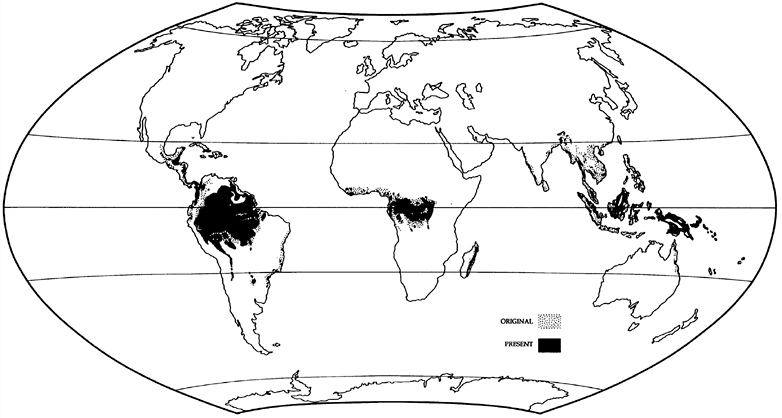
FIGURE 1-1 The original and present extents of tropical moist forests. Source: Based on maps produced for Tropical Rainforests: A Disappearing Treasure, Smithsonian Institution Travelling Exhibition Service, 1988. Courtesy of the Office of Environmental Awareness, Smithsonian Institution, Washington, D.C. © 1988 by Smithsonian Institution.
and ecosystem dynamics. Land or forest degradation occurs when these changes are of sufficient magnitude to have a long-term negative effect on productive potential. Forest transformation occurs when the original forest is eliminated and replaced with permanent agriculture, plantations, pasturelands, and urban or industrial developments.
Estimates of the original and current humid tropic forests are difficult to present, especially concerning forest type. The original extent of tropical rain forests (apparently excluding tropical moist deciduous forests) has been estimated to total 1.5 billion ha, with 600 million ha having been cleared and converted over the past several centuries (Ehrlich and Wilson, 1991; Food and Agriculture Organization and United Nations Environment Program, 1981). The current extent of tropical rain forests and tropical moist deciduous forests has been estimated to be 1.5 billion ha, with 1 billion ha considered to be intact or primary forests in which human activity has had little impact (World Bank, 1991). Apparently Africa has lost the greatest proportion of its original tropical moist forests (about 52 percent), followed by Asia (42 percent) and Latin America (37 percent) (Lean et al., 1990). Figure 1-1 illustrates the original and present extent of tropical rain forests historically and at present.
During the past two decades, the rate of conversion in the humid tropics has accelerated (Table 1-4), although comparisons of data collected over several decades are unreliable due to differences in data gathering methodologies and definitions of area, type of forest, and deforestation. However, the accuracy of more recent information on the rate, extent, and nature of forest conversion is improving.
Forest resources appraisals are part of the mandate of the FAO. The last worldwide assessment was carried out with 1980 as the reference year (Lanly, 1982). An assessment with 1990 as the reference year was launched in 1989 to provide reliable and globally consistent information on tropical forest cover and trends of deforestation and forest degradation. Deforestation refers to change of land use or depletion of crown cover to less than 10 percent. Forest degradation is defined as change within the forest that negatively affects the stand or site and, in particular, lowers its regenerative capacity.
The first interim report of the Forest Resources Assessment 1990 Project (1990) contained preliminary area estimates at the regional level for 62 countries lying mostly in the humid tropic zone. Comparison with the 1980 assessment is possible for 52 countries covered by both assessments; definitions of forest and deforestation are basically the same. The estimated deforestation rate for the period 1976
TABLE 1-4 Provisional Estimates of Forest Cover and Deforestation for 62 Countries in the Humid Tropics
to 1980 is 9.2 million ha per year, and it is 16.8 million ha per year for the period 1981 to 1990, an annual rate increase of 83 percent.
The project cautions that this significant difference can be attributed to an actual increase in the deforestation rate, an underestimation of the rate in the 1980 assessment, or an overestimation of the rate in the 1990 assessment. It is known that the 1980 assessment underestimated the rate of deforestation in some large Asian countries. Regardless of the relative contribution of these components, deforestation has accelerated in the humid tropics as a whole. The final results of the project will be based on uniform remote sensing observations of tropical forests specifically made for the project.
Preliminary indications concerning forest degradation indicate that the loss of biomass in the tropical forest is occurring at a significantly higher rate than the loss of area due to deforestation (Forest Resources Assessment 1990 Project, 1991). The project offers two explanations: (1) deforestation is occurring disproportionately on forestland with higher biomass levels; and (2) remaining forests are being degraded through the removal of biomass. The analysis points to the need for improved land use planning to conserve forest resources. FAO scientists believe the crisis can be corrected. They point to the experience of industrialized countries, where widespread deforestation is being reversed, although at a slow rate. Between 1980 and 1985, forest resources in the developed world increased by 5 percent, from 2 billion ha (4.94 billion acres) to 2.1 billion ha (5.187 billion acres).
Deforestation Rates Within Regions of the Humid Tropics
Although the rate of deforestation rose substantially through the 1980s, the impact has varied from country to country and from region to region (Table 1-4). The rate was highest in Africa (1.7 percent), followed by Asia (1.4 percent) and Latin America (0.9 percent). The areal extent of deforestation, however, was highest in Latin America (7.3 million ha), followed by Africa (4.8 million ha) and Asia (4.7 million ha) (Forest Resources Assessment 1990 Project, 1990). At the country level, deforestation statistics should be interpreted in the context of the total area of original and remaining forest cover. Table 1-5 lists 20 of the principal countries with threatened forests in the humid tropics. In Costa Rica, Côte d'Ivoire, and Nigeria, closed forests were lost at rates exceeding 4 percent per year during the 1980s (World Resources Institute, 1990a). The deforestation rate in Brazil in the 1980s was lower, about 2 percent per year, but the area of forest affected was far greater—about 8 million ha annually (World Resources
TABLE 1-5 Countries with Threatened Closed Forests (Thousands of Hectares)
|
Country |
Closed Forest Area |
Annual Deforestation Rate |
|
Latin America and the Caribbean |
||
|
Bolivia |
44,010 |
87 |
|
Brazil |
375,480 |
8,000a |
|
Colombia |
46,400 |
820 |
|
Ecuador |
14,250 |
340 |
|
Mexico |
46,250 |
595 |
|
Peru |
69,680 |
270 |
|
Venezuela |
31,870 |
125 |
|
Sub-Saharan Africa |
||
|
Cameroon |
16,500 |
100 |
|
Central African Republic |
3,590 |
5 |
|
Congo |
21,340 |
22 |
|
Côte d'Ivoire |
4,458 |
290 |
|
Gabon |
20,500 |
15 |
|
Madagascar |
10,300 |
150 |
|
Zaire |
105,750 |
182 |
|
Asia and the Pacific |
||
|
India |
36,540 |
1,500 |
|
Indonesia |
113,895 |
900 |
|
Malaysia |
20,996 |
255 |
|
Myanmar |
31,941 |
677 |
|
Papua New Guinea |
34,230 |
22 |
|
Philippines |
9,510 |
143 |
|
Total |
1,057,490 |
14,498 |
|
NOTE: A closed forest has a stand density greater than 20 percent of the area and tree crowns approach general contact with one another. a More recent estimates suggest that the rate of deforestation may have declined to 2 million ha per year. SOURCE: World Bank. 1991. The Forest Sector: A World Bank PolicyPaper. Washington, D.C.: World Bank. Reprinted, with permission,from the World Bank. © 1991 International Bank for Reconstruction. |
||
Institute, 1990a). (This rate, which includes open forests outside the Amazon Basin, appears to have fallen in recent years.)
Data on the subsequent fate of converted forestlands are likewise inadequate. Some deforested lands degrade to such a degree that they support little biological recovery or economic activity. Grainger (1988) estimates that as many as 1 billion ha of degraded land may have accumulated in tropical countries, of which 750 million are suit-
able for reforestation. Only rarely, however, are cleared lands completely barren or abandoned. Large areas are converted to subsistence cultivation, rice production, permanent plantations, and pastures. The spatial extent of each of these, especially on a global basis, is poorly quantified.
Natural regeneration and managed reforestation may return forest cover to some lands that have been cleared. However, reliable information on the extent of secondary forests in the tropics is not available. In a number of areas, secondary forests may not reach advanced stages of restoration due to the activities of subsistence farmers and the impacts of fires, soil degradation and nutrient depletion, inadequate tree regeneration, and invasion by grasses and shrubs.
Causes of Forest Conversion
People do not make the enormous investments in capital, time, and energy that forest conversion can entail without valid social,
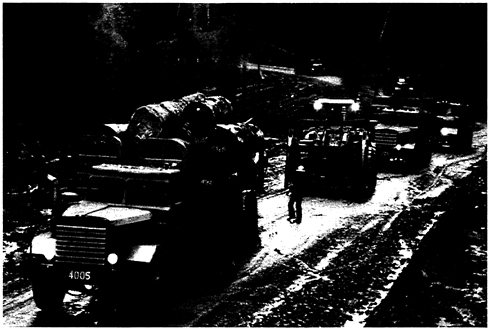
Lumber workers transport dipterocarp logs, which command high prices on the international market, out of the tropical rain forest on the island of Borneo, Indonesia. If these tall trees are not harvested carefully, significant damage can be done to the surrounding forest. Credit: James P. Blair © 1983 National Geographic Society.
economic, and political reasons. Analysis reveals a variety of direct and indirect causes, usually acting in combination, behind the increased rates of forest conversion in the humid tropics (Hecht and Cockburn, 1989; Myers, 1984; Office of Technology Assessment, 1984; Repetto and Gillis, 1988). The leading direct causes of forest loss and degradation include large-scale commercial logging and timber extraction, the advancement of agricultural frontiers and subsequent use of land by subsistence farmers, conversion of forests to perennial tree plantations and other cash crops, conversion to commercial livestock production, land speculation, the cutting and gathering of wood
|
Population Issues in the Tropics Population growth is one of many factors contributing to resource degradation in the humid tropics. It does not occur independent of other socioeconomic factors. High fertility rates are closely associated with underdevelopment and poverty. However, population growth statistics offer some insight into the level and intensity of land development pressures to meet more immediate food and income needs. Population growth increases the demand for goods and services and the need for employment and livelihoods, exerting additional pressure on natural resources. Countries with higher population growth rates have experienced faster conversion of land to agricultural uses and greater demands for wood for fuel and building materials. Few government programs help low-income people improve their earning potential or their quality of life. Most development policies have helped the medium- and large-scale agricultural units to capitalize, modernize, and sell their products, and not necessarily in a manner that enhances sustainability and protects natural resources. Because they lack resources and technology, land-hungry farmers often abandon traditional land uses in favor of agricultural practices that produce more food or income in the short term but may involve long-term social, economic, and environmental costs. Sustainable land use cannot be achieved as long as high rates of poverty and population growth continue. Although demographic and socioeconomic statistics for the humid tropics as a distinct region do not exist, available information does illustrate the population situation in the humid tropics. About 60 countries, representing 90 percent of the world's developing countries, lie within or border on the humid tropics. During the past 4 decades, the population of developing countries, excluding the People's Republic of China, increased by 1.5 billion (Population Reference Bureau, 1988). During the same period about 350 million people were added to the population in developed countries. |
for fuel and charcoal, and large-scale colonization and resettlement projects.
In many areas of the humid tropics, agricultural expansion is one of the most important direct causes of forest conversion. For example, shifting cultivation practices in Africa account for 70 percent of the clearing of closed-canopy forests (Brown and Thomas, 1990). In general, shifting cultivators fall into two broad categories: local or native farmers, who tend to be resource conserving and use sustainable traditional agricultural practices, and more recent farmers, who have migrated to frontier lands to make a living and tend to be less
|
In much of Africa and Latin America throughout the 1980s per capita income declined, although it grew in Asia and in industrialized countries (World Health Organization, 1990). Average per capita income in industrialized countries is about 50 times that of the least developed countries, and the annual increase alone in the richer countries is about as large as the whole per capita income in the poorest countries ($300). It took about 130 years (from around 1800 to 1927) for the world to increase its population from 1 billion to 2 billion. Only 33 years (1927–1960) were necessary for the third billion, 14 years (1960–1974) for the fourth, and 13 years (1974–1987) for the fifth (World Health Organization, 1990). The world's population is expected to increase by 1 billion each decade well into the twenty-first century. Most of this growth will occur in developing countries. Their population (excluding China) is expected to increase from a total of 3 billion today to about 5.6 billion by the year 2035 (Population Reference Bureau, 1991). The percentage of the world's population living in developing countries will increase from 55 percent to 65 percent. Leaders of developing countries in the humid tropics are also confronted by financial circumstances that have contributed to poverty. In the early 1980s, international assistance provided developing countries with a surplus of some $40 million. A decade later, developing countries had accumulated a total debt burden in excess of $1.3 trillion (Lean et al., 1990), partly as the result of inflation, global recession, increasing interest rates, poor returns on development investments, and trade imbalances. The costs of servicing these debts now outpace the amount of aid. As a result, spending to reduce poverty and help the poor is cut, and continued poverty contributes to population growth rates. Some of the highest debt loads (both absolute and relative to gross national product) have been incurred by Brazil, Mexico, and the Philippines. |
knowledgeable about local environments and sustainable practices. Estimates of the number of farmers engaged in the clearing of forestlands in the humid tropics (including both primary and secondary forests) each year have ranged from 300 million to 500 million (Andriesse and Schelhaas, 1987; Denevan, 1982; Myers, 1989). Assessments of the area of forestland affected are similarly divergent, ranging from 7 million to 20 million ha each year (Gradwohl and Greenberg, 1988; Lanly, 1982; National Academy of Sciences, 1980).
Agricultural expansion, as well as the other immediate causes of forest conversion and degradation, is driven by a network of forces operating at national and international levels. In general, development efforts have been unable to relieve these forces and in some cases have aggravated them. Widespread poverty, the unequal distribution of income, flawed food distribution policies, and high-population density and growth rates act as exacerbating factors throughout the humid tropics (Ehui, Part Two, this volume; Kartasubrata, Part Two, this volume; Gómez-Pompa et al., Part Two, this volume). High fiscal deficits, underemployment, and other symptoms of economic stress lead many countries to encourage the conversion of forests through favorable tax policies, forest concessions, rents, credits, and other financial incentives, which often lead to enhanced disparities of income distribution (Serrão and Homma, Part Two, this volume).
Infrastructure development policies have opened forestlands through road building, mining operations, dam construction, and other large-scale projects, while agricultural development has devoted inadequate resources to the needs of farmers and local communities in areas with low-quality soil and water resources (Serrão and Homma, Part Two, this volume). Many of these projects have been funded by bilateral and multilateral assistance agencies. In settling these newly opened lands, farmers are seldom provided with the means or the knowledge to secure sustainable livelihoods. Rural development efforts that might give small-scale farmers greater security are hindered by inequitable land tenure arrangements and a lack of access to scientific knowledge, improved technologies, and credit facilities.
Forestry, agriculture, and environmental ministries in many countries are insufficiently integrated and often unable to enforce existing conservation policies, while officials lack opportunities for further education or professional training (Ngandu and Kolison, Part Two, this volume). Agronomic strategies proposed by research agencies and extension services at times have suggested inappropriate technologies that left farmers in debt (Gómez-Pompa et al., Part Two, this volume). In some countries political corruption, warfare, and na-
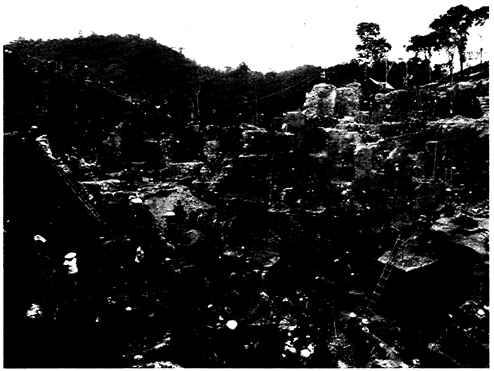
About 20,000 prospectors and laborers work tiny claims at a makeshift gold mine at Serra Pelada (Naked Mountain) in Brazil's Amazon rain forest. The gold is sold to the Brazilian government, which is counting on the region's mineral wealth, including iron ore, bauxite, and manganese, to offset its foreign debt. However, this type of land use may destroy both the extraction site and downstream watershed areas through runoff of soil and contaminants. Credit: James P. Blair © 1983 National Geographic Society.
tional security concerns have also contributed to ineffective resource management (Garrity et al., Part Two, this volume; Rush, 1991).
Other causal factors are international in scope. Over the past 20 years, many humid tropic countries have incurred large foreign debts, even as the global economic climate has made it more difficult to service these debts. To meet debt obligations, a number of tropical countries have tried to increase their export earnings through rapid extraction of forest resources and conversion of forestlands. International commodity prices and trade policies have also contributed to forest conversion by failing to reflect social and economic costs and by rewarding land uses that provide higher short-term economic returns.
The relationship between people and land resources in the many
countries of the humid tropics vary widely as a function of their cultures, rates of population growth, economic circumstances, and environmental conditions. As a result, the degree to which different causal factors contribute to forest conversion varies from country to country and even within countries. Furthermore, the influence of these factors relative to one another changes over time. For example, in Côte d'Ivoire the expansion of the agricultural frontier has been the leading direct cause of forest conversion and is primarily responsible for a two-thirds reduction in the area of forest between 1965 and 1985. The deforested area is often in sloping uplands with marginal soils that cannot support intensive permanent cropping (Ehui, Part Two, this volume). In the Philippines, a combination of intensified commercial logging, agricultural expansion, increased use of fuelwood and other wood products, and a lack of alternative means of livelihood has greatly accelerated the rate of forest conversion since World War II (Garrity et al., Part Two, this volume). In Brazil, the formerly extensive Atlantic coast forest has been reduced to remnants through conversion to agricultural use over the centuries. Large-scale conversion of forestlands to cattle pastures and the opening of access roads was the leading cause of deforestation in the Amazon Basin (Serrão and Homma, Part Two, this volume). The removal of incentives to clear forestlands appears to have slowed the conversion to cattle ranching, but the migration of people to establish small-scale farms in forest areas has increased.
Historical Patterns of Forest Conversion
Subsistence farmers and forest dwellers have modified forestlands in the humid tropics for hundreds and even thousands of years (G ómez-Pompa, 1987a; Gómez-Pompa and Kaus, 1992). The scale of these modifications, however, was generally small, and the rate at which they occurred allowed time for forests to adapt and regenerate. As a result, their effects on the total area of forest cover and on nutrient cycling, watershed stability, biological diversity, and other ecosystem characteristics were limited.
Although forest conversion has expanded steadily over the past five centuries, the three continental expanses of humid tropic forest remained largely intact prior to the late nineteenth century (Tucker, 1990). Extraction of woods, spices, nuts, and other commercial products, although widespread, seldom exceeded the forests' productive capacities. The expansion of sugarcane, coffee, cacao, and other plantation systems was confined primarily to lowlands and adjacent uplands
along rivers and coastlines. Rates of population growth in the humid tropics were generally low, and although ownership and control over prime agricultural land became increasingly concentrated in many areas, small-scale farmers migrated to intact forestlands on a relatively limited basis. Deforestation on the scale that has occurred more recently was technically and economically infeasible.
During the twentieth century, and especially in the past 5 decades, the rate of forest conversion has accelerated in response to economic pressures, population growth, technological developments, and programs and incentives to open lands for development (Hecht and Cockburn, 1989; Repetto and Gillis, 1988). Many of the physical constraints, such as the lack of roads and machinery for timber extraction, that had previously limited the intensity and extent of forest conversion have been overcome. At the same time, global markets for timber and other tropical products have expanded (Kartasubrata, Part Two, this volume; Ngandu and Kolison, Part Two, this volume; Serrão and Homma, Part Two, this volume). These factors have combined to encourage resource-poor countries to clear forests for timber and to convert forestlands to cash crops, plantations, pastures, and other uses of higher but shorter-term economic value (World Bank, 1992).
A classic example of deforestation brought about by population pressures and demand for agricultural land is that of the islands of Java and Bali in Indonesia (Kartasubrata, Part Two, this volume). In Côte d'Ivoire, which has one of the highest population growth rates in the world, population pressures combined with unstable shifting cultivation and logging have been a principal cause of deforestation. Part of the country's agricultural growth has been achieved at the expense of the natural resource base (Ehui, Part Two, this volume).
Forest conversion has followed diverse pathways in the humid tropics, but a general pattern can be discerned. The clearing of forests usually occurred first in areas where the soils and climatic conditions were most favorable for agriculture and for densely populated settlements and where transportation was not a major problem—islands and coastal zones, river basins, lowlands, and the more fertile uplands (Tosi, 1980; Tosi and Voertman, 1964). It then expanded to both wetter and drier life zones, initially affecting easily accessible forestlands. Less accessible lands are now being deforested, including areas unfavorable for human habitation and agriculture, such as steep slopes, mangrove swamps, and flood plains (Green and Sussman, 1990; Harrison, 1991; Kangas, 1990; Sader and Joyce, 1988; Smiet, 1990).
Consequences of Forest Conversion
The effects of forest conversion on the long-term stability and productivity of land resources depend on the characteristics of the original forest, the nature of the conversion that occurs, the methods used in the process of conversion, the social and economic context of conversion, and the subsequent use and management of the land. At one extreme —complete deforestation of primary forest on marginal soils and subsequent abandonment to weed cover—virtually all of the environmental values and services as well as the long-term social and economic benefits provided by the forest are lost. Selective extraction, small-scale sustainable forest management, and other conservative land uses can maintain most of the advantages of primary forests, although biological diversity is likely to decrease to varying degrees.
It is difficult at present to determine with precision the magnitude of these interrelated environmental, social, and economic impacts. Most areas of the humid tropics lack reliable baseline data on ecosystem composition and function, and little systematic long-term ecological (or agroecological) research has been undertaken in the region. Watershed-level research that combines information on forestry, agriculture, and land use is scarce, as are integrative studies of the social and economic consequences of forest conversion. The need for further research on these questions should not, however, delay efforts to forestall expected negative impacts. Because of the nature of land use problems in the humid tropics, many of the negative effects may not be felt until they are irreversible.
ENVIRONMENTAL CONSEQUENCES
The environmental consequences of forest conversion involve the degree to which ecosystem functions are disrupted, forest biomass and composition altered, and forest cover lost. If conversion entails large-scale loss (hundreds of square kilometers) of forest cover on steep lands and the subsequent adoption of inappropriate land uses, natural hydrological processes can be substantially altered, increasing the discharge of water into streams and the amplitude of flood and drought cycles within the watershed. Under these circumstances, rivers, reservoirs, and canals receive increased sediment loads, with negative effects on irrigated agriculture, fishing, hydroelectric power generation, and water quality. Exposed soils, particularly following mechanical clearing, are subject to erosion, compaction, and crusting until a new vegetative cover or canopy is established (Lal, 1987; Sanchez, 1991).
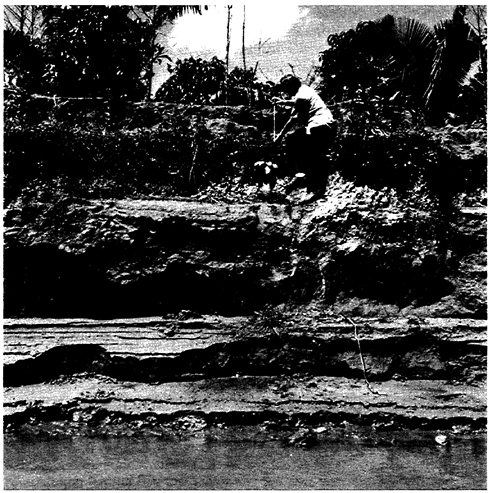
A scientist measures 50.8 cm (20 in) of silt deposited in 1 year on a riverbank in the Amazon River Basin. Credit: James P. Blair © 1983 National Geographic Society.
Large-scale conversion of primary tropical forests is a leading factor in the worldwide loss of biological diversity (Ehrlich and Wilson, 1991; Raven, 1988; Wilson, 1988). Due to the high levels of species diversity, the limited distribution of most of these species, and the specialized relationships and reproductive strategies within tropical forest ecosystems, forest clearing and fragmentation result in high levels of species loss. Because current scientific knowledge can provide only rough estimates of total species diversity within tropical moist forests, the rate at which species are being lost cannot be accurately determined. Even conservative estimates, however, suggest
that tropical deforestation results in a loss of at least 4,000 species per year (Ehrlich and Wilson, 1991; Wilson, 1988).
Forest conversion in the humid tropics also has climatic consequences (Bunyard, 1985; Intergovernmental Panel on Climate Change, 1990a,b). Changes in regional hydrological cycles may affect the distribution and amount of rainfall, impairing agricultural productivity and water availability. The risk of fire rises as forest cover diminishes due to hotter and drier microclimatic conditions (Crutzen and Andreae, 1990). At the global scale, forest conversion affects atmospheric concentrations of carbon dioxide, methane, nitrous oxide, and
|
Climate Change and Land Use Emissions of trace gases as a result of human activities could change the atmosphere's radiative properties enough to alter the earth's climate. Greenhouse gases, including water vapor, carbon dioxide, methane, nitrous oxide, chlorofluorocarbons, and ozone, insulate the earth, letting sunlight through to the earth 's surface while trapping outgoing radiation. Atmospheric concentrations of all of these gases are rising due to human industrial and agricultural processes. Atmospheric models indicate that, at the rate these gases are accumulating, the global mean temperature will increase by between 0.2°C and 0.5°C per decade over the next century (Houghton et al., 1990). This increase could have widespread effects on global sea level, seawater temperatures, rainfall distribution, seasonal weather patterns, plant and animal populations, agricultural production, and human settlement and economic systems. Carbon dioxide is believed to be responsible for about half of the total global warming potential. If current trends continue, carbon dioxide is expected to account for 55 percent of global warming over the next century, or four times more than methane, the second most important heat-trapping gas (Houghton et al., 1990). According to recent estimates, 75 percent of total carbon dioxide emissions from human activities occur as a result of the combustion of fossil fuels, mostly in nontropical countries (Intergovernmental Panel on Climate Change, 1990a). Land use changes are responsible for most of the remainder. The most significant of these land use changes are occurring in the humid tropics (Dale et al., Appendix, this volume). As forest conversion occurs, carbon stored in vegetation and soils is released as carbon dioxide through the burning and decomposition of biomass and the oxidation of soil organic matter. Agricultural activities that follow forest conversion—including paddy rice culture, cattle raising, and the use of nitrogen fertilizers—are sources of methane and nitrous oxide. |
other greenhouse gases. Assessments of the effects of tropical deforestation on greenhouse gas levels vary. Dale et al. (Appendix, this volume) estimate that tropical deforestation is responsible for about 25 percent of the total radiative effect of greenhouse gases emitted as a result of human activities.
SOCIAL CONSEQUENCES
The social consequences of forest conversion, like the environmental consequences, vary according to its extent and type. In areas
|
On a global basis, the conversion of tropical forests and the expansion of crop- and pasturelands on former forestlands account for about 20 to 25 percent of carbon dioxide emissions and 25 percent of the total radiative effect of greenhouse gas emissions (Dale et al., Appendix, this volume; Houghton, 1990a). In terms of potential impact on climate change, the most important feature of land use in the humid tropics is the net release of carbon that occurs as a result of forest conversion. The carbon release represents the difference between the pre- and postconversion levels of carbon stocks. This figure can range widely, depending on the nature of the original forest, the degree and rate of conversion, and the subsequent land use. Permanent agriculture based on annual crops, for example, reduces by more than 90 percent the amount of carbon stored in the original vegetation, while the loss from selective logging can be as small as 10 percent (Dale et al., Appendix, this volume). (Tropical vegetation and soils can also naturally release greenhouse gases, such as nitrous oxide and methane.) As secondary forests regrow, or are replaced by forest fallows, plantations, agroforestry systems, or other agricultural land uses, carbon is sequestered again within the biomass and soil (Wisniewski and Lugo, 1992). These differential releases and accumulations become important in weighing the land use options described in Chapter 2. Some activities, such as logging, might allow a virgin forest landscape to actually accumulate and store more carbon than it would if it was left as virgin forest, where the storage and release of carbon are in balance. In logging, the sawn boards are not destroyed but used for long periods of time. Hence, carbon remains stored in the harvested wood and, meanwhile, carbon continually accumulates through vegetation growth in the open spaces left after cutting. If the forest is not treated carefully, or the sawn wood is not put to wise long-term uses, even logged forests could act as sources, instead of collectors of carbon. |
where indigenous cultural groups have maintained ways of life that depend on the forest, the loss of forests disrupts traditional social systems and threatens communal land claims (Lynch, 1990). As these groups are dislocated or acculturated, their knowledge of forest resources and methods of resource management are lost. Deforestation activities have also brought new diseases to tribal peoples, especially in areas where previous contacts with outsiders had been infrequent.
Forest conversion has consequences for both the forest frontier and the cities in tropical countries. Often the ownership and use of the best lands by those who possess the resources and the technology to exploit them relegate the very poor to land of inferior quality (Latin American and Caribbean Commission on Development and Environment, 1990). Over large areas of cleared forestland, nonsustainable land uses have degraded soil and water resources and failed to raise living standards for small-scale farmers. Deforested lands that are subjected to soil-depleting production practices must be abandoned after only a few years, forcing many large- and small-scale farmers to move to newly cleared forestlands (Sanchez, 1991). Economic, demographic, and political pressures have increased the level of migration to forest frontier areas. At the same time, the degradation of natural resources has contributed to the migration of millions of people into cities in search of livelihoods. Population pressures, in turn, diminish the capacity of cities to contribute to sustainable development through efficient production of nonagricultural goods and services (Lugo, 1991).
This cycle of nonsustainability can be addressed, in part, by providing employment alternatives and better managing the degraded and abandoned lands outside the urban core. The loss of soil fertility, shortages of essential natural resources such as water, and the reduced productivity of damaged natural systems reduce job and subsistence opportunities and constitute a clear cause of poverty. The need for sustainable production methods for cleared lands is paramount to rural social well-being. In many parts of the humid tropics, however, the expanses of degraded land between the cities and the remaining forests continue to grow.
ECONOMIC CONSEQUENCES
The conversion of forests involves costs at the local, regional, and global levels that are hard to quantify and that are not reflected in markets (Norgaard, 1989; Randall, 1988; Repetto and Gillis, 1988). These include, for example, the loss of proven or potential biological resources, such as foods or pharmaceuticals, from primary forests; the destabilization of watersheds, with the attendant downstream ef-
fects of flooding and siltation; and, at the global level, the long-term impacts of deforestation on global climate change. At the same time, market prices inadequately reflect the benefits secured through the adoption of sustainable land uses (Repetto and Gillis, 1988).
Resource depletion has often been justified as the only way for nations in the humid tropics, faced with growing populations, large foreign debts, nascent industrial capacity, and an often undereducated rural populace, to develop. Especially in recent decades, a number of tropical countries have depleted forest resources in the effort to solve social, political, and economic problems in their societies, and to reduce large and growing international debt burdens (Ehui, Part Two, this volume; Serrão and Homma, Part Two, this volume; Vincent and Hadi, Part Two, this volume). These countries, however, have often found themselves coming under even tighter fiscal constraints as a result. In other cases, the link between deforestation and the need for foreign exchange to service external debt is tenuous; deforestation is more accurately associated with in-country uses of wood (Ngandu and Kolison, Part Two, this volume). Nevertheless, forest conversion may provide only short-term economic benefits, while undermining long-term productivity and social well-being through depletion of soil, water, atmospheric, and biotic resources and reduction of resource development options available to future generations (Ehui, Part Two, this volume; Norgaard, 1992).
SUSTAINABLE AGRICULTURE IN THE HUMID TROPICS
The challenges facing farmers in the humid tropics, and the connections between agricultural expansion, deforestation, land degradation, and rural poverty, have long been recognized. Development policies, however, have tended to overlook the large proportion of small farms on resource-poor land. In broad terms, national and international policies have emphasized urban development and large-scale infrastructure projects over rural development needs. The resources available for agricultural development were applied to the best lands, where economic returns were highest. Most agricultural research and development programs, in turn, focused on the refinement of input-intensive production systems suited to resource-rich areas. The practical difficulties facing the resource-poor farmer have thus been neglected, despite the multiple socioeconomic and environmental benefits that solutions would offer. At the same time, efforts to curb deforestation have usually approached the problem only from the perspective of forest management or environmental protection.
Sustainable agriculture can provide opportunities to address productivity and environmental goals simultaneously. By adopting alternative land use practices that can reduce the need to abandon established farmland and that can restore degraded land to economic and biological productivity, farmers can meet their food needs and make an adequate living without contributing to the further depletion of forests and other natural resources.
Constraints on Agricultural Productivity
The development of sustainable production systems suitable for areas with low-quality soil and water resources rests on an appreciation of the constraints on agricultural productivity in the humid tropics (National Research Council, 1982; Savage, 1987). Agriculture is fundamentally a process of converting solar energy, through photosynthesis, into useful biomass. Biological productivity requires solar energy, water, and nutrients. These are abundantly available in the humid tropics, but this productive potential is not reflected in the performance of agricultural systems, which is typically poor. Intensive farming in temperate zones converts 2 percent of photosynthetically active incident solar energy to dry matter; in the humid tropics, the conversion rate is no more than 0.2 percent (Holliday, 1976). This relative inefficiency is a reflection of both socioeconomic and environmental constraints. This discussion focuses on the latter.
CLIMATE
Water can be a limiting factor in the humid tropics, despite periods of abundant rainfall (Juo, 1989; MacArthur, 1980). Many high-rainfall areas have dry periods of sufficient length to adversely affect plant growth. Water shortages often occur where the soils have low water-holding capacities, but they can also affect areas with more favorable soil environments. A few days without rain can seriously impinge on biological productivity. For example, Omerod (1978) compared rainfall distribution and water retention in London, England, with those in Lagos, Nigeria. Although the total rainfall (1,820 mm) in Lagos was 220 percent higher than that in London, the probability of drought was much higher in Lagos because of the erratic distribution of rainfall in Lagos in contrast to the relatively uniform distribution in London. Also important were the relative rates of evaporation, leaching, and runoff (higher in Lagos) and the water-holding capacity of the soils (much lower in Lagos).
The combination of high temperatures and humidity in the hu-
mid tropics restricts the types of crops and animals that can be raised and favors the spread of pests and diseases. The heat and humidity can also affect farmers and others involved in the production process, in that the hottest and wettest weather often coincides with the difficult tasks of land preparation and planting (Juo, 1989). Finally, climatic conditions in the humid tropics also result in high postharvest losses to pests and spoilage, and pose special problems for storage, transportation, and processing.
SOILS
The soils of the humid tropics vary from region to region (Table 1-6) and have special requirements, limitations, and possibilities for agricultural use. They are subject to several constraints, including low nutrient reserves, aluminum toxicity, high phosphorus fixation, high acidity, and susceptibility to erosion. These constraints, and the methods that have evolved to overcome them, vary among soil types and from region to region. Ideally, the soil, along with considerations of topography and water availability, should determine the
TABLE 1-6 General Distribution of Major Types of Soils in the Humid Tropics, in Percent
|
General Soil Grouping |
Humid Tropic America |
Humid Tropic Africa |
Humid Tropic Asia |
World's Humid Tropics |
|
Acid, infertile soils (Oxisols and Ultisols) |
82 |
56 |
38 |
63 |
|
Moderately fertile, well-drained soils (Alfisols, Vertisols, Mollisols, Andepts, Tropepts, Fluvents) |
7 |
12 |
33 |
15 |
|
Poorly drained soils (Aquepts) |
6 |
12 |
6 |
8 |
|
Very infertile sandy soils (Psamments, Spodosols) |
2 |
16 |
6 |
7 |
|
Shallow soils (lithic Entisols) |
3 |
3 |
10 |
15 |
|
Organic soils (Histosols) |
— |
1 |
6 |
— |
|
Total |
100 |
100 |
100a |
100 |
|
a Numbers do not total to 100 due to rounding. SOURCE: National Research Council. 1982. Ecological Aspects of Developmentin the Humid Tropics. Washington, D.C.: National Academy of Sciences. |
||||
optimal or ideal use of the land and its level of sustainability (Serrão and Homma, Part Two, this volume; Vincent and Hadi, Part Two, this volume). A significant challenge to researchers is how to maintain soil fertility in a sustainable manner (Ehui, Part Two, this volume).
Oxisols, found mostly in tropical Africa and South America, are used for shifting cultivation, subsistence farming, low-intensity grazing, and intensive agriculture (such as sugarcane, soybeans, and maize). In Asia, they are highly suited to producing tree fruit and spice crops. Due to extreme weathering, very low nutrient reserve, and a limited ability to hold soil nutrients, a number of nutrients in the ecosystems containing Oxisols are within living or dead plant tissue. However, these soils do have excellent physical properties and can be suitable for a wide range of uses if nutrient limitations are addressed.
|
Misconceptions About Humid Tropic Soils Despite evidence to the contrary, the belief persists that the soils of the humid tropics are incapable of supporting sustainable agriculture and forestry. This belief is based on three main misconceptions about tropical soils: laterite formation, low soil organic matter content, and the role of nutrient recycling in agricultural systems. LATERITE FORMATION It has often been claimed that most soils of the humid tropics, when cleared of forest cover, will degrade irreversibly, ultimately forming brick-like layers known as laterite. Advances in the classification and mapping of soils show that areas in which laterite formation is a real threat are very limited and predictable (Sanchez and Buol, 1975). Only 6 percent of the Amazon region, for example, has soft plinthite in the subsoil, the substance capable of hardening into laterite if exposed by erosion. These soils occur in flat, poorly drained lands, where the danger of erosion is minimal. However, arid and semiarid regions of West Africa contain large areas of lateritic soils, especially in the West African Sahel. Hardened laterite of geologic origin occurs in scattered areas in the humid tropics, where it serves as excellent road-building material. Low-cost roads in the Peruvian Amazon, which is essentially devoid of laterite formations, are inferior to those of the Brazilian state of Pará, where laterite outcrops occur. The laterite formation hazard, still frequently mentioned in the literature, is therefore of minimal importance |
Ultisols are found mostly in regions with long growing seasons and ample moisture for good crop production. They are the most abundant soils of humid tropic Asia and are also present in Central America, the Amazon Basin, and humid coastal Brazil. Unlike Oxisols, they exhibit a marked increase of clay content with depth. They also usually contain high levels of aluminum, which is toxic to plants and severely restricts rooting in most crops. However, many Ultisols respond well to fertilizers and good management practices, and are commonly used in both shifting cultivation and intensive cultivation systems.
The agricultural production potential of Oxisols and Ultisols is improved if they are properly managed. For example, judicious applications of fertilizer can supplement their limited natural nutrient
|
as a constraint in the humid tropics. Where natural laterite outcrops occur, they are an asset to development. SOIL ORGANIC MATTER Organic matter content in soils of the humid tropics compares favorably with soils of temperate forests. Studies indicate that organic carbon and total nitrogen levels in tropical forest soils are somewhat higher than those found in temperate forest soils. No differences in organic matter content have been found between soils of the tropics and soils of the temperate region in uncultivated, forested ecosystems, or between Oxisols (abundant tropical soils found mostly in Africa and South America) and Mollisols (prairie soils of the U.S. Great Plains). With land clearing and continuous cropping, however, the organic matter content of soils of the humid tropics declines rapidly, because of continuously high temperatures throughout the year (Jenkinson and Ayanaba, 1977). In most forested tropical ecosystems, soil organic matter is concentrated in the topsoil. Even though root growth within tropical forests is concentrated in the topsoil, many roots exploit the usually deep reddish subsoils for water and nutrients. In savannah Oxisols, however, soil organic matter is found in substantial quantities to a depth of 1 m or more. NUTRIENT CYCLING Another commonly held view is that tropical moist forests essentially feed themselves, since their soils are poor in nutrients. Some nutri- |
stores. In Ultisols, calcium (used to build cell walls) and magnesium (the essential ingredient in chlorophyll) are in short supply and are found primarily in the topsoil, where they have presumably been cycled by vegetation. In some Oxisols, phosphorus, which affects plant growth in many ways, is commonly so low that crops cease growth when they deplete the phosphorus contents of their seeds (Lathwell and Grove, 1986). These soils usually produce crops for only a few years before soil nutrients are exhausted or leached from the soil profile. At this point, farmers must either move to another location, restore nutrients to the soils through rotations or the application of manure or mineral fertilizers, or allow the land to revegetate before replanting.
Deforestation often leaves soils in a depleted state. Most tropical moist forests grow on an unpromising soil base, generally Ultisols
|
ent cycling studies that include the entire soil profile indicate a considerable portion of the ecosystem's nitrogen and phosphorus stocks may be located in the soil (Jordan, 1985; Sanchez, 1979). However, additional research is required to determine more accurately the content and availability of these nutrients in the biomass versus in the soils. The high efficiency of tropical forest nutrient cycles has long been recognized (Nye and Greenland, 1960; Sanchez, 1976). Agricultural systems generally operate in the same way, with one major exception: biomass is not removed from natural ecosystems, but crop harvests in agroecosystems can remove large quantities of biomass and constitute the main pathway of nutrient loss. In grain crops, about 40 percent of the carbon, 60 percent of the nitrogen, and two-thirds of the phosphorus in crops are removed with the harvest, while most of the potassium, calcium, and magnesium remain in the crop residues (Sanchez et al., 1989). In an agricultural or forestry system, nutrients lost through harvesting must be balanced with nutrient inputs in the form of fertilizers, manures, or biological nitrogen fixation. In agricultural systems dominated by annual crops, the flow of nutrients from soil to crop occurs seasonally and must be extremely rapid if high yields are to be attained. As crop residues are returned to the soil, they are broken down by soil fauna and flora into simple components, which are then available for uptake by the next crop. Losses from the system can occur if crop residues are removed from the field, if soil is lost through erosion, or if soluble nutrients remain in the soil with no crop growth during periods of heavy rain. The use of crop or animal residues as fuel can be a major source of nutrient (and carbon) loss from the system. |
that are washed by heavy rains. Calcium and potassium are leached from the soil by rain. Iron and aluminum form insoluble compounds with phosphorus and, if present in high concentrations, will decrease the availability of phosphorus to plants. When forests are removed, rapid degradation in soil fertility can occur because of the dependence of these soils on nutrient cycling by deep-rooted plants (Buol et al., 1980).
Inceptisols, young soils of sufficient age to have developed distinct horizons, comprise the third most widespread soil type in the humid tropics. Three major kinds occur: Aquepts (poorly drained), Andepts (well drained, of volcanic origin), and Tropepts (well drained, of nonvolcanic origin). Among the Inceptisols, Aquepts are dominant in humid tropic America and Africa, and Tropepts are dominant in humid tropic Asia. Most of the Aquepts, or wet Inceptisols, are of high to moderate fertility and support dense human populations. In tropical America, they occur in the older alluvial plains along the major rivers and inland swamps of the Amazon Basin. About half have high potential for intensive agriculture. In Africa, large areas of wet Inceptisols (known locally as hydromorphic soils) long remained undeveloped because of human health hazards, although many of these hazards have been overcome and settlement has advanced. In Asia, many of the Tropept soils are used for lowland rice production. More than 90 percent of the world's rice is grown and consumed in Asia (where about 55 percent of the earth's people live). Inceptisols of volcanic origin (Andepts) are important in the volcanic regions of Asia, in parts of Central and South America, and in parts of Africa. They are generally fertile and have excellent physical properties.
Entisols are soils of recent development that do not show significant horizon layers. Within this soil type, well-drained, young alluvial soils (Fluvents) not subject to periodic flooding are considered among the best soils for agriculture in the world. Fluvents account for only 2.7 percent of the soils of the humid tropics and most are already cultivated; about two-thirds (25 million ha) are found in Asia where they are under intensive lowland rice production. Where forests remain on these soils, their preservation will be difficult due to their high agricultural potential.
BIOLOGICAL FACTORS
Biological constraints on agriculture in the humid tropics include insect and other pests, pathogens, and weeds; a lack of improved germplasm for the common crops of the region; and the loss of domestic and wild biodiversity. The hot and humid climate provides
ideal conditions for pests and diseases. The growing season is essentially continuous and facilitates the development of persistent pests. Losses of crops to pests in the humid tropics are great. Preharvest losses are estimated to be 36 percent of yield, and postharvest losses are estimated to be 14 percent (U.S. Agency for International Development, 1990). The impacts of fungal, viral, and bacterial pathogens in developing countries have been studied less than those of insects, but the most comprehensive studies suggest that losses caused by pathogens are about equal to those caused by insects (Edwards et al., 1990). Weed growth is often so prolific and hard to control that it is thought to be the most important cause of yield depression (MacArthur, 1980; Sanchez and Benites, 1987).
Improved varieties of the major food crops grown by the inhabitants of forests in the humid tropics are generally lacking (especially in Africa). Rice, cassava, sweet potatoes, and cocoyams are the principal foods of indigenous populations (Juo, 1989). Root crops, in particular, have received far less attention from plant breeders than have the more conventional cereal crops. At the same time, local varieties and landraces of staple crops, many of which are highly adapted to local climatic and topographic conditions, are disappearing.
The loss of germplasm and species diversity is usually regarded as a consequence of development in the forests of the humid tropics. This loss can be seen as a serious constraint on long-term rural and agricultural well-being. The organisms within humid tropic agroecosystems provide vital services as pollinators, plant symbionts, seed dispersers, decomposers, pest predators, and disease control agents. These benefits can be diminished or lost as the diversity within agroecosystems decreases. Many local human populations also depend on nearby biological resources for food, fodder, pharmaceuticals, and other needs. Globally, tropical moist forests are the source of germplasm for many food and industrial crops. The local and global potential for using yet untapped plants and animals will remain unknown if their tropical habitats perish (Iltis, 1988). Opportunities for realizing local economic benefits through sustainable uses of biological resources could also be lost.
The Path to Sustainable Agriculture
Over the centuries, agricultural systems and techniques evolved to meet the special environmental conditions of the humid tropics. These include paddy rice systems; terrace, mound, raised-bed, and drained field systems; and a variety of agroforestry, shifting cultivation, home garden, and modified forest systems. Although these tra-
ditional systems are diverse in their particular adaptations, they share many traits: high retention of nutrients; maintenance of vegetative cover; a high level of diversity of crops and crop varieties; complex cropping patterns and time frames; and the integration of domestic and wild animals within the agroecosystem.
Shifting cultivation (also known as swidden, slash-and-burn, or slash-and-mulch agriculture) remains in wide use throughout the humid tropics. It is practiced on about 30 percent of the world's arable soils and provides sustenance to more than 300 million people and additional millions of migrants from other regions (Andriesse and Schelhaas, 1987). As traditionally practiced, shifting cultivation protects the resource base through efficient recycling of nutrients, conservation of soil and water, diversification of crops, and the incorporation of long fallow periods in the cultivation cycle. Fallows accumulate nutrients in their biomass and control weeds.
Traditional shifting cultivation systems are being disrupted, modified, and replaced as population pressures rise and as migrants unfamiliar with the humid tropics or indigenous land use practices attempt to farm newly cleared land. Typically, this results in shortened fallow periods, fertility decline, weed infestation, disruption of forest regeneration, and excessive soil erosion.
Monocultural systems have been successfully introduced over large areas of the humid tropics. Some of the more fertile soils already support monocultural production of coffee, tea, bananas, citrus fruits, palm oil, rubber, sugarcane, and other commodities produced primarily for export. However, the social and economic characteristics of monocultural crop and plantation systems are of concern in many countries where they are important land uses. While they provide productive employment, they often outcompete and, thus, discourage investment in domestic food crop production. At the same time, they occupy most of the high-quality agricultural land, although this is less true in the Asian humid tropics. They often entail concentrated ownership of large areas of land (either in the private sector or by the government), creating social and political instability, especially in densely populated countries. Where these land ownership patterns are pervasive, small-scale farmers who wish to continue farming have no other option but to move toward primary forests and marginal lands (rice farmers are an important exception in that rice production is carried out largely on long-established small farms). Fluctuations in world market prices of the commodities these systems produce, as well as the fertilizers and pesticides on which they depend, make monocultural production more vulnerable to political and macroeconomic trends than small-scale farming. This is evident,
for example, in Cuba, where a high proportion of agriculture is devoted to sugar production.
The environmental characteristics of monocultural systems also raise important questions about their sustainability. The production and processing methods they employ are significant sources of pollution in many areas (Vincent and Hadi, Part Two, this volume). A high degree of biodiversity loss is incurred in establishing and maintaining monocultures. The fertile alluvial soils of the humid tropics are, in fact, so valuable for raising crops that the distinct and highly diverse lowland forests they once supported have virtually disappeared (Ewel, 1991). Because monocultures in the tropics concentrate species that under natural conditions were widely dispersed, they are more susceptible to pathogens and other pests than the same species in traditional mixed-crop systems or in natural forests. However, oil palm, rubber, sugarcane, and tea can be stable when grown in monocultures.
Despite these problems, monocultural systems are an important part of the mosaic of land uses in the humid tropics. With modifications, including reduced use of pesticides, enhanced recycling of nutrients, and more equitable distribution of productive land, these systems may continue to serve as important sources of food and agricultural production. Some monocultural crops, such as coffee, cacao, and rubber, have been produced in diversified small-landholder systems, making them more desirable both socially and environmentally. In the future, the challenge will be to better manage both the highly productive lands that are already in intensive use and the less productive lands that are used by many small-scale farmers. In advancing toward sustainability, a nation's agricultural system will need to be diverse to take advantage of available markets, to use more effectively its available natural and cultural resources, and to balance social, economic, and environmental needs.
The wide array of specific practices associated with sustainable agriculture includes the following:
-
Low-impact land clearing techniques;
-
Mulches, cover crops, and understory crops;
-
Fertilizers and other soil amendments;
-
No- and low-tillage planting techniques;
-
Increased use of legumes as food crops, as cover crops, and in fallows;
-
Improved fallow management techniques;
-
Greater use of specially bred and alternative crops, grasses, shrubs, and trees (especially those tolerant of acidic, salinized, and high-aluminum soil conditions);
-
Contour cropping and terracing;
-
Biocontrol and other integrated pest management strategies;
-
A variety of agroforestry systems that mix crops, trees, livestock, and other components; and
-
Intercropping, double cropping, and other mixed cropping methods that allow for more efficient uses of on-farm resources.
Sustainable practices to improve productivity and conserve soil, water, and biotic resources can provide farmers with alternatives to continued clearing of forests. Based on recent research in Peru, for example, it is estimated that for every 1 ha of land put into sustainable soil management technologies by farmers, 5 to 10 ha per year of forest could be spared (Sanchez, 1991; Sanchez et al., 1990). The potential of sustainable agricultural practices to reduce deforestation will depend on the location. For example, the sustainable use of secondary forest fallows provides a viable alternative to primary forest clearing. Many of the degraded or unproductive pastures or croplands resulting from poor management practices can also be reclaimed.
The particular methods that are most appropriate in any given locality will vary both within and among the world's humid tropic regions. Local needs and opportunities, ecological circumstances, economic opportunities, and social and cultural mores, as well as the status of land and water resources, will determine which methods are most suitable. Sustainable agricultural systems cannot, in this sense, be imported. Although specific technologies can be more freely introduced, they must be adopted to the inherent opportunities and limitations of local agroecosystems.
The transition to more sustainable agricultural and land use systems is not without difficulty, particularly in the early stages. In many cases, substantial initial investments of time, labor, and money are required (for example, to construct terraces or to reforest steep slopes). In some cases, the transition requires significant changes in current farming practices and land uses (for example, restrictions on the burning of biomass). Against these short-term effects must be weighed the long-term benefits of these investments and changes. They include the following:
-
Reduced pressure on primary forests and the mitigation of deforestation 's effects;
-
Preservation of species and germplasm diversity within the agroecosystem;
-
Reduction in the amounts of carbon dioxide and other greenhouse gases released into the atmosphere;
-
Conservation of soil, nutrients, and water resources;
-
Increased productivity and a more stable food supply;
-
Greater economic and social stability at local and national levels;
-
Infrastructural developments that benefit small farms and local communities;
-
Greater equity between farmers in resource-rich and resource-poor areas; and
-
Increased training and employment opportunities for small-scale farmers, landless workers, and other people in rural areas.
THE NEED FOR AN INTEGRATED APPROACH
Improved land use in the humid tropics will require an approach that recognizes the characteristic cultural and biological diversity of these lands, respects their complex ecological processes, involves local people at all stages of the development process, and promotes cooperation among biologists, agricultural scientists, and social scientists. The easing of rigid disciplinary boundaries is of special importance in the humid tropics. During the past century, ecologists and other biologists have endeavored to understand the properties and dynamics of tropical forest ecosystems. Only recently, however, have they begun to transfer these insights to the study and management of tropical agricultural systems (Altieri, 1987; Gliessman, 1991a).
Most public sector agricultural research and development programs in the humid tropics have focused for the past 3 decades on developing and transferring technologies to maximize the production of cereal grains and a limited number of root and pulse crops. These technologies have led to high productivity in areas with good soil and water resources, and they have contributed substantially to national food self-reliance in Asia. Many efforts in Latin America and Africa have been directed toward increasing export earnings. Livestock production technologies have been improved, but not as part of small-scale integrated farming systems. Only recently has the agricultural development community begun to expand its programs to incorporate additional social and environmental considerations, and to devote more attention to the needs of small-scale farmers in resource-poor areas (Consultative Group on International Agricultural Research, 1990; National Research Council, 1991a).
Critics of the commodity-oriented approach hold that it has been limited by an inability to embrace all the factors and processes that influence the stability, productivity, and maintenance of tropical agroecosystems. In focusing scientific attention and development programs on particular crops and agroecosystem components, it has tended to neglect the range of physical and biotic interactions that
influences crop production, the ecosystem-wide impacts of intensive production practices, the role of the crop in achieving better balanced and more equitable systems of land use, and the long-term social and economic aspects of cropping systems that require purchased inputs (National Research Council, 1991a,b).
This commodity-oriented approach has also been criticized for paying too little attention to small farms in resource-poor areas, the diverse crops and animals on which they depend, and the performance of traditional agricultural systems (Dahlberg, 1991). Many traditional resource management techniques and systems, often dismissed as primitive, are highly sophisticated and well suited to the opportunities and limitations facing farmers in the tropics. Traditional land use systems have begun to receive greater attention as the primary goal of agricultural research and development in the humid tropics shifts from maximizing short-term production and economic returns to maintaining the long-term health and productivity of agroecosystems. As noted above, their durability, adaptability, diversity, and resilience often provide critical insights into the sustainable management of all tropical agroecosystems. While most of these systems have been greatly modified or abandoned due to economic and demographic pressures, some could, with modification, contribute significantly to the stability and productivity of agriculture in many humid tropic countries. By combining the expanding scientific knowledge of tropical forest ecosystems and the empirical experience of farmers and agricultural scientists, the conceptual foundations of sustainable land use can be strengthened. By applying this knowledge back to the land, many farmers can better provide for their own needs as well as those of society and the ecosystems in which they live (Gliessman, 1990).
Agroecology—the application of ecological concepts and principles to the study, design, and management of sustainable agricultural systems—is one possible starting point in developing a more integrated approach. Agroecology tries to understand how physical conditions, soils, water, nutrients, pests, biodiversity, crops, livestock, and people act as interrelated components of agroecosystems, emphasizing the structure and function of the system as a whole. Agriculture is treated not as an independent sector or industry but as a critical element in achieving broader social and economic goals (Gliessman, 1991b). This emphasis allows particular production processes and resource management practices to be understood in their ecological as well as sociocultural contexts. It attempts to enable researchers, resource managers, development officials, and others to understand how multiple ecological, social, economic, and policy factors collectively de-
termine the performances of agricultural systems (Conway, 1985; Gliessman, 1985, 1991a; Gliessman and Grantham, 1990).
The agroecological approach, if it is to become effective, will require interdisciplinary cooperation not only among tropical ecologists, biologists, foresters, and agricultural scientists but also among anthropologists, economists, political scientists, and other social scientists. Integrated investigations of this type can help ensure that the biophysical and agronomic components of the agroecosystem are to be considered alongside the historical, sociological, economic, political, and other cultural components (Edwards, 1987; Francis, 1986; Grove et al., 1990). However, the institutional structures and scientific environment for accomplishing this goal have yet to evolve.
MOVING TOWARD SUSTAINABILITY
Many obstacles impede progress toward sustainable land use in the humid tropics. To break the cycle of resource decline, people must be able to meet their needs in ways that are socially, economically, and environmentally viable on a long-term basis. Most of the fertile lands in the humid tropics are already being intensively used. Continued conversion of primary forests offers increasingly marginal gains. The only other alternatives are to enhance, through improved management, the stability and productivity of those lands currently devoted to agriculture, and to rehabilitate previously deforested lands that are now degraded or abandoned. Both strategies are needed. Together with continuing forest protection efforts, they can make land use as a whole more sustainable throughout the humid tropics.
There are no easy methods for reversing resource degradation, and no one land use method alone will suffice. Rather, agricultural sustainability will involve a variety of land uses, each of which requires a different strategy and a different degree of management intensity. These diverse efforts, however, rest on several basic realizations:
-
Over the next several decades all land resources in the humid tropics must be more effectively managed to reverse current trends.
-
Success depends not only on making each land use more sustainable but also on coordinating an appropriate mixture of land uses and management strategies for each region.
-
Land use systems must maintain flexibility and allow time for natural processes of ecosystem recovery and change.
Building on these premises, a combination of improved land management techniques and innovative policy reforms can contribute to
a better quality of life for the people of the humid tropics, and to more effective conservation of the natural resources on which they depend. Although there are lands in the humid tropics that are, and will continue to be, devoted exclusively to production agriculture, sustainability necessarily involves a spectrum of land uses, including low-intensity shifting agriculture, mixed cropping and agroforestry systems, perennial tree plantations, and managed pastures and forests, as well as restoration areas, extractive reserves, and strict forest reserves. Agricultural and nonagricultural land uses can in this way be coordinated to enhance sustainability at the field, landscape, watershed, regional, and even global scales. Operationally, this will entail the adoption of sustainable agricultural technologies on intensively managed lands; the restoration of cleared, degraded, and abandoned lands to biological and economic productivity; improved fallow and secondary forest management; and the protection and careful use of the remaining primary forests.


