
Executive Summary
Agriculture and forestry are major human activities on the global landscape. Increasingly, data show that many widely employed agricultural and forestry practices are having significant adverse effects on local and regional soil conditions, water quality, biological diversity, climatic patterns, and long-term biological and agricultural productivity. These local and regional adverse effects are now being felt on a global scale, and have become matters of international concern. These issues are especially acute in the world's humid tropic regions.
Timing is critical. Land transformation in northern Europe, for example, from a natural state to its present-day highly intensive agriculture and land use, occurred over thousands of years. Changes in the humid tropics are occurring at a more rapid rate. Shifts in economics and population, internal and external to the region, have ultimately yielded radical changes to the landscape, with mixed results. Widespread, inappropriate use of fragile landscapes is also causing significant reduction in production potential. Within one generation, in some cases, areas will be degraded beyond economically feasible restoration.
Agricultural production practices in tropical regions are frequently unsustainable because the capacity of land to support crop production is rapidly exhausted. This fundamental problem is exacerbated by the pressures arising from poverty and the demand for food. Principal factors undermining crop production capacity include soil erosion,
loss of soil nutrients, water management problems, and pest outbreaks, as well as socioeconomic environments that frequently limit the use of alternative solutions for more sustainable agricultural development. Faced with declining yields, farmers in many areas of the humid tropics typically seek new forestlands to clear for crop production. Unsustainable logging practices and the conversion of environmentally fragile lands to crop production and cattle ranching pose difficulties in achieving long-term economic development and food production goals, and often contribute to environmental degradation.
This report focuses on the world's humid tropics. It examines the potential of improved agricultural and land use systems to provide lasting benefits for these regions and to alleviate adverse environmental effects at local and global levels. In assessing agricultural sustainability, development, and resource management in the humid tropics, the committee recognized the need for sustainable land use systems that
-
Maintain the long-term biological and ecological integrity of natural resources,
-
Provide economic returns to individual farmers and farm-related industries,
-
Contribute to the quality of life of rural populations, and
-
Strengthen the economic development strategies of countries in the humid tropics.
The committee also identified constraints to adopting sustainable land use systems.
A key factor in attaining improved resource management, which can lead to agricultural sustainability and development, is population. Population issues—and the accompanying and overwhelming incidence of poverty—are critical in many regions of the world, and certainly in the humid tropics. However, it was not within the scope of this study to specifically analyze or draw conclusions about data on population densities, pressure, or trends. In this report, the committee does, however, evaluate land use options not only from a biophysical basis, but also from social and economic bases.
FINDINGS
The committee's assessment confirms that land degradation and deforestation are severe in many areas. But, more important, the committee has found that farmers are employing a wide range of
alternative strategies, albeit in limited areas, for confronting land use problems and for moving toward sustainability. In spite of obstacles, innovative farmers, foresters, researchers, and land managers continue to develop and refine land use practices, many of which, if broadly implemented, will ultimately benefit agricultural production, the economy, and the environment. With appropriate changes in policies, research, and information and extension networks, the committee believes the rate of progress in developing and adopting sustainable land use systems could be accelerated.
Based on its study, the committee arrived at three major findings.
-
Throughout the humid tropics, degraded lands can be found that have the potential to be restored. The country profiles included in this report cite examples of successful restoration, although in many cases, a scientific understanding and documentation of the process is incomplete. The committee notes, however, that as researchers move into complex, interrelated issues involving land use in the humid tropics, some standard scientific practices such as replications, retesting over large areas, and statistical analysis will be difficult if not impossible. Experience and observation over time, however, will validate the restoration methods that lead to the more sustainable land uses. The application of restoration methods can be accelerated along with the scientific analysis of their effectiveness.
-
A continuum of land use systems exists ranging from those that entail minimal disturbance of natural resources to those that involve substantial clearing of forests. Many of the successful systems involve integrative approaches to farming and forestry that are characterized by a high level of environmental stability, increased productivity, and social and economic improvements, while only modestly reducing biodiversity. A wide variety of sustainable land use methods are available and can be adapted to the specific needs, limitations, resource bases, and economic conditions of different land sites. Farmers, foresters, and land managers will need to receive information and technical assistance in developing new management skills to select and employ sustainable land use systems.
-
Some locales of the humid tropics are successfully shifting from economic growth that is based largely on forest harvest to a more diversified economy involving substantial nonfarm employment. Economic gains from further harvest of forestlands are increasingly marginal. Development of new markets for the products of the local farmer is often essential if necessary incentives for diversification are to exist. Market development can be an effective means of encouraging sustainable, diversified land use. Successful diversification can offer increased
-
employment as well as stimulate both investment in transportation, storage, and processing and expansion of marketing and trade opportunities. If diversification is to be attained, however, a management systems approach is required for the research necessary to fuel and continue development. The result can be general economic growth that is less dependent on forest conversion.
The three findings—the potential to restore degraded lands, the range of appropriate land uses, and the capacity for general economic growth—have brought the committee to conclude that more effective management of forests and other lands will be required to resolve natural resource and economic issues in the humid tropics.
LANDSCAPE MANAGEMENT: A GLOBAL REQUIREMENT
Superficially, the underlying cause for the transformation and degradation of the landscape in the humid tropics may appear to be excessive forest conversion, but in reality there are many underlying causes that are interrelated and cumulative in their effects. The committee strongly believes, however, that optimal and balanced management of the entire landscape is integral to resolving problems related to forest conversion, agricultural production, and land use options in all countries of the humid tropics and in all their unique local situations.
The committee envisions that a comprehensive development scheme could
-
Provide an enabling environment for institution building, credit and financing, and improved marketing of products;
-
Increase incentives and opportunities for sustainable agricultural practices; and
-
Strengthen research, development, and dissemination.
This report is based on the committee's conclusion that it will be necessary, within the next generation, to achieve effective management of all land resources for sustained use. These land resources include the pristine forest, which should be protected in perpetuity, to lands transformed into plantations or small landholdings. Management will include decision-making at every step: by the farmer or landholder, by the village or community, and by regional and national agencies. Failure to implement sustainable resource management systems will mean the loss of much of the remaining tropical forests and wetlands, the endemic plant and animal species, and the values they represent.
Agricultural lands and forested lands are often viewed as man-
aged ecosystems. But now, with the increasing rate of change in human activity across the face of the land, the earth itself must be viewed as a managed ecosystem.
Timing is critical. What is not managed is at risk of being lost.
THE HUMID TROPICS
Technically, the humid tropics is a bioclimatic region of the world characterized by consistently high temperatures, abundant precipitation, and high relative humidity. Gradients of temperature, rainfall, soils, and slope of the land contribute to variations in vegetation. Tropical lowland vegetation constitutes about 80 percent of the vegetation in the humid tropics. Although a variety of distinct plant associations and forest formations exist in the region, the forests of the humid tropics are often referred to as tropical rain forests. Collectively, however, lowland, premontane, and montane forest formations that include moist, wet, and rain forests can be generally referred to as humid tropic or tropical moist forests.
Humid tropic conditions are found over nearly 50 percent of the tropical land mass and 20 percent of the earth's total land surface—an area of about 3 billion ha. This total is distributed among three principal regions. Tropical Central and South America contain about 45 percent of the world' s humid tropics, Africa about 30 percent, and Asia about 25 percent. As many as 62 countries are located partly or entirely within the humid tropics.
Forest Conversion
Forest conversion is defined as the alteration of forest cover and forest conditions through human intervention. Deforestation is a conversion extreme that reduces crown cover to less than 10 percent. Available data suggest that the annual rate of deforestation in the (primarily humid) tropics increased from 9.2 million ha per year in the late 1970s to an average of 16.8 million ha per year in the 1980s. Deforestation currently affects about 1.2 percent of the total tropical forest area annually. Forest degradation—changes in forest structure and function of sufficient magnitude to have long-term negative effects on the forest's productive potential—also affects a large area.
CAUSES OF FOREST CONVERSION
The leading direct causes of forest loss and degradation include large-scale commercial logging and timber extraction, the advance-
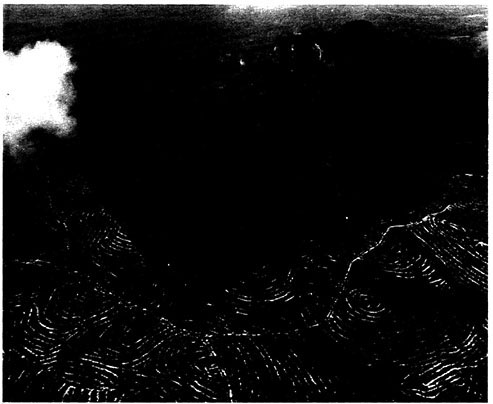
Convoluted rows of oil palms stretch along the border of a tropical rain forest in Malaysia. As a result of farming projects sponsored by the Malaysian government, thousands of hectares of rain forest have been converted to farmlands. The government's drive to reduce landlessness and unemployment began in the 1950s. Credit: James P. Blair © 1983 National Geographic Society.
ment of agricultural frontiers and subsequent use of land by subsistence farmers, conversion of forests to perennial tree plantations and other cash crops, conversion to commercial livestock production, land speculation, the cutting and gathering of wood for fuel and charcoal, and large-scale colonization and resettlement projects. The demand for land by shifting cultivators, small-scale farmers, and landless migrants accounts for a significant portion of forest conversion in some regions. Most of the farmers in the humid tropics, however, are acting in response to a socioeconomic environment that offers few alternatives.
CONSEQUENCES OF FOREST CONVERSION
Forest conversion, especially deforestation, can have far-ranging environmental, economic, and social effects. Environmental consequences can include the disruption of natural hydrological processes, soil erosion and degradation, nutrient depletion, loss of biological diversity, increased susceptibility to fires, and changes in local distribution and amount of rainfall.
The social consequences of unsustainable conversion practices may include the decline of indigenous cultural groups and the loss of knowledge of local resources and resource management practices; dislocation of small communities of farmers and forest dwellers as forestlands are appropriated for more profitable land uses; and continued poverty and rural migration as farmers abandon lands degraded through soil-depleting agricultural practices. The economic consequences include the loss of production potential as soil is degraded; the loss of biological resources, such as foods or pharmaceuticals, from primary forests; the destabilization of watersheds, with the attendant downstream effects of flooding and siltation; and, at the global level, the long-term impacts of deforestation on global climate change.
Agriculture in the Humid Tropics
The efficiency of tropical agriculture is determined by a combination of environmental factors (including climate, soil, and biological conditions) and social, cultural, and economic factors. Agricultural systems and techniques that have evolved over time to meet the special environmental conditions of the humid tropics include the paddy rice systems of Southeast Asia; terrace, mound, and drained field systems; raised bed systems, such as the chinampas of Mexico and Central America; and a variety of agroforestry, shifting cultivation, home garden, and natural forest systems. Although diverse in their adaptations, these systems often share many traits, such as high retention of essential nutrients, maintenance of vegetative cover, high diversity of crops and crop varieties, complex spatial and temporal cropping patterns, and the integration of domestic and wild animals into the system.
Shifting cultivation is a common agricultural approach in the tropics. Traditionally, it incorporates practices that maintain or conserve the natural resource base, including a natural restoration or fallow cycle. Today, however, the hallmarks of unstable shifting cultivation, or slash-and-burn agriculture, are shortened fallow periods that lead to fertil-
ity decline, weed infestation, disruption of forest regeneration, and excessive soil erosion.
Monocultural systems have been successfully introduced over large areas of the humid tropics, and include production of coffee, tea, bananas, citrus fruits, palm oil, rubber, sugarcane, and other commodities produced primarily for export. Plantations and other monocultural systems provide employment and earn foreign exchange.
Adopting an Integrated Approach to Land Use
The committee has focused its analysis on the relationship between forest conversion and agriculture, and on how the problems of both might be better addressed through developing and implementing more sustainable land use systems. Improved land use in the humid tropics requires an approach that recognizes the characteristic cultural and biological diversity of these lands, incorporates ecological processes, and involves local communities at all stages of the development process.
Fundamental scientific, social, and economic questions—and certainly the more applied problems—are multifaceted. Steady progress toward sustainability and the resolution of problems in the humid tropics requires that several scientific disciplines be integrated and managed to ensure collaboration and synergy.
SUSTAINABLE LAND USE OPTIONS
No single type of land use can simultaneously meet all the requirements for sustainability or fit the diverse socioeconomic and ecological conditions. In this report, the committee describes 12 overlapping categories within the complete range of sustainable land use options. The committee also presents a scheme, for comparing the attributes of each of the 12 categories (see Chapter 3), that can be used as a tool for management and decision making in evaluating land use options for a specific area. The attributes are grouped as biophysical, economic, and social benefits. With proper management, these land use options have the potential to stabilize forest buffer zone areas, reclaim cleared lands, restore degraded and abandoned lands, improve small farm productivity, and provide rural employment. They are described below:
-
Intensive cropping systems are concentrated on lands with adequate water, naturally fertile soils, low to modest slope, and other environmental characteristics conducive to high agricultural productivity. The best agricultural lands in most parts of the humid tropics
-
have been cleared and converted to high-productivity agriculture. High-productivity technologies, if improperly applied, can lead to resource degradation through, for example, nutrient loading from fertilizers, water contamination from pesticides and herbicides, and waterlogging and salinization of land. Food needs require that these systems remain productive and possibly expand in area, but that they be stabilized through biological pest management, nutrient containment, and improved water management.
-
Shifting cultivation systems are traditional and remain in widespread use throughout the humid tropics. Temporary forest clearings are planted for a few years with annual or short-term perennial crops, and then allowed to remain fallow for a longer period than they were cropped. Migration has brought intensified shifting cultivation to newly cleared lands, where it is often inappropriate. In these areas, however, shifting cultivation can be stabilized by adopting local cropping practices and varieties, observing sufficient fallow periods, maintaining continuous ground cover, diversifying cropping systems, and introducing fertility-restoring plants and mulches into natural fallows.
-
Agropastoral systems combine crop and animal production, allowing for enhanced agroecosystem productivity and stability through efficient nutrient management, integrated management of soil and water resources, and a wider variety of both crop and livestock products. Agropastoral systems may provide relatively high levels of income and employment in resource-poor areas.
-
Cattle ranching on a large scale has been identified as a leading contributor to deforestation and environmental degradation in the humid tropics, primarily in Latin America and some Asian countries. However, cattle ranching operations can be made more sustainable by reclaiming degraded pastures in deforested lands through the use of improved forages, fertilization, weed control, and appropriate mechanization, and by integrating pasture-based production systems with agroforestry and annual crop systems. Medium- to small-scale ranching systems have proved economical, but require changes in land tenure and ownership incentives.
-
Agroforestry systems include a range of options in which woody and herbaceous perennials are grown on land that also supports agricultural crops, animals, or both. Under ideal conditions, these systems offer multiple agronomic, environmental, and socioeconomic benefits for resource-poor small-scale farmers, including enhanced nutrient cycling, fixing of atmospheric nitrogen through the use of perennial legumes, efficient allocation of water and light, conservation of soils, natural suppression of weeds, and diversification of farm products. Agroforestry systems require market access for widespread use.
-
Mixed tree systems are common throughout the humid tropics. In contrast to modern plantations, in which one tree species is grown to yield a single commercial product, mixed tree systems employ a variety of useful species, planted together, to yield different products (including fruits, forage, fiber, and medicines). These systems also protect soil and water resources, provide pest control, serve as habitat for game and other animal species, and offer opportunities for small-scale reforestation efforts that are economically productive and environmentally sound.
-
Perennial tree crop plantations are part of a broad category of plantation agriculture that includes short rotation crops (such as sugarcane and pineapple) as well as tree crops. Large areas of primary forest have been converted to tree crop plantations. Despite social and environmental problems inherent in these systems, modifications to enhance their sustainability could allow plantation crops to play a role in converting deforested or degraded land to more ecologically and economically sustainable use.
-
Plantation forestry systems in the tropics cover about 11 million ha of land. Most have been established only in the past 30 years, usually in deforested or degraded lands, primarily for fuelwood, pulpwood, and lumber production, and for environmental protection. Increasingly, however, attention is focusing on the ability of plantations to accumulate biomass, sequester atmospheric carbon, and rehabilitate damaged lands. Because these systems offer flexibility in design and purpose, they provide a potentially important tool for land managers in the humid tropics.
-
Regenerating and secondary forests have followed forest conversion and land abandonment in many areas of the humid tropics. Regenerating forests can be viewed as a type of land use in that they provide valuable goods and services to society, while preparing degraded lands for conversion to more intensive agricultural uses or alternative purposes. The regeneration process protects soils from erosion, restores the capacity of the land to retain rainfall, sequesters atmospheric carbon, and allows biological diversity to increase. This process can be guided and accelerated through fire protection, supplemental planting, and other management methods. Regenerating forests will, if other options are not implemented, mature into secondary forests, providing many ecological and economic benefits and preparing the way for the restoration of primary forest. Properly managed secondary forests, by supplying a variety of products, increasing site fertility, and restoring biological diversity, can be critical for attaining the goals of sustainability.
-
Natural forest management systems show promise for ameliorating the effects of destructive logging practices. The ecological characteristics, biological diversity, and structural complexity of moist tropical forest ecosystems make them more vulnerable than temperate forests to the impacts of conventional intensive forest management techniques. Management techniques (for example, selective cutting procedures) that are more appropriate to tropical systems may provide sustainable alternatives to destructive logging and other more intensive land uses.
-
Modified forests are often difficult, if not impossible, to distinguish from pristine primary forests. In these areas, indigenous people have subtly altered the native plant and animal community, but without significantly affecting the rate of primary productivity, the efficiency of nutrient cycling, or other ecosystem functions. Modified forests should be considered a viable land use that allows indigenous peoples and local communities to sustain their ways of life while protecting large areas of forestland.
-
Forest reserves have been established through a variety of protection mechanisms, including biological and extractive reserves, wildlife preserves, national parks, national forests, refuges, private land trusts, crown lands, and sanctuaries. Reserves allow for the protection of ecosystem functions, environmental services, cultural values, and biological diversity, and provide important opportunities for research, education, recreation, and tourism.
The continuum of options from intensive cropping systems to forest reserves constitutes a spectrum of potential land uses. They meet different goals and involve varying degrees of forest conversion, management skill, and investment. Each confers a mix of biophysical, economic, and social benefits. Consequently, trade-offs are involved in choosing among them. Agroforestry systems, for example, require fewer purchased inputs (although initial soil fertility treatments may be required on degraded lands), but they generally do not generate the high levels of employment or income on a per unit area basis that intensive crop or animal agriculture does. They are, however, adapted to less fertile soils. Perennial tree plantations, such as for oil palm or rubber, require considerable chemical inputs and labor to maintain productivity, but generate more employment and income on a per unit area basis than do agroforestry systems. Sustainability, in this context, largely entails meeting unique needs, minimizing negative effects, and offering a range of opportunities for land areas that vary in size from the local farmer's field to the surrounding landscape to the country as a whole.
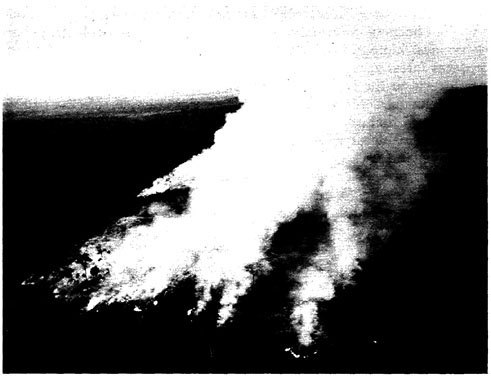
In the Amazon River Basin in Brazil, tropical rain forest is burned to prepare the land for cattle pastures and other agricultural uses. Credit: James P. Blair © 1983 National Geographic Society.
RECOMMENDATIONS
Progress toward sustainability in the humid tropics depends not only on the availability of improved techniques of land use, but on the creation of a more favorable environment for their development, dissemination, and implementation. For this to happen, substantial changes will need to take place in the national and international institutions that determine the character of public policy. The committee's recommendations fall into the categories of technical research needs and policy strategies.
Technical Research Needs
The committee has found that publicly supported development efforts are confined to a range of land use choices that is too narrow. In this report, the committee identifies sustainable land use options suitable for a broad range of conditions in the humid tropics. That so many instances of diverse production systems were found is not sur-
prising; that they appear to have such broad applicability across the humid tropics is of great development interest.
Recommendations on technical research needs are based on the success of land uses that are chronicled in the country profiles (see Part Two, this volume) and on the potential that exists in many locales throughout the humid tropics.
DOCUMENTATION OF LAND USE SYSTEMS
To be readily usable by development planners, land use systems should be defined according to their environmental, social, and economic attributes, and described in detail. The place and role for each system, which will depend on the level of national or local development, should be identified along with conditions required for their implementation and evolution.
In Chapter 3, the committee provides a scheme for comparing the biophysical, social, and economic attributes of land use systems. Biophysical attributes are grouped as nutrient cycling capacity, soil and water conservation capacity, stability toward pests and diseases, biodiversity level, and carbon storage. Social attributes are grouped as health and nutritional benefits, cultural and communal viability, and political acceptability. Economic attributes are grouped as level of external inputs necessary to maintain optimal production, employment per land unit, and income generated.
In all attribute categories, intensive cropping, agroforestry, agropastoral systems, mixed tree plantations, and, to some extent, modified forests offer significant benefits. For many low resource areas, the newly researched and demonstrated technologies for mixed cropping systems show considerable promise. In general, changes in social and economic attributes will be gradual.
INDIGENOUS KNOWLEDGE
The vast body of indigenous knowledge on land use systems must be recorded and made available for use in national development planning.
Traditional systems and indigenous knowledge will not yield panaceas for land use problems in the humid tropics. However, traditional ways of making a living, refined over many generations by intelligent land users, provide insights into managing tropical forests, soils, waters, crops, animals, and pests. Research can assess the benefits of aspects of traditional systems: their structure, genetic diversity, species composition, and function as agroecosystems, as well as their social and economic characteristics and potential for wider application. The research process can have additional benefits by fostering
collaborative relationships between researchers and indigenous people, and providing the groundwork for successful local development projects. Sustainable systems will often combine traditional practices and structure with more modern, scientifically derived technologies.
MONITORING
Resources should be available for linking national monitoring agencies with global satellite-based data sources so these agencies can refine, update, and verify their data bases for tracking land use changes and effects.
Monitoring systems and methodologies must be improved to trace land use changes and their effects. Only within the past 2 decades in the United States has satellite-generated information made it possible to estimate the magnitude of soil loss and its effect on productivity. In most countries of the humid tropics, only rudimentary data are available on soil loss, groundwater contamination, salinization, sedimentation rates, levels of biological diversity, and greenhouse gas emissions. Modern-day international data bases employing satellitegenerated information should be more effectively linked with national monitoring systems.
Policy Strategies
The goal of the committee's policy-related recommendations is to meet human needs without further undermining the long-term integrity of tropical soils, waters, plants, and animals. Sustainable agriculture will not automatically slow forest conversion, or deforestation, in the humid tropics. However, the combination of forest management and the use of sustainable land use options will provide a framework that each country can use to fit its capabilities, natural resources, and stage of economic and technological development.
POLICY REVIEWS
Policy reviews under way at local, national, and international levels must be broadened to consider the negative effects that policies have had on sustainable land use.
Many international and bilateral development agencies have reassessed their forest policies in response to escalating rates of deforestation. Few, however, focus on the need for agricultural sustainability. At national and regional levels, policy reviews should respond to the specific biophysical, social, and economic circumstances that affect land use patterns within countries and regions. At the international
level, the review process will vary from institution to institution, depending on its size and objectives and the range of its activities.
In general, policy reviews should involve multidisciplinary teams; evaluate externalized costs of policies that encourage large-scale land clearing; assign value to the forests in standard economic terms; integrate forest and agriculture sectors; and integrate infrastructure, land use, and development policies.
GLOBAL EQUITY
The adoption of sustainable agriculture and land use practices in the humid tropics should be encouraged through the equitable distribution of costs on a global scale.
Industrialized countries have a responsibility to assume some proportionate share of the costs related to the adoption of sustainable land use practices. They must use their financial and institutional resources to encourage the conservation of natural resources and the development of human resources in developing countries. Global distribution of costs can be directed through technical assistance, research, and institution building; financing; and international trade reforms. In other words, if industrialized countries want developing countries to preserve their resources for global benefit, financial and other assistance must be transferred to developing countries specifically to protect global common resources. Assistance could be provided for in situ protection of genetic resources, enhancement of the capacity to sequester carbon, and new markets for high-value products of the humid tropics.
Supporting Sustainable Agriculture
Changes in policies that contribute to forest conversion, deforestation, and natural resource degradation in the humid tropics alone will not encourage the adoption of sustainable agricultural systems. The committee makes the following recommendations for efforts to support sustainable agriculture.
CREATION OF AN ENABLING ENVIRONMENT
National governments in the humid tropics should promote policies that provide an enabling environment for developing land use systems that simultaneously address social and economic pressures and environmental concerns.
Based on studies of successful experience in moving toward sus-
tainable agricultural practices, the committee concluded that essential components of an enabling environment include assurance of resource access through land titling or other tenure-related instruments, access to credit, investment in infrastructure, local community empowerment in the decision-making process, and social stability and security.
More than any other factor, the status of land tenure determines the destiny of land and forest resources in the humid tropics. Land tenure arrangements that provide long-term access to land resources are the prerequisite to efficient land use decision making and to the implementation of sustainable land use systems. Formalization of property rights is important in many countries.
INCENTIVES
National governments in the humid tropics and international aid agencies should develop and provide incentives to encourage long-term investment in increasing the production potential of degraded lands, for settling and restoring abandoned lands, and for creating market opportunities for the variety of products available through sustainable land use.
To attain the most efficient use of limited funds, it will be necessary to determine where natural regeneration of degraded lands is proceeding without major investment, and alternatively, where regeneration and economic development will require a financial boost. As regeneration and economic development proceeds, the mix of land use inputs is likely to change and so too will the mix of appropriate incentives. For example, labor-intensive agroforestry systems that might be suitable in low-wage countries may be less financially viable in high-wage countries.
In the case of abandoned lands, securing tenure is a critical step in rehabilitation, but special concessions may be necessary to attract farmers to these areas. Depending on local tenure arrangements, villages and communities, rather than individuals, might more appropriately be the recipient of subsidies, tax concessions, and other incentives where, for example, the stabilization of entire watersheds is critical.
PARTNERSHIPS
New partnerships must be formed among farmers, the private sector, nongovernmental organizations, and public institutions to address the broad needs for research and development and the needs for knowledge transfer of the more complex, integrated land use systems.
The international community has given substantial support for research to increase the productivity of major crops such as rice and maize, and for research on tropical soils, livestock, chemical methods of pest control, and human nutrition. Additional support will be necessary in the areas of small-landholder agroforestry systems, tree crops, improved fallow and pasture management, low input cropping, corridor systems, methods of integrated pest management, and other agricultural systems and technologies appropriate to higher risk lands.
National and international development agencies should foster the productive involvement of local nongovernmental organizations (NGOs) as intermediaries between themselves, national government agencies, universities, and local communities in support of the methods and goals of sustainable land use. In particular, NGOs can assume a prominent role in training and education at the community level, in partnership with (or in the absence of) official extension services. Local NGOs are likely to be more effective than external organizations in shaping environmentally and socially acceptable land use policies based on local needs and priorities.
CONCLUSION
The boundary around what was once pristine, unmanaged forests has blurred. Lands on either side of the so-called boundary can be used and managed in innovative and, eventually, sustainable ways along a continuum of land use choices. The committee has documented some of the most promising options.
The gains sought through the further conversion of forests in the humid tropics are becoming increasingly marginal. When the full environmental, social, and economic costs are considered—even if they cannot be precisely quantified—the nations of the humid tropics stand to gain little from the further depletion of forests and land resources. Likewise, nations beyond the humid tropics will reap few benefits by contributing to the forces behind accelerated forest conversion and deforestation.
Decisions will continue to be made, necessarily in the absence of complete data. But the committee strongly believes that the continuum of land use options presented in this report and the accompanying evaluation of attributes can provide a foundation for decision making and the management of all lands—the key to sustainability in the humid tropics.


