
2
Sustainable Land Use Options
In response to a combination of socioeconomic, agronomic, and environmental concerns, many scientists and policymakers are encouraging the implementation of sustainable agricultural systems (Altieri, 1987; Christanty et al., 1986; Consultative Group on International Agricultural Research, 1989; International Rice Research Institute, 1988; Ruttan, 1991; Vosti et al., 1991). Definitions of sustainable agriculture vary widely. For the purposes of this report, sustainable agriculture includes a broad spectrum of food and fiber production systems suited to the varied environmental conditions in the humid tropics. These systems attempt to keep the productive capacity of natural resources in step with population growth and economic demands while protecting and, where necessary, restoring environmental quality.
This chapter provides a basis for identifying the technical and policy changes needed to make land use in the humid tropics more sustainable (see Chapter 3 and Chapter 4). It discusses a variety of land use options that can be used to formulate plans for restoring abandoned and degraded lands and for preserving natural resources, including the primary forest. These land use options are defined and presented here under 12 descriptive categories ranging from highly managed intensive cultivation to forest reserves. These categories represent sets of activities commonly practiced in the humid tropics, but not necessarily found or applicable in all regions or to both upland and lowland areas. Although these categories do not include all land use
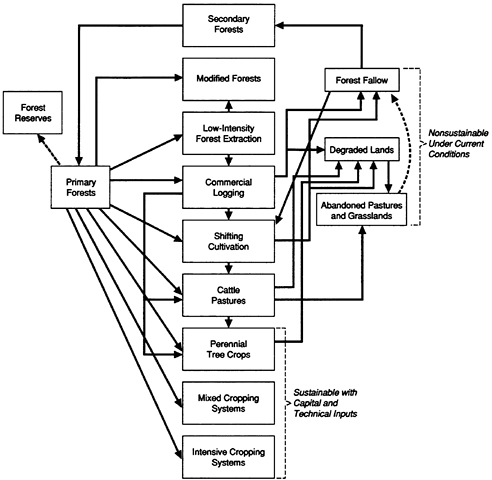
FIGURE 2-1 Examples of land transformation in the humid tropics.
activities in the humid tropics, they represent land uses with great potential for stabilizing forest buffer zone areas, reclaiming cleared lands, restoring degraded and abandoned lands, improving the productivity of small farms, and providing rural employment.
Examples of sustainable and nonsustainable uses are shown in Figure 2-1. Uses that reduce or eliminate forest cover have a broad range of requirements for capital and technical inputs, such as fertilizers and pesticides. Where social and economic conditions encourage resource depletion and short-term economic gain, however, land uses shift toward shorter and shorter production and harvest cycles, often leading to complete loss of economic production potential and abandonment. This pattern can be avoided if conditions encourage
long-term maintenance of production potential—a goal that requires investments in long-term production systems and the implementation of soil-conserving production practices.
Transformation processes vary widely within a region, or even within a country. In Mexico, for example, the conversion of forests to cattle pastures is the leading cause of deforestation. It often involves several intermediary steps: the opening of roads to facilitate timber extraction, colonization of cleared lands by landless peasants, eventual abandonment of these lands or removal of small communities of farmers by eviction, and the ultimate consolidation of these “clean” areas by cattle ranchers (Denevan, 1982; Gómez-Pompa et al., Part Two, this volume). In Peninsular Malaysia, deforestation has been primarily a consequence of conversion to tree crop plantations during the past 100 years (Vincent and Hadi, Part Two, this volume). In the neighboring Malaysian states of Sarawak and Sabah, however, the recent intensification of commercial logging has been the leading cause of deforestation, altering and even eliminating traditional patterns of resource extraction and shifting cultivation by indigenous peoples (Rush, 1991).
Analysis of the processes of change is the first step in finding the pathways toward more sustainable land uses. For example, traditional low-intensity shifting cultivation systems remain a viable option where population pressures are low. Agroforestry, agropastoral and silvopastoral systems, and other labor-intensive mixed cropping systems are better suited to lands that are more fragile or under greater population pressure. More capital-intensive systems such as cattle ranching, perennial crop operations, forest plantations, and upland agricultural crop systems, while often environmentally destructive in the past, can present important opportunities for land restoration and improved land management. To be viable, they require secure land tenure, long-term investment, market access, and appropriate technologies.
No one system will simultaneously meet all the requirements for sustainability, fit the diverse socioeconomic and ecological conditions within the humid tropics, and alleviate the pressures that have brought about rising deforestation rates. The biological, social, and economic attributes of the land uses described in this chapter are summarized in Chapter 3 and technical and research needs are discussed. The order in which these land uses are presented corresponds broadly to the degree to which they change the composition and structure of primary forests. Figure 2-2 is a generalized depiction of changes to primary forests as they relate to agricultural land uses.
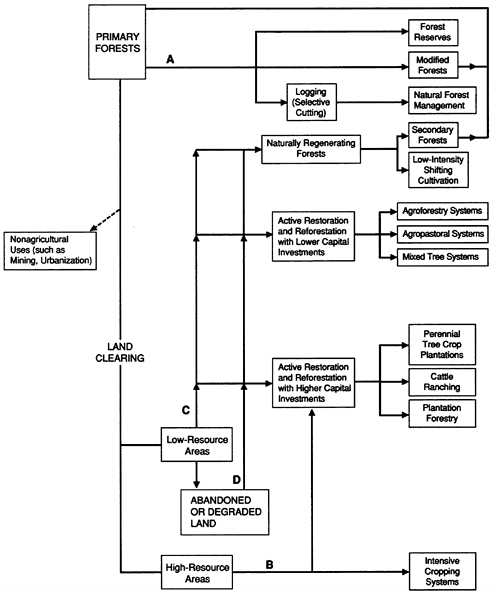
FIGURE 2-2 Pathways to sustainable agriculture and forestry land use. Management of land resources for sustainability depends on social and political forces as well as technological and economic development at local and national levels. National policy plays a significant role, particularly when maintaining various forest types (pathway A). Market forces determine the use of resource-rich areas following clearing (pathway B). The more critical pathways follow the clearing of resource-poor areas with less fertile soils. In some cases, with appropriate market incentives, sustainable use may evolve with modest public support (pathway C). Where the land resource has become severely degraded, more aggressive public sector involvement, such as incentives and subsidies, may be required (pathway D).
INTENSIVE CROPPING SYSTEMS
Areas used for intensive (high-productivity) agriculture in the humid tropics generally are resource-rich lands that have adequate water supplies, naturally fertile soils, very low to modest slope, or other favorable environmental characteristics. These areas range from the flat lowland delta or river valley areas to gently rolling uplands, and include the broad continental, high rainfall plains of the Amazon and of Central Africa. They can support input-intensive management systems and yield multiple harvests of crops at high levels of productivity. Crops are usually planted in rapid sequence, using improved varieties. With adequate water and good growing conditions the crops are responsive to fertilizer inputs. However, crop yields are constrained during periods of high rainfall and by seasonal flooding in some river and delta areas. Pest management usually prevents economic loss but often entails heavy pesticide use that can have adverse environmental and health impacts.
Intensive agriculture is agronomically feasible for most Oxisols and Ultisols of the humid tropics. This alternative may interest farmers near urban areas where favorable marketing infrastructure ensures that fertilizer-based continuous food crop production is viable. Large Amazonian cities import most of their food from other areas. Farmers would have a potential comparative advantage in growing food crops near these cities. In Peru and Brazil, respectively, sustained yields have been obtained with continuous cropping trials for 41 crops (17 years) in Yurimaguas Ultisols and 17 crops (8 years) in Manaus Oxisols (Alegre and Sanchez, 1991; Sanchez et al., 1983; Smyth and Cravo, 1991). The key to continuous production is effective crop rotations and the judicious application of lime and fertilizers.
Intensive agricultural production in the humid tropics has historically concentrated on the highly fertile lowlands. These lowlands constitute only a small portion of land. For example, lowland areas comprise only 20 percent of the estimated 510 million ha of the Amazon located within the national territory of Brazil (Serrão and Homma, Part Two, this volume). They account for between 10 and 40 percent of the total land areas of Southeast Asian countries (Garrity, 1991). In some river bottom and delta areas, annual flooding and receding water cycles deposit enriching organic and inorganic sediments. However, these flooded areas represent an even smaller portion of the total land base.
Soil characteristics coupled with water availability make these areas especially suitable for the intensive production of high-value food crops. Paddy rice production in Southeast Asia is one well-
known example. Other intensive systems include terrace, mound, and drained-field systems of Africa, Asia, Central and South America, and the Pacific (Wilken, 1987a,b). These systems combine water control for drainage and irrigation through intricate systems of ditches, dikes, and shaping of the land. They provide harvests of high quality and quantity, and they are fairly predictable in their ability to provide consistent harvests from year to year.
The Development of Intensive Agriculture
Because of their high agricultural potential, resource-rich areas were the first to be developed, with early investment in roads, electricity, irrigation, and other infrastructural features. From the standpoint of national investment, these areas produced the greatest return per dollar. With few exceptions, most had been deforested and converted to high-productivity agriculture by the 1960s. Exceptions include malaria-infested portions of Nepal and Thailand, much of Mindanao in the Philippines, and large areas of inaccessible forestland in Brazil and Central Africa. These remaining areas may still be converted because of their value to agricultural production. Given social and economic pressures, the maintenance of forested areas can probably be justified only on the basis of preserving biodiversity. In most Asian countries, the few forested areas remaining on highly productive soils represent a small portion of total land area.
Internationally supported research and development in the 1960s and 1970s focused on realizing the high-production potential of these resource-rich lands. International agencies perceived an increasingly critical need for food and recognized the potential for existing scientific understanding and research methods to contribute to meeting this need. The international agricultural research centers (IARCs), such as the International Rice Research Institute (IRRI) in the Philippines, Centro Internacional de Agricultura Tropical (CIAT, International Center for Tropical Agriculture) in Colombia, and the International Institute of Tropical Agriculture (IITA) in Nigeria, were purposely situated in high-productivity tropical environments. The crop varieties that were developed had the genetic potential to respond to physical and managerial inputs under favorable soil and water environments. The widespread application of these new agricultural technologies gave rise to the green revolution. The agencies' focus also influenced the selection of areas with high-development potential and the placement of research centers within them (Dahlberg, 1979).
As a result of this concentrated investment in research and development, information and technology are readily available for high-
productivity areas, both for individual crops and for high-intensity cropping systems (Chandler, 1979; DeDatta, 1981; International Irrigation Management Institute, 1987; Sanchez, 1976). Much of the information pertains to the major cereal, pulse, and other vegetable crops grown on a more intensive scale.
By the mid-1970s, most of the available highly productive land in the humid tropics was devoted to cultivating input-responsive crop varieties, and increases in individual crop yields began to level out (especially for Asian rice production). Attention turned to increasing annual area yields through more effective farming systems. From this early work came a broad range of research literature on farming systems methodologies for intensive cropping systems (Bureau of Agricultural Research of the Philippines, 1990; Harwood, 1979; International Rice Research Institute, 1975; Sanchez et al., 1982; Sukmaana et al., 1989). In the 1980s several of these research efforts shifted to particular types of cropping systems, such as wheat and rice rotations in the northern portion of the humid tropic zone (Harrington, 1991). It has been only recently, as researchers turned their attention to the rolling uplands and steeply sloping areas in Asia and to the
|
Intensification in Sustainable Agricultural Systems Intensification is essential to developing sustainable agricultural systems in the humid tropics and elsewhere, but it can have various meanings in different contexts. Intensification in sustainable agricultural systems generally refers to the fuller use of land, water, and biotic resources to enhance the agronomic performance of agroecosystems. While intensification may involve increased levels of capital, labor, and external inputs, the emphasis here is on the application of skills and knowledge in managing the biological cycles and interactions that determine crop productivity and other aspects of agroecosystem characteristics. This approach differs from that which has guided agricultural systems in the industrial countries in recent years. Over the past 5 decades, these systems have sought to maximize yields per hectare or per unit of labor through the development and dissemination of relatively few high-yielding crop varieties and through increased use of external inputs such as fuel, fertilizers, and pesticides. This model of agricultural development stresses intensification through progressively specialized operations and the substitution of capital and purchased inputs for labor. In general, it has entailed loss of diversity (in crop germplasm, cropping patterns, and agroecosystem biota) and high cash production costs. |
reclamation of degraded pastures in Latin America, that on-farm, integrated animal systems have been studied (Amir and Knipscheer, 1987; Serrão and Toledo, 1990).
As farming system research became an important aspect of agricultural intensification efforts, researchers introduced socioeconomic considerations more systematically into their studies (Bonifacio, 1988; Hansen, 1981; Lovelace et al., 1988). Intensive farming systems were then increasingly studied with respect to their use of geophysical resources within different social and economic environments. Methodologies were developed to address more complex systems and their interactions in fragile and resource-limited environments, where changing land use patterns often have major social implications.
Intensive cropping systems face critical challenges. Questions are being raised about the ability of these systems to respond to the food needs of expanding populations. For several decades, lowland crop production has benefitted from the availability of improved varieties and hybrids, better agricultural chemicals, and mechanized farm equipment. For example, two to three crops of lowland rice with growing seasons of three to four months can now be produced
|
In meeting the concurrent goals of increased productivity and reduced environmental risk, intensification can occur in both temporal and spatial dimensions. Farmers can intensify the use of the resources available to them at different times by using more diverse rotations and optimal harvesting schedules. They can intensify the use of resources spatially by adopting techniques and growing crops that take fuller advantage of available sunlight, moisture, nutrient reserves, and biotic interactions, both aboveground (for example, through mixed cropping) and belowground (for example, through the use of legumes and deep-rooted tree crops). Optimum resource use in hilly areas of heterogeneous slope, soil type, and water resources requires a diversity of systems and system components. In both the spatial and temporal dimensions, intensification through diversification involves the selection of crops, livestock, inputs, and management practices that foster positive ecological relationships and biological processes within the agroecosystem as a whole. These choices vary according to local environmental conditions and socioeconomic needs and opportunities. Improved agroecosystem performance is often sought through mixed cropping systems, while all internal resources (and necessary external inputs) are carefully managed to improve productive efficiency. |
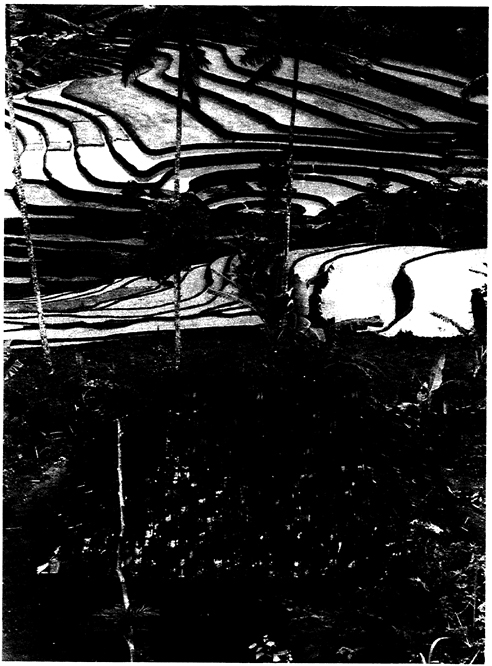
Rice terraces in the upper watershed area of the Solo River, Indonesia, are carefully tended to cultivate every available portion of land through the use of many different agronomic land use types, which are shown here in a single landscape. Population pressure on arable land is high in this area of Central Java. Credit: Food and Agriculture Organization of the United Nations.
each year. However, the growth in yield rates for cereal crops in Asia is increasing more slowly than demand (Harrington, 1991). Fallow periods that formerly allowed for the accumulation of nutrients and the suppression of pests have essentially been removed from the crop rotation sequence, their role being assumed by applications of purchased chemical inputs. Furthermore, pressures from pests and diseases are increasing as the area devoted to the cultivation of new varieties increases in size (Fearnside, 1987a).
In many countries, lowland areas that are relied on for producing staple and cash crops are in danger of becoming unfit for crop production as a result of improper management. The inappropriate use of high-productivity technologies is being implicated in various forms of natural resource degradation, including nutrient loading from fertilizers, water contamination from insecticides and herbicides, and waterlogging and salinization of land (Harrington, 1991). Loss of lowland cropland could seriously impair the capacity of countries in the humid tropics to meet future food demands.
The pressure to meet the subsistence needs of populations is causing governments to convert additional lowland as well as upland areas. In Indonesia for example, as transmigration programs continue, previously unmodified wetland ecosystems are being considered for cultivation of irrigated, monoculture rice or for mixtures of coconut plantations with secondary crops, which are grown to meet local needs rather than for cash or market (Kartasubrata, Part Two, this volume). In some areas, the high risk of malaria, schistosomiasis, and other diseases remains a significant barrier to the use of lowland areas. At present, these health concerns are greatest in the humid tropics of Africa and Asia.
Programs and Research Activities
To the extent that productivity in lowland areas declines and forested upland areas are environmentally degraded for future food production, sustainability in the humid tropics is placed at risk. These concerns are becoming the focal points of the preservation programs and research efforts of regional and international agricultural research centers. Efforts are being made to preserve lowland areas that have unique qualities. The Chitwan National Forest in Nepal is one of the few lowland rain forests successfully protected from development pressure. It constitutes a rich source of biological diversity in undisturbed Asian lowland, high-productivity ecozones. Further development of the Chitwan area for agriculture has so far been rejected.
Throughout the humid tropics, efforts are also being made to
curtail soil erosion on intensively cultivated sloping lands. In the 1980s the Philippine Department of Agriculture initiated the Sloping Agricultural Land Technology Program, which proposed an intercropping system to produce permanent cereal crops with minimal or no fertilizer use. Between hedgerows of Leucaena leucocephala, a commonly grown fodder source for cattle, rows of woody perennial crops, such as coffee, were planted in contour strips alternating with several rows of food crops. Versions of this cropping system, using various plant species, provide farmers with a diverse income source and fertility-enhancing soil mulch. They can also reduce by as much as 90 percent the amount of soil lost under conventional cropping practices on open fields (Garrity, 1991).
More generally, agriculture production programs and research agencies that have traditionally focused on intensive cropping systems are reevaluating and redirecting their efforts. The IARCs of the Consultative Group on International Agricultural Research (CGIAR) now focus not only on increasing yields of intensive agriculture in favorable environments, such as irrigated lowlands, but also on developing programs to increase productivity and sustainability of cropping and livestock systems in less fertile, marginal environments, like sloping and hilly uplands (Consultative Group on International Agricultural Research, 1990).
The CGIAR has not defined the limits of the IARCs' research activities on issues of sustainability. Rather, those decisions are made by each center. For example, the CGIAR has not advocated the rehabilitation of degraded lands as a central priority of its system. However, most centers acknowledge that an increased percentage of arable land in their mandate areas has been degraded or removed from production and some have begun initiatives to address this issue (Consultative Group on International Agricultural Research, 1990).
Some centers, such as the IRRI and Centro Internacional de Mejoramiento de Maíz y Trigo (International Maize and Wheat Improvement Center), have emphasized sustainable agriculture through reallocation of internal resources, while others, such as the CIAT, IITA, and International Livestock Center for Africa, have developed explicit goal and mission statements. The International Center for Research in Agroforestry focuses its resource management agenda on mitigating tropical deforestation, land depletion, and rural poverty through improved agroforestry systems. In addition, several centers have increased the role of social science research to address the human and socioeconomic constraints on improved natural resource management practices (Consultative Group on International Agricultural Research, 1990). Perhaps the most important aspect of this in-
creased attention will be the ability to share with resource-poor areas the institutional capacity, field research methodologies, and scientifically trained human resources of the IARCs, which had been developed primarily for agriculture on resource-rich lands.
Implications for Forest Boundary Stabilization
The ability of areas with high-quality soil and water resources in Asia to absorb more people engaged in agriculture is limited. These lands have been cleared and settled for many years, even centuries, often predating colonialism. Labor use levels are stable after the increases caused by the green revolution technologies of the 1960s and 1970s. Food production is increasing, but often at a rate not sufficient to keep up with national demand. The few remaining forest areas on these high-potential soils are unique in their genetic diversity and require extreme measures for protection. For the most part, the presence of these few remaining forests is testimony to the effectiveness of protection policies.
In the Americas and in Africa, significant forest areas remain. As roads are built, however, these areas are increasingly threatened with the possibility of land conversion. The short-term economic benefits of logging and the subsequent availability of these highly productive soils make the prospect of further agricultural expansion almost inevitable.
SHIFTING CULTIVATION
Shifting cultivation is one of the most widespread farming systems in the humid tropics, and it is often labeled as the most serious land use problem in the tropical world (Grandstaff, 1981). Shifting cultivation is usually defined as an agricultural system in which temporary clearings are planted for a few years with annual or short-term perennial crops, and then allowed to remain fallow for a period longer than they were cropped (Christanty, 1986). Conditions that limit crop yields, such as soil fertility losses, weeds, or pest outbreaks, are overcome during the fallow time, and after a certain number of years the area is ready to be cleared again for cropping (Sanchez, 1976).
While most shifting cultivation consists of various slash-and-burn methods, areas with high amounts of rainfall can use a slash-and-mulch system, which has less adverse effects on the environment. In warm wet conditions, relatively rapid decomposition of the mulch provides nutrient recycling benefits unavailable through burning, while
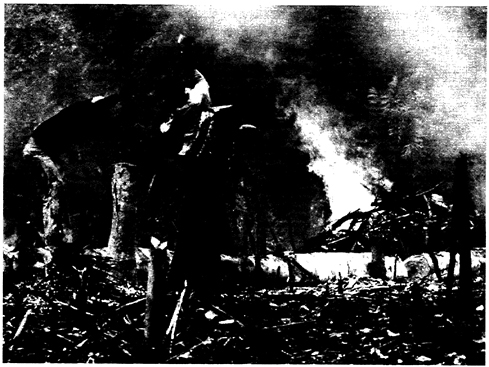
An example of slash-and-burn clearing of tropical rain forest. Credit: James P. Blair © 1983 National Geographic Society.
protecting the soil surface and increasing the amount of organic matter in the soil (Thurston, 1991).
As long as the human population density is not too high and fallow periods are long enough to restore productivity, shifting cultivation can be ecologically sound and can efficiently respond to a variety of human needs (Christanty, 1986). These systems are especially well suited for producing basic foodstuffs and meeting subsistence and local market needs.
However, in many of the areas where shifting cultivation had formerly been practiced successfully for centuries, population and poverty pressures have forced the shortening of the fallow period and field rotation cycle and the loss of productivity. Unless there are substantial social and economic changes, short-term cycles will continue and more lands will be cleared.
Although shifting cultivation generates limited income, few alternative cropping systems are ecologically feasible for many marginal lands. In most developing countries of the tropics, the expansion of cropping systems that depend on purchased inputs, especially those
that are imported, are not economically feasible on these lands. Therefore, ways must be found to reduce the intensity of shifting cultivation if stabilization is to occur, yields are to be sustained, and the pressure on primary forests is to diminish.
Stabilization Guidelines
The length of the fallow period is the most critical factor for the long-term sustainability of shifting cultivation systems (Christanty, 1986). Shifting cultivation becomes more intensified with the combined pressures of rapidly increasing human populations, demands for income above subsistence levels, and the growing demand for cash crops. As the cropping period lengthens, the conditions that maintain a productive soil deteriorate. On much of the hilly, steep land where deforestation for cropping is occurring, erosion becomes a serious problem, soil nutrients are lost, and weedy vegetation quickly invades. Stabilization can only be achieved by allowing for an effective rest or fallow, accompanied by a series of improvements during the cropping period that lessen erosion and help maintain a fertile soil.
Guidelines for stabilizing shifting cultivation include the following:
-
Respect local knowledge on cropping practices, use of local varieties, use of fire, soil management, and manipulation of the fallow period.
-
Develop systems that strictly adhere to crop and fallow practices that maintain soil fertility. The length of time required before eventually recropping an area depends on local conditions, such as rainfall, soil conditions, and crop type, and can range from a few years to 30 or 40 years (Ruthenberg, 1971). Stable population levels and land tenure conditions are needed to maintain this system.
-
Develop and refine organic matter management practices that improve soil and water conservation during the cropping period in order to reduce fertility loss, improve crop yields, and hasten the recovery of the system during the following fallow. The key to success is to maintain a continuous ground cover at all times during the cropping cycle. This can be achieved through minimum tillage, mulching, cover cropping, and multiple cropping (Amador and Gliessman, 1991).
-
Diversify cropping systems to intensify the production of useful species, thus lessening the need for additional plantings. Diversification can be achieved through a variety of multiple cropping arrangements (Francis, 1986), such as introducing perennials or tree
-
species into annual cropping systems. This approach usually requires market access for nonstaple food products, as the system is moved toward a perennial crop base.
-
Develop managed fallow systems by intentionally introducing fallow plants that accumulate nutrients in their biomass at a faster rate than the natural fallow (Sanchez, 1976) and permit the harvest of useful or edible materials from the second growth vegetation (Sanchez and Benites, 1987).
By stabilizing shifting cultivation systems at a level of production that sustains yields, meets the needs of the local people, and respects the importance of an adequate fallow, both ecological and social benefits are obtained. Soil erosion, fertility loss, and invasion by weeds are minimized, and people are more likely to remain in one location. Research institutions as well as policymakers should realize that stabilized shifting cultivation systems are most appropriate in more remote and economically limited areas. With proper incentives, and research to develop alternatives, stabilized and diverse shifting cultivation systems could become effective buffers against further encroachment into tropical forests (Sanchez et al., 1990).
Managed Fallows and Forests in Mexico: An Example
The use of managed fallows and forests is one method by which productivity is maintained in stable shifting cultivation systems. Tropical farmers in Mexico typically plant or protect trees found along the edges of or scattered through their agricultural fields. Many of the trees are nitrogen-fixing species and their abundance may reflect centuries of human selection and protection (Flores Guido, 1987). Nitrogen-fixing trees provide most of the nitrogen required to maintain soil fertility under intensive high-yield cultivation. The use of legume trees as shade trees for cacao is a pre-Hispanic practice still used today and it has been extended to coffee production (Cardos, 1959; Jim énez and Gómez-Pompa, 1981). Shaded coffee plants produce less annually, but the shade adds many years to the useful life of the plants.
Other agroforestry techniques for managing agricultural plots (predominately used for corn production) include selecting and protecting useful trees on the cultivation site. After a year or two of intensive cultivation these plots are left to fallow. The protected trees can serve as a seed source and as habitat for birds and other seed dispersers and pollinators. During this time, postcultivation crops, which consist of perennial cultivated or volunteer crops, continue to be pro-
duced and harvested. Some species of shrubs and trees are planted, thereby providing a continuous source of products as well as influencing the composition of regenerating stands (Wilken, 1987b). Species selected for protection are determined by the interest, knowledge, and needs of the farmer, a factor which explains the high biological diversity found in fallows and in old secondary forests.
The way in which trees are cut when the plot is cleared also affects their survival. Coppicing involves cutting trees or shrubs close to ground level so they will regrow from shoots or root suckers rather than seed. Coppicing with a high trunk remaining improves survival and is a key factor in the successional process. Although only 10 percent of the trees may be coppice starts, they may account for more than 50 percent of biomass during the recovery phase depending on the type of forest (Illsley, 1984; Rico-Gray et al., 1988).
The distinction between an agricultural plot and the adjacent mature forest in the humid tropics may not be as clearly evident as in temperate regions. Rather than being separate categories of vegetation, milpas (small cleared fields) and mature forest patches are different stages of the cyclical process of shifting agriculture. Even mature vegetation is part of a more extensive management system that includes sparing trees in the milpa and protecting and cultivating useful plant species during the regrowth of the forest patch. These forest patches, along with other uncut areas where the mature vegetation is protected or where useful tree species have been encouraged or transplanted, are considered here to be forest gardens, managed forests, or modified forests.
The conservation of a strip of forest along the trails and surrounding the milpas is also important. This strip plays an important role in regeneration on fallowed lands (Remmers and de Koeyer, 1988), provides shade for travel by foot to distant fields, and maintains a habitat for wildlife. Links between patches of forest also may have a key role in maintaining deer, birds, and other game valued as food by local people.
Low-Input Cropping: A Transition Technology
Low-input cropping is a management option that has evolved as a transition technology between shifting cultivation and several sustainable options (Sanchez, 1991). It enables farmers to substantially increase short-term crop production while preparing themselves and their land for sustained land use alternatives. This option is applicable to farmers on acid, infertile soils in rural areas with limited capital and marketing infrastructure. Its principal features are the
following: clearing of secondary forest fallows by slash and burn; use of acid-tolerant upland rice and cowpea cultivars in rotation, with only grain removal to minimize nutrient export; no use of fertilizers, lime, or external organic inputs; establishment of legume fallows when weed competition and nutrient deficiencies make cropping unfeasible; and elimination of fallows by slash and burn after 1 year, shifting to other management options such as grass-legume pastures, agroforestry, or mechanized continuous cropping (Sanchez and Benites, 1987).
Current results indicate the initial cropping cycle lasts 2 or 3 years and there is progressive reduction in cycle length after each legume fallow. The system is considered transitional because of two major constraints: nutrient depletion and weed encroachment. Ongoing investigations seek to prolong the duration of low-input cropping by broadening the base of acid-tolerant cultivars and species; increasing knowledge about components of the nutrient depletion process; and improving weed management through crop rotations, plant density, and frequency and time of legume cover crop fallows.
AGROPASTORAL SYSTEMS
Farming systems that combine animal and crop production vary across regions and agroecological zones. In Asia the animal components of small farming operations vary with cropping systems (McDowell and Hildebrand, 1980; Ruthenberg, 1971). In lowland rice farming areas, buffalo provide (1) traction for cultivating fields and (2) milk and meat that are consumed domestically or sold in markets. Cattle, fowl (mainly chickens and ducks), and swine are also commonly raised on these farms. Feeds include crop residues, weeds, peelings, tops of root crops, bagasse, hulls, and other agricultural by-products. In highland areas, swine, poultry, buffalo, and cattle are raised in combination with rice, maize, cassava, beans, and small grains. Livestock is less important on farms dominated by multistory gardens, which may occasionally include cattle, sheep, and goats. Feed is typically cut and carried from croplands. Livestock animals are also of some importance on tree crop farms where they either graze freely in pastures, are tethered to clean specific areas, or are fed with tree cuttings.
The cropping systems of tropical humid Africa are dominated by rice, yams, and plantains (McDowell and Hildebrand, 1980; Ruthenberg, 1971). Goats and poultry are the dominant animals. Sheep and swine are less abundant, but still common. Feeds include fallow land forage, crop residues, cull tubers, and vines. The small farms of Latin
America typically include crop mixtures of beans, maize, and rice (McDowell and Hildebrand, 1980; Ruthenberg, 1971). Cattle are common and maintained for milk, meat, and draft. Swine and poultry are raised for food or for sale. Pastures, crop residues, and cut feeds support animal production.
The literature dealing with agropastoral systems is scarce due to the lack of directed research and development efforts. Much of it was contributed by farming systems research (for example, Harwood, 1979; McDowell and Hildebrand, 1980; Shaner et al., 1982). The variety of agropastoral systems and the complexity of mixtures and interactions have discouraged systematic research and development. As farm diversification, soil and pasture management, and crop nutrient management become increasingly important to sustainable land use, these closely integrated systems should receive greater attention. Presently, most knowledge of agropastoral systems in the humid tropics resides with the native populations that manage them.
Features and Benefits of Agropastoral Farms
The close interaction between crops and livestock is the most striking feature of agropastoral farms. The structure of agropastoral farming systems is defined by the mix of crop and animal components, the extent of each, use of on-farm resources, interactions among the components, flows of energy and nutrients, and the individual contribution of each component to farm productivity (Harwood, 1987).
For example, in humid areas of Asia, land characteristics are a major determinant of crop and livestock components (Garrity et al., 1978). Heavy rains and fine textured soils make the lowlands most suitable for rice and a few other crops. Swine are raised by shifting cultivators, but the interaction between the animals and crops is largely unstructured. On more permanent farms, swine are typically raised in close association with vegetables that are produced for market (Harwood, 1987). In the humid areas of Africa, pests and diseases severely restrict the distribution of ruminants and people (Jahnke, 1982).
Agropastoral farming systems are usually highly diverse (Harwood, 1987). In most, several crops are produced on the same land within a single growing season or period, as in relay cropping or rotation systems, or within the same space simultaneously, as in intercropping systems. Rotations and polycultures are effective in controlling pests, diseases, and weeds (Altieri, 1987; Kass, 1978). They can also make nutrient cycles more efficient, protect soils from erosion, and influence the composition of the biota in and on the soil (Grove et al.,
1990). Mixed systems appear to enhance productivity and stability, which may account for their widespread appeal.
Other benefits accrue from agropastoral systems. In effect, the incorporation of livestock into farming systems adds another trophic level to the system. Animals can be fed plant residues, weeds, and fallows with little impact on crop productivity. This serves to turn otherwise unusable biomass into animal protein, especially in the case of ruminants. Animals recycle the nutrient content of plants, transforming them into manure and allowing a broader range of fertilization alternatives in managing farm nutrients. The need for animal feed also broadens the crop base to include species useful in conserving soil and water. Legumes are often planted to provide quality forage and serve to improve nitrogen content in soils.
Beyond their agroecological interactions with crops, animals serve other important roles in the farm economy. They produce income from meat, milk, and fiber. Livestock increase in value over time, and can be sold for cash in times of need or purchased when cash is available (McDowell and Hildebrand, 1980).
Incorporation of animals into cropping systems requires increases in management and labor inputs in contrast to crop farming. Farmers also need to gather and process large amounts of information. For example, decisions and actions must occur according to complex time schedules and the flow of labor and materials must be coordinated.
Requirements for Greater Sustainability
The high degree of sustainability of agropastoral systems is a consequence of the efficient use of on-farm resources. But these farms are not isolated from external influences. Markets must be available if the economic benefits of livestock are to be realized. Labor must be available to fulfill the additional demands of the mixed system. Knowledge must be preserved and communicated to assure that managerial skills are maintained. These farmers must be protected from policy distortions that cause them to alter their mixed systems in ways that decrease their sustainability (for example, incentives to exceed the animal carrying capacity of their resources).
If the agropastoral farming systems employed by small-scale farmers are to be improved and promoted within the humid tropics, institutional and policy changes are required. Research institutions must address the complexity of these systems and undertake studies to improve them. Project sponsors must recognize that such research is new and may require continuous and perhaps long-term support.
Educational outreach programs will be needed to promote improvements. Because traditional extension programs rarely focus on integrated management or small farms, changes are also required in these institutions. Governments need to avoid policies that cause small-scale farmers to abandon their mixed systems, and they must formulate policies that encourage and reward the protection of natural resources and environmental quality. A greater understanding of the interactions between national policies and local incentives would help assure that appropriate policies are developed.
CATTLE RANCHING
The conversion of tropical rain forests to open pastureland for cattle ranching is governed by socioeconomic and political pressures existing in each country. This section discusses the potentials and limitations of pasture-based cattle raising, with emphasis on regions where cattle ranching has greater importance.
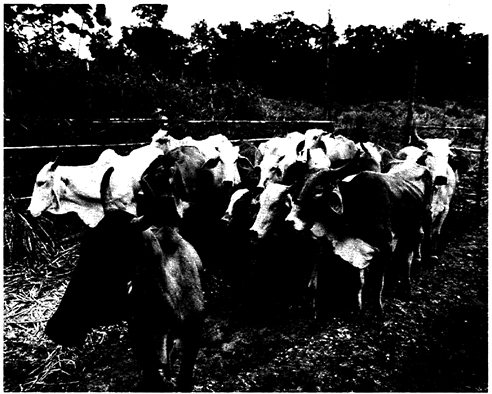
Cattle are herded in Brazil on land cleared from tropical rain forest. Credit: James P. Blair © 1983 National Geographic Society.
Cattle Pastureland in Asia
Cattle raising on pasturelands takes place in Southeast Asian countries, mainly in Indonesia (Kartasubrata, Part Two, this volume), the Philippines (Garrity et al., Part Two, this volume), and Thailand (Toledo, 1986), but it is not a significant factor in increasing deforestation since crop (mainly rice) production systems are dominant. Cattle and buffalo constitute the main work force for many farm operations. They are also used for meat and dairy production. Generally their forage consists of stubble in the dry season and herbaceous vegetation that grows during the rainy season on dikes and rice fields, along the roadside, and in marginal areas of community pastures.
In some countries vast expanses of originally forested land are increasingly being converted to low-forage-value savannah grasslands of Imperata cylindrica due to intensive shifting agriculture on acid and infertile soils ( Garrity et al., Part Two, this volume). In the Philippines, the human population of more than 5 million that subsists on shifting agriculture exert persistent pressure on formerly forested land that, due to frequent burning, is steadily being converted to I. cylindrica (Sajise, 1980). This same situation has been documented in Indonesia by Kartasubrata (Part Two, this volume). In parts of India, Bangladesh, and Nepal, overgrazing on communal lands is a major factor in productivity decline and soil erosion in the absence of incentives or institutions to control land access.
Cattle Pastureland in Africa
Livestock production in the humid zone of Africa is not important as an economic activity. Although some land is being cleared for cattle pasture, much of this land is not suitable for pasture beyond a few years because of soil erosion and low fertility (Brown and Thomas, 1990). Many cattle in equatorial Africa are also vulnerable to the effects of trypanosomiasis, which can cause poor growth, weight loss, low milk yield, reduced capacity for work, infertility, abortion, and often death. Annual losses in meat production alone are estimated to be $5 billion. This economic cost is compounded by losses in milk yields, tractive power, waste products that provide natural fuel and fertilizer, and secondary products, such as hides (International Laboratory for Research on Animal Diseases, 1991). Projects to eradicate the tsetse fly, which transmits the disease, are expensive and the use of large amounts of chemicals damages the environment (Goodland et al., 1984; Linear, 1985).
Some of the African breeds of cattle are genetically resistant to
the effects of trypanosome infection, but they generally do not possess favorable production traits (International Laboratory for Research on Animal Diseases, 1991). Milk and meat yields are much lower than those of the European breeds, which are not tolerant to the disease and do not thrive in infested areas. However, the total efficiency of an animal is most important for African farmers, who need livestock that can produce milk, blood, and meat under poor range conditions and that can be used as draft animals (Brown and Thomas, 1990).
Dwarf sheep and goats tolerant to trypanosomiasis are more prevalent in the humid zone of equatorial Africa. Compared with cattle, these smaller ruminants have greater resistance to drought conditions, faster breeding cycles, and lower feed requirements. They are kept around the farmers' homes, are usually sedentary or restricted in movement to short distances, and often compete with food crops for space, soil, water, and nutrients (Sumberg, 1984). Research is being conducted into tsetse vector control, epidemiology, trypanosome biology, host resistance, and drug applications (International Laboratory for Research on Animal Diseases, 1991; International Livestock Center for Africa, 1991). Work is also under way on the use of bushy legumes, such as Leucaena leucocephala and Gliricidia sepium, as a high-quality forage for goats and sheep and as mulch material because of their high-nitrogen content for crop production (International Livestock Center for Africa, 1991).
Cattle Pastureland in Latin America
The socioeconomic and ecological importance of cattle raising in Latin America is based on several factors, some of which are the following:
-
Biological and soil-related constraints on agriculture;
-
Low human population density;
-
Lack of infrastructure for transporting agricultural inputs and consumable products;
-
Tax incentives and lines of credit for cattle ranching in some countries;
-
Priority ranking and protection by Latin American governments;
-
Cultural traditions that give cattle ranchers respect and status regardless of production and profit; and
-
High levels of regional and international demands for meat.
Another important factor is the ability of cattle to transport themselves to markets by walking long distances, regardless of road and
weather conditions. As a result labor requirements are lower—an especially significant consideration along the Amazonian frontier, where transportation of agricultural products is often difficult (Gómez-Pompa et al., Part Two, this volume; Serrão and Homma, Part Two, this volume; Serrão and Toledo, In press; Toledo, 1986).
In the Brazilian Amazon, Central America, and Mexico, cattle raising is a leading cause of forest conversion. In Central America, between 1950 and 1975, the pasture areas developed from deforested primary forest doubled; so did the cattle population. In the Brazilian Amazon, generous tax incentives and credits led to more than 112 big projects of farming and cattle ranching between 1978 and 1988. They were linked to development policies supported by international loans—an investment of more than $5 billion (De Miranda and Mattos, 1992).
In Andean countries, such as Colombia, Ecuador, and Peru, active colonization is also moving toward Amazonian forested areas. In the Peruvian Amazon, production systems that involve deforestation are found mostly in small areas (less than 100 ha) and consist of shifting agriculture, plantations, and cattle raising for meat and milk production (Toledo, 1986).
In general, cattle raising on previously forested land, whether large or small ventures, has often been uneconomical due to the decreasing productivity and stocking rates of pastures. This deterioration combined with the relative growth in herd size requires ranchers to convert more forestland to cattle production. The result has been a form of large-scale “shifting pasture cultivation” where the ecological damage, in terms of losses in biomass, biodiversity, soil, and water and possible changes in the climate, can be high (Salati, 1990; Serrão and Homma, 1990; Serr ão and Toledo, 1990).
In the Peruvian Amazon, soil-plant-animal research has focused on developing pastures for dual-purpose (beef and milk) production in small landholdings where farmers will also grow crops and trees. Technology from CIAT's Tropical Pastures Program, developed primarily in savannah ecosystems, was adapted to humid tropic conditions. Legume and grass ecotypes were screened for their performance under acid soil conditions and subsequently evaluated for their persistence and compatibility when subjected to various grazing intensities. A grazing trial in Yurimaguas is the longest running replicated trial to test an acid-tolerant, grass-legume mixture in the humid tropics (Ayarza et al., 1987). If legume-dominated pastures prove to be sustainable, a new concept for cattle production may emerge in the humid tropics. New studies are also under way to gain further insight on nutrient cycling and to refine management practices.
Pasture Degradation: A Common Feature
Pasture degradation is the primary problem that cattle raising faces in the humid tropics. Although it is a common problem throughout the humid tropics, pasture degradation has been most evident in Latin America. Toledo and Ara (1977) and Serrão et al. (1979) identified the phenomenon and described the degradation process. The main cause of declining pasture productivity is low soil fertility and, more specifically, low soil phosphorus and nitrogen availability. Low fertility is a particularly important constraint on grass species that require more nutrients, such as Digitaria decumbens, Hyparrhenia rufa, and Panicum maximum.
During the past 25 years, particularly in Latin America, commonly used grasses that demand more nutrients have been gradually replaced by less demanding species. For example, Brachiaria decumbens can grow satisfactorily despite low soil fertility and has been rapidly adopted. However, because of high susceptibility to spittlebugs ( Aneolamia spp., Deois spp., Mahanarva spp., and Zulia spp.), pastures of B. decumbens rapidly degrade (Calderón, 1981; Silva and Magalhães, 1980). Within the past 15 years, B. humidicola, which is more tolerant of low-fertility conditions, has been increasingly adopted in the Brazilian Amazon due to its supposed tolerance to the spittlebug (Silva, 1982). However, at the commercial production level, it has proved to be susceptible to this insect pest at high levels of infestation and has shown limited productivity potential due to its low nutritional value and poor palatability compared with other more nutritious forages (Salinas and Gualdrón, 1988; Tergas et al., 1988).
Cattle ranchers also face the serious problem of weed invasion, considered by many to be a cause of degradation and by others to be a secondary effect of the loss in competitive capacity and productivity of sown forage species. When the forest is cleared to establish pastures, available forage species are planted. Normally, the first year of establishment is successful and grazing begins. Depending on soil fertility, tolerance to biotic factors (insects, diseases, and weeds), and the quality of management, pastures can increase in productivity and stabilize at a level that is both economically favorable and ecologically justifiable. In practice, however, pastures commonly degrade rapidly, weed species invade, and a secondary forest begins to develop. If grazing pressure continues and effective weed control and burning are not carried out, biomass continues to decline and the pasture becomes a derived “native” ecosystem of generally low productivity and quality (Serrão and Toledo, In press).
Reclamation of Degraded Pasture on Deforested Lands
Low agronomic sustainability characterizes pasturelands in their first cycle, that is, when they are first formed using available grasses after the clearing of the primary forest and mature secondary forest (Serrão et al., 1979; Serrão and Toledo, In press). As a result, large tracts of degraded pasturelands have become unproductive and eventually have been abandoned. This situation is more typical of Latin America than elsewhere, especially in the Brazilian Amazon, where in the past two decades between 5 million and 10 million ha of pasturelands have reached advanced stages of degradation (Serrão and Homma, Part Two, this volume).
If appropriate technology were applied to about 50 percent of the areas deforested for cattle raising production in the Brazilian humid tropics, it would be possible to produce animal protein and other agricultural products for the region's growing population (now close to 18 million people) at least until the year 2000 (Serrão and Homma, Part Two, this volume). In other words, from a technological viewpoint, Brazil could meet its crop and cattle production needs during the 1990s without further deforestation.
Cattle-raising development efforts should concentrate on degraded and abandoned first-cycle pasturelands (that is, those that are formed after the clearing and burning of a primary forest or a mature secondary forest). Scientific understanding of pasture reclamation through mechanization, improved forages, fertilization, and weed control is becoming increasingly available. New reclamation technologies, building on years of research, are being used in the Brazilian Amazon, with varied success (Serrão and Homma, Part Two, this volume; Serrão and Toledo, 1990).
However, several factors impede adoption of these relatively high-input technologies. Subsidies, which few developing countries can afford, are often required to make adoption of these technologies economically feasible, especially in the early stages of reclamation. Moreover, reclaimed pastures are based on a few forage species and cultivars with limited adaptability to the naturally poor and acid soil conditions or to the prevailing biotic pressures. Consequently, reclaimed pastures, although generally more stable than first-cycle pastures, are still prone to degradation. Their stability depends on relatively high investments for maintenance fertilization, grazing management, and weed control.
The Appropriate Pasture Technology for Sustainability
The development of sustainable pasture-based production systems in acid, low-fertility soils in deforested lands of the humid tropics should be based on the following:
-
Adaptation of forage grasses and legumes to the environment.
-
Efficient nitrogen fixing and nutrient cycling.
-
Well-established and well-managed pastures of grasses and legumes that can efficiently recycle the relatively small quantities of nutrients in the modified ecosystem.
-
Intensification of pasture production using appropriate technology to increase pasture sustainability, thus reducing the pressure for more deforestation.
-
Research on stable pasture-crop and pasture-tree systems that are biologically, socioeconomically, and ecologically more efficient than pure herbaceous open pastures.
To be sustained, pasture-based cattle production operations must be technically and socioeconomically manageable. That is, the farmer should have the financial resources and knowledge necessary for successfully operating on a sustainable basis.
Intensified pasture-based cattle production systems, together with crops and trees, can play an important ecological and socioeconomic role in reclaiming already deforested and degraded lands. The integration of annual crops with pastures that are established using residual crop fertilization can sometimes pay for upgrading the soil environment and further improve the soil's physical and chemical conditions through effective nitrogen fixation and nutrient recycling. Multipurpose trees can pump nutrients to the upper-soil layers, fix nitrogen, and provide supplemental animal feed, shade, and income. These integrated systems can be very efficient in using and conserving natural resources in the humid tropics, but they must be adapted to the environment, internally compatible, and relevant to farmers' needs.
Diversified and integrated pasture-based animal-crop-tree systems in deforested lands are found throughout the humid tropics, and are generally associated with small- and medium-sized farm operations. In many cases, however, they lack high levels of sustainability (Veiga and Serrão, 1990). Research is needed to understand, and develop management principles to optimize, the productivity and sustainability of agrosilvopastoral systems. Research is also needed on selecting
multipurpose trees for poor soils and on developing markets for well-adapted native timbers and fruit trees.
AGROFORESTRY SYSTEMS
Agroforestry, the combined cultivation of tree species and agricultural crops, is an ancient and still widespread practice throughout the world. It encompasses a variety of land use practices and systems, some of which are presented individually in this chapter. This section presents a general overview of the principles of agroforestry and their implications for maintaining or developing sustainable agriculture and forestry practices.
In agroforestry systems, woody and herbaceous perennials are grown on land that also supports agricultural crops or animals. The mixture of these components, in the form of spatial arrangement or temporal sequence, enhances ecological stability and production sustainability. This integration allows the components to complement one another in their use of resources and in the timing of that use. Perennials have deeper roots and higher canopies than those of annuals, allowing better management of above- and belowground resources. Under ideal conditions:
-
Nutrients recycled from the subsoil to the surface by deep-rooted perennials can be used by annuals.
-
Leguminous perennials fix atmospheric nitrogen that can be used by annuals.
-
There is minimal competition for water because of differences in depth from which the roots of annuals and perennials extract water from the soil.
-
Some perennials produce allelopathic compounds that can suppress weeds.
-
Differences in the structure of perennials and annuals, leading to a multistory canopy, reduce competition for light among plants.
Agroforestry systems have the potential to improve production and to enhance the agronomic and ecological sustainability of resource-poor farmers in the humid tropics. In practice, however, the potential benefits of agroforestry systems can be harnessed only through skillful and labor-intensive management of compatible systems. There are no simple blueprints of a universally applicable system that can harness all potential benefits possible under ideal conditions. Thus, a wide range of agroforestry systems has been designed to alleviate agronomic, ecologic, or managerial constraints.
Types of Traditional Agroforestry Systems in the Humid Tropics
Agroforestry is not a new concept in the humid tropics. Several types of traditional agroforestry systems exist, but no standard classification system is available to categorize them. Nair (1989) proposed a classification system based on structural, functional, agroecological, and socioeconomic factors (Figure 2-3). These broad categories are interrelated, and not necessarily mutually exclusive. In agroforestry land use systems, three basic components are managed by people: the tree (woody perennial), the herb (agricultural crops, including pasture species), and the animal. Based on their structure and function, agroforestry systems can be classified into the following three categories:
-
Agrisilviculture is the use of crops and trees, including shrubs or vines. It includes shifting cultivation, forest gardens, multipurpose trees and shrubs on farmland, alley cropping, and windbreaks as well as integrated multistory mixtures of plantation crops.
-
Silvopastoral systems are combinations of pastures (with or with-
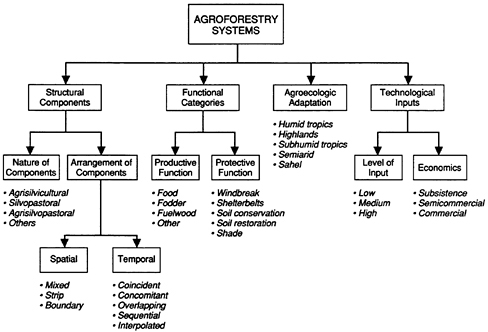
FIGURE 2-3 Characteristics of traditional agroforestry systems used in the humid tropics.
-
out animals) and trees. They include cut-and-carry fodder production, living fences of fodder trees and hedges, and trees and shrubs grown on pastureland.
-
Agrisilvopastoral systems are those that combine food crops, pastures (with or without animals), and trees and include home gardens and woody hedges used to provide browse, mulch, green manure, erosion control, and riverbank stabilization.
Other types of agroforestry systems include apiculture (beekeeping) using honey-producing trees, aquaculture whereby trees lining fishponds provide leaves as forage for fish, and multipurpose woodlots that serve various purposes such as wood, fodder, or food production and soil protection or reclamation.
Principal types of agrisilvicultural systems traditionally used in the humid tropics are:
-
Rotational agroforestry. In traditional shifting cultivation, trees and wood species are naturally regenerated over a period of 5 to 40 years and rotated with annual crops that are cultivated from 1 to 3 years. Improved tree species can be grown in place of native vegetation to achieve better soil conditions. This technique is used in multipurpose woodlots (where diverse mixtures of trees are used), home gardens (where trees and crops are grown close to the house), and compound farms (where trees, animals, crops, and the farmer's dwelling are in a fenced area).
-
An intercropping system. Annual and perennial groups of plants are grown within the same land management unit. This system enables continuous production of food and tree products with a minimum need for restorative or idle fallow. Typical examples of intercropping systems include alley cropping and boundary planting of trees and wood hedges.
Two examples of the successful use of agroforestry systems by resource-poor farmers in the tropics are found in the Philippines and Rwanda (Lal, 1991a). In the Philippines, many small-scale farmers took up cash-crop-tree farming to produce pulpwood, poles, timber, charcoal, or fuelwood in the 1960s (Spears, 1987). The program gained significant momentum in 1972 when the Paper Industries Corporation of the Philippines (PICOP) entered into an agreement with the Development Bank of the Philippines to develop a loan scheme for small-scale tree farmers with titled or untitled land. Provision was made for part of the farm area to be maintained under food crops. PICOP guaranteed a minimum purchase price, but allowed farmers to sell wood to other outlets if they could get better prices. Within 10 years, the program covered 22,000 ha and supported 3,800 farmers,
about 30 percent of whom had taken advantage of the credit program. A key to the program's success has been the high financial returns from tree growing. Adequate market incentives and security of land tenure were the basic factors responsible for acceptance by farmers.
The second example involves restoring eroded land in Rwanda using an agrisilvopastoral system. At Nyabisindu, a complex system of trees, animals, and crops was developed using the community's existing knowledge. Trees and hedges, yielding fruit, wood, and fodder, were used as protective ground cover against soil erosion. Extensive use was also made of perennial crops to further stabilize the soil (Dover and Talbot, 1987).
In Amazonian Ecuador, a sustainable system has been developed to raise sheep in association with cassava and contour strips of Inga edulis, which is a deep-rooted leguminous fuelwood tree. After the cassava is harvested, a perennial leguminous ground cover, Desmodium sp., is planted between the trees to enrich the soil. Sheep graze on the ground cover (Bishop, 1983).
Keys to the success of these projects included building on traditional knowledge, involving farmers in the choice of species, and providing economic incentives greater than those of traditional systems. Resource conservation and land restoration were additional benefits to the local community.
The viability and sustainability of these systems can be attributed to some combination of the following factors:
-
A reduced fallow period and a greater ability to cultivate on a long-term basis, thereby eliminating the need to move to new land;
-
Reduced use of chemical fertilizers and other fossil-fuel-based inputs due to enhancement of soil organic matter and improvement in soil fertility;
-
Improved soil structure and physical properties (for example, better sizes of pores and channels in the soil that allow better water penetration and drainage);
-
Decreased risks of soil degradation from accelerated erosion and other degenerative processes;
-
Increased production and a rise in economic status from subsistence to partially commercialized farm; and
-
Decreased need for clearing new land.
Improved Agroforestry Systems
Scientists and policymakers generally are eager to improve traditional agroforestry systems by enhancing productivity and ecological
compatibility. Ways of improving these systems include using better trees and woody shrubs and creating an orderly arrangement of trees, crops, and livestock.
IMPROVED TREES AND WOODY SHRUBS
Several trees and woody shrubs are used in traditional and natural fallow systems. Some commonly used species include Acioa baterii, Afzelia bella, Alchornea cordifolia, Anthonotha macrophylla, and Gliricidia sepium (Okigbo and Lal, 1977). Some improved species have several advantages in an agroforestry system, including their ability to fix nitrogen, grow fast, tolerate soil acidity, and withstand regular coppicing. Commonly recommended tree species are listed in Table 2-1. However, validation for and adaptation to specific local systems are essential. More must be known about the agronomic and ecological bases of the mixtures to increase their attractiveness and usefulness to farmers.
Multipurpose trees can also be grown on cropland or pastureland.
TABLE 2-1 Commonly Recommended Species for Agroforestry Systems in the Humid Tropics
|
Species |
Growth Characteristic(s) |
Uses |
|
Acioa baterii |
Fast-growing shrub |
Alley cropping, nitrogen fixation |
|
Albizia falcata |
Tree grows to 30 m |
Erosion control, nitrogen fixation |
|
Albizia lebbeck |
Tree grows to 25 m |
Erosion control, nitrogen fixation |
|
Anthonotha macrophylla |
Fast-growing shrub |
Alley cropping, nitrogen fixation |
|
Calliandra calothyrsus |
Fast-growing shrub to 8 m, on acid soils |
Alley cropping, nitrogen fixation |
|
Cassia siamea |
Shrub grows to 8 m, vigorous coppicing |
Fuelwood, nitrogen fixation, lumber |
|
Erythrina spp. |
Tree grows to 20 m, often thorny, coppices well |
Live fences, nitrogen fixation, fuelwood, fodder |
|
Flemingia macrophylla |
Shrub grows to 3 m |
Alley cropping, nitrogen fixation |
|
Gliricidia sepium |
Fast-growing tree to 20 m, vigorous coppicing |
Alley cropping, nitrogen fixation, forage, fodder, staking material, |
|
Inga spp. |
Nitrogen-fixing shrub, acid-tolerant |
Alley cropping, nitrogen fixation |
|
Leucaena leucocephala |
Tree grows to 20 m, fast growing on nonacid soils, vigorous coppicing |
Fodder, fuelwood, erosion control, nitrogen fixation, alley cropping, staking material |
|
Pangomia pinneta |
Small tree grows to 8 m |
Erosion control, live hedges |
|
Sesbania spp. |
Fast-growing low tree |
Erosion control, nitrogen fixation |
TABLE 2-2 Net Primary Production of Biomass for Commonly Recommended Multipurpose Tree Species in the Humid Tropics
|
Species |
Net Primary Production of Biomass (kg/ha/yr) |
|
Acacia auriculiformis |
3,000–4,000 |
|
Acacia mangium |
2,500–3,500 |
|
Albizia falcata |
4,000–5,000 |
|
Alchornea cordifolia |
2,000–3,000 |
|
Calliandra calothyrsus |
2,500–3,500 |
|
Cordia alliodora |
2,500–3,500 |
|
Dalbergia latifolia |
4,000–5,000 |
|
Erythrina poeppigiana |
4,000–6,000 |
|
Gmelina arborea |
1,500–5,000 |
|
Leucaena leucocephala |
3,000–5,000 |
They may be planted randomly or according to systematic patterns on embankments, terraces, or field boundaries. They provide a variety of products including fruit, forage, fuelwood, fodder, shade, and fence and timber material. Some commonly recommended multipurpose trees are listed in Table 2-2. Once again, local adaptation to and validation for site-specific systems are essential.
ARRANGEMENT OF TREES, CROPS, AND LIVESTOCK
Rather than using a random and difficult-to-mechanize system of growing trees with annuals or animals, mixtures can be grown in an improved spatial or temporal arrangement. In an agrisilvicultural system, for example, trees can be grown in alternate rows or strips, as contour hedges to control erosion, or on field boundaries. These orderly arrangements can facilitate the use of animal power and of mechanization of farm operations, save labor, and enhance economic and ecological benefits.
Alley cropping is a common example of a spatial arrangement. Food crops are grown in alleys formed by contour hedgerows of trees or shrubs (Kang et al., 1981). Trees and shrubs can be pruned to prevent shading of the food crops and to provide nitrogen-rich mulch for crops and fodder for livestock. Shrubs and trees also act as windbreaks, facilitate nutrient recycling, suppress weed growth, decrease runoff, and reduce soil erosion (Ehui et al., 1990).
The most common trees for alley cropping are fast-growing, multipurpose, nitrogen-fixing trees. Tree species with the potential for use with nonacid tropical soils include Acioa baterii, Alchornea cordifolia, Gliricidia sepium, and Leucaena leucocephala. Species for acid soils include Acioa baterii, Alchornea cordifolia, Anthonotha macrophylla, Calliandra calothyrsus, Cnestis ferruginea, Dialium guineense, Erythrina spp., Flemingia congesta, Harungana madagascariensis, Inga edulis, Nuclea latifolia, and Samanea saman. Hedgerows of Cassia spp., G. sepium, and L. leucocephala can be established from seed. Other species are established from seedlings or stem cuttings. However, the use of stem cuttings often results in a patchy stand with a high rate of mortality. Trees established from stem cuttings are also easily uprooted because of poor root system development.
When successfully established, alley cropping systems can produce two or more products, such as food grains, fodder, mulch, fuelwood, and staking and building materials, and can increase or maintain soil structure. However, the beneficial effects of these systems depend on many factors, such as the tree species, area of land allocated to trees, hedgerow management, crop management, soil type, and prevalent climate. In areas with nonacid soils, satisfactory yields of cereals can be attained with the added benefit of erosion control (Kang et al., 1984; Lal, 1989). These systems are also labor intensive (Lal, 1986), therefore they are adapted primarily to areas of high population density and modest to low labor cost.
Advantages and Disadvantages of Agroforestry
Given a compatible association of trees and annual crops, agroforestry systems are likely to sustain economic productivity without causing severe degradation of the environment. Because of the low fertility of most upland tropical soils, some degradation is inevitable with any cultivation system. The rate and risks of such degradation are lower with agroforestry than with annual crop rotations. Soil organic matter, pH, soil structure, infiltration rate, cation exchange capacity, and the base saturation percentage are maintained at more favorable levels in agroforestry systems due to reduced losses to runoff and soil erosion, efficient nutrient recycling, biological nitrogen fixation by leguminous trees, favorable soil temperature regime, prevention of permanent changes in soil characteristics caused by drying, and improved drainage because of roots and other biochannels (Lal, 1989).
It is important to note, however, that trees have both positive and negative effects on soils. Negative effects include growth suppression caused by competition for limited resources (nutrients, water,
and light) and by allelopathic effects. Mismanagement of trees (through, for example, improper fertilizer application or inadequate water control) can also cause soil erosion, nutrient depletion, water logging, drought stress, and soil compaction.
Economic evaluation is an important tool to assess a technology. Labor-intensive alley cropping can be economical under severe cash constraints and where hired labor is available at relatively low cost. The available data on alley cropping indicate that the system cannot sustain production without supplemental inputs of chemical fertilizers if high yields are desired. In fact, soil degradation and attendant yield reductions can occur even with the fertilizer application (Lal, 1989, 1991a).
Erosion control is a definite advantage of closely spaced contour hedgerows of L. leucocephala or other shrubs, but it can also be achieved through cover crops, grass strips, or no tillage. Nonetheless, the erosion preventive effects of L. leucocephala hedgerows must also be considered in evaluating the economic impact of an alley cropping system.
Data on soil properties indicate that intensive cultivation resulted in decreases in soil organic matter content, total nitrogen, pH, and exchangeable calcium, magnesium, and potassium in all systems including alley cropping and control (Lal, 1989). This drastic decline in soil fertility was observed in relatively fertile soils (Alfisols). The relative rates of decline, however, were somewhat less in alley cropping than with plow-based control. These results are also supported by data on acidic tropical soils in Yurimaguas, Peru (Szott, 1987). Szott observed significantly more calcium, magnesium, phosphorus, and potassium in the upper 15 cm of soil with control without trees treatments than with alley-cropping treatments. Fertilized control without trees significantly exceeded all other treatments in topsoil calcium and magnesium. The pH values were also significantly greater in the fertilized control.
Research Priorities
The agronomic aspects and biophysical processes of agroforestry using traditional cropping systems need to be more fully evaluated. For example, farmers using traditional systems commonly space their plants more widely apart than farmers using improved systems, and hence grow fewer plants per unit area. More scientific data are needed on interactions among plant species, specifically in relation to competition for water, nutrients, and light, and on the suppression of growth of one species by another species' release of toxic substances.
Major distinctions also should be made for research on acidic versus nonacidic soils. Too often soils and their constraints are ignored when designing or evaluating agroforestry systems. The ability of agroforestry systems to enhance nutrient availability on infertile soils is very limited compared with systems on fertile soils. On both, however, agroforestry systems can play an important role in reducing nutrient losses. Although litter production and quantities of nutrients recycled in litter are greater on fertile than on infertile soils, management techniques for accelerating nutrient fluxes through pruning hold promise for increasing plant productivity on infertile soils. More information is needed on the magnitude of and controls on belowground litter production and how it can be managed. Litter decomposition and soil organic matter dynamics in agroforestry systems might most easily be manipulated by managing woody vegetation to produce organic residues of a certain quality and to regulate soil temperature and moisture. More attention needs to be paid to specific soil organic matter pools, their importance in nutrient supply and soil structure, how they are affected by soil properties, and how they can be managed (Szott et al., 1991).
In addition to understanding the agronomic and biophysical aspects of agroforestry systems, the social, ecological, and economic elements require more attention. The economic feasibility of agroforestry systems needs to be assessed at the farm level. Human ecology and sociology play an important role in the acceptance and spread of technologies, as do the specific sociopolitical and institutional constraints.
Agroforestry can be a sustainable alternative to shifting cultivation. However, systems suited to many major soils and ecological regions of the tropics have yet to be developed. For example, alley cropping has shown some advantages in Alfisols but not in other soils and harsh environments. Further research is needed to develop systems performance indicators and to document ecological viability of agroforestry systems across a range of biophysical conditions.
MIXED TREE SYSTEMS
Mixed tree systems, also known as forest or home gardens and mixed tree orchards, constitute a common but understudied form of agriculture. These systems involve the planting, transplanting, sparing, or protecting of a variety of useful species (from tall canopy trees to ground cover and climbing vines) for the harvest of various forest products, including firewood, food for the household and marketplace, medicines, and construction materials. Commercially, for example, cacao plantations in Latin America are commonly intercropped
with maize and bananas or plantains. The components of home gardens and many other traditional systems are selected for high productivity and minimum effort. Weeding and pest control efforts are reduced by using a combination of shade, domesticated animals, and plant species. These household plots also serve as sites for conducting small-scale crop experimentation and for cultivating seedlings before transplanting them to agricultural plots.
Typical cultivation and management practices include integrating the placement and planting times of tree species so that different products can be collected and harvested throughout the year. The heterogeneity of mixed tree systems provides a protective upper canopy that protects lower canopy and ground species from seasonal torrential rains and direct tropical sunlight. In harsh tropical environments, this practice allows the production of delicate economic species, such as cacao. In addition, the upper canopy helps maintain relatively constant moisture and temperature levels and contributes to soil regeneration (Niñez, 1985; Soemarwoto et al., 1985).
Types of mixed tree systems range from intensive systems such as home gardens, where the trees are planted along with other useful species directly adjacent to a dwelling, to more extensive systems of natural forest management, such as the artificial forests described by Alcorn (1990). Orchards sometimes integrate pastureland with trees (including timber species) for livestock production combined with annual and perennial crops (Altieri and Merrick, 1987; Fernandes et al., 1983; Russell, 1968). Mixed tree systems can also be found in the fallow fields of shifting cultivators, where useful tree species are spared or planted in the cleared agricultural plot and the subsequent forest regeneration is managed to encourage forest patches that provide desired products (Caballero, 1988; Soemarwoto and Soemarwoto, 1984). Many farmers also conserve a strip of mature vegetation between or surrounding their agricultural plots (Pinton, 1985). Research and historical accounts throughout the tropics indicate that mature forests are often composed of patches dominated by species that have been encouraged, spared, or planted by past and present human inhabitants (Gómez-Pompa and Kaus, 1990).
Indigenous groups of small-scale farmers are predominately responsible for maintaining and cultivating mixed tree areas in tropical regions, without subsidies or international expertise. In contrast, single species tree plantations, such as for coffee, cacao, rubber, or oil palm production, have been encouraged and managed for large-scale production through foreign or agribusiness investments (see below). Smaller scale production in single species plantations has typically been supported by bank credits, government-funded agricultural extension
programs, and international development agencies (Niñez, 1985). These monoculture tree plantations can be fairly lucrative if they come into production when international market demands are strong. Production processes can me mechanized, thus reducing labor needs and maintenance costs. Capital investment requirements, however, are high.
Little research has been undertaken to understand the dynamics of mixed tree systems or their comparative productivity to plantation systems over the long-term. Social, economic, and ecological evaluations of mixed tree systems versus single species tree plantations are necessary before appropriate land use or investment recommendations can be made for any region.
Past and Present Forest Management
Limited studies have begun to reveal the complexity of crop and tree interactions. For the most part, these studies involve time-tested selections and local experimentation with tree species.
|
Mitigating Climate Change Through Sustainable Land Use To what degree can the adoption of sustainable land uses in the humid tropics help to offset increasing concentrations of greenhouse gases in the atmosphere? Research on climate change and land use in the tropics has focused mostly on the impact of deforestation and other forms of forest conversion on greenhouse gas emissions and accumulation. Few studies have attempted to quantify the potential of sustainable land uses to mitigate these impacts. In terms of greenhouse gases, the most important feature of sustainable land use systems in the humid tropics is their potential to reduce atmospheric carbon dioxide concentrations by accumulating carbon on land. The land use systems described in this chapter can affect atmospheric carbon concentrations by (1) reducing the incidence of forest conversion, and hence the release of carbon; and (2) serving as carbon sinks, withdrawing carbon from the atmosphere and storing it in biomass and, to a lesser degree, in the soil. This suggests a crude formula for estimating the total potential impact of sustainable land uses on greenhouse gas levels: the total impact equals the amount of carbon sequestered by adopting sustainable land uses plus the amount of carbon allowed to remain in undisturbed forests as a result of reduced conversion plus the impact of sustainable land uses on emissions of other greenhouse gases. In this equation, the amount of carbon sequestered by adopting sustainable land use op- |
Managed forest patches or groves may have been one of the first forms of agriculture. Fruit and nut trees were important sources of food for early humans. Knowledge of areas with abundant tree species having edible fruits was essential information for survival (Harlan, 1975). These same areas may have also provided important sites for “garden hunting” of frugivorous animals (Linares, 1976).
The “management” of forests by early humans is considered to be an important evolutionary step. Recent ethnoecological, archaeo-botanical, and paleobotanical studies have indicated that ancient management practices have influenced the present-day abundance and presence of certain species, such as Annona spp., Byrsonima spp., Carica spp., Ficus spp., Manilkara spp., Quercus spp., and Spondias spp. (Gómez-Pompa, 1987a,b; Harlan, 1975; Hynes and Chase, 1982; Kunstadter, 1978; Posey, 1990; Roosevelt, 1990; Turner and Miksicek, 1984). Various types of mixed tree gardens coupled with other agricultural systems, such as shifting cultivation, were able to maintain high-density populations (Lentz, 1991).
|
tions would be determined by multiplying the area of land suited to each land use option by the potential carbon sequestration capacity (in both vegetation and soils) of each option (Houghton et al., In press). Thus, sustainable land uses can retain more carbon on land in two ways: by reducing the total area of converted forestland and by reducing the total amount of biomass removed in the process of conversion. Few of the factors in this "formula" have been investigated systematically, and none of the factors have been determined with a high degree of accuracy. Houghton (1990b) compared current land use and potential forest area in the tropics and concluded that, over the next century, reforestation efforts could reverse the net flux of carbon and withdraw almost as much carbon (about 150 Gt) from the atmosphere as would be released if current land use trends continue unchecked. Houghton et al. (In press) examined the potential of plantations, secondary forests, and agroforestry systems to accumulate carbon and concluded that, in the tropics as a whole, these systems have the potential to recover between 80 and 180 Pg of carbon (and up to 250 Pg if the recovery of soil carbon is factored in). The potential for carbon accumulation was shown to be highest in tropical Africa (40 percent of the potential total), followed by Latin America (39 percent) and Asia (21 percent). Agroforestry systems were shown to have the highest potential to accumulate carbon, followed by plantations and fallow and secondary forests. Precise figures of the carbon storage capacities of different land use systems are lacking. A rought comparison of capacities is presented in Table 3-1. |
In many humid tropic areas these managed forest systems still play a key role in human subsistence. For example, the Bora people from Brillo Nuevo, eastern Peru, subsist largely on various varieties of manioc interspersed with an assortment of trees, usually peach palm (Bactris gasipaes), uvillia (Pourouma cecropiifolia), star apple (Pouteria caimito), macambo (Theobroma bicolor), guava (Psidium spp.), barbasco (Lonchocarpus spp.), and coca (Erythroxylum coca) (Denevan et al., 1984). The Guaymí Indians from Soloy, Panama, and the Cabecar Indians of the Telire Reserve, Costa Rica, live from the products derived from the palm Bactris gasipaes, which provides food and drink from its fruit and beverage from its roots (Hazlett, 1986).
More than 200 fruit tree species are found in the humid tropics today. Many of the tree fruits of Southeast Asia evolved from wild rain forest species and were gathered for thousands of years prior to the advent of agriculture (Frankel and Soule, 1981). For example, in village gardens in the Trengganu mountains of Peninsular Malaysia, Whitmore (1975) found 26 fruit tree species being cultivated. Of these, 12 were identical to the same species growing in the wild, 6 were improved selections from the wild, 5 were indigenous but were not found in the forest, and 3 were from the New World. Historically, important tree species in Asia include the breadfruit tree (Artocarpus spp.) and the coconut (Cocos nucifera). The avocado (Persea spp.), cacao (Theobroma spp.), and the breadnut tree (Brosimum spp.) have played a central agricultural role in many regions of the Americas, as have the oil palms in Africa. Most of these species have been cultivated in mixed tree orchards, and efforts are being made to change them into single species plantations.
The survival and presence of mixed tree areas in the tropics today, despite external pressure for monoculture production, are largely due to the many advantages they provide their caretakers. Their structure, composition, and management can be adjusted to local environmental and social conditions. Introduced economic species can be mixed with native species. Both household and market production can be included in system management, which can respond rapidly to changing demands in local, regional, or international markets. In the Mexican state of Yucatan, small-scale fruit production, usually from home gardens, supplies much of the diverse selection of fruits found in the local markets. Mixed trees in Mexico are also producers of important international commodities such as coffee, cacao, and vanilla. In West Sumatra, mixed tree areas, known as parak, constitute 50 to 88 percent of the cultivated land of different villages and are important suppliers of popular fruits for the region such as durian (Durio zibethinus) as well as international products such as cinnamon,
nutmeg, and coffee (Michon et al., 1986). Throughout Indonesia and Malaysia, the cultivated durian trees (Durio spp.) are grown from seeds or seedlings gathered from the adjacent forests or selected from the best cultivated fruits (Budowski and Whitmore, 1978; Michon et al., 1986; Whitmore, 1975).
The wide range of products and functions of mixed trees, combined with an increased resource base, help minimize economic risk for the farmer. Farmers derive steady income from fruit trees and cash crops without a high cost of production (Soemarwoto and Soemarwoto, 1984). Since these orchards are polycultures, they can be harvested throughout the year and provide both food and income for villagers. These orchards require low-cost inputs and part-time labor, of which the labor source is mostly family members (women, the elderly, and children) in the case of home gardens. By spreading out cultural and management requirements over the year, these systems can also reduce peak workloads and ensure a more stable subsistence and cash economy.
The ecological advantages of mixed tree systems have allowed their regeneration over centuries of use, and are thereby instrumental in the design of sustainable agriculture systems and biodiversity conservation in the humid tropics. The potential benefits and advantages of mixed tree systems were recognized by Smith (1952) over 40 years ago. These advantages include the potential for more efficient use of resources both above- and belowground, with roots from 50 to 60 m deep on some trees and canopies reaching 50 to 70 m high. The multistory canopies characteristic aboveground is also reflected belowground. The roots of the upper canopy trees are able to penetrate to the deepest strata of the subsoil; roots of the smaller tree and bush species occupy the intermediate layers; and shallow rooting annual and perennial plants form just below the surface (Douglas and Hart, 1984). Minerals and nutrients extracted from the different strata are interchanged between the various root systems by burrowing activities of various soil organisms. From the veins of the highest trees in the subsoil, water may be drawn up and made available to the shallower rooted plants. Aboveground, the plant density reduces solar rays and provides a filtering system for rainwater, while the fallen leaves help contribute to soil regeneration (Douglas and Hart, 1984; Ni ñez, 1985). These characteristics enable these systems to foster environmental rehabilitation and improve living conditions on marginal or degraded lands (Boonkird et al., 1984).
Mixed tree systems can also provide improved habitats for wildlife, control erosion, mitigate landslides, and reduce the risks of soil deterioration and runoff. The complexity of these managed ecosys-
tems may be higher than the natural system since they combine the natural functions of a forest system in a small space, sometimes with domestic animals, with a high diversity of useful species to fulfill the socioeconomic needs of the household. These systems also foster in situ conservation by local residents, which enables wild, rare, and endangered species to continue evolving within the ecology of the entire habitat and permits an artificial selection of great diversity of size, shape, color, and taste variants (Wilkes, 1991).
Mixed Tree Systems Throughout the World
Agroforestry systems using mixed trees are common forms of small-scale production for farmers throughout the world (see Alcorn [1990] and Brownrigg [1985] for detailed descriptions and references). In Indonesia, the best known forest gardens are the home gardens, or pekarangan, a typical feature of the rural landscape. They are cultivated and managed areas surrounding a house on which mixtures of plant species are generally sown (Soemarwoto and Soemarwoto, 1982). The pekarangan, like most traditional home gardens in the tropics, conserves many important plant and animal landraces. These Indonesian home gardens also produce cash fruit crops, such as the durian (Durio zibethinus) and rambutan (Nephelium lappaceum), in addition to providing areas for other customary sources of income such as livestock production. Coconut and bamboo cultivation are also common.
Home gardens in Mexico are plots of land that include a house surrounded by or adjacent to an area for raising a variety of plant species and sometimes livestock. They are also known as kitchen gardens, dooryard gardens, huertos familiares, or solares. The home garden is representative of a household's needs and interests, providing food, fodder, firewood, market products, construction material, medicines, and ornamental plants for the household and local community. Many of the more common trees are those same species found in the surrounding natural forests, but new species have also been incorporated, including papaya (Carica papaya), guava (Psidium spp.), banana (Musa spp.), lemon (Citrus limon), and orange (Citrus aurantium). In light gaps or under the shade of trees, a series of both indigenous and exotic species of herbs, shrubs, vines, and epiphytes are grown. Seedlings from useful wild species brought into the garden by the wind or animals are often not weeded out and are subsequently integrated into the home garden system.
One of the most striking features of present-day Maya towns in the Yucatán Peninsula is the floristic richness of the home gardens. In a survey of the home gardens in the town of Xuilub, 404 species
were found (Herrera Castro, 1991) where only 1,120 species are known for the whole state (Sosa et al., 1985). Home gardens also provide diverse environments where many wild species of animal and plants can live (Herrera, 1991), although the diversity of species depends on the size of the gardens and the degree of management. Estimated average family plots range from 600 m2 to 6,000 m2 (Caballero, 1988; Herrera, 1991). Taking into consideration that most households in rural communities of the Yucatán Peninsula have some type of home garden, local traditional practices of orchard management have already contributed to the forest cover in the peninsula and have the potential for contributing more.
On Java, home gardens occupy from 15 to 75 percent of the cultivated land (Stoler, 1978). More than 600 species are known to be grown in Indonesian home gardens (Brownrigg, 1985). In a hamlet of 40 families near Bandung, Soemarwoto and Soemarwoto (1982) reported more than 200 of species of plants. A comparative study conducted by Soemarwoto and Soemarwoto (1984) of the production and nutritional value of three predominant agricultural systems—home gardens, talun-kebun (another agroforestry system), and rice fields—demonstrated that their production levels did not vary greatly. However, for nutritional value, the home gardens and talun-kebun were better sources for calcium, Vitamin A, and Vitamin C than rice fields.
Other important agroforestry systems within Indonesia are similar to the pekarangan. Mixed tree plantations occur on uninhabited private lands, usually associated with shifting cultivation. They are dominated by perennial crops under which annual crops are cultivated (kebun campuran) or where spontaneously grown trees and perennial crops occur (talun-kebun) (Wiersum, 1982).
The forest gardens of Sri Lanka are another example of important mixed tree systems. Unlike the forest gardens of Indonesia and Mexico, these gardens are built on the degraded grassland hillsides of the Sri Lankan highlands (Everett, 1987). Located immediately around the houses, they may account for nearly 50 percent of private land use (Everett, 1987). The types and allocations of plants reflect local knowledge of the ecological needs of each species.
The Bari garden system, found in the tropical forest region of Catatumbo, Colombia, depicts a gradual change in the size of the vegetation between the house location and the surrounding forest. Crops similar to those depicted by the first missionaries in 1772 are cultivated in these home gardens. They include plantains (Musa spp.), sugarcane (Saccharum officinarum), cassava (Manihot esculenta), sweet potato (Ipomoea batatas), yam (Dioscorea trifida), pineapple (Ananas spp.),
cotton (Gossypium spp.), and chiles (Capsicum spp.) (Pinton, 1985). This garden system offers a self-supportive and practical adaptation to economic and environmental changes (Pinton, 1985), and may represent a technique for adoption by other poor farmers in the region.
The management of fallow succession in cultivated fields is also a common technique used by farmers all over the world. The planting, sparing, protecting, transplanting, or coppicing of trees interspersed with annual crops in the cultivated plots results in the establishment of a productive mixed tree system years after the annual crops are gone. The Bora Indians of Peru plant seeds and seedlings of fruit trees along with manioc (Denevan et al., 1984). Seedlings of useful species are also spared, others are protected, or the trunks coppiced. As the trees mature and the cultivation of manioc and other annuals diminishes, the cleared plot develops into an “orchard fallow” and eventually merges with the surrounding mature vegetation. The process may take 35 years or more.
Small-scale farmers in Peru have created systems with valuable economic species through a process of managed fallowing (Padoch et al., 1985). After clearing the standing vegetation on a plot, much of the slash is burned for charcoal. Tree crops, often with high commercial value, are planted with annual and semiperennial crops and gradually predominate production in the plot.
Protected forest patches are also found in inhabited areas throughout the tropics. Old and uncut forest sections are protected by the Lua ' of Thailand. Gathering is allowed in these areas, but the cutting of trees is prohibited by village rules (Kunstadter, 1978). The forest fields of the Kayapó in Brazil represent a well-known managed forest system (Posey, 1984), where useful plants are concentrated and encouraged in patches of forest near where the Kayapó travel or hunt.
A recently established system in Peru indicates the potential of local management for forest protection and use. An organization of nonindigenous farming villages in northeast Peru has established several communal forest reserves where extraction is allowed but regulated (Pinedo-Vásquez et al., 1990). The trees are used for their fruit, construction material, artisan material, and medicinal purposes.
The Role of Mixed Tree Systems in Tropical Forest Conservation
Mixed tree systems represent one of the most promising land use options available for integrating tropical forest conservation with production. The cultivation techniques already exist, local residents are already knowledgeable in cultivation practices, and the local to inter-
national markets already demand their products. The individual variation found in the different orchards contributes to forest species diversity, and orchard expansion results in more local reforestation. Mixed tree systems may be one of the few agroforestry systems that can meet household, economic, and conservation goals in the humid tropics.
Research on traditional farming systems in many areas of the world suggests that complex polycultures with trees have many advantages for the local economy over modern systems of extensive annual monocultures (see Alcorn [1990]). Unfortunately, international promotion of various local tree-based systems, from home gardens to managed forests, has not been accompanied by strong, interdisciplinary research programs to guide and assess their efficacy. This also holds for mixed tree systems. The complex forest management practices required by these systems do not fit under either conventional forestry or agriculture. Most of the research on traditional resource management in the humid tropics has been undertaken by individual researchers in separate, unintegrated disciplines. Little research has been undertaken by foresters, and agroforestry in general remains an unconventional discipline in the international scientific community. Funding to date has been minimal, often because of the obvious and reasonable caution exhibited by funding agencies to invest in unresearched, unquantified ventures. To present a viable and comprehensive plan for forestry programs that is integrated with conservation and development concerns, several research objectives need to be met:
-
Baseline information on the species composition, spatial and temporal structure, age, and maintenance of present mixed tree systems in the humid tropics;
-
Long-term monitoring of ecological relationships and comparisons to adjacent natural forest vegetation and to single-species plantation systems;
-
Documentation and integration of traditional, technical, local, and international experience with mixed tree systems;
-
Comparative production and marketing assessments of both mono- and polycultural systems to determine long-term sustainability and stability for small scale-producers; and
-
Establishment of demonstration plots to design more efficient agroforestry systems that are based on ecological and economic productivity.
This type of extensive, comparative research may help to uncover the principal reasons behind poor resource management by both small-and large-scale producers in the humid tropics, and may identify the
pitfalls for conventional forestry development programs. It may also illuminate the reluctance of small-scale farmers to alter their agricultural production systems. Poverty and the actions of local farmers are often blamed for tropical deforestation. Mixed tree systems, however, show that local farmers can and do manage agroecosystems on a sustainable basis. As such, they represent an existing, locally accepted alternative for biodiversity conservation and sustainable agriculture in the humid tropics. Further research, however, is needed to recognize and document their contributions to forest conservation and restoration.
PERENNIAL TREE CROP PLANTATIONS
Perennial tree crop plantations can be a useful means of converting deforested or degraded land into a system that is both ecologically and economically sustainable. They are part of a broader category of plantation agriculture that includes short rotation crops, such as pineapple and sugarcane, as well as tree crops, such as bananas
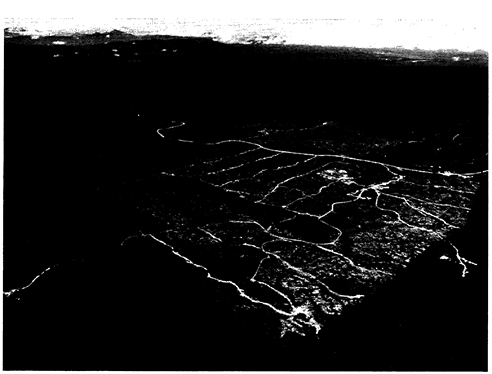
A cacao plantation was carved out of the tropical rain forest in Malaysia. Credit: James P. Blair © 1983 National Geographic Society.
and rubber. This section discusses their role in economic development and sustainable agriculture. Plantation forestry, which involves lumber, pulpwood, and fuelwood production or environmental protection, is discussed later.
Plantation Crops and Economic Development
The role of plantations in the agricultural and economic development of countries in the humid tropics has been controversial (Tiffen and Mortimore, 1990). In the 1950s plantations were considered a part of the modern sector and capable of absorbing capital investment, generating new employment opportunities, and serving as a source of foreign exchange earnings (Lewis, 1954). This positive view of the economic efficiency of plantation agriculture was often accompanied by an erroneous perception that small-scale tropical farmers were unresponsive to economic incentives and unwilling to adopt new production practices. Yet, this attitude was often attributable to the high risk or impracticality of new technologies. The hesitancy of farmers may also have been a reflection of ineligibility for credit programs, lack of access to the necessary infrastructure and markets, distrust due to previously failed rural development programs, or incompatibility with local socioeconomic structures.
As plantation systems came under greater scrutiny, they were often associated with colonial exploitation, or viewed as primary sources of persistent regional poverty (Beckford, 1972; North, 1959). These criticisms were often based on the fact that after the plantations were established and in production, and transport and processing facilities in place, little further development, diversification, or intensification could occur. The rigid production system offered few opportunities to absorb additional labor, and was held responsible for the persistence of low wages.
By the 1980s, many developing countries and assistance agencies were taking a more balanced view of both the efficiency and equity of plantation and small-landholding systems. It was recognized that the plantation system of organization often had substantial advantages in establishing highways, markets, processing facilities, and other infrastructure needs and in mobilizing required financial, managerial, and research resources. It was also recognized that in areas characterized by effective physical and institutional infrastructure, small-landholdings often achieved levels of productivity comparable with or higher than plantations. Under conditions of rising wage rates, small-landholding production often remained profitable, while the profitability of plantation production declined. For at least some
crops the plantation may be an intermediate stage in the transition toward more extensive mixed cropping systems. The traditionally sharp distinction between small-landholding and plantation crops, defined by technical requirements for sustainable production, gave way to a realization that every plantation crop is produced successfully by small-landholdings in some countries or regions.
Plantation crops are sometimes equated with tropical export crops such as rubber or palm oil, or even with cash crops, as distinguished from subsistence or food crops, such as rice, maize, and cassava. In practice, however, a crop such as coffee or sugarcane may be grown for local consumption as well as for the export market. Tiffen and Mortimore (1990) suggest the following characteristics of plantation crops:
-
They are tropical products (bananas, rubber) or subtropical products (tea, oranges, sugar) for which an export market exists.
-
Most require prompt initial processing.
-
Whether exported or sold domestically, the crop is funneled through a few local marketing or processing centers before reaching the consumer.
-
They typically require large amounts of fixed capital investment (for example, for establishing the plantation and for constructing processing facilities).
-
They generate some activity for most of the year, so that economic efficiency is not incompatible with a large permanent labor force.
-
Monocropping is characteristic, since it is simpler than polycultures and makes the development of standardized management practices and marketing channels possible.
These characteristics imply a limited capacity to make short-term responses to changes in either the price of the product or purchased inputs such as chemicals, transportation, or labor. In the past, when local financial markets in the tropics were relatively underdeveloped, larger production units with access to developed country financial markets had substantial advantages. However, when tropical countries became independent, and their ties to central capital markets atrophied, the plantation sector in several former colonial economies declined. Other contributing factors have included the transfer of plantation management to the public sector, which occurred with tea plantations in Sri Lanka; the exploitation of producers by marketing boards through export taxes and resulting low producer prices; and other disincentives, such as the maintenance of overvalued exchange rates to protect import-substituting industrialization (Bates, 1981).
These considerations probably represent more severe constraints on perennial tree crop estates than on plantation crops in general. One implication is that adverse economic conditions, whether market or policy generated, affect tropical tree crop production more slowly because of the long-term nature of the investment. However, these conditions, if they extend over long periods, can result in the deterioration of production capacity and the depreciation of infrastructure, and these impacts may be long-lasting. An adverse economic environment, largely the result of government policy, resulted in the deterioration of oil palm production in several East African countries in the 1960s and 1970s (Bates, 1981). In contrast, more favorable economic policy and support for productivity enhancing research, land development, and infrastructure enabled Peninsular Malaysia to achieve world leadership in oil palm production while production was declining in West Africa.
Environmental Effects
The establishment of plantations can have substantial negative environmental consequences in the absence of effective public policies and private management. These effects include the following:
-
The conversion of natural forest into plantations will always lead to loss of species diversity on the affected land. The seriousness of the loss depends on the amount of land that is converted to plantation relative to the total forestland in the same agroecological zone.
-
The conversion of natural forest into plantations may be accompanied by substantial soil erosion. The extent of erosion will differ according to the method used for land clearing and the production systems used for each plantation crop. Typically, the establishment of rubber or oil palm plantations causes more erosion than establishment of coconut or cacao plantations. The land clearing methods used by small-landholdings often generate less erosion than the methods used by the larger plantations or by government settlement schemes. The latter are more likely to entail extensive clearing of established smaller plantations using heavy machinery.
-
Because nutrients are removed from the soil when crops are harvested, production levels can only be sustained with systematic fertilizer application (Tiffen and Mortimore, 1990). These nutrients must be replaced if yields are not to decline. On a per hectare basis, there are wide differences among crops in the level of nutrients removed from the soil. Rubber, for example, imposes a relatively small nutrient drain, while oil palm imposes a high drain (Tiffen and Mortimore, 1990).
These negative effects can be mitigated by conservation practices, such as the use of leguminous ground cover, mulches, intercropping, and terracing. For example, rubber and oil palm plantations can produce stable or increasing yields on a long-term basis in Peninsular Malaysia (Vincent and Hadi, Part Two, this volume). Rubber has been grown on some sites for nearly 100 years, and oil palms for more than 70. Yields of both crops continue to increase, mostly due to the extensive use of agrichemicals and other purchased inputs and the development of higher yielding varieties by the Rubber Research Institute of Malaysia and the Palm Oil Research Institute of Malaysia (Pee, 1977). However, these practices require relatively high levels of both research and extension efforts to achieve sustainable production. Improved management, planting, and harvesting techniques, fertilization, pest control, and (for rubber) use of chemicals that stimulate higher flows of latex have also been important (Vincent and Hadi, Part Two, this volume).
The adoption of sustainable plantation management methods (especially if they prove highly profitable) may not forestall the expansion of these (and other) systems into undisturbed forests. In Peninsular Malaysia, the productivity of rubber and palm plantations led to their rapid expansion. In recent years, however, industrialization has led to more off-farm employment and greater rural labor shortages, thereby decreasing agricultural expansion. The phase of land development marked by conversion of forests to plantations appears to be closing rapidly in Peninsular Malaysia (Vincent and Hadi, Part Two, this volume).
Investments for Sustainability
The slow growth in demand for most perennial tree crop products can be partially offset by technical change leading to lower production costs. In the 1950s and 1960s, a profound “export pessimism” constrained research and development investment in the tree crop sector in several developing countries. Malaysia was one of the few postcolonial economies that continued to make the research investment needed to enhance the competitiveness of its tree crop economy against industrial synthetic substitutes, as in the case of rubber, and against competing producers of tropical tree crop products, as in the case of oil palm and cacao (Ruttan, 1982). In contrast, the regional research system for tropical tree crops in the former British colonies in West Africa fell into disrepair in the 1960s and 1970s. In the former French colonies of West Africa, the regional research institutions remained viable, with substantial support from France into the early 1980s.
The first requirement for maintaining and enhancing the sustainability of tropical tree crop production systems is to strengthen national agricultural research systems in the tropics. The second major challenge is to broaden the research agenda on tropical tree crop production to place greater emphasis on the management of tree crop systems for sustainability and on the policy environment needed to enhance sustainable development of land and labor productivity (National Research Council, 1991a).
PLANTATION FORESTRY
Tropical tree plantations cover about 11 million ha of land and are composed of many tree species (Brown et al., 1986). Although plantations do not constitute a natural biome and are in fact a heterogeneous mix of managed ecosystems, they have many common characteristics. For example, most tropical tree plantations were established after the 1960s and are thus fairly young (Food and Agriculture Organization and United Nations Environment Program, 1981; Lanly, 1982). Moreover, most plantations occur in subtropical and premontane environments; few examples of successful plantations are found in the lowland wet tropics (Lugo et al., 1988). Plantations are usually established on damaged or deforested lands for sawn wood, veneer, and pulpwood production (industrial plantations), environmental protection (nonindustrial plantations), or for supplying fuelwood (energy plantations). Common genera in plantations worldwide include Acacia, Eucalyptus, Pinus, Swietenia, and Tectona.
The literature on plantation forestry in the tropics is copious. Most studies deal with species adaptability and trials, spacing studies, and other aspects of plantation culture. A number of books summarize the state of knowledge on tropical tree plantations (for example, Bowen and Nambiar [1984], Evans [1982], Lamprecht [1989], and Zobel [1979]). More recent studies have examined plantation biomass accumulation (Lugo et al., 1988), the role of plantations in the global carbon cycle (Brown et al., 1986), the use of plantations for rehabilitating damaged lands (Lugo, 1988), and ecological comparisons of plantations and tropical secondary forests (Cuevas et al., 1991; Lugo, 1992). These studies show that plantation productivity is a function of climate and soil factors. The highest yields are usually the result of intensive management, high technological inputs (such as genetic improvement of varieties), and intensive care of plantings (Cuevas et al., 1991; Lugo, 1992). Without constant maintenance, plantations will not remain as monocultures and can gain plant species at rapid rates. This tendency toward diversification can be used
to rehabilitate damaged lands, to foster ecosystems for native species (Lugo, 1988), or to serve as habitat for wildlife (Cruz, 1987, 1988).
Plantation function reflects the behavior of the planted species, as demonstrated in their cycling of nutrients and in organic matter dynamics. In a comparative study of native forests paired to plantations of similar age, for example, Lugo (1992) found that Caribbean pine (Pinus caribaea) plantations consistently accumulated more litter (dead and decaying bark, leaves, branches, and other plant material) than the native forest. Aboveground nutrient use efficiency was higher in the plantation because it had greater aboveground biomass production with less uptake of nutrients from the soil. However, native forests consistently outproduced the plantation in belowground root production and biomass. The net effect of these differences was that total primary productivity in the paired forests was equal (Cuevas et al., 1991). In contrast, the functions of mahogany (Swietenia macrophylla) plantations are more similar to those of the natural forests.
Findings from about 70 comparisons between plantations and paired native forests (Lugo, 1992) revealed that generalizations about plantation structure and function cannot be made without adequate study of the many climatic, soil, biotic, or temporal characteristics of the ecosystem. The age of the plantation, for example, is an important variable that explains many of the characteristics of these human-dominated ecosystems. With age, tree stands accumulate more species, biomass, and nutrients. The forest's impact on soil fertility, organic matter, and other characteristics is also age dependent, the cumulative effects becoming more apparent as plantations mature and successional processes proceed.
From a managerial point of view, plantations are flexible ecosystems because they can be designed and used for a multiplicity of purposes, ranging from food production and land rehabilitation to wildlife habitat and mixed uses (Figure 2-4). They contribute an important tool for land managers who are striving to diversify the productive capacity of the land (Wadsworth, 1984). The major drawbacks of plantations relate to cost, knowledge requirements, and the length of time required before products are ready for market. Like any intensive land use, plantation establishment and care require high investments, although costs are generally lower than those required for food crop production. Knowledge of species adaptability and site factors is critical to avoid costly failures, particularly in moist tropical conditions. Failures can result from insect or disease outbreaks, poor species response to local conditions, or catastrophic events, for example.
Most tropical countries have identified tree species that grow well in sites available for tree plantation establishment, and adaptability
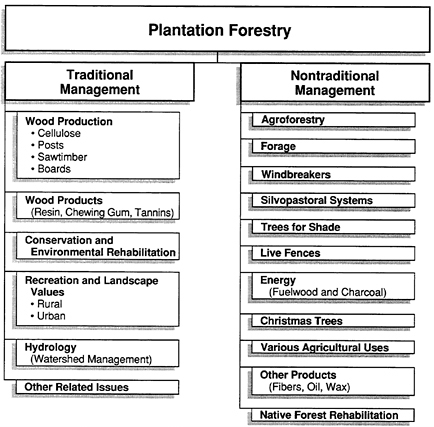
FIGURE 2-4 Uses of tropical forestry plantations.
trials are advanced in those countries with established forest management agencies. In agrarian societies, plantation forestry is a required management option for addressing many human needs, including fuelwood and charcoal production and land rehabilitation. It can be applied at the village level, where human labor and degraded land are usually available but where wood products require much time to gather and transport.
Success in plantation forestry programs depends on strong outreach efforts, well-operated nurseries, and timely human interventions in all phases of plantation establishment (that is, site preparation, planting, tree care, and adequate protection of young trees, particularly in their early stages when they are vulnerable to grazing, fires, or other accidents that can destroy them). The benefits of a well-established program are many and long-lasting because plantations can be very productive, improve soil conditions, and provide many tangible and intangible benefits associated with forest cover. Yet, those benefits will not materialize if information is not transmit-
ted effectively to practitioners in the field and if economic incentives are inadequate. The yields and benefits from these systems of production thus depend, in part, on the efficacy of extension services as well as the financial returns to plantation owners.
Plantation research is widely practiced in the tropics. Tropical foresters have been very successful in establishing tree plantations in most tropical conditions, documenting growth rates, identifying hazards, and improving the use of superior seed. More recently, reports on the biomass and nutrient aspects of plantation management have been published (Cuevas et al., 1991; Lugo, 1992; Wang et al., 1991). Because plantation forestry requires site-specific knowledge to assure long-term success, research on all aspects must continue to be supported. In addition, much of the information, particularly concerning the function of plantation forests, has not been synthesized. Such a synthesis should seek common principles of management and forest response that can be extrapolated widely. Moreover, as the uses of plantations diversify into nonwood products, it is important to widen the number of species planted and learn about lesser-known species that have been ignored in traditionally wood-oriented research. Other new research areas include the establishment of plantations in diverse landscapes and for a variety of other purposes, such as to graze animals, to plant crops, to recycle wastes, and to serve as wildlife habitat.
REGENERATING AND SECONDARY FORESTS
The development of sustainable agriculture and land use systems in the humid tropics requires an understanding of the forest regeneration process and the factors that influence it. Regenerating forests can be viewed as a transitional land use option, preparing tracts of deforested land for more intensive management, or as a permanent land use itself, maintaining forest cover and maturing into secondary (and eventually primary) forest. Secondary forests, which have often been dismissed as inferior to primary forests and less important from a conservation standpoint, also possess many ecological and economic benefits (Table 2-3). Furthermore, primary forests cannot be restored without the development, first, of secondary forests. In this sense, secondary forests should also be considered a viable land use option.
Factors Affecting Forest Regeneration
The rate of forest regeneration is inversely related to the scale of forest clearing and the intensity and duration of use prior to abandonment (Brown and Lugo, 1990; Uhl et al., 1990a). Forest cover
TABLE 2-3 Products and Benefits Derived from Secondary Forests
|
Products and Benefits |
Reference(s) |
|
Fruits, medicinal plants, construction materials, and animal browse |
Sabhasri (1978) |
|
Valuable timber species (e.g., Aucoumea klaineana, Cordia alliodora, Swietenia macrophylla) |
Richards (1955), Budowski (1965), Rosero (1979) |
|
Uniform raw materials with respect to wood density and species richness |
Ewel (1979) |
|
Woods low in resins and waxes, which facilitates their use |
Ewel (1979) |
|
Biomass production at a fast rate |
Ewel (1979) |
|
Ease of natural regeneration |
Ewel (1979) |
|
Ability to support higher animal production and serve as productive hunting grounds |
Ewel (1979), Posey (1982), Lovejoy (1985) |
|
Habitat for greater numbers of vertebrates, which may enhance tourism |
Lovejoy (1985) |
|
Tree species with properties often sought by foresters for establishing plantations |
Ewel (1979) |
|
Generally more accessible to markets than remaining primary forests |
Wadsworth (1984) |
|
Availability as foster ecosystems for valuable late secondary species |
Ewel (1979) |
|
A useful template for designing agroecosystems |
Ewel (1986) |
|
Restoration of site productivity and reduction of pest populations |
Ewel (1986) |
|
SOURCE: Brown, S., and A. E. Lugo. 1990. Tropical secondary forests.J. Trop. Ecol. 6:1–32. |
|
returns relatively rapidly following clearing, burning, and immediate abandonment (Uhl et al., 1988). Previously forested lands that are repeatedly burned, grazed over long periods, or tilled and scraped with heavy machinery may remain treeless for many years following abandonment, especially where soils have been extensively damaged and nutrient reserves have been depleted (Nepstad et al., 1991; Uhl et al., 1990a).
SHORT-TERM FACTORS
Short-term differences in forest regeneration rates can be traced to the failure of tree seedlings and sprouts to establish themselves on abandoned lands (Nepstad et al., 1991; Toky and Ramakrishnan, 1983). Factors that impede establishment include:
-
Lack of seed or residual tree roots in the soil that can give rise to new tree stems;
-
Lack of fruiting shrubs and small trees to attract seed-carrying birds and bats into abandoned fields;
-
Abundant seed- and seedling-eating ants or rodents in the abandoned fields; and
-
An aggressive weed community that suppresses the growth of other plants through high root length density, competition for water and available nutrients, or allelopathic influences.
Young tree seedlings in abandoned fields are also subject to higher temperatures, higher vapor pressure deficits, and lower soil moisture availability than seedlings established in natural treefall gaps, where many forest tree species regenerate (Nepstad et al., 1991). Little is known about the ability of forest tree seedlings to tolerate these extreme physical conditions.
Grasses impede forest regeneration in many areas. They do not provide perches or fleshy fruits to attract the birds and bats that carry tree seeds into abandoned fields. (However, they do provide excellent habitat for seed-eating rodents and leafcutter ants, and their dense root systems effectively compete for soil nutrients and water.) In the Amazon Basin, abandoned fields with long histories of repeated burning or grazing are sometimes occupied by Paspalum spp., Hyparrhenia rufa, and other grass species that resist tree establishment and forest regeneration for many years (Nepstad et al., 1991; Serrão and Toledo, 1990). In Southeast Asia, roughly 200,000 km2 of tropical forest have been replaced by the aggressive grass, Imperata cylindrica (Barnard, 1954; Jensen and Pfeifer, 1989). Land use practices that eliminate on-site sources of new trees (buried seeds and residual tree roots) and allow a dense cover of grasses to develop may lead to long-term deforestation.
LONG-TERM FACTORS
Once trees are established in abandoned fields, and aggressive weed communities are weakened by the shade of overtopping saplings, forest regeneration can proceed. The total leaf area of the original forest is often recovered within the first few years of regeneration. Fine root distribution, although poorly studied, appears to be reestablished within the first 5 to 10 years of regeneration (Nepstad et al., 1991). Recovery of the biomass and nutrient stocks of the original forest, however, may take much longer. In a study of forest regeneration following abandonment of shifting cultivation plots in the Venezuelan Amazon, Saldarriaga et al. (1988) found that the accu-
mulation of biomass and nutrients in regrowing forests reached a plateau at about 60 years following abandonment. This plateau probably arises from two factors. First, the rapidly growing pioneer species that comprise the young, regrowing forests are often short-lived. As they begin to die, biomass and nutrient accumulation is slowed until the density and size of slower growing, longer-lived trees increase. Second, biomass and nutrient accumulation may slow as reserves of essential soil nutrients, which probably did not limit tree growth soon after field abandonment, become scarce. Long-term recovery of the biomass and nutrient stocks of the original forest may depend on the rate at which nutrients arrive in the ecosystem through rainfall (Buschbacher et al., 1988; Harcombe, 1977) and the rate at which nutrients are released through the weathering of primary soil minerals, if they are present.
Fire
The most important factor affecting forest regeneration is fire. Abandoned agricultural lands are most fire-prone when they are overtaken by weeds that quickly dry out after rainfall and provide abundant fuel close to the ground. In eastern Amazonia, and presumably in Southeast Asia, grass-dominated abandoned fields can be ignited within a few days of rain events (Uhl and Kauffman, 1990; Uhl et al., 1990b). The high flammability of grasses is one of the greatest threats to successful forest regeneration on abandoned agricultural lands, and probably explains the persistence of vast tracts of I. cylindrica on previously forested land in Southeast Asia. As tree establishment and growth proceed, fire susceptibility declines but continues to threaten forest regeneration. Young secondary forests in the eastern Amazon can be ignited within 10 days of dry-season rain events and are far more flammable, because organic fuels on the ground dry out faster than in the primary forest (Uhl and Kauffman, 1990; Uhl et al., 1990b).
Susceptibility to fire is also a function of the geographical distribution of agricultural and forestlands. Young forests that lie along roads or are adjacent to agricultural lands are at much higher risk than those surrounded by a matrix of primary or late-secondary forests.
Acceleration of Forest Regeneration
The best techniques for accelerating forest regeneration are based on knowledge of the specific barriers to tree establishment and tree growth. In grass-dominated fields, forest regeneration may be fostered by protecting the site from fire and, where necessary, freeing
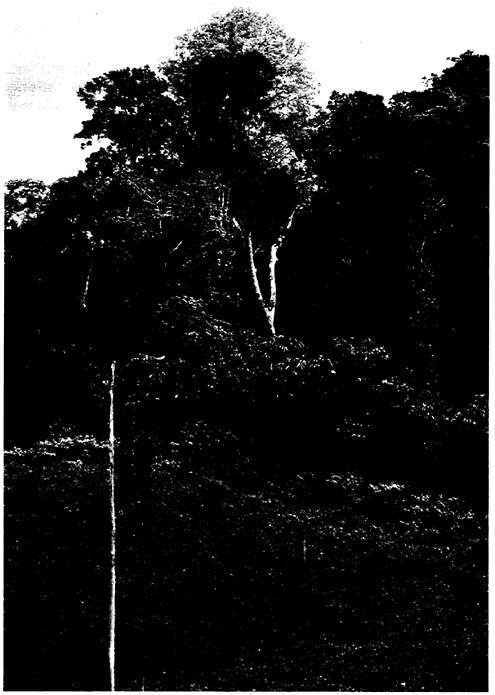
tree seedlings from the competitive cycle. In Southeast Asia, tree seedlings are liberated by matting down neighboring stems of the Imperata grass. In eastern Amazonia, fire suppression alone permits the rapid growth of tree clusters that attract seed dispersal agents and ameliorate harsh local climate conditions (Nepstad et al., 1991). The acceleration of biomass and nutrient accumulation is more difficult to achieve and, omitting the use of fertilizers, may be best accomplished by planting within young secondary forests those trees that are effective at acquiring nutrients from acid infertile soils. Active reforestation programs using appropriate mixes of native species can be useful at initial as well as advanced stages of regeneration.
On some sites, the growth rates of available native species may be inadequate. In these cases, forest rehabilitation can be accelerated with fast-growing exotic tree species. These can quickly restore forest environments, modify site conditions, and allow native forest species to regenerate in their shade. In this way, the plantings serve as a “foster ecosystem” for native forests (Lugo, 1988).
THE ROLE OF SECONDARY FORESTS
Most regenerating forests, if not cleared again or managed as part of an agricultural system, will eventually mature into secondary forests. The total area of secondary forests in the tropics has been increasing rapidly. In 1980, secondary forests accounted for 40 percent of the total forest area in the tropics and increased at an annual rate of 9 million ha (Food and Agriculture Organization and United Nations Environment Program, 1981). The diverse ecological characteristics within this large area have created different types of secondary forests (Table 2-4). However, these young forests share several characteristics: their biomass and nutrients quickly accumulate; they are dominated by pioneer species; they experience rapid turnover of their component species; and their appearance changes rapidly.
Indigenous people learned to use the characteristics of secondary forests to their advantage (Clay, 1988; Rico-Gray et al., 1991). Rather than just occupying space and repairing soil fertility, forest fallows in shifting cultivation cycles became elements of complex land use patterns. Most species within secondary forests had some use or value to indigenous people (Barrera et al., 1977; Gómez-Pompa, 1987a,b; Rico-Gray et al., 1985). Over time, forest composition was modified to meet specific needs (Gómez-Pompa et al., 1987).
Secondary forest vegetation must be evaluated as part of the complex mosaic of tropical landscapes and the human activities within them. A typical landscape in the humid tropics is a mixture of land uses,
TABLE 2-4 Ecological Characteristics of Secondary Forests
|
Ecological Characteristics |
Reference(s) |
|
Fast growth rates and short life spans |
Budowski (1965) |
|
Higher numbers of reproductively mature individuals per species than in mature forests |
Zapata and Arroyo (1978) |
|
Conditions suitable for recolonization of mycorrhiza after agriculture |
Ewel (1986) |
|
Short life cycles that are adapted to timed cycles of human use of land |
Gómez-Pompa and Vásquez-Yanes (1974) |
|
Many tree seeds that are widely dispersed |
Budowski (1965), Gómez-Pompa and Vásquez-Yanes (1974), Opler et al. (1980) |
|
Seeds can remain viable in soil for several years |
Gómez-Pompa and Vásquez-Yanes (1974), Lebron (1980) |
|
Ability to germinate and grow well on impoverished soils, which suggests low-nutrient requirements |
Gómez-Pompa and Vásquez-Yanes (1974) |
each representing a different intensity of human intervention, with scattered secondary forests in different stages of recovery from previous uses. The task is to maintain the overall primary productivity of the land, keep human activities at stable and acceptable levels, and protect biodiversity. Properly managed secondary forests are critical for attaining these goals because they can supply forest products, repair site fertility, and maintain a high level of native biodiversity. They are also important for research into agroecosystem functions. Agroecosystems that mimic secondary forests hold promise for achieving improved agricultural production without permanent damage to sites (Ewel, 1986; Hart, 1980).
Within the land use mosaic described in this report, different types of social organizations and institutions are required. For example, in landscapes composed of primary forests, humans are generally organized as shifting cultivators or hunters and gatherers. In highly degraded landscapes, humans must either migrate to new lands or depend on external sources of fertilizers and other inputs to rehabilitate damaged ecosystems. Secondary forests, because of their diverse ecological and social attributes, offer many opportunities for improving production. However, to take advantage of these opportunities, policymakers, conservationists, agriculturalists, and development officials must focus on their potential, and not just on what has been lost with the primary forests. Intensified management of secondary
forests can increase yields of some products, but output cannot be sustained without increased attention, improved technology, and fuller knowledge of forest ecosystem processes (Wadsworth, 1983, 1984, 1987a).
NATURAL FOREST MANAGEMENT
Natural forest management offers a promising alternative to the depletion of commercial timber resources within primary and secondary tropical moist forests. It involves controlled and regulated harvesting, combined with silvicultural and protective measures, to sustain or increase the commercial value of subsequent stands, and it relies on natural regeneration of native species. On the spectrum of sustainable land use options, natural forest management occupies a position between strict forest protection and higher intensity production systems that require permanent clearing or conversion of forests. Although varied in their approaches and methods, all natural forest management systems seek to protect forest cover, ensure the reproduction of commercially important species, and derive continuing economic benefits from the forests.
Only a small percentage of the world's timber-producing tropical forest is managed. A 1982 survey of 76 countries possessing tropical forests found that of 210 million ha being logged only 20 percent was being managed (Lanly, 1982; Moad, 1989). In the Asia-Pacific region, where most of the world's managed tropical forests are found, less than 20 percent of production forests receive systematic silvicultural treatments (Food and Agriculture Organization and United Nations Environment Program, 1981). Only 0.2 percent of the world's moist tropical forests is being managed for sustained timber production, according to recent estimates (Poore et al., 1990).
Forest Management in the Humid Tropics
The ecological complexity of tropical moist forests places special constraints on applying forest management practices, especially those developed in temperate zone forests (Buttoud, 1991). Silvicultural practices in the humid tropics must consider the high degree of tree species diversity, the vulnerability of tropical forest soils, and the regeneration biology of leading commercial tree species.
The high degree of diversity in tropical moist forests complicates the harvesting, extraction, marketing, and regeneration of forest trees. In any given area of tropical forest, only a minority of tree species is commercially marketable. In Suriname, for example, about 50 tree species comprising between 10 and 20 percent of the total forest tree species diversity are commercially harvested (de Graaf, 1986). Even
in Southeast Asian forests, where logging focuses on the dipterocarp and other closely related trees, only about 100 species are exploited (about 2,500 tree species are native to the Malay Peninsula alone).
Tropical forest soils are easily damaged by the mechanized processes of timber harvesting and extraction and by the larger scale of forest clearing that mechanization allows. These impacts include soil compaction and erosion, higher soil temperatures, desiccation, loss of soil biodiversity, removal of aboveground nutrient reserves (especially phosphorus), and lower nutrient retention capacity.
The capacity to manage tropical forests effectively is limited by a lack of understanding of forest regeneration processes (Lugo, 1987). The reproductive requirements of many leading commercial tree species are neglected under current management systems. Some species require specialized pollinators and dispersers that are not considered in management plans. Many timber trees depend on persistent seedling populations for regeneration, making them highly vulnerable to understory disturbance (Moad, 1989).
Timber extraction affects all of these characteristics, altering the structure, function, and species diversity of the forest. Because tropical forests are so diverse, most commercial logging that occurs in the humid tropics involves selective extraction. Selective harvesting may provide the basis for more sustainable management systems, but most extraction methods, as currently practiced, extensively damage other forest trees, the regenerative capacity of the forest, and forest soils. Genetic depletion, and even extinction, can occur if harvesting is excessive. Uncontrolled selection also opens forests to illegal harvesting of timber and wildlife and increases the susceptibility of forests to fire. Finally, the decline in economic value of forested land that follows extraction fosters further conversion, especially through agricultural expansion and settlement.
Management Systems
Natural forest management systems offer mixed benefits and costs. They are suited to areas with less productive soils and afford greater protection of soil and water resources than land uses that require permanent large-scale clearing. Although they simplify the structure and composition of primary forests, and hence result in lost biological diversity, these systems allow the forests to retain a greater degree of diversity than that provided by more intensive agricultural, agroforestry, or plantation systems (Buschbacher, 1990). On-site carbon storage rates are high, and because much of the extracted wood is intended for construction and other permanent uses, the carbon
can remain sequestered. Long-term nutrient loss through removal of biomass may serve as the ultimate limitation on the sustainability of managed forests, but these losses can be minimized through careful logging operations. A degree of risk is inevitably incurred in the opening of access roads. Even where selective timber harvesting is feasible and well regulated, postharvest management may not be, which sets the stage for more intense forms of forest conversion.
The socioeconomic attributes of natural forest management are also variable. Compared with plantation and agroforestry systems, natural forest management systems are less labor intensive, require fewer capital inputs, and yield forest products at relatively low levels. At the same time, they create more employment opportunities per investment unit than do cattle ranches (Goodland et al., 1990). If planned and undertaken with care, they can provide employment and income for forest dwellers and protect cultural integrity. For this reason, local participation is especially critical. Several reviews of sustainable forestry methods and natural forest management systems have been published in recent years (Moad, 1989; Office of Technology Assessment, 1984; Schmidt, 1987; Wadsworth, 1987a,b; Wyatt-Smith, 1987). Natural forest management systems are usually grouped into three broad categories: uniform shelterwood systems, strip shelterwood systems, and selection systems.
UNIFORM SHELTERWOOD SYSTEMS
Uniform shelterwood systems are designed to produce even-aged stands rich in timber species (Office of Technology Assessment, 1984). Under these systems, all marketable trees within a given area are harvested during the initial phase of management. Subsequent silvicultural operations further open the forest canopy, allowing seedlings and saplings of commercially valuable species to thrive. Logging is monocyclic, taking place once at the end of each rotation.
The foremost example of uniform shelterwood systems is the Malayan Uniform System (MUS), first developed in the lowland dipterocarp forests of the Malay Peninsula after World War II (Buschbacher, 1990) and commonly practiced from the early 1950s to the 1970s. After the initial harvest, forests were managed according to a 60-year rotation cycle of regeneration, periodic low-intensity silvicultural interventions (for example, removal of vines and elimination of noncommercial species, defective stems, and competing stems), and reharvesting. The aim of this system was to produce a relatively uniform growth of young Shorea spp. It offered acceptable rates of regeneration and appeared to be biologically sustainable. However,
the widespread conversion of the lowland forests to oil palm and rubber plantations and other more intensive agricultural systems almost completely removed these forests, obviating the need to manage them. Hence, the MUS was not in practice long enough for second rotation cuts to be made. Today the MUS is practiced in a modified form, with an emphasis on selective management systems.
The Malaysian experience illustrates difficulties in the transferability of the MUS to other regions. The uniform system, as developed in Malaysia, was most applicable in fertile, lowland forests with high seedling densities. Attempts to transfer the MUS to nearby hill forests were generally unsuccessful due to less predictable seedling production, greater topographic effects on tree species composition and abundance, and greater damage to regenerating seedlings during logging operations (Gradwohl and Greenberg, 1988; Lee, 1982). As a result, uniform systems appear silviculturally appropriate only when an adequate stock of seedlings of desirable species exists prior to harvesting and a large enough proportion of commercially valuable species exists in the original forest canopy to justify complete canopy removal (Buschbacher, 1990).
The Tropical Shelterwood System (TSS), analogous to the Malayan system, was tested and introduced in several African countries in the 1940s, but results were less promising. Seedlings in the African forests were less abundant and distributed less uniformly, requiring more extensive and more frequent interventions to open the forest canopy. This led to greater infestation by weed trees and vines, higher labor costs, and ultimately poor regeneration of the desired species (Asabere, 1987). Plantation and other more intensive land uses, as well as intensified logging, precluded further systematic development of uniform shelterwood systems suitable to Africa.
STRIP SHELTERWOOD SYSTEMS
Strip shelterwood (or strip clearcut) systems are still largely in the experimental phase, but they show high potential for small-scale, sustainable management of tropical forests. In these systems, narrow strips of forest are cleared on a rotating basis, and regeneration occurs by seed dispersal from adjacent undisturbed forest and by stump sprouting. Careful harvesting plans and operations are designed to simulate the natural processes of tropical forest gap formation and regeneration (Hartshorn, 1989). The rotation schedule allows equal areas of forest to be harvested annually, the size of the cuts determined by the total area of managed forest and the period required for regeneration (Moad, 1989).
Extraction operations are carefully planned to minimize environmental damage. Local topographic and ecological conditions determine the size, location, and orientation of strips. Access roads are designed to minimize erosion and compaction and to protect areas of adjacent undisturbed forest, which is critical for regeneration. The use of heavy machinery is minimized and draft animals are often used to remove sawn logs. Logs are cleaned on site, and the slash (the bark, leaves, and branches of the harvested trees) is left to decompose rather than be burned or removed, allowing more retention of nutrients.
The most extensive test of a strip shelterwood system has taken place in the Palcazú valley of eastern Peru. Demonstration strips were first harvested in 1985. Initial postharvest inventories indicate abundant regeneration, with twice the tree species diversity of the preharvest strip (Hartshorn, 1990). This project has also placed high priority on social and economic considerations in its design. Project planners and indigenous communities work closely to coordinate harvesting, processing, and marketing operations; to distribute project benefits; and to ensure sustainable management of the communal forestlands (Buschbacher, 1990; Hartshorn, 1990).
The success of strip shelterwood systems depends on the ability of early successional stage trees to establish themselves rapidly in forest gaps, grow quickly, and produce marketable wood (Moad, 1989). Consequently, strip systems may be less applicable in Asian forests, where most timber trees, including the dipterocarps, are unlikely to regenerate rapidly on cleared sites. The potential for use is higher in the humid tropics of West Africa and Latin America, where suitable tree species and genera are more abundant. Further research may establish how variables, including the regenerative biology of tree species, postharvest silvicultural treatments, and the size, location, and frequency of cuts, can be altered to suit local conditions. For example, studies conducted at the Bajo Calima Concession in Colombia suggest the need to adjust the size and rotation schedule of cuts as well as the extent and placement of forest reserves to allow nonpioneer tree species, many of which have large seeds and depend on dispersal by birds and mammals, to regenerate (Faber-Langendoen, 1990).
SELECTION SYSTEMS
Most forests managed for timber in the humid tropics employ selection (or polycyclic felling) systems. In selection systems, trees are removed on a limited basis from mixed-age forests in a series of fellings, rather than in one large harvest (Wyatt-Smith, 1987). Less
timber is extracted from the forest during each harvest, but harvesting occurs more frequently than in monocyclic systems. Two or more cuts, generally on a cycle of 25 to 35 years, take place in the course of a single rotation.
Selection systems were developed in response to site limitations, low regeneration rates, high labor costs, and other difficulties associated with even-aged forest management (Buschbacher, 1990). Variations include the Modified Selection System, employed in Ghana in the 1950s; Malaysia's Selective Management System (which began to replace the MUS in the early 1970s); and the Selective Logging System in Indonesia and the Philippines. Other polycyclic systems have been implemented or tested in Australia, Cameroon, India, Mexico, Myanmar, Nigeria, the Philippines, Trinidad, Uganda, and other humid and subhumid tropical countries (World Bank, 1991). Relatively little attention has been given to research and development of polycyclic systems appropriate for the Amazon Basin (Boxman et al., 1985; Rankin, 1985). The Celos Management System, recently developed on an experimental basis in Suriname, has yielded favorable early results in terms of minimizing ecological impacts and providing relatively high economic returns (Anderson, 1990; de Graaf and Poels, 1990).
Selection systems rely on the advanced regeneration of young, pole-sized trees to produce the subsequent timber crop (in contrast to shelterwood systems, which rely on seedling establishment). In some selection systems, advanced regeneration is promoted through improvement (or liberation) thinning (Moad, 1989). Improvement thinning usually involves the poisoning or girdling of less economically valuable trees and vines that compete with the most promising understory trees. Thinning removes 15 to 30 percent of the total number of stems and can reduce the time required to second harvest from 45 to 30 years, or as much as 33 percent (Buschbacher, 1990; Moad, 1989). Thinning has been employed most extensively in Southeast Asian forests, but it has also been tried in Côte d'Ivoire, Gabon, Ghana, Nigeria, Suriname, and Zaire. In most of these cases, however, the practice has been curtailed due to inadequate funding and a shortage of trained personnel (Moad, 1989).
In practice, successful selection systems still face significant obstacles. Tree regeneration and growth rates are often inadequate to meet projected rotation goals, and economic pressures force forest managers to shorten cutting cycles. High-grading (the unregulated extraction of only the most valuable trees) is prevalent throughout the tropics, but less so in the Southeast Asian dipterocarp forests. Poor planning of felling and transport operations results in excessive
reduction in forest cover and damage to soil and water resources. Especially critical is damage to seedlings and pole-sized trees, on which successful forest regeneration depends. Improvement thinning and other silvicultural treatments are hindered by a lack of economic incentives and trained personnel and by ineffective government control and enforcement of forestry operations (Wyatt-Smith, 1987).
Constraints on Sustainable Forestry
It is not yet possible to find a natural tropical forest that has been successfully managed for the sustainable production of timber, because no management system has yet been maintained through multiple rotations (Poore et al., 1990). Some critics dismiss sustainable forestry in the humid tropics as a “myth” on the grounds that it remains unproved, provides low yields and slow economic returns, and is liable to be superseded by more disruptive or lucrative land use practices (see Spears [1984]). Others respond that natural forest management has been proved to be feasible on technical grounds, but it has generally failed for social and economic reasons (Anderson, 1990; Buschbacher, 1990). Forestry in the humid tropics may be sustainable, but it will require changes in logging practices, in the economics of the forestry sector, and in the land use policy environment (Goodland et al., 1990; Poore et al., 1990).
Past experience suggests a combination of silvicultural and socioeconomic factors behind the lack of successful implementation. On most sites, the key silvicultural constraint on sustained timber production is inadequate regeneration of seedlings, saplings, and polesized trees (Wyatt-Smith, 1987), usually resulting from excessive damage during logging operations. In other cases, biological constraints, such as weed and vine infestation, lack of seed dispersers, and lack of trees with appropriate regeneration capabilities, are more important. Socioeconomic factors include insufficient tenure provisions; lack of local involvement in management decisions and project benefits; ineffective regulation, supervision, and monitoring of forestry activities and methods; and the inability of forest managers to control land use over the long term (Buschbacher, 1990; Moad, 1989). The economic viability of sustainable forestry systems is hindered by a lack of adequate information on the resource base and potential markets, by international market forces that focus on a few tree species that are difficult or expensive to regenerate, by incentive policies that favor short-term timber exploitation, and by the undervaluation of timber products, nontimber products, and other forest services (World
Bank, 1991). In many cases, these are the same forces that hinder implementation of other sustainable land use systems described in this chapter.
MODIFIED FORESTS
As a land use option, modified forests can only be considered viable where the human population remains low and the extractive activities of forest dwellers is limited. By studying these ecosystems and societies, researchers gain insights into the processes of landscape change in the humid tropics and human influences on those processes.
Indigenous people often modify the structure and composition of primary forests. Technically, a primary forest is one without human influence (Ford-Robertson, 1971). Even in the least disturbed forests, however, human influence is evidenced by the presence of stumps, charcoal in the soil profile, artifacts, or exotic species.
Indigenous people also modify forests by altering the frequency of native species or the size of wildlife populations in ways that are difficult to detect. Only through detailed study and long-term analysis can the effects of people be detected. For example, Maya cultures apparently managed forests for food, fiber, medicines, wood, resins, and fuel, thereby modifying the species composition of large areas of Central American landscapes long believed to be primary forest (Barrera et al., 1977; Gómez-Pompa et al., 1987; Rico-Gray et al., 1985). The human-modified forest is almost impossible to segregate from pristine primary forest.
It is clear that even limited human presence can change the structure of forest ecosystems. It is doubtful, however, that forest processes, such as rates of primary productivity or the velocity and efficiency of nutrient cycles, are significantly altered. The key point is that wherever humans interact with natural forest ecosystems, forest modification is unavoidable. It is equally clear that there are thresholds beyond which modification is incompatible with the conservation of forest resources.
In practice modified forests are likely to be most appropriate where indigenous peoples and local communities retain secure tenure over large areas of forestland and where strong national policies support and protect these cultural groups and their ways of life. In recognizing modified forests for what they are—ecosystems that have been managed in subtle but sophisticated ways to provide their human inhabitants with sustainable livelihoods—their value as primary forests is not diminished. Rather, they acquire even greater sociocul-
tural value as models and examples of successful human interaction with tropical moist forests.
FOREST RESERVES
Although a complete examination of the role and value of forest reserves is beyond the scope of this report, they need to be considered in devising comprehensive land use strategies in the humid tropics. The lack of secure protection for primary forests and wildlands diminishes the potential for sustainable agriculture, land use, and development throughout the tropics. These lands provide the biotic foundation on which human activity can be sustained and enhanced, and they protect the biological legacy of the humid tropics along with its many values.
Protected forests now constitute a small fraction of the tropical landscape—about 3 percent in Africa, 2 percent in Asia, and 1 percent in South and Central America (Nations, 1990). The protection mechanisms are as diverse as the number of countries and organizations that strive to protect forest ecosystems. They include biosphere reserves, wildlife preserves, national parks, national forests, refuges, sanctuaries, extractive reserves, privately owned lands, and land trusts. These efforts, however, require stronger political and financial support, especially for law enforcement, local community involvement, land acquisition, and effective reserve management. Without this support, the contribution these lands can make toward sustainable land use more generally is undermined (MacKinnon et al., 1986).
At this point, biologists cannot accurately determine the amount of land to preserve for optimal protection of biological diversity. No single standard exists for determining the amount or location of lands that should be set aside. However, long-term ecological studies are under way to understand the dynamics of species loss in tropical forests so that reserves of adequate size and configuration may be established (McNeely et al., 1990; Myers, 1988; Reid and Miller, 1989).
Many social and ecological factors endanger forest reserves. Conservation biologists are concerned with the sizes and shapes of reserves, global climate change, and the fragmentation of forest habitats by roads and other developments as some of the most urgent ecological factors that determine the integrity of reserves (Diamond, 1975; Harris, 1984; Peters and Lovejoy, 1992). Research on the effects of these and other factors on reserve function and effectiveness is a high priority (Ecological Society of America, 1991; Soulé and Kohm, 1989). Social forces that affect forest reserves revolve around the growing human pressures on reserve boundaries and resources, and
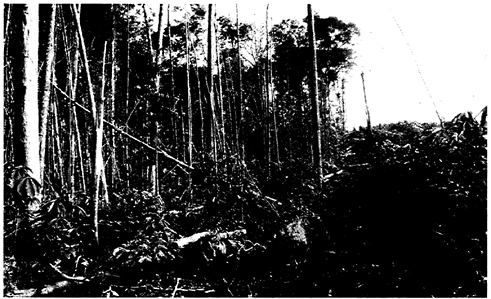
This border of a 10-ha (25-acre) reserve near Manaus, Brazil, illustrates the edge effect. Trees and other vegetation that form a barrier between natural and disturbed vegetation often experience a reduced vigor and are challenged or replaced by species that are well adapted to colonizing newly disturbed or cleared areas. In this case, the reserve is separated by only a few meters from agricultural fields of cassava (Manihot esculenta). The reserve is part of a project to determine the minimum critical size of ecosystems. Credit: Douglas Daly.
the difficulties associated with granting protection status without providing proper institutional, educational, and on-site support.
Much interest has focused on extractive reserves as a solution to deforestation in tropical areas. A discussion of its potential as well as environmental, social, economic, and research issues follows.
Defining a Role for Extractive Reserves
Extractive reserves can be among sustainable land uses in the humid tropics. They are forest areas where use rights are granted by governments to residents whose livelihoods customarily depend on extracting rubber latex, nuts, fruits, medicinal plants, oil seeds, and other forest products (Browder, 1990). These rights enable people to use and profit from land resources not legally belonging to them. Extractive reserves protect traditional agricultural practices and the forestlands on which they depend.
The development and long-term viability of extractive reserves face significant social, economic, and ecological obstacles. Under some circumstances, extractive reserves can contribute to sustainability in the humid tropics as components within more comprehensive land use strategies. Expectations, however, need to be tempered by a better understanding of their real potential and inherent limits.
The concept of extractive reserves originated in the mid-1980s as rubber tappers gained support in the state of Acre in western Brazil (Allegretti, 1990). Since then, the national government has designated 14 reserves, covering 3 million ha, within the Brazilian Amazon. The National Council of Rubber Tappers is trying to obtain reserve status for 100 million ha, or about one-fourth, of the Brazilian Amazon (Ryan, 1992).
Other efforts to establish extractive reserves are occurring both within and beyond the Amazon Basin. In Guatemala, for example, half of the 1.5 million ha in the Maya Biosphere Reserve has been allocated for traditional extraction of chicle, a gum derived from the sapodilla tree (Achras zapota), and the leaves of the xate (Chamaedorea spp.), which are used as ornamentals (Ryan, 1992). Interest has been further stimulated by studies indicating the economic value and potential of nontimber forest products (Balick and Mendelsohn, 1992; Peters et al., 1989a,b).
In weighing extractive reserves as a land use option, it is important to recognize that the primary goal in establishing reserves in the Brazilian Amazon has not been to protect biological diversity or tropical forests, but to secure reforms in land tenure and land use (Browder, 1990; Sieberling, 1991). Because opportunities for extraction are most advantageous where marketable species—especially tree species —are found in relatively high concentrations, extractive reserves are less likely to be located in the most species rich areas of the humid tropics (Browder, 1992; Peters et al., 1989a). In effect, reserves often will serve to maintain and protect biological diversity, forest cover, and the environmental services that intact tropical moist forests provide, but these functions are incidental to their social and economic benefits, and thus subject to changing socioeconomic conditions.
Commercial extraction is less intrusive than other forms of forest conversion, but it does alter forest ecosystems. In general, little research has focused on the long-term impacts of commercial extraction on the function and composition of tropical moist forests or on the ability of forests to sustain harvests of fruits, nuts, or other products (Ehrenfeld, 1992). Impacts can vary depending on the type of product extracted, the scale and methods of extraction, and the nature of the forest in which extraction occurs. Commercial extraction
can result in degradation if large quantities of biomass (or small quantities of key ecosystem components) are removed, or if harvesting techniques cause excessive damage. In addition, researchers have noted the tendency to exploit extracted forest products to the point of depletion, for example, in the case of wild fruits and palm hearts in Peru and rattan in parts of Southeast Asia (Bodmer at el., 1990; DeBeer and McDermott, 1989; Vasquez and Gentry, 1989). At the species level, changes in population levels may affect the reproductive biology of extracted species and the status of associated plant and animal populations. Enrichment planting—the enhancement of populations of economically advantageous species by artificial means—may reduce species diversity within the forest as a whole. At the genetic level, market forces may result in the selection of specific individuals or traits, altering genetic variability within the species. Extractive reserves, depending on the scope and effectiveness of their management strategies, may amplify or minimize all of these effects.
The economic viability of extractive reserves is compromised, in both the long and short term, by a variety of factors. The economic base of most extractive reserves will be narrow. Existing reserves in the Brazilian Amazon depend primarily on production of rubber and Brazil nuts, and thus depend on volatile market conditions and subsidy policies (Browder, 1990; Ryan, 1991). Other factors complicate the sustainability of trade in extracted products. In most cases, viable commercial markets must be developed. The perishability of many tropical products may limit the ability to create or supply distant markets. Many products will not be conducive to standardized production because of highly varied harvest, transport, packaging, and storage needs.
Where markets for products do exist, extraction is vulnerable to increased competition from domesticated and synthetic sources. Extraction from wild sources is labor intensive, thus inviting artificial cropping and plantation systems (Browder, 1990). For example, Brazil nuts are being produced on plantations in Brazil. Finally, the capacity of extractive activities to improve standards of living may be limited as profits are absorbed by intermediaries before they reach harvesters (Browder, 1992; Ryan, 1992).
These biological and economic constraints should not obscure the social benefits that extractive reserves can provide (Sieberling, 1991). Most extractors in the humid tropics are poor and must contend with limited economic opportunities, threatened or inequitable land and resource rights, and unresponsive political structures. Most of them also engage in subsistence agriculture and depend on extractive activities for primary or supplementary income as well as food, fiber,
and medicines. As the Brazilian experience has shown, the process of organizing, advocating, and managing extractive reserves can stimulate local participation and affect other areas of need, including health and extension services, housing, education, tenure reform, and marketing and infrastructure development. As the extractive reserve concept develops, it will provide valuable lessons for rural development efforts.
Extractive reserves should not be viewed as the solution to either deforestation or sustainable development in the humid tropics. They can, in the immediate future, stimulate needed land reforms, supply income and employment for limited local populations, protect some forestlands from more intensive forms of conversion, and provide important models of sustainable forest use. They cannot, however, meet the long-term needs of the growing numbers of shifting cultivators arriving at the forest frontier, provide full income or economic independence for the rural poor, preserve areas of the humid tropics that are especially diverse, or restore lands that are already in advanced stages of degradation. They may provide an important complement to other land uses, but they are not a substitute for forest reserves or for better managed agroecosystems, restoration areas, or more comprehensive and equitable land use strategies.
The record in creating and managing extractive reserves suggests several key guidelines for their further development. First, the limits and opportunities of extractive reserves should be clearly recognized. Designation should be initiated and supported by local people and communities, and the intended beneficiaries should be involved at all development stages. Government commitment—financial, political, and technical—is needed during the initial stages of reserve establishment and over time. As demographic, economic, and ecological conditions change, reserve management goals and methods need to remain flexible. Economic strategies should initially stress opportunities to develop known products, but they should also emphasize the need to diversify with time, to secure local benefits through value-adding processes, to work with all local resource users, and to reinvest in reserve operations (Clay, 1992). Local forest management skills need to be strengthened, with particular emphasis on improved extension services and increased interaction between biologists and extractors.
Research should seek to clarify the social, economic, and ecological factors that influence the long-term viability of extractive reserves and activities. Specific biological research is needed on commercially important species, their reproductive biology and ecological functions, and the impacts of extraction on forest composition, structure, and function (Ehrenfeld, 1992).


