
Overview
Rapidly occurring changes in the global environment have become a major concern for policymakers and scientists alike. In assessing the nature and course of these changes for the Earth as a system, we need to differentiate between those that can be managed by altering policies, such as control of atmospheric and hydrologic inputs from human activities, and those that represent a progression of natural events, which may not be controllable. Although natural variability is inherent in the system, humans have become a major factor in inducing environmental change. In order to determine the directions and magnitudes of anthropogenic changes, it will be necessary to understand the natural dynamic processes that have brought the environment to its present condition.
The principal conclusion of this study is that a better understanding is necessary of the natural fluxes and pathways by which materials are transferred from one site to another on the surface of the Earth. This knowledge is critical to evaluating the impact of anthropogenic changes. There is a common misconception among the general public and much of the scientific community that processes and fluxes on the surface of the Earth were in a steady state prior to the industrial revolution and that preindustrial rates are well known. It is assumed that the environment has been increasingly perturbed from that base level by human activity. In fact, although there have been major recent efforts to study natural systems, there remain many uncertainties about the base level of surficial processes and fluxes and their natural variability.
Specifically, this study examines the following:
-
The state of knowledge of some of the most important processes, rates, and fluxes for Recent, Holocene, and late Pleistocene times;
-
the variability inherent in these processes, rates, and fluxes in relatively recent geologic times;
-
the extent to which modern measurements of these fluxes already incorporate anthropogenic effects;
-
the variability of natural processes and fluxes in terms of fluctuations and changes occurring on different time scales;
-
gaps in the understanding of the natural variability of surficial processes and material fluxes; and
-
how the natural variability might be incorporated into the modern process ''baselines" to be used in models of future change.
This study concentrates on fluxes that move material on the surface of the Earth and are continuous or occur frequently. We have not attempted to evaluate the rate of fluxes of material associated with volcanic eruptions and mass wastage that are discontinuous and are infrequent. We recognize that, in the long term, catastrophic events might have a cumulative impact of the same order of magnitude as the more frequent and continuous processes, but the historical record contains an inadequate sampling of such events. Neither have we attempted to evaluate fluxes of volcanic gases, hydrothermal fluids, or the fluids expelled from sediments along subsection zones. Studies of these fluxes are still in their infancy, and their variability in time and space is poorly known. Preliminary extrapolations indicate that for some materials, these fluxes may be of the same order of magnitude as those from better-known sources.
Although we are concerned primarily with natural fluxes of surficial materials, human influence is important. For example, because of modern agricultural and construction practices, many river particulate loads measured over the past 30 years probably do not reflect natural processes. The storage-transport processes that are important today may not be those important on either shorter or longer time scales. For dissolved materials, humans are already a very effective geologic agent. They increase sources through construction, mining, deforestation, and agricultural activity, including fixation of atmospheric nitrogen. Human activity modifies the sinks for detritus through dam, reservoir, and coastal construction, and for nutrients through the induced eutrophication of lakes. These changes make determination of the roles of natural processes in the modern biogeochemical cycles increasingly difficult.
The natural fluxes of materials on the surface of the Earth are a function of the rates of weathering of rocks and sediments, transport, and deposition. "Weathering" originally referred to the alteration of rocks exposed to atmospheric agents; in recent years it has taken on a broader meaning to include the effects of all processes operating at the interface between the solid earth and the atmosphere, hydrosphere, and cryosphere. Transport is effected by gravity and by moving water, air, or ice. Deposition is a result of gravitational, chemical, or biological processes, or a combination of these processes acting on the transported materials. Weathering is typically very slow; characteristic rates are those of soil formation — on the order of thousands to hundreds of thousands of years. Transport is typically rapid, operating on the scale of minutes to years for gravitational movement, hours to days for eolian transport, days to months for fluvial transport, and decades to millennia for glacial transport. Transport need not be direct from the site of weathering to the site of ultimate deposition, but materials may
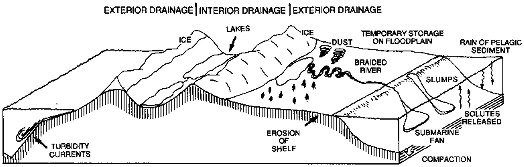
FIGURE 1 Some erosional and depositional environments during a glacial lowstand of sea level.
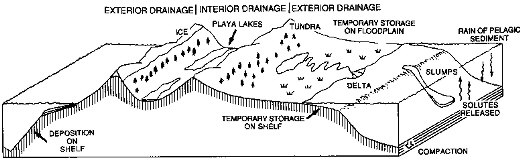
FIGURE 2 Some erosional and depositional environments during an interglacial highstand of sea level.
be stored for indefinite periods along the transport route. Deposition of solid material from air and water is generally rapid, occurring in a matter of hours to days at the depositional site, but ions carried in solution may remain in solution for thousands or even millions of years.
The processes of weathering, transport, and deposition of sediments and rocks are sensitive to changes in climate, the biological environment, and tectonic activity. Some of the changes that have occurred as a result of a transition from a glacial to an interglacial state are shown in Figures 1 and 2.
The surficial fluxes of ions in solution vary as a function of the volume flows and residence times of water on the continents, areal exposure of different rock types, reaction rates between minerals and the surface-water and groundwater solutions, neutralization of acidity from the atmosphere and that produced within the soil and weathering zone, and temperature. The weathering process also results in the formation of secondary minerals that temporarily store ions. Many of these secondary minerals are sensitive to climate change and may release the stored ions in response to changes in the environment.
KNOWLEDGE OF THE PRESENT FLUX RATES OF GEOLOGIC MATERIALS
The present knowledge of rates of regional and global fluxes of geologic materials is imperfect and uneven, as summarized in Table 1. Estimates of the amounts of material carried by many geologic agents rest on extrapolations of instantaneous fluxes or averages of long-term deposition rates. These may or may not be representative of the transport system. Regular monitoring of river loads is carried out in a few countries, but for many rivers, the seasonal and interannual variability is not well known (see Milliman and Syvitski, Chapter 5, this volume). Estimates of global flux and process rates rely on incomplete observations made mostly in small, intensively studied regions, and on measurements made at isolated stations on land or at sea. Satellite observations have the potential to contribute greatly to our knowledge of the present distribution of rocks and sediments on the land surface, of eolian fluxes, and of the utilization of nutrients in the photic zone. Fluxes within lakes, estuaries, seas, and the ocean are more difficult to estimate because of problems inherent in observation and measurement. In the tropics and subtropics, the major episodes of sediment transport in large bodies of water are sporadic. They are often associated with large storms, and maximum transport occurs when observation and measurement are most difficult. In polar regions, the major meltwater flux of the spring-summer transition transports sediment at a time when direct observations are difficult because of lake- and sea-ice cover. Most glacial transport occurs beneath hundreds or thousands of meters of ice, precluding direct observation.
Some of the ions apparently transported from land to sea are from salt that entered the atmosphere over the ocean and was subsequently washed out by rainfall over land. The quantity of this recycled salt must be determined and subtracted from the apparent land-to-sea flux in order to estimate accurately the net transport of material to the sea.
TABLE 1 State of Knowledge of Present Day Fluxes
|
Relatively well known |
|
River fluxes — major elements, organic carbon, nutrients |
|
Less well known |
|
River fluxes — particulate material and its chemical composition Storage of dissolved material in lake systems (CaCO3, SiO2, etc.) Storage of material in endorheic regions (Asia) Water budget of glaciers Sources of eolian material Chemical composition of eolian material |
|
Not well known |
|
Changes in dissolved or particulate fluxes with distance from source Chemical and physical controls of dissolved and particulate fluxes River fluxes — fate of dissolved material and trace inorganic constituents at continent-ocean boundary Eolian fluxes Leaching from fresh lava Flux of volcanic ash to the atmosphere Fluxes from volcanic and hydrothermal areas on land (water, CO2, SO2, etc.) Diagenetic fluxes in terms of sediment types and accumulation rates Hydrothermal fluxes in the deep sea Silica budget in the ocean |
|
Not known |
|
River fluxes — storage of particulate materials and trace organic constituents on land, slopes, floodplains, etc., on a global scale Sediment budget of glaciers on a global scale Effect of dissolution of glacially produced rock flour as it is transported to the ocean Groundwater fluxes Fluxes from nonchannelized runoff |
Rivers are the major natural transport mechanism responsible for moving detritus and dissolved solids on the land surface of the Earth. The dissolved load of rivers is dependent on the nature of the sediments and rocks underlying the drainage basin (see Meybeck, Chapter 4, this volume). The organic carbon and fixed nitrogen carried by rivers are related to the vegetation and climate. The solid load of the rivers is a function of relief, climate, and geology of the drainage basin. Variability is a characteristic of rivers; the global ratio of solid to dissolved load is about 4 to 1, but among major rivers it ranges from 80 to 0.1. The fluvial transport system has potential for great variations in response to climate change.
In most instances, measurement of fluxes associated with rivers did not begin until after human activities had modified the landscape, so that the primeval natural fluxes are not known. Even large rivers can be perturbed by large-scale agriculture, impoundment, and associated urbanization. Where these have not occurred, rivers may be in their natural state. Thus, the Amazon, Orinoco, Zaire, Yukon, and MacKenzie rivers along with many Siberian rivers may still be representative of the natural state. Most subtropical and temperate rivers have been significantly perturbed by anthropogenic activity. Indeed, human activities may have altered so many natural conditions that their effect pervades all aspects of material flux.
The alteration of sediment on the ocean floor through reaction with ocean bottom water and with pore waters results in fluxes both into and out of the sediment. The global scale of these fluxes and the time scales on which they may change are only beginning to be understood. Martin and Sayles (Chapter 10, this volume) present a review of the current state of knowledge of these important processes and associated fluxes.
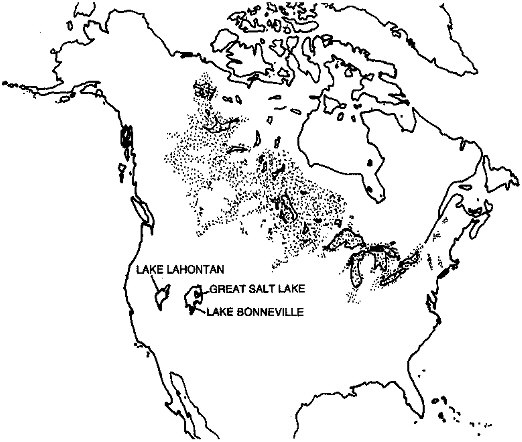
FIGURE 3 Modern lakes occupying basins excavated or dammed by drift left by the Laurentide Ice Sheet. Dots represent the presence of lacustrine sediments, indicating the extent of former glacial lakes (after Teller, 1987). Lakes Bonneville and Lahontan filled basins that presently have only interior drainage. The present Great Salt Lake is shown within the outline of Lake Bonneville.
RATES OF FLUX OF GEOLOGIC MATERIALS DURING THE MOST RECENT GLACIATION AND DEGLACIATION
The past 20,000 years have seen drastic changes in the face of the Earth. At the height of the most recent ice age, continental ice sheets similar to those of Antarctica and Greenland covered much of North America and northern Eurasia. Extensive periglacial areas were cold deserts, largely free of vegetation cover, and supplied more dust for transport by the winds than is available today. The melting continental glaciers left behind a landscape of scattered swales and depressions, many of which are filled by lakes (Figure 3). The large number of fresh water lakes in northern latitudes today is an unusual condition inherited from the erosional and depositional activity of the Pleistocene ice sheets and the effects of permafrost.
During deglaciation, between ca. 17,000 and 6000 years ago, rivers draining the glaciated regions carried the extra water and sediment supplied by the melting glaciers, as well as their regular loads (Teller, 1987). At the glacial maximum, sea level was 100 to 130 m lower than it is today; most of the transgression took place in 10,000 years, so that the sea level rise occurred at an average rate of about 1 cm/yr. Sea level, however, did not rise at a constant rate (Geophysics Study Committee, 1990). During the most rapid phases of deglaciation, sea level may have risen several meters per century, and the large volumes of fresh water entering the ocean may have affected climate and deep ocean circulation (Fairbanks, 1989). The effect of the sea-level rise has been to flood the nonglaciated continental margins, creating a fringe of estuaries and lagoons along many shores. These special shores provide a wide variety of habitats and a rich nutrient supply, and conse-
quently are especially abundant in marine life. Sediments are being trapped in the estuaries and are rapidly filling them, continually changing the nature of the coastal environment.
At present, the annual global runoff from land is equivalent to a layer of water about 10 cm thick spread over the entire ocean. The incremental flux of water resulting from the melting of the ice sheets was not distributed uniformly to the world's rivers, but was concentrated in those draining eastern North America and northern Eurasia. Their flow must have increased severalfold.
The glaciated continental margins now have highly indented coastline systems of fjords, inlets, islands, shoals, and deep continental shelves. The conditions within the glaciated coastlines of the Arctic and Antarctic are highly complex and are only now beginning to be understood. Andrews and Syvitski (Chapter 7, this volume) discuss sediment fluxes along high-latitude glaciated continental margins. Sediment accumulation and oceanographic conditions within the fjords are very different from those of the open ocean and contrast with conditions on temperate and tropical continental shelves. Furthermore, there are great contrasts between different glaciologic regimes so that within these, the fluxes to the seabed vary by at least three orders of magnitude.
During the sea-level fall that accompanied the growth of Northern Hemisphere ice sheets, the continental shelves beyond the ice margins were exposed to erosion, and large masses of sediment were transported downslope to the base of the continental rise and onto the abyssal plains. On glaciated shelves, the advance of the ice onto the shelf also shifted the locus of deposition toward the continental slope. The thick sediment wedges on the continental margins have been undergoing compaction, and as the pore fluids are squeezed out, they carry a variety of solutes with them into the deep waters of the oceans (Han and Suess, 1989; Suess and Whiticar, 1989).
Kump and Alley (Chapter 3, this volume) analyze the changes in areas where different materials are exposed to weathering and changes in rates of chemical weathering processes. They conclude that in spite of these radical changes in climate and landscape, the flux of dissolved material from land to sea 18,000 years ago may have been similar to that today, although possibly with a significant increase during deglaciation. Analysis of sedimentation rates in many parts of the world suggests that the supply of material to the deep sea during the most recent glacial age was about four times the rate during the Holocene (see Hay, Chapter 1, this volume). Much of this difference is due to increased delivery of solid terrigenous sediment to the ocean, but even the rain of biogenic materials was greater during glacial times, possibly as a result of the changes in the rates of ocean mixing and nutrient resupply to the photic zone.
Subaerial exposure and subsequent flooding of the continental shelves affected the sites of CaCO3 deposition and had a major effect on the global carbonate budget (Milliman, 1993). Although the data are poorer, no such glacial-interglacial variation is seen in the biogenic silica budget.
Although most of the change of sedimentary fluxes over the past 20,000 years has been attributed to the glaciation and deglaciation, it is possible that other climatic changes may be responsible. Kutzbach (1981) and Kutzbach and Guetter (1988) have shown that the precession cycle has a significant effect on tropical and subtropical climate, particularly in the northern Indian Ocean-southern Asia region. The precession of the perihelion brings the Earth closest to the Sun in different seasons. At present, the Earth is closest to the Sun in Northern Hemisphere winter. This minimizes the summer-winter seasonal contrast in the Northern Hemisphere and maximizes the seasonal contrast in the Southern Hemisphere. General circulation climate models suggest that when the perihelion occurred during Northern Hemisphere summer (9000 years ago) there was enhanced monsoon circulation over the Arabian Sea and in other parts of the world. The effects of the stronger monsoon circulation have been documented in sediments of the northern Arabian Sea by Prell et al. (1990).
VARIABILITY OF SURFICIAL GEOFLUXES
Superimposed on the long-term trends of deglaciation and the precessional cycle is shorter-term variability inherent in the chaotic behavior of the climate system.
Temporal Variability
Although we have a general picture of the great changes that must have taken place in the fluxes of materials on the surface of the Earth during the change from the glacial age to the present interglacial age, we know very little about the shorter-term (decade to century to millennium) changes. A number of mass transport events can best be characterized as natural cataclysms, as documented and discussed by Baker (see Chapter 6, this volume). Flood events on a scale unknown in the course of human history characterized deglaciation. Massive diversions of rivers occurred as the glaciers receded and the land rose in isostatic response to the disappearing load of ice. Although the melting of ice sheets and the isostatic response to unloading were relatively slow, continuous processes, the diversion of rivers likely was rapid, taking place in the course of days to years or decades. Monsoonal circulation was stronger in the early Holocene when precession-controlled seasonal radiation contrasts reached a maximum in the Northern Hemisphere. The enhanced monsoons caused repeated large floods in southern Asia, central Africa, and northern Australia.
Continental fluxes are mostly linked to river runoff, but the variations in runoff are poorly documented. New data sources are needed to gain insight into temporal variability. For example, it might be possible to interpret varves in tropical lakes and other environments in terms of records of hydrologic variability. Better documentation of lake-level changes should be possible. Obtaining a record of runoff in the past could be very important for differentiating the natural variability of climate from anthropogenic effects.
Against a relatively constant background of erosion, transport, and deposition, large infrequent events result in step-function changes in material fluxes. Severe storms may breach the vegetation cover and expose previously stable slopes to erosion; deposition from streams overloaded with debris during extreme flood events may cause them to alter course; windstorms during periods of drought may strip the land of its soil; earthquakes may trigger landslides and submarine slumps; volcanic activity may result in massive ashfalls and mudflows that alter the character of the landscape. Although the everyday transport of materials is a significant part of the global total in any given span of time, some of the landscape features we observe are the result of extreme, even violent, infrequent events that are very poorly documented.
Spatial Variability
On short-term time scales, fluxes are mostly driven by small areas with very high rates. Mechanical and chemical weathering, eolian transport, and even glacial erosion all demonstrate the overriding significance of small areas in influencing the global rates. Because the fluxes are so strongly dependent on changes in small areas, we expect that they have a high temporal variability that is at present, with rare exceptions, undocumented and unknown.
Mechanical weathering is most rapid in areas of high relief, resulting from active tectonic processes. In the rugged Himalaya and Alps, average rates of denudation and uplift may be about equal and on the order of 1 m per thousand years (Menard, 1961; Schaer, 1979; Dodson and McClelland Brown, 1985). In the high-relief, densely forested island terrain of southeast Asia and in many other parts of the circum-Pacific region, transport depends on breaches in the vegetation cover. Once the binding root systems are
gone, erosion of the underlying regolith can proceed unimpeded. The weathered mantle, which may have taken thousands to tens of thousands of years to form, can be eroded away in a few years.
The chemical load of rivers is very sensitive to the presence of limestones or evaporites in a drainage basin. Most of the load of nonatmospheric sulfate carried by rivers is derived from the dissolution of sulfate-rich evaporites exposed at the land surface.
Eolian transport is sensitive to both winds and source area. The Pacific Ocean east of Japan receives dust at rates 100 times higher than the average Pacific dust flux (e.g., Hovan et al., 1991).
Hydrothermal solute inputs to the ocean may be highly variable in both space and time. Hydrothermal activity occurring on less than one-thousandth of the ocean floor may be responsible for 99 percent of the global flux of material exchanged between seawater and basalt (Wolery and Sleep, 1988).
Carbonate precipitation on some actively growing reefs and banks occurs at a rate 50 times that of marginal seas and 80 times that of the deep sea. Opal deposition is even more discontinuous (Lyle et al., 1988).
Rapid Change and Catastrophic Events
Weathering, dissolution, and transport of solutes are ongoing processes that operate more or less continuously to denude the continents and carry material to the sea. Detrital material tends to be mobilized and transported by catastrophic events such as hurricanes and other storms, floods, landslides, and volcanic eruptions.
Very little is known about the magnitude and frequency of such episodes of rapid change. Catastrophic events can be defined as extremely rapid changes in environmental conditions; they commonly involve rapid dissipation of energy per unit area per unit time and/or a rapid rate of change of concentrations of materials or a rapid change in energy flow patterns. It is not known whether the relocation of materials on the surface of the Earth is dominated by the slower but continuous fluxes operating all of the time or by the spectacular large fluxes that operate during short-lived cataclysmic events.
Careful research and documentation might make it possible to scale rapid change and catastrophic events by order of magnitude and by frequency. What constitutes a rapid or catastrophic event with respect to sea-level change, to volcanic eruptions, to temperature change, to growth or melting of glaciers, to changes of vegetation? What is the spatial and temporal distribution of events of different orders of magnitude? How large do different kinds of events need to be to have a regional or global significance? Do rapid or catastrophic events change global fluxes? What is the qualitative influence of such events on basic processes?
Volcanic eruptions are known to be a major source of airborne dust reaching the oceans, but it is not known how large an impact can result. Occasionally (e.g., the Tambora eruption in 1815), it can exceed the annual global river input of suspended solids. The question of the impact of volcanic aerosols on climate remains unresolved. Small eruptions may have little effect, but Pleistocene deposits contain a record of volcanic eruptions far larger than any that have occurred historically (Kennett and Thunell, 1977). The injection of volcanic gases into stratosphere and troposphere may also have important effects on the environment. The 1991 eruption of Mount Pinatubo in the Philippines demonstrated that the injection of sulfur particles and sulfur dioxide, which then formed aerosol sulfuric acid in the stratosphere, may not only alter the transparency of the atmosphere, but also effect the ozone layer (Hansen, 1992; Johnston et al., 1992). Some knowledge of the long-term contribution of volcanic eruptions to the global budget of sulfate and its temporal variability has become available from studies of ice cores (Legrand and Delmas, 1987; Legrand et al., 1988).
Rapid weathering may also have a major impact on the delivery of solutes to the sea. The sudden exposure of evaporites, massive basalt flows, and glacial material to weathering may have a global impact. Evaporites are readily soluble, and under warm humid conditions, basalt weathers much more rapidly than many sedimentary rocks. Glaciers pulverize rock materials and greatly increase the grain surface areas that can react with surface and groundwaters (see Kump and Alley, Chapter 3, this volume). Many human activities, particularly mining and construction, promote rapid weathering. These activities bring unweathered materials to the surface; pulverize them, thereby increasing the grain surface areas and promoting reactions; and expose them to weathering by the atmosphere and pollutants. Mining activity has resulted in major increases in Na+ and SO42- fluxes in rivers (see Meybeck, Chapter 4, this volume).
Transport of solids is driven by catastrophic events such as hurricanes and cataclysmic floods. The late Pleistocene Missoula floods discussed by Baker (Chapter 6, this volume) are an example of flood events having a magnitude unknown in human history. Large floods were characteristic of deglaciation; what was their cumulative effect?
Massive debris flows may result from failure of saturated deposits on relatively gentle as well as steep slopes. Heavy or persistent rain, or even rapid melting of glaciers, may saturate deposits. The results are particularly disastrous when volcanic activity causes glaciers to melt, suddenly releasing great volumes of water and debris. This type of catastrophic event has occurred repeatedly on the volcanoes of the Pacific Rim (e.g., Cascade Range, Japan, and Andes) and may have a major local or regional impact. Were such events more frequent during glaciation, when many more volcanoes were glacier-covered? Detailed mapping has shown that large-scale slumping or landsliding has occurred on submarine slopes off the continents and oceanic islands. We know little about the frequency of these events or the triggering mechanisms. Do changes in sea level play a major role in controlling the frequency and magnitude of such events?
Clathrates are ices formed by low molecular weight hydrocarbons, hydrogen sulfide or other gases, and water. They form at the temperatures and pressures found in the polar regions and deep sea. Clathrates occur in the Northern Hemisphere permafrost regions and broadly in sediments of the continental slopes and rises. They may act as a seal, trapping natural gas. They may be important in slope stabilization by acting to cement the sediment in which they form. Changes in ocean temperature can cause clathrates to form more extensively or to disappear at a given water depth. Their widespread disappearance on parts of the continental slopes and polar shelves might be expected if ocean temperatures were to rise. This could lead to massive slope failures that could generate tsunamis in oceanic areas where they are presently unknown. Although the temperature of the deep sea cannot be altered significantly on time scales of less than thousands of years, the connections between marginal basins and the oceans are sensitive to sea-level fluctuations, so that conditions within marginal seas might change much more rapidly. Only 8000 years ago the Black Sea was filled with cold fresh water; now it is filled with warm salt water (Degens and Ross, 1974).
Large-scale freshwater input to the marginal seas may inhibit exchange of the surface and deep waters, and may cause episodes of anoxia. Massive floods from the Nile are thought to be the cause of periodic anoxia that affected the eastern Mediterranean in the Pleistocene and early Holocene (Cita et al., 1977). The frequency of major anoxic events can be determined from study of the sediments. What other areas have been similarly affected and what are the effects on their ecosystems?
Drought can result in episodes of substantially increased dust transport. Extensive loess deposits indicate that dust deposition was a major sedimentation process during the past glacial age. Atmospheric dust transport has declined markedly since the last glacial age, but the dust bowl conditions of the U.S. Midwest in the 1930s and ongoing desertification of the Sahel demonstrate the catastrophic nature of relatively local and short-term episodes of eolian transport.
It might well be assumed that diagenetic fluxes of ions into and out of sediment in the ocean are not subject to catastrophic change, but in reality we know almost nothing about the release of pore fluids that must attend massive slope failure on the continental margins as a result of sea-level changes and earthquake activity.
Coastal pollution by tanker accidents may result in ecological catastrophes on a local or even regional scale, but natural hydrocarbon seeps also occur. Have there been catastrophic episodes of hydrocarbon release due to natural causes, such as slope failure or volcanic activity? Clathrates are known to act as a seal, trapping hydrocarbons at relatively shallow depths, so that slope failures associated with the disappearance of clathrates might cause large-scale release of methane and other hydrocarbons into the marine environment.
Little is known of the spatial and temporal variability of either oceanic or terrestrial hydrothermal activity. Do cataclysmic events occur? How valid are extrapolations of present oceanic hydrothermal fluxes into the past or future?
There is much evidence that carbonate precipitation is highly variable and very responsive to sea-level rise or fall. Could growth of carbonate banks keep up with the relatively rapid sea-level rise that might accompany disintegration of the West Antarctic Ice Sheet?
The migration and reorganization of biomes in response to deglaciation has been documented, but what were the effects of migrating biomes on soils, the organic carbon flux, and erosion?
What is the role of wetlands and mangroves in biogeochemical cycles? The areas of these environments must have changed drastically between the glacial maximum and today. Wetlands and mangrove areas must have migrated very rapidly during the deglacial rise of sea level.
What is the role of ocean processes in influencing flux rates? How frequent are abyssal storms within the deep ocean, and how much sediment is remobilized by such storms?
What are the effects of complex ocean-atmosphere interactions such as El Niño and related events on biogeochemical cycling?
Recent studies of ice cores from Greenland indicate that during deglaciation the CO2 content of the atmosphere changed significantly on time scales of a few decades. What natural processes were involved in such rapid changes of atmospheric CO2?
Most importantly, how has the frequency of extreme events changed with time? What are the conditions most likely to produce frequent extreme events?
Pollution is a rapid change in condition induced by human activities. It is catastrophic if the change is so rapid that the biota cannot adjust. Some natural events have exactly the same effect.
CONCLUSIONS
An immediate need, if we are to understand the operation of the Earth as a natural system and to evaluate anthropogenic impacts, is to monitor the fluxes identified in Table 1 and assess how they are changing on time scales of decades to centuries. The results of studies being conducted within the context of global change research projects, on spatial scales ranging from individual drainage basins to continents, can be used to improve the global flux picture. Specifically, the following aspects merit further consideration.
Processes in Shallow Water-Shelf Environments
In recent years, much of the focus in marine research has been on the deep sea, but in terms of biogeochemical cycling, much is happening on shelves and in shallow environments. Studies of the deep sea are vital and must continue, for these and other rationales, but additional studies of material processes in shallow waters are needed. We should, furthermore, consider the land-shelf deep sea continuum along a series of transects to understand better the fluxes over large distances in the marine realm.
Distribution of Lithologies at the Surface
Although soil maps are available for each of the continents and seafloor maps are available for each of the ocean basins, there are no continental-scale maps that show the distribution of lithologies at the Earth's surface. Surficial lithologic maps are needed to serve as a base for determining areas of different kinds of rocks exposed to weathering and erosion.
Distribution of Sources and Sinks
Prerequisites for studies of biogeochemical cycling are maps of sources and sinks of detrital and dissolved materials. These are essential to quantify global fluxes and to identify sensitive areas that are prone to rapid change. Just as topographic maps are needed for land-use planning and geologic maps are needed for resource exploration, sources and sinks maps are needed for studies of global cycles and global change.
In terms of sources, there is a need for accurate mapping to estimate the areas of different types of environment on a global scale. Accurate surficial lithological maps on a global scale will be required, with emphasis on both soluble rocks and rocks and sediments that are readily eroded physically. Special attention should be given to determining the location of rock types that are sensitive to erosion.
Global sinks maps would show the accumulation rates of different types of sediments or the rates of consumption of cycling components (e.g., CO2).
Rates
The response times for environmental changes need to be determined. Rates of environmental change from Pleistocene to Holocene conditions are probably among the most rapid in the geologic evolution of the planet. However, it is questionable whether we know enough about more ancient geologic times to be sure that spatial and temporal climatic variability then was less than it is now.
Expanded Time Scales for Processes/Fluxes
To determine response times there is a need for additional well-dated high-resolution geologic records, especially those of short-term events. Some lakes, for example, are likely to have a sedimentary record of atmospheric fluxes as detailed as that obtained from ice cores.
To determine past flux rates we need high-resolution dating of small (1 to 5 mg) samples with a resolution of ± 30 years. The use of accelerator mass spectroscopy (AMS) determined 14C is one of the most promising techniques for high-resolution dating. However, there are a variety of other dating techniques, such as tree rings, coral growth bands, varves, and layering in ice cores that can be used to achieve annual resolution.
Anthropogenic Influence
Finally, we must answer the question: When will (or when did) anthropogenic activities so perturb global fluxes that they exceed (or exceeded) the range of variability inherent in natural processes?
REFERENCES
Cita, M.B., C. Vergnaud-Grazzini, C. Robert, H. Chamley, N. Ciaranfi, and S. D'Onofrio (1977). Paleoclimatic record of a long deep sea core from the eastern Mediterranean, Quaternary Research 8, 205-235.
Degens, E.T., and D.A. Ross (1974). The Black Sea: Geology, Chemistry, and Biology, American Association of Petroleum Geologists Memoir 20, Tulsa, Oklahoma, 633 pp.
Dodson, M.H., and E. McClelland Brown (1985). Isotopic and paleomagnetic evidence for rates of cooling, uplift and erosion, in The Chronology of the Geological Record, N.J. Snelling, ed., Geological Society (London) Memoir10, Blackwell Scientific Publications, Oxford, pp. 315-325.
Fairbanks, R.G. (1989). A 17,000-year glacio-eustatic sea level record: Influence of glacial melting rates on the Younger Dryas event and deep-ocean circulation, Nature 342, 637-642.
Geophysics Study Committee (1990). Sea-Level Change, R. Revelle, Panel Chairman, National Research Council, National Academy Press, Washington, D.C., 234 pp.
Han, M.W., and E. Suess (1989). Subduction-induced pore fluid venting and the formation of authigenic carbonates along the Cascadia continental margin: Implications for the global Cacycle, Palaeogeography, Palaeoclimatology, Palaeoecology 71, 97-118.
Hansen, J., A. Lacis, R. Ruedy, and M. Sato (1992). Potential climate impact of Mount Pinatubo eruption, Geophysical Research Letters 19, 215-218.
Hovan, S.A., D.K. Rea, and N.G. Pisias (1991). Late Pleistocene continental climate and oceanic variability recorded in northwest Pacific sediments, Paleoceanography 6, 349-370.
Johnston, P.V., R.L. McKenzie, J.G. Keys, and W.A. Matthews (1992). Observations of depleted stratospheric NO2 following the Pinatubo volcanic eruption, Geophysical Research Letters 19, 211-213.
Kennett, J.P., and R.C. Thunell (1977). On explosive cenozoic volcanism and climatic implications, Science 196, 1231-1234.
Kutzbach, J. E. (1981). The monsoon climate of the early Holocene: Climate experiment with the Earth's orbital parameters for 9000 years ago, Science 214, 59-61.
Kutzbach, J.E., and P.J. Guetter (1988). The influence of changing orbital parameters and surface boundary conditions on climate simulation for the past 18,000 years, Journal of Atmospheric Sciences 43, 1726-1759.
Legrand, M.R., and R.J. Delmas (1987). A 220-year continuous record of volcanic H2SO4 in the Antarctic Ice Sheet, Nature 327, 671-676.
Legrand, M.R., C. Lorius, N.I. Barkov, and V.N. Petrov (1988). Vostok (Antarctica) Ice Core: Atmospheric chemistry changes over the last climatic cycle (160,000), Atmospheric Environment 22, 317-331.
Lyle, M., D.W. Murray, B.P. Finney, J. Dymond, J.M. Robbins, and K. Brooksforce (1988). The record of Late Pleistocene biogenic sedimentation in the eastern tropical Pacific Ocean, Paleoceanography 3, 39-59.
Menard, H.W. (1961). Some rates of regional erosion, Journal of Geology 69, 154-161.
Milliman, J.D. (1993). Production and accumulation of calcium carbonate in the ocean: Budget of a nonsteady state, Global Biogeochemical Cycles 7(4), 927-957.
Prell, W.L., R.E. Marvil, and M.E. Luther (1990). Variability in upwelling fields in the northwest Indian Ocean 2. Data-model comparison at 9000 years B.P., Paleoceanography 5, 447-457.
Schaer, J.P. (1979). Mouvements verticaux et rosion dans les Alpes, aujourd'hui et au cours du Miocene , Eclogae Geologicae Helvetiae 72, 263-270.
Suess, E., and M.J. Whiticar (1989). Methane-derived CO2 in pore fluids expelled from the Oregon subduction zone, Palaeogeography, Palaeoclimatology, Palaeoecology 71, 119-136.
Teller (1987). Proglacial lakes and the southern margin of the Laurentide Ice Sheet, in North American and Adjacent Oceans During the Last Deglaciation, W.F. Ruddimann and H.E. Wright, Jr., eds., Geology of North America K-3, Geological Society of America, Boulder, Colorado, pp. 39-69.
Wolery, T.J., and N.H. Sleep (1988). Interactions of geochemical cycles with the mantle, in Chemical Cycles in the Evolution of the Earth, C. B. Gregor, R.M. Garrels, F.T. Mackenzie, and B.J. Maynard, eds., John Wiley & Sons, New York, pp. 77-103.


