
5
A New Mandate for Science in the National Parks
In its 1963 assessment of science in the national park system, the National Research Council stressed the critical need for a strong research program in the parks. Today, nearly 30 years later, that need still remains:
A permanent, independent and identifiable research unit should be established within the National Park Service to conduct and supervise research on natural history problems for the entire national park system. In order to maintain objectivity, the principal research organization should be independent of operational management.... The research staff should have complete freedom in the execution of an approved research program, in evaluating the results, in reporting the findings and in making recommendations based on the findings. (NRC, 1963)
The National Park Service (NPS) science program has been unnecessarily fragmented, and it has lacked a coherent sense of direction, purpose, and unity. The lack of consistency over time—especially with regard to leadership from the Washington office—has impeded the success of science programs and thus has made park management less effective. Strong leadership is necessary for the long-term stewardship needed to protect the parks for future generations. The NPS should be forward looking and progressive in using science
as a management tool. Science needs to be integrated fully into all Park Service functions, and the administrative framework should allow coordinated, effective research programs at the national, regional, and individual park levels.
The call for change made in this report is not new. But given the consistent lack of response to so many previous calls for change, how can this report inspire action? The Committee on Improving the Science and Technology Programs of the National Park Service concludes that increased funding or incremental changes alone will not suffice, and it calls instead for a significant metamorphosis. It is time to move toward a new structure—indeed, toward a new culture—for science in the national park system that guarantees long-term financial, intellectual, and administrative stability. Given that culture can be defined as a complex of beliefs, values, ideas, tools, and skills perpetuated by a group of people, such a change will be difficult and require concerted attention. Three elements are vital:
-
There must be an explicit legislative mandate for a research mission of the National Park Service.
-
Separate funding and reporting autonomy should be assigned to the science program.
-
There must be efforts to enhance the credibility and quality control of the science program. This will require a chief scientist of appropriate stature to provide leadership, cooperation with external researchers, and the formation of an external science advisory board to provide continuing independent oversight.
AN EXPLICIT LEGISLATIVE MANDATE FOR SCIENCE
To eliminate once and for all any ambiguity in the scientific responsibilities of the Park Service, legislation should be enacted to establish the explicit authority, mission, and objectives of a national park science program.
As described in Chapter 3, numerous experts both inside and outside of the Park Service have provided advice about the importance of the science program. There is a remark-
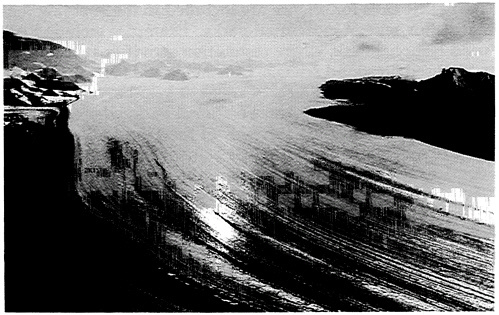
The National Park Service's scientific responsibilities should be made clear and unambiguous so that advantage can be taken of the best scientific information in protecting its valuable resources. CREDIT: NPS photo of Nebesna Glacier at Wrangell-St. Elias National Park by M. Woodbridge Williams.
able consistency, both in spirit and in detail, in their recommendations. Yet few of the recommendations have been implemented, to the detriment of park resources. Some of the difficulty arises from the chronic limitation of resources and the ever-increasing demands on the parks. The leadership in the NPS science program and personnel in key positions have changed frequently. Also, the NPS has not given science a stature equal to that of resource management, perhaps because it is easier to focus on the immediate at the expense of the long term—a tendency that is exaggerated when budgets are limited. Finally, the NPS has been inconsistent in distinguishing strong from weak science, thereby damaging the credibility of science in the eyes of park staff and others (NRC, 1990). As a result, the NPS science program has contributed far less than it can and should. Its full potential lies largely untapped just when science is most needed to clarify and combat the enormous pressures the parks face, and just when the parks are most needed to help address research questions that affect the entire biosphere.
Specific calls for science are included in the enabling legislation for several individual parks. Examples include Redwood National Park, where restoration activities are required to be based on sound science; Channel Islands National Park, where the long-term effects of adjacent kelp harvesting must be monitored; and Everglades National Park, where the NPS is required to study the fisheries of the Florida Bay. There also are national laws that either state or imply the need for adequate scientific and technical knowledge to address the kinds of actions required. Among the most important are the Lacey Act (1900), Historic Sites Act (1935), the Wilderness Act (1964), the Concessions Policy Act (1965), the National Environmental Policy Act (1969), the Endangered Species Act (1973), and the Clean Air Act (1977). In addition, international programs in which NPS participates also have helped define the scope of NPS science, including the Man and the Biosphere and the World Heritage programs (Franklin, 1985).
Despite these periodic calls for science, the most critical foundation for science in the parks is missing: Although the Organic Act of 1916 implies the need for science in the national parks, it does not provide an explicit legislative mandate. The absence of an explicit legislative mandate has allowed uncertainty about the importance and the role of science in the parks. A new mandate for science is long overdue.
The committee was not charged or constituted to write specific legislation to establish a new mandate for science in the parks, but its vision for a strengthened NPS science program includes the following elements:
-
A science program that is organizationally equivalent to park operations, with its own funds in a separate line item budget, to support a comprehensive program of natural and social science.
-
Areas in the national park system designed and managed as protected repositories of biological diversity at the genetic, species, and ecosystem levels.
-
Broad use of parks as research sites, with expanded opportunities for experimentation and research installations, and as monitoring posts to detect and evaluate changes in environmental quality, plant and animal communities, and
-
the human environment, perhaps with special research areas designated within some parks.
-
Cooperation with other agencies and institutions in designing, conducting, evaluating and reviewing scientific studies, including those that will characterize and enumerate park resources and aid the development of effective management practices.
-
A leadership role for NPS in sharing the results of scientific studies with researchers in government, academic, and private organizations.
-
Continuing scientific communication with park managers and scientists in other countries.
-
Translation of scientific findings, wherever feasible, into information for the public and into effective guidance for resource managers and interpreters.
Science for the Parks
The National Park Service should establish a strong, coherent research program, including elements to characterize and gain understanding of park resources and to aid in the development of effective management practices.
A new NPS mandate for science should encompass two distinct but related components, which this committee calls for convenience ''science for the parks'' and "parks for science." Each component offers contributions critical to the stewardship of park resources, but the first approach—science for the parks—is the most obviously related to the NPS mission to conserve the scenery and the natural and historic objects and the wild life therein and leave them unimpaired for the enjoyment of future generations. Science for the parks encompasses two types of research: research to characterize and gain understanding of resources, and research to develop and implement effective management practices. These two areas are interdependent; that is, the search for sound resource management techniques cannot occur without careful characterization and understanding of those resources. Conversely, the design and conduct of research and moni-
toring to characterize resources can be guided by questions about how the resources are to be managed. Both types of research should be conducted by NPS scientists, scientists from other agencies, and university scientists.
Research to Gain Understanding of Park Resources
To provide a scientific basis for protecting and managing the resources entrusted to it, the Park Service should establish, and expand where it already exists, a basic resource information system, and it should establish inventories and monitoring in designated park units. This information should be obtained and stored in ways that are comparable between units, thereby facilitating access, exchange, integration, and analysis throughout the park system and with other interested research institutions. The NPS should support and develop intensive long-term, ecosystem-level research projects patterned after (and possibly integrated with) the National Science Foundation's Long-Term Ecological Research program and related activities of other federal agencies. The ways resources are used and appreciated by people should be documented.
It is dangerous to attempt to manage and protect resources that are not understood (Leopold et al., 1963). Most parks lack long-term information bases from which to determine park resource conditions, trends, and relationships, and there is no reliable way to determine whether vital park resources are, in fact, surviving or will survive to become part of the heritage of future generations. Without a basic knowledge of the resources and an ability to detect change, scientists cannot reliably identify or forecast problems, and neither park managers nor regulatory officials can be expected to mitigate threats effectively. Under these conditions, the ability of the NPS to accomplish its basic mission is at serious risk.
Natural disturbances, including processes of birth and death, long-term successional changes in ecosystem development, and climate change are characteristic of natural sys-
tems both inside and outside of the national parks (Wright, 1974; Pickett and Thompson, 1978; Dolan et al. 1978; White and Bratton, 1980). Because parks are not static islands impervious to human and natural influence—the effects of human populations and their activities now permeate even the most remote wilderness areas—sound park management for the future requires us to identify and understand causes of change where possible. Although it will be impossible to understand all of the causes of change in the parks, their adequate study is fundamental to the protection of resources.
Research to characterize park resources is frequently long-term and basic. It includes inventories, monitoring, and long-term analyses that involve a range of disciplines such as geology, hydrology, atmospheric sciences, archeology, biochemistry, botany, zoology, and ecology. Comprehensive research examines the structure and function of organisms, populations, communities, ecosystems, and landscapes, as well as soil, groundwater, air, and other elements of the physical and social environment (Romme and Knight, 1982; Knight and Wallace, 1989). Furthermore, many natural resources are influenced by forces that themselves vary through time (such as climate) or that undergo systematic change.
As an absolute minimum, the NPS science program must include an inventory and monitoring of resources to provide a basis for detecting change. An inventory involves enumerating or mapping resources and assessing their status; monitoring involves repeated measurements to detect variations over time. Inventories and monitoring assess the spatial and temporal distributions of resources and patterns of human use.
Inventories and monitoring provide the foundation for analyzing most applied resource management questions, and they can help elucidate the normal limits and variations of systems and establish a baseline for later comparisons of trends. Every element of a system, whether natural, cultural, or human, can change, and all long-term management plans must address the detection of change. Short-term monitoring, for example, is needed to detect changes caused by visitors at campsites, the effects of exotic species, and the impacts of sport fishing in various parks. Longer term inventories and monitoring in support of management include using long-
term ecosystem research to assess air quality and long-term population monitoring of wildlife. Such efforts are especially necessary in large areas of relatively pristine wilderness such as the parks designated as Biosphere Reserves. The commitment to inventory and monitor resources must be expanded dramatically to become a major, continuing component of the NPS research program. Effective inventories can involve geographic information systems, remote sensing data, and other technology (including new technologies for information storage, processing, and management) to increase understanding of whole ecological systems.
To be useful, an information system should contain basic data about the location and extent of each parks principal biological, geological, hydrological, aesthetic, cultural, and historic resources. When park managers need additional information critical to carrying out the designated mission of a park, for example, to protect specific archaeological or cultural resources, monitoring data on those resources or human use impacts should be added to the system. The specific requirements for what is to be included in the system and protocols for its measurement should be developed and overseen by senior NPS scientists and resource managers to ensure national consistency, provide clear priorities for the most important needs, and ensure that the programs are of the greatest possible regional and park-specific use. Peer review should be a routine ingredient in these activities.
Research to Support Park Management Goals
National Park Service researchers should have more input into the development of resource management plans. Effective interaction between research results and resource management plans cannot take place without both a strong science program and a strong resource management program.
Research to support management of the parks typically addresses the identification, assessment, and mitigation of threats to park resources. Examples of management-oriented research include studies designed to gain understanding
of and minimize damage caused by visitors, exotic species, water-and airborne pollutants, and other external disturbances. Management-oriented research also focuses on protecting scenic values, rare species, and biological diversity. Research might also address the restoration of natural processes and ecosystems, as well as the analysis and mitigation of transboundary problems.
In addition to management-oriented research in the biological and physical sciences, there are equally important issues to be addressed by the social sciences. For example, research should focus on increasing understanding of visitors and their experiences; the social organization and processes that influence visitors' behavior in a park setting; local communities and the social, political, and economic factors that link them to the park; and the interdependence of human and biological systems. There is almost always a direct connection between natural and cultural resources in parks. Because of the complexity of the parks and the interactions between the physical and human dimensions, a broad scientific scope and an interdisciplinary approach are necessary to guide the NPS science program.
Management-oriented research is usually designed to help managers choose among alternatives for action such as those presented in a park's resource management plan. This research is often highly applied and frequently short term (one to three years), but it often demonstrates that longer term studies and monitoring are required to properly address major park management questions. Well-designed short-term studies can provide the foundation for longer term, larger scale research within programs of coordinated studies designed to build accumulated knowledge.
The relationship between research and resource management plans must be interactive. If their understanding of a management issue is limited, scientists and managers might be unable to articulate research needs specifically. As knowledge expands from research, further research questions become clearer; in addition, as management programs are carried out, the validity of the underlying assumptions of resource management plans and the success of management actions themselves can be tested through research. Data properly
collected for these purposes will thus allow park managers to evaluate and refine resource management plans as they are updated. This interactive process, achievable only through a consistent, long-term, integrated research program, is necessary if the management of the parks is to become more anticipatory.
Science can support better park management only with communication, understanding, and mutually supportive working relationships between park scientists and park managers. In such relationships, scientists recognize that managers often are compelled to make decisions without the benefit of adequate analysis and will therefore need advice based on the best current scientific information or on the preliminary results of continuing studies. Managers recognize that current research findings can be limited by the lack of baseline data and that this lack of information itself hampers the quick derivation of clear and short-term results.
Most management-oriented scientific studies are designed to be used by managers. Therefore, it is crucial that managers and scientists develop resource management plans cooperatively. This is not routinely done, which severely limits the constructive interaction between research results and resource management plans, and thus weakens both the science program and the resource management program.
Parks for Science
The National Park Service should establish and encourage a strong "parks for science" research program that addresses major scientific questions, particularly within those parks that encompass large undisturbed natural areas. This effort should include NPS scientists and other scientists in independent and cooperative activities. The goal is to facilitate use of the parks for appropriate scientific inquiry on major natural and related social science issues.
As the steward of some of the nation's greatest natural ecosystems and cultural and historical treasures, the NPS
manages resources that are critically important to the nation's scientific community. Because the parks contain many areas that are relatively unaltered by human activity, and because there is commitment to their long-term protection, the parks are increasingly important to scientific investigations of larger environmental problems. The parks are invaluable for unraveling the mysteries of natural and human history, evolutionary adaptation, ecosystem dynamics, and other natural processes. They also serve as reservoirs of biotic diversity, as refuges for species threatened by human activity, and as valuable sources of baseline information for comparison with human-altered ecosystems.
One major challenge to the scientific community in general (and park managers as well) is to distinguish anthropogenic change from natural variation in biological and hydrological processes. For example, there is considerable year-to-year variation in the population of many animal species. Some is caused by natural events and cycles; in other cases the causes are attributable to anthropogenic changes in land uses that affect the availability of food and shelter and the quality of habitat. Research in relatively large park areas, where human impacts are less prevalent, provides scientists with some of the best opportunities to study natural variations and the effects of human activity.
The scientific value of park resources in the future is impossible to calculate. Only two decades ago, for instance, the processes that cause acid rain and diminishing stratospheric ozone were unknown. We cannot know what questions will demand attention two decades from now, but it is possible to make educated guesses given enough information. Research on the rates of primary production and decomposition of organic material, the numbers of key species and the general diversity of species, and soil conditions are all essential. Measurements of species over large areas (so natural spatial variation can be evaluated) and over long periods are needed to elucidate trends. Although all parks have been affected by human influences, some dramatically, measurements made where human effects are relatively minimal, such as in parks and other protected areas, serve as a control against which scientists can measure the effects of human
activities. The 39 million acres of designated Wilderness and additional areas proposed for wilderness classification within the national park system are especially valuable in this regard (Hendee et al., 1990). The international scientific significance of U.S. national parks is recognized in the designation of more than 30 NPS units as Biosphere Reserves and World Heritage Sites. In terms of scientific value, these sites are among the world's premier natural and historic areas (Table 5-1).
Parks can contribute to the advancement of science and to the understanding of regional and global environmental change. Sometimes, the parks provide truly unique conditions for study. Obviously, the potential for parks to contribute to the basic understanding of natural processes is enormous, yet this potential has not been adequately developed. Support for the idea of parks for science has suffered the same fate as has support for science for the parks—far less has been done than should be expected given the vast potential. Relatively few examples of securely funded, long-term, basic ecological research on questions of national and international importance exist within the national park system.
A parks for science research program should have as a basic tenet encouragement of externally funded research that complements ongoing park research and will aid in generating a useful data base. Although parks for science research often is funded by extramural sources and often is conducted by university researchers, NPS scientists also should be allowed to devote some of their professional time to this pursuit. A basic research component within the NPS science program will aid the professional growth of NPS scientists and will benefit the management-oriented science program.
The establishment of a strong parks for science program will strengthen, not diminish, the importance of management-oriented research. Indeed, given that financial resources will always be limited, it is expected that most NPS funding for science will be devoted to management-oriented research. It also is expected that the results of parks-for-science research and the sharing of information with external researchers will, in fact, often aid park management. But regardless of its management value, parks-for-science research should be en-
Table 5-1 NPS Units Recognized for their Natural Resource Values as Part of UNESCO's International Network of Biosphere Reserves, as World Heritage Sites Under the World Heritage Convention, or as Wetlands of International Importance Especially as Waterfowl Habitat Under the Ramsar Convention
|
Park Unit |
Biosphere Reserve |
World Heritage |
Ramsar Convention |
|
Big Bend NP |
X |
|
|
|
Big Thicket N. Preserve |
X |
|
|
|
Cape Lookout N. Seashore |
Xa |
|
|
|
Channel Island NP |
Xa |
|
|
|
Congaree Swamp N. Monument |
Xa |
|
|
|
Cumberland Island N. Seashore |
Xa |
|
|
|
Death Valley N. Monument |
Xa |
|
|
|
Denali NP |
Xa |
|
|
|
Everglades NP |
Xb |
X |
X |
|
Gates of Arctic N. Pres. |
Xc |
|
|
|
Glacier NP |
X |
|
|
|
Glacier Bay NP |
Xa |
|
|
|
Golden Gate N. Recreation Area |
Xa |
|
|
|
Grand Canyon NP |
|
X |
|
|
Great Smoky Mountains NP |
Xa |
X |
|
|
Haleakala NP |
Xa |
|
|
|
Hawaii Volcanoes NP |
Xa |
X |
|
|
Isle Royale NP |
Xa |
|
|
|
Joshua Tree N. Monument |
Xa |
|
|
|
Mammoth Cave NP |
X |
X |
|
|
Noatak N. Preserve |
Xa |
|
|
|
Olympic NP |
X |
X |
|
|
Organ Pipe Cactus N. Monument |
Xa |
|
|
|
Point Reyes N. Seashore |
X |
|
|
|
Redwood NP |
X |
X |
|
|
Rocky Mountain NP |
Xa |
|
|
|
Sequoia and Kings Canyon NP |
Xa |
|
|
|
Virgin Island NP |
X |
|
|
|
Yellowstone NP |
X |
X |
|
|
Yosemite NP |
X |
X |
|
|
Wrangell-St. Elias Npd |
X |
X |
|
|
Number of NPS Units |
30 |
10 |
1 |
|
a Part of a biosphere reserve including other administrative units. b Includes Fort Jefferson NM. c Part within Noatak Watershed only. d Part of binational Wrangell-St. Elias NP (US) and Kluane NP (Canada). |
|||
couraged because its contributions to society in general are potentially great. Thus appropriate experimentation and research installations should be allowed. This will not jeopardize park resources as long as policies and regulations to guide the selection of permissible research are adhered to strictly. In fact, the designation of special research areas within parks could help ensure their scientific value.
As change throughout the world accelerates, as park data bases are developed, and field research facilities are expanded, the value of parks for science appreciates beyond measure. The national parks have not played a role in regional, national, and international science commensurate with their value.
SEPARATE FUNDING AND AUTONOMY
Organizational Change
The National Park Service should revise its organizational structure to elevate and give substantial organizational and budgetary autonomy to the science program, which should include both the planning of research and the resources required to conduct a comprehensive program of natural and social science research. The program should be led by a person with a commitment to its objectives and a thorough understanding of the scientific process and research procedures.
Many of the deficiencies of the NPS science program have been caused by organizational difficulties, including the balkanization of the science programs in the 10 regions to the extent that there is little consistency or synergy among them. Quality control has been uneven, at best, and research plans and products are not routinely subjected to adequate peer review. Some of the strongest scientists in the external research community do not participate in the NPS science program, administrative processes designed to facilitate research (especially via extramural projects) have been cumbersome, and research policies and procedures have been inconsistent and frequently dependent on the predilections of individu-
als in key positions. Managers and scientists have not worked cooperatively or with a sufficient understanding of each others' goals and needs. Overriding this litany of difficulties is that too few resources have been available to meet the research needs of the parks.
It is tempting for the committee to systematically propose some solution to each of these problems. However, because the NPS, like all organizations, has a unique culture, specific solutions to each of these problems are best determined from within. Overall, however, it is clear that organizational change and strong leadership are necessary. To develop a strong, independent science program, the NPS should create a separate line of authority for the science program that is generally equivalent to the resource management program. To facilitate the change in direction, the committee recommends the following:
-
Science administrators should be appointed at all levels of the organization (in the Washington office, in the regions, and in key parks). They should have program and budget authority equal to that of the administrators of other park functions, such as operations or administration.
-
All supervisory scientists in field offices (including cooperative park study units, science centers, and park science programs) should report to a chief scientist at the regional level. In general, scientists in parks should report to scientists, either at the parks or in the regional offices. Scientists would still be expected to work cooperatively with superintendents, resource managers, and other park staff.
-
To allow for both science-for-parks and parks-for-science research, increased funding and more organized, multiple year planning will be needed in individual parks, in the regions, and at the Washington office. Within the parks and regions, science programs and activities should be planned in conjunction with the adoption and revision of general management plans and resource management plans. Initiatives of national or international scope—programs on biological diversity, air quality, water quality, the use and enjoyment of natural areas, and long-term effects on ecosystems—should be developed primarily within the Washington of-
-
fice, but they should contain elements that provide for integration with regional and park science programs.
The move toward a more centralized structure need not diminish local or regional flexibility. Administration of research could remain decentralized and at the regional level, but important supervisory and support functions should be performed by a central office, which could provide strong direction on the goals of the science program and how to achieve them. It could facilitate better cooperation, communication, and coordination among regions and thus help NPS researchers deal more effectively with national and common problems. A central office could bring better coordination of baseline inventory and monitoring efforts and better overall consistency and quality control.
Ultimately, the NPS science program will be only as successful as the scientists involved. Currently, the NPS is home to some highly qualified scientists who spend significant time functioning as resource managers. The NPS might acknowledge this current mixed role, as there must be a permanent partnership between resource management and science, but should develop and maintain a separate functional group of resource managers.
The conduct of research is fundamentally different from that of most other NPS functions. It operates on a schedule not determined by the calendar of Congress, but on the calendar of the natural or cultural phenomena being studied. Products from research come with answers frequently surrounded with small or great uncertainties. The design of an experiment and the interpretation of the results often depend on the science process as it is conducted in another discipline or in a different part of the world. At the same time, science-for-parks research must be directed at the needs of the agency's land and resource managers. Thus, the science program is at once closely tied to the fundamental challenges of the resource manager and quite independent of the resource manager's daily needs.
It would be naive to downplay the often-discussed conflict between managers and scientists. It occurs to some degree in all institutions, but the tensions inherent in the work-
ing relationships between the scientist and the manager can be a constructive force. The two must become allies, because their ultimate objective—the conservation of park resources—is the same even though their motivations, approaches, and responsibilities differ. They must be treated as equals—the manager as the activist focused on real-time decision making and the scientist as the independent problem-solver. Both need relative independence but they also must understand each others' problems and exercise mutual restraint to keep the organization vibrant and responsive.
The current organizational structure is not designed to facilitate multi-park or multi-regional research, although there have been some recent cooperative efforts. Topics such as global climate change and biological diversity are broad and have many underlying principles that transcend individual park boundaries. Regional or biome projects are appropriate in some cases; for example, when studying altered fire regimes in the montane west under conditions of climatic change. It will be necessary to have a strong chief scientist in the Washington office as a national coordinator for inter-regional research.
Management of the science program will require the leadership of a person with a strong commitment to its objectives and a thorough understanding of the scientific process and research procedures. In fact, most committee members felt that it should be stipulated that the manager be a scientist or at least have substantial scientific training. At the park level, there should be some autonomy for the scientific staff. Close interaction among park scientists, resource managers, and superintendents is essential for effective interpretation and implementation of research findings. However, the supervisory functions of the superintendent can unintentionally stifle the independence and objectivity needed for effective science.
Cooperative park study units are a critical feature of the NPS research program. These units must address the need for greater ties between park researchers and academia. They also must provide leadership in addressing problems that affect more than one park. Cooperative park study units should be selected carefully after an objective competition among qualified host institutions.
To improve the NPS science program, changes must be made to strengthen the agency's personnel management system to recruit and retain well-trained scientists. Opportunities to contribute to the solution of important problems; opportunities for advancement commensurate with ability, and opportunities for professional growth, development, and appropriate career advancement are all needed. NPS scientists should be required to participate with their peers inside and outside of the agency in the development of their specialties, thereby creating expanded opportunities for the application of science to park purposes. Continued, but more consistent, use of the peer panel grade evaluation system, including external representation on the panels, is needed to encourage strong science and the professional growth of NPS scientists.
Improving the Budget Environment
The National Park Service science program should receive its funds through an explicit, separate (line item) budget. A strategic increase in funding is needed, especially to create and support the needed long-term inventories and the monitoring of park resources.
Overall, the committee finds much to be admired, much to be added or expanded, and very little to be eliminated from the current NPS science program budget. Some research has resulted from political crises, with funding and direction from Congress for specific problems. Some has been done only because of the energy and enlightened advocacy of individual managers or scientists to obtain the funds or staff needed. For every such example of good research leading to problem solution, however, there are dozens of park units in which the needs are not recognized and the research is not sought because of a lack of awareness, a lack of leadership, or a lack of financial or organizational support.
The most obvious need the committee sees is that of greatly expanded science funding and personnel allocations. If the NPS is to come close to meeting its obligation to pass on significant and relatively unimpaired resources to future generations, then it must be able to conduct serious, compre-
hensive research, rather than what has been described as ''make-do'' science. The science program needs a separate budget allocation and tracking system that is on a par with and independent from other elements of the budget such as management of park areas, maintenance, resource management, and visitor protection. The budget should include both base funding and project funding and should provide for short-term and "no year" funding (funding without specific time constraints) because most research projects last for more than one year. It should include funds for long-range monitoring and individual projects, and there should be a reasonable contingency fund for use by the national and regional offices to meet emergency needs.
The Park Service should strive for increased scientific input from external sources. This can be encouraged by a competitive grants program and by working with other agencies, such as the U.S. Forest Service, the U.S. Fish and Wildlife Service, the U.S. Geological Survey, U.S. Bureau of Land Management, and other agencies. The NPS should work with the National Science Foundation and other sources of external support as well.
But more money alone will not improve the science program. A real commitment to change will require a new mandate to encourage research and changes in both the structure and culture of the NPS. Instead of being included in the budget category of Natural Resource Management or Cultural Resource Management, science funding should be separate, as a discrete line-item budget. Activities under the heading of science might include research, inventories, and monitoring; data management and publications; and similar activities. Natural resource management activities might include fire management and natural resource management planning, implementation, and training. The bottom-up process—project identification, assessment and description, and prevention and mitigation—now used to develop resource management plans would still be essential, and full participation would be required from resource managers and scientists, including as needed scientists from outside NPS. Inter-regional, national, and international science activities—especially those of a long-term nature—will require concerted leadership.
To create a viable and effective science program, the funding base must be dependable and not subject to discretionary reallocations. A strategic increase in funding would foster the realization of a valid science program, but it is beyond the scope of this report to specify new amounts of funding or staffing. However, significant increases would be necessary to truly fulfill the potential of science in the parks, as current funding is grossly inadequate even to meet day-today needs. A long-term program of research to inventory, monitor, and gain understanding of park resources requires great commitment. As important as more funds would be, in this era of constrained budgets an equally important first step would be to ensure the independence of the science program and establish a secure institutional commitment to it.
BUILDING CREDIBILITY AND QUALITY
The Role of Chief Scientist
To provide leadership and direction, the NPS should elevate and reinvigorate the position of chief scientist, who must be a person of high stature in the scientific community and have as his or her sole responsibilities advocacy for and administration of the science program. The chief scientist would work from the Washington office and report to the Director of the NPS, provide technical direction to the science and resource management staff at the regions and in the parks, and foster interactions with other research agencies and nongovernment organizations. In addition, the chief scientist should establish a credible program of peer review for NPS science, reaching from the development of research plans through publication of results.
Given the great importance of science to the NPS mission, it is critical that the program be guided by a chief scientist who can garner respect and who has the authority to turn ideas into action. This scientist could bring a future-oriented vision to the NPS science program, serve as a coor-
dinator for interregional research, and assure consistent quality control throughout the program. Giving greater authority to this position would be a shift toward a more centralized structure, but it need not diminish flexibility. Instead, while administration of research remains decentralized at the regional level, the chief scientist could provide important supervision and support. A central office would bring better coordination of baseline inventories and monitoring efforts and bring better overall consistency and quality control to the program. It could coordinate with a science advisory board in organizing periodic evaluations of research programs in the parks and regions.
The chief scientist should administer national projects and budgets and should meet at least annually with the regional chief scientists to coordinate research programs and projects. The chief scientist also would be important in enhancing cooperation with external scientists, increasing the flow of information among park scientists and between park scientists and external scientists, and providing guidance to increase the professionalism of science in the park system. Finally, the chief scientist would maintain close interaction with other national efforts such as the National Science Foundation's Long-Term Ecological Research Program, the Forest Service's Health Monitoring Program, the Environmental Protection Agency's Environmental Monitoring and Assessment Program, the United Nations Man and the Biosphere Program, and the World Heritage Program.
Encouraging External Science
To help the NPS expand the science program and increase its effectiveness, the Park Service, in cooperation with other agencies, should establish a competitive grants program to encourage more external scientists to conduct research in the national parks. The program should include scientific peer review that involves both NPS scientists and external scientists.
Research to support the NPS mission—whether to gain understanding of resources or to develop management ap-
proaches—can be funded by the Park Service, outside organizations, interagency cooperative efforts, or the cooperating nonprofit associations found in many parks. It could be carried out by NPS employees or by researchers and students from academic institutions (including land grant and private institutions), research organizations, or other government agencies. Because there will always be insufficient funding, and because the science program will include basic and applied research, the program must involve frequent and close cooperation with the external research community. Such research will fall into both the science-for-parks and parks-for-science categories. Over time, the importance of parks as sites for research in increasingly critical areas such as ecology, biological diversity, climate change, acid precipitation, aquatic systems, and other natural resource-related areas will grow and bring enhanced opportunities for external funding. As the NPS expands its science program and attracts more collaborators, it will have to ensure that its administrative processes are capable of handling research requests, ruling on the admissibility of experimental and manipulative studies, and incorporating data and publications into the NPS's growing scientific record.
The Need for an External Advisory Board
The National Park Service should enlist the services of a high-level science advisory board to provide long-term guidance in planning, evaluating, and setting policy for the science program. This independent advisory board should report to the director annually, and its reports should be available to the public.
Virtually all high-quality science programs are subjected to careful, continuing peer review. This helps ensure the most efficient use of resources and the most beneficial results, and it provides a clear, independent voice of evaluation. A strong review process operates in several capacities: developing research ideas and proposals; providing continuing supervision of activities; and assuring the quality of research results and final products, including efforts to trans-
late research results into information for policy and management planning. Review also can be useful for the strategic analysis of program direction and organization. Throughout this report there has been a consistent call for peer review of plans and products. This might be done by guiding and organizing, in coordination with the chief scientist, panels to conduct periodic evaluations of the research programs in individual regions and parks. Advisory boards have existed at various times in the past and given guidance to the Park Service (e.g., Advisory Board on National Parks, Historic Sites, Buildings and Monuments, 1971), but such oversight would be particularly valuable now. A great effort will be necessary to change the NPS science program at the strategic level—program directions, principles of operational procedures, and organizational structure—and no single document such as this one can provide all the external input needed to guide that kind of fundamental change. Thus, as a new mandate for science in the NPS is developed and implemented, it will be especially important to work with a science advisory board.
REALIZING THE VISION
To build a science program that fulfills its potential—that meets the needs of resource managers, helps the public understand and enjoy park resources, and contributes to understanding our changing world—the Park Service must give the science program immediate and aggressive attention. Pressures on these national treasures are increasing rapidly. It is shortsighted to fail to organize and support a science program to protect the parks for future generations. And it is a waste of a unique resource if the parks are not used, with proper safeguards, to help address the scientific challenges faced throughout the biosphere. The current Park Service leadership has expressed its recognition of the need for a reinvigorated science program as well as the importance of the parks in a broader scientific context. It is time to translate that recognition into action.
Given a new and clear mandate for science in the parks, the value of science to resource management will become
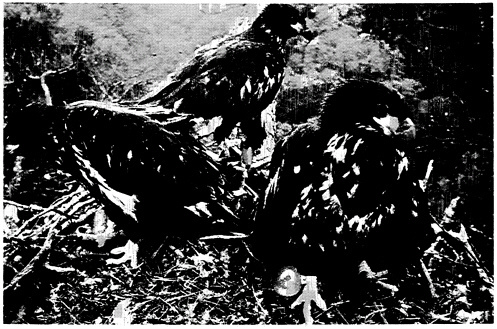
The National Park Service is entrusted to manage some of the nation's most treasured resources for future generations, and science is an indispensable tool in that process. CREDIT: U.S. Fish and Wildlife Service photo of banded eagle chicks by Craig Kappie.
more evident to all levels of park staff, and support for the program within the ranks will grow. Cross-training among scientific, managerial, and interpretive personnel will enhance mutual understanding and encourage staff to see the value of science. The new environment will attract and retain high-quality researchers, especially given incentives such as support for participation in professional meetings and other activities, encouragement to publish results both in the peer-reviewed open literature and in well-reviewed NPS publications, the acquisition of high-quality equipment and facilities, and the possibility for greater professional recognition that attends the more tangible offerings. NPS scientists would be encouraged to challenge conventional wisdom and current policies and practices—with the single objective of improving the quality of science and management in the national parks.
Increased scientific communication and cooperation with national park leaders in other nations would ensure faster,
less expensive resolution of common problems and provide greater protection of the world's natural and cultural resources. An international orientation for worldwide park management and its underlying science is needed now more than ever, given the growing importance of tourism and in the dire consequences of failing to maintain the world's ecosystems (Lubchenco et al., 1991).
The recommendations in this report are sweeping and fundamental; they will require substantial alterations in the philosophic and substantive structure and function of the Park Service. The NPS recognizes the need for a reinvigo-rated science program as well as the importance of parks in the broader scientific mission of the country. But accomplishing the transformation will require special leadership and teamwork. The members of the Committee on Improving the Science and Technology Programs of the National Park Service are optimistic that NPS personnel—renowned for their dedication—will prove able to accept the challenge. Many of the employees with whom the committee has met have expressed significant frustration with current conditions and a sincere willingness to adopt new practices. Numerous external organizations, the news media, decision makers throughout government, and concerned citizens have called for changes in the NPS, especially in its science program. The scientific community—often critical of the NPS program—is broadly supportive of such changes and is willing to assist the agency in revamping its research effort.
Despite the widespread desire to see dramatic improvements in the NPS science program, the challenges are significant. All organizations, including the NPS, suffer some institutional inertia, and not all those in leadership positions wish to face change—no matter how obvious the need. Some changes and expansions will require congressional approval and allocation of additional resources. In addition, because NPS is a government agency, there will be severe scrutiny of the decisions made. Still, the nation cannot afford to wait any longer for the NPS to move toward a new mandate for science. The Park Service is entrusted to manage some of the nation's most treasured resources, and science is an indispensable tool in that process.


