
2
The Importance of Research for the National Parks
The importance of research in the national park system has never been greater than it is today. The National Park Service (NPS) research program must generate sound information to help resource managers deal with increasingly serious and complex threats, withstand increasingly detailed scrutiny, enhance public understanding, and foster cooperation with outside scientists and other agencies. Because many issues that affect parks, such as air and water pollution and the fate of migrating animals, cannot be confined within park boundaries, proposed solutions can affect areas that surround the parks and require regional cooperation. Even when management decisions apply strictly within park boundaries, public review can be contentious. Moreover, because litigation and other challenges to federal land management decisions have become commonplace, the quality and validity of research is critical when park management decisions come before the courts and other arenas of public exposure and scrutiny.
Any examination of the national park system can uncover many cases in which a lack of scientific understanding of park resources led to problems—loss of resource integrity, increases in conflicts between visitors and resources, or escalation of minor issues into major problems. For instance, visitor facilities were developed in habitat critical to endan-
gered species before the concept of endangered species was appreciated. Exotic fish species were introduced to improve recreational fisheries without thought to the implications for native species and the predators that feed on them. Fire suppression led to unanticipated changes in the distinctive character of forests. A common thread in these examples is that almost invariably, the establishment and early management of the parks was done with inadequate scientific knowledge of these ecological systems. Today, our information base is substantially greater, but so too are the threats the park system must face.
Illustrations of the importance of scientific understanding in the management of the parks can be found in every NPS unit. When parks were first established, there was often a lack of understanding of the resources they contained. Problems arose when park boundaries failed to encompass complete ecosystems or enough land to support critical ecological processes (e.g., Everglades National Park), or because visitor facilities were built in inappropriate places (e.g., Sequoia-Kings Canyon, Yosemite, and Yellowstone National Parks), or because of inappropriate management actions (e.g., predator removals, control of native species perceived as pests, control of natural fire, disruption of natural hydrologic regimes, and introduction of exotic fish) (Soulá and Wilcox, 1990; Holland et al., 1991). In the early years of park management, many resources were damaged or lost simply because managers were unaware of their existence or did not know how to manage them (Allen et al., 1981).
These examples illustrate that research is needed for several purposes ranging from simply identifying resources to deciding on appropriate short-and long-term management strategies. In summary, research is important in the national parks for three broad purposes:
-
To determine what resources are present in order to protect them, manage them, and detect changes in them.
-
To understand the natural dynamics and processes of populations, ecosystems, and other park resources.
-
To assess the effects of specific threats and to devise and evaluate management responses.
RESOURCE INVENTORIES AND MONITORING FOR CHANGE
Beaches in Kenai Fjords National Park and Katmai National Park and Preserve in Alaska, like vast stretches of the Alaskan coast, suffered serious damage from the 11 million gallons of crude oil spilled by the Exxon tanker Valdez in 1989. Before the spill, coastal resource inventories in these parks, both biotic and archaeological, were virtually nonexistent. Because of the paucity of data about prespill conditions, the full extent of wildlife losses and the magnitude of eventual recovery will never be known. A more adequate information base would have helped the NPS assess the losses, allowed for a better understanding of what changes could be expected, and helped park managers develop appropriate mitigation and restoration programs.
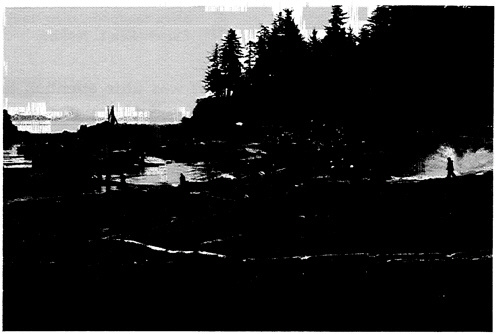
The oil spilled into Prince William Sound from the 1989 grounding of the Exxon tanker Valdez damaged beaches in Kenai Fjords and Katmai national parks. The lack of scientific data about conditions before the spill made it difficult to assess the losses and plan appropriate mitigation. CREDIT: David Policansky, National Research Council.
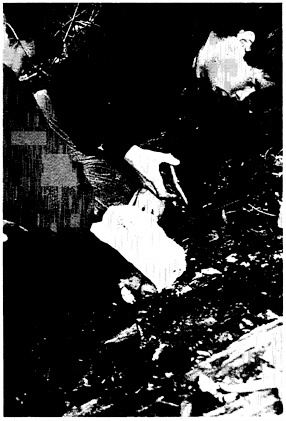
Basic inventories of park resources and consistent long-term monitoring need to be fundamental aspects of any park's research program. Researchers working in Great Smoky National Park tag bears as part of a long-term black bear population study. CREDIT: Ken L. Jenkins.
In the 1950s, an era when there was little attention to science in the NPS, Great Smoky Mountains National Park in Tennessee and North Carolina was the site of a misplaced effort to improve recreational fishing by removing native nongame fish from a park stream. Because knowledge of the park's fish populations was limited, several species of fish previously unknown in the park were both discovered and extirpated during that operation. For many years it appeared that one species—the Smoky madtom—was both discovered and made extinct by that management action; this fish has subsequently been found outside the park, and a reintroduction trial is now under way.
Similar problems were caused by the introduction of New England brook trout, which has come to predominate over the native southern Appalachian brook trout. Research now indicates that the native trout is a genetically distinct subspecies, and its gene pool has been contaminated by the release of the exotic trout. Now only a few streams in the park
(at high elevations, in remote areas, and above natural barriers) harbor native populations. Introduced rainbow and brown trout also have reduced the range of the native brook trout.
In Great Smoky Mountains National Park, an inventory of black bear populations showed that only about 500 bears were present, far fewer than expected in the ecosystem, so managers were motivated to develop a regional management plan. When population monitoring showed unexpectedly low bear populations in several sections of the park, illegal hunting was suspected, and an enforcement program was instituted. A multi-agency state and federal operation led to the arrests of several persons allegedly involved in exporting bear parts to the Orient.
Defining cause-and-effect relationships, in particular, requires sustained, interdisciplinary research at a variety of spatial and temporal scales. Because change is universal in nature, research must determine whether a given amount of change represents natural fluctuation around a steady state or a net trajectory in a desirable or undesirable direction. In Yellowstone National Park, for instance, the deteriorating condition of the northern range continues to create controversy. Scientists external to the park say the deterioration is caused by excessive populations of elk; research by park biologists, however, indicates that the changes are natural and caused, in part, by climatic changes. The controversy stems in large part from the lack of long-term data. Since ecosystems operate under fluctuations in climate, the need to detect actual directional change in resources poses a significant challenge that requires a substantial and sustained research effort. Such efforts require sophisticated and sensitive research techniques. Because the parks often lack even the most basic inventory of resources and baseline data, research often must start from an inadequate data base for the design of key studies.
STUDIES OF NATURAL DYNAMICS AND PROCESSES
The population dynamics and interactions among gray wolves, moose, and vegetation at Isle Royale National Park
in Michigan have been studied for more than 30 years. This research, conducted largely by scientists outside the NPS, has generated new hypotheses about natural population regulation in large mammals that have received wide scientific review and public scrutiny. During the initial 12 years of study, 1958–1970, scientists found apparent stability in high-density wolf and moose populations that reinforced a popularly held belief of balance and constancy in wild populations, often attributed to the lack of harvesting or other manipulation by humans. But stability dissolved in the 1970s as the moose population declined by more than 50 percent while the wolf population increased to an unprecedented level. For scientists, a belief in static equilibrium was replaced by knowledge of cyclic change in populations of wolves and moose, with fluctuations occurring over decades. The change caught the attention of the public, and there was considerable demand for information that was met by an ongoing monitoring effort.
Further perturbation of this classic predator-prey story became evident in the 1980s, as a wave of disease was circumstantially linked to a decline that jeopardized the survival of the famous wolf population. Forced by the unprecedented decline, the NPS abandoned its attempt to let natural processes prevail on the island (even to the exclusion of common research techniques such as radiotelemetry, which necessitates animal capture and handling), and it allowed scientists to capture wolves, take blood samples, and attach radiocollars to monitor them and study the possible roles of food shortage, disease, and genetic deterioration in their decline. Once again, public interest was intense. Notably, the answers came from scientists outside the NPS, who were supported by and interacting closely with Park Service staff. The example of the Isle Royale wolves provides an invaluable demonstration of the hazards that face all small isolated populations, and it highlights issues that face conservation biologists worldwide. The fate of the Isle Royale wolves is unclear. Their future dynamics might not emerge, as in the past, as a simple outcome of supply and demand for prey. In the short term, managers and scientists must accept this uncertainty and research must continue.
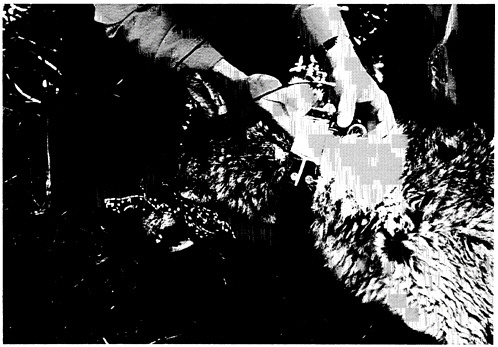
Studies of the wolves at Isle Royale National Park have taught scientists many lessons about population dynamics. A decline in the famous wolf population in the 1980s led the Park Service to allow scientists to put radiocollars on some wolves to better study the population's status and health. CREDIT: NPS photo by Robert J. Krumenaker.
Denali National Park in Alaska (formerly Mount McKinley National Park) is another park at the forefront of wolf research worldwide. Studies there began in the 1940s, when the NPS was under pressure from trophy hunters to reduce or eliminate the wolf population. Among the handful of NPS biologists at the time was Adolph Murie, who went to McKinley to investigate the role of wolves in reducing Dall sheep populations. Murie undertook a pioneering program of basic ecologic research, providing the first scientific look at this controversial carnivore. His collection of Dall sheep skulls provided the first life table for a species of wildlife, and his findings are still used in theoretical analyses of mammalian mortality patterns and applied research into wolf-prey relations. The tradition of ambitious research on predator-prey interactions, using state-of-the-art technology, continues at the park today, and evidence about the movements of the
|
VISITOR SERVICES PROJECT NPS social science research has been limited, but of great value in several locations where studies of visitor behavior have guided management. For instance, the Visitor Services Project (VSP), a project of the NPS and the University of Idaho Cooperative Park Studies Unit, was created in 1982 out of the realization that social science research in the parks was uncoordinated and incomplete. Although various studies were being conducted at parks around the nation, there was little consistency, little opportunity to build on the work of others, and a good deal of frustration that the research did not really meet the needs of managers. The project was developed to standardize the method for studying park visitors. The survey methodology was carefully designed, tested, and revised, and its rate of response is so successful (75–85 percent) that it has been published in the social science literature and widely used, even in other countries. The survey has two elements: a standardized series of questions about visitors (age, group size, group type, residence, visiting patterns, and activities attended) that is used consistently from park to park, and a series of questions customized to the particular needs of the park. To date, 46 studies have been done in 38 national parks. Even though parks must pay for the work ($10,000–$17,000, not including VSP staff time and other overhead expenses), demand for the research team is great and an advisory committee was established to help select parks for the 10 studies possible each year. NPS and cooperative park study unit staff work closely with park personnel in planning, conducting, and interpreting the studies. Because of the growing body of information being compiled, VSP is now building an important data base on visitor needs. The customized portion of the research provides park managers with insights about changes and improvements in park operations:
|
|
wolf population helped lay the groundwork for delineation of new park boundaries.
Research on natural processes also has been important in fire management. Beginning with the pioneering use of fire in the management of Everglades National Park in the 1950s, research in the national parks, some funded by the NPS, has had a major influence on the acceptance of fire as a natural process in wilderness landscapes. Studies of natural fires, the effects of fire suppression, and the use of planned fires have produced a large body of literature. Fire is now a universally accepted management tool in conservation biology, and the NPS has been a major force in this change in thinking.
In Sequoia-Kings Canyon and Yosemite National Parks in California, fire suppression was once believed essential to protect park resources. However, after decades of fire control, fire-intolerant species of pine and fir spread into the meadows and giant sequoia groves, respectively. Research that began in the 1960s provided a better understanding of the significant role of fire in maintaining the distinctive character of Sierra Nevada forests, and prescribed burning began in the 1970s. Recent public challenges to this practice have led to outside review of the fire management and research program. The reviewers endorsed the fundamental concept of vegetation management through burning and recommended additional research to provide a better basis for planning
and evaluation of prescribed fire. A synergy among management, public information, and research was found to be needed.
At Yellowstone National Park in Wyoming, intensive study of fire history began in the early 1980s. Scientists found that high-intensity, stand-replacing fires occurred at long intervals and affected large percentages of the study area in a single burn. Their description was published before the dramatic 1988 fires—and it is remarkable that the results produced a convergent picture with studies of those large fires. In fact, the research was an asset to park scientists and managers in dealing with the fires and is being used to shape new management policies.
Another example of the value of research on natural processes is evident today in how park units along the coasts are managed. When NPS began acquiring land for Cape Hatteras National Seashore (authorized in 1937) and for some time thereafter, its policies included expensive structural attempts to stabilize beaches, dunes, and shorelines. By the time more recent National Seashores such as Cape Cod (Massachusetts), Cape Lookout (North Carolina), Assateague Island (Maryland), and Cumberland Island (Georgia) were acquired in the 1960s, NPS's policies had begun to evolve toward more flexible approaches that recognized the natural dynamics of coastal systems. Even where historic structures are involved, NPS's policy now requires that ''control measures, if necessary, be predicated on thorough studies taking into account the nature and velocity of shoreline processes ...'' (NPS, 1978). The evolution of NPS's management of shoreline processes was based in part on the accumulation of scientific evidence that demonstrated the futility of trying to control beach erosion in these dynamic, ever-changing ecosystems.
ASSESSING THREATS AND MITIGATION MEASURES
At Cape Cod National Seashore in Massachusetts, off-road vehicles were blamed for serious dune erosion, visitor annoyance, and harm to the endangered piping plover, a bird that requires extensive sand beaches for nesting. A
five-year study of off-road vehicles, complemented by separate social science and ornithological studies, resulted in the development of an off-road vehicle management plan that was instituted after public review and comment. The plan allows vehicular access to some of the better surf fishing areas while protecting dunes, vegetation, and shore birds, including the piping plover, and minimizes conflicts between different types of uses at swimming beaches. The plan, based on careful scientific studies, has withstood challenges in a U.S. District Court.
The Devil's Hole pupfish, endemic in a single undisturbed pool in Death Valley National Monument in California, has a smaller range than any other North American vertebrate. A decline in water levels began in 1968 when groundwater pumping for agricultural irrigation began on adjacent private lands. Scientific studies revealed that reproduction necessary to sustain the endangered species could only occur if the water level in the pool was high enough to support growth of algae on a shallow rock shelf within the pool. With this knowledge, the NPS mitigated the problem by purchasing certain adjacent lands to protect against groundwater overdraft and obtaining a permanent court order that prevents pumping of groundwater that lowers the water level below the rock shelf. The court order, which was based on scientific research, was upheld by the U.S. Supreme Court.
The protection of Everglades National Park in Florida seemed at first glance assured by the setting aside of some one million acres in south Florida, a total since increased by the creation of Big Cypress National Preserve adjacent to the national park. However, the park boundaries did not encompass all of the areas that proved critical to the functioning of park ecosystems, and the effects of land use and water management outside the park soon became evident. Today the park faces a variety of serious problems related to water levels and water flow patterns, agricultural pollutants, exotic species, and habitat destruction. One result is that the population of wading birds has declined more than 90 percent since the 1930s, from about 250,000 in 1934 to 7,800 today. The population of endangered wood storks has declined from 5,000 birds in 1956 to 375 birds today.
In response to such threats, cooperative research on hydrology and biotic responses is being conducted, and researchers are developing models to predict water flow under various conditions. These tools have helped park managers negotiate better schedules for water release from the South Florida Water Management District to the national park. Research also is under way to assess the effects of agriculture, in part to determine how water coming from agricultural areas north of the Everglades and coursing through canals to the park threatens to increase the amount of phosphates and nitrates in park wetlands. Other research is being done to determine the effects of sport fishing, which has grown by almost 10 percent each year, and the associated effects of the increase in recreational boat use on the seagrass beds. These efforts and others in the park should increase our understanding of this unique ecosystem and help park managers protect the resources for the future.
The native cutthroat trout of Yellowstone Lake, a key species in the food web of the Yellowstone ecosystem, is both a top predator in the river ecosystem and prey for many terrestrial carnivores, including grizzly bears, white pelicans, bald eagles, and ospreys. The cutthroat trout provides an important link between aquatic and terrestrial productivity. The cutthroat trout fishery was a major early attraction of the park, and liberal fishing regulations led to the decline of fish stocks beginning in the 1920s. By the late 1960s, the popular sport fishery had virtually collapsed. A study of long-term measurements of rates of spawning and harvest left little doubt that overharvest had jeopardized the trout population. The NPS data base, coupled with an increased public awareness of the role of the fish in the park's ecosystems, led to the imposition of restrictive yet innovative regulations that have permitted the trout to increase and once again flourish. From Fishing Bridge in the park (which is now closed to fishing) visitors can witness a trout spawning run almost without parallel. Increases in the number of carnivores in Yellowstone National Park have been attributed in part to recovery of the trout. A fine sport fishery also has been restored and is once again an attraction for many park visitors.
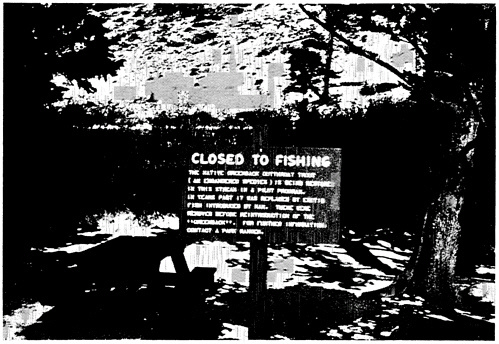
In many parks, early attempts to improve recreational fishing for visitors caused declines in native species. In Rocky Mountain National Park, the native Greenback Cutthroat Trout, now an endangered species, is being restored to some of its original habitat. CREDIT: U.S. Fish and Wildlife Service photo by Jim Williams.
Mammoth Cave National Park in Kentucky comprises a spectacular cave system in classic karst topography, where water quickly leaves the surface to enter groundwater channels that carry large volumes of water. Outside the park, in the plain that drains directly into Mammoth Cave, septic tanks and sewage drain fields contribute effluent that quickly enters the groundwater system. A nearby commercial cave, in similar karst terrain, was closed because water pollution had resulted from poor local sewage and wastewater disposal practices. Studies using tracer dyes have shown that Mammoth Cave groundwater comes in large part from the surrounding drainage plain, which receives both untreated and inadequately treated sewage effluent. The studies resulted in the development of a plan for regional sewage treatment facilities. Although the studies showed the potential for pollution damage, insufficient research was done to identify the actual
amounts of pollution that might affect park resources. The Park Service now finds itself in a difficult position because legislators and residents are not convinced, without more conclusive data, that the threat is real.
In Great Smoky Mountains National Park, considerable research on threats and mitigation is under way. For example, research has addressed the high-elevation spruce and fir forests of the southern Appalachians. These unique, island-like ecosystems at the summits of the highest peaks are rich in rare northern vascular plants and southern endemic plant species. The balsam woolly adelgid, an introduced pest insect, has caused nearly complete mortality of Fraser fir, a southern endemic tree, and is causing great structural change within the forest. Research to establish the pattern and cause of mortality is assessing remnant groves of mature fir, the protection of the gene pool through seed collections and tissue culture, and the efficacy of spraying infested trees with an environmentally benign fatty acid. Several rare bryophytes and lichens occur only on the bark of the Fraser fir. In the short term, research will help managers decide whether it is necessary to manage these elements of biologic diversity directly. Research also has addressed fuel loads and the risk of fire in these stands, as well as successional patterns of recovery.
Other research on the influence of acid deposition in Great Smoky Mountains National Park has focused on the spruce-fir ecosystem because acid deposition is greater at higher elevations than it is in low-lying areas. Research has shown unusual reductions in red spruce growth on some sites. These systems are long lived and the mineralization of organic matter is a slow process, so a better understanding of mineral cycles will require additional years of work. The results of the research, however, could help NPS prevent the addition of new sources of pollution in its airshed and suggest the development of other strategies for protecting biological diversity.
Science programs in several national parks, including Great Smoky Mountains National Park, Sequoia-Kings Canyon National Parks, and Rocky Mountain National Park have been important in the National Acid Precipitation Assessment Pro-
gram (NAPAP). The NPS has cooperated with government agencies and other organizations to support research and analyses under the NAPAP, including the U.S. Forest Service, Environmental Protection Agency, the Electric Power Research Institute, National Aeronautics and Space Admin-
|
THE NATIONAL ACID PRECIPITATION ASSESSMENT PROGRAM The National Acid Precipitation Assessment Program (NAPAP) was authorized by Congress in 1980 to quantify and explain the causes and consequences of acid atmospheric deposition. The 10-year, multi-agency effort cost approximately $500 million and culminated in 1990 with the delivery of 34 volumes of reports to Congress. The NPS participated in NAPAP in several ways. It received NAPAP funds to conduct watershed research in sensitive but relatively unaffected remote areas of the West and Midwest. Funds were provided to 16 park areas to participate in long-term monitoring networks (NPS, 1991). The NPS Office of Historic Preservation was involved in research into the effects of acid deposition on building materials. Park Service scientists worked with other investigators both inside and outside of parks to avoid duplication and to maximize expertise. The effort offered many lessons. It confirmed that acid deposition causes acidification of sensitive aquatic ecosystems and can affect soil fertility. It showed that acid deposition in conjunction with other air pollutants and climatic fluctuations can harm forests and that the mechanisms through which damage occurs are not simple. An important body of knowledge about deposition chemistry, surface water sensitivity, forest response, and ecosystem processes was generated. With the data, parks with damaged and at-risk resources can be ranked and managers can devise strategies for addressing the effects. Beyond this information, however, the program brought intangible benefits to the Park Service (Baron, 1991). During the 10 years of the program, the NPS built a core of experienced, respected researchers able to address the interdisciplinary issues that characterize natural resource management today. They became involved with researchers in other agencies and in universities in addressing these complex questions, and the patterns of communication will bring other benefits in the future. The experience of peer review also should translate into continued high-quality reporting of results. |
istration, National Oceanic and Atmospheric Administration, and several state governments. The 10-year program of research generated critical information about the effects of air pollution and pollutant disposition on ecosystems. Although NAPAP itself lasted only for 10 years, new science programs, such as the Global Change Program, will use many of the sites established for NAPAP monitoring. Also, the inter-agency cooperation stimulated by NAPAP facilitated regional analyses of systems, an effort that continues. Research included studies of the effects of acid precipitation on vegetation in the Sierra Nevada, on forests in the southern Appalachians, and on air quality in the Colorado Front Range.
CONCLUSION
These examples illustrate some of the array of problems facing park scientists and managers, who must grapple with pervasive human influences; determine appropriate levels of human involvement in ecological processes and in the lives of endangered species; deal with the importance of spatial scale in recommending land acquisitions and management of land already in the system; and balance the inevitable tradeoffs between the need for information, aesthetic considerations, appropriate public use of park lands, public perceptions, and affordability. The folly of dealing with this range of issues without adequate scientific information should be readily apparent.
Some overall insights can be gained from the examples:
-
Simple isolation of a national park from neighboring human influences, even if possible, will not ensure its preservation.
-
For many ecological processes, long-term data collection, whether it is called monitoring or research, is absolutely critical to scientific study and resource management.
-
The credibility of NPS management decisions and its research in general will be enhanced by involving the external scientific community.
-
The public, a critical constituency of the parks, expects timely answers to their questions about park resources. Science and interpretation should be closely allied.
The progress brought by research is a continuum—each generation of scientists builds on the knowledge gained by the last. If we look into the past, we can find clear examples of where the lack of scientific understanding actually harmed park resources—for instance, the 1950s attempt at Great Smoky to improve recreational fishing that both discovered and almost made extinct an endemic species, the Smoky madtom. We see an evolution in NPS attitudes regarding human interference with the natural functioning of park ecosystems—a trend toward less interference that represents a learning process (Wright, 1992). All parks start with an inadequate knowledge base. As research answers some questions, it inevitably raises others. It is only through such an iterative process that parks can be preserved.
It is important to note that virtually all successful research efforts in the national parks in some way involve coordination with the external scientific community. This con-
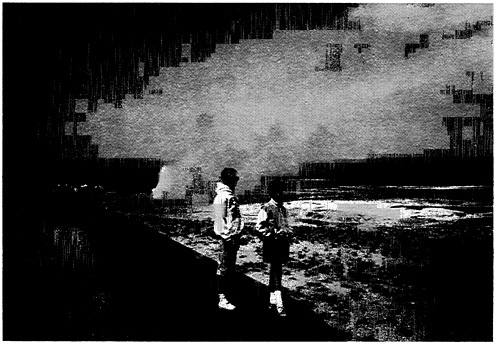
Balancing the needs of visitors who seek to enjoy the nation's parks with the need to protect park resources will always remain a challenge for park managers. Park scientists and park managers must work together to meet this challenge. CREDIT: National Research Council.
clusion has implications for the future of the NPS program. One way to strengthen the NPS science program will be to strengthen cooperative research elements.
By itself, an adequate research program will not eliminate the many, complex threats faced by the national parks. But it will allow faster identification of human perturbations, greater understanding of cause and effect, better insights into prevention, and more appropriate strategies for mitigation so that managers can maintain systems in a desirable condition or restore them where necessary. Virtually all parks have a backlog of unaddressed research questions. This is noted in NPS's own assessment of threats to the parks (NPS, 1980), and it is illustrated clearly in the long lists that typically appear in the "research needs" sections of park resource management plans. Science must be a permanent fixture within the NPS and that research must be an ongoing, iterative process.


