
4
The Current Research Program of the National Park Service
According to the National Park Service (NPS), the primary objective of its research program today is to conduct directed studies that provide information on which to base park planning, park development, and park management decisions. Current research often deals with management problems in the parks and is designed to support decision-making. It includes laboratory and field investigations, analytical studies, and data collection directly related to protecting and preserving the resources of the parks and the vistas that surround them. It is also needed to find ways to enhance the use and the enjoyment of the parks by visitors. Because park resources run the gamut from biological resources (e.g., vegetation, wildlife, fisheries) to geophysical resources (e.g., water, air, caves, soils, islands, minerals) to cultural resources (e.g., archaeological ruins, monuments) to aesthetic resources (e.g., scenic vistas, quiet places), the NPS science program includes elements of the biological, geophysical, and social sciences.
Information from research is needed at many levels throughout the Park Service. For example, individual parks often have specific issues of importance, such as wolf-moose interactions at Isle Royale National Park or coral reef degradation at Virgin Islands National Park. In other cases, research
transcends questions raised at individual parks. For example, the problems created by the gypsy moth affect many eastern parks, and control of kudzu, an introduced plant species native to Japan, is an issue throughout the south. The answers to still other research questions have nationwide implications. For example, air pollution, water resource management, and uses of the parks by visitors are issues in virtually all parks.
Baseline resource inventories and long-term monitoring of the status of park ecosystems are particularly important to all park units. The information is necessary to determine the current ecosystem structure and the nature and rate of change of these ecosystems. Research results can be used in models developed to predict future conditions in the parks, and such models can lead the way to management strategies. Through the monitoring of actual conditions, undesirable effects on resources and ecosystem processes can be detected as the first step toward mitigation. Park use patterns and impacts similarly need to be documented. Among the most serious issues is the need for documentation of the direct and indirect impacts of human activity on park resources.
In conducting this study of science in the national parks, the Committee on Improving the Science and Technology Programs of the National Park Service originally set out to perform a standard peer review of NPS research activities. However, the committee soon determined that the real problems in the NPS research program are not at the level of individual projects. Instead, they are more fundamental, rooted in the culture of the NPS and in the structure and support it gives to research. Thus, the committee concluded that the real need was for an assessment more broadly focused on the program and its place within the agency.
ORGANIZATION
Levels of Authority and Functions
The national park system consists of 361 individual units administered by the NPS to maintain their intrinsic natural,
cultural, or recreational values. The units are called by some 20 different names including monuments, historic sites, seashores, and recreation areas. Their sizes range from 13.2 million acres (Wrangell-St. Elias National Park and Preserve in Alaska) to 0.2 acres (Thaddeus Kosciuszko National Memorial in Pennsylvania).
The current organization and philosophy of the NPS treats research as part of resource management. The two areas were combined to enhance cooperation between the two functions. Some observers charge, however, that merging the two activities was motivated at least in part by a desire to create the illusion of an increase in science activities and funding.
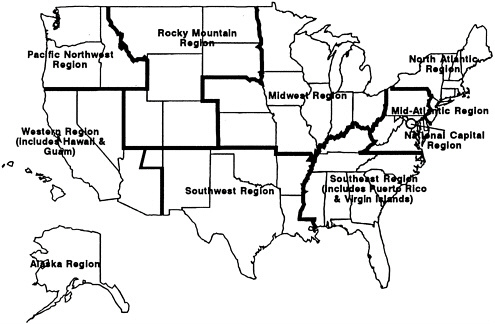
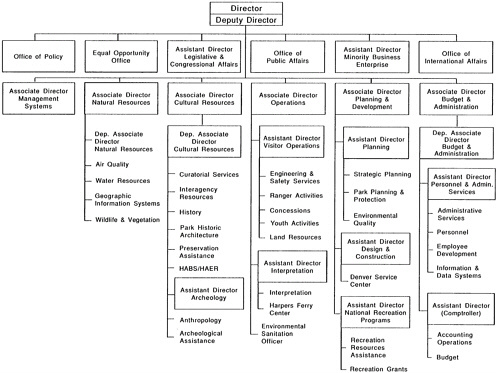
Park Service research and resource management generally are organized at three levels of authority: in the Washington office, in the 10 regional offices (Figure 4-1), and in the individual park units. Natural science research is administered from Washington by the associate director for natural resources, who directs the deputy associate director and four divisions (air quality, water resources, geographic information systems, and wildlife and vegetation). These divisions conduct research that generally is of value to the entire system. Cultural resource management and research fall under the authority of the associate director for cultural resources and of a deputy associate director; they oversee the divisions of Curatorial Services, Interagency Resources, History, Park Historic Architecture, Preservation Assistance, Historic American Buildings Survey/Historic American Engineering Record, Anthropology, and Archeological Assistance. Figure 4-2 shows the basic organizational structure of the Washington office.
As described by the NPS, the roles of the Washington office are to develop general policies and standards, set national priorities, coordinate servicewide research programs, and request funds for research and resource management from the Department of the Interior and Congress. Most of the actual research planning and activity, however, is carried out by the 10 regional offices. The Washington office maintains no separate research division because research is considered mainly a regional and park responsibility. As a
result, there is not one NPS science program, but 10 separate programs, each different in form and function.
Science serves five separate but closely related NPS functions: research and studies; resource management, preservation, and restoration; interpretation; resource protection; and program management.
Research and Studies
This area includes activities such as making inventories and short-and long-term monitoring undertaken to provide data for decision making, preservation, mitigation, rehabilitation, restoration, interpretation, and resource protection. Research design, data collection, synthesis, analysis, preparation of reports and publications, and development of management recommendations are part of this category.
Resource Management, Preservation, and Restoration
This category includes all activities that involve resource manipulation or change, including aid in management, preservation, and restoration related to sustaining natural systems or restoring altered resources to a more functional or natural state. Preservation can include habitat protection and maintenance, control of non-native species, prescribed burning, and integrated pest management. Restoration includes actions such as repairing eroded sites; replanting and reintroducing native species. and restoring sites, landscapes, and habitats.
Interpretation
This category includes all activities designed to explain, translate, or define research and implementation activities for management personnel and visitors to the park units. Close communication between those who work in research, resource management, and interpretation is essential to the success of the NPS science program because it is through interpretation that the knowledge gained through science is conveyed to decision makers and, ultimately, to the owners
of the park system—the public. Resource management is the implementation arm of the science program; interpretation is the explanation of science and resource management. Each of the three must be effective for the others to be successful. Because the perpetuation of a park's natural and cultural resources is a park's highest purpose, these three related activities—science, resource management, and interpretation—require strong support, as do operational activities such as administration and maintenance.
Resource Protection
This area includes activities that protect park resources from overuse, vandalism, or other kinds of destruction. It also includes back country and wilderness patrols; special permitting; and enforcement of regulations and laws pertaining to fish and wildlife, federally listed threatened and endangered species, agriculture, grazing, mineral resource management, and air and water quality.
Program Management
This function includes all supervision, management, planning, and administration of natural resource management activities. These include setting program goals and objectives, establishing priorities, programming and budgeting, information management and tracking, personnel actions, meetings and communications, publications, and developing resource management plans.
Reporting Structures
The current organization of responsibilities for natural resource management and research varies considerably from region to region, but it generally follows one of two models. In one, the resource management staff, including any scientific staff, report to the superintendent of a park. In the other model, the scientific staff at the parks and in cooperative park study units report to the regional chief scientist while resource management specialists, who translate research
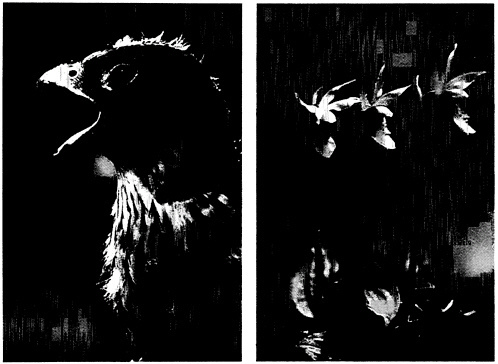
A 1988 survey revealed that over 120 endangered or threatened species were known to occur in the national park system. The peregrine falcon can be found in 59 parks and is the subject of restoration efforts in some units, including Acadia National Park. Less well known are the many threatened and endangered plants that are protected, such as these lady's slippers. CREDITS: U.S. Fish and Wildlife Service, peregrine by Jo Keller, lady's slippers by Peter Carboni.
findings into management strategies for park managers, report to a park superintendent. The second model gives the research staff some independence from the temporary crises, political influences, and immediate needs of front-line park managers. It offers the potential disadvantage that scientists might miss critical information that can be gained from the management perspective on priorities and problems. Some regions have consolidated research and resource management; others keep the two separate. Some regions arrange for most research to be done through extramural contracts or cooperative agreements; in other regions, most research is done by NPS staff, sometimes funded in part or whole by other agencies.
This decentralized approach was instituted early in the 1970s to give greater flexibility at the regional level, and thus to be more responsive to the needs of individual parks. But the decentralized management of NPS has been a source of controversy. It is sometimes inefficient and results in fragmentation and duplication of effort. In addition, the Washington office has little authority and funding to provide adequate leadership in the face of the mounting problems and pressures in the system, especially for problems of national or international scope. Other critics charge that the decentralized approach creates extreme (and inevitable) variations in research effectiveness and in the morale of scientists from region to region and park to park. In areas where the line manager understands the usefulness of research as a management tool, research flourishes. In other areas, research fares poorly.
Another problem can arise when research and management are too closely entwined: the long-term vision and continuity needed for productive research often is not compatible with the short-term decision making needed for resource management. Each function offers different skills, as well, and misplaced responsibilities create problems—for instance, resource management staff assigned to take the lead in monitoring sometimes lack the training to design sampling programs or analyze the data collected. The political pressures inevitable in the management arena often do not foster good science. Because research and resource management funds come from the same pool in the NPS budget, the two activities compete for support. Given the overall shortages of staff and funding faced by the NPS, conflicts between researchers and managers—with their different goals and methods—can be severe and counterproductive. Without a clear mandate, research (like resource management and interpretation) very often loses out to the more immediate concerns of law enforcement and park operations.
In fact, when the NPS science program was being developed in the 1960s the original structure selected was a centralized organization patterned after the U.S. Forest Service and the U.S. Fish and Wildlife Service. A centralized structure also was recommended by the Robbins committee in
1963 (NRC, 1963). This structure gave the NPS a chief scientist in Washington with line authority to supervise all field scientists, whether they were assigned to parks, universities, or regions. The structure changed in 1971 when the current decentralized plan was instituted. The regional chief scientists now administer the regional programs in concert with the line managers (regional directors and superintendents). The regional chief scientists serve as the technical directors of their programs, and the line officers administer them.
Coordination and Planning
Park Service research activities must be well coordinated to ensure that research funds are spent wisely, accounted for properly, and that unnecessary duplication of effort is minimized. This is a major responsibility of the regional chief scientists and the chief scientist. Examples of servicewide coordinated research can be seen in the four divisions under associate director for natural resources. The divisions offer important avenues for research of national scope and have tightly defined missions that increase their effectiveness.
The Air Quality Division is responsible for air quality studies both through individual park projects and through servicewide activities; in 1991 it had a staff of 25 and funding of about $6.2 million. Through this division, the NPS monitors air quality in some 74 parks. Efforts also are under way to inventory and monitor air pollution effects on native vegetation. Research has focused on symptoms, location, and extent of ozone injury to native vegetation; on the origins and trajectories of air masses that impair visibility in parks; and on developing regional transport models for sulfates and ozone.
The Geographic Information Systems Division supports the use of geographic information data bases for resource inventories and monitoring in park management. Working with park or servicewide funding, the division acquires data, digitizes them, and does field work to verify them. Geographic information data bases can be used to determine trends in biological diversity; determine fidelity or deviation from desired resource conditions, assess the impacts of hu-
man activity, and forecast the consequences of management actions. For instance, in the North Cascades, Landsat data were processed in conjunction with topographic and precipitation information to map vegetation classes. The vegetation profile was used to produce two fire fuel models, and to model potential habitat for bald eagles and peregrine falcons.
The Water Resources Division activities include formulating water resources policy; offering planning assistance and regulatory reviews; conducting water resources inventories and monitoring; and identifying, evaluating, and mitigating threats to park water quality and quantity. The division also conducts flood plain and flood hazard analyses, and it has projects for erosion and sediment control and protection of wetland and riparian habitats. It tests water sources for potability; and secures and protects NPS water rights and resources.
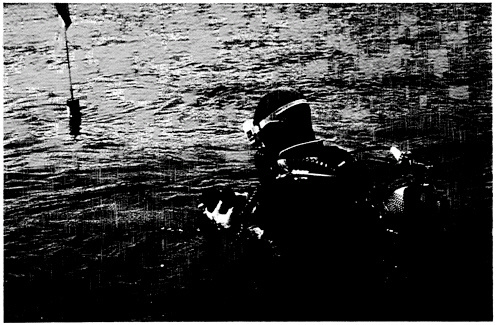
Scientists working on research in the parks—whether NPS scientists or others— need to coordinate their efforts. Research at St. Croix International Historic Site is examining freshwater mussels as an indicator of contamination by polychlorinated biphenyls (PCBs) and mercury. CREDIT: NPS.
|
GLOBAL CLIMATE CHANGE RESEARCH IN NATIONAL PARKS One recent example of the kind, of broad research that needs centralized leadership is the NPS's new efforts in the area of global climate change. The parks make good sites for this kind of research. Large tracts of relatively undisturbed natural ecosystems remain in the parks, so researchers can work toward differentiating global change effects from anthropogenic disturbances. Such research is essential to the future of the parks because changes in climate—including those caused by or evidenced in drought, storms, and wildfires—could threaten natural and cultural resources. Research data can help resource managers better understand the changes and help them make policy decisions for dealing with the affected areas. In FY 1991, the NPS and cooperating park study units began work on 14 research projects in 6 biogeographic areas—the Colorado Rockies, the Glacier National Park area, the Olympic Peninsula, the Ozark Highlands, Southern and Central Sierra Nevada, and the Western Lake Forest. Research includes studies of tree rings, aquatic ecosystems, nutrient cycling, pollen analysis, fluvial geomorphology, fire history, and forest demography, as well as studies of forest succession and regional and landscape modeling. As other relevant research is conducted throughout the park system, continued efforts at coordination and communication will be necessary. There are, however, problems in the NPS global change research program. The Park Service's response to the call for global change research was to build a large program at too many sites to effectively study the numerous processes and resources at risk. At the peer review of proposals submitted by individual parks, a strong recommendation was mode to concentrate on three or four locations based on science needs; the number of sites to be included was expanded based on political needs. While there is no question that the NPS must participate in national and international global change programs, the dollar investment is small ($3,000,000) compared to other agencies and could be better used to understand those sites at greatest risk under a changing climate scenario or where the baseline data base provides the greatest opportunity to evaluate change. |
The Wildlife and Vegetation Division provides direction and technical input to servicewide programs in management of wildlife and vegetation, including threatened, endangered, and exotic species. It is responsible for the NPS integrated pest management program. It provides expert scientific assistance to support management and policy decisions throughout NPS. The division coordinates the NPS's involvement in the National Natural Landmarks Program and the Man and the Biosphere Program, and it coordinates servicewide research on issues of national and international significance, including biological diversity, global climate change, and the biological effects of acid precipitation.
Although these divisions are useful in facilitating servicewide coordination, coordination of research does not end within the agency itself. It must extend outward to other agencies and to the academic community. One example would be outreach to the U.S. Forest Service, which conducts extensive research of direct application to the NPS. The National Aeronautics and Space Administration, National Oceanic and Atmospheric Administration, and the Department of Defense all have substantial experience with remotely sensed data and geographic information systems that is relevant to NPS needs. NPS science personnel need to know what is happening in other quarters, to share information, and to transfer knowledge.
The recognition that national parks cannot operate as islands separate from their surroundings has resulted in greater efforts to cooperate with other agencies to solve natural resource problems. This is especially true in areas where adjacent lands are managed by other agencies. Fire management research, for example, has a long history of interagency scientific cooperation. Because of the unique needs of land management agencies in controlling, predicting, and understanding the behavior and effects of fire, there has been considerable cooperation between NPS and Forest Service scientists. Although research information can be integrated through such forums as annual conferences, land managers do not always use the available information in their decision making. Other examples of interagency research integration include studies to support grizzly bear recovery (with U.S.
|
COOPERATIVE PARK STUDY UNITS An important mechanism for NPS to obtain research information is the cooperative park study unit (CPSU). As of May 1992, there were 23 functioning CPSUs across the country. CPSUs are located at institutions of higher learning with which the NPS has cooperative agreements to facilitate research and provide technical assistance to the parks. The CPSUs were established to create a mechanism for better access to current scientific information and expertise. The park service scientists act as liaisons to enlist faculty and graduate students to conduct research needed by the parks. Under the cooperative agreements, each CPSU has a resident scientist responsible for administering the operations of the unit. This person is usually an NPS scientist, but in some cases is a university faculty member, a portion of whose salary (at least 20 percent) is paid by the NPS. CPSUs typically are responsible for providing research and technical support to several parks within a geographic region. In some cases this means all of the park units in a state (e.g., the CPSU at University of California-Davis serves all of the parks in California). In other cases this means the CPSU is responsible for all parks in a biogeographic province (e.g., the CPSU at Northern Arizona University serves all parks on the Colorado Plateau). CPSUs generally report to the regional chief scientist in the regional office. The first CPSU (University of Washington) was established in 1972. The network continues to grow as research demands and funding allow.
|
||||
Forest Service and U.S. Fish and Wildlife Service); studies of the spotted owl (with U.S. Forest Service, U.S. Fish and Wildlife Service, Bureau of Land Management); and studies of exotic species management in Hawaii (with U.S. Fish and Wildlife Service).
The most effective method of integrating research with other programs is through multiple year programming, combined with daily coordination of programs to allow continuous interaction among the officials involved. There is some danger of losing integration of programs where park scientists report to regional scientists, and some observers fear that research activities might become estranged from individual park needs. Far more difficult, however, is the integration of research programs with service programs, such as planning, design and construction, and interpretive design and production. For example, the geographic information system is a sophisticated data-gathering unit that is not fully exploited, and the computer systems in use in different areas are not compatible for transfer of data.
PERSONNEL
In theory, the NPS conducts research using its own staff scientists stationed in the parks, in science centers, and in regional offices; in cooperation with university scientists associated either with cooperative park study units or under other cooperative agreements; in cooperation with other government agencies; or through competitively negotiated contracts. In practice, only a few parks employ enough research scientists to have a research division or center on site. The South Florida Research Center in Everglades National Park Field Research Laboratory and the research divisions in Yellowstone and Glacier national parks are among the few examples. Some parks have one or two full-time employees dedicated to research, but most parks have no in-house research staff at all.
The Park Service maintains a smaller research staff than is found in most other federal land management agencies. For fiscal year (FY) 1987, NPS employed about 286 researchers and research administrators, or about 2.3 percent of its
|
PERSONNEL CLASSIFICATIONS Most positions in the NPS are assigned grade and pay scale using standard government classification schedules. The grades for these jobs, which include ranger and resource management positions, are determined by the duties listed in job descriptions. Promotion and advancement comes mostly through transfer to other positions, typically elsewhere in the NPS. The research grade evaluation (RGE) is a special classification system for use in properly determining the grade and pay for federal employees involved in natural science research activities. It is a peer evaluation system and has as its basic tenet the belief that peer-reviewed scientific publications are the best measure of the accomplishments and scientific contribution of any researcher. Under the RGE system, a researcher can enter federal employment at GS-11 or GS-12 and through successful research and publication advance over his or her career to GS-15 or higher, much the same way that academic researchers advance through the ranks within a university tenure system. Advancement rests on the scientific accomplishments and documented professional reputation of the individual researcher. The system was created to improve the ability of the federal sector to recruit and retain competent scientists. Scientists are not forced to transfer to a new job to get a promotion. Closely related is the grants grade evaluation, which is used to determine the proper grade and pay for those scientists involved primarily with research administration (e.g., regional chief scientists) rather than with the conduct of original research. |
12,475 permanent employees. In comparison, in 1989 the U.S. Fish and Wildlife Service employed 509 scientists, about 9.3 percent of its 5,471 permanent staff (NPCA, 1988a). In 1987, the NPS natural science staff included 73 scientists classified under the research grade evaluation located primarily in the parks, 22 employees who conducted some research within a resource management context, and 20 research administrators. The NPS cultural research staff included 114 archaeologists, 4 cultural anthropologists, and 29 research historians (NPCA, 1988a). Critics argue that inadequate staffing is a serious problem, and that it is compounded by inefficient use of personnel—such as the diversion of scientists into resource management and nonresearch administrative tasks.
They also argue that limited staffing prevents the NPS research program from becoming more long-term oriented.
A limited staff with inadequate support can only deal with immediate ''brush fire'' problems; that is to say, it can only deal with situations which have already become critical and perhaps irreparable. A research staff adequate in competence and numbers can conduct research from long-term considerations, detect problems before they become critical and offer alternate choices of action for their solution (NRC, 1963).
Although resource management staff members are closely involved in the scientific aspects of park operations, there are two job categories designed specifically for scientists in the NPS: research grade scientists and grants grade scientists (Table 4-1). Research grade scientists are required to spend at least half of their time on publishable research activities for the benefit of the park system. They are subject to evaluation every four years, and they include most of the scientists stationed in parks, many of the scientists in the cooperative park study units, and a few regional office scientists. The position is similar to a tenure track faculty position in a university.
Table 4-1
Research and Grants Grade Scientists; May 1992
|
|
Research Grade |
Grants Grade |
|
Alaska |
6 |
1 |
|
Mid-Atlantic |
1 |
1 |
|
Midwest |
8 |
4 |
|
National Capital |
5 |
1 |
|
North Atlantic |
8 |
1 |
|
Pacific Northwest |
7 |
2 |
|
Rocky Mountain |
17 |
2 |
|
Southeast |
13 |
3 |
|
Southwest |
1 |
3 |
|
Western |
15 |
1 |
|
Washington office |
8 |
0 |
|
Total |
89 |
19 |
|
SOURCE: NPS, 1992. |
||
Grants grade scientists spend most of their time supervising and administering the research of others. These employees also have a separate evaluation procedure. The grants grade currently includes the regional chief scientists, some cooperative park study unit leaders, and one park scientist. These positions correspond to department chairs and administrative officers at a university.
Although many researchers and park managers acknowledge the benefits of the special evaluation system, it is not without problems. Current lines of authority in the NPS often put research scientists between two masters. On one hand, they must conduct their science in a way professional enough to succeed under the research grade evaluation. On the other, they must succeed in the eyes of their superintendents, who are necessarily focused on immediate management problems. The research grade evaluation sets standards that require attaining national and, at the highest level, international reputations. Yet conversations with NPS staff in numerous forums indicate that internal pressures born of their ties to management lead them to stay in the parks and forgo participation in national and international professional meetings and other normal activities of science. Superintendents and park staff sometimes see the emphasis on publishing as decreasing a scientist's contributions to solving park problems. This puts the scientist in the position of working primarily on short-term applied problems but being expected to produce longer term, more basic research products to achieve promotion. NPS scientists who try to balance these demands often end up doing management-focused, applied science and thus they have difficulty attaining the upper levels of the research grade. Too often, scientists seem to spend more time trying to deal with the system than they spend in the productive pursuit of stated research goals. This has encouraged some good personnel to leave the NPS for other agencies and organizations more conducive to science.
RESEARCH BUDGETING
The formulation of the NPS budget is a complex process that involves interactions among park superintendents, re-
gional directors, the director, the secretary of the interior, the Office of Management and Budget, and both houses of Congress (National Audubon Society, 1986). In general, budget needs are first identified in the 361 park units, then molded into requests from the 10 regional offices, and then finalized by the Washington office. General management plans and natural resource management plans in individual parks often guide the determination of priorities. Budget planning is guided at the national level, but regions and parks have considerable discretion in the ultimate allocation of funds. The annual budget call focuses on the most urgent management priority at each level, often at the expense of long-term, basic research. The parks identify their most urgent needs; the regions add their current needs and then rank all these needs before sending them on to Washington. The budget office in Washington then must evaluate approximately a billion dollars' worth of requests and formulate coherent groupings of requests to be sent to the director. The entire process takes 6 to 10 weeks.
The structure of the NPS budget makes it difficult to determine how much the Park Service spends specifically on research because research is not identified separately. It is difficult even to define precisely what constitutes a "science" expenditure, because the line between research and resource management is often indistinct. Some activities called "research" or "science" actually are resource management, and, conversely, some resource management funding might be more properly classified as going to research or science. Numerous resource management activities undertaken in the field by park rangers often are classified as visitor protection.
Most NPS funding is combined into one legislative appropriation, called "operation of the National Park Service," or ONPS. (The total NPS appropriation is a larger figure that includes additional, specially earmarked funds assigned by Congress.) Within that appropriation nearly 90 percent of the funds are set aside for one activity, park management. Subactivities within the park management category include management of park areas, maintenance, visitor protection, interpretation and visitor services, park police, information
and publications, international park affairs, volunteers-in-the-parks programs, and resource management. Most research and science funding for the natural sciences will be included under the natural resource management section of the budget. For FY 1992, the ONPS appropriation was $953.5 million, of which about $92.7 million was for natural resource management (Table 4-2). In recent years, the aggregate annual budget for all natural resource activities has been between 5.7 percent and 6.7 percent of the total ONPS appropriation.
Although the NPS budget structure does not list research funding separately, the NPS estimates that it grew from $18.5 million in FY 1987 to $29 million in FY 1992 (Figure 4-3) (NPS, 1992). Although the sources of the numbers in Table 4-2 and Table 4-3 differ and thus make comparisons difficult, the $29 million devoted to research and development in FY 1992 would be about 3 percent of the total $953.5 million ONPS appropriation. The Park Service's budget for scientific research is often contrasted with the budgets of other federal land management agencies (Figure 4-3). For example, in FY 1987 the Forest Service spent $122 million for research, or 5.6 percent of its budget (this does not include substantial administrative studies which would be comparable to management-oriented research in the NPS); the Fish and Wildlife Service spent $53 million for research, or 8.7 percent of its budget (NPCA, 1988a).
Another problem arises from the NPS budget structure. Even though funds are appropriated for research, they can be moved to other activities by regional directors and park superintendents. Again, the system forces emphasis on only the most urgent, short-term priorities. No system exists to track research or ensure that research funding actually funds research.
Various organizations also have attempted to estimate science funding in the NPS. A 1986 conference on science in the national parks estimated that the NPS used about $15 million for science annually. The National Parks and Conservation Association estimated that the service's natural science program cost $11.1 million in FY 1980 and $13.4 million in FY 1987 (NPCA, 1988a). Most of these analyses conclude
that the NPS's modest increases in funding for science and natural resource management over the past two decades have not kept pace with the expansion of the park system and the accelerating need for information to protect threatened natural and cultural resources. The lack of a specific allocation for research and the absence of a legislative mandate calling for research often are cited as the reasons for the historically poor funding status of research within the NPS.
There have been many calls for increased funding for the parks, especially for increased research and science funding. The Park Service itself clearly recognized the need for more science funding in its 1988 document "Natural Resources Assessment and Action Program." This report identifies $250 million to $300 million of unfunded natural resource projects from the parks' five-year plans. The Conservation Foundation, in its report "National Parks for a New Generation" (Conservation Foundation, 1985), recommended a $50 million annual program for natural and cultural resources management. The National Parks and Conservation Association report "Investing in Park Futures" (NPCA, 1988b) identified a $522 million backlog of needs and recommended a $50 million increase in natural science funding.
In 1988, the National Parks and Conservation Association published a multivolume analysis of park needs. Volume 2, "Research in the Parks: An Assessment of Needs," (NPCA, 1988a) recommended that Congress earmark 10 percent of the annual appropriation solely for research. These line item funds would be devoted to servicewide research projects, regional and park research, resource inventories and monitoring, and emergency needs. Based on a FY 1990 operating program budget of $785 million, this would mean about $80 million designated for research.
In 1990 the National Fish and Wildlife Foundation report "FY 1991 Federal Agency Needs Assessment" (NFWF, 1990) recommended substantial increases for science and natural resource management in the parks. The report recommended that staff levels and expertise be increased in the parks (adding $1.8 million and 40 full-time positions for each of the next five years), that regional science programs be strengthened (adding $666,000 and 10 full-time staff positions), and
Table 4-2
Natural Resource Operations Budget Historya
|
Appropriation/Activity/Subactivity |
FY 1987 $000 |
FY 1988 $000 |
FY 1989b $000 |
FY 1990 $000 |
FY 1990 $000 |
FY 1991 $000 |
FY 1992 $000 |
|
Total NPS Appropriationc |
956,980 |
960,004 |
1,077,926 |
1,139,755 |
1,112,447 |
1,377,905 |
1,387,168 |
|
ONPS Appropriation |
705,981 |
730,799 |
744,835 |
778,419 |
767,804 |
876,699 |
953,498 |
|
ONPS/Park Management |
|
|
|
|
|
|
|
|
Park Operations Programd |
|
|
29,054 |
33,227 |
|
34,898 |
42,254 |
|
Regional Programs |
|
|
11,069 |
12,074 |
|
14,931 |
16,825 |
|
Natural Resources Preservation Programe |
|
|
6,971 |
7,721 |
|
9,340 |
9,668 |
|
Inventory and Monitoringe |
|
|
660 |
660 |
|
660 |
1,883 |
|
Air Quality |
|
|
5,204 |
5,204 |
|
5,300 |
5,699 |
|
Servicewide Program Support |
|
|
3,082 |
3,128 |
|
3,137 |
3,368 |
|
Mining and Minerals |
|
|
1,466 |
1,511 |
|
1,518 |
1,563 |
|
Acid Rain |
|
|
1,230 |
1,230 |
|
|
|
|
Geographic Information Systems |
|
|
561 |
572 |
|
1,500 |
2,069 |
|
Fire Management (transferred in FY 1991) |
|
|
452 |
467 |
461 |
0 |
0 |
|
Global Climate Change |
|
|
|
|
|
1,900 |
2,610 |
|
Oil Spill Pollution Act |
|
|
|
|
|
|
987 |
|
Appropriation/Activity/Subactivity |
FY 1987 $000 |
FY 1988 $000 |
FY 1989b $000 |
FY 1990 $000 |
FY 1990 $000 |
FY 1991 $000 |
FY 1992 $000 |
|
Natural Resources Management Subtotal |
55,908 |
60,443 |
59,749 |
65,794 |
64,923 |
74,284 |
86,926 |
|
Less Fire Managementf |
55,435 |
69,991 |
59,297 |
65,327 |
64,462 |
|
|
|
ONPS/Park Recreation and Wilderness Water Studies |
2,909 |
3,036 |
3,032 |
2,929 |
2,889 |
4,000 |
5,754 |
|
Total ONPS Natural Resources |
58,344 |
63,027 |
62,329 |
68,256 |
67,351 |
78,284 |
92,680 |
|
Natural Resources as % of ONPS |
8.26 |
8.62 |
8.37 |
8.77 |
8.77 |
8.93 |
9.72 |
|
Natural Resources as % Total Budget |
6.10 |
6.57 |
5.78 |
5.99 |
6.05 |
5.68 |
6.68 |
|
SOURCE: NPS, 1992. a The "operations" budget excludes the National Natural Landmarks Program. b In FY 1989, total ONPS reduced by portion of unspecified $3 million decrease from FY 1988; figures provided do not reflect this decrease. c Reflects supplementals, recisions, and transfers, so may differ from other "enacted" figures. d Includes recent park-specific line item increases for Yellowstone fire research, grey wolves studies, and for operation of new and expanded parks. e In some years, NRPP and Inventory and Monitoring shown as combined in budget justification. f Removed from analysis of percent of total budget so consistent figures compared. |
|||||||
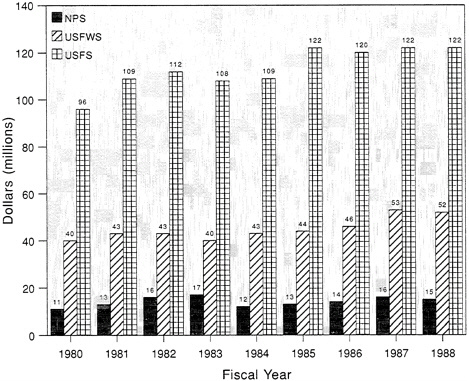
Figure 4-3 Annual research budgets of National Park Service, Fish and Wildlife Service, and Forest Service. SOURCE: National Park Service/U.S. Fish and Wildlife Service/U.S. Forest Service.
that regional natural resource management programs be established and funded at $10 million annually.
CONCLUSION
A critical reason for conducting research in the national park system is to provide managers with the information necessary to make better decisions about the resources for which they are responsible. Research also is important to help park personnel better interpret the features of their areas and for helping managers cope with ever-increasing numbers of visitors. The connections between resource management, interpretation, and research are critical. There is still a need for more attention to synthesis—transforming data into information—as it is part of the scientific process to interpret
Table 4-3
National Park Service Research and Development
|
FY |
FUNDING |
|
1987 |
$18,500,000 |
|
1988 |
$18,800,000 |
|
1989 |
$19,200,000 |
|
1990 |
$19,500,000 |
|
1991 |
$25,200,000 |
|
1992 (estimated) |
$29,000,000 |
|
SOURCE: NPS, 1992. |
|
the meaning of data, to show what the research means in relation to management questions.
The 1980 NPS report to Congress concluded that 75 percent of the 4,345 threats to the units of the national park system were inadequately documented by research. The report stated that "current levels of science and resource management are completely inadequate to cope effectively with the broad spectrum of threats and problems" facing the parks, and it concluded that NPS must "significantly expand its research and resource management capabilities" (NPS, 1980).
Overall, based on its review and discussions with NPS officials, the Committee on Improving the Science and Technology Programs of the National Park Service found much to be admired, much to be added or expanded, and very little to be eliminated from the current NPS science program budget. Some research has resulted from political crises, with funding and direction from Congress to solve or mitigate the problems. Some has happened only because of the energy and enlightened advocacy of individual managers or scientists to obtain the funds or staff needed for the research. Yet for every such example of good research leading to a problem's solution, there are dozens of park units for which the needs are not yet recognized and the research not sought because of a lack of awareness at the park level and a vacuum of direction and funding support.
Although the committee sees an obvious need for greatly expanded science funding and personnel allocations, addi-
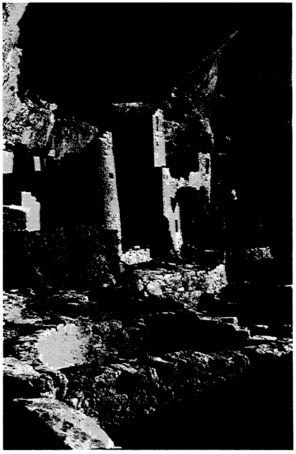
Research is necessary at all types of parks— whether the units are dedicated to the protection of natural, historic, or cultural values. CREDIT: NPS photo of Mesa Verde National Park by Jack Boucher.
tional funding alone is not enough. NPS research needs its own leadership and budget allocation and tracking system that is on a par with and independent from other major program elements of the NPS budget, such as management, maintenance, and visitor protection.
Closely allied with the budget process is planning. In particular, the resource management planning process is an important in determining research needs. The involvement of scientists in the preparation of resource management plans varies significantly among different parks and regions. Yet active participation from scientists is an ideal way to ensure that research truly supports resource management. Conversely, the process of developing and updating resource management plans can be used as an increasingly important vehicle for research planning. Research objectives for the parks need
to be clearly stated, administrative procedures outlined, and systems established for ranking the projects, evaluating the science, and archiving and managing data. Care must be taken that both short-term and long-term perspectives are incorporated, including presentation of long-term priorities directed toward ecosystem understanding and compatible management of human use and enjoyment. This fuller participation puts additional demands on research staff already spread thin among varied responsibilities, so it will be necessary to find new ways to increase the research-planning component in the preparation of resource management planning.
Questions about the effectiveness of science in park management have been raised throughout the history of the NPS. Again and again, park personnel, advocacy groups, and independent evaluators have reached the conclusion that the NPS's science and research programs are not meeting management needs. Yet if it is so easy to identify the deficiencies in the science program, why is it so difficult to change or restructure the program to eliminate the problems and truly increase its effectiveness? Why is there controversy among NPS personnel about the role of science? Have the stewards of some of the nation's most precious resources become so engulfed in the flames of short-term crises that they believe they cannot afford long-term vision? Are they inhibited by structure or by culture from using research to its full potential?


