
4
Human, Physical, and Fiscal Resources
HUMAN RESOURCES
Public and private institutions have developed an excellent graduate education system, yielding graduates employed in academia, government, and the private sector in the United States and abroad. The boundaries of oceanography are not well defined, and the field is characterized by many entry points from associated fields at various educational levels. Because of the diversity within the field and its relative youth as a separate science, a research oceanographer cannot simply be defined as one who holds a doctor's degree in ocean science. Many senior faculty in oceanography departments and institutions earned degrees in fields other than oceanography, and many scientists continue to enter ocean science from other fields. Nor can oceanographers be defined as those who perform basic research that is funded by the Division of Ocean Sciences of the National Science Foundation (NSF) or by the Office of Naval Research (ONR). Either definition misses many scientists whose primary activity is teaching, whose research is funded from other sources, or who are employed by federal agencies.
Ocean science will be characterized in the coming decade by a mixture of large multiple-investigator programs and individual investigations. The research will be only as good as the scientific
talent that can be applied to the questions posed. Concern has developed regarding the potential shortage of Ph.D.s in science and engineering in the 1990s and beyond in terms of both number and quality. The oceanographic community has, however, questioned this assertion of a lack of qualified doctorates. This section discusses the demographics of oceanography and relates its characteristics to research needs.
In examining ocean science, the board asked eight specific questions:
-
How many Ph.D.-level oceanographers are there, and at what rate has the number of Ph.D.-level ocean scientists changed over time?
-
How many ocean science doctorates are produced annually?
-
What is the present age profile of oceanographers in academia and the federal government, and has it changed over time?
-
Has the field matured in terms of becoming a separate discipline?
-
How has the percentage of women, minorities, and foreign nationals in the field changed over time?
-
Has the field changed in terms of academic emphasis among the major subdisciplines [physical oceanography (P.O.), chemical oceanography (C.O) and marine chemistry (M.C.), marine geology and geophysics (MG and G), biological oceanography (B.O.) and marine biology (M.B.), and ocean engineering (O.E.)]?
-
Has the balance of the field changed in terms of the relative size and importance of the major oceanographic institutions?
-
How are research oceanographers supported? What is the ratio of institutional to federal salary support for the oceanography community as a whole?
Data Sources
Information was collected from a variety of sources. Data on the demographics of oceanography was obtained from biennial reports (1973 to 1989) issued by NSF, called Characteristics of Doctoral Scientists and Engineers in the United States (NSF, 1975; 1977; 1979; 1981; 1983; 1985; 1987; 1989; 1991). In addition, the Ocean Studies Board surveyed the major ocean science institutions and federal agencies (Appendixes IV and V). These two sources form the basis for much of the information presented. Additional information on faculty ages and number of Ph.D.s graduating was obtained from Joint Oceanographic Institutions, Inc.
(JOI). Data on ocean sciences grant recipient characteristics were obtained from NSF, and projected demands for Ph.D.-level researchers were obtained from four major oceanographic research programs.
Results
National Science Foundation Surveys
Since 1973, NSF (through the NRC) has collected information on the employment and demographic characteristics of scientists and engineers with doctoral degrees in the United States. The NSF survey constituted a sample of the Ph.D. population, from which total population values were estimated. These estimates have substantial associated standard errors, so that statistical comparisons were not carried out. The number of oceanographers in all sectors of employment increased from 1,130 in 1973 to 2,460 in 1989 (Figure 4-1). From 1973 to 1981, the average annual rate of increase for academic oceanography was 4.7 percent; from 1981 to 1989, 4.0 percent. Oceanographers who consider teaching as
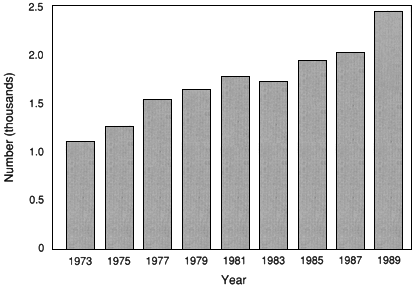
FIGURE 4-1 Change in number of Ph.D.s employed in oceanography over time (NSF data).
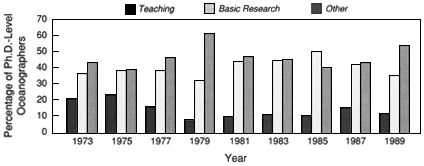
FIGURE 4-2 Primary work activity for Ph.D.s employed in oceanography (NSF data).
their primary work activity decreased from 21 percent in 1973 to 11 percent in 1989; the portion of oceanographers who consider basic research as their primary work activity fluctuated around 40 percent (Figure 4-2). Percentages in all employment sectors show no discernible trends over time (Figure 4-3). In 1989, most Ph.D.-level oceanographers—about 60 percent—were employed at educational institutions, including secondary schools, junior colleges, and four-year colleges. The federal government employed approxi
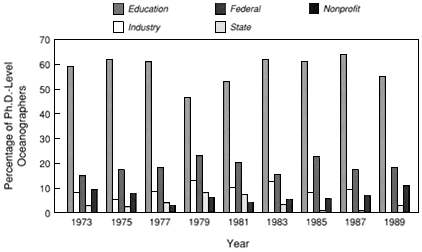
FIGURE 4-3 Employment sectors for Ph.D.s employed in oceanography (NSF data).
mately 20 percent of the nation's oceanographers; industry, about 10 percent; nonprofit organizations, 7 percent; and state governments, 4 percent. These percentages remained relatively stable over time.
The ''maturity" of a discipline is the degree to which it is self-perpetuating and separate from other fields. Estimating the absolute maturity of a discipline is difficult, but examining changes in a number of indicators over time can show whether a field is advancing or declining. Two such indicators are the number of post-doctoral fellowships awarded and the ratio of faculty positions that are in the form of full professorships versus assistant professors. According to NSF data, the number of postdoctoral positions has increased, from an estimated 20 in 1973 to 84 in 1989 (Figure 4-4).
For new fields the ratio of full to assistant professors tends to increase over time because of the time required for faculty promotion and tenure, and the time universities need to establish tenured positions. For all science and engineering fields, the ratio has increased steadily over time, from 1.6 in 1973 to 2.4 in 1989 (Figure 4-5). The ratio for oceanography increased from 1.0 to 3.5 in the same period (Figure 4-5). The leap in the ratio in 1989 was due to a substantial increase in the number of full professors and a decrease in the number of assistant professors. The full to
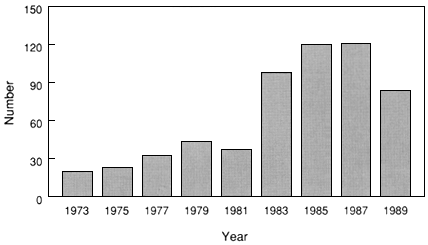
FIGURE 4-4 Postdoctoral fellows in oceanography (NSF data).
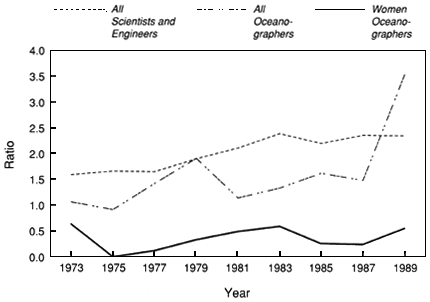
FIGURE 4-5 Ratio of full to assistant professors (NSF data).
assistant professor ratio is even lower for women, reflecting their relatively recent entrance into the field.
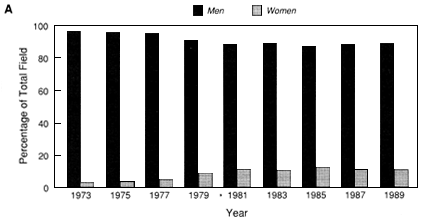
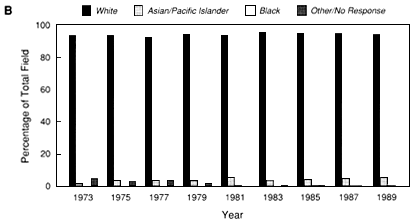
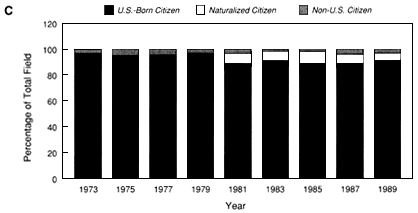
The proportion of the field made up of women increased from about 3 percent in 1973 to 11 percent in 1989 (Figure 4-6A). Minorities and foreign nationals practicing oceanography in the United States showed no significant trend from 1973 to 1989 (Figures 4-6B and C).
NSF data show that from 1973 to 1989, the median age of Ph.D. oceanographers shifted from the 35-to 39-year-old bracket to the 40-to 44-year-old bracket.
Ocean Studies Board Survey
Information on the potential supply of and demand for oceanographers is limited. Several attempts have been made to characterize the field over the past 20 years (NRC, 1970, 1972, 1981).
For this study, the Ocean Studies Board (OSB) sent questionnaires to 52 oceanographic institutions, research laboratories, and academic members of the Council on Ocean Affairs, and to 8 federal agencies to assess the supply and demand within the academic and federal sectors. Responses were received from 40 academic institutions, including all the large academic programs and research institutions, and from 7 federal agencies (Appendixes VI and VII). Of the 40 institutions employing oceanographers in 1990, only 29 had employed oceanographers in 1970.
Replies to the OSB questionnaire indicated that the number of academic oceanographers increased from 540 in 1970 to 1,674 in 1990 (Figure 4-7). These include both teaching faculty and research faculty. It should be noted that some of the growth in the 1980–1990 period for academic oceanographers was due to the inclusion of 378 faculty members from two newly created units, at the University of Hawaii (UH) and the University of Washington (UW), that had not been included in the totals before 1990. At the same time, the number of Ph.D. oceanographers in federal agencies rose from 148 to 516. The annual rates of increase (percent) were
|
|
1970–1980 |
1980–1990 |
|
Academic |
6.4 |
2.6 (without UW and UH) |
|
|
|
5.2 (with UW and UH) |
|
Federal |
9.9 |
3.1 |
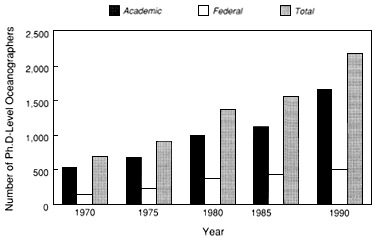
FIGURE 4-7 Ph.D.-level federal and academic oceanographers (OSB survey).
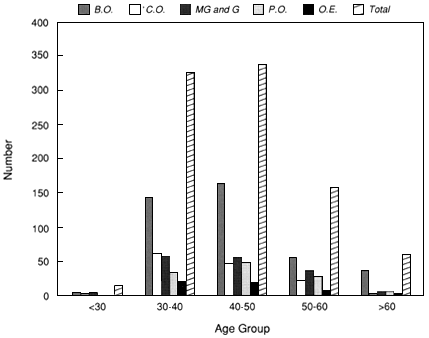
FIGURE 4-8 Age distribution of Ph.D.-level oceanographers in oceangraphic institutions and universities (OSB survey).
Figures 4-8 and 4-9 show that for universities and government laboratories, respectively, the largest number of oceanographers in any age range falls in the 40-to 50-year-old category. The marked peak in the age distribution of federally employed oceanographers could reflect the establishment and expansion of federal oceanography programs in the 1970s.
The ratio of full to assistant professors in ocean sciences over the past 20 years has increased from 1.0 to 1.6 (Table 4-1). During roughly the same period, NSF data show an increase from 1.0 to 3.5. This reason for this discrepancy in unknown, although the large standard error in the NSF data makes comparisons difficult. Figure 4-10 shows the increase in Ph.D.-level staff by rank. The number of postdoctoral positions increased from 11 in 1970 to 111 in 1990, according to OSB data, compared with an increase from 20 in 1973 to 84 in 1989, according to NSF data.
Figure 4-11 shows changes in the number of Ph.D.-level oceanographers by discipline over time, as determined by the OSB sur
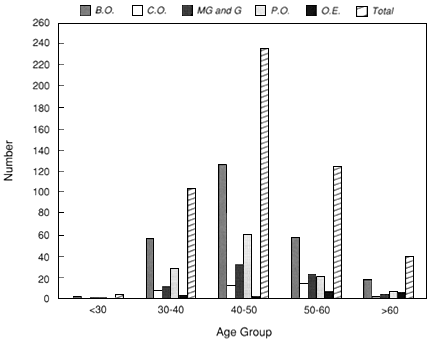
FIGURE 4-9 Age distribution of Ph.D.-level oceanographers employed by government agencies (OSB survey).
vey. The category that includes biological oceanography and marine biology continues to dominate numerically, reflecting the number of relatively small marine laboratories that focus on biological research. Except for a marked increase in ocean engineering, the relative ratios among the academic subdisciplines have not changed substantially over the past 20 years (Table 4-2). For
TABLE 4-1 Ratio of Full Professors to Assistant Professors in Oceanography, 1970–1990 (OSB survey)
|
Year |
Ratio |
|
1970 |
1.0. |
|
1975 |
1.2 |
|
1980 |
1.2 |
|
1985 |
1.6 |
|
1990 |
1.6 |
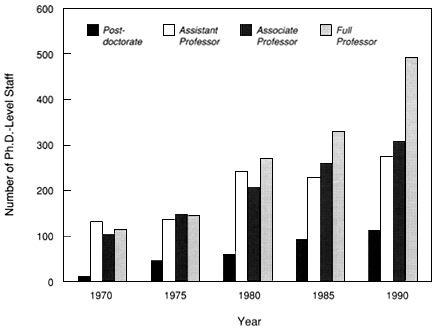

TABLE 4-2 Percentage of Ocean Scientists in Subdisciplines (OSB survey)
|
|
Academic |
Federal |
||||||||
|
|
1970 |
1975 |
1980 |
1985 |
1990 |
1970 |
1975 |
1980 |
1985 |
1990 |
|
Biological Oceanography/Marine Biology |
40.4 |
42.2 |
42.5 |
42.4 |
37.7 |
73.0 |
68.9 |
48.3 |
51.5 |
51.0 |
|
Chemical Oceanography/Marine Chemistry |
13.0 |
13.3 |
15.2 |
14.8 |
13.9 |
8.8 |
11.4 |
9.8 |
8.5 |
7.0 |
|
Marine Geology and Geophysics |
22.6 |
21.3 |
19.7 |
20.2 |
20.8 |
3.4 |
2.6 |
13.5 |
14.0 |
13.4 |
|
Physical Oceanography |
20.0 |
19.1 |
17.9 |
17.5 |
16.4 |
9.5 |
13.6 |
25.3 |
22.2 |
24.6 |
|
Ocean Engineering |
4.1 |
4.1 |
4.7 |
5.0 |
11.2 |
4.7 |
3.1 |
4.2 |
6.9 |
5.8 |
federally employed oceanographers, the percentage of biologists has declined markedly, and the percentages of specialists in physical oceanography and marine geology and geophysics have increased (Table 4-2). The percentage of biologists in the federal government is considerably higher than in academia.
NSF, ONR, and 101 Institutional Data
The JOI members are 10 of the country's largest oceanographic institutions. In the most recent year for which data are available (fiscal year 1991), the JOI schools received 45 percent of the NSF Ocean Science Research Section funding and 42 percent of ONR funding (SE31 and SE32).
Figure 4-12 shows the percentage of faculty at JOI member institutions related to the total number of oceanography faculty, excluding data for the University of Washington and the University of Hawaii. In general, the percentage of the total oceanography faculty located in JOI institutions has not changed over time, although the percentage of marine engineers at JOI institutions may have increased, and biologists and chemists may have decreased (Figure 4-12). The JOI institutions, where the large ships are concentrated, still tend to dominate the field in the disciplines that require large ships, such as marine geology and geo
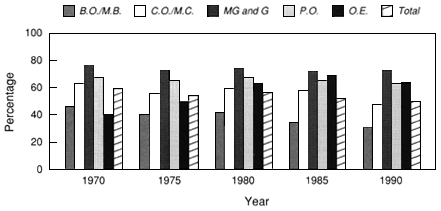
FIGURE 4-12 Percentage of oceanography staff at JOI institutions (OSB survey).
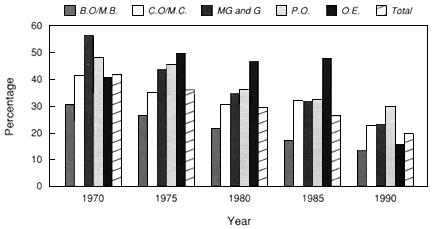
FIGURE 4-13 Percentage of oceanography staff at Scripps Institution of Oceanography and Woods Hole Oceanographic Institution (OSB survey).
physics and physical oceanography. This statement is less true for the biological sciences. If the same comparison is made for just Scripps Institution of Oceanography (SIO) and Woods Hole Oceanographic Institution (WHOI), the two largest oceanographic institutions, their combined dominance in terms of percentage of faculty has decreased steadily over the past 20 years (Figure 4-13), except in marine engineering. So although the percentage of total oceanography faculty at the two largest oceanographic institutions has decreased over the past two decades, the percentage of total oceanography faculty at the ten largest has remained about the same.
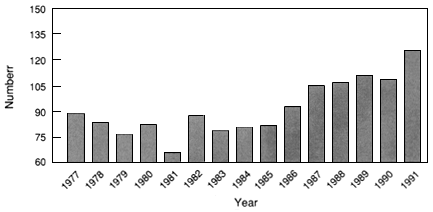
JOI provided information on its institutions' students, graduates, and faculty. The number of ocean science doctorates awarded annually at JOI institutions increased from 90 in 1970 to 126 in 1991 (Figure 4-14). The major change is the large increase in the number of women earning doctorates in the ocean sciences, up from 10 percent in 1980 to almost 30 percent in 1991. The number of foreign students earning doctorates is also about 30 percent; 2.5 percent of JOI students are underrepresented minorities.
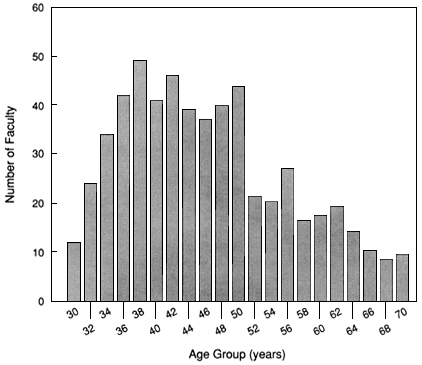
The median age of oceanographers who received NSF grants increased from 40 in 1977 to 45 in 1990. The median age of JOI faculty was 44 years in 1990 (Figure 4-15).
Demand from the Major Programs
The extra demand required for the major ocean science initiatives planned for the 1990s is difficult to estimate. It is possible to estimate how many ocean scientists the major programs will require if the programs are funded at the projected levels, but the number of participants who are already in the field is an unknown. Because oceanography continues to attract scientists from physics, chemistry, biology, and geology, entry points into the field vary from the undergraduate to the postdoctoral level. Thus demand can often be met from associated fields. Nonetheless, it is of interest to estimate the impacts of four major oceanographic initiatives on human resources. The requirements of the programs were estimated by the individual program offices and represent a maximum level under a scenario of full funding and the assumption that the programs retain their original scopes and timetables.
The U.S. office for the World Ocean Circulation Experiment (WOCE) has estimated the work force that will be required to carry out its planned experiments for 1990–2000 (Table 4-3). The figures were extrapolated from NSF-funded project proposals. The total principal investigator (PI) and postdoctoral fellow labor-months estimated for the U.S. part of WOCE is 8,189, of a total of 28,507 (30 percent). The U.S. office for the Joint Global Ocean Flux Study (JGOFS) estimated a requirement of 14,000 labor-months for all categories from 1990 to 2000. If it is assumed that roughly
TABLE 4-3 Estimated Demand for Ph.D.s for Major Ocean Science Research Programs (1990–2000)
|
|
Person-Yearsa |
|
|
Program |
All Ph.D.-Level Oceanographers |
Postdoctoral Oceanographers |
|
WOCE |
1,000 |
320 |
|
JGOFSb |
720 |
160 |
|
RIDGEb |
200 |
40 |
|
GLOBEC |
1,100 |
440 |
|
Total |
3,020 |
960 |
|
a Assumes 6 person-months per year for 10 years. b Assumes that JGOFS and RIDGE have the same ratio of PI and postdoctoral labor-months: total man-months (30%) as WOCE. |
||
the same percentage of the total labor-months for WOCE scientists and postdocs should be valid for JGOFS, then JGOFS will require an estimated 4,300 labor-months (0.3 × 14,400) in this decade. The Ridge Inter-Disciplinary Global Experiment (RIDGE office estimates it needs 4,000 labor-months over the 1990–2000 decade, and the Global Ocean Ecosystems Dynamics (GLOBEC) program has estimated 6,600 labor-months at the PI and postdoctoral levels. If 6 labor-months per labor-year are assumed, equal annual effort over the decade, and full program funding are assumed, approximately 300 Ph.D.s will be required to carry out WOCE, JGOFS, GLOBEC, and RIDGE. Of these, 100 will be at the postdoctoral level. If only 50 percent of the average oceanographer's labor-months are available for research, about 22 percent of the 1990 academic oceanographer pool would be needed for these four programs, if they are fully funded.
Answering Specific Questions
How many Ph.D.-level oceanographers are there and at what rate has the number of Ph.D.-level ocean scientists changed over time? According to the OSB survey, there were 1,674 academic oceanographers and 516 federal oceanographers in 1990. The NSF survey (1989) estimated 1,354 academic oceanographers, 453 federally employed oceanographers, and 653 Ph.D.-level oceanographers in other sectors.
The growth rate in the number of Ph.D.-level oceanographers slowed from the 1970s to the 1980s. Average annual growth rates for the pool of academic oceanographers decreased from 4.7 to 4.0 percent according to NSF surveys, and from 6.4 to 2.6 percent according to the OSB survey. The slowing of growth was even more evident for the federal government.
How many ocean science doctorates are produced annually? The JOI data show that approximately 126 oceanography Ph.D.s were awarded from JOI institutions in 1991, which is the largest number in any year for which data are available.
What is the present age profile of oceanographers in academia and the federal government, and has it changed over time? The OSB survey measured a median age in the 40-to 50-year-old bracket for both academic and federally employed oceanographers. The JOI faculty age distribution shows a median of approximately 44 years. The median age of the field has increased over the past 20 years from the 35-to 39-year-old bracket to the 40-to 44-year-old bracket, according to the NSF survey. In addition, the median age
of NSF Ocean Sciences Division grantees increased from 40 years in 1977 to 45 years in 1990.
Has the field matured in terms of becoming a separate discipline? Over the past 20 years, the field has matured according to several measures. The expansion of postdoctoral positions shown by both the NSF and the OSB surveys, and the increase in the ratio of full to assistant professors are both indicators of the field's maturing. The significance of changes in the faculty ratio is uncertain, however, because the ratio for the combined science and engineering fields has also increased, and the 1989 jump in ratios for oceanographers is difficult to explain. The lag of female faculty behind the rest of the field may be because of the relatively recent entry of women into the field.
Has the participation of women, minorities, and foreign nationals changed over time? The percentage of women in the field of oceanography increased from 4 to 11 percent from 1973 to 1989, according to the NSF survey. At present, 30 percent of students at JOI institutions are women. The percentage of underrepresented minorities is low in both the population of employed oceanographers (7.7 percent) and the JOI student population (2.5 percent). The percentage of oceanographers working in the United States who are foreign nationals did not change dramatically from 1973 to 1989.
Has the field changed in terms of emphasis among the differing major subdisciplines (physical oceanography, chemical oceanography, marine geology and geophysics, biological oceanography and marine biology, and ocean engineering)? The relative balance of the number of scientists in the academic disciplines has changed little in the past 20 years. For federally employed scientists, fewer are biologists and more are specialists in physical oceanography and marine geology and geophysics now than in 1970.
Has the balance of the field changed in terms of the relative size and importance of the major oceanographic institutions? This analysis documents the fact that some decentralization of the field has occurred over the past 20 years in terms of where Ph.D.-level scientists are employed. During and after World War II, Navy and NSF support led to the expansion of JOI institutions. In 1970, the faculty at SIO and WHOI constituted approximately 40 percent of the field. By 1990, the faculty at these two institutions comprised only about 25 percent of the total. The distribution of scientists at JOI institutions differed by subdiscipline, correlating with sciences that tend to require large ships, such as physical oceanography and marine geology and geophysics. In terms of financial support from NSF, JOI institutions received a relatively
TABLE 4-4 Support of Ocean Science Faculty at Academic Institutions
constant 45 percent of NSF ocean science research funding between 1984 and 1989. JOI institutions received about 40 percent of ONR funding (SE31 and SE32).
How are research oceanographers supported? What is the ratio of institutional to federal salary support for the oceanography community as a whole? Oceanographers' salaries come primarily from grants and contracts. Academics from JOI institutions must raise a significantly greater proportion of their funding from external sources than other academics. The OSB survey shows that most of the oceanographic community, especially JOI schools, depends on noninstitutional research support (Table 4-4).
PHYSICAL RESOURCES
The wide variety of facilities used in institutions and consortia for ocean science—ships, submersibles, satellites, special platforms, and laboratories—depends on continual renewal to meet present and future needs. Global change research has given new impetus to satellite data systems and large-scale at-sea programs. Although oceanographers learned to use satellite data in the past decade, incorporating the increasing stream of data from new satellites and platforms will be a technological and managerial challenge.
Oceanographic Institutions
From its beginning, a mix of government, university, and private laboratories has conducted oceanographic research. The his
tory of our ocean science institutions is characterized by three phases. Civilian marine science began in the late 1800s with the establishment of several marine biological laboratories concerned principally with coastal problems. The California Academy of Sciences 11853), the U.S. Fish and Wildlife Biological Laboratory at Woods Hole (1885), Hopkins Marine Station of Stanford University (1892), and the Hydrobiological Laboratory of the University of Wisconsin (1896) were notable among the early laboratories.
Between the turn of the century and the end of World War II, both the number of ocean science laboratories and the disciplinary range of their activities grew. During this period, Scripps Institution of Oceanography (1903), Friday Harbor Laboratories of the University of Washington (1904), Woods Hole Oceanographic Institution (1930), Narragansett Laboratory of the University of Rhode Island (1930), Bingham Oceanographic Foundation of the University of Southern California (1940), the Virginia Institute of Marine Science (1941), and the University of Miami Marine Laboratory (1943) were established. Several of these laboratories continued the thrust of activity in coastal marine biology, and many expanded into physical, chemical, and geological oceanography and increasingly carried out research in the open ocean.
World War II was a major turning point in oceanography. Research on ocean processes begun during the war continued afterwards as basic research programs supported by the newly created Office of Naval Research. Additional ships were added to the oceanographic fleet, and support for both research and ship operations was readily available. Under the Navy's leadership during the postwar period, growth in the number of ocean institutions and their scope of research accelerated. Thus from the late 1940s to the early 1950s, several laboratories, most of which would eventually engage in deep-ocean research, were established or expanded. Among the new institutions were the Chesapeake Bay Institution of the Johns Hopkins University (1948), Florida State University Oceanographic Institute (1949), the Department of Oceanography of Texas A&M University (1949), the University of Delaware Marine Laboratories (1951), the Department of Oceanography of the University of Washington 11951); the Department of Oceanography of Oregon State University (1958), and the University of Hawaii Institute of Geophysics (1959).
In the early years of marine science, there were no formal mechanisms for coordinating institutions' activities. The Joint Oceanographic Institutions for Deep Earth Sampling (JOIDES), an
international advisory committee, was established in the late 1960s to provide formal advice to the Deep Sea Drilling Project (DSDP). JOIDES was a major initiative by the oceanographic community to develop a mechanism for international cooperative activities. Evolving from JOIDES was JOI, a formal not-for-profit corporation. JOI consists of 10 U.S. ocean science institutions that operate many of the large ships in the oceanographic fleet, employ a majority of U.S. academic ocean scientists, and receive a majority of the research funding. The JOI institutions are
Scripps Institution of Oceanography, University of California
Lamont-Doherty Geological Observatory, Columbia University
School of Ocean and Earth Science and Technology, University of Hawaii
Rosenstiel School of Marine and Atmospheric Sciences, University of Miami
College of Oceanography, Oregon State University
Graduate School of Oceanography, University of Rhode Island
College of Geosciences and Maritime Studies, Texas A&M University
Institute for Geophysics, University of Texas
College of Ocean and Fisheries Sciences, University of Washington
Woods Hole Oceanographic Institution
With the exception of Woods Hole, which has a joint education program with the Massachusetts Institution of Technology (MIT), each oceanographic program is an integral part of a major university.
Another cooperative organization of oceanographic institutions is the University-National Oceanographic Laboratory System (UNOLS), an association of ship operators and ship users that is discussed in more detail below. Because UNOLS provides access to facilities for scientists at institutions without ships, an increased number of universities can be involved in open ocean research. These universities may not have interests in all facets of oceanography, but they have significant strengths in certain areas. Examples of such universities are the Santa Cruz and Santa Barbara campuses of the University of California, Northwestern University, Massachusetts Institute of Technology, and Princeton University.
The institutions developed within and outside the government for the pursuit of an understanding of the ocean are diverse, much more so than in most other scientific fields. Oceanography is conducted by individuals working as faculty members in conven-
tional academic Earth sciences departments supported by state and private endowment funds (e.g., MIT, Florida State University, the University of Michigan) in large research institutions operated by universities, but on a scale not common to academic institutions (e.g., Scripps Institution of Oceanography, Lamont-Doherty Geological Observatory), in independent, private nonuniversity organizations (e.g., Woods Hole Oceanographic Institution, Boothbay Harbor Laboratories, Monterey Bay Aquarium Research Institute); in government laboratories resembling the private laboratories in many ways (the National Oceanic and Atmospheric Administration Atlantic Oceanographic and Meteorological Laboratories and Pacific Marine Environmental Laboratories); and in Navy laboratories charged with specific military responsibilities.
This diversity is both a potential weakness and a strength. Oceanographers are generally more dependent on grant money than are scientists in other disciplines who receive a higher percentage of support from their universities. On one hand, this situation renders ocean science more vulnerable to government budget fluctuations. However, the institutions are adaptable to changes in the conduct of ocean science. Some institutions are expert in seagoing observations, some specialize in ocean engineering, some are focused on large-scale numerical modeling, and others are best known for their breadth. Together, they comprise the strongest marine research establishment in the world.
Most oceanography degrees are offered at the graduate level; however, an increasing number of institutions are now offering undergraduate degrees in oceanography. Integration of marine research facilities (often isolated from the campus) into the academic structure of the parent university is improving, and new oceanography programs have developed within a more traditional academic departmental structure. Perhaps this change can be considered an indicator of the maturing of oceanography as a recognized academic discipline.
Several new organizations of ocean science institutions have recently formed, such as the Council on Ocean Affairs (COA) and the National Association of Marine Laboratories, to promote interlaboratory cooperation. COA is an organization of approximately 50 academic oceanographic institutions that was founded by, and is administratively housed in, Joint Oceanographic Institutions, Inc.
Thus, with increased ease of access to the sea for faculty and students, the establishment of more oceanography activities in universities, and substantial support by some universities, ocean-
ography is becoming an established academic discipline. Physical resource requirements to ensure that the levels of support, equipment, and access to the ocean are adequate to carry out the research needed in the next decade should be important principles as academic institutions and federal agencies develop new partnerships.
Ships
Even with new remote sensing techniques and autonomous vehicles, ships will continue to be the major platform for direct at-sea observations and measurements as well as for the calibration and verification of remote measurements. These tasks require a modern fleet of research vessels, a fleet whose composition and capabilities should be tailored to research objectives.
The federal oceanographic fleet is defined as the set of oceanographic vessels whose operations are funded by the federal government. The fleet is composed of more than 60 vessels operated by both federal agencies and academic institutions. The academic institutions coordinate their ship activities through UNOLS, which was formed in 1971 to support oceanographic research by coordinating and scheduling ships and equipment for their efficient use. UNOLS institutions operate and use vessels owned by the NSF, the Navy, and academic institutions. The UNOLS fleet, although not formally designated as a national facility, is recognized as a national asset vital to the needs of U.S. oceangoing scientists. Before the formation of UNOLS, each institution negotiated separately with the group of federal supporters. Ships were scheduled primarily for the exclusive use of the operating institution's scientists. UNOLS's consolidated scheduling of ships has improved efficiency and ensured availability of time at sea to all funded researchers. Its success has reduced the importance of each institution's operating its own research vessel and has allowed, from a national viewpoint, institutions without ships to develop strong marine programs with seagoing components.
UNOLS consists of 57 member institutions, of which 20 operate research vessels. The UNOLS fleet is composed of surface ships ranging in length, age, and origin; the submersible Alvin; and the floating instrument platform (FLIP) (Table 4-5). Some were built using capital provided by the federal government; others were built or purchased at state or institutional expense. In 1990, NSF supported 59.0 percent of UNOLS's operational ship days; ONR's contribution was 15.5 percent; other federal agencies
TABLE 4-5 UNOLS Fleet
contributed 8.6 percent; state municipalities, 10.0 percent; and foreign and private users, 6.9 percent (UNOLS, 1991). NSF's share of total funding of sea days has increased over time (Figure 4-16). The average age of the UNOLS fleet is 16.5 years (Figure 4-17). For fiscal year 1992, the total ship operations budget was about $50 million, with a larger ship costing about $15,000 per day to
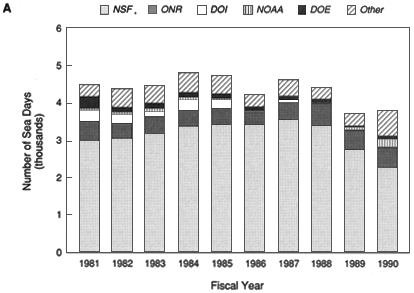
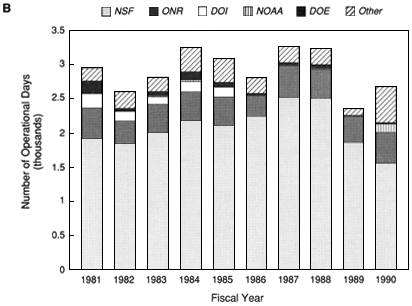
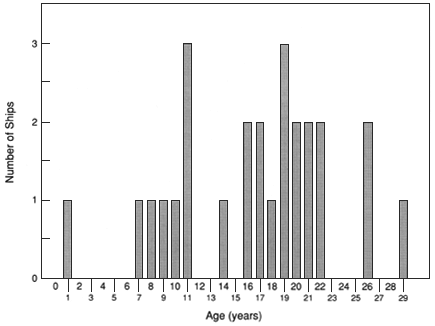
FIGURE 4-17 Age of UNOLS ships from time originally built.
operate. In addition to the UNOLS fleet, smaller vessels used primarily for coastal research are funded principally by local sources.
Federal agencies that either operate or fund oceanographic ships include the U.S. Coast Guard (USCG), the U.S. Geological Survey (USGS) and the Minerals Management Service (MMS) of the Department of the Interior (DOI), the Environmental Protection Agency (EPA), the Department of Energy (DOE), the Naval Oceanographic Office, the Office of Naval Research, the National Oceanic and Atmospheric Administration, and the National Science Foundation. The USCG is included because its two icebreakers can support research operations in the Antarctic and Arctic. The need for and operation of federal oceanographic ships arise from the statutory mission of each agency that is manifested by approved and funded programs in the federal budget. Individual agency programs dictate the requirements for ships and ship time. The federal fleet is older, on average, than the UNOLS fleet (Figure 4-18).
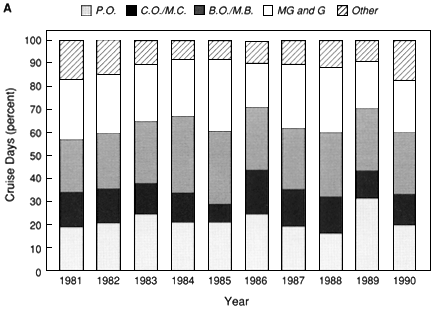
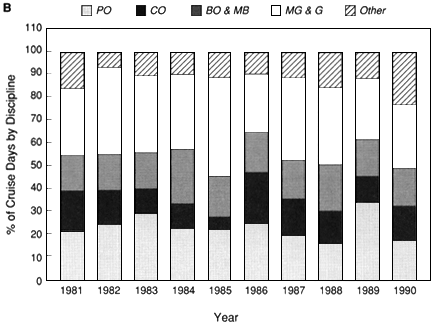
Ship use by different oceanography subdisciplines during the 1980s is shown in Figure 4-19. For all ships, biological oceanography uses the most ship time. For the larger ships, marine geology
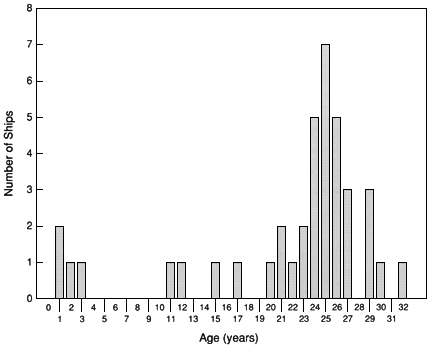
FIGURE 4-18 Age of federal oceanographic fleet.
and geophysics has the most ship days, followed by physical oceanography. The pattern of use, particularly for ships more than 150 feet long, is remarkably stable and probably indicates the future use of ships (Figure 4-19).
As discussed in earlier chapters, a significant development in oceanography is the increased number of large, long-term research activities planned by the academic oceanographic community. These include the Tropical Ocean-Global Atmosphere (TOGA) program, WOCE, JGOFS, and RIDGE. These major programs account for significant use of the larger ships.
Present trends suggest that research in coastal oceanography will continue to be important over the next decade because it is the primary interest of most federal mission agencies, states, and municipalities. Although some future coastal research efforts will be well served by some of the existing research vessels (Oceanus or Cape class), smaller research vessels are also needed. Specifically, these new vessels should be capable of working at sea for up to 20 days at a time, at a cost of about $3,000 per day, and their
scheduling should be flexible. A few UNOLS vessels satisfy these criteria. Present estimates are that a vessel designed for coastal oceanography would cost $12 million to build and equip. At least one group of institutions is proceeding independently to design its own ship in this class. UNOLS is cognizant of the need for a coordinated plan to reduce any redundant effort concerning new coastal research ships.
Special Facilities
Submersibles
A broad range of submersible systems is available from the government or can be leased commercially. Since 1964 the Alvin, capable of operating to a depth of 4,000 meters, has given scientists a presence in the deep sea. Alvin is valuable to scientists who conduct research in the water column or study processes at the seawater-seafloor boundary. WHOI operates Alvin as a national facility, with sponsorship by an interagency agreement among NOAA, ONR, and NSF.
The Navy (Submarine Development Group One) operates the Sea Cliff (capable to 6,000 meters) and Turtle (to 3,000 meters) in support of Navy operations and research. Sea Cliff and Turtle have been used minimally by the academic community. Sea Cliff is the only U.S. submersible available to scientists that can operate at depths to 6,000 meters. An agreement among the Navy, NOAA, and UNOLS will improve the coordination and use of Navy deep submergence assets for academic research. Harbor Branch Oceanographic Institution owns and operates two Johnson Sea Link (1,000 meters) submersibles, which have been used intensively by academic researchers, government, and industry.
Unmanned, tethered, remotely operated vehicles (ROVs), which for some time performed ocean engineering tasks largely for the offshore oil industry, appear to be gaining acceptance and use by ocean researchers. Some ROVs are less expensive than manned submersibles and allow long submerged endurance times, making them attractive tools for some tasks vis-à-vis manned submersibles.
Floating Instrument Platform
The Floating Instrument Platform (FLIP), operated by SIO, fills scientific needs for a stable platform in rolling seas. It has been used for studying acoustic signals, surface and internal wave properties,
and water temperature, and for collecting meteorological data. FLIP achieves its stability and vertical access through the water column by its extension vertically below the surface when on station. Increased efforts to improve active acoustic capabilities and all-weather operations in higher latitudes emphasize the continuing requirements for a FLIP -like platform. The present FLIP cannot support the more demanding projects expected in the near future. Research users have requested a second-generation FLIP that would allow for deployment of new larger, multidimensional acoustic arrays, ROVs, and other equipment under development.
JOIDES Resolution
The JOIDES Resolution is a specially equipped drilling vessel that has laboratory facilities for studying core samples and the capability for making downhole measurements (logging). NSF has contracted with JOI, which has in turn contracted with Texas A&M University to serve as science operator and with Lamont-Doherty Geological Observatory to provide logging and other services. The science operator is responsible for the operation of the drill ship, cruise staffing, logistics, engineering, shipboard laboratories, archiving of core samples and data, and publications. The Ocean Drilling Program is in the category of large science projects that require the application of expensive state-of-the-art technology for the advancement of the science.
Satellites: Ocean-Related Remote Sensing
In the early 1980s, NASA asked JOI to prepare a report on satellite oceanography. The report—Oceanography from Space 1985–1995 (JOI, 1985), prepared by a committee of oceanographers expert in the field, recommended a series of ocean-related remote sensing missions that are scheduled for the 1990s (Table 4-6). It is increasingly clear that understanding the ocean is central to global change research and that the National Aeronautics and Space Administration (NASA) and analogous space agencies around the world should be major participants in the development of ocean remote sensing. Although several ocean-related missions are scheduled in the early 1990s, plans for the late 1990s and beyond are still tentative. Because of the long lead time from the concept of a satellite sensor until it is launched, efforts are needed now to ensure the development of relevant missions for the early twenty-first century to avoid gaps in time series of important measure-
Table 4-6 Status of Major, Pre-EOS Ocean Spacecraft and Instruments (as of fall, 1991)a
|
Satellite |
Sponsor |
Instruments |
Launch Date |
|
DMSP Series |
USAF |
MR |
June 1987 |
|
|
NASAb |
|
|
|
Polar Series |
NOAA |
IR |
Ongoing |
|
|
NASAb |
|
|
|
ESA ERS-1 |
ESA |
ALT, SCAT, SAR |
July 1991 |
|
|
NASAb |
IR |
|
|
NASDA ERS-1 |
NASDA |
SAR |
February 1992 |
|
|
NASAb |
|
|
|
TOPEX/Poseidon |
NASA |
ALT |
July 1992 |
|
|
CNES |
|
|
|
SeaWiFS |
OSC |
CS |
August 1993 |
|
|
NASAb |
|
|
|
ESA ERS-2 |
ESA |
ALT, SCAT, SAR |
1994+ |
|
|
|
IR |
|
|
RADARSAT |
CANADA |
SAR |
Late 1994 |
|
|
NASAb |
|
|
|
ADEOS |
NASDA |
SCAT, CS |
1995 |
|
|
NASAb |
|
|
|
NOTE: ALT = radar altimeter; CNES = French space agency; CS = color scanner; ESA = European Space Agency; IR = infrared radiometer; MR = microwave radiometer; NASDA = Japanese space agency; OSC = Orbital Sciences Corporation; SAR = synthetic aperture radar; SCAT = scatterometer; SeaWiFS = Sea-viewing Wide Field Sensor. a EOS = Earth Observing System. b Provides data or other services to U.S. research users. |
|||
ments and deterioration of U.S. capabilities. The advancement of ocean science depends on both general Earth-observing and ocean-specific missions. The continuance and strengthening of partnerships between NASA and other agencies and with industry in the United States and abroad are key to the success of ocean-related missions.
Satellite observations contribute to studies of sea surface waves, wind speed and direction, gas fluxes, atmospheric water vapor
concentrations and rainfall, sea surface temperature, ocean color, sea ice distributions, ocean surface topography, and gravity. The potential of satellite oceanography is almost unlimited, although its usefulness for most purposes depends on in situ calibration of the remote measurements.
Atmospheric water vapor must be measured because it is used in computing ocean surface evaporation and thermal forcing and is needed to correct altimetry data. Sea surface temperature observed by infrared sensors is the surface signature of ocean temperature changes. It is a vital parameter in estimating surface heat fluxes and evaporation, and can be used to infer some circulation features.
Remote sensing of ocean color is a key element for understanding the global ocean carbon budget. To obtain long-term continuous global ocean color measurements, the Sea-viewing Wide Field Sensor (SeaWiFS) sensor will be launched on a satellite in 1993. Future ocean color instruments should include improvements in spectral coverage and calibration. An ocean color sensor and scatterometer should be combined on a future satellite because of the close connection between wind stress and productivity. With future sensors, data from more wavelengths may be collected. This should allow estimation of various colored dissolved organic materials and, perhaps, separation of phytoplankton pigment groups. Sun-stimulated fluorescence at 683 nanometers (Chamberlin et al., 1990) may be a good indicator of the photosynthetic state of the phytoplankton and thus be useful in improving primary productivity models.
Passive microwave sensors measure concentrations of open water versus sea ice and may, in the future, be able to estimate the emitting temperature of the upper layer of the ice, which is related to the surface heat balance. The large-scale shape of the ocean surface (the geoid) is primarily related to Earth's gravity field because the ocean surface tends to form a level surface perpendicular to the force of gravity at any given location. Deviations from this level surface are caused primarily by ocean currents. Ocean currents can be studied by a combination of altimeter measurements of the ocean surface height and gravity measurements of the geoid.
Precise satellite geodetic measurements, providing information on crustal deformation, continental drift, and plate tectonics, Earth and ocean tides, and changes in Earth's geopotential, have been carried out since 1976 in a joint project between the United States and Italy with the Laser Geodynamics Satellite.
A mission to determine Earth's gravity field is still needed. No gravity mission is firmly in any space agency's plans, but design studies are being conducted. Of particular interest are the joint U.S./ESA (European Space Agency) plans for a gravity mission called Applications and Research Involving Space Technologies Observing the Earth's Field from Low Earth Orbiting Satellites (ARISTOTELES). The ARISTOTELES spacecraft would include both a gravity gradiometer for highly accurate gravity measurements and a magnetometer for geomagnetic studies. It is important that the geomagnetic mission begin before 1998 to avoid the next sunspot maximum, which would hamper the low-altitude initial portion of the satellite's mission.
It is clear from Table 4-6 that many objectives of the original Space, A Research Strategy for the Decade 1985-1995 (JOI, 1985) report are being met. Yet successful completion of many missions requires more than just NASA support; new partnerships are needed. Healthy relationships between U.S. and non-U.S. space agencies and with private industry are also needed. Some of these relationships appear to be working well, for example, in Earth Resources Satellite-1 data sharing through the Alaska synthetic aperture radar facility and in the joint design of TOPEX/Poseidon with the French. Future partnerships, such as those in ocean color with the Orbital Sciences Corporation's SeaWiFS, are yet to be tested. It is clear that developing and maintaining these partnerships require strong leadership at NASA headquarters, so that U.S. participation in the process from sensor design to data analysis is guaranteed. The oceanographic community must not find itself wholly dependent on international agreements and data from non-U.S. sensors and missions during the late 1990s and beyond.
There is a need for continuing research in the development of mathematical techniques to correct satellite data for the effects of clouds, water vapor, and other atmospheric aerosols, to relate satellite measurements to observations at the ocean surface, and to relate the surface signal to processes occurring at depth. If calibration errors in the satellite data time series can be avoided, it will be possible to create a time series that is long enough to investigate low-frequency phenomena in the record of upper ocean temperatures and other variables.
Numerical Ocean Modeling
Numerical ocean modeling has reached a degree of sophistication whereby it can affect the study of present ocean circulation
and the prediction of future climate. Relatively realistic multidecadal simulations of the North Atlantic, the Southern Ocean, and the world ocean have recently been carried out. The results of these experiments are being analyzed by numerous groups to aid in understanding the ocean general circulation (e.g., Boning et al., 1991; Semtner and Chervin, 1992). Data collected by comprehensive field programs such as WOCE and TOGA can be interpreted better through the use of realistic models, and field data provide essential tests for the models. WOCE is sponsoring a community modeling effort whereby different models of global circulation are compared. Overall scientific progress is maximized by the interaction of models and observations.
Future progress in modeling will involve new techniques and significantly faster computers to conduct simulations with more realistic hydrodynamics, improved resolution of eddies, longer time integration, and more testing of methods of handling subgrid-scale variables.
Technological advances will probably enhance ocean modeling more than changes in methodology. Computers are expected to attain speeds in excess of one trillion floating-point operations per second (a teraflop) before the year 2000. This thousandfold improvement over computers of 1990 will allow major improvements in simulation capability, such that realistic global models might be achieved. Their maximal use will require the development of highly parallel algorithms. Because most ocean models are formulated in terms of local space-time processes, they should be easily implemented on massively parallel computers.
The computer and communications requirements for archiving, analyzing, and visualizing the output of eddy-resolving basin-to global-scale models are vast. Ongoing federal programs in high-performance computing should help to develop some of the necessary resources. Ocean modeling was highlighted as one application of high-performance computing in the interagency Federal Coordinating Council for Science, Engineering, and Technology supplement to the president's budget for fiscal year 199.3 (FCCSET, 1992). Also, large observational programs are critical because basin-to global-scale, long-term ocean data sets are required to initiate and validate ocean models.
FISCAL RESOURCES
Information on oceanographic research funding in the United States for the 11 fiscal years from 1982 to 1992 is compiled here.
NSF and ONR provide the majority of federal support for university-based basic oceanographic research. In addition, several federal mission agencies (i.e., NOAA, NASA, USGS, MMS, DOE, and EPA) support ocean science research both within their agencies anti through extramural funding to the academic research community.
Federal Funding of Ocean Science
This section describes federal support of ocean science; it does not include funding by states and the private sector. For most of the mission agencies, no distinction is made between basic research conducted in a federal laboratory and that supported at universities, but for NASA, university science support is separated from total science support.
Uniform budget information for all these agencies is difficult to obtain because some agencies reorganized during fiscal years 1982–1992, and ocean and nonocean research budgets are sometimes combined into one budget category. Yearly funding is presented by agency in both current dollars (Table 4-7) and constant 1982 dollars (Table 4-8). The funding data were substantiated by the agencies for accuracy within ±5 percent. The inflation adjustment to constant dollars is based on the gross national product (GNP) index for the years 1982–1992. The GNP indices used for 1990–1992 are estimates.
The distribution of fiscal year 1992 support for basic research is shown in Figure 4-20. NSF was the largest supporter of basic oceanographic research in the United States (34.5 percent) and, along with ONR (20.4 percent) and NOAA (16.1 percent), provided more than 70 percent of the reported support in fiscal year 1992. NOAA's ocean science research programs (including Sea Grant) were funded at about the same level as the ONR program, and other federal agencies, including USGS, EPA, NASA, and MMS, have significant programs in ocean-related research. Thus to obtain a comprehensive picture of funding trends, contributions from these other federal agencies must be included.
National Science Foundation
Since the 1960s, NSF has been the principal supporter of academic oceanographers in the United States. Figure 4-21 shows the growth of the overall NSF budget and the ocean science component for fiscal years 1982–1992 in both current and constant
Table 4-7 Ocean Science Federal Agency Budget History: Current Dollars (millions)
|
|
Fiscal Years |
||||||||||
|
Agency |
1982 |
1983 |
1984 |
1985 |
1986 |
1987 |
1988 |
1989 |
1990 |
1991 |
1992 |
|
ONR total SE 31 and 32a |
71.0 |
65.9 |
65.8 |
70.2 |
64.2 |
79.2 |
87.4 |
89.3 |
88.1 |
105.0 |
106.0 |
|
SE 31 ocean science |
35.5 |
37.2 |
39.4 |
39.3 |
41.7 |
50.9 |
56.7 |
52.3 |
52.0 |
60.7 |
58.6 |
|
SE 32 ocean geophysics |
27.5 |
28.1 |
27.7 |
26.2 |
29.2 |
29.2 |
32.1 |
36.1 |
36.1 |
36.2 |
40.9 |
|
SE 33-03 marine meteorology |
N/A |
N/A |
N/A |
N/A |
N/A |
N/A |
N/A |
N/A |
N/A |
N/A |
6.5 |
|
Total NSF (overall) |
995.6 |
1,093.5 |
1,322.6 |
1,501.6 |
1,458.3 |
1,622.9 |
1,717.0 |
1,923.2 |
2,078.8 |
2,366.0 |
2,573.0 |
|
NSF (total ocean science)a |
95.0 |
102.5 |
114.3 |
121.2 |
119.4 |
133.7 |
135.0 |
145.9 |
147.4 |
164.7 |
178.8 |
|
OSRS |
46.4 |
49.9 |
55.1 |
58.3 |
56.9 |
66.5 |
67.2 |
70.9 |
72.9 |
82.0 |
90.8 |
|
B.O. |
10.7 |
11.8 |
12.9 |
13.9 |
13.3 |
14.4 |
14.8 |
17.1 |
17.3 |
20.3 |
23.1 |
|
C.O. |
10.1 |
10.8 |
12.0 |
12.4 |
11.9 |
13.4 |
13.7 |
14.5 |
14.9 |
16.1 |
17.4 |
|
MG and G |
12.0 |
12.6 |
14.6 |
15.2 |
14.6 |
16.2 |
16.2 |
16.0 |
16.0 |
17.4 |
19.2 |
|
P.O. |
13.7 |
14.7 |
15.6 |
16.8 |
17.1 |
22.5 |
22.8 |
23.3 |
24.7 |
28.3 |
31.1 |
|
DSDP/ODP (total) |
20.5 |
21.0 |
26.3 |
27.7 |
28.8 |
30.0 |
30.6 |
31.4 |
32.0 |
35.0 |
36.4 |
|
OCF |
28.1 |
31.6 |
32.9 |
35.2 |
33.7 |
37.2 |
37.2 |
43.6 |
42.5 |
47.7 |
51.6 |
|
NOAA (total ocean science)a |
117.9 |
133.7 |
91.5 |
83.7 |
86.5 |
75.5 |
73.3 |
80.8 |
81.7 |
84.5 |
83.6 |
|
Sea Grant |
22.5 |
22.8 |
23.5 |
25.0 |
25.7 |
25.9 |
25.4 |
24.8 |
27.2 |
25.3 |
31.8 |
|
Global Change |
— |
— |
— |
— |
— |
— |
— |
5.4 |
9.5 |
21.2 |
21.2 |
|
Coastal Ocean Program |
— |
— |
— |
— |
— |
— |
— |
— |
6.4 |
10.8 |
11.5 |
|
DOE (total ocean science)a |
14.6 |
7.1 |
9.3 |
9.4 |
7.7 |
7.3 |
6.8 |
8.9 |
10.1 |
10.3 |
12.2 |
|
Oceans Research |
9.9 |
5.0 |
6.6 |
6.7 |
5.0 |
5.4 |
5.1 |
5.8 |
5.8 |
4.5 |
5.5 |
|
Global Change |
4.7 |
2.1 |
2.7 |
2.7 |
2.7 |
1.9 |
1.7 |
3.2 |
4.3 |
5.8 |
6.7 |
|
|
Fiscal Years |
||||||||||
|
Agency |
1982 |
1983 |
1984 |
1985 |
1986 |
1987 |
1988 |
1989 |
1990 |
1991 |
1992 |
|
USGSa |
21.9 |
13.0 |
18.6 |
21.5 |
25.3 |
26.0 |
28.5 |
29.5 |
32.4 |
37.7 |
36.7 |
|
MMSa |
27.1 |
30.2 |
25.3 |
23.8 |
19.7 |
18.7 |
19.1 |
17.0 |
17.1 |
25.1 |
15.0 |
|
EPAa |
NA |
NA |
NA |
NA |
NA |
NA |
NA |
16.2 |
21.1 |
35.5 |
49.2 |
|
16.6 |
17.5 |
18.7 |
20.5 |
22.2 |
23.2 |
23.7 |
25.3 |
26.7 |
31.1 |
36.5 |
|
|
(including satellites) |
17.4 |
19.1 |
20.6 |
33.7 |
38.0 |
61.0 |
115.6 |
110.5 |
137.7 |
133.8 |
139.4 |
|
Research and analysisb |
16.2 |
17.0 |
18.2 |
19.7 |
20.6 |
20.8 |
21.0 |
22.3 |
22.4 |
25.3 |
26.4 |
|
University science |
3.3 |
4.0 |
3.8 |
5.4 |
4.0 |
5.5 |
7.1 |
8.0 |
11.5 |
12.3 |
12.6 |
|
Flight projects total |
1.2 |
2.1 |
2.4 |
14.0 |
17.4 |
40.2 |
94.6 |
88.2 |
115.3 |
108.5 |
113.0 |
|
Total nonscience |
0.8 |
1.6 |
1.9 |
13.2 |
15.8 |
37.8 |
91.9 |
85.2 |
111.0 |
102.7 |
102.9 |
|
Total scienceb |
0.4 |
0.5 |
0.5 |
0.8 |
1.6 |
2.4 |
2.7 |
3.0 |
4.3 |
5.8 |
10.1 |
|
Flight projects |
|||||||||||
|
TOPEX/POSEIDON |
1.2 |
2.1 |
2.4 |
3.2 |
4.7 |
9.0 |
68.8 |
76.9 |
96.5 |
78.7 |
62.7 |
|
(science funds) |
0.4 |
0.5 |
0.5 |
0.6 |
0.6 |
0.6 |
0.8 |
1.0 |
1.8 |
2.0 |
5.3 |
|
NSCAT |
— |
— |
— |
10.3 |
11.7 |
26.2 |
18.3 |
8.0 |
11.4 |
20.6 |
28.3 |
|
(science funds) |
— |
— |
— |
0.1 |
0.5 |
1.2 |
1.2 |
1.2 |
1.2 |
1.3 |
1.6 |
|
ASF and NSIDC |
— |
— |
— |
0.5 |
1.0 |
5.0 |
7.4 |
3.1 |
2.9 |
3.2 |
4.5 |
|
(science funds) |
— |
— |
— |
0.1 |
0.5 |
0.6 |
0.7 |
0.8 |
1.3 |
2.5 |
3.2 |
|
SeaWiFS |
— |
— |
— |
— |
— |
— |
0.1 |
0.2 |
4.5 |
6.0 |
17.5 |
|
(science funds) |
— |
— |
— |
— |
— |
— |
0 |
0 |
0 |
0 |
0 |
|
Total federal ocean sciencea |
364.0 |
369.9 |
343.5 |
350.3 |
345.0 |
363.6 |
373.8 |
412.9 |
424.6 |
493.9 |
518.0 |
|
Note: All 1992 values are estimates; NA = not available. a Individual values arc summed to obtain the total federal ocean science figure. b Individual values are summed to obtain the NASA total ocean science figure. |
|||||||||||
Table 4-8 Ocean Science Federal Agency Budget History: Constant 1982 Dollars (millions)
|
|
Fiscal Years |
||||||||||
|
Agency |
1982 |
1983 |
1984 |
1985 |
1986 |
1987 |
1988 |
1989 |
1990 |
1991 |
1992 |
|
ONR total SE 31 and 32a |
71.0 |
63.3 |
60.8 |
62.7 |
55.9 |
66.6 |
70.5 |
69.0 |
65.1 |
73.3 |
71.3 |
|
SE 31 ocean science |
35.5 |
35.7 |
36.4 |
35.1 |
36.3 |
42.8 |
45.8 |
40.4 |
38.4 |
42.4 |
39.4 |
|
SE 32 ocean geophysics |
27.5 |
27.0 |
25.6 |
23.4 |
25.4 |
24.6 |
25.9 |
27.9 |
26.7 |
25.3 |
27.5 |
|
SE 33-03 marine meteorology |
NA |
NA |
NA |
NA |
NA |
NA |
NA |
NA |
NA |
NA |
4.4 |
|
Total NSF (overall) |
995.6 |
1,050.4 |
1,221.3 |
1,341.9 |
1,269.2 |
1,364.9 |
1,385.8 |
1,485.1 |
1,536.4 |
1,651.1 |
1,730.3 |
|
NSF (total ocean science)a |
95.0 |
98.5 |
105.5 |
108.3 |
103.9 |
112.4 |
109.0 |
112.7 |
108.9 |
114.9 |
120.2 |
|
OSRS |
46.4 |
47.9 |
50.9 |
52.1 |
49.5 |
55.9 |
54.2 |
54.7 |
53.9 |
57.2 |
61.1 |
|
B.O. |
10.7 |
11.3 |
11.9 |
12.4 |
11.6 |
12.1 |
11.9 |
13.2 |
12.8 |
14.2 |
15.5 |
|
C.O. |
10.1 |
10.4 |
11.1 |
11.1 |
10.4 |
11.3 |
11.0 |
11.2 |
11.0 |
11.2 |
11.7 |
|
MG and G |
12.0 |
12.1 |
13.5 |
13.6 |
12.7 |
13.6 |
13.1 |
12.4 |
11.8 |
12.1 |
12.9 |
|
P.O. |
13.6 |
14.1 |
14.4 |
15.0 |
14.9 |
18.9 |
18.4 |
18.0 |
18.3 |
19.7 |
20.9 |
|
DSDP/ODP (total) |
20.5 |
20.2 |
24.3 |
24.8 |
25.1 |
25.2 |
24.7 |
24.2 |
23.7 |
24.4 |
24.5 |
|
OCF |
28.1 |
30.4 |
30.4 |
31.5 |
29.3 |
31.3 |
30.0 |
33.7 |
31.4 |
33.3 |
34.7 |
|
NOAA (total ocean science)a |
117.9 |
128.4 |
84.5 |
74.8 |
75.3 |
63.5 |
59.2 |
62.4 |
60.4 |
59.0 |
56.2 |
|
Sea Grant |
22.5 |
21.9 |
21.7 |
22.3 |
22.4 |
21.8 |
20.5 |
19.2 |
20.1 |
17.7 |
21.4 |
|
Global Change |
— |
— |
— |
— |
— |
— |
— |
4.2 |
7.0 |
14.8 |
14.3 |
|
Coastal Ocean Program |
— |
— |
— |
— |
— |
— |
— |
— |
4.7 |
7.5 |
7.7 |
|
DOE (total ocean science)a |
14.6 |
6.8 |
8.6 |
8.4 |
6.7 |
6.1 |
5.5 |
6.9 |
7.5 |
7.2 |
8.2 |
|
Ocean Research |
9.9 |
4.8 |
6.1 |
6.0 |
4.4 |
4.5 |
4.1 |
4.5 |
4.3 |
3.1 |
3.7 |
|
Global Change |
4.7 |
2.0 |
2.5 |
2.4 |
2.3 |
1.6 |
1.4 |
2.5 |
3.2 |
4.0 |
4.5 |
|
|
Fiscal Years |
||||||||||
|
Agency |
1982 |
1983 |
1984 |
1985 |
1986 |
1987 |
1988 |
1989 |
1990 |
1991 |
1992 |
|
USGSa |
21.9 |
12.5 |
17.2 |
19.2 |
22.0 |
21.9 |
23.0 |
22.8 |
23.9 |
26.3 |
24.7 |
|
MMSa |
27.0 |
29.0 |
23.4 |
21.3 |
17.1 |
15.7 |
15.4 |
13.1 |
12.6 |
17.5 |
10.1 |
|
EPAa |
NA |
NA |
NA |
NA |
NA |
NA |
NA |
12.5 |
15.6 |
24.8 |
33.1 |
|
16.6 |
16.8 |
17.3 |
18.3 |
19.3 |
19.5 |
19.1 |
19.5 |
19.7 |
21.7 |
24.5 |
|
|
(including satellites) |
17.4 |
18.3 |
19.0 |
30.1 |
33.1 |
51.3 |
93.3 |
85.3 |
101.8 |
93.4 |
93.7 |
|
Research and analysisb |
16.2 |
16.3 |
16.8 |
17.6 |
17.9 |
17.5 |
16.9 |
17.2 |
16.6 |
17.7 |
17.8 |
|
University science |
3.3 |
3.8 |
3.5 |
4.8 |
3.5 |
4.6 |
5.7 |
6.2 |
8.5 |
8.6 |
8.5 |
|
Flight projects total |
1.2 |
2.0 |
2.2 |
12.5 |
15.1 |
33.8 |
76.4 |
68.1 |
85.2 |
75.7 |
76.0 |
|
Total nonscience |
0.8 |
1.5 |
1.7 |
11.8 |
13.7 |
31.8 |
74.2 |
65.8 |
82.0 |
71.7 |
69.2 |
|
Total scienceb |
0.4 |
0.5 |
0.5 |
0.7 |
1.4 |
2.0 |
2.2 |
2.3 |
3.2 |
4.0 |
6.8 |
|
Flight projects |
|
||||||||||
|
TOPEX/POSEIDON |
1.2 |
2.0 |
2.2 |
2.9 |
4.1 |
7.6 |
55.5 |
59.4 |
71.3 |
54.9 |
42.2 |
|
(science funds) |
0.4 |
0.5 |
0.5 |
0.5 |
0.5 |
0.5 |
0.6 |
0.8 |
1.3 |
1.4 |
3.6 |
|
NSCAT |
— |
— |
— |
9.2 |
10.2 |
22.0 |
14.8 |
6.2 |
8.4 |
14.4 |
19.0 |
|
(science funds) |
— |
— |
— |
0.1 |
0.4 |
1.0 |
1.0 |
0.9 |
0.9 |
0.9 |
1.1 |
|
ASF and NSIDC |
— |
— |
— |
0.4 |
0.9 |
4.2 |
6.0 |
2.4 |
2.1 |
2.2 |
3.0 |
|
(science funds) |
— |
— |
— |
0.1 |
0.4 |
0.5 |
0.6 |
0.6 |
1.0 |
1.7 |
2.2 |
|
SeaWiFS |
— |
— |
— |
— |
— |
— |
0.1 |
0.2 |
3.3 |
4.2 |
11.8 |
|
(science funds) |
— |
— |
— |
— |
— |
— |
0.0 |
0.0 |
0.0 |
0.0 |
0.0 |
|
Total federal ocean sciencea |
364.0 |
355.3 |
317.3 |
313.0 |
300.2 |
305.7 |
301.7 |
318.9 |
313.7 |
344.7 |
348.3 |
|
Note: All 1992 values are estimates; NA = not available. a Individual values are summed to obtain the total federal ocean science figure. b Individual values are summed to obtain the NASA total ocean science figure. |
|||||||||||
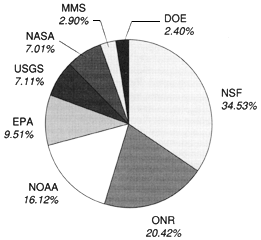
FIGURE 4-20 Distribution of federal support for ocean science in Fiscal Year 1992.
1982 dollars. The NSF budget grew at an annual rate of 14.4 percent during this time. More than half of this increase can be attributed to inflation; in constant 1982 dollars, the total NSF budget increased at an annual rate of 6.7 percent. This impressive record indicates continuing support in both the administration and the Congress for basic scientific research.
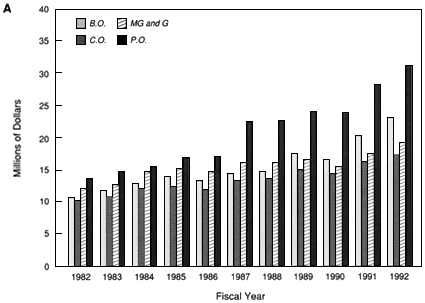
Ocean Science The budget of NSF's Ocean Sciences Division (OCE) has not increased as rapidly as the overall NSF budget over this same period (Figure 4-21). In constant 1982 dollar terms, the OCE budget grew 2.4 percent annually between fiscal years 1982 and 1992, a constant dollar growth rate about one-third that of the overall NSF budget. Of the OCE growth, in constant 1982 dollar terms, 58 percent can be attributed to growth specifically in Ocean Science Research Support (OSRS). The Ocean Drilling Program (ODP) accounts for 16 percent of the constant 1982 dollar growth and Oceanographic Centers and Facilities (OCF) for 26 percent. It is encouraging to note that the 5.5 percent increase in the OCE budget from fiscal years 1990 to 1991 (in constant 1982 dollars) and the 4.6 percent budget increase from 1991 to 1992 may signal significant real growth in the OCE budget in the 1990s.
Funding increases have not been uniform across the oceanographic disciplines in OCE (Figure 4-22). The physical oceanography budget increased more than the other three disciplines, ac-
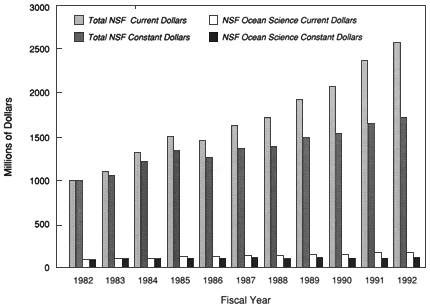
FIGURE 4-21 Budget history of the National Science Foundation and the ocean science component in current and constant 1982 dollars for Fiscal Years 1982–1992.
counting for 53 percent (in inflation-adjusted dollars) of the entire OSRS growth between fiscal years 1982 and 1992. Biological oceanography accounted for 33 percent of the OSRS growth. In contrast, increases in the chemical oceanography and marine geology and geophysics budgets accounted for much smaller percentages of the OSRS growth, 11 and 6 percent, respectively. However, this relatively slow growth in core program support for MG and G has been offset by a $5 million to $6 million budget per year for drilling-related science that began when ODP was established in the mid-1980s.
Thus at NSF, 1982–1992 was characterized by slow growth in research support for ocean sciences. Further, the percentage growth occurred mostly in OSRS and can be attributed primarily to increased support in physical oceanography and, in fiscal years 1991 and 1992, biological oceanography as well.
Other Basic Sciences Overall, NSF support for most fields of basic scientific research grew relatively slowly from fiscal years 1982 to 1992. The three directorates that fund most of NSF's

basic scientific research (and comprise more than one-half its total budget)—Biological, Behavioral and Social Sciences, Mathematics and Physical Sciences, and Geosciences—had budget growth rates substantially lower than the overall NSF budget. NSF directorates responsible for technology, computing, engineering, and education accounted for most of the percentage growth in the overall NSF budget.
Office of Naval Research
The Department of the Navy, primarily through the ONR, has been a major supporter of basic oceanographic research in the United States. ONR funding has changed little in constant dollars since fiscal year 1982 (Figure 4-23). Funding by ONR's oceanographic disciplines, which differ from NSF's, are also relatively constant (Figure 4-23).
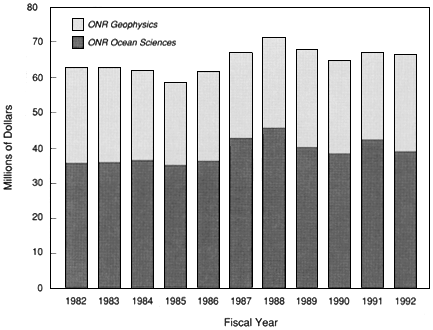
FIGURE 4-23 Office of Naval Research funding for ocean science in constant 1982 dollars for Fiscal Years 1982–1992.
Office of the Oceanographer of the Navy
The Office of the Oceanographer of the Navy was the program sponsor for the following new construction of Navy-owned ships assigned to academic institutions between fiscal years 1982 and 1992:
|
$33 million |
AGOR-23 (R/V Thompson) |
New construction |
|
$47 million |
R/V Knorr, R/V Melville |
Refitting |
|
$41 million |
AGOR-24 |
New construction |
Other Navy Support
Other Navy support for ocean science comes from the Office of Naval Technology (ONT) and the Naval Research Laboratory (NRL). ONT provided $43.7 million in fiscal year 1992 for science, but no breakdown for ocean science is available. Further, no budget figures are available prior to fiscal year 1992. NRL provided $3.2 million in fiscal year 1992 for ocean science; here too, no prior budget figures are available yet.
National Oceanic and Atmospheric Administration
NOAA's research budget includes mapping, charting, geodesy activities, ocean and coastal management, climate research, and fisheries management (Figure 4-24). NOAA research is carried out at major federal laboratories, such as the Atlantic Oceanographic and Meteorological Laboratories and the Pacific Marine Environmental Laboratories, as well as through cooperative agreements with universities and the National Sea Grant College, Climate and Global Change, and Coastal Ocean programs.
Sea Grant, NOAA's major extramural funding program for university-based scientists, provided approximately $25.3 million in fiscal year 1991 for ocean science research (Figure 4-25). The Climate and Global Change Program began in fiscal year 1989 and provides some support for academic scientists (Figure 4-25). The Coastal Ocean Program (COP) began in fiscal year 1990. Approximately 50 percent of its $11.5 million budget for fiscal year 1992 is used to support academic research in coastal ocean science (Figure 4-25). Although it is a young program, COP indicates a possible trend of increasing academic research support (164 percent between fiscal years 1990 and 1992 in constant 1982 dollars). If its budget continues to increase and congressional support continues, COP may emerge as a significant extramural funding pro-
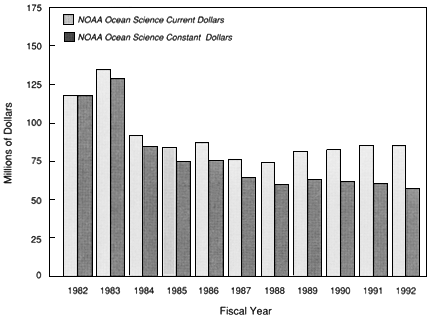
FIGURE 4-24 National Oceanic and Atmospheric Administration (NOAA) funding for ocean science in current and constant 1982 dollars for Fiscal Years 1982–1992.
gram in the 1990s. Funding information for these three NOAA programs is included in Tables 4-7 and 4-8.
Department of Energy
For many years, the Department of Energy has supported a marine research program in areas such as subseabed waste disposal, carbon dioxide-related research, and coastal oceanography (Figures 4-26 and 4-27). In fiscal year 1982, the marine research program was budgeted at $22.9 million, with some of the work contracted to university-based marine scientists. Between fiscal years 1982 and 1987, the budget was reduced nearly 75 percent in constant 1982 dollar terms. Programs in subseabed waste disposal and strategic petroleum were eliminated, and funding for coastal oceanography and carbon dioxide research was reduced. With DOE involvement in the U.S. Global Change Program, funding for carbon dioxide-related research has rebounded. Since fis-
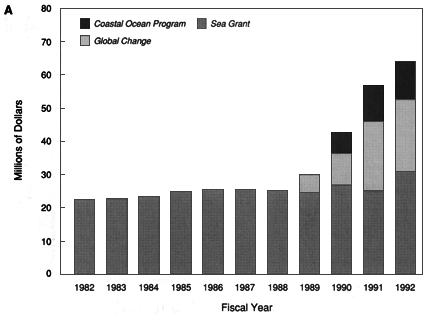
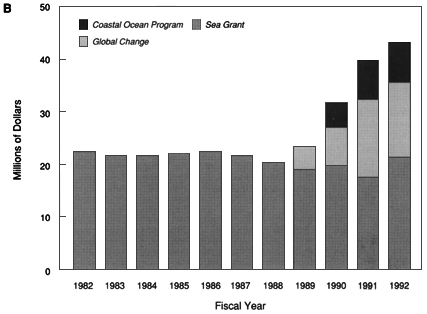
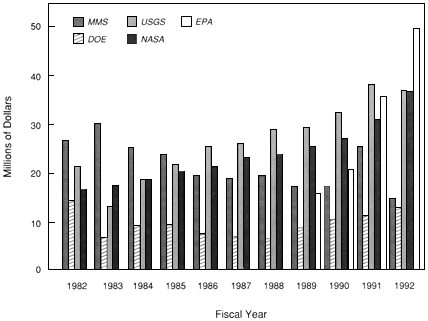
FIGURE 4-26 Budget history of ocean science research programs in several major federal mission agencies in current dollars for Fiscal Years 1982–1992.
cal year 1987, DOE funding for ocean-related research increased 6.6 percent annually in constant 1982 dollar terms, but it is still significantly (63 percent) below the level of fiscal year 1982 support in constant 1982 dollars.
U.S. Geological Survey
USGS supports marine geological and geophysical research. During the past decade, it has emphasized mapping and assessing the geological resources of the U.S. Exclusive Economic Zone. USGS ocean science funding—which includes two major components, Offshore Geologic Framework and Coastal Geology—decreased 32 percent in constant 1982 dollars from fiscal year 1982 to 1983 (Figures 4-26 and 4-27). This reduction is due in part to the formation of a new bureau MMS, which was separated from the Conservation Division unit in the Department of the Interior in fiscal year 1982. Since fiscal year 1983, the USGS marine programs budget has grown 65.8 percent in constant 1982 dollar terms, a 6.6 percent annual average increase.
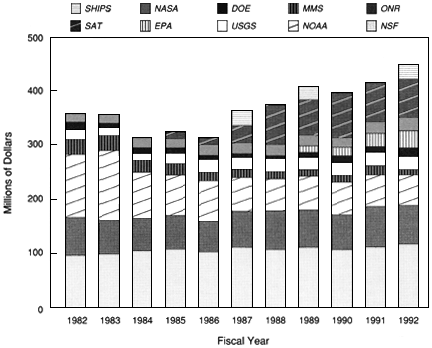
FIGURE 4-27 Total federal support for ocean science including NASA satellites and Navy ships assigned to academic institutions, in constant 1982 dollars for Fiscal Years 1982–1992.
Minerals Management Service
MMS's Environmental Studies Program supports studies in physical oceanography, offshore geology, and marine pollution. Some studies are contracted with university-based researchers, and others are conducted by private industry or federal agencies (e.g., USGS). In general, the MMS ocean science budget has decreased continuously from fiscal year 1982 to fiscal year 1992, for a 63 percent overall decrease in constant 1982 dollars in these 11 years (Figures 4-26 and 4-27).
Environmental Protection Agency
EPA has a rapidly growing marine research program. Reliable figures are not available prior to fiscal year 1989, but between fiscal years 1989 and 1992, the EPA marine program budget increased 165 percent in constant 1982 dollars (an average annual
increase of 41 percent), the largest percent increase in any federal agency (Figures 4-26 and 4-27).
National Aeronautics and Space Administration
Satellites are increasingly important in modern oceanographic research. NASA provides funding for construction, operation, and related research for ocean satellite missions such as TOPEX/Poseidon, instruments such as SeaWiFS and the NASA Scatterometer, and data collection and analysis from other satellites such as ESA's Earth Resources Satellite-1 (see ''Physical Resources"). It is difficult from NASA's budget presentation to identify specific ocean-related funding after fiscal year 1989, except for individual satellites. Expenditures for fiscal years 1982–1992 are shown in Tables 4-7 and 4-8 in two categories, Research and Analysis and Flight Programs. Funding of university-based researchers has nearly quadrupled in current dollars, from $3.3 million in 1982 to $12.6 million in 1992. NASA's ocean-related funding has grown, particularly for the development of new satellite sensors. Growth of NASA's budget in Earth observations is expected to be substantial as the Mission to Planet Earth begins and the Earth Observing System satellites are developed.
Discussion
Overall, federal funding of oceanographic research in the 1980s was relatively constant. Figure 4-27 shows that total federal spending on oceanographic research grew 5.1 percent from fiscal year 1982 to fiscal year 1992 (in constant 1982 dollars), an increase of about 0.6 percent annually.
Although this report focuses on funding trends in the ocean sciences, funds for individual oceanographic investigators are influenced by the rapid growth in the number of academic oceanographers and a significant increase in the costs of ocean science. Throughout the period of slow growth in federal spending on the ocean sciences in the 1980s, the number of scientists competing for funds continued to grow. According to the OSB survey (see "Human Resources"), the number of Ph.D.-level academic ocean scientists increased about 70 percent from 1980 to 1990. WHOI data indicate that the number of proposals per staff member increased from 2.8 in 1975 to 4.8 in 1991. This finding seems to confirm a general impression among research oceanographers that they now spend more time writing proposals than in the past.
The costs of the latest equipment (e.g., ships, satellites, and laboratory instrumentation) used in oceanography today are rising much faster than the rate of inflation. This trend, seen in many scientific fields, is what D. Allan Bromley, the President's Science Advisor, calls the sophistication factor. For example, all major oceanographic research vessels in the 1970s were equipped with wide-beam echo sounders to measure the water depth beneath the ship. These simple systems cost a few thousand dollars to install and were inexpensive to operate. In the 1980s, the first multiple narrow-beam echo sounders were introduced. These systems produced more accurate seafloor maps up to 16 times faster than the older echo sounders, but they cost nearly $1 million per ship to install and are much more costly to operate and maintain. In the early 1990s, the second-generation multibeam swath mapping systems were introduced. They are up to 10 times faster than the first multibeam systems but cost nearly 2.5 times as much. This example is not atypical; each oceanography discipline could cite similar examples. As our capability to do oceanographic research has increased over the past 20 years, the associated costs of acquiring, operating, and maintaining modern facilities and equipment have outpaced inflation.


