
I
Risk Assessment Considerations for Sulfur Mustard
William Nicholson and Annetta Watson
It would have been ideal to have both exposure and epidemiological data on the groups of individuals exposed to sulfur mustard, such as those exposed during manufacturing. Such information could be used to develop exposure-risk relationships and, if exposures were known, applied to individuals who participated in World War II testing programs or who were otherwise exposed. If epidemiologic studies of such exposed individuals had been conducted, the results would provide risk information of importance, even without knowledge of exposure. Absent these ideal data, we are forced to make risk estimations using other information.
Experimental animal data can be used to make estimates of carcinogenic potency in humans by using cancer risk models and standard interspecies extrapolation procedures. Unfortunately, quantitative human cancer risk estimates for sulfur mustard are impractical because the experimental data from animal studies have three large uncertainties:
-
only a few experiments were conducted;
-
many were in a mouse strain that exhibited a high genetic susceptibility to spontaneous pulmonary tumors;
-
routes of administration tested and duration of follow-up observations are not comparable to the human exposures of concern.
Nevertheless, approximate estimates can be made of the carcinogenic potency of sulfur mustard relative to other carcinogenic agents for which we have knowledge and concern. These estimates allow us to place sulfur mustard on a scale of cancer potency that spans more than seven
orders of magnitude between highly potent carcinogens, such as aflatoxin B1, and carcinogens of very much lower potency, such as saccharin.
SULFUR MUSTARD
Two sets of experiments provide information on the carcinogenicity of sulfur mustard (see Chapter 6). One is the series of injection studies of Heston and colleagues (1949, 1950, 1953a) using strains A and C3H mice. These studies are difficult to interpret because of the extreme sensitivity of strain A mice for development of pulmonary tumors and the use of only subcutaneous injections in studies using the strain C3H mice. The second experiments are the chamber exposure studies of McNamara and colleagues (1975) in which Sprague-Dawley-Wistar rats were exposed to air concentrations of 0.001 and 0.1 mg/m3 for various periods of time up to 52 weeks. These latter experiments are more useful because of the long durations of exposure and long subsequent follow-up periods.
A comparison of the results of the intravenous injection studies of Heston (1950) indicates that both sulfur mustard and nitrogen mustard (HN2) readily produce pulmonary tumors in strain A mice. However, because of the high genetic susceptibility for development of pulmonary tumors in this strain of mice, it is inappropriate to make quantitative estimates of risk from these data alone. Table 6-1 does indicate that sulfur and nitrogen mustards have a similar potential to produce pulmonary tumors in this strain. This conclusion follows from the finding that the number of nodules produced from comparable injections of sulfur or nitrogen mustard is similar at 16 weeks of follow-up. This similarity and the similarity of DNA alkylation action make HN2 data relevant to evaluating the carcinogenic potency of sulfur mustard. However, caution must be exercised, because the pharmacokinetics of the two compounds differ. Sulfur mustard is more rapidly metabolized and may not act at distant sites as readily as HN2. This is seen in the strain C3H and C3Hf subcutaneous injection studies of Heston (1953a) where injection site malignancies were similar for both sulfur mustard and HN2, yet only HN2 produced an excess of pulmonary tumors (see Table 6-3).
The single inhalation study by Heston (1953b) is also inappropriate to use for estimating either animal or human cancer potency: first, because strain A mice were used; and second, because of the extremely large uncertainty of the exposure concentration tested. In this study, sulfur mustard evaporated from a soaked filter paper and was distributed by a fan through an 8-liter desiccator. The actual concentration of sulfur mustard during a 15-minute inhalation exposure is unknown. The
importance of this experiment is not that of a potency estimate, but that of clear evidence of lifetime risk of pulmonary tumors from a 15-minute inhalation exposure.
The inhalation chamber exposures of McNamara and colleagues (1975) present the best available experimental data on sulfur mustard carcinogenicity (Tables 6-5 and 6-6). Of the rats exposed to 0.1 mg/m3 for 6.5 hours 5 days per week for 52 weeks, 10 of 23 developed agent-related tumors in a ''carcinogenicity study" and 9 of 39 in a "toxicity study." Of the 19 tumors, 17 were either squamous cell or basal cell carcinoma of the skin. No carcinomas were present in 52 control mice observed for similar periods. In the atmospheric exposure experiments of McNamara and colleagues, it should be noted that the only excess malignancies in exposed groups were skin tumors. With the exception of exposed strain A/J mice (which developed pulmonary tumors, but not in excess), no pulmonary tumors in any exposed group were reported in these inhalation experiments. Further, at similar inhalation exposures, but inadequate follow-up time, McNamara and colleagues observed no increase in agent-related skin or other malignancies in experiments with dogs, guinea pigs, rabbits, and A/J mice. The skin malignancies, however, are noteworthy. First, their cumulative incidence in the high-exposure group approached 50 percent. Second, the absence of other tumors suggests that the skin malignancies were the result of external, rather than systemic, exposure. This suggests that similar or even lower cumulative air exposures may be of concern for human skin carcinogenicity, particularly in combination with high exposure to sunlight.
NITROGEN MUSTARD
Because of a similar structure and toxicity, malignancies caused by nitrogen mustard (HN2) are also of interest. The intravenous and subcutaneous experiments using HN2 by Heston (1950, 1953a) have been mentioned above.
Another study by Shimkin and colleagues (1966) reviewed early National Cancer Institute bioassay data for 29 alkylating chemicals tested in strain A mice. Of the 29 compounds, the potency of HN2-HCl in producing pulmonary nodules was exceeded only by uracil mustard. The data for the five most potent compounds and that for chlorambucil and cyclophosphamide are shown in Table I-1.
Gold and colleagues (1984) reported a TD50 for all malignancies of 22.8 µg (0.0456 mg/kg) for HN2, based on laboratory rat data from Schmähl and Osswald (1970). TD50 is the cumulative exposure that is expected to produce an excess cancer mortality of 50 percent in a two-year followup; a low TD50 indicates a high potency. The TD50 for HN2 translates
TABLE I-1 Comparative Carcinogenicity of Selected Agents in Strain A Mice
|
Compound |
Response Dosea |
Relative Potencyb |
|
Uracil mustard |
0.96 |
10,420 |
|
Nitrogen mustard |
3.0 |
3,300 |
|
Melphalan |
3.8 |
2,630 |
|
Aziridyl benzoquinone |
12 |
830 |
|
Chloroquine mustard |
18 |
560 |
|
Chlorambucil |
60 |
170 |
|
Cyclophosphamide |
360 |
28 |
|
a The total dose required to produce 1.0 tumor per mouse at 39 weeks. b 10,000 divided by the response dose. SOURCE: Shimkin et al., 1966. |
||
into a cancer potency that is only one-fifth that of aflatoxin B1 for liver tumors (aflatoxin B1 TD50 = 4.19 µg in male rats). Because that experimental cancer potencies can differ by as much as 10 million-fold, these data suggest similar potencies for HN2 and aflatoxin B1.
In a study comparing the effects of HN2 and other radiomimetic chemicals with the effects of X-radiation, Conklin and colleagues (1965) found the incidence of thymic lymphoma from four injections of 2.4 mg/kg each to be less than that of four doses of 300 rads each of X-rays (21 percent lymphoma incidence for HN2, 33 percent for X-radiation, 10 percent for controls). Thus, the midlethal doses of HN2 were similar to midlethal doses of X-radiation.
CANCER RISKS FROM SIMILAR COMPOUNDS
A variety of mustard compounds are used in chemotherapy or treatment of other diseases. Many of these have also demonstrated a potential to produce malignancy during or following treatment. Sulfur mustard, HN2, and these other mustards are alkylating agents. It is believed that they act by producing interstrand and intrastrand DNA-DNA cross-links; this action may be related to carcinogenic effects (Colvin and Chabner, 1990). While the pharmacokinetics of the alkylation process differs for the different chemicals, the similarity of ultimate action suggests that data on the carcinogenic potential of these other mustard compounds may be relevant to the risks of developing cancer from exposure to sulfur mustard.
A malignancy commonly arising from treatment by alkylating agents is acute nonlymphocytic leukemia (ANL). Of the various medicinal mustard compounds, good data on human exposure-based risk of developing ANL are available for chlorambucil, cyclophosphamide, and
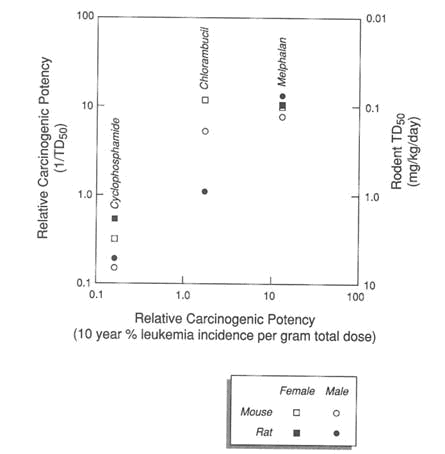
FIGURE I-1 Relative carcinogenic potency of three nitrogen derivative antineoplastic agents. SOURCE: Kaldor et al., 1988
melphalan. Kaldor and colleagues (1988) have calculated a leukemia potency index (10-year incidence per gram total dose) for each of these drugs and compared it with the corresponding rodent TD50's. Figure I-1 is a graphic representation of data from Kaldor and colleagues (1988) of the reciprocal of the TD50's for various antineoplastic drugs plotted against the relative human leukemogenic potency. No data exist that would allow a direct estimate to be made of the human leukemia potency index for HN2-HCl, but its TD50 in male rats (0.23 mg/kg per day) would suggest that its relative leukemogenic potency would be comparable to or exceed that of melphalan. This comparability is also suggested by comparing the pulmonary tumorigenic potency of HN2 and the other compounds in the strain A mice bioassay data of Shimkin
and colleagues (1966) mentioned above.
Because of the similarity of sulfur mustard and HN2 in producing pulmonary tumors in strain A mice, we would expect sulfur mustard to carry a potential ANL cancer risk. However, the magnitude of the effect may differ from HN2, because a different fraction of sulfur mustard inhaled would be transported to the bone marrow.
Dedrick and Morrison (1992) have also compared the carcinogenic potency of chlorambucil, cyclophosphamide, and melphalan in humans and rodents, but based on the integrated exposure of the ultimate carcinogenic chemicals. This procedure changes the relative positions of the chemicals, but not the correlation between human and rodent data. Thus, comparisons between effects data derived from external exposure are considered relevant, as pharmacokinetic effects of these compounds appear to be similar in humans and rodents.
RAPID SCREENING OF HAZARD (RASH) APPROACH
Watson and colleagues (1989) have estimated the carcinogenic potency of sulfur mustard by the "rapid screening of hazard" (RASH) method. This approach compares exposures that produce documented toxic effects from an agent of interest to exposures of a reference chemical producing a similar effect (Jones et al., 1985, 1988). The results of these relative potency analyses are usually similar to those of the more traditional CAG (Carcinogen Assessment Group) and NTP (National Toxicology Program) carcinogenicity assessments in establishing exposure standards used by EPA, OSHA, and other regulatory agencies (Glass et al., 1991; Jones and Easterly, 1991; Jones et al., 1988; Owen and Jones, 1990). Watson and colleagues (1989) applied the RASH procedures to Heston's intravenous injection studies (1950) and subcutaneous injection experiments (1953a). Other available Heston data were not incorporated into the analysis because of Heston's incomplete characterization of exposure concentrations or high animal mortality induced by the experimental protocol. The experiments of McNamara and colleagues (1975) would have been desirable to use, but comparison exposures for primary or secondary standards were not available.
By considering all possible combinations of experiments and several reference compounds, sulfur mustard tumorigenicity was determined to be comparable with nitrogen mustard (HN2 and HN2-HCl) tumorigenicity in laboratory rodents. In the analysis of nitrogen mustard, data from the studies of Abell and colleagues (1965), Boyland and Horning (1949), Conklin and colleagues (1965), Heston (1949, 1950, 1953a), Schmähl and Osswald (1970), Shimkin and colleagues (1966), and Zackheim and Smuckler (1980) were used. Additional relative potency comparisons were made for the therapeutic nitrogen mustards melpha-
lan and chlorambucil, and the alkylating carcinogenic compound, bis(chloromethyl) ether. Comparisons of laboratory rodent data indicated that sulfur mustard and nitrogen mustard had tumorigenic potencies comparable with melphalan and bis(chloromethyl) ether; the tumorigenic potencies of sulfur and nitrogen mustard were possibly greater than that of chlorambucil.
RELEVANCE OF EXPERIMENTAL RESULTS TO HUMAN RISKS
The above observations and comparisons indicate that sulfur mustard is an animal carcinogen and, to the extent that its action is similar to HN2, a potent one. Both excess pulmonary tumors and skin malignancies were demonstrated to occur from sulfur mustard exposure in experimental studies. Such data are in agreement with
-
excess lung cancer observed in groups of individuals occupationally exposed during sulfur mustard production; and
-
skin cancer observed in patients undergoing topical treatment with therapeutic concentrations of nitrogen mustard.
Data from studies of effects of exposure to therapeutic nitrogen mustards are suggestive of risks of additional malignancies. Mustard compounds used as chemotherapeutic agents have demonstrated a high potential to generate acute nonlymphocytic leukemia. The similarity between the alkylating action of these compounds and sulfur mustard suggests that sulfur mustard exposure might also result in such malignancies. This is also suggested by the finding of an increased incidence of thymic lymphoma in female strain RF mice injected with HN2.
In summary, experimental studies establish that exposure to sulfur mustard produces a substantial risk of lung tumors in laboratory animals and also produces a risk of skin cancer from air exposure. For each pathological site, the cancer potency of sulfur mustard is high. Experimental data from exposures to HN2 suggest that sulfur mustard exposure may lead to an increased risk of developing thymic lymphoma, and perhaps acute nonlymphocytic leukemia, based on findings in humans treated with therapeutic alkylating agents.
HUMAN EXPOSURES
Mustard agents were positively associated with human respiratory tract cancer incidence by the International Agency for Research on Cancer (IARC) in 1975. By 1981, IARC had categorized "mustard gas" as a "Class 1" human carcinogen (Saracci, 1981). Exposure and dose-response data are not available that would allow precise risk estimates to
be made for the specific exposure circumstances of veterans exposed during World War II or otherwise. Human epidemiological studies of workers employed in the production of sulfur mustard demonstrate a significant excess of cancers of the lung and larynx.
Lung cancer has been found to be doubled among British veterans exposed to mustard agents (Case and Lea, 1955) and increased by up to 50 percent in United States veterans (Beebe, 1960). It is suggested in Chapter 3 of this report that the cumulative exposures for some of the subjects in the WWII testing programs may have been similar to battlefield exposures. To the extent that they were comparable, a similar increased risk of lung cancer would be expected. It is not known how many individuals this finding describes.
REFERENCES
Abell CW, Falk HL, Shimkin MB. 1965. Uracil mustard: a potent inducer of lung tumors in mice.Science 147:1443-1445.
Beebe G. 1960. Lung cancer in World War I veterans: possible relation to mustard gas injury and 1918 influenza epidemic. Journal of the National Cancer Institute 25:12311252.
Boyland E, Horning ES. 1949. The induction of tumours with nitrogen mustards. British Journal of Cancer 3:118-123.
Case RM, Lea AJ. 1955. Mustard gas poisoning, chronic bronchitis, and lung cancer: an investigation into the possibility that poisoning by mustard gas in the 1914-1918 war might be a factor in the production of neoplasia. British Journal of Preventive and Social Medicine 9:62-72.
Colvin M, Chabner BA. 1990. Alkylating agents. In: Chabner BA, Collins JM, eds. Cancer Chemotherapy: Principles and Practice. Philadelphia: J.B. Lippincott.
Conklin JW, Upton AC, Christenberry KW. 1965. Further observations on late somatic effects of radiomimetic chemicals and X-rays in mice. Cancer Research 25:20-28.
Dedrick RL, Morrison PF. 1992. Carcinogenic potency of alkylating agents in rodents and humans. Cancer Research 52:2464-2467.
Glass LR, Easterly CE, Jones TD, Walsh PJ. 1991. Ranking of carcinogenic potency using a relative potency approach. Archives of Environmental Contamination and Toxicology 21:169-176.
Gold LS, Sawyer CB, Magaw R, Backman GM, de Veciana M, Levinson R, Hooper NK, Havender WR, Bernstein L, Peto R. 1984. A carcinogenic potency database of the standardized results of animal bioassays. Environmental Health Perspectives 58:9-319.
Heston WE. 1949. Induction of pulmonary tumors in strain A mice with methyl-bis(ßchloroethlyl)amine hydrochloride. Journal of the National Cancer Institute 10:125-130.
Heston WE. 1950. Carcinogenic action of the mustards. Journal of the National Cancer Institute 11:415-423.
Heston WE. 1953a. Occurrence of tumors in mice injected subcutaneously with sulfur mustard and nitrogen mustard. Journal of the National Cancer Institute 14:131-140.
Heston WE. 1953b. Pulmonary tumors in Strain A mice exposed to mustard gas. Proceedings of the Society for Experimental Biology and Medicine 82:457-460.
International Agency for Research on Cancer (IARC). 1975. IARC Monographs on the Evaluation of Carcinogenic Risk of Chemicals to Man. Vol. 9, Some Aziridines, N, S- & O- Mustards and Selenium. Lyon: IARC. 181-192.
Jones TD, Easterly CE. 1991. On the rodent bioassays currently being conducted on 44 chemicals: a RASH analysis to predict test results from the National Toxicology Program. Mutagenesis 6:507-514.
Jones TD, Walsh PJ, Zeighami EA. 1985. Permissible concentrations of chemicals in air and water derived RTECS entries: a "RASH" chemical scoring system. Toxicology and Industrial Health 1:213-234.
Jones TD, Walsh PJ, Watson AP, Owen BA, Barnthouse LW, Sanders DW. 1988. Chemical scoring by a Rapid Screening Hazard (RASH) method. Risk Analysis 8:99-118.
Kaldor JM, Day NE, Hemminki K. 1988. Quantifying the carcinogenicity of antineoplastic drugs. European Journal of Cancer and Clinical Oncology 24:703-711.
McNamara BP, Owens EJ, Christensen MK, Vocci FJ, Ford DF, Rozimarek H. 1975. Toxicological Basis for Controlling Levels of Mustard in the Environment. Edgewood Arsenal Special Publication EB-SP-74030. Aberdeen Proving Ground, Maryland: U.S. Army Armament Command. Edgewood Arsenal Biomedical Laboratory.
Owen BA, Jones TD. 1990. Hazard evaluation for complex mixtures: relative comparisons to improve regulatory consistency. Regulatory Toxicology and Pharmacology 11:132-148.
Saracci R. 1981. The IARC monograph program on the evaluation of the carcinogenic risk of chemicals to humans as a contribution to the identification of occupational carcinogens. In: Peto R, Schneiderman M, eds. Quantification of Occupational Cancer. Vol. 9. Banbury Report . Cold Spring Harbor, NY: Cold Spring Harbor Laboratory. 165-176.
Schmähl D, Osswald H. 1970. Experimental studies on the carcinogenic effects of anticancer chemotherapeutic and immunosuppressive agents. Arzneimittelforschung 20:1461-1467. [In German]
Shimkin MB, Weisburger JH, Weisburger EK. 1966. Bioassay of 29 alkylating chemicals by the pulmonary-tumor response in strain A mice. Journal of the National Cancer Institute 36:915-935.
Watson AP, Jones TD, Griffin GD. 1989. Sulfur mustard as a carcinogen: application of relative potency analysis to the chemical warfare agents H, HD, and HT. Regulatory Toxicology and Pharmacology 10:1-25.
Zackheim HS, Smuckler EA. 1980. Tumorigenic effect of topical mechlorethamine, BCNU and CCNU in mice. Experientia 36:1211-1212.


