
9
Heat as a Factor in the Perception of Taste, Smell, and Oral Sensation
Barry G. Green1
INTRODUCTION
Because all biological systems are to some extent sensitive to temperature, heat can be expected to affect the perception of taste. Although thermal influences on taste perception have been confirmed in numerous studies, much remains to be learned about the range of temperature-taste interactions that occur, their relevance to food preferences and nutrition, and the mechanisms that underlie them. As this review of the available data will illustrate, most of what has been learned pertains to simple chemosensory ''model'' stimuli, rather than to foods, and to the effects of stimulus temperature alone rather than to the effects of both environmental and stimulus temperature. The extent to which existing data are relevant to real-world perceptions of food in a hot environment is therefore difficult to assess.
To place what is known about temperature-taste effects in the correct context, it is helpful to review the sensory innervation of the oronasal region and the terminology used to describe the perception of foods and beverages. In common usage, the term taste refers to the oral experience produced during the ingestion of a food or beverage. In fact, this experience derives from several different sensory systems, only one of which actually conveys information about taste (gustation) per se. As currently defined, taste sensations fall into four, or possibly five, categories: sweet, sour, salty,
and bitter; many Japanese researchers also argue that the taste of monosodium glutamate (MSG), which they refer to as umami, is unique and "basic" (for example, Nakamura and Kurihara, 1991; Rogers and Blundell, 1990). All other sensations associated with the ingestion of foods derive from other sensory systems that innervate the oral and nasal cavities. In particular, the qualities that we frequently use to describe how something tastes—such as chocolate, vanilla, strawberry, and orange—are actually odors detected retronasally via the opening between the oropharynx and the nasal cavity. Qualities such as creaminess and crunchiness derive from mechanical stimulation and thus are mediated by the sense of touch. The "burn" or ''heat" of chili pepper, mustard, alcohol, and other irritants is mediated at least in part by the pain and thermal senses (Green, 1991; Green and Lawless, 1991). Thus, the term taste should be reserved for the limited range of gustatory sensations, and the term flavor should be used to describe the totality of oral sensations—taste, smell, touch, temperature, and chemical irritation (pain)—that accompany eating.
To evaluate thermal effects on flavor therefore requires more than merely measuring the modulation of sweet, sour, salty, and bitter tastes under conditions of changing stimulus temperature. The present chapter reviews the current literature on thermal effects in all four of the above-mentioned modalities and suggests future research.
SENSORY EFFECTS OF TEMPERATURE
Taste
The effect of temperature on the perception of taste has been studied scientifically for over a century (for review see Green and Frankmann, 1987; Pangborn et al., 1970). However, because temperature-taste effects were usually measured in piecemeal fashion (that is, testing only one or two taste stimuli at a time) in different laboratories using different experimental methods, few generalizations could be gleaned from the early experiments. The only reliable finding seemed to be that the threshold for detecting the four basic tastes tended to vary in a U-shaped manner as a function of temperature, having a minimum somewhere in the range between 20° and 30°C. The temperature at which the minimum occurred varied across taste stimuli (see McBurney et al., 1973 for example), which means that, in general, when foods or beverages are heated to temperatures above 30°C (about 86°F), detecting weak tastes becomes more difficult.
Interestingly, the pattern of thermal effects at threshold does not extend to suprathreshold concentrations, when tastes are unambiguously present. At these higher concentrations, the perception of some taste stimuli continues to be affected by temperature while the perception of others is relatively
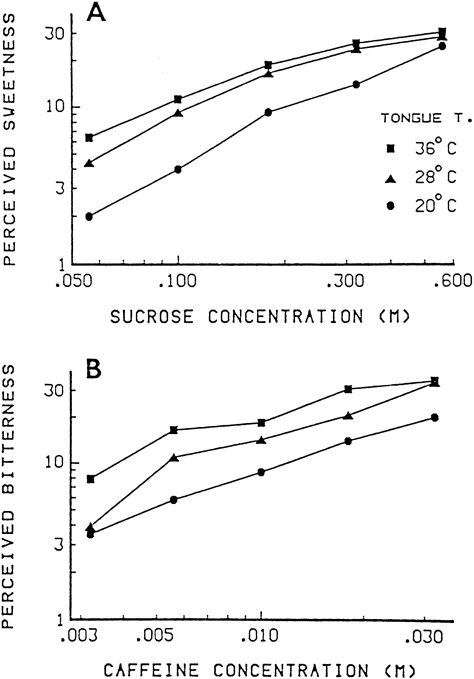
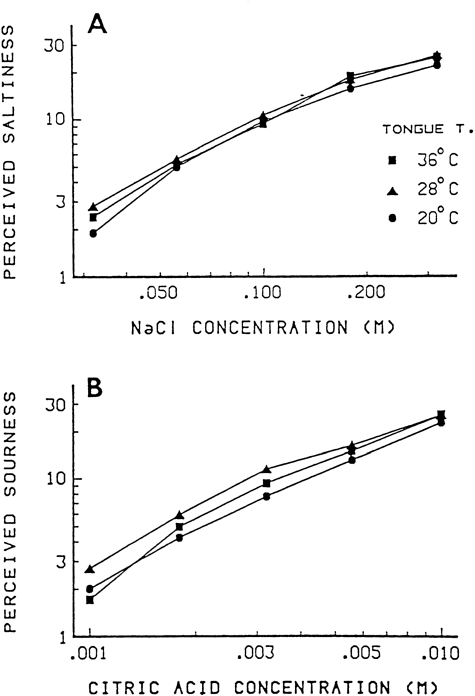
unaffected. In particular, Green and Frankmann (1987, 1988) showed that the perceived sweetness of sucrose (Figure 9-1), fructose, and glucose increased in intensity when the temperature of the solution was increased between 20° and 36°C, but to a degree that was inversely related to the concentration of the taste stimulus; the stronger the taste stimulus, the smaller was the effect of temperature. The same result had been observed earlier for sucrose alone (Bartoshuk et al., 1982; Calvino, 1986). Green and Frankmann (1987) also reported that the bitterness of caffeine grew stronger at warmer temperatures, whereas the sourness of citric acid and the saltiness of NaCl were not significantly altered (Figure 9-2). Overall, therefore, as temperature rises, perceptions of sweetness and bitterness tend to intensify, and perceptions of sourness and saltiness tend to remain the same. Because the effect of temperature is not uniform across compounds, it can be expected that the taste "profile" of a food will change as its temperature changes. If all else is equal, at hot temperatures bitter and sweet tastes should dominate salty and sour ones.
From a practical standpoint, these thermal effects are not particularly large. Although Green and Frankmann (1987) noted changes in the perceived intensity of sweetness as great as 100 percent, these perceptions only occurred when the temperature of the tongue—not just the temperature of the solution—had been changed by 16°C (from 36° to 20°C). Large changes in tongue temperature are difficult to produce under normal circumstances because of the tongue's abundant vascularization. Furthermore, these effects were obtained by cooling the tongue. Although other studies have shown that the trends observed for sweetness and bitterness between 20° and 36°C persist at solution temperatures above normal oral temperature (for example, Bartoshuk et al., 1982; Paulus and Reisch, 1980), the relationship between temperature and perceived intensity at very hot temperatures (for example, greater than 45°C or 113°F) has not been clearly worked out.
Touch
The "feel" of a food or beverage, produced by mechanical stimulation and mediated by the tactile sense, is an important but often overlooked aspect of flavor. The perception of food devoid of its tactile properties is difficult to imagine; foods would literally be intangible substances, and flavor would be rendered a disembodied sensory quality. It is consequently of interest to know if the temperature of a food affects its perceived tactile characteristics. Although no data exist that address this issue directly, it has been established that, in a manner similar to taste, the tactile sensitivity of the tongue changes as its temperature changes. In general, the sensitivity to so-called high-frequency vibration (greater than 100 Hz) varies directly with temperature between 20° and 36°C (Green, 1987). In contrast, the sensitiv-
ity to low-frequency vibration remains independent of temperature. The sensitivity to vibration is important because virtually every mechanical stimulus—particularly those produced by complex forces like those associated with chewing—sets up vibrations in the skin. The differential effect of temperature across frequencies means that changing temperature does not simply blunt tactile sensitivity; rather, the quality as well as the quantity of the tactile sensation is likely to change. We can therefore expect that the texture of foods changes as their temperature does. A study of the effect of temperature on the perception of surface roughness perceived by the fingertip supports this hypothesis (Green et al., 1979).
In addition to its effects on the high-frequency components of mechanical stimulation, temperature probably also modulates the sensitivity of the mouth to simple pressure. Studies of the tactile sensitivity of the hand have shown that cooling blunts pressure sensitivity, and warming enhances it (Stevens et al., 1977). There is no reason to believe that the same trend does not occur in the oral mucosa.
Another, opposite, temperature-touch interaction also needs to be considered. It has long been known that when rested on the skin, cool objects are perceived as heavier than warm objects (Stevens and Green, 1978). This phenomenon, known as the Weber illusion, could well play a role in the perception of the mechanical characteristics of foods and beverages. Unlike the numbing effect of cooling the skin itself, cooling the stimulus tends to heighten (at least briefly) the mechanical component of sensation. Perhaps the initial pressure components of warm or hot oral stimuli are reduced relative to cool or cold stimuli.
How these various changes in tactile sensitivity affect the perception of foods and beverages has never been studied directly. What is required are experiments designed specifically to measure the effect of object and oral temperature on the perception of such dimensions as smoothness, creaminess, thickness, and roughness.
Chemical Irritation
Of the three forms of oral stimulation subject to thermal modulation, chemical irritation, or "chemesthesis" (Green, 1991; Green and Lawless, 1991), is the most vulnerable. By their nature, the sensory endings that mediate chemical irritation (noreceptors) are temperature sensitive. As a consequence, changing the temperature of the stimulus and tongue can drastically affect the sensitivity to an irritant. This effect has been most clearly demonstrated for capsaicin, the pungent compound in chili pepper (Green, 1986; Szolcsanyi, 1977). As shown in Figure 9-3, the burning sensation produced by capsaicin varies directly with the temperature of the solution
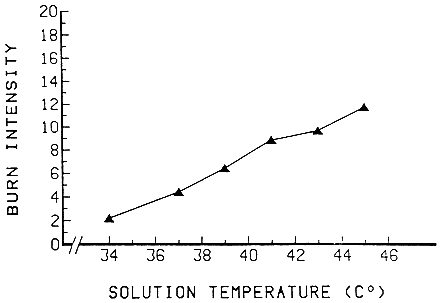
FIGURE 9-3 Perceived intensity of the burning sensation produced by capsaicin as a function of the temperature of the test solution. SOURCE: Green (1986), used with permission.
that contains it. In fact, by cooling the tongue to only about 25°C, the burning sensation induced by a moderate concentration of capsaicin can be completely eliminated (Green, 1986). This effect is readily apparent whenever one sips a cool beverage to quell the burning sensation produced by an overly "hot" spicy food; the burn is reduced almost instantly but rebounds after the beverage is swallowed and the mouth warms to its normal temperature.
Thermal effects are not limited to capsaicin. Although the effect may vary in magnitude across compounds, they have also been observed with piperine (black pepper), ethanol, and even the irritation produced by high concentrations of salt (Green, 1990). There is no doubt, therefore, that consuming foods that contain "hot" spices in a hot environment will increase the sensory impact of those foods. What effect this may have on consumption will likely vary markedly across individuals because of the wide range of individual differences in liking for "chemical heat" (Rozin and Schiller. 1980; Rozin et al., 1982). Hot spices do, however, trigger additional salivary flow (Lawless, 1984), which might prove to be a positive factor in a hot, dry environment.
Smell (Olfaction)
Despite the significant role odor plays in the formation of flavor, the effect of temperature on the perception of retronasal odors has not been studied. Based strictly on thermodynamics, one would expect that heating a food would increase the olfactory component of flavor by increasing the release of volatile compounds. Indeed, it is apparent in everyday experience that heating heightens the appreciation of odors sensed orthonasally; it would be very surprising if the same were not true of odors that originate in the mouth.
The effect on hedonics of thermal modulation of odors is more difficult to predict and would almost certainly depend on both the food being consumed and the preferences of the consumer. Too much of any odor can in theory become undesirable, and as appears to be the case with taste, touch, and probably themesthesis, differential effects of temperature on the components of a complex odor would likely change the quality as well as the quantity of the olfactory experience.
PHYSIOLOGICAL AND PSYCHOLOGICAL EFFECTS OF TEMPERATURE
In addition to affecting the transduction and conduction of sensory information about foods, the thermal environment can also influence the flavor of foods indirectly via physiological and psychological factors. Given the paucity of information about direct thermal effects on flavor and flavor preference, it is not surprising that even less is known about possible indirect effects on these variables. What little is known suggests that physiological and psychological responses to extreme temperatures (in both the environment and the food) could, under some circumstances, be more important than sensory factors in determining flavor, hedonic tone, and eating behavior.
Serious consideration should be given, for example, to possible effects of heat-induced electrolyte imbalances on the perception of taste. Extreme sodium depletion has been shown to affect sensitivity to and preference for NaCl and salty foods (Beauchamp et al., 1990); however, such depletions are likely to occur only under the most dire circumstances, when survival itself is at stake. In general, studies that have investigated nutritional and metabolic effects on taste perception have usually found significant effects only when deficiencies of vitamins (for example, vitamin A or vitamin B) or minerals (for example, zinc) have been extreme (as in disease states) and associated with some form of lesion or tissue atrophy (Mattes and Kate, in press). But the occurrence of depletion effects under extreme, acute conditions at least raises the possibility that less severe depletions suffered over
longer intervals might cause changes in the preference for and/or sensitivity to tastes or flavors.
Psychological factors can also play an important role in changes in taste preferences associated with changes in the temperature of foods. It is common experience that the temperature at which a food is consumed affects it liking (Brown et al., 1985; Zellner et al., 1988), and it has been shown that the temperature preferences that underlie these effects are largely a product of experience (Zellner et al., 1988). Thus, warm beer is less liked by consumers who normally drink chilled beer, whereas those who have always drunk it warm prefer it that way. However, the same study that demonstrated the importance of experience and expectation on the liking of foods and beverages (Zellner et al., 1988) also showed that the effect of temperature can be partially offset merely by changing consumers' expectations about the temperature of the comestible. The latter fact suggests that, given sufficient time and exposure, it should be possible to change temperature preferences to suit changing environmental needs. This is an important hypothesis; the extent to which it is true will determine how severe and long lasting the effects of a very hot (or very cold) environment may be on the perception and liking of foods.
SUMMARY AND SUGGESTIONS FOR FUTURE RESEARCH
The available data clearly show that temperature can be an important variable in flavor perception. However, its importance in real-world situations undoubtedly depends on numerous factors, including how extreme the thermal stimulus is, what kind of food is being consumed, the physiological condition of the individual, and the psychological "mind-set" he or she brings to the situation. Furthermore, the likelihood that complex interactions take place among these variables makes it very difficult to evaluate the importance of each. Future research should therefore seek to evaluate the effect of combining these variables in different ways and in different degrees.
Listed below are some of the issues relevant to the possible effects of extreme environmental temperatures on flavor perception that have not been addressed experimentally:
-
What are the purely psychological effects of eating foods in unusually warm (or cold) environments (for example, does preferred serving temperature vary inversely with environmental temperature)?
-
How, if at all, does environmental temperature (independent of serving temperature) affect the perception of the temperature of foods (for example, are there contrast or assimilation effects)?
-
Does acclimatization to a harsh thermal environment produce changes
-
in flavor preferences (that is, should different foods and beverages be made available before versus after acclimatization)?
-
What might the combined effects on flavor perception be of reduced salivary flow (due to dehydration) and unusually high serving and environmental temperatures? Can salivary stimulants offset these effects?
-
Should spicy, "hot" foods be avoided in very hot environments because of the heightened perception of oral heat they invoke?
-
Could peppers be used to create the illusion of thermal heat when meals cannot be heated in the field? Conversely, might foods that contain artificial cooling agents, such as menthol, improve the experience of eating in hot environments by creating the illusion of coolness?
-
Do foods that have strong flavors (that is, intense olfactory components) at cool ambient temperatures become less preferred in hot environments and at high serving temperatures?
A notable feature of most of these questions is that they can only be addressed in experiments conducted under conditions in which environmental temperature is controlled (for example, in an environmental chamber). Although the requirement of conducting experiments under controlled climatic conditions—or even on site in extreme environments—limits the number of investigators who would be able to undertake them, the hypotheses that have been generated in simple psychophysical studies must eventually be tested under realistic circumstances. This is particularly true given that the measurements of interest may well be influenced by psychological and physiological factors that are unique to thermally stressful environments.
ACKNOWLEDGMENT
Preparation of this paper, and some of the research reported in it, was supported by a research grant from the National Institutes of Health (DC00249).
REFERENCES
Bartoshuk, L.M., K. Rennert, H. Rodin, and J.C. Stevens 1982 Effects of temperature on the perceived sweetness of sucrose. Physiol. Behav. 28:905–910.
Beauchamp, G.K., M. Bertino, D. Burke, and K. Engelman 1990 Experimental sodium depletion and salt taste in normal human volunteers. Am. J. Clin. Nutr. 51:881–889.
Brown, N.E., M.M. McKinley, L.E. Baltzer, and C.F. Opurum 1985 Temperature preferences for a single entree. J. Am. Diet. Assoc. 85:1339-1341.
Calvino, A.M. 1986 Perception of sweetness: The effects of concentration and temperature. Physiol. Behav. 36:1021–1028.
Green, B.G. 1986 Sensory interactions between capsaicin and temperature in the oral cavity. Chem. Sens. 11:371–382.
1987 The effect of cooling on the vibrotactile sensitivity of the tongue. Percept. Psychophys. 42:423–430.
1990 Effects of thermal, mechanical, and chemical stimulation on the perception of oral irritation. Pp. 171–192 in Chemical Senses. Vol. 2, Irritation, B.G. Green, J. R. Mason, and M.R. a, eds. New York: Marcel Dekker.
1991 Oral chemesthesis: The importance of time and temperature for the perception of chemical irritants. Pp. 107–123 in Sensory Science Theory and Applications in Foods, H.T. Lawless, and B.P. Klein, eds. New York: Marcel Dekker.
Green, B.G., and S.P. Frankmann 1987 The effect of cooling the tongue on the perceived intensity of taste. Chem. Sens. 12:609–619.
1988 The effect of cooling on the perception of carbohydrate and intensive sweeteners. Physiol. Behav. 43:515–519.
Green, B.G., and H.T. Lawless 1991 The psychophysics of somatosensory chemoreception in the nose and mouth. Pp. 235–253 in Smell and Taste in Health and Disease, T.V. Getcheil, R.L. Doty, L.M. Bartoshuk, and J.B. Snow, eds. New York: Raven Press.
Green, B.G., S.J. Lederman, and J.C. Stevens 1979 The effect of skin temperature on the perception of roughness. Sens. Proc. 3:327–333.
Lawless, H.T. 1984 Oral chemical irritation: Psychophysical properties. Chem. Sens. 9:143–157.
Mattes, R.D., and M.R. Kate In press Nutrition and the chemical senses. In Modern Nutrition in Health and Disease, M.E. Shils, J.A. Olson, and M. Shike, eds. Philadelphia: Lea & Febiger.
McBurney, D.H., V.B. Coilings, and L.M. Glanz 1973 Temperature dependence of human taste response. Physiol. Behav. 11:89–94.
Nakamura, M., and K. Kurihara 1991 Canine taste nerve responses to monosodium glutamate and disodium guanylate: Differentiation between umami and salt components with amiloride. Brain Res. 541:21–28.
Pangborn, R.M., R.B. Chrisp, and L.L. Bertolero 1970 Gustatory, salivary, and oral-thermal responses to solutions of sodium chloride at four temperatures. Percept. Psychophys. 8:69–75.
Paulus, K., and A.M. Reisch 1980 The influence of temperature on the threshold values of primary tastes. Chem. Sens. 5:11–21.
Rogers, P.J., and J.E. Blundell 1990 Umami and appetite: Effects of monosodium glutamate on hunger and food intake in human subjects. Physiol. Behav. 48:801–804.
Rozin, P., and D. Schiller 1980 The nature and acquisition of a preference for chili pepper by humans. Motiv. Emot. 4:77–101.
Rozin, P., L. Ebert, and J. Schull 1982 Some like it hot: A temporal analysis of hedonic responses to chili pepper. Appetite 3:13–22.
Stevens, J.C., and B.G. Green 1978 Temperature–touch interaction: Weber's phenomenon revisited. Sens. Proc. 2:206–219.
Stevens, J.C., B.G. Green, and A.S. Krimsley 1977 Punctate pressure sensitivity: Effects of skin temperature. Sens. Proc. 1:238–243.
Szolcsanyi, J. 1977 A pharmacological approach to elucidation of the role of different nerve fibres and receptor endings in mediation of pain. J. Physiol. (Paris) 73:251–259.
Zellner, D.A., W.F. Stewart, P. Rozin, and J.M. Brown 1988 Effect of temperature and expectations on liking for beverages. Physiol. Behav. 44:61–68.
DISCUSSION
DR. NESHEIM: Questions for Dr. Green?
PARTICIPANT: The point of the distinction of sour and sweet from pain was illustrated by comments from a number of soldiers about the hot sauce they were provided. They liked the hot sauce very much but many of them thought it was too sour. They didn't like the vinegar in it and they asked for just dry red pepper, as an alternative to the hot sauce.
DR. GREEN: Cayenne is basically capsaicin, and although it does have flavor components, one of the interesting things about capsaicin is that it has virtually no taste. It is therefore an ideal food additive, in that sense, because you can add a sensory dimension without also adding possibly negative flavors—like sourness.
PARTICIPANT: Are there individuals who are particularly sensitive to some of these food additives? Some people tell me that they are sensitive to pepper, for example. Is there a danger if we cook these items in the food rather than let the individual add it to the food that people many not like the food?
DR. GREEN: Absolutely. We see it in the laboratory. That is one of the difficulties in studying capsaicin. There are large individual differences in the tolerance and their liking capsaicin.
Some people come into the lab eager to be tested; others won't agree to do the study even for pay because they simply don't eat hot and spicy foods.
So yes, I think including capsaicin or cayenne as something that could be added to the food rather than already in the food is critical.
I also think the ability to have control over a flavor component may also be very important in fighting the monotony issue.
PARTICIPANT: Are you saying, then, with menthol you would have a similar figure that indicated people perceived greater coolness as temperature decreased?
DR. GREEN: Yes, we have done those studies. The difference in the
cooling effect doesn't vary much with temperature, which means that menthol has a reasonably strong impact even at room temperature.
And of course, even if you eat a relatively hot food that has menthol in it, once it coats your oral cavity, just breathing through your mouth produces evaporative cooling. Menthol enhances the effect of evaporative cooling; it is as though you are breathing cooler air.
PARTICIPANT: Is that what menthol does in cigarettes?
DR. GREEN: Yes. However, I am told by experts at the tobacco companies that people don't like menthol in cigarettes to counteract the heat as much as they merely enjoy it as another sensory dimension.
PARTICIPANT: It has been published that when people have to drink volumes of water for sweat fluid replacement—that is to say, between 12 and 18 quarts a day—that the preferred temperature is somewhere between 14° and 17°C (55° to 60°F).
My own experience from the southwestern deserts of the United States, is that this temperature estimate is a bit high. Do you have any feeling or could you make any comments?
DR. GREEN: The only feeling I have about it is that you are speaking about field tests in an extreme climate. One of the things that needs to be done—perhaps it has been done for thirst—is to look at possible effects of acclimatization on preferred temperatures. Perhaps once you become acclimatized to a hot environment, you prefer to avoid a sharp, cold contrast in favor of a more mild coolness.
PARTICIPANT: Are there any systematic racial or gender differences?
DR. GREEN: With regard to the basic tastes, I know of no significant racial or gender differences.
There is a gender effect with irritants in the nose but not in the mouth; females tend to be more sensitive than males. There are also some data which suggest that odor sensitivity varies across the menstrual cycle.
A bigger factor in each of these modalities, though, is individual differences. There are large individual differences in the chemical senses.
PARTICIPANT: Do sour stimuli give any sensations of coolness?
DR. GREEN: Not that I am aware of.
People have, in the past, tried to associate tastes with temperatures the same way that colors have been associated with temperature. For example, sweetness is thought of as being warm, salt as being less warm. I don't know where sourness might fit in.
DR. NESHEIM: Thank you, Barry.


