
12
Responses of Soldiers to 4-gram and 8-gram NaCl Diets During 10 Days of Heat Acclimation
Lawrence E. Armstrong,1 Roger W. Hubbard, Eldon W. Askew, and Ralph P. Francesconi
INTRODUCTION
The reported dietary sodium (Na+) intake of adults in the United States ranges from 1800 to 5000 mg (78 to 218 mEq Na+) per day, depending on the method of assessment (National Research Council, 1989a,b). Empirical studies have demonstrated that this intake is greater than the levels consumed by the inhabitants of several tropical countries (Conn, 1963; Dahl, 1958; Hubbard et al., 1986) and that the basal biologic human requirement for Na+ ranges from only 50 to 175 mg (2 to 8 mEq Na+) per day (Dahl, 1958). These facts, and previous studies that related dietary sodium chloride (NaCl) to hypertension (Tobian, 1989), led to a recent dietary recommendation of 2400 mg (104 mEq) of Na+ per day (National Research Council, 1989a) for U.S. residents living in temperate climates.
However, observations made in hot environments (National Research Council, 1989b) suggest that this dietary recommendation may be inadequate because of increased daily Na+ losses during exercise in the heat. For example, Denton (1982) reported losses of up to 24 g NaCl per day (408 mEq Na+ per day) in the sweat of unacclimatized humans in hot climates. Several laboratory studies concluded that humans who eat low Na+ diets and perform strenuous exercise in the heat have an increased risk (Armstrong et al., 1987; Hubbard and Armstrong, 1988) or incidence of
heat exhaustion (Taylor et al., 1944) or heat syncope (Bean and Eichna, 1943). Other experts (Consolazio, 1966; Ladell et al., 1954; Strauss et al., 1958) used field observations to derive Na+ recommendations for soldiers of 13,000 to 48,000 mg NaCl (221 to 816 mEq Na+) per day.
In contrast to those findings, laboratory studies of human heat acclimation (HA) (Armstrong et al., 1985; Conn, 1963) and dietary Na+ intake (Dahl, 1958; National Research Council, 1989b) have suggested that humans function well when consuming relatively low Na+ diets ranging from 1930 to 6000 mg NaCl per day (33 to 103 mEq Na+ per day). Unfortunately, those human studies often did not involve prolonged exercise-heat exposure on many successive days or allow ample time for dietary Na+ stabilization prior to HA. Therefore, the purpose of the current investigation was to evaluate the effects of moderate Na+ diets ([8g NaCl] 137 mEq Na+; abbreviated MNA) and low Na+ diets ([4 g NaCl] 68 mEq Na+; abbreviated LNA) on thermoregulatory, cardiovascular, hematologic, and fluid-electrolyte variables during 10 consecutive days of prolonged intermittent exercise (8 hours per day) in a simulated desert environment. This experiment was relevant to military populations because the caloric and Na+ intakes typically decrease during the initial days of deployment in a hot environment, and because the maintenance of intravascular and intracellular fluid-electrolyte balance is essential to prolonged exercise in heat.
METHODS
The subjects of this investigation were 17 males who were not acclimated to heat; who gave their informed, voluntary consent to participate in the current investigation; and who underwent a medical examination. Selected physical characteristics for both treatment groups appear in Table 12-1.
During this 17.5-day study, subjects were housed 24 hours each day in a research building that contained sleeping, dining, and environmentally controlled chamber facilities. A proctor was present at all times to ensure that no subject left and that no food entered the research building. During the initial 7-day dietary equilibration period (days 1 to 7), all 17 subjects consumed MNA and were housed in an ambient temperature of 21°C. During the subsequent 10-day HA period (days 8 to 17), nine subjects continued to consume MNA and eight subjects began to consume LNA. On days 8 to 17, breakfast and dinner were consumed in the dormitory kitchen (21°C) while lunch was eaten in the tropical chamber (41°C) during the fifth rest period. Three primary meals and two snacks provided subjects with 55 percent carbohydrate, 13 percent protein, 32 percent fat, and 3600 kcal per day, in both LNA and MNA. Subjects drank assorted beverages ad libitum. when not involved in HA trials.
Upon awakening each morning (days 1 to 18), the following measures
TABLE 12-1 Day 1 Mean (±SE) Characteristics of Subjects Consuming Low Na+ Diets (LNA) (n = 8) and Moderate Na+ Diets (MNA) (n = 9)
|
|
Diet |
||||
|
Variable (unit) |
LNA* |
MNA† |
Statistical Significance |
||
|
n |
8 |
|
9 |
|
— |
|
Age (years) |
20 |
± 1 |
20 |
± 1 |
NS‡ |
|
Height (cm) |
180.1 |
± 2.3 |
178.7 |
± 2.3 |
NS |
|
Mass (kg) |
79.80 |
± 3.18 |
77.86 |
± 3.80 |
NS |
|
Estimated body fat (%)§ |
14 |
± 1 |
14 |
± 1 |
NS |
|
|
45.73 |
± 1.69 |
47.09 |
± 1.54 |
NS |
|
HR (heart rate) peak |
207 |
± 9 |
211 |
± 7 |
NS |
|
* 4 g NaCl, 68 mEq Na+. † 8 g NaCl, 137 mEq Na+. ‡ NS, not significantly different (p > .05). § Calculation from Jackson and Pollock (1978). |
|||||
 peak (ml per kg per minute)
were taken: nude body weight (±50 g), first void urine specific gravity (refractometer), and first void urine Na+ and potassium (K +) concentrations (flame photometer). Blood samples also were collected prior to exercise on days 8, 11, 15, and 17. Subjects entered the 41°C environment and stood quietly for 20 minutes before the sample was drawn. Daily HA trials were conducted in ambient conditions of 41°C, 21 percent relative humidity (rh), and 1.2 m per second air speed (8.5 hours per day); during the remainder of each day (15.5 hours per day), subjects lived at an ambient temperature of 21°C in an effort to simulate a 24-hour desert temperature cycle. Exercise involved 8 periods of alternating rest (30 minutes per hour) and moderate (5.6 km per hour, 5 percent grade) treadmill exercise (30 minutes per hour) while wearing shorts, socks, and sneakers. Exercise was terminated (and subjects rested in the heat for the remainder of the trial) if heart rate (HR) exceeded 180 beats per minute, if rectal temperature (Tre) exceeded 39.5°C, or if Tre rose 0.6°C during any 5-minute period. Subjects drank pure or flavored water (<1 mEq Na+ per liter, 10° to 15°C) ad libitum from canteens during treadmill walking and rest periods. Body weight was maintained each hour by requiring that subjects drink a volume of pure water, at the end of each rest period, that matched the amount of body mass not replaced by ad libitum drinking.
Statistical significance was tested by using a repeated measures analysis of variance (ANOVA) with Tukey's post hoc analysis (Zar, 1974). The two factors in this design were diet (LNA and MNA) and days (days 1 to 17; days 8 to 17; days 8, 11, 15, 17). The null hypotheses were rejected at the p = .05 confidence level. All data were expressed as mean ± standard error.
RESULTS
Morning Body Mass and Urinalysis
There were no between-diet differences in mean morning body mass values for LNA and MNA (days 1 to 18, p > .05, NS). Between-day differences (p < .001) were observed in the body mass of LNA, in that days 10 to 15 were significantly lower (p < .001) than day 8 (the initial day of heat exposure). The day-to-day body mass fluctuations in LNA and MNA may have involved changes in body fat, fat-free mass, or total body water. However, estimates of percent body fat showed no significant diet or day effects: day 1, 14 ± 1 percent (LNA), 14 ± 1 percent (MNA); day 8, 13 ± 1 percent (LNA), 14 ± 2 percent (MNA); day 17, 14 ± 1 percent (LNA), 15 ± 1 percent (MNA).
The mean morning urine specific gravity values for LNA and MNA (days 1 to 18) showed no between-diet differences (p > .05, NS). All mean urine specific gravity values (range: 1.016 to 1.023) indicated normal hydration status for both LNA and MNA on all days.
Figure 12-1 presents the concentrations of Na+ and K+ (mEq per liter) in the initial morning urine samples. The extremely low mean Na+ concentration on days 9 to 15 indicated that LNA adhered to the salt-restricted dietary regimen. The significant between-diet (LNA versus MNA) differences (p < .05 to .001) in Na+ and K+ are represented by asterisks. The differences in urinary Na+ were attributed to differential Na+ consumption and conservation, while differences in urinary K+ were of unknown origin and may have involved type I statistical errors of null hypothesis testing. Significant day-to-day differences in urinary Na+ (not shown in Figure 12-1) were identified for LNA between day 1 and days 3 to 18 (p < .05 to .001), as well as between day 8 and days 9 to 17 (p < .05 to .001). Significant day-to-day differences were observed for urine Na+ in group MNA between day 1 and days 2 to 18 (p < .01 to .001).
Preexercise Blood Measurements
Mean values for hematologic variables in Table 12-2 represent preexercise samples drawn at 7:30 a.m. on days 8, 11, 15, and 17. A noteworthy between-diet difference in percent change in plasma volume (PV) occurred on days 11 and 15. Although the LNA group exhibited a significantly smaller (p < .05) expansion of PV than MNA on days 11 and 15, both treatment groups manifested a similar percent change in PV by day 17 (+12.3 percent versus +12.4 percent). Similar, significant between-day decreases (Table 12-2) were identified for total plasma protein in LNA and MNA (day 8 versus days 11, 15, 17; p < .01), even though PV expansion exhibited
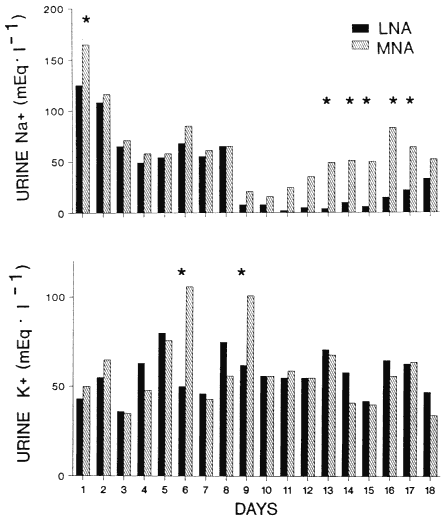
FIGURE 12-1 Mean Na+ and K+ concentrations (mEq per liter) of urine samples collected from low Na+ diets (4 g NaCl, 68 mEq Na+) (LNA) and moderate Na+ diets (8 g NaCl, 137 mEq Na+) (MNA) after awakening each morning. The significant between-diet (LNA versus MNA) differences (p < .05 to .001) in Na+ and K+ are represented by asterisks.
significant between-group differences (LNA versus MNA, p < .05) on days 11 and 15.
Responses During Heat Acclimation Trials
Although no cases of heat exhaustion, heat syncope, heat cramps, or heatstroke (Hubbard and Armstrong, 1988) occurred, the prolonged exercise resulted in numerous foot blisters and minor orthopedic injuries, which allowed only four subjects to complete all 80 of the 30-minute exercise bouts. The total distances walked by LNA and MNA, respectively, were 168.7 ± 18.9 and 185.4 ± 10.1 km per 10 days; these distances were not different (p > .05, NS) and were not significantly correlated with  peak (p > .05, NS).
There were no between-diet (LNA versus MNA) differences in heart rate (HR), on any day. Both MNA and LNA resulted in similar day 8 versus day 17 decreases in HR (for example, 140 beats per minute on day 8 versus 121 beats per minute on day 17), at the end of all exercise periods. Similarly, there were no between-diet differences (LNA versus MNA) in Tre, on any day. Both MNA and LNA resulted in similar day 8 versus day 17 decreases in Tre (for example, 38.3°C on day 8 versus 37.8°C on day 17), at the end of all exercise periods.
Sweat rate measurements during heat exposure were analyzed each day, for all subjects who completed eight exercise periods. These values ranged from 2850 to 3000 g per m2 per 8 hours for LNA and from 2900 to 3050 g per m2 per 8 hours for MNA on days 8 to 17 (the total volume of sweat approximated 6 kg per 8 hours). There were no between-diet differences and no between-day differences (p > .05, NS).
DISCUSSION
An evaluation of physical characteristics (Table 12-1), morning body mass, and morning urine specific gravity indicated no LNA versus MNA differences. With respect to HA trials, there were no between-diet differences in total distance walked, in HR, in Tre, in sweat rate, or in six out of seven blood variables (Table 12-2). The absence of heat cramps, heat syncope, or heat exhaustion in both LNA and MNA supported these data. It was concluded that dietary Na+ restriction (LNA) resulted in HA responses that were similar to those exhibited during moderate Na+ intake (MNA). In fact, only three variables showed LNA versus MNA differences: urine Na+ (days 13 to 17), urine K+ (days 6 and 9), and percent change in PV (days 11 and 15; see Table 12-2 and Armstrong et al. [1987]). Although an increase in sweat rate often occurs during human HA, it is not invariably present (Armstrong et al., 1985). A review of this topic (Henane, 1980) noted that
TABLE 12-2 Blood Variables of Low Na+ Diets (LNA) (n = 8) and Moderate Na+ Diets (MNA) (n = 9) at the Beginning of Heat Acclimation Trials on Days 8, 11, 15, and 17
|
|
Day |
||||||||
|
Measurement (unit) |
Diet |
8 |
11 |
15 |
17 |
||||
|
Serum Na+ |
LNA* |
137 |
± 2 |
138 |
± 2 |
140 |
± 3 |
137 |
± 2‡ |
|
(mEq per liter) |
MNA§ |
140 |
± 1 |
140 |
± 1 |
140 |
± 1 |
139 |
± 2 |
|
Serum K+ |
LNA |
4.5 |
± 0.2 |
4.5 |
± 0.3 |
4.5 |
± 0.2 |
4.4 |
± 0.1 |
|
(mEq per liter) |
MNA |
4.2 |
± 0.2 |
4.3 |
± 0.2 |
4.3 |
± 0.2 |
4.3 |
± 0.2 |
|
Plasma osmolality |
LNA |
287 |
± 1 |
285 |
± 3 |
286 |
± 3 |
287 |
± 4 |
|
(mOsmol per kg) |
MNA |
287 |
± 2 |
287 |
± 2 |
288 |
± 4 |
289 |
± 2 |
|
Percent change in PV |
LNA |
— |
|
+2.0 |
± 1.8 |
+6.6 |
± 2.0¶ |
+12.3 |
± 1.7¶ |
|
|
MNA |
— |
|
+11.5# |
± 2.8 |
+12.8# |
± 2.2 |
+12.4 |
± 1.7 |
|
MCHC |
LNA |
33.90 |
± 0.94 |
33.76 |
± 1.13 |
34.40 |
± 1.18 |
33.79 |
± 0.68 |
|
(g per 100 ml rbc) |
MNA |
34.00 |
± 0.90 |
34.34 |
± 0.78 |
34.65 |
± 1.01 |
33.87 |
± 0.79 |
|
Total plasma protein |
LNA |
8.8 |
± 0.5 |
7.5 |
± 0.3† |
7.1 |
± 0.4† |
7.2 |
± 0.3† |
|
(g per 100 ml) |
MNA |
8.6 |
± 0.9 |
7.4 |
± 0.4† |
7.1 |
± 0.3† |
7.3 |
± 0.3† |
|
COP |
LNA |
27.4 |
± 1.3 |
28.6 |
± 1.9 |
27.0 |
± 1.4 |
26.3 |
± 1.7 |
|
(mm Hg) |
MNA |
29.7 |
± 2.5** |
28.0 |
± 2.3** |
28.2 |
± 1.8 |
29.3 |
± 2.2 |
|
NOTE: PV = plasma volume; MCHC = mean corpuscular hemoglobin concentration; rbc = red blood cells; COP = colloid osmotic pressure. * 4 g NaCl, 68 mEq Na+. † Significantly different (p < .05, .01) from day 8. ‡ Significantly different (p < .05) from day 15. § 8 g NaCl, 137 mEq Na+. ¶ Significantly different (p < .05, .01) from day 11. # Significant difference (p < .05) between LNA and MNA. ** Significant interaction effect (p < .05, .01) from day 8 to 11, and from day 11 to 15. |
|||||||||
36 percent of HA studies (n = 55) showed no changes in sweat rate during HA and that sweat rate remained unchanged in hot-dry environments, such as this investigation, but increased markedly in humid environments. In addition, the day-to-day decline in Tre during exercise reduced the central drive for sweat production.
Plasma Volume Expansion
Table 12-2 demonstrates that the LNA group exhibited a significantly smaller (p < .05) expansion of PV than MNA on days 11 and 15, and that both treatment groups experienced a similar percent change in PV by day 17 (+12.3 percent versus +12.4 percent). A similarly delayed PV expansion was previously reported (Armstrong et al., 1987) for subjects consuming a low Na+ diet (98 mEq Na+ per day), when compared to a high Na+ diet (399 mEq Na+ per day), during an HA regimen involving 90 minutes of continuous daily exercise. It was suggested that such a delay in PV expansion might increase the risk of circulatory inadequacy or heat exhaustion on days 3 to 6 of HA because several between-diet differences (for example, HR, Tre, percent change in PV, sweat Na+ , and plasma Na+) were observed (Armstrong et al., 1987). However, the absence of any form of heat illness (for example, heat exhaustion) in the current study strongly suggests that LNA does not elicit an increased risk of circulatory incompetence or heat exhaustion. The effects of high-intensity exercise or concurrent illness (for example, diarrhea) in the heat, while consuming LNA, are unknown and could have significant effects on fluid-electrolyte balance and physical performance (Ladell, 1957).
Na+Balance During Heat Acclimation
It is relevant to ask if there is a minimal or optimal range of daily salt consumption that optimally supports the acquisition and sustainment of HA. Because HA is intimately linked with adrenocortical regulation of urine/sweat Na+ losses and because NaCl losses may be large during exerciseheat exposure (Denton, 1982), several authors have concluded that a high salt diet is advisable prior to and during exercise in the heat (Consolazio, 1966; Ladell et al., 1954; Strauss et al., 1958) and that excess Na+ simply would be excreted in urine without harm to health. However, an excess of whole body Na+ will typically repress plasma aldosterone levels (Conn, 1963; Ladell, 1957). This is exactly opposite the hormonal status desired, especially if secondary challenges (that is, decreased food consumption, increased work requirements) are presented, and it could lead to an increased incidence of heat illness (Hubbard and Armstrong, 1988; Hubbard et al., 1986).
Morning urine samples from both LNA (day 16) and MNA (day 11) demonstrated that mean morning urine Na+ concentrations increased late in the course of HA (MNA, day 11; LNA, day 16; see Figure 12-1). This result demonstrated renal escape from the effects of aldosterone (Conn, 1963) and suggests that retention of Na+ at the kidney (and probably the sweat glands, see Armstrong et al., 1985; Conn, 1963) eventually resulted in Na+ balance in both LNA and MNA, which agrees with previous research (Armstrong et al., 1985; Conn, 1963). Strauss et al. (1958) demonstrated that such increases in urinary Na+ would not have occurred if a balance of the daily Na+ turnover had not been achieved by day 17.
CONCLUSIONS
A diet typical of normal garrison Na+ consumption (8-gram NaCl diet) adequately stimulated HA and maintained human performance during 10 days of prolonged (8.5 hours per day), intermittent exercise in the heat. Moreover, if Na+ consumption was reduced by 50 percent (4-gram NaCl diet), HA was still effected, and performance was maintained. The requirement to replace sweat and urine losses with water, during each hour of HA, was believed to be an important factor in the abilities of groups LNA and MNA to walk an average of 16.9 and 18.5 km per day (p > .05, NS), respectively, in the 41°C environment.
This investigation reduced concerns about the occurrence of salt depletion heat exhaustion (McCance, 1936) and increased risk of heat illness (Armstrong et al., 1987; Bean and Eichna, 1943; Hubbard and Armstrong, 1988; Taylor et al., 1944) among humans consuming LNA and MNA. Although each subject lost approximately 60 liters of sweat during the 10-day course of HA, no subject exhibited the symptoms of salt-depletion heat exhaustion (vertigo, hypotension, tachycardia, and vomiting; see Hubbard and Armstrong, 1988), heat cramps, or heat syncope during the 10 days of HA.
These observations, in agreement with the results of Johnson et al. (1988), indicate that a well-balanced diet and a regimen of required water consumption will adequately maintain performance and result in normal fluid-electrolyte measurements during strenuous physical activity (8 hours per day) in a hot environment for 10 consecutive days.
ACKNOWLEDGMENTS
The authors gratefully acknowledge the many hours of dedicated assistance provided by Jane P. De Luca, Catherine O'Brien, Angela Pasqualicchio, Robert J. Moore, Natalie Leva, Patricia C. Szlyk, Ingrid V. Sils, Richard F. Johnson, William J. Tharion, Glenn J. Thomas, and Simone Adams.
REFERENCES
Armstrong, L.E., D.L. Costill, W.J. Fink, M. Hargreaves, I. Nishibata, D. Bassett, and D.S. King 1985 Effects of dietary sodium intake on body and muscle potassium content in unacclimatized men during successive days of work in the heat. Eur. J. Appl. Physiol. 54:391–397.
Armstrong, L.E., D.L. Costill, and W.J. Fink 1987 Changes in body water and electrolytes during heat acclimation: Effects of dietary sodium. Aviat. Space Environ. Med. 58:143–148.
Bean, W.B., and L.W. Eichna 1943 Performance in relation to environmental temperature. Reactions of normal young men to a simulated desert environment. Fed. Proc. 2:144–158.
Conn, J.W. 1963 Aldosteronism in man: Some clinical and climatological aspects. Part 1. J. Am. Med. Assoc. 183:775–781.
Consolazio, C.F. 1966 Nutrient requirements of troops in extreme environments. Army Res. Dev. Mag. 11:24–27.
Dahl, L.K. 1958 Salt intake and salt need. New Engl. J. Med. 258:1152–1157.
Denton, D. 1982 The Hunger for Salt. New York: Springer-Verlag.
Henane, R. 1980 Acclimatization to heat in man: Giant or windmill, a critical reappraisal. Pp. 275–284 in Pecs: Proceedings of the 28th International Congress of Physiological Science, F. Obal and G. Benedek, eds. New York: Pergamon Press.
Hubbard, R.W., and L.E. Armstrong 1988 The heat illnesses: Biochemical, ultrastructural, and fluid-electrolyte considerations. Pp. 305–360 in Human Performance Physiology and Environmental Medicine at Terrestrial Extremes, K.B. Pandolf, M.N. Sawka, and R.R. Gonzalez, eds. India-napolis, Ind.:Benchmark Press.
Hubbard, R.W., L.E. Armstrong, P.K. Evans, and J.P. De Luca 1986 Long-term water and salt deficits—A military perspective. Pp. 29–48 in Predicting Decrements in Military Performance Due to Inadequate Nutrition. Committee on Military Nutrition, Food and Nutrition Board. Washington, D.C.: National Academy Press.
Jackson, A.S., and M.L. Pollock 1978 Generalized equations for predicting body density of men. Br. J. Nutr. 40:497–504.
Johnson, H.L., R.A. Nelson, and C.F. Consolazio 1988 Effects of electrolyte and nutrient solutions on performance and metabolic balance. Med. Sci. Sports Exerc. 20:26–33.
Ladell, W.S.S. 1957 Disorders due to heat. Trans. R. Soc. Trop. Med. Hyg. 51:189–216.
Ladell, W.S.S., J.C. Waterlow, and M.F. Hudson 1954 Desert climate: Physiological and clinical observations. Lancet 2:491–497. McCance, R.A.
1936 Experimental sodium chloride deficiency in man. Proc. R. Soc. Lond. [Biol] 119:245–268.
National Research Council 1989a Diet and Health: Implications for Reducing Chronic Disease Risk. Report of the
Committee on Diet and Health, Food and Nutrition Board. Washington, D.C.: National Academy Press.
1989b Recommended Dietary Allowances, 10th ed. Report of the Subcommittee on the Tenth Edition of the RDAs, Food and Nutrition Board, Commission on Life Sciences . Washington, D.C.: National Academy Press.
Strauss, M.B., E. Lamdin, W.P. Smith, and D.J. Bleifer 1958 Surfeit and deficit of sodium. Arch. Int. Med. 102:527–536.
Taylor, H.L., A. Henschel, O. Mickelsen, and A. Keys 1944 The effect of sodium chloride intake on the work performance of man during exposure to dry heat and experimental heat exhaustion. Am. J. Physiol. 140:439–451.
Tobian, L. 1989 The relationship of salt to hypertension. Am. J. Clin. Nutr. 32:2739–2748.
Wyndham, C.H., A.J.A. Benade, C.G. Williams, N.B. Strydom, A. Golden, and A.J.A. Heynes 1968 Changes in central circulation and body fluid spaces during acclimatization to heat. J. Appl. Physiol. 25:586–593.
Zar, J.H. 1974 Biostatistical Analysis. Englewood Cliffs, New Jersey: Prentice Hall.
Discussion
DR. NESHEIM: Questions for Dr. Armstrong?
PARTICIPANT: I wasn't sure how to read that one slide. Are you showing, then, on the 8-gram diet, a higher body weight? Is that what this shows?
DR. ARMSTRONG: You saw a decrease in body weight at the midpoint.
PARTICIPANT: So you were showing that—explain that slide again.
DR. ARMSTRONG: On the 8-gram diet yes, there was, on the average an increase in body weight.
PARTICIPANT: So the people on the moderate salt diet had a higher body weight.
DR. ARMSTRONG: Not statistically significant.
PARTICIPANT: But you could argue, since the tonicity was the same, that they may have had a slightly increased extracellular food volume.
DR. ARMSTRONG: Yes.
PARTICIPANT: What happened in the urine tests? You showed urine sodium. What happened to urine potassium?
DR. ARMSTRONG: There were two spikes that were significantly different. I am only looking at the a.m. value, however, and that may have been due to drinking fruit juice, for example, the night before or to some other source of potassium. Captain Moore can probably speak more to the 24
hour balance. Other than that, there were no between-diet or between-day differences.
The two spikes came, interestingly, the day before heat acclimation and day after heat acclimation began.
DR. NESHEIM: Maybe we should go through all these presentations and then we can have a discussion about that then.
PARTICIPANT: That excretion then was expressed per liter.
DR. ARMSTRONG: Yes.


