
AIDS
Solving the Molecular Puzzle
by Michelle Hoffman

In his 1993 inaugural address, President Clinton warned about the twin enemies of "ancient hatreds and new plagues" that continue to threaten and shape the world. There can be no doubt that among those plagues the new president was thinking of AIDS.
ANCIENT HATREDS AND NEW PLAGUES
Acquired immunodeficiency syndrome, or AIDS, is very much a modern plague, a reflection of the times in which it emerged. In a world where cultural and economic boundaries between countries are less firm than geographic ones, the grim reality is that epidemics respect no borders. AIDS is a plague that could emerge only in a modern world where, for better or worse, rapid mass transportation links materials, people, and pathogens from all over. And so it is that the human immunodeficiency virus (HIV), the agent that causes AIDS, could first evolve in a remote corner of the world and within little more than a few decades become a dread fear in every corner
of the world. Today, more than 600,000 people worldwide have been diagnosed with AIDS (see Figure 3.1), and in the United States alone at least 1 million people are infected with HIV (see Figure 3.2). Throughout the world, still more are infected and have yet to know or have yet to develop the symptoms of AIDS.
But numbers alone do not reflect the dimensions of the "world AIDS crisis," as President Clinton called it. Certainly, more people have had flu from influenza virus than have suffered from AIDS. What distinguishes AIDS from every infectious disease to come before it is the scientific challenge it represents to a research community that has successfully controlled all of the plagues of the past. Hardly anyone living in the United States today can remember a time when they were concerned about typhoid or tetanus. Few children today will grow up with the threat of polio or smallpox. Improved public health measures and potent vaccines have made these diseases the exception rather than the rule in the United States and in most of the industrialized world. In more recent memory, both toxic shock syndrome and Legionnaire's disease emerged and were vanquished by science within a few short years.
Against this backdrop of success fighting infectious diseases, comes HIV, a virus whose natural history is so unusual that no prior experience with any infectious agent has appropriately prepared modern science to tackle it. And yet no previous era has been better prepared to take on the challenge. Only now does science have the experimental tools to unravel the details of the peculiar life style of this virus. It is one of the greatest ironies of this epidemic that stopping it will owe as much to the technology of the era as its spread.
The hallmark of AIDS is the slow but complete erosion of the immune system. Years, sometimes many years, after a person becomes infected with the virus, his or her immune system is so weakened that it is unable to fight off the bacterial and viral assaults that a strong immune system could easily defeat. For that reason people with AIDS are vulnerable to a host of diseases rarely found in the general population. These are called opportunistic infections because they take the opportunity to strike someone with depleted immune defenses. Ultimately, the patient dies from the effects of one of these diseases.
The list of opportunistic infections that most frequently affect AIDS patients itself reads like a catalog of plagues. Tuberculosis, recurrent
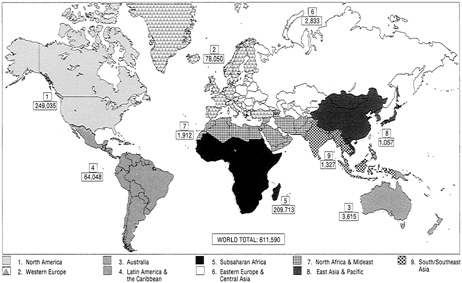
FIGURE 3.1 Cumulative number of reported adult AIDS cases worldwide through late 1992. Map derived from data provided by the World Health Organization, 1993.
pneumonia (caused by a parasite called Pneumocystis carinii), and a rare skin cancer called Kaposi's sarcoma are some of the most common causes of death for people with AIDS in the United States. Other AIDS-related conditions include lymphoma and other cancers, systemic yeast infections, toxoplasmosis and other degenerative disorders of the nervous system, and an unexplainable wasting syndrome (see Table 3.1). If any one of these conditions in itself is not fatal, the cumulative effect of fighting off so many infections with an increasingly damaged immune system often is. In one sense the solution to the problem is clear. If science could find a way to lessen the immune-depleting effects of the virus, people with AIDS would not be so defenseless against opportunistic infections.
But this strategy is not as simple as it sounds. Once the virus infects an individual, the virus and immune system are locked in an intimate and paradoxical relationship. Following infection the virus becomes part of the immune system and in so doing undermines the very defenses that are supposed to fight it. Eliminating the virus therefore means turning the immune system against itself. And there lies another of the disease's ironies and scientific challenges.
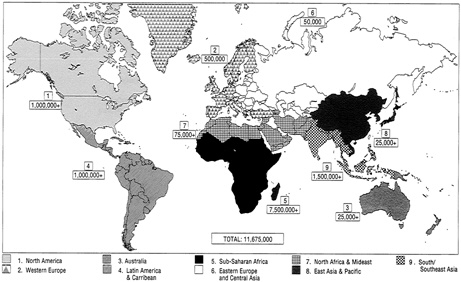
FIGURE 3.2 Estimate of HIV infections in adults as of late 1992. Source: World Health Organization, 1993.
The ultimate goal of current AIDS research is to extricate the virus from the immune system without causing further damage. To do that scientists over the past decade have focused on the complex relationship between the virus and the cells of the immune system as well as relationships of the different immune cells to each other.
VIRUSES
A famous scientist once defined a virus as "a bit of bad news wrapped in protein." Indeed, while the experimental study of viruses can unlock a wealth of scientific information, viruses offer little else of value to human beings. Unlike the occasional bacterial species that can provide a beneficial service to humans (e.g., bacteria found lining the human intestines that aid digestion), viruses are never Good Samaritans. They seem perfectly willing to take up residence in the human body without doing anything to earn their keep.
But the scientist's comment also touched on the very simple structure of a virus. Compared with the complexity of the mammalian or bacterial cell, viruses are remarkably minimal. Most viruses are
TABLE 3.1 Conditions Included in the 1993 AIDS Surveillance Case Definition
|
• |
Candidiasis of bronchi, trachea, or lungs |
|
• |
Candidiasis, esophageal |
|
• |
Cervical cancer, invasive* |
|
• |
Coccidioidomycosis, disseminated or extrapulmonary |
|
• |
Cryptococcosis, extrapulmonary |
|
• |
Cryptosporidiosis, chronic intestinal (> 1 month's duration) |
|
• |
Cytomegalovirus disease (other than liver, spleen, or nodes) |
|
• |
Cytomegalovirus retinitis (with loss of vision) |
|
• |
HIV encephalopathy |
|
• |
Herpes simplex: chronic ulcer(s) (> 1 month's duration); or bronchitis, pneumonitis, or esophagitis |
|
• |
Histoplasmosis, disseminated or extrapulmonary |
|
• |
Isosporiasis, chronic intestinal (> 1 month's duration) |
|
• |
Kaposi's sarcoma |
|
• |
Lymphoma, Burkitt's (or equivalent term) |
|
• |
Lymphoma, immunoblastic (or equivalent term) |
|
• |
Lymphoma, primary in brain |
|
• |
Mycobacterium avium complex or M. kansasii, disseminated or extrapulmonary |
|
• |
Mycobacterium tuberculosis, any site (pulmonary* or extrapulmonary) |
|
• |
Mycobacterium, other species or unidentified species, disseminated or extrapulmonary |
|
• |
Pneumocystis carinii pneumonia |
|
• |
Pneumonia, recurrent* |
|
• |
Progressive multifocal leukoencephalopathy |
|
• |
Salmonella septicemia, recurrent |
|
• |
Toxoplasmosis of brain |
|
• |
Wasting syndrome due to HIV |
|
* Added in the 1993 expansion of the AIDS surveillance case definition. SOURCE: Centers for Disease Control, January, 1993 |
|
nothing more than a shell of protein that contains a packet of genes on the inside.
Viewed externally, each HIV particle is shaped like a 20-sided soccer-ball (see Figure 3.3). The virus takes its form from the protein making up its outer shell, which is sometimes called the capsid. Overlying the outer capsid is a lipid membrane, pilfered from the human host cells that the virus infects. Poking through the capsid and the membrane are proteins studded with sugars, called glycoproteins. The glycoproteins on HIV are often depicted as lollipop shaped. The stick of the lollipop is made of a glycoprotein with a molecular weight of 41 kilodaltons, and, according to the convention of referring to proteins and glycoproteins by their molecular weights, it is named gp41. The "candy" of the lollipop is a
glycoprotein of 120 kilodaltons, called gp120. Because gp41 and gp120 are initially associated in a single protein, scientists refer to this precursor form as gp160.
Contained within the outer shell is another protein capsule. This cone-shaped capsule, called the core, is made up of many protein molecules, each with a molecular weight of 24 kilodaltons, named, appropriately, p24.
Each component of the structure serves a distinct purpose. The glycoproteins gp41 and gp120 are known to be crucial in anchoring the virus to the cell it will infect, while the lipid membrane helps the virus enter that cell. The capsid protects the virus and gives it shape. And all of this protective packaging is designed to safeguard the precious cargo found within the viral core. There the virus places its hope for the future: Its genes and a few proteins that will help it carry out its reproductive mission.
Because viral structure is so pared down, many scientists have argued that viruses cannot even be considered living organisms. To be alive in the biological sense, an organism must have the capacity to feed itself and replicate itself. Viruses can do neither on their own. The viral genes provide the instructions for making more viruses. They are the guidelines for the manufacture of structural proteins that make up the
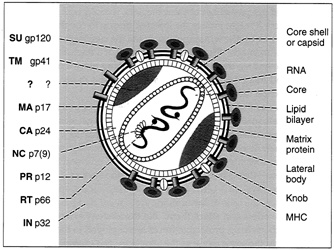
FIGURE 3.3 The structure of the Human Immunodeficiency Virus (HIV). At the center of the virus is a cone-shaped core that contains the viral genetic material and auxiliary proteins required for viral replication. The cone sits within a protein shell, called the capsid, and the entire assembly is surrounded by a membrane, pilfered from the human cell in which that particular virus particle was replicated. Sticking through the membrane are the viral proteins that allow the virus to anchor onto and then infect a new cell. (Adapted from Gelderbloom et al., 1987. Virology, Volume 156, pp. 171–176.)
virus's capsid and core and enzymatic proteins that reproduce the viral genes and help package them into the shell. But the actual work of manufacturing the genes and proteins needed to produce more viral particles is achieved within the infected host cell, using host cellular machinery, energy, and the raw materials—the chemical subunits—found within the cell. The production of new viral particles often means that the host cell must turn away from its ordinary business and devote itself entirely to the assembly of new viral particles.
Viral dependence on the host cell requires that at some stage in the virus's life cycle it must enter the host cell and there fulfill its biological mission to reproduce. And so it is that newly manufactured viral particles released into the blood must find new host cells to infect, so that they too can start to reproduce. Viruses must spread from cell to cell within the infected individual and to new individuals, in search of new cellular hosts that provide the facilities for them to meet their reproductive needs.
THE IMMUNE SYSTEM
Healthy people are anything but defenseless against microbial invaders. On the contrary, the human body can be viewed as a veritable fortress. The skin provides a strong and almost impenetrable barrier to infection, and saliva is full of degradative enzymes. If, however, a microbe should get past either of these barriers, it could well end up in the lungs, where it might induce the infected person to cough. Coughing tosses the microbe up the windpipe and down the esophagus where it will land in the stomach. From the point of view of a microbe unfortunate enough to end up there, the stomach is nothing more than a vat of harsh acids and more degradative enzymes. Needless to say, this points to sure destruction for the microbe.
As effective as these barriers usually are, the human body is not completely impregnable to pathogens, and people do get sick. In the event a pathogen does get past the body's defensive barriers, humans also have at their disposal an internal system for removing invasive pathogens. It is this internal system—composed of cells and the chemicals they secrete—that is referred to as the immune system.
The immune system is often compared to the military, and rightly so. Like soldiers, the cells of the immune system are designed to recognize foreign invaders and attack them. But the analogy extends even farther. In both systems, protective forces are deployed to the site of attack to fight in the same mode as the attackers. For example, military
forces are prepared to respond to attacks in the air, sea, or on land, depending on where the enemy threatens.
Pathogens, like enemy armies, have different modes of attack, and the immune system, like the military, has specialized divisions to fight back in the relevant mode.
Broadly speaking, pathogens invade the body in two modes. Some pathogens live in the body's fluids but remain outside the host cells. These are called extracellular pathogens. Other pathogens are intracellular. Intracellular pathogens spend at least part of their life cycles inside host cells. As a general rule, these two modes of attack correspond to the two major classes of infectious disease-causing agents: bacteria and viruses.
Most bacteria are extracellular pathogens. As such, they live and thrive outside the host cells. For the bacteria the host is a sort of incubator and a source of nutrients, providing a warm and fertile environment for the bacteria to grow and multiply. But most bacteria are self-sufficient in at least one regard. They contain within themselves all of the cellular machinery required to multiply. Reproductively independent as they are, bacteria can in some but not all cases be less than benevolent to their human hosts. During the course of their life cycles, bacteria can manufacture and secrete biochemicals that are toxic to their hosts. Even though they remain outside host cells, bacteria can still cause disease via their toxins.
In contrast to the relatively independent bacteria, viruses spend only part of the time outside the host cells. When it comes time to multiply, they must enter the host cells. While viruses contain a complete set of their own genes, they carry little else inside their protein shells. Without any means to replicate their own genes or manufacture the proteins that encase those genes, viruses are compelled to enter a person's cells, making the infected person's cells an unwilling host to an all too often pernicious viral guest. The unwanted viral visitor co-opts host cellular machinery to carry out its own gene and protein synthesis. Viruses are therefore intracellular pathogens.
Since pathogens can exist either intracellularly or extracellularly, the immune system must be ready to respond in either context. Or, returning to the military analogy, the immune system must have at least two branches: one that is prepared to fight extracellular pathogens and another to fight intracellular ones—and indeed it does.
To fight extracellular pathogens, the body produces antibodies. These highly specific molecules are manufactured and secreted into the blood by a type of white blood cell called a B-cell. Once in the blood the antibodies can fight infectious agents that are swimming there. The
blood can also help circulate the antibodies to other tissues in which bacteria and newly released viral particles might be found.
Antibodies are extremely specific in what they recognize. A healthy person manufactures antibodies that recognize substances foreign to the body but not the body's own chemicals. Each antibody picks out only a small portion of a single molecule on the surface of a bacteria or a virus. But that is sufficient for the antibody to bind to that molecule, and eventually many antibody molecules coat the pathogen's surface. The antibody-coated pathogen then becomes a target for destruction by macrophages, another cell type in the immune system.
Fighting intracellular pathogens is a trickier business. Because the pathogens gain entry to and are hidden within the body's own cells, infected cells look to the immune system just like every other host cell. But infected cells are not without their defenses. All cells have a kind of housekeeping system that digests particular proteins when they are no longer needed. In some instances, protein fragments, called peptides, made during this digestion process are carried out to the cell's surface and held there by surface proteins. When peptides derived from the host's own proteins are displayed on the cell surface, they are ignored by the immune system, which has a mechanism for distinguishing proteins of the host from foreign proteins. In an infected cell, peptides from the pathogen are also transported to and displayed on the cell's surface. These foreign peptides serve as a distress signal that tells the immune system that the host cell in question is harboring a pathogen.
The immune system responds to the distress call by deploying another type of white blood cell, a T-cell, which is specially equipped to detect the foreign peptides on the surface of the infected cells. Once the infected host cell has been identified, the T-cell destroys the host cell along with its infectious cargo. Because of its activity, this type of T-cell is called a cytotoxic T-lymphocyte (CTL) or, more colloquially, a ''killer" T-cell.
It is interesting to note that under a microscope the antibody-secreting B-cells and killer T-cells are almost indistinguishable. B-cells are distinguished from T-cells first by their site of maturation. B-cells mature in the bone marrow, T-cells in the thymus. But beyond that, B-cells and T-cells carry different proteins on their surfaces and manufacture and secrete different sets of biochemicals that help them carry out their different functions.
Like any well-organized military system, the immune system is tightly coordinated. In this defense network the generals are another type of T-cell, called a "helper" T-cell (see Figure 3.4). By secreting the
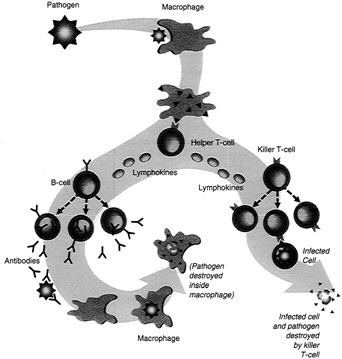
FIGURE 3.4 The immune system relies on the concerted activities of a number of different cell types. At the center of this activity is the helper T-cell, which receives information about invading pathogens from macrophages and stimulates pathogen-fighting activities in other immune cell types. The helper T-cell will trigger antibody production in B-cells and will activate "killer" T-cells, which destroy other cells in the body that are infected with the pathogen. Unfortunately, the helper T-cell is the target for infection with and destruction by HIV. As the number of helper T-cells decreases throughout the progression of AIDS, the person's immune system becomes depleted and unable to fight off pathogens effectively.
proper chemical signals at the appropriate time, helper T-cells can boost the populations of B-cells that secrete a particular antibody or they can increase the number of killer T-cells that recognize and eliminate virus-infected host cells. As such, helper T-cells are pivotal in plotting, coordinating, and implementing the defense strategy against both intra- and extracellular pathogens.
Viruses and bacteria have evolved many complex mechanisms to dodge immune detection and destruction. Pathogens have been known, for example, to use camouflage, cloaking themselves in proteins that resemble the host's own. Other pathogens use changeable disguises. As soon as the immune system learns what the invader looks like, the pathogen has changed its chemical "face," which the immune system has
to learn to recognize anew and which leaves it continually trying to play "catch up" with the pathogen. To be sure, HIV employs some of these guerilla tactics in its strategy to avoid the immune system, too. But this virus goes beyond that. HIV, it seems, does not merely dodge the immune system, it destroys it.
An invader wishing to destroy host immune defenses can choose one of two ways to do it. The invader can kill each of the soldiers in the military or it can take hold of the command center. An immune system may have a complete set of soldiers—in this case B-cells and killer T-cells—but still remain immobile if the appropriate command never goes out to activate it. And the proper command might be impaired if something were to happen to the helper T-cells.
As it turns out, HIV has a special affinity for and may be particularly harmful to the helper T-cells. While many of the interactions between HIV and the immune system are being worked out, and scientists are still debating how each of these interactions contributes to AIDS, most researchers will agree that part of the answer lies in the special relationship between HIV and the helper T-cell.
LIFE CYCLE OF HIV
Initial Contact, the Receptor
The association between viruses and host cells begins when the virus tries to enter the cell. Because this is a crucial step in viral replication and it starts an infected individual on the road to developing a disease, a great deal of scientific investigation has focused on this process.
Obviously, no host cell willingly invites a virus inside it. And yet viral access to host cells by no means constitutes a forced entry. Viruses use a kind of chemical subterfuge to gain access to their hosts. In the most common scenario, a virus poses as something that would normally be admitted to the cell and uses the normal ports of entry. This method is not unlike a thief who pretends to be a locksmith or an appliance-repair person to enter a house targeted for robbery.
The cellular equivalent of a door is a surface protein called a receptor. A host cell has on its surface a great number of receptors that help the cell sense and interact with its external environment. To be sure, not all receptors are doorways. Most receptors receive external chemical messages and then initiate some sort of internal cellular response. Locomotion, gene expression, or protein synthesis and secretion are often touched off when a receptor on the cell's surface receives the
appropriate chemical signal. Other receptors do help import substances from the outside to the cell's interior. The external substance is held by the receptor while the entire complex is brought into the cell in a process called endocytosis.
Whatever the outcome of the interaction, the association between a substance and a receptor is extremely specific. And each receptor is designed to recognize one or, at most, a small number of closely related molecules. The kinds of receptors on a cell's surface therefore determine the kinds of messages it will respond to. Nerve cells, for example, have receptors for the special chemical messengers found in the brain called neurotransmitters. Red blood cells do not have receptors for neurotransmitters and are therefore insensitive to them when they encounter them.
Rather than being excluded by the specificity of the receptor then, viruses exploit this. On the viral surface are molecules that can interact with host cell receptors in much the same way that native substances can. This interaction leads to viral entry into the host cell.
In the case of HIV the doorway to host cells is a cell surface molecule called CD4. This means that all cells that carry CD4 are potential targets for HIV infection. But very few human cell types have CD4. Those that do play a crucial role in maintaining an individual's health. To date, all known CD4-bearing cells are immune-related cells. And there lies one of the secrets to the devastation wrought by HIV: The virus infects the very cells that are supposed to fight infection.
Not all cellular components of the immune system display CD4 on their surfaces. For example, the killer T-cells do not. Scientists hope to learn more about the way HIV spreads in an infected individual by tracing the interactions between CD4-bearing cells.
The "Pick-up"
One of the most common routes of HIV infection is through sexual contact, so one would assume that some receptive cell types are found in the blood going to the skin lining the vagina, rectum, and other body orifices. Indeed, CD4-bearing cells of the immune system are posted in exactly those sites. These cells, called macrophages, are like sentinels and have the job of roaming areas exposed to the environment in search of foreign pathogens. Normally, macrophages pick up the pathogens on surface molecules designed for the purpose and "present" the pathogens to the commander of the immune system, the helper T-cell. Presentation alerts the helper cell to the presence of the pathogen. The helper cell then gives the command to the specific B-cells and killer T-cells that are
equipped to recognize that particular pathogen. The B-cells respond by secreting antibodies into the blood to help remove any circulating pathogen, and the killer cells destroy any host cells infected by the pathogen.
In an HIV infection, however, this scenario becomes a little more ambiguous. The cell-to-cell contact between macrophage and helper cell that serves as such an effective alert system against most pathogens activates the immune response against HIV. At the same time, it spreads the virus to more host cells. The presenting macrophage has CD4 molecules on its surface, so more than likely the presenting macrophage is actually infected with the virus. And, as fate would have it, the helper T-cell also has CD4 molecules on its surface and is a prime target for HIV infection. Many scientists now believe that the presentation process has been subverted by the virus to become a means of infecting the helper T-cells. In other words, the macrophages help spread the virus from the skin lining the body's orifices to the T-cells circulating in the blood as well as to those in the spleen, lymph nodes, and other tissues. Without a doubt, the infection of a cell as important to immune functions as the helper T-cell can deal a profound blow to the integrity of the immune system. For that reason, immunologists, virologists, and molecular biologists have all contributed their expertise in deciphering the events that follow the initial contact between the virus and the CD4 molecule.
Uncoating
We have already seen that a virus is one of the most minimalist forms of life, if it can be considered living at all. Basically, it is a protein-wrapped package of genes that has no other purpose than to create more packages like itself. The information for this replication is contained entirely within the viral genes, the protein coating being nothing more than protective packaging. As such, the mission of the virus infecting a cell is to inject its genes inside the cell. But the protein coat does not necessarily have to enter, and in the case of HIV some of that protein shell is left outside.
The specifics of this process, called uncoating, have not been worked out in their entirety for HIV. What is known, however, is that the glycoprotein gp120 on the surface of HIV contacts and binds to the CD4 receptor on the immune cell. Sometime afterwards the lipid membrane surrounding HIV fuses with the lipid membrane of the cell, an action that effectively opens the outer shell of the virus and juxtaposes the viral contents with the cell's interior. From that point it is an easy matter for
the virus to inject its core, the conical inner protein shell that carries the virus's genes, into the cell.
Many of the events in this sequence are still subjects for investigation. For example, important questions still surround the nature of the initial contact between the virus and the cell. While the interaction between the surface molecules—CD4 on the cell and gp120 on the virus—is crucial in binding virus to cell, scientists have yet to determine whether other surface molecules are involved as well. Some studies indicate that this interaction is itself sufficient for both binding and the subsequent fusion of the viral and cellular membranes. Other studies suggest that CD4-gp120 interactions allow binding only. Additional surface molecules on the cell and possibly on the virus are needed for fusion. Some studies, for example, point to the viral gp41 as a facilitator of viral fusion with the cell. As we will see later, questions such as these are important in designing drug strategies that interrupt viral binding, fusion, and entry into the target cell. The hope would be to disrupt these activities since they are the prelude to viral replication.
Replication
The business of viruses is to make more viruses. And the directions for making more viruses are contained within the core protein. There lie two complete copies of the virus's genes, the unabridged instructions for making more virus particles. Viral uncoating paves the way for what is truly the sine qua non of the replication process—the injection of the virus's genes into the host cell. Once inside the cells, viruses are expert at redirecting cellular activity toward viral reproduction and away from the normal order of cellular business (see Figure 3.5).
After infection, most host cells stop reproducing their own genetic material and start reproducing the virus's. But the virus does not stop there. It also needs viral protein shells to be made. So the virus co-opts the host cellular machinery and uses it to manufacture shell proteins. The directions for viral protein synthesis are contained within the viral genes. In addition to the shell proteins, many of the viral proteins that will help assemble the new virus particles are also synthesized by the infected host cell. Once all of the viral proteins and genes have been synthesized, the viral shells are assembled, and the viral genes and assembly proteins are packaged inside. Viral assembly is also accomplished within the host cell.
Each virus has its own method for seizing host cellular machinery, but in most cases viruses use the conventional systems of genetics and
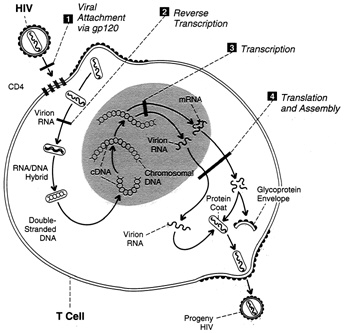
FIGURE 3.5 HIV starts its replicative cycle by binding to a host cell. The gp120 molecule on the viral surface contacts the CD4 receptor on the cell of the human host. The viral core is injected into the cell and then disintegrates enough to release the viral genetic material in the form of RNA. But the cell's genetic material is in the form of DNA, so the viral RNA must be copied into DNA, a task done by the enzyme reverse transcriptase, which is also contained in the viral core. Viral DNA then enters the cell's nucleus and becomes integrated into the host cell's chromosomes, where it may sit quietly and undetected for many years. At some point, however, the virus will enter an actively reproducing stage. Inside the cell's nucleus, copies of messenger RNA will then be made from the viral DNA. Messenger RNA will leave the nucleus and will direct the synthesis of proteins for the virus's core and capsid, as well as proteins, such as reverse transcriptase that facilitate viral replication. In addition, RNA molecules that contain all of the viral genetic program will be copied from viral DNA. Viral proteins and genetic material will be assembled into a new viral particle outside of the cell's nucleus, very near the cell's membrane. In fact, the final particle is made as the virus is extruded through the membrane. The new viral particle is free to infect another cell and start the cycle over again. (Adapted from Hospital Practice, Sept. 15, 1992, p. 147. Reprinted by permission of the artist, Alan Iselin.)
information transfer that cells use. HIV does not. The very chemical it uses as its genetic material is different from that used by all cells and most viruses.
CENTRAL DOGMA
The genes of most of the world's creatures are stored in the form of a large molecule called deoxyribonucleic acid, or DNA. An individual's (or a cell's) DNA contains all of the information that the cell will require to produce proteins, the real stuff of which the cells are made, and the molecules that accomplish all of the cellular work. Proteins are made of smaller molecules called amino acids. Twenty different amino acids go into the construction of most human proteins. DNA is often called a blueprint, and it tells the cell the correct order in which to string the amino acid building blocks of a particular protein.
In a way, DNA can be considered an archive, a catalog of all the proteins a cell will ever need to carry out its replication, daily maintenance, and the specialized functions it performs. For that reason preservation of a cell's DNA is paramount. Within the cells of all plants and animals the DNA is sequestered in a special compartment called the nucleus, the way a precious book is kept under glass in the library.
Of course, the DNA must be consulted at times when particular proteins must be manufactured. A system has evolved in which the archival DNA is maintained in the nucleus but where the necessary information can be exported outside the nucleus into the large cellular compartment known as the cytoplasm where the proteins are made. Since it would be too risky for the cell to allow its DNA to be transported into the cytoplasm, where it could possibly be damaged, copies of the relevant portions of the DNA are made as the proteins they code for are needed by the cell. The process again is analogous to the library where photocopies of particular pages of the precious book can be made as they need to be read. In the context of the cell, the photocopy is another molecule, chemically very similar to DNA, called ribonucleic acid, or RNA.
When a cell needs to manufacture a particular protein, an RNA duplicate of the DNA coding for that protein is copied, or transcribed, in the nucleus. This RNA copy leaves the nucleus and enters the cytoplasm, where it is "translated" into the proper sequence of amino acids required for the final protein product. When it is no longer necessary to produce the protein, the RNA copy in the cytoplasm is destroyed. Thus, the RNA transcript is as temporary as the DNA is permanent. The DNA
archive remains safe in the nucleus, where it can be consulted again when necessary.
The scenario described above is so ubiquitous among living organisms that it has come to be called the Central Dogma. Scientists often summarize the principle of this dogma, which describes the flow of information in a cell, as DNA to RNA to protein.
UNORTHODOX INFORMATION
One of the rare examples of a violation of the central dogma is presented by HIV and related viruses. For these viruses the genetic archive is not in the form of DNA but rather RNA. This poses an obvious dilemma for the virus. The virus's genetic program is carried out by the human cell it infects, but that cell obeys the central dogma, while the virus does not.
For HIV, the solution lies in converting its genetic information into the same form used by the cell. In short, the virus must change its archive from RNA to DNA. In fact, this is one of the first things that happens when the viral core is injected into the cell. At that point the virus, with the help of an enzyme packaged in the core, changes its genetic information from an RNA to a DNA archive.
This conversion stunned the researchers who first observed it in the viruses they were working with. The phenomenon defied the central dogma in that information flowed in the reverse direction from that predicted. These viruses are now known as retroviruses, to reflect the backward flow of information. The conversion of RNA to DNA is called reverse transcription, a process carried out by an enzyme called, appropriately enough, reverse transcriptase.
Once the viral genes have been converted to DNA, they are ready to interact with the host cell's genes. The viral DNA enters the cell's nucleus, where it is integrated into the host's DNA, sewn seamlessly into host chromosomes by another viral enzyme, called integrase. Like reverse transcriptase and the virus's genes, integrase is also carried into the cell in the viral core.
Now that the viral genes have been changed into the form of DNA and integrated into the host's chromosomes, they are permanent residents of that cell and all of that cell's progeny. Integrated viral DNA is treated by the cell just as native DNA is. Whenever the cell divides and reproduces its own genes, the viral genes are also reproduced. When host cells pass their own genes on to daughter cells, the viral genes will be passed on too. In effect, this constitutes another mechanism for viral
spread. We have already seen that HIV can enter a cell actively via the CD4 receptor, and now we see that the virus can, in effect, gain access to other cells as part of their inherited legacy.
Once viral genes are integrated into the host cell, it is possible that nothing more will happen in that cell for a long time, maybe years. A cell harboring quiescent viral genes looks and acts perfectly normal. Cellular gene expression and protein production go on as if nothing were unusual. Unlike an infected cell that is actively producing new viral particles, a so-called latently infected cell is not manufacturing viral components. It therefore cannot display fragments of these components on its surface, which serves as a signal to the immune system that all is not well. The immune system cannot fight what it does not see. So, like a clever spy, the latently infected cell slips past host defenses. This is one of the ways in which HIV evades the immune system, and, as we shall discuss later, it is one of the primary challenges in developing therapeutics that eliminate HIV-infected cells.
But the viral genes do not remain inactive indefinitely. Sooner or later, something will trigger a switch, and the cell will move from latent infection to an active producer of viral particles. During this time, the cell will be given over almost entirely to the production of components—the genes, shell proteins, and enzymes—that will go into the new viral particles. No one is absolutely certain how the switch is tripped, but once it is life will never again be the same for the infected cell.
THE BIRTH OF NEW PARTICLES
Active production of viral particles means that the genes for the viral components are expressed—that is, the proteins they encode are manufactured in the cell's cytoplasm. Now that the viral genes have been converted into DNA, the expression of viral genes can be carried out as dictated by the central dogma. Segments of the viral DNA are copied, or transcribed, into the more transient form, RNA. RNA carries the message encoded in the DNA out of the nucleus and into the cytoplasm, where protein synthesis is carried out using the messenger RNA as a guide.
Because the virus itself is not very complicated, one would expect that it would not contain a vast number of genes—and in relative terms that is true. Compared with the genetic complexity of its host cell, HIV is genetically simple. Yet many virologists have been struck by the virus's complexity relative to other viruses in general and to its closest kin, in particular.
Most retroviruses, HIV included, have three large genes. These are called env, gag, and pol. The env gene provides the instructions necessary to make the protein in the glycoproteins gp41 and gp120, which stick out from the viral surface. (The sugar molecules are attached shortly after that part of the protein synthesis has been completed.) The gag gene encodes p17, the protein used in constructing the outer shell; p24, the protein making up the inner core; and p9, a small protein that helps wrap up the viral RNA into the core. Finally, the pol gene encodes the reverse transcriptase enzyme that converts viral RNA into viral DNA, the integrase enzyme that integrates the viral DNA into the host chromosome, and a third enzyme called a protease. The protease cuts proteins, which is necessary because a single viral gene often encodes more than one protein. This means that the product of one of these genes—gag, for example—will be one very long protein, from which the three functional proteins p17, p24, and p9 must be excised.
In addition to the genes encoding the structural proteins that constitute the actual components of the mature virus are viral genes whose protein products regulate the expression of the other genes. These are called regulatory genes, and they will, in effect, help determine when viral genes are expressed and in what quantities. HIV has more regulatory genes than most other retroviruses and is therefore more complex. The roles of the additional regulatory genes and proteins are only now being elucidated.
However, among the more than six regulatory genes, three in particular have attracted the most attention. Many scientists have been especially interested in the gene whose protein product is referred to as Tat. If any of the known viral proteins is part of the switch that causes cells to produce viral proteins instead of cellular ones, Tat is it.
Tat seems to be required to initiate expression of the viral genes. And while host proteins do most of the work of making RNA transcripts from viral DNA, Tat may help recruit the transcriptional machinery so that it preferentially transcribes viral DNA over that of the host. Having said that, one is also faced with a sort of chicken or egg problem. If viral DNA requires Tat protein in order to be transcribed, how does Tat get made initially, since it is one of the proteins encoded in that viral DNA? When scientists have the answer to that question, they will have significant insight into how the switch is made from a latent infection, one in which viral DNA sits quietly and unobtrusively in the host, and active infection, where viral components are being made.
One possible solution to the switch conundrum suggests that an external agent activates Tat expression and production. In some scenarios
this external agent can act indirectly, stimulating the host cell in some as yet undefined way. Since the host cell is an immune cell, some evidence exists that when the host is stimulated to fight some other infection, the HIV genes become available for transcription in the process. It is also possible that the gene for Tat becomes directly activated by proteins coming from other viruses that infect the cells.
Yet another theory rejects the notion that the genetic material of HIV is at any time completely inactive or completely active. Rather, it is possible that a low level of viral transcription is going on even during the seemingly latent periods. According to this theory, levels of Tat slowly escalate until they reach a critical point where the protein can initiate enough transcription of the viral genes to make detectable amounts of viral protein and from there large numbers of new viral particles.
A second important regulatory protein is the one called Rev. Like Tat, Rev helps determine when and how viral proteins are made. However, relative to the role of Tat, the role of Rev is somewhat more limited. While Tat is required to initiate transcription of all the viral genes, both structural and regulatory, Rev's presence ensures the synthesis of the structural proteins only. It is likely that together Tat and Rev proteins regulate the relationship between regulatory and structural proteins and as such regulate the course of viral replication, its initiation and magnitude. Scientists are therefore very eager to learn more about the relationships between these two proteins with the hope that they will someday be able to manipulate them to reduce or completely inhibit viral replication. Added to these two proteins is a third one called Nef. The reproduction of viral particles is not dependent on Nef, but the rate of reproduction seems, at least in part, to be determined by this protein. Several other viral genes have been identified, making HIV one of the most genetically complex retroviruses. Some scientists believe that these additional genes determine the pathogenicity of the virus—that is, that these genes in some as yet undefined way determine the ability of HIV to cause disease.
VIRAL ASSEMBLY
However the viral genetic program is activated, viral components will eventually start to accumulate in the infected cell. To complete the cycle, these components must be assembled, after which the newly assembled particles can be released from one cell and can find other host cells to infect.
Some retroviruses are assembled within the cell's interior and then
make use of cellular transportation mechanisms to reach the cell's membrane before making their exits. In contrast, components of HIV are shipped to the cell's periphery and are assembled just before or even as the virus is being extruded from the host cell.
The capsid and core proteins are products of the gag gene and are manufactured as one long protein string. Approximately 2000 of these protein strings are shipped out to the internal face of the cell's membrane. There the strings aggregate into a ball of concentric protein shells. Proteins destined to form the outer capsid are on the outside of the ball, and those destined to become core proteins are on the inside. Late in the assembly process the protease clips the various proteins and resolves the sphere into the capsid and core.
But the virus would be nothing more than a hollow shell if the viral genes, in the form of RNA, were not enclosed within. Not much is known about how viral RNA becomes associated with the shell proteins. The current belief is that the RNA is attached to the segment of the long protein string that will ultimately form the core protein. Scientists have identified a segment on the viral RNA that acts as a handle for the protein to grab on to. More than likely, the p9 protein is somehow involved in attaching the viral RNA to the core protein. Other proteins, namely integrase and reverse transcriptase, are also packaged within the core by a mechanism that is still undetermined.
All that remains now is for the final touches to be put on the virus. At this stage the viral particles are lacking the lollipop-shaped glycoprotein gp160, made up of gp41 and gp120. Without these the new viral particles would be unable to attach to CD4 receptors on new hosts, and the whole exercise would have been wasted. The glycoproteins are efficiently and independently transported to the cell membrane, awaiting the formation of the protein shells.
As a matter of fact, the glycoproteins are actually stuck in the cell membrane, where they can migrate rather freely. The incomplete virus pushes against the membrane in its initial attempts to exit the cell, and through this action the glycoproteins may become associated with the virus. It is also likely that one end of the glycoprotein in some way hooks on to the capsid protein and permanently attaches.
Not only do the viral glycoproteins associate with the capsid as the virus exits the cell, but the exiting viral particle also takes with it a piece of the host cell membrane. Because the virus is cloaked in this membrane, it is vulnerable to any agents that dry or otherwise destroy cell membranes. The virus is therefore unable to survive exposure to air, which can desiccate the membrane, or to harsh detergents, which can
destroy the membrane's structural integrity. HIV's fragility in air and in the environment in general means that it cannot be passed between individuals by touching them or by touching surfaces they have touched.
The virus that leaves the cell looks pretty much like the one that entered it. The mature virus has an outer protein shell and an inner one that carries viral RNA, integrase, and reverse transcriptase. On its exterior the 20-sided viral particle is wrapped in a cellular membrane. The viral surface is studded with the lollipop-shaped glycoproteins that stand poised and ready to gain entry to another cell via the CD4 receptor. For a time the newly manufactured viral particle circulates freely in the blood, or in whatever body fluid its host cell is floating, until it encounters another CD4-bearing cell, infects it, and the whole cycle starts over until more and more cells become infected.
HOW HIV CAUSES AIDS
Since the mid-1980s when HIV was identified as the cause of AIDS, scientists have learned a tremendous amount about the natural history of the virus and the symptomatology of the disease. Yet putting these things together has proved more difficult than anyone would have imagined. As the virus's life style is understood in greater detail, it becomes less clear exactly how it decimates the immune system and causes AIDS.
The problem is not in identifying ways in which the virus's behavior is destructive to the immune system. On the contrary. The problem is that the virus is destructive to the immune system in so many ways that it is difficult to identify the one activity, or constellation of activities, that constitutes the primary cause of the destruction. The hope in identifying the primary cause is to develop therapeutics that will block that avenue of destruction and reduce the toll the virus takes on a person with AIDS.
Infection
Technically, it would be wrong to say that the disease starts at the moment of infection. There is a sharp distinction between infection and disease. Yet it is clear that infection with HIV is a necessary precondition for later developing AIDS. It is at the moment of infection that the virus has the potential of embarking on its life cycle, multiplying, and causing disease. It is also currently believed that the destruction of the immune system that ultimately leads to AIDS begins soon after infection.
But infection requires a very particular kind of contact between
individuals. We have already seen that the virus cannot withstand the environment for very long because its membrane will quickly deteriorate. For that reason, HIV, unlike many other viruses, cannot be passed along by touching a surface that has been touched by an infected person.
On the other hand, any circumstances that protect the virus from the environment carry the potential for transmitting the virus to another person. Scientists know, for example, that the virus continues to thrive when it is inside host cells. So one mode of infection involves passing an infected cell from one individual to another. HIV particles can also be found circulating freely in the body fluids of an infected individual, so another mode of transmission involves the exchange of body fluids containing free viral particles from an infected to an uninfected person.
Infection is a two-way street and requires not only a donor but also a recipient. Viral transmission also requires that the virus be delivered to a receptive environment, one replete with CD4-bearing cells. Given these facts, it becomes more clear why transmission often involves blood contact between individuals. Of all body fluids that can support either free virus particles or virally infected cells, blood is the fluid with the highest concentration of both (see Table 3.2). The blood of an infected individual provides a milieu that supports free virus and infected cells, while the blood of an uninfected individual contains many potentially infectable new cellular hosts.
Transfusion of infected blood into an uninfected recipient is the equivalent of injecting live virus into the person and is an almost certain route of infection. Needle sharing among intravenous drug users is not much different. The virus can also be effectively spread by sexual intercourse, and viral spread can be further enhanced by sexual practices that can tear skin and expose the blood of an uninfected sexual partner to the body fluids of an infected partner. In addition to blood, semen can carry both free virus and virally infected T-helper cells and infected macrophages. So any sexual act that puts an uninfected partner's genital or rectal tissues in contact with infected semen puts the uninfected partner at risk of infection. An additional factor that may explain the higher frequency of HIV infection from anal intercourse is the high density of Peyers patches—regions containing white blood cells—in the rectum.
In addition to semen, other fluids contain either free virus or virally infected cells. These include tears, ear secretions, saliva, urine, vaginal or cervical fluids, breast milk, bronchial fluid, and cerebrospinal fluid (CSF). Of these, the highest concentrations of free virus, virally infected cells, or both are found in blood, semen, and CSF. Activities involving
TABLE 3.2 Body Fluids and Cells from which HIV Can Be Isolated
|
|
Isolations/Attempts |
Estimated Quantity |
|
Fluid |
|
|
|
Plasma/serum |
45/46 |
10-1,000 infectious particles (IP)/ml* |
|
Tears |
2/5 |
<1 IP/ml |
|
Ear secretions |
1/8 |
5-10 IP/ml |
|
Saliva |
3/55 |
<1 IP/ml |
|
Urine |
1/5 |
<1 IP/ml |
|
Vaginal or cervical |
6/16 |
<1 IP/ml |
|
Semen |
5/15 |
10-50 IP/ml |
|
Milk |
1/5 |
<1 IP/ml |
|
Cerebrospinal fluid |
21/40 |
10-1,000 IP/ml |
|
Cells |
|
|
|
Peripheral blood mononuclear cells |
89/92 |
0.001%-1.0% of infected cells |
|
Saliva |
4/11 |
<0.01% |
|
Bronchial fluid |
3/24 |
Unknown |
|
Vaginal or cervical fluid |
7/16 |
Unknown |
|
Semen |
11/28 |
0.01%-5.0% |
|
* For comparison, note that for hepatitis B infection, particle counts may range from 106 to 109 IP/ml. SOURCE: Hospital Practice, November 15, 1990, p. 45. |
||
exchange of these fluids between individuals also carry the potential for spreading HIV (see Table 3.3).
The last mode of transmission occurs when infected mothers pass the virus on to their newborns before or around the time of birth. The presence of HIV in aborted fetuses indicates that a woman can transmit the virus to her unborn child in utero, but the mechanism for prenatal transmission is not entirely known. The act of birth itself can facilitate transmission since the neonate is exposed to the mother's infected blood and amniotic fluid. HIV can also be passed on to a newborn through mother's breast milk.
The events that follow HIV infection are fairly standard regardless of the mode of infection. The early stages of infection resemble those of almost any other viral infection. Within 1 to 2 months of becoming infected, many people feel sick and experience severe flu-like symptoms similar to those of mononucleosis, with fatigue, fever, and muscle aches. Some report blinding headaches as well.
It is during this time, called the acute phase, that scientists can detect
TABLE 3.3 Cumulative Number of Adult/Adolescent AIDS Cases in the United States by Exposure Group, Through June, 1993
|
|
Cumulative Total |
|
|
|
Number |
% |
|
Men who have sex with men |
172,085 |
55 |
|
Injecting drug use |
73,610 |
24 |
|
Men who have sex with men and inject drugs |
18,557 |
6 |
|
Hemophilia/coagulation disorder |
2,782 |
1 |
|
Heterosexual contact: |
|
|
|
Sex with injecting drug user |
10,800 |
|
|
Sex with bisexual male |
1,115 |
|
|
Sex with person with hemophilia |
172 |
|
|
Born in Pattern-II* country |
3,557 |
|
|
Sex with person born in Pattern-II country |
261 |
|
|
Sex with transfusion recipient with HIV infection |
420 |
|
|
Sex with HIV-infected person, risk not specified |
5,548 |
|
|
Total heterosexual contact |
21,873 |
7 |
|
Recipient of blood transfusion, blood components or tissue |
5,733 |
2 |
|
Other risk, not identified |
15,080 |
5 |
|
Total |
309,720 |
100 |
|
*Pattern II transmission is observed in areas of sub-Saharan Africa and in some Caribbean countries. In these countries, most of the reported cases occur in heterosexuals, and the male-to-female ratio is approximately 1 to 1. Injecting drug use and homosexual transmission either do not occur or occur rarely. SOURCE: Centers for Disease Control, July 1993. |
||
large numbers of free virus particles in the bloodstream. A month later the number of particles in the blood is on the decline. As the virus becomes less detectable in the blood, the protective components of the immune system become more evident, indicating that the immune system may be effectively keeping the virus at bay. Large amounts of antibodies and killer T-cells are specifically deployed to fight free virus and virally infected cells. In fact, these are the antibodies detected by standard blood tests that determine a person's HIV status. Individuals in whom antibodies are detected are said to be seropositive—that is, their blood serum tests positive for the presence of HIV. The absence of HIV in the blood means an individual is seronegative.
Following these initial events, the flu-like illness abates, and the seropositive individual enters a phase during which no obvious manifestations of infection or disease symptoms are evident. This period lasts, on average, from 8 to 10 years and is referred to as the asymptomatic phase. For a long time scientists believed that viral genes were not being
expressed during this phase and that little or no viral replication was taking place—and to some degree that may still be true.
More recent data indicate a slow and gradual decline in the number of helper T-cells during the asymptomatic period. Currently, many researchers think that while most virally infected cells may not be actively producing new virus, some proportion of infected cells are. But at this stage an individual's immune system is still strong enough to eliminate a sufficient amount of the free virus and infected cells, so that the individual remains healthy.
The fact that most individuals can remain healthy for 10 years suggests that the immune system has a tremendous excess capacity, and significant numbers of T-cells can be eliminated without causing the host any severe difficulties. Eventually, however, the number of helper T-cells killed brings the HIV seropositive individual to a point where he or she can no longer handle the viral load, and symptoms of disease start to appear. Since the helper T-cells are the commander of the immune army, killing them can potentially inactivate the entire immune defense system.
T-cell Mystery
While the scenario depicted above seems logical, one great mystery remains unanswered. Scientists still cannot explain why so many helper T-cells are killed. They still do not know whether the virus kills host cells directly or whether some indirect viral activity kills the cells. Even if they did know the mechanism for viral killing, there is one nagging statistic they still must explain.
Healthy individuals have 550 to 1200 helper T-cells in each microliter (one-millionth of a liter) of blood, with the average falling around 800 cells per microliter. Individuals are defined as having AIDS if they are HIV seropositive and have fewer than 200 helper T-cells per microliter of blood. That means that a person with AIDS has lost 75 percent of his or her helper T-cells. Yet when scientists try to count the number of helper cells in which they can actually detect the virus, they find HIV in less than 1 percent of cells. How can so many cells be killed when so few seem to be infected? To solve this puzzle, scientists have proposed that HIV has some indirect means of affecting healthy immune cells in such a way that they become inactive or are targeted for immune destruction.
Shedding
So many things are going on between the immune cells and the virus that infects them that it is difficult to sort out even the most direct means
of helper T-cell killing. Many scientists believe that the host cell is worn down from reproducing so many virus particles and releasing them to the environment. Eventually the host cell simply dies. Added to this very direct interaction is a wealth of indirect interactions between pathogen and host.
One theory that has received much attention concerns the role of the lollipop-shaped glycoproteins. Gp120, the candy part of the lollipop-shaped gp160 complex, sticks out of the surface of the virus and facilitates viral binding to the CD4 receptor on host T-helper cells and macrophages. Fragments of these and other viral proteins are displayed by the host cell on its surface. The foreign peptide sticking out of the infected host cell serves as a red flag to the immune system, alerting the immune cells that a host cell has been invaded by a foreign pathogen. The infected cell is now targeted for destruction by the killer T-cells.
But the killing might not stop there. Research has shown that infected cells shed gp120 molecules. These free-floating molecules can be captured by uninfected helper T-cells. In some cases the healthy helper T-cell may display the shed gp120 molecules on its surface, so now it looks to the immune system just like an infected cell. Even though the healthy cell has no virus inside it, it becomes a target for immune destruction and is eliminated by killer T-cells as though it were infected. Such a mechanism would raise the number of helper cells killed without necessarily increasing the number of cells infected.
Shedding of molecules is not the only indirect effect of HIV infection. The gp120 molecules sticking out of an infected cell may also have direct contact with other uninfected cells. Since gp120 can bind to CD4 molecules, it is possible that infected cells actually bind to and fuse with uninfected cells via the gp120-CD4 interaction. The result of this fusion is the formation of giant masses of infected and uninfected cells in what is technically called a syncytium. Syncytia have been observed in the test tube when infected and uninfected cells are mixed together. Some scientists believe that syncytia may form in people with AIDS as well, but no such syncytium has ever been isolated from an AIDS patient. Other scientists interpret this discrepancy to mean that syncytia are only a test tube phenomenon but that it might hint at some other harmful interaction between infected and uninfected cells in the HIV seropositive individual.
Gp120 is not the only molecule that can pass from infected to uninfected cells. The Tat protein also may diffuse from cell to cell. If that is the case, scientists have identified several potential consequences. For one thing Tat is a potent activator of viral gene expression, so it is
possible that Tat secretion initiates a spate of viral reproduction in previously latently infected cells. In addition, there are some indications that Tat may directly kill uninfected cells. Alternatively, Tat may also alter the chemical signals that are sent out from a helper T-cell. According to this theory, the altered signals result in an immune response that is ineffective or inappropriate. For example, there may be too many signals stimulating antibody production and not enough stimulating killer T-cell activity, so that while there is an immune response it is ineffectual and does not eliminate the virus.
New evidence has come to light to suggest that the Net protein may also be secreted. Some scientists think that Nef may act as a so-called superantigen. Superantigens are thought not to depress immune activity but to overstimulate it. As a consequence, the immune system starts to look like a ''Keystone Cops" episode where the perpetrator slips past a frenzied and disorganized immune system.
It is important to note that many of these phenomena are studied in the laboratory using viruses and immune cells that have been cultured outside the human hosts from which they were taken. The artificial circumstances of culture conditions may well alter some of the biochemistry of these entities, and scientists caution that the behavior of cells and viruses may be different in intact living systems.
So the question of whether the laboratory situation realistically reproduces real life must be addressed by scientists hoping to understand the relationship between HIV and AIDS. But even if all of these phenomena occur in a person with AIDS, scientists must also assess which mechanisms are of primary importance in helper T-cell death and which are fairly minor contributors. New evidence comes to light almost daily that makes the research community evaluate these questions in a new way. Some scientists believe that as the virus replicates within a host new strains emerge that are more efficient killers, more aggressive at reproducing, and more effective at infecting cells than its progenitors. Those who believe this suggest that the emergence of these potent new strains accounts for the sudden and rapid decline of the immune system after 10 or more years of calm.
As research techniques improve, scientists discover aspects of the interaction they could not previously discern. For example, using higher-resolution techniques, some research groups are finding that many more than 1 percent of helper T-cells are actually infected with HIV. New estimates suggest that 20 to 30 percent may be infected at any one time. Some researchers think these numbers are adequate to explain the observed loss of helper cells. In that case the indirect mechanisms of
killing may add to immune destruction but may play a relatively minor role. Although not all scientists agree on the relative contributions of these various mechanisms to the development of AIDS, they are in agreement that there may yet be facets of HIV that remain to be uncovered. Some hope that a definitive answer might lie in these still undiscovered interactions.
VACCINES AND THERAPEUTICS
Scientists are interested in the natural history of the virus in part because it is so unusual and its study promises to unlock many mysteries about the different ways that evolution has invented to do things. Take, for example, the unexpected finding of reverse transcription, which taught scientists that information could flow in more than one direction.
Beyond satisfying intellectual curiosity, the intense interest that HIV and AIDS have received is motivated by a deep desire by the scientific community to eradicate HIV and AIDS. In the past, science has eliminated plagues with vaccines and drugs, and it is looking toward these to deal with HIV and AIDS. While people can try to avoid contact with infectious agents, some infection is inevitable. Most encounters with pathogens are completely random, and while no one can control when they might run across a virus or a bacterium that will cause them to get sick, vaccines can help them prepare in advance to fight the infection before it gains access to their system.
The immune system is a defense network. Like any defense system, it needs to know what its enemy looks like, so it knows what to attack. Of course, after infection, once an invader has made its way into a person's system, the immune system will learn to recognize it and will respond by producing antibodies and deploying killer T-cells. But mobilizing such an attack takes time. The immune system needs to decipher the features of the foreigner and discern that the pathogen is in fact foreign. While the immune system is doing that, the pathogen is multiplying and causing disease.
With vaccines, physicians try to eliminate or at least reduce the lag time so that the immune system is ready to kill an invading pathogen at the moment it enters the body, before it can infect cells, multiply, or cause disease. The vaccine is a device to teach the immune system of an uninfected person the features of a pathogen before that person ever comes in contact with it. The concept is identical with hanging a "Wanted" poster in public places, so criminals will be recognized and apprehended before they commit another crime.
Vaccines
In immunological terms there are several ways of hanging a "Wanted" poster. But the basic idea in all vaccine strategies is to inject some portion of the pathogen into the blood where immune cells will encounter it and learn to recognize it. Some small portion of these immune cells will always remain in the blood whether or not the pathogen is ever encountered. These few cells constitute what is called immunological memory, because they remember what the pathogen looks like. If a vaccinated person is challenged by the real pathogen, these few cells will proliferate, producing many more cells like them that can either kill infected host cells or secrete antibodies against the pathogen. In effect, the vaccine allows a person to respond to a pathogen much more quickly than he or she could if their immune system had no prior experience with the pathogen.
The trick in developing a vaccine is to choose the correct portion of the pathogen, one that will elicit an appropriate immune response. For example, if one were to choose a protein fragment from the pathogen that was identical with a protein fragment found in the host, the immune system would not identify the fragment as foreign and would not bother to mount an immune response against it. Since it is difficult to know in advance what the immune system will see as foreign, the traditional approach to antiviral vaccines has been to expose the immune system to the entire virus. Naturally, viruses used in vaccines must be modified so that they do not cause disease. One form of polio vaccine, for example, makes use of viral particles that have been killed. Injecting these killed polio virus particles helps a person's immune system to become familiar with the features of the polio virus and develop immunological memory to it. But the killed vaccine itself cannot infect cells, reproduce, or cause disease. As an alternative to using killed virus, some vaccines are made of live virus. Even if the virus is live, however, it has been modified in such a way that its potency is attenuated. It cannot multiply or cause disease. A second form of the polio vaccine uses live attenuated virus.
Both approaches are being explored experimentally against HIV, using animal models. While some research groups have reported limited success, it must be stressed that they have employed very special conditions, and critics of these experiments point out that the experimental conditions are a far cry from those presented in the real world. Many scientists are also concerned about the advisability of using either approach, but especially live attenuated virus, when dealing with a virus as harmful as HIV. The attenuated virus is genetically disabled so that
theoretically it cannot reproduce, but skeptics question whether it might spontaneously mutate back to a form that can reproduce, which would make a vaccinated person sick rather than immunologically prepared to fight disease. The slight chance of such a mutation makes most people very cautious when proposing the use of live attenuated vaccines against HIV.
Newer approaches to vaccine development aim at skirting the safety issue. Because some researchers are uncomfortable with the idea of using either dead or attenuated whole virus, creative new vaccines, which are as yet untried in humans, offer protein fragments or peptides derived from the virus. Since there is no chance that new viral particles can be generated from peptides, they are deemed safer, at least in that respect, than the classical whole-virus vaccines. Candidate peptides include segments from the surface glycoproteins, but scientists are experimenting with a number of peptides derived from other viral proteins, like the reverse transcriptase and the core proteins. Even though these proteins are found on the inside of the virus, they are chewed up by the host cell following infection, and some of the resulting peptides are displayed on the infected cell surface, detectable by the immune system. As such, it may be worthwhile to train the immune system to recognize them as well as proteins on the viral exterior.
In the case of HIV, however, safety is only one of the concerns of vaccine developers. The concept of a vaccine assumes that the virus used to make it looks very much like the real virus that a vaccinated person might encounter. But scientists have learned not to make that assumption with HIV because it is highly mutable. Some portions of the gp120 molecule, for example, can change over just one reproductive cycle, so in the course of a year a virus may not at all resemble the original infecting virus, at least not in one of these highly changeable segments of gp120.
Viral mutability poses a frustrating roadblock to vaccine development. It seems that the variable regions of gp120 are highly effective in activating an immune response, so scientists want to make use of them in vaccines. But because they change so rapidly, the immune system is always lagging behind the viral disguise, looking for a face that has already changed. Sadly, the regions of gp120 that cannot change because they are required for the interaction with the CD4 receptor are not as good at stimulating the immune response. A truly effective viral vaccine would therefore have to anticipate all of the viral variants a person is likely to encounter and include a mixture of them so that the immune system can get to know all of them. That, scientists say, is simply not yet possible.
Even if both the safety and the viral variability issues could be overcome, HIV presents one final challenge to vaccine developers. The immune system can fight only enemies that it can see, but HIV creates many unseen enemies. The virus has a latency period, where the host cell is infected, harbors viral genes and has the potential to reproduce new viral particles at any moment but does not. In this quiescent state the infected cell displays no viral peptides on its surface and has no way of signaling its distress. Developing a vaccine that will distinguish infected but quiescent cells from uninfected cells is an intellectually imposing task.
In one particularly innovative approach, peptides are administered consistently over time, so that the immune system remains at a high state of readiness against HIV. The hope here is that a highly alert immune system might be able to kill off the virus swiftly, either to avert initial infection or to quell reproduction of new viral particles that emerge as latent cells become activated. The strategy taken in this approach is to package the genes for the immunologically stimulatory peptides inside another organism that will continuously produce them and "remind" the immune system what the HIV perpetrator looks like. The way this vaccine works is that genes for some HIV proteins are placed inside a single-celled organism called BCG, a harmless derivative of the bacillus that causes tuberculosis. As a vaccine against tuberculosis, BCG has already been widely used and proven safe in humans. What makes it especially useful for vaccines where it is desirable to maintain a high level of immunological readiness is that the organism is not killed. Rather, the immune system isolates the bacillus in a ball of cells called a granuloma. Even though BCG is held prisoner inside the granuloma, it can still produce substances and secrete them into the blood. Potentially, BCG can be engineered to secrete HIV peptides for an individual's entire life. Thus, if the strategy works, it carries the potential for imparting lifetime immunity. Like all of the other vaccine strategies, however, this one is still in the early experimental stages and is not yet ready for human use.
Therapeutics
As creative as vaccine research has been, scientists who work on AIDS are generally more optimistic about new advances in treating people who already have AIDS with drugs than in preventing infection with vaccines, at least for the immediate future. Broadly speaking, drugs aimed at combating HIV can do one of two things: they can augment the
immune response against the virus to try to kill off as many viral particles and virally infected cells as possible, or they can sabotage the reproductive efforts of the virus so that no new particles are made.
Drugs that boost the immune system are similar to vaccines, and in many cases employ the same strategies, only they are administered after the person has become infected. In fact, some vaccines are being tested on people with AIDS to see whether they prolong the asymptomatic period or otherwise halt progression of the disease by boosting the immune response. In theory, all of the vaccines under development are potentially useful in treating people after they become infected or after they develop AIDS. In addition to the vaccines already discussed, which all seek to elicit antibody and killer T-cell production, scientists are also testing the possibility of giving antibodies directly to patients who are HIV seropositive and to those who already have AIDS. The problem with the antibody approach, say scientists, is viral mutability. If an antibody is given that helps the immune system kill off one viral variant, many more slip by undetected. Most scientists are coming to the conclusion that the most effective antiviral strategies combine many different activities. In other words, therapeutic approaches of the future may well combine drugs that boost the immune system with ones that inhibit viral replication.
A New Generation of Drug Treatments
The general hope is that a new generation of drugs may help extend the asymptomatic period from 10 to 30 years or more. While this is not as desirable as completely eliminating the virus from a person's system, it will allow an HIV seropositive individual to enjoy a longer disease-free life and may also limit the severity of any symptoms should they develop.
Antimicrobial drugs each work differently, but they all share the same fundamental goal—to sabotage the biochemical machinery that produces the progeny of the infecting microogranism. Since each machine is different, each therapeutic monkey wrench must be tailor-made to the machine it is trying to inhibit. A big problem in drug development, however, is that the host cellular machinery is often very similar to the machinery used by the replicating virus or bacteria. In fact, viruses are heavily dependent on the host cell's machinery to carry out their reproduction. So drug developers walk a tightrope trying to find agents that harm specifically microbial machines but that leave cellular machines intact. To the degree that drugs fail to be specific for their microbial targets, they cause side effects. Sometimes a drug that is very
potent against a pathogen is also severely toxic to the host and is therefore not usable. With the hope of finding a balance between efficacy and toxicity, scientists try to focus on activities that the bacteria or virus carries out that the host cell does not. Scientists often dissect the steps involved in infection and reproduction and ask whether they can block each one.
For HIV the first interaction that scientists would hope to interrupt is the binding between the gp120 molecule on the virus and the CD4 receptor on the host cell. Some researchers have proposed using antibodies that recognize and bind gp120, in effect forming a cap that prevents access to CD4. The use of antibodies, however, begs the variability issue. To circumvent that, researchers have investigated the feasibility of using CD4 as a cap. They know that despite variations in gp120, it always recognizes CD4 and binds to it. Their hope was that soluble CD4 molecules would effectively tie up all of the viral gp120 molecules, and none would be available to bind to CD4 on cells. Unfortunately, this very clever strategy has not worked as anticipated. Through their studies the inventors of this strategy have discovered that to be effective, much higher quantities of CD4 must be administered than is practical.
The next opportunity to interrupt the viral life cycle would be in the uncoating stage, but no drugs have been developed to prevent this yet. It is in the next stage, where the virus converts its genes into DNA from RNA, that drug developers have had the greatest success in controlling HIV. Drugs that interrupt viral DNA synthesis act to inhibit the enzyme called reverse transcriptase, which effects the RNA to DNA conversion. AZT is the oldest of the reverse transcriptase inhibitors and is most commonly given to people when they have fewer than 500 helper T-cells per microliter of blood. This drug and its close relatives dideoxycytosine (ddC) and dideoxyinosine (ddI) work through a trick they play on the reverse transcriptase enzyme.
These drugs closely resemble the actual nucleic acid subunits that are strung together to make long chains of DNA, so the reverse transcriptase tries to incorporate them into the growing DNA molecule. However, a quirk in the chemistry of these nucleic acid analogs allows them to be added onto the DNA chain, but they themselves cannot form bonds with any incoming nucleic acid, meaning that they terminate DNA chain growth. The truncated pieces of viral DNA so produced are virtually useless and cannot direct the synthesis of new viral particles.
AZT seems to slow the progression of AIDS once symptoms do appear and may reduce the number of opportunistic infections that
afflict a person with AIDS. Early research suggested that AZT might delay the onset of disease in infected but healthy individuals, but more recent studies have hinted that it may offer no advantage to asymptomatic people.
Although AZT is currently one of the best treatments available, it has many drawbacks. First, it is somewhat toxic. It also suppresses immune activity and causes some tissue damage. In addition, the virus seems to become resistant to AZT at an alarmingly quick rate—sometimes after only 1 year. For that reason physicians are now investigating the use of AZT in combination with or alternating with ddI and ddC, since all three drugs act in essentially the same way but have different sets of toxicities. These three drugs are the only ones approved so far by the Food and Drug Administration for use in treating AIDS.
The ability of reverse transcriptase to mutate in such a way as to become resistant to AZT has inspired a new strategy for drug intervention. In laboratory studies, researchers exposed the virus to three different drugs targeted against reverse transcriptase, with the hope that the enzyme would become resistant to all three at the same time. These alterations would require the enzyme to change so much that it could no longer perform its DNA-synthesizing function. In theory, the virus would successfully resist the drugs but would become ineffectual in the process. This approach has produced disappointing laboratory results, and no one yet knows whether it will be effective or safe for humans, but it is an interesting example of how knowledge of the viral life cycle can lead to new and creative strategies for cutting that cycle short. In this case that means cleverly turning a viral defensive strategy against the virus itself.
Another good target for therapeutic interventions is the integrase that incorporates viral DNA into the host chromosomes, but nothing has yet been developed that can do that. There is now a great deal of interest in agents that can inhibit gene activation by the Tat protein. While nothing truly promising has yet emerged, the hope is that when a Tat inhibitor is developed it will have the potential to block as much as 80 percent of HIV gene expression and possibly that much viral replication. If genes are expressed in the nucleus, however, a good target for drugs would be the Rev protein, which may help escort messenger RNA out of the nucleus and into the cytoplasm to be translated into protein. No Rev blockers have yet been developed.
Once messenger RNA is in the cytoplasm its access to the protein-synthesizing machinery might be obstructed by the use of so-called antisense DNA. In this technology, strands of DNA can be manufactured
to specifically recognize and bind to messenger RNA sequences that encode viral proteins. Once bound, the antisense DNA molecules make the messenger RNA molecules unreadable by the protein-synthesizing machinery. The potential use of antisense technology against HIV and other viruses has generated much excitement in the scientific community. Antisense is a highly specific strategy that holds the additional promise of circumventing viral latency. In fact, antisense technology is only useful when cells pass from latent infection to actively producing viral particles.
In theory, all cells can take up the antisense molecules. As long as a cell remains latently infected, the antisense molecules would serve no purpose, but as soon as a latently infected cell starts expressing viral genes, the antisense molecules would effectively prohibit the manufacture of proteins from those genes. Without viral proteins, new viral particles cannot be made. So far, antisense technology has proved successful in the laboratory. Soon this technology will be used in human trials, where it is hoped, it will reduce the level of viral reproduction as well.
Assuming a virus reaches the stage where it does manufacture proteins, the assembly and release of newly formed viral particles would constitute the last opportunity for drug intervention. Here researchers are testing the potency of a class of chemicals called interferons, which are normally secreted by virally infected cells. Although no one is sure of the mechanism, scientists have found that in the laboratory the specific compound called alpha-interferon inhibits HIV from appropriately assembling and budding out of the infected cell. The drug has been associated with some negative side effects, so its ultimate appropriateness for human use remains to be determined in clinical trials.
In addition to drugs that interfere specifically with the viral life cycle, many new antibiotics and antimicrobial agents have been developed to fight the specific opportunistic infections that people with AIDS fall prey to (see Table 3.4). Despite the difficulty of finding a vaccine to prevent initial infection, physicians and researchers are optimistic that in the future AIDS patients will be healthier and more comfortable than in years past. In the years to come, AIDS may be a chronic disease, and people infected with HIV may be able to live with the infection for the rest of their lives. The new constellation of antiviral drugs and therapeutics directed against opportunistic infections may well mean that the relationship between infection and disease will change. A person who is seropositive for HIV may never develop AIDS or may remain disease free for many years.
TABLE 3.4 Approved AIDS Medicines as of January 1, 1992
|
Drug name |
Manufacturer |
Indication |
|
Bactrim™+ trimethoprim and sulfamethoxazole |
Hoffmann-La Roche (Nutley, N.J.) |
PCP treatment |
|
Cytovene® ganciclovir (IV) |
Syntex (Palo Alto, Calif.) |
CMV retinitis |
|
Daraprim®+ pyrimethamine |
Burroughs Wellcome (Research Triangle Park, N.C.) |
Toxoplasmosis treatment |
|
Diflucan® fluconazole |
Pfizer (New York, N.Y.) |
Cryptococcal meningitis, candidiasis |
|
Foscavir® foscarnet sodium |
Astra Pharmaceutical (Westborough, Mass.) |
CMV retinitis |
|
Intron® A+ interferon alfa-2b (recombinant) |
Schering-Plough (Madison, N.J.) |
Kaposi's sarcoma |
|
NebuPent® aerosol pentamidine isethionate |
Fujisawa Pharmaceutical (Deerfield, Ill.) |
PCP prophylaxis |
|
Pentam® 300 IM&IV pentamidine isethionate |
Fujisawa Pharmaceutical |
PCP treatment |
|
PROCRIT®+ epoetin alfa |
Ortho Biotech (Raritan, N.J.) |
Anemia in Retrovir ®-treated HIV-infected patients |
|
Retrovir® zidovudine (AZT) |
Burroughs Wellcome |
HIV-positive asymptomatic and symptomatic (ARC, AIDS), pediatric and adult |
|
Roferon®-A+interferon alfa-2a, recombinant/ Roche |
Hoffmann-La Roche |
Kaposi's sarcoma |
|
Septra®+ trimethoprim and sulfamethoxazole |
Burroughs Wellcome |
PCP treatment |
|
VIDEX® didanosine (ddl) |
Bristol-Myers Squibb (New York, N.Y.) |
Treatment of adult and pediatric patients (over 6 months of age) with advanced HIV infection, who are intolerant or who have demonstrated significant clinical or immunologic deterioration during Retrovir® therapy |
|
Zovirax® acyclovir |
Burroughs Wellcome |
Herpes zoster/simplex |
|
SOURCE: Pharmaceutical Manufacturers Association, Washington, D.C. |
||
Yet even though HIV-infected people may not develop symptoms of AIDS, one feature of infection will remain: They will still be able to transmit the virus to others. Here lies the final irony of the AIDS epidemic.
While the world looks to science to end the spread of AIDS, the best solution is also the simplest and requires absolutely no technology. Scientists stress that no one ever needs to become infected again, if only people would take care not to engage in behaviors that place their tissues in contact with the body fluids of an infected person. However, if abstaining from these activities is not possible, the simple use of condoms during sexual activities would greatly reduce the number of new infections. Programs that encourage the use of clean needles by intravenous drug users also would drastically reduce the number of new infections. In short, the solution to the world AIDS crisis is to change human behavior. Therein lies the greatest hope and greatest tragedy for eradicating the new plague, AIDS.
RECOMMENDED READING
Benditt, J.M., and B. R. Jasny, eds. 1993. AIDS: The Unanswered Questions. Science, May 28, 1993. Volume 260, pp. 1253-1293.
Mann, J., D. J. M. Tarantola, and T. W. Netter. 1992. AIDS in the World . Cambridge, Massachusetts: Harvard University Press.
Shilts, R. 1987. And the Band Played On. New York: St. Martin's Press.


