
5
Measuring and Managing Individual Productivity
William A. Ruch
As important as productivity is to the continued economic development of the world, it is surprising that so little is known about measuring and managing it. Part of the problem may lie in the unit of analysis industry uses to measure productivity and in a failure to recognize the complexity of the relationships between the productivity of the individual worker and the total performance of the organization. The body of research knowledge provides little help. A multitude of micro studies of individual work behavior exist, but the measure of productivity used is seldom comparable to those developed in industry. Organizational studies generally focus on the total performance of the organization, but even those that are centered on organizational productivity rarely attempt to disaggregate findings to the business unit, work group, or individual level in any systematic way.
In a general sense, the productivity of the world is a function of the productivity of each of the world's economies; the economies, in turn, are as productive as the organizations within them. Within the organization, individual workers performing specific jobs form the base level for all productive endeavor. In modern, complex organizations, however, the linkage between individual productivity and the productivity of organizational systems becomes blurred. For a variety of reasons, the linkages are seldom one to one. Only by understanding the individual level of productivity, however, can practitioners and researchers begin to build the theories and models that deal with the dysfunctions
and synergies that occur when individuals are grouped into work teams, departments, organizational systems, and economies.
It is important to note at the outset that focusing on individual productivity measures provides a myopic view of the organizational world. Organizations are set in the context of a changing, competitive environment in which strategies are developed to guide the efforts of management and workers toward a common vision and set of objectives. Even the best-designed processes will fail without a supportive culture within the organization that values change, continuous improvement, goal commitment, group cohesion, and respect for people. Every concept in this chapter assumes that the individual worker and the work group are set in an organizational context that is internally consistent and environmentally consonant.
It is also important to note that productivity, although a major concern, is not the only indicator of individual or organizational performance. Productivity interacts with other aspects of employee performance, financial controls, innovation, and competitive effectiveness—any one of which can lead to organizational failure. In Chapter 6 Sink and Smith identify seven related but separable performance criteria for an organizational system: (1) effectiveness, (2) efficiency, (3) productivity, (4) quality, (5) quality of working life, (6) innovation, and (7) profitability (profit center) or budgetability (cost center). Other authors, such as Pritchard (Chapter 7) and Campbell (Chapter 8), have slightly different ways of relating or combining these performance dimensions. For the purposes of this chapter, my definition of productivity includes effectiveness (producing the right products or services), efficiency (prudent utilization of resources), and quality (meeting technical and customer specifications).
My purpose in this chapter is to assimilate knowledge about the measurement and management of individual productivity in order to provide a link in the chain of understanding regarding how individual productivity contributes to group productivity, which in turn contributes to organizational productivity. My intent is to aggregate existing knowledge and propose some theoretical foundations in order to reveal areas in which theory development and empirical research are needed. Throughout, I make an effort to bridge the gap between the concerns of researchers and the needs of practitioners in industry.
PRODUCTIVITY MEASUREMENT AND GOAL ALIGNMENT
In industry, the measurement and analysis of individual-level productivity serves the following five major functions:
-
Define productivity and direct behavior: The measurement system provides an implicit definition of productivity for the operation. It communicates to the worker, the supervisor, and others the common expectation from the task. The productivity measurement provides specific direction and guides the worker toward productive activities.
-
Monitor performance and provide feedback: The measurement system provides a means to check progress toward an objective. In addition, it can be a major part of the employee's performance evaluation leading to rewards or disciplinary action.
-
Diagnose problems: Productivity analysis, particularly the examination of trends, helps identify problems before they become crises and permits early adjustment and corrective action. Like any other indicator, productivity measurements do not necessarily identify the source of the problem, only that one exists.
-
Facilitate planning and control: Productivity measurement provides information on costs, time, output rate, and resource usage to allow decision making with respect to pricing, production scheduling, purchasing, contracting, delivery scheduling, and many other activities in the industrial cycle. Productivity analysis, together with other elements of a competitive strategy, may determine which products or processes should be expanded and which should be phased out.
-
Support innovation: Productivity analysis, combined with cost data, aids in the evaluation of proposed changes to existing products or processes and the introduction of new ones. It is one of the primary foundations for the continuous improvement efforts that are both popular and necessary for survival in business firms today.
The purpose of the measurement system is critically important in determining the specific measures to be used. For example, if the measures are to be used only for planning and control purposes, the inputs into the measures and the outputs may be imprecise aggregate figures that provide guidance for setting schedules and future capacity requirements. If, however, the measures will be used as a basis for an employee evaluation system leading to bonuses, pay raises, layoffs, and disciplinary actions, inputs and outputs of the measures must be more precise and accurate for shorter time periods, and they must exclude factors outside the control of the worker. Questions of equity and interaction among individual jobs become evident.
The functions of monitoring performance and providing feedback, diagnosing problems, facilitating planning and control, and supporting innovation are common to many types of measures, and productivity is no exception. The function of defining productivity and directing behavior, however, warrants more explanation because it is important to
managers in the successful operation of their business units, and because it is important to researchers in the design of studies that shed light on human behavior at work.
A simple example of a waiter in a restaurant can be used to explain how measures of productivity can direct behavior. If the measure of productivity is customers served per hour, the emphasis is on speed and throughput, and the waiter will try to complete each transaction as quickly as possible. On the other hand, a measure of dollars of food served per customer would lead to totally different behaviors; the waiter would suggest more expensive items and would encourage the customer to have appetizers, wine, and dessert, regardless of the time taken. In this case, time is not a factor; the quick turnover of customers would be a disadvantage. Other possible measures could each lead to a different set of behaviors.
One way to view individual productivity is to consider how the efforts of an individual contribute to the productivity or success of the organization. Whether the actions of the waiter in each of the examples above would be productive or counterproductive depends on the type of restaurant and, specifically, its goals and objectives. A downtown delicatessen would have one set of goals and circumstances; speed in serving customers would be a distinct advantage. A fine restaurant in the suburbs would operate in a different milieu; speed in this case could be a detriment.
The fundamental question is not, what productivity measures should be used? The fundamental question is, what are the organizational objectives? The secondary question is, what set of individual productivity measures will direct the behavior of employees to meet those objectives as they work toward their own personal goals? The aim of the organization is to align work behavior with organizational goals. It is the responsibility of management, therefore, to develop measures that will elicit organizationally desirable behaviors. These relationships are illustrated in the model shown as Figure 5-1 (Werther et al., 1986).
The law of effect, the cornerstone of operant psychology, says that behavior is a function of its consequences; positive outcomes reinforce behaviors, which leads to their being repeated and expanded. Simply establishing a measure and feeding back the results to the employee can be regarded as a form of reinforcement; employees tend to work on the basis of the measure in any circumstances. If there is a net incentive for high performance, the link between behavior and the measure will be stronger. The greater the incentive, the stronger the relationship between the two.
The term net incentive indicates that many incentives and disincentives may operate in a given set of circumstances. For example,

FIGURE 5-1 Goals, measurement, and behavior model. SOURCE: Werther et al. (1986:230).
peer pressure not to exceed production standards, the desire by some for an easy job, and the tendency to socialize at work interact with such positive incentives as financial rewards for high performance, opportunity for promotion, satisfaction from a job well done, and many others. Worker motivation is a complex issue; in taking all of that complexity into consideration, the model suggests that the net incentive should be positive and tied to performance.
Unfortunately, many organizational incentive systems are based on productivity or other performance measures that are not in line with organizational goals. Programmers, for example, may be measured and rewarded for lines of code written per hour. Accountants may be evaluated on the number of reports produced, and maintenance personnel on the number of routine equipment overhauls performed. In each instance (and many more), maximization of the measured criterion would likely be counterproductive to the organization.
Following the same logic, the productivity measurement system at each level of analysis should be developed to direct behaviors and performance at one level of the organization to the goals at the next higher level. These relationships are depicted in their ideal state in my Goal Alignment model, Figure 5-2. Across the top of the model, the organization attempts to make business unit goals (at all intermediate levels) congruent with organizational goals. Since the organization has no control over the individual's goals or the non-work-related goals of the group, it must accept them as given and design the organization to be compatible with them. For the sake of simplicity, this model does not consider
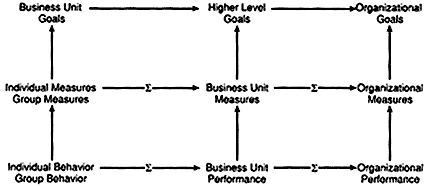
FIGURE 5-2 Goal Alignment model.
the compatibility of individual goals with group goals, or the resultant effects on performance, but it assumes that the behavior of one or the other, individual or group, is the basic unit of analysis determined by the process.
Productivity measures at the individual or group level direct behaviors to the business unit goals, if properly aligned. That is, the individuals or groups will work to the measures; it is the responsibility of the organization to ensure that the measures are in line with the goals.
Reading horizontally across the bottom of Figure 5-2, the model indicates that the productivity (performance) of a business unit is a direct function of the productive behavior of each of the individuals and groups within the unit. In turn, organizational productivity is a function of the productivity of each of the units. The degree to which this is true depends on the definition of productivity at each level and the interactions among the elements. Also, in this ideal model, the individual or group productivity results would sum to the productivity of the next higher business unit and ultimately to the productivity of the organization.
At the business unit level, managers will direct activities, allocate resources, and make other decisions to maximize performance as specified in the measurement system (especially if rewards are tied to performance). At each intermediate level of analysis, therefore, productivity measures should be selected and positioned such that the performance of the unit directly contributes to the goals at the next higher level.
The Goal Alignment model suggests that individuals, groups, and business units are not goal driven, but measurement driven. The old saying that ''you get what is inspected, not what is expected" is rel-
evant here. It is one thing for a firm to establish and communicate goals. It is quite another to devise and implement measurement systems that can be maximized only by behavior and performance that lead directly to goal accomplishment.
Organizations are real, not ideal. The Goal Alignment model, as well as many of the other models and concepts in this chapter, represent targets toward which organizations should strive. The degree to which they can achieve these targets, resolve the related issues, and design perfect productivity measurement systems determines their probability of survival and success. Researchers can help in this effort by empirically testing the relationships suggested in the Goal Alignment model.
TWO MODELS OF INDIVIDUAL PRODUCTIVITY
From one perspective, virtually everything that is known about technology and the behavior of people at work is a factor affecting individual productivity. Attempts to amalgamate all of that knowledge into a comprehensive, unified theory of individual productivity would likely prove fruitless. What is needed is a framework that will provide guidance for theory development, model building, empirical studies, and other forms of research. One such framework is the separation of the factors affecting individual productivity into five distinct, but interacting, sets of variables: (1) individual characteristics (e.g., size, strength, stamina); (2) psychological variables (e.g., individual attitudes and beliefs); (3) sociological variables (i.e., factors that come into play when individuals interact in groups of various sizes); (4) technological variables (e.g., tools, equipment, materials); and (5) system variables (e.g., policies, management style, communication systems).
Each of these sets of variables involves one or more disciplines; together they approach the boundaries of the body of knowledge of work. Obviously, they overlap and interact. But somewhere within the complex interactions of all of these variables lie the determinants of individual productivity. Development of a comprehensive theory of individual productivity is too much to ask, but perhaps it can be approached as would building a cathedral—one stone at a time. To develop a theory or build a cathedral, one needs plans and models. In this section, I discuss two models of individual productivity that encompass a wide range of variables.
A Conceptual Productivity Model
Ruch and Hershauer (1974) developed the Conceptual Schematic Productivity model to diagram the major influential relationships of a
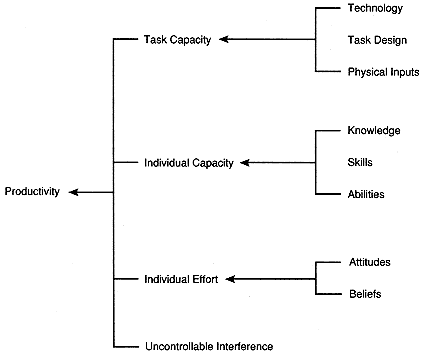
FIGURE 5-3 A conceptual model of individual productivity. SOURCE: Adapted from Ruch and Hershauer (1974).
number of variables that affect individual productivity. They categorized the variables as primary factors, secondary factors, individual factors, organizational controllables, individual and organizational demographics, and bodies of knowledge or files of information. In this section, I use a revised and greatly simplified version of their model (see Figure 5-3) as a basis for explaining the principal influences on the productivity of the individual worker.
In this Conceptual Productivity model, productivity is a function of four major factors: task capacity, individual capacity, individual effort, and uncontrollable interferences. Taken together, the first two factors establish the potential productivity of the task. When this potential meets the individual effort, moderated by possible interferences, the actual productivity of the task for a given time period results. Interference cannot be controlled by the individual worker, and it may or may not be controllable by the organization. For example, material shortages and machine breakdowns might have been prevented by better
scheduling or maintenance, but a general power outage caused by a storm cannot be avoided except through backup procedures that are not cost justified.
The basic components of each of the first three factors in the model are identified in highly simplified form in Figure 5-3. Task capacity is a function of the level of technology employed (the technological variables referred to earlier); the design of the task (one of many system variables); and physical inputs (which span technological and systems variables). Individual capacity is a function of the individual characteristics that constitute the knowledge, skills, and abilities an individual brings to a task. Finally, individual effort is a function of attitudes and beliefs covering all of the cognitive characteristics of the individual that motivate a person to productive behavior on the job.
In the original model from which this version is derived, Ruch and Hershauer (1974) discussed direct and indirect causal relationships, interactions among factors, feedback loops, possible trade-offs, and a number of other refinements. One can easily see, even in the reduced version of the model used here, that a change in the workplace, such as the introduction of a more sophisticated data management system (technology), can have resounding effects for almost every element of the model. Individual knowledge is suddenly obsolete, which leads to the need for training by the organization. Attitudes and beliefs of the worker (e.g., resistance to change, fear of job loss, the challenge of a new job) will almost certainly be affected by the way the change is introduced and implemented, the training provided, and the way postimplementation activities are handled by management. But the degree and direction, positive or negative, of these rippling effects are difficult to predict. The resulting effect on individual productivity, given incomplete knowledge of the interactions of these many variables, is far from certain.
The primary purpose of this model is to organize and enhance understanding of the complex interactions of many variables operating in the workplace. It keeps the larger picture in view and thereby helps to avoid the myopia of focusing on one variable and assuming that everything else remains unchanged.
One important aspect of this model is that it separates potential productivity (determined by the first two factors) from the achievement of that potential (a function of the second two factors). It is one thing to increase the potential productivity of a task through higher levels of technology, better equipment and materials, more training, and the selection of employees with excellent skills. It is quite another matter to realize that potential in the form of sustained productivity increases by all employees. From a problem-solving point of view, cases of "poor" productivity should first be diagnosed as lack of potential, then a fail-
ure to meet potential, or some combination of the two. The optimal corrective action for one condition may fail if the other condition ensues.
Similarly, if the capacity of the task is increased and productivity remains constant or declines, one should look to the antecedents of individual effort or to instances of interference that could be corrected through changes in system variables. If an incentive system has little or no effect on productivity, one should explore the determinants of the capacity of the task and the individual to see if they are at their technological limits.
This Conceptual Productivity model is a simplistic representation of a highly complex system of interrelated variables that influence the productivity of individual workers and, in turn, the productivity of higher levels of the organization. It is intended as a framework within which existing and future research can be organized with the aim of making research results more meaningful and relevant to the needs of industry. To some extent, this type of analysis, using even a simple framework such as this one, may help explain the paradox of the lack of productivity improvement from investments in information technology noted in Chapter 2.
The Productivity Servosystem Model
Whereas the Conceptual Productivity model attempts to relate a few major antecedents of productivity but with little emphasis on the nature of their relationships, the Productivity Servosystem model developed by Hershauer and Ruch (1978) attempts to present a normative model that illustrates the interaction of factors influencing worker performance (see Figure 5-4). As with the previous model, I use a simplified version of the Servosystem in this discussion. Thus, many of the factors shown in Figure 5-4 could be disaggregated into several levels of analysis. The term performance is used in this model to indicate productivity as well as other work-related behaviors.
Individual worker performance is shown as the focal point of the model; organizational and individual factors either directly or indirectly affect this performance. Any factor shown can be traced through the model as an input to worker performance. In fact, many factors can also be traced to performance as an output. Because of this feedback effect and the time delay mechanism in the model, the model is called a Servosystem.
The factors influencing worker performance are indicated in the model in several ways. First, individually controlled factors are distinguished from organizationally controlled factors. Second, factors that
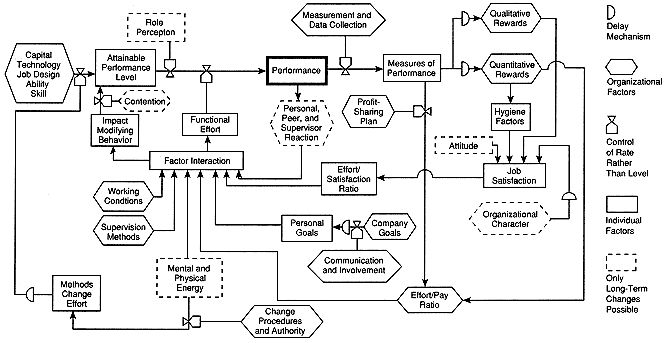
may be changed significantly only in the long run are identified separately. Third, some factors that control the rate of transfer of one or more of the other variables are identified. Fourth, the model includes time as an implicit factor since the feedback would take place over time. The time factor is also explicitly included by the time delays shown at a number of places in the model. These delays indicate that changes in the factors to which they relate will affect performance rather gradually over time.
My colleague and I developed the Productivity Servosystem model based on inputs derived from a review of the literature and information we gathered during visits with several productivity-conscious organizations. The models by Lawler (1971) and Sutermeister (1969) were particularly useful in forming the version of the model presented here. In addition, the modeling procedures of industrial dynamics as developed by Forrester (1961) have guided the form we used.
Elements of the Model
A brief walk-through will help explain the elements of the model and their relationships. Worker performance leads to reported measures of performance, buffered by the measurement system and methods of data collection. Performance data lead to various positive or negative rewards, which along with other factors, influence job satisfaction. Within each individual there exists an effort/satisfaction ratio that reflects the equitable balance of effort expended and rewards received. Correspondingly, the organization has an implicit effort/pay ratio (a fair day's work for a fair day's pay). These two ratios combine with other factors to determine the functional effort the worker brings to the job.
The factor interaction block in Figure 5-4 indicates that the functional effort of individuals is a complex phenomenon representing more than a simple addition of the levels of factors that are direct inputs to the individual. It is some function of the effort/satisfaction and effort/ pay ratios, the individual's personal goals and general level of energy, and work-related elements (e.g., working conditions and supervisory methods). Also, different levels of performance elicit reactions within the individual and among coworkers that may encourage or retard future efforts, and that becomes part of the factor interaction.
The mental and physical energy of the worker can be directed to making suggestions for improving the process (methods change effort), moderated by organizational systems (e.g., suggestion programs), or it can be directed toward functional effort. In routine, repetitive jobs, some worker effort may be directed to impact-modifying behavior to
relieve boredom. These actions may be nonproductive (e.g., taking unauthorized breaks), or antiproductive, (e.g., stopping an assembly line or damaging equipment). Impact-modifying behavior is moderated by the degree of contention in management-labor relations.
The organization's selection of capital, level of technology, and job design combines with the worker's abilities and skills to establish the attainable performance level or potential productivity of the job. The functional effort of the worker, in simplest terms, determines the degree to which the potential is realized in actual performance.
Summary
The Servosystem model is intended to provide a theoretical foundation for understanding and analyzing worker performance. Because of the complex interactions represented by the variables and relationships in the model, it may never be totally validated, nor is it likely that "the formula" for the factor interaction block will ever be expressed as an equation. The model does provide, however, a conceptual framework for organizing current knowledge and directing research efforts toward understanding individual productivity.
WHEN INDIVIDUALS BECOME GROUPS
Four considerations are key when combining measures of individual productivity into evaluations of group or team performance and, ultimately, organizational performance. The considerations are (1) the complexity of group analysis, (2) differing inputs included at the individual and group levels, (3) problems of aggregation, and (4) the need to align measures with goals.
Complexity
As workers are formed into groups (independent members) or teams (interdependent members), the factors affecting productivity become more complex. Even in groups of workers who are loosely connected, group dynamics begin to affect performance both negatively and positively; in interdependent teams those forces are intensified. Bottlenecks, unbalanced work loads, inability to cooperate, feelings of inequity, and the "committee phenomenon" (in which all members gravitate to the average) are just a few of the detrimental effects that can emerge.
Conversely, teamwork can have positive, synergistic effects through cooperation, mutual stimulation, combined skill and capability, sup-
port, and mentoring. Some tasks can be performed only by a cooperating team, in which case individual contributions are obscured. For other tasks, work is divided and assigned to team or group members by matching the difficulty of the work with the seniority of the member. Under any circumstances, the group level of analysis involves all of the influencing variables of the individual level of analysis plus the variables associated with group dynamics. Much research has been done on the behavior of individuals within work groups, but often the dependent variables include effectiveness, performance, goal achievement, satisfaction, output, or other measures that may or may not be clearly defined. It is difficult to review these studies to determine if the findings relate to the productivity of the group as it would be measured in an output to input ratio.
Input Factors
At the individual level of work, the primary focus is on labor input; it is difficult, sometimes impossible, to identify all the other inputs (material, capital, and energy) associated with a specific job. At the organizational level, total productivity measurement systems demand that all inputs be considered. In between (in work groups, departments, divisions, and so on), the other factors of production may or may not be considered in the measurements as circumstances dictate. The fundamental differences between total and partial measures of productivity reduce the ability of decision makers to plan and control operations across levels. Researchers experience similar barriers in attempting to design studies in which individual productivity rates can be aggregated to form measures of the productivity of work groups or business units.
At higher levels of analysis, such as departments within an organization, interactions among business units become relevant and the very concept of productivity becomes more complex. For example, the purchasing department may be very productive in its use of resources to buy raw materials, according to the measures applied. However, if the materials purchased do not meet specifications or arrive late, the productivity of the fabrication department may be severely affected. Few productivity measurement systems in place today would capture both the productivity of the purchasing department (i.e., internal productivity) and the contributions (positive or negative) of the purchasing department to the rest of the organization (i.e., external productivity). Conceptual research on organizational theory could be reframed in a productivity context to help explain the effects of the many intraorganizational relationships on the aggregation of productivity data from the individual to the organizational level.
Aggregation
Individual measures of productivity can be summed to form group productivity data only if the group members are working at independent, parallel jobs. Such is seldom the case, however. To the extent that the members of the group are interdependent or performing different tasks, aggregation of the measures is problematic. It may make more sense to identify the inputs and outputs of the group, which may be different from the inputs and outputs of any individual, and form a unique measure for evaluating group productivity.
Although unique group measures are feasible and useful, they may lead to discontinuities. If individual productivity rates are high but group productivity is low, explanations are difficult to derive, and managerial control becomes an onerous task. The problem is most likely based in the incompatibility of the measures used at different levels of analysis, but it is also possible that group dysfunctions and interferences are influencing factors. Research on the development of internally consistent measurement systems is needed to supplement and clarify existing knowledge of work behavior and interactions within groups. A first step in this direction is taken in the section below on productivity linkages, which outlines seven possible types of linkages that should be considered before attempting to aggregate measurement data.
Goal Alignment
As noted above, measures of individual productivity or other dimensions of performance should be selected to align behaviors with organizational goals. The same should be true of business units (e.g., departments and divisions) within the organization. Strategic planning involves ensuring that the goals at one level of the organization are consistent with those at each higher level so that the elements of the organization do not work at cross-purposes. An ideal productivity measurement system for an organization would align individual behaviors with group and organizational goals.
WORK GROUP STRUCTURES AND PRODUCTIVITY LINKAGES
As discussed above, the aggregation of productivity measures is one of the major considerations in the study of the relationships among individual, group, and organizational productivity. If the mathematics of aggregation is ever to be determined, the nature of the linkages within the work group must be identified and classified.
Types of Work Group Structures
McGrath's (1984) comprehensive work on the interaction and performance of groups provides many insights as to why the output of the group may not be a simple summation of the output of the members. In his review of Steiner's (1966, 1972) work, McGrath stated:
[Steiner] notes that groups seldom perform up to the level of their best member. Often, the quality or quantity of their performance is about what the second best member's ability would predict. Steiner considers the combined abilities of individual members—combined according to whatever rule is suitable for that type of task, disjunctive, conjunctive, or additive—as representing the group's potential productivity. Actual group productivity, he argues, falls below potential productivity because of ''process losses," losses incurred in the process of performing the task. He identifies two main types of process losses: motivation losses (or, potentially, gains) and coordination losses (p. 58, emphasis in original).
Much of the work of McGrath and others he cites has dealt with the type of task or the interaction of the group with the type of task to be performed. McGrath classified tasks into eight basic types: planning tasks, creative tasks, intellective tasks, decision-making tasks, cognitive conflict tasks, mixed-motive tasks, conflicts/battles, and performances. He then related the types of tasks to the conceptual or behavioral skills needed for task accomplishment and the conflict or cooperation required within the group.
Separate from the type of task assigned to the work group, however, is the structure of the group itself. Structure refers to the roles that each member of the group plays and the way in which the elements of the task are assigned to the members of the group, that is, the organization of the work within the group. Attempts to aggregate individual measures of productivity meet with varying degrees of success depending on the structure and relationship of the workers in the group. Different structures create different linkages between individual and group productivity, and those linkages must be recognized in the aggregation process.
A simple example illustrates alternative structures for the accomplishment of a given task. Imagine a bucket brigade composed of five members whose objective is to transfer water from vat A to vat B. In the classic bucket brigade, team member 1 dips from vat A and passes the bucket through successive stationary members to member 5, who empties the bucket into vat B. (Assume that there is an unlimited number of buckets or that empty buckets can be tossed back to member 1.) With
this structure, the productivity of the group is dependent on the slowest member, and if anyone on the team stops, the entire process stops.
An alternative structure would be to assign each member the job of dipping from vat A, walking with the full bucket to vat B to empty it, and then returning to vat A with the empty bucket. In this case, the team members are decoupled (they become a cooperating group rather than an interdependent team) so that a change in the productivity of one member does not affect the productivity of the others directly (indirect effects on the motivation of the others may occur). The productivity of the group is the simple summation of the productivity of the members.
Consider one other alternative structure: Team member 1 dips from vat A and sets full buckets on the ground. Team members 2, 3, and 4 pick up the buckets two at a time and carry them to a staging area near vat B, where they leave them and pick up two empty buckets for the return trip. The job of team member 5 is to pour the water from the full buckets into vat B. In this structure, performance of the team members is not as inexorably linked as in the first structure, but it is not as independent as in the second. The productivity of the group is dependent partly on the productivity of each member but also on the proper balance of the three different jobs of dipping, carrying, and emptying.
Several conclusions follow from these examples:
-
Many alternative structures exist for the accomplishment of a given group task.
-
The structure of the group creates linkages from individual productivity to the productivity of the group that determine the effect of changes in one member's output on total group output.
-
Productivity measures at the individual level concentrate on the number of repetitions of a job within a time period (number of buckets passed per hour). At the group level, measures focus on task accomplishment (amount of water transferred from vat A to vat B) and on the total resources used (number of person hours and number of buckets used). (Note that each of the three structures used as examples above requires a different number of buckets.)
In an effort to help explain the relationship of group structure to productivity linkages, in the next section I identify seven basic types of linkages. In practice, many combinations of the basic types of linkages are possible and lead to a large number of variations.
Types of Productivity Linkages
Direct
The simplest, but perhaps least common form of work group structure is one that is directly linked, that is, an increase or decrease in the productivity of one individual has an immediate and corresponding effect on the productivity of the group. This can happen when the work group is essentially a composite of independent workers considered as a collective. Examples include salesmen, postal carriers, some maintenance personnel, and others who can determine their own pace and are essentially independent of intraorganizational influences.
Indirect
Often, some members of a work group do not create the group's output directly (the accounting classification of "indirect labor" may or may not apply, depending on the level and unit of analysis). For example, a team formed to create computer software may be composed of six programmers, two clerical support personnel, and a project manager. The productivity of the programmers is directly linked to the output of the team, but the effect of the clerical personnel and the project manager is indirect, albeit necessary and important.
Proportional
In many instances, an increase in the productivity of one member of a work group will have an amplified or dampened effect on the productivity of the group. For example, in a competitive atmosphere, a productivity increase by one member may spur others to higher levels of performance. Conversely, a drop in productivity by one member may make the job of the other members more difficult by creating an imbalance in the work load.
Unidirectional
Sometimes, a change in the productivity of one member affects the productivity of the group in only one direction of change. For example, in an assembly line or any directly interdependent work team, an increase in productivity of one member may have the effect of creating additional idle time for that worker but have no effect on the output rate of the group. A decrease in productivity by that worker, however, could create a bottleneck that directly lowers the productivity of the entire group.
Temporal
The effect of the change in productivity of one worker may be realized in the productivity of the group or organization only after a time delay. For example, a decrease change in productivity of a worker creating a component of a composite product (such as an automobile or computer software) may not be felt until the stage in the process when the complete product cannot be assembled because of a shortage of that component.
Stochastic
Some work groups are loosely coupled and the degree of interdependence among the members varies. In this circumstance, and perhaps in many others, the effect on the group from the change in productivity of one worker can be estimated only in a probabilistic relationship. For example, in a construction crew, one member's increase in productivity may have little or no effect on group performance in one instance, and a direct or even amplified effect in another instance, depending on the nature of the task.
Nominal
To make the classification complete, the case of "no effect" must be included. Many jobs within a group or organization are necessary but have no direct effect on the measurable output of the unit; they enable the direct workers to be productive. Security, custodial services, and food services are examples of such jobs. For each of these jobs (security, for example), the productivity of the workers can be measured, but the linkage to organizational productivity is difficult, if not impossible, to establish.
RESEARCH NEEDS
Despite the widespread use of productivity measurement systems in all types of organizations today, many unresolved problems remain. In this section I discuss a number of the important problems in order to stimulate further study of ways to reduce the adverse effects of these problems on the measurement of individual productivity.
Determining the Unit of Output
Ideally, the output being measured should be physical units of a valued finished product. For some standardized manufacturing opera
tions, counting the units produced approaches this ideal. For most jobs, however, problems of combining dissimilar outputs and identifying intangible outputs arise.
Dissimilar outputs can be combined by using a common surrogate unit or through some form of weighting. Beech Aircraft, for example, aggregates across different types of airplanes by using tons of aircraft produced. As strange as this may sound, the company found that, generally, a plane that weighed twice what another plane weighed was more complex and took twice as many resources to produce (personal communication between author and Beech Aircraft executives). In many instances, this same reasoning can be applied to individual production jobs.
Programming operations, in an effort to get away from counting lines of code, have experimented with "function points" (i.e., number of functions performed within a program) as a measure of output. Computer manufacturers may use units of computing capacity produced to enable them to aggregate large and small systems delivered. If engineered standards are available, total production expressed in standard hours is a legitimate measure of output, no more or less accurate than the standards used. Price weighting, using discounted prices, may be the most common form of combining dissimilar outputs.
Identifying intangible outputs common to many white-collar and service jobs requires ingenuity and a clear knowledge of objectives and process parameters. Transactions completed, customers served, and reports processed are common measures in these circumstances. Often, the measures of output are unique to the particular job, as in briefs filed, claims processed, or copy machines cleaned. Knowledge work, such as supervision, management, R&D, and consulting, presents special problems in measuring output. Although some progress has been made in this area, much productivity measurement research remains to be done to develop relevant measures of output for nonmanufacturing applications.
Determining the Unit of Input
Individual jobs require labor, material, capital, and energy. As noted above, however, at the individual level of analysis the focus is generally on the labor component. Energy is seldom associated with an individual job because of the difficulty of identifying energy use for a particular operation. Capital and material may be ascribed to the individual level (as in units produced per machine-hour or per pound of raw material) if the capital and material are dedicated to the individual
job and are under the control of the operator. Mainly, the unit-of-input problem centers on the appropriate way to measure labor.
Labor can be measured in physical terms as hours worked, hours at work (includes breaks, for example), or hours paid (including vacations, holidays, and time off), depending on the purpose and the time horizon of the measurement system. Like outputs, labor inputs can be weighted by their discounted wage rates to reflect the different skill levels of workers and to permit aggregation.
Limiting individual productivity measures to the labor input is commonly accepted. However, it must be understood that the productivity of labor can be profoundly influenced by changes in capital, material, or energy, which are not captured by the measure. Research using only labor productivity as a dependent variable should establish controls for possible effects on productivity of other factors of production.
Productivity versus Quality
The productivity-quality debate often stems from definitions of the two terms. If quality is defined in its broadest sense as meeting or exceeding customer expectations, then a document printed on a laser printer is of higher quality than one printed on a dot matrix printer even though both documents are error free. An alternative definition of quality, meeting technical specifications, would count errors in the document as defects but would consider the laser-printed document as a completely different product from the one printed on a dot matrix printer. The productivity paradox in information systems may derive to a great extent from this point. The investment in information technology may not increase the quantity of documents produced (it may, in fact, greatly reduce it), but the quality (in both meanings of the term) of the information may have been improved greatly. If the information is more timely, more accurate, and in a more meaningful and usable form, has productivity increased? Resolution of this debate will depend on better definitions and measures of output that take into account changes in customer expectations for quality.
If quality is limited to the definition of meeting technical specifications, the idea that improved productivity is achieved only at the expense of reduced quality is a misconception. First, the definition of productivity and its associated measures must reflect the production of acceptable products and services meeting all quality specifications. Reduced quality, therefore, would automatically reduce productivity. Second, reduced quality leads to returns, scrap, rework, and production disruptions, all of which consume resources without producing valued
outputs. Elimination of the causes of defective products and services releases resources for more productive uses.
Although this idea is now well understood, industry's measures of productivity at the individual level seldom contain a quality component. As firms accept quality as a higher priority and redesign jobs to include quality checks, this problem will be relieved somewhat. But many individual productivity measurement systems should be revised to account for defects that are produced but not detected until later in the process.
The controls afforded the researcher in the design and conduct of experiments permit the development of productivity measures that systematically account for quality variations on a number of dimensions. Omission of quality as an integral part of productivity measurement is a serious flaw in the research design.
Productivity versus Performance
At the individual level, productivity measurement tracks how well the worker applies talents and skills, using materials and equipment, to produce products and services within a specified time period. Although this is fundamental to success, it is not total performance. If the design of the jobs, the measurement systems, and the evaluation and reward systems are not aligned with the corporate strategy and reinforced at all levels of management, productivity is hollow. It is at best efficient, but it may also be inconsistent with the overall direction of the organization and therefore useless in the long run.
Even if jobs are properly aligned with organizational strategies, counterproductive behaviors by workers, such as poor attendance, tardiness, unauthorized breaks, socializing, and performing personal work, may not be captured by a particular productivity measure. Absenteeism, for example, may not be counted as an input even though the firm pays for the hours missed.
On the positive side, however, every employee has the opportunity to make contributions to the organization that may be recognized only by observation. Workers may make suggestions for improvement or may be exceptionally effective at satisfying customers in direct contact positions, yet those contributions may not be reflected in the productivity measure. "Has a positive influence on fellow employees" and "has an outstanding record of problem solving" are examples of factors that should be recognized over and above basic productivity.
Productivity research should take these basic differences into account. At the very least, the research study should clearly delineate
between measures of productivity and measures of performance rather than using the terms as vague synonyms.
Productivity Measures versus Financial Measures
At the organizational level, a firm may be highly productive but fail because of its inability to manage prices, costs, cash flows, and debt. A firm, therefore, will track many aspects of performance besides total firm productivity.
At the individual level, however, the emphasis usually is on productivity and cost per unit produced. Currently, a major thrust in cost accounting research is attempting to revise methods for assigning overhead costs to products and services produced (Cooper and Kaplan, 1991). These efforts may make the connection between productivity and cost more compatible and more meaningful at the individual level of analysis. Productivity researchers, however, should continue their efforts to develop individual-level productivity measurement systems that can be integrated with these new developments in unit cost analysis.
Measurement Error
No measurement system is perfect; a variance between actual and measured results will likely always exist. The variance can be reduced, however, by reducing simple errors (not counting correctly), reducing conceptual errors (not counting the right things), checking the reliability and validity of surrogate measures, and verifying the logic of using pseudoproductivity measures (such as measuring activities as an indicator of results).
Two dangers arise in attempting to reduce measurement errors, however. First, by trying to meet all criteria, the measurement system may become so complex that it loses its practicality. Second, the nearperfect measurement system may generate such high demands for data gathering and analysis that the cost of the system is not justified and the results are not timely enough to be useful. Although reducing measurement error should be a continuing goal, a compromise between this goal and the usability of the measure is generally in order.
Misuse of Measures
Much has been written about developing systems for measuring individual productivity; less has been said about how the results of the measures are to be used. A number of the considerations raised in this section imply misuses of productivity data, such as measuring a worker
for factors outside his or her control. Other common misuses include using the results as a whip to speed the pace of work or to place blame on a worker for poor performance. Unfair comparisons, such as using the same measure under vastly different circumstances, can also cause problems.
Research into the development of a system for measuring individual productivity should not stop when the system is implemented. The integration of productivity measures with other measures of performance should be documented, and the effective and ineffective uses of productivity data should be explored.
CONCLUSION
The challenge before researchers and practitioners is to develop internally consistent and comprehensive productivity measurement systems that account for the productivity of individual workers, work groups, business units, and organizations. The degree to which this goal can be achieved will determine the ability of organizations to manage resources effectively and direct human effort toward organizational goals. It may help them regain the industrial leadership they have lost and understand the apparent paradoxes that ensue when expected productivity gains are not realized. Consistent productivity measurement systems will enable researchers and practitioners to speak a common language as they each play their role in solving the problems associated with poor productivity growth.
The difficulty in developing a comprehensive productivity measurement system stems from a number of factors, in particular the following:
-
The concept of productivity is still often misunderstood; discussions of the relationship of productivity to effectiveness, efficiency, quality, innovation, and financial or behavioral measures of performance take the form of debates. A common definition of productivity, at all levels of organizational analysis, is a prerequisite for the development of a comprehensive measurement system.
-
Attempts to aggregate individual productivity measures or to disaggregate organizational measures are thwarted by the dissimilarity in measures of output. At the individual level, output is often counted in physical units of product produced or service provided. At higher levels of analysis, different outputs from different sources are combined in some form of weighting scheme, sometimes using cost or price data that are incompatible with financial measures at the individual level, given current cost accounting methods.
-
On the input side of the productivity ratio, individual productivity is often measured only against labor input, and labor may be counted in a number of different, but acceptable, ways. At the organizational level, a total factor approach is often used, that is, inputs consist of labor, materials, capital, and energy.
-
In most organizations today, the amount of indirect or managerial work far exceeds the direct labor associated with producing products and services. The productivity of indirect labor and, to a lesser extent, managerial efforts can be measured in terms of results achieved and resources consumed. Often, however, the contribution of these activities to the productivity of the organization is unclear. If the organization was evaluated strictly by the value of products produced relative to inputs, it would have, for example, no training function; but such myopic views would never be accepted by the enlightened manager. Current productivity measurement systems suffer from an inability to capture and integrate the contribution of indirect functions, such as training, into the productivity equation for the organization.
-
When individuals are formed into work groups or teams, linkages are formed between the effort of the individual and the output of the group. The nature of the linkage is dependent on the structure of the group, characteristics of the individuals, psychological factors, sociological factors, technological variables, and system variables. The complex interactions that take place in cooperative productive behavior, however, are seldom captured in common productivity measurement systems. In their efforts to understand and control work group behavior, managers and researchers alike are hampered by inadequate measurement systems.
Progress toward the goal of developing internally consistent and comprehensive productivity measurement systems will require a joint effort between practitioners and researchers. Greater understanding of the concept of productivity, common definitions of terms, and the building of conceptual models of productivity provide the requisite framework to develop and refine productivity measures. Better productivity measurement will help to organize and unify the building of a common body of knowledge on productive behavior.
REFERENCES
Cooper, R., and R.S. Kaplan. 1991. Profit priorities from activity-based costing. Harvard Business Review 69:130–135.
Forrester, J.W. 1961. Industrial Dynamics. Cambridge, Mass.: The MIT Press.
Hershauer, J.C., and W.A. Ruch. 1978. A worker productivity model and its use at Lincoln Electric. Interfaces 8:80–89.
Lawler, E.E., 1971. Pay and Organizational Effectiveness: A Psychological View. New York: McGraw-Hill.
McGrath, J.E. 1984. Groups: Interaction and Performance. Englewood Cliffs, N.J.: Prentice-Hall.
Ruch, W.A., and J.C. Hershauer. 1974. Factors Affecting Worker Productivity. Tempe: Arizona State University.
Steiner, I.D. 1966. Models for inferring relationships between group size and potential group productivity. Behavioral Science 11:273.
1972. Evils of research—or what my mother didn't tell me about sins of academia. American Psychologist 27:766.
Sutermeister, R.A., 1969. People and Productivity, 2nd ed. New York: McGraw-Hill.
Werther, W.B., Jr., W.A. Ruch, and L. McClure. 1986. Productivity Through People. St. Paul, Minn.: West Publishing.


