
Page 173
8
Self-Confidence and Performance
Self-confidence is considered one of the most influential motivators and regulators of behavior in people's everyday lives (Bandura, 1986). A growing body of evidence suggests that one's perception of ability or self-confidence is the central mediating construct of achievement strivings (e.g., Bandura, 1977; Ericsson et al., 1993; Harter, 1978; Kuhl, 1992; Nicholls, 1984). Ericsson and his colleagues have taken the position that the major influence in the acquisition of expert performance is the confidence and motivation to persist in deliberate practice for a minimum of 10 years.
Self-confidence is not a motivational perspective by itself. It is a judgment about capabilities for accomplishment of some goal, and, therefore, must be considered within a broader conceptualization of motivation that provides the goal context. Kanfer (1990a) provides an example of one cognitively based framework of motivation for such a discussion. She suggests that motivation is composed of two components: goal choice and self-regulation. Self-regulation, in turn, consists of three related sets of activities: self-monitoring, self-evaluation, and self-reactions. Self-monitoring provides information about current performance, which is then evaluated by comparing that performance with one's goal. The comparison between performance and goal results in two distinct types of self-reactions: self-satisfaction or -dissatisfaction and self-confidence expectations. Satisfaction or dissatisfaction is an affective response to past actions; self-confidence expectations are judgments about one's future capabilities to attain one's goal. This framework allows a discussion of self-confidence as it relates to a number of motivational processes, including setting goals and causal attributions.
Page 174
One theoretical perspective of self-confidence that fits well in Kanfer's (1990b) framework of motivation and has particular relevance to enhancing self-confidence in a variety of domains of psychosocial functioning is self-efficacy theory (Bandura, 1977, 1986). Self-efficacy theory is also useful in guiding the development of motivational programs because self-beliefs of confidence operate in most of the approaches to cognitive theories of motivation, particularly goal-setting theory and attribution theory (Bandura, 1990).
This chapter provides an overview of the self-efficacy concept of self-confidence and its relationship to other cognitively based motivational processes that influence learning and performance; it does not attempt to integrate the different theories of motivation that incorporate self-confidence constructs. (For summaries and comparisons of cognitive theories of motivation, see Frese and Sabini, 1985; Halisch and Kuhl, 1987; Kanfer, 1990b; Pervin, 1989.) We first define self-confidence and related concepts. Next, an overview of self-efficacy theory is given, along with a review of the relevant research. The third section covers applications of techniques for enhancing self-confidence. Lastly, we note the research questions that follow from what is currently known.
''SELF-CONFIDENCE" AND RELATED CONCEPTS
Terms such as "self-confidence," "self-efficacy," "perceived ability," and "perceived competence" have been used to describe a person's perceived capability to accomplish a certain level of performance. Bandura (1977) uses the term "self-efficacy" to describe the belief one has in being able to execute a specific task successfully (e.g., solving a math problem) in order to obtain a certain outcome (e.g., self-satisfaction or teacher recognition) and, thus, can be considered as situationally specific self-confidence.1 Self-efficacy is not concerned with an individual's skills, but, rather, with the judgments of what an individual can accomplish with those skills (Bandura, 1986). Bandura (1986, 1990) distinguishes between "self-efficacy" and "self-confidence": self-confidence refers to firmness or strength of belief but does not specify its direction; self-efficacy implies that a goal has been set. We do not adopt Bandura's distinction, but use the term "self-confidence" because it is more familiar to most individuals. "Self-confidence," as the term is used here, is the belief that one can successfully execute a specific activity, rather than a global trait that accounts for overall performance optimism. For example, one may have a lot of self-confidence in one's ability at golf but very little self-confidence in one's tennis skills.
"Perceived competence" and "perceived ability" are terms that have been used in the research literature on achievement and mastery motivation. They indicate the perception that one has the ability to master a task resulting from cumulative interactions with the environment (Harter, 1981; Nicholls,
Page 175
1984). In sports and physical movement, Griffin and Keogh (1982) developed the concept of "movement confidence" to describe a person's feeling of adequacy in a movement situation; Vealey (1986) used the term "sport confidence" to define the belief or degree of certainty individuals possess about their ability to be successful in sport. Some organizational psychologists use the term "state expectancy'' in essentially the same manner as Bandura's (1977) concept of self-efficacy (Eden, 1990).
Some terms related to self-confidence are occasionally confused with the construct. Some authors (e.g., Kirsch, 1985) have tried to implement Bandura's (1977) concept of self-confidence (self-efficacy) as an expectancy construct. Bandura distinguishes judgments of personal efficacy from the expectancy construct in expectancy-by-value theories (e.g., Fishbein and Ajzen, 1975; Triandis, 1977): self-confidence is a judgment of one's ability to perform at a certain level; expectancies pertain to the outcomes one expects from a given level of effort. In essence, confidence expectations are concerned with beliefs about one's competence and outcome expectations are concerned with beliefs about one's environment. For example, a person may believe that running a marathon in less than 2 hours will lead to social recognition, money, and self-satisfaction (outcome belief), but may question whether she can actually run that fast (confidence belief). Similarly, a woman may believe that Karate self-defense techniques will deter assault (outcome belief), but may doubt her capability to be effectively aggressive against a powerful assailant (confidence belief).
Bandura (1986) asserts that, in a responsive environment that rewards performance achievements, the outcomes people expect depend heavily on their self-confidence that they can perform the skill. However, in an environment in which outcomes are fixed at a minimum level of performance or in which a social condition restricts people's ability to perform successfully or control their circumstances, outcome and confidence expectations would not be causally linked. For example, a concentration camp inmate could have confidence that he or she is efficacious enough to maximize his or her survival probability without violating personal ethics while simultaneously believing that this survival probability is not very high at all. Such individuals may give up trying, not because they doubt their own capabilities, but because they expect their efforts to be futile. This type of outcome-based futility is hypothesized to lead to pessimism or learned helplessness (Bandura, 1986).
"Self-concept" represents a composite view of oneself that is developed through evaluative experiences and social interactions. As Bandura (1986) has noted, however, a person's self-conceptions become more varied across activities with increasing experience. Thus, global measures of self-concept will not predict the intra-individual variability in a performance situation as well as self-confidence perceptions that vary across activities and
Page 176
circumstances. Rather, global measures of self-concept are helpful to understanding one's total outlook toward life. However, it should be noted that people's self-concepts have also been shown to be malleable in certain situations (Markus and Kunda, 1986). (For a thorough discussion of self-concept, see Hattie, 1992.)
"Self-esteem" is another global construct related to self-confidence and self-concept and pertains to one's personal perception of worthiness. Although self-confidence and self-esteem may be related, individuals can have one without necessarily having the other. Certain individuals may not have high self-confidence for a given activity, but still "like themselves"; by contrast, there are others who may regard themselves as highly competent at a given activity but do not have corresponding feelings of self-esteem. (For a thorough discussion of the concept of self-esteem with respect to work behavior, see Brockner, 1988.)
Other related concepts include locus of control, optimism or pessimism (learned helplessness), healthy illusions, and level of aspiration. Rotter's (1966) notion of locus of control is concerned with a person's generalized expectancies about his or her ability to control reinforcements in life: individuals who tend to perceive events as internally controlled behave more self-determinedly; those who tend to perceive events as beyond their control behave more fatalistically. Although an internal locus of control orientation may create a high sense of confidence, the two constructs must be distinguished. Bandura (1986) points out that locus of control is based on outcome expectancies rather than confidence expectancies. For instance, people who believe that their physical health is personally determined but find it is failing despite their efforts to improve it would experience low self-confidence. Studies have shown that task-specific self-confidence expectancies are better predictors of successful behavior in specific situations than are general measures of perceived control (Kaplan et al., 1984; Manning and Wright, 1983).
Optimism and pessimism have been defined by some authors in terms of generalized expectancies for internal or external locus of control (Scheier and Carver, 1992). Scheier and Carver (1992:203) define "dispositional optimism" as the "tendency to believe that one will generally experience good vs. bad outcomes in life." Optimism and pessimism have also been conceptualized within an attributional or explanatory style framework (Abramson et al., 1978; Peterson and Bossio, 1991). In an attributional view, individuals base their expectations for controlling future events on their causal explanations for past events. Optimism is the tendency to attribute negative events to causes that are unstable, specific, and external; pessimism or learned helplessness is the tendency to attribute negative events to causes that are stable, global, and internal. Optimism and pessimism or learned helplessness are considered to be much more global concepts than task-specific
Page 177
self-confidence and, thus, are more resistant to short-term interventions to change them. In addition, optimism and pessimism emphasize perceptions of controllability of the environment rather than the sense of personal agency to control the environment.
A concept similar to optimism has been described as healthy illusions (Taylor and Brown, 1988) or positive denial (Lazarus, 1979), which involves a slight distortion of reality in the positive direction. Such illusions can help sustain one's hopes of success, keep morale high, and lower anxiety (Hackett and Cassem, 1974). As Peterson and Bossio (1991) explain in relation to severe illnesses, the immediate denial of the severity of an illness allows individuals to face crises slowly, which helps their motivation to recover. However, if denial or illusion is too far removed from reality, it can get in the way of recovery and taking action to improve one's situation or performance.
Level of aspiration, first conceptualized in the 1930s within the scientific analysis of goal-striving behavior, is concerned with people's estimation of their subsequent performance prior to trying a task. An early investigator (Frank, 1935:119) defined it specifically as "the level of future performance in a familiar task which an individual, knowing his level of past performance in that task, explicitly undertakes to reach." Once a level of aspiration has been set, the individual performs, examines the discrepancy between the level of aspiration and the performance, and reacts with feelings of success or failure (depending on discrepancy). These reactions could lead to trying harder, leaving the activity altogether, or continuing with a readjusted level of aspiration (Lewin et al., 1944). Early investigations on levels of aspiration were the precursors to modern research on various cognitive aspects of goal-setting, self-appraisal, and feeling of satisfaction regarding relative success and failure. Much of the basis for current views on self-regulation in terms of self-monitoring, self-evaluation, and self-reaction can be found within the level-of-aspiration paradigm (see Bandura, 1982; Carver and Scheier, 1990).
The earlier research, most of which occurred in the 1930s and 1940s (see, e.g., Festinger, 1942; Frank, 1935, 1941; Lewin et al., 1944), tried to determine the factors that influence the fluctuations in a person's level of aspiration (e.g., success and failure of comparison groups) or studied how well personality traits correlated with the phenomenon. One general finding in relation to success and failure was that subjects raised their level of aspiration after success and lowered it after failure. However, Bandura has shown that this finding does not automatically occur in real-life tasks: "Having surpassed a demanding standard through laborious effort does not automatically lead people to raise their aspiration" (Bandura, 1986:348). Whether one raises one's level of aspiration or not depends more on one's level of task-specific self-confidence. This is the additional self-evaluation mechanism
Page 178
that Bandura (1977) has added to the old paradigm and the self-regulation model. In contrast, Carver and Scheier (1990) emphasize the rate of discrepancy reduction or rate of progress made toward a goal over time in determining one's level of aspiration.
Although many of the concepts related to self-confidence are investigated from different perspectives, the phenomenon of interest for most of them is the cognitive process by which a person regulates thoughts and action to attain desired outcomes or to control events in his or her life.
THEORETICAL PERSPECTIVES
Self-efficacy theory was developed within the framework of a social cognitive theory (Bandura, 1986). Bandura poses self-confidence as a common cognitive mechanism for mediating people's motivation, thought patterns, emotional reactions, and behavior. The theory was originally proposed to account for the different results achieved by the diverse methods used in clinical psychology for treating anxiety. It has since been expanded and applied to other domains of psychosocial functioning, including motivation, cognitive skill acquisition, career choice and development, health and exercise behavior, and motor performance. (For reviews on specific domains, see Feltz, 1988b; Lent and Hackett, 1987; McAuley, 1992; O'Leary, 1985; Schunk, 1984a). The theory has also been found to be equally predictive cross-culturally (Earley, 1993; Matsui, 1987; Matsui and Onglatco, 1991).
Self-Confidence Information
Self-confidence beliefs, defined as people's judgments of their capability to perform specific tasks, are a product of a complex process of self-persuasion that relies on cognitive processing of diverse sources of confidence information (Bandura, 1990). These sources of information include performance accomplishments, vicarious experiences, verbal persuasion, and physiological states.
Performance accomplishments are supposed to provide the most dependable confidence information because they are based on one's own mastery experiences. One's mastery experiences affect self-confidence beliefs through cognitive processing of such information. If one has repeatedly viewed these experiences as successes, self-confidence will increase; if these experiences were viewed as failures, self-confidence will decrease. Furthermore, the self-monitoring or focus on successes or failures should have differential effects on behavior and self-confidence, depending on which is monitored (Bandura, 1986): focusing on one's successes should provide more encouragement and greater confidence than focusing on one's failures.
Page 179
The influence that performance experiences have on perceived self-confidence also depends on the perceived difficulty of the task, the effort expended, the amount of guidance received, the temporal patterns of success and failure, and one's conception of a particular "ability" as a skill that can be acquired versus an inherent aptitude (Bandura, 1986). Bandura has argued that performance accomplishments on difficult tasks, tasks attempted independently, and tasks accomplished early in learning with only occasional failures carry greater confidence value than easy tasks, tasks accomplished with external aids, or tasks in which repeated failures are experienced early in the learning process without any sign of progress.
Confidence information can also be derived through a social comparison process with others (Festinger, 1954). Vicarious sources of confidence information are thought to be generally weaker than performance accomplishments; however, their influence on self-confidence can be enhanced by a number of factors. For instance, the less experience people have had with performance situations, the more they will rely on others in judging their own capabilities. The effectiveness of modeling procedures on one's self-confidence has also been shown to be enhanced by perceived similarities to a model in terms of performance or personal characteristics (George et al., 1992; Gould and Weiss, 1981).
Persuasive techniques are widely used by instructors, managers, coaches, parents, and peers in attempting to influence a learner's confidence, motivation, and behavior. In acquiring expert performance, Ericsson and his colleagues put a great deal of emphasis on parents' and teachers' expectations and verbal persuasions that a child is "talented" as a major influence on the child's self-confidence, motivation, and perceived protection "against doubts about eventual success during the ups and downs of extended preparation" (Ericsson et al., 1993:399). Persuasive information includes verbal persuasion, evaluative feedback, expectations by others, self-talk, imagery, and other cognitive strategies. Self-confidence beliefs based on this type of information, however, are likely to be weaker than those based on one's accomplishments, according to the theory. In addition, persuasive techniques are thought to be most effective when the heightened appraisal is slightly beyond what the person can presently do but still within realistic bounds because people are generally aware that better performances are achievable through extra effort (Bandura, 1986). The extent of persuasive influence on self-confidence has also been hypothesized to depend on the prestige, credibility, expertise, and trustworthiness of the persuader.
The causal attributions that one makes regarding previous achievement behavior also can be thought of as a source of self-persuasive information in formulating future confidence expectations. Causal attributions for previous behavior have been shown to predict confidence expectations (McAuley, 1990; Schunk and Cox, 1986). (This relationship is discussed in more detail below.)
Page 180
Confidence information can also be obtained from a person's physiological state or condition. Such information is provided through cognitive appraisal (Bandura, 1986), such as associating physiological arousal with fear and self-doubt or with being psyched up and ready for performance. Eden (1990) also suggests that the stress one experiences in work can influence confidence judgments about one's coping capacity for the job. Bandura (1986) also notes that physiological sources of self-confidence judgment are not limited to autonomic arousal.2People use their levels of fitness, fatigue, and pain in strength and endurance activities as indicators of their physical inefficacy (Feltz and Riessinger, 1990; Taylor et al., 1985).
These four categories of confidence information—performance accomplishments, vicarious experience, persuasion, and physiological states—are probably not mutually exclusive in terms of the information they provide, though some are more influential than others. How various sources of information are weighted and processed to make judgments given different tasks, situations, and individual skills is as yet unknown. The consequences of these judgments, however, are hypothesized to determine people's levels of motivation, as reflected in the challenges they undertake, the effort they expend in the activity, and their perseverance in the face of difficulties. People's self-confidence judgments can also influence certain thought patterns and emotional reactions (e.g., pride, shame, happiness, sadness) that also influence motivation (Bandura, 1986). For instance, self-confidence beliefs may influence people's success or failure images, worries, goal intentions, and causal attributions.
Self-Confidence, Behavior and Thought Patterns, and Motivation
Bandura (1977) states that self-efficacy (self-confidence) is a major determinant of behavior only when people have sufficient incentives to act on their self-perception of confidence and when they possess the requisite skills. He predicts that self-confidence beliefs will exceed actual performance when there is little incentive to perform the activity or when physical or social constraints are imposed on performance. An individual may have the necessary skill and high self-confidence beliefs, but no incentive to perform. Discrepancies will also occur, according to Bandura, when tasks or circumstances are ambiguous or when one has little information on which to base confidence judgments.
How individuals cognitively process confidence information also influences the relationship between self-confidence and behavior (Bandura, 1977). For example, successes and failures may be distorted in importance. People who overweigh their failures are believed to have lower expectations than those with the same performance levels who do not overweigh their failures.
Page 181
The relationship between self-confidence expectations and performance accomplishments is also believed to be temporally recursive (Bandura, 1977:194): "Mastery expectations influence performance and are, in turn, altered by the cumulative effect of one's efforts." Bandura (1990) has emphasized the recursive nature of the relationship between self-confidence and thought patterns as well. The relationship between the major sources of confidence information, confidence expectations, and behavior and thought patterns, as predicted by Bandura's theory, is presented in Figure 8-1.
As just discussed, people's self-confidence beliefs are hypothesized to influence certain thought patterns and emotional reactions as well as behavior. Two thought patterns of particular interest to the study of performance motivation are goal intentions and causal attributions; a third thought pattern that can influence self-confidence beliefs is how one thinks about ability.
Self-confidence beliefs have been shown to influence future personal goal-setting and to mediate the relationship between goal intentions and motivation (Earley and Lituchy, 1991). Research has also shown that the stronger people's self-confidence beliefs (assessed independently from their goals), the higher the goals they set for themselves and the firmer their commitments are to them (Locke et al., 1984). In addition, as noted above (Kanfer, 1990a), motivation based on goal intentions is mediated by self-regulatory influences that include two types of self-reactive influences: affective self-evaluation (satisfaction/dissatisfaction), and perceived self-efficacy for goal attainment. Bandura (1990) includes a third type of self-reactive influence: adjustment of personal standards. Figure 8-2 summarizes, schematically, Kanfer's and Bandura's ideas of motivation that are based on goal intentions.
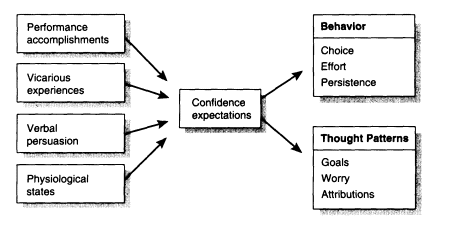
FIGURE 8-1 Relationship between sources of confidence information,
confidence expectations, and behavior/thought patterns.
Page 182
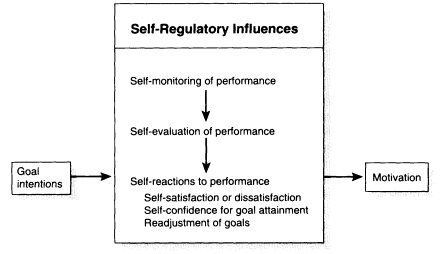
FIGURE 8-2 Conceptions of motivation based on goal intentions.
When performances fall short of people's personal goals (or level of aspiration), they become dissatisfied. Whether this dissatisfaction serves as an incentive or disincentive for enhanced effort is partly influenced by a person's self-confidence for goal attainment and the degree of the discrepancy (Bandura, 1986; Carver and Scheier, 1990). Bandura (1986) predicts that, in general, in the face of negative discrepancies between personal goals and attainments, those who have high self-confidence beliefs will heighten their level of effort and persistence and those who have self-doubts will quickly give up. However, if the degree of the negative discrepancy is perceived as quite large, people's self-confidence for goal attainment will be undermined. In this situation, research has shown that highly self-confident individuals will readjust their goals so as not to further undermine their self-confidence; those with little sense of self-confidence to begin with will become discouraged and abandon their goal altogether (Bandura and Cervone, 1983).
Bandura (1986, 1990) also suggests that confidence beliefs and causal attributions are reciprocal determinants of each other. According to Bandura, self-confidence beliefs help shape causal ascriptions for future behavior. People with self-beliefs of confidence have been shown to attribute failure to lack of effort; people with low self-beliefs of confidence ascribe their failures to lack of ability (Collins, 1982). Causal attributions also play a role in the formation of future confidence expectations (McAuley, 1990; Schunk and Cox, 1986). Successes are more likely to enhance self-confidence if performances are perceived as resulting from ability rather than from luck. Conversely, individuals can talk themselves out of succeeding
Page 183
by attributing prior failure to inherent ability rather than to bad luck or reduced effort. Studies using causal analyses also indicate that the effects of causal attributions on performance are mediated through self-confidence beliefs (Schunk and Gunn, 1986; Schunk and Rice, 1986).
As noted above, the way that people construe ability may also influence self-confidence beliefs and other self-regulatory factors. Two conceptions of ability have been identified that lead to the development of two goal orientations (Dweck and Leggett, 1988; Elliott and Dweck, 1988; Nicholls, 1984). The first is the conception of ability as an acquirable skill: people who conceive of ability in this way adopt a learning or mastery goal (Ames, 1984; Dweck and Leggett, 1988; Nicholls, 1984). This type of goal-orientation is well suited for skill development because people seek to improve their competence, judge their capabilities in terms of personal improvement, and regard errors as a natural part of the skill-acquisition process. Furthermore, when performance falls short of their goals, they attribute the discrepancy to inadequate effort, and their self-confidence beliefs remain minimally affected.
The second conception of ability is as a more or less inherent aptitude or entity conception: people who have an entity conception of ability adapt a performance or ability-focused goal (Ames, 1984; Dweck, 1986; Nicholls, 1984). People with this conception of ability seek to prove their competence or demonstrate their ability; they avoid demonstrating low ability and use social comparison processes to judge their ability relative to others. This type of goal-orientation is not well suited for skill development because people view errors as a threat to being able to demonstrate their ability and, thus, they avoid adopting challenging goals. When a negative discrepancy occurs between their goals and current performances, they attribute it to low ability. Research has shown that this type of ability conception increases a person's vulnerability to the adverse effects of failure (Elliott and Dweck, 1988; Jourden et al., 1991; Wood and Bandura, 1989). The feeling of failure and the attribution to low ability may also lead to dissatisfaction and a decrease in confidence beliefs and subsequently to goal abandonment. It also diverts attention away from the task and to worry (Kanfer, 1990a). The negative effects of an inherent aptitude conception are most distinct among people with low self-confidence in their ability (Kanfer, 1990a).
The structure and demands of a learning environment establish a motivational climate that can evoke different goal orientations (see Ames, 1992). For instance, schools often establish learning environments that include evaluating student achievement on the basis of normative standards and with extrinsic rewards. This structure encourages learners to use social comparison processes to judge their ability and adopt a performance-goal orientation instead of a mastery-goal orientation. Students, especially those
Page 184
who lack skills and self-confidence, do far better in school settings that foster a mastery orientation by designing activities for individual challenge, using flexible and heterogeneous grouping arrangements, helping students develop self-management and self-monitoring skills, recognizing individual progress, and involving them in self-evaluation (Ames, 1992).
Team Confidence
Much of the research on self-efficacy (self-confidence) beliefs has focused on the individual level of behavior. However, in many organizational settings, such as business, military, or sport, individuals perform as members of teams rather than just as individuals. Thus, many of the challenges and difficulties people face in organizations reflect team problems requiring team efforts to produce successful performance.
Bandura (1977, 1986) distinguishes between self-efficacy (self-confidence) and perceived collective efficacy (team confidence) in his theory of self-efficacy. Self-efficacy refers to people's judgments of individual capabilities and effort; collective efficacy or team confidence refers to people's judgments of group capabilities and influences "what people choose to do as a group, how much effort they put into it, and their staying power when group efforts fail to produce results" (Bandura, 1986:449). In this view, teams with high collective confidence beliefs should outperform and should persist longer than teams with low perceived collective confidence. Prior to the development of Bandura's theory, Bird and Brame (1978) found team confidence to be the most powerful discriminator of winning and losing teams.
Similarly to self-confidence, the confidence of a team or organization is most likely influenced by diverse sources of confidence information. As with self-confidence beliefs, performance accomplishments of the team are predicted to be the most powerful source of information for team confidence beliefs. Organizations that have an outstanding record of performance undoubtedly cultivate a strong sense of confidence among their members. Likewise, as Eden (1990) noted in his description of organizationwide self-fulfilling prophecies, a serious performance failure—such as the Challenger space shuttle disaster of the National Aeronautics and Space Administration—can decrease the collective confidence of the organization's members, which, in turn, can influence subsequent failures. The perceived collective confidence of a team or group might also be influenced through a collective social comparison process with other teams. It is also possible that reciprocal social influences within a team can raise or lower collective confidence for team performance. For example, the modeling of confidence or ineffectiveness by one member of the group may influence the rest of the group's sense of confidence (Bandura, 1990). In addition, just as persuasive information can influence an individual's sense of self-confidence, collective
Page 185
efficacy theory suggests that it could also influence an entire group. Charismatic leaders seem to have such persuasive influence on their organization's members (Eden, 1990).
Bandura (1986) further suggests that team confidence is rooted in self-confidence. According to Bandura, a team that has a strong sense of collective confidence can enhance the perceived task-specific confidence of its members, although a team with a weak sense of collective confidence may not totally undermine the perceived self-confidence of its more resilient members (also see Parker, 1992). Members of a team who have weak beliefs in their own individual capabilities are unlikely to be easily transformed into a strong collective force.
In terms of the assessment of perceived team confidence, Bandura (1986) suggests that team confidence may be insufficiently represented as a predictor of team performance through just the sum of the perceived personal confidences of its members, especially on highly interactive tasks or in situations in which members must work together to achieve success. A study of predicting team performance on the basis of individual performances provides some evidence for the possible moderating influence of task type on the confidence-performance relationship in teams (Jones, 1974). Using baseball (which does not require a lot of interaction among team members for team outcome), Jones (1974) predicted team outcome 90 percent of the time. However, for basketball (which does require a lot of interaction), he predicted team outcome only 35 percent of the time. This outcome suggests that the average of team members' perceptions of their team's performance capability should be added to their personal confidence to execute their individual functions in a collective task to measure team confidence.
This construct of team confidence may be related to other constructs of group motivation. For example, a team's collective confidence beliefs may also be influenced by the nature of its collective goals. As interpreted from Bandura (1986), effective team performance would require the merging of diverse individual goals in support of common group goals. If a team consists of a group of members who are all pursuing their own individual goals, they are not as apt to work together to achieve the necessary team goals to be successful, especially on highly interactive tasks. In addition, when the overall success of a team calls for sustained efforts over a long time, short-term intermediate goals may be needed to provide incentives, provide evidence of progress along the way, and sustain team confidence beliefs.
The attributions a team ascribes for its successes and failures may also influence team confidence. For example, an athletic team that defeats a difficult opponent with minimal effort may perceive itself to be highly confident. Conversely, if that same team worked very hard but lost to an easier opponent, perceived team confidence may weaken. Perceived team confidence may, in turn, influence the types of causal attributions that
Page 186
teams make about their performance (Bandura, 1986, 1990). Teams with little confidence may infer that poor performance was due to a lack of ability; highly confident teams may ascribe poor performance to a lack of effort.
Team confidence and cohesion may also be related. Both constructs have been shown to be positively associated with successful performance and persistence in the face of adversity (Spink, 1990). Thus, team confidence and team cohesion appear to share some common elements.
A team's collective confidence beliefs may similarly be related to a team's desire for success. For example, Zander (1971) found that groups with a strong desire for success outperformed groups with a weaker desire for success. Over time, when a group succeeded more often than it failed, members of that group were more interested in the activity and had a stronger desire for their group to perform well (Zander, 1971). Thus, successful outcome had a cyclical relationship with desire for success. Team confidence could also be part of this relationship. Successful performance can be expected to positively influence team confidence, which in turn should lead to behaviors and actions (e.g., setting higher goals, working harder) that enhance the ability of the group to succeed in the future, resulting in an even stronger desire for group success. This relationship may not hold for tasks that are not intrinsically motivating.
Social loafing may also be conceptualized in terms of team confidence. However, social loafing (conceptualized as the motivational losses in group performance) may represent the dark side of team confidence. In typical team performance situations, the evaluation potential for any one individual is not as strong as it would be for an individual performance, and this situation can give rise to social loafing. If individual team members believe that their team is highly capable of performing a task, they may loaf. Thus, high team confidence may actually undermine contributions to team performance unless there is individual identifiability. There has not yet been research to test this ''undermining" assumption, but a considerable body of research has shown that increasing the identifiability and recognition of individual performances in groups reduces social loafing (e.g., Latané et al., 1979).
Some work suggests that self-confidence mediates the relationship between identifiability of performance and loafing (Sanna, 1992). Highly confident individuals whose performances were identifiable as part of a group's performance were less likely to loaf than were individuals with little confidence in the same situation. The results of this study suggest that when individual contributions toward team performance are identifiable, highly confident members may exert more effort toward performance than members whose confidence is not high. Increased individual effort towards performance usually facilitates successful team performance, which in turn may enhance perceived team confidence.
Page 187
RESEARCH ON SELF-CONFIDENCE
Evidence for the effectiveness of self-confidence as an influential mechanism in human agency comes from a number of diverse lines of research in various domains of psychosocial functioning, including achievement motivation (Bandura and Cervone, 1983; Schunk, 1984a), career choice and development (Betz and Hackett, 1981), health and exercise behavior (DiClemente, 1981; McAuley and Jacobson, 1991), anxiety disorders (Bandura et al., 1982) and sport and motor performance (Feltz, 1982). Results of these diverse lines of research provide converging evidence that people's perceptions of their performance capability significantly affect their motivational behavior (Bandura, 1986).
This section is not an exhaustive review of all the research on self-confidence and psychosocial functioning; rather, we focus on work that is relevant to enhancing perceived self-confidence and the effects of self-confidence beliefs on performance. The first part of this section looks at research on the effect of various techniques for enhancing self-confidence beliefs; the second part considers the effects of self-confidence on performance; the third part looks at research on team confidence; and the fourth part considers how to apply those research findings.
Enhancing Self-Confidence
Performance-Based Confidence Information
As noted above, Bandura (1977) proposed that performance accomplishments provide the most dependable source of information on which to base self-confidence judgments because they are based on one's mastery experiences. Techniques based on such performance accomplishments as participant modeling, guided exposure, physical guidance, external aids, and task modification have been effective in enhancing both self-confidence beliefs and performance in a wide variety of areas, including: reducing phobic dysfunction (Bandura et al., 1982; Biram and Wilson, 1981); mastering high-risk skills (Brody et al., 1988; Feltz et al., 1979; Weinberg et al., 1982); enhancing personal empowerment over physical threats (Ozer and Bandura, 1990); and increasing interest in mathematical tasks (Campbell and Hackett, 1986). Research has also supported the superiority of performance-based information over other sources of confidence information (e.g., Bandura and Adams, 1977; Bandura et al., 1977; Feltz et al., 1979; Lewis, 1974; McAuley, 1985).
For example, Feltz et al. (1979) investigated the effectiveness of participant, live, and videotaped modeling on learning the back dive, a high-avoidance task. Participant modeling involved an expert's demonstration
Page 188
plus guided participation with the learner. On the first four performance trials (training period), the participant-modeling subjects were guided through the dives to ensure successful performance. On the second four trials (test period), the physical guidance was removed. As predicted, the participant-modeling treatment produced more successful dives and stronger confidence beliefs than either the live modeling or videotaped modeling treatments.
According to Bandura (1986), information acquired from mastery experiences does not influence self-confidence directly; rather, it depends on how the information is cognitively appraised, such as how difficult the task is perceived to be in comparison to the effort expended, how much external aid is received, the temporal pattern of one's successes and failures, and one's conception of ability. For instance, research in motor learning has shown that in initial learning the experience of a temporal pattern of early success followed by a series of failures resulted in less persistence at the task in the face of subsequent failure than the experience of early failure followed by a series of successes (Feltz et al., 1992). The early failure and subsequent success pattern was more representative of the typical learning pattern of a motor skill and, therefore, probably influenced perceptions of the skill as an acquirable one.
In another study researchers first induced different conceptions of ability—inherent aptitude or acquirable skill—for performance on a rotary pursuit task (a spinning disc with a quarter-sized target that a person tries to track and that records time on target) (Jourden et al., 1991).3Subjects who performed the task under the conception of ability as an acquirable skill showed increases in self-confidence, showed positive self-reactions to their performance, displayed widespread interest in the activity, and showed greater improvements in performance in comparison with those who performed the task under the inherent-aptitude conception of ability. These results suggest that instructors should use a positive approach, which emphasizes the learnability of the skill to be taught, to improve the speed and quality of skill acquisition, especially in the early phases.
Vicarious Confidence Information Information gained through vicarious experiences has been shown to influence perceived confidence in such areas as muscular endurance performance (Feltz and Riessinger, 1990; George et al., 1992; Weinberg et al., 1979); physical activity (Corbin et al., 1984); competitive persistence (Brown and Inouye, 1978); problemsolving (Schunk, 1981; Zimmerman and Ringle, 1981); phobic behavior (Bandura et al., 1977); and management training (Gist, 1989a, 1989b; Gist et al., 1989). These techniques have included modeling and social comparison. Weinberg et al. (1979) manipulated subjects' confidence beliefs about competing on a muscular endurance task by having them observe their competitor (a confederate) on a related task. The confederate either
Page 189
performed poorly and was said to have a knee injury (belief of high self-confidence) or performed well and was said to be a varsity track athlete (belief of low self-confidence). Results indicated that the higher the induced self-confidence, the greater the muscular endurance. Subjects who competed against an "injured" (perceived as relatively weaker) competitor endured longer and had higher confidence expectations about winning against their opponent than those who thought they were competing against a varsity athlete—even though the subjects lost in both trials.
Modeling provides confidence information, according to Bandura (1986), through a comparative process between the model and the observer. George et al. (1992) demonstrated that a model who was similar to nonathletic observers in ability enhanced observers' confidence beliefs and endurance performance over a dissimilar model. In essence, the similar model seems to instill the attitude of "If he/she can do it, so can I." Also, the use of multiple models has been shown to enhance the modeling effect (Lewis, 1974). Bandura (1977) reasoned that observers would have a stronger basis on which to increase their own self-confidence if they could see a number of people of widely differing characteristics succeeding at a task.
Persuasory Confidence Information For many kinds of performance, people are influenced by the opinions of others—teachers, coaches, peers, and managers—in judging their ability to perform a task. People may also try to persuade themselves that they have the ability to perform a given task through imagery and causal attributions for previous performances. Verbal persuasion by itself is of limited influence, and for treating phobias in clinical psychology it is often used in combination with other techniques, such as hypnosis, relaxation, or performance deception. However, in athletic, educational, and work situations, for which the fear component is unlikely to be as paralyzing as in chronic phobias, persuasive techniques by themselves may improve performance more successfully than in phobic behavior; but there has been little research on this possibility.
The few studies that have been conducted in motor performance report mixed results (Feltz and Riessinger, 1990; Fitzsimmons et al., 1991; Weinberg, 1985; Wilkes and Summers, 1984; Yan Lan and Gill, 1984). Weinberg (1985) found no effects on endurance performance with the use of dissociation and positive self-talk strategies, and Yan Lan and Gill (1984) found that providing subjects with bogus feedback and the suggestion that elevated arousal levels were indicative of good performance did not induce higher self-confidence. In contrast, Wilkes and Summers (1984) found persuasive techniques that tried to enhance confidence and emotional arousal influenced strength performance, but confidence-related cognitions did not seem to mediate the effect. Fitzsimmons et al. (1991) found that false positive feedback increased self-confidence judgments and future weightlifting
Page 190
performance. In addition, Feltz and Riessinger (1990) found significant effects on endurance performance using mastery imagery, with corresponding effects on self-confidence.
One explanation for the equivocal findings in these studies may be the differences in the degree of persuasive influence of their techniques and the extent of their subjects' personal experience on the task. In the Weinberg (1985) study, subjects were not told that the cognitive strategy they were to use would enhance their performance. There was no attempt at persuasion. In comparison, Wilkes and Summers (1984) instructed their subjects to persuade themselves that they were confident or to persuade themselves that they were "charged up."
The degree of persuasive influence also depends on the believability of the persuasive information. Yan Lan and Gill (1984) tried to lead subjects to believe that they had the same heightened pattern of physiological arousal as good competitors. However, there was no manipulation check that the subjects believed the persuasion. Fitzsimmons et al. (1991), in contrast, used pilot data to ensure that the deceptive feedback provided was believable.
The lack of persuasive effects in some of the research may also have been due to confounding with actual performance. All of the studies used multiple performance trials; thus, subjects may have formed perceptions on the basis of their performance experience that overshadowed much of the influence that the treatment variable had on self-confidence. This explanation is supported by research showing that the significant effects for endurance performance and self-confidence were short-lived after subjects experienced performance failure (Feltz and Riessinger, 1990).
A slightly different line of research in organizational behavior has shown consistent effects for instructors' expectancies on trainees' self-confidence and performance (Eden, 1990; Eden and Ravid, 1982; Eden and Shani, 1982). These studies induced military instructors to expect higher performance from some trainees than others. Not all of these studies measured self-confidence (or self-expectancy, as used in the studies), but those that did showed that high expectancy trainees had higher levels of self-confidence and performance than low expectancy trainees.
Performance Feedback Evaluation feedback about ongoing performances has also been used as a persuasive technique (Bandura, 1986). Instructors, managers, and coaches often try to boost perceived trainees' self-confidence by providing encouraging feedback. Positive feedback about ongoing performance has been shown to instill higher perceptions of confidence than no feedback at all (Vallerand, 1983). Also, feedback on causal attribution that credits progress to underlying ability or effort has been shown to raise perceived confidence more than no feedback or feedback that implies lesser ability (Schunk, 1983a). However, inappropriately high amounts of positive
Page 191
feedback can be detrimental to self-perceptions and motivation when used on individuals differentially because it implies low ability (Horn, 1985; Meyer, 1982). For instance, Horn (1985) found that the frequent use of positive reinforcement by coaches for less-skilled players resulted in lower perceived competence in those athletes, while the use of higher amounts of mistake-contingent criticism for highly-skilled players led to higher levels of perceived competence. Horn reasoned that the liberal use of praise given to low-skilled players was not performance-contingent and thus communicated to them that their coach held lower expectations for them.
In addition to its use as a persuasive technique, evaluative feedback can also add to enactive confidence information regarding ongoing performance as it conveys signs of progress. In order to be informative and motivative, feedback must be provided in reaction to defined performance standards or goals (Bandura, 1986). Otherwise, there is no basis on which to form internal comparisons to be able to evaluate ongoing performance. A wealth of research has shown that both feedback and goal setting are needed to enhance performance (Bandura and Cervone, 1983; Erez, 1977; Feltz and Riessinger, 1990; Locke and Latham, 1990; Strang et al., 1978). Even in the face of substandard performance, Bandura (1986) suggests that subjects' motivation and self-confidence may not be undermined if the discrepancy is only moderate and they are given knowledge of that discrepancy.
Causal Attributions Studies that have examined the influence of causal attributions on self-confidence beliefs have either assessed the attributions that individuals have made for previous performances in relation to the confidence expectations for future performances (McAuley, 1990, 1991) or have manipulated attributional feedback concerning previous performance to examine the effect on subsequent confidence expectations (Schunk, 1983a, 1984a; Schunk and Cox, 1986; Schunk and Gunn, 1986). Much of this research, conducted on educational learning has generally shown that attributions made or induced for previous performance that are internal and subject to personal control (e.g., effort and ability) will raise self-confidence beliefs for subsequent performance. Therefore, helping individuals attribute good performance to ability, skill improvement, or hard work and their bad performances to lack of effort, lack of sufficient practice time, or use of an inappropriate strategy can be expected to improve their self-confidence beliefs and motivation for continued performance.
Physiological Confidence Information The few studies that have investigated the influence of physiological or emotional states on self-confidence are equivocal (Feltz, 1982, 1988a; Feltz and Mugno, 1983; Juneau et al., 1986; Kavanagh and Hausfeld, 1986). For diving tasks, Feltz (1988a) found that perceived autonomic arousal, rather than actual physiological arousal, significantly predicted confidence judgments. Juneau et al. (1986) found that individuals
Page 192
who focused on their physical stamina as they mastered increasing workloads on a treadmill judged their cardiac confidence as more robust than those who focused on the negative signs. For strength tasks, however, Kavanagh and Hausfeld (1986) found that induced moods (happiness or sadness), as measured by self-reports, did not alter confidence expectations in any consistent manner. Bandura (1988) has argued that it is people's perceived coping confidence that is more indicative of capability than their perception of their physiological arousal condition. If people believe that they cannot cope with a potential threat, they experience disruptive arousal, which may further lower their confidence judgments that they can perform successfully. Evidence for this argument comes from research that has shown that it is not the frightful cognitions themselves that account for anxiety symptoms, but the perceived self-confidence to control them (Kent, 1987; Kent and Gibbons, 1987).
Contextual Influences
A number of instructional practices are important contextual influences on self-confidence that do not necessarily fit into any of the four principal sources of confidence information (Schunk, 1984b). In addition to evaluative and attributional feedback, these practices include goal setting and reward contingencies. Schunk (1985) has suggested that these contextual influences convey confidence information to learners by making salient certain cues that learners use to appraise their self-confidence.
The research on goal setting and self-confidence has generally shown that setting goals for oneself and attaining them, especially specific, difficult, and proximal goals, enhance perceptions of self-confidence (Bandura and Schunk, 1981; Locke et al., 1984; Manderlink and Harackiewicz, 1984; Schunk, 1983b; Stock and Cervone, 1990). Specific goals raise confidence expectations to a greater extent than more abstract goals because they provide more explicit information with which to gauge one's progress. Difficult goals raise confidence expectations more than do easy goals because they, too, offer more information about one's capability to achieve.
Although the research supports the setting of difficult goals, experts recommend that they be realistic (Locke and Latham, 1990). Garland (1983), however, has questioned the basis of the goal attainability assumption in setting difficult goals. Laboratory experiments on goal-setting have found positive relationships between goal difficulty and performance even when the goals assigned to individuals were difficult and beyond their reach (Weinberg, 1992). One factor that may resolve the differences between experts' recommendations and laboratory evidence is task type. The type of task used in goal-setting studies has been observed to mediate this positive relationship between goal difficulty and performance (Tubbs, 1986; Wood et al., 1987). Kanfer and Ackerman (1989) have provided a theoretical explanation for
Page 193
this mediating effect in terms of resource capacity and attentional demands of the task: that is, setting and striving for goals impose additional attentional demands on the individual. In learning complex tasks, such as air-traffic control operations, the benefits of goal-setting are difficult to realize because of the already high attentional demands of the task (Kanfer and Ackerman, 1989). In simple tasks, such as performing sit-ups, attentional demands are minimal, which leaves plenty of room available for engaging in the self-regulatory activity of goal-setting.
One problem in being assigned specific and difficult goals (versus selecting one's own goals) is that it may create a performance goal orientation that focuses one's attention on proving one's ability (Kanfer, 1990a:229): "The assigned performance goal sets the objective standard for proving one's ability." In a learning situation, the adoption of a difficult goal when trying to prove one's ability emphasizes the negative discrepancy and, thus, the feeling of failure, attribution to low ability, and a decrease in self-confidence about the task. Research is needed to determine whether assigning specific and difficult goals creates a performance goal orientation and whether assigning less specific goals might offset some of the negative motivational effects of assigning difficult goals, including a decreased sense of self-confidence.
In addition to specific and difficult goals, immediate goals are also easier to gauge in terms of progress than are distant goals. They make a task appear more manageable, provide an indication of progress, and affect self-evaluative reactions to performance (Stock and Cervone, 1990). A few studies have found no difference between immediate and distant goals (e.g., Bandura and Simon, 1977; Dubbert and Wilson, 1984), but many of the subjects assigned long-term goals in these studies were found to have spontaneously set short-term subgoals for themselves, which contaminated the findings. However, research on long-term goal-setting programs to improve the study skills and grades of college students suggests that relatively long-term plans and goals are most beneficial because they allow flexible choice among daily activities (Kirschenbaum, 1985; Kirschenbaum et al., 1981, 1982). One way to reconcile these divergent findings is to view them in terms of stages of skill acquisition. For instance, it may be argued that short-term goals facilitate performance and perceived competence in the early stages of skill acquisition, but as competence develops over time, moderately long-term goals allow greater flexibility and choice and may be viewed as less controlling than short-term goals (Manderlink and Harackiewicz, 1984).
In addition to examining goal-setting influences on self-confidence and performance in relation to stages of skill acquisition, examining them in relation to one's rate of progress may also explain divergent findings. Carver and Scheier (1981) propose that when one encounters difficulty in executing a higher order (more distant) goal, attention is shifted back to a lower order (more immediate) subgoal. As discrepancy toward the subgoal is
Page 194
reduced, attention shifts back to the higher order goal. As long as one is making good progress toward a long-term goal, one's attention does not need to shift to subgoals to feel confident and be successful. Future research is needed to determine under what conditions and with what tasks different goal-setting techniques enhance self-confidence and performance.
Another common instructional practice to enhance motivation is the use of rewards. Providing rewards (incentives) for desirable outcomes imparts information as well as motivation (Bandura, 1986). Informing learners that they can earn rewards on the basis of what they accomplish is hypothesized to influence their self-confidence for learning. As individuals work toward a task and note their progress, their sense of confidence can be validated through rewards. Rewards have been shown to heighten self-confidence beliefs more when they are contingent on performance than when offered simply for participation (Schunk, 1983c). As with feedback, rewards may actually reduce self-confidence beliefs if they are given in a noncontingent manner for some learners and not others or if they are distributed within a competitive reward structure (Ames, 1981); competitive reward structures emphasize social comparisons that can result in differential ability attributions (Schunk, 1985).
Effects of Self-Confidence on Performance
Numerous studies have examined the relationship between self-confidence and motivated behavior or performance across a number of tasks and situations (Bandura, 1986). Although these correlational results do not necessarily demonstrate a causal relationship between self-confidence and performance, they do provide convergent evidence of a consistent association between self-confidence and performance of at least a moderate magnitude. For instance, in sport and exercise, Feltz (1988b) found that the correlations between self-confidence and subsequent performance in 28 studies ranged from .19 to .73, with a median of .54. Other studies have experimentally manipulated perceived self-confidence levels and then measured subjects' motivation in coping behavior (Bandura et al., 1982), endurance performance (Feltz and Riessinger, 1990; Weinberg et al., 1979); problem solving (Cervone and Peake, 1986), and pain tolerance (Litt, 1988). In general, these diverse causal tests provide corroborating evidence that perceived self-confidence contributes significantly to motivated behavior and performance.
Attempting to demonstrate the causal influence of self-confidence on behavior and performance through experimental manipulation of self-confidence, however, has been criticized as leading to an arbitrary interpretation of the relationship of self-confidence to performance (Biglan, 1987). Biglan points out that when environmental variables are manipulated in order to manipulate self-confidence ratings, performance behavior or other factors are also af-
Page 195
fected. Environmental manipulations may influence some other variable (e.g., anxiety) that influences self-confidence and performance without any causal role for self-confidence. "Third variable" causes must be considered, but this is difficult to do in traditional experimental studies, especially when considering a network of causal relationships. In such situations, path analysis or structural-equation modeling is an appropriate method to investigate a network of causal relationships (Anderson and Evans, 1974; Cook and Campbell, 1979; Duncan, 1975). Path analysis and structural-equation modeling allow one to test whether the model presented fits a set of data adequately by comparing the observed relationships among the variables with the predicted relationships. These methods also permit an estimation of the relative indirect and direct contributions of effects. Causal modeling methods are not techniques for discovering causal directions, but, rather, for testing directions of causation that have already been specified by a model.
Causal modeling techniques have been used in a number of self-confidence studies to control for the contribution of other possible factors and to test the network of causal relationships posed by a theory (Dzewaltowski, 1989; Dzewaltowski et al., 1990; Earley and Lituchy, 1991; Feltz, 1982, 1988a; Feltz and Mugno, 1983; Garland et al., 1988; Hackett, 1985; Locke et al., 1984; McAuley, 1985, 1990; Ozer and Bandura, 1990; Schunk, 1981; Wood and Bandura, 1989; Zimmerman et al., 1992). In general, these studies have found self-confidence to be a major determinant of motivated behavior or performance and to be influenced by performance in a recursive fashion. For motor behavior and performance, existing self-confidence has been shown to predict initial performance, but as one gains experience on the task, performance also becomes a strong predictor of both future performance and self-confidence (Feltz, 1982, 1988a; Feltz and Mugno, 1983; McAuley, 1985). These results indicate that performance-based treatments may be affecting behavior through other mechanisms, as well as perceived self-confidence. One of the mechanisms not investigated in these studies on motor performance is goal effects. Path-analytic studies that have included goal effects have generally found that assigned goals influence both self-confidence and personal goals and that both variables, in turn, have direct effects on performance (Earley and Lituchy, 1991; Locke et al., 1984; Wood and Bandura, 1989; Zimmerman et al., 1992).
Team Confidence
Although team confidence is recognized as being important to group or team functioning, there has been little research on it (Bandura, 1986). Studies have examined group confidence in social dilemmas (Kerr, 1989), school systems (Parker, 1992), and sports (Feltz et al., 1989; Spink, 1990). Two of these studies (Feltz et al., 1989; Parker, 1992) found some support for
Page 196
Bandura's (1986) proposition that an aggregate of group members' perceived confidence of the group as a whole would be more predictive of the group's performance than an aggregate of the members' judgments of their own confidence when there is at least a moderate level of interdependent effort required of the group.
Because school systems require at least a moderate level of interdependence among their teachers, Parker (1992) examined teachers' beliefs in their own instructional self-confidence and their beliefs about their schools' collective capability to predict schools' levels of academic achievements. Teachers were asked to rate their self-confidence in three teaching domains (reading, mathematics, and language), as well as their beliefs in the collective confidence of the school as a whole in the same three areas. Each teacher's self-confidence and school confidence ratings were then compared with the performances of the students in each teacher's school on a standardized test of reading, mathematics, and language proficiencies. The teachers' perceived confidence in their school's capability (perceived school confidence) predicted the academic achievements of the students in their school and that these collective confidence beliefs of the school were more predictive of the academic achievement of the students than were the teachers' beliefs of their own instructional self-confidence, thus, supporting Bandura's (1986) hypothesis.
Feltz et al. (1989) compared self-confidence and team confidence in the prediction of team performance of seven collegiate hockey teams across a 32-game season. A team confidence measure was constructed after conducting a conceptual analysis of the competence areas required in hockey (with the consultation of two collegiate hockey coaches). The resulting measure of team confidence had seven dimensions: (1) winning against opponents, (2) outskating opponents, (3) outchecking opponents, (4) forcing more turnovers than opponents, (5) bouncing back from poor performances more than opponents, (6) performing better in power play situations than opponents, and (7) performing better in short-handed situations than opponents. Initial analyses have indicated that team confidence was only slightly more predictive of team performance than was individual confidence. However, when wins and losses were analyzed by game, team confidence was more affected by losses than was individual confidence.
The construct of team or collective confidence is still in a rudimentary stage in terms of understanding and explaining motivation. Clearly, a greater understanding of its utility will come from rigorous and systematic research. Toward this end, Bandura (1990) suggests that advances in research on team confidence will be greatly influenced by the development of appropriate measures; specifically, measures of perceived team confidence need to be tied closely to explicit indices of group performance. This may be best accomplished by conducting conceptual analyses of the competence areas within a group's performance.
Page 197
Although Bandura's theory of self-efficacy as a self-confidence concept is not without its criticisms (see Biglan, 1987; Eastman and Marzillier, 1984; Feltz, 1988b; Lee, 1989), research on self-confidence from divergent psychosocial domains of functioning and from different cultural environments (Earley, 1993; Matsui, 1987; Matsui and Onglatco, 1991) has consistently shown self-perceptions of ability to be an important and necessary cognitive mechanism in explaining motivated behavior and performance. However, self-confidence, as a common mechanism that mediates behavior, cannot be expected to account for all behavior change in human performance (Bandura, 1984). Even so, given the demonstrated importance of self-confidence in enhancing performance, numerous inferences can be drawn to help individuals develop and maintain self-confidence to improve motivation for performance.
Techniques for Enhancing Self-Confidence
In this section research and theory from self-efficacy, goal-setting, and attributions are used to speculate on practical ways to enhance self-confidence for motivation and performance. Applications for enhancing self-confidence are organized around techniques that are based on the four sources of confidence information within Bandura's theory of self-efficacy (Bandura, 1977): performance-based strategies, modeling, persuasion and communication, and anxiety-reduction strategies.
Performance-Based Approaches
Given that the relationship between self-confidence and motivated behavior or performance has been well documented, the important goal is to find ways to enhance self-confidence beliefs. Research has supported that the strongest and most durable determinant of self-confidence is the experience of mastery or performance accomplishments.
One way of facilitating performance mastery is through instructional strategies4(Schunk, 1985). The instructor can provide for maximum skill development through an instructional sequence of developmental or modified activities, breaking the skill into parts, providing performance aids, physical guidance, or a combination of these methods. For example, the instructor can physically guide learners through the movements, have them practice on a simulation training device, or design a series of progressive activities to challenge their improving skills. These successes should be based on relevant and realistic progressions: progress must be in small enough increments to ensure intermediary successes, which can lead to mastery of the final goal. Performance aids and physical guidance should be gradually removed as soon as possible, however, so that learners can engage in self-directed mastery experiences. As noted, self-directed experiences indi-
Page 198
cate higher levels of self-confidence to individuals than do externally guided experiences because the performance is attributed to a person's own effort and ability rather than external aids (Bandura, 1986).
A second effective means of ensuring performance accomplishments is through goal-setting—defining realistic performance standards toward which individuals strive. For complex tasks, the goals should be specific and challenging but attainable. For easy or routine tasks, the harder the goal, the better the performance. Assuming an individual has the requisite skills and commitments, working toward difficult goals can build a strong sense of confidence because the goals offer more information about the performer's capability to acquire knowledge and skills than do easier goals. Some individuals, however, may need some persuasive help to be convinced that the goals are not too difficult (Schunk, 1983b). In addition, for complex and difficult tasks, short-term goals should be used along with long-term goals. Similarly, when using short-term goals, the performer's perceptions of self-confidence for attainment of future goals should be monitored, as well as perceptions of self-confidence that result from goal attainment. As Stock and Cervone (1990) point out, goal-setting strategies will not help individuals who lack a sense of efficacy for attaining the subgoals or those who do not experience enhanced feelings of confidence when they attain the subgoals.
Feedback also appears necessary for goals to have maximum effectiveness in enhancing self-confidence and improving performance. Furthermore, when one is first learning complex tasks, self-confidence beliefs and success can be enhanced by emphasizing process-related (or learning) goals over outcome-related (or performance) goals. Rather than defining success through outcome measures, such as winning and losing or number of tasks completed, success should be redefined to include process variables, such as effort, form, and strategy. These process-related goals are important because they help individuals focus on the learnability of a skill rather than viewing the skill as requiring inherent aptitude (Jourden et al., 1991).
Modeling Others
When individuals have had no prior experience with a task, observing others (modeling) is one means of providing information by which to judge one's own capabilities. For instance, observing others engaging in threatening activities without adverse consequences can reduce inhibitions in observers (Lewis, 1974). The models can be similar in terms of personal characteristics (e.g., age, sex, race) and skill levels, but similarity in skills appears to be more salient to observers than personal characteristics (George et al., 1992). The content of the model's statements is also an influential factor in raising perceptions of efficacy (Gould and Weiss, 1981; Schunk,
Page 199
1981). Models can provide information and strategies about how to perform the task as well as confidence statements.
The use of multiple demonstrators and coping models has also been shown to influence the effectiveness of demonstrations (Bandura et al., 1982; Lewis, 1974). Bandura (1986) has reasoned that the more different types of people observers see succeeding at a skill, the stronger the convictions will be that they, too, can succeed. Coping models, who initially exhibit difficulty on the task in the same way as learners do but gradually overcome those difficulties, provide the learners with information that this task can be accomplished through perseverance.
The U.S. Olympic Training Center has used observational techniques in a slightly different manner in an attempt to increase an athlete's confidence expectations and performance. In this self-modeling technique, videotapes of an athlete's performance is altered to eliminate the mistakes and then replayed a number of times for the athlete in hopes of altering the athlete's performance beliefs. Research has not yet been provided to determine the effectiveness of this technique with athletes; however, it has been shown to be effective with persons exhibiting deficient speaking skills by editing out the mistakes, hesitancies, and external aids from the videotapes and playing them back to the speakers (Dowrick, 1983).
Persuasion and Positive Communication
Although persuasion and communication techniques alone may be of limited value in enhancing self-confidence beliefs, they may be effective when used in conjunction with performance-based techniques and are provided in a manner contingent to performance. Because it is difficult to evaluate one's own progress in many activities, credible and expert observers can help stretch one's confidence beliefs through effective persuasion techniques. Persuasive information is probably most important during early stages of skill acquisition, when learners lack task experience and knowledge of their capabilities.
As discussed above, to be effective the persuasive information must be believable and, therefore, should be only slightly beyond what the learners can do at that time. For instance, if one is using imagery to try to help convince individuals that they can endure more muscular fatigue, manage potential threats safely, achieve greater athletic feats, or return to performance from injury, the imagery should be structured so that the individuals imagine themselves performing just slightly better than what they think they can do. As with setting goals, the imagery should be challenging but attainable. Mastery experiences should then be arranged to facilitate effective performance.
For individuals who are experienced at a task but are in a performance
Page 200
slump or plateau, false performance feedback (performance deception) has been used successfully to improve performance (Fitzsimmons et al., 1991). As with the other persuasion techniques, it is important that the deception is believable. For instance, if a coach is trying to improve an athlete's maximum press in weight lifting by persuading him to think he is lifting less weight than he is actually pressing, the difference between the two should be small. Instructors should also be aware that continually deceiving one's students may undermine the trust they need to have in order to attempt new skills.
A second category of persuasion techniques involves effective communication from instructor to learner. These strategies include performance feedback, rewards, causal attribution feedback, and positive communication. Performance feedback can provide clear information that learners are making progress toward their goals. As noted above, however, feedback must be given contingently in relation to defined performance standards or goals, and it must be given consistently to all learners so as not to create expectancy effects. If a wide discrepancy continues between performance and goals, short-term subgoals should be constructed to reduce the discrepancy.
Different types of performance feedback should be used, depending on a learner's phase of skill acquisition: progress feedback provides information on an individual's progress without regard to others; normative feedback compares an individual's progress in relation to others. Progress feedback should be used during the early phase of skill acquisition or with persons who are likely to perform more poorly in comparison with others because normative feedback can debilitate learning if used before an individual has developed a resilient sense of self-confidence for the task (Kanfer, 1990b). Normative feedback can be used during later phases of skill acquisition.
As with performance feedback, if rewards are used they must be clearly tied to performance progress in order to influence self-confidence (Schunk, 1983c, 1984a). The combination of performance-contingent rewards with short-term goals appears to enhance self-confidence beliefs better than either technique alone (Schunk, 1984a).
Attributional feedback and positive communication are especially important techniques when mistakes and setbacks occur. Because mistakes and failures are inevitable, the way in which an instructor communicates and interacts with a learner will have an important influence on the learner's self-confidence. Telling learners that their past failures were due to insufficient effort, rather than lack of ability, can help them meet their setbacks with renewed vigor and persistence because lack of effort can be rectified. But encouraging learners to emphasize external factors (e.g., bad luck or task difficulty) as the reason for a setback (as some athletic coaches do) could be a serious mistake if the mistake and attribution occur repeatedly, because the learners may start to perceive that the outcome is out of their control and not take responsibility for their performance.
Page 201
of the task and a learner's actual efforts have to be taken into account. If an instructor tells a learner that her failure on a difficult task, for which she expended a lot of effort, was due to lack of effort, she is apt to interpret the feedback as lack of ability or start to distrust the instructor's feedback. In situations in which learners are expending great effort at difficult tasks and still not succeeding, the instructor needs to help them acknowledge the difficulty of the task and set up modified challenges that can be accomplished.
Positive communication by an instructor has been shown to be very helpful in reducing the negative affect that occurs in failure situations (Smith et al., 1979). Positive communication is performance contingent, but it focuses on positive aspects of performance while acknowledging mistakes, provides instructional feedback, and emphasizes the learning nature of task acquisition (Eden, 1990; Jourden et al., 1991). Most individuals feel discouraged and ashamed when they do not perform well and need the assurance and encouragement of the instructor in regard to their abilities. In response to a learner's mistakes, the instructor should not focus on the error itself, but instead find something positive and constructive to say about improving the performance. Four steps characterize this positive approach to mistakes. First, the learner's distress about the mistake is acknowledged. Second, the learner is complimented by the instructor's finding something about the performance that was correct. The compliment must be about an important and relevant aspect of the task; otherwise, it is likely to be discounted by the learners. Third, the instructor provides instructions on how the learner can improve the mistake. Fourth, the instructor ends with a positive note by encouraging the learner to keep trying. These four steps ''sandwich" skill instructions between words of encouragement and praise. A positive communication style allays feelings of embarrassment and promotes a sense of self-confidence.
Anxiety Reduction
Some individuals may interpret increases in their physiological arousal as a fear that they cannot perform a skill successfully. Thus, it is believed that if the arousal of these individuals can be reduced through such techniques as relaxation and biofeedback, fears will decrease and self-confidence will increase. However, as Bandura (1988) argued, it is one's perceived coping confidence that plays a central role in controlling fear arousal: people with low perceived coping confidence tend to focus on the danger and fear cues; those with high levels of coping confidence concentrate on the task at hand (Keinan, 1988).
Helping individuals believe that they can exercise control over potential threats and frightful cognitions is the way to decrease fears and increase
Page 202
self-confidence. One way to help improve coping confidence is to teach individuals coping strategies to use to manage threatening situations, such as positive self-talk. Research has shown that positive self-talk can help individuals manage stressful situations if they believe that the technique will help them cope (Girodo and Wood, 1979). According to Bandura (1986), the persuasion that the technique will help the individual cope more effectively is what instills a sense of personal control, which enhances coping confidence.
Another technique that instructors can use to help improve coping confidence is to try to manipulate the environment to reduce the uncertainties of the situation. For example, sources of uncertainty might include how dangerous the situation is, how well one expects to perform, whether one will be asked to perform, or what one's coworkers, colleagues, or teammates will think. Uncertainty can be reduced by providing information of task requirements, providing assurance to the learner (or performer), and emphasizing realistic, short-term goals that take the attention away from long-range outcomes. Simulation training can also help to reduce uncertainties about stressors. However, simulation training that involves exposure to serious physical threats reduces anxiety only when it is perceived as successful (Keinan, 1988). Individuals who have low coping self-confidence might require some preparatory coping interventions before they are exposed to simulation training that is physically dangerous or threatening.
Self-confidence is a potent predictor of an individual's performance, given the appropriate skills and adequate incentives. The role of an instructor, manager, or coach, therefore, is to develop and sustain a learner's high level of self-confidence by ensuring performance success, using modeling and persuasion techniques, communicating effectively, and reducing anxiety-producing factors. These techniques can be used in combination with each other in various ways, depending on the task and the learner, to enhance self-confidence.
Many of these techniques can also be applied to enhance team confidence. For instance, if a team is having some difficulty achieving a task or solving a problem, the instructor or leader can design a series of progressive activities for the team and help them set short-term team goals that emphasize process variables (e.g., strategy) rather than outcome variables. Teams can also observe other, similar teams that persevere in the face of adversity or that demonstrate successful strategies about how to perform the group task. Self-modeling techniques, in which mistakes are edited out of a performance, can also be used to enhance confidence, although no research to date has explored the effectiveness of this technique with teams.
The communication techniques described can be used with teams as well as individuals. Team confidence can be expected to be enhanced when contingent performance feedback and rewards are provided to the team and
Page 203
when the feedback is positively focused and the causal attribution is appropriate to the difficulty of the task and the team's effort expenditure.
Lastly, as with individual coping confidence in threatening situations, team coping confidence can be enhanced and anxiety reduced by reducing the uncertainties that a team faces. Techniques for reducing uncertainties for teams also include simulation training, observing other teams performing the task, and providing as much information regarding the task as possible.
Four major categories of techniques have been described to enhance self- and team confidence. Evidence for the use of these techniques has come from an extensive and diverse research literature, but there are still a number of areas of research that are needed to better understand self-confidence and to enhance performance.
FUTURE RESEARCH DIRECTIONS
Most of the research and applications on self-confidence have been concerned with the influence of unidimensional confidence information on individual performance. Other areas that deserve attention are how people process multidimensional confidence information; the study of self-confidence over time and in different situations; the relationships among self-confidence, goals and goal orientations; individual differences in self-confidence; and team confidence.
Scant research has been conducted on how people process multidimensional confidence information and the heuristics they use in weighting and integrating these sources of information in forming their confidence judgments (Bandura, 1986). The importance of different types of information may vary across different types of activities and situations. For instance, in some sport and exercise situations, physiological information may be a more pertinent source of confidence information than previous performance. In addition, people may weight sources of information differently in different phases of skill acquisition. In processing multidimensional information, people may also misjudge or ignore relevant information in trying to integrate different information (Bandura, 1986). Results from research on these questions will help to understand how self-confidence expectations gain their predictive power; it will also have implications for the type and amount of confidence information provided to individuals for particular types of activities and situations.
Other motivational variables, such as goal orientations and conceptions of ability as they relate to goal setting and self-confidence, have received little attention in research except for Kanfer (1990a), who has noted that different goal orientations may be called for at different phases of skill acquisition. Research is needed to examine induced differential goal orientations in relation to goal-setting and self-confidence at different phases of skill acquisition and for different kinds of tasks (e.g., complex, physically
Page 204
threatening, mundane). Studying confidence judgments across extended periods of performance and across situations or tasks may be the most informative paradigm for testing the relative contribution of self- or team confidence and other cognitions to performance over time, as well as for testing changes in sources of confidence information.
Besides goal orientation and conceptions of ability, other individual difference variables—such as gender, gender role orientations, and self-focus (see Carver and Scheier, 1981) or action control (Kuhl, 1984)—may play a role in determining self-confidence. For instance, research has generally shown that males view themselves as more confident than females in achievement activities that have been stereotypically linked with males (Campbell and Hackett, 1986; Fennema and Sherman, 1978; Lirgg, 1991). Further research is needed to explore the extent to which individual differences mediate the relationship between confidence judgments and performance.
The resiliency of confidence beliefs may also be an important factor in the relationships between self- or team confidence and performance. Bandura (1986, 1990) has suggested that self-confidence must be resilient in order for one to persist and sustain effort in the face of failure. Ericsson et al. (1993) also allude to this in their discussion of the role of deliberate practice in the acquisition of expert performance. According to Bandura, experience with failures and setbacks is needed to develop this robust sense of self-confidence. Future research might examine how different patterns of success and failure influence the development of a robust sense of confidence. In addition, Bandura (1990) notes that when self-doubt sets in after failure, some individuals recover from their perceived low confidence more quickly than others. Similarly, some teams may be able to regain their sense of confidence after a setback more quickly than other teams. Knowing how and why some individuals and teams are able to regain their sense of confidence more quickly than others would be a valuable source of information for designing interventions that would help confidence recovery. Furthermore, although according to Bandura (1986, 1989), an optimistic sense of self-confidence is advantageous to continued effort and persistence, substantial overestimates of one's competence provide a dangerous basis for action (Baumeister, 1989). Research is needed to determine the optimal distortion necessary to foster the persistence needed for mastering various tasks.
In the area of team confidence, a number of other issues are in need of further investigation, such as sources of team confidence information, the relationship of team confidence to group attributions and other group motivation concepts, and the influence of team leaders on team confidence. Although Bandura (1986) postulated that teams are influenced by the same sources of confidence information as individuals, there may be other sources that are unique to a team. Perhaps social, community, or political support provides important team confidence information. For sports teams, the
Page 205
media may provide a source of team confidence information (although this may also be the case for individual athletes).
Research has also yet to examine the relationship between team confidence and other conceptual and theoretical perspectives of group motivation. For example, relationships between team confidence and team attributions, desire for team success, and social loafing have yet to be studied. Only one study has examined team confidence and team cohesion (Spink, 1990).
Lastly, the influence of team leaders may also provide some insight on team confidence and performance. Bandura (1990) has suggested that a performance slump, especially by a key member of the team or the team leader, could influence the confidence that other members have in the team's ability to be successful.
Similarly, managers' and team leaders' leadership confidence may affect team confidence and performance. Wood and Bandura (1989) found evidence that perceived managerial self-confidence both directly and indirectly influenced organizational performance by the effect it had on people's goal setting and use of analytic strategies. Other research has shown that a high sense of personal confidence enhances strategic thinking and facilitates organizational performance under varying levels of organizational complexity and goal assignments (Wood et al., 1990). It could be argued, therefore, that the confidence a team has in a key member or in its leader may also have an important effect on team effectiveness. In addition to the confidence a team has in its leader, the confidence that a leader has in his or her team may also affect team performance. Some support has been found for this argument (Chase et al., 1993), but further research is required to link antecedents and consequences of such confidence beliefs.
In addition to leadership confidence, different kinds of leaders' behaviors may also influence individual and team confidence for certain tasks and certain team members. Research on leadership behavior has suggested a path-goal theory of leadership: this theory argues that the central function of a leader is to create positive performance expectancies (or self-confidence beliefs) among team members (subordinates) (Evans, 1974; Fulk and Wendler, 1982; House and Mitchell, 1974). Certain leader behaviors (supportive, directive, participative, and achievement oriented) are hypothesized to differentially influence the self-confidence and effort-performance expectancies among team members, depending on the task and its characteristics. For instance, supportive leadership behavior (e.g., concern for welfare of team members) should lead to increased self-confidence among team members for tasks that are stressful, boring, tedious, or dangerous, but not for tasks that are interesting and enjoyable and for which team members are confident in their ability to complete the task. Leadership behaviors that are directive (e.g., giving specific guidance, close supervision), participative (e.g., consulting with team members), and achievement oriented (e.g.,
Page 206
setting challenging goals) should increase self-confidence when the task is unstructured and complex, but not when the task is simple, repetitive, or highly structured. Although Yukl (1989) suggests that the theory has yet to be adequately tested, it can provide a framework in which to investigate possible moderating variables of leadership influences on both self-confidence and team confidence.
NOTES
1 The large number of citations in this chapter to Bandura's work reflects the fact that most of the research on self-efficacy has been done in his laboratory. One advantage of relying on the research of one team of investigators is that the work displays an analytical progression as later studies build on the results obtained from earlier work. Another advantage of Bandura's work is that the approach identifies sources of confidence information that provide a basis for practical ways of enhancing performance, as discussed below. A disadvantage is that this work is based largely on a particular theoretical perspective, which may not be the only framework for studying the relationship between self-confidence and performance.
2 Autonomic arousal is the physiological arousal that is under the control of the autonomic nervous system (e.g., changes in heart rate, respiration rate, adrenaline in the blood).
3 Although the subjects in the "inherent aptitude" condition were deceived, they were fully debriefed, told of the difficult nature of the task and assured that it did not indicate "aptitudes."
4 In clinical psychology, these strategies are referred to as participant modeling or performance desensitization.


