10
Sorghum: Specialty Types
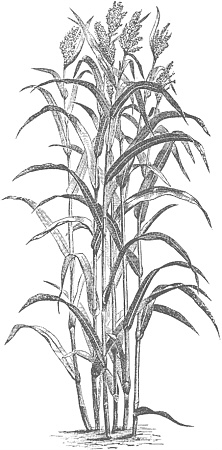
Sorghum's range of genetic diversity is truly amazing. Some types look so abnormal that until recently they were classified as separate species. However, all of them cross readily with one another, all have a chromosome complement of 2n = 20, and all are recognized today as variants of the same plant, Sorghum bicolor.1
Many of the unusual types are promising resources in their own right. Some have properties and uses quite unexpected of a cereal. A few hold out the possibility of producing far better grains than those of today's major sorghums. Others could provide entirely new types of sorghum foods. Yet others can yield feed, forage, fertilizer, fiber, fuel, sugar, and raw materials for factories of many kinds. In this array of plant types, the vast potential of this remarkable species can be seen. Examples of promising, but little-known, food types are discussed below.
POPPING SORGHUMS
In parts of Africa and Asia, sorghums that pop like popcorn can be found. These have seldom received much scientific or entrepreneurial recognition. There is probably, however, a huge latent market for them. They make tasty foods, and they may have worldwide promise. Popping boosts the flavor of sorghum, and it is energy efficient and nutritionally desirable. (Compared with boiling, for instance, popping is so rapid that it takes little fuel and it denatures or hydrolyzes the proteins and vitamins only slightly.)
Popped sorghum is already a favorite in central India, and it is starting to find favor in several other countries as well. In India, people
sprinkle a handful of dry grain onto a bed of hot sand or a hot sheet of metal. The popped kernels are brushed off as they form. Most are consumed by school children as a snack. They may be balled with crude sugar (jaggery). They may also be pounded into a nutty-flavored flour, which is typically mixed with milk and sugar, buttermilk, salt, or chilies.
A world collection of sorghums is maintained at ICRISAT. Of 3,682 accessions tested, 36 have shown good popping qualities. Most originated in India. These could be the starting point for breeding popping sorghums on a scientific basis. Indeed, they could create a new and very tasty food that could quickly establish itself in most of the 30 or more nations that grow sorghum as a staple—not to mention in at least that many more nations that now look on sorghum as "barely fit for cattle."2
As with popcorn, the best popping types usually have small grains with a dense, "glassy" (corneous) endosperm that traps steam until the pressure builds to explosive levels.
VEGETABLE SORGHUMS
In certain countries, sorghum is eaten like sweet corn. The whole seedhead (panicle) is harvested while the grain is still soft (dough stage). It is roasted over open coals, and the soft, sweet seeds make a very pleasant food. These strains are found notably in Maharashtra, India. Like sweet corn, they have sugary endosperms containing 30 percent glycogen as well as grains that shrivel when dry. They are a treat for anyone.
This unique method turns sorghum into a vegetable crop—more like broccoli than like barley. It has so far received little or no serious study from scientists, but it could be a powerful way to capitalize on the plant's ability to produce food in sites where most crops fail. The types that perform this way should be collected, compared, and cultivated in trials. The traditional processes by which they are used should be analyzed, as should the nutritional value. Seedheads in the dough stage may have a better-than-expected food value.
VITAMIN-A SORGHUM
In some developing countries a lack of vitamin A in the daily diet blinds many children. However, certain sorghums with yellow grains
may solve the problem, at least among sorghum-eating societies. The color comes from xanthophyll and from the carotene pigments that are vitamin-A precursors. People eating them have a better-than-normal production of vitamin A.
Yellow sorghums are especially well known in Nigeria but probably can be found elsewhere, too. The carotene levels are typically only a fraction of those normally found in yellow maize. However, because of poverty or locality, sorghum eaters often have no chance to vary their diets. Yellow varieties may be the most practical way to protect their eyesight.
TANNIN-FREE SORGHUMS
Some sorghum types contain invidious ingredients that "lock up" protein and starch so that a person's body cannot fully get at them. Traditionally, these ingredients have been called "tannins," although strictly speaking, this is not an exact term.3
Many sorghums, especially those now grown in East Africa, are high in tannins. To a large extent they have been deliberately selected because birds hardly touch them (see Appendix A). These birds include the quelea—a small, rather nondescript weaverbird that has replaced the locust as the most serious pest of small-grain crops in parts of Africa. This voracious seed-eater may well be the most abundant bird species on earth, and its importance as a pest has increased in recent years despite all the control operations that have been mounted against it.4
Today, people can eat the dark-seeded sorghums only if the tannins are first removed. There are two approaches for getting around this. One is to use the seeds in processes that neutralize tannins—making beer or fermenting the grain with wood ash are examples.5 The second relies on the fact that the tannins are located primarily in the grain's outer layer. Milling this off makes the rest of the grain edible. This is not easy to do, however, and the seemingly endless task of pounding seeds with heavy poles causes untold hours of daily drudgery throughout most of rural Africa. Indeed, it is one of the fundamental barriers to the wider use of this crop (see Appendix B).
Overcoming the tannin problem would open new possibilities for
sorghum as a world food grain. Research in the 1980s has demonstrated that the genes controlling tannin production can be reduced through crossbreeding. Tannins can be eliminated or at least reduced to negligible quantities. White-seeded, tannin-free types are known and are particularly promising for the future.
BIRD-RESISTANT SORGHUMS
Removing tannins makes sorghum a far better food for humans, but in parts of Africa, unfortunately, it would seem also to be good for the birds. However, some white-seeded types that are both tannin free and shunned by birds are already available.
Two sorghums that are bird resistant and free of tannin were identified in 1989.6 These two genotypes (Ark 1097 and a Brazilian hybrid) were assayed and found to contain absolutely no tannin throughout the whole time their seeds were developing. In addition, both showed good bird resistance in trials in Indiana, USA. In Puerto Rico, where bird pressure is greater, each was damaged, but only in one of two replications; in the other, it remained untouched. All in all, these white-seeded, tannin-free genotypes appear to be slightly less bird resistant than the standard, strongly resistant, high-tannin types. Nonetheless, the level of resistance was enough that these sorghums can be very useful in areas where bird damage is normally severe.
The nutritional quality of these two is not yet fully determined, but all indications are that both are fully comparable to the low-tannin (bird-susceptible) sorghums. In a feeding trial, for example, laboratory rats grew much faster and showed more efficient feed utilization than the (high-tannin, bird-resistant) control. Remarkably, they were even better than the low-tannin types. Indeed, there were no apparent nutritional problems associated with consuming the grain.
Trials of these sorghums are under way in Kenya.
QUICK-COOKING SORGHUMS
The starches in the grains of most sorghums have gelatinization temperatures around 70°C. They must reach that temperature to become cooked and edible. However, research has shown that some sorghums have starches whose gelatinization temperature is only about 55°C. This can reduce the cooking time required. These sorghums have waxy kernels (endosperm) rather than hard vitreous ones. Thus,
they cannot always be used in the normal manner. Nonetheless, there is a good possibility that they will make nontraditional quick-cooking products that will appeal to many.
These unusual types are found especially in East Asia. The starch in their grains is entirely amylopectin, rather than amylose and other normal forms.
AROMATIC SORGHUMS
Some sorghums in Sri Lanka and northeastern India are said to have the aroma of basmati, the fragrant rice preferred by millions of Asians. Although bland-tasting rice has dominated international markets, the basmati type has always been tropical Asia's favorite, and it is now increasingly sold worldwide (even in the United States) as a high-priced specialty. The discovery of sorghum counterparts opens up similar opportunities. They, too, might become specialty foods of high value. Also, they might help boost the acceptance of sorghum—normally the blandest of grains—even where it is a staple.
All in all, flavorful types like these present good opportunities for improving markets and increasing consumption, not to mention boosting the returns to farmers.
QUALITY-PROTEIN SORGHUMS
Deep in the misty green valleys of Ethiopia's highlands is hiding a unique sorghum that, in both nutrition and palatability, far surpasses the thousands of types found elsewhere.
Ethiopians call these types "milk in my mouth" (wetet begunche) and "honey squirts out of it" (marchuke). To anyone who has tasted normal, bland, sorghum flour, the names alone indicate something special. Both varieties produce somewhat lower yields than normal but everyone likes to eat them. The taste of roasted marchuke, for instance, has been likened to that of roasted chestnuts. People gather the grains, roast them over a fire, and pop them down like peanuts. Both are often used to enhance the flavor of local dishes made from regular sorghums. The taste comes from the reducing sugars that caramelize as they are roasted.
Until 1973 these two varieties were restricted to a tiny upland area of north-central Ethiopia. The growers hid them in the middle of their sorghum fields (mainly so the landlords wouldn't find out and raise the rents based on the extra income from these elite types). In 1973, however, researchers analyzing different sorghums for their food value
stumbled onto them.7 Of 9,000 varieties tested, these two were unique. They contained 30 percent more protein, but more important, their protein had about twice the normal level of lysine, an amino acid critical to nutritional quality.
This finding is significant because the more than 500 million people for whom sorghum is the main source of sustenance are relying on a food that is not great, nutritionally speaking. Its protein content is modest (averaging about 9 percent), and its protein quality is among the lowest of any cereal—mainly owing to its dismal lysine level.
In the years since 1973, neither of the two quality-protein sorghums has fulfilled its promise. There are several reasons for this. Both types produce floury grains with small and soft endosperms, a feature that makes them more susceptible to birds, fungi, and insects. More important, however, soft grains are not favored for traditional purposes. Upon pounding or milling in a machine, they form a paste rather than a flour. Also, there is not much endosperm there to make a flour from in the first place.
This fundamental problem with grain type is a big barrier: either a laborious breeding program is needed to transform the grains into the hard-endosperm form8 or people must use the soft form in foods differing from their normal grain-sorghum fare.
A promising immediate use of these remarkable varieties is as feed. Animals are less fussy than humans, and lysine-rich feeds, which are particularly necessary for pigs, are critically short in many places. Fish meal and soybean meal (the main lysine sources for livestock) are often unavailable or too expensive, especially in remote Third World areas. High-lysine sorghum with its inbuilt robustness and drought tolerance could well become a vital feedstuff for northern China; large, dry areas of the Soviet Union; much of the Middle East; the semiarid zones of India and Pakistan; substantial portions of Mexico; and other places that are dry, salty, and lacking in lysine-rich feeds.
Moreover, the single gene responsible for the high lysine may be invaluable for boosting the quality of conventional sorghums. Researchers at several research facilities are trying to transfer this gene. They hope to enhance the nutritional value of normal sorghums without affecting the grain structure or other important traits.
SORGHOS
Sorghum and sugarcane are fairly closely related, and certain sorghums (often termed "sorghos") have stems that are just as rich in
|
The Super Sorghum of the Sudan Although it is perhaps the most important grain in Africa, sorghum still has tremendous untapped potential. Many remarkable types are yet to be discovered by science, as the following example shows. When word leaked out in 1984 that a disastrous famine was impending in Dafur and Kordofan, the horror that swept the world energized many people into action. No one took a more original approach than the organizers of ''Band Aid," a project in which rock and roll stars staged a free concert for worldwide television. The donations from dozens of countries then went to help those stricken provinces of the Sudan. Part ended up in a far-sighted study of sorghum. With Band Aid funding, David Harper, Omar Salih, and Abdelazim Nour visited 150 villages in the drought-devastated area, checking on the people's welfare and gathering samples of the local crops—especially those that had best survived the drought. A sorghum variety called "Karamaka" proved to be truly remarkable. For one thing, Karamaka had a protein that was unusually nutritious. It had more than the normal amount of protein but, more importantly, its protein had about twice the nutritional value of other sorghum proteins. Its lysine content (3.4 percent) was 62 percent above normal, and the other essential amino acids were not diminished to any significant extent. As a result, Karamaka protein had a chemical score of 62 rather than the 30-40 figure of regular sorghum protein. Its nutritional value was therefore almost two-thirds that of milk protein, the usual standard of protein perfection. For another, Karamaka grain possessed an unusual combination of carbohydrates, containing less starch and much more sugar than normal. Indeed, the total sugars in the grain amounted to 35 percent. The individual sugars were composed of both sucrose and reducing sugars, but the sucrose level alone was approximately twice normal. The ultimate star of the Band Aid concerts may be this drought-tolerant crop, whose palatability and protein might lead sorghum into a new era of significance for feeding the world at large. Karamaka not only foiled the famine, it proved a nutritional gem, on a par with the best quality cereals.* |
sugar as sugarcane's. These sweet sorghums are surprisingly poorly known compared with sugarcane and sugar beet. Nonetheless, they have a big potential in a world increasingly in need of renewable sources of energy (see next chapter). Also, as food crops they deserve more attention.
Unlike sugarcane, sweet sorghum grows in a wide geographic range. It can be considered "the sugarcane of the drier and temperate zones." It has a production capacity equal or superior to sugarcane's, at least when considered on a monthly basis.
Two types have been developed by breeders:
-
Syrup sorghums, which contain enough fructose to prevent crystallization; and
-
Sugar sorghums, which contain mostly sucrose and crystallize readily.
RICELIKE SORGHUMS
The shallu type of sorghum (the margaritifera subrace of the guinea race) has small, white, vitreous seeds, which are boiled like rice.9 As of today, little or nothing is known about this interesting form of sorghum, but it could have a good future and deserves exploratory research.
TRANSPLANT SORGHUMS10
In certain regions of semiarid West Africa, various special sorghums are transplanted like rice. These are used particularly by peoples living in the bend of the Niger, including parts of Cameroon, Chad, Niger, and Nigeria.
Little is known about these. However, transplant sorghums are produced in the dry season—growing and maturing entirely on subsoil moisture. They are ephemerals that must get through their life cycle before the soil dries back to powder or pavement. They must mature quickly to survive. Some can produce a crop in 90 days—merely half the time the rainfed types require in that area.
One fascinating example has been identified at Gao in northern Mali. It is cultivated by ex-nomad Tuareg, and yields more than 1,000 kg per hectare on residual moisture from the runoff water remaining after light rains.11 Two others are masakwa and moskwaris.
These dry-season sorghums have special traits including:
-
Large, hard, high-quality grains, locally considered special delicacies;
-
Heat tolerance at the seedling stage;
-
Drought resistance or tolerance; and
-
Ability to flourish on residual moisture in heavy clay soil.
Transplant sorghums grow only on clay pans with a high water table. They are often cultivated on vertisols, which are among the world's most refractory and frustrating soils to deal with. Wet, these soils become soft, sticky, and plastic; dry, they become iron hard and deeply cracked. At least once a year they go from one extreme to the other. Few plants can withstand the trauma. For all that, however, vertisols have high fertility. Any crop that can perform in such recalcitrant sites could be a boon to several parts of the tropics that are now languishing for lack of a crop suited to vertisols. Transplant sorghums therefore deserve international attention.
The yields from transplant sorghums depend on the amount of moisture stored in the soil, but are relatively high by the standards of the very difficult sites where they are grown. (Their high yields probably result from the fertility of the swamp clays.)
These transplant types apparently are uniquely adapted to the unusual conditions of inundated clays and perhaps are unsuited to dry or infertile soils.
FREE-THRESHING SORGHUMS
Despite general opinion, some sorghums thresh easily. The heads hold onto the seeds during the harvest as well as during drying and transport; however, the farmer can separate the seeds from the heads with hardly more effort than is used to thresh wheat or rice. For example, the sorghum variety called "Rio" has an "easy thresh" characteristic. Another variety line being used currently in U.S. breeding programs is SC599. It is both free threshing and tolerant of drought in the post-flowering stage.12
The term "free threshing" is also applied to the involute glumes of some West African guinea sorghums. Their seeds are completely exposed and they easily thresh completely free of the glumes.
|
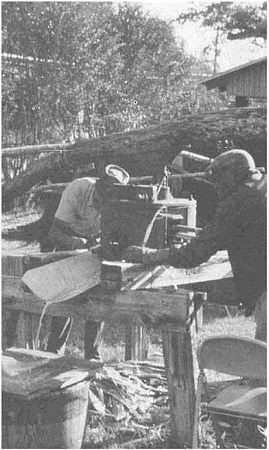
Sorghum Comes to America Sorghum has been in the United States for a long time. The grain types commonly called "guinea corn" and "chicken corn" were introduced from West Africa at least two centuries ago. Both were probably packed as provisions on slave ships and reached the New World only inadvertently. Americans first grew these grains along the Atlantic coast but later took the crop westward where it found a better home in the drier regions. Later-arriving grain types include some that were deliberately introduced by seedsmen and scientists towards the end of the 1800s. By 1900, sorghum grain was well established in the southern Great Plains and in California; indeed, it had become an important resource in areas too hot and too droughty for maize (see page 160). The sorghum known as "broomcorn" was supposedly first cultivated in the United States by Benjamin Franklin. He is said to have started the industry in 1797 with seeds he picked off an imported broom. The stiff bristles that rise from the plant's flower head have produced many of America's brooms and brushes ever since (see page 209). By the 1930s, for example, American farmers were cultivating 160,000 hectares of broomcorn. The so-called "sweet" sorghum, with its sugar-filled stems, reached these shores in about the mid-1800s. It landed first in the Southern states—supposedly introduced as a cheap treat for slaves. Within 50 years, however, it had spread so widely and become so popular that sorghum was known as ''the sugar of the South." Each locality in the Southern farm belt had a mill to crush sorghum stalks. The resulting syrup, a little thinner than molasses, became the sweetener of the region: poured over pancakes, added to cakes, and everywhere employed in candies and preserves. Today, this golden liquid is not so well known, but many rural communities still hold annual sorghum festivals and crude old mills squeeze out an estimated 120 million liters of syrup each year. Sudangrass was introduced in 1909. This form of "grass sorghum" is now used for animal feed throughout the nation's warmer regions (see page 211). |
|
Sorghum in China In China, sorghum is amazingly popular. In the northern parts, especially, millions of villagers consider kaoliang a part of everyday living. Many employ every part of the plant—from top to bottom. Grains. For millions of Chinese, sorghum is a daily staple. The grains are eaten at perhaps every meal. Certain types of waxy grains are baked into cakes. Other types are fermented and distilled into strong spirits. To connoisseurs, China's best liquors are those made from sorghum—the famous (or infamous) maotai and samshu, for example. Certain grains, particularly the darker-colored varieties, are vital for feeding horses, donkeys, and other livestock. Seedheads. In some varieties, the empty heads are converted into brooms and brushes. Stalks. Sweet-stemmed sorghums are a major source of sugar to millions of Chinese. Some are also harvested green and cut up like sugarcane batons. (Children are particularly fond of chewing on them.) The stalks of more woody varieties are bound together, cemented with clay, and used for partitions and walls and fences. The supple green stems are split and woven into baskets and fine matting. The strong dry stems are widely used in making handicrafts and many types of small household utensils, including plate-holders and pot covers. Sorghum stalk is, moreover, a favorite for making children's toys and many types of containers. (Sorghum cages are used to keep pet birds and insects, for example.) In some places, woody sorghum stems are the basic fuel for cooking. Leaves. In parts of China the leaves are frequently removed before the grain harvest and used for fodder. They are vital for raising cattle, goats, horses, and rabbits. Roots. The roots are grubbed out and dried for fuel. All this is not just an ancient traditional practice. In modern China, hybrid sorghum has played a vital role in increasing food supplies. These days, sorghum is a high-yield crop—both for grains and for stems. In sum, the experiences in China demonstrate just how universally valuable this African grain can become. |
CHINESE SORGHUMS
All sorghums are indigenous to Africa, but the plant reached Asia so long ago that thousands of cultivars developed there. Indeed, the Far East devotes a huge area to this crop. It is especially surprising to find this tropical crop in chilly climes as far north as Manchuria. Throughout northern China, however, farmers rely on sorghum not only to keep themselves fed when wheat fails but also for many of their household needs (see box opposite). Even when wheat is available, the people often eat a cheap and rather coarse sorghum bread. Special steamed breads are made from sorghum in some areas. Sorghum also goes into noodles, porridges, and boiled (ricelike) dishes. A significant proportion is used to produce strong liquor. Sorghum is also eaten, although to a lesser extent, in Japan.
China contains a cornucopia of types that are unknown elsewhere. The Flora of Chinese Sorghum Varieties, for example, lists more than 1,000 local varieties: 980 for food, 50 for industrial use, and 14 for sugar. All of these should be rapidly gathered and tested elsewhere in the world. They undoubtedly offer many genetic benefits. Eventually, they and their genes may become critical to human survival in many areas outside China.
Reuniting the genes of these Far Eastern types with those of Africa after a 2,000-year separation could be an extremely powerful genetic intervention leading to a whole new line of "Chinaf" hybrids.
COLD-TOLERANT SORGHUM
When CIMMYT first tried growing sorghum in the Valley of Mexico, the crop would not set seed. The problem was low temperatures at night. The researchers then got some high-elevation sorghums from Ethiopia, made crosses, and now have types adapted for that upland valley with its chilly nights. Cold tolerance is available in the germplasm but has not yet been fully exploited.
HEAT-SHOCK SORGHUM
Sorghum thrives under searing conditions. Air temperatures of 45°C leave it unfazed. Even at that temperature, young plants have been known to grow 20 percent in height in a single day. But sorghum has its limits. When soil temperatures climb above 50°C, its seedlings struggle to survive. Such temperatures are not uncommon at the soil surface in semiarid areas, and the consequences for sorghum farmers are often dire, sometimes even disastrous.
Now, researchers at ICRISAT have found that certain sorghums withstand heat better than others. No one has paid attention to this quality before, and almost all of today's sorghums produce seedlings susceptible to burning hot soils.
By sowing seed in hot fields and seeing which survived, lines with heat-tolerant seedlings have been identified. But such tests are expensive, time-consuming, and subject to hosts of uncertainties. Now, researchers at the Welsh Plant Breeding Station13 are devising mass-screening techniques that can be performed in a laboratory and with much more precision.
One Welsh technique, already adopted by ICRISAT, monitors the amount of protein synthesized by the germinating seeds. In hot surroundings, the most heat-tolerant types produce the most protein. However, this test is expensive and cumbersome to run on thousands of samples, so now the Welsh researchers are developing a second-generation test based on "heat-shock proteins" (HSPs).
All living things make HSPs when exposed to temperatures above their normal range. They do it quickly—often within 15 minutes. Once made, the proteins—which are similar in plants, animals, and bacteria—seem to confer an ability to prosper in the heat. Their exact function is still uncertain, but they may protect the organism's proteins, messenger RNA, or membranes from damage. One HSP—often called HSP70 because it has a relative molecular mass of 70,000—may ensure that heat-damaged proteins regain their proper shape so that they can continue working as enzymes, muscles, and antibodies.
The researchers now have found that briefly exposing a sorghum seedling to temperatures between 40°C and 45°C induces it to produce a characteristic set of HSPs. From then on, the plant can tolerate temperatures of 50°C or even more without suffering damage.
Although all sorghum seedlings make HSPs, those that tolerate heat best make HSPs much sooner after germinating. Speed is the secret of their success.
This response is being studied in the hope of finding an easily recognizable feature that can identify heat tolerance without torturing the seeds. If successful, this will open the way to mass screening so that farmers in the hottest areas will no longer face the heartbreak of seeing their fields wilting in the blazing sun before the plants have even grown more than knee-high.
Another approach is to find the regions of the chromosomes which are important for survival of heat stress. DNA probes are being used as markers by the researchers in Wales to follow regions of the chromosomes linked to the thermotolerance trait from parents to subsequent generations.
TROPICAL SORGHUMS
A few sorghums grow in the humid lowland tropics. Although they are not well studied, the guineense and other related groups (roxburghii and conspicuum, for example) could be useful as genetic sources for improvement of genotypes for humid tropical regions.
WILD SORGHUMS
At least two undomesticated forms show extremely robust growth under the harshest of conditions.
One, the verticiliflorum form (previously known as Sorghum verticiliflorum) is a wild grass, distributed from the Sudan to South Africa. It is often found in damp areas (along stream banks and irrigation ditches, for example) or as a weed in cultivated fields. On the other hand, it is also a dominant climax species in many of the area's dry, tall-grass savannas. It is thought to be a progenitor of the modern bicolor, caudatum, and kafir races of sorghum but has seldom been considered a genetic resource in its own right. Nonetheless, in research now under way, this plant is proving extremely useful in forage-breeding programs. No doubt it contains disease-fighting abilities and pest resistances that could be deployed to help sorghum.
The other (previously known as Sorghum arundinaceum) is a wild and weedy rainforest species that flourishes in Africa's wet tropics, where today's domesticated sorghums are poorly adapted. Although very little information is available, it appears to be more photosynthetically efficient at low light intensities than cultivated sorghum.14 As of now it is not cultivated, but it may have a future as a domesticated crop for humid and forested regions. It is a robust species, very common along roadsides, vacant lots in cities, and other "wastelands."
WIDE CROSSES
Sorghum can be crossed with grasses genetically distant enough to be classified in different genera or even in different subfamilies. It is certainly highly speculative to think that these crosses might have any economic merit, but exploratory research efforts seem well worth undertaking. A few possibilities are discussed here.
Crosses between sorghum and certain types of Chrysopogon, Vetiveria, and Parasorghum are possible. Crosses with Pseudosorghum
|
Will Sorghum Go High-Tech? Since the 1960s, when tissue culture was developed for replicating plants such as potato and tobacco on a mass scale, researchers have attempted to apply this technique to grasses. For a decade or two it was considered an impossibility, but recent discoveries have changed that, and a few grasses can now be propagated this way. In 1989, for example, Indian researchers L. George and S. Eapen of the Bhaba Atomic Research Centre in Bombay reported replicating certain cultivars of sorghum using tissue culture. This development could open a new world of understanding and advancement for the world's fifth major food crop.* The Indian scientists studied seven sorghum cultivars (C021, C022, C023, C024, TNS24, TNS25, and TNS30). Cells from the stems refused to form callus (the first step in the tissue-culture process), but cells from the base of the leaves formed callus in every case. Also, cells from the seeds of one cultivar (C023) formed callus in about one-third of the samples. When the researchers added hormones to induce the undifferentiated callus tissues to produce plantlets, all the callus samples formed roots. However, only three of the cultivars (C023, TNS24, and TNS25) formed shoots, and then only in 10-15 percent of the samples. This discovery, while limited, is one upon which further refinements and higher efficiencies can be built. With tissue culture, powerful techniques such as restriction fragmentation length polymorphisms (RFLPs, see page 34), the production of pathogen-free plants, and challenge breeding can be applied to understanding and improving this crop, which is so vital to Africa and the world. Techniques like these could open possibilities even for far-out developments such as introducing into sorghum the gluten genes from wheat, adding virus-resistance genes, making somaclonal selections, and sorting through the crop's massive genetic diversity in ways that are far more efficient than any imaginable even just a few years ago. |
and selected members of the Bothriochloeae and the Sorgheae also seem possible. Crosses between subtribes might be possible if certain members of Chrysopogon and Capillipedium were used.15
American researchers are currently performing experimental crosses between sorghum and johnsongrass (Sorghum halepense), a perennial forage that has already introgressed with sorghum to become a pernicious weed in the United States. It is hoped the grain qualities of sorghum can be united with the rhizomatous habit of johnsongrass to create a powerful new perennial cereal.
Recently, crosses between sorghum itself and its sudangrass subspecies (Sorghum bicolor subspecies sudanense) have produced hybrid grasses with outstanding vigor. Their productivity and performance have boosted even more the acreage and overall yield of forage sorghum, a main part of the livestock-grazing industries of America and Argentina. They also promise to help in reclaiming salt-affected lands (see next chapter).
It has long been known that sorghum can be crossed with sugarcane. Chinese researchers now report developing a hybrid between the two that contains more sugar and produces more stalk and grain than either parent.16 Research along these lines might turn up fascinating new resources of undreamed-of usefulness.