
Violence and Intentional Injuries: Criminal Justice and Public Health Perspectives on an Urgent National Problem
Mark H. Moore Deborah Prothrow-Stith Bernard Guyer and Howard Spivak
INTRODUCTION
When one person attacks another, and an injury occurs, most citizens view the event as a violent crime. By definition, such crimes inflict physical harms on the victims. But the important social consequences of these attacks go well beyond the immediate trauma to the victim (see Cohen et al., in this volume). The victim suffers psychological damage as well as physical pain. Others in the society may be frightened by the experience of the victim and become concerned that they, too, are vulnerable.
In the past (and, for the most part, still) society has relied primarily on the criminal justice system to respond to such incidents. Part of the reason is a deeply held conviction that such attacks are morally wrong as well as simply harmful, and that those who commit such offenses should be held accountable for their misconduct. In this view, justice demands judgment and punishment for such acts, regardless of the practical effect of punishment on future criminal offending (von Hirsch, 1976).
Yet reliance on the criminal justice system also reflects a practical
Mark Moore is at the Kennedy School of Government, Harvard University; Deborah Prothrow-Stith and Howard Spivak are at the School of Public Health, Harvard University; and Bernard Guyer is at the Department of Maternal and Child Health, Johns Hopkins University.
Recently, however, interpersonal attacks have drawn the attention of public health practitioners as well as criminal justice officials (e.g., see Mercy and O'Carroll, 1988; Health Resources and Services Administration, 1986). The reason is that injuries have emerged as one of the principal threats to the nation's health. Moreover, "intentional injuries" (which includes suicides, homicides, and aggravated assaults among other violent episodes) account for a surprisingly large proportion of all injuries (National Committee for Injury Prevention and Control, 1989).
Indeed, among all citizens in the United States, suicides and homicides have become the eleventh leading cause of death. Among citizens aged 15-34, homicides are now the third leading cause of death, and among black males aged 15-34, homicide is now the leading cause of death. Moreover, because intentional injuries occur disproportionately among younger Americans, they account for an unexpectedly large proportion of the total "years of potential life lost" in the United States each year (National Committee for Injury Prevention and Control, 1989:192). Behind the statistics on homicides and suicides lies a much larger but less well documented number of less severe injuries that degrade the health of the victims and make substantial claims on the nation's hard-pressed public hospitals (see Cohen et al., in this volume).
In short, the health consequences of criminal violence are now large enough to show up as a significant component of the nation's overall health problems. Criminal violence exacts a particularly large toll from the health of those who are least advantaged in the society. These simple facts make violence a concern for the public health community as well as the criminal justice community.
However, there are other reasons for the public health community to become involved in efforts to control criminal violence. Over the years, in controlling epidemics of cholera, smallpox, and polio, and in dealing with other kinds of injuries such as auto fatalities, public health researchers and practitioners have developed analytical and operational approaches that can usefully complement the approaches now being taken by criminal justice researchers and practitioners to control criminal violence (for a discussion of these techniques and approaches, see Friedman, 1987).
For example, public health researchers and practitioners have traditionally concentrated on preventing incidents of violence rather than dealing with their consequences after the fact. That is arguably a useful complement to the criminal justice system's predominantly reactive stance.
Similarly, the public health community uses epidemiological techniques to identify specific "risk factors" that increase the risk of violence and then designs programs to eliminate or reduce their effect. This is a useful complement to the criminal justice system's primary focus on the deterrence and control of criminal offenders.
Public health researchers and practitioners are instinctively multidisciplinary and seek to mobilize many different individuals, community groups, and agencies in making an attack on criminal violence. This seems a useful complement to the apparent tendency of the criminal justice system to focus principally on its own internal operations.
In short, criminal violence may usefully be seen as a public health problem not only because the consequences of violent attacks constitute an important health problem, but also because public health methods may expand society's current capacities for dealing with the problem. That is the primary purpose of this paper: to show how the criminal justice system's traditional vision and response to violent crime may be usefully complemented by the public health community's approach to the problem.
Of course, their approaches overlap to a great degree, and these overlaps reveal their commitment to a common cause. However, the areas in which their approaches diverge are both interesting and valuable. Although the differences in approach sometimes create tensions between the two communities, it is precisely in these areas that the most useful contributions are made by the public health community, for it is in those areas that the public health community usefully challenges criminal justice thinking and operationally complements criminal justice capabilities.
Indeed, by synthesizing the somewhat different images of the problem and the solution, society may develop a more accurate and complete picture of violence and be able to fashion a more effective response than is now possible. That, at least, is what our experience of working together has taught us.
In searching for a synthetic view of violence and an effective public response, we have found it useful to compare and contrast public health and criminal justice system approaches to violence in five separate domains:
-
how each community tends to see and define the problem of violence;
-
the analytic frameworks (and implicit assumptions about causation) that each community uses to identify the principal causes;
-
the entering presumptions and biases, rooted in long professional experience and empirical research, that guide each community's search for effective methods of intervention;
-
the principal political and organizational resources that each community can mobilize to deal with the problem; and finally
-
the principal values that each community believes are the most important ones to be advanced and protected in organizing society's response to violence.
From this dialogue, we have seen the possibility of a new conception of violence, and new opportunities for society to deal effectively with it. No doubt, as the dialogue between these two communities develops, we will all learn a great deal more about how to synthesize the complementary views. Still, even at this preliminary stage, a new view of violence and its effective control is worth sketching.
-
Violent crime is a threat to the nation's health and safety as well as to public security. It must be seen and responded to as both a health problem and a crime problem.
-
In reckoning the social consequences of criminal attacks resulting in injury, it is important to consider not only the magnitude of the physical injury, but also the psychological damage and fear that are stimulated by criminal violence.
-
It is important to see that violence that occurs in the context of ongoing relationships (such as within families) is particularly damaging and particularly hard for the criminal justice program to identify or manage. Consequently, it is in these areas that the public health and medical communities have particularly important roles to play.
-
Acts of violence that will be properly labeled by society as criminal attacks emerge from a complex causal system that includes, but is not limited to, the intentions of the offender. Other factors influencing individual incidents and aggregate levels of violence include such things as (a) the availability and use of criminogenic commodities (such as guns, drugs, and alcohol); (b) the density of criminogenic situations (such as ongoing unresolved
-
conflicts); and (c) a variety of cultural factors that help to justify and encourage violence.
-
It follows as a corollary, then, that there are important opportunities to prevent criminal violence beyond those ordinarily relied on by the criminal justice system. Although it is both just and effective to hold offenders accountable for violent attacks, it may also be possible to prevent such attacks or reduce their seriousness by altering the "risk factors" that lead to criminal violence.
-
In all likelihood, society's main line of attack on criminal violence will continue to come from the nation's criminal justice agencies. They are the ones who have the troops and the most familiar paradigm for defining and attacking the problem. Their efforts can usefully be aided, however, by a partnership with those in public health.
-
Members of the public health community can enhance the significance of the criminal justice community's efforts by emphasizing that health, as well as security, is at stake. They can widen the perspective of the criminal justice community about the possible causes of violence and the possible lines of attack, and they can mobilize support for antiviolence programs from constituencies that have not previously been involved in dealing with these issues.
How we arrived at such views is described below. Before presenting our analysis, however, two cautionary notes are in order.
First, the analysis uses the literary device of referring to perspectives and views held by the "criminal justice community" and the "public health community." We understand that individuals in these ''communities" do not all hold the same views. Indeed, we suspect that the differences in perspective within these communities are at least as great as those between the two communities. Even worse, our analysis attributes to these communities particular views that are sharply drawn caricatures of the actual views held by members of the communities. Thus, we risk alienating the two communities from our discussion and from one another.
Despite the hazards, we think this device serves our purposes. We believe that each community does have a somewhat distinctive approach and that there is much to be learned by taking the particular gestalts seriously, developing their implications, and seeing how each complements the other. In short, we think that at this stage of intellectual development, we are likely to learn
more of we work to sharpen the distinctive perspectives and see how they challenge one another, than if we blur the distinctions in easy agreements.
Second, we make a sharp distinction between the views of the "criminal justice practitioner community" and the "criminal justice research community." One could make a similar distinction for the public health community, but making this distinction seems less important for the latter. The intellectual and professional gulf between practitioners and researchers seems much less in the public health community than in the criminal justice community. In fact, in important respects, the criminal justice research community has more in common with the public health research and practitioner community than with the criminal justice practitioner community. What unites them is their common interest and commitment to "behavioral sciences."
Most criminal justice practitioners are not "behavioral scientists." They have not been trained to be social science researchers or social engineers. They mete out justice through the operations of the criminal justice system. They work in close contact with the moral sentiments of local communities and with individual cases rather than aggregate phenomena. Their home disciplines are philosophy, law, and the professional arts of police and correctional administration rather than social science.
In making these distinctions, we are not apologizing for the views of criminal justice practitioners. We think that their value commitments and perspectives are important to honor in dealing with criminal violence. Justice is a value society means to preserve in making its response to violence. We simply note that on some important questions (such as the causes of violence or effective methods of prevention), the view of criminal justice practitioners will be somewhat different from those of both criminal justice researchers, on the one hand, and the public health community, on the other.
Third, throughout the discussion, we distinguish between "traditional" and "stereotypical" criminal justice responses to violent crime, and emerging criminal justice practices which have a more preventive focus. We do so to acknowledge that criminal justice practitioners have long been interested in prevention, and that the interest in new forms of prevention is now increasing; but also to recognize that the principal focus of the criminal justice system has been on arresting and punishing offenders once a crime has occurred.
"CRIMINAL VIOLENCE" AND "INTENTIONAL INJURIES": DIFFERENT PERCEPTIONS OF A SHARED CONCERN
In today's hard-pressed communities, a world of trouble awaits attention by public agencies. Precious few resources are available to respond. Thus, common sense dictates that public agencies stay focused on the problems that are central to their responsibilities; they should not stray into new areas. Thus, it is natural to think that criminal justice agencies should remain focused on crime control, and public health agencies on traditional public health concerns.
THE COMMON CONCERN: INTERPERSONAL VIOLENCE
What this view overlooks, however, is that public health and criminal justice agencies share a common concern that is at the center of their respective responsibilities. Each community, consistent with its own responsibilities, must be intensely concerned about attacks by one citizen against another that produce physical injury (i.e., homicides, rapes, and aggravated assaults).
The criminal justice community must be concerned because these crimes are among the most important for the criminal justice system to address. The public health community must be concerned about such events because they damage the health status of the least advantaged in society.
SIGNIFICANT ASPECTS OF INTERPERSONAL VIOLENCE
Both public health and criminal justice communities initially concern themselves with the nature and magnitude of the injury that results from interpersonal violence. To a degree, the criminal justice community is directed to consider the magnitude of the injury by the provisions of criminal law. If a person dies as a result of a criminal attack, the offender is charged with homicide, murder, or manslaughter rather than aggravated assault.
Where the differences are not reflected in law, they are often reflected in formal administrative rules. New sentencing guidelines, for example, typically require judges to consider the extent of injury to the victims in deciding on an appropriate sentence for a given criminal offense (Nagel, 1990).
Where the differences are not reflected in either law or formal procedures, they nonetheless appear in informal practices. Prosecutors, for example, commonly rely on the "seven-stitch rule" to
distinguish aggravated assault from simple assault; unless an injury requires more than seven stitches to close, the incident will be treated as a simple rather than an aggravated assault. In these respects, then, the criminal justice community gives attention to the seriousness of the injury to the victim.
Criminal Justice Emphasis on the Offender
What is surprising to public health professionals, however, is how quickly the attention of criminal justice officials shifts from the victim and his injuries, on the one hand, to concerns about the offender, on the other. Once some injury has been established, and some indication of who the offender is has been obtained, criminal justice officials begin to lose interest in the victim as a victim. The victim remains important as a witness in a criminal proceeding against the offender, but the victim as someone who needs continuing attention recedes into the background (for criminal justice neglect of victims, see President's Task Force on Victims of Crime, 1982; Bureau of Justice Statistics, 1983).
Instead, attention begins to focus on the offender. To criminal justice officials, the seriousness of an offense is judged as much on characteristics of the offender as injury to the victim. Indeed, in judging the seriousness of an incident of interpersonal violence, three characteristics of the offender become important. The first is the intention of the offender in the instant case: the more deliberate and calculating the attack, the more serious is the crime.
The second is the "dangerousness" of the conduct that led to the injury. For example, the criminal justice system often treats mere threats from gun-toting offenders more seriously than actual injuries inflicted by offenders armed only with their fists. This reflects the view that the exact nature of the injury emerging from a criminal attack is largely fortuitous. What is morally relevant (and therefore important to criminal prosecution) is the dangerousness of the conduct of the offender.
The third is the offender's prior record of offending. This is important for two slightly different reasons. On the one hand, the offender's prior record is often seen as predictive of future acts of violence: the more violence there is in an offender's past and the more serious it is, the greater is the risk for the future (Chaiken and Chaiken, 1982; Greenwood, 1982).
On the other, the past record of offending is often used by investigators (if not judges and juries) to gauge the intention of
the offender in the instant case: the longer the prior record, the less likely it seems that an offense was committed by accident (Moore, 1986).
These concerns about the offender's intent, conduct, and prior record all distract attention from the victim and the magnitude of the injury inflicted. Yet, from the perspective of criminal justice officials, these issues are essential. What is important for the cause of justice is being clear about the heinousness of the crime: care for the victim is less significant.
Public Health Focus on the Victim
In contrast, in looking at instances of criminal violence, members of the public health community initially focused more attention on the victim. Because they were interested in health consequences, it mattered whether a knife wound was deeply penetrating and life threatening, or bloody but easily sutured. They were also concerned with what continuing kinds of care would be required to restore the victim to his or her previous condition. They were particularly concerned, if the victimization involved an on-going relationship, how that continuing relationship would be structured in the future. In short, their medical orientation and preventive concerns kept their attention focused on the victim rather than the offender.
More recently, however, the public health community has begun to share the criminal justice system's interest in the offender. The difference in its orientation to the offender is that, like many in the criminal justice community, it is interested in preventing the emergence of people who are prone to committing violence.
PROBLEMS RELATED TO INTERPERSONAL VIOLENCE
The differing concerns of the two communities also affect each community's perception of what other specific problems are related to the core problem of interpersonal violence, and are therefore part of its responsibilities, and which are not.
At the outset, it seems that there ought to be a fairly clear line of demarcation between the concerns of the two communities. The criminal justice community's terrain is marked out by behavior that is proscribed by criminal statutes. Presumably, the gradients of concern are determined by the seriousness of the criminal offense. The public health community's terrain is marked out by
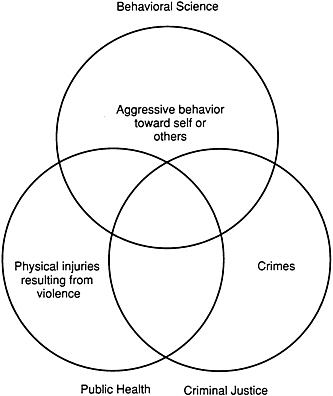
FIGURE 1 Overlapping perspectives of public health, criminal justice, and behavioral science.
SOURCE: Adapted from National Committee for Injury Prevention and Control (1989:193).
the occurrence of physical trauma. The gradients of concern involve the seriousness of the injury.
As noted above, these concerns produce an important overlap, but it also seems true that clear boundaries exist. Figure 1 makes this point graphically by using a Venn diagram to show the areas of overlap and of difference.
In practice, however, the clear distinctions begin to blur. The sharp edges that define the concerns of one community begin to shade into the concerns of the other. As a result, the area of overlap becomes much larger. The reasons for this are the following.
Violence and "Nonviolent" Crimes
The concerns of the criminal justice community embrace all criminal offenses—including those offenses that do not necessarily
produce violence or physical trauma. Burglary, larceny from the person, even robberies that do not result in injury are all considered important crimes (Bureau of Justice Statistics, 1984). Yet they do not involve violence—at least not in the narrow, literal sense.
Public health practitioners, focused principally on controlling violence, might be less interested in these offenses. They might be concerned about them as citizens, but as public health practitioners they might feel less responsible for them because the offenses do not involve injuries per se. In trying to account for the criminal justice community's interests in such offenses, they might reasonably assume that its concern reflected a concern for protecting property rather than life and safety.
To a degree, the public health practitioner would be correct in these views. The criminal justice community is concerned about protecting property as well as protecting life and safety. Yet, in an important sense, the criminal justice community's concerns about these "property offenses" can be seen as deriving from concerns about controlling violence and its consequences as much as from concerns about protecting property. To the extent that this is true, the public health community might be interested in these offenses as well as the more obviously violent crimes.
One reason is that any crime, including property crime, has the potential for creating real violence. The clearest example occurs when household burglaries become robberies because an unanticipated homeowner appears on the scene.
However, this example illustrates a far broader point. When any crime is committed, a potential for violence is created simply because a powerful social norm has been violated. Those who have been wronged (and all their family, friends, and relatives) feel angry and vengeful. In defending themselves against attack, in apprehending the offender, sometimes even in punishing the offender, real violence may occur (Cook, 1981). The point is simply that it is not just literal violence that begets violence, it is the more metaphorical violence to the social order that begets violence. In the language of public health, any crime—even property crimes—can be a risk factor for violence.
The second reason for the criminal justice community's concern about property offenses is closely related to the first. Precisely because crimes have the potential to escalate into violence, even nonviolent crimes produce a significant amount of fear. Fear is an important problem in its own right. Indeed, it is one of the most important reasons to be concerned about violent crime (Moore
and Trojanowicz, 1988; Garofalo, 1981). It impoverishes the daily lives of those who are afraid, and it forces people to stay indoors and to buy locks or guns, with disastrous consequences for the quality of urban life. Because fear is one of the most important reasons to be concerned about violent crime, if nonviolent crimes also produce fear, they too must be taken seriously.
The third reason for the criminal justice community's concern about offenses that do not produce injury or trauma is not only that they produce fear, but also that some of the worst and most degrading offenses work by sustaining a palpable threat of violence over a victim without ever having to produce much injury. This would be true, for example, of the worst cases of domestic violence in which the explicit violence of the husband against the wife is dwarfed in psychological and social significance by the daily threat of violence. It is also true in cases of extortion by organized crime groups or youth gangs (Moore, 1983a).
The point of these observations is simply this: although the domain of the criminal justice community reaches to all crimes, not just those that result in injury, its concerns about nonviolent crimes is broader than a concern for protecting property. Indeed, one might say that its interests in protecting property derive at least partly from concerns about reducing the potential for violence in the society. One can also say that its concerns about nonviolent offenses are fueled by the same concerns that tend to make violent crime its dominant concern: namely, the fact that fear and continuing threats of violence impoverish individual and community lives.
In this sense, the only feature that explicitly violent crimes bring to social concerns about crime in general is physical trauma. That, of course, is significant—particularly because it exacerbates all the less tangible costs of crime as well. Yet it is hardly all that is important about violent crime. Insofar as other crimes share some of these other aspects, they too become important.
Violence and Relationships
As noted above, what initially draws the public health community to the problem of intentional violence is concern for the health consequences of criminal violence. Once in this domain, however, the concerns of the public health community naturally widen to include other offenses (National Committee for Injury Prevention and Control, 1989:192-267). In discussing "intentional injuries," the public health community includes sexual offenses
(ranging from rape to child molestation) in which no blood is shed, no bones are broken, and no bruises are left, but intrusive physical contact occurs. It also include offenses such as domestic assault, and child abuse and neglect, where injury is often present and is part of what attracts its attention but is not the most important aspect of the offense.
By including such offenses in its conception of "intentional injury," the public health community departs from a strict preoccupation with injury understood as physical harm and enters a realm in which injury acquires a more metaphorical meaning. There is nothing wrong with this, of course. The interesting question is what particular concerns prompt the public health community's interest in these crimes and what the criminal justice community might learn from these perspectives.
It is not too difficult to understand why the public health community might give special emphasis to sexual offenses. To a degree, one can accommodate this interest within the framework of concern for physical trauma by noting that all sexual offenses involve intrusive physical contact, and most involve other injuries such as abrasions, cuts, and bruises. Still, it is clear that this is not the most important reason that sexual offenses become prominent.
The principal reason the public health community accords sexual offenses such high priority, of course, is that the victim suffers important psychological as well as physical damage (Estrich, 1987). The public health community's concern for the victim and his or her treatment naturally emphasizes this fact. The lesson to be learned is that psychological "injury" must be added to physical injury as an (implicit) public health concern.
Similarly, one can accommodate the interest in domestic violence, child abuse, and child neglect by pointing toward the physical injuries that usually attend such situations. Again, however, that does not account for the importance attached to such offenses. What seem to make these offenses important in the minds of the public health community are five particular features.
First, as in the case of sexual offenses, there is a strong presumption that psychological trauma is an important feature of these cases. In psychological terms, there can be nothing worse than being locked in an ongoing relationship that is supposed to be supportive and nurturing, and instead turns out to be abusive.
Second, in many of these cases there is a pattern of repeat victimization that not only contributes to the psychological damage,
but also demands, in the minds of public health practitioners, a preventive response (Police Foundation, 1976).
Third, because many of the cases involve families and violence within families seems to affect the development of the children, the public health community has a special interest in trying to end that violence. Only in this way can a continuing cycle of violence be broken (Dubowitz, 1987).
Fourth, these cases often involve other contributing causes such as alcohol or drug abuse, acute stress, or other forms of mental illness. Consequently, a therapeutic response often seems more promising at the outset than a criminal justice system response.
Fifth, and perhaps most importantly, these cases of psychological and physical violence are more visible to health agencies than to criminal justice agencies. The reasons are that the victims of such offenses are less likely to call criminal justice agencies than they are to appear in doctors' offices and emergency rooms. Moreover, the difficulties of investigating and prosecuting these cases have discouraged many criminal justice officials from doing so even when they have learned of the crimes (Berk et al., 1980, 1982).
Thus, in thinking about "intentional violence" the public health community tends to look beyond those offenses that cause physical injury and to look at offenses that cause psychological injury as well. Also, members of the public health community have special concerns for offenses that occur in the context of ongoing relationships—perhaps because it is in that context that the threat of violence or neglect carries a particularly heavy psychological burden, and perhaps because there is a special opportunity for the public health community to make a contribution to these neglected offenses.
TOWARD A SYNTHESIS
Viewed from both criminal justice and public health perspectives then, a much wider and deeper understanding can be obtained of what the society has at stake in instances of criminal violence and of what constitutes events that are worth calling by that name. The criminal justice community's vision of violent crimes committed by dangerous offenders is enlarged by concern for the victim, for psychological damage, and for the special problems created by crimes that occur in the context of ongoing relationships. The public health community's vision is enlarged by
seeing that property crimes may be risk factors for violence and that fear is an important consequence of many crimes that do not produce physical trauma.
This synthesis suggests that there are even wider domains of common concerns and, therefore, greater opportunities and need for cooperation than first appeared. If the criminal justice system is influenced by the public health community to increase its commitment to healing victims as well as catching offenders, its concerns become far wider. It can no longer view victims merely as witnesses in the drama of criminal prosecution. They become important objects of care and attention. Such a task is particularly challenging in the context of domestic assaults, child abuse, and other crimes involving close relations because the victim of such offenses is not only the person who was injured but the ongoing relationship. The challenging question before the criminal justice system, then, is how it might best respond in these situations to restore the family unit to proper, or at least tolerable, functioning.
Similarly, if the public health community is influenced by the criminal justice community's views of crime, then its own interests in crime will be significantly widened. Its concerns should not be limited only to criminal violence or to physical attacks. The concern for psychological damage, for fear, for the escalation of violence that might come from lesser property offenses widens the domain of public health concerns substantially. Indeed, from this perspective, its concerns might even extend to burglaries and larcenies.
It also becomes apparent that the two communities cannot simply carve up the domain of interpersonal violence into separate spheres and then operate independently within them. The criminal justice community owes a great deal to the public health community for spotting the problem of crimes in ongoing relationships, and for being an important part of the response to such offenses, but it cannot simply cede these cases to the public health or social service community. There are important issues of justice that must be addressed in the handling of these cases, as well as important issues of care and protection of victims.
Similarly, the criminal justice community cannot respond to criminal victimization all by itself: it has always relied on the medical community to suture the victim's wounds, and might now see a greater opportunity and obligation to join with the public health, medical, and psychological communities to heal the psychological damage associated with crime, as well as to
relieve the suffering in intimate relationships that have gone astray. In sum, to deal effectively with what can now be seen as a far more complex problem of violence and its consequences, there is urgent need for an effective collaboration between the two communities.
''INTENTIONS OF OFFENDERS" AND "RISK FACTORS FOR VIOLENCE": TWO DIFFERENT CAUSAL PARADIGMS
Just as the criminal justice and public health communities have usefully contrasting views on what is socially significant about interpersonal violence, they also have similar but slightly different ideas about where to look for the causes of the problem. The differences are sharper, here, between the views of criminal justice practitioners on the one hand, and those of criminal justice researchers and the public health community on the other, for it is in this domain that the precepts of "behavioral science" make their strongest claims.
CRIMINAL JUSTICE: THE INTENTIONS OF OFFENDERS
As a philosophical matter, the criminal justice system is committed to finding the primary cause of violent offending in the intentions, motivations, and characters of offenders. Unless there is some such intent, any violence that occurs would be treated as accidental rather than criminal (Kaplan and Skolnick, 1982:1-10). Yet many criminal justice practitioners go beyond this philosophical position and see the intentions of individuals as the primary empirical cause of violence. In this view, if the offenders had not gotten angry, or if they were not so vicious and ruthless, the violent offenses would not have occurred.
If the motivations of offenders are the key causal factors shaping incidents of violence, then an effective policy response would be one that focused on this particular variable. In particular, it would be effective to threaten potential offenders with punishment for violent acts (Zimring and Hawkins, 1973; Blumstein et al., 1978).
It would also be effective if those who had shown themselves willing to commit violent offenses—despite the moral injunctions against such conduct—were kept in circumstances where they could not commit such acts again (Greenwood, 1982).
In addition, it would be effective to try to alter offenders'
attitudes and feelings so that they would be less inclined to commit violent acts in the future (Sechrest et al., 1979). Thus, the criminal justice practitioner community's commitment to deterrence, incapacitation, and rehabilitation flows quite naturally from its focus on the intentions of individual offenders as the principal cause of violent acts.
PUBLIC HEALTH: AN EPIDEMIOLOGIC APPROACH
The public health community acknowledges the role of the offender's intentions in causing violence: that is implicit in categorizing assaultive behavior as "intentional injuries." However, the public health community tends to see criminal violence as emerging from a more complex causal system than one dominated solely by the settled intentions of the offender.
According to one commentator, the public health approach to violence prevention and control is based on four interrelated steps:
-
public health surveillance (i.e., the development and refinement of data systems for the ongoing and systematic collection, analysis, interpretation, and dissemination of health data);
-
risk group identification (i.e., the identification of persons at greatest risk of disease or injury and of the places, times, and other circumstances associated with increased risk);
-
risk factor exploration (i.e. the analytic exploration of potentially causative risk factors for disease or death, as suggested by the nature of the high-risk population and other research); and
-
program implementation/evaluation (i.e., the design, implementation, and evaluation of preventive interventions based on our understanding of the population at risk and the risk factors for the outcome of interest) (Mercy and O'Carroll, 1988:290).
These are the basic empirical methods of action-oriented epidemiologists intent on locating and reducing threats to health. The approach is not focused on individual offenses for which offenders must be found and held accountable; rather, it seeks to identify aggregate patterns of violence that might be alleviated by preventive social interventions.
Perhaps the most difficult step in this analytic process is the third: the search for potentially modifiable risk factors for intentional injuries. To aid in this search, public health researchers have developed additional analytic frameworks—based originally on an understanding of how infectious diseases develop, spread, and produce disastrous consequences for afflicted populations, and
then adapted for use in analyzing the occurrence of injuries. William Haddon, for example, has proposed the matrix presented in Table 1 as a way of identifying potentially modifiable risk factors in the control of automobile accidents (National Committee for Injury Prevention and Control, 1989:8). It is useful to see how these methods might be applied to the analysis of interpersonal violence.
Vectors, Hosts, and Environments
The public health epidemiological analysis begins by relying on the categories that proved so useful to the public health community in controlling infectious diseases: the concepts of vector, host, and environment. In the context of infectious diseases, the vector is some combination of the disease-generating organism and the mechanism for spreading it: for example, a mosquito carrying malaria, a can of tuna fish infected with botulism, or a needle carrying a residue of AIDS-infected blood.
The host is the organism in which the vector finds a home where it can both stay alive as a threat to others and express itself as a disease-producing agent. In the analysis of human problems, the relevant host is most often a human: for example, a worker digging the Panama Canal around the turn of the century, a family of picnickers on Long Island, or a hospital orderly in New York City.
The environment is meant to be a catchall concept that identifies all those things that might influence either (1) the number and distribution of vectors (such as the number and character of swamps in Panama, quality control mechanisms in tuna-packing plants, or needle disposal procedures in hospitals); or (2) the ways in which vectors come in contact with hosts and spread from one host to another (e.g., the sleeping arrangements of workers on the Panama Canal, the enthusiasm for tuna fish sandwiches among the picnicking family, or needle recovery, sharing, and disposal practices around hospitals in New York City).
These concepts and models are most applicable when one is discussing diseases that are literally rather than metaphorically infectious (e.g., where there are biological mechanisms that pass the illness from one person to another in well-understood, quite predictable ways. For such diseases, it is literally as well as metaphorically true that each person is an important part of the environment of every other person, and that each person's conduct may affect the chances of another person becoming infected.
TABLE 1 The Haddon Matrix
|
Phase |
Host (human) |
Vector (vehicle) |
Physical Environment |
Socioeconomic Environment |
|
Precrash |
Driver vision; Alcohol intoxication; Experience and judgment; Amount of travel |
Brakes, tires; Center of gravity; Jackknife tendency; Speed of travel; Ease of control; Load characteristics |
Visibility of hazards; Road curvature and gradient; Surface coefficient of friction; Divided highways, one-way streets; Intersections, access control; Signalization |
Attitudes about alcohol; Laws related to impaired driving; Speed limits; Support for injury prevention efforts |
|
Crash |
Safety belt use; Osteoporosis |
Speed capability; Vehicle size; Automatic restraints; Placement, hardness, and sharpness of contact surfaces; Load containment |
Recovery areas; Guard rails; Characteristics of fixed objects; Median barriers; Roadside embankments; Speed limits |
Attitudes about safety belt use; Laws about safety belt use; Enforcement of child safety seat laws; Motorcycle helmet use laws |
|
Postcrash |
Age; Physical condition |
Fuel system integrity |
Emergency communication systems; Distance to and quality of emergency medical services; Rehabilitation |
Support for trauma care systems; Training of EMS personnel |
|
SOURCE: National Committee for Injury Prevention and Control (1989:193). |
||||
How such concepts work in a less biological, more mechanical or sociological world is less clear. There is nothing that necessarily links one traffic accident to the likelihood of another occurring, one suicide to another, or one violent crime to another. Yet there often seems to be some structure in the occurrence of accidents, suicides, and violence, and that structure often gives clues about causation, even if it does not point directly to spiraling interactions between densely connected hosts and agents.
Moreover, the epidemiological concept does serve to remind us that we are all part of one another's environment and that each individual's actions affect the conditions under which other individuals live—not only materially and concretely, but also normatively and emotionally. Expectations about the proper way to behave and express anger are nurtured and sustained in social encounters, not just in the individual psyche. Emotions such as anger and despair may be "contagious" in the sense that one person's mood affects another, even if there is no biological mechanism that controls the spread of moods (Coleman, 1987).
One could conceive of an epidemiology of violence based not only on empirical methods that discover a structure in an observed pattern of events, but based also on a causal theory. In approaches to injury prevention, for example, safety engineers and public health analysts gradually came to conceive of mechanical energy as the vector of injury. Epidemiologists of violence might begin to conceive of feelings of anger, frustration, or aggression as the relevant agent for interpersonal violence. The size and distribution of this vector might be influenced by biological factors such as genes or situational factors such as frustrating conflicts, fear, or despair. The hosts would be ordinary people who were buffeted by these feelings. Such an analysis would not necessarily deal with instrumental violence (which would presumably follow quite different epidemiological rules), but it might allow us to begin to understand expressive violence in quite different ways than we now do.
Timing of Interventions
Those who studied injury as a public health problem eventually had to go beyond the categories of vector, host, and environment to fully understand the opportunities to intervene to reduce risk factors. They added the idea of timing—pre-, mid-, and post-crash—to this conception (National Committee for Injury Prevention and Control, 1989:8).
That extension seems appropriate in the case of interpersonal violence as well. One can imagine violence prevention measures that (1) operate prior to the incident of violence (e.g., reducing the availability of guns and alcohol, reducing the number of festering disputes in a community, or reducing the number of people who are inclined to use violence as an expressive act); (2) those that affect the violent encounter as it develops (e.g., training the police who respond to emergency calls with techniques that minimize the use of force and also minimize the chance of escalation); and (3) measures that operate to minimize the damage associated with violence (e.g., effective emergency medical response and trauma centers, or victim assistance programs designed to minimize the psychological harm to victims). Table 2 presents an initial attempt to use something like the Haddon matrix for the identification of risk factors and interventions that might be successful in reducing risk factors for violence.
TABLE 2 Haddon Matrix for Violence Prevention
|
Phase |
Host (potential attackers) |
Vector (means and occasions creating opportunities) |
Environment (factors influencing hosts and vectors) |
|
Previolence |
Teaching parenting skills; Teach nonviolent dispute resolving skills; Early psychiatric interventions |
Regulating weapons; Regulating alcohol; Regulating public drunkenness |
Reducing poverty; Reducing disorder of cities; Using architecture to promote a sense of community |
|
During violent event |
Using nonviolent means of control; Teaching self-defense to victims |
Eliminating weapons at scene; Mobilizing police |
Police rapid response; Community alertness |
|
After violent event |
Emergency medical treatment; Incapacitation; Rehabilitation |
Marital counseling in domestic assault; Family therapy in child abuse and neglect |
Providing jobs and counseling to poor families; Adding street lighting in dangerous areas |
|
SOURCE: National Committee for Injury Prevention and Control (1989:8). |
|||
Complex Sociological Prevention
Other public health analysts, finding these traditional public health models somewhat confining, have shifted to a "behavioral science model" that orients them to "complex social prevention" (Rosenberg et al., 1986:1399-1400). The justification for adopting this perspective has been stated by Rosenberg et al. (1986:1400):
Public health as a discipline must progress beyond the traditional disease model, with its natural tendency to overemphasize the importance of purely medical problems and interventions. … A new terminology must be developed for prevention that allows for multiple levels of determination on the one hand, and, on the other, for interventions that are designed less to change individual behavior or the natural environment than to change social behavior and the social environment.
Although this approach is promising, it looks less like traditional epidemiology and more like sociological and criminological methods for understanding the causes of violence. Indeed, in this conception, the public health analysis of violence comes into almost perfect alignment with criminological and sociological views of the problem.
SOCIOLOGICAL AND CRIMINOLOGICAL ANALYSES
Although it is true that the criminal justice practitioner community tends to focus on the character and intention of offenders as the most important causal factor determining incidents of victimization, the criminal justice research community has long engaged in analyses of interpersonal violence, and criminal offending more generally, that are in the same spirit as epidemiological analyses carried out by the public health community. It is also true that, increasingly, criminal justice practitioners are joining them in this understanding of criminal violence and are basing their operational strategies on these conceptions.
Spatial and Temporal Location of Crimes
For example, for several decades, sociologists and criminologists have done empirical work disclosing patterns in the incidence of criminal victimization and criminal offending (e.g., see Wolfgang, 1958a; Hindelang et al., 1978). Over the last decades, that work has been enormously advantaged by the routine use of victimization surveys (Dodge, 1981). Such work will also be advanced
by recent changes in the Unified Crime Reporting system that will add important information about the nature of crimes reported to police, including data on the magnitude of the losses to victims and the relationship of the offender to the victim (Bureau of Justice Statistics and Federal Bureau of Investigation, 1985; Police Executive Research Forum, no date a,b).
Potentially even more significant is that criminal justice practitioners are increasingly becoming epidemiologists of criminal offending. With the help of researchers, criminal justice practitioners have learned that a relatively small number of offenders account for a large fraction of serious crimes (Petersilia, 1980; Peterson et al., 1981). Such offenders become the focus of particularly intensive criminal justice system attention (Moore et al., 1984). Similarly, researchers and the police have discovered that criminal incidents tend to cluster in particular locations (defined in terms of both time and space). These so-called hot spots can also become the focus of intensive police "problem-solving" efforts (Sherman et al., 1989).
Situational Analyses of Crime Causation
Both researchers and practitioners in the criminal justice community have also become increasingly interested in the idea that many crimes emerge not simply from the evil intentions of criminal offenders but also from criminogenic features of particular situations (Clarke, 1990). An unlighted area around a subway stop may be an invitation for street muggings. A crowded street filled with bank teller machines and check cashing establishments may create favorable conditions for larcenies from the person, and some of these, when resisted, may produce violence. A teenage discotheque next to school may invite vandalism, and next to a housing project for the elderly may produce the kinds of small scuffles and unpleasant encounters that provoke fear among the elderly.
Such situations "produce" crimes not only because they attract people who were already motivated to offend, but also because they facilitate the commission of crimes by people who were less committed to criminal offending. Although as a legal matter this does not reduce the culpability of the offender, as a scientific matter, one can see the situation as a contributing cause and therefore as a potential target for intervention.
Criminogenic Commodities
Not only does the criminal justice community now view situations as criminogenic, it also views some commodities as criminogenic (Moore, 1983b). At the top of everyone's list are drugs such as heroin, cocaine, and alcohol. These drugs are linked to violent criminal offending in many different ways (Fagan, 1990). They seem to have an immediate impact on the level and seriousness of offending. They may also have a developmental influence on young children, drawing them into patterns of criminal offending that they would have resisted had they not become involved with drugs but that, once established, seem to hold firm against other more positive social influences (Jessor and Jessor, 1977).
These drugs, particularly alcohol, seem to affect victims as well as offenders and to increase their vulnerability to attack (Wolfgang, 1958b). They also seem to create situations—in barrooms, crack dens, and shooting galleries—in which disputes can erupt and violence can occur (Police Executive Research Forum, no date a). Of course, the economics of producing, selling, and distributing illegal but desired commodities also creates circumstances in which instrumental and expressive violence are both quite common (Goldstein, 1985).
Guns, too, are increasingly seen as criminogenic and violence inducing (Cook, 1983). There is an argument that guns in the hands of police officers or law-abiding citizens might reduce crime and violence through general deterrence of criminal offenders (Kleck, 1988). However, what is more readily observable is that the widespread availability of guns seems to facilitate violence by providing criminal offenders with a plentiful supply of weaponry; by making it possible for spouses, in a moment of fury, to become murderesses; or by providing the means for protective homeowners to transform a household burglary into a violent encounter in which the burglar, the homeowner, or the late arriving teenage son, mistakenly taken for a burglar, might be killed (Cook, 1983).
In addition, there are some who claim that the widespread availability of weapons, and their use in recreational activities such as hunting and target shooting, tend to sustain a general cultural milieu in which violence is celebrated and therefore facilitated (Kleck, 1984). Without passing judgment on the accuracy of these views, it is sufficient to note that there are many in the criminal justice research and practitioner community who are now prepared to see guns as criminogenic in that they contribute to the overall levels and consequences of crime. To a degree, this
view is already enshrined in the nation's sentencing policies, criminal codes, and regulatory regimes—all of which take a dim view of both inappropriate uses of weapons and their possession by those who have been convicted of crimes.
Thus, both the criminal justice and the public health communities see a large number of factors determining the incidence, nature, and outcomes of violence. Both have perspectives on the causes of violence that are to some degree unique and complementary, and to some degree similar and overlapping.
DANGEROUS OFFENDERS AS VECTORS OF VIOLENCE
It is also interesting to note that one could easily incorporate the criminal justice community's focus on criminal offenders in the analytic framework of the public health community. Indeed, one could easily see recidivist, violent offenders as the "vectors" in epidemics of violence. Certainly, that would be appropriate if one discovered a pattern of serial killing in an overall pattern of homicide, or the telltale modus operandi of a well-known sex offender in an overall pattern of rapes, or even the skilled work of a "firebug" in a pattern of arsons. One might then think about how to alter the environment so that fewer such vectors were produced, how to find ways to keep the vectors under control, or how to prepare "hosts" so that they would be less vulnerable to attack.
To some degree, however, the criminal justice framework resists seeing things in these social engineering terms. Instead, it keeps focusing our attention on the individual moral agency of those who commit acts of violence. In some odd ways, this makes the criminal justice approach seem more "human" and less "clinical" than the public health perspective. It focuses our attention on individual crimes, committed by real people with better or worse reasons for their violence. There are both a moral indignation and a hope for redemption in the criminal justice perspective that are to some degree missing, or at least underemphasized, in the more scientific and clinical public health perspective.
WIDENING CRIMINAL JUSTICE CONCEPTIONS OF CAUSATION
On the other hand, the important contribution that public health makes to criminal justice perceptions of violence is to encourage the criminal justice practitioner community to continue the current trends that shift attention away from an exclusive
focus on offenders. This is important both for operational reasons (because it opens new lines of attack on the problem) and for common moral intuitions of justice (because it changes our common understandings of who and what are to blamed for criminal offending). The idea that there may be accidental criminal offenses emerging from unfortunate circumstances tempers our general hostility to those that we like to hold responsible for criminal offending. Nobody is suggesting that criminal culpability be eliminated, but it might be reexamined in light of the more sophisticated understanding of the complex ways in which criminal violence can come about. That, too, counts as an important contribution.
FAVORED POLICY APPROACHES
Because the criminal justice and public health communities tend to view the causal factors affecting levels of interpersonal violence in somewhat different terms, it is not surprising that their initial assumptions about effective interventions would also differ. Because the criminal justice community sees the motivation of criminal offenders as the principal cause of interpersonal violence, it tends to focus on things that might be done to change the calculations or motivations of such offenders. Because the public health community sees interpersonal violence as emerging from a far broader and more complex process, its approaches are less exclusively focused on the motivations of offenders.
However, there is more to their differences in perceptions about effective interventions than simply a different conception of causal processes. Different professional commitments, competences, and experiences lead them to prefer some interventions over others. For example, the values and traditions of the law infuse the perceptions of the criminal justice community in a much more powerful way than they do the public health community. On the other hand, the values and traditions of science exercise a far greater influence on the public health community than on the criminal justice practitioner community.
REACTIVE VERSUS PREVENTIVE APPROACHES
From the perspective of the public health community, the principal difference between the public health approach to violence and that of the criminal justice system is that the latter's approach is reactive whereas the former's approach is preventive. The criminal
justice system seems to wait until an act of violence occurs before taking action. In contrast, the public health community seeks to find ways to intervene before a crime occurs and to prevent it from happening.
To help identify preventive opportunities, the public health community distinguishes among three kinds of prevention.1
Primary prevention seeks to prevent the occurrence of disease or injury entirely—usually by operating on broad features of the environment that make the disease or injury possible or likely to occur. Secondary prevention is concerned with identifying cases or situations relatively early in some developmental process that will lead to serious problems if not altered. Tertiary prevention intervenes after an illness has been contracted or an injury inflicted, and seeks to minimize the long-term disastrous consequences of the disease or injury.
The public health community is strongly oriented to prevention. Indeed, it is one of the important ways in which the public health community distinguishes itself from the medical community, which has as its primary focus the care of those who have become seriously ill or badly injured. Among these forms of preventive interventions, the public health community has a particularly strong commitment to primary prevention. It is in this domain that its epidemiological methods seem to have the greatest purchase. It is here too that imaginative and bold policy interventions seem to have the greatest potential for making a difference in the overall level of disease and injury, and have in fact produced significant reductions in illness and injury (Institute of Medicine, 1988).
For these reasons, it is natural for the public health community to see the commitment to prevention in general, and to primary prevention in particular, as something valuable that it brings to any new policy area. Moreover, this seems a particularly important contribution to the criminal justice approach to violence because the latter, like the medical approach to illness and injury, seems to be locked primarily in the domain of tertiary prevention. Like the medical community, the criminal justice practitioner community is focused far too much on individual cases and not on the broader, structural factors that might be shaping the observed pattern of individual cases. Moreover, everything that the criminal justice system does—respond to calls for service, arrest offenders, and so on—seems to occur after rather than before an intentional injury has occurred. In these respects, the criminal justice system seems to be limited to tertiary , or at best secondary, rather than primary prevention.
PREVENTIVE APPROACHES IN CRIMINAL JUSTICE
To a degree, the criminal justice community would share the public health community's view. Its members, too, think of themselves as largely case oriented and reactive. However, many in the criminal justice community (particularly those attuned to concerns about the intrusiveness of the law and the criminal justice system into ordinary social life) would see these features as virtues rather than limitations of the system. In their view, the reactive, case-oriented focus is a key device for limiting the reach of the criminal justice system. With this approach, the criminal justice system intervenes only in situations where it is urgent that it do so. This preserves vast areas of social life from the intrusions of law, public policy, and the utilitarian concerns of the state. A more proactive or preventive approach—one that is justified in terms of its practical impact on levels of violence—threatens a more intrusive, overreaching, and less principled public intervention in the lives of people than now exists.
Deterrence, Incapacitation, and Rehabilitation
There is an equally important strain in criminal justice thought that sees criminal justice interventions as serving utilitarian purposes. Its proponents believe that the way they handle individual cases has effects on levels of criminal violence that stretch out over time and across social life. In short, the criminal justice community—both practitioners and researchers—believes that the reactive, case-oriented approach also prevents crime.
The principal mechanisms are thought to be (1) general deterrence (i.e., the effect that comes from threatening everyone in the population with criminal prosecution if they violate laws); (2) specific deterrence (i.e., the effect on an individual criminal offender that comes from punishing him for a specific offense); and (3) incapacitation (i.e., the effect that comes from holding an offender under such close supervision that it is impossible for him to commit offenses). In addition, the criminal justice community seeks to use periods of confinement for rehabilitative activities such as psychological counseling, drug treatment, vocational skills training, and general education to reduce the likelihood that offenders will continue to commit crimes in the future (Sechrest et al., 1979).
Although all of these mechanisms depend on some crimes being committed (because they are necessary to create the predicate for action), they are also believed to reduce or prevent crimes
in the future. Thus, the criminal justice community thinks of itself as having a preventive as well as a reactive focus.
Juvenile Delinquency Prevention
There is still more to the criminal justice community's preventive efforts. In the early decades of the twentieth century—the same period in which the public health community was gathering strength and making great contributions to the control of infectious diseases through improved municipal sanitation—an innovation in criminal justice institutions swept across the country. State after state authorized the creation of juvenile courts and juvenile justice systems to deal with the problem of crimes committed by children (Platt, 1969).
To a degree, this movement was animated by concerns for justice. It seemed wrong as a matter of principle to hold children accountable for criminal conduct to the same degree, and in the same way, as adults. Arguably, the criminal intent that was necessary to justify both punishment and the adversary process of a trial was less present in cases involving youthful offenders than in cases involving adults.
Yet there were also practical, utilitarian reasons to be interested in treating children differently. The emerging disciplines of sociology, psychology, and criminology focused society's attention on a variety of developmental factors that might influence a child's path toward a life of crime or honesty. Some commentators focused on factors within the child, whereas others emphasized the immediate social circumstances in which the child was being reared, and still others emphasized the broader social factors such as urbanization, poverty, and racial discrimination (Platt, 1969). What all agreed on, however, was that society might be able to prevent future crime by intervening earlier in the process of development that would otherwise produce determined criminal offenders. It was this mission that was given to the juvenile justice system, and it was this institution that carried the criminal justice system's principal secondary prevention effort for most of the twentieth century.
More recently, of course, debate over the propriety and effectiveness of the juvenile justice system has changed a great deal (Moore et al., 1987). The concern that inattentive parents and desperate communities might be producing determined criminal offenders has gradually been supplemented by the view that the juvenile justice system was itself criminogenic: that by overreaching
into conduct that was not in itself criminal and by taking children out of their communities, the juvenile justice system might be stigmatizing children and putting them in environments where it was easier for them to become committed to lives of crime and to learn the necessary skills (Sarri and Hasenfeld, 1976). Still more recently, advocates have sought to shift the focus of the juvenile justice system from its rehabilitative purposes to greater reliance on the mechanisms of deterrence and incapacitation to control juvenile crime, that is, to make the system resemble the adult system more closely than it now does (Springer, 1986).
The only point of reviewing this history is to illustrate the fact that the criminal justice community has had a long tradition of thinking about how to prevent crimes by intervening in the development of criminal offenders, and that this tradition has been located principally in debates about the proper jurisdiction and approaches of the juvenile justice system. In all likelihood, this tradition will continue as the criminal justice community ponders what to do with a juvenile justice system that has disappointed everyone, but still seems to be the only institution positioned to intervene forcefully in the development processes that surround children who commit crimes or are themselves the victims of crime (Moore et al., 1987). This position has assumed particular importance as it has become apparent that (1) there are some offenders who are particularly active and can be identified (imperfectly) at relatively early stages of development, and (2) the conditions under which children are now being raised are deteriorating badly.
Controlling Criminogenic Commodities
In recent years, the criminal justice community has also begun to be wooed away from its preoccupation with offenders and to examine other approaches to controlling criminal violence. One focus has been on ''criminogenic commodities" - including alcohol, drugs, and guns (Moore, 1983b). In public health language, the widespread availability of alcohol, drugs, and guns has been seen as an important risk factor for violence, and the criminal justice community has sought to establish laws, and enforce existing laws, to reduce the danger of these commodities.
Among these commodities, drugs have been the most consistently favored target of the criminal justice community. Indeed, it is the conviction that drugs are closely tied to criminal violence that has propelled drug control to the forefront of the nation's
and the criminal justice community's concerns—despite the fact that a plausible argument can be made that the observed connection between drugs and crime is produced as much by the policies designed to control drug use as by the physiological effects of drugs themselves, and that the drug most commonly associated with violence is alcohol (Chaiken and Chaiken, 1990; Fagan, 1990).
At any rate, seeing drugs as criminogenic has generated a major criminal justice effort to reduce levels of drug consumption through both supply reduction and demand reduction efforts (Office of National Drug Control Policy, 1989-1991). Supply reduction efforts include arrests of traffickers and street level dealers (Moore, 1990; Kleiman, 1990). Demand reduction efforts focus enforcement attention on users. Some police departments, despairing of the competence of educational institutions to communicate the proper message, have established their own efforts in schools to educate children about the use of drugs (Bureau of Justice Assistance, 1988; Kennedy School of Government, 1990).
This major effort to reduce drug use is thus not simply a moral crusade by the criminal justice community but also, in its eyes, a straightforward way of preventing criminal violence by controlling an important risk factor.
Since the repeal of Prohibition, alcohol has been less on the minds of the criminal justice community than drugs, but it has never been entirely absent. Studies of domestic assaults, assaults among strangers in public locations, and sexual assaults among intimates and acquaintances often reveal a disproportionate amount of drinking—by either the offender, the victim, or both (Fagan, 1990).
Thus, one might view drunkenness, and particularly public drunkenness, as criminogenic. Similarly, we know that excessive drinking figures prominently in highway fatalities (National Committee for Injury Prevention and Control, 1989:119-120).
What is interesting, however, is that the society has responded to these facts in quite different ways.
Over the last 20 years, the trend has been to "decriminalize" public drunkenness and to treat it as a medical problem. The intention was to discourage police from arresting people for public drunkenness and instead to transport or refer intoxicated people to medical services. What has actually occurred is that the police have simply stopped paying much attention to public drunkenness (Aaronson et al., 1982).
With respect to drunk driving, the trend over the last 10 years has been in exactly the opposite direction: society is increasingly treating drunk driving as a serious crime. It is stiffening the laws
against drunk driving and stepping up its enforcement efforts (Jacobs, 1988).
What the alcohol case illustrates is that the criminal justice community tends to become involved in major violence prevention efforts when there is statutory authority that either requires or allows it to do so. Because the repeal of Prohibition and the creation of state licensing authorities essentially removed the police from any responsibilities for policing the production, distribution, or sale of alcohol, the criminal justice community no longer plays much of a role in regulating the supply of alcohol. Because laws against public drunkenness were removed in the interests of both taking a more therapeutic approach to the problem and saving criminal justice resources for more serious crimes (many of which were at least partially caused by public drunkenness), the criminal justice community also abandoned that field. Because laws against drunk driving were strengthened, however, the criminal justice community was drawn into that important domain of injury and violence prevention.
The criminal justice community has only come lately to taking a strong position on guns. Of course, the criminal justice research community had long been interested in the criminogenic effects of widespread gun availability, and many had urged the passage of very restrictive laws regulating the supply, distribution, ownership, and use of guns, particularly handguns (Newton and Zimring, 1969). For reasons that are hard to understand, the criminal justice practitioner community did not, until recently, join the researchers in this crusade. Now, the law enforcement community has entered the fray on the side of more restrictive controls.
Nonetheless, it still seems unlikely that the nation will adopt bans on gun ownership or even bans on production. What does seem possible, however, is that there will be more restrictive controls over weapons that have few legitimate purposes (such as assault weapons or teflon-coated bullets) and over who may own such weapons and how they might be used. Insofar as the criminal justice community is focusing on policies to control the availability and use of weapons, it is engaged in an effort that the public health community would recognize as a classic strategy of secondary prevention.
Situational Approaches to Crime Control
In addition to a focus on criminogenic commodities, the criminal justice community has also begun to see the environment of cities
or certain situations as criminogenic, and it has sought to find ways of reducing these risk factors. There was a brief period, for example, when the field focused on the opportunities for controlling crime by altering physical living environments to make it easier for individuals to protect themselves and their property, to identify strangers, and generally to enhance a feeling of community responsibility (Newman, 1972; National Institute of Justice, 1980).
The more sustained trend, however, has been an interest in "situational approaches" to crime. The paradigm case has been domestic violence. It has long been known that repeat violence was common in these situations, and it has long been considered important to find improved methods for reducing the potential for violence in ongoing domestic disputes (Bard and Zacker, 1976). The first efforts in this domain were, once again, to decriminalize the offense and seek to deal with the problem through counseling (Bard, 1969). More recently, evidence has become available that arrests are more likely to reduce future attacks than either ignoring the offense or referral to counseling (Sherman and Berk, 1984). Those experiments are now being replicated with reputedly more equivocal results. The sad reality is that we do not yet know what an effective response to this paradigmatic criminogenic situation is.
More generally, the idea that situations might cause violence and that the best response is to find ways to make the situation less explosive, has recently found expression in the emergence of "problem solving" as a method in policing (Goldstein, 1990). This method encourages officers and police departments not to treat crime calls simply as incidents to be searched for violations of law, but instead to look behind the incident to determine what factors are causing the violence and to search for methods including, but not limited to, arrest of offenders for altering the situation so that it is less criminogenic. There are, by now, many individual examples of successes in problem solving, and the analytic methods and organizational arrangements necessary to support problem solving are becoming more refined, but there is not yet evidence indicating that this approach applied generally across a police department will have a substantial aggregate effect on levels of criminal violence (see Moore, 1992).
It is not strictly true, then, that the criminal justice system is uninterested in prevention. It is interested in preventing future crimes through the mechanisms of general and specific deterrence, incapacitation, and rehabilitation. It has developed an entire institution
whose purpose is to intervene in the processes of development that produce criminal offenders, and it has made occasional forays into efforts to prevent crime by resolving criminogenic situations and controlling the supply of criminogenic commodities.
PUBLIC HEALTH APPROACHES TO VIOLENCE PREVENTION
Still, however interested the criminal justice community might be in preventive efforts, its commitment to prevention is not quite like the commitment that the public health community brings. At best, prevention is an additional thought in criminal justice. In the public health community, prevention is everything. At best, the criminal justice community is involved in secondary prevention. The public health community starts with secondary prevention and then goes on to primary prevention.
Violence in the Context of Relations
Moreover, the criminal justice community must acknowledge the enormous contributions that the public health community has made to its efforts to understand and control certain kinds of crime. The latter has played a particularly important role, for example, in focusing attention on such offenses as domestic assault, child abuse and neglect, sexual assaults among intimates, and elder abuse (National Committee for Injury Prevention and Control, 1989:213-251). What is interesting about this list of crimes is that they all involve crimes among people who know one another or are locked in ongoing relationships. These crimes are often hidden to the criminal justice system precisely because they do not produce victims or witnesses who are willing to mobilize the police (Moore, 1983a). They become visible to the public health community because the victims show up in emergency rooms and medical offices. Thus, the public health community has made public a set of crimes that would have remained hidden, and has provided the criminal justice system with both the political support and the operational means to take action against such offenses.
The public health community has also played a particularly important role in identifying and publicizing the problem of child abuse and neglect. It was pediatricians in emergency rooms who encountered this hidden problem and exposed it to public view (Kempe et al., 1962). It was public health officials who saw a
large aggregate problem in individual clinical reports and put the issue forward as an important health problem. This problem is important not only because it is bad in itself, but also because being abused and neglected as a child is persuasively linked to future abuse and neglect of children, as well as to criminal offending (National Committee for Injury Prevention and Control, 1989:216). Like domestic violence and drunk driving, this problem is now going through a phase in which it is being "criminalized." Whether that is the most effective response is still to be learned.
Innovative Approaches to Youth Violence
In other domains such as youth and gang violence, the public health community has brought an innovative approach to dealing with the problem. In one of the most innovative experiments in controlling violence among teenagers, the Boston Violence Prevention Program seeks to use hospital emergency rooms as a point of contract for those who are involved in violence as victims or offenders, and to follow up those contacts with interventions designed to teach alternative methods for resolving disputes (Prothrow-Stith, 1987). These individually tailored approaches are supplemented by an educational programs in violence-prone city schools to teach children nonviolent methods for resolving disputes and expressing themselves. This reflects the public health view that individual acts of violence mirror a more pervasive culture that subtly (or not so subtly) encourages violence. Education seeks to counter that culture with an alternative one. There is even a slogan to help sustain a local normative movement against violence: "Friends for Life—Teach Your Friends Not to Fight."
Environmental Approaches to Prevention
In these areas the preventive interests of the criminal justice and public health communities align rather closely, but in other domains their interests diverge more sharply. From the perspective of the criminal justice community the two most important ways in which the public health community's zeal for prevention departs from its approach is in the emphasis on finding technological "fixes" for problems and the effort to determine the broadest social and cultural factors influencing levels of violence.
Some of the public health community's most dramatic successes have been in areas in which technology provided a broad, permanent solution to a problem. For example, municipal sewer
and water systems solved the problem of typhoid epidemics (Blake and Feldman, 1986). Immunizations solved the problems of polio and smallpox (Henderson, 1986; Gregg and Nkowane, 1986). Improvements in automobile and road design have ameliorated the problem of traffic accidents to some degree (National Committee for Injury Prevention and Control, 1989:216). The lesson that the public health community learned from these experiences is that if one can find an approach to reducing risk factors that does not depend on widespread behavioral changes, that approach should be the primary one relied upon because we know from experience that changing the attitudes and behaviors of large numbers of people through persuasion or coercion is extremely difficult (e.g., see Dennis and Draper, 1983).
Of course, all technological changes require some people to change their behavior. Somebody had to build the sanitary water systems. Someone had to invent the vaccines, and new people must be persuaded to take them each year. The automobile companies had to be compelled to produce safe cars in a world in which consumers were more impressed by tail fins than safety. So the point is not to eliminate efforts to change behavior, but to minimize them: to focus the responsibility for safety-increasing actions on a relatively small number of people who are likely to be paying close attention to this problem, and to make sure that the actions of such people count because they produce a permanent, physical change in the environment of risks.
This seems to be an important principle. What is unclear is how it might be applied in the world of interpersonal violence. The public health community seems to think that this principle is being applied when it examines the control of criminogenic commodities such as guns and alcohol. These look like consumer products that are unsafe and that might be redesigned or regulated to produce fewer acts of interpersonal violence. To a degree, the analogy to automobiles and other consumer product safety issues is apt.
Yet to say that some commonly used products could be redesigned or regulated to produce less crime is not quite like making safer cars, inventing a vaccine, or building a sanitary water system. There is a much larger behavioral component in interpersonal violence than there is in any of these other domains. Consequently, the effective reach of any particular product change in controlling the level of interpersonal violence is much less.
Take, for example, the issue of guns and their role in interpersonal violence. On one hand, it might be possible to legislate a
ban on new production of certain kinds of weapons. Alternatively, it might be possible to design guns that are less dangerous by making them less easy to discharge or less lethal if accidentally discharged. However, these interventions alone, without other behavioral changes, would have a limited effect on the levels of gun violence. The ban on new production would have only limited effect until some behavioral means were found to encourage the 40 million people who now own weapons to turn them in. Safer guns would have an effect only if we could find some way of motivating offenders not to use them in crimes.
The point is not that these interventions are useless. Rather, it is that these "technological" changes must always be joined with efforts to change behavior through laws, educational programs, or mass media campaigns.
The more apt analogies might be those efforts to make the physical environments of cities more "violence resistant." That could include reductions in density, the creation of "defensible spaces," a reduction in the number of bars and liquor stores, or the creation of more effective surveillance and responding systems to mobilize police agencies. Although such efforts may well have promise, they do not look like quick, inexpensive fixes to the problem of violence. It seems that it is hard to get the behavioral element out of a problem that is so closely tied to human devices and desires.
Cultural Approaches to Violence Prevention
The public health community's enthusiasm for reaching out to the broadest social factors affecting crime also creates some consternation in the minds of the criminal justice practitioner community. One part of that argument is familiar to the criminal justice community. When the public health community reports that criminal violence is disproportionately located among the nation's poor minority communities, and concludes that crime must be caused by poverty and racial discrimination and that the only long-term solution is to alleviate these "risk factors," it is merely echoing the conclusions of those in the criminal justice community who have long emphasized the "root causes" of crime (Silberman, 1978; Curtis, 1985).
To some degree, in recent years, many in the criminal justice research and practitioner community have turned away from these concerns, not so much because these observations were judged to be wrong or inaccurate but because they seemed irrelevant to
much criminal justice policy making (Wilson, 1983). To have these issues come back before the criminal justice practitioner community as a new approach to crime prevention is not necessarily unwelcome, but it is hardly a new contribution. The question that remains to be answered by the public health community (along with the criminal justice community and society in general) is whether it has any ideas about how to eliminate poverty and racial discrimination. Presumably, any such proposal in any public forum is always in order.
The other part of the public health community's broad, primary prevention approach that is less familiar to the criminal justice community is the focus on broad cultural factors that encourage violence. Some members of the public health community see danger in entertainment and recreational activities that seem to celebrate violence, such as television detective shows, horror movies, ice hockey, and football (for the impact of television on behavior, see Slaby and Roedell, 1982). They also sometimes see danger in such things as corporal punishment or settling disputes through fistfights because these embody a primitive, retributive view of justice and celebrate rather than condemn violence in general. Some in the public health community would like to see such activities reduced so that there is less support for a culture of violence.
Such proposals are greeted with a certain amount of skepticism in the criminal justice practitioner community. The rational reasons are that so far there has been little convincing evidence that these things actually do encourage a culture of violence and that regulating such conduct requires the state to intrude in sensitive areas such as freedom of expression and family privacy. Beneath the rational reasons, however, is probably a deeper skepticism about whether all violence is environmentally or culturally determined.
After all, many criminal justice practitioners have seen truly awful deeds. They have seen savage mutilations, vicious rapes, and horrible injuries. Often, the victims were both innocent and defenseless. They experience such events, and see the people who commit them as evil. The evil they observe may be the product of poor social conditions or of a culture of violence or mental illness, but these factors are not always evident on the scene of the crime. Nor are they always seen as morally relevant.
As a consequence, the criminal justice practitioner community tends to accept the inevitability of some evil in the world and the need to combat it. It does not imagine that all tendencies
to violence are caused by society, and could be eliminated by altering environmental circumstances. The public health community's reliance on goodness and rationality seems far too hopeful for the world that the criminal justice practitioner community inhabits.
LAW VERSUS EDUCATION IN BEHAVIORAL APPROACHES
One last point of contrast between the public health and the criminal justice communities' approaches to the primary prevention of violence concerns their slightly different attitudes toward the use of criminal law to regulate conduct. The criminal justice practitioner community believes that it is operating on broad social conditions and attitudes through the moral and instrumental impact of the law. In its eyes, a criminal law—once passed—becomes a general standard of conduct, a moral obligation, binding on all citizens. It is supposed to affect citizens' attitudes and beliefs as well as their calculations. The combination is supposed to produce important changes in behavior.
Many in the public health community are more hesitant about using criminal law to try to affect broad changes in attitudes and behavior. This reluctance reflects a long experience in trying to change behavior in controlling epidemics of such things as sexually transmitted diseases. What members of the public health community have learned in these areas is that when certain forms of conduct are criminalized, the behavior is driven underground and those who engage in it are discouraged from seeking treatment. The net result is to make the epidemics harder rather than easier to control. Thus, in trying to shape attitudes and behavior, the public health community often prefers educational rather than legal approaches.
Members of the public health community are not entirely consistent in this. If there is a law that can be enacted against a producer or an advertiser of a dangerous product, they are often in favor of such a law. If there is a bit of behavior in the general population that seems to have little intrinsic value and poses a harm to health (such as riding a motorcycle without a helmet or owning a gun), they are willing to legislate against such conduct. In general, however, and particularly when the behavior of large numbers of citizens is involved, they would prefer to use educational rather than legal approaches.
There is nothing wrong with preferring educational approaches over legal approaches. In many cases, it seems entirely appropriate. The error, it seems to us, is in forgetting that the law is often an important instrument of education as well as a device for authorizing
state intervention and control. Viewed from this perspective, the two should be seen as complementary, rather than as competitive approaches to the same problem. Sometimes it may be wise for the criminal justice community to seek to widen the effective force of criminal laws by supplementing these laws with educational programs (as we are now doing in the domain of drug abuse). In other cases, it may be wise for the public health community to strengthen its ability to control risk-taking behavior by adding the weight of the criminal law to its educational efforts (as has been done in the domain of drunk driving).
TOWARD A SYNTHESIS
In sum, the criminal justice and public health communities bring different professional intuitions to discussions about what methods might best be used to tackle the problem of interpersonal violence. The criminal justice community brings a preference for a largely reactive, individual case-based focus, whereas the public health community brings a broader, preventive approach to the problem. Although there are some preventive aspects to the ordinary criminal justice system processing of cases, these are not the primary concern of the criminal justice community. To the extent that the criminal justice community is concerned with primary and secondary prevention, it tends to focus on changing the processes of development that produce sustained criminal offenders. In addition, the criminal justice community has sought to control some commodities that it views as criminogenic—principally drugs, but also alcohol and guns. Finally, there have been some efforts to analyze and control criminogenic environments and situations.
The public health community has brought a strong commitment to prevention to discussions about the control of interpersonal violence—not only secondary prevention, but also primary. In the secondary domain, it has alerted the criminal justice community to a set of problems involving violence in ongoing relationships that was largely invisible to ordinary criminal justice system operations, and it has joined the criminal justice community in seeking out effective approaches to reducing the incidence of such offenses. Its members have also brought to the control of interpersonal violence innovative methods that use hospitals as points of contact and seek to alter local attitudes among children about violence. Finally, they have brought renewed interest to efforts to control guns and perhaps alcohol as well.
In the domain of primary prevention, they have resurrected
concerns about the impact of poverty and racial discrimination on offending and victimization, and have brought new concerns about factors that are shaping the culture within which violence can occur. They have also reminded the criminal justice community of the virtue of relying on education as well as laws in seeking to regulate behavior on a large scale.
All of this has stimulated the imagination of the criminal justice community about new opportunities to prevent violence and intentional injury.
RESOURCES: TROOPS, ANALYSTS, AND COMMUNITY LEADERS
One of the important questions a criminal justice practitioner might ask when the public health community offers to join the fight against criminal violence is what additional resources the public health community can bring to the problem, beyond a new appreciation of its significance and a new methodology for exploring causes and lines of attack. As Hitler is reputed to have asked, ''How many divisions does the Pope have?"
WHO HAS THE TROOPS?
At first blush, the answer seems to be relatively few. A public health department rarely has an organization focused on "intentional injuries." Indeed, only about two states now have special units in their public health departments. Those that exist are largely analytic and advisory rather than operational. This is broadly consistent with past public health tradition. Public health has always worked in interdisciplinary settings, using the resources of other agencies to make contributions to the solution of health problems. One can imagine, in the future, larger and more powerful public health offices working on the prevention of "intentional violence," but for now, the effort is small. As a result, in the minds of hard-pressed criminal justice officials who are struggling to deal with overwhelming operational problems and are accustomed to measuring resources in terms of the number of troops commanded, there is a real question about what public health can concretely contribute to efforts to deal with intentional injury.
However, this is a quite myopic view for the criminal justice community to take. The public health community is quite clear that it is dependent on the operational capacity of the police and
the criminal justice system to accomplish its goals; they provide the muscle and the troops in dealing with violent crime. They are also important in dealing with other items on the public health agenda such as traffic accidents, and they are often called in to support public health initiatives in other areas such as environmental health and safety or the control of some health epidemics. So there is a long history of mutual dependence and cooperation between the criminal justice and the public health communities. That history has largely been forgotten or ignored by the criminal justice community, and to a lesser degree even by the public health community. This is a loss—particularly in a world seeking to cope with AIDS, in which this collaboration may once more be very important. Indeed, it would not be too much to say that the police are an important health-producing as well as law enforcement agency.
The worry in the public health community is that if its dependence on the criminal justice system is fully acknowledged and if it does not bring powerful operational resources to the table, the criminal justice system will simply ignore the interests and the potential contributions that the public health community represents. As we have seen, its interests are in promoting health and safety, and in doing so through preventive efforts. The question is what kind of resources it brings to this enterprise, if not operational troops.
PUBLIC HEALTH CONTRIBUTIONS TO THE FIGHT
The answer to this question is that the public health community brings two key resources to the criminal justice community's attack on violence. The first resource is improved analytical capabilities. The second is a new political constituency for violence prevention and control. An enlightened criminal justice community should acknowledge the great value of both contributions.
Analytically, the public health community is relatively far advanced compared to the usual practice in criminal justice agencies. The traditions and training of the former are much stronger. Most of its practitioners have advanced degrees. They know how to gather and analyze data about problems. They know how to design multidisciplinary programs to deal with specific problems. Although these skills also exist in the criminal justice research and practitioner community, they are less common and less commonly deployed than they are in public health.
Politically, the public health community bring two key assets. First, it brings new values that can be attached to criminal justice efforts. In the past, society was opposed to criminal violence because it was wrong and concentrated unfairly among poor people. What the public health community reveals to citizens is that criminal violence is a major threat to the nation's health as well, which changes the seriousness of the problem. It also changes who pays attention to the problem, which is the second great political contribution that the public health community's interest in violence makes to the criminal justice community.
Once violence is seen as a health problem, a different group of people begins paying attention. As long as crime was viewed as a moral evil to be handled through enforcement and punishment, only a limited constituency was mobilized. The people who paid most attention were those in the criminal justice practitioner community. They were backed principally by those who were concerned with getting crime under control. The dialogue was mostly about the extent to which deterrence, incapacitation, and rehabilitation could be expected to work. Many in the minority community and those employed in "helping" professions, such as educators, psychologists, and social workers, felt excluded from the discussion.
Once the problem becomes a health problem, a much different constituency is mobilized. The minority community, which is most often the victim of criminal offending, finds it much easier to talk about the problem as a health problem than as a crime problem. The health profession, educators, and social workers also find the public health formulation of the problem easier to understand and use. Thus, a new constituency interested in controlling violence is created.
This new constituency for attention to violence is important because the new constituency is visible, articulate, and activist. Its interest will provide a basis for passing new laws, raising additional funds, mobilizing volunteer efforts, and inventing new approaches.
In sum, although the public health community does not necessarily command many troops, like the Pope it does have the power of moral suasion and a large following. That is a valuable asset indeed to bring to the table.
KEY VALUES: JUSTICE VERSUS HEALTH
In the background of much of the technical issues that have been discussed so far is a larger issue—the question of what values
society ought to have in mind as it approaches a particular problem. As noted in the introduction, the predominant approach in dealing with interpersonal violence has been one guided by concepts of justice—what people properly owe one another and what should be done in instances where people fail to live up to their responsibilities.
Many view the questions of blame and punishment as primitive ideas of social organization—almost indistinguishable from concepts of vengeance and retaliation. This ignores the fact, however, that victims and citizens are angered not simply because they have been injured but because an injustice occurred. They want reassurances that the social order will be restored and that their expectations about what they are entitled to will also be restored. The ceremonies that recreate expectations and norms are an important part of society's response to interpersonal violence and are performed well by the criminal justice system. To ignore the values associated with doing justice is to miss the key element that distinguishes intentional injury from unintentional injury.
On the other hand, as the public health community consistently reminds us, it is best not to rely too much on blame. It attracts too much emotional heat and blots out reasoning or analysis. Imposing it is not always just, and it will not do all the practical work that it is supposed to do.
The public health approach redirects our attention to care for the victims. It encourages us to see the causes of violence in different places and therefore to resist the natural tendency to want a scapegoat when something bad happens even if that is not always just, and it encourages other lines of attack. It emphasizes persuasion and education over coercion, reason over emotion, analysis over the mobilization of overwhelming force. In these broad ways, the public health community may make its largest and most important contribution to society's understanding of, and attack on, the intertwining problems of criminal violence and intentional injury.
NOTE
REFERENCES
Aaronson, D.E., C.T. Dienes, and M.C. Musheno 1982 Decriminalization of Public Drunkenness: Tracing the Implementation of Public Policy. Washington, D.C.: National Institute of Justice.
Bard, M. 1969 Family intervention: Police teams as a community mental health resource. Journal of Criminal Law, Criminology and Police Science 60(2):247-250.
Bard, M., and J. Zacker 1976 The Police and Interpersonal Conflict: Third-Party Intervention Approaches. Washington, D.C.: Police Foundation.
Berk, R.A., D.R. Loseke, S.F. Berk, and D. Rauma 1980 Bringing the cops back in: A study of efforts to make the criminal justice system more responsive to incidents of family violence. Social Science Research 9:193-215.
1982 Throwing the cops back out: The decline of local program to make criminal justice system more responsive to incidents of domestic violence . Social Science Research 11:245-279.
Blake, P.A., and R.A. Feldman 1986 Typhoid fever. Pp. 238-240 in J.M. Last, ed., Public Health and Preventive Medicine, 12th ed. New York: Appleton-Century-Crofts.
Blumstein, A., J. Cohen, and D. Nagin, eds. 1978 Deterrence and Incapacitation: Estimating the Effects of Criminal Sanctions on Crime Rates. Washington, D.C.: National Academy Press
Blumstein, A., J. Cohen, J.A. Roth, and C.A. Visher, eds. 1986 Criminal Careers and "Career Criminals." Washington, D.C.: National Academy Press.
Bureau of Justice Assistance 1988 An Invitation to Project DARE: Drug Abuse Resistance Education: Program Brief. Washington, D.C.: U.S. Department of Justice.
Bureau of Justice Statistics 1983 Victim and witness assistance: New state laws and the systems response. Bureau of Justice Statistics Bulletin (May). Washington, D.C.: U.S. Department of Justice.
1984 The severity of crime. Bureau of Justice Statistics Bulletin (January). Washington, D.C.: U.S. Department of Justice.
Bureau of Justice Statistics and Federal Bureau of Investigation 1985 Blueprint for the Future of the Uniform Crime Reporting Program: Final Report of the UCR Study. Washington, D.C.: U.S. Department of Justice.
Chaiken, J.M., and M.R. Chaiken 1982 Varieties of Criminal Behavior. Santa Monica, Calif.: Rand Corporation.
1990 Drugs and predatory crime. Pp. 203-239 in M. Tonry and J.Q. Wilson, eds., Drugs and Crime, Vol. 13 in M. Tonry and N. Morris, eds., Crime and Justice: A Review of Research. Chicago: University of Chicago Press.
Clarke, R.V. 1990 Situational crime prevention: Its theoretical bases and practical scope. Pp. 225-256 in M. Tonry and N. Morris, eds., Crime and Justice: An Annual Review of Research. Chicago: University of Chicago Press.
Coleman, L. 1987 Suicide Clusters. Boston, Mass.: Faber and Faber.
Cook, P. 1981 The effect of gun availability on violent crime patterns. Annals of the American Academy of Political and Social Sciences 455.
1983 The influence of gun availability on violent crime patterns. Pp. 49-89 in Vol. 4 of M. Tonry and N. Morris, eds., Crime and Justice: A Review of Research. Chicago: University of Chicago Press.
Curtis, L. 1985 American Violence and Public Policy. New Haven, Conn.: Yale University Press.
Dennis, J., and P. Draper 1983 Preventive medicine. Encyclopedia of Occupational Health and Safety 1788.
Dodge, R.W. 1981 Criminal Victimization in the U.S., 1973-1979 Trends. Bureau of Justice Statistics. Washington, D.C.: U.S. Department of Justice.
Dubowitz, H. 1987 Child Maltreatment in the United States: Etiology, Impact and Prevention. Background paper prepared for the U.S. Congress, Office of Technology Assessment, May.
Estrich, S.R. 1987 Real Rape. Cambridge, Mass.: Harvard University Press.
Fagan, J. 1990 Intoxication and aggression. Pp. 241-320 in M. Tonry and J.Q. Wilson, eds., Drugs and Crime, Vol. 13 in M. Tonry and N. Morris, eds., Crime and Justice: A Review of Research. Chicago: University of Chicago Press.
Friedman, G.D. 1987 Primer of Epidemiology, 3rd ed. New York: McGraw-Hill.
Garofalo, J. 1981 The fear of crime: Causes and consequences. The Journal of Criminal Law and Criminology 72(2):839-857.
Goldstein, H. 1990 Problem-Oriented Policing. New York: McGraw-Hill.
Goldstein, P.J. 1985 Drugs and violent behavior. Journal of Drug Issues (Fall):493-506.
Greenwood, P.W., with Allan Abrahamse 1982 Selective Incapacitation. Santa Monica, Calif.: Rand Corporation
Gregg, M.B., and B.M. Nkowane 1986 Poliomyelitis. Pp. 173-176 in J.M. Last, ed., Public Health and Preventive Medicine, 12th ed. New York: Appleton-Century-Crofts.
Health Resources and Services Administration 1986 Report of the Surgeon General's Workshop on Violence and Public Health. Washington, D.C.: Health Resources and Services Administration.
Henderson, D.A. 1986 The eradication of smallpox. Pp. 129-138 in J.M. Last, ed., Public Health and Preventive Medicine, 12th ed. New York: Appleton-Century-Crofts.
Hindelang, M.J., M. Gottfriedson, and J. Garofalo 1978 Victims of Personal Crime: An Empirical Foundation for a Theory of Personal Victimization. Cambridge, Mass.: Ballinger.
Institute of Medicine 1988 The Future of Public Health. Committee for the Study of the Future of Public Health, Division of Health Care Services. Washington, D.C.: National Academy Press.
Jacobs, J.B. 1988 Drunk Driving: An American Dilemma. Chicago: University of Chicago Press.
Jessor, R., and S.L. Jessor 1977 Problem Behavior and Psychosocial Development: A Longitudinal Study of Youth. New York: Academic Press.
Kaplan, J., and J.H. Skolnick 1982 Criminal Justice: Introductory Cases and Materials, 3rd ed. Mineola, N.Y.: The Foundation Press.
Kempe, C.H., F.N. Silverman, B.F. Steile, W. Droegemueller, and H.K. Silver 1962 The battered child syndrome. Journal of the American Medical Association 17-24.
Kennedy School of Government, Harvard University 1990 Spreading the Gospel: The Origin and Growth of the DARE Program . Kennedy School of Government Case Program. Cambridge, Mass.: Harvard University.
Kleck, G. 1984 The relationship between gun ownership levels and rates of violence
in the U.S. Pp. 99-135 in D.B. Kates, Jr., ed., Firearms and Violence: Issues of Public Policy. Cambridge, Mass.: Ballinger.
1988 Crime control through the private use of armed force. Social Problems 35(1, February).
Kleiman, M. 1990 State and local drug enforcement. In M. Tonry and J.Q. Wilson, ed., Drugs and Crime. Chicago: University of Chicago Press.
Last, J.M. 1980 Scope and methods of prevention. Pp. 3-4 in Maxcy-Rosenau, ed., Public Health and Preventive Medicine, 11th ed. New York: Appleton-Century-Crofts.
Mercy, J.A., and P.W. O'Carroll 1988 New directions in violence prevention: The public health arena. Violence and Victims 3(4).
Moore, M.H. 1983a Invisible offenses: A challenge to minimally intrusive law enforcement. Pp. 17-42 in G.M. Caplan, ed., ABSCAM Ethics: Moral Issues and Deception in Law Enforcement . Washington D.C.: Police Foundation.
1983b Controlling criminogenic commodities: Drugs, guns and alcohol. Pp. 125-144 in J.Q. Wilson, ed., Crime and Public Policy. San Francisco, Calif.: ICS Press.
1986 Purblind justice: Normative issues in the use of prediction in the criminal justice system. Pp. 314-355 in A. Blumstein, J. Cohen, J.A. Roth, and C.A. Visher, eds., Criminal Careers and "Career Criminals" , Vol. II. Washington, D.C.: National Academy Press.
1990 Supply reduction and drug law enforcement. In M. Tonry and J.Q. Wilson, eds., Drugs and Crime. Chicago: University of Chicago Press.
1992 Problem solving and community policing. In M. Tonry and N. Morris, eds., Modern Policing: Vol. 15: Crime and Justice Annual. Chicago: University of Chicago Press.
Moore, M.H., and R.C. Trojanowicz 1988 Policing and the fear of crime. Perspectives in Policing, No. 3. National Institute of Justice, U.S. Department of Justice and the Program in Criminal Justice Policy and Management, Kennedy School of Government, Harvard University.
Moore, M.H., S.R. Estrich, D. McGillis, and W. Spelman 1984 Dangerous Offenders: The Elusive Target of Justice. Cambridge, Mass.: Harvard University Press.
Moore, M.H., with T. Bearrows, J. Bleich, F.X. Hartmann, G.L. Kelling, M. Oshima, and S. Wingart 1987 From Children to Citizens, Vol. 1: The Mandate for Juvenile Justice. New York: Springer-Verlag.
Nagel, I.H. 1990 Foreword: Structuring sentencing discretion: The new federal
sentencing guidelines. Journal of Criminal Law and Criminology 80(4, Winter):923.
National Committee for Injury Prevention and Control 1989 Injury Prevention: Meeting the Challenge. New York: Oxford University Press.
National Institute of Justice 1980 Crime Prevention Through Environmental Design: An Operational Handbook. Washington, D.C.: U.S. Department of Justice.
Newman, O. 1972 Defensible Space: Crime Prevention Through Urban Design. New York: Macmillan.
Newton, G., and F. Zimring 1969 Firearms and Violence in American Life: A Staff Report to the National Commission on the Causes and Prevention of Violence. Washington, D.C.: U.S. Government Printing Office.
Office of National Drug Control Policy, Executive Office of the President 1989 National Drug Control Strategy. Washington, D.C.: U.S. Government Printing Office.
1990 National Drug Control Strategy. Washington, D.C.: U.S. Government Printing Office.
1991 National Drug Control Strategy. Washington, D.C.: U.S. Government Printing Office.
Petersilia, J.R. 1980 Criminal career research: A review of recent evidence. In M. Tonry and N. Morris, eds., Crime and Justice, Vol. 2. Chicago: University of Chicago Press.
Peterson, M.A., and H.B. Braiker, with S.M. Polich 1981 Who Commits Crimes: A Survey of Prison Inmates. Cambridge, Mass.: Oelgeschlager, Gunn and Hain, Publishers.
Platt, A.M. 1969 The Child Savers: The Invention of Delinquency. Chicago: University of Chicago Press.
Police Executive Research Forum n.d. a Summary Report on the Crime Classification System for the City of Colorado Springs, CO. Washington, D.C.: Police Executive Research Forum.
n.d. b Summary Report on the Crime Classification System for the City of Peoria, IL. Washington, D.C.: Police Executive Research Forum.
Police Foundation 1976 Domestic Violence and the Police: Studies in Detroit and Kansas City . Washington, D.C.: Police Foundation.
President's Task Force on Victims of Crime 1982 President's Task Force on Victims of Crime: Final Report. Washington, D.C.: U.S. Government Printing Office.
Prothrow-Stith, D. 1987 Violence Prevention Curriculum for Adolescents. Newton, Mass.: Education Development Center.
Rosenberg, M.L., E. Stark, and M. Zahn 1986 Interpersonal violence: Homicide and spouse abuse. In J.M. Last, ed., Public Health and Preventive Medicine. Norwalk, Conn.: Appleton-Century-Crofts.
Sarri, R., and Y. Hasenfeld, eds. 1976 Brought to Justice?: Juveniles, the Courts and the Law. Ann Arbor: University of Michigan Press.
Sechrest, L., S.O. White, and E. Brown, eds. 1979 The Rehabilitation of Criminal Offenders: Problems and Prospects .Washington, D.C.: National Academy Press.
Sherman, L.W., and R.A. Berk 1984 The Minneapolis domestic violence experiment. Police Foundation Reports 1(April):1-8.
Sherman, L.W., P.T. Garten, and M.E. Buerger 1989 Hot spots of predatory crime: Routine activities and the criminology of place . Criminology 27(1):27-55.
Silberman, C. 1978 Criminal Justice, Criminal Violence. New York: Random House.
Slaby, R.G., and W.C. Roedell 1982 The development and regulation of aggression in young children. P. 119 in J. Wovell, ed., Psychological Development in the Elementary Years. New York: Academic Press.
Springer, C.E. 1986 Justice for Juveniles. Washington, D.C.: Office of Juvenile Justice and Delinquency Prevention.
von Hirsch, A. 1976 Doing Justice: Report of the Committee for the Study of Incarceration . New York: Hill and Wang.
Wilson, J.Q. 1983 Introduction. In Crime and Public Policy. San Francisco, Calif.: ICS Press.
Wolfgang, M.E. 1958a Patterns in Criminal Homicide. New York: John Wiley & Sons.
1958b Patterns in Criminal Homicide. Philadelphia: University of Pennsylvania Press.
Zimring, F.E., and G.J. Hawkins 1973 Deterrence: The Legal Threat in Crime Control. Chicago: University of Chicago Press.


