
CHARLOTTE FRIEND
March 11, 1921–January 13, 1987
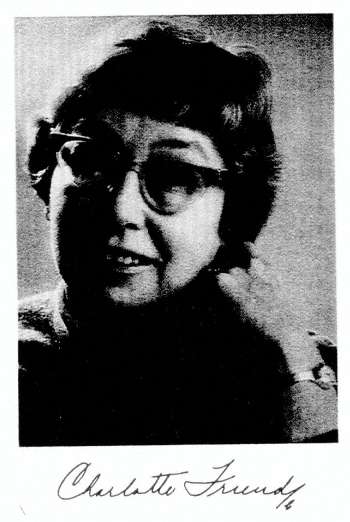
BY LEILA DIAMOND
IN 1956, at a meeting of the American Association for Cancer Research (A.A.C.R.) in Atlantic City, Charlotte Friend reported on the isolation of a virus that produced a fatal leukemia when inoculated into adult mice.1 This was a time when the concept of viruses causing cancer was still viewed with extreme skepticism and the presentation of such data by an attractive young woman not long out of graduate school was met with disbelief and derision.2 The audience's arguments against her findings were essentially the same as those Peyton Rous had heard in the early 1900's when he described a chicken tumor that was inducible by a transmissible agent. They argued, on the one hand, that the agent isolated was not a virus because it induced a malignant disease and, on the other, that the disease could not be a malignancy because it was virus-induced. However, the rapid confirmation of Friend's findings by the highly respected pathologist Jacob Furth led to a change in attitudes, and the scientific community soon realized that a virus which rapidly induces a malignant disease in adult mice provides an excellent model in which to study both viral oncology and the pathogenesis of neoplasia. Friend's virus became the primary system for research on viral
leukemogenesis and today it is acknowledged that no one who works on tumor viruses fails to be touched by the contributions of Charlotte Friend.3
Charlotte Friend was born in 1921 in New York City on Houston Street in lower Manhattan to parents who had immigrated from Russia as young adults. Her mother had been trained as a pharmacist but gave up any professional ambitions to raise a family. Friend's father, a successful businessman, died when she was three years old and her mother moved the family of four children to the Bronx in order to be near, and have the support of, other relatives. The substantial inheritance left by Friend's father was dissipated in the financial disaster of 1929, and the fact that the family had to accept "home relief" from the city in order to survive had a lasting effect on Friend. She always admired her mother for having been able to keep the family together during this period and for never letting the children doubt that they would complete their education.
While growing up, Friend took advantage of all the opportunities and wonders that New York offered. She became a very knowledgeable and avid devotee of all its cultural activities and successfully competed for admission to Hunter College High School, a part of the city's excellent, tuition-free education system for gifted students. After finishing high school, she attended Hunter College at night while working in a physician's office during the day.
Upon graduating in 1943, Friend enlisted in the United States Navy and was assigned to Midshipmen's School at Smith College from which she graduated as an Ensign in April 1944. She was soon promoted to Lieutenant j.g. and appointed second-in-command of the hematology laboratory at the naval hospital in Shoemaker, California. From early childhood she had thought about becoming a scien-
tist, but this was her first real experience working in a laboratory and it convinced her that this was what she wanted to do with her life.
When the war ended, Friend had the financial support of the G.I. Bill of Rights to continue her schooling. She considered attending medical school but chose instead to enroll as a graduate student in the Department of Microbiology at Yale University. She already appreciated the importance of the advice and help of outstanding scientists for her research, and frequently came to New York City on weekends to consult with the eminent immunologists Elvin Kabat and Michael Heidelberger at Columbia. She received a Ph.D. from Yale in 1950 with a thesis on the effects of sodium salicylate (aspirin) on antigen-antibody reactions.
Friend was hired by Cornelius P. Rhoads, the director of what was then the new Sloan-Kettering Institute for Cancer Research, to work in the virus laboratory of Alice E. Moore. Rhoads was a very dynamic and enthusiastic individual who was extremely supportive of the members of his Institute, and he and Friend developed a strong mutual respect and admiration. At Sloan-Kettering, Friend met Cecily Cannan Selby, a recent Ph.D. from the Massachusetts Institute of Technology who was interested in cell structure. This was in the early days of electron microscopy and, when Selby found a microscope in the institute that was not being used, she and Friend decided to examine the fine structure of the cells of the Ehrlich ascites carcinoma, a transplantable tumor of mice that at the time was a commonly used model for cancer research. They unexpectedly observed cytoplasmic "particles of constant diameter in close array" that were similar to those seen in thin-sections of virus-infected cells,4 and Friend then sought to determine whether these particles were biologically active.
She inoculated cell-free extracts of the ascites cells into newborn mice, following a procedure for transmission of a murine leukemia virus that Ludwik Gross had introduced a few years earlier.5 The mice remained healthy over a fourteen-month period of observation but, when sacrificed and autopsied, six mice were found to have enlarged livers and spleens. Friend may have been surprised or dismayed to see what looked to be leukemia when she had inoculated an extract from carcinoma cells, but she was smart enough and curious enough to pursue the observation. Because newborn mice were unavailable, she injected cell suspensions from the enlarged spleens into adult mice and, within a few months, several had palpable spleens. By the third passage of either cell suspensions or filtrates of cell extracts, a high percentage of mice were developing leukemia with a latent period of only two to three weeks. The disease Friend was seeing was very different from the lymphoma induced by Gross's virus: it was characterized by erythroblastosis and profound anemia; it was transmissible in adult noninbred mice; and the latent period before the first symptoms appeared was very short, the latter fact being powerful evidence that the transmissible agent was directly involved in the induction of the leukemia.
It is interesting to note that the cytoplasmic particles originally seen by Selby and Friend4 were very different in size and structure from what was eventually proven to be the etiologic agent of Friend leukemia. In very elegant electron microscope studies done with Etienne deHarven, Friend found that her agent was a type-C virus6 or what later became classified, on the basis of genomic structure, as a retrovirus (reverse transcriptase-containing RNA virus). Friend and deHarven were among the first to describe the life cycle of these doughnut-shaped viruses that "budded," a
term suggested by their technician, from the cell surface of the leukemic cells.
Charlotte Friend never forgot the reception she and her new murine leukemia virus received at the 1956 A.A.C.R. meeting. Those who were present remember the dignity and courage with which she responded to the barrage of questions. She herself described the proceedings beautifully and in detail in her Presidential Address to the same society twenty years later.2 She said that, despite warnings that serious objections would be raised, "by no stretch of the imagination could the violent storm of controversy that erupted after (her) presentation have been anticipated." She wondered why her friend who chaired the session did not use Rous's plea to "keep open minds" as an opportunity to cool the heated atmosphere and finally bring the session to a close. It is a mark of her character that she did not reveal the identity of that chairman in her Presidential Address and that they always remained the dearest of friends.
She was proud to have "emerge(d) unbowed—if a little bloodied"2 from that experience and later was able to joke that those who persisted in their heretical beliefs about tumor viruses were being accused of having "either holes in their heads or holes in their filters." However, it may be that because of that rather traumatic experience, she never did develop into a strong, confident speaker. Throughout her career, whenever she had to give a talk, she was always very nervous and on edge in anticipation, and spent a great deal of time and effort writing out exactly what it was she wanted to say.
As co-editor of the Journal of Experimental Medicine and a strong supporter, Rous worked with Friend on the writing and editing of the first full-length publication describing the new virus.7 He made many suggestions regarding docu-
mentation, details and presentation, for he believed that she was "in a position to settle all doubts as concerns a virus causing leukemia in mice" if she presented what she had discovered "in a convincing way." The resulting publication provided the information the scientific community needed to accept the virus and to recognize its potential as an ideal model system with which to work.
The neoplastic nature of the disease induced was subsequently confirmed by the demonstration that transplantable solid tumors could be obtained with leukemic tissues from virus-infected mice. The leukemia was originally described as being not clearly granulocytic or monocytic, and it required extensive experimentation by Friend8 and others to demonstrate that the primary target for malignant transformation was, in fact, an erythroid precursor. Development of the disease is now thought to involve at least two events: an early stimulation of erythropoiesis followed by a clonal event that results in transplantable, immortal erythroleukemia cells.
Following the discovery of the Gross and Friend viruses, a number of other RNA viruses that induced leukemia in mice and other species were isolated. What had originally been disbelief now turned to accolades and Friend began to be honored for her work. In 1962 she received the Alfred P. Sloan Award for Cancer Research and elected to use the money to travel around the world, spending three-month periods in research institutes in France, Israel and Australia working with such scientists as Andre Lwoff, Leo Sachs and Donald Metcalf. She has written that the trip was one of the most important experiences of her life, a major reason being that she fulfilled her long-cherished dream of working at the Pasteur Institute.
Despite all the work that has been done on Friend Leu-
kemia Virus (FLV), we still understand very little about the molecular mechanisms by which it replicates and transforms. We do know that these mechanisms are extremely complex, so it is perhaps not surprising that over the years there have been disagreements and controversies regarding various aspects of the virus and the disease induced. The original virus isolate produced a leukemia associated with anemia but with its distribution to other laboratories and passage from host to host, virus strains that produced polycythemia rather than anemia appeared. These strains caused formation of macroscopic foci of primitive erythroid cells on the spleen surface which appeared prior to the hepatosplenomegaly and could be quantitated. These were foci shown to be due to the presence in preparations of polycythemia-inducing strains of a defective spleen focus-forming virus (SFFV) that was competent for cell transformation but not for virus replication. Some investigators reported that only the polycythemic strains of Friend Virus induced leukemia in adult mice and that the anemic strain was effective only in neonates. It was suggested that, contrary to what Friend had originally reported, more than one virus was required for the pathogenesis of the leukemia (see reviews by Friend and Pogo 9 and Ostertag et al.10).
Friend always resisted that idea. Perhaps the cool reception she and the virus received originally had sensitized her to what she may have considered criticism of that early work and her powers of observation. She maintained that in her hands, even after twenty years of continuous passage, the original anemic strain of FLV (FLV-A, what she referred to as the wild-type or prototype virus), its host range, latent period and age dependence, and the syndrome that that virus induced were no different from what she had first reported. She insisted that FLV-A did not con-
tain a defective, spleen focus-forming component11 and that it was different from the virus strains others may have worked with subsequently. Her friend Frank Lilly once "tried to convince her that she should be proud to have discovered not just one but in fact two viruses that were totally unique in the mouse leukemia virus world. But she would have nothing to do with that idea."12 And, indeed, others have shown that molecularly cloned FLV-A, with no SFFV component, induces an anemic form of an erythroproliferative disease in newborn mice which resembles the early stages of the disease induced by wild-type virus.13 However, no one has yet explained the mechanism by which the profound anemia induced by such virus in either newborns or adults progresses to leukemia.
Most virologists have taken the position that the Friend Virus is a complex composed of a defective SFFV that depends on replication-competent FLV for its own replication, and that both viruses are required for production of fatal leukemia in adult mice. Friend always acknowledged that during in vivo passage, virus variants might have arisen through recombination with cellular elements or endogenous viruses and was not surprised that an agent such as SFFV was found in some virus stocks. However, she wanted to understand what might have happened in other laboratories, to discuss the various possibilities with other investigators, and to analyze the passage histories of the various virus strains. Those such as Arthur Axelrad and Frank Lilly who had the patience for such discussions remained good, lifelong friends. Others who wanted to get on with it and not be overly concerned with what might have happened to the virus years ago lost touch with her and, unfortunately, perhaps lost respect for her and her accomplishments as well.
Rhoads, the director of Sloan-Kettering, had died in 1959 and the subsequent administration was much more structured than his had been. Friend did not have the warm relationship with the new director that she had had with Rhoads and did not think she was getting the recognition she deserved. Thus, she was receptive when approached about joining the faculty of the new medical school being organized at Mt. Sinai Hospital in New York. In 1966 she accepted a position there as professor and director of the Center for Experimental Cell Biology. She requested, and received, an appointment that carried no teaching responsibilities. She wanted to be free to do what she did best and most enjoyed—research. The new laboratory was rather modest in size and amenities, and a somewhat isolated basic science entity. In her new position, Friend was responsible for raising essentially all the money needed for staff, supplies, equipment and support services. She became tightly locked into the federal grant system for the major requirements of the center which she headed, and in her later years, this became a tremendous burden that interfered with her enjoyment of doing research.
It was at Mt. Sinai that Friend made another seminal scientific contribution when she showed that cancer cells can be induced to differentiate by an exogenous agent and, thereby, lose their ability to multiply. She had observed earlier that the cells of the solid tumors produced by transplantation of leukemic tissue from Friend Virus-inoculated mice showed no recognizable erythroid elements, but that the erythroid nature of the cells could be demonstrated under certain conditions. For example, Friend and Cecilia Patuleia were able to establish permanent cell lines in culture from the tumor cells and to show that, even when cloned, these cultures consisted of undifferentiated
cells and a small percentage of cells at various stages of erythroid maturation.14,15 Their observation that these malignant cells were, in fact, capable of undergoing maturation was met with disbelief by some colleagues, even though the evidence should have been incontrovertible from their slides and photographs. "How can tumor cells that have been in culture for 6 months give rise to erythroblasts?" they asked. "There must be a contaminant." But again in the face of skepticism, Friend persisted, knowing that her cell system provided a superb "model for the study of leukemia as a disease resulting from a maturation defect."16 She began to explore the possibility that the differentiation block in the leukemic cells could be removed.
This led her to the discovery that Friend erythroleukemia cells (FELC) in culture could be further stimulated to differentiate along the erythroid pathway by the addition of the solvent dimethyl sulfoxide (DMSO) to the medium.17 I had been using DMSO as a solvent for hydrophobic compounds in cell cultures. I remember her phoning one day to ask about the concentration to use for an experiment she wanted to try. A few days later she called back, bursting with excitement about her cells being "pinkies, all pink, all pink." Her associate, Bill Scher, also remembers her running up and down the hall holding up the tube with the pellet of pink cells for all to see. She went on to show that, with some highly inducible erythroleukemia cell lines, the percentage of benzidine-positive (hemoglobin-producing) cells could be increased to over 85 percent, from a baseline of 1 percent, after four-five days in medium containing DMSO. Friend had clearly and dramatically demonstrated that expression of the malignant phenotype could be reversed experimentally.
Her observation was quickly reproduced and confirmed
in other laboratories and it soon became apparent that the morphological and biochemical alterations that followed induction of differentiation were similar to those occurring in normal erythropoiesis. Friend cells became a widely used model for studying control of hemoglobin synthesis as well as for analyzing the overall regulation of gene expression in cell proliferation and differentiation.
This new discovery resulted in another exciting period of recognition for Friend. She was elected to the Hunter College Hall of Fame and received the Yale Science and Engineering Association Award. She was honored with the Dameshek Medal, the Prix Griffuel, and the Papanicolaou Award. In 1976 she was accorded the ultimate recognition by her peers, election to the National Academy of Sciences.
In the late 1960s a young Italian pathologist, Giovanni Rossi, spent several years working in Friend's laboratory. They became close scientific colleagues and devoted friends, and in 1977 when she had the opportunity to spend a sabbatical year abroad, she went to Rome where Rossi had settled. She had a wonderful time working at the Italian National Research Council Laboratory where Rita Levi-Montalcini was director. The two women had great respect for each other and when Friend left Rome, Professor Levi-Montalcini gave her an engraving entitled "The Spiral of Archimedes," done by her twin sister, Paola.
Charlotte Friend first learned that she had lymphoma on her sixtieth birthday in 1981. She told very few people and was adamant that others not know. She did not want those who might be reviewing her grants or manuscripts to be influenced one way or the other. Despite undergoing extensive, debilitating therapy, she continued to spend time in the laboratory, to write, to attend meetings and discuss work with other people, to send out manuscripts and grant
proposals and, when necessary, to argue with editors, reviewers and administrators. She did everything she could to keep her laboratory afloat, always with the hope that it would be perpetuated if she were no longer around. However, it had always been important to her that she stay on top of everything going on in her laboratory. She had preferred to do things herself and not to turn projects over to others. And so, she had never built up an active group of young investigators studying problems of interest to her. In the end, there was no one to maintain the center and continue her work.
One of Charlotte Friend's last public appearances was at Brandeis University, where she received an honorary Doctor of Science degree in May 1986. She was very proud to have been selected for this honor and left her hospital bed to make the trip to Waltham, Massachusetts. She participated in the commencement procession in a wheelchair and, despite a broiling sun, stayed for the entire lengthy ceremony. She died eight months later on January 13, 1987.
During the height of her career, Charlotte Friend was perhaps one of the most well-known and well-liked cell biologists and cancer scientists. She was a very warm and social person, albeit somewhat shy. She had a good sense of humor and a rather charming way of interacting with people. She was extremely generous when it came to distributing her virus (FLV) and her cells (FELC) to those who wanted to work with them, and she would give those investigators all the guidance and assistance they needed for their work. Many remember with pleasure visiting her laboratory, going to lunch, and talking about what they were doing or would do with the wonderful tools she had provided. And if they were from out of town, she always made sure they were properly looked after. Her apartment
in the Stuyvesant Town complex on East 14th Street came to be known as "The Friend Hotel," for friends and colleagues from near and far were welcome to stay there when visiting New York—and they frequently did, some for weeks at a time.
Charlotte Friend had a genuine concern for people and took an interest in their personal lives, their families, and their problems. She was always available to listen and frequently spent evenings in the laboratory or at home doing just that. She had a dedicated staff that would have followed her to the ends of the earth. Several, such as the pathologist Jamil Haddad and the technician J. Gilbert Holland, worked with her for over thirty years.
She served as the matriarch and leader of what was a very close-knit family. She was deeply devoted to her mother, who lived with her until her death in 1961, and to her siblings and nieces and nephews. It was she to whom the immediate and extended family turned for advice and help. She particularly enjoyed advising and assisting others with their medical problems and frequently boasted of "practicing medicine without a license," perhaps reflecting regrets about not having gone to medical school.
She was a renaissance woman who loved and knew intimately the theater, dance, music, opera, and literature. No matter how tired she was or how difficult the day had been, she would jump at the chance to see a new show if someone came up with a pair of tickets at the last minute. She enjoyed traveling, seeing new sights, and meeting different people. Wherever she went, there were two things she had to do: buy stamps for her brother Morris who was a collector, and get a memento of the trip for herself, usually a unique piece of jewelry or interesting work of art. But no matter where she had been and how much she had en-
joyed the trip, it was "The City" that thrilled her most and to which she returned with joy. She loved the view of the Manhattan skyline from her apartment and could never bring herself to move to a place that might be more convenient or more luxurious.
Charlotte Friend was a woman of strong convictions and a fighter, with no compunctions about defending her ideas and the causes in which she believed. For example, she wrote letters to newspaper editors and spoke up without fear in support of blacklisted academics and dissidents, even during the McCarthy and Nixon eras when doing so could jeopardize one's grants and career. She believed whole-heartedly in the State of Israel and was an outspoken defender of its policies. She was a fervent supporter of the women's movement and frequently, without fanfare, went out of her way to ensure that women were well-represented on symposium programs and advisory and review committees. She served as a role model for many women starting their careers at a time when there were not many such models.
In the 1970s, when the demands on the relatively few senior women scientists were enormous, she worked extremely hard as president of the American Association for Cancer Research, the New York Academy of Sciences, and the Harvey Society, the first woman so honored in the long history of that society. During this same period, she also served as a member of the Advisory Committee for the Virus Cancer Program of the National Institutes of Health and a member of the Board of Scientific Counselors of the Division of Cancer Cause and Prevention of the National Cancer Institute. Over the years, she served on a number of other advisory committees and on the editorial boards of several cancer and hematology journals. She took all
these responsibilities very seriously and was noted for her incisive reviews and for her thoughtful and astute comments in committee meetings.
Charlotte Friend used to say that she started an industry, and it was true. In the two decades following the initial isolation of FLV, perhaps a third of those doing cancer research spent some time working on one or the other of the model systems she had provided. Even today, many aspects of the Friend virus complex (FLV/SFFV) remain unique among tumor viruses so that it continues to be an important, widely utilized model system (reviewed in ref. 10). For example, it acts as an acute transforming virus but does not contain an oncogene. It is immuno-suppressive and, therefore, a model for human immuno-deficiency virus (HIV). It stimulates abnormal erythroid hyperplasia by binding of virus (SFFV) glycoprotein to a growth factor (erythropoietin) receptor, a novel mechanism that may explain how other viruses can interfere with normal growth regulation.
Friend paved the way for a great many other avenues of research. She was the first to show, using her virus, that animals could be immunized with retrovirus preparations and protected against development of the disease.18 Her experiments indicating that such protection is possible are frequently cited by those now trying to develop a vaccine against HIV. Leukemic cells induced by Friend Virus have been used in the first demonstration that a virus-induced malignancy requires for its expression the alteration or deletion of an "anticancer" or suppressor gene. Friend was one of the first to show that cells maintained in culture can actually undergo the successive steps leading to differentiation to a specific cell type. Her system was the forerunner for the establishment of other cell culture models to study
cytodifferentiation and the development of diverse lineages. Her demonstration of inducible differentiation of leukemic cells by DMSO has served as the inspiration, as well as the prototype, for evaluating the potential therapeutic effects of differentiation-inducing agents in human cancer.
Charlotte Friend was in the tradition of many women scientists who have made contributions to botany, astronomy and microbiology. She, too, was a naturalist, an observer and, in many ways, a loner. She enjoyed the aesthetics of biology, the overview rather than the molecular. She was an inventive, instinctive scientist who had fun doing science. She did not want a large laboratory, only her devoted staff and enough funding to be able "to play," as she called it. She did, however, seek recognition and fame, and this she achieved. Her ideas and discoveries have had, and will continue to have, a major impact on our thinking about the causes, prevention and cure of cancer.
CHARLOTTE FRIEND'S complete bibliography can be found in "Viral Oncogenesis and Cell Differentiation: The Contributions of Charlotte Friend," L. Diamond and S. R. Wolman, editors, Annals of the New York Academy of Sciences, vol. 567, pp. 5–13, 1989. This memoir was submitted October 9, 1990.
REFERENCES
1. C. Friend, "The Isolation of a Virus Causing a Malignant Disease of the Hematopoietic System in Adult Swiss Mice," Proc. Am. Assoc. Cancer Res. 2(1956):106.
2. C. Friend, "Presidential Address: The Coming of Age of Tumor Virology," Cancer Res. 37(1977):1255–63.
3. L. Diamond and S. R. Wolman, eds., "Viral Oncogenesis and Cell Differentiation: The Contributions of Charlotte Friend." (Ann. N.Y. Acad. Sci. 567, 1989).
4. C. C. Selby, C. E. Grey, S. Lichtenberg, C. Friend, A. Moore,
and J. J. Biesele, "Submicroscopic Particles Occasionally Found in the Ehrlich Mouse Ascites Tumor," Cancer Res. 14(1954):790–94.
5. L. Gross, "Pathogenic Properties, and 'Vertical' Transmission of the Mouse Leukemia Agent," Proc. Soc. Exp. Biol. Med. 78(1951):342–48.
6. E. deHarven and C. Friend, "Electron Microscope Study of a Cell-Free Induced Leukemia of the Mouse: A Preliminary Report." J. Biophys. Biochem. Cytol. 4(1958):151–56.
7. C. Friend, "Cell-Free Transmission in Adult Swiss Mice of a Disease Having the Character of a Leukemia," J. Exp. Med. 105(1957):307–18.
8. G. B. Rossi and C. Friend, "Erythrocytic Maturation of (Friend) Virus-induced Leukemic Cells in Spleen Clones," Proc. Natl. Acad. Sci. USA 58(1967):1373–80.
9. C. Friend and B. G.-T. Pogo, "The Molecular Pathology of Friend Erythroleukemia Virus Strains: An Overview," Biochim. Biophys. Acta. 780(1985):181–95.
10. W. Ostertag, C. Stocking, G. R. Johnson, N. Kluge, R. Kollek, T. Franz, and N. Hess, "Transforming Genes and Target Cells of Murine Spleen Focus-Forming Viruses." Adv. Cancer Res. 48(1987):193–355.
11. E. H. Brown, M. Zajac-Kaye, B. G.-T. Pogo, and C. Friend, "Rat Cells Infected with Anemia-Inducing Friend Leukemia Virus Contain Integrated Replication-Competent But Not Defective Proviral Genomes," Proc. Natl. Acad. Sci. USA 82(1985):5925–29.
12. F. Lilly, "Leukemia, Viruses, Development and the Real World," in: Viral Oncogenesis and Cell Differentiation: The Contributions of Charlotte Friend, eds. L. Diamond and S. R. Wolman (Ann. N.Y. Acad. Sci. 567:274–77, 1989).
13. A. I. Oliff, G. L. Hager, E. H. Change, E. M. Scolnick, H. W. Chan, and D. R. Lowry, "Transfection of Molecularly Cloned Friend Murine Leukemia Virus DNA Yields Highly Leukemogenic Helper-Independent Type C Virus," J. Virol. 33(1980):475–86.
14. C. Friend, M. C. Patuleia, and E. deHarven, "Erythrocyte Maturation in Vitro of Murine (Friend) Virus-Induced Leukemic Cells," Natl. Cancer Inst. Monogr. 22(1966):505–22.
15. M. C. Patuleia and C. Friend, "Tissue Culture Studies on Murine Virus-Induced Leukemia Cells: Isolation of Single Cells in Agar-Liquid Medium," Cancer Res. 27(1967):726–30.
16. C. Friend, "The Phenomenon of Differentiation in Murine Erythroleukemic Cells," The Harvey Lectures (New York: Academic Press, 1979):253–87.
17. C. Friend, W. Scher, J. G. Holland, and T. Sato, "Hemoglobin Synthesis in Murine Virus-Induced Leukemic Cells In Vitro: Stimulation of Erythroid Differentiation by Dimethyl Sulfoxide," Proc. Natl. Acad. Sci. USA 68(1971): 378–82.
18. C. Friend, "Immunological Relationships of a Filterable Agent Causing a Leukemia in Adult Mice. I. The Neutralization of Infectivity by Specific Antiserum," J. Exp. Med. 109(1959):217–28.
SELECTED BIBLIOGRAPHY
1953 A study of the effect of sodium salicylate and some structurally related compounds on antigen-antibody reaction in vitro. J. Immunol. 70:141–46.
1954 With C. C. Selby, C. E. Grey, S. Lichtenberg, A. Moore, and J. J. Biesele. Submicroscopic cytoplasmic particles occasionally found in the Ehrlich mouse ascites tumor. Cancer Res. 14:790–94.
1955 With F. Wroblewski and J. S. LaDue. Glutamic-oxaloacetic transaminase activity in serum in mice with viral hepatitis. J. Exp. Med. 102:699–704.
1956 With F. Wroblewski. Lactic dehydrogenase activity of serum in mice with transplantable leukemia. Science 124:173-74.
The isolation of a virus causing a malignant disease of the hematopoietic system in adult Swiss mice. Proc. Am. Assoc. Cancer Res. 2:106 (Abstract).
1957 Cell-free transmission in adult Swiss mice of a disease having the character of a leukemia. J. Exp. Med. 105:307–18.
1958 With E. deHárven. Electron microscope study of a cell-free induced leukemia of the mouse: A preliminary report. J. Biophys. Biochem. Cytol. 4:151–56.
1959 With G. diMayorca, B. D. Eddy, S. E. Stewart, W. S. Hunter, and A. Bendich. Isolation of infectious deoxyribonucleic acid from SE polyoma-infected tissue culturest. Proc. Natl. Acad. Sci. USA 45:1805–8.
Immunological relationships of a filterable agent causing a leuke-
mia in adult mice. I. The neutralization of infectivity by specific antiserum. J. Exp. Med. 109:217–21.
1960 With J. R. Haddad. Tumor formation with transplants of spleen or liver from mice with virus-induced leukemia. J. Natl. Cancer Inst. 25:1279–89.
With E. deHarven. Further electron microscope studies of a mouse leukemia induced by cell-free filtrates. J. Biophys. Biochem. Cytol. 7:747–52.
1962 With F. Rapp. Detection of cytoplasmic deoxyribonucleic acid and nucleoproteins with antinuclear serum. Virology 17:497–99.
1964 With E. deHarven. Structure of virus particles partially purified from the blood of leukemic mice. Virology 23:119–24.
1966 With M. C. Patuleia and E. deHarven. Erythrocytic maturation in vitro of murine (Friend) virus-induced leukemic cells. Natl. Cancer Inst. Monogr. 22:505–22.
1967 With G. B. Rossi. Erythrocytic maturation of (Friend) virus-induced leukemic cells in spleen clones. Proc. Natl. Acad. Sci. USA 58:1373–80.
With M. C. Patuleia. Tissue culture studies on murine virus-induced leukemia cells: Isolation of single cells in agar-liquid medium. Cancer Res. 27:726–30.
1968 With G. B. Rossi. Transplantation immunity and the suppression of spleen colony formation by immunization with murine leukemia virus preparations (Friend). Int. J. Cancer 3:523–29.
1970 With G. B. Rossi. Further studies on the biological properties of
Friend virus-induced leukemic cells differentiating along the erythrocytic pathway. J. Cell. Physiol. 76:159–66.
1971 With W. Scher, J. G. Holland, and T. Sato. Hemoglobin synthesis in murine virus-induced leukemic cells in vitro. Stimulation of erythroid differentiation by dimethyl sulfoxide. Proc. Natl. Acad. Sci. USA 68:378–82.
With W. Scher, J. G. Holland and T. Sato. Hemoglobin synthesis in murine virus-induced leukemic cells in vitro. Partial purification and identification of hemoglobins. Blood 37:428–37.
1973 With H. D. Priesler, D. Housman, and W. Scher. The effects of 5-bromo-2'-deoxyuridine on the production of globin mRNA in dimethyl sulfoxide-stimulated Friend leukemia cells. Proc. Natl. Acad. Sci. USA 70:2956–59.
1977 Presidential address: The coming of age of tumor virology. Cancer Res. 37:1255–63.
1979 The phenomenon of differentiation in murine erythroleukemic cells. In The Harvey Lectures, pp. 253–87. New York: Academic Press.
With D. W. Golde, N. Bersch, D. Tsuei, and W. Marovitz. Transformation of DBA/2 fetal liver cells infected in vitro by the anemic strain of FLV. Proc. Natl. Acad. Sci. USA 76:962–66.
1980 With D. Tsuei and B. G.-T. Pogo. Variations in properties of virus released from morphologically different cell lines transformed in vitro by Friend leukemia virus. Proc. Natl. Acad. Sci. USA 77:5769–73.
1981 Murine virus–induced erythroleukemic cell lines. In Functionally Differentiated Cell Lines , ed. G. Sato, pp. 235–49. New York: Alan R. Liss, Inc.
1982 With B. G.-T. Pogo. Persistent infection of Friend erythroleukemia cells with vaccinia virus. Proc. Natl. Acad. Sci. USA 79:4805–9.
1985 With B. G.-T. Pogo. The molecular pathology of Friend erythroleukemia virus strains: An overview. Biochem. Biophys. Acta. 780:181–95.
With E. Brown, M. Zajac-Kaye, and B. G.-T. Pogo. Rat cells infected with anemia-inducing Friend leukemia virus contain integrated replication competent but not defective proviral genomes. Proc. Natl. Acad. Sci. USA 82:5925–29.


