
ALBERT BAIRD HASTINGS
November 20, 1895–September 24, 1987
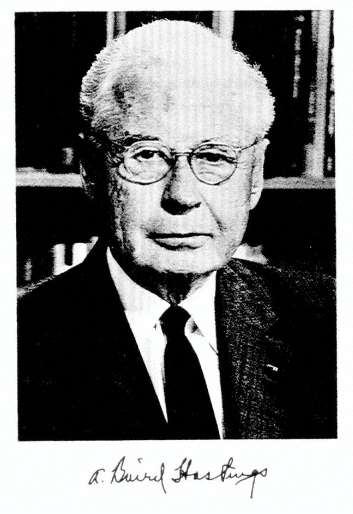
BY HALVOR N. CHRISTENSEN
A. BAIRD HASTINGS was born in Dayton, Kentucky. When he was six years old, his family moved to Indianapolis, where he lived until he entered college. His father died of tuberculosis while Baird was in his second year of high school. No special interest in science was uncovered in Baird's study at Shortridge High School, where he liked Greek and Latin and aspired to become a classics teacher.
Upon the death of his father, Baird prepared to leave high school to help support his family. The teacher who had profoundly inspired him, Ella Marthens, urged otherwise, however, and she helped to arrange an assistantship in biology for him, given only that he should take a course in zoology. Subsequently, mathematics through solid geometry and physics, but no chemistry, supplemented that obliged biology study. Baird remarked how frequently career success is attributed to the influence of a superior high school teacher rather than to college teachers.
Baird told of a notable evening in his senior year at the home of Marthens and a teaching colleague, attended by Baird's favorite crony and classmate, Alan Boyd, at which a group decision was to be reached about Baird's college attendance. Baird insisted that it be at Michigan, where two cousins, James and Charles Baird, had attended and
had, among other distinctions, played and coached football, respectively. Under the assumption that Baird must quickly learn to make a living to help his family, the group decided that he must register for engineering, specifically chemical engineering, a subject unfamiliar enough to avoid any perceived limitation in Baird's abilities. His first encounter with the required general chemistry did not yet divert him from engineering. Odd jobs of various sorts helped family finances, and the second marriage of his mother made further borrowing unnecessary. But in the summer after his second year, Baird liked very much more the physical chemistry course under Dr. Floyd Bartell that he had included in his program. At the end of this course, Bartell asked Baird if he would like to serve as his assistant in the physical chemistry course. The assistant had to prepare the apparatus and solutions needed and also help with instructing the students in the laboratory. The offer required, however, that Baird become a major in chemistry, a shift only slowly and reluctantly accepted by the engineering school, indeed by default, and, as it happened, with an unjust discount of Baird's prior marks.
Among the provisions of this post was a 20 × 20 foot laboratory belonging to Bartell, which adjoined his own lab. As Baird remarked, "That was in the fall of 1915, and from that moment until 1966, I've had a laboratory of my own. This provision has determined everything I've done since."1
DOCTORAL STUDY SUPPORT BY THE PUBLIC HEALTH SERVICE
At the end of 1916, Baird had taken all the courses, undergraduate and graduate, offered in physical chemistry, so Bartell asked him what he would do upon graduation. Baird supposed he would get a job, not difficult
then. Bartell instead urged him to go on with graduate work. Baird expostulated: "You mean work for a Ph.D.? That's ridiculous! You have to be a Van't Hoff to do that." Bartell responded, "I've watched you, Baird, and I find you work hard and are resourceful." In his life story Baird commented that he accepted this evaluation as a watchword. "I tried ever after to be resourceful in the lab." He was able to enter graduate school in January 1917, even though he was not scheduled to receive his baccalaureate degree until June. Since there was no more physical chemistry to take, he elected to begin graduate courses with some advanced quantitative chemistry, minerology, and bacteriology under F. G. Novy.
Because Bartell was interested in membranes and osmosis, Baird proceeded with preliminary research on the permeability of collodian membranes. Thus, membrane studies became the beginning of his lifelong interest in the distribution of solutes in heterogeneous systems. Another event, the appearance of Bayliss's Principles of General Physiology , a remarkable book in its first edition, stimulated Baird's interest toward biological subjects, just when his interest had been narrowing to physical chemistry.
But in April 1917 the United States entered World War I, with strong consequences for the direction of Baird's progress. As most of his friends left to go to camp, the underweight Baird began a desperate campaign to enlist. By the fall of 1917, his persistent efforts to be accepted into the military having failed, Baird returned to the University of Michigan. His Ph.D. study in physical chemistry was, however, deferred (permanently, as it happened) because Bartell himself was about to take a commission in the Chemical Warfare Service. Therefore, Baird helped Bartell in his course in the fall of 1917 as an instructor. A
chance encounter with Hector Britton, who held a summer post as a chemist with the Public Health Service working on a multidisciplinary study of fatigue, led Baird to take Britton's place (on being reassured that this was indeed war work) when the latter returned to his Ph.D. study in organic chemistry. Officialdom was tending at this point to conclude that fatigue as encountered in munitions plants was due to acidosis. Baird's experience in setting up and using the Hildebrand bubbling hydrogen electrode persuaded Joseph W. Schereschewsky of the Public Health Service that Baird probably knew as much as anyone about the measurement of the state of neutrality.
Baird liked to say that his whole life story was essentially determined when he accepted the post as sanitary chemist with the Public Health Service on November 1, 1917, to study these matters. "Everything else followed logically," he said. Although he had no study in physiological science up to that point, Baird quickly perceived that physiological neutrality was not a simple subject. His initial assignment was to measure the pH of morning and evening urine of workers engaged in various operations at the Ford Motor Company. By mid-December, even though Kjeldahls and measures of free and conjugated phenols and of three kinds of sulfur had been added, he was ready to write a letter to Frederic S. Lee, head of physiology at Columbia University, who was directly in charge of Baird's activity, to the effect that the program was no way to study fatigue, that it was a waste of federal money and of his time, and that, unless the government was prepared to study fatigue in animals under controlled laboratory conditions, he did not want to proceed. From that letter came orders for him to proceed to the Department of Physiology at Columbia and to carry out research on the chemistry of fatigue. The logical progression continued.
Baird wrote that nobody ever had better tutorial training than he received in that department. Beyond Frederic Lee, he acknowledged how much he came to owe Professors F. H. Pike, Russell Burton-Opitz, and Ernest L. Scott. When the war ended, Lee invited Baird to continue for a Ph.D. degree. Baird pointed out that he had expected to return to Ann Arbor to go on with his studies for a Ph.D. degree in physical chemistry with Bartell. The decisive circumstance was that Baird and Margaret Hastings were married May 31, 1918, and that on May 14, 1919, their son Alan Baird Hastings was born. The ongoing Public Health Service stipend of $2,400 was twice the Michigan stipend. So on the grounds of economic need, Baird decided to become a physiologist. "It had nothing to do with the desire to become a physiologist"—a strange admission in light of his subsequent lifelong affinity for physiology.
Ernest L. Scott became his immediate thesis adviser. With Scott he completed the studies that each of them had separately initiated on sulfur and phenol metabolism. Baird's results were then published in Public Health Service reports as his first papers. In the meantime he continued his study of what would subsequently be called changes in the acid-base balance as the result of exercise. Columbia University was generous in accepting Michigan's credits for Baird's interrupted courses. To earn the needed initial credits in physiology, Baird assisted in teaching the laboratory course. For biochemistry, since not much time could be spared from his remunerated research, he attended a course that met all day Saturday in the second semester for medical students who had failed their course the preceding semester. As Baird noted, "And that is all the formal biochemistry I ever had." Can the sort of biochemistry he missed up to 1921 help us appraise his total influence on this emerging science?
Baird's thesis research also included a part on changes in the fragility of red blood cells upon exercise, a quickly successful problem suggested by Scott. They found that after a prolonged period without exercise the blood of a dog accumulates a lot of old red blood cells, about to be broken up. Strong exercise broke up these doomed blood cells faster than the spleen could remove them, leading to the pink plasma of a hemoglobinemia. The project also involved observing changes in red blood cell fragility arising from blood oxygenation and reduction and from CO2 addition and extraction. This work brought Baird's interest into the osmotic consequences of changes in the distribution of chloride and bicarbonate, an interest greatly extended later at the hospital of the Rockefeller Institute.
In his concurrent attempts to study the alkali reserve of blood plasma in exercise and fatigue, Baird adapted a hydrogen electrode, one previously described by J. B. McClendon, for titrating the plasma to measure the alkali reserve. He wrote up this procedure and the particular electrode adaptation with the idea that it might be published. He brought it along to consult with his friend, Dr. Glenn E. Cullen, who was then Van Slyke's first assistant at the hospital of the Rockefeller Institute. Cullen was pleased with it and at once took it into Van Slyke's office. Cullen soon came out and said, "Dr. Van Slyke wants to see you." Van Slyke, then editor of the Journal of Biological Chemistry, accepted the paper for publication then and there, on March 9, 1921.
ROCKEFELLER INSTITUTE PERIOD
Van Slyke then asked Baird what he planned to do upon completion of his Ph.D. Van Slyke approved his intent to proceed to Washington, D.C., to develop the Public Health Service program in physiology for which Schereschewsky
had arranged his training. Van Slyke also emphasized the accompanying possibility of an association there with the newly appointed William Mansfield Clark. But then Van Slyke added, "There might be another possibility—don't do anything until you hear from me."
Baird waited from March until June for Van Slyke to feel free to propose that Baird become his first assistant—"probably the best job in the country in 1921 for a fresh Ph.D." It placed Baird in charge of Van Slyke's research labs. The experiments were planned together, but the organization and execution were in Baird's hands. Ever afterward, however, Baird had a guilty feeling that he had let down Schereschewsky, who had left him at Columbia to finish his Ph.D. so that Baird could start the Department of Physiology at the National Hygienics Laboratory. "My guilt accounted for my willingness from that moment to do anything that the Public Health Service asked me to do," Baird said. In Van Slyke's lab, Baird's associates began at once to call him a biochemist, a name he did not deny, even though "I knew in my heart I wasn't one." Clearly, Baird then followed Van Slyke's prior example upon his earlier arrival at the institute with arduous study to deserve this name.
Baird joined with Van Slyke, John Plazin, Michael Heidelberger, James M. Neill, and occasional visitors in the so far unsuccessful attempts to clearly delineate differences in the CO2 absorption curves of oxygenated and reduced blood. One day the frustrating technical difficulty brought Baird and Neill out into Central Park for relief. In the ensuing conversation, it was obviously Baird who proposed the subsequently familiar two-compartment system for equilibrating blood and a desired gas phase, to allow separation of these phases for analysis without dis-
turbing the equilibrium. This simple but resourceful device greatly accelerated progress in the lively program that ensued. Baird would stay overnight in the hospital, sleeping in an in-a-door bed so that he could start the experiments at 7 a.m. and have samples ready for analysis in an hour and a half when the rest of the team arrived. By 10 or 11 the same evening, the data would have been calculated and plotting begun. Now the plots became remarkably consistent, and subsequent productivity became equally remarkable.
So the laboratory study of the acid-base balance of blood entered a rich phase on its way to becoming an ultimate classic as described in 1932, in Quantitative Clinical Chemistry by Peters and Van Slyke. "Van Slyke always said that this was the happiest and most productive time of his life, and it certainly was for me," Baird said. He further regarded the next five years he spent in Van Slyke's laboratory as the most important experience he ever had. The quality of that experience stands clear in his National Academy of Sciences' memoir for Van Slyke in 1976, although Baird's five years of participation are scarcely mentioned.
In describing this rich experience, Baird also emphasized the significance of his placement, along with that of Van Slyke, the only two biochemists among a half dozen clinicians engaged in important clinical research. Thus, early in his career he learned not only to respect but also to be sympathetic toward clinical investigators and their clinical problems. "This, perhaps more than what I learned in biochemistry, determined my future," Baird said. He also noted the importance of the output from the Hospital of the Institute of numerous people who became leading professors of medicine—for example, Walter W. Palmer, Oswald H. Robertson, Franklin McLean, and C. Phillip Miller, Jr.
Baird held that "the quantitative study of disease was born to a considerable degree at the Rockefeller Institute." Tosteson quotes Baird as saying much later, "Whatever biochemistry is today—it owes as much to clinical medicine for its high place among the biological sciences—as medicine owes to it."
During these five years, Baird also initiated his studies of the physiochemical basis for bone deposition, in particular by a pioneering application of the DeBye-Huckel theory to the stepwise dissociation of carbonic and phosphoric acids. In the spring of 1925, Flexner asked Baird, now an associate, to supervise a two-week visit by Otto Warburg. Baird was commissioned, upon learning to use the Warburg apparatus for measuring tissue respiration, to teach its use in the Cancer Research Laboratory of the Institute. Baird told the story of how it became obvious to him that Warburg had heretofore in his work not measured the pH but calculated the hydrogen ion concentrations, all the while assuming exactly concurrent rather than successive dissociation of the two hydrogen ions of carbonic acid. On Warburg's return to Germany he published a brief correction with thanks to Hastings. Furthermore, he invited Hastings to Berlin-Dahlem, and, during the following summer stay by the young Hastings family, Baird learned to his pleasure the use of the gold-leaf electroscope, actually for measuring the coefficient of solubility of radon in yeast cells and red blood cells.
Baird always gave his wife, Margaret Johnson Hastings, much credit for inspiring him with her high academic standards and with helping him make career decisions throughout their lives together. Margaret proposed the Sunday teas at which the Hastings later entertained first-year Harvard medical students. Members of Baird's department also were ben-
eficiaries of her gracious hospitality. As Buchanan remarks in his preface to Crossing Boundaries, the Hastings lived courtly and elegant lives. They maintained close associations with numerous relatives and friends, as their musical and artistic son, also named Baird, recounted.
UNIVERSITY OF CHICAGO PERIOD
In 1926, Baird took wing by accepting a professorship in the Department of Physiological Chemistry at the University of Chicago. A year and a half later his professorship was transferred to the Department of Medicine with the creation of the first of the two successive Lasker foundations. "I had a staff of three and $50,000 of hard money to spend," namely on the study of degenerative disease, Baird said. After an earlier excursion with Harold B. Van Dyke to compare the blood distribution of bromide as a function of pH with that of the previously studied chloride ion, Hastings undertook the major problem of describing the movement of water and ions between the extra-and intracellular phases of muscle and other tissues. The first problem was to figure out how to determine what fraction of a piece of tissue is extracellular and what portion is intracellular, and even whether the extracellular fluid portion could be considered an ultrafiltrate of the blood plasma.
First, Baird had to escape from the prejudice that the Donnan equilibrium would sufficiently account for the distribution of ions. Only when he and Lillian Eichelberger showed that muscle cells are not freely permeable to ions, and contained little or no chloride ion, had they struck a productive track. Wallace Fenn, J. P. Peters, and Daniel Darrow were then approaching the same conclusion about muscle. The same approach proved applicable to liver and heart, although the inhomogeneity of kidney and brain
complicated the assignment of the cellular and extracellular compartments for them.
With Henry Harkens as a doctoral student, the correction of experimentally perturbed acid-base balance as measured in the blood was defined as following at least as closely the line describing constant CO2 tension as the line representing the constancy of pH. The latter course is often still taught, even though Baird redemonstrated the other relation later in his life. With Nathan Shock, a micro acid-base pipette was designed that permitted the pH, CO2, and hematocrit to be determined simultaneously on the same 0.1 milliliter of blood. Successive measurement on fingertip blood samples readily confirmed the same pathway for correction of the perturbed neutrality. A triaxial plot then logically put the three parameters—the CO2, the bicarbonate, and the pH—in equivalent geometric relations.
At the University of Chicago, Baird, with Compere, demonstrated that plasma potassium rapidly doubles and then continues to rise to lethal levels in adrenalectomized dogs. The concurrent fall in plasma sodium later came to be regarded as even more characteristic of adrenal insufficiency. Study of the oxidation reduction potentials of reactions involving flavin analogs of riboflavin was initiated with Barron and continued after 1935 with Klemperer at Harvard. The effect of pH changes indicated a transition from a two-electron step to two one-electron steps, subsequently seen as important because it pointed to free-radical participation.
Also at the University of Chicago, the equilibrium determining the deposition and dissolution of bone salt was clarified by x-ray demonstration that the latter is a carbonate-apatite rather than a form of a simple calcium carbonate or calcium phosphate. With Franklin McLean, Baird
initiated work that ultimately showed that the isolated beating frog heart can really serve as a calcium-ion electrode. With it the binding of calcium ion to serum proteins was shown to represent an equilibrium relation, which could be described by the subsequently widely used McLean-Hastings nomogram. These two findings, measurement of the calcium-ion concentration and physicochemical identification on the solid phase of bone, made it possible to perceive that our plasma and interstitial fluids are normally supersaturated with respect to the two principal ions entering into the formation of bone. Subsequent handling of the problems of bone formation and maintenance in the face of parathyroid and other influences flowed from these important studies. McLean and Hastings also showed with James Davis that thyroxin very gradually lowers the oxygen consumption of the surviving frog heart.
During an interval in 1930 as a visiting professor at the Peking Union Medical College, Baird worked with Hsien Wu of Folin-Wu fame and with Francis Dieuaide and gained experience in studying the acid-base balance in edema.
THE HARVARD PERIOD
Following the death of Otto Folin, Hastings was asked in 1935 by Harvard President James B. Conant to assume the Hamilton Kuhn professorship as head of the Department of Biological Chemistry at Harvard Medical School. Baird recalled that in questioning his own readiness for the post, he commented to Conant that in 1935 "biochemistry has become largely a special subject of organic chemistry," a view, he remarked, that had not applied ten years before and no longer applied three decades later. Conant minimized the long-range importance of Baird's deficiency in biochemistry. After Baird's interesting but discouraging
study of the state of the department, he somehow came to see the challenge of the Harvard headship as attractive.
On assuming the post, Baird retained the members of the department, adding only Friedrich Klemperer from the University of Chicago. The latter set up and directed Baird's laboratory. Elmer Stotz, a doctoral student who had received no thesis assignment in three years, completed that requirement under Baird's direction in one year, performing an enzymologic oxidation-reduction study. New doctoral students and postdoctoral guests followed, the latter especially from abroad, rapidly increasing research activity in areas sparked or led by Baird's interests. A lively and unified department resulted, one in which I as a newcomer could not readily distinguish new from ongoing members. As economic times gradually improved in the late thirties, and the merits of the various members were made more apparent by Baird's leadership, the members went forth almost in a wave into academic chairs and other important positions. Baird's deep concern for the careers of others continued throughout his life.
Baird, in his feeling of inexperience, began teaching the medical class with considerable temerity. In leading the course he developed a personal program on body fluids and solid compartments and on their neutrality. He also added a distinguished and personalized laboratory experience in that area, carried out in successive exemplary collaborations with the Department of Physiology. The department's attention to the medical course in its semester became virtually total, despite the overall research momentum.
With Jeanne F. Manery, Baird reported the distribution of inorganic ions in various tissues and showed that the sodium and chloride in soft tissues, except the red blood
cells, cartilage, and gastric mucosa, were largely extracellular. Studies with Oliver H. Lowry on electrolyte distribution showed important changes associated with aging.
Because of the subsequent changes in biochemistry, we readily forget the fantastic quality and scope of its physicochemical period, as discussed in Baird's 1940 Harvey Lecture. Baird joined in the changes in direction.
Lowry's finding of an especially rapid exchange of hepatic potassium for sodium led Baird in subsequent work to prefer a potassium-enriched Ringer solution for studying glycogen formation by liver slices, although calcium and sodium ions were ultimately also shown to be needed for optimal glycogen formation in work with Buchanan. The latter work initiated the tracer studies of glycogen synthesis with the short-lived C-11 isotope, first in pyruvate. This study required rapid laboratory synthesis of the labeled pyruvate upon removal of the freshly formed isotope from the cyclotron. The biological experiment in the rat and the isolation and radioactive analysis of the hepatic glycogen then had to follow promptly as a team effort because decay halved the radioactive emission rate every twenty minutes. The group found that lactate labeled at carbons two and three led to about twice the labeling of glycogen seen from carboxyl-labeled pyruvate, a result implying that the carboxyl group of pyruvate is lost in part during its transit of the reactions producing glycogen.
It was Bergit Vennesland who suggested, on the basis of new findings of Harland Wood and Chester Workman for microorganisms, that bicarbonate be tested as a precursor of hepatic glycogen. To general surprise, certainly that of Hastings, the 11CO2 served to form glycogen in about the amount expected if it had replaced the lost carboxyl group of lactate. This was pioneering proof that CO2 is fixed
metabolically in mammalian organisms, although Earle Evans and Louis Slotin had already reported that pigeon liver homogenates catalyse the incorporation of CO2 into 2-ketoglutarate formed from pyruvate.
The Singer-Hastings nomogram was devised in the mid-forties to clarify how acid-base balance data should be interpreted clinically. With a succession of colleagues, Baird undertook, particularly after the war, the study that can be described as "factors affecting choices among alternate pathways of metabolism." Using 14C-labeling, Baird and his colleagues determined the rate at which glucose is phosphorylated to glucose-6-phosphate; how much of that product is metabolized to pyruvate by the Embden-Meyerhoff pathway; how much is further metabolized via the citric acid pathway to carbon dioxide and water, and how much is diverted through the pentose phosphate pathway; how much is converted to glycogen via the uridine phosphate-glucose pathway; and how much is simply hydrolyzed to glucose by the hepatic enzyme glucose-6-phosphatase. Once these rates were known for normal rats, they studied the pathways taken quantitatively instead in diabetic animals and how these choices were altered by insulin or steroid administration or by adrenalectomy, for example. The results answered an old question by showing that both underutilization and over-production of glucose contribute to diabetes. Other prior goals were pursued in an extended series of collaborative studies, often with postdoctoral students of medicine. This remarkable group of persons became professors of clinical medicine in an unusual number of cases.
In 1940 the scope of the department's doctoral and postdoctoral program was further broadened by the appointment of Eric G. Ball, who ultimately joined with Baird in running the department while Baird's time came to be
divided between his academic program and his service in Washington as a member of the wartime Committee on Medical Research (CMR) from 1941 to 1946.
The ten-odd members of the CMR, led by A. N. Richards, worked most conscientiously to get the greatest public value out of the virtually blank check provided to it. Baird continued his teaching at Harvard on a half-time basis. Of the 594 research contracts funded by the CMR on a wide range of problems, those on antimalarials, blood and blood substitutes, and penicillin became the best known. The history of the penicillin project presents a dramatic example in the nationwide coordination secured and is a monument to the CMR and many of the nation's able scientists. Of the $24 million dispersed in the five years from 1941 to 1946, only half a million was spent on the research and development of penicillin and three times as much for its testing and clinical evaluation. Baird's remarkable mission to Moscow introduced a variation in this period of his national service. He spent four weeks there in early 1944 in exchanges of information and samples (e.g., penicillin).
President Truman spoke for the nation in his quoted remarks on dismissal of the CMR: "I don't know how to thank you on behalf of the government, and I don't know what we are going to do to enlist men like you to serve in the future." This appreciation, clearly felt widely and by Truman's successor, greatly affected the subsequent peacetime support of research. The CMR was demobilized at meetings in January 1946 by a series of votes as to where each still-active research contract should be assigned. As a result, almost all of them were made the responsibility of the National Institutes of Health (NIH). A very simple enabling act of Parran and Dyer had been approved by Congress in 1945, wherein the word "cancer" in the Can-
cer Act of the mid-thirties was simply changed to "medical." "On the strength of that change the NIH has been entitled to do everything they have done since." The better projects already under way were supported by funds transferred to NIH from the OSRD as the latter passed out of existence.
Appropriate administrative machinery was set up. To the pre-existing National Cancer Council, on which Baird had been serving, was added the National Health Advisory Council, of which Baird became a member. Subsequently, he served on the National Arthritis and Metabolic Disease Council and the Heart Council, four councils in all. C. J. Van Slyke had played a large part in suggesting the study section and review procedure. Parran, Dyer, and Van Slyke put into operation their conviction that "The Public Health Service should be the only agency whereby the scientists of this country were able to fund the work that they, the scientists, felt worth doing." In his following two decades, Baird served on a long list of such federal and foundation assignments, in which he vigorously defended this understanding of the restricted governmental role in determining what research should be supported. For example, in the largely disregarded Long report in 1955, Baird joined in defending the administrative as well as advisory roles of the councils and the process of peer review. He said, "Medicine has been very different because of the postwar extramural program of the NIH," and Baird was one of those whose persistent influence contributed greatly to that change.
Throughout his career, Baird showed a strong motivation to serve his institutional context in ways that strengthened it, and his counsel was sought again and again on broad institutional questions. One such question arose as to how Harvard should effect its scheduled disposition of a
unique program known as the Department of Physical Chemistry. The life of this organization, anomalous for a medical school, had long been fixed as associated with the professional lifetime of its director, Professor Edwin G. Cohn, from whose abilities and interests its special form had grown. Accordingly, in Baird's historical account, the department disappeared with Cohn's death in 1953. Its escalating and important wartime responsibilities had, however, in the meantime made it a formidable structure that exerted temporary control over widely dispersed national and industrial research activities. It exerted a supervision of standards that for peacetime was surely more appropriate to the U.S. Public Health Service or other governmental agencies than to a private university. Nevertheless, the large federal funds that flowed to this organization must surely have generated temptations for Harvard to retain as much as possible of this resource, perhaps setting aside questions of the ultimate consequences to the various related academic programs of the university.
One wonders how many universities would have shown the courage to unload so large an enterprise as Harvard did. Furthermore, how often would one so closely involved in the question be entrusted to head a committee to recommend a list of decisions? Hastings had contributed heavily in his services on the CMR, however, to the concentration of power represented by this "department" and therefore presumably bore some responsibility for the possible consequences of the mode of its dissolution.
Harvard President Pusey appointed Baird to head an advisory committee with a multi-institutional membership. Its recommendations, reached after long deliberation, were accepted to pass one particular activity to the Public Health Service, another activity back to industry, to make certain
dispositions of the various labs, and to keep the Protein Foundation administratively separate from Harvard. What was left was amalgamated with the Department of Biological Chemistry, thereby adding Oncley, Surgenor, and Hunter to that department. These adjustments occurred with a minimum of unnecessary public attention.
EARLY HARVARD RETIREMENT
The handling of the laboratory experiments on the acid-base balance in an integrated fashion between the departments of biological chemistry and physiology through Baird's years at Harvard should surely be part of any history of interdisciplinary integration in medical education. A concept of a sweeping rather than a selective and topical integration prominently entered the scene after World War II, often selecting an anatomical basis for that integration. At points this drive could almost be called antidisciplinary when it became part of a "managerial revolution" in which the traditional function of department heads was sharply diminished. A mobilization of the worthy creative teaching urges of younger faculty members was also involved. This revolution was new enough so that Baird could not have foreseen its full implications for him. As he bent with the ambitious program for comprehensive teaching integration at Harvard, he became troubled with losses of his personal teaching responsibilities along lines about which he felt particularly conscientious.
At the same time, his full satisfaction in research was one that had always required more personal participation than he found he could now maintain, and not merely the administrative oversight that protected the research privileges of his collaborators, even if flavored by the courtesy of his receiving an occasional invited assignment in a cur-
rent experiment. Problems also had to be met in maintaining the strength of biochemistry as an academic department in competition with the understandable ambitions of associated hospitals to build centers of biochemical strength, and those challenges were met.
In his life story Baird tells of the satisfaction he gained during his career in helping colleagues who had reached a point where a career change was needed, by assisting them in identifying a successful pathway to a change. Franklin McLean had reached what he regarded as a predictable end to his deanship at Chicago and needed to be reminded that he could indeed continue as the excellent researcher he was. Shields Warren apparently needed persuasion to see that he was ideally qualified for the directorship of the Division of Biology and Medicine of the Atomic Energy Commission. Frances Dieuaide needed guidance to the medical directorship of the Life Insurance Medical Fund. Upon Donald Van Slyke's retirement as a member of the Rockefeller Institute, Baird achieved what he felt was a rescue when he virtually insisted that Van Slyke become associate director for biology and medicine at the Brookhaven National Laboratory. Now that Baird needed a career change himself to correspond to his personal requirement for significant lifelong activity, he found the courage to veer strongly to a new course that he ever after regarded as fortunate.
The factors considered above led Baird to broach to Harvard a desire to withdraw from the position of head, in order to return to the laboratory at Harvard to try to again enjoy personal experimental work. Unfortunately, concerns about the university's freedom to appoint a successor to the headship precluded that accommodation, one that appears nowadays to be made more freely. Hence, the appeal of a call to the Scripps Clinic and Research Foundation, which Baird
had already felt, led him at age sixty-three to ask for early retirement from the headship at Harvard. This request was granted reluctantly, allowing Baird to establish a research laboratory at Scripps at the beginning of 1959. This event led to Eric Ball's service as interim chairman at Harvard, until a successor to Baird was identified in Eugene Kennedy.
LA JOLLA PHASES
Baird began research by himself at the Scripps Clinic and Research Foundation in La Jolla. He did bring along temporarily a skilled former assistant in Frances B. Nesbitt to teach him hepatic glycogen analysis, for which he had become embarrassed to depend on others. A resident former technician, Mrs. Jane Bein, was then added. These two together first confirmed the effect of pH increases in stimulating glucose synthesis in liver slices, provided that the buffer used was bicarbonate-carbonic acid and not the artificial "Tris," nor orthophosphate at unphysiological concentrations. When the bicarbonate and carbonic acid concentrations were kept at a fixed ratio by varying the two together, it became clear that at constant pH the effect of changing the aggregate CO2 concentration on glycogen synthesis from glucose was a large one, just as large as the effect of raising the pH at constant HCO3 or at constant pCO2. The effect of CO2 concentration was not seen with pyruvate as the glycogen precursor, so it had no connection with the carboxylation of pyruvate.
Eugene Dowdle had, in the meantime, been added as a postdoctoral associate. In 1960 Baird was awarded an NIH research grant, his first ever, to his astonishment for seven years rather than the cautious three years he had requested. This support extended then through his seventieth birthday. He also obtained his license for the use of radioactive
isotopes. He now added Ted Mahowald, replacing Dowdle, and Darrel Fanestil, who later became a distinguished professor of nephrology at the University of California at San Diego. The subsequent recruitment of William J. Longmore allowed extension of the work to include lipids.
The stimulating effect of CO2 was found to apply also to the conversion of fructose and glycerol to glycogen, results pointing to the phosphorylation step as possibly the sensitive one. By ingenious summation of the glucose phosphorylated twice or several times, via a dephosphorylation by glucose-6-phosphatase followed by rephosphorylation, the effect of CO2 was indeed found to fall on the phosphorylation step. No specific enzyme was firmly identified as the one influenced by CO2, although Fanestil showed that the hepatic mitochondrial ATPase activity was strongly increased with elevation of CO2 at constant pH. Longmore and Baird confirmed this effect and extended it to renal mitochondria. Baird, with Betty Baker, showed that it also applied to brain ATPase activity. Baird asked retrospectively, "Could we have been at fault to look for effects of CO2 only on enzymes that operate in a single phase, rather than across a membrane?" In this light, ATPase operation in a heterogeneous system became a plausible point for the CO2 sensitivity to apply.
With Longmore, strong stimulatory effects of CO2 concentration were also shown on the synthesis from labeled acetate of long-chained fatty acids, whether these entered triglycerides or phospholipids. In contrast, no effect was seen on cholesterol synthesis from acetate. This contrast corresponded to a plausibly direct consequence of the precursorship of CO2 to malonyl CoA in fatty acid biosynthesis.
Biomedical investigators have sometimes become content to identify a metabolite as simply a modulator of an
enzymatic process, without a chemical explanation of that action. Baird was, however, dissatisfied to be unable by tests, for example, for carbamate formation, to identify the effect of CO2 with a specific structure on a catalytic protein molecule, somewhat as illustrated by hemoglobin. He also liked to picture, in the evidence obtained for regulatory effects of CO2, a possible explanation for the special protection the constancy of the pCO2 receives in the correction of the organismal neutrality, as he had shown repeatedly through the years: "This in a sense is my legacy to physiology. . . . It wasn't until the 1960s that there was a rational biochemical explanation for the apparent concern of the body about its CO2 tension as well as about its pH," Baird said.
During the time that Baird's lab at Scripps was in operation, at least ten guest investigators carried out research with him. He also supervised the doctoral thesis research of Michael Pilson in marine biology at the Scripps Institute of Oceanography on the electrolyte composition of the body fluids of the abalone.
At this point the best development of the Scripps Research Foundation and its increasing space called for the appointment of a senior biochemist who would be happy to generate and lead a biochemical department. Baird had, however, no interest personally in again developing a big department of biochemistry. "I might better have stayed at Harvard," he said. So he participated in the recruitment that brought to Scripps Frank Huennekens, who developed a strong department of biochemistry.
Baird's autobiography makes clear the excitement and pleasure he derived from the almost two decades he spent next in contributing to and observing the development of another new department, namely, neurosciences, and of a
new medical school at UCSD. The comparisons he made with earlier institutions and their development enriched for him this "second La Jolla phase" of his career. This and his other continuing professional activities may more reasonably be perused in his autobiography than detailed here.
Baird Hastings was a person beyond category. One does not do justice to him by appraising him solely as a leader in any one discipline. He was a man for all seasons. Rather, one needs to consider his contributions to biomedical science as a whole, to medical education, to scientific exposition and editing, to communication between the clinical and basic sciences, also between disciplines and persons, and to helping others with career problems at all stages—the list goes on.
NOTE
HONORS AND DISTINCTIONS
MEMBERSHIPS
American Academy of Arts and Sciences, 1936; American Philosophical Society, 1941; National Academy of Sciences, 1937; National Research Council, 1937; Royal Danish Academy of Sciences and Letters, 1951
PROFESSIONAL SOCIETIES
American Association for the Advancement of Science, 1965 (Vice President, 1965; Chairman, Medical Science Section, 1965); American Association for Cancer Research, 1946–58; American Association of Clinical Chemists, 1965; American Chemical Society, 1917–; American Institute of Nutrition, 1940–; American Physiological Society, 1927–; American Society of Biological Chemists, 1921 (Treasurer, 1936–40; Vice President, 1943–44; President, 1945–47); Association of American Physicians, 1936–; Association of Harvard Chemists, 1962; Biological and Medical Sciences Research Club of San Diego, 1963–68 (President, 1963–64); The Biochemical Society, 1949–73; Central Society for Clinical Research, 1928; The Endocrine Society, 1955; The Gerontological Society; The Harvey Society, 1921; Radiation Research Society, 1958; San Diego Zoological Society, 1963; Society of Chemistry of Peru, 1957; Society of Columbia Chemists, 1961; Society for Experimental Biology and Medicine, 1920– (Vice President, 1943–45; President, 1945–47); Society for the Study of Development and Growth, 1948–; Tapei International Medical Society, 1962–; Western Association of Physicians, 1960–; The Yu Wang Fu Association, 1931; Los Angeles Academy of Medicine, 1965
HONORARY DEGREES (SC.D.)
University of Michigan, 1941; Harvard University, 1945; Oxford University, 1952; Boston University, 1956; St. Louis University, 1965; Columbia University, 1967; Indiana University, 1972
AWARDS
The President's Medal for Merit, Committee for Medical Research, 1948; Honorary Professorship, University of San Marcos, Peru, 1957; Distinguished Service Award, Medical Alumni Association, Univer-
sity of Chicago, 1961; The Banting Medal of the American Diabetes Association, 1962; American College of Physicians, 1964 Award; U.S. Public Health Service citation for service, consultation, and advice, 1917–64, 1965; Modern Medicine Distinguished Achievement Award, 1965; A. Baird Hastings Symposium, University of Michigan, October 23–24, 1965; Massachusetts Institute of Technology, silver plaque citation, 1965; Brookhaven National Laboratory, citation for service, 1965; Sesquicentennial Award, University of Michigan, 1967; Citation, Department of Physiology, Columbia University, 1967; Distinguished Achievement Service Medallion, San Diego Heart Association, 1972
VISITING POSTS AND LECTURESHIPS
Lecturer, University of Southern California, summer 1924; Visiting Scientist, Kaiser Wilhelm Institute for Biology, 1925; Visiting Professor of Biochemistry, Peiping Union Medical College, 1930–31; Benjamin Knox Rachford Lectureship, University of Cincinnati, 1937; Harvey Lecture, 1940; Visiting Scientist, Carlsberg Laboratory, Copenhagen, 1950; Fulbright Lecturer, Oxford University, 1952; Member, U.S. Delegation to the International Conference on Peaceful Uses of Atomic Energy, Geneva, 1954; Visiting Professor, John Curtin School for Medical Research, Australian National University, Canberra, 1957; Banting Memorial Lecture, American Diabetes Association, 1962; Lecture for American College of Physicians Award, 1964; Black Memorial Lecture, Los Angeles Academy of Medicine, 1965; Guest Investigator, U.S. Naval Medical Research Unit No. 2, Tapei, Taiwan, 1966; Visiting Professor, School of Medicine, Pahlavi University, Shiraz, Iran; Visiting Professor, Department of Pharmacology, Washington University School of Medicine, 1969
EDITORSHIPS AND ADVISORY BOARD SERVICE TO PUBLICATIONS
American Journal of Physiology, 1956–63; Endocrinology, 1953–67; Handbook of Physiology, 1959–66; Journal of Applied Physiology, 1956–87; Journal of Biological Chemistry, 1941–54, 1955–59; Physiological Reviews, 1932–35; Proceedings of the Society for Experimental Biology and Medicine, 1935–87. Advisory boards: The Handbook of Biological Data, 1949–53; Biochemical Preparations, 1945–68; Comprehensive Biochemistry, 1957; Methods of Biochemical Analysis, 1953–60
ADVISORY AND CONSULTATIVE SERVICE TO GOVERNMENTAL AGENCIES
Associated Universities, Inc., Brookhaven National Laboratory: Trustee, 1948–51; Visiting Committee to the Medical Department, 1956–64; Chairman, 1962–64; Consultant, 1959–64; Research Collaborator, 1964
Atomic Energy Commission; Member, Board of Review, 1947; Member, Committee on Biology and Medicine, 1947–50; Consultant, Director, Division of Biology and Medicine, 1950–63; Member, Oak Ridge National Laboratory Advisory Committee for Biology, 1955–57
Member, Committee on Medical Research as presidential appointee, 1941–47
National Academy of Sciences–National Research Council, 1937–87; Member, Division of Medical Sciences, 1937–87; Member–at Large, 1964–87; Executive Committee, 1964–66; Fellowships Board, 1937–54; Chairman, 1951–54; Member, Division of Biology and Agriculture, 1944–59; Member, Board on Food and Nutrition, 1944; Committee on Growth, 1945–46; Advisory Committee on Atomic Bomb Casualties, 1951–59; Advisory Committee to Evaluate the N.I.H. General Research Support Program
U.S. Army Quartermaster Research and Development Command: Member, Advisory Board, 1955–58; U.S. Army, Walter Reed Institute of Research, Member, Scientific Advisory Board, 1956–1962
U.S. Public Health Service, National Institutes of Health: Member, National Advisory Cancer Council, 1943–46; Member, National Advisory Health Council, 1947–48; Member, National Advisory Arthritis and Metabolic Disease Council, 1956–60
Member, National Advisory Heart Council, 1960–64; National Heart Council Israel Research Survey
Consultant, National Heart Institute, 1964–67
Program Consultant, National Institute of Child Health and Human Development, 1964–65
Training Review Committee for Aging, National Institute of Child Health and Human Development, 1965–69
ADDITIONAL ADVISORY ACTIVITIES
Advisory Council, Life Insurance Medical Research Fund, 1946–50; Associate, John Winthrop House, 1947–59
Board of Directors, American Bureau for Medical Aid to China, 1962–68; Director Emeritus, 1968–
Board of Scientific Advisors, Merck Institute for Therapeutic Research, 1957–62
Board of Syndics, Harvard University Press, 1936–46; 1947–51; 1953–55; 1956–58
Consultant, The Regents of The University of California, Laboratory for Nuclear Medicine and Radiation Biology, 1959–
Consultant in Chemistry, Peter Bent Brigham Hospital, 1935–59
Faculty Advisory Committee, Nieman Fellow, 1949–59
Member, Advisory Council, Children's Hospital Research Foundation, 1949–59
Member, Executive Committee of the Growth Society, 1945–46
National Advisory Board, Physiological Research Laboratory, Scripps Institute of Oceanography, 1963–65; Chairman, 1963–65
National Scientific Advisory Committee, Oklahoma Medical Research Foundation and Institute, 1963–; Chairman, 1964
Overseer's Committee to Visit the Harvard University Press, 1950–65
Research Council, San Diego Zoological Society, 1964–70; Scientific Advisory Board, Cancer Research Institute, New England Deaconess Hospital, 1949–70
Scientific Advisory Board, Massachusetts General Hospital, 1959–64; Scientific Advisory Board, McLean Hospital, 1945–59
Scientific Advisory Committee, The Nutrition Foundation, 1947–61
Trustee, Protein Foundation, 1959–70
Trustee, Worcester Foundation for Experimental Biology, 1950–54
Member, National Advisory Board, Scripps Clinic and Research Foundation, 1965–77
Member, Visiting Committee for the Medical School of the University of Oklahoma, 1969–70
Member, Research Committee, San Diego County Heart Association, 1966–; Chairman, 1969; Member, Task Force, 1972
Member, National Advisory Committee, 1971; Advisory Confer-
SELECTED BIBLIOGRAPHY
1919 Effect of fatigue on bicarbonate content of plasma. Am. J. Physiol. 49:134–35.
An investigation of changes in the blood and urine resulting from fatigue. Public Health Reprint 546.
1920 With E. L. Scott. Some phases of protein catabolism and fatigue. Public Health Reprint 617.
1921 The lactic acid in the blood of dogs in exercise. Proc. Soc. Exp. Biol. Med. 18:306–7.
With C. D. Murray and H. D. Murray, Jr. Certain chemical changes in the blood after pyloric obstruction in dogs. J. Biol. Chem. 46:223–32.
With H. A. Murray, Jr. Observations on parathyroidectomized dogs. J. Biol. Chem. 46:233–56.
A hydrogen electrode vessel adapted for titrations. J. Biol. Chem. 46:463–66.
With H. C. Coombs and F. H. Pike. The changes in the concentration of carbon dioxide resulting from changes in the volume of blood flowing through the medulla oblongata. Am. J. Physiol. 57:104–9.
1922 With G. E. Cullen. A comparison of colorimetric and electrometric determinations of hydrogen ion concentrations in solutions containing carbon dioxide. J. Biol Chem. 52:517–20.
With D. D. Van Slyke. The determination of the three dissociation constants of citric acid. J. Biol. Chem. 53:269–76.
With J. H. Austin, G. E. Cullen, F. C. McLean, J. P. Peters, and D. D. Van Slyke. Studies of gas and electrolyte equilibria in the blood. I. Techniques for collection and analysis of blood, and for its saturation with gas mixtures of known composition. J. Biol. Chem. 54:121–47.
With D. D. Van Slyke, M. Heidelberger, and J. M. Neill. Studies of
gas and electrolyte equilibria in the blood. III. The alkali binding and buffer values of oxyhemoglobin and reduced hemoglobin. J. Biol. Chem. 54:481–506.
With D. D. Van Slyke, and J. M. Neill. Studies of gas and equilibria in the blood. IV. The effect of oxygenation and reduction on the bicarbonate content and buffer value of blood. J. Biol. Chem. 54:507–26.
With C. A. L. Binger, and J. M. Neill. Edema associated with moderate bicarbonate administration during convalescence in pneumonia. Arch. Int. Med. 31:145–50.
1924 With D. D. Van Slyke, J. M. Neill, M. Heidelberger, and C. R. Harington. Studies on gas and electrolyte equilibria in the blood. VI. The acid properties of reduced and oxygenated hemoglobin. J. Biol. Chem. 60:89–153.
With H. A. Salvesen and J. F. McIntosh. Blood changes and clinical symptoms following clinical and following oral administration of phosphates. J. Biol. Chem. 60:311–26.
With H. A. Salvesen and J. F. McIntosh. The effect of the administration of calcium salts on the inorganic composition of the blood. J. Biol. Chem. 60:327–39.
With J. Sendroy, C. D. Murray, and M. Heidelberger. Studies of gas and electrolyte equilibria in the blood. VII. The effect of carbon monoxide on the acidity of hemoglobin. J. Biol. Chem. 61:317–35.
With J. M. Neill, H. J. Morgan, and C. A. L. Binger. Blood reaction and blood gasses in pneumonia. Clin. Invest. 1:25–45.
With J. Sendroy, Jr. Studies of acidosis. XX. The colorimetric determination of blood pH at body temperatures without buffer standards. J. Biol. Chem. 61:695–710.
1925 With J. M. Neill. The influence of the tension of molecular upon certain oxidations of hemoglobin. J. Biol. Chem. 63:479–92.
With C. D. Murray. The maintenance of carbonic acid equilibrium in the body with special reference to the influence of respiration and kidney function on CO2, HCO3, and CO3 concentrations in plasma. J. Biol. Chem. 65:265–78.
With J. Sendroy, Jr. and W. Robson. Studies of acidosis. XXI. The
colorimetric determination of the pH of urine. J. Biol. Chem. 65:381–92.
With J. Sendroy, Jr. The effect of variation in ionic strength on the apparent first and second dissociation constants of carbonic acid. J. Biol. Chem. 65:445–55.
With D. D. Van Slyke, C. D. Murray, and J. Sendroy, Jr. Studies of gas and electrolyte equilibrium in the blood. J. Biol. Chem. 65:701–28.
1926 With H. J. Stewart and J. H. Crawford. The effect of tachycardia on the blood flow in dogs. I. The effect of rapid irregular rhythms as seen in auricular fibrillation. J. Clin. Invest. 3:435–47.
1927 With C. D. Murray and J. Sendroy, Jr. Studies of the solubility of calcium salts. I. The solubility in salt solutions and biological fluids. J. Biol. Chem. 71:723–81.
With J. Sendroy, Jr. Studies of the solubility of calcium salts. II. The solubility of tertiary calcium phosphate in salt solutions and biological fluids. J. Biol. Chem. 71:783–96.
With J. Sendroy, Jr. Studies of the solubility of calcium salts. III. The solubility of calcium carbonate and tertiary calcium phosphate under various conditions. J. Biol. Chem. 71:797–846.
With H. A. Salvesen, J. Sendroy, Jr., and D. D. Van Slyke. Studies of gas and electrolyte equilibria in the blood. IX. The distribution of electrolytes between transudates and serum. J. Gen. Physiol. 8:701–11.
1928 With H. B. Van Dyke. The response of smooth muscle in different ionic environments . Am. J. Physiol. 83:563–77.
With D. D. Van Slyke, J. Sendroy, Jr., and J. M. Neill. Studies of gas and electrolyte equilibria in the blood. X. The solubility of carbon dioxide at 38° in water, salt solutions, serum, and blood cells. J. Biol. Chem. 78:765–99.
With J. Sendroy, Jr. and D. D. Van Slyke. Studies of gas and electrolyte equilibria in the blood. XII. The value of pK' in the Henderson-Hasselbalch equation for blood serum. J. Biol. Chem. 79:183–92.
With J. Sendroy, Jr., J. F. McIntosh, and D. D. Van Slyke. Studies of gas and electrolyte equilibria in the blood. XIII. The distribution of chloride and bicarbonate in the blood of normal and pathological human subjects. J. Biol. Chem. 79:193–209.
With D. D. Van Slyke, A. Hiller, and J. Sendroy, Jr. Studies of gas and electrolyte equilibria in the blood. XIV. The amounts of alkali bound by serum albumin and globulin. J. Biol. Chem. 79:769–88.
With J. Sendroy, Jr. The activity coefficients of certain acid-base indicators. J. Biol. Chem. 82:197–246.
1931 With E. L. Compere. Effects of bilateral suprarenalectomy on certain constituents of the blood of dogs. Proc. Soc. Exp. Biol. Med. 28:376–78.
With H. N. Harkins. A study of electrolyte equilibrium in the blood in experimental acidosis. J. Biol. Chem. 90:565–95.
With H. H. Roseberry and J. K. Morse. X-ray analysis of bones and teeth. J. Biol. Chem. 90:395–407.
With H. B. Van Dyke. Studies of bromide and chloride distribution in the blood. I. In vitro experiments on bromide and chloride distribution. J. Biol. Chem. 92:13–25.
With H. B. Van Dyke. Studies on bromide distribution in the blood. II. The distribution of bromides and chlorides in the blood of dogs following the distribution of sodium bromide. J. Biol. Chem. 92:27–32.
With B. F. Avery. A gasometric method for the determination of lactic acids in the blood. J. Biol. Chem. 94:275–80.
With L. J. Bogert. The calcium salts of bone. J. Biol. Chem. 94:473–81.
1932
With H. N. Harkins and S. K. Liu. Blood and urine studies following bromide injection. J. Biol. Chem. 94:681–95.
1933 With E. S. G. Barron. Studies on biological oxidations. II. The oxidation of lactic acid by alpha-hydroxyoxidase. J. Biol. Chem. 100:155–82.
With F. W. Schlutz and M. Morse. Changes in certain blood constituents produced by partial inanition and muscular fatigue. Am. J. Physiol. 104:669–76.
With J. E. Davis. The relationship of the adrenal and thyroid glands to excised muscle metabolism. Am. J. Physiol. 105:110–25.
1934 With N. W. Shock. Studies of the acid-base balance of the blood. I. A microtechnique for the determination of the acid-base balance of the blood. J. Biol. Chem. 104:565–73.
With N. W. Shock. Studies of the acid-base balance of the blood. II. A nomogram for the calculation of acid-base data for blood. J. Biol. Chem. 104:575–84.
With N. W. Shock. Studies of the acid-base balance of the blood. III. Variations in the acid-base balance of the blood in normal individuals. J. Biol. Chem. 104:585–600.
With J. E. Davis. The measurement of the oxygen consumption of immature rats. Am. J. Physiol. 109:683–87.
With F. C. McLean. A biological method for the estimation of calcium ion concentration. J. Biol. Chem. 107, 337–50.
With F. C. McLean, L. Eichelberger, J. L. Hall, and E. DeCosta. The ionization of calcium, magnesium and strontium citrates. J. Biol. Chem. 107:351–70.
With J. E. Davis and E. DeCosta. The effect of thyroxin on the tissue metabolism of excised frog heart. Am. J. Physiol. 110:187–90.
With E. S. G. Barron. Studies on biological oxidations. III. The oxidation-reduction potential of the system lactate-enzyme-pyruvate. J. Biol. Chem. 107:567–78.
With F. C. McLean. The state of calcium in the fluids of the body in health and disease. Trans. Assoc. Am. Physicians 69:76–81.
1935 With F. C. McLean. The state of calcium in the fluids of the body. I. Conditions affecting the ionization of calcium. J. Biol. Chem. 108:285–322.
Chemical analysis of otoliths and endolymphatic sac granules of amblystoma tigrinum. J. Comp. Neurol. 61:295–96.
With F. W. Schlutz and M. Morse. Certain blood changes associated with physical exhaustion. Am. J. Physiol. 111:622–29.
With E. L. Compere and F. C. McLean. State of calcium in the fluids of the body. II. Calcium in the blood in rickets. Am. J. Dis. Child. 50:77–83.
With F. C. McLean and B. O. Barnes. The relation of the parathyroid hormone to the state of calcium in the blood. Am. J. Physiol. 113:141–49.
With F. W. Schlutz and M. Morse. Acidosis as a factor of fatigue in dogs. Am. J. Physiol. 113:595–601.
With N. W. Shock. Studies of the acid-base balance of the blood. IV. Characterization and interpretation of displacement of the acid-base balance. J. Biol. Chem. 112:239–62.
1936 With J. E. Davis. The effect of thyroxin on the tissue metabolism of excised limulus heart. Am. J. Physiol. 114:618–19.
With E. G. Weir. The ionization constants of calcium proteinate determined by the solubility of calcium carbonate. J. Biol. Chem. 114:397–406.
1937 With L. Eichelberger. The exchange of salt and water between muscle and blood. I. The effect of an increase of total body water produced by the intravenous injection of isotonic salt solutions. J. Biol. Chem. 117:73–93.
With L. Eichelberger. The exchange of salt and water between muscle and blood. II. The effect of respiratory alkalosis and acidosis induced by overbreathing and rebreathing. J. Biol. Chem. 118:197–204.
With L. Eichelberger. The exchange of salt and water between muscle and blood. III. The effect of dehydration. J. Biol. Chem. 118:205–15.
With E. H. Stotz. The components of the succinate-fumarate enzyme system. J. Biol. Chem. 118:479–98.
With A. A. Browman. Solubility of aragonite in salt solutions. J. Biol. Chem. 119:241–46.
1938 With F. J. Mullin and W. M. Lees. Neuromuscular responses to variations in calcium and potassium concentrations in the cerebrospinal fluid. Am. J. Physiol. 121:719–27.
With H. I. Chu. A note on the state of calcium in high protein serum. J. Clin. Invest. 17:167–68.
With F. W. Klemperer and H. C. Trimble. The uricase of dogs, including the Dalmatian. J. Biol. Chem. 125:445–48.
With J. F. Manery. The distribution of electrolytes in mammalian tissues. J. Biol. Chem. 127:657–76.
With D. J. Cohn, A. Tannenbaum, and W. Thalhimer. Influence of oxygen and carbon dioxide on the blood of normal and pneumonic dogs. J. Biol. Chem. 128:109–31.
With J. M. Muus and O. A. Bessey. Tissue metabolism in vitamin deficiencies. I. Effects of deficiencies in riboflavin and other heat stable vitamin B components. J. Biol. Chem. 129:295–301.
With J. M. Muus and S. Weiss. Tissue metabolism in vitamin deficiencies. II. Effect of thiamine deficiency. J. Biol. Chem. 129:303–7.
With E. G. Weir. The distribution of bromide and chloride in tissues and body fluids. J. Biol. Chem. 129:547–58.
With I. S. Danielson. A method for determining tissue carbon dioxide. J. Biol. Chem. 130:349–56.
With I. S. Danielson and H. I. Chu. The pK' of carbonic dioxide in concentrated protein solutions and muscle. J. Biol. Chem. 131:243–57.
With H. L. Blumgart, O. H. Lowry, and D. R. Gilligan. Chemical changes in the heart following experimental temporary coronary occlusion. Trans. Assoc. Am. Physicians 54:237–43.
With N. Drinker and A. A. Greene. Equilibria between calcium and purified globulins. J. Biol. Chem. 131:649–62.
With J. F. Taylor. Oxidation-reduction potentials of the methemoglobin–hemoglobin system. J. Biol. Chem. 131:649–62.
1940 With M. Kiese. Factors affecting the activity of carbonic anhydrase. J. Biol. Chem. 132:281–92.
With D. D. Van Slyke, A. A. Hiller, D. A. McFadyen, and F. W. Klemperer. On hydroxylysine. J. Biol. Chem. 133:287–88.
With H. N. Christensen. Phosphatides and inorganic salts. J. Biol. Chem. 136:387–98.
The electrolytes of tissues and body fluids. Harvey Lectures 36:91–125.
With J. B. Conant, R. D. Cramer, F. W. Klemperer, A. K. Solomon, and B. Vennesland. Metabolism of lactic acid containing radioactive carboxyl carbon. J. Biol. Chem. 137:557–66.
With B. J. Jandorf and F. W. Klemperer. A manometric method for the determination of diphosphopyridine nucleotide. J. Biol. Chem. 138:311–20.
With J. O. Hutchens, and B. J. Jandorf. Synthesis of diphosphopyridine nucleotide by chilomonas paramecium. J. Biol. Chem. 138:321–25.
With A. K. Solomon, B. Vennesland, and J. M. Buchanan. The participation of carbon dioxide in the carbohydrate cycle. J. Biol. Chem. 140:171–82.
With B. Vennesland, A. K. Solomon, J. M. Buchanan, and R. D. Cramer. Metabolism of lactic acid containing radioactive carbon in the a or ß position. J. Biol. Chem. 142:371–77.
With B. Vennesland, A. K. Solomon, and J. M. Buchanan. Glycogen formation from glucose in the presence of carbon dioxide. J. Biol. Chem. 142:379–85.
With O. H. Lowry. Histochemical changes associated with aging. I. Methods and calculations. J. Biol. Chem. 143:257–69.
With O. H. Lowry, T. Z. Hull, and A. N. Brown. Histochemical changes associated with aging. II. Skeletal and cardiac muscle in the rat. J. Biol. Chem. 143:271–80.
With O. H. Lowry, C. M. McCay, and A. N. Brown. Histochemical changes associated with aging. III. The effects of retardation of growth on skeletal muscle. J. Biol. Chem. 143:281–84.
With F. W. Klemperer and D. D. Van Slyke. The dissociation constants of hydroxylysine. J. Biol. Chem. 143:433–37.
With O. H. Lowry and D. R. Gilligan. Histochemical changes in the
myocardium of dogs following experimental temporary coronary arterial occlusion. Am. J. Physiol. 136:474–85.
With J. F. Taylor. The equilibrium between oxygen and hemoglobin in concentrated urea solution. J. Biol. Chem. 144:637–49.
With W. M. Wallace. The distribution of the bicarbonate ion in mammalian muscle. J. Biol. Chem. 144:637–49.
With C. B. Anfinsen and O. H. Lowry. The application of the freezing-drying technique in retinal histochemistry. J. Cell. Comp. Physiol. 20:231–37.
With J. M. Buchanan and F. B. Nesbett. Glycogen formation from pyruvate in vitro in the presence of radioactive carbon dioxide. J. Biol. 145:715–16.
With J. M. Buchanan. The role of intracellular cations on liver glycogen in vitro . Proc. Natl. Acad. Sci. USA 28:476–82.
1943 With H. Tabor. The ionization constant of secondary magnesium phosphate. J. Biol. Chem. 148:627–32.
With J. M. Buchanan and F. B. Nesbett. The role of carboxyl-labeled acetic, propionic, and butyric acids in liver glycogen formation. J. Biol. Chem. 150:413–25.
1944 With W. W. Westerfeld, J. R. Weisiger, and B. G. Ferris. The production of shock by callicrein. Am. J. Physiol. 142:519–40.
1946 With M. B. Shimkin. Medical research mission to the Soviet Union. Science 103:605–8, 637–44.
With O. H. Lowry, C. M. McCay, and A. M. Brown. Histochemical changes associated wih aging. IV. Liver, brain, and kidney in the rat. J. Gerontol. I:345–57.
1947 With C. B. Anfinsen, A. E. Beloff, and A. K. Solomon. The in vitro turnover of dicarboxylic amino acids in liver slice proteins. J. Biol. Chem. 168:771–72.
With H. W. Deane, F. B. Nesbett, and J. M. Buchanan. A cytochemi-
cal study of glycogen synthesized from glucose or pyruvate by liver slices in vitro. J. Cell. Comp. Physiol. 30:255–64.
1948 With R. B. Singer. An improved clinical method for the estimation of disturbances of the acid-base balance of human blood. Medicine 27:223–42.
1949 With R. G. Gould, F. M. Sinex, I. N. Rosenberg, and A. K. Solomon. Excretion of radioactive carbon dioxide by rats after administration of isotopic bicarbonate, acetate, and succinate. J. Biol. Chem. 177:295–301.
With A. K. Solomon, C. B. Anfinsen, R. G. Gould, and I. N. Rosenberg. Incorporation of isotopic carbon dioxide in rabbit liver glycogen in vitro. J. Biol. Chem. 177:717–26.
With R. G. Gould, C. B. Anfinsen, I. N. Rosenberg, A. K. Solomon, and Y. J. Topper. Metabolism of isotopic pyruvate and acetate in rabbit liver slices in vitro. J. Biol. Chem. 177:727–31.
With C. A. Villee. Metabolism of C14-labeled glucose by the rat diaphragm in vitro. J. Biol. Chem. 179:673–87.
With Y. J. Topper. A study of the chemical origins of glycogen by use of C14-labeled carbon dioxide, acetate, and pyruvate. J. Biol. Chem. 179:1255–64.
With J. M. Buchanan and F. B. Nesbett. The effect of the ionic environment on the synthesis of glycogen from glucose in rat liver slices. J. Biol. Chem. 180:435–45.
With J. M. Buchanan and F. B. Nesbett. The effect of the ionic environment on the synthesis of glycogen and total carbohydrate from pyruvate in liver slices. J. Biol. Chem. 180:447–55.
With O. H. Pearson and H. Bunting. Metabolism of cardiac muscle: Utilization of C14-labeled pyruvate and acetate by rat heart slices. Am. J. Physiol. 158:251–60.
With O. H. Pearson, C. K. Hsieh, and C. H. DuToit. Metabolism of cardiac muscle: Utilization of C14-labeled pyruvate and acetate in diabetic rat heart and diaphragm. Am. J. Physiol. 158:261–68.
With C. A. Villee. The utilization in vitro of C14-labeled acetate and pyruvate by diaphragm muscle of rat. J. Biol. Chem. 181:131–39.
With C. A. Villee and H. W. Deane. The synthesis of glycogen in vitro by rat diaphragm muscle. J. Cell. Comp. Physiol. 34:159–70.
1950 With J. W. Raker, I. M. Taylor, and J. M. Weller. Rate of potassium exchange of the human erythrocyte. J. Gen. Physiol. 33:691–702.
With E. B. Flink and J. K. Lowry. Changes in potassium and sodium concentrations in liver slices accompanying incubation in vitro. Am. J. Physiol. 163:598–604.
1951 With C. B. Mueller. The rate of transfer of phosphorus across the red cell membrane. J. Biol. Chem. 189:869–79.
With C. B. Mueller. Glycolysis and phosphate fractions of red blood cells. J. Biol. Chem. 189:881–88.
With C. P. Lyman. The total CO2, plasma pH, and pCO2 of hamsters and ground squirrels during hibernation. Am. J. Physiol..167:633–37.
1952 With C. T. Teng, F. B. Nesbett, and F. M. Sinex. Studies on carbohydrate metabolism in rat liver slices. I. The effect of cations in the media. J. Biol. Chem. 194:68–81.
With C. T. Teng, F. M. Sinex, and H. W. Deane. Factors affecting glycogen synthesis by rat liver slices in vitro. J. Cell. Comp. Physiol. 39:73–88.
With C. A. Villee and V. K. White. The metabolism of C14-labeled glucose and pyruvate by rat diaphragm muscle in vitro. J. Biol. Chem. 195:287–97.
With I. M. Taylor and J. M. Weller. The effect of choline esterase and choline acetylase inhibitors on the potassium concentration gradient and potassium exchange of human erythrocytes. Am. J. Physiol. 168:658–65.
With F. M. Sinex and J. MacMullen. The effect of insulin on the incorporation of carbon-14 into the protein of rat diaphragm. J. Biol. Chem. 198:615–19.
1953 With C. T. Teng, M. L. Karnovsky, B. R. Landau, and F. B. Nesbett. Metabolism of C14-labeled glycerol and pyruvate by liver in vitro. J. Biol. Chem. 202:705–16.
With R. Z. Dintzis. The effect of antibiotics on urea breakdown in mice. Proc. Natl. Acad. Sci. USA 39:571–78.
With A. E. Renold, C. T. Teng, and F. B. Nesbett. Studies on carbohydrate metabolism in rat liver slices . II. The effect of fasting and of hormonal deficiencies. J. Biol. Chem. 204:533–46.
With A. E. Renold and C. T. Teng. Cationic and hormonal influences on carbohydrate metabolism of rat liver in vitro. Trans. Assoc. Am. Physicians 66:129–36.
1954 With E. Calkins and I. M. Taylor. Potassium exchange in the isolated rat diaphragm; effect of anoxia and cold. Am. J. Physiol. 177:211–21.
With A. E. Renold and F. M. Nesbett. Studies on carbohydrate metabolism in rat liver slices. III. Utilization of glucose and fructose by liver from normal and diabetic animals. J. Biol. Chem. 209:687–96.
With J. Ashmore and F. B. Nesbett. The effect of diabetes and fasting on liver glucose-6-phosphatase. Proc. Natl. Acad. Sci. USA 40:673–78.
1955 With A. E. Renold, F. B. Nesbett, and J. Ashmore. Studies on carbohydrate metabolism in rat liver slices. IV. Biochemical sequence of events after insulin administration. J. Biol. Chem. 213:135–46.
With B. R. Landau and F. B. Nesbett. Origin of glucose and glycogen carbons formed from C14-labeled pyruvate by livers of normal and diabetic rats. J. Biol. Chem. 214:525–35.
With J. Ashmore, A. E. Renold, and F. B. Nesbett. Studies on carbohydrate metabolism in rat liver slices. V. Glycerol metabolism in relation to other substrates in normal and diabetic tissue. J. Biol. Chem. 215:153–61.
1956 With A. Ames III. Studies on water and electrolyte in nervous tissues. I Rabbit retina incubated in vitro: Methods and interpretation of analytical data. J. Neurophysiol. 19:201–12.
With J. Ashmore, F. B. Nesbett, and A. E. Renold. Studies on carbohydrate metabolism in rat liver slices. VI. Factors influencing glucose-6-phosphatase. J. Biol. Chem. 218:77–88.
With J. Ashmore, J. Kinoshita, and F. B. Nesbett. Studies on carbohydrate metabolism in rat liver slices. VII. Evaluation of the Emb-
den-Meyerhoff and phosphogluconate oxidation pathway. J. Biol. Chem. 220:619–26.
With J. Ashmore and G. F. Cahill, Jr. Intracellular ionic environment and enzyme activities; carbohydrate metabolism in liver. Arch. Biochem. Biophys. 65:78–85.
1957 With J. Ashmore, G. F. Cahill, Jr., and S. Zottu. Studies on carbohydrate metabolism in rat liver slices. VIII. Effects of ions and hormones on pathways of glucose-6-phosphate metabolism. J. Biol. Chem. 224:225–35.
With G. F. Cahill, Jr., J. Ashmore, and S. Zottu. Studies on carbohydrate metabolism in rat liver slices. IX. Ionic and hormonal effects on phosphorylase and glycogen. J. Biol. Chem. 224:237–50.
With D. Elwyn, J. Ashmore, G. F. Cahill, Jr., S. Zottu, and W. Welch. Serine metabolism in rat liver slices. J. Biol. Chem. 226:735–44.
1958 With G. F. Cahill, Jr., J. Ashmore, and S. Zottu. Studies on carbohydrate metabolism in rat liver slices. X. Factors in the regulation of pathways of glucose metabolism. J. Biol. Chem. 230:125–35.
With R. G. Spiro and J. Ashmore. Studies in carbohydrate metabolism in rat liver slices. XI. Effect of prolonged insulin administration in the alloxan-diabetic animal. J. Biol. Chem. 230:751–59.
With R. G. Spiro. Studies on carbohydrate metabolism in rat liver slices. XII. Sequences of metabolic events following acute insulin deprivation. J. Biol. Chem. 230:761–71.
1959 With W. C. Shoemaker, R. Mahler, J. Ashmore, and D. E. Pugh. The hepatic glucose response to insulin in the unanesthetized dog . J. Biol. Chem. 234:1631–33.
1960 With E. B. Dowdle. Effect of CO2 tension on synthesis of liver glycogen in vitro. Trans. Assoc. Am. Physicians 73:240–46.
With B. R. Landau, R. Mahler, J. Ashmore, D. Elwyn, and S. Zottu.
Cortisone and the regulation of hepatic gluconeogenesis. Endocrinology 70:47–53.
With B. R. Landau, J. Ashmore, and S. Zottu. Studies on carbohydrate metabolism in rat liver slices. XV. Pyruvate and propionate metabolism and CO2 fixation in rat liver slices in vitro. J. Biol. Chem. 235:1856–58.
With J. E. Richmond. Distribution of sulfate in blood and between cerebrospinal fluid and plasma in vivo. Am. J. Physiol. 199:814–20.
With J. E. Richmond. Distribution equilibria of sulfate in vitro between red blood cells and plasma. Am. J. Physiol. 199:821–23.
1963 With D. D. Fanestil and T. A. Mahowald. Environmental CO2 stimulation of mitochondrial adenosine triphosphatase activity. J. Biol. Chem. 238:835–42.
With B. R. Landau and S. Zottu. Substrate concentrations and metabolic pathways in liver slices in vitro. Biochim. Biophys. Acta 74:621–28.
With B. R. Landau and S. Zottu. Pyocyanin and metabolic pathways in liver slices in vitro. Biochim. Biophys. Acta 74:629–34.
With H. N. Christensen and B. H. Feldman. The concentrative and reversible character of intestinal amino acid transport. Am. J. Physiol. 205:255–60.
1964 With W. J. Longmore and T. A. Mahowald. Effect of environmental CO 2 and pH on glycerol metabolism by rat liver, in vitro. J. Biol. Chem. 239:1700–04.
With W. J. Longmore. Glycerol metabolism in choline-deficient rats. J. Nutr. 83:103–6.
With W. J. Longmore and E. S. Harrison. The effect of physiological variation in pH and CO2 concentration on acetate-1-C14 metabolism. Proc. Natl. Acad. Sci. USA 52:1040–45.
1967 With W. J. Longmore, E. S. Harrison, and H. H. Liem. Effect of CO2 and cations on fatty acid and cholesterol synthesis by liver in vitro. Am. J. Physiol. 212:221–27.
1968 With W. J. Longmore, B. R. Landau, E. S. Baker, D. M. Lum, and H. R. Williams. Effect of pH and CO2 concentration on glucose metabolism by rat adipose tissue in vitro. Am. J. Physiol. 215:582–86.
(Twenty-five further bibliographic items appeared by 1989, not, however, in the category of laboratory research.)


