
PHILIP LEVINE
August 10, 1900–October 18, 1987
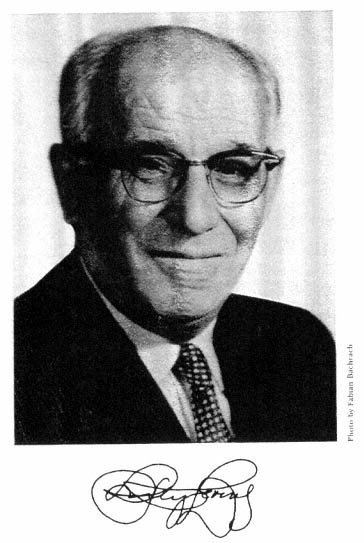
BY ELOISE R. GIBLETT
PHILIP LEVINE'S life spanned a remarkable period of discovery and early development of blood group genetics and immunology that began with Karl Landsteiner's detection of the ABO blood group system in 1901 and ended during the 1980s with the retirement or death of nearly all of its major contributors. Long before the biochemical basis for inheritance was known, these pioneers made farreaching deductions from simple serological observations, confirming in human subjects the basic laws of inheritance and such phenomena as gene mutation, linkage, balanced polymorphism, and population differentiation. Similarly, although immunogenetics was in its infancy, they advanced many immunological principles and discovered the basis for certain diseases—notably hemolytic disease of the newborn. It was this discovery for which Philip Levine will best be remembered.
The sixth of seven children, Levine was born in Kletsk, Russia, in the summer of 1900; his family came to the United States in 1908. Many years later Levine said he still had vivid memories of the antisemitism to which his people were subjected. One has only to read the descriptions by other Jewish immigrants of life in Russia at the turn of the
century to understand why so many of them took refuge in this and other countries.
Levine's family settled in Brooklyn, where Philip was enrolled in the public schools. During his childhood he developed scarlet fever and subsequently nephritis, which required him to take long periods of bedrest and quiet. He described himself then as a loner, spending much of his time reading books on a wide variety of subjects. He also received rudimentary piano instruction from a sister and developed a great love of classical music, piecing together melodies on the piano. In addition, he began a lifelong interest in mathematics as a hobby, being especially fascinated by magic squares, the Fibonacci series of numbers, and similar phenomena. Although he had few athletic inclinations, Levine had a passion for baseball and could name long lists of players, their teams, and claims to fame. Not long before his death, Levine was taken to a baseball game, and his enthusiasm for the sport was still very evident.
Levine graduated from Brooklyn Boys High School in 1916 and received a B.S. degree from City College of New York in 1919, after a four-month enlistment in the Army that ended with the armistice of World War I. He then entered Cornell University Medical College. He had his initial experience with blood groups during his senior year, when he found that his red blood cells (subsequently typed as A2) were hemolyzed by the serum of a type O fellow student. This observation suggested the possible danger of "universal donor" blood and formed the basis for his first scientific report, published in 1923.
During his third year in medical school Levine received a three-year New York state scholarship that enabled him, after graduation in 1923, to pay for postgraduate allergy
work under the directorship of A. F. Coca, a pioneer in that field and a founder of the Journal of Immunology. Levine's work with Coca was largely concerned with the newly discovered Prausnitz-Kustner reaction as observed in patients with hypersensitivity states. As a result of their work, Levine received his M.A. degree in 1925.
In the meantime, Karl Landsteiner had come to the United States (1922) at the invitation of Simon Flexner and set up a laboratory at the Rockefeller Institute. Levine was hired there in 1925 in response to Landsteiner's search for a young physician who could perform venipunctures and help in serological studies. Levine subsequently credited Landsteiner with influencing his work habits through strict adherence to scientific principles and to concise and logical thinking. All essential experiments were repeated, and nothing was left to chance. Exposed to these high standards over a seven-year period, Levine adopted them as his own. Marjory Stroup, an associate of Levine from the 1950s to the 1980s, remembers him as a tireless worker who was always in the laboratory before his colleagues and never left before they did except when he was going to the opera. She frequently served as a sounding board for his papers, which he slowly wrote and rewrote until they expressed his thoughts precisely.
Landsteiner performed his early experiments on human blood in 1901, testing for agglutination of red blood cells from healthy human subjects by the serum of other healthy subjects. In this way he detected the A, B, and O phenotypes. In 1907 pretransfusion ABO typing was introduced by Reuben Ottenberg and subsequently was adopted as standard practice by all transfusionists.
Landsteiner was not particularly interested in the clinical problems of transfusion and did not resume any fur-
ther studies on the antigens of red cells until coming to the Rockefeller Institute. Levine's earliest collaborative papers from Landsteiner's laboratory were concerned with the finding of A and B on human spermatozoa as well as the behavior of "naturally occurring" cold agglutinins in human serum.
In 1927 Landsteiner and Levine described some results of injecting the red cells of humans and other primates into rabbits and absorbing the resultant antisera with selected red cells. This kind of experiment led to the discovery of the M, N, and P antigens, representing what were subsequently to be known as the MNSs and P human blood group genetic systems. They also noted the occurrence of M in chimpanzees but not in gibbons, the stronger reactions of anti-P with the red cells of black people, and the presence of "naturally occurring" anti-P in some rabbit and horse sera.
Between 1928 and 1932, they expanded their work on the inheritance and racial distribution of these red cell antigens. Reviewing this work in 1960, Levine wrote, "In considering the heredity of M and N as a genetic system, we excluded independent genes and close linkage; we also considered the existence of more than two alleles interacting with or modifying the effects of factors determining hitherto unknown agglutinable structures." In the early 1930s, these conclusions were highly sophisticated from a genetic point of view and were probably influenced by the work of Thomas Hunt Morgan and his colleagues, who were then studying the localization of genes on the chromosomes of Drosophila.
By 1929 Landsteiner and Levine were able to distinguish seventy-two human red cell phenotypes on the basis of their serological reactions with anti-A, -A1, -B, -M, -N, -P, and a
seventh antibody subsequently identified as anti-Lea by Arthur Mourant. Stimulated by this early work, many other serologists throughout the world took up the search for human red cell antigenic determinants. Between 1929 and 1975 (the date of the last edition of Race and Sanger's Blood Groups in Man), nearly 200 additional inherited serologically detected epitopes had been reported on human red cells. The significance of these genetic markers and their association with human disease were subsequently demonstrated by many investigators, notably including Levine.
As an adjunct to their studies on heteroagglutinins, Landsteiner and Levine hoped to obtain some clues on evolution by injecting human serum into chimpanzees and rabbits. Using the rather crude technique of liquid-phase immunoprecipitation, they detected precipitins in one of three injected chimpanzees, but none in rabbits similarly treated. However, in light of our present knowledge, it is almost certain that the rabbits actually did form antibodies against many human serum proteins, but their detection awaited more sensitive methods. Thus, in later years Robin Coombs and his colleagues introduced the antiglobulin test (long named after Coombs). This test relies on the production of antihuman immunoglobulin in rabbits injected with human serum. The rabbit serum is then used for detecting the coating of human red cells by "incomplete" antibodies difficult to detect by other methods.
In 1932 Levine left the Rockefeller Institute, making a gentleman's agreement with Landsteiner to discontinue working with blood groups. This was not an easy decision for Levine because of his deep commitment to the subject. Nevertheless, after accepting a position on the medical faculty at the University of Wisconsin, he turned his attention to bacteriophage, showing that phage specificity of the Sal-
monella species paralleled their antibody specificity. This work was made possible by his observation that phage specificity could be neutralized by soluble extracts of bacteria containing the specific antigens. He also did some typing of blood obtained from the Blackfoot and Blood Indian tribes. More importantly, he successfully sponsored a Wisconsin law granting courts the authority to order blood testing in cases of disputed paternity.
In 1935 Levine was hired as a bacteriologist and serologist at Beth Israel Hospital in Newark, New Jersey. His major focus was now on detecting and determining the specificity of red cell alloantibodies formed in patients who had received blood transfusions. He also became a consultant to the Blood Betterment Association of New York City. Over several years he published a number of papers on serological methods and made useful observations on the selection of compatible blood donors. However, his most important contribution concerned the consequences of red cell alloimmunization, in particular hemolytic disease of the newborn, then known as erythroblastosis fetalis.
In 1937 Dr. Rufus Stetson sent Levine a blood specimen from a female patient who had hemorrhaged after her second pregnancy terminated with a macerated stillborn infant and then suffered a severe reaction when given 500 milliliters of her husband's ABO-compatible blood. When the patient's pretransfusion serum was tested against her husband's red cells by a more sensitive technique, agglutination was observed. Her serum also agglutinated the red cells of most other donors tested, but she was successfully transfused with blood from six serologically compatible donors.
A month later Levine also detected the agglutinin and confirmed that it reacted with the red cells of 80 percent of random group O donors. He also observed that the
patient's antibody was active at 37°C, and thus differed from naturally occurring cold agglutinins. Its specificity was noted to be different from M, N, and P.
Two months later the agglutinin was still present, but it was much weaker. After a year it was no longer demonstrable. Such a sequence of agglutinin appearance and disappearance had been noted before in patients who had transfusion reactions. It was subsequently shown to be due to the change of the specific immunoglobulins from IgM to IgG, the latter "incomplete" antibodies being detectable only with the use of specialized techniques developed later, such as the antiglobulin test.
In their paper (1939, 3) describing the case of the female patient, Levine and Stetson proposed that the mother's antibody was stimulated during pregnancy and the "immunizing property in the blood and/or tissues of the fetus must have been inherited from the father." The possibility that the infant's intrauterine death was also a consequence of red cell destruction by the maternal antibody was not spelled out in this report, but it must have occurred to Levine at the time, particularly since the possibility of maternal alloimmunization had been previously suggested as the cause of other stillbirths. The 1939 paper also described failure of efforts to raise heteroimmune antibodies of similar specificity by injecting human red cells into rabbits. However, in 1940 Landsteiner and Alexander Wiener described the appearance of a heteroagglutinin in the serum of rabbits injected with the red cells of rhesus monkeys. This antibody, called anti-Rh, reacted with the red cells of about 85 percent of human subjects. Wiener and his former student Peters showed that antibodies with the same apparent (anti-Rh) specificity could be demonstrated in the serum of some human subjects who had had hemolytic
transfusion reactions. When Levine and Wiener compared the reactions of the rabbit heteroagglutinin with those of the serum of the female patient and the sera of other mothers whose infants had hemolytic disease, all were found to be identical.
These findings permitted Levine to declare anti-Rh to be the major cause of hemolytic disease of the newborn, in the setting of an Rh-negative mother with an Rh-positive father. Many years later (1961, 1967), Levine and his colleagues showed that there actually is a difference in the specificity of the antibodies raised by injection of rhesus monkey cells into rabbits versus those stimulated in Rh-negative human subjects by transfusion or pregnancy. They proposed the name LW (Landsteiner-Wiener) for the heteroagglutinins, retaining the name Rh for the human alloimmune antibodies. Although of interest from a serological point of view, this finding does not in any way detract from the importance of Levine's original observations on the Rh blood group system and the pathogenesis of hemolytic disease of the newborn (HDN).
Some hints of the complexity of antigens in the human Rh blood group system were noted early by several serologists, especially in England. In 1941 Levine used absorption tests to show that while most cases of HDN were due to immunization to the Rh antigen later called D, many sera also contained an antibody to an antigen later called C, which was shown to be inherited along with D and therefore part of the Rh system. A third antibody, subsequently called anti-G, appeared to have cross-reactivity with both C and D. Furthermore, the existence of still another antigen, called c (because of its antithetical reactions to C) was detected by antibodies found in the serum of immunized Rh-positive subjects. Eventually, two other major antigens
within the Rh system, called E and e, were described. Thus, Sir Ronald Fisher, the English geneticist working with Robert R. Race, proposed the existence of three closely linked genes, each carrying one of six different specificities: D or d (although no antibody defining an antigen antithetical to D has ever been described), C or c, and E or e. He suggested that the chromosome carrying the Rh locus (subsequently found on the long arm of chromosome one) consisted of a complex of three linked genes assembled in eight different ways (in order of frequency): CDe, cde, cDE, cDe, cdE, Cde, CDE, and CdE. All people inheriting a D-containing gene triad (conferring the D antigen specificity to red cells) were considered to be Rh-positive, thus making up about 85 percent of most caucasian populations.
Levine, who in 1944 had established the diagnostic laboratories of the Ortho Research Foundation in Raritan, New Jersey, studied many human serum specimens containing antibodies with these Rh specificities. He adopted the Fisher-Race genetic theory and supported their work wholeheartedly. However, Wiener was unalterably opposed to the linked-gene theory, proposing instead a series of Rh alleles, each conferring two or more Rh specificities. As a consequence, two systems of Rh nomenclature existed, bringing considerable confusion to those attempting to understand Rh inheritance and alloimmunization.
It is remarkable that a controversy of such acrimony arose at a time when the biochemical nature of all genes was completely unknown and scientists had to rely entirely on red cell agglutination reactions (some of them weak and equivocal) to deduce the inheritance of antigenic determinants. Studies on the molecular biology of red cell antigens have lagged far behind those on the HLA histocom-
patibility antigens of white cells. However, within the past few years, immunochemical analyses of human red cell membranes have demonstrated at least three, and possibly more, peptides bearing separate Rh specificities. Thus, the likelihood that Rh, like HLA specificity, is dependent on tandem structural genes at a complex locus, is now near certainty.
A large part of Levine's work at the Ortho Foundation was concerned with further studies on Rh and identification of human red cell antigens belonging to other blood group systems such as k (Kell system) and s (MNSs system). He and his colleagues also made important discoveries related to the P blood group system. In 1951 they described anti-Tj a, found in the serum of a woman who had had many spontaneous abortions. It caused marked hemolysis of the red cells of all subjects tested except those of the patient's extremely rare phenotype called p, in which the red cells were not agglutinated by antibodies reacting with the very common P antigen. In 1963, Levine showed anti-P to be the usual specificity of the Donath-Landsteiner cold-warm hemolysin in paroxysmal cold hemoglobinuria (PCH). Subsequent studies by Donald Marcus and his colleagues showed the biochemical genetics of the so-called P system (including Tja) to be very complex and outside the scope of this memorial to Levine. However, it is a tribute to the tenacity and persistent curiosity of Levine that in his late seventies he revived an interest in the P system. Noting the presence of P-like epitopes in the extracts of certain malignant tumors, he suggested that anti-P might be used to treat patients with such tumors. He was at that time a visiting investigator at the Sloan Kettering Memorial Institute for Cancer Research in New York City.
In 1943 Levine made the important observation that ABO
incompatibility between an Rh-positive father and an Rh-negative mother provided a very significant protection against Rh immunization by the fetus. From this observation (expanded in 1958), Levine deduced that when any ABO-incompatible, Rh-positive fetal cells cross the placenta, they are rapidly destroyed by anti-A and-B, before Rh immunization can occur. This proposed mechanism was later used by both American and British workers as an argument in favor of attempting to prevent Rh immunization by injecting Rh-negative mothers with Rh-immune globulin to destroy any Rh-positive fetal cells that might stimulate maternal Rh alloimmunization. Although the actual mechanism of this protection by specific immunoglobulin is much more complex than originally supposed, the great success of Rh-immune prophylaxis is in part attributable to Levine's creative genius.
Another important observation (1955) concerned the aberrant inheritance of ABO and Lewis antigens in a family containing some members of the very rare "Bombay" phenotype. In conjunction with Dr. Ruggiero Ceppellini, Levine proposed a system of inheritance in which the development of normal (H) AB antigens was blocked. The subsequent studies of Walter Morgan and Winifred Watkins showed that this kind of "blockade" was actually due to inheritance from both parents of a very rare allele of the H gene, preventing the addition to carbohydrate chains of a fucose residue necessary for the expression of H, the substrate for enzymes that confer A or B specificity by the addition of either N-acetylgalactosamine or galactose.
Levine officially retired from Ortho in 1965, and his research center was renamed the Philip Levine Laboratories. He continued there in emeritus status until 1985, making many more contributions, although the number of his pub-
lications declined. For the two years before his death in October 1987, he was confined to a nursing home with far-advanced arteriosclerotic vascular disease. His wife, Hilda, had died in 1975. They are survived by two sons, Mark Levine of Denver and Victor Levine of Madison, and a daughter, Phyllis Klein of New York City.
Philip Levine was a dedicated scientist who prepared his mind to a degree that permitted him to construct major and testable hypotheses from chance observations made in his own laboratory and those of others. He inspired many young investigators to study the immunology and genetics of human red cells at a time when most of the modern techniques of biochemical analysis and molecular biology were unknown. His greatest contribution was describing the pathogenesis of hemolytic disease of the newborn, which led to its treatment by exchange transfusion and later to its prevention by maternal treatment with Rh-specific immunoglobulin.
During his lifetime Levine received many awards, listed below. He was elected to the National Academy of Sciences on April 26, 1966.
HONORS AND DISTINCTIONS
1942
Mead Johnson Award
1944
Fellow of the American College of Physicians
1946
Ward Burdick Award
1946
Lasker Award
1947
Phi Lambda Kappa Grand Award
1951
Passano Foundation Award
1956
A.A.B.B. Karl Landsteiner Award
1956
Townsend Harris Medal, Alumni Association of the City College of New York
1959
Award of Merit of the Netherlands Red Cross
1960
The Johnson Medal for Research and Development
1961
Life membership in the Harvey Society
1964
First Franz Oehlecker Award from German Society for Blood Transfusion
1965
Medal from the German Red Cross
1966
Joseph P. Kennedy, Jr., International Award for Research in Mental Retardation
1966
Elected to the National Academy of Sciences
1966
Clement Von Pirquet Gold Medal from the Seventh Forum on Allergy
1966
Edward J. Ill Award from the Academy of Medicine of New Jersey
1967
Honorary Doctor of Science from Michigan State University
1968
Award of Distinction of the Alumni Association of Cornell University Medical College
1968
Honorary Member of American Academy of Oral Medicine
1969
Distinguished Service Award of the American Association of Blood Banks
1973
Fellow of the Royal College of Physicians
1974
Honorary Fellow of the Truman Library Institute
1975
Norwegian Society of Immunohematology Medal
1975
Bavarian Red Cross Medal
1975
Allan Award from the American Society of Human Genetics
1975
Melvin H. Motolinsky Award from Rutgers University Medical School
1977
Muhlenberg Centennial Medal
1978
Honorary member of the International Society of Blood Transfusion
1978
Honorary life member of the New York Academy of Science
1979
New Jersey Hospital Association Award
1979
Annual McNeil Science Award
1980
Karl Landsteiner Gold Medal from the Netherlands Red Cross
1980
Bronze Medal from the Israel Blood Transfusion Service
1983
Honorary Doctor of Science Degree, University of Wisconsin
SELECTED BIBLIOGRAPHY
1923 With M. Mabee. A dangerous "universal donor" detected by the direct matching of bloods. J. Immunol. 8:276.
1926 The relation of the inheritance of atopic hypersensitiveness and the isoagglutination elements (blood groups). J. Immunol. 11:447.
With A. F. Coca. A quantitative study of the interaction of atopic reagin and atopic. J. Immunol. 11:451.
With A. F. Coca. A quantitative study of the atopic reagin in hay fever. The relation of skin sensitivity to reagin content of serum. J. Immunol. 11:430.
With A. F. Coca. On the nature of the alleviating effect of the specific treatment of atopic conditions. J. Immunol. 11:438.
With K. Landsteiner. On group specific substances in human spermatozoa. J. Immunol. 12:387.
With K. Landsteiner. On the cold agglutinins in human serum. J. Immunol. 12:441.
1927 With K. Landsteiner. On the specific substance of the cholera vibrio. J. Exp. Med. 46:213.
With K. Landsteiner. A new agglutinable factor differentiating individual human bloods. Proc. Soc. Exp. Biol. Med. 24:600.
With K. Landsteiner. Further observations on individual differences of human blood. Proc. Soc. Exp. Biol. Med. 24:941.
1928 With K. Landsteiner. On individual differences in human blood. J. Exp. Med. 47:757.
With K. Landsteiner and P. James. On the development of isoagglutinins following transfusions. Proc. Soc. Exp. Biol. Med. 25:672.
With K. Landsteiner. On the inheritance of agglutinogens of human blood demonstrable by immune agglutinins. J. Exp. Med. 48:731.
1929 With K. Landsteiner. On the racial distribution of some agglutinable structures of human blood. J. Immunol. 16:123.
With K. Landsteiner. On isoagglutinin reactions of human blood other than those defining the blood groups. J. Immunol. 17:1.
1930 With K. Landsteiner. On the inheritance and racial distribution of agglutinable properties of human blood. J. Immunol. 18:87.
With K. Landsteiner. Note on individual differences in human blood. Proc. Soc. Exp. Biol. Med. 28:309.
With K. Landsteiner. Experiments on anaphylaxis to azoproteins. J. Exp. Med. 52:347.
1931 With K. Landsteiner. The differentiation of a type of human blood by means of normal animal serum. J. Immunol. 20:179.
1932 Application of blood groups in forensic medicine. Am. J. Police Sci. 3:157.
With K. Landsteiner. On the Forssman antigens in B. paratyphosus and B. dysenteriae Shiga. J. Immunol. 22:75.
With K. Landsteiner. Immunization of chimpanzees with human blood. J. Immunol. 22:76.
With K. Landsteiner. On individual differences in chicken blood. Proc. Soc. Exp. Biol. Med. 30:209.
Observations on taste blindness. Science 75:497.
1933 With A. W. Frisch. Specific inhibition of bacteriophage by bacterial extracts. Proc. Soc. Exp. Biol. Med. 30:993.
With A. W. Frisch. Further observations on specific inhibition of bacteriophage action. Proc. Soc. Exp. Biol. Med. 31:46.
1934 With A. W. Frisch. On specific inhibition of bacteriophage action by bacterial extracts. J. Exp. Med. 59:213.
With A. W. Frisch and B. V. Cohen. On absorption of phage by bacilli. J. Immunol. 26:74.
With A. W. Frisch. Note on absorption of phage by heat-killed bacilli. Proc. Soc. Exp. Biol. Med. 32:339.
With A. W. Frisch. Observations of phage inhibition by bacillary extracts. Proc. Soc. Exp. Biol. Med. 32:341.
1935 With A. W. Frisch. New heat stable agglutinogens in the Suipestifer group. Proc. Soc. Exp. Biol. Med. 32:883.
With A. W. Frisch. Polyvalency demonstrated by antiphages. Proc. Soc. Exp. Biol. Med. 32:886.
With A. W. Frisch. Absorption of bacteriophage by salmonella. J. Infect. Dis. 57:104.
Wisconsin law on blood tests. J. Am. Med. Assoc. 105:1370.
With G. A. Matson and H. F. Schrader. Distribution of blood groups and agglutinogen M among Indian "Blackfeet" and "Blood" tribes. Proc. Soc. Exp. Biol. Med. 33:297.
1936 With A. W. Frisch. On differentiation in the Suipestifer group and on resistance of phage. J. Immunol. 30:1.
With A. W. Frisch. Specificity of the multiplication of bacteriophage. J. Immunol. 30:1.
With G. A. Matsen and H. F. Schrader. Distribution of the sub-groups of A and the M and N agglutinins among the Blackfeet Indians. Proc. Soc. Exp. Biol. Med. 35:46.
1937 With D. Perlstein. Phage-specific heat-labile factors in B. dysenteriae Sonne. Proc. Soc. Exp. Biol. Med. 36:295.
With E. M. Katzin. A survey of blood transfusion in America. J. Am. Med. Assoc. 110:1243.
With E. M. Katzin. Temporary agglutinability of red blood cells. Proc. Soc. Exp. Biol. Med. 39:167.
1939 Hemagglutinins of pneumococcic antisera. Proc. Soc. Exp. Biol. Med. 41:617.
With E. M. Katzin. A problem in blood grouping. Am. J. Clin. Pathol. 9:316.
With R. E. Stetson. An unusual case of intra-group agglutination. J. Am. Med. Assoc. 113:126.
With E. M. Katzin. Isoimmunization in pregnancy and the varieties of isoagglutinins observed. Proc. Soc. Exp. Biol. Med. 45:343.
1940 With E. M. Katzin and L. Burnham. Atypical warm isoagglutinins. Proc. Soc. Exp. Biol. Med. 45:346.
1941 On the preservation of specific anti-M and anti-N agglutinins with toluol. J. Lab. Clin. Med. 26:866.
With E. M. Katzin and L. Burnham. Isoimmunization in pregnancy. J. Am. Med. Assoc. 116:825.
With S. H. Polayes. An atypical hemolysin in pregnancy. Ann. Intern. Med. 14:1903.
The role of isoimmunization in transfusion accidents in pregnancy and in erythroblastosis fetalis. Am. J. Obstet. Gynecol. 42:165.
With P. Vogel, E. M. Katzin, and L. Burnham. Pathogenesis of erythroblastosis fetalis: Statistical evidence. Science 94:371.
With E. M. Katzin. Pathogenesis of erythroblastosis fetalis: Absence of Rh factor from saliva. Proc. Soc. Exp. Biol. Med. 48:126.
With L. M. Goldman, H. Sprinz, and W. Antopol. Operation of a blood bank. J. Med. Soc. N.J. 38:561.
Role of isoimmunization in transfusion accidents and in the pathogenesis of erythroblastosis fetalis. Am. J. Clin. Pathol. 11:12.
With L. Burnham, E. M. Katzin, and P. Vogel. Role of isoimmunization in the pathogenesis of erythroblastosis fetalis. Am. J. Obstet. 42:925.
1942 On human anti-Rh sera and their importance in racial studies. Science 96:452.
The pathogenesis of fetal erythroblastosis. N.Y. State J. Med. 42:1928.
1943 With P. Vogel and N. Rosenthal. Hemolytic reactions as a result of
isoimmunization following repeated transfusions of homologous blood. Am. J. Clin. Pathol. 13:2.
Serological factors as possible causes in spontaneous abortions. J. Heredity 34:71.
With H. Wong. Incidence of Rh factor and erythroblastosis fetalis in Chinese. Am. J. Obstet. Gynecol. 45:832.
With W. Dameshek. Isoimmunization with Rh factor in acquired hemolytic anemia. N. Engl. J. Med. 228:641.
With H. R. Brown. Rh factor and its importance in transfusion for the anemias of erythroblastosis and other causes. J. Pediatr. 23:290.
Pathogenesis of erythroblastosis fetalis. J. Pediatr. 23:656.
With H. A. Schwartz. Studies on the Rh factor. Am. J. Obstet. Gynecol. 46:827.
1944 Landsteiner's concept of the individuality of human blood. Exp. Med. Surg. 11:36.
Mechanism of the isoimmunization by the Rh factor of red blood cells. Am. Arch. Pathol. 37:83.
With R. K. Waller. On the Rh and other blood factors in Japanese. Science 100:453.
With R. K. Waller and I. Garrow. A case of erythroblastosis caused by immunization of an Rh-positive mother by the Rh factor. Am. J. Clin. Pathol. 14:11.
1945 With E. L. Gilmore. The first stage of antigen antibody reaction in infectious mononucleosis. Science 101:411.
Recent developments in isoimmunization by the Rh factor. Am. J. Obstet. Gynecol. 49:810.
Geographical distribution of genes determining individual human blood differences. Biometr. Bull. 1:20.
Again, the Rh factor. Am. J. Obstet. Gynecol. 49:797.
On the Hr factor and the Rh genetic theory. Science 102:1.
Prevention of unintentional isoimmunization of the Rh-negative female population. J. Am. Med. Assoc. 128:946.
Anti-Hr sera. Nature 156:3962.
1946 With R. K. Waller. On the blocking antibody and the zone phenomenon in human Rh sera. Science 103:389.
With R. K. Waller. Erythroblastosis fetalis in the first-born. Blood 1:143.
Genetic and constitutional causes of fetal and neonatal morbidity. Ann. N. Y. Acad. Sci. 46:939.
1948 Survey of the significance of the Rh factor. Blood 3:2.
Mechanism of transplacental isoimmunization. Blood 5:111.
Importance of Rh factor in clinical medicine. Hebrew Med. J. 2:47.
Transplacental isoimmunization in horses. J. Hered. 39:285.
1949 The Rh factor—general significance and methods of study. Bull. N.Y. Acad. Med. 25:244.
With M. Backer, M. Wigod, and R. Ponder. A new human hereditary blood property (Cellano) present in 99.8% of all bloods. Science 109:464.
Isoimmunization by the Rh factor. Postgrad. Med. 5:1.
With M. Wigod, M. Backer, and R. Ponder. The Kell-Cellano (K-k) genetic system of human blood factors. Blood 4:869.
With R. Ponder. Fetal and adult hemoglobins in the blood of infants affected with hemolytic disease of the newborn. Blood 4:874.
1951 With O. B. Bobbitt, R. K. Waller, and A. B. Kuhmichel. Isoimmunization by a new blood factor in tumor cells. Proc. Soc. Exp. Biol. Med. 77:403.
With A. H. Stock, A. B. Kuhmichel, and N. Bronikovsky. A new human blood factor of rare incidence in the general population. Proc. Soc. Exp. Biol. Med. 77:402.
With A. B. Kuhmichel, M. Wigod, and E. Koch. A new blood factor’s, allelic to S . Proc. Soc. Exp. Biol. Med. 78:218.
1952 With A. B. Kuhmichel and M. Wigod. A second example of anti-Cellano (anti-k). Blood 7:21.
With G. Davidson and A. S. Wiener. Medicolegal application of blood grouping tests. J. Am. Med. Assoc. 149:699.
With A. Zoutendyk. A second example of the rare serum anti-Jay (Tj a). Am. J. Clin. Pathol. 22:630.
With L. R. Ferraro and E. Koch. Hemolytic disease of the newborn due to anti-S. Blood 7:1030.
With M. Grove-Rasmussen and L. Soutter. A new blood subgroup (A°) identifiable with group O serum. Am. J. Clin. Pathol. 22:1157.
1953 Immunization to the rare blood factors. N.Y. State J. Med. 53:534.
The role of isoimmunization in pregnancy wastage. In Pregnancy Wastage. Springfield, Ill.: Charles C. Thomas.
1954 With M. Grove-Rasmussen. Occurrence of anti-D and anti-E in absence of obvious antigenic stimuli. Am. J. Clin. Pathol. 24:145.
With H. A. Koch, R. T. McGee, and G. Hill. Rare human isoagglutinins and their identification. Am. J. Clin. Pathol. 24:292.
With S. Iseki and S. Masaki. A remarkable family with the human isoantibody anti-Tja in four siblings: Anti-Tja and habitual abortion. Nature 173:1193.
With E. A. Koch. The rare human isoagglutinin anti-Tja and habitual abortion. Science 120:239.
With M. B. Cooper and E. A. Koch. A serologic and genetic analysis of an r' r' (dCe/dCe) patient producing anti-D and anti-c. Blood 9:817.
With R. Race and R. Sanger. A positive effect of the Rh blood group genes. Nature 174:460.
With G. A. Matson and E. A. Koch. A study of the hereditary blood factors among the Chippewa Indians of Minnesota. Am. J. Phys. Anthropol. 12:413.
With E. Robinson, B. Pryer, and O. Michel. Anti-Tja in second pair of U.S. sibs with observations on the original sibs. Vox Sang. 4:143.
1955 With F. Ottensooser, M. Celano, and W. Pollitzer. On reactions of plant anti-N with red cells of chimpanzees and other animals. Am. J. Phys. Anthropol. 13:29.
With E. Robinson, W. Herrington, and L. Sussman. Second example of the antibody for the high-incidence blood factor, Vel. Am. J. Clin. Pathol. 25:751.
With P. Sneath, E. Robinson, and W. Huntington. A second example of anti-Fyb. Blood 10:941.
Hemolytic disease due to antibodies other than anti-D. Revue d'Hemat. 10:215.
Cross-matching technics, especially the Coombs test. Proc. N.Y. State Assoc. Pub. Hlth. Lab. 35:9.
With E. Robinson, M. Celano, O. Briggs, and N. Falkinburg. Gene interaction resulting in suppression of blood group substances. Blood 10:1100.
1956 With E. Robinson, M. Layrisse, T. Arend, and R. Sisco. Notes on the Diego blood factor. Nature 177:40.
With M. Lewis, H. Akuyawa, and B. Chown. The blood group antigen Diego in North American Indians and in Japanese. Nature 177:1084.
With E. Robinson, M. Stroup, R. McGee, and L. Muschel. A summary of atypical antibodies: Rare genotypes and ABO hemolytic disease encountered in a one-year survey. Blood 11:12.
1957 With R. McGee and M. Celano. First examples of genotype ry ry: A family study. Science 125:1043.
With E. Robinson. Some observations on the new human blood factor, Dia. Blood 12:448.
Blood groups and immunogenetics, rare red cell genotypes, some illustrative cases. Acta Genet. 6:515.
With M. Celano and S. Lange. Studies of eluates from rhesus and human Ao red cells . Vox Sang. 2:375.
With M. Celano, S. Lange, and V. Berliner. On anti-M in horse sera. Vox Sang. 2:433.
1958 The influence of ABO system on Rh hemolytic disease. Hum. Biol. 30:12–28.
With M. Celano and M. M. Staveley. The antigenicity of P sub-
stance in echinococcus cyst fluid coated on to tanned red cells. Vox Sang. 3:434.
1959 With M. Celano, S. Lange, and M. Stroup. The influence of gene interaction on dosage effects with complete anti-D sera. Vox Sang. 4:33.
With J. Tatarsky, M. Stroup, and W. Ernoehazy. Another example of anti-Diego (Dia). Vox Sang. 4:153.
1960 With J. White, M. Stroup, C. M. Zmijewski, and J. F. Mohn. Hemolytic disease of the newborn probably due to anti-f. Nature 85:188.
With M. Celano. The antigenicity of Lewis (Lea) substance in saliva coated on to tanned red cells. Vox Sang. 5:53.
American Association of Blood Banks Keynote Address: A review of Landsteiner's contribution to human blood groups. Annual meeting of the American Association of Blood Banks, San Francisco, November.
Recent observations on the Lewis system. Bull. N.Y. Acad. Med. 36:750.
1961 With M. Celano, R. Fenichel, and H. O. Singher. A "D" like antigen in rhesus red blood cells and in Rh-positive and Rh-negative red cells. Science 133:332.
With J. White and M. Stroup. Seven Vea (Vel) negative members of three generations of a family. Transfusion 1:111.
With R. E. Rosenfield and J. White. The first example of the Rh phenotype, rGrG. Am. J. Hum. Genet. 13:36.
With M. Celano, R. Fenichel, W. Pollack, and H. O. Singher. A "D-like" antigen in Rhesus monkey, human Rh-positive and human Rh-negative red blood cells. J. Immunol. 87:747.
1962 With M. Celano. Presence of "D-like" antigens on various monkey red blood cells. Nature 193:184.
Recent observations on the Lewis system: A brief review. In Proceed-
ings of the 8th Congress of the International Society of Blood Transfusion, Tokyo, 1960, p. 29.
With M. Celano, G. H. Vox, and J. Morrison. The first human blood, —/— which lacks the "D-like" antigen. Nature 194:304.
With M. Celano, J. Wallace, and R. Sanger. A human "D-like" antibody. Nature 198:596.
With M. Celano and F. Falkowski. The specificity of the antibody in paroxysmal cold hemoglobinuria (PCH). Transfusion 3:278.
1964 With G. H. Vos, M. Celano, and F. Falkowski. Relationship of a hemolysin resembling anti-Tja to threatened abortion in Western Australia. Transfusion 4:2.
With M. Celano, F. Falkowski, J. W. Chambers, O. B. Hunter, Jr., and C. T. English. A second example of —/— blood or Rhnull. Nature 204:892.
1965 With M. Celano and F. Falkowski. The specificity of the antibody in paroxysmal cold hemoglobinuria (PCH). Ann. N.Y. Acad. Sci. 124:456.
1967 With M. Celano. Agglutinating specificity for LW factor in guinea pig and rabbit anti-Rh serums. Science 156:1744.
With M. Celano. Anti-LW specificity in autoimmune acquired hemolytic anemia. Transfusion 7:265.
1969 With W. Q. Ascari and W. Pollack. Incidence of maternal Rh immunization by ABO compatible and incompatible pregnancies. Br. Med. J. 1:399.
1970 Prevention and treatment of erythroblastosis fetalis. Ann. N.Y. Acad. Sci. 169:234.
1971 Blood groups, Rh and LW. In Proceedings of the 12th Congress of the International Society of Blood Transfusion, Moscow, 1969, Bibl. Haem. #38, pp. 74–78. Basel: Karger.
1973 With D. Tripodi, J. Struck, C. M. Zmijewski, and W. Pollack. Hemolytic anemia associated with Rhnull but not with Bombay blood: A hypothesis based on differing antigenic structures. Vox Sang. 24:417.
1974 Differences between Bombay and Rhnull phenotypes. Vox Sang. 26:272.
1975 With R. E. Rosenfield and C. Heller. Quantitative Rh typing of rGr G with observations on the nature of G (Rh 12) and anti-G. Vox Sang. 28:293.
ABO, MN, P and Rh revisted. The illegitimacy of malignant tissue. In the XIV Congress of the International Society of Blood Transfusion, Helsinki, Finland.
1976 Biological and clinical significance of differences between RBC membrane (Rh) and non-membrane (ABH, MN, P) antigenic sites. Illegitimate ABO, M-N(T), P(Tja) antigens in malignancy. Rev. Franc. Transf. et Immunohemat. 19:1.
1979 With H. Kitamura, P. J. Cheng, R. A. Egeli, Y. P. Liu, R. A. Good, and N. K. Day. Forssman-like antibody levels in sera of patients with lung cancer. Cancer Res. 39:2909.
With W. W. Young and S. I. Hakomori. Characterization of anti-Forssman (anti-FS) antibodies in human sera—their specificity and possible changes in patients with cancer . J. Immunol. 123:92.
1982 With R. Kannagi, K. Watanabe, and S. I. Hakomori. Recent studies of glycolipid and glycoprotein profiles and characterization of the major glycolipid antigen in gastric cancer of a patient of blood group genotype pp (Tja neg.) first studied in 1951. Cancer Res. 42:5249.
1984 The discovery of Rh hemolytic disease. Vox Sang. 47:187.


