
APPENDIX D
SEPARATIONS TECHNOLOGY-ADDITIONAL INFORMATION
INTRODUCTION
All current processing plants for reactor fuel have similar steps. The first is the separation of the fuel from a protective sheath called cladding. This sheath is metal; Zircaloy, aluminum, and stainless steel are the usual materials. These materials are alloys, and the nature of the minor elements must be considered. Zircaloy cladding may be made with a few percent of tin or niobium. The aluminum cladding may contain silicon, and stainless steel cladding is usually made of iron with 18% chromium and 8% nickel. Fast reactor cladding is essentially iron and chromium with very little nickel present.
In processing of commercial spent oxide fuels, Zircaloy is removed by mechanical chopping of the fuel rods into segments, followed by dissolution of the spent nuclear fuel in nitric acid. Zircaloy may also be dissolved away from metal fuel with nitric and hydrofluoric acids. In this zirconium cladding dissolution procedure, the dissolver solution is later reacted with aluminum nitrate to form fluoride ion complexes in order to prevent excessive corrosion of downstream process equipment and to supply a salting agent to promote the extraction process. This process generates large volumes of waste per unit volume of fuel processed. The mechanically removed hulls may retain some activity but are a minor process and waste volume problem.
Aluminum cladding is often dissolved in nitric acid catalyzed with mercury; alternatively it may be dissolved in sodium hydroxide sodium nitrate solution. The caustic solution is then filtered to recover the actinide fraction, or made acidic to produce the feed solution. In some processes like REDOX, the aluminum nitrate serves as a salting agent for the extraction of plutonium and uranium. Unfortunately, this aluminum nitrate constitutes a waste stream that is ten times larger than the fission products themselves.
The usual approach with stainless steel is to shear the cladding and dissolve the fuel oxide in HNO3, leaving the steel hulls in solid form for final disposal. The stainless steel is not dissolved because the elements in the alloy interfere with the aqueous separation processes, but it can be dissolved with anodic corrosion methods when using pyrochemical separation techniques.
PUREX feed is made by leaching the fuel from the cladding, thus leaving nitric acid as the only salting agent and the actual fuel as the solute. Nitric acid is easily recycled for reuse with simple distillation and concomitant minimization of wastes. The process may be used with added salts in the feed if desired, but the optimum waste stream is not produced this way. In the case of the pyroprocesses conducted electrochemically in molten salt, the metallic sheath (usually stainless steel) might be removed from the fuel by anodic dissolution. The fuel oxide dissolves in the molten salt. If the salt is lithium chloride the oxides may be converted to the
metals by reaction with lithium metal and prepared for further electrochemical processing. The oxygen present reacts to form lithium oxide, which may be removed from the salt by electrolysis with a carbon anode to regenerate the lithium metal at the cathode for reuse, and carbon dioxide which is discarded as waste. This avoids the formation of excessive solid process wastes.
Molten salts and alloys have a long history of use in the processing of nuclear weapons materials. They are used in processes for production of lithium metal and lithium compounds as well as of uranium and plutonium metals. Essentially all processes for the manufacture of fluorine and intermediate uranium compounds for uranium hexafluoride production are pyrochemical. Many of the recycle processes for uranium and plutonium, including residue recovery, are pyrochemical. There are no aqueous chemical analogues for many of the steps done by pyrochemical means, but there are advanced pyrochemical techniques that can replace many traditional aqueous processing methods.
The single-stage separation factors in pyrochemistry can be large for equilibria between liquid metal and molten salt phases, and cascades are not usually required for fuel recycle. Multistage equipment using short-stage-time centrifugal contactors originally designed for aqueous systems is being developed for those molten-salt/molten-alloy processes that require a high degree of purification. High-temperature liquid-liquid extraction equipment is similar in concept to that used for aqueous systems.
There is a large body of experience with the use of aqueous solutions and organic extraction phases for large separation cascades. There has been success using large and small separation factors, down to a stage separation factor of 1.002. This experience should be applicable to many of the proposed high-temperature molten-salt and alloy systems that generally show good separation factors for isolation of actinide elements from fission product residues.
AQUEOUS PROCESSES
Some insoluble products result from high burn-up fuel dissolution in nitric acid. The solids may be complex fission-product compounds or insoluble reaction products. High-fired pure plutonium oxide does not dissolve completely. Such solids would typically be removed from the solutions by filtration or centrifugation for further treatment or discard to waste. Both of these solid–liquid separation methods can be designed for easy recycle of valuable materials. The radioactive rare gases krypton and xenon can be removed in the off-gas system, perhaps by cryogenic absorption methods. Iodine can be chemically trapped from the gas phase during dissolution. A process to separate volatile ruthenium or technetium oxides could be included at the time of initial dissolution of the spent fuel.
After dissolving the fuel, the next step is to separate the uranium and plutonium from the very radioactive fission products and the higher actinides. With the uranium in the uranyl form (+6) and the plutonium in the +4 oxidation state, these elements may be separated from all other materials of concern to almost any degree desired using a multistage cascade that yields very low losses of uranium and plutonium to waste. PUREX accomplishes this task very well, but in most plants the actual recovery of uranium and plutonium is not as good as theoretical design
indicates. This is frequently due to the formulation of polymeric species during the extraction process. Solutions to this problem are now available and could be incorporated into the process.
The Butex process, based on the extraction solvent dibutoxy diethylene glycol (dibutyl carbitol) has been used in the U.K. weapons complex for the purification and isolation of plutonium. This flammable ether is used much like the ''hexone" of the oxidation-reduction chemistry process (REDOX). A series cascade of a PUREX stage and a Butex stage has been used to recover and purify uranium to the part per million (ppm) level for four decades at the Y-12 Plant at Oak Ridge.
Tributyl phosphate (TBP) is used as the PUREX extractant.1 It suffers from hydrolysis and radiolysis products that complicate the product recovery step that is carried out by stripping plutonium and uranium from the organic phase with dilute nitric acid. The solvent must be continuously purified to achieve the high recovery and decontamination levels needed. TBP is purified in PUREX plants by removing deleterious degradation products that result from both radiolytic and chemical processes; contact with sodium carbonate solution is used. Removing the degradation products from the TBP generates large volumes of contaminated wastes that must be eventually treated for disposal.
The equipment used for radiochemical separation processes needs to be designed for extreme reliability and with very low maintenance. This means that much of the chemical equipment has to be specifically designed for the operation to be performed, and generally, commercial items are not satisfactory. Much of the process equipment needed has no commercial use outside the nuclear industry.
The extraction equipment used for liquid–liquid separation processes is however, to a first approximation, independent of the solvents used. Thus, new processes that may be developed using, for example, liquid ion exchangers, phosphine oxides, phosphoric acid derivatives, or solvent systems based on amides, may entail only simple changes in operating conditions rather than new plant equipment.
In aqueous plants, extraction and stripping can be conducted in several different types of equipment. Most plants use either centrifugal contactors, mixer-settlers, or pulsed columns, occasionally some of each. Centrifugal contactors are gaining favor, because they are the most compact and fastest types of solvent extraction systems and thus minimize shielding costs, increase plant throughput, and reduce radiation damage to process reagents. Some plants employ different types of equipment in different stages of the process. To minimize radiolytic damage to solvents, equipment with short contact times (such as centrifugal contactors) may be selected for first-cycle extraction, where the greatest fission product, radioactivity, is present. Simpler equipment, such as pulsed columns or mixer-settlers, is satisfactory for second and third cycles, where radioactivity is several orders of magnitude lower.
In Europe, where there is considerable industrial experience in aqueous processes (Butex process is no longer used), many improvements have already been realized, e.g.,
-
Centrifugation of fines installed.
-
Plutonium recovery in UP3 99.7%.
-
TBP withstanding fuel with burn up of 4GWDT especially when using pulsed columns.
-
Centrifugal contactors have already been used in second cycle operations.
Bismuth Phosphate Process
In 1941 it was known that plutonium has multiple oxidation states. A greatly expanded investigation of the aqueous chemistry of plutonium on the tracer level was initiated, which included separations methods based on precipitation, organic solvent extraction, and other approaches. It was found that plutonium coprecipitates in its reduced states with lanthanum fluoride, but not in its oxidized states. It coprecipitates with iron hydroxide and zirconium phosphate, which are typically gelatinous, hard-to-filter precipitates. A precipitation method in which most other elements would not follow plutonium was developed based on the ability of zirconium phosphate precipitate to carry plutonium in the +4 oxidation state but not in the +6 state. The reducing agent was NaNO2, and the oxidizing agent was NaBiO3. It was found that the addition of sulfate to uranium solutions formed complexes with the uranyl ion and suppressed precipitation of uranium phosphate, while NaNO2 did not reduce UO2+2 to U+4. NaBiO3 oxidized Pu+4 to PuO2+2, and the formation of plutonyl ion prevented precipitation of plutonium phosphate from oxidized solutions. The process was soon converted to BiPO4 precipitation, since it performed as well as Zr 3(PO4)4 as a carrier, and the precipitate was granular, greatly simplifying isolation. The NaBiO3 oxidation step provided an internal supply of Bi+3 for scavenging the unwanted fission products, which were precipitated from the oxidized solutions as phosphates prior to carrying Pu+4 on bismuth phosphate.
This was the first large-scale radiochemical separation to exploit oxidation-reduction processes for both the purification and concentration of a single element from many other contaminants at these low concentrations. It is notable that the Bismuth Phosphate Process had a scale-up factor of 108 from lab to plant and produced 99.9% pure plutonium product at a 97% chemical yield, with a decontamination factor of better than 107 from the radioactive fission products (Lawroski, 1955). The Bismuth Phosphate Process demonstrated the practicality of obtaining decontamination factors in the 107 range, which was needed for manual handling of the plutonium product in later fabrication steps. The only purity difference from current processes was in the chemical yield, which was slightly less.
REDOX Process
The Bismuth Phosphate Process recovered only plutonium from the irradiated uranium feed. The REDOX process, based on hexone extraction, was developed to simplify the remote mechanical operations. This method was called the "REDOX process" because of its use of oxidation-reduction separations chemistry. It exploited the ability of methyl isobutyl ketone (hexone) to extract both plutonium and uranium (and also neptunium) from oxidizing solutions
(Hill and Cooper, 1958). This counterflow extraction process was carried out in stainless steel equipment and used column cascade extraction technology. The aqueous feed consisted primarily of molar nitric acid that contained the fission products and transuranic (TRU) elements as nitrate salts. Sodium dichromate oxidant was used to ensure that both the plutonium and uranium were in the hexavalent state (as uranyl and plutonyl ions). In a plant with enough stages, methylisobutylketone (known as hexone or MiBk) extracts these ions from the fission products virtually completely. In this process essentially all of the radioactive fission products and the excess oxidant and its reduction product were rejected to waste in the first process step, minimizing oxidation and radiolysis problems of the solvent and radiolysis of downstream reagents needed for plutonium isolation (Culler, 1956:201-211).
Recovery of plutonium from the organic solvent was achieved by contacting the organic stream with a dilute nitric acid aqueous phase that was heavily salted with aluminum nitrate and contained a moderately strong reducing agent (Culler, 1956:172-194). Ferrous ion was selected to reduce PuO2+2 to Pu+3, but not UO2+2, which remained in the organic phase. The uranyl ion was stripped from the solvent with dilute nitric acid later in the process. Like the Bismuth Phosphate Process that exploited the differences in solubility of plutonium phosphate between Pu+4 and PuO2+2 oxidation states, the REDOX process utilized changes in the plutonium oxidation state to effect a separation from fission products and other actinides.
PUREX Process
Following the Manhattan project, many solvent systems were investigated for use in plutonium extraction (Culler, 1956:172-194). Much effort was concentrated on the alkyl phosphates after it was found that TBP had useful extraction characteristics for both plutonium and uranium recovery. None of the other candidate solvents at hand at that time had characteristics significantly better than TBP for plutonium and uranium extraction. An advantage of TBP was that it allowed use of 8 M nitric acid as the process salting agent, whereas most other extractant systems required aluminum, magnesium, or some other highly soluble nitrate in concentrated solution. TBP was also available in large quantities in a very pure state at a reasonable cost.
When diluted to 30% by volume with kerosene, TBP extracts Pu+4 and UO2+2 with distribution coefficients (Kd) of about 20 from 6 to 8 M nitric acid. It is not as flammable as hexone and is highly immiscible with nitric acid solutions. It is reasonably stable to radiolysis and hydrolysis during processing and can be purified from decomposition products by contacting it with an aqueous sodium carbonate solution. Because of its chemical process simplicity, TBP became the successor extractant to hexone for aqueous separation processes.
The PUREX process resembles the REDOX process in that essentially all fission products are rejected at the first stage of the extraction sequence. The feed is a much simpler solution of uranyl nitrate and the other elements in 6 to 8 M nitric acid, with a trace of nitrite present to stabilize Pu+4. Only uranium (as UO2+2), plutonium (as Pu+4), and neptunium (as NpO2+2) are extracted from the nitrate feed; other salting or special oxidizing agents are not used. The uranium and plutonium are decontaminated together, and the partitioning of
plutonium from uranium is done by hydroxylamine reduction of Pu+4 to Pu+3, which is then back-extracted into 6 M nitric acid while UO2+2 remains in the solvent phase. The decontaminated Pu+3 is removed from the organic stream, free of uranium, and the uranium fraction is recovered by back-extraction in very dilute nitric acid.
Because PUREX does not need process salting to work efficiently and both solvent and aqueous reagent streams can be reclaimed for recycle, the volumes of waste fluids are greatly reduced. The fission product fractions can be discharged in concentrated form to holding tanks for radioactive decay prior to final vitrification and disposal. The process system works very reliably and produces a plutonium product with a decontamination factor from fission products of greater than 107. The uranium fraction has a similar decontamination factor.
NONAQUEOUS PROCESSES
Fluoride Volatility Processing
Uranium hexafluoride production processes were initially developed to produce feed for the gaseous diffusion process for uranium enrichment and became routine on the multiton per day scale. The final purification of the uranium from ore is usually by solvent extraction, and the recovered uranium oxide is reduced to the dioxide, hydrofluorinated with hot anhydrous hydrofluoride, and then fluorinated with fluorine from a nonaqueous electrolytic cell. When it was found that plutonium also formed a volatile hexafluoride with characteristics very similar to uranium hexafluoride, it became apparent that plutonium and uranium might easily be recovered from irradiated fuels by volatility processing. Few other elements form volatile fluorides. Exceptions among the fission products are molybdenum, technetium, ruthenium, and tellurium. Tellurium (as Te2F10) is the only long-lived fission product closely following UF6 chemistry, while iodine (as IF5) follows UF6 chemistry to a lesser extent. However, both elements can be oxidized to higher oxidation states (TeF6 and IF7) that are much more volatile than UF6 and PuF6, and they can be separated from the uranium product by simple distillation methods.
A process was demonstrated for purifying plutonium residues by fluorinating PuO2 in a fluidized bed reactor with fluorine at 400° C to form PuF 6. After purification the PuF6 was decomposed to PuF4 and F2 in a thermal decomposition column (Hyman et al., 1956). This system worked satisfactorily but was not put into production. More recently, a development effort was conducted through pilot-plant testing to demonstrate the use of fluorine oxide, O2F2, to convert PuO2 to PuF6 at ambient temperatures in simple reactor systems. Isolation of plutonium or uranium from bulk impurities or fission products by volatility methods has been demonstrated to be a practical approach that could be scaled to industrial levels.
Fluoride volatility processing can also be used to recover neptunium (as NpF6), but there are no known hexafluoride compounds of americium, curium, or any of the other actinide elements heavier than plutonium. Therefore, its proposed use as a recovery technique for actinide elements from molten fluoride salt systems appears limited to volatilization of uranium,
neptunium, and plutonium among the actinides. An alternative isolation method would be needed for the other actinide elements.
Uranium and plutonium hexafluorides are powerful fluorinating agents that require use of nonreactive materials of construction. Monel, Inconel, and certain aluminum and copper alloys have been used successfully over the years in UF6 process systems, but shaft seals and packing glands pose significant challenges. Fortunately, proposed process systems have few moving parts.
PuF6 is susceptible to internal radiolysis, with a significant decomposition rate to PuF4 and F2. The reaction is reversible, and in a closed system there would be an equilibrium composition dependent on pressure and temperature. Therefore, means to refluorinate the PuF4 residue must be built into any system handling PuF6 in quantity. Neutron emission occurs from PuF4 and PuF6 by (α, n) reactions on fluorine, and neutron shielding for personnel must be included in the design of all plutonium fluoride systems.
Large-scale fluoride volatility plants for spent nuclear fuel reprocessing are certainly feasible, but none have been built in Western countries. A pilot plant utilizing fluoride volatility as a component of the overall plant system has reportedly been constructed in Dimitrograd, Russia, for the processing of fast-reactor demonstration fuels. Little information has been released on the utility of this prototype facility or on the economics of volatility processing under the conditions imposed by spent fuel.
The existing large-scale fluorination systems that are used in the preparation of pure UF6 for the separation of the isotopes of uranium obtain very good separation from most elements. There have been difficulties with the separation of the very small amounts of molybdenum, technetium, neptunium, and plutonium that have been present in the feed derived from the recycle of reactor fuels. Technetium progresses very slowly through the diffusion cascades and is a constant problem once the system is contaminated with it. Tungsten and molybdenum hexafluoride move readily in the diffusion plant and can slightly contaminate the product.
Molten-Salt Processes
Two basic types of molten-salt systems have been used in separations: (1) the mixed fluoride salt fluid that was used as a coolant and a homogeneous fuel and blanket system in the Molten Salt Reactor Experiment, and (2) the simple chloride eutectic salts that are used as an ionic solvent in pyrochemical spent-fuel reprocessing systems that are intended for use with highly irradiated metallic reactor fuels. There are preliminary results on the reduction of oxide fuels with molten lithium and lithium chloride. Between 400 to 600° C temperatures, lithium metal in conjunction with lithium chloride reduces actinide oxides completely. The resulting actinide metals can then be processed as if they were irradiated metallic reactor fuels.
In the Molten Salt Reactor Experiment application, the molten fluoride salt consisting of BeF2, 7LiF, ThF4, and UF4 was used as the working fluid. Molten salt provided a fertile thorium blanket, a neutron multiplier, the fissile fuel, and the reactor coolant, as well as much of the reprocessing solvent. The molten salt served as a suitable solvent for the bred 233Pa, which was extracted from the salt phase into liquid bismuth by reduction with a controlled
concentration of lithium metal. The fission products were removed from the flowing salt loop by processing a small stream diverted from the main coolant loop with a higher concentration of 7Li metal. The purified salt was returned to the coolant stream after processing. The uranium was isolated as the volatile hexafluoride after fluorination with hydrofluoride and fluorine. The iodine was removed as hydro-iodine gas. The fate of the noble metals in the reactor was not resolved; they probably remained in metallic form as a suspension in the salt.
One of the desirable features of using ionic molten inorganic salts and molten metals for fuel processing is that both phases are inherently resistant to radiation damage effects. The main advantage of pyrochemical processing is the ability to chemically separate "fresh" reactor fuels that have very high concentrations of fission products, with their associated high decay heat output and intense radiation emission. In fact, the decay heat may offer a significant advantage, since pyrochemical processing typically is performed at process temperatures of 500 to 800° C.
Current pyroprocesses typically utilize the chemical-free energy between the molten element and its lowest oxidation state as an ion in a molten-salt solvent in a molten-chloride salt phase. Pyrochemical extraction chemistry does not have the complications of hydrolysis and chemical instability of aqueous extraction chemistry. Much of the needed thermodynamic data is at hand or is easily derived. Key to the evolving technology is the use of lithium chloride as part of the salt mixtures and lithium metal as a reducing agent. Magnesium chloride, copper chloride, and cadmium chloride may be used as selective oxidizing agents.
The salt transport process (Steunenberg et al., 1969), a pyrochemical method for recovering actinide elements from spent fast-reactor fuels, is an example of a sophisticated pyrochemical system. In this process, plutonium and uranium are recovered from fission product residues and other spent reagents. The basis of the separation is the transport of actinide metals between two molten alloys of magnesium, one containing copper and the other containing zinc. The alloys are chemically connected by means of an ionic molten-salt solvent, which permits movement of ions between the alloys. The driving force of the process is the difference in the thermodynamic activity of plutonium and uranium in the two alloys.
At 800° C equilibrium is established rapidly, and in only a few stages plutonium can be separated from uranium with a decontamination factor of about 100, while the fission products are readily isolated from the actinide elements present. The noble element fission products are retained in the copper–magnesium donor alloy, and the reactive fission products (cesium, strontium and the rare earth isotopes) remain as ionic species in the transport salt phase. No external electrical potential is needed in this process. The separation is accomplished by oxidation of the plutonium by the chloride solvent salt at the copper–magnesium interface and reduction of the plutonium chloride by the magnesium alloy at the magnesium-zinc interface. Mg+2 and Pu+3 move in opposite directions through the salt bridge.
Processes of this type can be readily designed to effect separations between chemical families of elements and can also provide separations between individual members of chemically similar families of elements. This high-temperature REDOX separation technique has yet to be developed to its full potential. It appears to be well matched to reprocessing of metal fuels used in fast reactors, where the burn-up will be high and the decay cooling time is expected to be short. There is need for liquid–liquid contactors designed for use with these systems and for reflux systems for the ends of cascades when high separations are desired.
Electrochemical Separations
The electrochemical technique known as electrorefining was developed for actinide systems as a simple way to purify plutonium metal alloys proposed as fuel for the Los Alamos Molten Plutonium Reactor Experiment (LAMPRE). The basic separations technique has been adapted to the purification of plutonium from several elements including americium, and to prepare pure uranium and plutonium metals for both the weapons and the breeder-reactor fuels programs (Coops et al., 1983; Christensen and Mullins, 1983). Electrorefining is classified as a pyrochemical process in this instance, because it also uses a molten salt as an ion-transfer medium between an impure metal anode and the pure metal cathode (the collected product). The process somewhat resembles the salt transport process described above, but the driving potential is provided electrically and can be controlled to provide a satisfactory cathode product.
In its simplest form, the electrorefining technique is based on the sequential oxidation of the most chemically reactive elements from a molten pool of feed metal (the anode) with transport of the cations through an ionic molten salt to the cathode, where it is reduced to metal and deposited. If the most reactive species present in the anode is an undesirable impurity, the cell potential can be controlled so that ion remains unreduced in the salt phase. In this way, the cell potential can be used to establish a narrow voltage window that permits either a single element to be deposited at the cathode or, in the case of multiple cathodes, different elements to be deposited sequentially and selectively on separate cathodes. When used in the latter mode, the electrorefining process becomes a batch processing technique. Impurity elements with a more negative chemical-free energy than the desired product remain in the transport salt. Elements with more positive free energies remain in the anode pool, either as a solution with the feed or as a sludge when the selected element is depleted from the anode.
Argonne National Laboratory Program in Pyroprocessing as Related to Integral Fast Reactor and Light Water Reactor Fuel Recycling
Pyroprocessing, as proposed by Argonne National Laboratory (ANL), has the advantages of high density, compact size, and fast kinetics as a consequence of the use of liquid metals, the high concentrations of the elements in molten salts, the temperatures employed, and the generally adequate element-to-element separation factors in the electrochemistry of molten-salt systems. The technologies required are under development and demonstration at present.
INTEGRAL FAST REACTOR (IFR) PYROPROCESSING SEPARATIONS
The pyrochemical separations required for the integral fast reactor (IFR) pyroprocessing have been demonstrated at the laboratory and bench-engineering levels. These are mainly molten salt electrochemical processes for the metal fuel dissolution and the deposition of the uranium metal onto a solid cathode, with the plutonium and minor TRUs reduced from the molten salt into a liquid cadmium cathode. The technology at ANL appears quite feasible with
respect to the IFR process. In ANL's program, the spent IFR fuel elements would be maintained in storage for about a year prior to processing to permit short half-like products to decay and eliminate the need for cooling the molten-salt baths during the pyroprocessing steps. Waste gases would be condensed via a cryogenic system involving the argon atmosphere of the working enclosures. They are not considered further in this document; this problem has been addressed by ANL.
Since these are mainly elevated temperature processes, the pyrochemical separation processes are dominated by thermodynamic rather than kinetic considerations. This is in contrast to most ambient-temperature electrochemical processes.
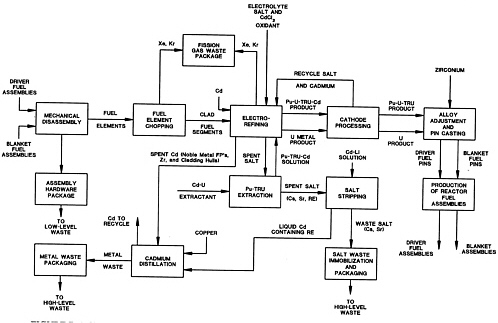
A process flowsheet is attached as Figure D-1. In the ANL pyroprocess, the minor actinides (americium and curium) follow plutonium. Data provided by ANL demonstrate that, in the process employed, elements of atomic number higher than uranium have similar but different thermodynamic properties. Consequently, large separation factors are observed between uranium and the other TRUs, but the separation factors among the individual TRUs are much smaller. In the ANL pyroprocess, elements are separated in groups according to their inherent thermodynamic properties. The transuranics behave as one group, uranium behaves differently, most of the rare earths behave as another distinct group, and so on.
ANL is in the process of defining the various primary and secondary waste streams. The process for IFR pyroprocessing, as it is currently being developed, will result in two new main high-level waste (HLW) forms. The first of these will be a natural or artificial zeolite for the waste salt stream containing the strontium, cesium, and iodide salts and the divalent rare earths that do not reduce readily to the metals and hence are partitioned to the electrorefiner transport salt phase. The second will be a metal matrix of copper, or copper-aluminum, containing the noble metals, some of the rare earths, and perhaps the fuel element undissolved hulls. Both the zeolite and metal matrix waste would constitute new waste forms for the repository.
The strontium and cesium fission products, as well as iodide and some of the rare earths, are retained in the KCl/LiCl molten-salt waste stream and are selectively sorbed from the salt by contacting the molten salt with solid zeolites. After hot pressing, a monolithic mineralized material would result (sodalite), which may offer potential as a new waste form. The exact form of the zeolite waste, however, remains to be determined. Preliminary experimental data from work with fine powders of a selected zeolite indicate that the zeolite leach rates can be at least comparable to borosilicate glass. The general concept appears sound with the available data indicating technological feasibility.
Regarding separation factors, both chemical models and some laboratory experiments indicate that LLW streams can be partitioned to contain less than 100 nCi/g of TRUs. The uranium that is produced for use as blanket pins has only traces of plutonium remaining in it, and the plutonium/minor actinide fraction appears to contain only small amounts of uranium, so that the driver feed can be formulated as needed. This is not a problem in terms of the fuel for the IFR. Since liquid cadmium is employed in the process, some cadmium would find its way into a melt and zeolite waste streams; ANL is attempting to minimize this. The IFR process depends in part on the thermodynamic driving force generated by the presence of cadmium and the addition of cadmium chloride as an oxidizing agent. Cadmium retorting, recovery, and recycle are essential to the success of the process.
Yttrium and the rare earths samarium and europium, which form divalent ions, and iodide remain in the molten salt and would therefore appear in the zeolite waste stream rather than the metal waste stream. These elements are not expected to present any problem with the cesium and strontium disposal schemes. The iodide might be recovered with a chlorination step.
The behavior of zirconium recycle for the driver alloy is not fully understood; additional thermodynamic data may be needed. However, this does not appear to be a critical process problem at this time. The IFR flow diagram indicates that some zirconium goes to HLW, and new salt must be added to the cycle.
A build-up of sodium, which arises from the dissolution of the clad sodium-bonded IFR fuel pieces, will ultimately raise the melting point of the molten salt eutectic. An alternative scheme for fuel treatment, in which the sodium and cesium would be distilled out of the fuel before electrorefining, is being considered. However, to maintain the proper salt composition, the molten salt electrolyte would need to be adjusted on occasion by discard and replacement or by a new processing step (i.e., preconditioned, lithium-loaded zeolite.
ANL is developing centrifugal contact reactors for use in cascades for "stripping"—reduction in this case—of the rare earths and residual TRUs from the molten salt stream with an alloy of lithium and uranium in cadmium. The bench scale efficacy of these processes has been demonstrated. This separation may require a multistage cascade with reflux using a continuous centrifuge contacting system.
Although waste volumes from the IFR recycle are currently an uncertainty, ANL estimates that they would be roughly comparable with those for direct disposal of unprocessed spent light-water reactor (LWR) fuel. However, the IFR wastes from the proposed pyroprocessing scheme would be essentially free from TRU elements (i.e., less than 1 ppm plutonium). The process is in an early stage of demonstration.
LIGHT-WATER REACTOR (LWR) ACTINIDE EXTRACTION/SEPARATION PROCESS
As a general comment, the pyroprocessing/separation aspects of this program are not as far along as the IFR pyroprocessing, since it has not been active for as long nor is it as well funded. This process requires that the oxide fuel employed in the processing be declad, and schemes for this are being investigated. Some initial work done in this regard at Oakridge National Laboratory (ORNL) appears to have had mechanical problems, and ANL itself has done a small amount of work on decladding (see discussion below).
ANL is investigating electrolytic decladding using the Zircaloy hulls as an anode; this seems particularly interesting. The process could be considered as an electrowinning operation to remove the cladding and regenerate zirconium metal for recycle or disposal. The small amount of zirconium left with the oxide muds would not disturb the reprocessing in the IFR recycle. The fate of tin and aluminum in the system needs study. ANL looks favorably on this as a possible solution to the decladding problem; there are, however, some constraints as stated below.
It is important to realize that ANL's current program in LWR fuel reprocessing and the process to extract actinides from the LWR spent fuel are directly linked to the IFR pyrochemical
process. The actinides removed from the LWR would feed into the IFR pyroprocessing scheme for further purification if needed and would be incorporated into fuel for the IFR in a burner mode. However, solely from the point of view of LWR reprocessing, the connection does not seem to be necessary. If this option were, however, to be considered for a stand-alone LWR processing cycle, significant modification of the two processes under active consideration would be required. In the LWR process as presently configured, the noble fission product metals and TRUs—and in one scheme, the rare earths—would be fed back into the IFR pyroprocess electrorefiner. A waste stream from the salt would be immobilized in zeolite before disposal; this is similar to the proposed IFR purification process discussed earlier.
Development efforts for the LWR actinide extraction processing are still in the early stages and are at low funding and manpower levels. There were three separate pyrochemical processes with variations under consideration for development when the STATS subcommittee members visited ANL in December 1991. As of September 1992, the number was reduced to two: a salt transport process and a zinc magnesium process. As of May 1993, there were still two processes under consideration, but the zinc magnesium process had been replaced by a lithium process and the salt transport process had been modified and subsequently has been abandoned. The elimination of the two processes previously under consideration, and modification of the salt transport process, eliminated the use of fluoride ions in the molten salt employed in the reduction step; fluorides caused degradation of the zeolites being considered as a waste form. Also, electrorefining has been added in both schemes under current consideration. The modified salt transport process had at first been chosen as the reference case, but more recently the lithium process has been favored, although further work is needed. As proposed, the lithium-based process offers lower operating temperatures that allows compatibility with stainless steel vessels and thus, considerable reduction in equipment costs.
Figure D-2 is a generic scheme for both processes. Both involve (1) disassembly and decladding of the LWR spent-fuel elements, (2) dissolution and reduction of the oxide fuel in molten salt with a reducing metal phase present, (3) salt electrolysis to regenerate the reductant metal by oxide removal as carbon oxides with a consumable carbon anode, (4) TRU-uranium separation, (5) solvent metal retorting to recover the reducing metals and concentrate the recycle or waste streams, and (6) electrorefining to recover the pure uranium. Material balance flowsheets are included as Figures D-3 and D-4 for the salt transport and lithium processes, respectively. These must be taken as tentative, because the needed demonstration of the chemistry either has not been done or is not totally defined, as explained below.
In the salt transport process, the bulk of the uranium, TRUs, and rare earths would be in a copper-magnesium alloy following the initial oxide reduction step, which uses calcium metal as the active reducing agent. TRU and rare earth separation is effected using MgCl2 as an oxidizing agent and transport medium to remove the TRUs from the copper-magnesium (donor) alloy, and the TRUs are reduced into a zinc-magnesium (acceptor) alloy from the MgCl2 with recycled magnesium. The TRU-containing alloy is retorted to remove the zinc and magnesium, recover the TRUs, and recycle the solvent metals for TRU extraction. The bulk of the rare earths is expected to follow the TRUs, though some europium and samarium would appear in the salt waste steam as in the IFR cycle. The CaO, resulting from the initial LWR reduction step, is electrolyzed, COx is generated at the carbon anode and a magnesium-calcium alloy is
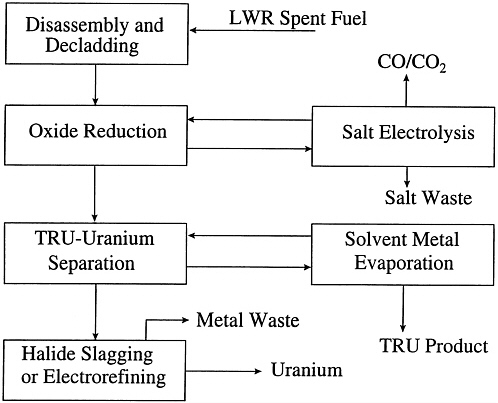
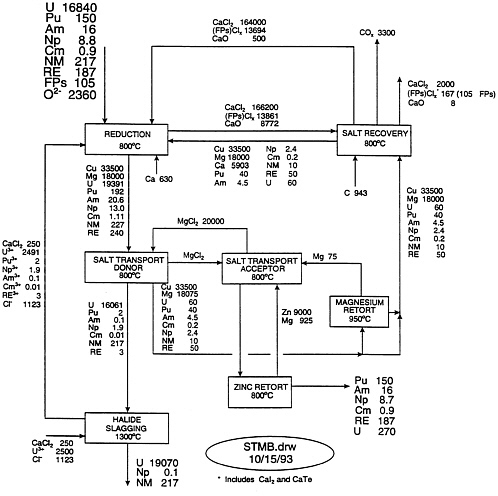
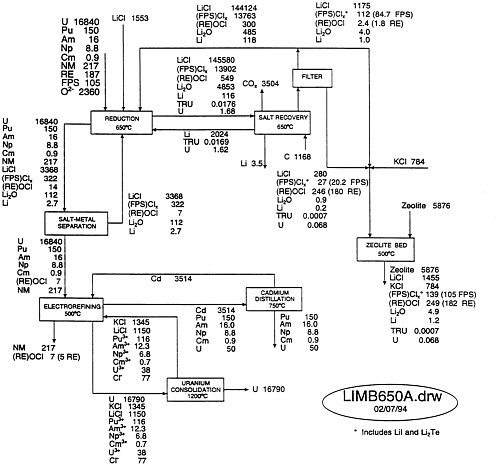
FIGURE D-4 Lithium process material balance flowsheet (basis: 20 kg original UO2 LWR fuel, all masses in grams, LiCl reduction salt at 650° C).
Source: Argonne National Laboratory - Integral Fast Reactor Program, managed by The University of Chicago for the U.S. Department Energy under Contract W-31-109-Eng-38.
produced. Following the salt transport removal of the TRUs and rare earths from the system, the uranium is electrorefined from the system to a dendritic form and melted in the cathode-processing step to separate occluded salts, which are distilled and recovered.
In the lithium process, the initial solvent salt is LiCl, and metallic lithium is employed to reduce the LWR oxide fuel. The LiCl, containing significant amounts of Li2O, is then electrolyzed to lithium and COx using a carbon anode. Preliminary experiments indicate this is accomplished, with the lithium, uranium, and TRUs being reduced to the metals. Operations at temperatures of 650° C are reported to give the best results. The rare earths are expected to stay in the salt phase as oxychloride and to go into salt waste stream. However, the behavior of all rare earths in this process is not fully demonstrated. The uranium and TRUs are electrorefined from a KCl-LiCl salt bath. The TRUs are recovered in a cadmium cathode and the cadmium is retorted off, with the TRU fraction—and a small amount of uranium—serving as input to the IFR electrorefiner. Zircaloy, when used as an anode in the LiCl-oxide containing molten salt, appears to dissolve, but, in the presence of oxides, appears to form ZrO2 as a precipitate. However, the initial experiments suggest this may be a route to hull decladding and zirconium disposal as ZrO2.
Some rare-earth fission products would remain in the metal phase to be fed back into the IFR. In the process material balance flowsheet provided for the salt transport process, all of these products are estimated to feed back into the IFR, but see discussion above regarding europium and strontium following the cesium and strontium. In the lithium process, the rare earths are expected to form oxychlorides and follow the salt waste stream with the cesium and strontium fission products. The basic requirement is that the uranium to be recovered and stored can be adequately decontaminated and the volume of salt for discard remain at reasonable levels. However, more work needs to be done to make this a certainty. Regardless, this approach requires that the metal feed from the LWR process to the IFR be purified in the IFR electrorefiner before it is fabricated into fuel. The rare earths and noble metal fission products would follow the waste streams from the IFR process.
ANL has not yet published in the open literature process parameters documenting the proposed LWR process flowsheets, since the details of these proposed processes are ''applied nuclear technology" and may not be made available to foreign interests unless specifically released by DOE. ANL has not yet demonstrated the complete LWR actinide extraction process on an engineering scale. However, an engineering-scale inert atmosphere drybox is under construction, in which one-tenth full-scale plant experiments, starting with the lithium process, would be carried out and experiments involving UO2-simulated fuel were scheduled to be initiated during 1994.
The two alternative pyrochemical processes under consideration appear to be scientifically feasible. Most of the pyrochemical process steps have been demonstrated at laboratory scale only; as an example, an integral step of the salt transport process involves reduction of the spent LWR oxide fuel with metallic calcium, and the choice of a container suitable for carrying this out on pilot-plant scale, much less a commercial scale, has yet to be made. A major point in ANL's preference for the lithium process is that it operates at a lower temperature than the salt transport process, 640° C versus 800° C. This difference would permit use of stainless steel vessels for the lithium process. There are also distinct advantages in
operations with uranium and iron when the temperature is well below the 725° C eutectic of the iron-uranium.
Although zeolites are proposed as a matrix for disposal of salt waste, the processing is still in such an early stage of development that is not now possible to identify the specific nature of the optimum zeolite and the products or waste forms from the actinide extraction processing. This scheme would probably also result in another new waste form for the metal waste as well; since the process to be developed has not been selected, it is not possible to further define the metal waste stream.
Although too preliminary to be at all specific, waste volume projections have been made by ANL personnel and suggest that the volumes would be roughly comparable with those for direct disposal of unprocessed spent LWR fuel.
Because of the very early state of process and equipment development, no attempt has been made to carry out a definitive cost estimate. It may be possible to make such an estimate after the engineering-scale process demonstration.
Questions have been raised concerning the fate of technetium during the pyroprocessing procedures. ANL contends that in the IFR and LWR work the technetium is sufficiently noble, and the molten salts involved maintained sufficiently anaerobic (with most steps involving elements to which technetium is noble) that technetium is expected to be found as the metal at all times. Based on a literature survey of the properties of technetium alloys and compounds, ANL concludes that technetium will most likely remain in the cadmium electrorefining solvent (anode) and be present in the form of intermetallic compounds in the IFR metal waste stream. It does not appear, however, that confirmatory work on this issue has been carried out at this time.
REPROCESSING EXPERIENCE IN THE UNITED STATES AND ABROAD
At the present time, the international standard technology for aqueous spent-fuel reprocessing remains PUREX, but several alternative technologies are being considered: other solvents and new ion exchange techniques to extend the PUREX process, pyrochemical processes for reactors utilizing metal fuels, and fluoride-and chloride-based volatility processes for oxide fuels. If remote fuel fabrication is used, a decontamination factor of 10 to 100 is adequate for reactor fuel recycle, in contrast to the decontamination factor of 107 that is routinely required to permit plutonium processing by direct handling in simple glove boxes for weapons application. On the other hand, the defense applications have not emphasized the very high recoveries that are needed for the continuous recycle of the actinides through the proposed reactors system for the transmutation case. Losses to waste of less than one part per thousand per cycle are indicated as being needed. This objective can be obtained with the chemistries at hand, but not with the chemical engineering approach that has been adopted in the past, which used too few stages in the extraction systems to obtain the needed decontamination factors.
The separations facilities for the Savannah River Plant were designed to use PUREX solvent with mixer-settler contactors. The performance of PUREX exceeded expectations. It became the new "standard" in aqueous processing technology and was later installed at Hanford.
The Hanford PUREX facility utilized pulsed-column extractors and exhibited excellent performance. When operating on aluminum-clad uranium metal feed, the plant frequently exceeded its design rating of 8 tons of uranium metal per day. PUREX technology has been adopted in Europe for current nuclear processing plants, with ancillary equipment designed to fit applications. These applications include reprocessing Zircaloy-clad reactor fuels, recycle of plutonium as MOX for LWR commercial reactors, and prototype breeder fuels.
Experience at Various U.S. Sites
WEST VALLEY, NEW YORK
The first privately owned plant for reprocessing LWR fuels in the United States was built in the late 1960s and had a nominal capacity of 300 metric tons uranium (MTU)/yr. The plant, after obtaining an Atomic Energy Commission license, operated for several years with feed from the government's N-reactor at Hanford and from several LWRs in the United States. While the basic PUREX process worked well there, rapidly changing regulatory requirements and environmental rules forced the plant's shutdown in 1973. The new requirements made it less expensive to build a new plant than to modify the existing plant. Responsibility for the plant and the one full tank of HLW present at the site reverted to the state of New York and later to DOE. DOE is currently decommissioning the plant and fractionating the wastes to low-level concrete for permanent onsite storage, and to high-level borosilicate glass in stainless steel cylinders for shipment to the first federal HLW repository.
MORRIS, ILLINOIS
A second 300 MTU/yr LWR reprocessing plant was constructed with private funds at Morris, Illinois in the early 1970s. This plant was designed to operate on a hybrid fluoride volatility and solvent extraction process, rather than the usual standard PUREX process. Before this process could be fully checked, it was realized that the plant would never have a sufficiently high operating factor to merit use; the plant had been built without buffer storage between its ten or so process steps, and no space had been provided to add hold-up tankage. Thus, all process steps in the plant had to run simultaneously or be entirely shut down. The process equipment was not sufficiently reliable to meet the former requirement, and no radioactive material was ever introduced into the separations plant. The fuel storage facilities have, however, received extensive use.
BARNWELL, SOUTH CAROLINA
Between 1970 and 1975, the United States's first large (1,500 MTU/yr) reprocessing plant was constructed at Barnwell, South Carolina with private funds to reprocess spent fuel
from some 60,000 MWe of U.S. utility-owned LWR reactors. This plant employed the basic PUREX process, using a centrifugal contactor for first-cycle extraction and pulsed columns for second-and third-cycle extraction.
The head-end of this plant was designed for remote operation and maintenance in a large hot cell. The downstream, lower-activity areas were designed to require no maintenance (all-welded construction, no moving parts) but were fitted with decontamination provisions for contact maintenance should any prove necessary.
By 1976, cold testing of the separations plant was underway, using natural uranium. A conversion plant had been constructed to convert the partially enriched uranium product to UF6 for recycle to the gaseous diffusion plants for reenrichment and recycle to LWRs. The owners were awaiting Nuclear Regulatory Commission requirements for solidifying the plutonium nitrate product (conversion to PuO2) and the aqueous waste (conversion to borosilicate glass) and were engaged in the final stages of licensing and resolution of issues in the Generic Environmental Impact Statement on Mixed Oxide (GESMO) fuels when U.S. government policies changed. In 1977, the Carter administration canceled the licensing and GESMO proceedings based on weapons nonproliferation concerns. Simultaneously, nuclear industry growth fell sharply, as did uranium prices, thus removing much of the economic incentive for LWR reprocessing. When government guarantees and assistance proved not to be forthcoming, the Barnwell plant was mothballed. Peripheral equipment vulnerable to corrosion or to becoming outdated was removed, but some 80% of the half-billion dollar investment remains intact in the form of seismically safe concrete structures and quality-assured stainless steel vessels, piping, and extraction cascades, etc.
FUTURE PROSPECTS
Existing federal waste policy legislation requires the U.S. government to assume responsibility for LWR spent fuel and its disposition. During the final phases of shutdown of the Barnwell plant, all interested U.S. companies stated that there would be no further private investment in reprocessing in the United States, and this attitude appears unchanged today. Thus, only the U.S. government could decide to reprocess LWR fuel in the United States in the future. Should the government elect to do so, the largely intact Barnwell plant could be made available for the purpose, according to its present owners.
Reprocessing does have many attendant advantages in the waste disposal process over direct disposal of spent fuel. Not only is some 96% of the spent fuel made available for potential beneficial use in fueling future reactors, but the residual waste is converted to a more compact, more chemically stable form.
This whole process may have uncovered the best long-range program for closing the tail-end of the nuclear fuel cycle—delayed reprocessing. All three of the LWR reprocessing plants constructed in the United States were designed to reprocess fuel 120 days after removal from the reactor. This was done at the West Valley plant. This calls for more stringent requirements about shielding, personal exposures, environmental releases in the event of accidents, and interim waste cooling requirements than would be necessary for the reprocessing of aged fuel. U.S.
industry has proven, by actually doing so, that it is capable of safely storing spent fuel at reactors for over 25 years. At this point, in fact, should the U.S. government decide to reprocess LWR fuel at the Barnwell plant, that plant could run for its projected lifetime without having to reprocess any fuel that had not been out-of-reactor for at least 25 years. This would not only provide much larger safety factors then those originally designed into that plant, it would also render moot the criticism made by some against designing the tail-end of the plant to allow the possibility for contact maintenance. After 25 years of cooling, the only fission products present in quantities hazardous to personnel performing such maintenance would be 137Cs and 90Sr. These are readily removed quantitatively and rapidly from equipment by washing with dilute nitric acid.
Experience Abroad
FRANCE
France is probably the most advanced nation in the world in the effective deployment of nuclear energy and in the resolution of fuel-cycle matters. Over 75% of that nation's electricity is currently derived from nuclear fission, and all of its spent fuel is scheduled for reprocessing. This is still less than the U.S. installed nuclear capacity. A government-owned company, COGEMA, is responsible for the nation's fuel reprocessing activities. For many decades, COGEMA has reprocessed spent LWR fuel at plants in La Hague on the Brittany coast. The older plants at La Hague have been upgraded and augmented so there are now two 800 MTU/yr plants being operated effectively by COGEMA at La Hague. These plants employ the PUREX process, have extensive underwater facilities for storing fuel awaiting reprocessing, and use remote operation and maintenance practices extensively. Fuel under contract for reprocessing there includes not only all spent fuel from French reactors but much fuel from Germany, Japan, and other European nations. These plants were designed for prompt reprocessing, but they are actually reprocessing fuel that has been cooled for several years due to logistic factors.
UNITED KINGDOM
The United Kingdom has for decades reprocessed spent fuel at facilities in northwestern England on the Irish Sea near Sellafield. In the early 1980s, design was initiated for construction of a new Thermal Oxide Reprocessing Plant (THORP) for reprocessing 1,200 MTU/yr of LWR fuels. Start-up of reprocessing operations began in 1994.
The THORP facility employs the basic PUREX process, has extensive prereprocessing storage for spent fuel, uses significant remote operations and maintenance practices, and was designed for prompt reprocessing.
JAPAN
Japan has also performed small-scale reprocessing of LWR fuels for many years at its Tokai-Mura plant. A large 1,200 MTU/yr LWR reprocessing plant is under construction on the coast in northern Japan by a Japanese consortium of nuclear industry organizations. This new plant has received considerable design assistance from France, and much of the technology employed in La Hague is being incorporated into the Japanese plant. This plant also employs the basic PUREX process. It is scheduled for start-up in 1998.
THE FORMER SOVIET UNION
The former Soviet Union engaged in LWR reprocessing for many years, and some of the countries in that region are still significantly involved. A large fuel-reprocessing capability exists in several PUREX plants, and the suggestion arises periodically that international reprocessing services may be offered. Scientists in some countries of the former Soviet Union also continue to investigate advances in chemical separation of long-lived radionuclides, transmutation, and the vitrification process.
OTHER NATIONS
Several other nations have engaged in reprocessing of LWR fuels over the years. A 300 MTU/yr plant at Mol, Belgium, operated for many years under the auspices of Eurochemic, a consortium of 13 European nations. Germany has operated a small processing plant at Karlsruhe for decades. India has been engaged for years in small scale LWR reprocessing.
FUTURE SEPARATIONS PROCESSES
This section surveys of a variety of separation technologies that have potential use in the transmutation processing systems or the nuclear wastes remediation program. Limitations of time and personnel determined the thoroughness of this survey and precluded an in-depth evaluation of every possible technology. In particular, promising separations and processing technologies from foreign countries were not systematically surveyed. For example, a series of Russian reports (published in 1991 by the Soviet Energy Technology Center of the Argonne National Laboratory) describe several novel and potentially quite useful technologies that should be considered in a more thorough review than the present one. This summary reflects the methods that came to the committee's attention during the period January 1992 through September 1992. The primary focus was on separation technologies that may be applicable to DOE wastes at Hanford, Savannah River, Rocky Flats, and other sites around the United States.
The evaluations are based on the experience of the members of the Subcommittee on Separations. None of the technologies are ready for full-scale use; some require more laboratory
research (either basic or advanced) prior to pilot-plant testing, while others are ready for such testing now.
Possible Technologies for Actinide Separation
SOLVENT EXTRACTION
Stereospecific Extractants. This category includes crown ethers (strontium extraction) and Pu(IV) complexants. Various crown ethers and related compounds have cavities of distinct shape and size, which can accommodate atoms of corresponding size. Such extractants (or the corresponding sorbents) can give very high selectivities. For processing of nuclear wastes, the role for such highly specific extractants should come late in the processing sequence, where it is desirable to remove or isolate a particular element. A crown ether is the current extractant of choice for the strontium extraction process developed at ANL for strontium isolation (Horwitz et al., 1990; Raymond et al., 1984).
Quite selective, stereo-specific agents for other problem substances such as cesium, technetium, iodine, americium, or plutonium would be of major value. Research at several laboratories on in vivo plutonium chelators has led to development of specific ligands for chelating Pu(IV) (Raymond et al., 1984). Similar ligands could possibly be applied to processing and removal of Pu(IV) from dilute aqueous waste streams. It might also be feasible to use them in high-salt waste streams.
Because of their stereo-specificity, it is often difficult to regenerate these stereo-specific reagents. Ease and completeness of regeneration are, therefore, vital criteria for agent selection. Along with rates of degradation, losses due to solubility and emulsification, and unit cost, the completeness of regeneration determines the rate at which the extractant is consumed, which can be an important cost factor for these relatively expensive substances. In order to reduce losses, it can be attractive to use specific functionalities attached to solid substrates, such as sorbents or membranes. The value that highly selective reagents would have in separations of waste components could be of considerable significance and justifies a major basic research effort.
Talspeak. The Talspeak process (Weaver and Kappelmann, 1964; Kolarik et al., 1972) is based on separation of lanthanides from trivalent actinides by extraction of the former into di(2-ethylhexyl) phosphoric acid (HDEHP) solution from aqueous phase of lactic and diethylene triamine pentaacetate (DTPA) acids at pH 2.5 to 3.0. The actinide transmutation of wastes (ATW) project has proposed a modification—the "reverse" Talspeak process—in which the trivalent actinide and lanthanide elements are extracted in an organic phase by HDEHP (Persson et al., 1986). The +3 metals are stripped into an aqueous phase of lactate and DTPA. Subsequently, 6 M nitric acid would be used to strip the lanthanides.
Relying as it does on the use of organic complexing agents and buffers, Talspeak may have some shortcomings in an intensely radioactive environment because of radiation damage.
This could cause problems in control of the process due to build-up of degradation products of unknown composition and effect.
Testing of the reverse Talspeak process at full radiation levels in pilot-plant operations would be needed before the process can be evaluated for full-scale processing.
Tramex in High Nitrate Solutions. High chloride systems with liquid anion exchangers such as trialkylamines or tetraalkylammonium salts have been used to extract and separate triand tetravalent actinides from most other fission products and the trivalent lanthanides. However, processing in chloride media is undesirable because of materials problems and neutron absorption problems. Studies have indicated that it may be possible to perform these separations from high nitrate salt solutions instead (Lloyd, 1963), but there are conflicting reports in the literature. This alternative use of nitrate solutions needs to be investigated further, as it could reduce the number of required processing steps, corrosion, etc.
Bidentate Extractants. This category includes carbamoyl phosphine oxides (TRU extraction, or TRUEX) and diamides and diphosphine dioxides.
TRUEX is an extraction process in which octyl(phenyl)-N,N-dibutylcarbamoylmethylphosphine oxide (CMPO)2 is used to separate the TRU fraction from acidic LW solutions (Schulz and Horwitz, 1988).3 The process has been demonstrated to work well at the laboratory scale, but pilot-plant demonstration has not been performed. An unanswered question about the TRUEX process that may limit its applicability involves separation of trivalent lanthanides from the trivalent transplutonium radionuclides.
A recent Russian report (Dzekun et al., 1992) supports use of diphenyl-dibutylcarbamoyl methyl phosphine oxide in polar inorganic solvents. Such solvents provide higher solubility without the addition of solubilizers. This extractant has also been used when sorbed on a solid porous support. Other bidentate organophosphorus extractants have also been studied. Among these, the diphosphine dioxides (Rosen and Nikolotova, 1991) and the diamides (Musikas and Hubert, 1987) also show good extraction and radiation-resistant properties but, like TRUEX, poor separation of trivalent actinides and lanthanides. In general, they are rather similar to the carbamoyl phosphorous extractants of the TRUEX process. Should use of the latter encounter difficulties in pilot-plant testing, these alternatives may be worth further evaluation.
The extracting agents in the TRUEX and stereospecific extractants (SREX) processes, a carbamoyl methyl phosphoryl derivative and a crown ether, respectively, have yet to be
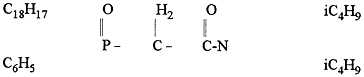
manufactured on a production scale, as will be needed if these processes are to be used for large-scale processing of nuclear wastes. Among the issues to be addressed are (1) effective precursors and processing methodology for manufacturing the extractants; (2) the purity achievable; (3) the nature and chemical effects of impurities; (4) radiolytic and chemical stability; (5) solubility in water or losses to emulsification, sorption onto suspended impurities, etc.; and (6) regenerability and degree of regeneration achievable. These factors could result in problems that would jeopardize use of the TRUEX and strontium extraction technologies and therefore they require prompt evaluation.
At present, TRUEX seems to be the most promising post-PUREX technology for TRU isolation from HLW. Pilot plant testing of TRUEX should proceed as rapidly as possible.
Soft Donor Complexants. Good separation factors have been reported between trivalent lanthanides and trivalent actinides for solvent extraction systems based on complexants with "soft" donor groups (e.g., nitrogen and sulfur). The complexants studied in France (Musikas, 1985) are based on amide functional groups. At Los Alamos, similarly good separations were achieved using sulfur based β-mik diketone extractants (Ensor et al., 1988). These systems are quite promising for trivalent cations. However, REDOX-based separations can separate the actinides thorium through americium more simply and, usually, more efficiently.
There seems little incentive or promise for developing soft donor ligands for the nontrivalent actinides compared with other more promising approaches involving stereo-specific ligands. However, they may have value in separations of transplutonium elements from fission product lanthanides.
Dicarbollide. Dicarbollide (bisdicarbollycobaltate), (π-(3)-1,2-C2 B9H11)2Co-), has been shown in Czech and Russian studies to have very high selectivity and efficiency for extraction of Cs(+1) and Sr(+2) from 2 to 3 M HNO3 solutions (Rais and Selucky, 1992; Esimantovskii et al., 1992). The hexachloro and bromo derivatives have good chemical and radiation stability. However, dicarbollide, even in the presence of polyethyleneglycols, is less efficient for the extraction of trivalent actinides than for strontium and cesium but useful extractions have been demonstrated from 0.3 to 0.5 M HNO3 solutions. Efficient extraction of cesium, strontium, barium, and americium from deacidified PUREX wastes has been achieved using a solution of 0.2 M dicarbollide with p-nonylphenol-nonaethyleneoxide (a polyethyleneglycol) with subsequent separation of lanthanum and americium species by their reextraction into nitric acid. The dicarbollides are available commercially. While they have desirable radiation-resistant properties, a disadvantage is that the waste would have to be made 0.3 to 3 M in HNO3, depending on the process used, and the total volume of waste may be tripled.
There may be some value in the use of dicarbollides in comparison with use of crown ethers, cryptands, etc., but it is not evident at present that they could be employed satisfactorily on a large-scale basis. It seems unlikely that their use in the processing of waste that initially is highly alkaline should be considered.
Molten Salt. Researchers at Los Alamos National Laboratory are considering a molten salt system of 7LiCl/BeCl2, which is based on the ORNL's research on a molten salt breeder reactor (Rosenthal et al., 1971). Liquid bismuth containing lithium metal would be used as an extractant in this system to remove the TRUs. The earlier studies of most of the reactor cycle at ORNL indicated in the molten-salt reactor project that this system may have a number of very promising features, but much more research and development is required for full assessment of its value in processing for the ATW system, etc.
Supercritical Fluid Extraction. Supercritical fluids (Li and Kiran, 1988) offer two potential advantages for separations. First, relatively small changes in temperature or pressure bring about substantial changes in fluid density, with resultant changes in solvation and reaction tendencies. Second, supercritical fluids can often be regenerated by a simple drop in pressure. Offsetting these advantages is the disadvantage of high pressure operation. No documented reports were found in which supercritical fluid extraction provides a separation for actinides, sodium salts, or fission products in a way that could be advantageous for processing of nuclear wastes, nor is there particular reason to expect such effects.
ION EXCHANGE AND ADSORPTION
Organic Resins. A number of interesting new solid ion-exchange materials are in various stages of development. One of the most promising is Diphonix (Eichrom Industries, Inc), a substituted diphosphonic acid resin developed by a collaboration between ANL and the University of Tennessee. This resin, which is commercially available and is relatively inexpensive, is a very strong complexing agent and removes actinides from 10 M nitric acid solutions. It is reported to be very effective for removing a wide variety of toxic heavy metals (including lead, mercury, cadmium, zinc, nickel, cobalt, and chronium) from waste water and could be of use in removing various radionuclides from nuclear waste. Laboratory evaluation of such novel ion exchangers may result in useful separations for components of nuclear wastes.
Inorganic Exchangers. Inorganic ion exchangers such as titanium phosphate have been the subject of considerable research at a number of laboratories (Clearfield, 1982). The large capacity and high stability of such inorganic exchangers make them interesting candidates for study as ultimate waste forms for geologic storage. Some high-temperature zeolites may prove useful for removal of specific cations such as Cs+. Recently, silicotitanates have been reported to have as much as 60 times the capacity of model zeolites for removing cesium from radioactive solutions of high salt content. The materials also remove strontium from such solutions and could be considered for use for the treatment of Hanford tank wastes. Sodium fluorophogopite mica, a clay, is reported to be superior to the zeolite clinoptilolite which has been used to remove strontium from nuclear waste (Paulus et al., 1992). This new clay mica removes cesium from solutions of high sodium content and can be prepared in bulk.
The initial research indicates that these systems have a reasonable possibility of application for specific separation and isolation of some fission products, but more study is needed for evaluation of this technology.
Adsorption. Adsorptive separations involve uptake of solutes onto solids with large specific surface areas, materials that act as solid solvent extractors, and materials with coordinating groups on the surface. Several of the approaches described in the subsection Solvent Extraction are adaptable to the adsorption mode, that is, functional groups such as ethers, ketones, ester, and crown ethers can be attached to surfaces of solids. In comparison with liquid-liquid extraction, solid adsorbents usually require the use of fixed or fluidized beds rather than simple countercurrent flow, although countercurrent flow has been utilized in pulsed towers and systems of tanks, but this may be offset by little or no residual solubility of the sorbent in the waste. A more subtle difference is that the interaction between the functional group and the solute occurs in an aqueous environment for an adsorbent, as opposed to an organic environment for extraction.
Researchers in Japan are investigating a process (McLafferty, 1992) wherein TRUs are adsorbed onto an unstated organic ligand fixed onto high-surface-area carbon fibers, tens of microns in diameter, enabling the TRUs to be recovered by combustion. (Licensing of such a process, however, is not easily permitted in the United States.) High surface area ferric, aluminum, and other hydroxides have also been used for clarification and recovery processes in the processing of nuclear wastes.
Adsorption processes may have limited capacity, but several systems have sufficient promise to warrant further research.
MEMBRANE PROCESSES
A number of different membrane processes can provide separations of interest for nuclear wastes. These include reverse osmosis, ultrafiltration, dialysis, facilitated transport, and electrodialysis. Most membranes used for these separations are polymeric and could, thereby, be vulnerable to radiolytic or chemical attack when used for the processing of nuclear wastes. Resistance to attack would be an important criterion for membrane selection. Ceramic membranes are also coming into use and may stand up better under the conditions required for processing nuclear wastes.
Ultrafiltration and Microfiltration. Ultrafiltration and microfiltration are similar to reverse osmosis, except that the terms are reserved for cases where the membrane retains high molecular weight solutes, colloids, or fine particles. Microfiltration could be used for dewatering of slurries or flowable sludges, where it would compete with conventional filtration or drying processes. High separation factors are available, and the method is already rather well developed.
Electrodialysis. Electrodialysis involves transport through stacks of anion and cation exchange membranes, across which there is an electric field. The process allows removal of salts from aqueous solution. Electrodialysis could be useful for the Hanford tank wastes if it were implemented in such a way as to remove the bulk salt components (e.g., sodium nitrate, nitrite, and carbonate) selectively, while leaving behind most or all of the various radioactive species. A considerable volume reduction of the waste would, thereby, be accomplished.
For selective removal of sodium nitrate and nitrite, it is desirable to have electrodialysis membranes that are selective for monovalent cations or anions, as opposed to multivalent ions. Such membranes, commercially available from companies in Japan (Tokuyama Soda and Asahi Glass), have been developed primarily for recovering NaCl selectively from sea water. The technique of manufacture is deposition of a very thin layer of anion-permeable material on top of a cation-permeable membrane, or vice versa. The anion exchanger serves to shield the membrane from multivalent cations. Another approach, with ordinary cation-or anion-exchange membranes, is to add a polyelectrolyte to the feed, which polarizes at the membrane and provides a similar shielding effect.
Research would be required to determine the resistance of candidate membranes to radiation, as well as to determine whether any components of the waste adsorb irreversibly on the membrane, to the detriment of the process.
Facilitated Transport. Facilitated transport membranes are impregnated with a chemical agent similar to the extractants used in solvent extraction processes. Regeneration of the agent occurs on the product side of the membrane. The separations that can be accomplished parallel those that are feasible by solvent extraction with the same or similar agents. The solvent extraction processes work well, however, and it does not appear that the use of facilitated-transport membranes is more advantageous, except in cases where it is very difficult to separate the phases from one another physically (e.g., because of emulsification).
Reverse Osmosis. Reverse osmosis is used for concentration of aqueous solutions, with water passing through the membrane under sufficient pressure. Evaporation is a well-established process that can readily accomplish the same separation. It appears that there are no competitive advantages of reverse osmosis, except where a highly volatile solute of importance evaporates along with water. In this case, the solute is retained by the membrane in reverse osmosis.
Dialysis. Dialysis is a process wherein solutes with low molecular weight pass through a membrane, while larger molecules are retained. It does not appear that dialysis is likely to enable separations of interest for nuclear waste processing.
VOLATILIZATION
Fluorides. Several systems propose fluorination to remove volatile fluorides, especially UF6. A fluoride volatility process holds considerable promise for reduction of fuel
reprocessing costs below those of the currently employed aqueous process. This has been confirmed through a survey of previous states of nonaqueous reprocessing routes by British Nuclear Fuels. Areas under small-scale investigation include (1) improved uranium-plutonium separation, (2) simpler UF6 purification, (3) intensified fluorination processes, and (4) alternatives to isolation of plutonium as the hexafluoride. Work at LANL on plutonium recovery using O2F2 and KrF 2 is an example of the possibilities of using fluoride volatility. For the proposed ATW, a molten salt system of LiF/BeF2 is under consideration, based on the earlier developments of the ORNL-MSBR program (Fitzpatrick et al., 1992). A problem involves the ''noble" metals, which do not form stable fluorides and form deposits on the containers and piping. There is also concern over the problem of entrained solids in the gas phase.
β-Diketones. Some β-diketone ligands form relatively volatile compounds with trivalent lanthanides (<10 mm Hg at 200° C) so similar volatility can be expected for trivalent actinides. By comparison, analogous uranium and plutonium tetravalent and hexavalent compounds have much lower volatilities (≤ 10-3 mm Hg). For β-diketonates such as "fod" (6,6,7,7,8,8,8-heptafluoro-2,2-dimethyl-3,5-octanedione), separation factors of greater than or equal to 104 for uranium and plutonium from Am(+3) can be expected (Steinberg et al., 1982). Fod is stable to air and water at temperatures ≥ 100° C and can be recovered by extraction with an organic solvent, but its radiation stability is uncertain. Fod is only one example of the class of β-diketone ligands that may be applicable. Processing of large volumes of aqueous waste by extraction and volatilization of the β-diketonate complexes presents rather formidable engineering problems. Separations using volatile β-diketonate compounds would not seem practical for the great volumes of defense wastes.
Chlorides. For zirconium-clad spent fuel, the cladding can be removed by forming volatile ZrCl4 using Cl2 similar to the ORNL Zirflex process (McLaughlin, 1992). LANL proposes use of a plasma torch. It is unclear whether the separated zirconium would require geologic disposal, and, in addition, the degree of release of 14C and 129I in the process is uncertain. The advantage over mechanical or aqueous chemical decladding is not apparent, especially given the probable time and expense required to develop the technique.
ATOMIC VAPOR LASER ISOTOPE SEPARATION
In 1991, a National Research Council committee studied the Atomic Vapor Laser Isotope Separation (AVLIS) system for several separations, including reprocessing of spent-fuel wastes. Its report stated (1991):
With regard to the application of the AVLIS process to high-level waste management, several possibilities have been suggested, such as the separation of all the actinide elements by using isotope separation, specifically the AVLIS process, instead of chemical separation. The rationale is that the high
decontamination factors required to reduce the actinide inventory of the waste to the point where the maximum actinide risk is proportional to the inventory may be more readily achievable by using isotope rather than elemental chemical separation techniques. However, given the uncertain benefits of actinide partitioning, it is unlikely that reductions to these levels would be worthwhile, even assuming that such an achievement was technically feasible. Moreover, the cost of accomplishing this via the AVLIS process, using a different set of lasers for each isotope individually, is likely to be prohibitive.
Other suggested applications involve the separation of individual fission product isotopes once the actinides and the fission products have been chemically separated. For example, 137Cs could be separated and stored on the surface, thus reducing the heat generation of the high-level waste consigned to a geologic depository. However, the separation of a high-gamma-emitting isotope such as 137Cs by the AVLIS process would involve a radical redesign of the technology developed for uranium and plutonium, which requires contact maintenance of the collectors at frequent intervals.
Alternatively, the radiocesium could be chemically separated from the high-level waste and permitted to decay on the surface for several hundred years, after which it could be mined to separate the long-lived 135Cs isotope for subsequent disposal in a geologic repository. Again, even if this were technically feasible by AVLIS, it seems unlikely that the costs would justify the waste management benefits unless a decision has been made that reprocessing of nuclear fuel is justified. This, in turn, requires a demonstration that the benefits of reprocessing with regard to waste management and resource extension outweigh the economic costs and proliferation risks. Until there is such a demonstration, the use of isotope separation techniques such as AVLIS does not merit further consideration.
The report stated as a recommendation that "AVLIS should not be considered for applications to commercial nuclear waste disposal until fundamental issues relevant to reprocessing are resolved."
There are isotope separation processes that are suitable for high radiation fields. One is the thermal diffusion process that has been used for isotopes from tritium to uranium. It involves columns heated on the inside and cooled on the outside and there are few pumping demands. There are ion exchange and solvent extraction process that could be applied with the usual limitations of these procedures in radiation fields.
PRECIPITATION
Carbonate. It has been reported (Yakovlev and Gorbenko-Gemanov, 1956) that coprecipitation of AmV (96-99%) and PuVI (99%) occurs with K4 UO2(CO3)3. Subsequently, NpV, PuV, and AmV were isolated as MAmO2CO 3 where M = NH +/4 , Na+, K+, and Rb+. PuV
has been shown to sorb rapidly to about 80-90% on CaCO3 while PuVI sorption was much slower, allowing a kinetics based separation of  and
and  species at pH 8 using CaCO3 (Kobashi and Choppin, 1988). Separation of and in alkali solutions can be effected with carbonates in basic solutions but the efficiency is not likely to be 100% in complex wastes.
NATURAL AGENTS
Siderophore (microbial). This is a field that deserves further research, as it could result in important separation and concentration. It may be possible to use siderophores (microbially produced chelating agents) to sequester species such as Pu4+ from the environment (Wildung et al., 1987). Such agents may also be a factor in unwanted transport of plutonium in the environment. Modified siderophores or siderophore subunits may be designed to selectively bind Pu4+ or other actinides. For example, octadentate derivatives of desferrioxamine B have been shown to react strongly with Pu(+4) to form complexes and are being studied for removal of plutonium from waste streams (Whisenhunt et al., 1993; Neu, 1993).
Jimson Weed. Los Alamos has reported that when radioactive sludges were contacted with jimson weed, the plutonium was removed from the sludge and bound to the cell walls by a protein of the weed. It is noted that the jimson weed cells can sorb the plutonium whether they are dead or alive (Kumar, 1992). It has been known for some time that such cells accumulate uranium from waste streams by hydrolytic sorption on the walls. However, in high radiation fields, the destruction of the biological material may be a limiting problem.
Chitin. An interesting possibility for use of biological material has been reported (New York Times, 1992). A derivative of chitin, in the form of porous beads, showed potential for removing heavy metals from groundwater. The beads are collected with a magnet and the sorbed heavy metal is stripped. The process is now only at the level of laboratory study.
TRANSPORT
Fused Salt. In the salt transport process proposed for the IFR system (Chang, 1992), LWR spent-fuel oxides, principally UO2, are reduced to metal in a liquid (800°C) metal plus fused salt system by reacting with calcium to form CaO. Uranium precipitates in the metal phase, and about 15% of the neptunium coprecipitates with the uranium. The concentrations of plutonium and the other actinides are below their solubility limits in the copper-magnesium-calcium alloy, and they accumulate in the liquid metal phase. Alkali and alkaline earth elements, tellurium, europium, possibly samarium, and iodine fission products remain in the salt phase, while the rest of the rare earths and the noble metal fission products accumulate in the copper-magnesium-calcium alloy.
The metal phase left in the reduction vessel after removal of the reduction salt is processed by the salt (MgCl2) transport step in which plutonium, neptunium, americium, and curium displace magnesium to form their respective chlorides. Subsequently, magnesium in a copper-magnesium alloy reduces the plutonium, neptunium, americium, curium, and lanthanides that dissolve in the acceptor alloy. Noble metal fission products distribute between the donor alloy and the acceptor alloy, and the bulk uranium remains in the donor alloy as a precipitate. Recovery of the TRU elements can be 99.9% with no significant waste from this salt transport step.
The copper-magnesium donor alloy with uranium can be recycled to accumulate uranium until the latter precipitates. The uranium product is melted in contact with the CaCl2-based salt containing a chlorinating agent such as UCl3. The halide slagging results in partitioning of the coprecipitated neptunium to the salt phase from which it is recovered. The plutonium-rich heavy metal product from retorting the acceptor alloy product can be charged directly to an electrorefiner.
The separate steps of this process have been tested on a laboratory scale, and pilot-plant testing is to begin in the near future.
Magnetic Separation. Separation methods based on differences in magnetic susceptibility have been explored on a laboratory scale for the separation of uranium and plutonium from certain particulate wastes (Avens et al., 1990; Hoegler and Bradshaw, 1989). In principle, the technique could be considered for the separation of any of the paramagnetic actinides from diamagnetic or nonmagnetic materials. For large-scale application, this does not appear to be a promising method at this time, but it could be useful for special wastes such as pyrochemical salts and incinerator ash.
Electromigration (electrophoresis). In separations by this technique, an electric field is applied, and substances are separated from one another by virtue of differences in mobilities of charged species through an appropriate medium. Electrophoresis has proven very difficult to scale-up because of the difficulty of dissipating ohmic heat or destabilization of flows by convection currents brought about by that heat release. No electrophoretic devices currently exist with capacities adequate for nuclear waste treatment.
Centrifugation. The use of liquid high-speed cascade centrifugation in partitioning of HLW components is being investigated at LANL (Bowman, 1992). A theoretical study of the separation in a LiF-BeF2 molten solvent of the actinides from fission products has indicated some promise for this technique. Laboratory demonstration of the separations is needed before centrifugation can be evaluated for possible use in HLW partitioning.
Possibilities for Technetium Separation
99Tc (half-life 2.1 × 10⁵ yr) is produced in high yield in the fission process—some 25 kg/yr per LWR and about 2,000 kg in the Hanford tanks. Not only is it a high-yield fission
product but it forms a water soluble anion,  , which can migrate in natural waters. The ion is slowly immobilized even in the upper layers of many soils that can reduce its impact on the environment by a factor 10 to 100 (Bonodiette and Francis, 1979; Hoffman, 1982). Transmutation via thermal neutron capture to stable ruthenium has been proposed (Jarvinen et al., 1992). Prior to either transmutation or storage of the long-lived 99Tc in a waste form suitable for long-term storage in a repository, the technetium must be separated from the waste. In the case of transmutation of technetium to stable ruthenium, procedures for the separation of ruthenium and technetium also need to be developed. A significant fraction (but less than 50%) of the 99Tc is contained in the dissolver solids (hardly soluble fines). However, this makes its separation easier. These are routinely recovered by centrifugation. Minimization and recycling of waste streams must also be prime objectives. The following are some possible separation techniques that could be considered for these purposes and for decontamination.
SOLVENT EXTRACTION AND ION EXCHANGE
The CURE study (Westinghouse Hanford Co., 1990) proposed a separate tail-end solvent extraction using a primary amine and pH adjustment with formic acid to remove technetium from the waste stream. It further proposed to use an amine extraction or ion exchange separation of the technetium remaining in the uranium nitrate product.
A technetium separation system based on the use of the liquid anion exchanger Aliquat 336, which has higher stability in radiation fields than TBP, has been proposed (Jarvinen et al., 1992). Improvements such as the use of centrifugal contactors and pulsed columns are proposed and conditions for efficient extraction and stripping of the technetium (and palladium) are being investigated.
Ion exchange separations of cationic ruthenium species show promise for removal of ruthenium from technetium.
OZONOLYSIS
Ozonolysis can be used in conjunction with volatilization or other processes requiring oxidation and offers the possibility of greatly reducing the amount of wastes produced. This has been discussed (Abney et al., 1991) in conjunction with the accelerator transmutation of technetium to stable ruthenium. A scheme was proposed for continuously separating ruthenium from technetium by volatilization of RuO4 with the final products being stable ruthenium metal and O2 and any residual TcO2 which can then be returned to the transmuter (Walker, 1992).
VOLATILIZATION
Volatilization of RuO4 after ozonolysis was discussed earlier. Other volatile species such as the fluorides RuF6 and TcF6 can also be used in separation schemes in which the oxidation states are selectively achieved (Abney, 1991).
ELECTRODEPOSITION
It may be possible to selectively reduce and deposit technetium in the presence of ruthenium due to the differences in their REDOX potentials. The separations of ruthenium and technetium are probably only relevant in the transmutation scenario. Technetium is reduced to the corrosion-resistant metal by electrodeposition as a possible disposal form. Technetium alloys with the other noble metals should be even more corrosion resistant.
MAGNETIC SEPARATION
The possibility of magnetically separating (diamagnetic) from reduced forms of ruthenium which are paramagnetic is under consideration. The technique has even been used on solid suspensions in aqueous media (Abney, 1991).
Engineering Challenges to Separations
HANDLING AND DRYING OF SLUDGES AND SLURRIES
The Hanford single-shell tanks typically contain a layer of sludge under a liquid, with a salt cake on top of the liquid. It would be useful to process the sludge, and in any event it would be necessary to move it. Air-lift circulation has been proposed at Hanford for mixing the sludge with wash liquids. If this method presents problems in suspending the sludge, it would be valuable to explore other methods of mixing and resuspension. Another need would be to dewater the sludge. Radioactivity would hamper the use of conventional drying methods. Consequently, novel approaches, such as electroosmotic dewatering, may be applicable.
EVAPORATORS
Evaporation is already in use at Hanford and can be expected to have a prominent role in processing techniques for nuclear wastes. Fouling of heat transfer surfaces can be expected to be a problem. Because of difficulty of maintenance, it would be important to identify or generate designs for which the fouling problem is avoided or minimized. Vacuum evaporation may be attractive, since lower temperatures can lessen the occurrence of unwanted reactions.
Various forms of evaporators should be assessed for reliable and maintenance-free operation. Given the nature of wastes, noncondensible gases can be expected to collect in evaporators, and means must be incorporated to purge them so as to avoid substantial lowering of heat-transfer coefficients.
EXTRACTORS
Centrifugal extractors are effective for reducing equipment volume and residence time. It would be important to locate or identify designs that provide virtually maintenance-free operation for extended periods while avoiding build-up of solids and phases of intermediate density.
ENGINEERING OPPORTUNITIES
Data from Hanford and ANL show that a potentially useful separation occurs among the three layers in storage tanks. Actinides and some fission products concentrate into the sludge, because the hydroxides are insoluble under alkaline conditions. The sodium salts (nitrate, nitrite, carbonate) compose the salt cake, which probably also incorporates strontium and cesium. Other fission products should partition among the layers. Sludge washing and salt dissolution is proposed as a first step in the processing of the Hanford tanks and should be effective for reduction of sludge volume through removal of nonradioactive, soluble bulk (e.g., sodium salts).
Sludge washing, soluble salt purification, and ion exchange could usefully be staged, through implementation of the classical "Shanks-tanks" approach (King, 1980), as used in extraction of instant coffee and other applications. In this scheme, piping is provided such that the position of any one tank within a sequence of tanks is advanced one position at a time, through appropriate opening and closing of valves. One stage of washing, recrystallization, or adsorption could take place for each cycle. This provides the equivalent of countercurrent flow, without actually removing the sludge, ion exchange resin, other solid, or water insoluble liquid from the tank until sludge washing is complete. This approach increases the recovery of salts from the sludge and minimizes the volume of wash water, and the technique might be used for any of the aqueous operations with liquids or solids in the facility.
An opportunity should also exist for recrystallizing the salt cake, in order to purify it as much as may be needed to produce LLW. The approach is to redissolve the cake in an aqueous phase and then recrystallize, probably in an evaporative crystallizer. Again, this can be staged, with supernatant liquids transported countercurrent to the salt cake and with recrystallization by heating and cooling at each stage (e.g., by the Shanks system).
Summary
None of the proposed separation methods going beyond the basic ion exchange and PUREX with its auxiliaries in known equipment has been tested sufficiently to be employed immediately. Some are potentially applicable to defense wastes, others to transmutation (partitioning), and some to conventional reactor fuel reprocessing. Of course, some are of possible value in several such areas. A summary of the committee's evaluation of the technologies reviewed is given in Table D-1. The priority ratings reflect a combination of probability of successful development of the technology and the time at which the technology would be useful. For example, TRUEX is rated high based on its likely success and the immediate value of such a technology in processing the defense wastes. By contrast, diphosphine oxides and diamides are given a medium priority, as they would serve the same purpose as TRUEX but have not been as fully evaluated. Talspeak and Tramex are given medium priority ratings as they are not needed at the present time, even though these technologies seem quite promising. Thus, it is important to assess the committee's ratings as reflecting a proposed strategy for developing a program of separations research and development in which the urgency of the need of the technology and its potential for successful development are both reflected.
TABLE D-1 Summary of Potential Separation Technologies
|
Technology |
Utilization |
Development Stage |
Time of Need |
Priority |
|
Separation of Actinides, Cs, or Sr |
|
|
|
|
|
Stereo-specific Extractants Crown ethers, SREX |
Defense wastes reprocessing |
Ready for pilot-plant tests |
As soon as possible |
High |
|
Pu complexants |
Defense wastes partitioning |
Basic lab research |
Whenever developed |
High/medium |
|
Talspeak |
Partitioning |
Advanced lab studies |
Next decade |
High/medium |
|
Tramex |
Partitioning |
Advanced lab studies |
Next decade |
High/medium |
|
Bidentate Extractants Carbamoyl Phosphine Oxides (TRUEX) |
Defense wastes partitioning reprocessing |
Ready for pilot-plant tests |
As soon as possible |
High |
|
Diamides and diphosphines oxides |
Defense wastes partitioning reprocessing |
Advanced lab studies |
Whenever developed |
High/medium |
|
Molten Salt |
Reprocessing |
Ready for pilot-plant tests |
Next decade |
High |
|
Soft Donor Complexants |
Defense wastes partitioning |
Basic lab research |
Whenever developed |
High/medium |
|
Dicarbollide Complexation |
Defense wastes partitioning reprocessing |
Advanced lab studies |
Whenever developed |
Medium |
|
Super Critical Fluid Chromatography |
Defense wastes reprocessing |
Basic lab research |
Whenever developed |
Low |
|
Organic Resins |
Defense wastes partitioning reprocessing |
Advanced lab studies pilot plant |
As soon as possible |
High |
|
Inorganic Exchangers |
Defense wastes partitioning |
Basic to advanced lab studies |
As soon as possible |
High |
|
Adsorption |
Defense wastes partitioning |
Basic to advanced lab studies |
As soon as possible |
Medium |
|
Ultrafiltration Microfiltration |
Defense wastes |
Advanced lab studies |
Whenever developed |
High |
|
Electrolysis |
Defense wastes |
Basic lab research |
Whenever developed |
High/medium |
|
Facilitated Transport |
Defense wastes |
Basic lab research |
Whenever developed |
Medium |
|
Reverse Osmosis |
Defense wastes |
Basic lab research |
Whenever developed |
Low |
|
Dialysis |
Defense wastes |
Basic lab research |
Whenever developed |
Low |
|
Fluorides |
Reprocessing |
Advanced lab research |
As soon as possible |
High |
|
β-Diketones |
Reprocessing |
Advanced lab research |
Next decade |
Medium |
|
Chlorides |
Reprocessing |
Advanced lab research |
Next decade |
Low |
|
Atomic Vapor |
Partitioning reprocessing |
Advanced lab research |
Whenever developed |
Low |
|
Precipitation |
Defense wastes partitioning |
Basic lab research |
As soon as possible |
Medium |
|
Siderophore (microbial) |
Defense wastes |
Basic lab research |
Whenever developed |
High/medium |
|
Jimson Weed |
Defense wastes |
Basic lab research |
Whenever developed |
Medium |
|
Chitin |
Defense wastes |
Basic lab research |
Whenever developed |
Medium |
|
Fused Salt |
Reprocessing |
Ready for pilot-plant tests |
Next decade |
High |
|
Magnetic Separation |
Partitioning |
Advanced lab research |
Whenever developed |
Medium |
|
Electromigration, Electrophoresis |
Partitioning |
Advanced lab research |
Whenever developed |
Low |
|
Centrifugation |
Partitioning reprocessing |
Basic lab research |
Next decade |
Low |
|
Separation of Technetium |
|
|
|
|
|
Solvent Extraction, Ion Exchange |
Defense wastes partitioning |
Advanced lab research |
Whenever developed |
High/medium |
|
Ozonolysis |
Defense wastes partitioning |
Advanced lab research |
Whenever developed |
High/medium |
|
Volatilization |
Defense wastes partitioning |
Advanced lab research |
Whenever developed |
High/medium |
|
Electrodeposition |
Defense wastes partitioning |
Advanced lab research |
Whenever developed |
Medium |
|
Magnetic Separation |
Defense wastes partitioning |
Advanced lab research |
Whenever developed |
Medium/low |
|
Engineering |
|
|
|
|
|
Handling and Drying of Sludges and Slurries |
Defense wastes |
Pilot-plant tests |
Whenever developed |
High |
|
Evaporators |
Defense wastes |
Pilot-plant tests |
Whenever developed |
High |
|
Extractors |
Defense wastes |
Pilot-plant tests |
Whenever developed |
High |
|
Engineering Opportunities |
Defense wastes |
Pilot-plant tests |
Whenever developed |
High |
REFERENCES
Abney, K. D., M. C. Schroeder, S. A. Kincaid, and M. Attrep. 1991. Separation of Technetium from Ruthenium after the Accelerator Transmutation of Technetium. LA-UR-92-39. Los Alamos, N. Mex.: Los Alamos National Laboratory.
Argonne National Laboratory. 1992. IFR program status. Presentation to the STATS Subcommittee on Transmutation, Idaho Falls, Idaho, March 12-13, 1992.
Avens, L. R., U. F. Gallegos, and J. T. McFarlan. Magnetic separation as a plutonium residue enrichment process. 1990. Sepn. Sci. Tech. 25: 1967.
Bonodiette, E. A. and C. W. Francis. 1979. Geologic migration potentials of technetium-99 and neptunium-237. Science. 203: 1337-1440.
Bowman, C. D. 1992. Liquid Centrifugation for Nuclear Waste Partitioning. LA-UR-92-1065. Los Alamos, N. Mex.: Los Alamos National Laboratory.
Chang, Y. I. 1992. Actinide Recycle Program Plan. Unpublished report, Argonne National Laboratory.
Christensen, D. C. and L. J. Mullins. 1983. Plutonium metal production and purification at Los Alamos. Pp. 409-432 in W. T. Carnall and G. R. Choppin, eds., Plutonium Chemistry. ACS Symposium Series #216. Washington, D.C.: American Chemical Society.
Clearfield, A. 1982. Inorganic Ion Exchange Materials. Boca Raton, Fla.: CRC Press.
Coops, M. S., J. B. Knighton, and L. J. Mullins. 1983. Pyrochemical processing of plutonium. Pp. 381-400 in W. T. Carnall and G. R. Choppin, eds., Plutonium Chemistry. ACS Symposium Series #216. Washington, D.C.: American Chemical Society.
Culler, F. L. 1956. Reprocessing of Reactor Fuel and Blanket Materials by Solvent Extraction. Pp. 172-194 in Progress in Nuclear Energy, Series III. Process Chemistry, Vol 1. F. R. Bruce and I. M. Fletcher, H. H. Hyman, and K. J. Katz, eds. New York: McGraw-Hill.
Dzekun, E. G., M. K. Chmutova, V. M. Gelis, V. V. Milyutin, B. F. Myasoedov, A. Y. Shadrin, and I. V. Smirnov. 1992. Use of the bidentate organophosphorus compounds and ampholities for recovery of transplutonium elements (TPE) from highly active wastes (HAW). Pp. 805-808 in Proceedings of the Symposium on Waste Management, Tucson, Ariz., March 1-5, 1992. R. G. Post, ed. Tucscon: Arizona Board of Regents.
Ensor, D. D., G. D. Jarvinen, and B. F. Smith. 1988. The use of soft donor ligands, 4-benzoyl-2,4-dihydro-5-methyl-2-phenyl-3H-pyrazole-3-thione and 4,7-diphenyl-1,10-phenanthroline, for improved separation of trivalent americium and europium. Solv. Extr. Ion Exch. 6:439.
Esimantovskii, V. M., B. Y. Galkin, L. N. Lazarev, R. I. Lyubtsev, V. N. Romanovski, and D. N. Shishkin. 1992. Technological tests of HAW partitioning with the use of chlorinated cobalt dicarbolyde (CHCODIC); management of secondary wastes. 1992. Pp. 801-804 in Proceedings of the Symposium on Waste Management, Tucson, Ariz., March 1-5, 1992. R. G. Post, ed. Tucscon: Arizona Board of Regents.
Fitzpatrick, J. R., J. A. McNeese, and E. Garcia. 1992. Review of ORNL Molten Salt Reactor Experiment. Presentation to STATS Subcommittee on Separations, Woods Hole, Mass., August 17, 1992.
Hill, O. F., and V. R. Cooper. 1958. Scale up problems in the plutonium separations program. Ind. Eng. Chem. 50:599.
Hoegler, J. M., and W. M. Bradshaw. 1989. Magnetic Separation of Department of Energy Wastes. ORNL/TM 11117. Oak Ridge, Tenn.: Oak Ridge National Laboratory.
Hoffman, F. O. 1982. Environmental Behavior of Technetium in Soil and Vegetation: Implications for Radiological Impact Assessment. ORNL-5856. Oak Ridge, Tenn.: Oak Ridge National Laboratory.
Horwitz, E. P., M. L. Dietz, and D. E. Fisher. 1990. Extraction of strontium from nitric acid solutions using dicyclohexano-18-crown-6 and its derivatives. Solv. Extr. Ion Exch. 8:557.
Hyman, H. H., R. C. Vogel, and J. J. Katz. 1956. Fundamental chemistry of uranium hexafluoride distillation processes for the decontamination of irradiated reactor fuels. Pp. 261-273 in Progress in Nuclear Energy-Series 3: Process Chemistry, F. R. Bruce, J. M. Fletcher, H. H. Hyman, and K. J. Katz, eds. New York: McGraw-Hill.
Jarvinen, G. D., S. F. Marsh, B. F. Smith, S. L. Yarbro, M. Yates, and R. B. Walker. 1992. Baseline Actinide Blanket Processing Flowsheet for the ATW Program. LA-UR-92-63. Los Alamos, N. Mex.: Los Alamos National Laboratory.
King, C. J. 1980. Separation Processes. 2nd ed. New York: McGraw-Hill
Kobashi, A., and G. R. Choppin. 1988. A study of techniques for separating plutonium in different oxidation states. Radiochim. Acta. 43:211.
Kolarik, E., G. Koch, H. H. Kuesel, and J. Fritsch. 1972. Separation of Americium and Curium from Highly Radioactive Waste Solution. KFK-1553. Karlsruhe, Germany: Karlsruhe Nuclear Research Center.
Kumar, A. N. 1992. New material curbs danger of strontium. Wall Street Journal. June 18, B7:4.
Lawroski, S. 1955. Survey of separations processes—other than solvent extraction. Chem. Eng. Prog. 51:461.
Li, L., and E. Kiran. 1988. Interaction of supercritical fluids with lignocellulosic materials. Ind. Eng. Chem. Res. 27:1301.
Lloyd, M. H. 1963. An anion exchange process for americium-curium recovery from plutonium process waste. Nucl. Sci. Eng. 17:452.
McLafferty, F. 1992. Report to STATS Committee on visit to nuclear energy facilities in Japan, Washington, D.C., October 6-7, 1992.
McLaughlin, D. F. 1992. The Westinghouse dry halide volatility process. Paper presented to the STATS Subcommittee Transmutation, Los Alamos, N. Mex, April 21-22, 1992 .
Musikas, C. 1985. Actinide/lathanide group separation using sulphur and nitrogen donor extractants. Pp. 19-30 in G. R. Choppin, J. D. Navratil and W. W. Schulz, eds., Actinide/Lanthanide Separations. Philadelphia: World Scientific Press.
Musikas, C., and H. Hubert. 1987. Extraction by N,N'-tetraalkylmalonamides. II. Extraction of metallic ions. Solv. Extr. Ion Exch. 5:877.
National Research Council. 1991. Alternative Applications of Atomic Vapor Laser Isotope Separation Technology. Washington, D.C.: National Academy Press.
Neu, M. P. 1993. Unpublished doctoral dissertation.
New York Times. June 2, 1992. Science watch: Toxic cleanup tool. C-2.
Paulus, W. J., S. Komarmeni, and R. Roy. 1992. Bulk synthesis and selective ion exchange of strontium ions in Na4Mg6Al4Si4O20F4. Nature 357:571.
Persson, G. E., S. Svantesson, S. Wingefors, and J. O. Liljenzin. 1986. Hot test of a talspeak procedure for separation of actinides and lanthanides using recirculating DTPA-lactic acid solution. Solv. Extr. Ion Exch. 2:89.
Rais, J., and P. Selucky. 1992. Pp. in R. G. Post and E. Wacks, eds., Proc. Symp. on Waste Management.
Raymond, K. N., G. E. Freeman, and M. J. Kappel. 1984. Actinide specific complexing agents: Their structural and solution chemistry. Inorg. Chem. Acta 94:193.
Rosen, A. M. and Z. I. Nikolotova. 1991. Achievements in the extraction chemistry of transplutonium elements during the period between the conferences (1983-1988). Radiokhimiya 33:1.
Rosenthal, M. W., P. N. Haubenreich, H. E. McCoy, L. E. McNeese. 1971. Recent progress in molten salt reactor development. At. Ener. Rev. 9:601.
Schulz, W. W., and E. P. Horwitz. 1988. The TRUEX process and the management of liquid TRU wastes. Sepn. Sci. Technol. 23:1191.
Steinberg, M., J. R. Powell, and H. Takahashi. 1982. Apex nuclear fuel cycle for production of light water reactor fuel and elimination of radioactive waste. Nucl. Tech. 58:437.
Steunenberg, R. K., R. D. Pierce, and I. Johnson. 1969. Symposium on Reprocessing of Nuclear Fuels. Vol. 15. CONF-690801. Washington, D.C.: U.S. Atomic Energy Commission.
Walker, R. B. 1992. Flowsheet Report: Technetium Reprocessing Loop (Case 4). LA-UR92-89. Los Alamos, N. Mex.: Los Alamos National Laboratory.
Weaver, B., and F. A. Kappelmann. 1964. Talspeak: A New Method of Separating Americium and Curium from Lanthanides by Extraction from an Aqueous Solution of Aminopolyacetic Acid Complex with a Monoacidic Phosphate or Phosphonate. ORNL-3559. Oak Ridge, Tenn.: Oak Ridge National Laboratory.
Westinghouse Hanford Co. 1990. CURE: Clean Use of Reactor Energy. WHC-EP-0268. Richland, Wash.: Westinghouse Hanford Co.
Whisenhunt, D. W., M. P. Neu, J. Xeu, Z. Hou, D. C. Hoffman and K. N. Raymond. 1993. Thermodynamic Formation Constants for Actinide (IV) Ions with Siderophores and Siderophore Anologs. Abstract P127. Actinides-93 International Conference, Santa Fe, New Mexico. September.
Wildung, R. E., T. R. Garland, and J. E. Rogers. 1987. Plutonium interactions with soil microbial metabolites. Pp. in J. E. Pinder et al., eds., Symposium on Environmental Research on Actinide Elements. Washington, D.C.: Office of Scientific and Technical Information. U.S. Department of Energy.


